
because prevention is better than cure.

because prevention is better than cure.

Mini Cart 0

Your cart is empty.

Mini Cart 0

Your cart is empty.

Upgrade Your Brain Book – FREE Sample

The Upgrade Your Brain book will be out soon!

So if you want to learn the 8 steps to optimise your brain for better mood, memory, sleep and stress resilience and dementia proof your diet and lifestyle then here is a free sample of the book, written by our CEO & founder Patrick Holford.


The book is released on April 25th 2024.
Upgrade Your Brain Book – FREE Sample
(Book extract, to be released on 15th April 2024)

Introduction 

Do you often feel gelatinously exhausted? Enthusiastically negative? Do you spend your days feeling tired and wired? Your evenings with a drink in hand? Your nights restlessly searching for sleep? Do you wake up anxious and stressed and in need of a coffee to get going? Do you forget what you were doing, forget people’s names, forget where you put things? 

In 2010, I did a survey of over 55,000 people who had completed my online ‘100% Health Check’ at patrickholford.com.

These are the results: 

  • 82 per cent become impatient quickly
  • 81 per cent have low energy level
  • 76 per cent have less energy than they used to
  • 67 per cent feel they have too much to do
  • 66 per cent become anxious or tense easily
  • 63 per cent need more than eight hours sleep
  • 63 per cent have PMS/PMT (women only)
  • 55 per cent easily become angry
  • 48 per cent suffer from depression

  • 47 per cent have difficulty concentrating or easily become confused 
  • 39 per cent have poor memory or difficulty learning
  • 39 per cent feel generally nervous or hyperactive 

Does this sound like anyone you know?

Something depressing is happening to humanity, and possibly you. The very thing that makes us human, that is our brain and intelligence, is in rapid decline.

We are fundamentally different from chimpanzees, with a brain size of under 0.4kg, despite sharing 98.5 per cent of the same genes, precisely because of our intelligence, directly reflected in our larger brain size. This gradual increase in brain size, driven by a brain-friendly diet, not genes, over 6 million years, is the unique hallmark of Homo sapiens. But both brain size and intelligence are decreasing – in the case of IQ, by an estimated 7 per cent a generation! Our average brain size, which peaked at 1.6 to 1.7kg 30,000 years ago, is now averaging less than 1.35kg. That means we’ve literally lost 20 per cent of our brain in the last 30,000 years and the signs are that this brain degeneration is speeding up. 

This parallels a worrying increase in mental illness across the world. Diagnoses of anxiety, depression, dementia, ADHD and autism are all increasing at an alarming rate. One in six children are classified as ‘neurodivergent’, with autism rates alone seeing a four- fold increase in 20 years, while one in four over 80 have mild cogni- tive impairment (MCI), sometimes called pre-dementia. Even more worrying is the evidence of brain shrinkage in adolescents and memory decline in those in their thirties. It is the greatest health threat we face, according to the World Health Organization. 

Indeed, this is a global phenomenon that is accelerating at an alarming scale. Depression is the leading cause of disability, and in the UK alone, one in six adults were prescribed anti-depressants last year. Yesterday, again in the UK, more than nine double-decker buses worth – about 800 – people were diagnosed with dementia. What on Earth is going wrong and what can we do about it? 

‘We are heading for an idiocracy,’ says Professor Michael Crawford, director of the Institute of Brain Chemistry, whose research at the Chelsea and Westminster Hospital can predict which pregnant women are going to have pre-term babies with a higher risk of developmental problems. If nothing changes, by 2080 half of all children are likely to have a degree of neurodevelopmental impairment. 

It is scary stuff, because our humanity is in decline, which can be seen manifesting in hate speech, extremism, mass shootings and suicides, which have become, globally, a greater killer than all wars and murders combined. Clearly, modern man, Homo sapiens, is neither wise nor happy. We are literally losing our higher brain intelligence – emotional control, sense of connection, sharp cognition, purpose and innate happiness. Yet intelligence is something we need more of, not less, as we face the challenges of over-population, climate change and pollution. We need to work together in an intelligent fashion, not stagger from war to war, depleting finite resources. 

This is not just my opinion, but the opinion of a worldwide group of scientists, most eminent professors and experts in their field, whose interviews in this book are key to unravelling why our mental health is in decline, and what we can do to reverse this trend. 

Fortunately, there are things we can do, individually and collectively, to reclaim our brains – to upgrade them. 

Your brain upgrade may be experienced as a rapid improvement in your mood, as Gabrielle, a former depressive, found. ‘I’ve been trying to feel like this for 25 years – I’m over the moon!’ she said. Or a reduction in stress, as retail manager Andrew reported: ‘‘My energy is through the roof, I don’t feel stressed and I have no problem sleeping.’ Or regaining the ability to think straight, as Stephanie, a lawyer, related: ‘After a week, the brain fog and tiredness were significantly better.’ Or even the reversal of serious mental illness, as Liz, a former schizophrenic, found: ‘I’ve been fine.’ You’ll hear their stories, and what made the difference, in Parts 2 and 3. They are all ordinary people, like you or me, whose lives were made unbearable by changes in brain function, and put back together again by taking steps to regain brain health. 

My interest in this field started back in the 1970s, when I became fascinated by the human condition. As a teenager, I read Jung and Freud and thought psychotherapy might be my career path. I went to university to study it and became fascinated by the brain, how it works and what goes wrong with it. I have been studying intelligence and mental illness ever since. 

In the 1980s, I founded the Institute for Optimum Nutrition (ION) with Professor Derek Bryce-Smith, the UK chemist who campaigned to get lead out of petrol because it was lowering children’s IQ, and twice Nobel Prize winner Dr Linus Pauling as patrons. This has since trained several thousand nutritional therapists in what is now a degree-accredited profession. 

In 1968, Dr Linus Pauling, together with Dr Abram Hoffer, wrote, in a seminal paper in Science journal, that ‘The provision for the individual person of the optimum concentrations of important normal constituents (nutrients) of the brain may be the preferred treatment for many mentally ill patients.’ He coined the phrase ‘orthomolecular psychiatry’. I call this approach ‘optimum nutrition’ and others call it ‘functional medicine’. Dr Pauling spent the last 38 years of his life researching vitamin C and its effects on mental health, addiction, viral infection, cancer and heart disease, and putting nutrition centre-stage in healthcare. If only he and others had been taken seriously, then we might not be facing this terrible cerebral tsunami. ‘Brain health conditions have become a global health emergency,’ said the Federation of European Neuro- science Societies last year.

Back in 1985, when I was supervising one of my first students, Gwillym Roberts, the headmaster of a secondary school, we wondered if giving an optimal intake of vitamins and minerals might improve IQ. We designed a study and enrolled a sceptic, Professor David Benton from the University of Swansea, to run the trial and also invited the BBC documentary series Horizon to film it. Thirty children in Gwillym Roberts’s school were given a multivitamin and mineral, thirty a dummy placebo pill and thirty nothing at all. The study found that non-verbal IQ increased by 7 per cent (roughly the average decline per generation, according to Scandinavian researchers; more on this in Chapter 3) in the children taking the multivitamin and mineral. As well as being the subject of a Horizon documentary, this study was published in the Lancet, and hit the headlines of national newspapers, firing up interest in nutrition and mental health. If we had known then what we know now, I am sure even these positive improvements could have been enhanced. 

In the 1990s, I set up the Brain Bio Centre in London, at the Institute for Optimum Nutrition, to treat people suffering from a wide variety of mental health concerns. 

Across these past 40 years, I’ve had the chance to study under the leading lights in mental health, from the late Dr Abram Hoffer, the Director of Psychiatric Research in Canada who successfully treated over 6,000 schizophrenic patients, to David Smith, Emeritus Professor of Pharmacology at the University of Oxford, and Helga Refsum, Professor of Nutrition at the University of Oslo, whose impeccable studies of nutritional treatment have shown up to 73 per cent reduction in shrinkage of the Alzheimer’s areas of the brain in a year, compared to placebo, and effectively no further memory loss in people with pre-Alzheimer’s, which is leagues ahead of any anti-amyloid drug treatments. 

You’ll meet many other world-class experts in other fields that impact the brain health, such as Dr Robert Lustig, Professor Emeritus of Pediatrics in the Division of Endocrinology and a member of the Institute for Health Policy Studies at the University of California, San Francisco, who has unravelled how junk and ultra-processed food, clever marketing and tech have got us hooked on their products by manipulating the brain’s antiquated ‘reward system’, with the insidious downside of a spiral into depression and anxiety and hopelessness; also, Associate Professor Tommy Wood at the University of Washington, who’s an expert on how to ‘exercise’ your brain for more power. I’ve interviewed many more, such as Associate Professor David Vazour, expert on the gut-microbiome–brain super- highway; Dr Simon Dyall and Professor Michael Crawford, experts on omega-3 and the importance of the right brain fats; Professor Jeremy Spencer, who knows the foods, high in polyphenols, that help the brain to work; also, Professor Stephen Cunnane, an expert on ‘ketotherapeutics’ – how ketones, made from fat, can be used for a brain energy boost. These, and other leading lights, are part of our Scientific Advisory Board at the charitable Food for the Brain Foundation, which I founded in 2006. 

Each of these highly intelligent, focused, pioneering professors has a piece of why our brain function and mental health are in sharp decline, and a piece of the solution. This book is about putting those pieces together until it becomes obvious what you need to do to upgrade your brain and become part of the solution, not part of the problem. 

Psychologists, often unaware of the driving force of nutrition in brain health, may tell you mental health issues are all down to psychological factors, and psychiatrists may extol the virtues of the latest anti-depressant drug or sleeping pill, while sociologists may say it’s all to do with the pressures that ensue from the digital and industrial age we live in, but clearly this global decline in mental health is not happening because of a breakdown in social connection or a lack of drugs, and although you will see how the combination of junk food, junk media and tech addiction are contributing to a general dumbing down, that’s not the whole story either. 

In this book you will discover what has created the perfect storm that is hitting the brain right now: 

In Part 1 you’ll discover why this brain drain is happening – and why you’re not being told the whole truth. 

In Part 2 you’ll learn the eight steps you need to take to upgrade your brain and restore full brain function. 

In Part 3 there are specific ‘action’ chapters that will help you improve your mood, end anxiety and insomnia, build stress resilience, break free from addiction, sharpen your mind and memory, and ultimately reconnect to your sense of meaning and purpose.

There’s also a chapter on how to maximise your child’s attention, focus, creativity, intelligence and potential. If you want to jump to these chapters and get started, please do, but do take the time to read the eight steps, as these apply to all, and because that will also motivate you to make the necessary changes to your diet and lifestyle. 

Finally, in Part 4, I show you how to go from victim to change agent – to not only change yourself, but also help support the paradigm shift that has to happen, putting nutrition for the brain at the top of the health agenda and finding a healthy way to live in this fast-changing digital age. 

With all we know now, it is not only possible to prevent cognitive decline, but to enhance brain function, intelligence, memory, concentration and mood. Take heart. 

Wishing you the best of health and happiness, Patrick Holford 

Further info

Is the Easter Bunny’s Brain Shrinking Due to Pre-diabetes?

by Patrick Holford

Easter is meant to follow on from Lent – 40 days of fasting. There lies the problem.

‘We’ are the product of natural selection – survival of the fattest. 

Those of us who can readily store carbs as fat through periods of famine have survived and become dominant. Now, there are no periods of famine, no ‘lent’ up, it’s just carbs all the way. 

With one in six over 40 diabetic, the question is, are you heading in that direction? 

Even raised glucose, but within the ‘normal’ range, in mid life increases Alzheimer’s risk by 14.5%. 

Why not find out? 

We have a simple pinprick blood test to help you do just that. It measures the percentage of your red blood cells that are sugar-damaged or ‘glycosylated’. It’s called glycosylated haemoglobin, or HbA1c. This simple pinprick blood test is, in effect, measuring the total blood sugar spikes you experienced over the past three months (red blood cells, called haemoglobin, live for three months).

What should you be aiming for?

Ideally, it should be 5% (31mmol/mol) or less. That’s healthy.

Above 5.4% (36) and in studies you can already pick up brain shrinkage and cognitive decline.

Above 6% (42) is considered pre-diabetic.

6.5% (48) or higher is considered diabetic.

For both brain and body health you certainly want it to be below 5.4%

(It’s measured slightly differently in the UK, in mmol/mol, which is the number shown in brackets.)

A recent study in Denmark of 20,000 people in their 60’s, published in the British Medical Journal [1], found that one in nine with an HbA1c of 6-6.1% developed diabetes in the next three years and one in five in the next five years. One in ten died. 

How to lower your score?

It is easy to lower, if you need to. But first, you need to know where you are starting from. Then you can retest three months later and find out if what you’ve done has worked.

There are several approaches. 

  • An intermittent fasting approach, doing all your eating in a six hour window with dinner at eg 7pm then lunch at 1pm. 
  • Going ‘keto’, which Dr Georgia Ede explained in our recent webinar which you can watch here.
  • There are even supplements that can help – chromium, HCA (Hydroxycitric acid) found in a type of tamarind and glucomannan fibre. 

You will learn about all these and more if you’ve signed up for the COGNITION programme by becoming a FRIEND and select the ‘Low carbs and GL’ section. Jill, a retired teacher, lost almost a stone following this advice. 

But first, we suggest you measure your baseline HbA1c.

It’s more predictive of your blood sugar control than just your weight or waist circumference. In fact, it is the single most important measure of your glucose balance ‘resilience’ which is why it’s one of the four ‘essentials’ in our DRIfT test – the others being vitamin D, omega-3 and homocysteine (B vitamins).

We want to wish you a Healthy Easter by giving you £10 off your HBA1c test when you buy before Easter. 

So that’s £39.95, not £49.95. 

Also, if you book a repeat test in 3 months, which is how long it takes to ‘renew’ all your red blood cells, hopefully no longer sugar-coated, you’ll save a further 6%, bringing the cost down to £37.55, saving you £12.40 now and in 3 months time. That’s £24.80 in total. This offer ends on April 10th 2024.

Use the coupon code: easter at check out to save

(Discount applies to the HBa1c test only.)

A green Citizen Scientist badge, with the quote "optimum nutrition is the future of medicine".

Remember every test kit you order will not only help you upgrade your brain it will also help us in our vital research – you will become a part of our ‘Citizen Science’ team and be donating to our wider charitable work and research.


Thank you!

References:

1 http://dx.doi. org/10.1136/bmjdrc-2022- 002946

Further info

Your Homocysteine Level is Your Most Important Brain Test

By Patrick Holford

In 2000 I wrote a book, The H Factor, with a byline ‘the biggest health breakthrough of the century’. It was the year 2000 so there wasn’t so much competition! However, it is now 2024 and this statement is even more true now than then. 

Your blood homocysteine level predicts your risk for over 100 diseases.

No other blood biomarker does this.

Not glucose, not cholesterol, not even a gene test.

The commonest associations are with cardiovascular diseases and diseases of the central nervous system (eg. your brain and nerves), but a large number of developmental and age-related conditions are also associated.” Says Professor Helga Refsum who, more than any other, put homocysteine on the map.

Those conditions that affect the brain include age-related cognitive decline to Alzheimer’s; depression to anxiety; bipolar to schizophrenia; and migraines to macular degeneration. Macular degeneration affects the eyes, not the brain but the eyes are the outwards extension of the brain – literally the visual interface between the world and your brain. Hearing loss is another disease predicted by raised blood (plasma) homocysteine. Then there are strokes affecting the blood’s circulation in your brain. Children with autism have higher levels. It also predicts problems in pregnancy. (Read more about this here)

 “Five diseases can at least in part be prevented by lowering total homocysteine: neural tube defects, impaired childhood cognition, macular degeneration, primary stroke, and cognitive impairment (which means dementia and Alzheimer’s) in the elderly,” conservatively conclude Professors Refsum and David Smith, our ‘homocysteine and B vitamin’ expert on our Scientific Advisory Board.

The brain health imperative…

Two studies illustrate the predictive power of homocysteine; one showed that 2/3rd of heart attacks and strokes in older people could be predicted, not by cholesterol, but by homocysteine (1). The other is that you can predict a child’s school grades by knowing their homocysteine level, according to a study in a Swedish school, averaging a child’s school grades and comparing them to both homocysteine and B vitamin status (2).

But there are two other reasons why knowing your homocysteine level is a brain health imperative. 

The first is that you can’t ‘see’ it or predict it just by knowing a person’s diet or lifestyle.

The second is that it is easily lowered with B vitamins.

More important than your APOE4 status

A lot of people want to know if they have the ApoE4 gene. Statistically, it increases your risk of developing Alzheimer’s by about 5 per cent. While you can mitigate its effects by improving your diet and lifestyle you can’t change the fact that you’ve got it. 

The extent to which a raised homocysteine level (above 11mcmol/l) increases your risk of cognitive decline is illustrated by two studies. One shows that having a high level raises risk by 10 times (3). Another shows double the rate of brain shrinkage between those in the top quarter of homocysteine versus the bottom quarter (4). Different studies show different ‘predictive power’ but it is certainly more important than your ApoE4 status. 

The other reason it is important to know your level is illustrated by the story of a mother and daughter who attended one of my lectures. Hearing about the strong link to strokes, which the mother had had, the daughter said “Mum, I really think you should have the test.” In fact they both did. The mother’s result was a healthy 6 mcmol/l while the daughter’s was extremely raised, above 20 mcmol/l. She had chronic fatigue. A month later, having taken a homocysteine-lowering supplement, her level was normal – and her chronic fatigue had gone.

Homocysteine is not just about what you eat

So, you can’t just assume your level is OK.

In fact, about half of those over 65 (my age) have a raised homocysteine level. Why? This is not an easy answer because there are many ‘lifestyle’ associations – from smoking to stress. Vegans who don’t supplement vitamin B12 would also be at risk. Since vitamin B6, folate and B12 are key to lowering homocysteine one’s intake of these nutrients, eg. from foods such as greens, beans and fish, is also very relevant but…it isn’t just a dietary marker.

The big unknown is that some people, especially as they age, absorb vitamin B12 poorly. This requires stomach secretions. Some people inherit this deficit and are diagnosed with pernicious anaemia, others acquire it with age. Either way, the net result is only ‘clinically’ shown by measuring homocysteine.

Homocysteine is called a ‘functional’ test because it indicates whether or not a person can do ‘methylation’. Methylation is a vital second-by-second chemical balancing act that the body and brain use to micro-adjust everything from making insulin, serotonin, and adrenalin or turning gene expression up or down, to repairing DNA and detoxifying all sorts of things in the liver, from histamine to mercury. Knowing your B12, folate or B6 status isn’t as good as knowing if you are or aren’t a healthy ‘methylator’. Homocysteine is the gold standard test for this.

An analogy here is a single-pin prick glucose test will only show you if, in that moment, your blood sugar level is too high. However, HbA1c (glycosylated haemoglobin) shows you both whether your blood sugar levels are damaging cells and gives you an ‘average’ of 3 month’s worth of glucose levels. Thus, we also call HbA1c a ‘functional’ test.

Knowing your levels of these is so important which is why we have created DRIfT  (Dementia Risk Index functional Test) so that you know exactly where you are at and how to reduce your risk of not just dementia but over 100 other diseases.

This is one of the most important brain health tests you can do (and thankfully due to new technology you can do it accurately and easily with a simple pinprick at-home test)

Homocysteine test options:
A green Citizen Scientist badge, with the quote "optimum nutrition is the future of medicine".

Remember every test kit you order will not only help you upgrade your brain it will also help us in our vital research – you will become a part of our ‘Citizen Science’ team and be donating to our wider charitable work and research.
Thank you!

REFERENCES

1 W. de Ruijter, et al., ‘Use of Framingham risk score and new biomarkers  to predict cardiovascular mortality in older people: Population based observational cohort study’, British Medical Journal, 2009 Jan;338:a3083 

2 https://pubmed.ncbi.nlm.nih.gov/21746721/

3 10.3389/fnagi.2022.868777 

4 Smith AD, Smith SM, de Jager CA, Whitbread P, Johnston C, Agacinski G, Oulhaj A, Bradley KM, Jacoby R, Refsum H. Homocysteine-lowering by B vitamins slows the rate of accelerated brain atrophy in mild cognitive impairment: a randomized controlled trial. PLoS One. 2010 Sep 8;5(9):e12244. doi: 10.1371/journal.pone.0012244. PMID: 20838622; PMCID: PMC2935890.

Further info

The Role of Personalised Nutrition in Parkinson’s Disease

Parkinson’s affects 120,000 people in the UK, both young and old.

Parkinson’s affects 120,000 people in the UK, both young and old.

A recent review from the NCBI in the US (1) on Parkinson’s disease begins with the following:

‘Parkinson’s disease (PD) is a common neurodegenerative disease for which there is no treatment modifying the course of the disorder and no reliable biomarkers for early diagnosis. (2)  In just 26 years, the number of PD patients around the world has more than doubled. (3) A relatively conservative prediction model shows that it is expected that there will be 12 million PD patients in the world by 2050.’ 

Thus, early detection and timely intervention of PD appear to be particularly important.

Thanks to the pioneering work of Dr Geoffrey Leader and Lucille Leader, a doctor and nutritionist living in London, we now know that the right nutritional intervention can effectively support the symptoms of Parkinson’s disease.

Parkinson’s and Dopamine

Dopamine is a neurotransmitter (chemical messenger) found within the brain. It has a variety of influences on brain function including playing a role in regulation. (Fig 1) [4]  

Figure 1

There is little doubt that dopamine deficiency is the major cause of the symptoms of Parkinson’s, and most drug therapy aims to improve the body’s ability to make dopamine from L-dopa. But, why do some people develop this impaired ability to make this key neurotransmitter?

There are many answers to this question.

In some cases the neurons that produce dopamine don’t work properly, sometimes because they lack the raw materials, or the enzymes that turn on the building blocks, amino acids.  (Amino acids are commonly known as the building blocks of protein. There are 20 standard amino acids from which almost all proteins are made.) The neurons can die off or be damaged, for example by oxidants, or by environmental toxins such as pesticides and herbicides.

Interestingly, researchers at the University of Miami have found levels of these chemicals to be higher in the brains of Parkinson’s sufferers.[5] The incidence of Parkinson’s is notably higher in rural areas where a lot of crop spraying takes place, and some pesticide combinations have shown a clear geographical correlation with incidences of the disease.[6,7] 

Deficiency of nutrients such as folate which is critical during pregnancy for the development of a baby’s brain and nerves and also essential for brain and nerve function, play a part, making these dopamine-producing brain cells more susceptible to damage.[8]

The Homocysteine Connection

The balance of neurotransmitters, including dopamine, is controlled to a large extent by the process of methylation. (Methylation is what occurs when the body takes one substance and turns it into another, so that it can be detoxified and excreted from the liver.)

Most people with Parkinson’s have raised homocysteine levels. [9] Homocysteine is an amino acid found in the blood. Elevated levels of homocysteine have been associated with narrowing and hardening of the arteries and an increased level indicates disrupted methylation patterns. The latest review [10] states that “Homocysteine is linked with the occurrence and progression of Parkinson’s. This review briefly discussed the structure of Hcy, the metabolism of Hcy, and the mechanism of HHcy in PD. There are many disputes about the relationship between HHcy and PD which remain to be investigated. It also remains to be examined whether homocysteine is a causative agent or marker of damage.” Additionally,treatment with L-dopa medication tends to raise homocysteine levels.[11] 

Either way, testing for homocysteine and supplementing homocysteine-lowering nutrients accordingly would be a recommendation. Buy your test kit here.

Parkinsons & Nutrition

In addition to faulty methylation, sometimes there is a problem in how the body detoxifies, a job primarily done by the liver, leaving neurons unprotected.[12] Then there are other factors such as prolonged stress and the likelihood of genetic predispositions. Geoffrey and Lucille Leader figured that each of these pieces of the jigsaw puzzle could be made a lot better if sufferers followed a targeted optimum nutrition programme. They started to test patients with Parkinson’s disease and found that literally 100 percent of them had nutritional deficiencies based on tests that measure what is going on within cells. They also found that many were deficient in stomach acid and digestive enzymes. Digestive enzymes break down carbohydrates, fats and proteins into their smallest components, allowing them to be absorbed by the body. Examples of deficient digestive enzymes might look like poor digestion, and increased intestinal permeability, leading to faulty absorption of nutrients. 

Intestinal permeability is easily tested by drinking a solution that shouldn’t pass through the gut wall, and then measuring urinary levels. Using such a test, people with Parkinson’s disease may often show an increase in gut permeability or evidence of malabsorption. While there is no conclusive evidence yet that Parkinson’s disease is caused by nutrient deficiencies, the Leaders have found that correcting these deficiencies often helps. 

Brain Toxins, Oxidants and the Liver

All this faulty digestion and absorption places extra stress on the liver, the detoxification capital of the body. Since the brain’s neurons can’t protect themselves from toxins, they depend on the liver. A simple example of this is alcohol – once you drink more than your liver can detoxify, you get drunk, which is what happens when brain cells are exposed to this toxin. In excess, you lose muscular control and movements, including speech, slow down.

Problems with liver detoxification are often a hallmark of Parkinson’s patients.

One of the liver’s best detox allies are the sulphur-containing amino acids, which have the ability to mop up undesirable toxins in a process called sulphation. Researchers have reported faulty sulphation in patients with Parkinson’s, which can be helped by supplementing cysteine, methionine and molybdenum. These can help rid the body of protein breakdown products, strengthen teeth and may help reduce the risk of tooth decay [13] . 

Avoiding wine, coffee, certain cheeses and chocolate, all known inhibitors of sulphation [12] and eating foods rich in glucosinolates, such as broccoli, brussel sprouts, cabbage, cauliflower and kale, also help the liver to detoxify. 

The greatest toxins of all are oxidants, or ‘free-radicals’. Giving antioxidants helps to prevent free radical damage to brain cells and slows the progression of the disease.

In a 7-year pilot study, 21 patients with early Parkinson’s were given 3,000mg of vitamin C and 3,200iu of vitamin E daily. The need for drug therapy was delayed up to two to three years compared to those who did not receive the antioxidants.[14] 

Along with its negative effect on neurons, Parkinson’s also damages function in the mitochondria, which are the energy factories in our cells where energy conversion takes place. One of the most critical antioxidants for protecting mitochondria is coenzyme Q10 (CoQ10). The older you are, the more likely you are to be deficient. 

These nutrients are some but by no means all of the allies that can support liver function, thereby preventing brain damage from toxins.. Dr Jeffrey Bland from Gig Harbor, Washington, an expert in liver detoxification, has also found tremendous improvement by supporting liver function with nutritional supplementation, increasing the effectiveness of drugs, reducing symptoms and boosting energy levels in those suffering from the early stages of Parkinson’s in studies.[15] 

As detoxification may be compromised in Parkinson’s Disease, as is demonstrated by tests and clinical experience, personal clinical experience demonstrates that it is best to clean up the diet very gradually and recommend nutrients which support detoxification pathways.

Personalised Nutrition Works Best

The Leaders have found the best approach involves a tailor-made nutritional programme of diet and supplements and have found that this may often reduce symptoms and make drugs more effective, thus optimising dosage. 

They recommend appropriate supplements based on patients’ biochemical individuality, including vitamins, minerals, essential fats, amino acids, antioxidants, phospholipids and brain-friendly herbs, providing that there are no contraindications for the administration of any herbs or nutrients for daily use, or in preparation or recovery from surgery. 

As with so many mental health problems, controlling blood sugar and checking and correcting food allergies or intolerances can make a big difference. The most common allergy-provoking foods are the gluten grains (especially wheat, but also rye, oats, barley and spelt) and dairy products. Managing stress is also important because we respond to stress by producing the stress hormones noradrenalin and adrenalin, which are made from dopamine. This is why the symptoms of Parkinson’s often get worse when the sufferer is stressed.

Working with Medication: What to Eat

The right diet is very important in tackling every piece of the jigsaw of Parkinson’s. Movement problems can get worse when dense proteins are eaten too close to the times of taking L-dopa medication.[16] This is because L-dopa competes with the amino acids for absorption at the receptor sites in the intestine and at the blood-brain barrier, so less gets through.

To make best use of the L-dopa, protein-rich foods containing the other amino acids should not be eaten at the same time as taking L-dopa medication, according to the following guidelines:

 L-dopa medication and diet – what to eat when*

L-dopa is affected by protein-containing foods which contain significant amounts of the amino acids: tyrosine, phenylalanine, valine, leucine, isoleucine, tryptophan, methionine and histidine. Foods which contain these amino acids include eggs, fish, meat, poultry, dairy produce (not butter), pulses, green peas, spinach, sago, soy, couscous, bulgar, coconut, avocado, asparagus and gluten-containing grains (oats, rye, wheat, barley, spelt).

  • Take L-dopa medication. Wait ONE HOUR or until the drug takes effect before eating any of the foods listed above.
  • After eating any of the foods listed above, wait TWO HOURS, if possible, before taking L-dopa medication again if it is needed.

*This dietary protocol has been developed and proven helpful by Dr Geoffrey and Lucille Leader and is reproduced with their kind permission.  (Their book, Parkinson’s Disease Optimising ON-OFF Periods during L-dopa Therapy www.denorpress.com) provides all the monitoring forms for patients and medical professions in order to assess more precise timing and dosage of administration – diet and metabolic pathways also presented.

Some people are more susceptible to this dose-dependent side-effect than others, and few react at a dose of 10mg, which is commonly given for Parkinson’s.[15]

While being careful to avoid these foods around medication, it is important to get enough protein from foods at other times. Good whole proteins include fish and eggs. Many people choose to have their meal containing concentrated protein at night. This is because they do not need as much help with movement control at night as during the day when their L-dopa medication is necessary to see them through all their activities. Some people leave out L-dopa completely after the protein meal. Otherwise, it is best to follow the time protocol for taking L-dopa with a protein-rich meal, as above.

It is also important to have a well-balanced diet throughout the day including fruits and vegetables, gluten-free wholegrains and plenty of fluids. A common problem in Parkinson’s is constipation. Having a diet rich in fruits and vegetables and drinking plenty of water throughout the day makes a big difference, as can a few prunes, figs or dried apricots between meals with water. There are also special fibres, such as glucomannan, which help relieve constipation.

What to do:
  • Attend our ‘Optimising Parkinson’s’ Webinar – sign up here 
  • See a nutritional therapist or doctor who can assess you for nutritional deficiencies, digestive problems and liver function.
  • Pursue a tailor-made nutritional strategy, including a specific diet regime that maximises the effects of any medication.
  • Have your homocysteine levels checked and supplement homocysteine-lowering nutrients accordingly – buy your homocysteine at home blood test here.
  • Avoid environmental toxins and eat organic when possible.
REFERENCES:

1 [https://www.ncbi.nlm.nih.gov/pmc/articles/PMC10848096/pdf/CNS-30-e14420.pdf]

2 Surguchov A. In: Peplow PV, Martinez B, Gennarelli TA, eds. Neurodegenerative Diseases Biomarkers: Towards Translating Research to ClinicalPractice. Springer US; 2022:155-180.

3 GBD 2016 Neurology Collaborators. Global, regional, and national burden of neurological disorders, 1990–2016: a systematic anal- ysis for the global burden of disease study 2016. Lancet Neurol. 2019;18:459-480. doi:10.1016/S1474-4422(18)30499-X

4 V.L. Davidson and D.B. Sittman, Biochemistry: The National Medical Series for Independent Study, Harawl Publishing (1994), pp.477-8

5. L. Fleming et al., ‘Parkinsons’ disease and brain levels of organochlorine pesticides’, Ann Neurol, Vol 36(1), 1994, pp.100-3

6. M. Thiruchevlvam et al., ‘The Nigrostriatal Dopaminergic System as a preferential target of repeated exposures to combined paraquat and maneb: implications for Parkinson’s Disease’, Journal of Neuroscience, Vol 20(24), 2000, pp.9207-14 and J. Corell et al., ‘The risk of Parkinson’s disease with exposure to pesticides, farming, well water and rural living’, Neurology, Vol 67, 1998, pp.1210-18

7. L. Leader, Parkinson’s Disease – The Way Forward, Denor Press (2000), p.77

8. W. Duan et al., ‘Dietary folate deficiency and elevated homocysteine levels endanger dopaminergic neurons in models of Parkinson’s Disease’, J Neurochemistry, vol 80, 2002, pp.101-10

9. Zhou L. Homocysteine and Parkinson’s disease. CNS Neurosci Ther. 2024 Feb;30(2):e14420. doi: 10.1111/cns.14420. Epub 2023 Aug 29. PMID: 37641911; PMCID: PMC10848096; see also

10. Zhou L. Homocysteine and Parkinson’s disease. CNS Neurosci Ther. 2024 Feb;30(2):e14420. doi: 10.1111/cns.14420. Epub 2023 Aug 29. PMID: 37641911; PMCID: PMC10848096; see also

11.R.B. Postuma et al., ‘Vitamins and entacapone in levodopa-induced hyperhomocysteinemia: A randomized controlled study’, Neurology, Vol 66(12), 2006, pp. 1941-3

12. L. M. de Lau et al., ‘Dietary folate, vitamin B12, and vitamin B6 and the risk of Parkinson’s disease’, Neurology, Vol 67(2), 2006, pp. 315-8

13. G.B. Steventon et al., ‘Plasma cysteine and sulphate levels in patients with motor neurone, Parkinson’s and Alzheimer’s Disease’, Neurosci Letts, Vol 110, 1990, pp.216-20

14. S. Fahn, ‘A pilot trial of high dose alpha-tocopherol and ascorbate in early Parkinson’s Disease’, Ann Neurol, Vol 32(S), 1992, pp.128-32

15. J.S. Bland and J.A. Bralley, ‘Nutritional upregulation of hepatic detoxification enzymes’, J Applied Nutrition, Vol 4, 1992, pp.3-15

16. R.B. D’Agostino et al., ‘Plasma homocysteine as a risk factor for dementia and Alzheimer’s disease’, N Engl J Med, Vol 346(7), 2002, pp. 476-83

Further info

Interview: The What & How of Alzheimer’s Prevention – Two Researcher’s Explain

If you ask the man on the street what’s driving Alzheimer’s, they’ll probably say it’s in the genes or that it is just what happens when you age. 

Now, neither of these statements are strictly true. 

Alzheimer’s is a largely preventable disease. 

The big question though is WHAT exactly needs to be done and HOW do we do this?

This is why Patrick recently interviewed two experts in these areas who are also members of our Scientific Advisory Board:

Dr. Tommy Wood is an Assistant Professor of Pediatrics and Neuroscience at the University of Washington in Seattle. His research program focuses on factors associated with brain health and function across the lifespan. He received his undergraduate degree in Natural Sciences from Cambridge in 2007, a Medical Degree from Oxford in 2011, and a PhD from the University of Oslo in 2017. Alongside his academic training, Tommy has provided Performance Consulting for Olympians and world champions in a dozen different sports. He is a founding trustee of the British Society of Lifestyle Medicine and associate editor for the journal Lifestyle Medicine.

Dr Kristina Curtis is an Expert in Digital Behaviour Change Interventions (DBCIs). She has a multidisciplinary background spanning across industry, research, teaching, training and consultancy. Her primary research interests are in the development and evaluation of mHealth (mobile health) interventions, in particular how the convergence of behavioural science and UX design promotes effective engagement.

(Want to learn more about the Citizen Science Research Team? Click here to find out more)

Interview:

Diagnosis & the difference between Alzheimer’s, dementia and mixed dementia.

Patrick Holford (PH)

My guests today are tackling the two fundamental questions. 

  1. Firstly, what are the positive and negative behaviours, diet lifestyle and environment that both either drive dementia or prevent it?
  2. And then the big question is, how do you encourage people to change those behaviours? 

So we have a system Professor, Tommy Wood from the University of Washington about the ‘what’.  Then to Dr. Kristina Curtis, a behavioural scientist and honorary lecturer at the University College London who heads the applied behaviour change team about how to affect behaviour change. 

Now, your background in relation to the brain is broad I see, from your time at Cambridge and Oxford University then Norway and now as assistant professor of Paediatrics and Neuroscience at the University of Washington. I believe you’ve also brain-trained Formula One drivers. Tell us about your background and how you became involved in this challenge to prevent Alzheimer’s.

Tommy Wood (TW)

I essentially fell into neuroscience initially, around 20 years ago when I was an undergraduate at Cambridge. I spent a summer in the neonates neuroscience lab looking at brain injury in babies. This is still partly what I do 20 years later.  

In between, I then went to medical school where I trained as a doctor and I also developed a lot of interest in other neurodegenerative conditions. For instance, I spent a lot of time looking at a systems approach to multiple sclerosis because my step brother was diagnosed with multiple sclerosis when he was a similar age to me in his mid 20s.  

Then, as I worked through my PhD in my early formal academic career as a professor, I worked increasingly with athletes as a performance consultant. So anything related to their cognitive and physical performance which could be sleep, diet and other stresses that they are frequently exposed to.  So, as this story of my career comes together, I work with brain injury at the beginning of life, then as I work with athletes, I do more around concussions and traumatic brain injury. And then you think, well, there were all these factors that start early in life, probably even before you’re born, that create this trajectory of how your brain functions. And that continues as you get older. So then, that makes me think about, how do we intervene at any life stage to ensure that we have cognitive function that lasts as long as possible, ideally preventing significant cognitive decline and dementia in old age. Then you start to see that these same risk factors are important at every stage so that you can start to build this idea of what the brain needs, and then you can figure out how you might want to intervene. 

PH 

I was just interviewing Professor Michael Crawford, age 93, and using some sort of quantum physics, he’s worked out how the photons that hit our eye turn into the image that we actually see. And I remember at the same age of 93, filming Linus Pauling on his theory of lipoprotein A. So I’ve witnessed people well into their 90s as sharp as a razor.

But before that, a little bit of background, what is the difference between Alzheimer’s and dementia overall, and we also hear about vascular dementia?

TW  

Dementia is essentially a catch-all diagnosis for when an individual has reached a point of cognitive decline where they are no longer able to perform regular daily tasks or usually look after themselves. So it’s a clinical diagnosis based on overall cognitive functioning. 

Then you might ask, Well, what’s causing this dementia in an individual and then we we have the sub categories, so Alzheimer’s dementia, which, if you asked Alzheimer himself, apparently he was unsure whether they should all be classified as the same thing, but that’s a sort of semantic argument.

But what we would call Alzheimer’s clinically makes up maybe 60 to 80% of dementia. Vascular dementia, which is more directly focused on blood supply to the brain, makes up something like 5 to 10%. Then there are other dementias that have very special effects on very specific parts of the brain but overall, their effect on broad cognitive function eventually ends up in a similar place. 

So with Alzheimer’s, dementia is often thought to be this continuous, gradual decline in function. Whereas with vascular dementia, what is often thought to happen is you have these very small strokes that happen throughout the brain. And each time that happens, you lose a portion of function, so you have more of this step change over time. However, in reality, there tends to be lots of overlap between say vascular and Alzheimer’s dementia, because blood supply to the brain is also important, for Alzheimer’s and sometimes it can be difficult to differentiate between the two. 

PH

And how is Alzheimer’s diagnosed as you know, in that form of dementia?

Usually, it’s going to involve some cognitive function tests. So there are lots of standardised tests like the MACA, MMSE appeal  – you may have heard of these. But there’s a whole range of tests that you’re usually going to do in person with a neurologist or an old age psychiatrist and part of it is going to be a diagnosis of exclusion. So you want to make sure that somebody doesn’t have something else going on, like a very significant vitamin deficiency or other things that can be significant like depression as they can look like significant cognitive decline or dementia, but they aren’t necessarily the same thing. So part of it is going to be excluding these other causes. Then you will probably do some brain scans and look at how the brain looks either on a CT scan or an MRI and then that, in conjunction with cognitive function, and some part of the medical history is going to tell you this is likely Alzheimer’s dementia. Often, we hear of someone being diagnosed with mixed dementia. 

PH

Is that mainly part Alzheimers, part vascular? 

TW

Yes, that’s the most common combination, but if you think about Lewy body dementia, or Frontotemporal dementia, these can also occur in different combinations in different people. But usually, because of the overlap in terms of the risk factors, Alzheimer’s with some vascular component is relatively common. 

Preventing Alzheimer’s

PH

Now, if a person could change all their circumstances, and we’re sort of talking from early life as well, – their diet, their lifestyle, the environment that they’re born into, and their education, to what extent could we say that Alzheimer’s is a preventable disease?

TW  

It depends on how you want to try and tackle the question. But if you can change everything about an individual’s circumstances other than their genetics, then the vast majority is preventable. Depending on who you ask, some will say that it’s maybe 40 to 50%. Others will say that it’s up to maybe 70 to 80%. In some populations around the world, usually hunter-gatherer or indigenous populations, dementia is almost entirely unheard of. So it’s definitely possible that there are some combinations of environment and genetics where dementia just doesn’t occur and in that scenario, it is entirely preventable. 

PH

Now, do these same prevention steps, which obviously we’re going to go into, also prevent vascular dementia? And if so, if we put Alzheimer’s and vascular and a chunk of mixed dementia together, are we talking about 80% of dementia for example, being potentially 80% preventable?

TW  

Yes. So, as I mentioned briefly earlier, there’s a lot of overlap between the risk factors for vascular dementia. And those are also related to cardiovascular disease risk factors. So things that affect your body’s ability to move blood to the places that you want it to move to, the health of your blood vessels. There is a lot of overlap between those risk factors or things that affect negatively and those are risk factors for Alzheimer’s disease.

In fact, cardiovascular disease and poor vascular health are risk factors for Alzheimer’s dementia more directly. So if we think about the upper end of the subcategories of dementia that, 80% is Alzheimer’s disease, 10% is vascular dementia, which based on estimates could be up to 90% then yes, up to 90% of dementia is probably at least 70 ish to 80 ish percent preventable.

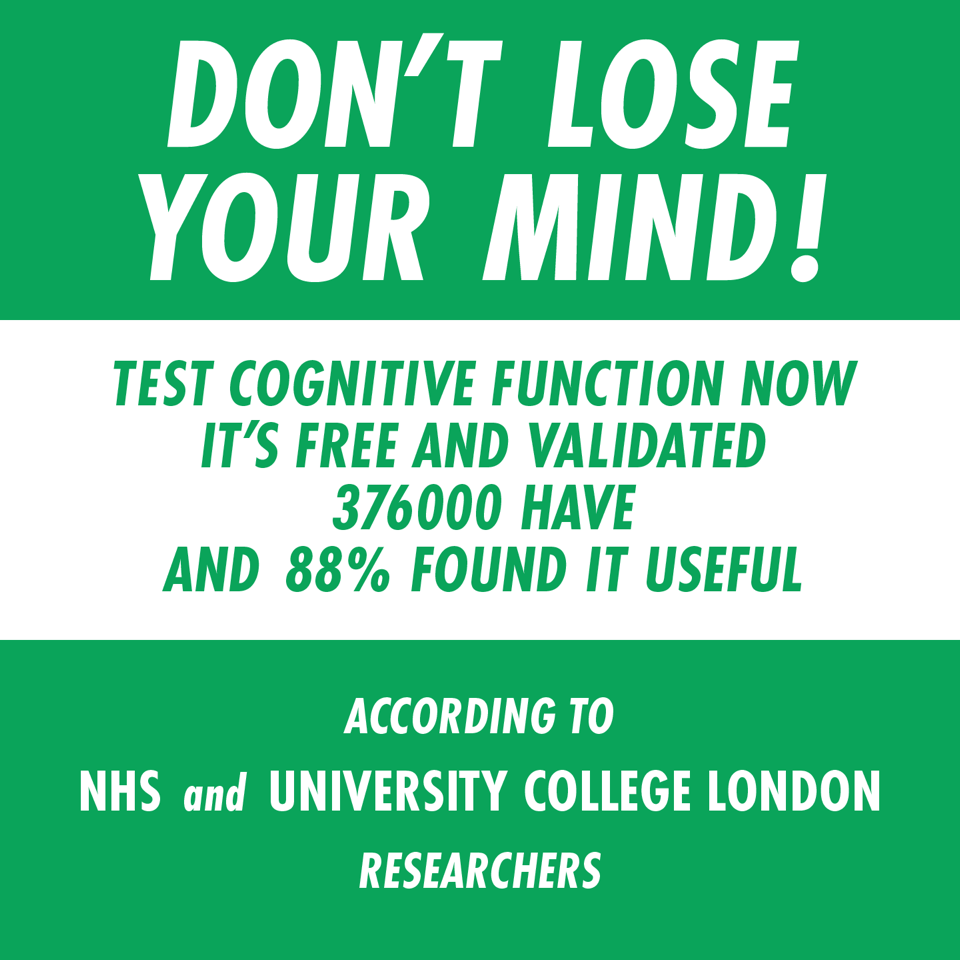
Test Your Cognitive Function Now green banner.
How important a role do genes play?

PH

It’s often said that early onset Alzheimer’s, which is defined as before the age of 65, is that small genetic part, but a study that came out earlier this year questioned that. It was on the basis of data from the UK Biobank and it actually said that many of the same factors that are driving dementia or Alzheimer’s later in life are also present in those who develop a diagnosis before 65. So that sort of de-emphasises the genes to some extent. 

Is this true, that early onset is much the same phenomena that we’re looking at.

TW  

Yes and no. 

So traditionally, early onset Alzheimer’s, is thought to be almost entirely genetic, and driven by single significant, high penetrance genetic mutations that result in early cognitive decline. In Alzheimer’s dementia, which is thought to be more similar to what Alzheimer himself was describing when he first described the disease, it was thought to be maybe five to 10% of dementia. Now, as Alzheimer’s diseases become more prevalent,  it’s maybe around 1% of cases. However, I certainly know clinicians who have patients who have one of these mutations in a presenilin gene, or the amyloid precursor protein gene and by attending to lifestyle factors, they managed to maintain good cognitive function late into life. So even if you have some of these mutations, which are thought to almost definitely lead to Alzheimer’s disease, there does seem to be an interaction with lifestyle and other health related factors. 

Then, at the same time, we’re seeing earlier diagnosis of non-monogenic Alzheimer’s disease, which is what this paper you described, was talking about. And that’s probably because the health of the population is declining, such that we’re seeing pre-diabetes earlier, we’re seeing people that are less physically active, maybe they’re less cognitively stimulated.  All these other risk factors are adding up and they’re affecting our brains earlier in life. So now there’s more of a mix, in early onset Alzheimer’s disease, as those risk factors become prevalent earlier in life. 

Diagnosed with Alzihemrs at age 19?  A growing tsunami of cognitive decline 

PH

I saw a report from China, of a man aged 19 diagnosed with Alzheimer’s, it said it was non-genetic, so presumably, they tested and there wasn’t the Apoe gene or the pre Senlin gene, I can’t confirm that. But can it really happen that fast, this cognitive decline that we are seeing that is so prevalent?

TW  

If you think about cognitive function as a trajectory, over time, there are three or four different components to that. 

So first of all, as you get older, cognitive function generally peaks on average, towards the end of your formal period of education. So if that education extends into university or maybe a graduate degree, then that’s going to peak sometime in your 20s or early 30s. But if you don’t even complete secondary school or high school, then it’s going to peak much earlier, and it’s going to have a much lower peak. After the peak, then you have a period of decline, and the speed of that decline depends on a number of factors, the majority of them related to ongoing stimulus to the brain as well as a whole host of health-related and nutritional factors, as you know very well. So there’s certainly a possibility where if you had a low peak of cognitive function, and that may even be based on something like maternal nutrition and epigenetics related to the health of your parents, so you had a low peak, and you have poor overall health, you’d have a more rapid decline. It’s certainly possible that this could happen very early in life, though, thankfully, at least right now, that’s very rare.

PH  

Yeah, we’ve seen the youngest with type two adult onset diabetes age three, so quite extraordinary. 

So is Alzheimer’s, just the tip of the iceberg of a growing tsunami of cognitive decline that is likely to start happening earlier?

TW  

Yes and no.

I say no, because having had lots of conversations, including with one of your close colleagues and mentors, David Smith. When you look at the specific prevalence of Alzheimer’s disease, it has not increased over time. And in fact, in some populations, it’s decreased.  It’s probably decreased a little bit more in men, because we focus very heavily on cardiovascular disease risk factors, which are more important in men in terms of causes of death.

And that has come with some improvement in terms of age-specific incidence of Alzheimer’s disease, when the reason why Alzheimer’s disease is becoming more prevalent, and it’s going to double or triple in the next few decades, is because we’re living longer. So there’s a combination of we’re living longer, and in general, our health is declining. 

So you could say, there’s this oncoming wave of Alzheimer’s disease, and that is expected. But we know that if we target specific risk factors, that doesn’t have to be the case. So I don’t think it’s all bad news.

A green Citizen Scientist badge, with the quote "optimum nutrition is the future of medicine".
(Donations solely fund our research please donate to fund our Citizen Science)
Our Citizen Science Research Team

PH  

Now, you’re the principal investigator at Food for the Brain heading, the research and the science there. So what does that involve? 

What’s your goal as a principal investigator?

TW  

One of the most important tools that we have when we’re looking at diseases or specific functions or health of the population are our population datasets, and there are lots of these. 

Governments around the world organise them, there’s Haynes in the US, there’s the UK Biobank in the UK that people have heard of, and you collect lots of data from lots of people, and at that kind of scale, you can start to maybe pick up relationships that you couldn’t otherwise. 

When we think about the risk factors for cognitive decline, and dementia, specifically, none of the datasets that exist so far are really designed to focus on that. So one of the most important ideas is to collect data, specifically related to risk factors for Alzheimer’s, dementia, and hopefully those that are modifiable. So it’s kind of a citizen science idea, right?  We’re going to people who are interested in this or maybe interested in this for their loved ones.  They are providing their data and part of it is to help understand their own risk, but then allowing us to look at a wide variety of risk factors. 

There are over a hundred questions in a questionnaire that look at different risk factors and we have the cognitive function test and blood tests. So then, when you have very large datasets like this, we can start to look for complex interactions between risk factors, and we can figure out which risk factors are most important. These are things that still need to be done as it pertains to most Alzheimer’s disease. I think, hopefully, Food for the Brain is going to be in a good position to help people understand that.

Test Your Cognitive Function Now green banner.
Figuring out the perfect food and lifestyle combo – what matters more!

PH

So what’s your ultimate goal from this data set – to find the sort of perfect diet lifestyle combo?

TW 

I think that there are two main things. In reality, I think that we know what is going to be best for most people.  If we look across all the evidence, we probably know that already we can have a good guess of what you should aim for.

When you say, here are the 50 things you need to fix to improve your brain health. There’s just an overwhelming amount of information – you don’t know where to start, what should I do? 

First, what’s most important to me, what’s most impactful? So figuring out which factors an individual should focus on first, which gives the biggest bang for their buck is what’s going to be a big, big part of this. Then the million dollar question is how do you actually change a person’s often highly entrenched behaviour, especially if we want to reach hundreds of 1000s across a digital platform?

PH 

So Dr. Kristina Curtis, welcome. 

You’re a behaviour change expert and an associate of UCLA Centre of Behaviour Change and founder of Applied Behaviour Change, which focuses on digital health programmes to help prevent and manage chronic conditions. 

Can you explain a bit about your background and the reason you are interested and involved in this Alzheimer’s prevention project? 

Khristina Curtis KC

After my psychology degree, I had a few years out working in industry because I hadn’t found the area of psychology that I wanted to specialise in. And so this led me to return to studies to specialise in health psychology, which is all about health behaviours. And then immediately afterwards, I then started a PhD, which really culminated my experience back then, which was web to technology, with my academic knowledge of health psychology at the Institute of Digital Healthcare at Warwick University.  

My PhD was really focused on how we would embed behaviour change models into mobile health apps and digital health interventions. And really, I feel passionate about preventing chronic conditions and particularly Alzheimer’s disease, as there are a lot of misconceptions about it. And we’ve talked a lot about them today. And in terms of many people think it’s a symptom of ageing, and largely down to our genes. Whereas, as we’ve heard, we can do a lot to reduce our risk by adopting healthier habits. 

How do we implement these ‘risk-reducing’ behaviours and habits?

PH

And what are you doing in the cognition project at Food for the Brain? What’s your game plan? 

KC

Let’s talk about the kinds of preventative behaviours. 

For example, increasing physical activity, eating a healthier diet, social interaction, brain training, might all help to reduce our risk of developing things like Alzheimer’s and dementia. One of the issues here is that actually sustaining these long term changes and making them long term habits is extremely challenging. 

There is quite a good evidence base on which behaviour change techniques work but we’re still really in the early stages of understanding how to implement these techniques in a way that engages different groups of people. There is strong evidence which suggests that we should have a tailored approach.

We are a small but mighty team and charity running on donation alone – please donate to our continued research here.

A green Citizen Scientist badge, with the quote "optimum nutrition is the future of medicine".

Also, you can learn more about our Citizen Science Research Team here.

Further info

Leading the Hunt for Alzheimer’s Biomarkers

Everyone knows that Alzheimer’s and cognitive decline are preventable IF you can find out who is at risk. 

While those selling anti-amyloid or p’tau drugs will exaggerate the importance of blood testing for amyloid or p’tau, which are damaged proteins found in the brains of people with Alzheimer’s, so far lowering these markers hasn’t worked. In other words, they are a marker, but not a cause.

So, what is a biomarker that predicts risk? 

And therefore what biomarkers, if corrected, reduce risk?

To date, there are four:

Homocysteine, a toxic amino acid, which goes up when your intake of B vitamins (B6, B12, folate, as well as zinc) is low. If you then lower homocysteine with B vitamins, it stops the brain shrinkage associated with Alzheimer’s and improves cognitive function. Brain shrinkage stops below 10 mcmol/l, and that’s what you’re aiming for. So that’s both ‘biomarker’ and ‘causal’ ticked.

At Food for the Brain, we are offering the first accurate at home, pinprick test for homocysteine that is both painless and accurate.

Omega-3 index is another. This is the % of your red blood cell membranes that are omega-3 EPA and DHA. The higher your % (ideally above 8) the better your cognition. Low levels also predict risk. So that’s also two boxes ticked. 

Vitamin D is another. Low levels predict risk and supplementing it reduces risk. Again, two boxes ticked but we don’t really know how it does this.

Combining these three to make a ‘nutritional index’ shows that the better you score, the lower a person’s future risk of dementia is.

HBA1c is another. This is a measure of your blood sugar resilience. It measures the spikes in your blood sugar that then damage red blood cells. Below 5.4% (or 37 mmol/mol) is the idea.

We divide your scores across four levels – worst is RED, then ORANGE, then YELLOW, then GREEN, which is what you’re shooting for. 

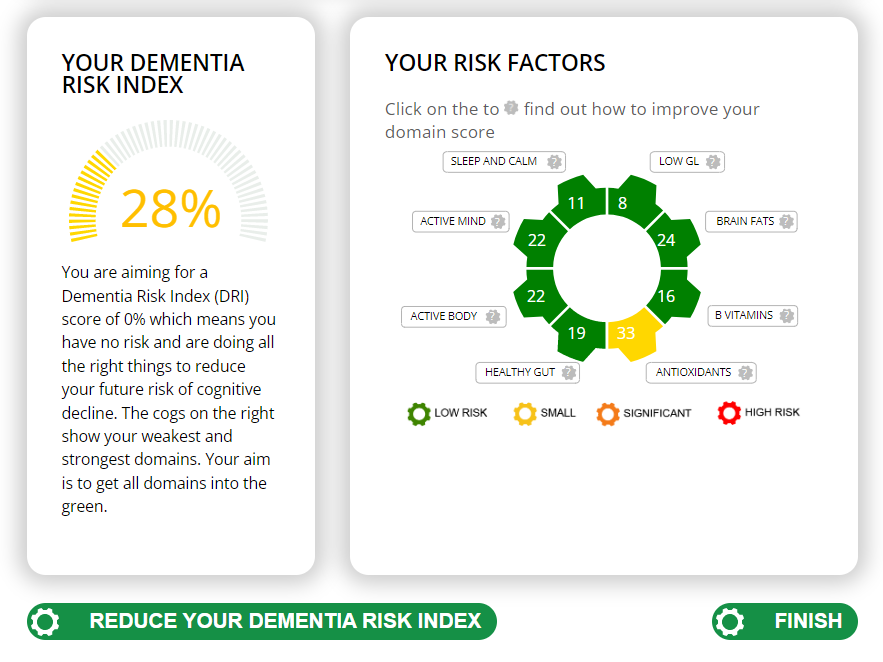
That’s what our DRIfT test measures – all four as a Dementia Risk Index functional Test.

This chart shows you why these four measures are so essential. 

What about antioxidants?

But you might have noticed there’s no ‘antioxidant’ measure.

Well, actually there is. It’s the body’s most important antioxidant called glutathione. Think of it like the body’s fire department with glutathione being the water. Every time there’s an oxidant fire, glutathione rushes in to put the fire out. The water, then, turns into steam. Glutathione is called GSH. It’s not bad as a measure of ‘antioxidant potential’. That’s why most functional medicine doctors measure red blood cell glutathione. But what if it all gets used up? It becomes oxidised or spent, much like the water putting out a fire turns into steam. This is called oxidised glutathione or GSSG. Think of the fully loaded glutathione (GSH) as cold water. It’s going to protect you much better from inflammation than spent (oxidised) glutathione (GSSH), a highl level of which means you’ve been trying to put out a lot of inflammatory fires in your brain and body. Neuro-inflammation is a key driver of brain degeneration and dementia, as well as ageing in general, which is why this is important to know.

We’ve been researching the ratio that is your GSH/GSSG. If you’ve got lots of fully loaded glutathione, and very little oxidised/spent glutathione, your GSH/GSSG ratio or index is high. That’s good news. If you’ve got very little fully loaded glutathione and lots of oxidised glutathione then you’re ‘oxidising’ –  which is an aspect of ageing that we want to prevent.

We want to be able to research this and test your Glutathione Index. This is exactly what we are working on right now with the hope of releasing another ‘world first’ home test kit for your Glutathione Index soon. This kind of research is funded by you, as a Friend of Food for the Brain.

An example would be a person who smokes a lot, lives in a polluted environment, eats no fresh veg, berries, herbs and spices. Their Glutathione Index will be low and their body and brain will likely be ageing faster. If you did smoke but also ate well and took vitamin C daily, (they say you need 50mg of vitamin C for each cigarette) would that mitigate the effect? 

Would you join our research, support our charitable work and upgrade your own brain by ordering one of our DRIftT tests?

If you’ve also done the Cognitive Function Test and Dementia Risk Index questionnaire (which we strongly recommend) that’s even better because we can see how you score in the ANTIOXIDANT domain and in future, how that will correlate with your Glutathione Index (which is coming soon).

Further info

Apparently Healthy, but Diagnosed with Alzheimerʼs? 

by Patrick Holford

This is the headline from the New York Times exposing a proposal from an ‘Alzheimer’s Working Group’ that we should all have an amyloid blood test to then be prescribed anti-amyloid drugs. This is a similar strategy to statins which are given to anyone with ‘high cholesterol’ despite no evidence of heart disease and limited benefit from taking the statins, except in the drug companies own trials. Their representatives also reduced the ‘acceptable’ blood test level in a process known as ‘diagnostic creep’.

The working group, many of whose members, say the NYT, are ‘employed by companies developing drugs and diagnostics’ is chaired by Dr Clifford R. Jack Jr., an Alzheimer’s researcher at the Mayo Clinic.  “Someone who has biomarker evidence of amyloid in the brain has the disease, whether they’re symptomatic or not,” said Dr Jack. “The pathology exists for years before symptom onset,” he added. “That’s the science. It’s irrefutable.”

But wait…

Let’s back up here a minute.

Amyloid has never been proven to be a cause of Alzheimer’s. 

In fact, the repeated failure of anti-amyloid drugs that do successfully lower amyloid to deliver any meaningful clinical effect has proven, time and time again, that raised amyloid is not the cause of Alzheimer’s. It is, I believe, an effect, an artefact. Not all who develop Alzheimer’s have raised amyloid but most do. But the fact that it is present doesn’t mean removing it with anti-amyloid drugs will ‘cure’ the disease. The real pathology of Alzheimer’s is both a reduction in cognitive function and brain shrinkage.

The last drug trial reported that those on the drugs had 20% more brain shrinkage than those on the placebo. In other words the pathology got worse, not better. We reported this because it was in the published research paper but no newspaper coverage mentioned it. (Perhaps journalists only read the press release, not the study itself).  This was finally reported in the Telegraph two weeks ago: ‘‘Breakthrough’ Alzheimer’s drugs can shrink the brain, scientists warn’.

The risk-to-benefit ratio is terrible

According to Dutch researchers, 10 percent of cognitively normal 50 year-olds would test amyloid positive, as would almost 16 percent of 60-year-olds and 23 percent of 70-year-olds. Most of those individuals would never develop dementia. But, if this scenario were to roll out, they would be prescribed the anti-amyloid drug treatment at an estimated £40,000 a year. Given that there were seven deaths of participants in the last two anti-amyloid drug trials, reported by ourselves and the Telegraph, and over a third of patients got potentially fatal brain bleeding or swelling, that’s a hell of a downside for something that isn’t likely to deliver any benefit. 

“Anti-amyloid trials raise scientific and ethical questions.” Writes Professor David Smith in the British Medical Journal (1). “Ackley and colleagues found that lowering brain β-amyloid levels in Alzheimer’s disease had no significant effect on cognition in 14 clinical trials on a total of 4,596 patients. Is it justifiable to ask patients to undergo yet more trials of anti-amyloid treatments? Moreover, we should all question the morality of the drug companies that declined to give these researchers access to data for 20 of the 34 trials they wanted to study.”.

“These findings” he says  “should direct our attention to the prevention of Alzheimer’s disease by slowing down the disease process, for which there are many possible approaches.”

Professor David Smith is one of the many scientific advisors instrumental in shaping our prevention policy which goes like this:

  • Test actual cognitive function, which is known to show changes up to 40 years before a diagnosis. That’s the Cognitive Function Test which you can do here.
    As part of this assessment, you will complete a questionnaire covering all known risk factors. That’s the Dementia Risk Index which follows the Cognitive Function Test.
  • Then measure actual blood markers of things that predict risk – homocysteine, omega-3 index, HbA1c for sugar control, and vitamin D. That’s the DRIfT test, available here.
  • Then advise the individual on how to reduce their risk by targeting the risk factors that they can change, which, in turn, bring down the biomarkers in the DRIfT test.

There are no downsides, only benefits, with this kind of prevention approach. 

There is only one problem – prevention is not profitable.

References

1 http://dx.doi.org/10.1136/bmj.n805

Further info

World Mental Health Experts Join Together to Solve ‘Brain Health Emergency’

On April 24th we are gathering experts from around the world to present at our Upgrade Your Brain Conference to explore solutions for the escalating incidence of mental health problems, described as a ‘global brain health emergency’ by the European Federation of Neuroscience Societies. 

In the last three years, The Children’s Society report that the likelihood of a young person having a mental health issue has increased by 50 per cent. 

One in six children aged 5-16 are now likely to have a mental health problem. 

Antidepressant prescriptions are close to 100 million in the last year representing a 70% increase in the past five years

Mental illness is now costing health services more than cancer and heart disease.

So we have joined forces with the Nutrition Collective to bring together some world-class experts so that we all learn how to protect and upgrade our brains.

The Experts
  • Professor Michael Crawford from Imperial College’s Institute of Brain Chemistry and Human Nutrition, who discovered the essentiality of omega-3 DHA for brain function; 
  • Professor Bill Harris, leading US omega-3 researcher; 
  • Sugar expert, Professor Robert Lustig
  • Neurologist Dr David Perlmutter; 
  • Neuroscientist Assistant Professor Tommy Wood from the University of Washington, expert in active lifestyle; 
  • Metabolic psychiatrist Dr Georgia Ede, whose speciality is low-carb keto diets; 
  • Professor Julia Rucklidge on children’s mental health and nutrition;
  • Dr Sabine Donnai, presenting on fixing a leaky blood-brain barrier for dementia prevention;
  • Harvard psychiatrist Uma Naidoo on the mood food connection; 
  • Dr Victoria Sampson on the oral and gut microbiome and brain connection.

This virtual conference focuses both on the latest science and solutions, and is focused on giving practitioners practical advice from leading clinicians. 

The Mission

Our mission at Food for the Brain is to stem the rising tide of mental illness in children and adults. 

The growth in mental illness is not sustainable.

In some poorer areas one in two women are now on antidepressants.

Close to a million in the UK have dementia.

On the current trend, by 2080, one in three children will have severe neurodevelopment impairment with major functional and communication deficits.

These children are our future. 

It is literally our humanity that is at stake. 

We need a united and progressive understanding of what’s driving this brain drain to enable the right solutions.

We need governments to wake up to the reality of this cerebral tsunami otherwise we are heading for an idiocracy. 

The global Upgrade Your Brain conference brings all the pieces together with an unparalleled team of experts. 

All healthcare practitioners, and anyone in mental health and education, need to be there. 

Further information:
  • The Nutrition Collective: The ground-breaking educational platform for Healthcare Professionals. The Nutrition Collective is a leading educational community for Healthcare Professionals bringing a wealth of knowledge and the latest research on a broad range of healthcare and wellbeing topics, including brain and mental health. We offer cutting-edge education to professionals in the form of webinars, seminars, in-person and virtual conferences and events, led by world class experts. Healing chronic disease with insights from the leaders in nutrition.
  • The European Society of Neuroscientists represent 22,000 neuroscientists across 31 countries
Further info

Upgrade Your Brain: The Book, Tour & Conference

Brain size is shrinking, IQ is falling, mental health problems are rising. 

A recent EU report has declared a ‘global brain health emergency’. 

One in six children are neurodivergent, many with autism or ADHD. 

While one in four over 80 have pre-dementia – memory decline is happening for many in their 30’s. 

One in four adults are on anti-depressants, sleeping pills or tranquillisers. 

After 45 years of research Patrick Holford, our founder and CEO, has the answers and has written them all down in his brand new book Upgrade Your Brain!

This book, coming out on April 25th 2024, will be your guide on how to reclaim your brain. This coincides with our national Upgrade Your Brain campaign, where we will not only focus on Alzheimer’s prevention but also on supporting wider brain and mental issues.

In the book you will learn how to :

  • Improve your mood and get a good night’s sleep 
  • Deprogram anxiety and build stress resilience
  • Free your brain from addiction (including sugar, alcohol and coffee)
  • Recover your memory and rebuild the brain’s connections
  • Build healthy young brains to prevent neurodivergence

You will be able to preorder the book soon but there is also a live seminar book tour where you can see Patrick live and receive a signed copy. There is also an Upgrade Your Brain Conference for health professionals who want to hear from world-class speakers like Dr David Perlmutter, Professors Robert Lustig, Michael Crawford, William Harris and Tommy Wood, who heads our research team – and more.

The book will be available for preorder soon.

Further info

The Latest on Alzheimer’s Prevention & Drugs in the News

This week CNN ran a story about a dementia prevention clinic in the US, run by neurologist Professor Richard Isaacson, who used our Cognitive Function Test in his prevention study at Cornell University.

The basic concept, much like what Food for the Brain is doing online, is that people get screened with blood tests, complete a cognitive function test and are assessed for diet and lifestyle factors that increase future risk. The article highlights nutrition, insulin resistance, genetic, behavioural and lifestyle risk factors along with the ability to track your progress with new ‘experimental blood tests’.

What’s the difference between this and what Food for the Brain is offering? 

This screening would set you back at least $2000 compared to Food for the Brain’s, with the DRIfT blood test, costing closer to £200.

Brain Blood Tests that Predict Risk

In Alzheimer’s there are increases in Amyloid and p-tau. That’s not in dispute. Despite all the hype, the anti-amyloid drugs such as Lecanemab, featured in last week’s Panorama programme, have produced what is widely regarded as a clinically insignificant benefit with very high risk of adverse effects, including a small risk of death. Five people died as a consequence of the drug treatment in the last two trials, which is approximately one in 500. The British Medical Journal editorial concluded  ‘No clinically meaningful effect. 30% get brain bleeding or swelling. Two trial deaths under investigation.’ 

The ‘just’ statistically significant benefit, which got the drug its licence, was several times less than that reported in a comparative trial of omega-3 in those with low homocysteine (sufficient B vitamins) and the rate of brain shrinkage actually increased by 20% compared to a 73% reduction in a trial of homocysteine lowering B vitamins in those with sufficient omega-3 DHA in their blood (read more about that here.)

So, yes, test amyloid but no – there is not sufficient evidence that lowering it with anti-amyloid drugs is going to realistically make much difference.

The trouble with the anti-amyloid monthly injection (which costs circa £20,000 a year) is that each injection will need to be followed by an expensive brain scan precisely because of the risk of brain bleeding and swelling, experienced by a third in trials. That’s also why the BBC reported that Alzheimer’s Research UK has warned that the NHS is ‘not ready’ for new Alzheimer’s drugs Lecanemab and Donanemab. It’s not prepared for such a treatment rollout due to the benefit it delivers versus the cost of on going assessment. Together with the medical costs it will probably cost closer to £50,000 per year per person. 

While in contrast, £50,000 would fund 1,000 people follow our COGNITION programme for a year.

All eyes on p-tau lowering drugs…

With the failure of the amyloid hypothesis, all eyes are on p-tau lowering drugs. 

Yet none have worked. 

But, much like cholesterol for heart disease, the media messaging will be to test p-tau rather than prescribe a drug. The irony here is that a lack of B vitamins, or rather raised homocysteine (which you can test here), is well established to increase p-tau so the simplest way to stop the formation of p-tau, and neurofibrillary tangles, and keep your brain healthy, is to keep your plasma homocysteine level below 10mcmol/l. In addition, the fact that there is no solid evidence that lowering levels of p-tau or amyloid protein prevents dementia or slow down progression is why these are called ‘‘experimental blood tests” in the CNN coverage.

We have combined four tests (omega-3 index, vitamin D, HBA1c for sugar balance, homocysteine for B vitamins) that each have clear evidence that

a) good levels correlate with less risk
b) bringing blood test levels into the optimal range reduces risk. 

So we are ahead in that respect. This is the 4-in-1 DRIfT test which calculates a biological Dementia Risk Index. 

We want you to take this test, not only for your benefit but also, when we have enough results of tests and retests, together with FREE Cognitive Function Test results we can research the correlation to find out how your DRIfT score predicts cognitive function. 

Genetic Fears

The other issues raised are around genes that predict Alzheimer’s risk. 

There’s quite some confusion here which, if misunderstood, creates unnecessary fear. ‘Causative’ genes (APP and Presenelin) are very rare – less than 1 in 100. The Panorama programme included a younger person with this gene. Much more common is having the ApoE4 gene, which one in seven people have. This doesn’t cause Alzheimer’s. Technically, it increases risk by 4 to 6% but all the changes we recommend to your diet mitigate even this increased risk. That is why, in studies where people ate better or took the right supplements, there was no difference in the outcome of the individuals with or without the ApoE4 gene variant.

The bottom line is that almost no-one needs to develop dementia if they follow ‘optimum nutrition’ advice – diet, supplements and lifestyle and that is what we are here to do.

Food for the Brain is making prevention a reality.

Join us in our mission, research and reclaim your brain this year. The first things you want to do are:

  • Complete the FREE Cognitive Function Test. This is an online, validated assessment of your current cognitive function and your dementia risk. Over 400k have completed this test and upgraded their brain in the process.
  • Order your DRIfT test. These accurate, at-home blood tests are the perfect way to improve your brain health and reduce your risk.

Further info

Are You Wasting Money On Your Omega-3 Supplements?

Are You Wasting Money On Your Omega-3 Supplements?

A handful of omega-3 capsules

Are You Wasting Money On Your Omega-3 Supplements?

Omega-3 supplements are becoming increasingly popular – and rightly so – as another recent UK BioBank study (1) reported a 30% lower risk of dementia in those with higher omega-3 status in their blood.

Another study (2) found a 49% reduced risk for dementia in those with the highest omega-3 DHA level (top fifth) in their red blood cells compared with those having the lowest (bottom fifth). 

Oily fish and fish oil supplements contain two types of omega-3 fat, called DHA and EPA. DHA is the main fat found in the brain cells of all animals. What’s more, your omega-3 index predicts both your brain size and cognitive abilities, according to this study (3) from Loma Linda University (featured in the Blue Zones film),  so you might want to check that you’re above 8%.

The Benefits Go Beyond Preventing Dementia.

A person’s omega-3 index, which is a composite score of both EPA and DHA bound into red blood cell membranes, predicts both the risk of depression (4) and poorer reading ability, lower IQ, worse memory, sleep difficulties as well as aggression and emotional instability in children – hallmarks of ADHD (5).

It also predicts the risk of heart disease (6) and developmental problems in babies, based on measures taken in women both before and during pregnancy. Pregnant women with a higher omega-3 index have a much lower likelihood of having a baby with developmental problems, according to research from Imperial College London Institute of Brain Chemistry at the Chelsea & Westminster Hospital campus.

The Missing Piece…

However, omega-3s do not act alone. To become biologically active, DHA must be attached to phospholipids – a process entirely dependent on methylation. This, in turn, requires adequate levels of B vitamins: B6, folate, and B12.

A landmark study (7) concluded that the combination of B vitamins and fatty acids improves cognitive function. This is because, during methylation, DHA attaches to a phospholipid, enabling it to be incorporated  into the neuronal membrane of the brain. The process of methylation is entirely dependent on vitamins B6, B12, and folate. When omega-3 and B vitamin status are both sufficient, the brain can build new, functional neuronal membranes – literally the structural basis of thought.

So, you need both a high omega-3 status (over 8%) and adequate B vitamins to incorporate DHA into the brain. You can be confident that methylation is working properly if your homocysteine level is below 11 µmol/L. In a large omega-3 study, people with early-stage dementia were given 2.3 grams a day (equivalent to two large fish oil capsules), but only those with lower homocysteine levels benefited (7).

Having a raised homocysteine level, above 11mcmol/L, is extremely common. In the US around 40% of people over the age of 60 have elevated levels. This is often due to poor absorption of vitamin B12 and may require high-dose supplementation to normalise homocysteine. (Read more about homocysteine here.) 

Why Testing is Essential

This means two things are critical for protecting your brain:

  • A high omega-3 index – ideally over 8%.
  • A low homocysteine level – ideally below 11µmol/L, with the optimal level being around 7 µmol/L

If either is lacking, the protective effect is lost. Taking fish oils without ensuring good B vitamin status will not deliver full benefit – and vice versa.

That is why testing both is essential for protecting your brain.

To make this simple, Food for the Brain has launched the DRIFt 5-in-1 home test – a quick pinprick blood test you can do yourself. It measures:

  • Omega-3 Index – how much brain-building DHA and EPA are in your cells
  • Homocysteine – the key methylation marker, linked to brain shrinkage
  • Vitamin D – vital for brain health, mood, and immunity
  • HbA1c – the gold-standard measure of blood sugar balance
  • Omega-6:3 Ratio – shows whether you’re getting the right fats for your brain

Together, these five markers account for more than half of the modifiable risk for Alzheimer’s disease and dementia.

By testing these markers, you will know exactly what to supplement and what to change in order to protect your brain. And by joining the DRIFt study, you will also become a Citizen Scientist, helping to advance dementia prevention research worldwide.

Drift 5-in-1 blood test box

Order your DRIFt 5-in-1 test today and take the first step towards protecting and upgrading your brain.

References

1  Sala-Vila, A.; Tintle, N.; Westra, J.; Harris, W.S. Plasma Omega-3 Fatty Acids and Risk for Incident Dementia in the UK Biobank Study: A Closer Look. Nutrients 2023, 15,4896. https://doi.org/10.3390/ nu15234896

2  Sala-Vila, A.; Satizabal, C.L.; Tintle, N.; Melo van Lent, D.; Vasan, R.S.; Beiser, A.S.; Seshadri, S.; Harris, W.S. Red Blood Cell DHA Is Inversely Associated with Risk of Incident Alzheimer’s Disease and All-Cause Dementia: Framingham Offspring Study. Nutrients 2022, 14, 2408. https://doi.org/10.3390/ nu14122408

3 Loong S, Barnes S, Gatto NM, Chowdhury S, Lee GJ. Omega-3 Fatty Acids, Cognition, and Brain Volume in Older Adults. Brain Sci. 2023 Sep 2;13(9):1278. doi: 10.3390/brainsci13091278. PMID: 37759879; PMCID: PMC10526215.

4 Yonezawa K, Kusumoto Y, Kanchi N, Kinoshita H, Kanegae S, Yamaguchi N, Ozawa H. Recent trends in mental illness and omega-3 fatty acids. J Neural Transm (Vienna). 2020 Nov;127(11):1491-1499. doi: 10.1007/s00702-020-02212-z. Epub 2020 May 25. PMID: 32451632.

5 Montgomery P, Burton JR, Sewell RP, Spreckelsen TF, Richardson AJ. Low blood long chain omega-3 fatty acids in UK children are associated with poor cognitive performance and behavior: a cross-sectional analysis from the DOLAB study. PLoS One. 2013 Jun 24;8(6):e66697. doi: 10.1371/journal.pone.0066697. Erratum in: PLoS One. 2013;8(9).doi:10.1371/annotation/26c6b13f-b83a-4a3f-978a-c09d8ccf1ae2. PMID: 23826114; PMCID: PMC3691187; see also Raine A, Ang RP, Choy O, Hibbeln JR, Ho RM, Lim CG, Lim-Ashworth NSJ, Ling S, Liu JCJ, Ooi YP, Tan YR, Fung DSS. Omega-3 (ω-3) and social skills interventions for reactive aggression and childhood externalizing behavior problems: a randomized, stratified, double-blind, placebo-controlled, factorial trial. Psychol Med. 2019 Jan;49(2):335-344. Doi 10.1007/s11920-018-0894-y. PMID: 29623453. ; see also Liu, J., Cui, Y., Li, L. et al. The mediating role of sleep in the fish consumption – cognitive functioning relationship: a cohort study. Sci Rep 7, 17961 (2017). https://doi.org/10.1038/s41598-017-17520-w

6 Gutierrez L, Folch A, Rojas M, Cantero JL, Atienza M, Folch J, Camins A, Ruiz A, Papandreou C, Bulló M. Effects of Nutrition on Cognitive Function in Adults with or without Cognitive Impairment: A Systematic Review of Randomized Controlled Clinical Trials. Nutrients. 2021 Oct 22;13(11):3728. doi: 10.3390/nu13113728. PMID: 34835984; PMCID: PMC8621754.

7 Jernerén F, Cederholm T, Refsum H, Smith AD, Turner C, Palmblad J, Eriksdotter M, Hjorth E, Faxen-Irving G, Wahlund LO, Schultzberg M, Basun H, Freund-Levi Y. Homocysteine Status Modifies the Treatment Effect of Omega-3 Fatty Acids on Cognition in a Randomized Clinical Trial in Mild to Moderate Alzheimer’s Disease: The OmegAD Study. J Alzheimers Dis. 2019;69(1):189-197. doi: 10.3233/JAD-181148. PMID: 30958356.

Further info

The Four Simple Blood Tests That Drive Down Your Risk  

 By Patrick Holford

Alzheimer’s is a preventable, but not reversible disease.

Less than one in a hundred cases are directly caused by genes. Prevention is entirely possible if you can identify who is at risk early enough and encourage the right diet and lifestyle changes. 

This is why we have designed our new pinprick blood test which not only aims to predict your future risk for dementia but tells you how to reduce it. We now have a limited number available on pre-order as part of a global prevention research study aiming to involve a million people worldwide. 

This much-awaited home-test kit measures your blood sugar, vitamin D, omega-3 and B vitamin status which account for more than half the modifiable risk for dementia. The results show how a person can reduce their risk with specific diet changes.

“By tracking a person’s blood sugar, vitamin B, D and omega-3 status against changes in cognitive function over time, in addition to lifestyle factors such as sleep and physical activity, we can learn what really helps prevent cognitive decline.” says Dr Wood, Assistant Professor at the University of Washington and the principal investigator for the prevention project.

We have already tested over 410,000 people with our free Cognitive Function Test, and hope to enrol a million people, to make this the largest Citizen Science global prevention initiative. 

Subtle changes in cognition occur at least 30 years before a diagnosis, which is why we screen people online with a free Cognitive Function Test. And four simple blood tests are not only predictive but can help a person to understand how to drive down that risk. We call them the four horsemen of the mental health apocalypse because they also drive depression and ADHD. The incidence of both of these are on the increase. 

(Read more about the four horsemen of the mental health apocalypse here and here).

The four tests, called DRIfT (the Dementia Risk Index functional Test) is carried out using a simple home-test kit and a single pinprick of blood, adding further predictive capability, and helping guide the individual to make diet changes to reduce future risk.

Why these four markers?

Blood sugar (HbA1c) – Even raised blood sugar levels from age 35, but within ‘reference’ ranges, predict a 15 per cent increased risk of Alzheimer’s disease 35 years later, according to research by Boston University School of Medicine (1). This confirms other research from the University of Washington showing an 18% increased risk with raised sugar levels in older people seven years later and a 40% increased risk in those with diabetes (2). Even better than your blood sugar level, which varies across the day, is a long-term measure of blood sugar, called HbA1c, used to predict diabetes, which is what this test measures.

B vitamins (Homocysteine) – Low levels of B12, found in animal products, and folate, found in greens, raise blood levels of homocysteine. Raised homocysteine is considered a top marker for dementia risk, and is a causative driver of the disease process (3). Studies lowering homocysteine with B vitamins have more than halved the rate of age-related brain shrinkage. A Swedish study, started in 1968, found that those in the top third of homocysteine scores in their 40’s had double the risk for Alzheimer’s almost 35 years later (4). When homocysteine goes up memory gets worse and when it goes down memory gets better, according to a six-year study in Norway  (5). 

About half of all people over 60 have homocysteine levels above 11mcmol/l  (6), which is the level associated with increased brain shrinkage. A study in Italy found that those with a homocysteine above 15mcmol/l have five times the risk of developing Alzheimer’s, compared to those with a level below 10 (7). 

Last year, a study in China showed that raised homocysteine increases risk of cognitive decline by ten times (8). Homocysteine is easily lowered by supplementing vitamin B6, B12 and folate but at levels higher than achievable from diet because many older people do not absorb B12 well. 

Oxford University’s health economist Dr Apostolos Tsiachristas estimates “Screening for homocysteine in people over 60 in the UK and treating those with raised levels with B vitamins could save the UK economy approximately £60 million per year.”

Omega-3 – Increased intake of omega-3, either from diet or supplements and having a higher omega-3 blood level, is associated with cutting risk for dementia by a fifth (20%), according to a study of 48 studies involving over 100,000 people (9). 

Supplementing fish oils (10) cuts risk of dementia by 9%, according to research from the UK Bio Bank. Being in the top third for omega-3 blood levels, compared to the lowest third, reduced the rate of brain shrinkage in a year by more than two-thirds in those given B vitamins with mild cognitive impairment (11). 

The omega-3 index, which is what the DRIfT test measures, predicts both brain size and cognitive function (12). This Oxford University research establishes that the brain needs both sufficient B vitamins and omega-3 to stay healthy.

Vitamin D – Having a higher vitamin D above 75nmol/l (25 ng/ml) cuts risk for Alzheimer’s and dementia by a third (13).  In turn, those with a vitamin D level below 50nmol/l, increase their risk for Alzheimer’s and dementia by a third (14). 

Six out of 10 adults in the UK (15) and three out of 10 in the US (16) have a vitamin D level below this. Taking vitamin D supplements may help ward off dementia, according to a 2023 study involving over twelve thousand dementia-free 70+ year olds in the US. Those taking vitamin D supplements had 40% lower incidence of dementia during a ten-year period. Vitamin D is essential to supplement during winter months.

These four risk factors, measured in the DRIfT test, are thought to account for over half the modifiable risk for Alzheimer’s disease and dementia. Having an active lifestyle, both physically, socially and intellectually further reduces risk substantially. 

To join our  join the global prevention study:

  1. Be the first to order the DRIfT Test here.

References

1 Zhang X, Tong T, Chang A, Ang TFA, Tao Q, Auerbach S, Devine S, Qiu WQ, Mez J, Massaro J, Lunetta KL, Au R, Farrer LA. Midlife lipid and glucose levels are associated with Alzheimer’s disease. Alzheimers Dement. 2023 Jan;19(1):181-193. doi: 10.1002/alz.12641. Epub 2022 Mar 23. PMID: 35319157; PMCID: PMC10078665.

2 P.K. Crane et al., ‘Glucose levels and risk of dementia’, New England Journal of Medicine (2013), vol 369(6):540–548.

3 Smith AD, Refsum H, Bottiglieri T, Fenech M, Hooshmand B, McCaddon A, Miller JW, Rosenberg IH, Obeid R. Homocysteine and Dementia: An International Consensus Statement. J Alzheimers Dis. 2018;62(2):561-570. doi: 10.3233/JAD-171042. PMID: 29480200; PMCID: PMC5836397.

4 Zylberstein DE, Lissner L, Bjorkelund C, Mehlig K, Thelle DS, Gustafson D, Ostling S, Waern M, Guo X, Skoog I (2011) Midlife homocysteine and late-life dementia in women. A prospective population study. Neurobiol Aging 32, 380-386

5 Nurk E, Refsum H, Tell GS, Engedal K, Vollset SE, Ueland PM, Nygaard HA, Smith AD (2005) Plasma total homocysteine and memory in the elderly: The Hordaland Homocysteine study. Ann Neurol 58, 847-857. 

6 Pfeiffer CM, Osterloh JD, Kennedy-Stephenson J, Picciano MF, Yetley EA, Rader JI, Johnson CL. Trends in circulating concentrations of total homocysteine among US adolescents and adults: findings from the 1991-1994 and 1999-2004 National Health and Nutrition Examination Surveys. Clin Chem. 2008 May;54(5):801-13. doi: 10.1373/clinchem.2007.100214. Epub 2008 Mar 28. PMID: 18375482.

7 Ravaglia G, Forti P, Maioli F, Martelli M, Servadei L, Brunetti N, Porcellini E, Licastro F (2005) Homocysteine and folate as risk factors for dementia and Alzheimer disease. Am J Clin Nutr 82, 636-643.

8 Teng Z, Feng J, Liu R, Ji Y, Xu J, Jiang X, Chen H, Dong Y, Meng N, Xiao Y, Xie X and Lv P (2022) Cerebral small vessel disease mediates the association between homocysteine and cognitive function. Front. Aging Neurosci. 14:868777. doi: 10.3389/fnagi.2022.868777 

9 Wei BZ, Li L, Dong CW, Tan CC; Alzheimer’s Disease Neuroimaging Initiative; Xu W. The Relationship of Omega-3 Fatty Acids with Dementia and Cognitive Decline: Evidence from Perspective Cohort Studies of Supplementation, Dietary Intake, and Blood Markers. Am J Clin Nutr. 2023 Apr 5:S0002-9165(23)46320-4. doi: 10.1016/j.ajcnut.2023.04.001. Epub ahead of print. PMID: 37028557.

10 Huang Y, Deng Y, Zhang P, Lin J, Guo D, Yang L, Liu D, Xu B, Huang C and Zhang H (2022) Associations of fish oil supplementation with incident dementia: Evidence from the UK Biobank cohort study.Front. Neurosci. 16:910977.doi: 10.3389/fnins.2022.910977 

11 Jernerén F, Elshorbagy AK, Oulhaj A, Smith SM, Refsum H, Smith AD. Brain atrophy in cognitively impaired elderly: the importance of long-chain ω-3 fatty acids and B vitamin status in a randomized controlled trial. Am J Clin Nutr. 2015 Jul;102(1):215-21. doi: 10.3945/ajcn.114.103283. Epub 2015 Apr 15. PMID: 25877495.

12 Loong, S.; Barnes, S.; Gatto, N.M.; Chowdhury, S.; Lee, G.J. Omega-3 Fatty Acids, Cognition, and Brain Volume in Older Adults. Brain Sci.2023,13,1278. https://doi.org/ 10.3390/brainsci13091278

13 https://brainhealthcheck.foodforthebrain.org/the-role-of-vitamin-d-in-reducing-risk-of-alzheimers-diseasewilliam-b-grant-ph-d/

14 Chai et al. BMC Neurology (2019) 19:284 https://doi.org/10.1186/s12883-019-1500-6 

15 Calame W, Street L, Hulshof T. Vitamin D Serum Levels in the UK Population, including a Mathematical Approach to Evaluate the Impact of Vitamin D Fortified Ready-to-Eat Breakfast Cereals: Application of the NDNS Database. Nutrients. 2020 Jun 23;12(6):1868. doi: 10.3390/nu12061868. PMID: 32585847; PMCID: PMC7353432.

16 Liu X, Baylin A, Levy PD. Vitamin D deficiency and insufficiency among US adults: prevalence, predictors and clinical implications. Br J Nutr. 2018 Apr;119(8):928-936. doi: 10.1017/S0007114518000491. PMID: 29644951.

17 https://brainhealthcheck.foodforthebrain.org/what-is-the-scientific-basis-of-the-cft-dri-cog-nition/

Further info

Homocysteine Test for Mental Health: Why Early Testing Matters

Homocysteine Test for Mental Health: Why Early Testing Matters

What is the forgotten factor of mental health – despite the research being positive?

This is why we launched our highly accurate and groundbreaking at-home homocysteine test just before Christmas (and quickly sold out) because knowing this marker – your H factor – can help predict over 100 diseases. Specifically, homocysteine is an indicator of a person’s B vitamin status, and knowing this, can help reduce the risk of mental illness.

Yet it hasn’t been easily available or affordable to test this at home and is often not a marker checked by Dr’s.

But not any more!

Homocysteine & the Central Nervous System

“Homocysteine is a biomarker for over 100 diseases, but especially those of the central nervous system.” says pharmacology professor David Smith FMedSci, formerly Deputy Head of the Faculty of Medical Sciences at the University of Oxford. “It is a biomarker of impaired cognitive abilities in children, and in adults is a risk marker for stroke, dementia and Alzheimer’s, but also possibly for depression, anxiety, bipolar, schizophrenia, obsessive-compulsive disorder, Parkinson’s and multiple sclerosis. It is very much the forgotten factor, despite the research evidence being strongly positive (1). And the good news is, it is so easily corrected.” 

Patrick Holford, psychologist and our CEO and founder says “A raised homocysteine level means something is going wrong with a vital process that controls how we think, feel and perceive. It’s called methylation and is dependent on B vitamins. Some people absorb B12 less well. Some just need more of the B vitamin than others and that biochemical individuality, especially if their diet is already deficient, can tip them into a mental or neurological illness.”

Depression & Homocysteine

Those suffering from depression are also more likely to have higher homocysteine levels (2, 3).  Amanda-Jane is a case in point. She was suffering with chronic fatigue and low mood, so she decided to check her homocysteine level. She was shocked when she found her score was 26 mcmol/l (7 or less is considered optimal). After changing her diet and supplementing the B vitamins her sleep improved almost immediately and within four weeks, she had much more energy. Two months later she re-tested her homocysteine level and found it had dropped to 9. “I feel much better. My mood is very positive– no panic or depression. I feel buoyant, energetic and enthusiastic. I’m sleeping much better and my PMS has disappeared.” she said.

Also, every 5-point increase in homocysteine increases risk of being diagnosed with schizophrenia by a staggering 70%! (4) Yet very few sufferers are ever checked for raised homocysteine.

Homocysteine & B Vitamins

Professor Joseph Levine from the Stanley Research Centre and Beersheva Mental Health Centre in the Ben Gurion University in Israel devised a study to see what effect lowering homocysteine with B vitamins would have (5). He gave half of a group of 42 schizophrenic patients B vitamins (B6, B12 and folic acid) and the other half a placebo. Those taking the B vitamin supplements had both a dramatic reduction in their homocysteine levels and a significant improvement in their symptoms, except for one patient, who didn’t comply with the B vitamin treatment, didn’t improve and didn’t have a reduction in their homocysteine level. They were the exception that proves the rule.

Professor David Smith, writing in the Journal of Internal Medicine, together with world leading expert on homocysteine, Professor Helga Refsum from the University of Oslo, Norway, say “There are five diseases that can, at least in part, be prevented by lowering total homocysteine: neural tube defects, impaired childhood cognition, macular degeneration, primary stroke, and cognitive impairment in the elderly. We conclude from our review that total homocysteine values in adults of 10 mcmol/L or below are probably safe, but that values of 11 above may justify intervention. Homocysteine is more than a disease biomarker: it is a guide for the prevention of disease.” Not only does it predict an increased risk for a stroke, but having a lower homocysteine level, achieved by eating B12 rich foods such as fish and eggs, and folate and B6 rich foods such as whole foods, vegetables, nuts, seeds and beans, and supplementing B vitamins, helps those who’ve had a stroke recover faster (6).

We recommend anyone with a homocysteine level over 10 mcmol/L to supplement extra B vitamins, especially B6 (20mg), folate (400mcg) and B12 (500mcg). Homocysteine is a toxic amino acid that accumulates when there is a lack of B vitamins and damages your brain as well as your arteries.

Professor Smith’s research group at Oxford University has shown that giving people with pre-dementia these vitamins reduced the rate of brain shrinkage to less than half of that in those given placebos.

 “Further cognitive decline virtually stopped in those taking the B vitamins.” says Smith. 

Homocysteine, Pregnancy & Children’s School Grades

As many as two in five people over 60 have a raised homocysteine level. The reason why the B vitamin folic acid is recommended in pregnancy is because it lowers homocysteine. In ‘normal’ pregnancies with no complications in either mother or child, homocysteine remains below 7mcmol/L. In five out of seven studies women who have spontaneous abortions or miscarriages have a level above 15. The risk for having a pre-term baby is four times higher in women with a homocysteine level above 12 (7).  A study of 81 healthy women who then became pregnant found that the children of the women whose homocysteine before conceiving was above 9 were significantly more withdrawn, anxious and depressed and had more social problems including increased aggressive behaviour (8).  

“It is vital that a woman intending to become pregnant first checks her homocysteine level. Raised homocysteine, plus a lack of omega-3 fats found in fish is a major promoter of developmental problems and mental illness in children later in life.” says Holford. 

A child’s homocysteine level even predicts their school grades. A study compared the sum of school grades for ten core subjects, with homocysteine levels in a group of 692 Swedish school children aged 9 to 15. Increasing homocysteine levels were strongly associated with reducing grades as was inadequate folate intake (9).

Join us in our Citizen Science Project by testing your homocysteine! The home pin prick blood test is now back in stock.

References

1 Smith AD, Refsum H. Homocysteine – from disease biomarker to disease prevention. J Intern Med. 2021 Oct;290(4):826-854. doi: 10.1111/joim.13279. Epub 2021 Apr 6. PMID: 33660358.

2 Moradi F, Lotfi K, Armin M, Clark CCT, Askari G, Rouhani MH. The association between serum homocysteine and depression: a systematic review and meta- analysis of observational studies. Eur J Clin Invest 2021: e13486. 

3 Nabi H, Bochud M, Glaus J, Lasserre AM, Waeber G, Vollenweider P, Preisig M. Association of serum homocysteine with major depressive disorder: results from a large population-based study. Psychoneuroendocrinology 2013; 38: 2309-18. 

4 JW Muntjewerff,Molecular Psychiatry (2006) 11, 143–149. doi:10.1038/sj.mp.4001746 

5 Levine J, Stahl Z, Sela BA, Ruderman V, Shumaico O, Babushkin I, Osher Y, Bersudsky Y, Belmaker RH. Homocysteine-reducing strategies improve symptoms in chronic schizophrenic patients with hyperhomocysteinemia. Biol Psychiatry. 2006 Aug 1;60(3):265-9. doi: 10.1016/j.biopsych.2005.10.009. Epub 2006 Jan 17. PMID: 16412989.

6 Yahn GB, Leoncio J, Jadavji NM. The role of dietary supplements that modulate one-carbon metabolism on stroke outcome. Curr Opin Clin Nutr Metab Care. 2021 Jul 1;24(4):303-307. doi: 10.1097/MCO.0000000000000743. PMID: 33631772; see also 

7 Dai C, Fei Y, Li J, Shi Y, Yang X. A Novel Review of Homocysteine and Pregnancy Complications. Biomed Res Int. 2021 May 6;2021:6652231. doi: 10.1155/2021/6652231. PMID: 34036101; PMCID: PMC8121575.

8 Roigé-Castellví J, Murphy M, Fernández-Ballart J, Canals J. Moderately elevated preconception fasting plasma total homocysteine is a risk factor for psychological problems in childhood. Public Health Nutr. 2019 Jun;22(9):1615-1623. doi: 10.1017/S1368980018003610. Epub 2019 Jan 14. PMID: 30636652; PMCID: PMC10261079.

9 Torbjörn K. Nilsson, Agneta Yngve, Anna K. Böttiger, Anita Hurtig-Wennlöf, Michael Sjöström; High Folate Intake Is Related to Better Academic Achievement in Swedish Adolescents. Pediatrics August 2011; 128 (2): e358–e365. 10.1542/peds.2010-1481

Further info

The Four Horsemen of the Mental Health Apocalypse #1 – Brain Fats & Methylation

By Patrick Holford. This is part one, read part two here.

Few people realise the catastrophic decline in mental health that has occurred over the past 50 years.

‘Brain health conditions have become a global health emergency,’ according to the Federation of European Neuroscience Societies last year (1).

Globally, 15 per cent of all disability is due to brain and mental health disorders. The lifetime cost of Alzheimer’s in 2022 was estimated to be €1.2 trillion across the EU which is half the UK’s total GDP! This burden and costs exceeds that of all diseases, including cancer and heart disease. But most worrying are the trends of falling IQ at a rate of about 7 per cent a generation and the steady increase in young people with four in ten now reporting persistent feelings of sadness or hopelessness and almost a quarter (22 per cent) contemplating suicide (2).

On this flight path, by 2080, suicide may well become the leading cause of death in those under 24. Also, more than a third of children will have severe neurodevelopmental impairment, defined as significantly below the norm for IQ. That’s the conclusion of Professor Michael Crawford who discovered the essentiality of omega-3 DHA for the brain. Alarmingly, brain size, deduced from cranial capacity of skulls, has shrunk by a staggering 20 per cent over a mere 30,000 years. It took over six million years for brain size to increase from that of a chimpanzee (350cc) to a peak of 1,600 to 1,700 cc with Cro Magnon man thirty thousand years ago. Today, brain size averages 1,350cc (3). There is no question that we are devolving mentally with an endless escalation of rates of ADHD, autism, depression, anxiety, insomnia, schizophrenia, dementia and Alzheimer’s, as well as strokes, Parkinson’s and multiple sclerosis.

The big question is: why?

Introducing the four horsemen…

I’m proposing that there are four main biological drivers of our demise which I’m calling the four horsemen of the mental health apocalypse: a lack of brain fats, messed up methylation, loss of glucose control and excessive oxidation.

The first two – brain fats and methylation – are vital for the integral structure of neuronal membranes. The second two are vital for the function of brain cells, supplying fuel and coping with the oxidant ‘exhaust fumes’ of energy metabolism.

Brain fats in short supply

The dry weight of the brain is 60 per cent fat, and omega-3 DHA makes up the majority of the structural fat of neurons, followed closely by Arachidonic Acid (AA), an omega-6 fat. ALL BRAINS OF ALL ANIMALS contain predominantly these two essential brain fats. It is the available supply of these that determine whether an animal ends up with a big or small brain. The link between omega-3 DHA and brain function is beyond doubt, with study after study confirming the scientific evidence. Only last month, a study from the UK BioBank reported a 30 per cent lower risk of dementia in those with a higher omega-3 status in their blood (4). This confirmed the results of a US study (5) that found a 49 per cent reduced risk for dementia in those with the highest DHA level (top fifth) in their red blood cells versus the lowest (bottom fifth). A meta-analysis of 48 studies in the American Journal of Clinical Nutrition in 2023 (6) concludes that ‘a moderate-to-high level of evidence suggested that dietary intake of omega-3 fatty acids could lower risk of all-cause dementia or cognitive decline by about 20 per cent, especially for docosahexaenoic acid (DHA) intake’. Each 100mg increment of DHA was associated with an 8–10 per cent lower risk of dementia. And a 2023 study, by psychologists at the Linda Loma University in California and published in the journal Brain Sciences (7), reported that the higher a person’s omega-3 blood index was, the more white matter there was in their brain, and the better they performed on cognitive tests that predict less risk for dementia.

It’s compelling science. That is why my first recommendation is to always test your omega-3 index.

Buy Blood test here button.

This is the percentage of omega-3 DHA and EPA in the membrane of red blood cells, and it is a direct reflector of the membrane levels in your brain. Red cells last for three months so this is a long-term measure of your omega-3 status. In countries such as Japan, known for a high fish diet, the omega-3 index is around 10 per cent on average. Ideally, a level of above 8 per cent is optimal. I thought I was doing well, supplementing daily 575mg of EPA and DHA combined, plus eating oily fish three times a week but I scored just under – 7.7 per cent. I’ve since upped my intake of DHA by 500 mg, to 750 mg total daily intake.

In its pure form, DHA isn’t enough, it has to become ‘phosphorylated’ to work. It’s a bit like using those glues where you have two tubes and have to mix a squeeze of one with the other for the glue to work. The ‘mixer’ in this case is the B vitamins in your body attaching the DHA to the phospholipids such as phosphatidylcholine (PC). If you have no phospholipids, or no DHA or B vitamins, the mix is not going to work. While the body can synthesise DHA, to reach the levels we need requires good quality food sources such as seafood, by far the richest source of (already) phosphorylated DHA. If fish isn’t your thing, supplementing with lecithin (granules or capsules) is a must – aim for two 1200mg capsules or 250mg of PC per day.

Vitamin D is a mental health essential

The other essential brain fat, which is actually a hormone, is vitamin D.

A large-scale study earlier this year, involving over twelve thousand dementia-free 70+ year olds (8), found that more than a third (37 per cent) took supplements of vitamin D and those that did had a 40 per cent lower incidence of dementia. Many nutrition professionals recommend supplementing around 3,000 iu in the winter to achieve an adequate blood level of 75 nmol/L or more, advice that is backed up by a consortium of some 35 vitamin D researchers.(9)  The UK Government also recommends supplementing vitamin D, although the recommended 400iu falls far short of the amount needed for brain health. In a study in France, those with low vitamin D levels, below 50 nmol/L, had a nearly three-fold increased risk of Alzheimer’s (10) and worryingly, over sixty per cent of people in the UK have lower levels than this (11), while half are unaware of the need to supplement in the winter and only one in ten actually do (12). (Back in 2010, I was reported to the Advertising Standards Agency for suggesting that people had to supplement vitamin D in the winter because diet alone was not sufficient – how times change!)

Research continues to investigate whether having a higher blood level of vitamin D, perhaps 100 nmol/L, is even better for brain health. If you know your vitamin D level, you can help with this research by completing the Cognitive Function Test, and providing your vitamin D level. Or you can join our MIND project which includes a home test kit to measure your vitamin D level. We’ve tested 410,000 people’s cognitive function so far but need more people who know, or are willing to test their vitamin D.

Buy Blood test here button.
Methylation and homocysteine-lowering B vitamins

Omega-3 DHA can only become active by the process of methylation, which attaches the DHA to a phospholipid and thereby enables it to be incorporated into the neuronal membrane. The process of methylation is totally dependent on vitamins B6, B12 and folate. Our methylation-ability is beautifully defined by our homocysteine level. Homocysteine rises if the biochemical pathway between the amino acid methionine converting to the methyl-donor SAMe is blocked. Without adequate vitamin B6, B12, folate or, in the liver, zinc and tri-methyl glycine (TMG), homocysteine will rise.

Lowering homocysteine with B vitamins is the greatest evidenced disease-modifying treatment, as shown in the best meta-analysis of 396 trials (13) by China’s leading Alzheimer’s prevention expert, Professor Jin-Tai Yu, whom we are honoured to have in our Scientific Advisory Board. It was also rated so by the US National Institutes of Health researchers (14). 

The four horsemen of the mental health apocalypse

Homocysteine is also a biomarker for over 100 diseases including almost all mental and neurological diseases. The seminal paper by Professors David Smith and Helga Refsum on the subject is vital for all to read. For example, just one recent meta-analysis showed that both homocysteine, vitamin B12, and folic acid predict the onset and development of Parkinson’s. Homocysteine levels above 11µmol/L are a clear indicator that the brain is shrinking. Professor David Smith, another member of our Scientific Advisory Board, recommends treatment with B vitamins for anyone with a homocysteine above 10µmol/L , giving 20 mg of B6, 400 mcg of methylfolate and 500µg of B12.

Increasingly, raised homocysteine is extremely common. In America, 40 per cent of those over 60 have a homocysteine of over 11 (15). In China ‘the mean (average) homocysteine levels in adult males less than 30 years of age and greater than 60 years were higher than the upper limit of normal (15 µmol/L).’ And in the UK, two in five adults over 61 have insufficient B12 to prevent accelerated brain shrinkage (16).

Homocysteine not only predicts Alzheimer’s dementias but also vascular dementia which, combined, make up almost 90 per cent of all dementias. Raised homocysteine is a major driver of cardiovascular and cerebrovascular disease. Raised homocysteine increases the risk of cerebrovascular disease by seventeen times (17)! Joe Rogan dedicated his recent show to exactly this (18) and stressed why testing homocysteine is vital for anyone with any form of cardiovascular, neurological or mental health disease.

The trouble with homocysteine is you just don’t know if your level is raised without testing it, which is why we have create our own at-home, highly accurate test kit. While up to 20 per cent of people have a methylation gene mutation (MTHFR677TT) making them more likely to have a raised level, it’s likely that most people with raised homocysteine are just not good at absorbing vitamin B12, a condition that becomes more common with age. This is why antacid proton pump inhibitor (PPI) drugs are such bad news. They drive down B12 and four years use cranks up Alzheimer’s risk by over 33 per cent (19). 

Buy Blood test here button.
Breakthrough in homocysteine testing

It is essential to test homocysteine level for anyone over 50 and anyone with any brain or mental health or cardiovascular disorder including hypertension. Treatment with B vitamins is also essential if the level is above 10µmol/L. While a homocysteine level above 11 means increased brain shrinkage, research shows that even a homocysteine level of above 9 during pregnancy predicts more problems, specifically withdrawn behaviour, anxiety/depression, social problems and aggressive behaviour in the child by the age of six (20). Raised homocysteine is a well known predictor of miscarriage and pregnancy problems, which is why I recommend that women can best prepare for a healthy pregnancy by ensuring their homocysteine level is below 7.5 mcmol/l. Above this, the evidence points to chromosomal damage (21).

All these studies refer to plasma homocysteine, that is the level found in the clear serum part of blood (rather than the red blood cells). The difficulty with many test kits is the need to separate or spin the blood shortly after taking the sample or pass the blood through a plasma separator. Many fall short of the correlation with serum/plasma homocysteine, the gold standard of testing. Excitingly, a breakthrough with both the fixing of blood (taken using a dry blood spot) and the testing process now means that we now have an accurate and inexpensive way to test homocysteine with our home test kit. This is going to be made available all over the world, starting with the UK and EU in January 2024. The validation of this test is extremely good, with no false positives or negatives. Accuracy can be further improved if the test is taken after fasting for 12 hours with water only. Both coffee and alcohol affect homocysteine levels, as does eating a protein-rich meal.

Please, join our Citizen Science research by both testing homocysteine and completing the Cognitive Function Test here

A consensus of world experts (22) has concluded that lowering homocysteine with B vitamins is the easiest and most cost-effective prevention action, which Oxford University’s health economists estimate would save the UK £66 million per year (23).

However, it’s vital to test both homocysteine and Omega-3 levels, as they are co-dependent. Homocysteine-lowering B vitamins only work in those with sufficient omega-3, and omega-3 only works if homocysteine is low. This short film shows how this works here.

It explains why studies giving omega-3 or giving B vitamins have not consistently been effective. However, in re-analyses of three studies, B vitamins are highly effective, both in reducing the rate of brain shrinkage and improving cognition, in those with sufficient omega-3, and conversely, omega-3 is highly effective, but only in those with homocysteine below 11 mcmol/L (24). 

Want to learn more about homocysteine and how to reclaim your brain? Join us for the Homocysteine Unplugged webinar.

Test Your Cognitive Function Now green banner.

References

2  van Os J, Guloksuz S. Population Salutogenesis—The Future of Psychiatry? JAMA Psychiatry. Published online December 20, 2023. doi:10.1001/jamapsychiatry.2023.4582

3 Crawford M, Marsh, D ‘The Shrinking Brain’ 2023

4 Sala-Vila, A.; Tintle, N.; Westra, J.; Harris, W.S. Plasma Omega-3 Fatty Acids and Risk for Incident Dementia in the UK Biobank Study: A Closer Look. Nutrients 2023, 15,4896. https://doi.org/10.3390/ nu15234896

5 Sala-Vila, A.; Satizabal, C.L.; Tintle, N.; Melo van Lent, D.; Vasan, R.S.; Beiser, A.S.; Seshadri, S.; Harris, W.S. Red Blood Cell DHA Is Inversely Associated with Risk of Incident Alzheimer’s Disease and All-Cause Dementia: Framingham Offspring Study. Nutrients 2022, 14, 2408. https://doi.org/10.3390/ nu14122408

6 Wei BZ, Li L, Dong CW, Tan CC; Alzheimer’s Disease Neuroimaging Initiative; Xu W. The Relationship of Omega-3 Fatty Acids with Dementia and Cognitive Decline: Evidence from Prospective Cohort Studies of Supplementation, Dietary Intake, and Blood Markers. Am J Clin Nutr. 2023

7 Loong, S.; Barnes, S.; Gatto, N.M.; Chowdhury, S.; Lee, G.J. Omega-3 Fatty Acids, Cognition, and Brain Volume in Older Adults. Brain Sci.2023,13,1278. https://doi.org/ 10.3390/brainsci13091278 

8 Ghahremani M et al. Vitamin D supplementation and incident dementia: Effects of sex, APOE, and baseline cognitive status. Alzheimers Dement (Amst). 2023 Mar 1;15(1):e12404. doi: 10.1002/dad2.12404. PMID: 36874594; PMCID: PMC9976297.

9 Płudowski P et al Guidelines for Preventing and Treating Vitamin D Deficiency: A 2023 Update in Poland. Nutrients. 2023 Jan 30;15(3):695. doi: 10.3390/nu15030695. PMID: 36771403; PMCID: PMC9920487.

10 Jia J et al. Effects of vitamin D supplementation on cognitive function and blood Aβ-related biomarkers in older adults with Alzheimer’s disease: a randomised, double-blind, placebo-controlled trial. J Neurol Neurosurg Psychiatry. 2019 Dec;90(12):1347-1352. doi: 10.1136/jnnp-2018-320199. Epub 2019 Jul 11. PMID: 31296588.

11 https://www.ncbi.nlm.nih.gov/pmc/articles/PMC7353432/pdf/nutrients-12-01868.pdf

12 https://www.nutrition.org.uk/news/2021/british-nutrition-foundation-survey-reveals-49-adults-unaware-of-uk-government-guidelines-for-vitamin-d/

13 Yu JT, Xu W, Tan CC, Andrieu S, Suckling J, Evangelou E, Pan A, Zhang C, Jia J, Feng L, Kua EH, Wang YJ, Wang HF, Tan MS, Li JQ, Hou XH, Wan Y, Tan L, Mok V, Tan L, Dong Q, Touchon J, Gauthier S, Aisen PS, Vellas B. Evidence-based prevention of Alzheimer’s disease: systematic review and meta-analysis of 243 observational prospective studies and 153 randomised controlled trials. J Neurol Neurosurg Psychiatry. 2020 Nov;91(11):1201-1209. doi: 10.1136/jnnp-2019-321913. Epub 2020 Jul 20. PMID: 32690803; PMCID: PMC7569385.

14 Beydoun MA, Beydoun HA, Gamaldo AA, Teel A, Zonderman AB, Wang Y. Epidemiologic studies of modifiable factors associated with cognition and dementia: systematic review and meta-analysis. BMC Public Health. 2014 Jun 24;14:643. doi: 10.1186/1471-2458-14-643. PMID: 24962204; PMCID: PMC4099157.

15 Pfeiffer C, Clin Chem. 2008; R. Xu, Nature Scientific Reports 2022; Vogiatzlou A, Neurology, 2008

16 Vogiatzoglou A, Refsum H, Johnston C, Smith SM, Bradley KM, de Jager C, Budge MM, Smith AD. Vitamin B12 status and rate of brain volume loss in community-dwelling elderly. Neurology. 2008 Sep 9;71(11):826-32. doi: 10.1212/01.wnl.0000325581.26991.f2. PMID: 18779510.

17 Teng Z, Feng J, Liu R, Ji Y, Xu J, Jiang X, Chen H, Dong Y, Meng N, Xiao Y, Xie X, Lv P. Cerebral small vessel disease mediates the association between homocysteine and cognitive function. Front Aging Neurosci. 2022 Jul 15;14:868777. doi: 10.3389/fnagi.2022.868777. PMID: 35912072; PMCID: PMC9335204.

18  See the Joe Rogan show https://www.youtube.com/watch?v=-oqYoNwnOs0.

19 Northuis CA, Bell EJ, Lutsey PL, George KM, Gottesman RF, Mosley TH, Whitsel EA, Lakshminarayan K. Cumulative Use of Proton Pump Inhibitors and Risk of Dementia: The Atherosclerosis Risk in Communities Study. Neurology. 2023 Oct 31;101(18):e1771-e1778. doi: 10.1212/WNL.0000000000207747. Epub 2023 Aug 9. PMID: 37558503; PMCID: PMC10634644.

20 Roigé-Castellví J, Murphy M, Fernández-Ballart J, Canals J. Moderately elevated preconception fasting plasma total homocysteine is a risk factor for psychological problems in childhood. Public Health Nutr. 2019 Jun;22(9):1615-1623. doi: 10.1017/S1368980018003610. Epub 2019 Jan 14. PMID: 30636652; PMCID: PMC10261079.

21 Fenech M, Aitken C, Rinaldi J. Folate, vitamin B12, homocysteine status and DNA damage in young Australian adults. Carcinogenesis. 1998 Jul;19(7):1163-71. doi: 10.1093/carcin/19.7.1163. PMID: 9683174.

22 Smith AD, Refsum H, Bottiglieri T, Fenech M, Hooshmand B, McCaddon A, Miller JW, Rosenberg IH, Obeid R. Homocysteine and Dementia: An International Consensus Statement. J Alzheimers Dis. 2018;62(2):561-570. doi: 10.3233/JAD-171042. PMID: 29480200; PMCID: PMC5836397.

23 Tsiachristas A, Smith AD. B-vitamins are potentially a cost-effective population health strategy to tackle dementia: Too good to be true? Alzheimers Dement (N Y). 2016 Aug 11;2(3):156-161. doi: 10.1016/j.trci.2016.07.002. PMID: 29067302; PMCID: PMC5651357.

24 Jernerén F, Elshorbagy AK, Oulhaj A, Smith SM, Refsum H, Smith AD (2015). Brain atrophy in cognitively impaired elderly: the importance of long-chain ω-3 fatty acids and B vitamin status in a randomized controlled trial. Am J Clin Nutr. 2015 Jul;102(1):215-21; see also van Soest, A.P.M., van de Rest, O., Witkamp, R.F. et al. DHA status influences effects of B-vitamin supplementation on cognitive ageing: a post-hoc analysis of the B-proof trial. Eur J Nutr 61, 3731–3739 (2022). https://doi.org/10.1007/s00394-022-02924-w; see also Jernerén F, Cederholm T, Refsum H, Smith AD, Turner C, Palmblad J, Eriksdotter M, Hjorth E, Faxen-Irving G, Wahlund LO, Schultzberg M, Basun H, Freund-Levi Y. Homocysteine Status Modifies the Treatment Effect of Omega-3 Fatty Acids on Cognition in a Randomized Clinical Trial in Mild to Moderate Alzheimer’s Disease: The OmegAD Study. J Alzheimers Dis. 2019;69(1):189-197. doi: 10.3233/JAD-181148. PMID: 30958356.

25 Lakhan, S.E., Kirchgessner, A. The emerging role of dietary fructose in obesity and cognitive decline. Nutr J 12, 114 (2013). 

Further info

Boosting GABA: Natural Support for Anxiety and Low Mood This Winter

Boosting GABA: Natural Support for Anxiety and Low Mood This Winter

By Patrick Holford

boost gaba

Boost gaba naturally this winter. For many people, the darker months are when anxiety creeps up and mood dips. Shorter days, colder weather and more indoor time often leave the nervous system running on empty. Yet winter does not have to feel this way. Once you understand what is happening in your brain, you can support it with simple, effective tools that help you stay calm, steady and more resilient.

Why alcohol and cannabis feel calming: the GABA effect

How these substances create short term calm

When anxiety builds, many people instinctively reach for something to take the edge off. In one ordinary week in the UK, around 10 million tranquilliser pills are taken, 10 million cannabis joints are smoked and 120 million alcoholic drinks are consumed.

These substances all act on the same calming messenger in the brain: GABA, short for gamma aminobutyric acid. GABA is your neurological dimmer switch. It helps turn down adrenaline, settles the nervous system and makes you feel relaxed and more sociable. A drink or a joint can temporarily boost GABA and give you that familiar sense of relief.

Why the calming effect backfires

The problem comes shortly afterwards. GABA rises, then dips. Once levels fall, irritability, low mood and cravings follow, pushing people towards another drink or smoke. Alcohol also disrupts dreaming sleep which is essential for mental rejuvenation. The result is that you wake tired, flat and anxious with GABA still suppressed and the body working hard to detoxify last night’s alcohol.

Over time, alcohol raises anxiety rather than reducing it. Cannabis, used habitually, tends to lower drive and motivation while offering the same short-lived GABA response.

The good news is that you can support your GABA system in ways that build resilience rather than deplete it.

Natural ways to boost GABA and restore calm

GABA and taurine supplements

GABA is both a neurotransmitter and an amino acid. Supplementing it can help support healthy GABA activity in the brain, offering a gentle, natural way to unwind. In the UK it is regulated as a medicine so you cannot purchase it, though it remains easily available online in other countries. Several natural calming formulas include taurine and glutamine which help the body boost GABA production.

If using GABA directly, most people benefit from 250 to 500 mg once or twice a day. It is not addictive. Higher doses can cause nausea, vomiting or a rise in blood pressure, especially above 3 g a day. Taken in the evening it can also support sleep.

Taurine is structurally and functionally similar to GABA and helps settle the stress response. Despite its inclusion in energy drinks, taurine is not a stimulant. Research shows taurine supplementation slows key markers of ageing (2). It is richest in animal foods, so vegetarians may be more prone to low levels. A typical supportive dose is 500 to 1,000 mg twice daily.

B vitamins and vitamin C for steadier mood

Several B vitamins, especially vitamin B6, are tightly linked to how efficiently your body produces GABA. A recent trial found that 100 mg of B6 reduced self-reported anxiety (3). A large-scale study found women with higher vitamin B6 intake had lower depression and anxiety risk (4). Combined B vitamins also correlate with lower levels of both stress and mood disorders (5). 

B6 is part of the same biochemical pathway that keeps homocysteine in check. When homocysteine rises, methylation slows and the brain becomes more vulnerable to low mood and anxiety. Keeping this pathway supported can make a meaningful difference. If you are curious about your levels, homocysteine is included in the DRIfT test.

Another review concluded that B6, magnesium and essential fatty acids can reduce anxiety and blood pressure responses to stress, particularly in women (6).

Vitamin C also plays an important role in stress resilience. It sits alongside cortisol in the adrenal cortex and rises in the bloodstream during stress. Since humans, unlike most animals, do not produce vitamin C internally, low intake can heighten vulnerability to stress. Several trials show vitamin C supplementation reduces anxiety and boosts mental vitality (7, 8). Earlier work from the 1970s showed that intakes above 400 mg reduced fatigue (9).

Calming herbs: valerian, hops and passionflower

Valerian (Valeriana officinalis) is a well-established natural relaxant used for restlessness, nervousness and insomnia. It enhances GABA receptor activity and can help boost GABA in a gentle way that supports deeper relaxation. Typical amounts are 50 to 100 mg twice daily, with double that amount before bed if sleeplessness is an issue. Valerian should not be combined with sedative medication or alcohol and not taken without medical guidance.

Hops (Humulus lupulus) has been used historically for sleep and nervous tension. It acts directly on the central nervous system and is most effective when combined with valerian or passionflower.

Passionflower (Passiflora incarnata) offers gentle calming support, promotes sleep and has no known side effects at normal doses. Around 100 to 200 mg a day is typical. It is also thought to be useful for children who struggle to settle. For those who want to avoid excessive drowsiness, hops and passionflower used without valerian may be preferable.

Magnesium to relax body and mind and to help boost GABA pathways

Magnesium supports muscle relaxation, nerve function and mood. Diets high in sugar, refined foods, calcium rich dairy, caffeine and alcohol may lead to depleted magnesium status. Too much calcium relative to magnesium can contribute to muscle tension, nervousness, insomnia and irregular heartbeat.

Magnesium also helps stabilise blood sugar and works alongside B6 and zinc in stress regulation. Several trials show that magnesium, especially combined with B6, reduces anxiety and depression within weeks (10, 11).

Most people would benefit from around 300 mg from supplements, alongside a diet rich in vegetables, nuts, seeds and whole foods. Seeds, nuts, beans and leafy greens provide very good levels.

Theanine: why tea feels calming

Tea delivers caffeine but never feels as jittery as coffee. That is because tea naturally contains L-theanine, an amino acid that increases alpha wave activity associated with relaxed alertness (13). Around 50 mg can noticeably shift the nervous system into a calmer state. Supplements that combine theanine with GABA can can boost gaba effects even further (14).

Balance blood sugar to reduce anxiety physiology

Alongside supporting neurotransmitters like GABA, keeping blood sugar steady is one of the simplest ways to reduce anxiety. When glucose drops, the body releases adrenaline and cortisol to raise it again, which can create sudden waves of anxiety, shakiness and irritability. Research shows that unstable glucose control increases stress reactivity and mood volatility, while balanced meals with protein, fibre and lower GL carbohydrates help stabilise both blood sugar and mood (15). This is particularly relevant in winter, when comfort eating, irregular routines and higher sugar intake are more common.

Support omega 3 levels for calmer mood and boost GABA function

Another key factor underpinning calmness is omega-3 status. EPA and DHA play an essential role in how flexible and responsive brain cell membranes are, which directly affects how well GABA and serotonin receptors function. Keeping omega three levels optimal helps the brain boost GABA signalling more effectively.

Several clinical studies show omega-3 supplementation can lower symptoms of anxiety and improve overall mood stability, especially in those with low baseline levels (16). Since omega-3 cannot be produced in meaningful amounts by the body, keeping levels optimal makes a measurable difference to stress resilience.

If you are unsure of your status,  then order your DRIfT blood test to find out  – available globally.

Top up vitamin D for winter mood resilience

Winter is also the time when vitamin D levels typically fall, and low vitamin D has repeatedly been linked with lower mood, poorer stress tolerance and greater anxiety. A large meta analysis found that adults with low vitamin D were significantly more likely to experience depression, and supplementation helped improve mood in those who were deficient (17). Vitamin D also influences serotonin production and inflammation, two pathways that strongly affect how the brain responds to stress. Checking levels during winter and supplementing if needed is a simple step with meaningful impact.

A notes on panic attacks, lactic acid and the breath

Panic attacks can be terrifying, with palpitations, rapid breathing and a sense of impending doom. While psychological factors play a role, there can be a biochemical layer too. High levels of lactic acid can drive symptoms. When breathing becomes fast and shallow, carbon dioxide drops and lactic acid rises, which can quickly trigger an anxiety surge.

Breathing slowly into a paper bag or through cupped hands can help restore balance by raising carbon dioxide and reducing lactic acid. Keeping blood sugar stable by eating regularly also helps prevent abrupt dips that can trigger hyperventilation.

A systems based approach to boost GABA and reduce anxiety

Anxiety rarely comes from one place. Biology, psychology, sleep, nutrients, hormones, blood sugar and daily habits all interact, which is why a systems based approach often works best. Supporting several of these pathways at once helps the nervous system become steadier and more resilient, especially in winter when stress loads tend to rise. When you strengthen blood sugar balance, reduce stimulants, restore nutrient status, improve sleep and use targeted herbs, you naturally boost GABA and shift the whole stress response.

Next steps:

  • Read more about sugar and brain health here.
  • Take the free Cognitive Function Test to understand your personal profile.
  • Explore the DRIfT test to join our research and check key nutritional and metabolic markers linked to mood and cognitive health.
References

3 Field DT, Cracknell RO, Eastwood JR, Scarfe P, Williams CM, Zheng Y, Tavassoli T. High-dose Vitamin B6 supplementation reduces anxiety and strengthens visual surround suppression. Hum Psychopharmacol. 2022 Nov;37(6):e2852. doi: 10.1002/hup.2852. Epub 2022 Jul 19. PMID: 35851507; PMCID: PMC9787829.

4 Kafeshani M, Feizi A, Esmaillzadeh A, Keshteli AH, Afshar H, Roohafza H, Adibi P. Higher vitamin B6 intake is associated with lower depression and anxiety risk in women but not in men: A large cross-sectional study. Int J Vitam Nutr Res. 2020 Oct;90(5-6):484-492. doi: 10.1024/0300-9831/a000589. Epub 2019 Jun 11. PMID: 31188081.

5 Mahdavifar B, Hosseinzadeh M, Salehi-Abargouei A, Mirzaei M, Vafa M. Dietary intake of B vitamins and their association with depression, anxiety, and stress symptoms: A cross-sectional, population-based survey. J Affect Disord. 2021 Jun 1;288:92-98. doi: 10.1016/j.jad.2021.03.055. Epub 2021 Mar 26. PMID: 33848753.

6 McCabe D, Lisy K, Lockwood C, Colbeck M. The impact of essential fatty acid, B vitamins, vitamin C, magnesium and zinc supplementation on stress levels in women: a systematic review. JBI Database System Rev Implement Rep. 2017 Feb;15(2):402-453. doi: 10.11124/JBISRIR-2016-002965. PMID: 28178022.

7 de Oliveira IJ, de Souza VV, Motta V, Da-Silva SL. Effects of Oral Vitamin C Supplementation on Anxiety in Students: A Double-Blind, Randomized, Placebo-Controlled Trial. Pak J Biol Sci. 2015 Jan;18(1):11-8. doi: 10.3923/pjbs.2015.11.18. PMID: 26353411.

8 Sim M, Hong S, Jung S, Kim JS, Goo YT, Chun WY, Shin DM. Vitamin C supplementation promotes mental vitality in healthy young adults: results from a cross-sectional analysis and a randomized, double-blind, placebo-controlled trial. Eur J Nutr. 2022 Feb;61(1):447-459. doi: 10.1007/s00394-021-02656-3. Epub 2021 Sep 2. PMID: 34476568; PMCID: PMC8783887.

9 E. Cheraskin et al., ‘Daily vitamin consumption and fatigability’, Journal of the American Geriatrics Society (1976), vol 24(3), pp. 136–137. 

10 Noah L, Dye L, Bois De Fer B, Mazur A, Pickering G, Pouteau E. Effect of magnesium and vitamin B6 supplementation on mental health and quality of life in stressed healthy adults: Post-hoc analysis of a randomised controlled trial. Stress Health. 2021 Dec;37(5):1000-1009. doi: 10.1002/smi.3051. Epub 2021 May 6. PMID: 33864354; PMCID: PMC9292249.

11 Tarleton EK, Littenberg B, MacLean CD, Kennedy AG, Daley C. Role of magnesium supplementation in the treatment of depression: A randomized clinical trial. PLoS One. 2017 Jun 27;12(6):e0180067. doi: 10.1371/journal.pone.0180067. PMID: 28654669; PMCID: PMC5487054.

12 Hindmarch I et al, Psychopharmacology, 1998; see also Hindmarch I et al, Psychopharmacology, 2000

13 Nobre AC et al., a report to Unilever by the Department of Experimental Psychology, University of Oxford, 2003; see also Unno K et al, Pharmacol Biochem Behav, 2013

14 Lyon et al, Altern Med Rev, 2011

15 Benton D, Donohoe RT. The effects of nutrients on mood. Public Health Nutr. 1999 Dec;2(3A):403–9.

16 Su KP, Matsuoka Y, Pae CU. Omega 3 fatty acids in mood disorders. J Clin Psychiatry. 2003;64 Suppl 2:32–7.

17 Anglin RE, Samaan Z, Walter SD, McDonald SD. Vitamin D deficiency and depression in adults: systematic review and meta analysis. Br J Psychiatry. 2013 Feb;202:100–7.

Further info

Omega-3 cuts dementia risk by a third

The largest study of its kind, involving over a quarter of a million people (267,000) from the UK Bio Bank, has reported 30 per cent less risk of dementia in those with a higher omega-3 status in their blood (1). 

One of the study authors, Professor Bill Harris from Stanford University’s Department of Medicine in South Dakota, says “There is now overwhelming evidence from no less than four studies this year that increasing your intake and blood levels of omega-3 is strongly associated with reducing future dementia risk. Ideally a person wants to get their blood omega-3 index above 8%”.

This UK study confirmed the results of a US study (2) earlier this year that found a 49 per cent reduced risk for dementia in those with the highest omega-3 DHA level (top fifth) in their red blood cells versus the lowest (bottom fifth). Oily fish and fish oil supplements contain two kinds of omega-3 fat called DHA and EPA. DHA is the main fat found in brain cells of all animals.

What’s more a meta-analysis of 48 studies in the American Journal of Clinical Nutrition in 2023 (3) also concludes that ‘a moderate-to-high level of evidence suggested that dietary intake of omega-3 fatty acids could lower risk of all-cause dementia or cognitive decline by about 20 per cent, especially for DHA intake’. 

Each 100mg increment of DHA was associated with an 8–10 per cent lower risk of dementia. 

But it also predicts the actual size of your brain.

A recent study by psychologists at the Linda Loma University in California and published in the journal Brain Sciences (4), reported that the higher a person’s omega-3 index was in their blood, the more white matter there was in their brain meaning they had more brain volume, and the better they performed on cognitive tests that predict less risk for dementia.

This is why we have launched our omega-3 campaign and offer our home test kits to measure the omega-3 index from a pinprick of blood, the measure used in this research. Alongside the blood test, you are invited to complete a free online Cognitive Function Test and a Dementia Risk Index questionnaire that not only calculates your risk but tells you what to do to lower it. 

We hope to enrol hundreds of thousands of people interested in protecting their brains and willing to have a yearly pinprick blood test and assess their memory with a validated online test. 

This is ‘citizen science’ with the research results shared back to everyone involved. 

Less than one per cent of Alzheimer’s is caused by genes. This is a largely preventable disease and getting your omega-3 level up by eating oily fish and taking supplements is likely to cut risk by a third. We need to both research and educate people to take prevention action from their 30s.

Test Your Cognitive Function Now green banner.
References

1 Sala-Vila, A.; Tintle, N.; Westra, J.; Harris, W.S. Plasma Omega-3 Fatty Acids and Risk for Incident Dementia in the UK Biobank Study: A Closer Look. Nutrients 2023, 15,4896. https://doi.org/10.3390/ nu15234896

2 Sala-Vila, A.; Satizabal, C.L.; Tintle, N.; Melo van Lent, D.; Vasan, R.S.; Beiser, A.S.; Seshadri, S.; Harris, W.S. Red Blood Cell DHA Is Inversely Associated with Risk of Incident Alzheimer’s Disease and All-Cause Dementia: Framingham Offspring Study. Nutrients 2022, 14, 2408. https://doi.org/10.3390/ nu14122408

3 Wei BZ, Li L, Dong CW, Tan CC; Alzheimer’s Disease Neuroimaging Initiative; Xu W. The Relationship of Omega-3 Fatty Acids with Dementia and Cognitive Decline: Evidence from Prospective Cohort Studies of Supplementation, Dietary Intake, and Blood Markers. Am J Clin Nutr. 2023
4 Loong, S.; Barnes, S.; Gatto, N.M.; Chowdhury, S.; Lee, G.J. Omega-3 Fatty Acids, Cognition, and Brain Volume in Older Adults. Brain Sci.2023,13,1278. https://doi.org/ 10.3390/brainsci13091278

Further info

The Food for the Brain Mascot – Tommy Gun

by Patrick Holford

We want to introduce you to our Mascot, Tommy Gun.

He arrived with two other boys (Vincent and Oran) at our farm in the Black Mountains, just in time for Christmas. On the farm we are experimenting with ways of growing food using zero-dig, organic methods, to maximise nutrient content – food for the brain!

(The alpacas, by the way, keep the foxes off the chickens. Down on the farm, we are learning how to grow foods with the highest nutrient content including omega-3-rich eggs – of course organic, wild and free!) 

Why Tommy Gun? 

Well, largely in honour of my (Patrick’s) father-in-law who said his dementia was getting so bad he forgot he had dementia.

Tom was one of the people who started Carnaby Street with his shop Gear, and then Kids in Gear in the swinging 60’s and invented the Union Jack pop art, putting it on everyday items from mugs to tea trays. He then became the Grateful Dead’s European tour manager. Not everything consumed in those days was exactly good for the brain!  His ‘son-out-law’ was Joe Strummer of the Clash (Tommy Gun is a Clash song). 

Tommy Gun reminds us that the reason we all work so hard is to prevent another lovely person from developing this terrible and unnecessary disease.
Every bit of prevention you can do is worth it.
Every person you can get to complete the Cognitive Function Test and take one of our easy, accurate, at-home blood tests, is worth it. 
Will you join us in our mission?
We rely solely on donations and word of mouth, so please spread the word this festive season.
Buy Blood test here button.
Test Your Cognitive Function Now green banner.
Further info

Raised Homocysteine Predicts over 100 Diseases 

Is the H Factor still the biggest health breakthrough of the century?
By Patrick Holford

You may have never heard of it, let alone know your ‘H’ score, but in your bloodstream there exists a toxic amino acid, largely a consequence of sub-optimal B vitamin status, which if raised (above 11µmol/L), is associated with an increased risk of over one hundred diseases and accelerates brain shrinkage.

It’s called homocysteine and I consider it more important to know than your weight, your glucose, cholesterol, iron or any other marker, especially if you intend to become pregnant, are over 40, or have any memory, mental health, neurological or cardiovascular concerns.

Visit this guide for a deeper look at the evidence behind homocysteine and its role in cognitive health.

I first wrote about it in 2003 in my book ‘The H Factor’ describing it as ‘the biggest health breakthrough of the century’. Reviewing the book ITV’s This Morning Doctor, Chris Steele, said ‘Homocysteine is the new cholesterol. It’s potentially your most important health statistic.’ In Ireland’s Late Late Show, I tested the host, Pat Kenny, and revealed his level to be way too high (above 15µmol/L). It was his wake up call as he was, according to his wife, heading for a heart attack with a poor diet and lots of stress, coffee and alcohol, all of which raise homocysteine.

Now, twenty years on, we know that homocysteine is associated with an increased risk of over 100 diseases or adverse outcomes which are listed at the end of this article, including almost all brain and mental health disorders, from childhood to old age, including dementia and Alzheimer’s. 

Technically we can call homocysteine a ‘biomarker’ which is the title of a very important paper ‘Homocysteine – from disease biomarker to disease prevention’ by Professors David Smith and Helga Refsum (1). If you are a health professional or nutritional therapist, I strongly recommend you read this seminal paper. 

David Smith is the Emeritus Professor of pharmacology at the University of Oxford, where he was the Deputy Head of the Faculty of Medical Science. Helga Refsum is a Professor of Nutrition at the University of Oslo in Norway and formerly a professor of pharmacology. Helga could rightly be called the Queen of Homocysteine because her research (Hordland study that started back in 1992, measuring homocysteine in 18,000 men and women in Norway and tracking their health and the diseases), more than any other, has put this vital biomarker on the map. 

Homocysteine first came to my attention when Dr Kilmer McCully in the US discovered that children who were dying young from heart attacks had high levels. This was due to a genetic disorder that leads to homocysteine accumulation in the blood, which then damages the arteries. I wrote about this in my first book, The Whole Health Manual, in 1981. 

So, here we are 40 years later and still, few people know about it, far less know their H score and, worse than that, there has been a concerted effort, largely orchestrated by misleading and wrongful science, to keep the lid on it.

Why?

I believe because there is no patentable drug that lowers homocysteine – only inexpensive vitamins. 

What is more, having a level above 11µmol/L is not at all uncommon. If you are over 60 the odds are high: 40% in the US over 60 have an H score of over 11 (2). It’s probably not much different in the UK but all we know is that two in five adults over 61 in the UK have insufficient B12 to prevent accelerated brain shrinkage (3). In China it’s much worse – those under 30 or over 60 average a score above 15 (4). It is realistic to assume that over a third of older people have an H score over 11.

What is homocysteine and why is it so important? 

Many nutrients in the body do not work in the form you ingest them – that is until they get ‘methylated’. This is true, for example, for folate or folic acid. It has to turn into methylfolate to become biologically active. Many vital biochemicals, from adrenalin to insulin, need to be made and broken down – by methylation. Histamine and hormones such as oestrogen are examples. Also toxins, from mercury to arsenic need to be detoxified – by methylation. The genes you’re born with can be ‘activated or expressed’ or ‘downregulated’ or turned off. Methylation does that too. Two-thirds of all cancers are associated with faulty methylation which messes up gene messaging. 

Homocysteine rises if you’re not doing methylation properly. This is because there’s a log jam on the way to making the body’s most important ‘methylator’ called s-adenosyl methionine or SAMe for short. Think of it as the conductor of the methylation orchestra. It’s made from an amino acid you eat – methionine. It’s another example of a food nutrient that doesn’t work until it is methylated. This happens thanks to enzymes dependent on vitamins B6, B12 and folate turning it into SAMe. This film shows you how: Methylation & Homocysteine explained

How does your body and brain juggle and keep all these thousands of biochemicals you need every second in the right balance? 

It is a veritable biochemical symphony going on 24/7. That’s what SAMe does, adding on and taking away methyl groups with literally billions of methylation reactions every minute. If your homocysteine level is above 11 you are not doing it right.

At a very simplistic level, you could say that a raised homocysteine indicates that you don’t have enough vitamin B6, B12 or folate. These, together with zinc, trimethylglycine (TMG) and N-acetylcysteine (NAC) are given to lower a high homocysteine level (which is abbreviated to Hcy here on in).

Get homocysteine down before getting pregnant

We call Hcy a biomarker, as opposed to a risk factor, as we don’t always know if it is actually causing the problem or just associated with it. That’s also where the chicken and egg story starts. Given that these B vitamins lower Hcy it’s not so surprising to find that many of the diseases that are associated with high Hcy are also associated with low folate or B12. Pregnancy problems are a classic example. Above 9 µmol/L risk of miscarriage and pregnancy complications are higher. Even a Hcy level of above 9 in the mother during pregnancy predicts more problems, specifically withdrawn behaviour, anxiety/depression, social problems and aggressive behaviour in their child at age 6 (5). 

Raised Hcy is a well-known predictor of miscarriage (6)  and pregnancy problems (7). But is it homocysteine or a lack of folate or B12? Similarly, neural tube defects, for example, spina bifida, is strongly associated with both lack of folate and raised Hcy. Giving folic acid supplements reduces risk and lowers Hcy. Is Hcy a marker for folate deficiency (yes)? Or is folate deficiency a cause for raised Hcy (yes) and is it actually the Hcy that does the damage (probably)? That’s harder to answer but there are a number of ‘toxic’ consequences of raised Hcy such as damaging the arteries and the brain. Also, many things are generally bad for your health – drinking too much alcohol or coffee, smoking, not exercising, being stressed, having diabetes, not sleeping, all of which are associated with higher Hcy. Suffice it to say that there are plenty of advantages in having an H score below 9, and possibly even lower, and no disadvantages – including less risk of dying. 

In those with cardiovascular disease having a H score above 20 increases risk of death by almost five times. Every 5 point increase increases risk by a third (8). A recent report of almost three thousand cardiovascular patients found that risk of death was almost three times higher for those in the top quartile of Hcy (>15.6) compared with those in the lowest quartile below <9.8 (9). 

Protect your brain by lowering homocysteine

Hcy damages the arteries including blood vessels in the brain. That’s what Dr Kilmer McCully discovered back in 1969 in children with a genetic disorder. A recent study showed that being in the top quarter for Hcy meant 17 times more risk of cerebrovascular damage (10). But it also cranks up things like p’tau which is a toxic substance known to cause ‘neurofibrillary tangles’ which are one of the hallmarks of Alzheimer’s that big pharma is trying to develop a drug for. They needn’t bother because lowering Hcy with inexpensive B vitamins lowers p’tau (11).  It’s just not profitable.

Not surprisingly, if high, Hcy increases the risk of stroke, and giving folate or B12 lowers risk. In this case we can say Hcy is ‘causal’ –  as in high levels cause things to happen that lead to stroke or dementia and lowering homocysteine stops or very much slows down those things happening, slowing down brain shrinkage and virtually stopping further memory loss. But, as with many diseases, if you’ve already had a stroke or got Alzheimer’s there is little room for improvement.

Homocysteine for heart disease and stroke

While no one disagrees that high homocysteine predicts risk for heart disease or stroke, some dodgy science more than a decade ago, when the full dynamics of homocysteine and B vitamins weren’t known, cast doubt. One such study in Sweden, called NORVIT, apparently showed no effect from giving B vitamins to people who had had a stroke. ‘The homocysteine hypothesis is dead. Homocysteine is not a causal risk factor. It is an innocent bystander’ declared the author, Dr Bonaa. 

We now know he was wrong, and why he was wrong. Smith and Refsum’s paper goes into all the detail but what has since been learned is this: 

>> B vitamins don’t lower risk if you don’t already have a high homocysteine level. 

  • Anti-platelet drugs (think aspirin) and statins interfere with the beneficial action of B vitamins. 
  • B12 is poorly absorbed and certain older patients with poor absorption or kidney disease are less likely to respond to oral B12 (but might get benefit from B12 injections). 
  • Also, lowering homocysteine with B vitamins BEFORE a person has had a stroke or a heart attack, does much more effectively reduce the likelihood of them having one. 

This has led to serious cardiology scientists, such as Professor David Spence, who realised the problems with a major study he had conducted, called VISP, and reanalysed the results to find a clear benefit. ‘Call off the funeral’, he declared.

But, for some, sadly, including the so-called National Institute of Clinical Excellence (NICE), now called the National Institute of Health and Care Excellence there will be no exhumation for homocysteine. 

That’s unfortunate because two-thirds of cardiovascular deaths in the elderly happen to people with high Hcy. Not paying any attention to the actual scientific evidence due to a former misguided bias is not health, care or excellence.

Is there a mental or neurological illness that isn’t cranked up by high homocysteine?

Have a look at the list of diseases below, all strongly associated with homocysteine. Take Parkinson’s for example. A recent meta-analysis shows that both homocysteine, vitamin B12, and folate status predict the onset and development of Parkinson’s (12).

The point is that if you’re over 60 or have any concerns about any of these conditions, and especially if you already have a serious degenerative disease such as Parkinson’s, multiple sclerosis, dementia or cardio or cerebrovascular disease it is vital to check your homocysteine level and then act accordingly. If your specialist hasn’t done this they are not doing their job properly. The science is in plain sight.

Plasma total homocysteine as a disease biomarker
Disease/Syndrome
Insufficient B vitamin status
Folate, B12, B6, B2
Inborn errors of homocysteine and vitamin metabolism and transport
Cardiovascular diseases

Myocardial infarction
Severity of coronary artery disease
Hypertension
Restenosis of coronary arteries and adverse outcomes after angioplasty
Stroke
Stroke mortality
Silent brain infarct
Carotid plaque area, stenosis, intima-media thickness
Intracerebral arterial stenosis
Peripheral vascular disease
Venous thrombosis
Arterial aneurysm
Arterial stiffness
Atrial fibrillation
Cerebral small vessel disease
Cerebral microbleeds
Disruption of blood-brain-barrier
Endothelial mediated dilatation – impairedVascular complications of diabetes
Raynaud’s syndrome
Takayasu arteritis
Thromboangiitis obliterans (Buerger’s disease)
Moyamoya disease
Behçet disease
Erectile dysfunction
Other syndromes
Mortality
Frailty
Cancer
Metabolic syndrome
Obesity
Bone disease, osteoporosis
Inflammatory bowel disease, Crohns
Non-alcoholic fatty liver disease
Renal insufficiency, chronic kidney disease
Chronic obstructive pulmonary disease
Alcohol abuse
Psoriasis
Vitiligo
Sclerosis
Sickle-cell disease
Burning mouth syndrome
Atrophic glossitis
Quality of life in centenarians
Obstructive sleep apnea
Hypothyroidism
Telomere shortening
Systemic lupus erythematosus (SLE)
Dermatomyositis
Inflammatory response
Periodontal disease
Hearing loss
Gout
Blood lead concentration
Maternal tHcy 
Pregnancy complications
Outcomes in child
– small for gestational age, fetal growth
– neural tube defects
– congenital heart disease
– orofacial clefts
– renal function
– child cognition
– child behaviour
– schizophrenia
– autism spectrum disorder
Central nervous system diseases
Incident Alzheimer’s disease/dementia
Vascular dementia, vascular cognitive impairment
Post-stroke cognitive impairment
Cognitive decline after concussion
Cognition in children
Cognition in elderlyInitiation of cognitive decline in ageing
Conversion from cognitive impairment to dementia
Cognitive decline in dementia 
Atrophy of brain tissue/gray matter
Atrophy of brain white matter
White matter damage
Alzheimer brain pathology (P-tau)
Multiple sclerosis
Cognitive decline in Parkinson’s disease
Depression
Bipolar disorder
Schizophrenia
Amyotrophic lateral sclerosis/ Motor Neuron Disease
Multiple System Atrophy
Impaired motor development in infant
Early neurological deterioration after stroke
Glasgow coma scale
Migraine
Autism spectrum disorder

The table lists diseases and syndromes for which there are reports of association with raised total homocysteine. Reproduced with the permission of the authors Professors David Smith and Helga Refsum from the paper Smith AD, Refsum H. Homocysteine – from disease biomarker to disease prevention. J Intern Med. 2021 Oct;290(4):826-854. doi: 10.1111/joim.13279. Epub 2021 Apr 6. PMID: 33660358.  © 2021 The Association for the Publication of the Journal of Internal Medicine 3 Journal of Internal Medicine

Testing and Lowering Homocysteine (it’s now easier than ever!)

Despite almost 29,000 studies on homocysteine, getting your doctor to test your homocysteine is close to impossible. It shouldn’t be because every hospital laboratory can do this simple laboratory test. It need not be expensive.

All these studies refer to total plasma homocysteine, that is the level found not in red blood cells but in the clear serum part of blood. The issue there regarding testing has been the need to separate or spin the blood shortly after taking the sample or pass the blood through a plasma separator as some home test kits have attempted. I’ve tested home test kits and have not been impressed with the correlation with serum/plasma homocysteine, which is the gold standard.

However, a breakthrough with both the fixing of blood taken using a dry blood spot, and the testing process, has occurred which now means that we have an accurate and inexpensive way to test homocysteine from a dry blood spot supplied from a home test kit. This is now.

The validation of this test is extremely good (with a R2 of 0.93 for those who know statistics). This also means that there will be no false positives or negatives.

Homocysteine, however, is only truly accurate if measured after fasting for 12 hours with water only being drunk. Both coffee and alcohol affect homocysteine levels, as does eating a protein-rich meal. I also advise not taking B vitamin supplements during this time or possibly for 24 hours before you test.

Fortunately, Hcy is easily lowered. 

The simplest and most effective way to do this is with B vitamin supplements at the right dosage. Click here to see not only how much to supplement but which supplements there are that provide these doses. 

Most critical is the amount of vitamin B12 they provide.

The basic Dietary Reference Value that you see on supplements is 2.5mcg. Few provide more than 10mcg, which is sufficient if you don’t have raised Hcy. This will do nothing to lower a high H score. Professor’s Smith and Refsum recommend 500mcg a day – that’s two hundred times higher. This is both safe and effective especially if taken alongside B6 (20mg) and methylfolate (400mcg). Also, it doesn’t take so long you bring your level down. I’ve had clients with H levels from 30 up to over 100 µmol/L bring theirs down to below 9 in under three months.

Other wise choices are to eat greens, beans, nuts and seeds which are high in folate; eat seafood and eggs, high in B12 and phospholipids, as well as omega-3, which methylation helps bind together to make healthy cell membranes; don’t smoke or drink in excess (one 125ml of red wine doesn’t affect homocysteine levels); don’t drink more than one coffee a day; reduce stress and insomnia and keep fit.

Click the link above to preorder your test today, then please also do the charity’s free online Cognitive Function Test, followed by the diet and lifestyle questionnaire. In that way, you become a Citizen Scientist. 

References

1 Smith AD, Refsum H. Homocysteine – from disease biomarker to disease prevention. J Intern Med. 2021 Oct;290(4):826-854. doi: 10.1111/joim.13279. Epub 2021 Apr 6. PMID: 33660358.

2 Pfeiffer CM, Osterloh JD, Kennedy-Stephenson J, Picciano MF, Yetley EA, Rader JI, Johnson CL. Trends in circulating concentrations of total homocysteine among US adolescents and adults: findings from the 1991-1994 and 1999-2004 National Health and Nutrition Examination Surveys. Clin Chem. 2008 May;54(5):801-13. doi: 10.1373/clinchem.2007.100214. Epub 2008 Mar 28. PMID: 18375482.

3 Vogiatzoglou A, Refsum H, Johnston C, Smith SM, Bradley KM, de Jager C, Budge MM, Smith AD. Vitamin B12 status and rate of brain volume loss in community-dwelling elderly. Neurology. 2008 Sep 9;71(11):826-32. doi: 10.1212/01.wnl.0000325581.26991.f2. PMID: 18779510.

4 Xu R, Huang F, Wang Y, Liu Q, Lv Y, Zhang Q. Gender- and age-related differences in homocysteine concentration: a cross-sectional study of the general population of China. Sci Rep. 2020 Oct 15;10(1):17401. doi: 10.1038/s41598-020-74596-7. PMID: 33060744; PMCID: PMC7566483.

5 Roigé-Castellví J, Murphy M, Fernández-Ballart J, Canals J. Moderately elevated preconception fasting plasma total homocysteine is a risk factor for psychological problems in childhood. Public Health Nutr. 2019 Jun;22(9):1615-1623. doi: 10.1017/S1368980018003610. Epub 2019 Jan 14. PMID: 30636652; PMCID: PMC10261079.

6 Li J, Feng D, He S, Wu Q, Su Z, Ye H. Meta-analysis: association of homocysteine with recurrent spontaneous abortion. Women Health. 2021 Aug;61(7):713-720. doi: 10.1080/03630242.2021.1957747. Epub 2021 Aug 1. PMID: 34334120.

7 Dai C, Fei Y, Li J, Shi Y, Yang X. A Novel Review of Homocysteine and Pregnancy Complications. Biomed Res Int. 2021 May 6;2021:6652231. doi: 10.1155/2021/6652231. PMID: 34036101; PMCID: PMC8121575.

8 Fan R, Zhang A, Zhong F. Association between homocysteine levels and all-cause mortality: A dose-response meta-anal- ysis of prospective Studies. Sci Rep. 2017;7:4769. 

9 Pusceddu I, Herrmann W, Kleber ME, Scharnagl H, Hoff- mann MM, Winklhofer-Roob BM, et al. Subclinical inflam- mation, telomere shortening, homocysteine, vitamin B6, and mortality: the Ludwigshafen Risk and Cardiovascular Health Study. Eur J Nutr. 2020;59:1399–411. 

10 Teng Z, Feng J, Liu R, Ji Y, Xu J, Jiang X, Chen H, Dong Y, Meng N, Xiao Y, Xie X and Lv P (2022) Cerebral small vessel disease mediates the association between homocysteine and cognitive function. Front. Aging Neurosci. 14:868777. doi: 10.3389/fnagi.2022.868777 

11 Read both Xia, Y., Prokop, S. & Giasson, B.I. “Don’t Phos Over Tau”: recent developments in clinical biomarkers and therapies targeting tau phosphorylation in Alzheimer’s disease and other tauopathies. Mol Neurodegeneration 16, 37 (2021). https://doi.org/10.1186/s13024-021-00460-5; also LiJ-G,ChuJ,BarreroC,MeraliS,Pratico`D.2014.Homocysteine exacerbatesβ-amyloid, tau pathology, and cognitive deficit in a mouse model of Alzheimer’s disease with plaques and tangles. Ann. Neurol. 75:851–63; also  Shirafuji N et al Homocysteine Increases Tau Phosphorylation, Truncation and Oligomerization. Int J Mol Sci. 2018 Mar 17;19(3):891. doi: 10.3390/ijms19030891. PMID: 29562600; PMCID: PMC5877752; also Bossenmeyer-Pourié C et al. N-homocysteinylation of tau and MAP1 is increased in autopsy specimens of Alzheimer’s disease and vascular dementia. J Pathol. 2019 Jul;248(3):291-303. doi: 10.1002/path.5254. Epub 2019 Mar 19. PMID: 307349

12 Quan Y, Xu J, Xu Q, Guo Z, Ou R, Shang H and Wei Q (2023) Association between the risk and severity of Parkinson’s disease and plasma homocysteine, vitamin B12 and folate levels: a systematic review and meta-analysis. Front. Aging Neurosci. 15:1254824. doi: 10.3389/fnagi.2023.1254824 

Further info

The Channel We Are Swimming…

If you set your mind to a target, such as dementia-proofing yourself, anything is possible. 

Drew is a perfect example.

He is the architect behind COGNITION, and his son Alex, does all our design. Drew decided he wanted to swim the channel and even though it was a daunting, huge task, he did it! 

Watch this inspiring 5-minute film made by his daughter of what is an amazing achievement and know that even if taking the Cognitive Function Test or doing our at-home blood tests and working on your brain health feels scary or off-putting – anything is possible.

You can reclaim your brain…and swim the channel if you really want to!

Buy Blood test here button.
We hope it inspires you to go for it, whatever it is. 

Here at Food for the Brain, we are shooting for millions of people learning how to never get Alzheimer’s. 

That’s the channel we are swimming and we appreciate your support. 

How you can help? 

1. Do the Cognitive Function Test (and then redoing it every six or 12 months)

2. Taking a test such as vitamin D, omega-3 and HbA1c, are not only finding out the ’truth’ about where your body and brain are at, giving you a target to aim for (that are easier than swimming the channel), but you are also helping us research what drives cognitive decline and how to prevent it. 

3. We are an independent charity so rely on donations to continue our research and work. Whatever you can donate helps us move forward. Patrick and Drew, together with Professor Julia Ruckledge are now working on COGNITION for Smart Kids because, after all, the future depends on them. Donate here.

Test Your Cognitive Function Now green banner.
Further info

Recovering Your Memory & Rebuilding the Brain

Whether your goal is to protect your memory from getting worse, or enhance and optimise your mental acuity, you need three things.

The first is having the best ‘structure’ – that is building brain cells and their connections; then it’s about the best ‘function’ as in fuel supply; and ‘utilisation’ and the importance of having an active physical, social and intellectual lifestyle.

The thing about memory is that it is very subjective.

One person’s perception of how good their memory is will be very different from someone else. Many people, later in life, think their memory is getting worse, while for others, they choose the path of denial that anything is wrong, even when it’s becoming obvious to those around them. Yet the specific aspects of cognition that decline on the road to dementia can, in fact, be objectively mapped and measured decades before any diagnosis might occur and, most importantly, can enable us to ‘course correct’ if we are ready to take the right actions soon enough. 

That is why we created a roadmap – our objective and validated Cognitive Function Test. 

Many people who worry their memory is worse find that they score well into the healthy green zone. Only by having enough people of different ages completing the Cognitive Function Test, can we explore what is optimum and possible, to further improve, and what people with higher scores are doing differently to those with lower scores to stay in the green zone.

For example, if a person is aged 50 to 70, a score of 54 is the average expected score and we expect most respondents to score between 43 and 65. Scores below 43 and above 38 we classify as ‘amber’ or ‘at risk’ – that is not ideal. Below 38 is in the red zone and is consistent with mild cognitive impairment (MCI) sometimes called pre-dementia. 

So, the first step to improving your memory is to take the Cognitive Function Test, and complete the questionnaire that follows, to find out which bits of your brain could benefit from an MOT and some proverbial ‘bodywork’. It will give you the very best road map to improve those areas that are not serving you well, while keeping up the bits that do work. This is what the COGNITION programme is all about.

We spend time and care looking after our cars – why not our minds and brains too?

The good news is, that there are some great shortcuts to improving your memory that you can start taking now. 

Diana first took the Cognitive Function Test when she was 60.

I‘ve been doing the Cognitive Function Test for about 10 years. I’m no longer worried that I’m losing my mental abilities.” Now, age 70, her cognitive function has improved. “In fact, my memory is better, my vocabulary has improved and I’m no longer searching for that “right” word – it’s springing to mind much more readily. People are even complimenting me on my great memory whereas in the past, I used to joke that I had the memory retention of a goldfish. Doing the test annually has given me confidence that ageing and Alzheimer’s are not to be feared and has played a significant role in reinforcing the lifestyle changes I’ve made.”

Test Your Cognitive Function Now green banner.
The B vitamin – Omega-3 Dynamic Duo

The first, relating to how we build neurons and their connections, is the dynamic duo of homocysteine-lowering B vitamins and omega-3 fats, especially DHA. 

Homocysteine is an amino acid and B vitamins play a crucial role in breaking down homocysteine into other chemicals your body needs. 

In trials, participants with memory problems were given homocysteine-lowering B vitamins and had a massive 73% reduction in the annual rate of brain shrinkage compared to those on a dummy placebo pill. Another trial, giving just 2.3 grams of omega-3 fish oils to participants (who already had adequate B vitamin status) produced a halving of the participant’s clinical dementia rating (CDRsob), and an improvement in their memory on the mini-mental state exam (MMSE). Omega 3 is vital to keep our brain membranes fluid and supports the action of neurotransmitters (our brain’s chemical couriers) so the combination is a clear freeway to better brain health.

So what levels are optimal? Getting your omega-3 index above 8%, whether by eating fish or supplementing with capsules, is a good starting point. Psychiatrist Joe Hibbeln gives 4 grams a day – that’s four large fish oil capsules. Also, higher homocysteine levels (above 7 to 7%) indicate that your body needs more B vitamins to break down the amino acids. A broad spectrum supplement that includes B12, folate, B6, TMG, zinc and NAC is a great option. 

The Food for the Brain DRIfT 4 in 1 home blood test kit allows you to measure homocysteine, omega-3, vitamin D and Hba1c and your need for B vitamins, as well as your Omega-3 Index based on the amount of EPA and DHA in red blood cells (RBC).

Buy Blood test here button.
Up Antioxidants

The next stop on the brain upgrade road trip is to fill up on those antioxidants. Two of the key antioxidants in your body are glutathione and melatonin. They help detox the brain and play an important role in protecting the brain from ‘free radicals’, a byproduct of energy production. Think of antioxidants as the ‘fuel filter’ for your brain.

Glutathione is made from NAC (N-acetylcysteine), an amino acid that should be included in your homocysteine-lowering formula. It is also ‘recycled’ by anthocyanins – that’s all those blue/red foods, such as blueberries, green leafy vegetables like spinach, and dark chocolate, while onions, asparagus and eggs are rich in glutathione. You could aim to have a serving of berries every day, but also supplement glutathione or NAC. 

Having sufficient melatonin is a product of both your serotonin status, made from tryptophan or 5-HTP, and getting good quality sleep. If you have a neurodegenerative disease, cognitive impairment, high stress or poor sleep, and especially if you have more than one of these, supplementing 1 to 5mg of melatonin every night, the higher level being for those with sleeping problems, may have anti-ageing benefits for the brain (1).

Don’t Forget Niacin

One B vitamin that has a benefit for your memory is Vitamin B3, in the form of niacin. In animal studies, the combination of melatonin and NMN (nicotinamide mononucleotide, also in the family of vitamin B3) has been shown to protect the central hippocampus area of the brain, slowing down ageing, improving mitochondrial energy production and cognition (2). They are the hot new nutrients in brain research, with the potential to protect against amyloid and p-tau formation, two key markers of brain degeneration.

In a long-term study looking at nutrient levels in people aged 18 to 30, then measuring their memory 25 years later, niacin intake most predicted better memory, followed by folate, B6 and B12 (3). Another study found niacin intake protects against Alzheimer’s. Those with higher niacin intakes had a third of the risk (4) than those with lower intakes.

A small study giving supplements of niacin at a dose of 141 mg (which is almost ten times the basic ‘nutrient reference value’ of 16mg), produced measurable improvement in memory in eight weeks in healthy people without cognitive decline (5).

I hedge my bets and supplement 50mg daily in my multivitamin.

Fill the Energy Gap with C8 oil

In previous articles, we have explained how the brain loves ketones as fuel, primarily derived from a specific type of medium-chain triglyceride (MCT) called C8 oil. The main sources of C8 oil are coconut, palm oil, butter and milk, though coconut is the most common, containing about 7% C8 oil.

People with blood sugar problems such as diabetes, as well as many older people, become less able to get sufficient glucose (the other critical brain fuel), into the brain’s mitochondrial energy factories within neurons and end up with a brain energy deficit. Filling this energy gap with one or two tablespoons (15-30 g) of C8 oil is a quick win for increased brain energy. 

This has proven to work in those with cognitive decline, thanks to the excellent research of Professor Stephen Cunnane. Four out of six studies have shown improvements in memory from MCT oil supplementation in those without dementia (6). And the benefits are there if you’re younger and healthier too. One study at Liverpool Hope University giving healthy young adults between 12-18 g of C8/C10 in combination found cognitive improvements in just three weeks.

To support memory, start with a tablespoon of C8 oil a day for younger, healthier people, or twice this if you’re older, are already experiencing some cognitive decline, or have blood sugar problems, such as a raised HBA1c level above 6% or 53 nmol/mol.

The other way to boost your brain with ketones is to eat a low-carb high-fat diet or do intermittent fasting. I recommend two or three days a week doing ‘18:6’ (18 hours fasting, six hours eating). After your last evening meal, fast until lunch the next day, but start your day with a Hybrid Latté containing a tablespoon of C8 oil. Your brain is more likely to convert the C8 to ketones if you are ‘starved’ of carbohydrates in this way.

Test Your Cognitive Function Now green banner.
Vitamin D protects your brain and memory

Vitamin D is considered a true all rounder as far as your brain and mental health is concerned and it’s worth ensuring your level is optimal for both brain and body. It helps neurotransmission and exerts anti-inflammatory and neuroprotective activities within the brain by reducing inflammation and oxidative stress (8), both of which are drivers of cognitive decline.

Vitamin D deficiency increases the risk of Alzheimer’s (9). In a study in France involving 912 elderly patients followed for twelve years, a total of 177 dementia cases occurred. Those with low vitamin D levels had a nearly three-fold increased risk of Alzheimer’s (10). 

Supplements may also help ward off dementia, according to a recent, large-scale study involving over twelve thousand dementia-free 70+ year olds in the US (12). More than a third (37%) took supplements of vitamin D. Those who did had a 40% lower incidence of dementia. Professor Zahinoor Ismail, of the University of Calgary and University of Exeter, who led the research, said: “We know that vitamin D has some effects in the brain that could have implications for reducing dementia, however so far, research has yielded conflicting results. Overall, we found evidence to suggest that earlier supplementation might be particularly beneficial, before the onset of cognitive decline.”

So what is considered a ‘good’ level? Ideally, a blood level above 75 nmol/l (30 ng/ml) is recommended, which usually means supplementing 3,000 iu during the winter months (October to March for those in the Northern hemisphere) and up to 1,000iu in the summer months depending on your sun exposure. But even supplementing just 800 iu (20 mcg) a day for 12 months has been shown to improve cognitive function (11). And we also have an at-home Vitamin D research project you can join here by simply testing your vitamin D with us.

Mushrooms and Your Mind

Various plants and fungi have positive effects on memory that are worth knowing about.

Those that stand out are the oldest living tree Ginkgo biloba and the fungus Lion’s Mane. A trial in healthy adults given Gingko for 30 days showed memory improvements. Ginkgo is a potent antioxidant, anti-inflammatory and neuroprotective compound (13). The usual doses given are 120–300 mg of standardized Ginkgo biloba. It slightly thins the blood so should be used with caution for those on blood thinners. It’s an optional extra.

Lion’s Mane has been shown to improve aspects of memory and cognitive function in three trials, on healthy volunteers (14), those with mild cognitive impairment (15) and dementia (16). 

The best-researched mushroom, used for thousands of years in Japan as an anti-ageing compound, is Reishi. It is a potent antioxidant, thus protecting the brain from damage (17). Many people in Japan take it on a daily basis.

There are other brain-friendly plant remedies that fall more into the ‘stimulant’ category. 

Maca root from Peru (18), Ginseng, Siberian Ginseng (Eleutherococcus)and Rhodiola are other potentially brain-friendly plants, perhaps best used by those with low brain energy, mental fatigue or high stress as they have effects on stress hormones and may support stress resilience. Some stimulating supplements (see Resources) use combinations of these.

There are others, such as guarana, whose main active ingredient is caffeine. I’m not so keen on these as caffeine ultimately causes downregulation, making you less responsive to your own adrenal hormones. In this way, the more you have the more you need.


Keeping our brains healthy is a lifelong journey that changes with the different stages of life. And just like a road trip, we can sometimes get lost. The good news is, we can get back on track. Knowing where we are is key, and Food for the Brain is there to support you on your way. Here are some simple things you can do today to begin to rebuild your brain and protect your precious memories along the ride. 

Test Your Cognitive Function Now green banner.

References

1 Martín Giménez VM, de Las Heras N, Lahera V, Tresguerres JAF, Reiter RJ, Manucha W. Melatonin as an Anti-Aging Therapy for Age-Related Cardiovascular and Neurodegenerative Diseases. Front Aging Neurosci. 2022 Jun 3;14:888292. doi: 10.3389/fnagi.2022.888292. PMID: 35721030; PMCID: PMC9204094.

2 Read https://www.lifespan.io/topic/melatonin-benefits-side-effects/; also seeHosseini L, Farokhi-Sisakht F, Badalzadeh R, Khabbaz A, Mahmoudi J, Sadigh-Eteghad S. Nicotinamide Mononucleotide and Melatonin Alleviate Aging-induced Cognitive Impairment via Modulation of Mitochondrial Function and Apoptosis in the Prefrontal Cortex and Hippocampus. Neuroscience. 2019 Dec 15;423:29-37. Doi: 10.1016/j.neuroscience.2019.09.037. Epub 2019 Oct 31. PMID: 31678348.

3 Qin B, Xun P, Jacobs DR Jr, Zhu N, Daviglus ML, Reis JP, Steffen LM, Van Horn L, Sidney S, He K. Intake of niacin, folate, vitamin B-6, and vitamin B-12 through young adulthood and cognitive function in midlife: the Coronary Artery Risk Development in Young Adults (CARDIA) study. Am J Clin Nutr. 2017 Oct;106(4):1032-1040. doi: 10.3945/ajcn.117.157834. Epub 2017 Aug 2. PMID: 28768650; PMCID: PMC5611785.

4 Morris MC, Evans DA, Bienias JL, Scherr PA, Tangney CC, Hebert LE, Bennett DA, Wilson RS, Aggarwal N. Dietary niacin and the risk of incident Alzheimer’s disease and of cognitive decline. J Neurol Neurosurg Psychiatry. 2004 Aug;75(8):1093-9. doi: 10.1136/jnnp.2003.025858. PMID: 15258207; PMCID: PMC1739176.

5 Loriaux SM, Deijen JB, Orlebeke JF, De Swart JH. The effects of nicotinic acid and xanthinol nicotinate on human memory in different categories of age. A double blind study. Psychopharmacology (Berl). 1985;87(4):390-5. doi: 10.1007/BF00432500. PMID: 3936095.

6 Giannos, P., Prokopidis, K., Lidoriki, I. et al. Medium-chain triglycerides may improve memory in non-demented older adults: a systematic review of randomized controlled trials. BMC Geriatr 22, 817 (2022). https://doi.org/10.1186/s12877-022-03521-6

7 Jake S. Ashton, James W. Roberts, Caroline J. Wakefield, Richard M. Page, Don P.M. MacLaren, Simon Marwood, James J. Malone, The effects of medium chain triglyceride (MCT) supplementation using a C8:C10 ratio of 30:70 on cognitive performance in healthy young adults, Physiology & Behavior, Volume 229, 2021, 113252, ISSN 0031-9384, https://doi.org/10.1016/j.physbeh.2020.113252.

8 Jayedi A, Rashidy-Pour A, Shab-Bidar S. Vitamin D status and risk of dementia and Alzheimer’s disease: A meta-analysis of dose-response †. Nutr Neurosci. 2019 Nov;22(11):750-759. doi: 10.1080/1028415X.2018.1436639. Epub 2018 Feb 15. PMID: 29447107

9 Chai B, Gao F, Wu R, Dong T, Gu C, Lin Q, Zhang Y. Vitamin D deficiency as a risk factor for dementia and Alzheimer’s disease: an updated meta-analysis. BMC Neurol. 2019 Nov 13;19(1):284. doi: 10.1186/s12883-019-1500-6. PMID: 31722673; PMCID: PMC6854782.

100 Jia J, Hu J, Huo X, Miao R, Zhang Y, Ma F. Effects of vitamin D supplementation on cognitive function and blood Aβ-related biomarkers in older adults with Alzheimer’s disease: a randomised, double-blind, placebo-controlled trial. J Neurol Neurosurg Psychiatry. 2019 Dec;90(12):1347-1352. doi: 10.1136/jnnp-2018-320199. Epub 2019 Jul 11. PMID: 31296588.

111 Feart C, Helmer C, Merle B, Herrmann FR, Annweiler C, Dartigues JF, Delcourt C, Samieri C. Associations of lower vitamin D concentrations with cognitive decline and long-term risk of dementia and Alzheimer’s disease in older adults. Alzheimers Dement. 2017 Nov;13(11):1207-1216. doi: 10.1016/j.jalz.2017.03.003. Epub 2017 May 16. PMID: 28522216.

12Ghahremani M, Smith EE, Chen HY, Creese B, Goodarzi Z, Ismail Z. Vitamin D supplementation and incident dementia: Effects of sex, APOE, and baseline cognitive status. Alzheimers Dement (Amst). 2023 Mar 1;15(1):e12404. doi: 10.1002/dad2.12404. PMID: 36874594; PMCID: PMC9976297.

13 Stough C, Clarke J, Lloyd J, Nathan PJ. Neuropsychological changes after 30-day Ginkgo biloba administration in healthy participants. Int J Neuropsychopharmacol. 2001 Jun;4(2):131-4. doi: 10.1017/S1461145701002292. PMID: 11466162. ; see also Mix JA, Crews WD Jr. A double-blind, placebo-controlled, randomized trial of Ginkgo biloba extract EGb 761 in a sample of cognitively intact older adults: neuropsychological findings. Hum Psychopharmacol. 2002 Aug;17(6):267-77. doi: 10.1002/hup.412. PMID: 12404671.

14 New proper study ref, study details ot confirm Neurofood – https://hifasdaterra.com/en/blog/new-product-memory-neurofood/

15 Mori K, Inatomi S, Ouchi K, Azumi Y, Tuchida T (2009) Improving effects of the mushroom 

Yamabushitake (Hericium erinaceus) on mild cognitive impairment: a double-blind placebo- 

controlled clinical trial. Phytotherapy Research 23, 367-372. 

16 Li IC, Chang HH, Lin CH, et al. Prevention of Early Alzheimer’s Disease by Erinacine A-Enriched Hericium erinaceus Mycelia Pilot Double-Blind Placebo-Controlled Study. Front Aging Neurosci. 2020;12:155. Published 2020 Jun 3. doi:10.3389/fnagi.2020.00155. 

17 Huang, S., Mao, J., Ding, K., Zhou, Y., Zeng, X., Yang, W., Wang, P., Zhao, C., Yao, J., Xia, P., & Pei, G. (2017). Polysaccharides from Ganoderma lucidum Promote Cognitive Function and Neural Progenitor Proliferation in Mouse Model of Alzheimer’s Disease. Stem cell reports, 8(1), 84–94. https://doi.org/10.1016/j.stemcr.2016.12.007

19 Yahn GB, Leoncio J, Jadavji NM. The role of dietary supplements that modulate one-carbon metabolism on stroke outcome. Curr Opin Clin Nutr Metab Care. 2021 Jul 1;24(4):303-307. doi: 10.1097/MCO.0000000000000743. PMID: 33631772; see also  

20 Marek K, Cichoń N, Saluk-Bijak J, Bijak M, Miller E. The Role of Vitamin D in Stroke Prevention and the Effects of Its Supplementation for Post-Stroke Rehabilitation: A Narrative Review. Nutrients. 2022 Jul 4;14(13):2761. doi: 10.3390/nu14132761. PMID: 35807941; PMCID: PMC9268813.

21 Jadavji NM, Emmerson JT, MacFarlane AJ, Willmore WG, Smith PD. B-vitamin and choline supplementation increases neuroplasticity and recovery after stroke. Neurobiol Dis. 2017 Jul;103:89-100. doi: 10.1016/j.nbd.2017.04.001. Epub 2017 Apr 7. PMID: 28396257.

22 Dimpfel W., Wedekind W., Keplinger I. Efficacy of dimethylaminoethanol (DMAE) containing vitamin-mineral drug combination on EEG patterns in the presence of different emotional states. Eur. J. Med. Res. 2003;8:183–191. [PubMed] [Google Scholar]

23 Sergio W. Use of DMAE (2-dimethylaminoethanol) in the induction of lucid dreams. Med. Hypotheses. 1988;26:255–257. doi: 10.1016/0306-9877(88)90129-6. [PubMed] [CrossRef] [Google Scholar]

24 Baumgaertel A. Alternative and Controversial Treatments for Attention-Deficit/Hyperactivity Disorder. Pediatr. Clin. N. Am. 1999;46:977–992. doi: 10.1016/S0031-3955(05)70167-X. [PubMed] [Google Scholar]

25 Lewis J.A., Young R. Deanol and methylphenidate in minimal brain dysfunction. Clin. Pharm. Therap. 1975;17:534–540. doi: 10.1002/cpt1975175534. [PubMed] [Google Scholar]

26 Moldavan M, Grygansky AP, Kolotushkina OV, Kirchhoff B, Skibo GG, Pedarzani P (2007) Neurotropic and trophic action of Lion’s Mane mushroom Hericium erinaceus (Bull.: Fr.) Pers. (Aphyllophoromycetideae) extracts on nerve cells in vitro. International Journal of Medicinal Mushrooms 9, 15-28; see also Yadav SK, Ir R, Jeewon R, Doble M, Hyde KD, Kaliappan I, Jeyaraman R, Reddi RN, Krishnan J, Li M, Durairajan SSK. A Mechanistic Review on Medicinal Mushrooms-Derived Bioactive Compounds: Potential Mycotherapy Candidates for Alleviating Neurological Disorders. Planta Med. 2020 Nov;86(16):1161-1175. doi: 10.1055/a-1177-4834. Epub 2020 Jul 14. PMID: 32663897.

Further info

Your Brain Needs Supplements Beyond a ‘Well-Balanced Diet’…

By Patrick Holford

If you are eating a healthy whole food diet, do you need supplements? Surely the food you eat should be enough?

When it comes to supplements, the conventional view is based on government supported recommended intakes (RDAs, RNIs, NRVs or DRVs) designed to prevent classical symptoms of deficiency, such as scurvy in the case of vitamin C. The implication here is that if blood levels of nutrients are enough to prevent classical deficiencies then nutrient status is considered to be sufficient.  However, there is abundant evidence that even levels above those used to define ‘deficiency’, may still often be associated with adverse signs or symptoms or increased risk of diseases such as dementia. These levels therefore define a zone of ‘nutritional insufficiency’.

There is furthermore, a growing body of evidence from well-designed studies on specific mental health diseases, showing that supplements giving nutrients at levels beyond the basic ‘RDAs’, delay or reverse the disease or eliminate or ameliorate symptoms of disease, including cognitive decline. 

There are also many studies showing a steady reduction in symptoms or diseases, when blood levels of nutrients increase beyond the arbitrary cut-off levels, set to prevent classical deficiencies. Thus, neither RDAs nor normal reference ranges given for blood levels of nutrients, are ‘optimal’.

Outdated definitions

This illustrates that the definition of ‘deficiency’ is outdated. Deficiency means a lack of efficiency. If the definition of nutrient deficiency, and its counterpart, sufficiency, were to be defined as the level of a nutrient that relieves symptoms of disease or promotes its prevention, that definition is scientifically supportable. It also takes into account the unique biochemical individuality that occurs as a function of both genetics, environmental exposure, microbiomics and an individual’s ability to absorb nutrients.

While medical and advertising law prohibits the description of a nutritional supplement or food as ‘preventing, reversing or treating a disease’ this is scientifically not correct. Nutrients do prevent, reverse and treat disease.

The overarching principle of the Food for the Brain Foundation is that of scientific integrity – that is to be consistent with the prevailing science and share that growing body of knowledge in a way that enables people like you to restore, maintain and improve mental health.

What nutrients should we pay special attention to?

Four nutrients are especially significant in this regard.

Vitamin D – it is now well established that anyone living far from the Equator has to supplement vitamin D for several months (October to March in the UK and for cooler months in most of Europe, Australia, New Zealand and the US). The UK Government, in 2016, recommended that everyone should supplement during the Autumn and Winter. Almost a decade earlier, in 2007, I made the same point but was reported to the Advertising Standards Agency whose rule says “A well-balanced diet should provide the vitamins and minerals needed each day by a normal, healthy individual …”. I felt like reporting the government to the ASA!

Vitamin B12 – many people, especially people over age 50, simply do not absorb vitamin B12 well enough for food alone to be a sufficient supply. The ignorance regarding vitamin B12 is compounded by the inaccurate lower reference range for serum B12 in the UK of anything above 180pg/ml being sufficient (and the US level of 200pg/ml) being out of date and urgently in need of revision. In Europe and Japan anything below 500pg/ml is considered deficient. Against this yardstick, two in five over 60 have levels of B12 which are too low to stop accelerated brain shrinkage. 

Ignorance regarding B12, and the inability of doctors to prescribe it to those with cognitive concerns, is feeding the epidemic of dementia.

Omega-3 DHA – In the UK doctors are not allowed to prescribe omega-3 supplements for any condition, be it depression or dementia, despite all the evidence. I first wrote about omega-3 in 1981, and recommendations have gradually increased with each decade. However, there is still no official Nutrient Reference Value. The current guideline is to have 250mg of combined EPA and DHA a day but this is well below the level of DHA that confers the greatest protection from cognitive decline.

Choline – despite clear evidence of the need for choline, which makes the phospholipid phosphatidylcholine, in pregnancy for normal infant brain development, there is no recommended intake. Vegans can be assumed to be deficient unless supplementing.

I prefer to err on the side of caution, that is to provide the highest optimal level that research suggests would improve mood, memory, mental alertness and is consistent with minimising the risk of cognitive decline.

How many have developed dementia waiting for health officials to catch up?

Don’t be one of them and if you want to know more about what you can do to support your brain then make sure you:

1. Complete your DRIfT test to check your Omega-3 and Vitamin D status, alongside your HbA1c and Homocysteine markers. These are at home, pin-prick, accurate test kits available from UK, EU USA and soon Australia too!
(There is also the option of the DRIfT 5 in 1 test where you also test all of the above PLUS your antioxidant status via our unique Glutathione Index marker – find out more here.)
>> Learn about all our tests here.

2. Complete the FREE Cognitive Function Test. This validated online assessment will create a personalised set of results so you know exactly what you need to work on.
>> Do the online test here

3. Become a FRIEND. Join our mission and become one of our Citizen Scientists, you will get access to a community of like minded people in additionl to COGNITION, your 6-month interactive personalised programme to ensure you upgrade your brain.
>> Find out more here.

Test Your Cognitive Function Now green banner.
Further info

Your Brain is Our Oyster

by Patrick Holford

Shakespeare actually said “the world’s mine oyster, which I with sword will open.” 

This is, in essence, what we are doing at Food for the Brain. The pearl is your brain. 

Tragically, it is shrinking. As a species, we have lost 20% of our brain size in the last 29,000 years. As individuals, brain shrinkage causes dementia and every three seconds someone in the world is diagnosed with this unnecessary and preventable disease.

The perfect storm of factors – that are under your control

The pharmaceutical industry, supporting the medical profession to an unhealthy extent, would like to pretend that only they know what’s inside the brain and only they know how to prevent this preventable disease with a magic bullet. But there never will be a magic drug because there is nowhere in your brain where this disease is driven from. It is a ‘perfect’ storm of factors directly under your control.

At Food for the Brain, thanks to already well over 400,000 ‘citizen scientists’ who’ve taken the time, often initially for personal interest, to discover their actual cognitive function, and completed a comprehensive questionnaire. We are now testing the key biochemical processes with a home test pin prick blood test (omega-3, HbA1c(sugar), homocysteine (B vitamins) and vitamin D.

We have, with the sword of digital technology, opened the oyster to uncover the true causes – all under your control – that are driving this terrible and unnecessary shrinkage. Alzheimer’s, which is two-thirds of dementia, is a disease of ignorance that creates ignorance and leaves sufferers like empty shells upon the shore.

Size Matters

Yet, we know how to stop this. There is no magic. There is just pure science and common sense – not so common these days and too easily hijacked in the name of profit.

With your help, by spreading the word, we can realistically end next year with data on a million people who have both taken the Cognitive Function Test, which is the first fully comprehensive and validated free online test and completed the most comprehensive Dementia Risk Index questionnaire (integrated into the above test) on your diet and lifestyle organised to reveal the eight domains that are driving risk. Think of these keystones as the pearls of prevention; then adding the data of thousands of people testing the four functional tests that determine your glucose resilience, your methylation ability (that’s B vitamins and homocysteine), and your omega-3 and vitamin D status. With that we will have the largest and most comprehensive database of real information, twice the size of the UK BioBank, with which to work.

That work is to prise open exactly which combinations of diet and lifestyle changes protect your mind and which insidiously destroy it year upon year. No one’s memories or life history should be erased or fade.

Buy Blood test here button.
A Systems-Based Approach

We are a complex, adaptive system. It is the breakdown in fundamental systems that causes dementia.

Our research aims to show, for example that an ‘index’ of HbA1c, omega-3, homocysteine and vitamin D can be used to predict cognitive decline – and thus highlight key prevention steps. That, as a person’s Dementia Risk Index reduces their Cognitive Function improves or stops declining. This is systems-based science that mirrors who we are, not drug-based science that hunts for a target in order to create profit.

Then, the real mission of our charity begins: to motivate and educate, to empower and transform individuals, millions of individuals to take up their own sword, prise open the oyster and discover the pearl of optimal brain health, connection and intelligence.

Humanity is losing with IQ falling by 7 per cent a generation. On this flight path, a third of children will have mental disabilities by 2080.

I have spent my entire working life learning from bright and committed humanitarian scientists – from Professor Michael Crawford who discovered that the majority, 90% of long-chain fatty acids in the brain are omega-3 DHA ; to Professors David Smith and Helga Refsum, who found that homocysteine was an exquisite predictor of a shrinking brain and that B vitamins, with sufficient omega-3, reduce brain shrinkage in those with pre-dementia by two thirds, compared to the latest anti-amyloid drugs which accelerate shrinkage by 20%; to Dr Abram Hoffer who treated over 6,000 schizophrenics successfully with vitamins and omega-3, not with drugs and stopped seeing patients two weeks before his death, aged 92; and to his partner in crime, twice Nobel prize winner, Dr Linus Pauling, whom Einstein called the real genius, who said, in 1968 “that orthomolecular therapy, the provision for the individual person of the optimum concentrations of important normal constituents of the brain, may be the preferred treatment for many mentally ill patients.” He was the inspiration and the patron of the Institute for Optimum Nutrition, which I founded in 1984 and spawned a new professional of nutritional therapy now practising nutrition and lifestyle medicine. Before he died, as I filmed him at age 93, as sharp as a razor, he said: ‘Patrick follow the logic. It is the logic that counts.”

It is this nutrition and lifestyle medicine we wish to give away to every individual until it is the new paradigm. Until every child is taught these principles. Until every government and medical establishment is forced to support this paradigm, which is the paradigm that is the most true to who we are and capable of saving humanity from its rapid demise.

We will be successful. Our prediction, on good evidence and impeccable logic, is that Alzheimer’s may be entirely preventable in those 99% who do not have the rare causative genes and act early to optimise all diet and lifestyle factors. It is not an inevitable consequence of the ageing process. Our aim at Food for the Brain foodforthebrain.org is to show people how to vastly reduce their future risk of cognitIve decline. 

But will we be successful fast enough?

How many people continue to slip into the fog of dementia, now the number one cause of death, the greatest health care cost and the greatest fear of so many?

How many will you have known?

And how much loss of intelligence can humanity stand before the house of cards comes crumbling down?

Will you support us?

That is why we ask you, not for financial gain, but from the realisation of what is at stake, to give us your support by:

1. Taking the Cognitive Function Test, and encourage proactively everyone you know over 40 to do the same.

2. Donate to us in your will. Create or update your will for free and leave a lasting legacy – find out more here.

3. Make as big a donation as you can so we can accelerate this educational mission, which has to be underpinned by impeccable research. One million pounds, or £100 from 10,000 people, will ensure we reach millions. Three million pounds is what it costs leading UK professors to run the definitive trial of B vitamins and omega-3, which they have struggled to get funded for five years, despite just two UK Alzheimer’s charities having over £ 30 million to spend on research every year and the Uk government pledging £166 million a year, yet spending nothing on real prevention.

If you’d like to give more and need some assurance of the real return your investment will bring please contact me at patrick@foodforthebrain.org. 

We have to take the sword and prise the oyster of our brains open. The time is now.

And PS – the reason for the oyster analogy is…

…that oysters literally built the human brain. They were the easiest source along rivers, estuaries and coasts for women to collect and nourish themselves and their babies. It is likely we developed our manual dexterity opening them. 

“Lessons would have been gained from the sea birds opening oysters and diving into the water to catch fish, enticing our ancestors to investigate more than the rocks. Thus our ape ancestors may have started wading into water and becoming upright.”
(Extracts from Prof Michael C rawford’s book The Shrinking Brain)

When Henry Hudson arrived in 1609, there were some 350 square miles of oyster reefs in the waters around what is today the New York metro area – European settlers wasted no time in turning this natural resource into a powerful industry. One million: That’s roughly the number of oysters New Yorkers ate, every day, in the mollusks’ 19th-century heyday. New York was surrounded by immense natural oyster reefs. By 1880 New York was the undisputed capital of history’s greatest oyster boom. By 1880, steam power increased the oyster haul 12-fold compared to the previous sail-powered vessels. People thought there was no end to their availability and New Yorkers simply loved their large oysters, raw, fried, stewed or any way described in the cookbooks which proliferated. 

As New York grew, oyster stands became as common as hot dog stands today. A story goes that an English Earl on returning to England arrived at New York harbour too early. “What shall we do?” his American travelling friend asked. His lordship replied “Return to Broadway and have some more oysters!”

London pubs provided oysters from the Thames estuary free with the purchase of a pint of beer. In the UK, by 1990 the East-London public house owners were still placing oysters on the bar for people to have free with their beer. In New York as with London, the pollution and overfishing was starting to set the rot in progress.

Oysters are a perfect image to exemplify the need for marine nutrients to support brain health.  However, the richest source of DHA is actually caviar.

Further info

Sugar Shrinks the Brain & Messes Up Memory

Back in the decade that gave us neon shell suits, the first space shuttle, and the birth of the pop video (the unforgettable 1980s) we also believed that glucose (the sugar used by our bodies) gave us extra energy. Lucozade, a liquid form of glucose with a good dose of preservatives, artificial sweeteners and artificial colourants, was advertised as ‘energy for the human race.’ 

Yet, new studies are showing that too much glucose, and especially fructose, over time starves the brain of energy, leading to both memory loss and brain shrinkage.

These two sugars interfere with the energy factories within cells, called mitochondria, and deprive the brain of the energy it needs to function properly.

The link between diabetes and dementia is well known – those with diabetes have four times the risk of dementia. 

Haemoglobin A1c (HbA1c) is a long-term measure of glucose bound to red blood cells (haemoglobin) and is used by doctors to diagnose diabetes and monitor its therapy. HbA1c is a measure of damage produced by sugar spikes on red blood cells; a HbA1c of 6.5% or greater is diagnostic of diabetes. But long before this, in what is usually considered to be the ‘normal range’ teenagers with HbA1c above 5.4% show cognitive decline and shrinkage of the hippocampus in the central area of the brain compared to those with lower HbA1c levels (1). 

Shrinkage of the hippocampus is the hallmark of Alzheimer’s and is used to diagnose the disease. A new study shows that 40-year-old adults with so-called normal glucose levels, but at the higher end of the normal range, have increased their risk of Alzheimer’s by 15% (2). 

Furthermore, “In teenagers with raised, but normal levels of HbA1c, there is clear evidence of the same kind of memory problems and the same areas of brain shrinkage seen in patients with Alzheimer’s Disease” says Robert Lustig, Emeritus Professor of Pediatrics at University of California, San Francisco.

“Keeping your HbA1c below 5.4% with a no-added-sugar diet, and for some a low-carbohydrate diet, is one of the most direct ways you can protect your brain at any age.” says Lustig

“The irony is that having too much sugar over a number of years makes a person resistant to insulin. We need insulin in order to deliver glucose into our brain cells, so insulin resistance, the direct consequence of too much glucose, ends up starving the brain of energy with the consequent loss of concentration and memory.” says nutritionist and psychologist Patrick Holford, our CEO and founder.

“We are calling for people to test both their cognitive function with our free online test and measure their HbA1c with our new home pin prick blood test kit, so we can really find out when problems occur and how to prevent cognitive decline.” So far, over 400,000 people have done our Cognitive Function Test – our FREE, validated, online cognitive function test which tells you your future dementia risk and what to do to lower it.

Professor Robert Lustig thinks the problem got even worse when the food industry switched from sucrose, derived from cane, to high-fructose corn syrup, derived from corn; “High-fructose corn syrup is not more biologically evil; it’s economically evil, because it’s half the price of sucrose, so it found its way into all sorts of foods…

The key message is to test HbA1c early if it is over 5.4% and act to bring it down by cutting right back on foods and drinks with added sugar including carbohydrate-rich foods such as bread, rice, pasta, potatoes, and especially fruit juice. Nature never provides fructose without the requisite fibre. When God made the poison, he packaged it with the antidote. Eat your fruit, don’t drink it.” says Lustig.

REFERENCES

BRAIN SHRINKAGE IN ADOLESCENTS

MIDLIFE GLUCOSE INCREASING ALZHEIMER’S DISEASE RISK

BACKGROUND ON SUGAR AND DEMENTIA

and 

Further info

Medicinal Mushrooms Help Fight Cognitive Decline & Protect Your Brain

 By Sophie Barret – Hifas da Terra & Patrick Holford

Two medicinal mushrooms are particularly relevant when it comes to optimising your brain health, here we discuss Reishi (Ganoderma Lucidum) and Lion’s Mane (Hericium erinaceus); in terms of their potency and use in both Alzheimer’s and Dementia as well as the studies and clinical research into both these significant strains.

Alzheimer’s disease is the most common form of dementia and, according to the WHO, accounts for 60-70% of cases. It is a progressive neurological disorder that involves a steady decline in thinking, behaviour and social skills that affects a person’s ability to live independently. Although age is the main risk factor for dementia, the disease is not an inevitable consequence of ageing. This type of dementia does not exclusively affect older people. Early-onset dementia (onset of symptoms before the age of 65) accounts for up to 9% of cases. Regular physical and mental exercise, avoiding cigarette smoke and alcohol, controlling weight and blood pressure, as well as following a healthy diet and premium quality supplementation can reduce the risk of Alzheimer’s or even slow down the process.

The application of Mycotherapy for Alzheimer’s focuses on the use of pure, standardised, organic extracts of Lion’s Mane (Hericium erinaceus) and Reishi (Ganoderma lucidum), the supplementation of which has been associated in clinical studies with a reduction in the likelihood of mild cognitive impairment and in vivo with anti-dementia activity in cognitive deficits.

The neurodegenerative mushroom: lion’s mane

Lion’s Mane, (Hericium erinaceus) is a medicinal mushroom with diverse pharmacological activities in the prevention of many age-associated neurological dysfunctions, including Alzheimer’s disease and Parkinson’s disease. (5). Supplementation of H. erinaceus has been shown to improve cognitive function and memory in people with mild cognitive impairment (4) and slow cognitive decline and dementia. Its extract is highly recommended in the treatment of neurodegenerative diseases.

The action of Lion’s Mane is based both on its ability to regenerate damaged nerve axons and to enhance myelinization. This is thanks to the rich content of hericenones found in Lion’s mane extract that act as a Nerve Growth Factor (NGF) enhancing agent.

European Biotech, Hifas da Terra, conducted the Neurofood study in people using a unique Lion’s Mane strain. The results showed significant improvements in participants’ attention, memory, concentration, processing speed and visuospatial skills.

The neuroprotective mushroom: reishi

Reishi has demonstrated neuroprotective capacity due to its potent antioxidant properties. Thanks to the antioxidant capacity of G. lucidum’s active biomolecules, especially terpenes such as ganoderic acid, it can improve the reduction of age-related oxidation linked to impaired cognitive function (12,13,14), alleviating neuronal damage and inhibiting apoptosis in Alzheimer’s disease (15).

Several studies and reviews have demonstrated its preventive and therapeutic effect on neuronal damage and cognitive impairment (9).

The antioxidant effect of G. lucidum, thanks to the ability of its active ingredients to scavenge free radicals, may enhance the reduction of age-related oxidation linked to cognitive function decline. (10).

What about ‘magic mushrooms’ & psychedelics ?

One of the hottest areas of brain research is the effects of various hallucinogenic compounds, notably psilocybin – a hallucinogenic substance in certain types of mushrooms, but also LSD and the Amazonian plant potion Ayahuasca, a rich source of DMT, on mental health and brain function. These compounds are tryptamines and share a quality of activating a key receptor site in the brain for serotonin, called 5-HT2 receptors.  As a group, they are all shown to be potential promoters of neuroregeneration and neuroplasticity, helping make neuron connections and perhaps new neurons. They also stimulate brain-derived neurotrophic factor (BDNF), a key brain signaller that stimulates growth. 

With many studies (13) now showing the potential of psychedelics to help those with treatment-resistant depression, drug addiction and also anxiety in terminal patients, much attention is being focussed on what they actually do in the brain. On a psychological level, breakthroughs in debilitating depression and anxiety seem to occur through the experience of patients ‘exorcising the demons’ of early traumas through psychotherapy assisted trips. But there may be more going on at a biological level. Also, studies are underway testing less heroic doses – microdoses – of these agents. It is too early to say whether they could have a helpful role in those with early cognitive decline and brain shrinking but it is certainly plausible and an area of ongoing research. It’s a case of ‘watch this space’.

In summary, the application of Mycotherapy for any type of dementia seeks to provide a neuroprotective effect, improving quality of life. It focuses also on the use of pure, standardised organic extracts of Lion’s Mane (Hericium erinaceus) and Reishi (Ganoderma lucidum), the supplementation of which has been associated in clinical studies with a reduction in the probability of suffering mild cognitive impairment (MCI) and in vivo with anti-dementia activity in cognitive deficits.

Lion’s Mane, (Hericium erinaceus) is a medicinal mushroom with a variety of pharmacological activities in preventing many age-associated neurological dysfunctions, including Alzheimer’s and Parkinson’s (1). As mentioned, supplementation of H. erinaceus (Lion’s Mane) has been shown to improve cognitive function and memory in people with mild cognitive impairment (2) and is therefore highly recommended in the integrative treatment of neurodegenerative diseases.

The action of H. erinaceus is based both on its ability to regenerate myelin and to regenerate new synapses thanks to its content of hericenones and erinacines, which act as Nerve Growth Factor (NGF) enhancing agents, both at the level of expression and secretion. This contribution of Hericium erinaceus has been shown to both prevent (5) and slow cognitive decline and dementia, as well as showing neuroprotective effects.

Several studies and reviews have also demonstrated as mentioned the neuroprotective capacity of Reishi, (Ganoderma lucidum), as well as its preventive and therapeutic effect on neuronal damage and cognitive impairment (9). While other studies have demonstrated its antioxidant effect concluding that, thanks to the ability of its active ingredients to scavenge free radicals, can enhance the reduction of age-related oxidation linked to the (10)

If you are going to consider two medicinal mushrooms for both these conditions these are the two medicinal mushrooms with the most scientific research behind them.

Want to learn more about how medicinal mushrooms can support you brain and mental health? Join us for the Mushrooms & the Mind webinar!


References

1. Li IC, Chang HH, Lin CH, et al. Prevention of Early Alzheimer’s Disease by Erinacine A-Enriched Hericium erinaceus Mycelia Pilot Double-Blind Placebo-Controlled Study. Front Aging Neurosci. 2020;12:155. Published 2020 Jun 3. doi:10.3389/fnagi.2020.00155.

2. Mori K, Inatomi S, Ouchi K, Azumi Y, Tuchida T (2009) Improving effects of the mushroom Yamabushitake (Hericium erinaceus) on mild cognitive impairment: a double-blind placebo-controlled clinical trial. Phytotherapy Research 23, 367-372.

3. Kim, Y. O., Lee, S. W., & Kim, J. S. (2014). A comprehensive review of the therapeutic effects of Hericium erinaceus in neurodegenerative disease. Journal of Mushroom, 12(2), 77-81.

4. Mori K, Obara Y, Hirota M, Azumi Y, Kinugasa S, Inatomi S, Nakahata N (2008) Nerve growth factor-inducing activity of Hericium erinaceus in 1321N1 human astrocytoma cells. Biologicaland Pharmaceutical Bulletin 31, 1727-1732.

5. Li IC, Lee LY, Tzeng TT, et al. Neurohealth Properties of Hericium erinaceus Mycelia Enriched with Erinacines. Behav Neurol. 2018;2018:5802634. Published 2018 May 21. doi:10.1155/2018/5802634.

6. Kawagishi, H., Zhuang, C., & Yunoki, R. (2008). Compounds for dementia from Hericium erinaceum. Drugs of the Future, 33(2), 149.

7. Ma BJ, Shen JW, Yu HY, Ruan Y, Wu TT, Zhao X (2010) Hericenones and erinacines: stimulators of nerve growth factor (NGF) biosynthesis in Hericium erinaceus. Mycology 1,

8. Moldavan M, Grygansky AP, Kolotushkina OV, Kirchhoff B, Skibo GG, Pedarzani P (2007) Neurotropic and trophic action of Lion’s Mane mushroom Hericium erinaceus (Bull.: Fr.) Pers. (Aphyllophoromycetideae) extracts on nerve cells in vitro. International Journal of Medicinal Mushrooms 9, 15-28.

9. Yu, N., Huang, Y., Jiang, Y., Zou, L., Liu, X., Liu, S., … & Zhu, Y. (2020). Ganoderma lucidum triterpenoids (GLTs) reduce neuronal apoptosis via inhibition of ROCK signal pathway in APP/PS1 transgenic Alzheimer’s disease mice. Oxidative medicine and cellular longevity,

10. Huang, S., Mao, J., Ding, K., Zhou, Y., Zeng, X., Yang, W., … & Pei, G. (2017). Polysaccharides from Ganoderma lucidum promote cognitive function and neural progenitor proliferation in mouse model of Alzheimer’s disease. Stem cell reports, 8(1), 84-94.

11. Klaus AS, Kozarski MS, Nikšić MP (2011) Antioxidant properties of hot water extracts from carpophore and spores of mushroom Ganoderma lucidum. Proceedings for Natural Science, Matica Srpska Novi Sad 120, 277-286.

12. ozarski MS, Klaus AS, Nikšić MP (2011) Extract from wild strain of mushroom Ganoderma lucidum as natural antioxidant. Proceedings for Natural Science, Matica Srpska Novi Sad 120, 287-295.

13. Saeger HN, Olson DE. Psychedelic-inspired approaches for treating neurodegenerative disorders. J Neurochem. 2022 Jul;162(1):109-127. doi: 10.1111/jnc.15544. Epub 2021 Dec 5. PMID: 34816433; PMCID: PMC9126991.

Further info

Is Vitamin D Deficiency Driving Dementia?

Everyone knows that vitamin D is vital for healthy bones and a stronger immune system but could low levels also be a major driver of Alzheimer’s and  age-related cognitive decline?

What new research is saying

New research suggests they could, and that levels of vitamin D commonly found in the UK are accelerating cognitive decline and increasing the risk of a dementia diagnosis (1). Supplementing vitamin D, especially in the winter, may reduce future dementia risk.

And it’s not just the UK. A study in France showed that those with low vitamin D levels, below 50nmol/l, had a nearly three-fold increased risk of Alzheimer’s (2). In the UK, over 60 percent of people aged 11 and over have lower levels than this (3).

Supplements also help ward off dementia, according to a large-scale study earlier this year involving over 12,000 dementia-free 70+ year olds (4). More than a third (37%) took supplements of vitamin D and had a 40% lower incidence of dementia. Professor Zahinoor Ismail, of the University of Calgary and University of Exeter, who led the research, said: “We know that vitamin D has some effects in the brain that could have implications for reducing dementia, however so far, research has yielded conflicting results. Overall, we found evidence to suggest that earlier supplementation might be particularly beneficial, before the onset of cognitive decline.”

Did you know we just launched our at-home vitamin D blood tests and MIND Vitamin D Research Project? Will you join our research project and test and track your own vitamin D with us?

If you’re not supplementing vitamin D in the winter they are heading for cognitive decline…

Vitamin D expert and Director of the Sunlight, Nutrition and Health Research Center in San Francisco and a member of our Scientific Advisory Board, Dr William Grant, says we’ve vastly under-estimated the importance of vitamin D on the brain and how much you need.

 “All the evidence for bone and immune health shows that you need a blood level of vitamin D above 75nmol/l to be healthy, and the same is proving true for the brain. This optimal level is impossible to achieve without supplementation in the winter. I recommend every adult and teenager supplement 3,000iu a day from October to March. The government’s recommendation of 400iu (10mcg) is not enough for optimal brain health. Supplementing 800iu (20mcg) a day for 12 months has already been shown to improve cognitive function but you need more than this to achieve anything close to an optimal level.” says Dr Grant. “If you’re not supplementing vitamin D in the winter they are heading for cognitive decline.” Yet only eight percent of UK adults take vitamin D in the winter, says the British Nutrition Foundation (6).

Under the direction of Dr Grant, we have launched a research project to test both vitamin D levels, using a home test kit, and cognitive function, with a free online Cognitive Function Test.

“We have tested over 400,000 people’s cognitive function and now we want to discover their vitamin D levels. This will establish how much vitamin D you really need to stay free from dementia” says Dr Grant.

If you’d like to take part in this research and discover your vitamin D level and cognitive function click here . The free online Cognitive Function test also works out what’s driving future dementia risk and tells you what to do about it


Did you know we just launched our at-home vitamin D blood tests and MIND Vitamin D Research Project? Will you join our research project and test and track your own vitamin D with us?

Thank you for reading!
Food for the Brain is a non-for-profit educational and research charity that offers a free Cognitive Function Test and assesses your Dementia Risk Index to be able to advise you on how to dementia-proof your diet and lifestyle.

By completing the Cognitive Function Test you are joining our grassroots research initiative to find out what really works for preventing cognitive decline. We share our ongoing research results with you to help you make brain-friendly choices.

Please support our research by becoming a Friend of Food for the Brain.

References

1 Chai B et al. Vitamin D deficiency as a risk factor for dementia and Alzheimer’s disease: an
updated meta-analysis. BMC Neurol. 2019 Nov 13;19(1):284. doi: 10.1186/s12883-019-
1500-6. PMID: 31722673; PMCID: PMC6854782.


2 Jia J et al. Effects of vitamin D supplementation on cognitive function and blood Aβ-related
biomarkers in older adults with Alzheimer’s disease: a randomised, double-blind, placebo-
controlled trial. J Neurol Neurosurg Psychiatry. 2019 Dec;90(12):1347-1352. doi:
10.1136/jnnp-2018-320199. Epub 2019 Jul 11. PMID: 31296588.


3 https://www.ncbi.nlm.nih.gov/pmc/articles/PMC7353432/pdf/nutrients-12-01868.pdf
4 Ghahremani M et al. Vitamin D supplementation and incident dementia: Effects of sex,
APOE, and baseline cognitive status. Alzheimers Dement (Amst). 2023 Mar 1;15(1):e12404.
doi: 10.1002/dad2.12404. PMID: 36874594; PMCID: PMC9976297.


5 Płudowski P et al Guidelines for Preventing and Treating Vitamin D Deficiency: A 2023
Update in Poland. Nutrients. 2023 Jan 30;15(3):695. doi: 10.3390/nu15030695. PMID:
36771403; PMCID: PMC9920487.

6 Ames BN, Grant WB, Willett WC. Does the High Prevalence of Vitamin D Deficiency in
African Americans Contribute to Health Disparities? Nutrients. 2021 Feb 3;13(2):499. doi:
10.3390/nu13020499. PMID: 33546262; PMCID: PMC7913332.


7 Engelsen O. The relationship between ultraviolet radiation exposure and vitamin D status.
Nutrients. 2010 May;2(5):482-95. doi: 10.3390/nu2050482. Epub 2010 May 4. PMID:
22254036; PMCID: PMC3257661.


8 Ekwaru JP et al The importance of body weight for the dose response relationship of oral
vitamin D supplementation and serum 25-hydroxyvitamin D in healthy volunteers. PLoS
One. 2014 Nov 5;9(11):e111265. doi: 10.1371/journal.pone.0111265. PMID: 25372709;
PMCID: PMC4220998.
9 Feart C et al.. Associations of lower vitamin D concentrations with cognitive decline and
long-term risk of dementia and Alzheimer’s disease in older adults. Alzheimers Dement.
2017 Nov;13(11):1207-1216. doi: 10.1016/j.jalz.2017.03.003. Epub 2017 May 16. PMID:
28522216.


10 https://apigateway.agilitypr.com/distributions/history/4db5dd81-e4c6-4503-b961-
ca44baed4423

Further info

Vitamin D – the Mind, Memory & Mood Essential

By Patrick Holford

Did you know the length of your shadow can tell you if you’re able to generate vitamin D from sunlight?

If your shadow is longer than your body – you can’t produce vitamin D from sunlight. If you are in winter and live in a country of higher latitude (like the UK), this is happening now!

Vitamin D is an all-rounder as far as your brain and mental health is concerned.

It helps neurotransmission and exerts anti-inflammatory and neuroprotective activities within the brain by reducing both inflammation and oxidative stress (1).  

We are all deficient in winter

Generally speaking, the lower your vitamin D, the worse your mood which makes vitamin D especially important to supplement from October to March if you live in the UK or a similar latitude, when the angle of the sun is too low and you’re also less likely to get outdoors exposing your skin to sunlight. It’s best to assume that we are all deficient in winter, unless you travel to the sun, and therefore need to supplement at least 25mcg (1000iu) although two or three times may be optimal and necessary to correct deficiency.

Vitamin D and depression

The lower your vitamin D level, the more depressed you are likely to feel. If your mood takes a dip in winter months this is a key sign that you might need more. That’s what researchers at the University of Tromso in Norway found on testing 441 volunteers who were given a test for depression and also a test for blood levels of vitamin D. The volunteers were then given Vitamin D supplements or placebo. Tested one year on, those given vitamin D, but not those given the placebos, had substantially lower depression ratings (2).

However, you don’t have to wait for a year to get a lift in your mood. An eight-week study in Australia found that some of those given vitamin D supplements had an improvement in mood in only five days (3). Another study, in Iran, gave a single vitamin D injection and reported improvement in depression when measured 3 months on (4).

Since vitamin D stores, there is no need to supplement daily. You can take a weekly dose. In the Norwegian study above they gave 20,000iu or 40,000iu weekly. Both worked and there wasn’t a big difference in the effects on mood. So, you can assume that 20,000iu weekly, or 3,000iu daily would likely be sufficient.

It’s what is in your blood that matters

However, the yardstick for what you need is really whatever gets your blood level into the optimal range.

In the study above, those given 20,000iu a week averaged a blood level of 88 nmol/l, while those given 40,000iu averaged 111nmol/l. It is now well recognised that levels above 75nmol/l (30 ng/ml) correlate with good health for many health measures, while levels above 100nmol/l (40ng/ml) might be even better in some respects. My recommendation is to test yourself and consider anything below 50 to be deficient, and above 75 to be sufficient with an optimal level being closer to 100nmol/l (40ng/ml). If you then supplement 3,000iu daily, or seven times this weekly, especially from October to March, retest yourself against these yardsticks.

It’s not JUST about vitamin D

But it isn’t just vitamin D we need – it’s sunlight.

During the summer months, if you are spending half an hour outdoors, with short sleeves, shorts or even more skin exposure, in the sunlight, even a multivitamin that provides you 800iu (a quarter of what you need in the darker months) might be sufficient.

Sunlight promotes serotonin, the happy neurotransmitter.

Having good vitamin D levels is a vital part of your brain upgrade since it helps optimise your brain’s serotonin levels. That’s because a vital enzyme called TPH, which converts the amino acid tryptophan into serotonin, is enhanced in the brain by vitamin D, and selectively shut down in the gut. So, with sufficient vitamin D you get higher brain levels of serotonin, promoting good mood, and lower serotonin levels in the gut (5), protecting against gut inflammation. 

The other way to boost your light exposure is with light therapy. Canadian researchers compared the effects of an anti-depressant (fluoxetine), placebo or 30 minutes daily of light therapy as soon as possible on waking for people with major depression. Light therapy was both superior to placebo and anti-depressants, which were also no better than placebo. I have a full spectrum light in my study, which I put on in the winter, when I’m writing in the early morning, before the sun comes up.

Vitamin D and addiction

Interestingly, vitamin D deficiency is also associated with greater opioid addiction (7), suggesting the need to up vitamin D intake to reduce cravings. There’s also something else interesting about vitamin D, sun exposure and addiction. People can become addicted to sunbeds. In relation to opioids, the lower one’s vitamin D levels, the more addictive they become. Sun exposure, which promotes higher vitamin D levels, reduces opioid addiction.

What to eat?

The best food sources of vitamin D are oily fish and eggs. A serving of salmon or mackerel is likely to give you 400iu of vitamin D. Two eggs will provide about 130iu. In some countries, not the UK, milk is fortified with vitamin D but otherwise, it is not a great source. Some mushrooms are purposely fortified with vitamin D by exposing them to UV light.

In summary, the way up from down is to eat a low GL diet, with plenty of oily fish and eggs, avoid sugar, cut back on stimulants and alcohol, and make sure your daily supplements include omega-3, B vitamins, with extra B12 if your homocysteine level is high, vitamin D, zinc, magnesium, chromium, plus the amino acids 5-HTP with is the precursor of serotonin.

Vitamin D protects your brain and memory.

Vitamin D deficiency increases the risk of Alzheimer’s (9). In a study in France involving 912 elderly patients followed for 12 years, a total of 177 dementia cases occurred. Those with low vitamin D levels had a nearly three-fold increased risk of Alzheimer’s (10). Supplementing 800iu (20mcg) a day for 12 months has also been shown to improve cognitive function (11). 

Supplements may also help ward off dementia, according to a recent, large-scale study involving over twelve thousand dementia-free 70+ year-olds in the US (12). More than a third (37%) took supplements of vitamin D. Those who did had a 40% lower incidence of dementia. Professor Zahinoor Ismail, of the University of Calgary and University of Exeter, who led the research, said: “We know that vitamin D has some effects in the brain that could have implications for reducing dementia, however so far, research has yielded conflicting results. Overall, we found evidence to suggest that earlier supplementation might be particularly beneficial, before the onset of cognitive decline.”

Vitamin D helps recovery from strokes and brain injury

Having a higher vitamin D level or supplementing vitamin D at levels above 2,000iu a day also helps people recover from strokes (13) and other forms of brain injury.

I recommend 3,000iu a day or 21,000iu a week in winter but most importantly, monitoring your vitamin D level to keep it above 75nmol/l (30 ng/ml). A level of 100nmol/l may be optimal. That is why testing is so vital as winter approaches. Test again 3 months later so you know if you’re taking enough or too much and that will give you a good gauge as spring approaches when you can probably lower your intake to 600 to 1,000iu depending on sun exposure and diet to top up to over 1,000iu.

Vitamin D is vital in pregnancy and for children

A breastfeeding mother must, at least, supplement omega-3 fish oils and ensure enough B vitamins for homocysteine to be below 7 mcmol/L, but many other nutrients are also necessary. Low vitamin D status in both the mother and newborn baby increases the likelihood of developing autistic spectrum disorder by 54% (14).

Without sufficient nutrients not only do brain cells not make the connections but the production and flow of neurotransmitters doesn’t happen optimally. Bruce Ames, Emeritus professor of Biochemistry and Molecular Biology at the University of California, thinks that “serotonin synthesis, release, and function in the brain are modulated by vitamin D and the 2 marine omega-3 fatty acids, eicosapentaenoic acid (EPA) and docosahexaenoic acid (DHA).” He says that ”insufficient levels of vitamin D, EPA, or DHA, in combination with genetic factors and at key periods during development, would lead to dysfunctional serotonin activation and function and may be one underlying mechanism that contributes to neuropsychiatric disorders and depression in children”. (15) 

A study in Northern Ireland found that half of schoolchildren were deficient in vitamin D, with a level below 50nmol/l (I recommend above 75 nmol/l). Another finds that low vitamin D levels in childhood are related to behaviour problems in adolescence (16). Is it any wonder so many children are neurodivergent?

A placebo-controlled trial giving ADHD children magnesium together with vitamin D for eight weeks showed a major reduction in emotional, conduct and peer problems and improved socialisation compared with children treated with the placebo (17).

The bottom line – we all need to supplement vitamin D

The bottom line is everyone, from children to older people, and especially anyone considering pregnancy, suffering with low mood or memory problems, must test their vitamin D, ideally, at the start of winter to guide them as to what to supplement, during winter perhaps at 3 months, and 6 months later, to learn what amount of vitamin D supplementation they need in summer and winter.

In summary, you want to get your blood level above 75nmol/l (30 ng/ml) which usually means supplementing 3,000iu from October to March for those in the Northern Hemisphere. The optimal level is, however,  likely to be above 100nmol/l (40mg/ml).  Your need for vitamin D is likely to be greater if you are overweight and have darker skin and live further North.

When spring returns, and throughout summer, 1,000iu a day may be enough depending on your sun exposure.


Thank you for reading!
Food for the Brain is a non-for-profit educational and research charity that offers a free Cognitive Function Test and assesses your Dementia Risk Index to be able to advise you on how to dementia-proof your diet and lifestyle.

By completing the Cognitive Function Test you are joining our grassroots research initiative to find out what really works for preventing cognitive decline. We share our ongoing research results with you to help you make brain-friendly choices.

Please support our research by becoming a Friend of Food for the Brain.

References

1 Jayedi A, Rashidy-Pour A, Shab-Bidar S. Vitamin D status and risk of dementia and Alzheimer’s disease: A meta-analysis of dose-response †. Nutr Neurosci. 2019 Nov;22(11):750-759. doi: 10.1080/1028415X.2018.1436639. Epub 2018 Feb 15. PMID: 29447107

2 Jorde R, Sneve M, Figenschau Y, Svartberg J, Waterloo K. Effects of vitamin D supplementation on symptoms of depression in overweight and obese subjects: randomized double blind trial. J Intern Med. 2008 Dec;264(6):599-609. doi: 10.1111/j.1365-2796.2008.02008.x. Epub 2008 Sep 10. PMID: 18793245.

3 Khoraminya N, Tehrani-Doost M, Jazayeri S, Hosseini A, Djazayery A. Therapeutic effects of vitamin D as adjunctive therapy to fluoxetine in patients with major depressive disorder. Aust N Z J Psychiatry. 2013 Mar;47(3):271-5. doi: 10.1177/0004867412465022. Epub 2012 Oct 23. PMID: 23093054. Xxxx check the some in 5 days

4 Mozaffari-Khosravi H, Nabizade L, Yassini-Ardakani SM, Hadinedoushan H, Barzegar K. The effect of 2 different single injections of high dose of vitamin D on improving the depression in depressed patients with vitamin D deficiency: a randomized clinical trial. J Clin Psychopharmacol. 2013 Jun;33(3):378-85. doi: 10.1097/JCP.0b013e31828f619a. PMID: 23609390.

5 Patrick RP, Ames BN. Vitamin D hormone regulates serotonin synthesis. Part 1: relevance for autism. FASEB J. 2014 Jun;28(6):2398-413. doi: 10.1096/fj.13-246546. Epub 2014 Feb 20. PMID: 24558199.

6 Lam RW, Levitt AJ, Levitan RD, Enns MW, Morehouse R, Michalak EE, Tam EM. The Can-SAD study: a randomized controlled trial of the effectiveness of light therapy and fluoxetine in patients with winter seasonal affective disorder. Am J Psychiatry. 2006 May;163(5):805-12. doi: 10.1176/ajp.2006.163.5.805. PMID: 16648320.Psychiary, No015

7 Kemény LV, Robinson KC, Hermann AL, Walker DM, Regan S, Yew YW, Lai YC, Theodosakis N, Rivera PD, Ding W, Yang L, Beyer T, Loh YE, Lo JA, van der Sande AAJ, Sarnie W, Kotler D, Hsiao JJ, Su MY, Kato S, Kotler J, Bilbo SD, Chopra V, Salomon MP, Shen S, Hoon DSB, Asgari MM, Wakeman SE, Nestler EJ, Fisher DE. Vitamin D deficiency exacerbates UV/endorphin and opioid addiction. Sci Adv. 2021 Jun 11;7(24):eabe4577. doi: 10.1126/sciadv.abe4577. PMID: 34117054; PMCID: PMC8195487.

8 Jayedi A, Rashidy-Pour A, Shab-Bidar S. Vitamin D status and risk of dementia and Alzheimer’s disease: A meta-analysis of dose-response †. Nutr Neurosci. 2019 Nov;22(11):750-759. doi: 10.1080/1028415X.2018.1436639. Epub 2018 Feb 15. PMID: 29447107

9 Chai B, Gao F, Wu R, Dong T, Gu C, Lin Q, Zhang Y. Vitamin D deficiency as a risk factor for dementia and Alzheimer’s disease: an updated meta-analysis. BMC Neurol. 2019 Nov 13;19(1):284. doi: 10.1186/s12883-019-1500-6. PMID: 31722673; PMCID: PMC6854782.

10 Jia J, Hu J, Huo X, Miao R, Zhang Y, Ma F. Effects of vitamin D supplementation on cognitive function and blood Aβ-related biomarkers in older adults with Alzheimer’s disease: a randomised, double-blind, placebo-controlled trial. J Neurol Neurosurg Psychiatry. 2019 Dec;90(12):1347-1352. doi: 10.1136/jnnp-2018-320199. Epub 2019 Jul 11. PMID: 31296588.

11 Feart C, Helmer C, Merle B, Herrmann FR, Annweiler C, Dartigues JF, Delcourt C, Samieri C. Associations of lower vitamin D concentrations with cognitive decline and long-term risk of dementia and Alzheimer’s disease in older adults. Alzheimers Dement. 2017 Nov;13(11):1207-1216. doi: 10.1016/j.jalz.2017.03.003. Epub 2017 May 16. PMID: 28522216.

12 Ghahremani M, Smith EE, Chen HY, Creese B, Goodarzi Z, Ismail Z. Vitamin D supplementation and incident dementia: Effects of sex, APOE, and baseline cognitive status. Alzheimers Dement (Amst). 2023 Mar 1;15(1):e12404. doi: 10.1002/dad2.12404. PMID: 36874594; PMCID: PMC9976297.

13 Marek K, Cichoń N, Saluk-Bijak J, Bijak M, Miller E. The Role of Vitamin D in Stroke Prevention and the Effects of Its Supplementation for Post-Stroke Rehabilitation: A Narrative Review. Nutrients. 2022 Jul 4;14(13):2761. doi: 10.3390/nu14132761. PMID: 35807941; PMCID: PMC9268813.

14 Wang Z, Ding R, Wang J. The Association between Vitamin D Status and Autism Spectrum Disorder (ASD): A Systematic Review and Meta-Analysis. Nutrients. 2020 Dec 29;13(1):86. doi: 10.3390/nu13010086. PMID: 33383952; PMCID: PMC7824115.

15 Patrick RP, Ames BN. Vitamin D and the omega-3 fatty acids control serotonin synthesis and action, part 2: relevance for ADHD, bipolar disorder, schizophrenia, and impulsive behavior. FASEB J. 2015 Jun;29(6):2207-22. doi: 10.1096/fj.14-268342. Epub 2015 Feb 24. PMID: 25713056.

16 Sonia L Robinson, Constanza Marín, Henry Oliveros, Mercedes Mora-Plazas, Betsy Lozoff, Eduardo Villamor, Vitamin D Deficiency in Middle Childhood Is Related to Behavior Problems in Adolescence, The Journal of Nutrition, Volume 150, Issue 1,

2020, Pages 140-148, ISSN 0022-3166, https://doi.org/10.1093/jn/nxz185.

17 Hemamy M, Pahlavani N, Amanollahi A, Islam SMS, McVicar J, Askari G, Malekahmadi M. The effect of vitamin D and magnesium supplementation on the mental health status of attention-deficit hyperactive children: a randomized controlled trial. BMC Pediatr. 2021 Apr 17;21(1):178. doi: 10.1186/s12887-021-02631-1. Erratum in: BMC Pediatr. 2021 May 12;21(1):230. PMID: 33865361; PMCID: PMC8052751.

Further info

The Shrinking Brain. Are we dumbing down?

Both brain size and IQ are falling in modern humans, coinciding with a big increase in mental illness.

What we eat is to blame, says Professor Michael Crawford, author of a new book ‘The Shrinking Brain’ and Sir David Attenborough is convinced he is right.

The Falling IQ

IQ scores have also been steadily falling for the past few decades. Norwegian researchers, headed by Ole Rogeberg, a senior research fellow at the Ragnar Frisch Center for Economic Research in Norway, analysed the IQ scores of Norwegian men born between 1962 and 1991 and found that scores steadily decreased among those born after 1975 (1). “Similar studies in Denmark, Britain, France, the Netherlands, Finland and Estonia have demonstrated a similar downward trend in IQ scores” says Rogeberg. “The decline is due to environmental factors,” 

This coincides with a change in Western diet away from fat, towards carbohydrates and sugar, based on the mistaken belief that it was fat, not sugar, that was causing heart disease and that we should all eat a low-fat diet. Since then, our IQ scores have been dropping by about 7 per cent per generation. 

“We are heading for an idiocracy” says Professor Crawford who is Director of the Institute of Brain Chemistry and Human Nutrition. Currently one in five of the world’s children and adolescents have a mental health condition (2).’  If this trend continues, by 2080 he predicts that more than a third of the world’s population will have a mental disability.

The World Health Organisation report says ‘there has been a 13% rise in mental health conditions. One in eight now suffers from mental illness. The incidence of depression is through the roof. Last year in the UK there were over 100 million prescriptions for antidepressants. 

Crawford is convinced it is the modern-day diet that is causing us to dumb down. “Our genome is adapted to eating the wild foods we ate during our species’ evolution. Today’s diet bears no resemblance to this.”

Key nutrients from land & sea

In his book, The Shrinking Brain, he says “Our ancestors evolved a unique 1,600cc brain evolving from our ancestral 350cc brain of the chimpanzee, despite our genome only differing by 1.5% (3). This could only have happened by providing brain-specific building nutrients from land and sea. There is incontrovertible evidence of early Homo sapiens exploiting the marine food web in coastal Africa.” In other words, we were the waterside ape who became smart, with bigger brains, by eating mussels, oysters, crabs and fish. 

Professor Crawford discovered, in 1971, that the brains of all mammals are rich in omega-3 DHA. Their brain size varied according to their dietary supply of DHA found in seafood. A dolphin, for example, has a 1,700cc brain, slightly larger than ours, while a lion has a 320cc brain about that of a chimpanzee. “The mix of wildland and aquatic foods powered by the encephalization of the brain from the 340cc of the chimp to the 1,500-1,700 of cro-magnon. DHA is not only involved in signalling but it stimulates gene expression in the brain so the rich aquatic food sources constantly, every day, would have powered the increase in brain size and function.” says Crawford.

“Today’s diet contains less than a tenth of the omega-3 fats that our ancestors ate and this is having dire consequences on mental health. Increased rates of depression, autism, ADHD and dementia are all strongly linked to lack of seafood. Increased intake from eating fish or supplementing omega-3 fish oils reduces dementia risk by 20 per cent (4). While a plant-based diet has many benefits, those who eat no fish, are especially vulnerable and must supplement omega-3 DHA, derived from algae. The only way to be sure you have enough is to get a blood test to specifically test your levels.” Says our CEO and founder Patrick Holford.  

This is why we have just launched a simple ‘do it at home’ pin-prick test that can give you a clear indication of your Omega-3 levels, which done alongside our Cognitive Function Test, can help identify what’s driving future risk and show you how to dementia-proof your diet and lifestyle. 

Canadian neuroscientist and brain expert Professor Stephen Cunnane at the University of Sherbrook in Canada agrees “A shore-based diet, i.e., fish, molluscs, crustaceans, frogs, bird’s eggs and aquatic plants, provides the richest known dietary sources of brain selective nutrients.” says Cunnane. “Change in diet away from marine foods is the likely explanation for this decrease in brain size.”  

Sir David Attenborough, a supporter of the waterside ape theory, agrees “Gathering molluscs is far easier than chasing elephants and wildebeests across the savannah.” 

Children & omega-3

Today, under 5 per cent of children achieve the basic requirement for omega-3 from seafood (5).

Professor Michael Crawford, who is a visiting professor at Imperial College’s Chelsea & Westminster campus and on our Scientific Advisory Board, was part of the team that has recently established that, if a pregnant woman lacks omega-3 DHA she produces a substitute fat, oleic acid, to fill the baby’s brain. But it doesn’t work. Levels of oleic acid in a pregnant woman’s blood predicted preterm birth which carries the highest risk of developmental brain problems and mental deficits in their offspring, as well as a risk of learning and cognitive disabilities. Low omega-3 and B vitamins in mothers increase risk for lower IQ, learning and emotional problems in children (6).

A new study shows that the higher the omega-3 index and DHA, the greater both the brain size and the cognition of older people (7). Brain size predicts cognitive abilities, which is why we have started offering these vital tests – which are both easy and affordable to do at home.

Brain size is worked out from skull capacity. Homo sapiens skulls dating back to 29,000 years ago had a brain capacity of 1,660cc. By 10,000 years ago it was around 1,500cc or 1.5 kilograms. The average brain size today is a fifth smaller, at 1,336cc. Brain size may have started to shrink from 10,000 years ago, coinciding with mankind developing more land-based agriculture and eating less marine food along rivers and coasts.

 So we are inviting you to join our ‘citizen science’ study to track the impact of diet and Omega-3 on cognitive function over time.

Our brains and mental health are suffering as a result of our dietary changes.

So if you are concerned about your levels of Omega-3 and how it might be impacting your brain, body and life – you can now test your levels with our Omega-3 hometest kit here, which is offered alongside the free Cognitive Function Test, which assesses how well your diet is supporting your brain health.

Buy Blood test here button.

Thank you for reading!
Food for the Brain is a non-for-profit educational and research charity that offers a free Cognitive Function Test and assesses your Dementia Risk Index to be able to advise you on how to dementia-proof your diet and lifestyle.

By completing the Cognitive Function Test you are joining our grassroots research initiative to find out what really works for preventing cognitive decline. We share our ongoing research results with you to help you make brain-friendly choices.

Please support our research by becoming a Friend of Food for the Brain.

Supporting Research

IQ FALLING

Bratsberg B, Rogeberg O. Flynn effect and its reversal are both environmentally caused. Proc Natl Acad Sci U S A. 2018 Jun 26;115(26):6674-6678. doi: 10.1073/pnas.1718793115. Epub 2018 Jun 11. PMID: 29891660; PMCID: PMC6042097.

DECREASE IN BRAIN SIZE

Cunnane SC, Crawford MA. Energetic and nutritional constraints on infant brain development: implications for brain expansion during human evolution. J Hum Evol. 2014 Dec;77:88-98. doi: 10.1016/j.jhevol.2014.05.001. Epub 2014 Jun 11. PMID: 24928072.

MENTAL HEALTH RISING

https://www.who.int/publications/i/item/9789240049338

OMEGA-3 PREDICTS COGNITIVE PROBLEMS IN CHILDREN

Montgomery P, Burton JR, Sewell RP, Spreckelsen TF, Richardson AJ. Low blood long chain omega-3 fatty acids in UK children are associated with poor cognitive performance and behavior: a cross-sectional analysis from the DOLAB study. PLoS One. 2013 Jun 24;8(6):e66697. doi: 10.1371/journal.pone.0066697.

OMEGA-3 PREDICTS RISK FOR DEMENTIA AND COGNITIVE DECLINE

Wei BZ, Li L, Dong CW, Tan CC; Alzheimer’s Disease Neuroimaging Initiative; Xu W. The Relationship of Omega-3 Fatty Acids with Dementia and Cognitive Decline: Evidence from Prospective Cohort Studies of Supplementation, Dietary Intake, and Blood Markers. Am J Clin Nutr. 2023 Jun;117(6):1096-1109. doi: 10.1016/j.ajcnut.2023.04.001. Epub 2023 Apr 5. PMID: 37028557; PMCID: PMC10447496.

OMEGA-3 LEVELS PREDICT BRAIN SIZE IN OLDER PEOPLE

Loong, S.; Barnes, S.; Gatto, N.M.; Chowdhury, S.; Lee, G.J. Omega-3 Fatty Acids, Cognition, and Brain Volume in Older Adults. Brain Sci.2023,13,1278. https://doi.org/ 10.3390/brainsci13091278 

References

1 Bratsberg B, Rogeberg O. Flynn effect and its reversal are both environmentally caused. Proc Natl Acad Sci U S A. 2018 Jun 26;115(26):6674-6678. doi: 10.1073/pnas.1718793115. Epub 2018 Jun 11. PMID: 29891660; PMCID: PMC6042097.

3 Cunnane SC, Crawford MA. Energetic and nutritional constraints on infant brain development: implications for brain expansion during human evolution. J Hum Evol. 2014 Dec;77:88-98. doi: 10.1016/j.jhevol.2014.05.001. Epub 2014 Jun 11. PMID: 24928072.

4 Wei BZ, Li L, Dong CW, Tan CC; Alzheimer’s Disease Neuroimaging Initiative; Xu W. The Relationship of Omega-3 Fatty Acids with Dementia and Cognitive Decline: Evidence from Prospective Cohort Studies of Supplementation, Dietary Intake, and Blood Markers. Am J Clin Nutr. 2023 Jun;117(6):1096-1109. doi: 10.1016/j.ajcnut.2023.04.001. Epub 2023 Apr 5. PMID: 37028557; PMCID: PMC10447496.

5 Kranz, S.; Jones, N.R.V.; Monsivais, P. Intake Levels of Fish in the UK Paediatric Population. Nutrients 2017, 9, 392. https://doi.org/10.3390/nu9040392

6 Montgomery P, Burton JR, Sewell RP, Spreckelsen TF, Richardson AJ. Low blood long chain omega-3 fatty acids in UK children are associated with poor cognitive performance and behavior: a cross-sectional analysis from the DOLAB study. PLoS One. 2013 Jun 24;8(6):e66697. doi: 10.1371/journal.pone.0066697. Erratum in: PLoS One. 2013;8(9); see also Veena SR, Krishnaveni GV, Srinivasan K, Wills AK, Muthayya S, Kurpad AV, Yajnik CS, Fall CH. Higher maternal plasma folate but not vitamin B-12 concentrations during pregnancy are associated with better cognitive function scores in 9- to 10- year-old children in South India. J Nutr. 2010 May;140(5):1014-22. doi: 10.3945/jn.109.118075. Epub 2010 Mar 24. PMID: 20335637; PMCID: PMC3672847; see also McNulty H, Rollins M, Cassidy T, Caffrey A, Marshall B, Dornan J, McLaughlin M, McNulty BA, Ward M, Strain JJ, Molloy AM, Lees-Murdock DJ, Walsh CP, Pentieva K. Effect of continued folic acid supplementation beyond the first trimester of pregnancy on cognitive performance in the child: a follow-up study from a randomized controlled trial (FASSTT Offspring Trial). BMC Med. 2019 Oct 31;17(1):196. doi: 10.1186/s12916-019-1432-4. PMID: 31672132; PMCID: PMC6823954.

7 Loong, S.; Barnes, S.; Gatto, N.M.; Chowdhury, S.; Lee, G.J. Omega-3 Fatty Acids, Cognition, and Brain Volume in Older Adults. Brain Sci.2023,13,1278. https://doi.org/ 10.3390/brainsci13091278 

Further info

The Omega Test that Protects Your Brain

—-

How does our ‘do it at home’ pinprick blood test for omega-3 predict your cognitive ability, dementia risk, brain size and intelligence? 

We are a charity dedicated to researching cognitive function and helping people look after their brain and reduce their risk of dementia and other brain-related health challenges, and TODAY we have launched a new ‘do it at home’ pinprick blood test for omega-3.

Multiple studies, including a new study, by psychologists at the Linda Loma University in California and published in the journal Brain Sciences (1), have found that the higher a person’s omega-3 index was in their blood, the more white matter there was in their brain, and the better they performed on cognitive tests that predict less risk for dementia.

With omega-3 such an important brain-health indicator, we have launched an easy, do it yourself, home pin prick test, so your omega-3 levels can be accurately determined. 

Research also shows that the test can predict brain size and cognitive function. 

The study in California not only found omega-3 was a clear predictor of cognitive function and dementia risk (the higher the omega-3, the lower the risk), it also found that in older people in good health, levels of omega-3 predicted both their brain volume and their cognitive abilities on tests of memory and speed of thinking (the higher the level the bigger their brain volume and the faster their thinking).

“This confirms previous growing evidence that a person’s omega-3 index, which is a composite score of the two main brain-friendly omega-3 fats found in seafood, called EPA and DHA, predicts both the risk for depression (2) and dementia (3), and poorer reading ability, lower IQ, worse memory, difficulty sleeping, aggression and emotional instability in children – hallmarks of ADHD (4) .” says Patrick Holford, our founder and CEO.

The Omega-3 index, which should be above 8%, also predicts risk for heart disease (5) and developmental problems in babies from measures taken in women both before and during pregnancy. “Pregnant women with a higher omega-3 index have a much lower risk of having a baby with developmental problems, according to research at Imperial College London from the Institute of Brain Chemistry at the Chelsea & Westminster Hospital campus.” adds Holford. “It is wise for a woman considering pregnancy to check their omega-3 index and ensure it is above 8%.”

The home test kit, now available HERE also includes our free Cognitive Function Test and a questionnaire to complete about your diet and lifestyle that then identifies the key changes that lower risk of dementia. 

We have tested over 400,000 people and our goal is now to track people’s blood levels of omega-3 with cognitive function to work out exactly what the optimal intake of omega-3 for brain health actually is – so we need your help!

What about Omega-3 from plants?

While there is a type of omega-3 fat (called linolenic acid) in green leafy vegetables, as well as walnuts, chia and flax seeds, its conversion into EPA and DHA is poor. The ability to convert plant-based omega-3 into EPA, which is associated with better mood, and DHA which is the main brain-building omega-3 fat linked to lower risk of age-related memory decline and dementia, varies from person to person. So we hope to find out whether other factors such as age, sex, alcohol consumption and dietary habits, other than seafood intake, make a difference to the ability to make the brain-friendly types of omega-3 measured in this test.

The intake of marine foods has continued to decline over the past hundred years and countries with the lowest intake have the most risk for depression (6), dementia (7) and suicide (8). Even the rate of homicide is linked to a country’s omega-3 intake according to World Health Organisation data (9). 

Less than 5 per cent of children achieve the basic government guidelines for eating fish and omega-3 (10) however we really don’t know if even these guidelines are optimal for mental health. So the more people who are willing to take this inexpensive test and complete a short questionnaire about their dietary habits, plus take a 10-minute online Cognitive Function Test, the more effectively we can discover what an optimal intake of omega-3 for brain health and the prevention of dementia later in life is.

So will you join us and become citizen scientists in this way and help us advance this much-needed area of research – while also helping improve your own brain health?

The test, which costs £49.95, helps to support this research, so to check your omega-3 status click here.

Thank you for reading!
Food for the Brain is a non-for-profit educational and research charity that offers a free Cognitive Function Test and assesses your Dementia Risk Index to be able to advise you on how to dementia-proof your diet and lifestyle.

By completing the Cognitive Function Test you are joining our grassroots research initiative to find out what really works for preventing cognitive decline. We share our ongoing research results with you to help you make brain-friendly choices.

Please support our research by becoming a Friend of Food for the Brain.

References

1 Loong, S.; Barnes, S.; Gatto, N.M.; Chowdhury, S.; Lee, G.J. Omega-3 Fatty Acids, Cognition, and Brain Volume in Older Adults. Brain Sci.2023,13,1278. https://doi.org/ 10.3390/brainsci13091278 

2 Yonezawa K, Kusumoto Y, Kanchi N, Kinoshita H, Kanegae S, Yamaguchi N, Ozawa H. Recent trends in mental illness and omega-3 fatty acids. J Neural Transm (Vienna). 2020 Nov;127(11):1491-1499. doi: 10.1007/s00702-020-02212-z. Epub 2020 May 25. PMID: 32451632.

3 Wei BZ, Li L, Dong CW, Tan CC; Alzheimer’s Disease Neuroimaging Initiative; Xu W. The Relationship of Omega-3 Fatty Acids with Dementia and Cognitive Decline: Evidence from Prospective Cohort Studies of Supplementation, Dietary Intake, and Blood Markers. Am J Clin Nutr. 2023 Jun;117(6):1096-1109. doi: 10.1016/j.ajcnut.2023.04.001. Epub 2023 Apr 5. PMID: 37028557; PMCID: PMC10447496.

4 Montgomery P, Burton JR, Sewell RP, Spreckelsen TF, Richardson AJ. Low blood long chain omega-3 fatty acids in UK children are associated with poor cognitive performance and behavior: a cross-sectional analysis from the DOLAB study. PLoS One. 2013 Jun 24;8(6):e66697. doi: 10.1371/journal.pone.0066697. Erratum in: PLoS One. 2013;8(9).doi:10.1371/annotation/26c6b13f-b83a-4a3f-978a-c09d8ccf1ae2. PMID: 23826114; PMCID: PMC3691187; see also Raine A, Ang RP, Choy O, Hibbeln JR, Ho RM, Lim CG, Lim-Ashworth NSJ, Ling S, Liu JCJ, Ooi YP, Tan YR, Fung DSS. Omega-3 (ω-3) and social skills interventions for reactive aggression and childhood externalizing behavior problems: a randomized, stratified, double-blind, placebo-controlled, factorial trial. Psychol Med. 2019 Jan;49(2):335-344. Doi 10.1007/s11920-018-0894-y. PMID: 29623453. ; see also Liu, J., Cui, Y., Li, L. et al. The mediating role of sleep in the fish consumption – cognitive functioning relationship: a cohort study. Sci Rep 7, 17961 (2017). https://doi.org/10.1038/s41598-017-17520-w

5 1 Elagizi A, Lavie CJ, O’Keefe E, Marshall K, O’Keefe JH, Milani RV. An Update on Omega-3 Polyunsaturated Fatty Acids and Cardiovascular Health. Nutrients. 2021 Jan 12;13(1):204. doi: 10.3390/nu13010204. PMID: 33445534; PMCID: PMC7827286.

7 Yonezawa K, Kusumoto Y, Kanchi N, Kinoshita H, Kanegae S, Yamaguchi N, Ozawa H. Recent trends in mental illness and omega-3 fatty acids. J Neural Transm (Vienna). 2020 Nov;127(11):1491-1499. doi: 10.1007/s00702-020-02212-z. Epub 2020 May 25. PMID: 32451632.

8 Hibbeln JR. Depression, suicide and deficiencies of omega-3 essential fatty acids in modern diets. World Rev Nutr Diet. 2009;99:17-30. doi: 10.1159/000192992. Epub 2009 Jan 9. PMID: 19136836.

9 Hibbeln JR. From homicide to happiness–a commentary on omega-3 fatty acids in human society. Cleave Award Lecture. Nutr Health. 2007;19(1-2):9-19. doi: 10.1177/026010600701900204. PMID: 18309762.

10 Kranz, S.; Jones, N.R.V.; Monsivais, P. Intake Levels of Fish in the UK Paediatric Population. Nutrients 2017, 9, 392. https://doi.org/10.3390/nu9040392

Further info

Sleep, Stress and the Brain: Why Quality Rest Matters

By Patrick Holford

What does any animal, perhaps your dog, do after exercising or going for a walk?

Sleep.

Sleep is how the brain recovers. There is now overwhelming evidence that sleep is a ‘brain essential’ and just like Goldilocks, it seems we need just the right amount. Getting too much, or too little, increases our risk for cognitive decline.

The optimal amount of sleep for brain health appears to be a total of seven hours. This does not necessarily need to be in one uninterrupted stretch – a study found that napping after physical activity can reduce the risk of cognitive impairment (1).

However, those consistently getting less than seven hours of sleep may be doubling their risk of age-related cognitive decline (2). A UK study of Whitehall civil servants, which began in the 1980s, found that persistent short sleep at ages 50, 60, and 70 was associated with a 30% increased risk of dementia (3). Sleep loss does not just increase long-term dementia risk – it also reduces empathy, increases negative emotions, and impairs next-day functioning (4).

Why Sleep Is Essential to Brain Health?

Think of sleep as the brain’s housekeeper. During sleep, circulation of blood and cerebrospinal fluid improves, helping to clear out waste products from brain metabolism (5). These include harmful oxidants and amyloid protein, the latter linked to Alzheimer’s and brain inflammation – which can begin accumulating after just one night of poor sleep (6).

One key agent in this nightly brain cleanse is melatonin. As night falls, our brains convert serotonin into melatonin, primarily in the pineal gland – referred to by Descartes as the seat of the soul, and known in yoga as the ‘third eye’ chakra.

Sensitive to light via receptors behind the eyes, the pineal gland is the only endocrine organ in direct contact with the external world. Darkness triggers melatonin production, while exposure to light – including screen use before bed – suppresses it.


Melatonin helps keep us in sync with the circadian cycle. Some frequent flyers even use melatonin supplements to overcome jet lag and adjust their sleep rhythms more easily (7).

More than just a sleep aid, melatonin acts as a powerful antioxidant – disarming damaging oxidants, restoring mitochondrial energy production, and acting as an anti-inflammatory. It has been used to support recovery in cancer, COVID-19, and cardiovascular conditions (8,9). Reduced brain melatonin levels and circadian disruption are also observed in individuals with cognitive decline.

Why Dreaming Matters?

Sleep isn’t just for rest – it’s a deeply active process. About 30 minutes after falling asleep, we enter deep sleep, marked by slower breathing, a reduced heart rate, and lower blood pressure. This phase restores and repairs bodily tissues. About 90 minutes in, we shift into REM (rapid eye movement) sleep – where most dreaming occurs.

REM sleep is critical for brain health. Each night, we cycle between deep, light, and REM sleep three to five times, with REM ideally making up about 25% of total sleep.

REM and deep sleep phases also see increased production of growth hormone, which supports tissue repair. Meanwhile, melatonin helps clear metabolic waste. However, under stress, cortisol levels rise and suppress REM sleep and growth hormone production, reducing the brain’s ability to recover. Sleep-deprived individuals tend to experience more REM when they finally do sleep, suggesting REM plays a key role in emotional processing.

One theory suggests that dreams help us metabolise suppressed emotions – fear, anger, sadness – stored during our busy days. If you have a vivid, emotional dream, it may be worth tracing it back to unresolved feelings from the previous day.

How Chronic Stress Disrupts Sleep and Brain Function?

Chronic or intense stress – such as bereavement, illness, or financial strain – has been shown to increase the risk of cognitive decline and dementia (10). However, good sleep can help process a stressful day.

The perception of control matters, too. Studies show that high job demands combined with low control are strongly linked to an increased risk of depression and cognitive impairment (11). Examples might include caregiving for a loved one with dementia while navigating health services, or working in a high-stress job without the resources to make meaningful changes.

Your Brain on Cortisol: The Hippocampus Feedback Loop

Two hormones mediate stress: adrenaline (short-acting) and cortisol (longer-acting). Adrenaline prepares you to act quickly – it’s the fight-or-flight hormone. Cortisol helps regulate energy and alertness throughout the day.

In the morning, cortisol naturally rises to get us going. It should fall in the evening to support sleep. But chronic stress disrupts this rhythm. If cortisol stays high at night, sleep is disturbed. If it’s too low in the morning, you may feel foggy and reach for caffeine.

Excess cortisol impairs memory, slows thinking, lowers social functioning, and raises the risk of dementia (12). What’s happening in the brain is that cortisol overstimulates the hippocampus, which is responsible for memory and emotional regulation. With prolonged stress, this feedback loop fails – the hippocampus shrinks, and cortisol levels remain elevated, accelerating brain ageing.

Short-Term Relief, Long-Term Harm: Sugar and Alcohol as Stress Crutches

Oscar Ichazo described how we reach for compensations under stress. Unfortunately, many – like alcohol and sugar – backfire.

Alcohol temporarily boosts GABA, calming the nervous system and reducing adrenaline. But the effect is short-lived. Drinking too much reduces GABA receptor sensitivity the next day, leaving us more anxious. In the long term, alcohol is neurotoxic and increases dementia risk (12). It also disrupts sleep architecture, impairing the brain’s ability to repair itself.

Sugar triggers dopamine and activates the brain’s reward circuits, making us crave more. It also spikes the adrenal system, amplifying stress and cortisol levels (13). Fats and proteins do not have this effect – this is unique to sugar.

So, when we use sugar or alcohol to manage stress, we often wake up feeling more anxious and foggy. This leads us to reach for caffeine and more sugar, which spikes cortisol again, leaving us even more depleted by evening – creating a cycle of stress, poor sleep, and accelerated brain ageing.

Simple Ways to Break the Cycle

The good news? You can reverse this pattern. Start here:

  • Become a FRIEND and get access to your personalised COGNITION® programme which which includes:
    – A whole module dedicated to sleep and calm
    – Another focused on helping you reduce sugar
    – Plus monthly live group coaching to help you stay focused and on track
  • Prioritise seven hours of quality sleep each night.
  • Identify and reduce common stress triggers.
  • Be mindful of alcohol and sugar intake.
  • Find positive outlets: yoga, walking, journaling, a good book – like Upgrade Your Brain.

Thank you for reading!
Food for the Brain is a non-for-profit educational and research charity that offers a free Cognitive Function Test and assesses your Dementia Risk Index to be able to advise you on how to dementia-proof your diet and lifestyle.

By completing the Cognitive Function Test you are joining our grassroots research initiative to find out what really works for preventing cognitive decline. We share our ongoing research results with you to help you make brain-friendly choices.

Please support our research by becoming a Friend of Food for the Brain.

———

References:

1 Qian YX, Ma QH, Sun HP, Xu Y, Pan CW. Combined effect of three common lifestyle factors on cognitive impairment among older Chinese adults: a community-based, cross-sectional survey. Psychogeriatrics. 2020 Nov;20(6):844-849. doi: 10.1111/psyg.12604. Epub 2020 Aug 31. PMID: 32869429.

2 Bubu OM, Brannick M, Mortimer J, Umasabor-Bubu O, Sebastião YV, Wen Y, Schwartz S, Borenstein AR, Wu Y, Morgan D, Anderson WM. Sleep, Cognitive impairment, and Alzheimer’s disease: A Systematic Review and Meta-Analysis. Sleep. 2017 Jan 1;40(1). doi: 10.1093/sleep/zsw032. PMID: 28364458.

3 Sabia S, Fayosse A, Dumurgier J, van Hees VT, Paquet C, Sommerlad A, Kivimäki M, Dugravot A, Singh-Manoux A. Association of sleep duration in middle and old age with incidence of dementia. Nat Commun. 2021 Apr 20;12(1):2289. doi: 10.1038/s41467-021-22354-2. PMID: 33879784; PMCID: PMC8058039.

4 Krause AJ, Simon EB, Mander BA, Greer SM, Saletin JM, Goldstein-Piekarski AN, Walker MP. The sleep-deprived human brain. Nat Rev Neurosci. 2017 Jul;18(7):404-418. doi: 10.1038/nrn.2017.55. Epub 2017 May 18. PMID: 28515433; PMCID: PMC6143346.

56 Xie L, Kang H, Xu Q, Chen MJ, Liao Y, Thiyagarajan M, O’Donnell J, Christensen DJ, Nicholson C, Iliff JJ, Takano T, Deane R, Nedergaard M. Sleep drives metabolite clearance from the adult brain. Science. 2013 Oct 18;342(6156):373-7. doi: 10.1126/science.1241224. PMID: 24136970; PMCID: PMC3880190.

6 Shokri-Kojori E, Wang GJ, Wiers CE, Demiral SB, Guo M, Kim SW, Lindgren E, Ramirez V, Zehra A, Freeman C, Miller G, Manza P, Srivastava T, De Santi S, Tomasi D, Benveniste H, Volkow ND. β-Amyloid accumulation in the human brain after one night of sleep deprivation. Proc Natl Acad Sci U S A. 2018 Apr 24;115(17):4483-4488. doi: 10.1073/pnas.1721694115. Epub 2018 Apr 9. PMID: 29632177; PMCID: PMC5924922.

7 Herxheimer A, Petrie KJ. Melatonin for the prevention and treatment of jet lag. Cochrane Database Syst Rev. 2002;(2):CD001520. doi: 10.1002/14651858.CD001520. PMID: 12076414.

8 Keithahn C, Lerchl A. 5-hydroxytryptophan is a more potent in vitro hydroxyl radical scavenger than melatonin or vitamin C. J Pineal Res. 2005 Jan;38(1):62-6. doi: 10.1111/j.1600-079X.2004.00177.x. PMID: 15617538.

9 Chitimus DM, Popescu MR, Voiculescu SE, Panaitescu AM, Pavel B, Zagrean L, Zagrean AM. Melatonin’s Impact on Antioxidative and Anti-Inflammatory Reprogramming in Homeostasis and Disease. Biomolecules. 2020 Aug 20;10(9):1211. doi: 10.3390/biom10091211. PMID: 32825327; PMCID: PMC7563541; regarding covid see also Tan DX, Reiter RJ. Mechanisms and clinical evidence to support melatonin’s use in severe COVID-19 patients to lower mortality. Life Sci. 2022 Apr 1;294:120368. doi: 10.1016/j.lfs.2022.120368. Epub 2022 Jan 30. PMID: 35108568; PMCID: PMC8800937.; see also Begum R, Mamun-Or-Rashid ANM, Lucy TT, Pramanik MK, Sil BK, Mukerjee N, Tagde P, Yagi M, Yonei Y. Potential Therapeutic Approach of Melatonin against Omicron and Some Other Variants of SARS-CoV-2. Molecules. 2022 Oct 16;27(20):6934. doi: 10.3390/molecules27206934. PMID: 36296527; PMCID: PMC9609612.; regarding cancer see Reiter RJ, Rosales-Corral SA, Tan DX, Acuna-Castroviejo D, Qin L, Yang SF, Xu K. Melatonin, a Full Service Anti-Cancer Agent: Inhibition of Initiation, Progression and Metastasis. Int J Mol Sci. 2017 Apr 17;18(4):843. doi: 10.3390/ijms18040843. PMID: 28420185; PMCID: PMC5412427.

10 Franks KH, Bransby L, Saling MM, Pase MP. Association of Stress with Risk of Dementia and Mild Cognitive Impairment: A Systematic Review and Meta-Analysis. J Alzheimers Dis. 2021;82(4):1573-1590. doi: 10.3233/JAD-210094. PMID: 34366334.

11 Wang HX, Wahlberg M, Karp A, Winblad B, Fratiglioni L. Psychosocial stress at work is associated with increased dementia risk in late life. Alzheimers Dement. 2012;8(2):114-20. doi: 10.1016/j.jalz.2011.03.001. PMID: 22404853; see also Gonzalez-Mulé, E., & Cockburn, B. S. (2021). This job is (literally) killing me: A moderated-mediated model linking work characteristics to mortality. Journal of Applied Psychology, 106(1), 140–151. https://doi.org/10.1037/apl0000501; see also Gonzalez-Mulé E, Kim MM, Ryu JW. A meta-analytic test of multiplicative and additive models of job demands, resources, and stress. J Appl Psychol. 2021 Sep;106(9):1391-1411. doi: 10.1037/apl0000840. Epub 2020 Sep 21. PMID: 32955269.

12 Ouanes S, Popp J. High Cortisol and the Risk of Dementia and Alzheimer’s Disease: A Review of the Literature. Front Aging Neurosci. 2019 Mar 1;11:43. doi: 10.3389/fnagi.2019.00043. PMID: 30881301; PMCID: PMC6405479.13 Gonzalez-Bono E, Rohleder N, Hellhammer DH, Salvador A, Kirschbaum C. Glucose but not protein or fat load amplifies the cortisol response to psychosocial stress. Horm Behav. 2002 May;41(3):328-33. doi: 10.1006/hbeh.2002.1766. PMID: 11971667.

Further info

How to cut your dementia risk by three quarters.

Developing dementia is the second biggest health fear, after cancer. But what can you do about it? 

The conventional view is that genes play a big part and that factors under our control, including diet, lifestyle and health status, account for up to 40% of risk and therefore up to 40% of dementia cases could be prevented or delayed. Genes actually account for less than 1% of Alzheimer’s cases. But a new study from the UK BioBank, following 344,000 people over 15 years, estimates that “up to 73% of cases could be prevented” by targeting risk factors largely under our control. 

The authors of the study, published in the Nature Human Behaviour journal (1), investigated 210 modifiable risk factors. They found that increased hand grip strength (a good reflection of physical strength), increasing leisure or social activities or time spent in sports clubs or gyms, spending less time watching TV or on a computer, having better dental health, drinking more water, not dozing off in the day and sleeping between 7 to 9 hours a night, not smoking or being exposed to smoke and having better lung function were all associated with less risk of Alzheimer’s. Being unemployed, having a low income, having diabetes, high blood pressure or having had a stroke or brain injury all increased risk. Inheriting the so-called ‘Alzheimer’s gene’, ApoE4, didn’t make any significant difference to overall risk.

However, even this figure of 73% may be an underestimate as this study excluded blood test measures. “We have under-estimated the power of prevention,” says Professor David Smith from the University of Oxford, one of the study authors. “Even this figure of up to 73% of cases preventable could be higher if a person’s omega-3 and B vitamin status, measured by a blood test for homocysteine that any GP can do, were taken into account.”

While the BioBank study didn’t include blood test measures of either homocysteine or omega-3, scientists at the US National Institutes of Health have attributed 22% of the risk of Alzheimer’s to raised blood homocysteine and 22% to a lack of omega-3 (2). “These have been shown to predict risk but were beyond the scope of this study.” confirmed the study author, Professor Jin-Tai Yu from Shanghai’s Fudan University. “Homocysteine-lowering treatment with B vitamins, especially B12, is one of the most promising interventions for dementia prevention.” 

The Impact of B Vitamins & Omega-3

Professor Smith’s group at Oxford University tested the effects of giving B vitamins (B6, B12, folate) versus placebo to those with pre-dementia and found that the 10p a day supplements halved the rate of brain shrinkage in one year and virtually stopped further memory loss (3). “The greatest effect we found in our trial was in those in the top third of DHA blood levels (an omega-3 found in fish or fish oil supplements). Those with high DHA reduced their rate of brain shrinkage by 73%, down to the level normally seen in older people with loss of cognitive function. They also had virtually no further memory loss and almost a third ended the trial with no clinical dementia rating at all.”

The benefit of omega-3 was also confirmed in a major study this year of over 100,000 people, finding that increased omega-3 cut the risk of dementia or cognitive decline by around 20%. An increase in intake of omega-3 DHA of 200 mg decreased risk by almost a fifth (4). 

And here at Food for the Brain, we take prevention seriously.

Alzheimer’s is preventable, but not curable

We developed the free online Cognitive Function Test,  which includes a Dementia Risk Index questionnaire assessing your diet, omega-3 and B vitamin status, and lifestyle and an optional home-test kit for pinprick blood tests that will be available soon.

“Over 400,000 people have taken our validated Cognitive Function Test, which not only shows a person their cognitive status right now but also their future risk based on our Dementia Risk Index questionnaire, the factors driving future risk and what they can easily do right now to lower it. If all modifiable risk factors are taken into account, including B vitamins and omega-3, it is highly likely a person could reduce risk by over 80%.” says our CEO, Patrick Holford.

“The government has pledged £160 million a year for dementia prevention research but we are not seeing any of this going into easy prevention wins. Most seem to be fueling drug research for an apparent ‘cure’.

Alzheimer’s is preventable, but not curable. You cannot reverse holes in the brain. With over 200,000 people diagnosed every year with dementia, if prevention were taken seriously we could halve the number of people developing this terrible, but preventable disease.”

Test Your Cognitive Function Now green banner.

—-

Thank you for reading!
Food for the Brain is a non-for-profit educational and research charity that offers a free Cognitive Function Test and assesses your Dementia Risk Index to be able to advise you on how to dementia-proof your diet and lifestyle.

By completing the Cognitive Function Test you are joining our grassroots research initiative to find out what really works for preventing cognitive decline. We share our ongoing research results with you to help you make brain-friendly choices.

Please support our research by becoming a Friend of Food for the Brain.

———

References
Further info

Use it or Lose it. Why an active lifestyle is a brain essential.

Keeping our brain’s structure and neural network healthy may seem like a mystery at times, but often the best advice is simple: ‘use it or lose it!’

The exercise and stimulation your brain gets from an active physical, social and intellectual lifestyle is vital to keeping it healthy. Just like our bodies need movement and exercise to function well, our brains need their own workout to thrive, too.

Lifestyle expert at Food for the Brain, Assistant Professor Tommy Wood, from the University of Washington has advised people at the top of their game, from Formula 1 drivers and Olympians to world champions, on how to maximise their performance, both mentally and physically.  His top tip for keeping our brains sharp?  

“In short, use it or lose it. The brain is an amazing organ, and it’s more resilient and adaptable than we’ve been led to believe. I’m sure you’ve heard that adults have a fixed amount of brain cells. Then, as we get older (or every time we take a sip of wine) we “lose” some of those brain cells as part of an unstoppable decline towards dementia or Alzheimer’s disease.”

“That’s not necessarily true” says Professor Wood. “I like to think about the brain like I think about muscles. In order to grow our muscles, we need to provide a stimulus – like lifting weights in the gym – followed by a period of rest. The opposite also happens – if we stop going to the gym or if we stop using a limb after breaking a bone – our muscles get smaller. Most have experienced this personally, and there’s every indication that your cognitive “muscle” behaves in the same way.”

A classic example of this is a study of London taxi drivers in training who have to learn ‘The Knowledge’. Many spend three years driving the 25,000 streets of London, logging up tens of thousands of miles, on foot or on a scooter. Not all pass the first time. Katherine Woollett at University College London decided to find out if acquiring the knowledge actually changed a person’s brain by measuring the density of grey matter as an indicator of brain volume. About half of her group of training taxi drivers passed first time and the other half failed. She also had a control group of people of the same age, most in their late 30’s with similar other demographics such as IQ. Sure enough, those who passed had increased their brain density of grey matter, and specifically in the central hippocampus area most associated with cognitive resilience. (1)

Keep Cognitively Active

There’s a pattern in our society – we are meant to learn every day as we go through school in childhood and teenage years, then we get a job, which, past a training phase, may not require much more learning, then around 65 we are meant to retire, with no more ‘need’ to work or learn.

Every indicator that you can think of – leaving school early, having a lower educational standard (2), or retiring early (3), has been associated with an increasing risk of cognitive decline.

When Professor May Beydoun, at the US National Institutes of Health (NIH) did a comprehensive study of the biggest risk factors for developing Alzheimer’s, she attributed 24% of risk to educational status and 32% of risk to physical activity(4). So, using our brains, reflected in educational and physical activity, is a huge part of keeping your brain healthy. (It’s worth remembering that  omega-3/seafood and homocysteine-lowering B vitamins account for 22% each while smoking racks up 31% in the risk stakes).

Think about how you use your mind. How much time do you spend stimulated, learning something? How much time do you spend engaged in relatively mindless mental activities? 

Television can be stimulating, or mind-numbing – engaging your attention but not really making you think. Social media activity, like scrolling through TikTok or Instagram, could be mind-numbing, while digital engagement with others could be stimulating. A simple yardstick is to ask ‘am I learning anything? Am I using my mind?’ 

While these activities are keeping your brain busy, what our brains really needs is to be engaged in learning or working something out, ideally without too much stress. Many films are designed to engage you by stimulating a stress response, keeping you on the edge of our seat. On the other hand, doing Wordle or a crossword, or playing a game of backgammon or chess involves concentration and thinking without cranking up your stress response. 

Two high-rating apps designed to engage our minds Brain HQ and Lumosity. Brain HQ (www.brainhq.com) adapts according to your needs – do you want better memory, better attention or faster processing? Three 20-minute sessions weekly are recommended. Lumosity (www.lumosity.com) is also adaptive and achieves much the same improvement in cognition. In just the same way you become physically fitter by increasing the duration or intensity of an exercise, it seems the same is true with your mind.

Reading books, or listening to podcasts can also be a great way to stimulate the old grey matter, mind but it does depend on what you are reading or listening to. The golden question is  ‘am I learning anything from this?’. Even better – join a bookclub for the social stimulation, sharing views, hearing others, and working out where you stand. 

Learn by failing

Land on any social media platform and we are bombarded with stories of people succeeding, urging us to try the latest self-help, diet or exercise programme, meditation or music app (who didn’t try and learn the guitar in lockdown!) but failure, according to Professor Tommy Wood, is when the magic really happens for our brains:

“Failure constitutes protective cognitive demand. The cocktail of hormones released as we try, fail, repeat, and learn, provides the ideal environment for the brain to grow and adapt. This is a real sticking point for improving brain health – as adults we hate the feeling of being bad at something.”

Professor Wood recommends picking an activity that’s truly challenging. “Cognitive demand requires failure, so pick something you’ll be bad at initially. What’s cognitively challenging is personal, but learning a new language is better than sudoku, picking up a guitar is better than listening to music, building model airplanes is probably better than reading the news, and playing chess is definitely better than scrolling through Instagram. As you get better, add challenges to keep stimulating your brain.”

“A fascinating study looked at the brains of musicians.  While both professional and amateur musicians’ brains looked younger compared to non-musicians of the same age, the benefit was greatest in amateur musicians (5) – it’s harder, so they got more benefit. The cocktail of hormones released as we try, fail, repeat, and learn, provides the ideal environment for the brain to grow and adapt.”

In fact, learning an instrument, or a language, are considered heavy lifters when it comes to brain stimulation – it’s challenging and can take a long time to become completely proficient. But every step along the way, even just a few minutes a day, learning new words, processing the grammar, learning chords and finger positions, is a significant mental challenge.  And there are so many language learning apps, like DuoLingo now, playing on the ‘reward’ and game theory to keep us cognitively engaged and coming back for more. 

Speaking two languages is not only associated with less risk of cognitive decline but, according to one study, ‘the neuroprotective effects of lifelong bilingualism act both against neurodegenerative processes and through the modulation of brain networks connectivity.’ (6) Your brain ends up more connected – literally hardwired for brain health.

Keep physically active

The brain also benefits from physical exercise, especially if it involves complex movements and learning – think dance, yoga or t’ai chi or trail running or walking on uneven surfaces. The brain is processing a lot of information, triggering patterns of muscle movement, keeping you in balance. You want a bit of both – movement and balance. Just working out on a fixed machine or walking on a flat, straight, tarmacked path, is not nearly as challenging as hill walking up an uneven path, cycling, surfing, skateboarding or anything where your body is micro-adjusting to keep you in balance.

One study of retired people assigned to walk briskly for 40 minutes three times a week showed increased hippocampal brain volume (7).  Another study showed benefits from doing one or two sessions of resistance or strength training twice a week (8).

Of all the measures relating to how fit or fat we are, muscle mass best predicts brain volume and risk of cognitive decline in later years. 

One big study from the UK Biobank data found that those with a lower fat-to-muscle ratio) in their legs had around 40% less risk for dementia later in life (9). Muscle uses energy and ‘soaks up’ glucose. This helps keep your blood sugar stable and prevent insulin resistance. Often, as we age, it can seem like an uphill battle to keep our weight down, even if we are not eating any more than we used to. This is often simply because we’ve lost muscle mass with age. So hitting those weights can be extra beneficial in later years and many gyms offer classes especially for older clients. Even body weight exercise can build resistance, though, and there are plenty of free videos on the internet – just check with your GP first.

Step it up

A good general guideline is to aim for 30 minutes of brisk walking every day. Some days you may do none and others twice this, so this is a good weekly average to shoot for. Over time you can step it up by walking faster, jogging or including some hills in your circuit. 

A good way to monitor and up our exercise level is to count steps. Smart phones and watches have apps that do this for you. Shoot for increasing daily steps between 10% and 20% a week. If you start at 2,000 and add 200 steps per day each week, that’s a great start. If you’re at 4,000 steps already then getting up to 4,400 daily in this week is also going to stimulate our muscles and brains. While 8,000 steps a day is considered optimal, what’s much more important is to make sustainable improvements as you ‘activate’ your lifestyle.

But, we don’t need to limit ourselves to ‘exercise’. Gardening, mowing the lawn, playing a sport, vigorous cleaning, or clearing out a yard – anything that gives us a faster heart rate, a bit of sweat and engages different sets of muscles, thus including ‘resistance’(10), counts as well, especially if we can do them faster or more energetically.

Aerobic plus resistance exercise anti-ages your brain

As previously mentioned, of all the measures relating to how fit or fat we are, muscle mass best predicts brain volume and risk of cognitive decline in later years. 

Including exercise that helps build and maintain muscle tone correlates most strongly with brain health. A good weekly guideline is to include two resistance training sessions a week. Perhaps you are a member of a gym, go to a pilates or yoga class or have some equipment at home for your own workout.

If you’re not sure where to start, “Burn Fat Fast” (Piatkus, 2013), written by Patrick Holford and exercise guru and former Gladiator (Zodiac) Kate Staples, is a great resource.  Staples devised a series of strength building exercises that anyone can do at home in eight minutes, three times a week, including  beginner version, and intermediate and advanced versions (light to medium weight dumbbells (2kg – 6kg) are needed for these).

The exercises are all explained in the book and  Kate Staples demonstrates each one HERE so you can follow along until you feel comfortable. A five minute warm-up (marching on the spot is great, or stepping side to side) will get your heart rate up and help avoid injury. 

The beginner sequence includes wall sits and reverse lunges, while the advance sequence progresses to jumping squats and mountain climbers. It’s important to build up gradually, keep hydrated, and learn to do the moves safely, so watching the videos is a great way to get started. 

The secret is to find an activity that engages both mind and body, builds muscle, and is not too repetitive. As an example, our very own Patrick Holford says “I’ve taken up paragliding, and qualified at the age of 65. I had to pass an exam on meteorology, aerodynamics and air law, and failed the first time, but now I have to think about these things before and during flight. Then there’s the exercise of carrying an 11 kg pack up a mountain, and the balance and strength and adjustments my brain is having to make to keep the canopy stable even before take off.” This may not be your thing but it shows how one activity can tick so many brain boxes. It is good to learn new sports for this very reason.

Be Social

A lack of meaningful social interaction, and loneliness, is also a major driver of both low mood and cognitive decline later in life (11). 

How often do you go to social gatherings, meet new people and have engaging conversations? This could be meeting friends, going to the movies, a museum, a gallery, a show, church or temple, or a restaurant?

There are times in your lives where you might find yourself more isolated. For example, when relationships break up and you lose connection with ‘their’ friends, or if a partner dies and most of your social interaction was with them. These are extremely challenging times, but facing our fears and getting out there to meet friends can help us on the road to recovery. 

Unset your mind

It’s all too easy to get locked into routines that remove any form of challenging social interaction yet this is not only how we learn, it also nourishes the social aspect of who we are. A good strategy is to make sure you have a significant social event or interaction every week, starting with this week.

As we age, and friends move away, or pass on, it’s important to find ways to expose ourselves to new ideas and new ways of thinking and feeling differently and swapping ideas. Travelling and exploring other cultures can be an incredibly enriching way to broaden our mindset and there are lots of companies that cater for the solo traveller these days.

But there’s no need to go far from home to get the benefits of brain gain. There are many opportunities to ‘use it or lose it’, for example, volunteering at a local garden or school or supporting the local arts club. The brain boost from being out of your comfort zone will reap dividends, whether it’s joining a group of new people, engaging in a new activity you’ve never tried, like drawing, writing or yoga – or even just catching up with old friends you haven’t seen for ages, or striking up a conversation with someone you meet on the daily dog walk.

Local bookshops, art centres, churches or schools can be great sources of information, so check them out. 

Be inquisitive

As Tommy Wood says “The key is to push right at the boundaries of what you’re capable of – with occasional failure showing that you’re at the right level of difficulty. Keep at it, and you’ll be more likely to be healthy and sharp for decades to come.”

And if you want more personalised information on how you can improve and support your brain through nutrition and lifestyle changes then make sure you complete our Cognitive Function Test. A FREE, online and validated test to assess your current cognitive function and dementia risk and then get a clear plan of action on how you can improve your brain health and score over the next 6 months.

—-

Thank you for reading!
Food for the Brain is a non-for-profit educational and research charity that offers a free Cognitive Function Test and assesses your Dementia Risk Index to be able to advise you on how to dementia-proof your diet and lifestyle.

By completing the Cognitive Function Test you are joining our grassroots research initiative to find out what really works for preventing cognitive decline. We share our ongoing research results with you to help you make brain-friendly choices.

Please support our research by becoming a Friend of Food for the Brain.

Test Your Cognitive Function Now green banner.

References:

1 Woollett K, Maguire EA. Acquiring “the Knowledge” of London’s layout drives structural brain changes. Current biology: CB. 2011;21(24):2109-14. Epub 2011/12/08. doi: 0.1016/j.cub.2011.11.018. PubMed PMID: 22169537.

2 Yu JT, Xu W, Tan CC, Andrieu S, Suckling J, Evangelou E, Pan A, Zhang C, Jia J, Feng L, Kua EH, Wang YJ, Wang HF, Tan MS, Li JQ, Hou XH, Wan Y, Tan L, Mok V, Tan L, Dong Q, Touchon J, Gauthier S, Aisen PS, Vellas B. Evidence-based prevention of Alzheimer’s disease: systematic review and meta-analysis of 243 observational prospective studies and 153 randomised controlled trials. J Neurol Neurosurg Psychiatry. 2020;91(11):1201-9. Epub 2020/07/22. doi: 10.1136/jnnp-2019-321913. PubMed PMID: 32690803; PMCID: PMC7569385.

3 Hale JM, Bijlsma MJ, Lorenti A. Does postponing retirement affect cognitive function? A counterfactual experiment to disentangle life course risk factors. SSM – Population Health. 2021;15:100855. doi: https://doi.org/10.1016/j.ssmph.2021.100855; see also Dufouil C, Pereira E, Chêne G, Glymour MM, Alpérovitch A, Saubusse E, Risse- Fleury M, Heuls B, Salord JC, Brieu MA, Forette F. Older age at retirement is associated with decreased risk of dementia. Eur J Epidemiol. 2014;29(5):353-61. Epub 2014/05/06. doi: 10.1007/s10654-014-9906-3. PubMed PMID: 24791704.

4 Beydoun MA, Beydoun HA, Gamaldo AA, Teel A, Zonderman AB, Wang Y. Epidemiologic studies of modifiable factors associated with cognition and dementia: systematic review and meta-analysis. BMC Public Health. 2014 Jun 24;14:643. doi: 10.1186/1471-2458-14-643. PMID: 24962204; PMCID: PMC4099157.

5 Erickson KI, Voss MW, Prakash RS, Basak C, Szabo A, Chaddock L, Kim JS, Heo S, Alves H, White SM, Wojcicki TR, Mailey E, Vieira VJ, Martin SA, Pence BD, Woods JA, McAuley E, Kramer AF. Exercise training increases size of hippocampus and improves memory. Proceedings of the National Academy of Sciences. 2011;108(7):3017. doi: 10.1073/pnas.1015950108.

6 Sala A, Malpetti M, Farsad M, Lubian F, Magnani G, Frasca Polara G, Epiney JB, Abutalebi J, Assal F, Garibotto V, Perani D. Lifelong bilingualism and mechanisms of neuroprotection in Alzheimer dementia. Hum Brain Mapp. 2022;43(2):581-92. Epub 2021/11/04. doi: 10.1002/hbm.25605. PubMed PMID: 34729858; PMCID: PMC8720191.

7 Ludyga S, Gerber M, Pühse U, Looser VN, Kamijo K. Systematic review and meta- analysis investigating moderators of long-term effects of exercise on cognition in healthy individuals. Nature Human Behaviour. 2020;4(6):603-12. doi: 10.1038/s41562-020-0851-8.

8 Herold F, Törpel A, Schega L, Müller NG. Functional and/or structural brain changes in response to resistance exercises and resistance training lead to cognitive improvements – a systematic review. Eur Rev Aging Phys Act. 2019;16:10. Epub 2019/07/25. doi: 10.1186/s11556-019-0217-2. PubMed PMID: 31333805; PMCID: PMC6617693.

9 Wang W, Luo Y, Zhuang Z, Song Z, Huang N, Li Y, Dong X, Xiao W, Zhao Y, Huang T. Total and regional fat-to-muscle mass ratio and risks of incident all-cause dementia, Alzheimer’s disease, and vascular dementia. J Cachexia Sarcopenia Muscle. 2022 Oct;13(5):2447-2455. doi: 10.1002/jcsm.13054. Epub 2022 Jul 20. PMID: 35856185; PMCID: PMC9530585.

100 Gallardo-Gómez D, Del Pozo-Cruz J, Noetel M, Álvarez-Barbosa F, Alfonso-Rosa RM, Del Pozo Cruz B. Optimal dose and type of exercise to improve cognitive function in older adults: A systematic review and bayesian model-based network meta-analysis of RCTs. Ageing Res Rev. 2022 Apr;76:101591. doi: 10.1016/j.arr.2022.101591. Epub 2022 Feb 17. PMID: 35182742.

111 Penninkilampi R, Casey AN, Singh MF, Brodaty H. The Association between Social Engagement, Loneliness, and Risk of Dementia: A Systematic Review and Meta-Analysis. J Alzheimers Dis. 2018;66(4):1619-33. Epub 2018/11/20. doi: 10.3233/jad- PubMed PMID: 30452410.

Further info

How to stop your brain cells dying

—-

Last week a discovery, published in the journal Science, showed that a high level of an abnormal ‘phosphorylated-tau’ protein triggers brain cells to self-destruct. It also gives a vital clue as to how to stop your brain cells dying with specific vitamins.

When cells become largely dysfunctional, they self-destruct. This process in neurons (brain cells) is called ‘necroptosis’. The recent discovery, made by researchers at the UK’s Dementia Research Institute at University College London (1), showed that an abnormal accumulation of a protein called tau that then becomes phosphorylated, making it tangled and dysfunctional, triggers a specific molecule called MEG3 that triggers brain cell death.

“For the first time we get a clue to how and why neurons die in Alzheimer’s disease. There’s been a lot of speculation for 30-40 years, but nobody has been able to pinpoint the mechanisms. It really provides strong evidence it’s this specific suicide pathway.” researcher Prof Bart De Strooper, from the UK’s Dementia Research Institute. told the BBC.

Even before this, too much phosphorylated-tau (abbreviated to p-tau) interferes with the cell’s energy factories (called mitochondria), potentially leading to brain fatigue. The more p-tau accumulates, the greater a person’s risk for cognitive problems and Alzheimer’s dementia. Also, those with memory decline have been shown to have relatively more p-tau to tau protein.

The critical prevention question is, then, what stops too much of the tau protein from turning into the potentially harmful p-tau and what helps restore p-tau to normal tau protein. 

—-

—-

The answer is remarkably simple – a lack of B vitamins and raised blood levels of homocysteine which is an established risk factor for memory decline, measurable in the blood. When levels of B vitamins (B6, B12 and folate) are low, blood levels of homocysteine go up. This activates one enzyme (Cdk5 kinase) that adds the bad ‘p’ to tau and blocks another enzyme (protein phosphatase A2) which removes the dangerous ‘p’ restoring normal tau protein (2)(3).  High homocysteine also damages the tiny blood vessels in the brain, leading to ‘mini strokes’ or transient ischemic attacks (TIAs), which further raise levels of p-tau (4). Homocysteine both raises levels of the dangerous p-tau and can also bind to tau (5), further generating the neurofibrillary tangles that then trigger brain cell death.

So, the simplest way to stop the formation of p-tau, and neurofibrillary tangles, and keep your brain healthy, is to keep your plasma homocysteine level below 10 mcmol/L. Half of those above 65 have a level of homocysteine higher than this. The easiest way to lower your homocysteine below 10 mcmol/L is to supplement B6, B12 and folate. 

But it’s also good to eat greens and beans that are high in folate. While B12 is only in animal foods – meat, seafood, eggs and milk. While an optimal supplemental intake for a middle-aged person might be 20mg of B6, 10 mcg of B12, and 400 mcg of folate, many older people start to dramatically lose their ability to absorb B12, the absorption of which requires stomach secretions. Antacid ‘PPI’ medication such as omeprazole accelerates this decline, promoting B12 deficiency. And, over four years of use, increases dementia risk by a third (6). Then, as studies show, you might need a lot more B12, such as 500 mcg, to get a little more into your bloodstream, and possibly more supplemental folate, in the region of 500 to 800 mcg.

This is the cheapest, safest and most logical solution to lower p-tau and prevent brain cells from committing suicide. The problem is that these nutrients, invented by nature, cannot be patented. Therefore it is not in the interest of the pharmaceutical industry to research them.

Consequently, drugs are being developed and tested that block the kinase enzyme and activate the phosphatase enzyme (7), which is exactly what the homocysteine-lowering B vitamins do. But, so far, there are no human clinical trials reporting significant benefit. 

On the other hand, trials giving these kinds of doses of B6, B12 and folic acid have shown up to a two-thirds slower rate of brain shrinkage (8) and virtually no further memory loss in those with pre-dementia (9).

—-

Thank you for reading!
Food for the Brain is a non-for-profit educational and research charity that offers a free Cognitive Function Test and assesses your Dementia Risk Index to be able to advise you on how to dementia-proof your diet and lifestyle.

By completing the Cognitive Function Test you are joining our grassroots research initiative to find out what really works for preventing cognitive decline. We share our ongoing research results with you to help you make brain-friendly choices.

Please support our research by becoming a Friend of Food for the Brain.

———

Test Your Cognitive Function Now green banner.

References

1 https://www.science.org/doi/10.1126/science.abp9556 Balasu S et al. Science
14 Sep 2023 Vol 381, Issue 6663 pp. 1176-1182 DOI: 10.1126/science.abp9556

2 Smith AD, Refsum H. Homocysteine, B Vitamins, and Cognitive Impairment. Annu Rev Nutr. 2016 Jul 17;36:211-39. doi: 10.1146/annurev-nutr-071715-050947. PMID: 27431367.

3 LiJ-G,ChuJ,BarreroC,MeraliS,Pratico`D.2014.Homocysteine exacerbatesβ-amyloid, tau pathology, and cognitive deficit in a mouse model of Alzheimer’s disease with plaques and tangles. Ann. Neurol. 75:851–63 

4 Shirafuji N et al Homocysteine Increases Tau Phosphorylation, Truncation and Oligomerization. Int J Mol Sci. 2018 Mar 17;19(3):891. doi: 10.3390/ijms19030891. PMID: 29562600; PMCID: PMC5877752.

5 Bossenmeyer-Pourié C et al. N-homocysteinylation of tau and MAP1 is increased in autopsy specimens of Alzheimer’s disease and vascular dementia. J Pathol. 2019 Jul;248(3):291-303. doi: 10.1002/path.5254. Epub 2019 Mar 19. PMID: 307349

6 Northuis C, Bell E, Lutsey P, George KM, Gottesman RF, Mosley TH, Whitsel EA, Lakshminarayan K. Cumulative Use of Proton Pump Inhibitors and Risk of Dementia: The Atherosclerosis Risk in Communities Study. Neurology. 2023 Aug 9:10.1212/WNL.0000000000207747. doi: 10.1212/WNL.0000000000207747. Epub ahead of print. PMID: 37558503.

7 Xia, Y., Prokop, S. & Giasson, B.I. “Don’t Phos Over Tau”: recent developments in clinical biomarkers and therapies targeting tau phosphorylation in Alzheimer’s disease and other tauopathies. Mol Neurodegeneration 16, 37 (2021). https://doi.org/10.1186/s13024-021-00460-5

8 Smith AD, Refsum H. Homocysteine, B Vitamins, and Cognitive Impairment. Annu Rev Nutr. 2016 Jul 17;36:211-39. doi: 10.1146/annurev-nutr-071715-050947. PMID: 27431367; see also Jernerén F., et al. Am J Clin Nutr. 2015 Jul;102(1):215-21.

Further info

Dopamine and the Brain: Is Modern Life Hijacking Your Reward System?

Dopamine and the Brain: Is Modern Life Hijacking Your Reward System?

Hands holding a head-shaped cutout with a smiling face icon, symbolizing dopamine and its positive effects on the brain and mood.

By Patrick Holford. In this article, we explore the important relationship between dopamine and the brain.

We already know that today’s diet is low in brain-friendly fats and nutrients and high in sugar and ultra-processed food. It’s likely shrinking our brains, dumbing us down, and driving the rise in mental health problems. But diet isn’t the only thing engineering our mental decline. Tech, sugar, caffeine and alcohol are all pulling the same lever in your brain: dopamine.

Dopamine makes us want the reward. It isn’t what makes us enjoy it. It drives the urge to check, eat, drink or scroll again. That distinction matters, because marketers behind our food, phones and drinks have got very good at triggering the itch without ever satisfying it. That’s why you can eat a whole packet of biscuits, or scroll for an hour, and still feel restless afterwards.

This was first identified in the 1930s by psychologist B.F. Skinner. He found that mice responded most frequently to a reward-associated lever when rewards arrived unpredictably. The mouse never knew which press would pay off. We’re wired the same way: if a reward feels random, and checking for it costs us nothing, we end up checking compulsively. It’s the exact mechanism behind a fruit machine, and it’s the exact mechanism behind your phone’s notification badge.

This manipulation of the brain’s stress-and-reward response is one of its oldest systems: essential for survival, but also what makes us impulsive, manipulable, and, frankly, easier to sell to. Multinational companies have learned to get us neurochemically hooked on their products. They use the language of happiness to sell us pleasure: the happy hour, the happy meal, happiness in a can. But joy and contentment are governed by serotonin, not sugar or a special offer, and chasing dopamine too hard actively undermines it. This relationship between dopamine and the brain helps explain why repeated rewards can become so difficult to resist.

The more pleasure you seek, the more unhappy you get,” says Professor Robert Lustig, author of The Hacking of the American Mind. Too much dopamine suppresses serotonin, leaving you feeling flat, restless or low once the initial hit fades. He describes this constant cycle of stimulation and reward-seeking as a kind of “brain hijack”, and one possible piece of a much bigger mental health picture. And that picture is concerning: in England, 92.6 million antidepressant items were dispensed in 2024/25 alone, up almost 4% on the year before,[1] while in the US, 19.3% of adults reported taking prescription medication for their mental health in 2024.[2]

We are the most in debt, the most obese, the most medicated and the most drugged-up adult population in human history,” Lustig argues. We’ve learned to fool our own brains. In doing so, we’ve fooled ourselves by engineering addictive foods and behaviours around us.

Sugar stimulates dopamine and endorphins in much the same way as cocaine and heroin. It triggers the reward system and, with overuse, can lead to reward deficiency, where you need more to feel the same lift.[3] Dr Candace Pert, the neuroscientist who discovered the opiate receptor, was among the first to say this outright: “I consider sugar to be a drug, a highly purified plant product that can become addictive. Relying on an artificial form of glucose, sugar, to give us a quick pick-me-up is analogous to, if not as dangerous as, shooting heroin.”[4] That was heresy when she said it. It’s now closer to conventional wisdom, but it’s still not sugar acting alone.

Neuropharmacologist Professor Paul Kenny discovered the real driver almost by accident, feeding rats different diets in his Mount Sinai lab. Rats fed only sugary food, or only fatty food, barely gained weight: they self-regulated. But rats fed a 50/50 combination of sugar and fat, the cheesecake diet, “dive head first into a slice and gorge so vigorously that it covered its fur in blobs.” They kept eating as if the “I’m full” switch had stopped working, stopped exercising, and gained significant weight within a week.[5] When Kenny then offered them an electric shock as a warning before the food arrived, rats on a normal diet fled. The cheesecake rats ignored the shock and kept eating anyway; their reward-seeking had overridden their own self-preservation.

This is the pattern behind food addiction more broadly. In some people, the reward system becomes so overstimulated that it overpowers the normal “stop eating” signal. As with alcohol and drugs, the more you have, the more you need, and dopamine receptors gradually shut down in response, a cycle researchers call dopamine resistance. People with fewer dopamine D2 receptors are, in fact, at greater genetic risk of both obesity and addiction. So if this feels like an uphill battle for you specifically, that’s not just willpower.[6,7] Counter-intuitively, some studies suggest people people with a higher weight respond less strongly to food reward, not more. This means they may need to eat more just to feel the same lift a leaner person gets from less.

No single ingredient drives this as reliably as the fat-and-sugar combination together, at high calorie density.[8,9] Think biscuits, doughnuts, chocolate, ice cream, cakes and many fast ultra processed foods. Nature simply doesn’t produce foods like this; only manufacturing does.

Sugary drinks exploit the reward system in a slightly different way. The same logic explains a can of cola. Caffeine, sugar and salt combined to make you drink more, with fructose (rather than glucose) doing extra work, because your body is slower to register “enough” from fructose, so you keep consuming past the point you’d normally stop. That’s also why fructose, often as high-fructose corn syrup, has quietly become the default sweetener in ultra-processed food.


Of everything that’s changed this century, the digital revolution has reshaped daily life most completely. It has changed not just what we do, but the sheer pace we live at. People everywhere are sleeping less, resting less, and burning out faster, and it shows up in rising work absence, anxiety and depression, especially in cities.

Phone-checking estimates vary enormously depending on who’s asking and how. A 2026 US survey put the average at 186 checks a day, down from 205 the year before, roughly once every five minutes of waking time.[10] A separate, larger commercial survey in 2022 put the figure far higher, at 352 checks a day, up from just 96 in the same survey’s 2019 run.[11] The truth is that “checks per day” is measured differently by almost everyone who studies it, so treat any single number as an illustration of scale rather than a precise fact; the honest takeaway is that the frequency has clearly risen, by a lot, in a few years.

Whatever the exact count, the direction is the same. Our phones have become almost constant companions, including at moments we’d probably rather they weren’t. A 2026 study published in JAMA Pediatrics found that over 70% of parents and nearly 70% of children used a phone or other digital device during their family’s most recent meal together.[12] What’s better established: separate UK research from January 2025 found 81% of Britons reach for their phone as one of the first things they do after waking,[13] and a May 2025 US survey found 43% of adults use their phone within ten minutes of trying to fall asleep, and 44% within ten minutes of waking, rising to around 60% among under-30s.[14]

Why does it work so well? To sell things. “I feel tremendous guilt,” Chamath Palihapitiya, Facebook’s former Vice President of User Growth, told an audience of Stanford students. “The short-term, dopamine-driven feedback loops that we have created are destroying how society works.” Every major platform is built the same way. It captures your attention, then serves ads tailored to what it has learned about you. A red notification badge, a “like” or an unexplained ping can provide a small hit of validation. Facebook has even been documented timing notifications for when a user is likely to be feeling insecure or bored, when that validation may land hardest.


There’s a genuinely useful finding buried in the research here. A study of 143 University of Pennsylvania undergraduates found that limiting social media use to 30 minutes a day significantly reduced loneliness and depression.[15] The researchers’ own conclusion was blunt: “limiting social media use to approximately 30 minutes per day may lead to significant improvement in well-being.” That’s not a difficult habit to test on yourself for two weeks.

Whether it’s a text, a “like” or a notification, the mechanism is identical to sugar: a dopamine hit, scheduled by an algorithm built to know exactly when a variable reward will keep you coming back. This constant cycle of dopamine and reward can train the brain to seek stimulation more frequently, making it harder to switch off.

All of this (sugar, phones, gambling, gaming, alcohol) routes through the same small structure: the nucleus accumbens, the brain’s dopamine-based reward hub. The more dopamine you release chasing something, the more your receptors down-regulate in response, so you need progressively more stimulation to feel the same lift. That’s the hijack. It’s not a character flaw; it’s the same ancient survival circuit being pulled by people who’ve studied exactly how to pull it. Understanding dopamine and the brain helps explain why these everyday rewards can become so compelling.

Alcohol might seem different from sugar, ultra-processed food or social media, but it taps into the same reward circuitry. The difference is that while we often reach for sugar, caffeine or our phones for stimulation, alcohol is frequently used for the opposite reason: to switch off, unwind or take the edge off stress. Yet it still acts on the brain’s reward system, which is part of what can make that evening drink so easy to repeat. Over time, tolerance can creep up: a glass a night becomes two, then half a bottle, then more.

Alcohol is a well-established neurotoxin,[16] and perhaps the most normalised drug of the lot. Smoking has become socially unacceptable in a single generation; drinking, outside of visibly heavy use, largely hasn’t. Yet alcohol remains a major cause of premature death and disability. The World Health Organization estimates that it was responsible for 2.6 million deaths worldwide in 2019, with 13% of deaths among 20 to 39-year-olds attributable to alcohol.[17] In the UK, 9,809 alcohol-specific deaths were registered in 2024, still substantially above pre-pandemic levels.[18] Despite this scale of harm, alcohol remains deeply embedded in how we socialise, celebrate and switch off. It is another example of how dopamine and the brain can shape repeated reward-seeking behaviour.

What’s less well known is that the health risk from alcohol isn’t confined to heavy drinkers. It rises with the amount consumed, even at moderate levels. The encouraging flip side is that reducing consumption reduces risk. To make that concrete, a 12.5%-ABV bottle of wine contains about 75g of alcohol. Two large glasses, roughly two-thirds of a bottle, contain about 50g, while one medium 175ml glass contains about 17.5g.

More recent research adds to the case for keeping alcohol intake low. A 2022 study of 36,678 UK Biobank participants found that consuming more than one unit of alcohol per day was associated with progressively lower grey and white matter volume in the brain.[25] Neuropsychopharmacologist Professor David Nutt has advocated lower-risk daily alcohol limits. He recommends around 15g for women and 20g for men, with alcohol-free days each week. The current UK Chief Medical Officers’ guideline remains no more than 14 units a week for both men and women. That’s about 112g of pure alcohol, spread over three or more days rather than concentrated into one or two sessions.[19] Nutt was dismissed as chair of the government’s Advisory Council on the Misuse of Drugs in 2009. He had repeatedly challenged drug harm classifications, arguing that alcohol and tobacco were more harmful than several illegal drugs, including ecstasy.[20]

The other major, socially glorified drug is caffeine, mostly as coffee, though strong tea carries a similar caffeine load to a regular cup of coffee. Like sugar, alcohol and your phone, it stimulates dopamine release and a genuine hit of reward. This connection between dopamine and the brain is part of what makes caffeine so effective at reinforcing the habit of reaching for another cup. Picture a day with no coffee, tea, chocolate or that end-of-day drink. If your instinctive reaction is “absolutely not,” there’s a real chance you have some level of dependence, anywhere from mild and manageable to something quietly running your day.

Whatever the level, the net effect of stimulant dependence is always less energy, not more. One of my clients, Bobbie, is a good example. She already ate well and took a sensible, targeted supplement programme. Her only real complaints were low morning energy and occasional headaches, and her only vice was three cups of coffee a day. She agreed, reluctantly, to drop the coffee for a month. Her energy came back, and the headaches stopped.

Stimulant Inventory | Food for the Brain

Stimulant Inventory

A simple 3‑day self-audit of caffeine, sugar, alcohol and nicotine

It’s worth auditing your own stimulant intake occasionally, honestly, not the version you’d tell your doctor. Use the table below to tick off each item as you have it, for three ordinary days. You’re not aiming for a perfect score; you’re just collecting honest, useful data on what you’re actually reaching for, and how often.

Print it and keep it by the kettle, or fill it in on screen as you go.

Item A unit equals

This tracker is for personal reflection only. It isn’t a diagnostic tool, and it doesn’t replace advice from your GP or a qualified practitioner. If you’re concerned about your drinking, smoking, or caffeine or sugar intake, please speak to one.

Like Bobbie, it’s worth auditing your own stimulant intake occasionally, honestly, not the version you’d tell your doctor. Try asking yourself:

  • Do you ever buy sweets and hide the wrappers so no one else knows you’ve eaten them?
  • Do you swoon at the dessert menu before you’ve even ordered a main course?
  • How much do you think about, or look forward to, your morning coffee, or the second cup?
  • How important is the after-work drink, really?
  • Does everyone around you actually know how much you smoke?
  • Has your “normal” coffee crept up to a double-espresso equivalent, more coffee at home than you used to make?
  • Do you still get a noticeable “kick” from caffeine, or does it now just relieve the fuzzy tiredness of not having had it yet?


None of these are shameful on their own; they’re just useful, honest data. What they point to, taken together, is a chemical dependency that quietly drains your energy and mood, and at its more extreme end, feeds into genuine mental health problems.


If you wake up feeling fine and function well without coffee, that’s a good sign. If you also sleep normally, one daily coffee isn’t necessarily a problem worth solving. The real test of your relationship with caffeine is what happens when you stop. No effect suggests little or no physical dependence, while headaches, fatigue and irritability are well-established signs of caffeine withdrawal.[21] Withdrawal can begin within 12 to 24 hours and typically peaks within one to two days. It usually resolves within several days. For some people, just 100mg of caffeine a day, roughly one cup of coffee, can cause withdrawal symptoms when stopped abruptly.[22]

It’s also worth knowing that caffeine can interfere with sleep even when consumed several hours before bed. One controlled study found that a 400mg dose taken six hours before bedtime significantly reduced sleep. The effect of a normal-strength cup of coffee is likely to be smaller.[23] If sleep is already a struggle, a simple experiment is to set a caffeine cut-off around noon and see whether sleep improves.

Both raise adrenaline, cortisol and dopamine while blocking adenosine, the brain’s natural calming chemical. That adrenaline spike gives you a lift now, but often leaves you flatter and more fatigued later, and if you respond by having more caffeine, you end up agitated by day and wired-but-tired by night. It’s another important connection between dopamine and the brain when looking at everyday stimulant use.

Tea contains caffeine, but also theanine, a calming amino acid. Theanine has been shown to support cognitive performance [24] and protect GABA receptors, effectively the brain’s adrenaline off-switch. On balance, tea comes out ahead of coffee. Green tea edges out black tea because it retains more antioxidants and polyphenols.

There’s no shortage of research on the upsides of tea, coffee and even moderate alcohol, from resveratrol in red wine to polyphenols in coffee and cacao and antioxidants in tea.

But almost any dependency generates its own psychological alibi: “it’s just a nice sauce” (sugar), “a little of what you fancy never hurt anyone,” “I’m too stressed not to have a drink,” “I need a coffee to focus.” These substances work. That’s precisely why we reach for them. Used with real intention, in the right moment, that’s not automatically a problem. A sugary drink after a genuine shock, or caffeine to get through a late deadline, are reasonable uses of a tool.

The problem comes when these habits start to stack up. Sugar, caffeine, alcohol, tech and social media can combine into a system that leaves you more tired, anxious and low than if you’d never reached for any of them.

The good news is that this is genuinely reversible. It doesn’t require an overhaul, just a few deliberate changes to how you use each of these levers.

  • Cap social media at 30 minutes a day. Build down to it if you need to. Put your phone on airplane mode at least an hour before bed and for the first hour after waking. If it has to be on, hold off on social apps for the first couple of hours of the day.

  • Limit caffeine to roughly 100mg a day. That’s about one strong coffee or two weaker cups of tea. For a second cup, reuse the same tea bag or pull a weaker filter coffee. Cut off all caffeine after noon.

  • Avoid foods with added sugar. Check labels, since it’s often hiding as high-fructose corn syrup, dates or raisins. As a rule of thumb, 5g per 100g is roughly a teaspoon-equivalent; anything above 22.5g per 100g counts as high-sugar, and 5g or below as low-sugar. Get your sugar from whole fruit where possible, and treat fruit juice as a sugar drink, not a health drink.

  • Cap alcohol at 20g a day. That’s a maximum of around two small (125ml) glasses of wine, with at least two alcohol-free days a week.

Want to understand whether food or drink has hijacked your own reward system, and what you can do about it? Watch our webinar with psychologist Dr Jen Unwin to discover how to recognise and break the cycle of food and drink addiction. You can also become a FRIEND and get support to build healthier habits that help protect your brain for the long term.

None of this replaces individual medical advice. If drinking, medication, sleep or your mood feel genuinely out of your control, talk to your GP or a qualified practitioner alongside making these changes.

References
  1. NHS Business Services Authority, Medicines Used in Mental Health, England, 2015/16 to 2024/25 (92.6 million antidepressant items dispensed in 2024/25, a 3.94% increase on 2023/24).
  2. CDC/NCHS data reported via OPEN MINDS, “19.3% of U.S. Adults Used Prescription Mental Health Medication in 2024.”
  3. P. Holford, How to Quit Without Feeling S**t, Piatkus, 2008.
  4. P. Holford, How to Quit Without Feeling S**t, Piatkus, 2008.
  5. Johnson, P.M. & Kenny, P.J., “Dopamine D2 receptors in addiction-like reward dysfunction and compulsive eating in obese rats,” Nature Neuroscience (2010), 13(5), 635-641.
  6. Kenny, P.J., “Reward Mechanisms in Obesity: New Insights and Future Directions,” Neuron, 24 Feb 2011, 69(4), 664-679.
  7. See reference 6.
  8. Avena, N.M. & Gold, M.S., “Food Addiction, Sugars, Fats and Hedonic Eating,” Addiction (2011), 106(7), 1214-1215.
  9. Lennerz, B. et al., “Effects of dietary glycemic index on brain regions related to reward and craving in men,” American Journal of Clinical Nutrition, 98(3), 641-647, Sept 2013.
  10. Reviews.org, Cell Phone Usage Stats 2026, based on a Q4 2025 survey of US adults (186 checks/day, down from 205 the prior year).
  11. Asurion, 2022 consumer research (nearly 2,000 US adults), reported via TechSpot, “Adults in the U.S. check their phones 352 times a day on average, 4x more often than in 2019.” (commercial survey research, not peer-reviewed; included to show the range of published estimates)
  12. Study reported in JAMA Pediatrics (2026), covered via news report: over 70% of parents and nearly 70% of children used a phone/digital device during their family’s last meal together. [VERIFY/UPDATE: this is a secondary news report of the JAMA Pediatrics study; locate and cite the original journal article directly before publishing.]
  13. Research reported by Advanced Television, “Research: 81% Brits reach for phone after waking,” 9 January 2025. [VERIFY/UPDATE: confirm the original research body/survey behind this news report before publishing.]
  14. YouGov, phone use survey, 23-25 May 2025 (n=1,129 US adults): 43% use their phone within 10 minutes of falling asleep; 44% within 10 minutes of waking; both figures around 60% among under-30s.
  15. University of Pennsylvania study, Journal of Social and Clinical Psychology (2018), 37(10), 751.
  16. Nutt, D. et al., “Alcohol and the Brain,” Nutrients (2021), 13, 3938.
  17. Office for National Statistics, Alcohol-specific deaths in the UK (latest edition).
  18. UK Government, Clinical guidelines for alcohol treatment (Chief Medical Officers’ low-risk drinking guideline).
  19. Juliano, L.M. & Griffiths, R.R., “A critical review of caffeine withdrawal,” Psychopharmacology (2004), 176(1), 1-29.
  20. Drake, C. et al., “Caffeine effects on sleep taken 0, 3, or 6 hours before going to bed,” Journal of Clinical Sleep Medicine (2013), 9(11), 1195-1200.
  21. Anas Sohail, A. et al., “The Cognitive-Enhancing Outcomes of Caffeine and L-theanine: A Systematic Review,” Cureus (2021), 13(12), e20828.
  22. Daviet R, Aydogan G, Jagannathan K, Spilka N, Koellinger PD, Kranzler HR, et al. Associations between alcohol consumption and gray and white matter volumes in the UK Biobank. Nat Commun. 2022;13(1):1175. doi:10.1038/s41467-022-28735-5.

——–

Food for the Brain is a non-for-profit educational and research charity that offers a free Cognitive Function Test and assesses your Dementia Risk Index to be able to advise you on how to dementia-proof your diet and lifestyle.

By completing the Cognitive Function Test you are joining our grassroots research initiative to find out what really works for preventing cognitive decline. We share our ongoing research results with you to help you make brain-friendly choices.

Please support our research by becoming a FRIEND of Food for the Brain.


Further info

Alzheimer’s drugs – like statins for your brain?

Last month’s newspaper headlines pitched the new anti-amyloid Alzheimer’s drug as a ‘turning point’. The pitch has a lot in common with the statin story.

Last month’s newspaper headlines pitched the new anti-amyloid Alzheimer’s drug as a ‘turning point’. (Read our response here) The pitch has a lot in common with the statin story.

Is high cholesterol the cause of heart disease? No. 

Do statins lower it? Yes.

Are amyloid deposits the cause of cognitive decline? No. 

Do anti-amyloid drugs lower it? Yes.

No doubt there will be a blood test soon for amyloid, just like a blood test for cholesterol, the effect of which pushed millions into taking statins.

Both statins, given to people with very high cholesterol, and anti-amyloid drugs, given to people with very high amyloid levels, do have marginal benefit but not enough to establish causation. In the case of the new Alzheimer’s drug, the benefit is considerably less than half that shown by the combination of B vitamins and omega-3. 

But, even more than statins, they come with a high risk of quite serious adverse effects – over a third in the recent trial got brain bleeding or swelling and three died. Also, the whole brain shrinkage accelerated by twenty percent compared to placebo, a fact not reported in any newspaper. Any vitamin showing such adverse effects would be immediately banned.

But the important question is: what’s causing these diseases, be it cognitive decline or heart disease? To the extent that cholesterol or amyloid is relevant, what makes them go up? Cholesterol gets damaged by sugar and oxidants and is protected by antioxidants such as vitamin C and a low-carb diet. Brain cells get damaged by homocysteine and are protected by B vitamins and omega-3.

Mind the gap 

Also, in those with cognitive decline, there’s an energy deficit in brain cells. Ironically, they can’t get the glucose they need due to ‘insulin resistance’ which is driven by eating too much sugar and ultra-processed carbs. So, the effect of too much sugar is to starve the brain of fuel which then leads to mental tiredness and cognitive decline. 

There is a way around this – and that is to give the brain an alternative fuel – ketones. 

Ketones can either be supplied as ketone salts or esters, both of which taste disgusting or made from a type of fat – principally C8 oil, which is a medium-chain triglyceride. About 7 percent of coconut oil is C8. Studies giving people with cognitive decline a C8-rich MCT oil have shown clear improvements in cognition by increasing the brain’s energy supply and production. Ripping out amyloid deposits isn’t going to fill this energy gap. Eating less carbs, reversing diabetes, which is a big risk factor for dementia, and having C8 oil will. Our podcast with Professor Stephen Cunnane, who heads the Brain Research Team at Sherbrooke University in Sherbrooke, Quebec, Canada and holds the clinical research chair in ketotherapeutics and on the Food for the Brain Scientific Advisory Board, discusses this area with Patrick Holford – listen to the podcast here.

Also, in those with cognitive decline, there’s an energy deficit in brain cells. Ironically, they can’t get the glucose they need due to ‘insulin resistance’ which is driven by eating too much sugar and ultra-processed carbs. So, the effect of too much sugar is to starve the brain of fuel which then leads to mental tiredness and cognitive decline. 

An increase in amyloid in the brain is really a consequence of the disease, not the cause. It’s part of an inflammatory reaction, much like the nodules in joints that occur from inflammation resulting in arthritis. Should you cut out the nodules or reduce inflammation? Do you eliminate the root cause or target the consequences? Inflammation is both a function of a bad diet high in ultra-processed and fried food, smoking, lack of antioxidants, omega-3 fats and vitamin C to name a few key nutrients. Having an active lifestyle is also important.

The same story exists with all major diseases. Cancer cells thrive on sugar. Do you starve them and in the process protect healthy cells, or cut or drug them out?

The big difference in approach – treat the cause or the consequences – is money.  You can’t patent nutrients, but you can patent drugs that stop you from making cholesterol or amyloid. More than $1 billion has been spent on the anti-amyloid approach and the push isn’t going to stop. Pharma needs a return on their investment. This latest drug treatment, according to the Financial Times, will be sold for $26,000 a year. Taking B vitamins, eating fish and/or supplementing omega-3, which has shown more clinical benefit and reduced the rate of brain shrinkage by over 70% with no side-effects – actually side-benefits – might cost £100 a year. Which would you choose?

Food for the Brain is a non-for-profit educational and research charity that offers a free Cognitive Function Test and assesses your Dementia Risk Index to be able to advise you on how to dementia-proof your diet and lifestyle.

By completing the Cognitive Function Test you are joining our grassroots research initiative to find out what really works for preventing cognitive decline. We share our ongoing research results with you to help you make brain-friendly choices.

Please support our research by becoming a Friend of Food for the Brain.


Test Your Cognitive Function Now green banner.
Further info

Polyphenol Power. Keep your Brain Young with Antioxidants.

—–

By Patrick Holford

Life is a balancing act between making energy by combusting glucose or ketones with oxygen, which generates ‘oxidant’ exhaust fumes and dealing with these ‘oxidant fumes’ which harm the body.

Skin goes crinkly, age spots develop all due to oxidation. That’s what makes apples go brown, leaves change colour and iron rust. In the end, we lose, which is why all oxygen-based life forms have a finite life – and why your brain and body do inevitably age.

However, you can not only add years to your life, but also life to your years by improving your intake of antioxidants and polyphenols found in whole foods, fruits, vegetables and herbs and spices. A study in Finland and Sweden compared those with a ‘healthy’ versus ‘unhealthy’ diet in mid-life for future risk of developing Alzheimer’s disease and dementia 14 years later (1). Those who ate the healthiest diet had an 86-90% decreased risk of developing dementia and a 90-92% decreased risk of developing Alzheimer’s disease. Some of the benefit comes from low sugar diets, high in omega-3 and B vitamins and some from foods high in antioxidants and polyphenols which we will focus on here.

Your intake of these versus your intake and generation of oxidants, for example from smoking and pollution, is a major determinant of brain health. An illustration of this is the fact that both smoking and pollution exposure increase risk of cognitive decline and dementia, while vitamin C, which is the antioxidant par excellence, reduces risk.

(This is why we have developed our brand new Glutathione at home blood test – the first of its kind where you can accurately test your antioxidant status from home and support our further research into this important area. You can find out more and pre order the test here )

Oxidants vs antioxidants – moving the balance in your favour

Smoking increases risk of Alzheimer’s just as much as having low B vitamin or omega-3 status, according to the US National Institute of health’s analysis (2). Smoking is something a person can easily change. Air pollution, for many, is not. It is measured in the amount of particulate matter (PMs) and people living in polluted cities are exposed to more. A study of women living in cities in the US found that those exceeding the ‘safe’ levels (greater than 12 μg/m3) had ‘increased the risks for global cognitive decline and all-cause dementia respectively by 81% and 92%’. (3)

While you may not be able to change where you live, can you mitigate the effects of pollution? The answer is yes – in two ways. Firstly, by increasing your intake of antioxidants and also by improving your B vitamin status since the body detoxifies many toxins, including toxic metals from lead to mercury, by methylation. A similar study to the one above found that residing in locations with PM exposure above the safe level was associated with a higher risk of dementia but only among people with lower intakes of the homocysteine lowering B vitamins (B6, folate, b12) (4). ‘Vitamin C in the diet or taken as supplements might help’ concludes another.(5)

Smokers need at least twice as much vitamin C as non-smokers just to have basic vitamin C levels in their blood (serum). Men do worse than women. Even with an intake of 200mg a day they do not achieve this basic blood level, which is already two to three times the recommended dietary intake and what you’d get in four oranges (6). It is certainly wise for any smoker to supplement vitamin C, perhaps adding 50mg per cigarette – 500mg if you smoke 10 a day, although there is a good case for everyone to supplement 1,000mg a day, or 2,000mg a day if over 50.

Nature always provides a solution to help us with our evolution. It seems obvious to me we need vitamin C to combat excessive pollution.

Vitamin C is a keystone nutrient as far as swinging the antioxidant equation in your favour. It’s made in all living things, from animals to plants, including yeasts and funghi. It’s probably been the essential ‘exhaust recycler’ of all oxygen-based lifeforms. Production is even activated when oxidants are sensed. Animals also make more when stressed or exposed to viruses. Us humans, and all other primates, are one of very few species who can’t make it. The first non-vitamin C making animal to be discovered was the guinea pig. That’s how it became the ‘guinea pig’ for research since, like us, it’s dependent every second of every day on vitamin C from diet. Bats, a few birds and the teleost family of fish have also lost the ability to make vitamin C. 

You’ll see in this figure below and from watching the film above, that vitamin C disarms water-based oxidants, such as smoke, and vitamin E disarms fat-based oxidants such as burnt fat. Then, there are other key antioxidant team players that help to neutralise the reactive oxidants that damage our brain and body.

Your best bet is probably to both eat a diet with a broad spectrum of antioxidants and also supplement them. The older you are the more you are likely to need. Key antioxidants are:

  • Vitamin A, C and E – associated with reducing Alzheimer’s risk
  • Lipoic acid (7) – protects the memory-friendly neurotransmitter acetylcholine and dampens down brain oxidation and inflammation)
  • Glutathione (8) or N-acetyl Cysteine (NAC)(9) – protects the brain and improves methylation thus having potential in dementia prevention.
  • Co-enzyme Q10 – protects the mitochondria in the brain from oxidative stress (10)
  • Resveratrol – resveratrol has antioxidant, anti-inflammatory and neuroprotective properties and prevents hippocampal brain damage. (11)

It doesn’t really make a lot of sense to supplement one without the others.

Individually, their impact on your brain health may be less than when combined. A study of 4,740 Cache County Utah elderly residents found that those supplementing both vitamin E and C cut their risk of developing Alzheimer’s by two thirds. Taking either cut risk by a quarter (12). A recent meta-analysis of all studies on factors that could prevent Alzheimer’s by one of our Scientific Advisory Board members – Professor Jin Tai Yu of Fudan University in Shanghai, China – shows that ‘either a high vitamin E or C intake showed a trend of attenuating risk by about 26%’ making these nutrients ‘grade 1’ top level prevention risk factors (13).

All those listed above – vitamin C, E, glutathione and N-acetyl cysteine, Coenzyme Q10 and resveratrol – work together and are often found in combined antioxidant supplement formulas. There are many other team player ‘cousins’ from B vitamins to minerals such as magnesium, selenium and zinc found respectively in greens, seafood, nuts and seeds.

There are two ways to increase your intake – through food and from supplements. Foods can be measured for their ‘Total Antioxidant Capacity’ or TAC for short. It’s worked out from an equation involving eight key antioxidants from vitamin A, carotenes (think carrots), lycopenes (rich in tomatoes), lutein and zeaxanthine (rich in green vegetables), vitamin E (is nuts and seeds), but most of all vitamin C (rich in berries, broccoli, peppers and other vegetables).

The higher the TAC score of your diet the lower is your risk of cognitive and memory decline. This was the finding of a recent study of 2,716 people over age 60. The researchers measured the TAC score from their diet, splitting them into the highest to lowest quarter of TAC score, and compared this to a number of memory tests. Those in the highest quarter, eating the most antioxidant-rich foods had half the risk of decreasing memory. The higher the TAC score the better their memory function was. (14)

Go Rainbow, ‘Mediterranean’ and eat five or more servings of fruit and vegetables a day

So, what do you need to eat and drink to preserve your memory and protect your brain?

Basically, eat a Mediterranean style ‘rainbow coloured’ diet. A Mediterranean diet has more fish, less meat and dairy, more olive oil, fruit and vegetables including tomatoes, legumes (beans and lentils) and whole grain cereals than a standard Western diet. It also includes small quantities of red wine. There are variations of this kind of diet, called the MIND diet and the DASH diet, but the core components are the same and as researchers drill down, we are learning what to eat and drink to keep your mind sharp and brain young, and how much.

The trick is to really start thinking of the colours you’re eating and gravitate for the strong colours.

Mustard and turmeric, for example, are strong yellows. Dijon mustard is great – no sugar. But if you like good old-fashioned English mustard go for it. Have a teaspoon every other day.

Add turmeric to almost any steam-fry, curry or soup. 

Bright oranges include butternut squash, sweet potato, carrots – but do buy organic. Translucent mass produced carrots are tasteless and have a higher water content, ie less actual carrot. 

Tomatoes are particularly good for you. Buy seeded, not seedless watermelons. Blend the flesh in a blender, perhaps with some ice. The black husk of the seeds drops to the bottom. The flesh of the seeds, full of essential nutrients, becomes part of this mouth-wateringly refreshing drink. Great for detox. Strawberries are a low GL fruit. Red, yellow, green and orange peppers are all rich in vitamin C.

Anything purple, magenta or blue is brilliant for you. From beetroots (eat them raw, grated into salads) to blueberries, blackberries and raspberries. Strawberries are particularly good. According to a study, part of the Rush Memory and Aging Project at Rush University, Chicago, having a higher intake cut Alzheimer’s risk by a quarter. They are high in both vitamin C and flavanoids, a high level of which were also confirmed to cut risk by a third. (15)

Strong greens are always beneficial – from spinach, kale, Brussels sprouts, broccoli, tender stem, watercress, rocket, asparagus, artichoke, green beans, peas, kohlrabi, and cauliflower (although not green).

Polyphenol power

Some of these foods are particularly rich in ‘polyphenols’ a group of health promoting molecules which also includes flavonoids, sometimes called flavanols.  Blue foods such as blueberries contain another polyphenol called anthocyanins. Tea, the cacao in chocolate, red wine, red onions, olives and all the blueish berries are rich sources of polyphenols. Many of these polyphenol rich foods act as antioxidants but they do much more than this. They improve circulation in the brain, lower blood pressure and dampen down inflammation which lies behind many conditions from depression to dementia. Once again, the principle of what’s good for the heart is good for the brain.

One of the first important studies was carried out in Norway more than a decade ago by Eha Nurk and Helga Refsum and colleagues in Norway. (16)(17) They found that:

Tea – the more you drink the better. The tea benefit has been confirmed more recently in a study in Singapore, with green tea being marginally better than black tea.(18) However, this benefit was not found in a UK Biobank study, which reported tea and coffee drinking to be associated with worsening cognition compared to abstainers. (19)

Chocolate – peaks at 10g, or about 3 pieces – and let’s say dark, 70 or more percent, thus with less sugar, is likely to be better, as sugar is a strong indicator of cognitive decline. If a chocolate is 80% cacao that means almost 20% will be sugar. More recent studies giving cocoa, a rich source of flavanols, have shown improved cognition, possibly by improving circulation.(20) This has been confirmed in a big COSMOS trial involving over 20,000 people given a cacao extract supplement rich in flavanols versus a placebo for five years. (21) The reduction in cardiovascular risk was even greater than that of a Mediterranean diet.

Wine – consumption reduces risk of cognitive decline up to an intake of 125ml a day, which is a small glass. A thorough study in the British Medical Journal in 2018, which had followed over 9,000 people over 23 years, showed that both abstinence and drinking more than 14 units of alcohol a week, which is equivalent to a medium glass of wine (2.3 units) every day, also increases risk (22). This is consistent with studies showing that a small glass of wine a day decreases risk of cardiovascular disease. Red wine, high in resveratrol is likely to be most beneficial.

All the above are rich in a polyphenol called epicatechin. Jeremy Spencer, an advisor to Food for the Brain, who is Professor of Nutritional Biochemistry and Medicine at the University of Reading, where he specialises in studying the health benefits of polyphenols and other compounds in plants, has shown that these polyphenol rich plants improve blood brain flow in specific regions of the brain that improve attention, decision-making, impulse control and emotion, thus improving overall ‘executive’ function (23). What’s more, the level of flavanols you have in your bloodstream predicts your memory. The biggest impact of increasing flavanols, was seen in the COSMOS study, in those in the lowest third for dietary intake specifically seeing improvement in aspects of memory that link to the hippocampus, that central area of the brain that degenerates in Alzheimer’s (24).

The Best Fruit and Veg to Eat for Your Brain

Which vegetables pack the biggest punch as far as polyphenols and antioxidants are concerned and are also lower in sugar or low GL?

Taking all these factors into account – the GL, antioxidants and polyphenols these are the dozen best rated fruit and veg. But do not think of this list as finite as more and more research reveals the amazing healing power of nature’s fruits and vegetables.

 Lowest GLAntioxidantPolyphenol
Cacao*********
Olives*********
Blueberries*********
Kale********
Blackcurrants*******
Strawberries********
Broccoli********
Artichokes********
Cabbage (red)********
Asparagus*******
Onions (red)******
Avocado*******
Apples******
Beetroot*****
Cherries******
The optimal intake for brain protection is 5 to 6 servings of fruit and veg a day

Half a plate of a main meal counts as two. A handful of berries would count as one. So, if half your plate for two main meals is vegetables, and you had some berries with your breakfast and another piece of fresh fruit or perhaps some broccoli heads or tenderstem or carrots dipped in hummus as a snack, or half an avocado with some high polyphenol olive oil, you’ve achieved six servings.

The first step is to eat ‘whole’ foods, and especially fresh plant foods with an emphasis on those listed above that are more likely to be high in antioxidants and polyphenols. (Also see the Alzheimers Prevention Diet.) There are some nutrients such as vitamin C for which just eating whole foods doesn’t guarantee you are achieving an optimal intake and are well worth supplementing.

My advice is to supplement 500mg to 1,000mg of vitamin C twice a day and also take an antioxidant formula or antioxidant rich multivitamin containing vitamins A, C, E, lipoic acid, glutathione or NAC, resveratrol and CoQ10.

Summary
  • Support our research and be one of the first to test your antioxidant status with the Glutathione Index test. Pre order here
  • Take the FREE Cognitive Function Test here.
  • Want to get recipes to help you increase your antioxidant intake? Pre order the Upgrade Your Brain Cook App here

Food for the Brain is a non-for-profit educational and research charity that offers a free Cognitive Function Test and assesses your Dementia Risk Index to be able to advise you on how to dementia-proof your diet and lifestyle.

By completing the Cognitive Function Test you are joining our grassroots research initiative to find out what really works for preventing cognitive decline. We share our ongoing research results with you to help you make brain-friendly choices.

Please support our research by becoming a Friend of Food for the Brain.


Test Your Cognitive Function Now green banner.

References

  1. Eskelinen MH, Ngandu T, Tuomilehto J, Soininen H, Kivipelto M. Midlife healthy-diet index and late-life dementia and Alzheimer’s disease. Dement Geriatr Cogn Dis Extra. 2011 Jan;1(1):103-12. doi: 10.1159/000327518. Epub 2011 Apr 27. PMID: 22163237; PMCID: PMC3199886.
  2. Beydoun MA, Beydoun HA, Gamaldo AA, Teel A, Zonderman AB, Wang Y. Epidemiologic studies of modifiable factors associated with cognition and dementia: systematic review and meta-analysis. BMC Public Health. 2014 Jun 24;14:643. doi: 10.1186/1471-2458-14-643. PMID: 24962204; PMCID: PMC4099157.
  3. Cacciottolo M, Wang X, Driscoll I, Woodward N, Saffari A, Reyes J, Serre ML, Vizuete W, Sioutas C, Morgan TE, Gatz M, Chui HC, Shumaker SA, Resnick SM, Espeland MA, Finch CE, Chen JC. Particulate air pollutants, APOE alleles and their contributions to cognitive impairment in older women and to amyloidogenesis in experimental models. Transl Psychiatry. 2017 Jan 31;7(1):e1022. doi: 10.1038/tp.2016.280. PMID: 28140404; PMCID: PMC5299391.
  4.  Chen C, Whitsel EA, Espeland MA, Snetselaar L, Hayden KM, Lamichhane AP, Serre ML, Vizuete W, Kaufman JD, Wang X, Chui HC, D’Alton ME, Chen JC, Kahe K. B vitamin intakes modify the association between particulate air pollutants and incidence of all-cause dementia: Findings from the Women’s Health Initiative Memory Study. Alzheimers Dement. 2022 Nov;18(11):2188-2198. doi: 10.1002/alz.12515. Epub 2022 Feb 1. PMID: 35103387; PMCID: PMC9339592.
  5.  Yu JT, Xu W, Tan CC, Andrieu S, Suckling J, Evangelou E, Pan A, Zhang C, Jia J, Feng L, Kua EH, Wang YJ, Wang HF, Tan MS, Li JQ, Hou XH, Wan Y, Tan L, Mok V, Tan L, Dong Q, Touchon J, Gauthier S, Aisen PS, Vellas B. Evidence-based prevention of Alzheimer’s disease: systematic review and meta-analysis of 243 observational prospective studies and 153 randomised controlled trials. J Neurol Neurosurg Psychiatry. 2020 Nov;91(11):1201-1209. doi: 10.1136/jnnp-2019-321913. Epub 2020 Jul 20. PMID: 32690803; PMCID: PMC7569385.
  6.  Carr AC, Lykkesfeldt J. Factors Affecting the Vitamin C Dose-Concentration Relationship: Implications for Global Vitamin C Dietary Recommendations. Nutrients. 2023 Mar 29;15(7):1657. doi: 10.3390/nu15071657. PMID: 37049497; PMCID: PMC10096887.
  7.  A. Maczurek, et al., ‘Lipoic acid as an anti-inflammatory and neuroprotective treatment for Alzheimer’s disease’, Advance Drug Delivery Review, 2008;60(13-14):1463-70 
  8.  Pocernich CB, Butterfield DA. Elevation of glutathione as a therapeutic strategy in Alzheimer disease. Biochim Biophys Acta. 2012 May;1822(5):625-30. doi: 10.1016/j.bbadis.2011.10.003. Epub 2011 Oct 12. PMID: 22015471; PMCID: PMC3277671.
  9.  Hara Y, McKeehan N, Dacks PA, Fillit HM. Evaluation of the Neuroprotective Potential of N-Acetylcysteine for Prevention and Treatment of Cognitive Aging and Dementia. J Prev Alzheimers Dis. 2017;4(3):201-206. doi: 10.14283/jpad.2017.22. PMID: 29182711.
  10.  Yang X, Zhang Y, Xu H, Luo X, Yu J, Liu J, Chang RC. Neuroprotection of Coenzyme Q10 in Neurodegenerative Diseases. Curr Top Med Chem. 2016;16(8):858-66. doi: 10.2174/1568026615666150827095252. PMID: 26311425.
  11.  Gomes BAQ, Silva JPB, Romeiro CFR, Dos Santos SM, Rodrigues CA, Gonçalves PR, Sakai JT, Mendes PFS, Varela ELP, Monteiro MC. Neuroprotective Mechanisms of Resveratrol in Alzheimer’s Disease: Role of SIRT1. Oxid Med Cell Longev. 2018 Oct 30;2018:8152373. doi: 10.1155/2018/8152373. PMID: 30510627; PMCID: PMC6232815.
  12.  Basambombo LL, Carmichael PH, Côté S, Laurin D. Use of Vitamin E and C Supplements for the Prevention of Cognitive Decline. Ann Pharmacother. 2017 Feb;51(2):118-124. doi: 10.1177/1060028016673072. Epub 2016 Oct 5. PMID: 27708183.
  13.  See reference 5.
  14.  Peng, M., Liu, Y., Jia, X. et al. Dietary Total Antioxidant Capacity and Cognitive Function in Older Adults in the United States: The NHANES 2011–2014. J Nutr Health Aging 27, 479–486 (2023). https://doi.org/10.1007/s12603-023-1934-9
  15.  Agarwal P, Holland TM, Wang Y, Bennett DA, Morris MC. Association of Strawberries and Anthocyanidin Intake with Alzheimer’s Dementia Risk. Nutrients. 2019 Dec 14;11(12):3060. doi: 10.3390/nu11123060. PMID: 31847371; PMCID: PMC6950087.
  16.  Nurk E, Refsum H, Drevon CA, Tell GS, Nygaard HA, Engedal K, Smith AD. Intake of flavonoid-rich wine, tea, and chocolate by elderly men and women is associated with better cognitive test performance. J Nutr. 2009 Jan;139(1):120-7. doi: 10.3945/jn.108.095182. Epub 2008 Dec 3. PMID: 19056649.
  17.  Nurk E, Refsum H, Drevon CA, Tell GS, Nygaard HA, Engedal K, Smith AD. Cognitive performance among the elderly in relation to the intake of plant foods. The Hordaland Health Study. Br J Nutr. 2010 Oct;104(8):1190-201. doi: 10.1017/S0007114510001807. Epub 2010 Jun 16. PMID: 20550741.
  18.  Feng L, Chong MS, Lim WS, Lee TS, Kua EH, Ng TP. Tea for Alzheimer Prevention. J Prev Alzheimers Dis. 2015;2(2):136-141. doi: 10.14283/jpad.2015.57. PMID: 29231231.
  19.  Cornelis MC, Weintraub S, Morris MC. Caffeinated Coffee and Tea Consumption, Genetic Variation and Cognitive Function in the UK Biobank. J Nutr. 2020 Aug 1;150(8):2164-2174. doi: 10.1093/jn/nxaa147. PMID: 32495843; PMCID: PMC7398783.
  20.  Lamport DJ, Pal D, Moutsiana C, Field DT, Williams CM, Spencer JP, Butler LT. The effect of flavanol-rich cocoa on cerebral perfusion in healthy older adults during conscious resting state: a placebo controlled, crossover, acute trial. Psychopharmacology (Berl). 2015 Sep;232(17):3227-34. doi: 10.1007/s00213-015-3972-4. Epub 2015 Jun 7. PMID: 26047963; PMCID: PMC4534492.
  21.  Sesso HD, Manson JE, Aragaki AK, Rist PM, Johnson LG, Friedenberg G, Copeland T, Clar A, Mora S, Moorthy MV, Sarkissian A, Carrick WR, Anderson GL; COSMOS Research Group. Effect of cocoa flavanol supplementation for the prevention of cardiovascular disease events: the COcoa Supplement and Multivitamin Outcomes Study (COSMOS) randomized clinical trial. Am J Clin Nutr. 2022 Jun 7;115(6):1490-1500. doi: 10.1093/ajcn/nqac055. PMID: 35294962; PMCID: PMC9170467.
  22.  Sabia S, Fayosse A, Dumurgier J, Dugravot A, Akbaraly T, Britton A, Kivimäki M, Singh-Manoux A. Alcohol consumption and risk of dementia: 23 year follow-up of Whitehall II cohort study. BMJ. 2018 Aug 1;362:k2927. doi: 10.1136/bmj.k2927. PMID: 30068508; PMCID: PMC6066998.
  23.  See Professor Peremy Spencer’s presentation at the Alzheimer’s is preventable masterclass (2022); also see Spencer JP. The impact of fruit flavonoids on memory and cognition. Br J Nutr. 2010 Oct;104 Suppl 3:S40-7. doi: 10.1017/S0007114510003934. PMID: 20955649.
  24.  Brickman AM, Yeung LK, Alschuler DM, Ottaviani JI, Kuhnle GGC, Sloan RP, Luttmann-Gibson H, Copeland T, Schroeter H, Sesso HD, Manson JE, Wall M, Small SA. Dietary flavanols restore hippocampal-dependent memory in older adults with lower diet quality and lower habitual flavanol consumption. Proc Natl Acad Sci U S A. 2023 Jun 6;120(23):e2216932120. doi: 10.1073/pnas.2216932120. Epub 2023 May 30. PMID: 37252983; PMCID: PMC10265949.
Further info

How the Guardian halves impact of prevention – and what steps make the biggest difference.

Friday’s Guardian article on ‘I refuse to get old’ about how readers strive to keep dementia at bay, on the face of it, seems like a good message. Most cases given focussing on people increasing physical and mental activity, as an active lifestyle is certainly a positive step towards prevention. But these two prevention steps reduce risk by less than B vitamins, omega-3 and reducing sugar and carbs.

The first error is the extent to which dementia can be prevented. The article says by 40%, which is based on the inaccurate Lancet Commission’s Livingston report which, despite being sent all the evidence, doesn’t even mention B vitamins and homocysteine, which is the single most important prevention step. There’s also only one mention of omega-3 from a redundant study so this risk factor is also ignored to arrive at the ‘40% preventable’ figure.

80% of dementia cases could be prevented, not 40%

The latest assessment of how much can be prevented, based on UK Biobank data is “47%–73% of dementia cases could be prevented.” This was published last week in Nature and even this is an underestimate because, while including B vitamins, it excludes the impact of omega-3 and seafood. If that modifiable risk factor were included it is likely that around 80% of dementia cases could be prevented. This would mean that the Guardian is halving the impact of prevention.

The next error is no-one quoted in the article mentions diet, let alone B vitamins or omega-3, except for Professor David Smith. He rightly says: ‘The large leap forward in what we know about preventability has informed his own retirement lifestyle: he walks for half an hour a day, spends at least 15 minutes on an exercise bike, drinks alcohol sparingly, and follows a Mediterranean diet.

Having led a clinical trial into the benefits of B vitamins in people with mild cognitive impairment – a memory-loss condition that increases the chance of those who have it developing dementia – Smith takes 500mcg of vitamin B12 daily and fish oil with Omega 3. Nutrition, he believes, is not given enough prominence when we talk about prevention.’

When we calculated the attributable risk for each risk factor for our online Dementia Risk Index questionnaire each domain scores as follows, adding up to 100%:

B Vitamins           18%

Brain Fats             17%

Glycemic Load     15%

Active Body          15%

Active Mind          10% 

Sleep & Calm       10%

Antioxidants         10%

Gut  Health          5%

So, the biggest impact you can have on your risk is to supplement B vitamins, especially B12, and omega-3 fish oils, as David Smith does. But the Guardian article then downplays the role of supplements with this statement ‘Alzheimer’s Research UK does not recommend any supplements in particular, but says “there is no harm in people taking a supplement to reduce the risk of deficiency”.

B12 Reference Ranges are wrong

This is not only wrong because brain shrinkage occurs well within the ‘normal’ range of either B12 dietary intake or blood tests, but also ARUK, who largely promotes drug-based solutions, happened to know what they are saying is wrong because they funded, back in 2010, a top level, randomised placebo controlled trial on B vitamins that, virtually stopped cognitive decline and reduced brain shrinkage by 52% – in the group with higher omega 3 , by 73% – that is the most effective disease modifying treatment to date! In fact, David Smith and I have written to ARUK to stop making this inaccurate statement. Here’s why it’s wrong:

The reason so many people are low in B12 is less to do with dietary intake and more due to malabsorption which often becomes worse with age, due to lack of stomach acid secretions which are needed to absorb B12. So relying only of analysing what someone eats (meat, fish, eggs, dairy being the only sources of B12) doesn’t prove sufficiency. Note that David Smith says he supplements 500mcg of B12 daily, while the basic ‘Nutrient Reference Value’ (NRV) that you’ll see on the back of a vitamin supplement is 2.5mcg. So, why does he take two hundred times this amount? Because you cannot rely on your dietary intake to confirm sufficiency. Also, there is growing body of evidence from well designed studies showing that supplements giving nutrients at levels beyond the basic ‘recommended intakes’ delay, eliminate or ameliorate symptoms of dementia.

So, what about blood tests? One UK study reports that 2 in five people over 61 have insufficient levels of B12 to prevent accelerated brain shrinkage. Serum B12 is the ‘standard’ test used by doctors. The UK reference range of above 180pg/ml being sufficient (and the US lower level of 200pg/ml) is out of date and in need of revision. In Europe and Japan anything below 500pg/ml is considered deficient. Accelerated brain shrinkage due to a lack of B12 does happen with B12 levels below 500pg/ml.

In conclusion, while it is good to recommend a physically and intellectually lifestyle, ignoring the need to supplement B vitamins, especially B12, eat fish and supplement omega-3, and cut your intake of carbs and sugar, is not doing anyone any favours.


Food for the Brain is a non-for-profit educational and research charity that offers a free Cognitive Function Test and assesses your Dementia Risk Index to be able to advise you on how to dementia-proof your diet and lifestyle.

By completing the Cognitive Function Test you are joining our grassroots research initiative to find out what really works for preventing cognitive decline. We share our ongoing research results with you to help you make brain-friendly choices.

Please support our research by becoming a Friend of Food for the Brain.


Test Your Cognitive Function Now green banner.
Further info

Coffee – is it good for your brain?

Is coffee good or bad for you?

On the one hand is contains polyphenols that act like antioxidants, but on the other hand even two coffees a day raises markers of inflammation, including homocysteine which is an established indicator of dementia risk.

A major study involving almost 400,000 people in the UK’S Biobank shows that those having 6+ coffees a day, or three double expressos, have more than double the risk of dementia compared to 1 to 2 coffees a day. They also had increased brain shrinkage in the hippocampal region associated with Alzheimer’s. Why? Two studies in the Netherlands found that two coffees a day raise homocysteine, a toxic amino acid, by about 10%, while caffeine tablets without coffee increased it by 5%. It appears that it is mainly the caffeine content that is increasing risk. However, those having none, or only decaf, had very slightly higher, but not significant risk compared to those having 1 or 2 coffees.  Much like alcohol especially red wine, a little may offer protection, a lot of increases risk.

Another study, again using UK Bio Bank data, found significant dose-dependent association beyond three cups/d coffee with dementia risk if those with degenerative nervous system disorders not related to dementia were removed from the analysis, while moderate-to-high tea intake was negatively associated with incident dementia therefore reducing risk.

Coffee does, however, have some plus sides. Four meta-analyses examining liver cancer, report a risk reduction of 38% in those who drank 2-3 cups of coffee per day and 41% in those who drank more than 4 cups.  Drinking six cups of coffee a day, while bad for the brain, was shown to halve the risk of fatal prostate cancer, according to a study published in the Journal of the National Cancer Institute with each cup of coffee reducing overall prostate cancer risk by about 5%.

What’s the protective factor in coffee?

Exactly why coffee has these protective effects is a subject of much debate. While there is evidence that caffeine itself has benefits tea,  which also contain caffeine, doesn’t show the same protective benefit for cancer. Paraxanthine, the main primary metabolite of caffeine, has been shown to slow down pre-cancerous liver cell growth, and in turn the progression of liver fibrosis, alcoholic cirrhosis and liver cancer. Chlorogenic acid, may reduce oxidative stress in the liver, in turn reducing the risk of fibrosis and development of cancers. There are about 1,000 different compounds in coffee.

Both caffeine and chlorogenic acid, however, raise homocysteine, which is a concern especially regarding Alzheimer’s risk.

Coffee may help protect against diabetes and weight gain. 

Two studies have shown that coffee doesn’t cause the release of insulin, and may even reduce insulin resistance. Interestingly, this effect is true for both coffee and decaf coffee, suggesting that it is isn’t the caffeine that reduces insulin resistance. In fact, decaf may even help keep insulin producing cells healthy. 

Before you hit the coffee, there’s something you need to know. Rather than reducing insulin resistance, if you combine coffee with a carb snack such as a croissant or a muffin, it has the opposite effect. To explore the consequence of this much loved combination researchers at Canada’s University of Guelph gave volunteers a carbohydrate snack, such as a croissant, muffin or toast, together with either a decaf or coffee. Those having the coffee/carb combo had triple the increase in blood sugar levels and insulin sensitivity, the hormone that controls blood sugar levels, was almost halved.

Caffeine, hence coffee, is an addictive stimulant. If, for example, you can’t wake up without it, then you have a level of dependence probably due to ‘down-regulation’ of adrenalin receptors. In other words you’ve become adrenalin resistant in much the same way that we can become insulin resistant. Coffee can, in this sense, be an energy depleter, although the immediate effect is energy increase. I liken this to a wave hitting the shore. The latent energy we have is in the wave. As it crashes into the shore there’s an energy surge or release occurs, as it also does with caffeine, but the after-effect is energy depletion.

How coffee is decaffeinated makes a difference to both the taste and what’s left behind. Almost all decaf uses a chemical solvent. The exception are those that use the “swiss water” process which is used almost exclusively used for decaffeination of organic coffee. This is probably the best to choose if you like the taste of coffee but not the buzz. 

If you want to know more about how you can support your brain, make sure you complete our free Cognitive Function Test here to give you your plan of action on how you can upgrade your own brain in the next 6 months.

Help support Food for the Brain

Food for the Brain is a non-for-profit educational and research charity that offers a free Cognitive Function Test and assesses your Dementia Risk Index to be able to advise you on how to dementia-proof your diet and lifestyle.

By completing the Cognitive Function Test you are joining our grassroots research initiative to find out what really works for preventing cognitive decline. We share our ongoing research results with you to help you make brain-friendly choices.

Please support our research by becoming a Friend of Food for the Brain.

Food for the Brain is a non-for-profit educational and research charity that offers a free Cognitive Function Test and assesses your Dementia Risk Index to be able to advise you on how to dementia-proof your diet and lifestyle.

By completing the Cognitive Function Test you are joining our grassroots research initiative to find out what really works for preventing cognitive decline. We share our ongoing research results with you to help you make brain-friendly choices.

Please support our research by becoming a Friend of Food for the Brain.

References

 1 Zhang Y, Yang H, Li S, Li WD, Wang Y. Consumption of coffee and tea and risk of developing stroke, dementia, and poststroke dementia: A cohort study in the UK Biobank. PLoS Med. 2021 Nov 16;18(11):e1003830. doi: 10.1371/journal.pmed.1003830. PMID: 34784347; PMCID: PMC8594796.

2 Schaefer SM, Kaiser A, Behrendt I, Eichner G, Fasshauer M. Association of Alcohol Types, Coffee, and Tea Intake with Risk of Dementia: Prospective Cohort Study of UK Biobank Participants. Brain Sciences. 2022; 12(3):360. https://doi.org/10.3390/brainsci12030360

3  Grubben MJ, Boers GH, Blom HJ, Broekhuizen R, de Jong R, van Rijt L, de Ruijter E, Swinkels DW, Nagengast FM, Katan MB. Unfiltered coffee increases plasma homocysteine concentrations in healthy volunteers: a randomized trial. Am J Clin Nutr. 2000 Feb;71(2):480-4. doi: 10.1093/ajcn/71.2.480. PMID: 10648261; P. Verhoef et al., ‘Contribution of caffeine to the homocysteine-raising effect of coffee: a randomized controlled trial in humans’, American Journal of Clinical Nutrition, 2002 Dec; 76(6): 1244-1248; J. Geleijnse, ‘Habitual coffee consumption and blood pressure: An epidemiological perspective’, Vascular Health Risk Management, 2008 Oct; 4(5): 963–970; 

4 Wilson KM et al., ‘Coffee consumption and prostate cancer risk and progression in the Health Professionals Follow-up Study.’J Natl Cancer Inst. 2011 Jun 8;103(11):876-84.

 5 T. Wu et al., ‘Caffeinated coffee, decaffeinated coffee, and caffeine in relation to plasma C-peptide levels, a marker of insulin secretion, in U.S. women’, Diabetes Care, 2005 Jun; 28(6):1390-6; see also R. C. Loopstra-Masters et al., ‘Associations between the intake of caffeinated and decaffeinated coffee and measures of insulin sensitivity and beta cell function’, Diabetologia, 2010 Nov, [Epub ahead of print]
University of Guelph

6 Moisey LL, Kacker S, Bickerton AC, Robinson LE, Graham TE. Caffeinated coffee consumption impairs blood glucose homeostasis in response to high and low glycemic index meals in healthy men. Am J Clin Nutr. 2008 May;87(5):1254-61. doi: 10.1093/ajcn/87.5.1254. PMID: 18469247.

Test Your Cognitive Function Now green banner.

Further info

New Alzheimer’s Drug Accelerates Rate of Brain Shrinkage by 20%

Don’t be fooled by the rhetoric promoting the new Alzheimer’s anti-amyloid drug. The results – increased brain shrinkage, a third getting brain bleeding or swelling and questionable clinically meaningful benefit – are not good.

However, reading this week’s headlines claiming a ‘turning point’ in the fight against Alzheimer’s you’d be mistaken in thinking something new has occurred since Eli Lilly’s press release regarding their new drug, donanemab, a month ago. What stimulated this week’s front pages was publication of the actual study in the Journal of the American Medical Association [1] giving more details of the results. This was reported positively in every major newspaper. Yet not one reported the fact that the drug treatment accelerated the rate of brain shrinkage by over 20% compared to placebo. This is clearly stated in the paper as “At 76 weeks, MRI [scans] showed a greater decrease in whole brain volume”.

This is consistent with a meta-analysis of all anti-amyloid treatments including donanemab, in the journal Neurology [2] earlier this year, which concluded that “Mild cognitively impaired participants treated with anti-amyloid drugs were projected to have a material regression toward brain volumes typical of Alzheimer dementia approximately 8 months earlier than if they were untreated.”

In stark contrast, treatment with homocysteine-lowering B vitamins, given to those with sufficient omega-3, ‘the rate of atrophy was significantly slowed by circa 70%’.[3] B vitamins and omega-3 are but two out of eight established prevention steps you can take yourself.

Alzheimer’s is characterised by brain shrinkage, and particularly in the central ‘hippocampus’ area of the brain. The new drug treatment was not associated with shrinkage of the hippocampus, just the whole brain. In fact, there was a very small reduction of about one per cent in shrinkage in this area of the brain compared to the placebo. In the B vitamin study there was an 80% reduction in shrinkage in the medial temporal lobe. While it is theoretically possible that, having selected people with lots of plaques, then targeting them with an aggressive drug, the brain may have shrunk as part of the process of amyloid destruction, this is not yet known and therefore this increased brain shrinkage is worrying

The other main measure of Alzheimer’s and dementia, made by a health professional, include interviewing the patient’s carer or partner – thus potentially subject to ‘hopeful’ bias – is the Clinical Dementia Rating (CDR).

The new drug treatment results do show a statistically significant improvement, showing just over half a point  (0.67) less worsening, compared to placebo, on the 18 point CDR scale. But is this small change meaningful? A study in the Lancet suggests that minimum changes of 0.98 in mild cognitive impairment and 1.63 in mild Alzheimer’s disease are meaningful. [4] This study was on those with early Alzheimer’s.

In contrast, a trial giving omega-3 fish oils to those with adequate B vitamin status, showed three times this beneficial clinical effect [5]. In another, giving homocysteine lowering B vitamins to those with adequate omega-3, almost two thirds of the trial participants ended the trial with an overall Clinical Dementia Rating of zero [6]. This means they were no longer diagnostically labelled as having cognitive impairment. In other words, not less worse, but actually better. 

Serious adverse effects including deaths

More details in the recent donanemab paper were given on the adverse effects and trial deaths. ‘Treatment-emergent adverse events’ were reported by 759 of 853 participants (89%) receiving donanemab’ and ‘Either amyloid-related imaging abnormalities of edema/effusion [swelling] or microhaemorrhages [bleeding] occurred in 314 participants (37%) receiving donanemab’. Also, in the donanemab group, ‘3 participants with serious amyloid-related imaging abnormalities subsequently died.’ This means that more than a third had brain bleeding or swelling and 1 in 287 died. This compares to no adverse events in the B vitamin and omega-3 trials, or other prevention approaches. If any nutritional supplement had anything like these adverse effects it would be banned, not licenced.

According to the Financial Times, this new treatment will cost $26,000 a year (in addition to medical costs including numerous scans). In the UK this would be paid by the taxpayer. In contrast, taking homocysteine-lowering B vitamins, eating fish and/or having fish oil supplements would cost perhaps 20p or cents a day.

So, the question is would you rather take a treatment that markedly slows both whole brain and medial temporal lobe shrinkage than a treatment that is associated with a greater loss of brain volume, a high risk of adverse effects and costs.

The big push is now on to get approval of the UK’s NICE  (National Institute for Health & Care Excellence) and the drug licensed in Europe. NICE have previously refused to consider the evidence for homocysteine-lowering B vitamins and omega-3, which is now overwhelmingly positive, when both these nutrients are combined.

That is why we, at Food for the Brain, aim to make sure as many people as possible know that the real ‘turning point’ for Alzheimer’s is prevention through diet, nutrition and lifestyle improvements, not expensive drugs with dangerous side-effects.

Please take the Cognitive Function Test yourself at foodforthebrain.org, and encourage all you know to do the same. We appreciate your support by becoming a Friend at foodforthebrain.org/friend. 

Test Your Cognitive Function Now green banner.

REFERENCES
Further info

VIDEO: What’s Driving Alzheimer’s with Patrick Holford

Is there a better way to do healthcare?

That was the focus of a conference of the World Council for Health and, given 10 minutes, our founder Patrick Holford, focussed on getting across why Alzheimer’s is a preventable disease. With eight core drivers, and homed in on two – B vitamins and omega-3 – and why one can’t work without the other, to show that we already know how to prevent age-related cognitive decline far better, and safer, than any drug treatment on offer.

This 10 minutes video is well worth a watch and will inspire you that there is so much you can do to upgrade your brain and prevent Alzheimer’s.

——-

——-

Have you taken the Cognitive Function Test yet? Click the link below to do it today.
Test Your Cognitive Function Now green banner.

Further info

Choline crisis in the UK?

This was the title of a report in the British Medical Journal (1), pointing out that choline is an essential nutrient, much like omega-3 fats, that is vital for health and especially the brain, but not sufficiently supplied in many people’s diets, and especially those who are largely vegan.

While the body can make a little, it does not make enough and thus choline is being reclassified as an essential nutrient with an adequate intake defined as between 400mg and 520mg a day, the latter for pregnant and breast-feeding women. But these levels don’t relate to brain function. They relate to the EFSA allowed claims of “choline is needed for lipids metabolism”, “maintaining healthy liver functioning” and “reduction in homocysteine levels”. You need choline to do the right thing with cholesterol in the liver. 

But even more important is choline’s role in building and maintaining a healthy brain. A pregnant woman’s intake defines the cognitive abilities of their child. Twenty years ago we knew that pregnant rats fed choline half way through their pregnancy have more connections between brain cells, plus improved learning ability and better memory recall. Now we know it’s true for babies. In fact, a lack of choline can lead to a shrinking of a woman’s brain as the foetus robs their brain to build its own – a case of ‘Mummy I shrank your brain’. Babies are born with blood choline levels three times higher than their mother, illustrating how vital this nutrient is for building neuronal connections, which newborn babies do at a rate of up to a million new connections a second! An optimal intake for brain function is likely to be a lot higher than the 400mg recommended for adults.

Brain cells are made of a membrane containing choline (and other phospholipids) attached to the omega-3 fat DHA. Without choline the omega-3 doesn’t work. The attaching of the two depends on methylation, a process that is dependent on B vitamins, especially B12, folate and B6. Choline helps methylation and healthy methylation, indicated by low homocysteine, helps synthesize choline.

The reason the BMJ says ‘crisis’ is that more people are eating a plant-based diet and shunning eggs, fish and meat, which are the best sources of, not only choline, but also B12. There’s a tiny bit of choline in broccoli and in nuts, but not enough. An egg provides around 120mg, a 50g beef or salmon steak around 50mg. The same amount of almonds or broccoli is about 25mg. Cow’s milk has a little, but a fraction of that found in human milk. Beef liver is the richest source.

Twenty years ago I found the evidence sufficiently compelling to recommend eating an egg a day, three servings of fish and one of meat (or another portion of fish) a week, a handful of nuts, plus daily supplementation of circa 100mg, which is what I do in my ‘brain food’ formula. If you also ate a serving of broccoli a day, you’d be achieving something like 2,100mg a week, or 300mg a day – still short of daily requirements.

If you don’t eat eggs, fish or meat and don’t supplement there’s no way of getting even close. That’s why it’s time to add choline, along with omega-3 DHA and B12, to the list of nutrients that must be supplemented by those eating a vegan diet. Lecithin granules and capsules are the richest vegan source of choline, derived from soya. It will not work in building the brain, without a source of DHA which can be derived, in supplements, from algae or seaweed. 

If you want more strategies on what to eat and do to support ad upgrade your brain make sure you complete the Cognitive Function Test below to get your plan of action for improving your brain over the next 6 months.
Test Your Cognitive Function Now green banner.

Reference:

Further info

How to become a Citizen Scientist

Citizen Science is the way to end Alzheimer’s and put health back into healthcare!

Did you ever get the sense that healthcare as we know it is broken and you’re unlikely to get the help you need when you need it? Many people and organisations are working towards creating a new healthcare system that works and is based on what’s really driving disease.

How can you get involved? The first step is to become a Citizen Scientist. What this means is that, by completing our Cognitive Function test, then making the changes you can, you are helping us, along with thousands of others, to research, publish and educate what really works to prevent Alzheimer’s.

You can take one of our at-home blood tests, and by tracking your biological progress annually, you’ll help us better understand long-term health outcomes.

Either joining as a FRIEND or as a COGNITION user, which makes you a FRIEND, you are then part of a group of like-minded people committed to educating yourself and taking charge of your own health – with our guidance and support.

Become a Champion for Mental Health with the Citizen Scientist Action Pack

Take your involvement to the next level with our Citizen Scientist Action Pack, now available as a £15 donation here. This essential toolkit empowers you to spread the word about the vital work of Food for the Brain far and wide.

Each pack includes 100 bookmarks and 4 exclusive badges, ideal for sharing at events, with friends, family, or your local community. By distributing these materials, you’ll help raise awareness of the critical connection between optimum nutrition and mental health, inspiring others to take control of their cognitive well-being.

Together, we can make a lasting impact on the mental health of individuals worldwide. Who wouldn’t want to be part of this transformative journey?

I’m meeting thousands of GPs, doctors and health practitioners, talking first at the Public Health Collaboration conference in Sheffield on May 19/20, then the World Council of Health ‘Better Way’ conference on June 2nd and then at the Integrated and Personalised Medicine 3 day congress in London on June 30th. The World Council of health was set up as a direct alternative to the World Health Organisation which has been taken over by private and commercial interests. The Bill & Melinda Gates Foundation alone is responsible for over 88 per cent of private funding.

My goal is to enrol as many GPs, doctors and practitioners in getting their patients to do the on-line Cognitive Function Test , which then motivates people to make the necessary changes to eliminate their future risk of dementia. We are hoping to end 2024 with over half a million people involved as Citizen Scientists, which means we’ll have more research data on what really works for dementia prevention than the UK Biobank.

If you haven’t already done the test, please do it and encourage everyone you know to do the test too.

Check out these conferences here:

How to become a Citizen Scientist:

  • Complete the Cognitive Function Test yearly
  • Tell all your friends, especially those over 50, to do the same
  • Follow as much health advice as you can to enable tracking what happens to health-conscious people
  • Become a FRIEND of Food for the Brain to support this kind of research, outreach and education.
  • Order your Citizen Scientist Action Pack, now available as a £15 donation

Further info

Is food triggering brain fog, low mood & lethargy? And our collaboration with YorkTest

Have you ever wondered if what you eat has anything to do with your mood, energy levels and ability to concentrate? Do you ever experience ‘brain fog’ and tiredness and wonder why you feel anxious and low when others seem to cope?

 New research is showing that what happens in your gut after eating food has a direct effect on your brain and how you feel. Simple diet changes can have profound effects. Stephanie, a 28-year-old lawyer, is a case in point. “After a week the brain fog and tiredness were significantly better and then after a few weeks, all of my symptoms had gone!” Wanita , age 41, who was signed off work, had complete relief from her anxiety and fatigue and she was then able to return back. Her doctor had recommended anti-depressants. Nicola, age 51, had constantly felt tired and lethargic, with brain fog and the inability to concentrate. “If I didn’t eat regularly, I felt worse, so I was constantly grazing on food. I know now I was eating the wrong foods which didn’t help”. Now she says “I feel so much better in myself and have a lot more energy. The best thing is to not have brain fog.

“The best thing is to not have brain fog.”

What they all had in common were specific food intolerances whereby their gut and immune system reacted, creating a kind of inflammation and reactivity that can both cause gut issues such as IBS, pain and bloating, but also psychological issues such as brain fog, anxiety and depression. The ability of foods to trigger mental health issues has been known for a remarkably long time. Back in 1980 Dr Joseph Egger, writing in the Lancet medical journal (1) reported: “The results showed that allergies alone, not placebos, were able to produce the following symptoms: severe depression, nervousness, feeling of anger without a particular object, loss of motivation and severe mental blankness.” But why certain foods in certain people could produce mood changes and brain fog wasn’t known.

Researchers in the US (2) China (3), Poland (4) and the UK (5) have found out why and it’s all to do with ‘food intolerance’ that is unique to the individual. While classic allergies cause the body to product IgE antibodies that attack the offending allergen, depression, brain fog and even schizophrenia, according to research at Johns Hopkins University School of Medicine in the US, can occur when a person’s immune system produces a different kind of ‘IgG’ antibody that attacks their offending foods. 

What Stephanie, Wanita and Nicola had in common is they are part of research that has involved thousands of people, all having an IgG food intolerance test administered via a home test kit provided by YorkTest, and then avoided their ‘reactive’ foods. 

Scientific Director at YorkTest, Dr Gill Hart, says “YorkTest pioneered food IgG testing developing our first food intolerance test back in 1998 in collaboration with scientists from the University of York. Since then, YorkTest has provided over half a million tests. The tests are accurate, have been shown to be effective and have demonstrated >98% reproducibility. For those with high food IgG reactivity, the pattern of IgG trigger foods is unique to each individual. The tests provide valuable information, and with nutritional advice provided as part of the Food Intolerance Test, people feel fully supported in making the required dietary changes. The good news is that food intolerances aren’t necessarily for life, and those taking the test and changing their diet have reported improvements over a relatively short period of time”. 

Unlike conventional IgE allergies, which can last for life, IgG antibodies “die off” so, theoretically, if you avoid the offending food for at least three months, you may be able to reintroduce the food without reacting. However, it is worth doing this systematically because some people do continue to react.

Nine in ten people having the test, and avoiding their offending foods report improvement in mood, brain fog and lethargy (5). See the table below for reported results from YorkTest’s research.

YorkTest are a supporter of Food for the Brain and offer our Friends £10 off the price of a test in the UK. If you live in the UK go to yorktest.com and enter the discount code FFB10 in the basket.

If you live in the US go to yorktest.com/us and enter FFB10US in the basket for your $10 discount. YorkTest will match your discount with a donation to Food for the Brain to help us help more people regain mental health through optimum nutrition.


Symptoms (3026 Subjects)Moderate benefit %High benefit %Total %Low or no benefit %
PSYCHOLOGICAL


Anxiety (40)
25.052.577.522.5
Behavioural problems (3)
66.733.3100.00.0
Autism (1)
100.00.0100.00.0
Depression (79)
32.959.592.47.6
Fatigue (436)
29.657.386.913.1
Hyperactivity (3)
33.366.7100.00.0
Lethargy (212)
28.859.988.711.3
Mental fog (24)
41.745.887.512.5
Nausea (61)
32.857.490.29.8
Panic attacks (15)
20.080.0100.00.0
Tension (9)
22.244.566.733.3
Insomnia (12)
8.375.083.316.7
Bad moods (15)
20.073.393.36.7

Unpublished data reproduced with permission from the study published as Hardman G and Hart G, 2007: Dietary advice based on food-specific IgG results. Nutrition and Food Science 37, 16-23


REFERENCES

1. Egger J et al, The Lancet 865-869, October 15, 1980

2.. Severance E et al (2015) IgG dynamics of dietary antigens point to cerebrospinal fluid barrier or flow dysfunction in first-episode schizophrenia. Brain Behav Immun. 44:148–58  

3. Tao R et al (2019) Chronic Food Antigen-specific IgG-mediated Hypersensitivity Reaction as A Risk Factor for Adolescent Depressive Disorder. Genomics Proteomics Bioinformatics 17(2):183-189.

4. Karakuła-Juchnowicz H et al (2017) The role of IgG hypersensitivity in the pathogenesis and therapy of depressive disorders. Nutr Neurosci 20:110-8; see also Karakula-Juchnowicz H et al (2018) The Food-Specific Serum IgG Reactivity in Major Depressive Disorder Patients, Irritable Bowel Syndrome Patients and Healthy Controls. Nutrients 10:548

5. Hart G (2017) Food-specific IgG guided elimination diet; a role in mental health? BAOJ Nutrition 3:3:033  

6.  Hardman G and Hart G, 2007: Dietary advice based on food-specific IgG results. Nutrition and Food Science 37, 16-23 https://www.emerald.com/insight/content/doi/10.1108/00346650710726913/full/html

Further info

Ketones & Your Brain

Our brains have a dual fuel mechanism. The brains of large-brained animals like us can run on either glucose or ketones, derived from fat. If given the choice they prefer ketones. The rise in popularity in high fat ketogenic diets is partly to do with the ability of ketones to nourish and improve brain function when things go wrong, as well as weight loss benefits and the potential to reverse diabetes.

Epilepsy, for example, has been successfully treated in both children and adults with a high-fat ketogenic diet since the 1920’s often halving the frequency of fits. A recent study on people with Parkinson’s found that those placed on a high-fat diet had 41 per cent reduction in shaking, compared to 11 percent on a low-fat diet. There’s also a potential benefit in chronic fatigue syndrome.

The reason these high-fat keto diets work is that if a cell’s sugar metabolism is all messed up, a consequence of insulin resistance promoted by a high-sugar diet, then the cell struggles to get enough energy and you feel mentally and physically tired. But if, like a hybrid car, you can switch to a different fuel, ketones, then the cell comes back to life. This is especially true in struggling brain cells. When you fast, and switch to burning your body fat, the brain derives two-thirds of its energy from ketones.

Ketones are made from medium-chain triglycerides, known as MCTs. The rise in sales of MCT oil, which can be derived from palm or coconut oil. Also gaining in popularity are ketone salts and pure synthetic ketones, although these are yet to clear EU Novel Foods so are not yet available in Europe.

Fats are chains of carbon molecules and MCTs contain C6, C8, C10 and C12 oil. Of these C8 oil (called tricaprylin or caprylic acid triglyceride) makes ketones fastest. While coconut oil is 60 percent MCTs only 12 percent of MCTs is C8. That means that only 7 percent of coconut oil is C8.

The growth in bullet-proof coffee, adding a blob of coconut oil to your morning brew, is one way to up ketone levels but it’s much less effective than adding pure C8 oil. Patrick Holford’s Hybrid Latté – a coffee with carb-free almond milk, almond butter, C8 oil, cacao and cinnamon, is a step up. While coffee gives you energy like a bank loan gives you wealth it does speed up conversion to running on ketones.

Case studies with coconut oil have shown short-term beneficial effects in people with Alzheimer’s, with improved mental clarity. Two breakthrough studies in Canada, by Dr Melanie Fortier and Professor Stephen Cunnane from Sherbrooke University in Canada have established that C8 oil can be extremely helpful as an energy source for those with cognitive decline. Cunnane is an expert on fatty acid metabolism in the brain who has held the ‘Canada Research Chair on Dietary Fatty Acids and Cognitive Function during Ageing’.

Are there any downsides? A few people report abdominal or stomach discomfort. This can be minimized by building up slowly – starting with a teaspoon, then a dessert spoon, then a tablespoon, then two, then three tablespoons taken at different times of day, with food or in drinks or neat.

If glucose is petrol ketones are electricity. If your brain needs a service, switching from running on carbs to running on ketones by eating a low-carb, high-fat diet for a week, may be a good idea. It takes only 12 hours to start to run out of glucose fuel and start switching to ketones. Also good is an 18-hour carb fast – eg dinner at 6pm, lunch at 1pm. My brain stays sharp and I don’t feel hungry.

Want to know more about ketones and your brain? Then make sure you join us for our webinar: KETONES – A Key Brain Fuel During Ageing’ With Professor Stephen Cunnane

Find out more about the Ketones Webinar HERE >>>

References

  1.  M. Nei et al., Seizure. 2014;23(6):439-42.
  2.  M. Phillips et al., Movement Disorders 2018; 33(8):1306-1314 
  3.  Craig C. Med Hypotheses. 2015;85(5):690-3
  4.  C. Vandenberghe et al., Current Developments in Nutrition 2017; 1(4):e000257
  5.  Vanderberghe et al., Can J Physiol Pharmacol. 2017 Apr;95(4):455-458.

Further info

Is Autism Genetic?

Autism is one disease where there is a very high ‘inherited’ component.

In studies with genetically identical twins, if one twin has it, the odds of another having a diagnosis is about 60%. But it’s not in the ‘in the genes’ since we share the same ‘environment’ as our siblings.

Perhaps the more interesting question is why the number of children diagnosed with Attention-deficit /hyperactivity disorder (ADHD), autism and other neurodevelopmental disorders classifying them as ‘neurodivergent’, has rocketed in both the UK and US.

One in six children is ‘neurodivergent’ as autism numbers quadruple.

UK figures (see here) which show that just under 1.5 million pupils in England have special educational needs which is one in six children. Autism is the biggest part of this, has been steadily rising in both the Uk and US.

“Now, one in six children in the US are classified as neurodivergent and one in 36 as autistic – a fourfold increase in 20 years.” says pediatric Professor Alessio Fasano from Massachusetts General Hospital for Children, Harvard Medical School.  

All down to our increased awareness & better diagnosis?

According to Dr Rona Tutt OBE, past president of the UK’s National Association of Head Teachers “There has been a dramatic increase in the number of people being diagnosed with ASD. Although some of this is due to a broader definition of autism as well as better diagnosis, it raises the question of whether it may also be the result of environmental changes, which have also been dramatic.” 

Some UK schools are reporting as many as one in four children having problems.

Have our genes changed in the past few decades?

Since the genes cannot have changed this rapidly, the increase points to the influence of environmental factors of which there are many candidates.

The main suspects are:

  • Gut problems
  • Wheat, milk and sugar
  • Vaccines
  • Environmental anti-nutrients and toxins
  • Social media overuse and social issues
  • Maternal nutrition and brain formation essential fats 
The gut’s role

World-renowned pediatric gastroenterologist, and research scientist Professor Alessio Fasano, MD, directs the Center for Celiac Research and Treatment at Massachusetts General for Children thinks something is going wrong in the gut, with many ASD children reporting gut problems including diarrhoea, constipation, belching and excessive flatulence and ‘dysbiosis’ – abnormal patterns of gut bacteria. In some children, wheat and milk may contribute to these symptoms. His research finds that neurodivergent children show high levels of ‘zonulin’, a family of proteins that regulate the barrier between intestinal cells in the digestive tract that can lead to “leaky gut.” ASD children are often found to have opioid-like wheat and milk proteins in their urine, making these foods especially ‘addictive’.

Prenatal nutrition?

Professor Michael Crawford, who heads the Institute of Brain Chemistry and Human Nutrition at the Chelsea & Westminster Hospital says “We can predict which babies are going to have developmental problems from the fats in the mother’s blood. When omega-3 levels are low, the mother produces a non-functional ‘brain fat substitute’ to build their baby’s brain during pregnancy, high levels of which predict problems. The brain is 50% fat, and omega-3 DHA should make up most of the structural fat in brain cells.” Less than 5 per cent of children in the UK achieve the basic dietary recommendations for omega-3 and fish.

Methylation & B vitamins

Vitamins may help. ‘A high level of homocysteine, a marker for B vitamin deficiency, predicts ASD and studies have shown that giving homocysteine-lowering vitamin B6, B12 and folate help reduce symptoms.” says Patrick Holford from the Food for the Brain Foundation, which is hosting the masterclass. “Vitamin A improves eye coordination and vision, helping those with autism who don’t look you in the eye and have visual problems.”

A 12-month randomised controlled trial giving omega-3, vitamins, digestive enzymes and a healthy gluten-free, casein-free diet showed major improvement in both autistic symptoms and raising IQ.

Nutrition and functional medicine therapist Anne Pemberton, who specialises in helping those with ASD, is spoke at the Autism Masterclass reports considerable success, not just by improving nutrition but by addressing the psychological and social circumstances of neurodivergent children. “It is critical to work with both mother and child, and not only address critical nutritional issues, stress triggers including early life traumas, and suppressed emotions as a result of their condition and conditioning, and to help them develop a sense of self and mindset. I have seen hundreds of children and adults who usually have major improvements. Peter, age 8, is a case in point. He was diagnosed with ASD and classified as needing special education. 15 months later he’s no longer even classified as ASD.”

So, as you can see, there are many layers to Autism and Neurodivergence.

For more information you can:

Further info

“Two volunteers, and possibly a third, died” from new Alzheimer’s drug, says BBC.

Failure of yet another anti-amyloid drug is hailed as ‘the beginning of the end for Alzheimer’s’, according to the Times headline today. It certainly was the end for two, possibly three volunteers given the experimental drug, according to the BBC [1] .

Like other anti-amyloid drugs, the level of significant adverse effects was unacceptably high. According to the Eli Lilly’s press release [2] (no trial has been published) one quarter (24%) of those on the drug developed brain swelling and 24% brain bleeding. It is these adverse effects that can cause death. I’m not quite sure how the BBC conclude only ‘1.6% developed dangerous brain swelling’. Perhaps they meant the level of swelling that could be fatal? But brain swelling and bleeding is not a good idea in elderly people with pre-dementia. Apart from anything else this means they’d need frequent and expensive brain scans to check whether or not this was occurring with each monthly treatment.

The press release inflated the apparent benefit in the usual way saying ‘29% less reduction, compared to placebo’ on the main measure of Clinical Dementia Rating , thus showing the relative, not absolute effect on cognitive assessment. What it actually means is that those on the placebo degenerated from a clinical perspective and those on the drug degenerated a bit less so.

The measure in question, Clinical Dementia Rating (Sum of Boxes), is a questionnaire, administered by a health professional who asks the patient’s partner or carer to rate their memory and 6 aspects of their general functional ability as being normal, questionable, mild, moderate or severe. Depending on the carer’s assessment each question adds either zero (if normal), 0.5, 1, 2 or 3 to the ‘Sum of Boxes’ score, which can therefore range from zero (nothing wrong) to 18 (severe impairment in everything). This is balanced by an interview with the participant who answers questions related to each of the domains/aspects of functional ability, and the doctor or rater scores the CDR taking both the subjective and objective evidence into account. The previous anti-amyloid drug trial, which reported less than half a point (0.45) difference, has been criticised for potential ‘unblinding’. This means that the carer or partner, when asked about how they thought the ‘patient’ was doing, might be biased to provide a more optimistic assessment because they knew they were on the drug from the adverse effects and thus hoped there was some improvement.

So, what happened in this trial? Those on the placebo got 2.4 points worse over 18 months and those on the drug treatment got 1.7 points worse. That’s relatively 29% less worse, but the absolute improvement is the difference, namely 0.49 points, similar to the previous ant-amyloid treatment reporting 0.45 points. So, no meaningful difference between the previous failed drug, nor the one before it which reported 0.39 points on an 18-point scale. According to a British Medical Journal editorial “minimum changes of 0.98 in mild cognitive impairment and 1.63 in mild Alzheimer’s disease are meaningful.” [3] This means that these results were clinically meaningless. All data from the drug company’s own press release.

How this hails the ‘beginning of the end’ of Alzheimer’s beggar’s belief. When compared with the effect of B vitamins or omega-3 fish oil in similar randomised controlled placebo trials [4], these results pale into insignificance, and especially the combination of the two[5]. In those with high homocysteine, given B vitamins, and with sufficient omega-3, there was 73% less brain shrinkage [6] and a third ended the trial with an overall Clinical Dementia Rating of zero [7] – i.e. no longer diagnostically labeled as having dementia. In other words, not less worse, but actually better. Why does this not get reported?

Foodforthebrain.org offers a free, validated online Cognitive Function test that includes an assessment of a person’s Dementia Risk Index with guidance on how to reduce that risk.

Reference & Links

3  Walsh S, Merrick R, Richard E, Nurock S, Brayne C. Lecanemab for Alzheimer’s disease. BMJ. 2022 Dec 19;379:o3010. doi: 10.1136/bmj.o3010. PMID: 36535691.

4  Jernerén F, Cederholm T, Refsum H, Smith AD, Turner C, Palmblad J, Eriksdotter M, Hjorth E, Faxen-Irving G, Wahlund LO, Schultzberg M, Basun H, Freund-Levi Y. Homocysteine Status Modifies the Treatment Effect of Omega-3 Fatty Acids on Cognition in a Randomized Clinical Trial in Mild to Moderate Alzheimer’s Disease: The OmegAD Study. J Alzheimers Dis. 2019;69(1):189-197. doi: 10.3233/JAD-181148. PMID: 30958356; see also Jernerén F, Elshorbagy AK, Oulhaj A, Smith SM, Refsum H, Smith AD (2015). Brain atrophy in cognitively impaired elderly: the importance of long-chain ω-3 fatty acids and B vitamin status in a randomized controlled trial. Am J Clin Nutr. 2015 Jul;102(1):215-21

6  Douaud G, Refsum H, de Jager CA, Jacoby R, Nichols TE, Smith SM, Smith AD. Preventing Alzheimer’s disease-related gray matter atrophy by B-vitamin treatment. Proc Natl Acad Sci U S A 2013; 110: 9523-8.

7 Oulhaj A, Jernerén F, Refsum H, Smith AD, de Jager CA. Omega-3 Fatty Acid Status Enhances the Prevention of Cognitive Decline by B Vitamins in Mild Cognitive Impairment. J Alzheimers Dis. 2016;50(2):547-57. doi: 10.3233/JAD-150777. PMID: 26757190; PMCID: PMC4927899.

Further info

Why aren’t Alzheimer’s charities taking prevention research seriously?

In the UK progress in putting these breakthroughs into action is slow. The two leading charities, the Alzheimer’s Society and Alzheimer’s Research UK (ARUK) fail to mention the importance of homocysteine lowering B vitamins and omega-3 at all and have confirmed that they are not funding any research on their use in prevention or planning to do so. ARUK’s chief medical officer Professor Jon Schott and the Alzheimer’s Society’s associate director of research, Richard Oakley, declined to comment.

ARUK’s Brain Health Check-In, a short 13 question check list, with only one very basic question on diet, says nothing at all about B vitamins or whether or not a person supplements omega-3 fish oils despite ARUK having part-funded the Oxford University research. According to Professor Smith, who was the first Chair of their Scientific Advisory Board “ARUK part-funded our trial on B vitamins, and are aware of the results. I don’t understand why they make no mention of such an effective preventive intervention, that is taking a 10p a day B vitamin supplement if your homocysteine is high. Now we know that those who also supplement with omega-3 fish oil, or eat fish regularly, reduce their risk. These are the easiest two prevention actions anyone can take, with a significant impact on reducing the risk for dementia. Everyone needs to know this.”

“We’ve been applying to UK and EU agencies for the past 8 years to fund the obvious next trial – testing the effects of B vitamins and omega-3 combined to see if they slow, or prevent, conversion from cognitive impairment to dementia, but to no avail.” Says Professor Smith.

Neither the Alzheimer’s Society, nor ARUK are funding any vitamin or omega-3 research and spend virtually none of their annual research pot, which exceeded £37 million last year, on diet or lifestyle prevention which offer the most potential, despite these representing up to half of the risk for Alzheimer’s. Neither would confirm the percentage of their research funds that were being spent on prevention research.

UK Government have pledged to deliver ‘Dementia Moonshot’, doubling dementia research funding to £160 million to ‘fast-track the development of new treatments’, meanwhile ignoring the biggest breakthroughs in diet and lifestyle prevention. Most support is feeding failed drug research. With an estimated $50 billion [12] spent so far on amyloid drugs and research, all of which have failed to produce any clinical benefit, isn’t it time governments and Alzheimer’s charities took prevention seriously?

In contrast, the Food for the Brain Foundation are doing just that. “At Foodforthebrain.org we are testing almost 4,000 people every month on our free online Cognitive Function Test, and assessing all risk factors on a 140 question questionnaire, including the need for B vitamins and omega-3. We hope, soon, to introduce a pinprick blood test for both omega-3 and homocysteine. We don’t know why the most evidence-based, easy to action and inexpensive prevention steps are being ignored” says Holford. “Why world class scientists such as Professor David Smith’s team at Oxford University have been unable to get funding for the most essential research is shameful. Right now we know enough to cut the average person’s risk of developing Alzheimer’s by up to two thirds and the number of people developing dementia by a third if only there was the political will to do so.”

One of the reasons for complacency in the UK is the Lancet’s commissioned report on Alzheimer’s prevention chaired by Gillian Livingston, Professor of Psychiatry for Older  People, at the University College London (UCL). The report, first published in 2017, didn’t include B vitamins. Despite being sent all the evidence by Smith. The 2020 revised report still excluded this vital research, as did a follow up report specifically on supplements in 2022. “There are no trials that show that lowering homocysteine has any benefit” she told us yet she had been sent the unequivocal evidence that the B vitamins reduced brain shrinkage by up to 73%, compared to the 2% reduction of anti-amyloid drugs and the combination of omega-3 and B vitamins has lowered the Clinical Dementia Rating (CDR) in placebo controlled trials by three times that reported by the recent anti-amyloid drug, Lecanemab. (see charts below).

When asked about the recent finding of a synergistic effect of B vitamins and omega-3 she said “It sounds a good hypothesis. I hope they can get the funding for it, but raised homocysteine is not common in the wider population and drug companies can’t be expected to fund nutrition trials, so money would have to come from some government agency.”

There is one prevention study, called AppleTree, underway at University College London. It focuses on reducing risk for Alzheimer’s by eating a Mediterranean style diet and lifestyle advice, including encouraging smokers to quit, which is a known risk factor for cognitive decline. One recent study shows that being a smoker increases risk for dementia by 1.5 times and quitting for at least 3 years reduces much of that risk. [13] One in twelve people over 65 smoke.

In contrast, almost half of all people over 65 have raised homocysteine [14] which increases risk for cognitive impairment by up to ten times, according to Chinese research published last year[15]. Lowering homocysteine with B vitamins, and sufficient omega-3, would virtually eliminate that risk. This suggests that targeting B vitamins and omega-3 would be about twenty times more impactful in preventing dementia than quitting smoking. Yet the need for supplemental intake of these nutrients is not part of the Apple Tree protocol.

If you’d like to test your cognitive function and find out how to reduce your risk, register here and join our citizen science campaign.

References

[3] van Soest, A.P.M., van de Rest, O., Witkamp, R.F. et al. DHA status influences effects of B-vitamin supplementation on cognitive ageing: a post-hoc analysis of the B-proof trial. Eur J Nutr (2022). https://doi.org/10.1007/s00394-022-02924-w

[4] Jernerén F, Cederholm T, Refsum H, Smith AD, Turner C, Palmblad J, Eriksdotter M, Hjorth E, Faxen-Irving G, Wahlund LO, Schultzberg M, Basun H, Freund-Levi Y. Homocysteine Status Modifies the Treatment Effect of Omega-3 Fatty Acids on Cognition in a Randomized Clinical Trial in Mild to Moderate Alzheimer’s Disease: The OmegAD Study. J Alzheimers Dis. 2019;69(1):189-197. doi: 10.3233/JAD-181148. PMID: 30958356.

[5] Walsh S, Merrick R, Richard E, Nurock S, Brayne C. Lecanemab for Alzheimer’s disease. BMJ. 2022 Dec 19;379:o3010. doi: 10.1136/bmj.o3010. PMID: 36535691.

[6] Li M, Li W, Gao Y, Chen Y, Bai D, Weng J, Du Y, Ma F, Wang X, Liu H, Huang G. Effect of folic acid combined with docosahexaenoic acid intervention on mild cognitive impairment in elderly: a randomized double-blind, placebo-controlled trial. Eur J Nutr. 2021 Jun;60(4):1795-1808. doi: 10.1007/s00394-020-02373-3. Epub 2020 Aug 28. PMID: 32856190.

[7] Yu JT, Xu W, Tan CC, Andrieu S, Suckling J, Evangelou E, Pan A, Zhang C, Jia J, Feng L, Kua EH, Wang YJ, Wang HF, Tan MS, Li JQ, Hou XH, Wan Y, Tan L, Mok V, Tan L, Dong Q, Touchon J, Gauthier S, Aisen PS, Vellas B. Evidence-based prevention of Alzheimer’s disease: systematic review and meta-analysis of 243 observational prospective studies and 153 randomised controlled trials. J Neurol Neurosurg Psychiatry. 2020 Nov;91(11):1201-1209. doi: 10.1136/jnnp-2019-321913. Epub 2020 Jul 20. PMID: 32690803; PMCID: PMC7569385.

[8] Huang Y, Deng Y, Zhang P, Lin J, Guo D, Yang L, Liu D, Xu B, Huang C, Zhang H. Associations of fish oil supplementation with incident dementia: Evidence from the UK Biobank cohort study. Front Neurosci. 2022 Sep 7;16:910977. doi: 10.3389/fnins.2022.910977. PMID: 36161159; PMCID: PMC9489907.

[9] Jeong SM, Park J, Han K, Yoo J, Yoo JE, Lee CM, Jung W, Lee J, Kim SY, Shin DW. Association of Changes in Smoking Intensity With Risk of Dementia in Korea. JAMA Netw Open. 2023 Jan 3;6(1):e2251506. doi: 10.1001/jamanetworkopen.2022.51506. PMID: 36656579; PMCID: PMC9857334.

[10] Beydoun MA, Beydoun HA, Gamaldo AA, Teel A, Zonderman AB, Wang Y. Epidemiologic studies of modifiable factors associated with cognition and dementia: systematic review and meta-analysis. BMC Public Health. 2014 Jun 24;14:643. doi: 10.1186/1471-2458-14-643. PMID: 24962204; PMCID: PMC4099157.

[11] Witte AV, Kerti L, Hermannstädter HM, Fiebach JB, Schreiber SJ, Schuchardt JP, Hahn A, Flöel A. Long-chain omega-3 fatty acids improve brain function and structure in older adults. Cereb Cortex. 2014 Nov;24(11):3059-68. doi: 10.1093/cercor/bht163. Epub 2013 Jun 24. PMID: 23796946.

[12] Cummings JL, Goldman DP, Simmons-Stern NR, Ponton E. The costs of developing treatments for Alzheimer’s disease: A retrospective exploration. Alzheimers Dement. 2022 Mar;18(3):469-477. doi: 10.1002/alz.12450. Epub 2021 Sep 28. PMID: 34581499; PMCID: PMC8940715.

[13] Lu Y, Sugawara Y, Zhang S, Tomata Y, Tsuji I. Smoking cessation and incident dementia in elderly Japanese: the Ohsaki Cohort 2006 Study. Eur J Epidemiol. 2020 Sep;35(9):851-860. doi: 10.1007/s10654-020-00612-9. Epub 2020 Feb 15. PMID: 32060675; PMCID: PMC7525275.

[14] Pfeiffer CM, Osterloh JD, Kennedy-Stephenson J, Picciano MF, Yetley EA, Rader JI, Johnson CL. Trends in circulating concentrations of total homocysteine among US adolescents and adults: findings from the 1991-1994 and 1999-2004 National Health and Nutrition Examination Surveys. Clin Chem. 2008 May;54(5):801-13. doi: 10.1373/clinchem.2007.100214. Epub 2008 Mar 28. PMID: 18375482.

[15] Teng Z, Feng J, Liu R, Ji Y, Xu J, Jiang X, Chen H, Dong Y, Meng N, Xiao Y, Xie X and Lv P (2022) Cerebral small vessel disease mediates the association between homocysteine and cognitive function. Front. Aging Neurosci. 14:868777. doi: 10.3389/fnagi.2022.868777


Further info

Two nutrients proven to stop your brain shrinking

By Jerome Burne &  Patrick Holford

New research shows that the combination of B vitamins and omega-3 are a dynamic duo against dementia, stopping the brain shrinkage that is the hallmark of Alzheimer’s. 

The discovery, hailed as the “a major step towards Alzheimer’s prevention” was first made at the University of Oxford, but has now been confirmed by research groups in Holland, Sweden and China.

Headed by Professor David Smith, former Chair of Pharmacology and Deputy Head of the Division of Medical Sciences at Oxford University and director of the Oxford Project to Investigate Memory and Ageing (OPTIMA), the research has found that giving older people with the first signs of cognitive impairment supplemental B vitamins (B6, B12 and folic acid) at higher levels than can be achieved through diet to those with sufficient omega-3 fats produced 73% less brain shrinkage in a year, compared to placebo. This reduction brought brain shrinkage down to the level found in those elderly with no cognitive decline. The trial was part-funded by Alzheimer’s Research UK (ARUK). “The effect is greater than that of any drug treatment to date – with no adverse effects.” says Professor Smith. In contrast the recent trials of anti-amyloid drugs have reduced brain shrinkage by 2%.

“Brain shrinkage is the hallmark of Alzheimer’s so this was a vital discovery for its prevention” says Patrick Holford, director of the Alzheimer’s Prevention Project at foodforthebrain.org, the UK’s leading dementia prevention charity “However we needed confirmation from other research groups. Now we have it.”.

Three other research groups have confirmed the combined effect of omega-3 and B vitamins is greater than either nutrient on its own.

“You literally cannot build brain cells without both omega-3 fats and sufficient B vitamins” says Holford. “If you give a builder a hammer or a bag of nails you don’t get a house. But if you give them both they can build a house. The B vitamins drive a process called methylation which assembles the critical brain-building fats that make up the membrane of neurons, through which all brain communication happens. Both are vital for building brain cells. Neither can work without the other.”

Watch this one minute film, on how to build new brain cells at any age.

Realising that the combination of B vitamins and omega-3 fats is key, researchers in Holland, who had previously run a major trial called B-proof that had tested the effects of B vitamins on memory but had only found very modest benefits decided to take reanalyse the results of their B vitamin trial according to the participants blood levels of omega-3 at the start of the trial. Sure enough, they found no benefit at all from the B vitamins in those with low omega-3 status, but a massive improvement in cognition in those in the top third of omega-3 levels.[i]

Could this need for both explain why some trials testing omega-3 were also not successful?

The Oxford University researchers, led by Dr Frederik Jerneren, were given access to the blood samples from another trial in Sweden called OmegAD. This trial  had given older people a hefty dose of 2.3grams (two large capsules) of omega-3 fish oils. The trial had apparently failed, showing no significant cognitive benefit. Could faulty methylation, a result of lack of B vitamins, be the reason for the omega-3 fish oils not working?

The Oxford researchers therefore measured homocysteine, a consequence of a lack of B vitamins, in the samples from the OmegAD trial. Dr Jerneren split the participants into thirds – from the lowest to highest level of homocysteine. Those given omega-3 who had  the lowest homocysteine, in other words sufficient in B vitamins, had a highly significant improvement in their clinical dementia rating while those with high homocysteine (poor B vitamin status) had no benefit at all.[ii] The group with sufficient vitamin B showed a reduction in their clinical dementia score that was more than three times that reported from the recent Lecanemab drug trial.[iii]

Meanwhile another trial, this time in China, gave those with pre-dementia either the B vitamin folic acid, or omega-3, or both, compared to placebo. Although B vitamin treatment and omega-3 treatment did slightly improve cognitive cores, the improvement was much greater in those given both thee nutrients.[iv]

With 170 million people over 65, Chinese authorities are taking prevention of dementia extremely seriously to avoid a cerebral tsunami. So, one of their top researchers, Professor Jin-Tai Yu at Shanghai’s Institute of Neurology at Fudan University did one of the most thorough reviews of all risk factors for Alzheimer’s to date.[v]

“Lowering blood homocysteine levels, an established indicator of Alzheimer’s risk, with B vitamins is a most promising treatment.” he concluded. He was also given access to the UK’s Bio Bank data of almost half a million people “Our current research, using data from the UK Bio Bank, shows that having higher blood levels of polyunsaturated fats, including omega-3, and supplementing fish oils, is associated with less risk of dementia. [vi] Moreover, recent studies suggest these two factors – homocysteine lowering B vitamins, and omega-3 – may, in combination, be potentially more beneficial. They are easy to implement. This is worthy of further research”

The UK’s Bio Bank data showed that something as simple as taking fish oils had reduced dementia risk by 9%. This is equivalent to the risk reduction found from quitting smoking.[vii]

US researchers at the National Institutes of Health research have confirmed this, attributing almost a quarter (22%) of Alzheimer’s cases to lack of B vitamins and raised homocysteine levels and the same (22%) to a lack of omega-3 and seafood intake.[viii] This means that about one in three cases of Alzheimer’s could be avoided simply by taking a daily high dose B vitamin supplement and an omega-3 fish oil capsule. This could save 95,000 people a year in the UK from developing dementia. Currently, 790 people – seven double decker buses worth – are diagnosed every single day. However, the benefit is not just in preventing people from dementia in the future. A study of healthy 65-year-olds given omega-3 fish oils showed both improvement in memory and healthier brain tissue within six months.[ix]

The Alzheimer’s prevention charity, foodforthebrain.org, targets eight prevention steps in their on-line Cognitive Function test and Dementia Risk Index questionnaire, including B vitamins and omega-3. “These are the two easiest to change and most evidence based prevention steps anyone can take.” Say Patrick Holford who directs their ‘Alzheimer’s is Preventable’campaign.


[i] van Soest, A.P.M., van de Rest, O., Witkamp, R.F. et al. DHA status influences effects of B-vitamin supplementation on cognitive ageing: a post-hoc analysis of the B-proof trial. Eur J Nutr (2022). https://doi.org/10.1007/s00394-022-02924-w

[ii] Jernerén F, Cederholm T, Refsum H, Smith AD, Turner C, Palmblad J, Eriksdotter M, Hjorth E, Faxen-Irving G, Wahlund LO, Schultzberg M, Basun H, Freund-Levi Y. Homocysteine Status Modifies the Treatment Effect of Omega-3 Fatty Acids on Cognition in a Randomized Clinical Trial in Mild to Moderate Alzheimer’s Disease: The OmegAD Study. J Alzheimers Dis. 2019;69(1):189-197. doi: 10.3233/JAD-181148. PMID: 30958356.

[iii] Walsh S, Merrick R, Richard E, Nurock S, Brayne C. Lecanemab for Alzheimer’s disease. BMJ. 2022 Dec 19;379:o3010. doi: 10.1136/bmj.o3010. PMID: 36535691.

[iv] Li M, Li W, Gao Y, Chen Y, Bai D, Weng J, Du Y, Ma F, Wang X, Liu H, Huang G. Effect of folic acid combined with docosahexaenoic acid intervention on mild cognitive impairment in elderly: a randomized double-blind, placebo-controlled trial. Eur J Nutr. 2021 Jun;60(4):1795-1808. doi: 10.1007/s00394-020-02373-3. Epub 2020 Aug 28. PMID: 32856190.

[v] Yu JT, Xu W, Tan CC, Andrieu S, Suckling J, Evangelou E, Pan A, Zhang C, Jia J, Feng L, Kua EH, Wang YJ, Wang HF, Tan MS, Li JQ, Hou XH, Wan Y, Tan L, Mok V, Tan L, Dong Q, Touchon J, Gauthier S, Aisen PS, Vellas B. Evidence-based prevention of Alzheimer’s disease: systematic review and meta-analysis of 243 observational prospective studies and 153 randomised controlled trials. J Neurol Neurosurg Psychiatry. 2020 Nov;91(11):1201-1209. doi: 10.1136/jnnp-2019-321913. Epub 2020 Jul 20. PMID: 32690803; PMCID: PMC7569385.

[vi] Huang Y, Deng Y, Zhang P, Lin J, Guo D, Yang L, Liu D, Xu B, Huang C, Zhang H. Associations of fish oil supplementation with incident dementia: Evidence from the UK Biobank cohort study. Front Neurosci. 2022 Sep 7;16:910977. doi: 10.3389/fnins.2022.910977. PMID: 36161159; PMCID: PMC9489907.

[vii] Jeong SM, Park J, Han K, Yoo J, Yoo JE, Lee CM, Jung W, Lee J, Kim SY, Shin DW. Association of Changes in Smoking Intensity With Risk of Dementia in Korea. JAMA Netw Open. 2023 Jan 3;6(1):e2251506. doi: 10.1001/jamanetworkopen.2022.51506. PMID: 36656579; PMCID: PMC9857334.

[viii] Beydoun MA, Beydoun HA, Gamaldo AA, Teel A, Zonderman AB, Wang Y. Epidemiologic studies of modifiable factors associated with cognition and dementia: systematic review and meta-analysis. BMC Public Health. 2014 Jun 24;14:643. doi: 10.1186/1471-2458-14-643. PMID: 24962204; PMCID: PMC4099157.

[ix] Witte AV, Kerti L, Hermannstädter HM, Fiebach JB, Schreiber SJ, Schuchardt JP, Hahn A, Flöel A. Long-chain omega-3 fatty acids improve brain function and structure in older adults. Cereb Cortex. 2014 Nov;24(11):3059-68. doi: 10.1093/cercor/bht163. Epub 2013 Jun 24. PMID: 23796946.

Further info

Staying Active & Failing Keeps you Sharp

By Research Professor Tommy Wood from the University of Washington

Most of us have two types of elderly relatives.

One of them is old – they have trouble walking, they’re in and out of the doctor’s office, and they always seem to repeat the same stories. The other type seems younger than their years they play tennis twice a week, they’re social, and they’re sharp as a tack. How can we become part of the latter group?

When it comes to aging in general and cognitive function in particular, genes obviously play a role, but did you know that lifestyle choices matter even more?[1] So, what are the top lifestyle choices to keep our brains sharp into old age?

As a neuroscientist, this is a question I often get.

Besides the obvious ones – physical activity, strength, sleep, a healthy diet, not smoking – my top tip is this: If you want to stay mentally sharp into old age, keep your brain active. In short, “use it or lose it”.

But what does “using it” look like? In this post I’ll cover some of the evidence around cognitive decline, as well as some practical take-aways for anybody wanting to improve their brain health as they get older.

Use it or lose it

The brain is an amazing organ, and it’s more resilient and adaptable than we’ve been led to believe. I’m sure you’ve heard that adults have a fixed amount of brain cells. Then, as we get older (or every time we take a sip of wine) we “lose” some of those brain cells as part of an unstoppable decline towards dementia or Alzheimer’s disease.

But that’s not necessarily true. I like to think about the brain like I think about muscles. In order to grow our muscles, we need to provide a stimulus – like lifting weights in the gym – followed by a period of rest. The opposite also happens – if we stop going to the gym or if we stop using a limb after breaking a bone – our muscles get smaller. Most have experienced this personally, and there’s every indication that your cognitive “muscle” behaves in the same way.

How do we know this? One type of evidence is that longer education seems to reduce dementia in later life. [2]* You might think of education as early cognitive muscle building that you then benefit from throughout life. We see similar effects from other forms of early cognitive stimulus – like protection from neurodegenerative disease in people who grew up bilingual.[3]

But we’re not cognitively doomed after adolescence. One of my favourite studies looked at adults studying “The Knowledge” – memorising ~25,000 streets in central London to become a taxi driver. These participants were in their 30s or 40s, yet they saw a significant increase in the size of the hippocampus, the brain region associated with memory.[4]

We also see the opposite effect – less cognitive stimulus increases the risk of cognitive decline and dementia. This is most easily studied by looking at retirement. Multiple studies in populations across the US, China, and Europe, show that the risk of cognitive decline accelerates after retirement.[5-8] Those that retire later are protected against cognitive decline, even after considering factors that might force early retirement such as poor health. Overall, a recent meta-analysis looking at health and lifestyle factors associated with cognitive decline found that cognitive activity was the single most protective factor – halving the risk of Alzheimer’s disease.[2] This really emphasises the lesson: use it or lose it. What counts as ‘protective cognitive demand’? Doing something badly.

The evidence around retirement and cognitive decline suggests that work is where adults tend to get most of their cognitive activity. However, it’s important to unpick what constitutes cognitive activity that is protective. We may feel that our work demands a lot from our brain, but being “busy” does not necessarily benefit the brain. In fact, it’s often the opposite. Being “busy” tends to come with stress, and though stress is very personal, chronic stress is associated with an increased risk of Alzheimer’s disease.[9] What keeps us busy and stressed – sitting in meetings, reading emails, inputting data – may be time consuming, but rarely requires much brain power.

So, what constitutes protective cognitive demand? Failure.

Activities that provide the greatest cognitive stimulus involve learning and skill development. That means we’re initially bad at them and occasionally fail before we get better. This is the real sticking point for improving brain health – as adults we hate the feeling of being bad at something. Failing is, however, when the magic happens. A fascinating study looked at the brains of musicians.[10] While both professional and amateur musicians’ brains looked younger compared to non-musicians of the same age, the benefit was greatest in amateur musicians. The researchers suggested that playing music is more of a cognitive stimulus for amateurs – it’s harder, so they get more benefit. The cocktail of hormones released as we try, fail, repeat, and learn, provides the ideal environment for the brain to grow and adapt.


How to “use it”

So, how should we apply this knowledge? Below are some of the best and easiest ways to build in cognitive stimuli you can benefit from for years to come.


1 | Pick an activity that’s truly challenging
Cognitive demand requires failure, so pick something you’ll be bad at initially. What’s cognitively challenging is personal, but learning a new language is better than sudoku, building model airplanes is probably better than reading the news, and playing chess is definitely better than scrolling through Instagram. As you get better, add challenge to keep stimulating your brain.

2 | Start small and do something you enjoy
Skill development should be a lifelong process, which means it should be a routine. Start small – for instance 2 minutes a day of playing an instrument or learning a new language. Make sure your new skill is something you enjoy – that makes it easier to stick to and keep as a part of your life.

3 | Move – with a skill component
Movement has some of the best evidence on improving brain health. One of the first studies to show that the hippocampus can grow in adults of retirement age (or older) used a walking intervention – just 40 minutes of brisk walking 3x per week.[11] Other studies have showed increased brain connectivity and function in adults doing resistance training 1-2 times per week.[12] Best is movement that includes balance or motor skills: the added challenge of coordination seems to be particularly protective against cognitive decline.[13] Think yoga, dance, or even skateboarding

4 | Try a new skill that’s social
Social interaction is its own form of cognitive stimulus: social connection is protective of cognitive function, while social isolation has the opposite effect.[14] So what’s better than simply learning a new skill? Doing so with friends. Start a book club to discuss the books you read. Join a knitting circle, language group, or dance class. Volunteer for a local charity. All of these help you learn new skills, with the added benefit of social interaction.

5 | Repeat, repeat, repeat
There are no hard and fast rules about how much or how often to work on a new skill, but once a week is a good start. If it’s a class or a movement practice, maybe 1-3 times per week. If it’s something you can do on your own, you may prefer more frequent, smaller bouts of focused practice. Try using a Pomodoro timer to dig in for 20-30 minutes – a suitable time for most people to keep their undivided attention.
The key is to push right at the boundaries of what you’re capable of – with occasional failure showing that you’re at the right level of difficulty. Keep at it, and you’ll be more likely to be healthy and sharp for decades to come.

Footnote
*It’s worth noting that those who stay in education for longer also tend to be socioeconomically advantaged, but the benefit of longer education seems to hold even accounting for that.


References

  1. Lourida I, Hannon E, Littlejohns TJ, Langa KM, Hyppönen E, Kuźma E, Llewellyn DJ. Association of Lifestyle and Genetic Risk With Incidence of Dementia. Jama. 2019;322(5):430-7. doi: 10.1001/jama.2019.9879.
  2. Yu JT, Xu W, Tan CC, Andrieu S, Suckling J, Evangelou E, Pan A, Zhang C, Jia J, Feng L, Kua EH, Wang YJ, Wang HF, Tan MS, Li JQ, Hou XH, Wan Y, Tan L, Mok V, Tan L, Dong Q, Touchon J, Gauthier S, Aisen PS, Vellas B. Evidence-based prevention of Alzheimer’s disease: systematic review and meta-analysis of 243 observational prospective studies and 153 randomised controlled trials. J Neurol
    Neurosurg Psychiatry. 2020;91(11):1201-9. Epub 2020/07/22. doi: 10.1136/jnnp-2019-321913. PubMed PMID: 32690803; PMCID: PMC7569385.
  3. Sala A, Malpetti M, Farsad M, Lubian F, Magnani G, Frasca Polara G, Epiney JB, Abutalebi J, Assal F, Garibotto V, Perani D. Lifelong bilingualism and mechanisms of neuroprotection in Alzheimer dementia. Hum Brain Mapp. 2022;43(2):581-92. Epub 2021/11/04. doi: 10.1002/hbm.25605. PubMed PMID: 34729858; PMCID: PMC8720191.
  4. Woollett K, Maguire EA. Acquiring “the Knowledge” of London’s layout drives structural brain changes. Current biology : CB. 2011;21(24):2109-14. Epub 2011/12/08. doi: 0.1016/j.cub.2011.11.018. PubMed PMID: 22169537.
  5. Hale JM, Bijlsma MJ, Lorenti A. Does postponing retirement affect cognitive function? A counterfactual experiment to disentangle life course risk factors. SSM – Population Health. 2021;15:100855. doi: https://doi.org/10.1016/j.ssmph.2021.100855.
  6. Dufouil C, Pereira E, Chêne G, Glymour MM, Alpérovitch A, Saubusse E, Risse- Fleury M, Heuls B, Salord JC, Brieu MA, Forette F. Older age at retirement is associated with decreased risk of dementia. Eur J Epidemiol. 2014;29(5):353-61. Epub 2014/05/06. doi: 10.1007/s10654-014-9906-3. PubMed PMID: 24791704.
  7. Nikolov P, Adelman AM. Do Pension Benefits Accelerate Cognitive Decline? Evidence from Rural China. Labor: Public Policy & Regulation eJournal. 2019. Sundström A, Rönnlund M, Josefsson M. A nationwide Swedish study of age at retirement and dementia risk. Int J Geriatr Psychiatry. 2020;35(10):1243-9. Epub 2020/06/20. doi: 10.1002/gps.5363. PubMed PMID: 32557831.
  8. Ye Y, Li J, Yuan Z. Effect of antioxidant vitamin supplementation on cardiovascular outcomes: A meta-analysis of randomized controlled trials. PloS One. 2013;8:e56803. doi:10.1371/journal.pone.0056803.
  9. Rogenmoser L, Kernbach J, Schlaug G, Gaser C. Keeping brains young with making music. Brain Struct Funct. 2018;223(1):297-305. Epub 2017/08/18. doi: 10.1007/s00429-017-1491-2. PubMed PMID: 28815301.
  10. Erickson KI, Voss MW, Prakash RS, Basak C, Szabo A, Chaddock L, Kim JS, Heo S, Alves H, White SM, Wojcicki TR, Mailey E, Vieira VJ, Martin SA, Pence BD, Woods JA, McAuley E, Kramer AF. Exercise training increases size of hippocampus and improves memory. Proceedings of the National Academy of Sciences. 2011;108(7):3017. doi: 10.1073/pnas.1015950108.
  11. Herold F, Törpel A, Schega L, Müller NG. Functional and/or structural brain changes in response to resistance exercises and resistance training lead to cognitive improvements – a systematic review. Eur Rev Aging Phys Act. 2019;16:10. Epub 2019/07/25. doi: 10.1186/s11556-019-0217-2. PubMed PMID: 31333805; PMCID: PMC6617693.
  12. Ludyga S, Gerber M, Pühse U, Looser VN, Kamijo K. Systematic review and meta- analysis investigating moderators of long-term effects of exercise on cognition in healthy individuals. Nature Human Behaviour. 2020;4(6):603-12. doi: 10.1038/s41562-020-0851-8.
  13. Penninkilampi R, Casey AN, Singh MF, Brodaty H. The Association between Social Engagement, Loneliness, and Risk of Dementia: A Systematic Review and Meta-Analysis. J Alzheimers Dis. 2018;66(4):1619-33. Epub 2018/11/20. doi: 10.3233/jad- PubMed PMID: 30452410.
Further info

Study Finds Mediterranean and MIND Diets Are Linked to Fewer Alzheimer’s Brain Changes

Study Finds Mediterranean and MIND Diets Are Linked to Fewer Alzheimer’s Brain Changes

“People who scored highest for adhering to the Mediterranean diet had average plaque and tangle amounts in their brains similar to being 18 years younger than people who scored lowest.”

Foods commonly included in the MIND diet for Alzheimer's disease and the Mediterranean diet, including salmon, vegetables, olive oil, nuts, whole grains and berries. These foods are associated with healthy eating patterns studied for brain health and amyloid plaques.

Research suggests these eating patterns may help support long-term brain health

Following a Mediterranean or MIND diet has consistently been associated with better cognitive health. In recent years, the connection between the mind diet, Alzheimer’s disease and overall brain health has become a focus of research. Research also suggests that people who adhere more closely to these dietary patterns have fewer of the brain changes associated with Alzheimer’s disease.

One study published in Neurology found that people who most closely followed the Mediterranean or MIND diet had fewer amyloid plaques and tau tangles, the two hallmark features of Alzheimer’s disease. They also had lower overall Alzheimer’s pathology at autopsy.

Although this research cannot prove that diet prevents Alzheimer’s disease, it adds to a growing body of evidence linking healthy dietary patterns with better brain health as we age.

Key Findings

  • A 2023 study found that people who more closely followed Mediterranean or MIND diets had fewer Alzheimer’s related brain changes, including lower levels of amyloid plaques.
  • Participants with the highest adherence to the MIND diet had levels of Alzheimer’s pathology comparable to those seen in people around 12 years younger than those with the lowest adherence.
  • Even meeting the recommended intake for just one food group, such as vegetables or fruit, was associated with lower amyloid pathology, equivalent to around four years less brain ageing.
  • Higher consumption of green leafy vegetables showed one of the strongest associations with lower Alzheimer’s disease pathology.
  • Mediterranean and MIND diets, rich in vegetables, berries, whole grains, olive oil, fish, legumes, and nuts, were associated with lower Alzheimer’s disease pathology.

One of the study’s most striking findings was that participants with the highest adherence to the MIND diet had levels of amyloid plaques and tau tangles comparable to those seen in people around 12 years younger than those with the lowest adherence. This comparison reflects differences in Alzheimer’s-related brain pathology rather than actual biological age.

The researchers also found that even meeting the recommended intake for a single food group, such as vegetables or fruit, was associated with lower amyloid pathology, equivalent to around four years less brain ageing. The strongest association was seen with green leafy vegetables, with people eating the most greens showing substantially fewer Alzheimer’s-related brain changes than those eating the least.

What are amyloid plaques and tau tangles?

Amyloid plaques are deposits of beta amyloid protein that accumulate between brain cells. Tau tangles are abnormal bundles of tau protein that build up inside neurons.

Both are considered hallmark features of Alzheimer’s disease and are commonly found in the brains of people with dementia.

However, Alzheimer’s disease is complex. Scientists now recognise that inflammation, vascular disease, genetics, insulin resistance and other lifestyle factors all contribute to the disease process. Amyloid and tau are important, but they are only part of the story.

Can diet reduce amyloid plaques?

There is currently no evidence that any diet can remove existing amyloid plaques.

However, research suggests that people who consistently follow dietary patterns such as the Mediterranean and MIND diets tend to have fewer Alzheimer’s-related brain changes and a lower risk of cognitive decline.

Rather than reversing Alzheimer’s disease, these diets appear to support long-term brain health through multiple mechanisms, including reduced inflammation, improved vascular health and better overall nutrition.

Why might diet influence brain health?

Researchers believe several mechanisms may explain these findings.

Healthy dietary patterns are rich in nutrients that may help:

  • reduce chronic inflammation
  • improve blood flow to the brain
  • protect brain cells from oxidative stress
  • support healthy nerve cell function
  • maintain cardiovascular health, which is closely linked to brain health

Rather than relying on a single nutrient, these dietary patterns combine many foods that work together over time.

Why were leafy greens highlighted?

Among all the foods analysed, green leafy vegetables showed one of the strongest associations with lower Alzheimer’s pathology.

Leafy greens provide several nutrients that support normal brain function, including:

  • folate
  • vitamin K
  • lutein
  • magnesium
  • dietary nitrates

Although researchers cannot say that leafy greens alone reduce Alzheimer’s risk, regularly eating them is consistently associated with better cognitive ageing across multiple studies. The findings from this study suggest that increasing the intake of foods such as leafy greens, berries, whole grains, olive oil and fish as part of an overall healthy dietary pattern may help support long-term brain health.

How strong is the evidence?

This study was observational, meaning it identified associations rather than proving cause and effect.

That means researchers cannot conclude that the Mediterranean or MIND diet directly prevented Alzheimer’s disease.

However, these findings are consistent with many previous studies linking healthy dietary patterns with better cognitive health and a lower risk of dementia.

Taken together, the evidence suggests that diet is likely to be one important part of maintaining brain health, alongside regular physical activity, quality sleep, social engagement and management of cardiovascular risk factors.

What this research means?

This study adds another piece to the growing evidence that long-term dietary habits may influence how the brain ages.

Rather than focusing on individual “superfoods,” the findings support the importance of an overall healthy eating pattern that includes plenty of vegetables, healthy fats, legumes, whole grains and other minimally processed foods.

While more research is needed, studies suggest that the Mediterranean and MIND diets may help reduce Alzheimer’s disease related brain changes and support long term brain health when followed consistently as part of a healthy lifestyle.

Practical takeaways

Research suggests that long-term eating habits can help support brain health and may reduce the risk of cognitive decline. Rather than focusing on individual foods, aim to build an overall healthy eating pattern. Simple habits that align with current evidence include:

  • Eat green leafy vegetables several times a week.

  • Include fish in your diet regularly, particularly oily fish rich in omega-3 fats.

  • Choose extra virgin olive oil as your main cooking fat.

  • Eat plenty of vegetables, legumes and whole grains.

  • Enjoy berries and a handful of nuts regularly.

  • Limit highly processed foods, sugary drinks and foods high in saturated fat.

  • Combine healthy eating with regular physical activity, quality sleep and good cardiovascular health.

The greatest benefits are likely to come from following these habits consistently over many years, rather than relying on short-term dietary changes or individual foods or supplements.

Want to learn more? Explore our guide to the Mediterranean and MIND diets to discover how these eating patterns compare and how to incorporate them into your daily routine.


Further info

Supplementing vitamin D helps reduce Alzheimer’s disease and dementia risk

By Patrick Holford

Taking vitamin D supplements may help ward off dementia, according to a new, large-scale study involving over twelve thousand dementia-free 70+ year olds in the US. More than a third (37%) took supplements of vitamin D. After adjusting for baseline age, sex, education, race, cognitive diagnosis, depression, and APOE4 status, exposure to prescribed vitamin D supplements was associated with 40% lower incidence of dementia during a ten-year period.

The study, carried out by researchers from the University of Calgary’s Hotchkiss Brain Institute in Canada and the University of Exeter in the UK, has been published in the journal Alzheimer’s & Dementia. The team found that taking vitamin D was associated with living dementia-free for longer, and they also found 40 per cent fewer dementia diagnoses in the group who took supplements.

Professor Zahinoor Ismail, of the University of Calgary and University of Exeter, who led the research, said: “We know that vitamin D has some effects in the brain that could have implications for reducing dementia, however so far, research has yielded conflicting results. Our findings give key insights into groups who might be specifically targeted for vitamin D supplementation. Overall, we found evidence to suggest that earlier supplementation might be particularly beneficial, before the onset of cognitive decline.”

One of the problems in relation to vitamin D and cognition is the use of variable amounts of vitamin D, and the lack of reporting regarding blood levels at baseline and conclusion of trials. This study has the same issue. We do not know the dose taken nor the starting and end blood levels of those supplementing or not.

A review by Dr William Grant, Director of Sunlight, Nutrition and Health Research Center, who is the expert on our Scientific advisory Board shows that the higher the blood level of vitamin D (25-hydroxyvitamin D [25(OH)D] is the form measured in the blood serum) the lower is the risk of developing Alzheimer’s as well as dementia in general. The mechanisms identified as potentially explaining its benefit include reduced brain aging, cellular senescence, mitochondrial dysfunction and oxidative stress as well as higher high-density lipoprotein (HDL). Observational study findings indicate that blood levels above 30 ng/mL (75 nmol/L) reduce dementia risk by about 40% and Alzheimer’s risk by about 30% compared to those with blood levels below 12 ng/mL (30 nmol/L) which is broadly consistent with the scale of benefit reported in this trial. You can read Dr William Grant’s full review entitled “The role of vitamin D in reducing risk of Alzheimer’s disease” here.

 “In this study, while Vitamin D was effective in all groups, the team found that the beneficial effects were significantly greater in females, compared to males. Similarly, effects were greater in people with normal cognition, compared to those who reported signs of mild cognitive impairment – changes to cognition which have been linked to a higher risk of dementia.

Dr William Grant says “It is unlikely that vitamin D supplementation is of much use for treating advanced stages of these diseases, although it would be useful in reducing risk of other vitamin D-sensitive adverse health outcomes.” Overall, he says “The evidence regarding vitamin D satisfies the criteria for causality in a biological system for reducing risk of cognitive function, Alzheimer’s and vascular dementia. Thus, vitamin D supplementation can be recommended as an additional way to reduce risk of these diseases. It should also be useful for reducing the rate of progression of these diseases.”

The mechanism(s) for explaining the beneficial effects of vitamin D are not yet clear, however one interesting finding was that the effects of vitamin D were also significantly greater in people who did not carry the APOEe4 gene, known to present a higher risk for Alzheimer’s dementia, compared to non-carriers. The authors suggest that people who carry the APOE4 gene absorb vitamin D better from their intestine, which might reduce the vitamin D supplementation effect due to higher baseline vitamin D levels. However, no blood levels were drawn to test this hypothesis.

Co-author Dr Byron Creese, at the University of Exeter, said: “Preventing dementia or even delaying its onset is vitally important given the growing numbers of people affected.  The link with vitamin D in this study suggests that taking vitamin D supplements may be beneficial in preventing or delaying dementia, but we now need clinical trials to confirm whether this is really the case.  The ongoing VitaMIND study at the University of Exeter is exploring this issue further by randomly assigning participants to either take vitamin D or placebo and examining changes in memory and thinking tests over time.”

Dr Linus Pauling, the only person ever to win two unshared Nobel Prizes, and the father of modern chemistry, together with Dr Abram Hoffer, who inspired us to set up the Food for the Brain Foundation, first conceptualised ‘orthomolecular medicine’, also called ‘optimum nutrition’ and ‘functional medicine’ as the new paradigm in medicine with nutrition at the centre. He was Patron of the Institute for Optimum Nutrition. Each lived healthily into their 90’s with minds as sharp as razors until the end.

At Food for the Brain those taking the Cognitive Function Test also answer questions about their use, and level of vitamin D, if known. We hope, soon, to start offering vitamin D testing to further research the effects of vitamin D in relation to cognitive decline to be able to track progress both cognitive changes against vitamin D blood levels and intake, to help determine an optimal daily intake or blood level. We are also working with the charitable Grassroots Health Nutrient Research Institute who have tested thousands of people’s blood vitamin D level and are now encouraging them to take Food for the Brain’s Cognitive Function Test. You can join their Vitamin D action group here.

Listen to Patrick Holford’s podcast explaining the role of vitamin D in Alzheimer’s disease here.

Further info

Most Dementia is Driven by Diet, Not Genes: The ApoE4 Exaggeration

Originally published on Orthomolecular Medicine News Service [15th February 2023]

In the days of Hippocrates, diseases were blamed on the gods. He didn’t buy that and explored the causes of disease saying ‘let food be thy medicine’. Nowadays a lot of diseases are being blamed on genes – because knowledge about genes and their effects has advanced tremendously over the last several decades. Genes are the code, or instructions, to assemble proteins, for example to make an enzyme, a hormone or a biochemical such as cholesterol or phospholipids.

Take Alzheimer’s, which accounts for two thirds of dementia, as an example. There are only three genes that can cause Alzheimer’s (APP, PSEN1, PSEN2), and these account for considerably less than one in a hundred cases of Alzheimer’s. [1]

There are, however, 76 other genes [2] which appear to confer a very small additional risk. Taken together, estimates suggest that 75-85% of the risk can be explained by combining these into a polygenic risk score. [3] The single greatest predictor is the presence of the ApoE4 variant of the ApoE gene, carried by about one in five people. It is considered to contribute 4 to 6% of the absolute risk for Alzheimer’s disease. [4,5]

This is often exaggerated as a risk factor because, if a person has the ApoE4 gene, and changes nothing, they have about a 20% greater chance of developing Alzheimer’s later in life than someone who doesn’t. This is called ‘relative risk’. It doesn’t mean, however, that someone with the ApoE4 gene has a 20% chance of developing Alzheimer’s. This is because, as an example, a person without the ApoE4 gene at a certain age might have a 5% chance of developing Alzheimer’s, while someone with the ApoE4 gene might have a 6% chance, so their risk has gone up by, in this example, 20%. In absolute terms, the risk would be only 1% higher.

Predicting risk and actually reducing risk with modifications of diet and lifestyle are two different things. The predictive risk for Alzheimer’s of having a low intake of seafood and/or omega-3 fats is 22%, and so is having a low intake of B vitamins resulting in a high blood homocysteine level. Smoking confers a similar risk. [6] Other big risk factors are an inactive lifestyle and low level of education. Add in predictive genes and apparent risk adds to well over 100% partly because there is overlap.

But the only way to find out how much you can actually reduce a person’s risk by is to either conduct ‘observational’ studies looking at, e.g. smokers vs non-smokers, or people with a good versus a bad diet, and see how many develop dementia. Even better is to change something, such as looking at what happens when a person stops smoking, or supplements omega-3 fish oils or homocysteine lowering B vitamins.

Modifying ApoE4 with orthomolecular medicine

All these so-called Alzheimer’s genes, with the exception of the causative ones, can only exert effects via non-genetic mechanisms and these mechanisms are often susceptible to modification with a person’s nutrition having the most direct influence. In other words, gene variants that are present are not either active or inactive. Even if you have a gene variant such as ApoE4 it is more like a dimmer switch and can be ‘over-expressed’ or ‘down-regulated’, turned up or dimmed down. That is why approximately half of women with the BRCA gene develop breast cancer and half don’t. The environment the gene is exposed to makes all the difference.

The expression and harmful effects of the ApoE4 gene appear to be downregulated by eating a low-glycemic load (GL) diet or a more ketogenic diet with specific Mediterranean-style food choices including fatty fish, cruciferous vegetables, olive oil, and low alcohol consumption. Six supplemental nutrients have reasonably good evidence of down-regulating ApoE4. These are omega-3 DHA, B vitamins (B2, B6, B12 and folate) vitamins D3 and K2, quercitin and resveratrol. [7] This approach to modifying the effects of the genes we inherit with personalised nutrition is a fundamental tenet of orthomolecular medicine, sometimes called personalised, precision or optimum nutrition.

But what happens to risk if a person is doing these things already? A good example of this is a recent study in China, involving 29,072 people of which 20% had the ApoE4 gene. [8] Each participant had their diet and lifestyle assessed over the 10 year period of the study to see who would or wouldn’t develop cognitive decline or dementia.

The study showed that whether or not a person had the ApoE4 ‘Alzheimer’s gene’ made no difference to the positive reduction in risk achievable by simple diet and lifestyle changes. “These results provide an optimistic outlook, as they suggest that although genetic risk is not modifiable, a combination of more healthy lifestyle factors is associated with a slower rate of memory decline, regardless of the genetic risk,” wrote the study authors.

Eating a healthy diet was the most important prevention step, followed by an active lifestyle, with one’s intellectual life, then physical activity, then social interactions being the next most important steps. Eating a healthy diet was about twice as important as exercise in predicting cognitive decline. Those with a healthy diet were about seven times less likely to have age-related cognitive decline or dementia than those with an ‘average’ diet and about nine times less likely to develop dementia than those with an unfavorable diet.

The assessment of a healthy diet was based on intake of fish, eggs, fruits, vegetables, legumes, nuts and tea, among other foods known to predict lower risk.

B vitamins modify methylation of genes linked to dementia

Other Alzheimer’s related genes affect a process called methylation. Healthy methylation depends on adequate B vitamin intake, primarily B6, B12 and folate. Inheriting a variant of a key methylation gene, MTHFR 677TT increases risk for Alzheimer’s. [9-11] About one in three people have this gene variant. It impacts risk by raising homocysteine, a toxic amino acid that damages the brain and blood vessels. Having a raised homocysteine level increases risk for cerebrovascular dysfunction 17-fold. [12]

Since methylation is needed to make phospholipids, biochemicals essential for the brain also found in eggs and fish, having a poor diet in this respect creates more methylation demand and, consequently, greater need for B vitamins.

In a placebo controlled study of older people with mild cognitive impairment, about a third of participants had the MTHFR variant that increases Alzheimer’s risk. But supplementing with B vitamins effectively lowered homocysteine in both those with and without this ‘Alzheimer’s’ gene. The B vitamin supplement almost arrested further memory decline and slowed the rate of brain shrinkage by 52%, [13,14] reducing shrinkage of the Alzheimer’s areas of the brain by 9-fold. [15] Whether a person did or didn’t have this ‘Alzheimer’s’ gene made no difference to the beneficial effect of the B vitamins.

Those with adequate omega-3 blood levels had even less brain shrinkage – 73% less than the placebo group. [16-17] Two other studies have found major protection either by giving B vitamins to those with adequate omega-3 intake, [18] or by supplementing omega-3 to those with lower homocysteine levels [19] further confirming that you need both B vitamins and omega-3 fats to keep neurons healthy – an example of synergy – regardless of one’s genes. Whether a person did or didn’t have the MTHFR variant made no significant difference.

Too often genes are blamed as drivers of disease even though (with the exception of rare causative genes) the primary drivers are what you put in your mouth or how you live your life – both factors under our control. For example, DNA genetic testing can cause panic when an individual is informed they have a dozen or more gene variants. Over-emphazing the importance of genes discourages people from preventing their own disease by improving diet and lifestyle.

Find out your dementia risk

Cognitive Function Test Results

You can find out what’s driving your risk and which diet and lifestyle changes will make the biggest difference by doing the Cognitive Function Test at foodforthebrain.org and joining COGNITION, the brain upgrade program. Not only do you help yourself, you also help the hundreds of thousands of people who would benefit from the research we support at Food for the Brain to reduce risk of dementia.

About Patrick Holford

(Patrick Holford , BSc, DipION, FBANT, NTCRP is widely published and a member of the Orthomolecular Medicine Hall of Fame. He is the director of the non-profit, UK-based “Alzheimer’s is Preventable” campaign [ foodforthebrain.org].)

References

1. Bekris LM, Yu CE, Bird TD, Tsuang DW. (2010) Genetics of Alzheimer disease. J Geriatr Psychiatry Neurol. 23:213-227. https://pubmed.ncbi.nlm.nih.gov/21045163

2. Bellenguez C, Küçük F, Jansen IE, et al. (2022) New insights into the genetic etiology of Alzheimer-s disease and related dementias. Nat Genet. 54:412-436. https://pubmed.ncbi.nlm.nih.gov/35379992

3. Escott-Price V, Myers AJ, Huentelman M, Hardy J. (2017) Polygenic risk score analysis of pathologically confirmed Alzheimer disease. Ann Neurol. 82:311-314. https://pubmed.ncbi.nlm.nih.gov/28727176

4. Heininger K (2000), A unifying hypothesis of Alzheimer’s disease. III. Risk factors. Hum Psychopharmacol Clin Exp. 15:1-70. https://pubmed.ncbi.nlm.nih.gov/12404343

5. Ridge PG, Mukherjee S, Crane PK, Kauwe JSK, (2013) Alzheimer’s Disease: Analyzing the Missing Heritability. PLoS One. 8(11): e79771. https://pubmed.ncbi.nlm.nih.gov/24244562

6. Beydoun MA, Beydoun HA, Gamaldo AA, et al. (2014) Epidemiologic studies of modifiable factors associated with cognition and dementia: systematic review and meta-analysis. BMC Public Health. 14:643. https://pubmed.ncbi.nlm.nih.gov/24962204

7. Norwitz NG, Saif N, Ariza I.E, Isaacson RS (2021) Precision Nutrition for Alzheimer’s Prevention in ApoE4 Carriers. Nutrients 13:1362. https://pubmed.ncbi.nlm.nih.gov/33921683

8. Jia J, Zhao T, Liu Z et al. (2023) Association between healthy lifestyle and memory decline in older adults: 10 year, population based, prospective cohort study. BMJ 380:e072691. https://pubmed.ncbi.nlm.nih.gov/36696990

9. Morris AA, Kožich V, Santra S, et al. (2017) Guidelines for the diagnosis and management of cystathionine beta-synthase deficiency. J Inherit Metab Dis. 40:49-74. https://pubmed.ncbi.nlm.nih.gov/27778219

10. Bouguerra K, Tazir M, Melouli H, Khelil M. (2022) The methylenetetrahydrofolate reductase C677T and A1298C genetic polymorphisms and plasma homocysteine in Alzheimer’s disease in an Algerian population. Int J Neurosci. 29:1-6. https://pubmed.ncbi.nlm.nih.gov/36580407

11. Zuin M, Cervellati C, Trentini A, et al. (2021) Methylenetetrahydrofolate reductase C667T polymorphism and susceptibility to late-onset Alzheimer’s disease in the Italian population. Minerva Med. 112:365-371. https://pubmed.ncbi.nlm.nih.gov/32700867

12. Teng Z, Feng J, Liu R, et al. (2022) Cerebral small vessel disease mediates the association between homocysteine and cognitive function. Front. Aging Neurosci. 14:868777. https://pubmed.ncbi.nlm.nih.gov/35912072

13. Smith AD, Smith SM, de Jager CA, et al. (2010) Homocysteine-lowering by B vitamins slows the rate of accelerated brain atrophy in mild cognitive impairment: a randomized controlled trial. PLoS One. 5(9):e12244. https://pubmed.ncbi.nlm.nih.gov/20838622

14. Smith AD, Refsum H. (2016) Homocysteine, B vitamins, and cognitive impairment. Annu Rev Nutr. 36: 211-239. https://pubmed.ncbi.nlm.nih.gov/27431367

15. Douaud G, Refsum H, de Jager CA, et al. (2013) Preventing Alzheimer’s disease-related gray matter atrophy by B-vitamin treatment. Proc Natl Acad Sci USA 110:9523-9528. https://pubmed.ncbi.nlm.nih.gov/23690582

16. Jernerén F, Elshorbagy AK, Oulhaj A, et al. (2015) Brain atrophy in cognitively impaired elderly: the importance of long-chain omega-3 fatty acids and B vitamin status in a randomized controlled trial. Am J Clin Nutr. 102:215-221. https://pubmed.ncbi.nlm.nih.gov/25877495

17. Oulhaj A, Jernerén F, Refsum H, et al. (2016) Omega-3 fatty acid status enhances the prevention of cognitive decline by B vitamins in Mild Cognitive Impairment. J Alzheimer’s Dis. 50:547-557. https://pubmed.ncbi.nlm.nih.gov/26757190

18. van Soest, A.P.M., van de Rest, O., Witkamp, R.F. et al. (2022) DHA status influences effects of B-vitamin supplementation on cognitive ageing: a post-hoc analysis of the B-proof trial. Eur J Nutr. 61:3731-3739. https://pubmed.ncbi.nlm.nih.gov/35704085

19. Jernerén F, Cederholm T, Refsum H, et al. (2019) Homocysteine Status Modifies the Treatment Effect of Omega-3 Fatty Acids on Cognition in a Randomized Clinical Trial in Mild to Moderate Alzheimer’s Disease: The OmegAD Study. J Alzheimers Dis. 69:189-197. https://pubmed.ncbi.nlm.nih.gov/30958356

Further info

What’s driving Alzheimer’s and vascular dementia?

By Patrick Holford

How does cognitive decline happen?

One theory was that it was to do with the accumulation of amyloid protein, producing amyloid plaque that interferes with brain cell communication. But, despite over 30 clinical trials, lowering amyloid protein has had close to zero clinical effect. But, even if this was part of the problem, one would have to ask why?

There are plenty of left-field theories. One, for example, is that it’s an auto-immune disease whereby the brain starts to destroy itself. There are plenty of diet and lifestyle diseases that tip over into auto-immune diseases. For example, type-2 diabetes can convert to type-1 diabetes and osteoarthritis can convert to rheumatoid arthritis. But even so, one would have to ask why? What would be driving this?

Risk Factors for Alzheimer’s – what do they have in common?

There are over 20 known risk factors that predict future risk for cognitive decline, dementia and/or Alzheimer’s. These include:

  • Anon-adherence to Mediterranean diet principles
  • Cardiovascular disease, and high blood pressure
  • Depression/social isolation/loneliness
  • Diabetes
  • Genes (such as senilin) and predisposing genes (eg ApoE4)
  • Head trauma
  • High blood homocysteine (a measure of B vitamins)
  • Insulin resistance
  • Lack of antioxidants/polyphenols in plant foods
  • Lack of cognitive stimulation
  • Lack of exercise and muscle mass – frailty
  • Lack of folate, B12 and B6
  • Lack of sleep
  • Low education level
  • Low phospholipid and choline intake (in eggs and fish)
  • Low seafood consumption and a lack of omega-3
  • Low sunlight exposure
  • Low vitamin C, D and E intake
  • Low zinc levels
  • Medication – antiacids, metformin, diuretics
  • Metabolic syndrome
  • Poor gut health and dental health
  • Poor hearing
  • Smoking
  • Stress
  • Strokes and TIAs (transient ischemic attacks )
  • Too much sugar, refined, processed, carb-rich foods

So far researchers have looked at individual known risk factors for Alzheimer’s, then tried to change them with some success. The nutritionists have tried to change diet, or give supplements. The pharmacologists have tried to give drugs to lower, for example, high blood pressure or insulin levels. The psychologists have tried to increase cognitive stimulation and address depression and isolation, and insomnia. The sports physiologists have tried to increase exercise. But what do all these factors have in common? Is there a way of looking that ties all these risk factors together into an understanding as to what is actually driving dementia?

The old, but still dominant mindset in science is ‘reductionism’. The idea is to look at one thing, or one risk factor, then change it in a randomised placebo-controlled trial. The idea is that if everyone does this then you could pool all the interventions together to produce a cure. This reminds me of a comment made in the G8 summit on dementia in 2010, in London, when we succeeded in getting a discussion on dementia prevention added to the agenda. The pharma representative said words to the effect of ‘we will solve dementia with multiple drugs, just like we solved AIDS’. The reality is studies giving drugs[1] to lower blood sugar for diabetics, lower blood pressure with anti-hypertensive drugs, lower cholesterol with statins, even lower amyloid protein, have failed. The official cost of all this research is $42.5 billion to date.[2] This is five times more than the cost of the James Webb telescope. This approach clearly isn’t working. The only ‘drugs’ that have worked are homocysteine lowering B vitamins and omega-3 fish oils – and the recent discovery is that they work together, in cooperation.

There’s a new emerging way of doing science which is called ‘systems-based’ science. The physicist, Fritjof Capra, has explained this way of doing science in his book ‘The Web of Life’. He says “Systems thinking emerged from a series of interdisciplinary dialogues among biologists, psychologists, and ecologists, in the 1920s and ’30s. In all these fields, scientists realized that a living system—organism, ecosystem, or social system—is an integrated whole whose properties cannot be reduced to those of smaller parts. The “systemic” properties are properties of the whole, which none of its parts have. So, systems thinking involves a shift of perspective from the parts to the whole. The early systems thinkers coined the phrase, “The whole is more than the sum of its parts.”[3]

Us humans are a complex adaptive system. What’s also been learnt about complex adaptive systems is that they have a certain amount of ‘resilience’ which you can think of as the credit in your health deposit account. When that runs out, disease occurs. Many leaders in the field of nutritional and naturopathic medicine consider that many of the same underlying processes are going wrong in our bodies, which then cause the emergence of a ‘disease’ depending on the organ it strikes – so heart disease, diabetes, arthritis and dementia have similar contributing factors.

At Food for the Brain, we can organise all these risks above into eight domains shown below. It is certainly true that these eight domains of ‘risk’ cover much of what we know about the risks for heart disease, diabetes and arthritis, for example. This partly, but not fully. answers the question about what is actually driving dementia.

The Eight Domains of Dementia Risk

Another understanding within systems-based thinking is well illustrated by asking the question ‘what is the difference between an inanimate object, like a bicycle, and an animate organism, such as us?’ A bicycle has ‘parts’ and the parts related to each other, as in functioning together. So do we. But also, there is ‘life’ running through us. You can imagine your brain’s neural network lighting up, with ‘energy’ or signals shooting this way and that. If you have healthy parts, all functioning, but no signals, you’re kind of ‘switched off’.

We call the parts – structure; the relationship of the parts – function; and the life running through the neural network – utilisation. These are shown visually below in a way to illustrate that they are integral, with each dependent on the other.

Now, let’s reorganise all those risk factors accordingly into whether they are primarily required for the structure or function of the neural network, or send messages across it.

Protecting the Structure of Your Brain

If you’ve watched the short animated film ‘how to keep building brain cells at any age‘ you’ll know that the membrane of every brain cell is made by binding omega-3 DHA, rich in seafood, to phospholipids and especially Phosphatidylcholine, rich in eggs and fish, to produce what called ‘phosphorylated DHA’. You need this to have a functioning brain. It actually makes up more than 90 per cent of the structure of your brain.

You’ll also know that the ‘binding’ of these two parts depends on B vitamins, which drive a process called methylation. So, without enough B vitamins your brain and nervous system fall apart. The best measure of methylation, and whether you are getting enough B vitamins, is your blood homocysteine level.  If your homocysteine level is high, you’ve got a problem. Above 11mcmol/l and you’ve got a shrinking brain. More than half of all people over 70 have a homocysteine level above this. It should, therefore, be no surprise to find that, if you have a raised homocysteine level, and are given B vitamins, if you also have a low omega-3 DHA intake or blood level, the B vitamins won’t work. Conversely, if you supplement omega-3 fish oils, but have a raised homocysteine level or lack of B vitamins, the omega-3 won’t work. The full story of the dynamic duo of Omega-3 and  B vitamins is explained here.

It is likely that choline deficiency, which is especially common in those who rarely eat fish or eggs, may also create a similar structural problem in the brain. In animals supplementing choline prevents Alzheimer’s related brain changes.[4]

Protecting the Function of Your Brain

There are many aspects of ‘function’ of the brain. Using a simple car analogy, one thinks of the need for fuel and the need for oil to lubricate the parts. The two main fuels of brain cells are either glucose, derived from carbs, or ketone derived from fat.

If you’ve watched the animated film ‘how to fuel your brain for better memory’, you’ll know about the need for slow-releasing carbs and ketones from a type of fat called a medium chain triglyceride (MCT) and specifically C8 oil.

Too much sugar, and especially fructose and high fructose corn syrup (now used by the food industry to sweeten foods), and too much refined carbohydrates interferes with fuel supply to brain cells by making you ‘insulin resistant’. Insulin receptors, embedded in neuronal membranes, transport glucose into brain cells. If these receptors, which are like doors, are largely shut down, the brain starves of clean fuel. Read professor Robert Lustig’s article “Is sugar killing your brain?’ for the full story.

The alternative brain fuel – ketones, which neurons actually prefer, can be made in the liver from a type of fat called C-8 (caprylic acid triglyceride) which makes up 7 per cent of coconut oil. In a study giving people with memory problems two tablespoons of C8 oil, their brains produced 230 per cent more energy from ketones and their memory improved. The article ‘Is fat the best brain fuel?’ gives you the full story.

The lubricating ‘oil’ in a car analogy would be both dealing with the ‘exhaust fumes’ of the brain’s energy production, namely oxidants. These are mopped up by antioxidants and polyphenols rich in plant foods. That where food such as blueberries and cacao, or vitamin C and E, come in. It’s also why smoking is such a big risk factor.

Another part of ‘function’ is circulation – anything that improves circulation helps the function. Many of the things we’ve mentioned –  lowering homocysteine with B vitamins, omega-3, antioxidants, polyphenols – also help circulation.

Another part of ‘function’ is inflammation. Behind all those ‘metabolic’ diseases -diabetes, heart disease, arthritis to name a few – lies inflammation which doesn’t just affect the specific organ, be it heart of joint, but also the brain.

Use it or Loss it – Why Your Brain Needs Stimulation

One of our experts, Tommy Wood, assistant research professor at the University of Washington in Seattle, focussing on neuroscience, has developed an excellent model for understanding the ‘use it or lose it’ principle. He’s big into exercise.

‘Exercise is important because it makes the brain do things that keep it healthy, such as growth and repair and maintaining temperature and weight,’ he says. ‘When they aren’t stimulated, the health of brain tissues deteriorates with a knock-on effect on memory and thinking.’

And it’s not just physical exercise that does this, we also benefit from the mental exercise involved in likes of solving puzzles or learning a new language. ‘For many people the worst thing they can do for their brain is to retire’, says Wood. ‘They lose much of the stimulation that kept it healthy.’

Sleep as a brain protector also fits in here. It’s vital for recovering from both physical and intellectual exercise and to store and organise what you have learnt in the day.

‘But sleep and exercise aren’t enough on their own,’ Wood continues. ‘All that repair and maintenance needs a good supply of nutrients.’

Taken from J.Turknett & T.Wood, Cells 2022, 11, 2789, used with permission.

Stress also fits in here because stress, as well as environmental and dietary ‘pollution’ be it from drinking and smoking, dirty air, moulds, even allergens like gluten with can induce ‘brain fog’ often experienced by those with coeliac disease, promote inflammation and inhibit repair and regeneration.

A Unified Model for the Drivers of Cognitive Decline

This systems-based approach to what’s potentially driving cognitive decline makes it obvious that there will never be a single drug or single factor that stops a person developing dementia. Instead, if a person has enough ‘interference’ with the structure, function or utilisation of their brain then there will, inevitably be cognitive decline with age.

At Food for the Brain, when you complete your Cognitive Function Test, you know objectively how you are doing and how much room for improvement there is. Then you are invited to complete the Dementia Risk Index questionnaire, which not only gives you a score out of 100% (you are aiming for a score closer to 0%) but also shows you in which domain you have the most room for improvement.

Cognitive Function Test Dashboard

You are then invited to join COGNITION, which is an interactive brain upgrade programme that targets your weakest areas and shows you the simplest changes that will make the biggest difference to reduce your risk.

The goal is to turn all your reds, oranges and yellows into green, then reassess your cognitive function. By joining you are becoming part of a group of hundreds of thousands of citizen health scientists helping to discover what really works to dementia-proof your diet and lifestyle.


References

[1] Peters R, Breitner J, James S, Jicha GA, Meyer PF, Richards M, Smith AD, Yassine HN, Abner E, Hainsworth AH, Kehoe PG, Beckett N, Weber C, Anderson C, Anstey KJ, Dodge HH. Dementia risk reduction: why haven’t the pharmacological risk reduction trials worked? An in-depth exploration of seven established risk factors. Alzheimers Dement (N Y). 2021 Dec 8;7(1):e12202. doi: 10.1002/trc2.12202. PMID: 34934803; PMCID: PMC8655351.

[2] Cummings JL, Goldman DP, Simmons-Stern NR, Ponton E. The costs of developing treatments for Alzheimer’s disease: A retrospective exploration. Alzheimers Dement. 2022 Mar;18(3):469-477. doi: 10.1002/alz.12450. Epub 2021 Sep 28. PMID: 34581499; PMCID: PMC8940715.

[3] Fritjof Capra (2009) The New Facts of Life: Connecting the Dots on Food, Health, and the Environment, Public Library Quarterly, 28:3, 242-248, DOI: 10.1080/01616840903110107

[4] Velazquez R, Ferreira E, Knowles S, Fux C, Rodin A, Winslow W, Oddo S. Lifelong choline supplementation ameliorates Alzheimer’s disease pathology and associated cognitive deficits by attenuating microglia activation. Aging Cell. 2019 Dec;18(6):e13037. doi: 10.1111/acel.13037. Epub 2019 Sep 27. PMID: 31560162; PMCID: PMC6826123.


Further info

New Alzheimer’s drug is no ‘game changer’ – it will not benefit patients and is dangerous, concludes British Medical Journal report.

Responding to the ‘feverish media coverage heralding a new era of disease modifying treatments’, described by the BBC as a ‘momentous breakthrough’ a scathing editorial in the British Medical Journal says: “Hyperbolic rhetoric gives patients and their families false hope, which clinicians must address, and pre-empts regulatory decision making.”

“Such treatment has been long hoped for,” they say. “However, the null effects on cognition of other anti-amyloid agents, the tiny effect on cognition reported for [the new drug] lecanemab and concerns about safety mean that perspective is needed.”

“The prevailing narrative is that this trial “succeeded” where others have “failed.” In reality, lecanemab, like other anti-amyloid agents, successfully cleared amyloid from the brain. This clearance had no discernible effect on cognition in some trials, a very small and non- significant effect in other trials, and a very small significant effect in the latest trial. The overall trial evidence tells us that successful amyloid clearance in adults with early Alzheimer’s disease has either no effect or a tiny effect on cognitive decline.” 

“Previous attempts to quantify the minimum clinically important difference in the trial’s primary outcome measure—the Clinical Dementia Rating (CDR) sum of boxes score (range 0-18 —suggested that minimum changes of 0.98 in mild cognitive impairment and 1.63 in mild Alzheimer’s disease are meaningful. After 18 months of treatment with lecanemab, differences of 0.35 and 0.62 for those with mild cognitive impairment and mild Alzheimer’s disease, respectively, fell well short, representing only around a third of what a minimum clinically important difference might look like.”

Both B vitamins and omega-3 have achieved a clinically significant reduction in the CDR by these criteria, as well as improving other measures of cognition, and in reducing the rate of brain shrinkage. The rate of brain shrinkage reduction of this kind of drug is 2% compared to up to 73% less shrinkage with B vitamins in those with sufficient omega-3. Yet both UK, US and EU government and medical agencies have repeatedly declined funding a definitive trial of both B vitamins and omega-3.

The BMJ editorial expresses serious concerns about safety of this class of drug, which is really an antibody injection. “As with other anti-amyloid agents, lecanemab comes with substantial safety concerns. During the trial, 12.6% of participants treated with lecanemab developed brain oedema (swelling), 22% of whom were symptomatic.  A further 17.3% experienced brain haemorrhage; and 6.9% experienced adverse events severe enough to discontinue the trial.” That means that 30% of drug trial participants had a serious adverse effect.

While the number of deaths in the main trial were comparable between the drug and placebo group “more information is needed about two deaths reported during the trial’s open label extension. Both participants had brain haemorrhage, possibly associated with taking lecanemab alongside anticoagulants or thrombolysis.”

They say that “Lecanemab if licensed is likely to cost tens of thousands of pounds a year for each patient. In addition, health systems would need to provide PET scans or lumbar puncture to determine eligibility, fortnightly infusions of the drug indefinitely, and repeated MRI [scans] to monitor for adverse events, all of which is far beyond the capacity of most countries, even those with well-resourced healthcare systems.” B vitamins and omega-3 have no side-effects, other than knock-on health improvements, and cost pennies, not thousands of pounds.

Pressure for approval and clinical use, the BMJ says, is likely to be fierce. “Viewed objectively, however, lecanemab is not the hoped for “game changer.” Rather, it is further evidence that anti-amyloid therapies do not produce clinically meaningful benefits for people with Alzheimer’s disease. Weighed against the scale and severity of adverse events and substantial practical barriers to widespread use, lecanemab is unlikely to represent a favourable risk-benefit balance for patients or value for money for health systems.”

The fully referenced BMJ editorial can be viewed here.

If you are concerned about age-related cognitive decline, dementia or Alzheimer’s please take our free, validated Cognitive Function Test here and sign up to join our COGNITION programme, to help dementia-proof your diet and lifestyle. Also, please support our work in helping teach people who to prevent dementia by becoming a FRIEND of Food for the Brain here.

Further info

Diet, not genes, is driving dementia says British Medical Journal

A hugely significant study in the British Medical Journal into age-related cognitive decline and dementia has stated that changing your diet and lifestyle from bad to good cuts your future risk of developing dementia by a massive nine times [1]

The study shows, significantly, that whether or not you inherit the ApoE4 ‘Alzheimer’s gene’ that one in five people carry, it makes no difference to the positive reduction in risk achievable by simple diet and lifestyle changes [2].

Eating a healthy diet was also the most important prevention step, followed by an active lifestyle, with one’s intellectual life, then physical activity, then social interactions being the next most important steps. Eating a healthy diet was about twice as important as exercise in predicting cognitive decline.

This study, published on 25th January 2023, followed over 30,000 people over a decade and found that those with a healthy diet were about seven times less likely to have age-related cognitive decline or dementia than those with an ‘average’ diet and about nine times less likely to develop dementia than those with an unfavourable diet.

The assessment of a healthy diet was based on intake of fish, eggs, fruits, vegetables, legumes, nuts and tea, among other foods known to predict lower risk.

Increasing evidence that Alzheimer’s and Dementia are preventable

“These results provide an optimistic outlook, as they suggest that although genetic risk is not modifiable, a combination of more healthy lifestyle factors are associated with a slower rate of memory decline, regardless of the genetic risk,” wrote the study authors.

This study has been warmly welcomed by charity Food for the Brain, as it backs up their own research and the work they have been actively carrying out for 10  years, to help people reduce their risk of age-related cognitive decline.

Food for the Brain offers a free online assessment of a participant’s diet and lifestyle, called the Dementia Risk Index, which works out a person’s overall risk. The assessment also includes a cognitive function test to assess your memory. This charitable ‘citizen science’ action group have also just launched COGNITION, an interactive, personalised ‘brain upgrade’ programme that then shows you, week-by-week, how to make positive changes to bring your risk closer to zero.

Indeed, the on-line test assesses all the same risk factors the British Medical Journal study has shown impact a person’s future risk – diet, active physical, intellectual, social lifestyle, smoking and drinking habits.  

According to Professor David Smith from the University of Oxford, one of the charity’s scientific advisors, “Genes can only exert effects via non-genetic mechanisms and these mechanisms are often susceptible to modification by, for example, improving one’s diet. This study shows that diet and lifestyle are much more important than inheriting a gene variant such as ApoE4. Less than 1% of Alzheimer’s is directly caused by genes. With no clinically effective drugs, and minimal role of genes, this study confirms that the focus must be on making diet and lifestyle changes that reduce risk of developing dementia, as foodforthebrain.org are doing. It also shows that switching from an average to a healthy lifestyle, with positive diet changes being key, can dramatically reduce a person’s future risk of developing cognitive decline and dementia.” 

Another member of the science team, Dr Celeste de Jager Loots, Research Associate at Imperial College’s  AGE Unit where she researches risk factors and prevention of Alzheimer’s and dementia, explains that “While having inherited certain genes can be used to predict risk of dementia, that risk is changed by making positive diet and lifestyle changes. The emphasis needs to be on changing diet and lifestyle, especially since one cannot change one’s genes. The earlier one starts with a healthy lifestyle the better the chance of preventing effects of genetic risk.”

Risk for dementia can be detected from the age of 35 and subtle changes, picked up by Food for the Brain’s cognitive function test, can be seen up to 40 years before a diagnosis. The charity wants anyone over 35 to take the test and start making positive diet and lifestyle changes. “The average person can cut their future risk by three quarters just by making simple diet and lifestyle changes.” says Patrick Holford, who is directing the Alzheimer’s prevention project. “This prevention approach, if we reach enough people, could cut cases of dementia in the UK by a third. That’s why we are urging everyone over 35 to tell everyone they know to take the free and scientifically – validated and free Cognitive Function Test. Alzheimer’s dementia, which accounts for the vast majority of dementia, is irreversible. But it is preventable, as this study shows.”

Two thousand people every month are joining this campaign, assessing and reducing their risk. Over 380,000 people have now taken the test.

References

Jia, J. et al. (2023) “Association between healthy lifestyle and memory decline in older adults: 10 year, population based, prospective Cohort Study,” BMJ [Preprint]. Available at: https://doi.org/10.1136/bmj-2022-072691. [1]

The evidence that only 1% of Alzheimer’s is caused by genes is here: Bekris, L.M. et al. (2010) “Review article: Genetics of Alzheimer Disease,” Journal of Geriatric Psychiatry and Neurology, 23(4), pp. 213–227. Available at: https://doi.org/10.1177/0891988710383571. [2]

Useful links

For more information on the citizen science campaign see ‘Alzheimer’s is Preventable – A Manifesto for Change’.

Patrick Holford, founder of Food for the Brain and voluntary director of the Alzheimer’s Prevention Project and Jessica Ferrari-Wells, Chair of the Board of trustees are available for interview, as are members of the the Scientific Advisory Board are available for interview and comment. 

Further info

Phospholipids –A Challenge on a Vegan Diet

Neurons, that is brain and nerve cells, are primarily made out of what’s called ‘phosphorylated DHA’. That means the omega-3 fat DHA that is bound to a kind of fat called a phospholipid, as shown in the figure below. 

Seafood contains phosphorylated DHA but DHA supplements, whether derived from fish oil or algae, is not phosphorylated. Hence, it needs to be attached to phospholipids to work. This attachment is done by a B vitamin dependent process called methylation

Macintosh HD:Users:patrickholford:Desktop:Screenshot 2019-12-08 at 06.39.53.png

There are several different kinds of phospholipids with strange names all starting with ‘phosphatidyl’ such as phosphatidyl choline, phosphatidyl serine, phosphatidyl inositol and phosphatidyl ethanolamine.  To a large extent these can be made from phosphatidyl choline. As a group of nutrients they are classified as ‘semi-essential’ because we can make some, but not enough for optimal health and especially optimal brain health. 

As a consequence there are moves afoot to classify choline (which can be easily attached to the ‘phosphatidyl’ part) as an essential nutrient with a recommended intake. This has come about due to the growing evidence that insufficient choline in pregnancy leads to cognitive impairment and developmental delay. This is particularly important for vegans because, like the omega-3 fatty acid DHA, there’s not much choline in plant-based foods, but there is some in foods such as quinoa, soya, beans, nuts and broccoli.

Currently an adequate intake of choline is defined as between 400mg and 520mg a day, the latter for pregnant and breast-feeding women. This is based on how much choline you need for healthy fat metabolism, liver function and reducing homocysteine levels. You also need choline to process cholesterol in the liver and brain. As you’ll see in the figure above, cholesterol is a vital brain component. But these levels don’t take into account what’s being learnt about choline’s role in brain development.. A good estimate of optimum daily choline intake would be at least 500mg and maybe double this in pregnancy. 

Most important is choline’s role in building, and maintaining, a healthy brain. A pregnant woman’s intake defines the cognitive abilities of their child. Twenty years ago we knew that pregnant rats fed choline half way through their pregnancy have more connections between brain cells, plus improved learning ability and better memory recall. Now we know it’s true for babies with several recent trials showing similar results indicating that more choline in pregnancy enhances cognitive development.

An example of this is a study which gave women in their third trimester of pregnancy either 480mg of choline or almost double this – 930mg. They then tested the babies’ information processing speed at 4,7,10 and 13 months. Not only were the babies of the mothers given the higher dose faster but also the longer the mother had been given even the lower dose the faster were the child’s reactions. The authors concluded that “even modest increases in maternal choline intake during pregnancy may produce cognitive benefits for offspring ”. Seven years later, there will still memory advantages in the children whose mother had extra choline during pregnancy.

Babies are born with blood choline levels three times higher than their mother, illustrating how vital this nutrient is for building neuronal connections, which newborn babies do at a rate of up to a million new connections a second! An optimal intake for brain function is likely to be a lot higher than the 400 to 500mg recommended for adults, and higher still in pregnancy.

Since brain cells are made of a membrane containing choline (and other phospholipids) attached to the omega-3 fat DHA, without choline the omega-3 doesn’t work. The attaching of the two depends on methylation, a process that is dependent on B vitamins, especially B12, folate and B6. Choline helps methylation and healthy methylation, indicated by a low blood level of homocysteine, helps synthesize choline. You need all three – DHA, choline and B vitamins especially B12. So, if you are lacking in DHA, or in vitamin B12, then you’ll be doubly dependent on getting enough choline.

Choline rich foods – are vegans at risk of deficiency? 

While the richest dietary sources are fish, eggs and organ meats there is significant amounts of choline in plant-based foods, notably soya as in tofu and soya milk, quinoa, nuts and seeds including flax seeds, almonds and peanuts, and cruciferous vegetables including broccoli, cauliflower and Brussels sprouts.

While, on the face of it, it does appear than vegans, especially those planning pregnancy, need to become choline focused in relation to choosing the right daily foods, and possibly supplementing, there is not yet conclusive evidence showing that vegan mothers are at risk, although it is likely that they are. One of the learnings that has come out of studies on omega-3 DHA is than vegan mothers may convert more vegan omega-3 ALA into DHA as an evolutionary imperative – not that a top up with supplementation isn’t still the recommendation. Could it be that vegan mothers make more choline if needed since it is so important for brain development? There are very few studies of vegans to know the answer to this question.

One recent study looked at choline levels in breast-milk of vegans, versus vegetarians and non-vegetarians. There was no significant difference with the author of the study concluding “This suggests that maternal plant-based diet by itself is not a risk factor for low breast-milk choline.” 

The vegan community is certainly divided on this issue. Of course, the safe or cautious position, while the science unravels, is to supplement choline during pregnancy.

What intake of choline can you achieve from a vegan diet alone? Here’s a list of the best plant-based food for choline, compared to egg and fish as a yardstick, listed in order of how much you could get in a reasonable serving*:

FOOD CHOLINE PER SERVING PER 100g

An egg (all in the yolk) 50g 113mg  226mg

Fish eg salmon (100g/3oz) 90mg 90mg

Soya milk (cup – 250g) 57mg 23mg

Shiitake mushrooms (1 cup/145g) 54mg 37mg

Soya flour 12.5g (a cake slice) 24mg 192mg

Peas (1 cup -160g) 47mg 30mg

Quinoa, raw (1/3 cup 60g) 42mg 70mg 

Beans, raw (1/3 cup – 60g) 40mg 67mg

black, white, pinto, kidney

Broccoli, cauliflower 

or sprouts (1 cup/91g) 36mg 40mg  

Tofu (half a cup-125g) 35mg  28mg

Hummus (1/2 cup) 34mg 28mg

Chickpeas (1/4 can) 33mg 33mg

Baked beans (1/4 can) 31mg 31mg

Flaxseeds (small handful) 22mg 78mg

Pistachio (small handful) 20mg 71mg

Pine nuts (small handful) 18mg 65mg

Cashews (small handful) 17mg 61mg

Wholegrain bread (2 slices – 50g) 17mg 34mg

Avocado (1/2) 14mg 28mg

Almonds 50g (small handful) 12mg 42mg

Peanuts (small handful) 12mg 42mg

Wheatgerm (tablespoon 7g) 12mg 178mg

Almonds or peanut butter (tbsp) 10mg 61mg

Source: USDA choline content database and https://nutritiondata.self.com

*Many foods have not been analysed for choline, and measurements do vary, so this is a guide rather than a definitive list.

What does this mean for your daily diet? Here’s a typical vegan daily menu aimed to maximise choline intake and how much it would give you (I’m not including all foods and recipes, just those ingredient that deliver significant amount of choline):

BREAKFAST

A cup of soya milk 57mg

Small handful of nuts or seeds 20mg

(Flax, chia, almonds etc)

LUNCH

A cup of cooked quinoa (1/3 cup raw) 43mg

A serving (100g) of either broccoli, 36mg

cauliflower or Brussels sprouts

Avocado (1/2) 14mg

SNACKS

A tablespoon of almond or peanut butter 10mg

Hummus (1/2 cup) 34mg

Two slices of wholegrain bread 17mg

DINNER

A serving of tofu (125g) or beans 35-40mg

Half a cup of shiitake mushrooms 27mg

A serving (100g) of either broccoli, 36mg

cauliflower or Brussels sprouts

TOTAL 332mg

In reality you are unlikely to achieve this every day, and it would be quite limiting on your food choices, so a realistic target would be to achieve 300mg of choline from food. If you are aiming to achieve 500mg, which is the low end of optimal – more than this may be optimal in pregnancy – that leaves a shortfall of around 200mg of choline, suggesting the need for supplementation.

The most direct source of choline is from soya-derived lecithin granules and capsules. A flat tablespoon of lecithin granules (7.5g), which has a neutral and pleasant taste and can be sprinkled on cereals, in shakes and soups or eaten as is, provides 1,500 mg of phosphatidylcholine and around 200mg (13 per cent) of choline. Some ‘high phosphatidyl choline’ lecithin, sometimes called ‘high PC lecithin’ is 18 per cent choline, thus you need less – approximately a flat dessertspoon.

One tablespoon of lecithin granules equals three 1,200mg lecithin capsules (if ‘high PC’ two capsules would suffice). We suggest that this is a sensible addition to a completely vegan diet. (If you aspire to be plant-based most, but not all of the time the addition of two eggs, or an egg and a fish serving, would achieve 500mg a day of choline.)

You can also find ‘brain food’ supplements providing a combination of different kinds of phospholipids, not just choline, but its hard to get enough choline from these if your only other food sources are plant-based foods. 

In summary, we need both omega-6 and omega-3 fats, as well as phospholipids.

  • Have one or two servings a day of dark green, leafy veg – especially those that grow in colder climates such a kale, broccoli, brussels sprouts, or a serving of seaweed as sources of both choline and omega-3.
  • Have a serving of quinoa, beans or tofu every day, if not two, for choline.
  • Have a dessertspoon of high PC lecithin, or two capsules of high PC lecithin granules every day. These guidelines are especially important if you are planning a pregnancy, pregnant or breast-feeding.

If you are not completely vegan the best food source for phospholipids and choline are eggs. Eat six eggs a week. The choline is in the yolk. The advice regarding omega-3 – eat three servings of fish a week, is good for choline too but it is present in all fish, not just oily fish high in omega-3 fats.


Have you taken the Cognitive Function Test to find out your Dementia Risk Index score? It’s completely FREE and you can choose to pay for the COGNITION programme afterwards if you need personalised recommendations to help you put diet and lifestyle tips into action.

Further info

Does HRT help prevent dementia?

A recent study of 1,178 women found that those carrying the APOE4 gene taking Hormone Replacement Therapy (HRT) had a better delayed memory score compared to APOE4 carriers that were not taking HRT, and to non-APOE4 carriers.[1] They also had slightly larger brain volumes in certain areas. This study suggested that HRT may help to prevent Dementia. This study was an observational trial, not a clinical trial, meaning the statement remains a hypotheses and requires further randomised controlled trials to investigate further. We analysed the paper and provided our comments below.

Hormone Replacement Therapy (HRT) are synthetic hormones commonly prescribed to menopausal women to reduce menopausal symptoms

Clinical Trials on HRT

Clinical trials to date have not shown benefit of HRT with improving cognitive function. A systematic review of the clinical trial evidence for the effect of HRT on cognitive outcomes did not find benefit.[2] The Women’s Health Initiative Memory Study (WHIMS) conducted a double-blind, placebo-controlled clinical trial examining 8300 women 65 years of age or older over a 2- year period to observe the effects of HRTs and dementia progression. The trial failed to find a beneficial effect for HRT in reducing dementia risk, instead finding an increase in all types of dementia.[3]

The ApoE4 Gene

Roughly 1 in 5 people carry the ApoE4 gene, which accounts for 4 to 6% of risk for dementia and can be modified, downregulating the gene, with positive diet, nutritional supplement and lifestyle changes.[1]

Find out your risk for Dementia

In our Dementia Risk Index, as part of the Cognitive Function test, and COGNITION programme to reduce dementia, we excluded HRT because the evidence was not conclusive or consistent.


Have you tried our free Cognitive Function Test yet? Find out your Alzheimer’s disease risk using our evidence backed Dementia Risk Index. If your risk is high, our clever new programme COGNITION can help you make the right nutrition and lifestyle changes to help improve your score.

The 8 Domains of the Dementia Risk Index from The Cognitive Function Test

References

[1] Saleh RNM, Hornberger M, Ritchie CW, Minihane AM. Hormone replacement therapy is associated with improved cognition and larger brain volumes in at-risk APOE4 women: results from the European Prevention of Alzheimer’s Disease (EPAD) cohort. Alzheimers Res Ther. 2023 Jan 9;15(1):10. doi: 10.1186/s13195-022-01121-5. PMID: 36624497; PMCID: PMC9830747.

[2] Marjoribanks J, Farquhar C, Roberts H, Lethaby A, Lee J. Long-term hormone therapy for perimenopausal and postmenopausal women. Cochrane Database Syst Rev. 2017;1(1):CD004143.

[3] Shumaker SA, Legault C, Rapp SR, et al. Estrogen plus progestin and the incidence of dementia and mild cognitive impairment in post- menopausal women: the Women’s Health Initiative Memory Study: a randomized controlled trial. JAMA. 2003;289(20):2651-2662.

Further info

The Alzheimer’s Prevention Diet

By Patrick Holford

Does what you eat affect your risk for dementia later in life and, if so, what is the best diet to protect your brain and prevent cognitive decline? Many studies have been published with different results ranging from no effect at all, as reported in a study in Sweden[i], to over a 90% reduced risk of Alzheimer’s, as reported in a study in Finland and Sweden which compared those with the a ‘healthy’ versus unhealthy diet in mid-life for future risk of developing Alzheimer’s disease and dementia 14 years later. Those who ate the healthiest diet had an 86-90% decreased risk of developing dementia and a 90-92% decreased risk of developing Alzheimer’s disease.[ii] We have put together a science backed Alzheimer’s Prevention Diet.

Many of these studies are similar in design, by looking at mid-life diet then tracking a group of people over time to see who does or doesn’t develop dementia or its most common type, Alzheimer’s disease. Many also look at some measure of coherence to a ‘Mediterranean’ diet, which usually means eating more fruit, vegetables, legumes, nuts and seeds, as well as more fish, less meat and sometimes some or more wine. Others compare to the standard recommendations for a ‘healthy’ diet made by the country’s authorities. Some foods or drinks could go either way. For example, some studies suggest coffee drinking might reduce risk, yet coffee increases homocysteine levels, which is a strong predictor of risk. Alcohol consumption, especially red wine, may reduce risk in moderation but possibly increase risk in excess.

Another way to answer the question regarding the best anti-dementia diet is to look at studies that have linked specific foods or drinks to risk of cognitive decline then build up the brain-friendly diet from there. These studies can also help define how much of the food or drink is optimal, or too much for those foods or drinks that increase risk.

Protective Foods

One of the first good studies was carried out in Norway more than a decade ago by Eha Nurk and Helga Refsum and colleagues in Norway.[iii] [iv] They found that:

Tea – the more you drink the better. The tea benefit has been confirmed more recently in a study in Singapore, with green tea being marginally better than black tea.[v] However, this benefit was not found in a UK Biobank study, which reported by tea and coffee drinking to be associated with worsening cognition compared to abstainers.[vi]

Chocolate – peaks at 10g, or about 3 pieces – and let’s say dark, 70%+ thus with less sugar is more likely to be better, as sugar is a strong indicator of cognitive decline. More recent studies giving cocoa, a rich source of flavanols, have shown improved cognition, possibly by improving circulation.[vii]

Wine – consumption reduced risk up to 125g a day, which is a small glass. A study in the British Medical Journal in 2018 showed that while abstinence increased risk by 48% having more than 14 units of alcohol a week, which is equivalent to a medium glass of wine every day, increases risk.[viii]

Grains and potatoes – reached a plateau at 100 to 150g a day, which is one or two servings max. High fibre bread was the most beneficial carb food. White bread increased risk. Fruit and veg – although the more you eat the better, benefits start to plateau at 500g a day, which is about five to six servings a day. Of individual vegetables, carrots, cruciferous vegetables and citrus fruit were the most positive as were mushrooms. A more recent study in the US found that those who ate 1.3 portions of green leafy vegetables a day, compared to less than one a week, had a dramatically slower decline in cognitive function, equivalent to being 11 years younger over a 10-year period. Berries are particularly protective, especially blueberries and strawberries.[ix]

Fish – is the most protective. Nurk’s study found a peak benefit at about 100g a day, which is one to two servings. A study of all studies by National Institutes of Health researcher, Beydoun, reported that eating fish once or more each week reduces risk of Alzheimer’s by a third compared with those who eat fish less than once a week.[x]

Olive oil and nuts – seem to be positive aspects associated with a Mediterranean diet.[xi] One study assigned people to a Mediterranean diet supplemented with either a litre a week of olive oil or 30g of nuts a day which is a small handful, versus a control diet with low fat and reported reduced cognitive decline with the extra olive oil or nuts. [xii]

Protective Diets

Early studies on the Mediterranean style diet reported that high adherence versus low adherence reduced risk of Alzheimer’s by a third.[xiii][xiv] A study which followed 2,000 people over 20 years found that adherence to what they defined as healthy diet which meant ‘modifying the quality of fats, increasing vegetable consumption, and decreasing salt and sugar consumption’ was associated with a halving of dementia risk. With the exception of sugar, no individual food predicted risk significantly.[xv]

But the problem with studies like this is the assumptions. In this case ‘modifying the quality of fats’ means using vegetable oils as opposed to margarine or butter and not eating the visible fat on meat. Vegetable oils is rather vague – it could be olive oil or something like sunflower oil. The assumption is that a low-fat diet might be beneficial, yet a high fat, low carb (HFLC) ketogenic diet appears to be protective.

A study in Holland reported ‘that better diet quality related to larger brain volume, grey matter volume, white matter volume, and hippocampal volume. High intake of vegetables, fruit, whole grains, nuts, dairy, and fish and low intake of sugar-containing beverages were associated with larger brain volumes.’[xvi]

Harmful Foods and Diets

Sugar – be it sucrose (white sugar) or fructose comes out consistently negative. Studies report poorer cognition associated with intake of sugar-sweetened beverages in adults (Ye 2011).

Animal studies show sucrose and fructose both impair cognition and brain health (Lakhan 2013) (Orr 2014) which is all consistent with the with the fact that diabetes is a risk factor for cognitive decline (see ‘Is Sugar Killing Your Brain’) and supported by recent human studies on blood glucose as a major predictor of Alzheimer’s and dementia later in life.[xvii]

Even so-called ‘high’ levels within the  normal reference range for blood glucose are linked to decreased grey matter in the brain.[xviii]

The most recent and substantial study relates to ultra-processed foods following around 70,000 people over a decade. The more ultra-processed foods eaten the higher was the risk for both dementia, Alzheimer’s and vascular dementia.[xix] Replacing just 10 per cent of ultra-processed food by weight in one’s diet with an equivalent proportion of unprocessed or minimally processed foods was estimated to lower risk of dementia by 19%. So, get off the junk. Choose whole foods only.

What is it about what you eat that could be protective?

The best candidates are foods high in:

  • Antioxidant vitamins (C and E)
  • Fruit and vegetables
  • Flavanols
  • Vitamin D
  • Fish and omega-3 fats
  • Folate and other B vitamins including b12, only found in animal foods
  • Phospholipids, found in eggs and fish

Apart from the studies above it is certainly logical to include choline rich foods sources, as a source for phospholipids. In animal studies, giving choline slows down Alzheimer’s disease development.[xx]

Also, consuming two tablespoons C-8 oil, a form of medium chain triglyceride, has been shown to enhance cognition in those with mild cognitive impairment and elevate neuronal energy derived from ketones both in those with MCI and Alzheimer’s.[xxi] Given the preponderance of neurons to prefer ketones to glucose for fuel, and the evidence for benefit, such dietary practices such as 18:6 (eating all food within a 6 hour window) or starting the day with a Hybrid Latté, almost carb-free, high in cacao, C8 oil and almonds from carb-free almond milk and almond butter or following a low carb, high fat (LCHF) ketogenic diet, which has been shown to have beneficial for those with Alzheimer’s,[xxii] should be considered.

Although in some respects conjectural calling on all this evidence, especially given the other health-promoting benefits of these foods, the key components of a diet designed to protect brain health and reduce risk of cognitive decline are:

Eat essential fats and phospholipids

  • Eat an egg a day, or six eggs a week – preferably free-range, organic, and high in omega-3s. Boil, scramble or poach them, but avoid frying.
  • Eat a tablespoon of seeds and nuts every day – the best seeds are chia, flax, hemp, pumpkin, higher in omega-3. They’re delicious sprinkled on cereal, soups, and salads. The best nuts are walnuts, pecans, and macadamia nuts.  Each are high in omega-3 but all nuts, including almonds, hazelnuts and unsalted peanuts are good sources of protein and minerals.
  • Eat cold-water, oily carnivorous fish – have a serving of herring, mackerel, salmon or sardines two or three times a week (limit tuna, unless identified as low in mercury, to three times a month). Vegans need to supplement algal omega-3 DHA, as well as choline or lecithin capsules or granules, rich in phosphatidyl choline.
  • Use cold-pressed olive oil for salad dressings and other cold uses, such as drizzling on vegetables instead of butter. Substitute frying with steam frying with olive oil, coconut oil or butter, e.g. for onions and garlic, then adding a watery sauce such as lemon juice, tamari and water, to ‘steam’, for example, vegetables perhaps with tofu, fish or chicken.

Eat slow-release carbohydrates

  • Eat wholefoods – whole grains, lentils, beans, nuts, seeds, fresh fruit, and vegetables – and avoid all white, refined and over-processed foods, as well as any food with added sugar.
  • Snack on fresh fruit, preferably apples, pears and/or berries, especially blueberries.
  • Eat less gluten. Try brown rice, rye, oats, quinoa, lentils, beans, or chickpeas.
  • Avoid fruit juices. Eat fresh fruit instead. Occasionally have unsweetened Montmorency cherry juice or blueberry juice (made from unsweetened concentrate).

Eat antioxidant and vitamin-rich foods

  • Eat half your diet raw or lightly steamed.
  • Eat two or more servings a day of fresh fruit, including one of berries.
  • Eat four servings a day of dark green, leafy and root vegetables such as tenderstem broccoli, broccoli, kale, spinach, watercress, carrots, sweet potatoes, Brussels sprouts, green beans, or peppers, as well as mushrooms. Choose organic where possible.
  • Have a serving a day of beans, lentils, nuts, or seeds – all high in folate, as are peanuts.

Eat enough protein

  • Have three servings of protein-rich foods a day, if you are a man, and two if you are a woman.
  • Choose good vegetable protein sources, including beans, lentils, quinoa, tofu, or tempeh (soya) and ‘seed’ vegetables such as peas, broad beans and corn.
  • If eating animal protein, choose lean meat or preferably fish, organic whenever possible.

Avoid harmful fats

  • Minimise your intake of fried or processed food and burnt saturated fat on meat, and cheese.
  • Minimise your consumption of deep-fried food. Poach, steam or steam-fry food instead.

Avoid sugar, reduce caffeine, and drink alcohol in moderation

  • Avoid adding sugar to dishes and avoid foods and drinks with added sugar. Keep your sugar intake to a minimum, sweetening cereal or desserts with fruit.
  • Avoid or considerably reduce your consumption of caffeinated drinks. Don’t have more than one caffeinated drink a day. Tea is preferable to coffee.
  • Drink alcoholic drinks infrequently, and preferably red wine, to a maximum of one small glass (125g) a day.
  • Have up to three slices of dark chocolate, minimum 70% cacao, or drink unsweetened cacao with milk or plant milk.


Help support Food for the Brain

Food for the Brain is a non-for-profit educational and research charity that offers a free Cognitive Function Test and assesses your Dementia Risk Index to be able to advise you on how to dementia-proof your diet and lifestyle.

By completing the Cognitive Function Test you are joining our grassroots research initiative to find out what really works for preventing cognitive decline. We share our ongoing research results with you to help you make brain-friendly choices.

Please support our research by becoming a Friend of Food for the Brain.


References

[i] Glans I, Sonestedt E, Nägga K, Gustavsson AM, González-Padilla E, Borne Y, Stomrud E, Melander O, Nilsson P, Palmqvist S, Hansson O. Association Between Dietary Habits in Midlife With Dementia Incidence Over a 20-Year Period. Neurology. 2022 Oct 12:10.1212/WNL.0000000000201336. doi: 10.1212/WNL.0000000000201336. Epub ahead of print. PMID: 36224029.

[ii] Eskelinen MH, Ngandu T, Tuomilehto J, Soininen H, Kivipelto M. Midlife healthy-diet index and late-life dementia and Alzheimer’s disease. Dement Geriatr Cogn Dis Extra. 2011 Jan;1(1):103-12. doi: 10.1159/000327518. Epub 2011 Apr 27. PMID: 22163237; PMCID: PMC3199886.

[iii] Nurk E, Refsum H, Drevon CA, Tell GS, Nygaard HA, Engedal K, Smith AD. Intake of flavonoid-rich wine, tea, and chocolate by elderly men and women is associated with better cognitive test performance. J Nutr. 2009 Jan;139(1):120-7. doi: 10.3945/jn.108.095182. Epub 2008 Dec 3. PMID: 19056649.

[iv] Nurk E, Refsum H, Drevon CA, Tell GS, Nygaard HA, Engedal K, Smith AD. Cognitive performance among the elderly in relation to the intake of plant foods. The Hordaland Health Study. Br J Nutr. 2010 Oct;104(8):1190-201. doi: 10.1017/S0007114510001807. Epub 2010 Jun 16. PMID: 20550741.

[v] Feng L, Chong MS, Lim WS, Lee TS, Kua EH, Ng TP. Tea for Alzheimer Prevention. J Prev Alzheimers Dis. 2015;2(2):136-141. doi: 10.14283/jpad.2015.57. PMID: 29231231.

[vi] Cornelis MC, Weintraub S, Morris MC. Caffeinated Coffee and Tea Consumption, Genetic Variation and Cognitive Function in the UK Biobank. J Nutr. 2020 Aug 1;150(8):2164-2174. doi: 10.1093/jn/nxaa147. PMID: 32495843; PMCID: PMC7398783.

[vii] Lamport DJ, Pal D, Moutsiana C, Field DT, Williams CM, Spencer JP, Butler LT. The effect of flavanol-rich cocoa on cerebral perfusion in healthy older adults during conscious resting state: a placebo controlled, crossover, acute trial. Psychopharmacology (Berl). 2015 Sep;232(17):3227-34. doi: 10.1007/s00213-015-3972-4. Epub 2015 Jun 7. PMID: 26047963; PMCID: PMC4534492.

[viii] Sabia S, Fayosse A, Dumurgier J, Dugravot A, Akbaraly T, Britton A, Kivimäki M, Singh-Manoux A. Alcohol consumption and risk of dementia: 23 year follow-up of Whitehall II cohort study. BMJ. 2018 Aug 1;362:k2927. doi: 10.1136/bmj.k2927. PMID: 30068508; PMCID: PMC6066998.

[ix]  Devore E et al, ‘Dietary intakes of berries and flavonoids in relation to cognitive decline’, Annals of neurology 2012; 72: 135-43; Agarwal P, Holland TM, Wang Y, Bennett DA, Morris MC. Association of Strawberries and Anthocyanidin Intake with Alzheimer’s Dementia Risk. Nutrients. 2019 Dec 14;11(12):3060. doi: 10.3390/nu11123060. PMID: 31847371; PMCID: PMC6950087

[x] Beydoun MA, Beydoun HA, Gamaldo AA, Teel A, Zonderman AB, Wang Y. Epidemiologic studies of modifiable factors associated with cognition and dementia: systematic review and meta-analysis. BMC Public Health. 2014 Jun 24;14:643. doi: 10.1186/1471-2458-14-643. PMID: 24962204; PMCID: PMC4099157.

[xi] Román GC, Jackson RE, Reis J, Román AN, Toledo JB, Toledo E. Extra-virgin olive oil for potential prevention of Alzheimer disease. Rev Neurol (Paris). 2019 Dec;175(10):705-723. doi: 10.1016/j.neurol.2019.07.017. Epub 2019 Sep 11. PMID: 31521394.; Salis C, Papageorgiou L, Papakonstantinou E, Hagidimitriou M, Vlachakis D. Olive Oil Polyphenols in Neurodegenerative Pathologies. Adv Exp Med Biol. 2020;1195:77-91. doi: 10.1007/978-3-030-32633-3_12. PMID: 32468462.

[xii] Valls-Pedret C, Sala-Vila A, Serra-Mir M, Corella D, de la Torre R, Martínez-González MÁ, Martínez-Lapiscina EH, Fitó M, Pérez-Heras A, Salas-Salvadó J, Estruch R, Ros E. Mediterranean Diet and Age-Related Cognitive Decline: A Randomized Clinical Trial. JAMA Intern Med. 2015 Jul;175(7):1094-1103. doi: 10.1001/jamainternmed.2015.1668. Erratum in: JAMA Intern Med. 2018 Dec 1;178(12):1731-1732. PMID: 25961184.

[xiii] Singh B, Parsaik AK, Mielke MM, Erwin PJ, Knopman DS, Petersen RC, Roberts RO. Association of mediterranean diet with mild cognitive impairment and Alzheimer’s disease: a systematic review and meta-analysis. J Alzheimers Dis. 2014;39(2):271-82. doi: 10.3233/JAD-130830. PMID: 24164735; PMCID: PMC3946820.

[xiv] Scarmeas N, Stern Y, Tang MX, Mayeux R, Luchsinger JA. Mediterranean diet and risk for Alzheimer’s disease. Ann Neurol. 2006 Jun;59(6):912-21. doi: 10.1002/ana.20854. PMID: 16622828; PMCID: PMC3024594.

[xv] Sindi S, Kåreholt I, Eskelinen M, Hooshmand B, Lehtisalo J, Soininen H, Ngandu T, Kivipelto M. Healthy Dietary Changes in Midlife Are Associated with Reduced Dementia Risk Later in Life. Nutrients. 2018 Nov 3;10(11):1649. doi: 10.3390/nu10111649. PMID: 30400288; PMCID: PMC6265705.

[xvi] Croll PH, Voortman T, Ikram MA, Franco OH, Schoufour JD, Bos D, Vernooij MW. Better diet quality relates to larger brain tissue volumes: The Rotterdam Study. Neurology. 2018 Jun 12;90(24):e2166-e2173. doi: 10.1212/WNL.0000000000005691. Epub 2018 May 16. PMID: 29769374.

[xvii] Zhang X, Tong T, Chang A, Ang TFA, Tao Q, Auerbach S, Devine S, Qiu WQ, Mez J, Massaro J, Lunetta KL, Au R, Farrer LA. Midlife lipid and glucose levels are associated with Alzheimer’s disease. Alzheimers Dement. 2022 Mar 23. doi: 10.1002/alz.12641. Epub ahead of print. PMID: 35319157.

[xviii] Mortby ME, Janke AL, Anstey KJ, Sachdev PS, Cherbuin N. High “normal” blood glucose is associated with decreased brain volume and cognitive performance in the 60s: the PATH through life study. PLoS One. 2013 Sep 4;8(9):e73697. doi: 10.1371/journal.pone.0073697. PMID: 24023897; PMCID: PMC3762736.

[xix] Li H, Li S, Yang H, Zhang Y, Zhang S, Ma Y, Hou Y, Zhang X, Niu K, Borne Y, Wang Y. Association of Ultraprocessed Food Consumption With Risk of Dementia: A Prospective Cohort. Neurology. 2022 Jul 27:10.1212/WNL.0000000000200871. doi: 10.1212/WNL.0000000000200871. Epub ahead of print. PMID: 35896436.

[xx] Velazquez R, Ferreira E, Knowles S, Fux C, Rodin A, Winslow W, Oddo S. Lifelong choline supplementation ameliorates Alzheimer’s disease pathology and associated cognitive deficits by attenuating microglia activation. Aging Cell. 2019 Dec;18(6):e13037. doi: 10.1111/acel.13037. Epub 2019 Sep 27. PMID: 31560162; PMCID: PMC6826123.

[xxi] Fortier M, Castellano CA, St-Pierre V, Myette-Côté É, Langlois F, Roy M, Morin MC, Bocti C, Fulop T, Godin JP, Delannoy C, Cuenoud B, Cunnane SC. A ketogenic drink improves cognition in mild cognitive impairment: Results of a 6-month RCT. Alzheimers Dement. 2021 Mar;17(3):543-552. doi: 10.1002/alz.12206. Epub 2020 Oct 26. PMID: 33103819; PMCID: PMC8048678.

[xxii] Phillips MCL, Deprez LM, Mortimer GMN, Murtagh DKJ, McCoy S, Mylchreest R, Gilbertson LJ, Clark KM, Simpson PV, McManus EJ, Oh JE, Yadavaraj S, King VM, Pillai A, Romero-Ferrando B, Brinkhuis M, Copeland BM, Samad S, Liao S, Schepel JAC. Randomized crossover trial of a modified ketogenic diet in Alzheimer’s disease. Alzheimers Res Ther. 2021 Feb 23;13(1):51. doi: 10.1186/s13195-021-00783-x. PMID: 33622392; PMCID: PMC7901512.

Further info

The Origin of Alzheimer’s Disease

By Patrick Holford

Brain shrinkage left, normal brain right

Why Dementia rates are higher in the west

In some countries, for example India and China, that proportion appears to be less than half that occurring in Britain. When people in one country suffer much more from a disease than people of a similar age in another country, this is a sure sign that the difference has something to do with diet, lifestyle or other environmental factors – or genetic variance. We can rule out genetic differences as the major factor, particularly because Chinese and Indian people who emigrate to Britain soon acquire a similar risk for developing dementia. In any event only one in a hundred cases of Alzheimer’s is caused by genes.2

How many people get diagnosed with dementia?

A decline in memory and concentration is not the same thing as a diagnosis of dementia or probable Alzheimer’s, although it does mean your chances of developing these conditions are higher. Every year roughly 10 million people are diagnosed with dementia – that is one person every 3 seconds3 . Currently, around 900,000 people in the UK have dementia.4 By 2050 this will be over 1.53 million. Globally over 50 million have dementia. By 2050 this is expected to increase to 152 million.5

Two in three people diagnosed with dementia will end up diagnosed with probable Alzheimer’s, while 17 per cent will be given a diagnosis of vascular dementia, caused by constricted blood flow to the brain due to blocked arteries, and 10% will be given a ‘mixed’ diagnosis, which is usually part Alzheimer’s, part vascular dementia. But the risk factors, and prevention treatments, for Alzheimer’s and vascular dementia are the same. So, combined, well over 80% of all dementia diagnoses should be preventable.

Brain regions

What is dementia?

There are other forms, such as dementia with Lewy bodies, fronto-temporal dementia and dementia caused by a stroke, a bleed in the brain or a brain tumour. But as Alzheimer’s is the most widespread, let’s look at it in depth.

Dementia – including Alzheimer’s – is an insidious condition. In the early stages, sufferers have increasing symptoms of absentmindedness, low mood and an inability to learn new things. Judgement, and their ability to function intellectually and socially, begin to go awry. The person may repeatedly forget to turn off the iron, or may not recall which medicines they took in the morning. They may start to show mild personality changes, such as a lack of spontaneity or a sense of apathy and a tendency to withdraw from social interactions.

Later on, there will be a loss of logic and memory, disorientation and poor coordination. Speech deteriorates and paranoia may appear. At this point, a diagnosis of probable Alzheimer’s disease may be given. Why ‘probable’? Because Alzheimer’s is properly diagnosed, not simply by symptoms, but by the presence of a specific kind of degeneration in a specific part of the brain – and this is difficult to see without the aid of expensive scans.

How was Alzheimer’s discovered?

The German neuropathologist Alois Alzheimer discovered this characteristic degeneration in the brain back in 1906. Using a technique known as silver stain, he examined the brain cells of a woman who died prematurely at 55 with signs of dementia, and found a tangled mess of proteins and clusters of degenerating nerve endings, called neurofibrillary tangles. This condition is associated with a gradual dying-off of neurons and poor communication between neurons. There is also often a build-up of something called beta-amyloid plaque, a protein-like substance that shouldn’t be there.

Since that time, research into Alzheimer’s has continued apace. Largely thanks to the pioneering work of Professor David Smith and colleagues in the University of Oxford’s pharmacology department, we now know that Alzheimer’s is a specific disease process, not just a random, gradual decline in brain cells, and that it originates in a particular brain region. Their Optima (Oxford Project to Investigate Memory and Ageing) study has been running since 1988 and has proved, among other things, that the damage leading to Alzheimer’s begins in a central part of the brain known as the medial temporal lobe.6-7

Pinpointing the problem area

The medial temporal lobe is vital for both mood and memory. Even though this lobe accounts for only 2 per cent of the brain’s total area, it is essential for the processing of everything we sense, feel or think.

Precisely because it’s in the middle of the head, it’s a difficult region to scan. This is also where there are more neurofibrillary tangles and beta-amyloid plaques – the hallmarks of Alzheimer’s. These indicate damage and chaos to the normal network of neurons and their connections.

Since information is passed from and to the medial temporal lobe from other parts of the brain, as this area becomes more damaged, fewer signals are sent to other parts of the brain. These then also start to decline, becoming more and more disconnected, with ever-decreasing blood flow. The beginning of damage is estimated to occur as early as 40 years before a person is diagnosed with dementia. That is why it is important to start your prevention plan young.

So far we’ve talked about the spread of damage seen in Alzheimer’s, starting with the medial temporal lobe, and radiating out to other areas of the brain, which are in effect starved of signals, much as a muscle atrophies through lack of use. Other indicators of Alzheimer’s are neurofibrillary tangles (p’tau), the lack of blood flow in the brain, and the presence of beta-amyloid plaques. There is also the presence of high levels of homocysteine in the blood.

Exactly which of these factors ‘causes’ Alzheimer’s, or kickstarts the process of damage, is the subject of much debate and ongoing research.

Clues to curbing the epidemic

Omega 3 fish oil soft gels

At the other end of the spectrum, scientists have been looking for ways to prevent Alzheimer’s disease, and are conducting more and more studies revealing the specific dietary and lifestyle factors that greatly increase or decrease risk. Around half of the risk can be prevented.8For example, having a high intake of omega-3 fats and B vitamins appears to reduce risk, while consuming a lot of sugar increases the risk. The National Institutes of Health attributes 22% of Alzheimer’s to high homocysteine and 22% to low omega-3/seafood consumption.9 What’s more people with pre-dementia with good omega-3 status, given extra B vitamins have a 73% less brain shrinkage than those on placebo.10

Somewhere in the middle, scientists are discovering how changes in diet could cause changes in the brain. An example of this is the discovery of an enzyme that both regulates insulin – the key hormone for keeping your blood sugar in balance – and beta-amyloid.  There are, however, many other ways, and growing evidence, that sugar and high carb diet driven by eating junk food damages the brain.

The most exciting discovery is the role of B vitamins and how too little can lead to increases in homocysteine in the blood. Since neither beta-amyloid nor those neurofibrillary tangles can be measured before its too late, the discovery that levels of a simple chemical in your blood could be the best predictor of all is the most welcome news – and it should, in our opinion, have revolutionised the early diagnosis and preventative treatment of those most likely to develop Alzheimer’s. There is good evidence that homocysteine, a measure of faulty methylation, is a primary driver of Alzheimer’s for a number of reasons:

  • Giving people with raised homocysteine and pre-dementia (mild cognitive impairment or MCI) extra homocysteine lowering B vitamins has been shown to reduce the rate of shrinkage of the medial temporal regions by nine fold.
  • Amyloid blocking drugs have little to marginal effects on the actual disease. A meta-analysis of these drugs that did effectively lower amyloid found virtual no significant cognitive benefit from doing so.11 Measures of Clinical Dementia Ratings show that both homocysteine-lowering B vitamins and Omega-3 fish oil supplements surpass anti-amyloid drugs. (See our newsletter)
  • The formation of neurofibrillary tangles, associated with p-tau proteins, could be a consequence of faulty methylation (eg raised homocysteine). When p-tau is high so is homocysteine. There are three known ways whereby raised homocysteine would raise p-tau.
  • Homocysteine is found in the regions of brain damage and is capable itself of causing brain damage.
  • A raised homocysteine increases the risk of cerebral vascular dysfunction by a remarkable 17 times.11
  • Every study that has effectively lowered homocysteine in people at risk, eg with MCI or mild Alzheimer’s, has shown benefit, except in the later stages of the disease which may just be too late.

An International Consensus Statement in 2018 concluded that moderately raised plasma total homocysteine (>11mcmol/L), found in half of those over age 70 12, is a main cause of age-related cognitive decline and dementia.13 Two major meta-analyses of hundreds of studies conclude that raised homocysteine is one of the best evidenced risk factors for AD and accounts for around a fifth of all risk 14, 15.

The key to prevention is to understand the contributing factors and to do something about them as soon as possible. Right now, because the thought of Alzheimer’s is so terrifying, most people avoid even seeing their doctor and are usually diagnosed only in the late stages, usually reported by a relative who has found their partner becoming unmanageable. That’s why it is critical to look for the earliest possible signs of cognitive decline, then there’s time to reverse the trend.

The Cognitive Function Test

The Food for the Brain Foundation offer an excellent free online Cognitive Function test and a simple Dementia Risk Index questionnaire which also works out your risk factors and which simple changes will have the most effect. Do please do this yourself and encourage everyone you know over 50 to do the test as well. Prevention, in this case, is the only likely ‘cure’ for this terrible disease.

For more on Alzheimer’s see our article on Preventing Alzheimer’s Disease


Help support Food for the Brain

Food for the Brain is a non-for-profit educational and research charity that offers a free Cognitive Function Test and assesses your Dementia Risk Index to be able to advise you on how to dementia-proof your diet and lifestyle.

By completing the Cognitive Function Test you are joining our grassroots research initiative to find out what really works for preventing cognitive decline. We share our ongoing research results with you to help you make brain-friendly choices.

Please support our research by becoming a Friend of Food for the Brain.


References

  1. Rowe J., Kahn R., ‘Human ageing: usual and successful’, Science, 237 (4811): 143-9 (1987).
  2.  Bekris, L et al., ‘Genetics of Alzheimer disease’ Journal of Geriatric Psychiatry and Neurology 2010, 23(4) 213-227).
  3. Smith A.D., ‘Homocysteine, B vitamins and cognitive deficit in the elderly’, American Journal of Clinical Nutrition, 75:785-6 (2002).
  4. World Alzheimer Report. (2018). Available online at: https://www.alzint.org/resource/world-alzheimer-report-2018
  5. Bradley K.M. et al., ‘Cerebral perfusion SPET correlated with Braak pathological stage in Alzheimer’s disease’, Brain, 125:1772-81 (2002); see alsp Jobst K.A. et al., ‘Detection in life of confirmed Alzheimer’s disease using a simple measurement of medial temporal lobe atrophy by computed tomography’, Lancet, 340:1179-83 (1992).
  6. Jobst K.A. et al., ‘Association of atrophy of the medial temporal lobe with reduced blood flow in the posterior parietotemporal cortex in patients with a clinical and pathological diagnosis of Alzheimer’s disease’, J Neurol  Neurosurg Psychiat, 55:190-4 (1992); see also Jobst K.A. et al., ‘Rapidly progressing atrophy of medial temporal lobe in Alzheimer’s disease’, Lancet, 343:829-30 (1994).
  7. Smith,D., Jaffe,K. ‘Dementia (Including Alzheimer’s Disease)can be Prevented: Statement Supported by International Experts’ Journal of Alzheimer’s Disease 38 (2014) 699–703
  8. M. Beydoun et al, ‘Epidemiologic studies of modifiable factors associated with cognition and dementia: systematic review and meta-analysis BMC Public Health 2014, 14:64 [http://www.biomedcentral.com/1471-2458/14/643]
  9. Jernerén F, Elshorbagy AK, Oulhaj A, Smith SM, Refsum H, Smith AD. Brain atrophy in cognitively impaired elderly: the importance of long-chain ω-3 fatty acids and B vitamin status in a randomized controlled trial. American Journal of Clinical Nutrition. 2015;102:215-21.
  10. Teng Z, Feng J, Liu R, Ji Y, Xu J, Jiang X, Chen H, Dong Y, Meng N, Xiao Y, Xie X, Lv P. Cerebral small vessel disease mediates the association between homocysteine and cognitive function. Front Aging Neurosci. 2022 Jul 15;14:868777. doi: 10.3389/fnagi.2022.868777. PMID: 35912072; PMCID: PMC9335204.
  11. Smith AD Effect of reductions in amyloid levels on cognitive change in randomized trials: instrumental variable meta-analysis BMJ 2021;372:n156
  12. Smith AD, Smith SM, de Jager CA, Whitbread P, Johnston C, Agacinski G, et al. Homocysteine-lowering by B vitamins slows the rate of accelerated brain atrophy in mild cognitive impairment. A randomized controlled trial. PLoS ONE. 2010; 5: e12244.
  13. Smith AD, Refsum H, Bottiglieri T, Fenech M, Hooshmand B, McCaddon A, et al. Homocysteine and dementia: An international consensus statement. J Alzheimers Dis. 2018; 62: 561-70
  14. Beydoun MA, Beydoun HA, Gamaldo AA, Teel A, Zonderman AB, Wang Y. Epidemiologic studies of modifiable factors associated with cognition and dementia: systematic review and meta-analysis. BMC Public Health. 2014; 14: 643.
  15. Yu JT, Xu W, Tan CC, Andrieu S, Suckling J, Evangelou E, et al. Evidence-based prevention of Alzheimer’s disease: systematic review and meta-analysis of 243 observational prospective studies and 153 randomised controlled trials. J Neurol Neurosurg Psychiatry. 2020; 91: 1201-9
Further info

New evidence on how 4 simple changes can halve your risk of dementia shared at international conference

By Patrick Holford

A global conference of leading world experts in dementia prevention has today identified four easy ways that could reduce risk of dementia by half and eight that could cut your risk by two thirds. 

The research was shared, for the first time, at the Alzheimer’s Prevention Conference, organised by the charitable foundation Food for the Brain. 


The new research showed that there are four easy ways to cut your risk of dementia in half:

1. Supplementing omega-3 fish oils

According to a new study of almost half a million participants of the UK’s Biobank supplementing fish oils cuts dementia risk.[i] This new research was presented at the conference by China’s leading dementia prevention expert from Shanghai’s Fudan University, Professor Jin-Tai Yu, “Our current research, using data from the UK Bio Bank, shows that having a higher blood levels of omega-3, and supplementing fish oils, is associated with less risk of dementia.”

Other studies reported by Dr Simon Dyall, clinical neuroscientist at the University of Roehampton, showed that a higher intake of fish was associated with cutting risk of Alzheimer’s disease by a third.[ii] “Half your brain is fat, and a type of omega- 3 called DHA has a very important role in the communication between brain cells.” said Dyall.


2. B Vitamins

According to Professor Yu, another very promising prevention treatment is B vitamins.[i] “Lowering blood homocysteine levels, an established indicator of Alzheimer’s risk, with B vitamins is a most promising treatment.” Raised homocysteine is found in one in two people over 70.

In a trial at Oxford University by Professor David Smith, who was presenting at the conference, giving high dose B vitamins versus placebos, resulted in 52% less brain shrinkage and little further memory loss.[ii]

Combining omega-3 and vitamin B. The discovery of the synergistic role of omega-3 led the Oxford Professor to reanalyse blood samples taken at the start of the trial for omega-3. They found that those with low omega-3 DHA blood levels, one of the main nutrients found in fish and fish oil supplements, had no benefit from the B vitamins, while those with high omega-3 DHA had 73% less shrinkage and almost nine times less shrinkage of the Alzheimer’s related areas of the brain.[iii]

Furthermore, another study in Sweden, that had given omega-3 fish oil supplements, reanalysed their results and found those with good B vitamin status substantially reduced their dementia risk.[iv]

A third study in the US, called ‘B proof’, that had given B vitamins with marginal improvements, reanalysed their results and found that those with higher omega-3 levels also had a much greater improvement.[i]

“Research shows that you get impressive results if you give omega-3 and B vitamins together rather than on their own.” Says Professor Smith. 

While US National Institutes of Health researchers attributed 22% to lack of seafood or omega-3 and another 22% to the B vitamin factor they also attributed 32% of risk to inactive lifestyle.[ii]


3. Exercise

“For many people the worst thing they can do for their brain is to retire”

Keeping your brain active. Another expert at the conference, Tommy Wood, Assistant Professor at the University of Washington, showed that your muscle mass predicts brain volume. “Exercise, especially resistance exercise, is important because it makes the brain do things that keep it healthy, such as growth and repair.” he says. “When they aren’t stimulated, the health of brain tissues deteriorates, with a knock-on effect on memory and thinking.”

And it’s not just physical exercise that does this, we also benefit from the mental exercise involved in activities like solving puzzles or learning a new language. “For many people the worst thing they can do for their brain is to retire”, says Wood. “They lose much of the stimulation that kept it healthy.” 


4. Sugar

“Sugar levels at age 35 predict Alzheimer’s risk later in life”

While it has long been known that diabetics have a much higher risk for dementia, a recent study at Boston University School of Medicine, found that higher blood sugar levels at age 35, but still in the ‘normal’ non-diabetic range, predict Alzheimer’s later in life.[i] Talking at the conference Professor Robert Lustig, from the University of California, said, ”A high level of sugar and insulin in the blood – linked with a high carbohydrate diet – is definitely a driver for Alzheimer’s.” 

The conference, hosted by the UK charity foodforthebrain.org, identified eight domains of risk, in other words, four more actions you can take to reduce your risk of dementia: eating antioxidants from fruit and veg; having a healthy gut; sleeping well; and controlling stress. 


Targeting all eight risk factors earlier in life may reduce risk by two thirds. 

But how do you know what your risk is and what and how to change to reduce your risk? That’s what the charity, the Food for the Brain Foundation has been working on for a decade. On their website, foodforthebrain.org, you can do a free Cognitive Function Test. Almost 380,000 people have taken the test and, according to research by NHS and University College London researchers, 88% find it useful. You then complete a questionnaire that works out your future dementia risk index. It also tells you exactly what’s driving your risk up and what to do about it. By downloading the COGNITION app you can tack your progress, get advice on how to reduce your risk further, and get support to help you dementia-proof your diet and lifestyle.

Do the test now and reduce your risk!


Food for the Brain is a non-for-profit educational and research charity that offers a free Cognitive Function Test and assesses your Dementia Risk Index to be able to advise you on how to dementia-proof your diet and lifestyle.

By completing the Cognitive Function Test you are joining our grassroots research initiative to find out what really works for preventing cognitive decline. We share our ongoing research results with you to help you make brain-friendly choices.

Please support our research bybecoming a Friend of Food for the Brain.


References:

[1] Yu JT et al, Circulating polyunsaturated fatty acids, fish oil supplementation, and risk of incident dementia: a prospective cohort study of 440,750 participants, BMC medicine (pending publication)

[2] Wu S, Ding Y, Wu F, Li R, Hou J, Mao P. Omega-3 fatty acids intake and risks of dementia and Alzheimer’s disease: a meta-analysis. Neurosci Biobehav Rev. 2015 Jan;48:1-9. doi: 10.1016/j.neubiorev.2014.11.008. Epub 2014 Nov 21. PMID: 25446949.

[3] Yu JT, Xu W, Tan CC, Andrieu S, Suckling J, Evangelou E, Pan A, Zhang C, Jia J, Feng L, Kua EH, Wang YJ, Wang HF, Tan MS, Li JQ, Hou XH, Wan Y, Tan L, Mok V, Tan L, Dong Q, Touchon J, Gauthier S, Aisen PS, Vellas B. Evidence-based prevention of Alzheimer’s disease: systematic review and meta-analysis of 243 observational prospective studies and 153 randomised controlled trials. J Neurol Neurosurg Psychiatry. 2020 Nov;91(11):1201-1209. doi: 10.1136/jnnp-2019-321913. Epub 2020 Jul 20. PMID: 32690803; PMCID: PMC7569385.

[6] Jernerén F, Cederholm T, Refsum H, Smith AD, Turner C, Palmblad J, Eriksdotter M, Hjorth E, Faxen-Irving G, Wahlund LO, Schultzberg M, Basun H, Freund-Levi Y. Homocysteine Status Modifies the Treatment Effect of Omega-3 Fatty Acids on Cognition in a Randomized Clinical Trial in Mild to Moderate Alzheimer’s Disease: The OmegAD Study. J Alzheimers Dis. 2019;69(1):189-197. doi: 10.3233/JAD-181148. PMID: 30958356.

[7] van Soest, A.P.M., van de Rest, O., Witkamp, R.F. et al. DHA status influences effects of B-vitamin supplementation on cognitive ageing: a post-hoc analysis of the B-proof trial. Eur J Nutr (2022). https://doi.org/10.1007/s00394-022-02924-w

[8] Beydoun MA, Beydoun HA, Gamaldo AA, Teel A, Zonderman AB, Wang Y. Epidemiologic studies of modifiable factors associated with cognition and dementia: systematic review and meta-analysis. BMC Public Health. 2014 Jun 24;14:643. doi: 10.1186/1471-2458-14-643. PMID: 24962204; PMCID: PMC4099157.

[9] Zhang X, Tong T, Chang A, Ang TFA, Tao Q, Auerbach S, Devine S, Qiu WQ, Mez J, Massaro J, Lunetta KL, Au R, Farrer LA. Midlife lipid and glucose levels are associated with Alzheimer’s disease. Alzheimers Dement. 2022 . doi: 10.1002/alz.12641. Epub ahead of print. PMID: 35319157.

Further info

Alzheimer’s: Why prevention is better than drugs – but less profitable

By Patrick Holford

After 40 failed trials for drugs injecting anti-amyloid antibodies (AAAs) one, Lecanemab[i], has finally shown a modest benefit on cognitive function in those with early-stage Alzheimer’s. But they come with a terrible cost – adverse effects that include brain swelling and haemorrage which occurred in one in five trial participants.. When a similar drug, Aducanumab, was conditionally approved by the US FDA last year, despite nine out of ten of their experts voting against it, many resigned in protest[ii]. Yet the pressure on pharma to get an amyloid drug to market, having spent over $42 billion[iii], is immense.


Let’s consider the alternative 

Prevention with simple, doable changes to diet, lifestyle and supplementation with B vitamins and omega-3 fish oils.

The two most relevant measures of success of any treatment are reduction in the rate of brain shrinkage and a reduction in clinical dementia symptoms which lead to a diagnosis.

In relation to brain shrinkage the best AAAs have achieved is 2% less brain shrinkage. In a landmark trial by Professor David Smith and colleagues at the University of Oxford, B vitamin supplements, given to those with pre-dementia (mild cognitive impairment) have achieved a reduction in the rate of brain shrinkage of 52%, up to 73% in those with sufficient omega-3.[i] This effect was shown in those with raised blood levels of homocysteine, a marker for B vitamin status that is raised in approximately half of pre-dementia patients and many more with Alzheimer’s. We now know that B vitamins need omega-3 to make the biggest difference, and vice versa.[ii]

Chart, waterfall chart

Description automatically generated

Clinical Dementia Rating (CDR) with B vitamins and Omega 3’s

What about actual clinical improvement, called Clinical Dementia Rating (CDR), which is what counts for the person concerned? A CDR score of zero means no clinically significant cognitive impairment. In the Oxford trial on B vitamins  65% of participants on B vitamins with higher omega-DHA status ended the 2 year trial with a clinical dementia rating of zero compared with 25% receiving placebo.[i] It was more than twice as effective as the recent drug. In a Swedish omega-3 trial those with sufficient B vitamin status, also had a marked reduction in clinical dementia rating, which was reduced by 1.5 points compared with placebo after 6 month’s treatment with omega-3.[ii] The improvement in clinical dementia rating reported for Lecanemab, which was a modest 0.45 point reduction. This was marginally better than a 0.39 difference for Aducanumab, compared to placebo.[iii] [iv] In other words, no AAA drug has even reduced  a CDR score by 1 point but both B vitamins and omega-3 have.

Chart, waterfall chart

Description automatically generated

A trial in Holland, called B-proof, which had shown no significant effects overall in those supplementing B vitamins, recently reported that those with higher Omega-3 levels had a significant improvement in cognitive function. A French[i] and Chinese study[ii] reported a similar finding – the combination of B vitamins and omega-3 shows clear improvements in cognitive function – better than achieved by AAA drugs, without adverse effects.

So, on all three counts – brain shrinkage, cognitive function and clinical dementia rating – B vitamins plus omega-3 – wins out at a fraction of the cost since nutrients cannot be patented which is the requirement for the scale of profitability required by pharma.


Blood Sugar Levels and their impact

But, there’s two other points to make. Firstly, B vitamin and omega-3 status are but two of eight known actions that reduce risk or improve these critical criteria. Others are sugar, antioxidant rich fruit and veg, vitamin D, exercise, cognitive stimulation, gut health, sleep and stress.[i] Having a high blood sugar level from age 35 predicts Alzheimer’s risk.[ii] Being diabetic or having high insulin levels, which is a consequence of eating too many refined sugar and carbs, doubles risk.[iii] Having a high carb intake is associated with increasing amyloid plaques in the brain – so why not tackle the upstream cause? One study reported that “Those who ate the healthiest diet had an 88% decreased risk of developing dementia and a 92% decreased risk of developing Alzheimer’s disease.”[iv] Increasing lean muscle mass with resistance exercise is associated with better cognitive function and brain volume.[v] The charity foodforthebrain.org have a free, validated online Cognitive Function Test, followed by a Dementia Risk Index questionnaire, that not only measures your cognitive function, but also shows you exactly what your risk is and how to reduce it by targeting your ‘weakest links’ in these eight known prevention steps.

Then, there’s the issue of side-effects. For each of these prevention steps there are none. Or rather, there are plenty – less risk for diabetes, heart disease, arthritis, premature ageing, better energy, sleep and weight control to name a few.

For the AAA drugs the side-effects are potentially devasting. Since one in five can be expected to experience brain swelling and microbleeds, regular brain scans will be necessary to monitor for these frequent complications. Is it right to expose an older person with cognitive decline to this scale of risk and medical intervention for such a modest benefit? The annual cost of treatment is expected to be above $10,000 but that doesn’t include the cost of medical monitoring or the cost of treatment when things go wrong. The cost benefit equation just doesn’t add up.


Early Intervention

Writing in the Financial Times last year Professor Smith says “ Your editorial is correct in saying ‘A resurrection of the amyloid approach must not divert resources and attention away from other ways to tackle dementia, which are in earlier stages of research and might give better results.’ These alternative approaches include identifying and then treating modifiable risk factors for dementia, of which about a dozen are already known. These account for about half of the cases of Alzheimer’s disease .” The high price proposed for the drug is disturbing, especially when a very much cheaper alternative treatment is available: high-doses of B vitamins and omega-3 from seafood or supplements. He estimates that early intervention , targeting all the prevention steps recommended by the Food for the Brain Foundation could cut a person’s risk by two thirds. 

For more details on Alzheimer’s prevention visit: https://brainhealthcheck.foodforthebrain.org/preventing-alzheimers-disease/

Alzheimer’s Is Preventable – LEARN more now

WE currently have 2 events on sale so that you can take a deep dive on this topic:
⭐️ MASTERCLASS – 4 hour conference with world leading experts on Alzheimer’s – Practitioner level. Book tickets here: https://brainhealthcheck.foodforthebrain.org/aipmasterclass/


🧠 Upgrade Your Brain – 8 steps to reduce your Alzheimer’s risk with with Patrick Holford – A condensed version of the masterclass that is 90 minutes long and aimed at the general public. Book your tickets here: https://www.eventbrite.co.uk/e/upgrade-your-brain-tickets-415953948457

Food for the Brain is a non-for-profit educational and research charity that offers a free Cognitive Function Test and assesses your Dementia Risk Index to be able to advise you on how to dementia-proof your diet and lifestyle.

By completing the Cognitive Function Test you are joining our grassroots research initiative to find out what really works for preventing cognitive decline. We share our ongoing research results with you to help you make brain-friendly choices.

Please support our research by becoming a Friend of Food for the Brain.


References:

[1] Oulhaj A, Jernerén F, Refsum H, Smith AD, de Jager CA. Omega-3 Fatty Acid Status Enhances the Prevention of Cognitive Decline by B Vitamins in Mild Cognitive Impairment. J Alzheimers Dis. 2016;50(2):547-57. doi: 10.3233/JAD-150777. PMID: 26757190; PMCID: PMC4927899.

[2]  Jernerén F, Cederholm T, Refsum H, Smith AD, Turner C, Palmblad J, Eriksdotter M, Hjorth E, Faxen-Irving G, Wahlund LO, Schultzberg M, Basun H, Freund-Levi Y. Homocysteine Status Modifies the Treatment Effect of Omega-3 Fatty Acids on Cognition in a Randomized Clinical Trial in Mild to Moderate Alzheimer’s Disease: The OmegAD Study. J Alzheimers Dis. 2019;69(1):189-197. doi: 10.3233/JAD-181148. PMID: 30958356.

[3] Cummings JL, Goldman DP, Simmons-Stern NR, Ponton E. The costs of developing treatments for Alzheimer’s disease: A retrospective exploration. Alzheimers Dement. 2022 Mar;18(3):469-477. doi: 10.1002/alz.12450. Epub 2021 Sep 28. PMID: 34581499; PMCID: PMC8940715.

[6] Oulhaj A, Jernerén F, Refsum H, Smith AD, de Jager CA. Omega-3 Fatty Acid Status Enhances the Prevention of Cognitive Decline by B Vitamins in Mild Cognitive Impairment. J Alzheimers Dis. 2016;50(2):547-57. doi: 10.3233/JAD-150777. PMID: 26757190; PMCID: PMC4927899.

[7] Jernerén F, Cederholm T, Refsum H, Smith AD, Turner C, Palmblad J, Eriksdotter M, Hjorth E, Faxen-Irving G, Wahlund LO, Schultzberg M, Basun H, Freund-Levi Y. Homocysteine Status Modifies the Treatment Effect of Omega-3 Fatty Acids on Cognition in a Randomized Clinical Trial in Mild to Moderate Alzheimer’s Disease: The OmegAD Study. J Alzheimers Dis. 2019;69(1):189-197. doi: 10.3233/JAD-181148. PMID: 30958356.

[9] Awaiting actual Lecanemab, trial – see press release ref 1 above

[10] Maltais M, de Souto Barreto P, Bowman GL, Smith AD, Cantet C, Andrieu S, Rolland Y. Omega-3 Supplementation for the Prevention of Cognitive Decline in Older Adults: Does It Depend on Homocysteine Levels? J Nutr Health Aging. 2022;26(6):615-620. doi: 10.1007/s12603-022-1809-5. PMID: 35718871.

[11] Li M, Li W, Gao Y, Chen Y, Bai D, Weng J, Du Y, Ma F, Wang X, Liu H, Huang G. Effect of folic acid combined with docosahexaenoic acid intervention on mild cognitive impairment in elderly: a randomized double-blind, placebo-controlled trial. Eur J Nutr. 2021 Jun;60(4):1795-1808. doi: 10.1007/s00394-020-02373-3. Epub 2020 Aug 28. PMID: 32856190.

[13] Zhang X, Tong T, Chang A, Ang TFA, Tao Q, Auerbach S, Devine S, Qiu WQ, Mez J, Massaro J, Lunetta KL, Au R, Farrer LA. Midlife lipid and glucose levels are associated with Alzheimer’s disease. Alzheimers Dement. 2022 Mar 23. doi: 10.1002/alz.12641. Epub ahead of print. PMID: 35319157.

[15] Eskelinen MH, Ngandu T, Tuomilehto J, Soininen H, Kivipelto M. Midlife healthy-diet index and late-life dementia and Alzheimer’s disease. Dement Geriatr Cogn Dis Extra. 2011 Jan;1(1):103-12. doi: 10.1159/000327518. Epub 2011 Apr 27. PMID: 22163237; PMCID: PMC3199886.

Further info

How We Became Sapiens?

By Patrick Holford

What makes us humans so different to other apes is our larger brain, especially the cortex. It is three times larger than a chimpanzee. How did this happen? How did Homo Sapiens evolve our level of intelligence despite sharing almost the same genes? 

The brain’s origin, for all species, is from the ocean. It had to be as that is where life began. Millions of years ago the rudimentary eye cell, dinoflagellate, which is a type or marine phytoplankton, used a specific fat – the omega-3 fat docosahexanoic acid (DHA) – to convert solar photon energy into the first nerve impulse or twitch – a twitch towards food. That is the origin of the nervous system and brain.

Back in the ‘80’s, when zoologist Professor Michael Crawford analysed the types of fat in different animal’s organs and muscles they varied according to their dietary environment, except the brain. He discovered that the brain is always rich in DHA. The more DHA the brighter the animal, with the sea mammals and us humans having exceptionally high levels.

Recently it has been proven that DHA (docosahexanoic acid) has a unique structure involving six double bonds, arranged in a horseshoe shape, which actually makes it a semi-conductor with unique electrical properties. Its close cousins, ALA (alpha linolenic acid) in chia or flax, and EPA (eicosapentanoic acid) don’t have this potential. It’s all about DHA. While some EPA converts into DHA less than 1 per cent of ALA in plant-based sources of omega-3 such as chia seeds converts to DHA, the richest source of which is marine-based food from rivers and the sea.

Over 6 million years ago our hominid ancestors split from other apes (chimps, gorillas and bonobos), culminating in Homo Sapiens around 100,000 years ago. It clearly wasn’t genes that made us different. We share 98.5% of the same genome. It had to be the environment our ancestors exploited. During this time brain size steadily increased up to 1.45kg 10,000 years ago, roughly three times the size of a chimpanzee, at 384g.

Homo Aquaticus

We have over twenty profound anatomical, physiological and biochemical differences apart from our vastly different psychological advancement as in intelligence and language. More than anything, it is this, illustrated by our brain size, that makes us different. But, before looking closely at the circumstances, and diet, that almost certainly drove our gain in brain size and intelligence, let’s take a look at the fundamental differences we have. These have been so clearly delineated in an excellent book, The Waterside Ape, by Peter Rhys-Evans, and ear, nose and throat surgeon. He explores why we:

  • Stand upright
  • Have (virtually) no body hair
  • Have a layer of sub-cutaneous fat
  • A waxy, waterproof layer, the vernix, at birth
  • A diving reflex at birth, meaning we are able to swim before we can walk, and hold our breath underwater
  • A descended larynx, a precursor of being able to have complex language/speaking
  • Enlarged sinus cavities
  • A nose shape that is good for keeping the water out while swimming
  • Ears that actually form a protective boney protusion in those who spend a lot of time diving
  • Different kidneys, in how they filter salt and water 
  • Manual dexterity
  • Crinkly fingers when in water for a few minutes

Of course, the story we’ve all been told is that we came out of the trees, into the savannah and stood upright for better hunting. Anyone who has been on safari will know that a) you don’t stand a chance catching anything by standing upright – you crawl; and b) all the good hunters can sprint much faster than man (lion 80kph, leopard 60kph, cheetah 100kph, man under 30kph) precisely because four legs are better than two. But, can you explain any one of these other changes, let alone our increase in intelligence, by moving from the trees into the savannah for hunting? If so, how did we suddenly develop manual dexterity, tools and spears overnight to even survive? Also, why do certain ‘sea nomad’ tribes exist, such as the Moken and Bajou, who can hold their breath for up to 10 minutes under water, spending up to five hours a day in the sea, giving birth in the sea? Their spleen is adapted to oxygenate tissue, as it is in dolphins, to enable long dives. Where did that evolutionary adaptation come from?

The only logical explanation that I have encountered, which eloquently fits all these adaptations, in that our hominid ancestors exploited the waterside – wetlands, swamplands, rivers, estuaries and coasts. In the process of so doing, became upright, and started to eat a diet high in marine foods, providing the essential nutrients for brain development, that is omega-3 DHA, phospholipids, plus vitamin B12, iodine, and all those other essential elements from magnesium to selenium. From this perspective let’s briefly examine all the changes listed above, between us and other apes:

  • Stand upright – better for wading in water, so gradually our anatomy adapts but, even so, we are prone to the problems of uprightness, eg hips and knees because it is  anatomically inferior to walk on all fours, with better weight distribution.
  • Have (virtually) no body hair and a layer of sub-cutaneous fat – consistent with semi-aquatic mammals better for floating and insulation
  • A waxy, waterproof layer, the vernix, at birth – found in no land mammals, only other semi-aquatic mammals such as seals and chemically identical
  • A diving reflex at birth, meaning we are able to swim before we can walk, and hold our breath underwater
  • A descended larynx, a precursor of being able to have complex language/speaking – being upright, and diving, could have led to this vital adaptation. This, by the way, only occurs after a year or so, before which a baby’s language cannot develop the complexity of sounds and voice control only we have
  • Enlarged sinus cavities, which help to keep the head above water, but still have drainage holes in the ‘wrong’ place, eg good if on all fours but bad if upright, which is why we are prone to sinus problems.
  • A nose shape that is good for keeping the water out while swimming
  • Ears that actually form a protective boney protusion in those who spend a lot of time diving
  • Manual dexterity – if we were wading, and swimming, not walking on all fours, we have ‘free’ hands. Opening shells would develop manual dexterity.
  • Crinkly fingers when in water for a few minutes – perfect for catching fish.

Part of the idea of the ‘savannah’ theory is that food became scarce with climate changes so we switched to hunting. But the water’s edge was, until recently, abundant with easily accessible food. Even 200 years ago, in 1706, Daniel Dafoe wrote this regarding the Firth of Forth. “Off the Pentland Firth the sea was one third water and two thirds fish; the operation of taking them could hardly be call’d fishing, for they did little more than dip for them into the water and take them up.” Our estuaries were packed with mussels, oysters and crabs.

Historically, wherever early man is found so too is evidence of seafood consumption, with remains of shells, fish bones etc. from Pinnacle Point in South Africa, where early remains are found together with sea shells, to Wales. When a 40,000 year old Homo sapiens was found in the Gower peninsular DNA evidence showed that a quarter of their diet was seafood.

A marine food diet high in critical brain building nutrients, especially DHA, phospholipids and B12, is the best explanation for our cerebral expansion. “Docosahexaenoic acid (DHA), the omega-3 fatty acid that is found in large amounts in seafood, boosts brain growth in mammals. That is why a dolphin has a much bigger brain than a zebra, though they have roughly the same body sizes. The dolphin has a diet rich in DHA. The crucial point is that without a high DHA diet from seafood we could not have developed our big brains. We got smart from eating fish and living in water.” says Crawford.

The dry weight of the brain in 60 per cent fat and DHA makes up over 90 per cent of the structural fat of neurons (brain and nerve cells). The intelligent membrane that makes up all neurons is composed of phosphorylated DHA – that is DHA attached to phospholipids. The most abundant phospholipid is phosphatidyl choline, found predominantly in fish, eggs and organ meats. These are bound together by a process called methylation, itself dependent on vitamins B12, folate and B6. While folate and B6 is found in both plant foods and seafood, B12 is only found in foods of animal origin, and is especially high in all marine foods.

The evidence that exists suggests we were eating a diet rich in marine food, as well as  plant foods along the water’s edge, enjoying the ‘fruité del mare’. We would have eaten much more than we do today – at least double the calories. Today’s convenience world has dramatically reduced the calories we need to expend hunting and gathering food, travelling and staying warm.

The idea that we were eating twice as much and at least a quarter from marine foods makes sense of what we know about the optimal intake of both omega-3 fats rich in DHA, phospholipids and vitamin B12, lack of which are the main drivers of today’s endemic dementia. This would be equivalent to at least half our diet today needing to be from marine foods rich in fats.

Optimal amounts of omega-3 from seafood is estimated at 2 grams a day by Joseph Hibbeln at the US National Institute’s of Health, while choline is estimated at 400mg to 800mg. An optimal intake of B12 is probably 10mcg. None of these can easily be achieved even by eating seven servings of oily fish a day. (Choline is rich in all fish, but DHA is only rich in oily fish, fish roe and liver.)

In the chart below the last column combines EPA and DHA and shows the amount provided in an 85g serving. None provide 2,000mg, although they do get close, suggesting that we would have needed to eat at least a serving of fish or seafood a day, if not more. 

Fish and Seafood (per 85g)EPAmg DHAmgEPA+DHAmg
Atlantic Salmon (farmed) 58712381825
Atlantic Herring 7739391712
Atlantic Salmon (wild) 34912151564
Bluefin Tuna 3099701279
Mackerel (canned) 3696771046
Sockeye Salmon (wild) 4515951046
Rainbow Trout (farmed) 284697981
Sardines (canned) 402433835
Albacore (or white) Tuna (canned) 198535733
Shark (raw) 267444711
Swordfish 117579696
Sea Bass 175473648
Pollock 77383460
Flat Fish (Flounder/Sole) 207219426
Halibut 77318395
Oysters (farmed) 195179374
Dungeness Crab 23996335
Scallops 141169310
Mixed Shrimp 145122267
Clams 117124241
Yellowfin Tuna 40197237
Catfish (wild) 85116201
Catfish (farmed) 42109151
Cod 3131134
Mahi-Mahi (dolphin fish) 2296118
Tilapia 4111115

Brain size remains reasonably constant from 100,000 to 10,000 years ago, then starts to shrink, perhaps coinciding with the birth of agriculture and diets based more on meat, milk and plants than marine foods. Today, average brain size is 1.35kg. 

The evolution of intelligence and self-awareness

Apart from brain size and, more pertinently, brain to body size ratio, what sets us apart from other animals is self-awareness. Animals have the equivalent of thoughts and feelings but humans are relatively unique in being able to witness one’s own thoughts and feelings, that is self- awareness. This is not an easy thing to measure, but some other mammals, notably dolphins, gorillas and chimpanzees, also have a degree of self-awareness. Other contenders for higher cognition include octopuses and elephants, all large brained creatures. However, it isn’t just size that counts. In essence, there are three evolutions of the brain. First, the reptilian brain located on the brain stem, which programmes basic survival needs. Then there’s the mammalian brain, with more cognitive and emotive functions (think dog), then the neo-cortex, associated with higher cognition. But, while elephants have larger brains they have smaller neo-cortexes. It’s the neo-cortex that starts to grow in our hominid ancestors.

An indication of an advancing intelligence could be supposed from the earliest evidence of ancient rock art, as well as use of complex tools and adornments.  The earliest rock art is found in South Africa, dating back 77,000 years ago, and in Western Europe about 37,000 years ago, and possibly in Australasia (Sulawesi) around that time.

The richest concentration of ancient rock art over 6,000 years ago, however, is found in sub-Saharan Africa, the Nile Valley and Red Sea hills, then a green belt with vast lakes, rivers and wetlands, hence abundant marine foods, which lasted until about 3,500 years ago when much of Egypt is becoming a desert. Whether the drying up of the Sahara was linked to the Younger Dryas (see below), a change in the Earth’s tilt or over grazing is a subject of debate.[i]

Meanwhile, groups of our early ancestors who had left Africa, living in Europe as far west as Ireland, north as Scandinavia, East as China and Australia, were also struck by cataclysmic weather changes. In Europe the Magdalenian culture, with advanced stonework, exists from 17,000 years ago, coinciding with the end of the Ice Age, until 12,000 years ago, coinciding with the Younger Dryas, a period of extreme cooling which lasted for circa 1,000 years, possibly triggered by a meteor shower[i]. One theory has ancestors migrating south, towards warmer climates with available water, possibly carrying with them the sticky grains they had previously gathered, and may have planted them in moist soil as a means to survive, thus giving birth to the agricultural age whereby mankind moves away from a hunter gatherer lifestyle towards an agricultural lifestyle. This also makes sense as these two pockets of humanity, in Mesopotamia (now Iraq), between the Tigris and Euphrates river, and Egypt, becoming more densely populated with the need for stored food, supplied by grains and domesticating animals. This stable food supply would have allowed expansion of these populations. (There is another evolutionary hotspot in Asia and China[i].)

Early Enlightenment

The likely existence of an ‘enlightened’ culture, Atlantis, is eluded to in the writings of Plato, possibly existing around the fertile region of the then much smaller Black Sea, which is thought to have flooded across the Bosphorus peninsular when the Mediterranean sea levels rose to a critical mass, dated back to around 7,000 years ago. This may also be the origin of the Flood myth, which occurs in ancient Sumerian lore dating back 5,000 years and later Hebrew lore.

Thus we have this triangle between the Black Sea to the North, Egypt to the South, and Mesopotamia to the East, all with evidence of evolved culture, including monotheism. The Sumerian culture appears over 6,000 years ago in the fertile crescent of Mesopotamia. Later, circa 2,500 years ago, we have the enlightened Zoroastra in Mesopotamia forming the Parsi culture in what is now Iran. Also,The Aryan-(Dru)Vedic culture, sometimes located east of the Black sea, migrated into the Indus valley in northern India as the main influence of the now Hindu culture, and the start of the Greek culture, considered to be the origin of our Western culture. The earliest hint of a Druidic culture dates back to this time. One stream of ancient druidic lore talks of a cataclysmic event, stones pouring from the sky, raising the possibility that early stone structures and barrows were built effectively as ‘bomb shelters’.[i] While the meaning of the word ‘dru’ is associated with oak (those who meet by the oak) and truth, it also may also mean worshippers of the red Sun (du rua). Sun and fire worship is shared by the early Egyptians (Ra), (dru)vedic culture (Agni and Surya), Zoroastrian culture(Mithra) and even Sumerian culture (Utu). The use of fire started much earlier, with it’s discovery a million years ago, and widespread use from 500,000 years ago, which expanded humanity’s ability to derive energy from previously indigestible carbohydrates, as evidenced in the DNA with the emergence of multiple variations in carbohydrate- digesting amylase enzymes. This is also linked to an expansion in brain size.[ii]

Is Homo Sapiens devolving?

Globally, there is an increase in mental illness which is fast becoming the biggest health threat, according to the World Health Organisation. There is also evidence that our brain size has reduced by 10 per cent, from 1.45kg 10,000 years ago[1] to an average now of 1.35kg, coinciding with a more land-based food supply. According to Scandinavian research, our IQ is also falling by 7 per cent a generation. Global rates of depression and dementia, suicide and stress-related disorders of anxiety and insomnia are escalating. One in six children in the UK are classified with ‘special educational needs’ (SEN). Suicide, globally, has become the most cause of violent deaths, ahead of all wars and murders. In the UK 790 people a day, nine double decker buses worth, are diagnosed with dementia. Global incidence will top 100 million this decade, already costing over 1% of GDP.

On the assumption that our brains still require at least the same supply of nutrients that our semi-aquatic ancestors were able to eat during the period of maximum brain evolution – although one could argue that the digital age has put more stress on our brain function, hence we might even need more nutrients – and the fact that we are simply not achieving anything like the same intake of the brain’s essential fats, phospholipids and micronutrients, is it any wonder that mental health is in sharp decline? With a growing population and declining available seafood, coupled with contamination with heavy metals, PCBs and micro-plastic particles, matters are likely to get much worse.

High sugar intake, in animals, has been shown to lead to shrinking of the brain’s hippocampal region. This is where the nucleus accumbens, the seat of the brain’s dopamine-based ‘reward’ system, stimulated by sugar, caffeine and tech addiction, (especially that based on variable rewards such as the ‘like’ button) resides. Marketeers have learnt how to create addiction to their products by stimulating the reward system, selling short-term pleasure, the dopamine-based feeling, in the guise of happiness. The happy hour, the happy meal, happiness in a bottle etc. Over-stimulation of the reward system ultimately leads to dopamine depletion and brain cell death, coupled with a decline in serotonin, the tryptamine associated with happiness, connection, love, empathy and other essential qualities of a harmonious society – and the very qualities that make us human.

We are therefore witnessing the devolution of the brain, the decline and fall of mental health and harmonious society, a situation that is likely to get worse as population expands, unless we rapidly find a way to optimally nourish the brain.

Building Healthy Brains

The emphasis in human nutrition has, for too long, been on the body. With more protein, meat and dairy products, we have grown taller, but not smarter. As director of the Institute of Brain Chemistry at the Chelsea and Westminster Hospital, Professor Michael Crawford has been able to accurate predict which pregnant women are most likely to have pre-term babies, with an increased risk of cognitive delay or impairment. This is based on determining the supply, by analysing the pregnant woman’s blood, of DHA. In its absence levels of a surrogate fat, oleic acid, rises to fulfil the requirement of the neonatal brain, when DHA is in short supply. It is, however, an inadequate substitute and thus cognitive development is impaired. Babies born of mothers with low blood DHA levels, compared to those supplementing DHA, have smaller brains.[2]

According to Crawford, with a growing population and shrinking fish supply, we must develop marine agriculture on a massive scale to survive and protect the brain. In the same way that man moved from hunter gatherer on the land to peasant farmer, we too must move from hunter gatherer in the oceans to marine farmer. In Japan he has been instrumental to the creation of artificial reefs in the estuaries to attract back the marine food web, from mussels to crustaceans, and fish, as well as farming seaweed on a massive scale. By processing seaweed it is possible to create DHA, the critical brain fat that is crucially lacking in a plant-based diet. As Crawford says “We now face a world in which sources of DHA – our fish stocks – are threatened. That has crucial consequences for our species. Without plentiful DHA, we face a future of increased mental illness and intellectual deterioration. We need to face up to that urgently.”

At the other end of the lifecycle, more and more older people are slipping into dementia, which is a preventable but not reversible condition. At the University of Oxford, Professor David Smith has shown that inadequate omega-3 fats (DHA and EPA) and B vitamins, especially vitamin B12, are the principle drivers of cognitive decline. Yet, by providing these nutrients to those with pre-dementia, further memory decline and brain shrinkage can be arrested. B12 is only found in animal foods and is especially rich in seafood. A plant-based diet alone does not provide sufficient DHA, B12 or phospholipids require for optimal brain development.

Therefore, it is vital that the needs for optimal brain function are put at the top of the health agenda to prevent the decline of our mental health and potentially the fall of Homo Sapiens. Without our fully functioning brains humanity will neither have the insight nor cooperation to face and resolve the challenges we face with a growing population, reducing food supply, increasing pollution, climate changes and ever-increasing energy demands.

Food for the Brain is a non-for-profit educational and research charity that offers a free Cognitive Function Test and assesses your Dementia Risk Index to be able to advise you on how to dementia-proof your diet and lifestyle.

By completing the Cognitive Function Test you are joining our grassroots research initiative to find out what really works for preventing cognitive decline. We share our ongoing research results with you to help you make brain-friendly choices.

Please support our research by becoming a Friend of Food for the Brain.


References

[1] https://www.astrobio.net/news-exclusive/how-earths-orbital-shift-shaped-the-sahara/; see also https://phys.org/news/2019-01-sahara-swung-lush-conditions-years.html; see also https://www.ncdc.noaa.gov/abrupt-climate-change/End%20of%20the%20African%20Humid%20Period

[2] https://en.wikipedia.org/wiki/Younger_Dryas_impact_hypothesis

[3] https://www.nature.com/news/how-china-is-rewriting-the-book-on-human-origins-1.20231

[4] https://www.youtube.com/watch?v=t9Zjd0TIHsY

[5] K. Hardy et al., ‘The importance of dietary carbohydrate in human evolution’, Quarterly Review of Biology(2015), vol 90(3):251–268.

[6] https://www.discovermagazine.com/planet-earth/the-human-brain-has-been-getting-smaller-since-the-stone-age

Ogundipe E, Tusor N, Wang Y, Johnson MR, Edwards AD, Crawford MA.

Prostaglandins Leukot Essent Fatty Acids. 2018 Nov;138:6-13. doi: 10.1016/j.plefa.2018.09.001. Epub 2018 Sep 21.

PMID:

30392581

Further info

Brain health at every life stage

How much thought do you give to your brain? Probably not much when everything is going well. But the actions we take throughout life can have a big impact not only on our brain health as we age, but also how we feel now, including how we cope with stress, deal with set-backs and enjoy life to the fullest.

Despite its diminutive size, your brain steals roughly 25% of your body’s energy. Like a performance car, it is highly dependent on the fuel you feed it as well as how well you sleep, your level of physical exercise, and the extent to which you keep your mind active throughout life.

We decided to research why brain health matters regardless of age and life stage, and created a brand new resource on our website. Read below for a snapshot of some key findings. 

Please note that the life stages we have come up with are intended as signposts only and a way to organise information. We recognise the potential for overlap across life stages as well as individual diversity of experiences. 

Pregnancy

The first 1,000 days of life, including 280 days of prenatal life, are a crucial stage of baby brain growth and development. Recent scientific evidence has identified that parental health and nutrition status at the time of conception and throughout pregnancy plays an important role in brain development. 

Although rapidly growing foetal brains exhibit greater ability to adapt and change than adult brains, they are still vulnerable to injury. Optimising nutrition during pregnancy is one way of several to support foetal brain development. All nutrients are essential to neuroplasticity, but studies have highlighted the particular importance of glucose, fats, protein, iron, zinc, iodine, copper, folate and choline. Read more

Infancy

Infancy (0-3 years) is a time of rapid transition, growth and change. From the moment a child is born it should have all the brain cells that it will ever need (around 100 billion cells), although new brain cells can still be created into adulthood. Synapses, which facilitate the brain’s ability to send and receive information, are formed far quicker during these first three years of life compared to other stages of growth.

Within the first year of life, the cerebellum, involved with memory and movement, can triple in size to account for all the visual and physical experiences the infant encounters. Moreover, within the first three years of life the weight of the brain triples, as it undergoes profound growth. During these first three years of intense neurobiological growth, ketones (water-soluble molecules produced from fatty acids), are an infant’s primary fuel in the developing brain. 

At this stage of life, vitamins A, C and D, omega-3 and omega-6, iron, folic acid, B12, iodine, copper, choline and zinc are important nutrients for development. Read more 

Childhood

Childhood (4-11 years) is an important period of brain maturation, involving the shaping of cognitive function and resilience across the lifespan. Malnutrition amongst children is a worldwide issue. This encompasses two types of undernutrition: those in developing nations, where food scarcity has led to malnutrition and adverse health outcomes; and prevalence of obesity in developed nations, where abundance of high sugar, salt and fat processed foods at low prices has led to increased incidences of weight gain, reduced consumption of vegetables, fruit and other wholefoods, and therefore increased vitamin and mineral deficiency. 

Childhood is a critical period of learning and memory. Nutrients that support this include omega-3, magnesium, vitamin D, zinc. Sleep, physical exercise, and fussy eating are additional factors that can influence a child’s neurological development. Read more

Teenager

Adolescence is a time of transition, change and increasing independence. During this important period of development, a healthy, varied diet is important to support learning and growth. Additionally, due to increased autonomy, it is essential that young people are educated and empowered regarding food choices and positive lifestyle habits. 

Adolescence is also a time of increased susceptibility to mental health problems, and a lifestage where mental illnesses such as depression, anxiety, eating disorders, substance abuse disorders and psychosis may begin to develop. Moreover, schizophrenia and personality disorders may also begin to develop during adolescence. Globally, 1 in 7 10-19 year olds develop a mental health condition, and suicide is the fourth leading cause of death in 15-19 year olds. Key risk factors for the development of mental health conditions during adolescence include stress, the influence of media, lower socioeconomic status, and violence and abuse in the home. 

Supporting health and wellbeing during adolescence is vitally important. Protective nutrients and dietary strategies include eating three healthy meals a day, exercising regularly, sleeping well, supporting bone health and promoting iron, B vitamin, omega-3 and vitamin D status. Read more

Young Adult

Young adulthood (18-30 years) is a life stage full of transition and change, characterised by increasing independence and autonomy typically. The brain continues to develop until the mid to late twenties, particularly areas responsible for reasoning and decision making, as well as emotional regulation. 

Most mental health conditions emerge and are diagnosed during late adolescence. In fact, 75% of all mental illness diagnoses occur by age 24. During early adulthood, anxiety and depression remain prevalent and personality disorders may also be diagnosed. Early intervention in the form of psychological support, with nutrition as an adjunct, is crucial. 

Research has identified a close link between the gut microbiome and mood/mood disorders. Fibre and probiotics help regulate the gut microbiota, which in turn helps produce neurotransmitters such as serotonin and GABA which influence mood. Read more

Middle Age

This life stage (30-50 years) is often characterised by progressions in careers and settling down. This may be accompanied by greater stress, which can influence neurological health. Building stress resilience through diet, sleep and adequate relaxation becomes key. 

Many of the social, physical and psychological experiences of early life and young adulthood influence this life stage. For example, individuals who foster positive, meaningful relationships during their early adulthood have been observed to have better psychological outcomes during midlife

Menopause normally occurs between the ages of 45-55, but premature menopause can affect 1 in 100 women. Decades of research supports a role for oestrogen in brain health. This hormone can function to produce energy within multiple brain regions involved in cognitive function. It is widely understood that oestrogen levels significantly decline when entering menopause, having a potentially negative impact on memory and cognition. Research has revealed the supportive role of diet and lifestyle factors through this period of transition, helping to attenuate the effects of menopause. 

Midlife adults are generally less physically active and more at risk of unhealthy ageing related to sedentary lifestyle choices. Physical activity has positive effects not only on body composition but also mental health, sleep and menopause symptoms. ​​Read more

Older Adult

Older adults (50-70 years old) are at increased risk of cognitive decline compared to their younger counterparts. Risk factors include cardiovascular disease, which has been correlated with increased incidence of cognitive decline and dementia, including Alzheimer’s disease. This intrinsic link between the heart and brain is further evidenced by how cardiac dysfunction has been identified as a predictor for cerebrovascular events. Coronary heart disease specifically has been associated with lower scores on cognitive function tests.

Novel nutritional and psychological approaches are constantly being explored to optimise brain health during the ageing process. Following a Mediterranean diet is supported by in-depth evidence demonstrating its benefits on cognitive health. This diet includes high intake of fats from fish and olive oil, and antioxidants from the consumption of fruit and vegetables.

Newer research has also highlighted the MIND diet, which recommends daily consumption of whole grains, fruits, vegetables, nuts and berries, and weekly consumption of beans, poultry and fish. Limited consumption of processed foods, meat, dairy and added sugars are suggested. Based on findings from a recent systematic review, researchers concluded that the MIND diet is superior to numerous other plant-rich diets for improving cognitive function and may possibly be associated with improved brain health in older adults. 

Social interaction also becomes incrementally more important for health and wellbeing with age. Elderly people report improved self esteem and health and wellbeing outcomes when experiencing belonging in friendships, compared to those who reported loneliness and isolation. Finding ways to increase social interaction, via meeting up with friends for coffee, activities or hobbies are all ways to increase social interaction. Read more

Senior

This life stage is characterised by a slower pace of life for many people. It can be a time of great fulfilment, spending time with loved ones and having more time to pursue passions. However, it can also be a time of increased illness, loneliness and memory loss, as demonstrated in dementia.

Some individuals may be more at risk of developing memory loss and cognitive impairment. The APOE4 gene variation has been one of the most studied genetic risk factors with relation to Alzheimer’s disease. Telomeres, the protective ends of chromosomes, have also been observed to be shorter in individuals with the APOE4 gene variant. Telomeres shorten across the life span and are associated with the natural ageing process, but this can be accelerated due to oxidative stress caused by chronic stress, alcohol consumption and poor diet. Importantly, only 1 in a 100 cases of Alzheimer’s is caused by genes. Much of the risk comes from diet and lifestyle factors that we can change, highlighting the importance of prioritising brain health across the lifespan. 

Maintaining physical exercise, increasing social interaction and eating well via the Mediterranean or MIND diet become important considerations at this stage of life. Read more

Final thoughts
Tracking cognitive function at all stages of life empowers you to optimise your brain health for the long-term. Take our free Cognitive Function Test here for personalised feedback on how your cognitive function is performing and ways to improve it.

Further info

Brain Fats – Seafood, Omega-3 PUFAs, Phospholipids and Vitamin D

Brain Fats – Seafood, Omega-3 PUFAs, Phospholipids and Vitamin D

The omega-3 fat, docosahexaenoic acid (DHA) is the most abundant PUFA in the brain, concentrated in the grey matter and, particularly at the synapses.1 DHA is incorporated into membrane phospholipids, where it affects the properties of the membrane, for example, maintaining membrane fluidity. DHA, along with other omega-3 fats EPA, DPAn-3 and their mediators are involved in a wide variety of processes in the brain, such as making new neurons, synaptic connections and the regulation of inflammation.2

Fish, especially cold-water oily fish, contain high levels of DHA and EPA,  and epidemiological studies consistently suggest that an elevated fish intake is associated with decreased risk of neurodegenerative diseases, such as Alzheimer’s disease.3 Recent estimates suggest that worldwide many populations are currently consuming DHA and EPA at levels well below the recommendations issued by many international authorities (GOED), with and blood levels of EPA and DHA have been estimated to be low to very low for most of the world, which may increase global risk for chronic disease.4

Interestingly, positive associations have also been found between walnut consumption and cognitive performance.5 Walnuts are a source of omega-3 fat, alpha-linolenic acid (ALA) and also a range of antioxidants.

Omega-3 Supplementation and cognitive decline

DHA supplementation appears to show the greatest promise in the early stage before the onset of memory loss symptoms,1 and at levels at or above 1000 mg per day (Ismail 2015).6

A study of healthy 50-75 year olds were given 2,200 mg a day of omega 3 fish oils for six months not only reported significant increase in executive function, one aspect of cognition that is a hallmark of Alzheimer’s, but also beneficial structural changes in white matter integrity and grey matter volume in the brain. The cognitive improvement correlated with blood levels of omega-3 PUFAs.7

A randomized, double-blind, placebo-controlled, clinical study, gave 900 mg of DHA a day for 24 weeks and reported an improvement in learning and memory function in those with age-related cognitive decline.8 In a further trial by the same research group, giving 2,000 mg a day of DHA or placebo to 402 people with mild to moderate Alzheimer’s disease, therefore further along the disease process, for a period of 18 months found no cognitive improvement.9

Phospholipids

Phospholipids, rich in eggs and seafood, are abundant in the brain. They make up the membranes of the different types of cells in the brain. These include Phosphatidylethanolamine (PE) and phosphatidylserine (PS) phosphatidylcholine (PC) and phosphatidylinositol (PI). They become attached to omega-3 DHA. (see film ‘Build Your Brain‘) Phosphatidylethanolamine (PE) and phosphatidylserine (PS) are enriched in DHA, whereas much lower levels are found in phosphatidylcholine (PC) and phosphatidylinositol (PI).3 Attaching DHA to phospholipids is a process that requires methylation, which is dependent on B vitamins.9 Interestingly, although DHA is typically found high in PS, levels have been found to be low in PS in post-mortem samples from Alzheimer’s disease patients.10 PS supplementation may benefit cognition in the elderly,11 but as PS is highly enriched with DHA, it is currently unclear whether the potential beneficial effects of PS on cognition are due to the intact PS or DHA.  Although PC is not highly enriched in DHA, higher plasma concentrations of PC-DHA are associated with reduced risk of dementia and AD,12 and post mortem samples from AD shows depletion of PC-DHA in grey matter.13

Supplementation

A number of trials have investigated the effects of providing multinutrient supplements containing a range of nutritional factors with the aim of supporting phospholipid biosynthesis. Our recent systematic review identified that omega-3 PUFAs and B vitamins as part of these multinutrient formulas confers benefits on cognition in older adults across a range of different types of measures of cognition in older adults.14 Furthermore, 12-week trial of citicoline has shown cognitive benefits in healthy older adults.15

Vitamin D

The primary source of vitamin D is exposure to sunlight. Seafood provides the most dietary vitamin D. Vitamin D deficiency increases risk of AD.161,17,18  Supplements of vitamin D can be derived from animal or fungal sources (mushrooms and yeast). Supplementing 800iu (20mg) a day for 12 months has been shown to improve cognitive function and lessen amyloid protein markers.19

In a study in France involving 912 elderly patients followed for twelve years, a total of 177 dementia cases (124 AD) occurred: 25(OH)D deficiency was associated with a nearly three-fold increased risk of AD.20

References

1.Dyall, S. C. (2015, 2015-April-21). Long-chain omega-3 fatty acids and the brain: A review of the independent and shared effects of EPA, DPA and DHA [Review]. Frontiers in Aging Neuroscience, 7(52). https://doi.org/10.3389/fnagi.2015.00052

2. Dyall, S. C., Balas, L., Bazan, N. G., Brenna, J. T., Chiang, N., da Costa Souza, F., Dalli, J., Durand, T., Galano, J. M., Lein, P. J., Serhan, C. N., & Taha, A. Y. (2022, Apr). Polyunsaturated fatty acids and fatty acid-derived lipid mediators: Recent advances in the understanding of their biosynthesis, structures, and functions. Prog Lipid Res, 86, 101165. https://doi.org/10.1016/j.plipres.2022.101165

3. Dyall SC, Michael-Titus AT. Neurological benefits of omega-3 fatty acids. Neuromolecular Med. 2008;10(4):219-35. doi: 10.1007/s12017-008-8036-z. Epub 2008 Jun 10. PMID: 18543124.

4. Stark, K. D., Van Elswyk, M. E., Higgins, M. R., Weatherford, C. A., & Salem, N., Jr. (2016, Jul). Global survey of the omega-3 fatty acids, docosahexaenoic acid and eicosapentaenoic acid in the blood stream of healthy adults. Prog Lipid Res, 63, 132-152. https://doi.org/S0163-7827(15)30033-3 [pii]10.1016/j.plipres.2016.05.001 Alzheimers Dement. 2017 Nov;13(11):1207-1216. doi: 10.1016/j.jalz.2017.03.003. Epub 2017 May 16

5. Theodore LE, Kellow NJ, McNeil EA, Close EO, Coad EG, Cardoso BR. Nut Consumption for Cognitive Performance: A Systematic Review. Adv Nutr. 2021 Jun 1;12(3):777-792. doi: 10.1093/advances/nmaa153. PMID: 33330927; PMCID: PMC8166568.

6. Ismail

7. A. Veronica Witte, Lucia Kerti, Henrike M. Hermannstädter, Jochen B. Fiebach, Stephan J. Schreiber, Jan Philipp Schuchardt, Andreas Hahn, Agnes Flöel, Long-Chain Omega-3 Fatty Acids Improve Brain Function and Structure in Older Adults, Cerebral Cortex, Volume 24, Issue 11, November 2014, Pages 3059–3068, https://doi.org/10.1093/cercor/bht163

8. Yurko-Mauro K, McCarthy D, Rom D, et al; Beneficial effects of docosahexaenoic acid on cognition in age-related cognitive decline. Alzheimers Dement. 2010; 6, 456-64

9. Quinn JF, Raman R, Thomas RG, et al; Docosahexaenoic acid supplementation and cognitive decline in Alzheimer disease: a randomized trial. JAMA, 2010; Nov 3;304(17):1903-11.

10. A David Smith, Fredrik Jernerén, Helga Refsum, ω-3 fatty acids and their interactions, The American Journal of Clinical Nutrition, Volume 113, Issue 4, April 2021, Pages 775–778, https://doi.org/10.1093/ajcn/nqab013

11. Cunnane, Stephen & Schneider, Julie & Tangney, Christine & Tremblay-Mercier, Jennifer & Fortier, Mélanie & Bennett, David & Morris, Martha. (2012). Plasma and Brain Fatty Acid Profiles in Mild Cognitive Impairment and Alzheimer’s Disease. Journal of Alzheimer’s disease : JAD. 29. 691-7. 10.3233/JAD-2012-110629.

12. Richter Y, Herzog Y, Lifshitz Y, Hayun R, Zchut S. The effect of soybean-derived phosphatidylserine on cognitive performance in elderly with subjective memory complaints: a pilot study. Clin Interv Aging. 2013;8:557-63. doi: 10.2147/CIA.S40348. Epub 2013 May 21. PMID: 23723695; PMCID: PMC3665496.

13. Schaefer EJ, Bongard V, Beiser AS, Lamon-Fava S, Robins SJ, Au R, Tucker KL, Kyle DJ, Wilson PW, Wolf PA. Plasma phosphatidylcholine docosahexaenoic acid content and risk of dementia and Alzheimer disease: the Framingham Heart Study. Arch Neurol. 2006 Nov;63(11):1545-50. doi: 10.1001/archneur.63.11.1545. PMID: 17101822.

14. Yuki D, Sugiura Y, Zaima N, Akatsu H, Takei S, Yao I, Maesako M, Kinoshita A, Yamamoto T, Kon R, Sugiyama K, Setou M. DHA-PC and PSD-95 decrease after loss of synaptophysin and before neuronal loss in patients with Alzheimer’s disease. Sci Rep. 2014 Nov 20;4:7130. doi: 10.1038/srep07130. PMID: 25410733; PMCID: PMC5382699.

15. Fairbairn, P., Dyall, S. C., & Tsofliou, F. (2022, Apr 27). The Effects of Multi-Nutrient Formulas containing a Combination of Omega-3 Polyunsaturated Fatty Acids and B vitamins on Cognition in the older adult: A Systematic Review and Meta-analysis. Br J Nutr, 1-42. https://doi.org/10.1017/S0007114522001283

16. Nakazaki E, Mah E, Sanoshy K, Citrolo D, Watanabe F. Citicoline and Memory Function in Healthy Older Adults: A Randomized, Double-Blind, Placebo-Controlled Clinical Trial. J Nutr. 2021 Aug 7;151(8):2153-2160. doi: 10.1093/jn/nxab119. PMID: 33978188; PMCID: PMC8349115.

17. Sommer I, Griebler U, Kien C, Auer S, Klerings I, Hammer R, Holzer P, Gartlehner G. Vitamin D deficiency as a risk factor for dementia: a systematic review and meta-analysis. BMC Geriatr. 2017 Jan 13;17(1):16. doi: 10.1186/s12877-016-0405-0. PMID: 28086755; PMCID: PMC5237198;

18. Jayedi A, Rashidy-Pour A, Shab-Bidar S. Vitamin D status and risk of dementia and Alzheimer’s disease: A meta-analysis of dose-response †. Nutr Neurosci. 2019 Nov;22(11):750-759. doi: 10.1080/1028415X.2018.1436639. Epub 2018 Feb 15. PMID: 29447107;

19. Chai B, Gao F, Wu R, Dong T, Gu C, Lin Q, Zhang Y. Vitamin D deficiency as a risk factor for dementia and Alzheimer’s disease: an updated meta-analysis. BMC Neurol. 2019 Nov 13;19(1):284. doi: 10.1186/s12883-019-1500-6. PMID: 31722673; PMCID: PMC6854782.

20. Jia J, Hu J, Huo X, Miao R, Zhang Y, Ma F. Effects of vitamin D supplementation on cognitive function and blood Aβ-related biomarkers in older adults with Alzheimer’s disease: a randomised, double-blind, placebo-controlled trial. J Neurol Neurosurg Psychiatry. 2019 Dec;90(12):1347-1352. doi: 10.1136/jnnp-2018-320199. Epub 2019 Jul 11. PMID: 31296588.

21. Feart C, Helmer C, Merle B, Herrmann FR, Annweiler C, Dartigues JF, Delcourt C, Samieri C. Associations of lower vitamin D concentrations with cognitive decline and long-term risk of dementia and Alzheimer’s disease in older adults. Alzheimers Dement. 2017 Nov;13(11):1207-1216. doi: 10.1016/j.jalz.2017.03.003. Epub 2017 May 16. PMID: 28522216.

Further info

Is sugar killing your brain?

By Robert H. Lustig, MD, MSL

Robert Lustig is Professor Emeritus of Pediatrics in the Division of Endocrinology, and Member of the Institute for Health Policy Studies at the University of California, San Francisco. He is a pediatric neuroendocrinologist,and an international authority on obesity, diabetes,nutrition,and neuroscience. He is the author of three books that have changed our understanding of the danger of sugar on our metabolism – Fat Chance, The Hacking of the American Mind, and Metabolical.

Most people know that refined sugar is not good for you, but what is it about sugar that’s particularly bad for your brain? Why is it essential, not only for brain health and dementia prevention, to reduce your intake of not only sugar but refined carbohydrates in general? (By refined, I mean those whose fiber has been processed away – not ‘whole’ as in vegetables, whole fruit (not juice), beans, and whole grains.

Let’s start at the extreme. What happens if you lived at the North Pole, and ate virtually no carbohydrates, or at least so little as to force your body and brain to switch to a kind of fuel, ketones, produced from fat? This is often called a “very low carb high fat” (LCHF) or “ketogenic” diet. Would you get sick? This is what Vilhjamur Steffanson did, when his Arctic exploration shipwrecked in 1913, and he was forced to live amongst the Inuit for two years. He noted that there was no diabetes, no cancer — and no Alzheimer’s. In 1928, he and his colleague checked themselves into Bellvue hospital, and ate only meat for one year.[1]They were healthier than the researchers who studied them! 

Your brain likes ketones

Ketones are made in the liver from fat – either breaking down your own fat (for example, if you were fasting, eating very little or exercising a lot), or from ingestion of a type of fat containing ‘medium chain triglycerides’ (MCTs). Coconut oil is approximately 54% MCTs and contains all 4 MCTs (C6, C8, C10, C12), but it turns out that one particular kind of MCT, called C8 because it is 8 carbons long, is the best fat for the liver to convert into ketones.

You may be surprised to know that your brain can run well on glucose (the kind of sugar that is fuel for our cells), but even better on ketones. The reason is that ketones cross into the brain easily, rapidly, and without a biochemical transporter. This is why children with severe epilepsy improve on a ketogenic diet. Watch this short film ‘Fuel your Brain’.

Brain benefits of a low-carb ketogenic diet

In fact, brain cells prefer ketones. In two studies, one on people with Alzheimer’s and the other on those with pre-dementia or mild cognitive impairment, giving 2 tablespoons of C8 oil (called capricin or caprylic acid triglyceride), brain energy derived from ketones went up by 230% and memory and mental acuity improved in those with Minimal Cognitive Impairment (MCI).[2,3]

A ketogenic diet has been shown to reduce schizophrenia symptoms, help reduce shaking in Parkinson’s, and slow down cognitive decline in those with dementia or pre-dementia. In fact, the ketogenic diet has been used to effectively treat childhood epilepsy for over 100 years! There’s a good review on the current status of the ketogenic diet in psychiatry here.[4]

Ketogenic diets may help in many ways. Firstly, when a person eats too much carbohydrate, sugar, but especially fructose, damages the energy burning factories in cells, called mitochondria, so their ability to produce chemical energy for the neuron is greatly reduced. Switching to burning ketones instead can increase mitochondria number and function. A recent study also shows that a ketogenic diet has a positive effect on the gut microbiome,[5] and this might be one way the diet helps reduce fits in people with epilepsy.[6] Fructose, on the other hand, disrupts the gut microbiome in a negative way.

How sugar damages your brain

But what is it about a ketogenic diet that is good for your brain? Is it the ketones, the lowering of insulin, the type of fat, the elimination of carbohydrate, or specifically the elimination of sugar? We don’t yet know – I ask this question of every Alzheimer’s and metabolic researcher I know, and no one can tell me – just that it works.

There are a few possible mechanisms. First, the more carbs and sugar you eat, the more resistant you become to the hormone insulin. Insulin not only drives glucose into cells (including brain cells), but also sends excess sugar to the liver to turn into fat. When a person becomes insulin resistant, ironically, glucose transport is negatively impacted, reducing brain energy availability. Insulin resistance is a major driver of depression.[7] A ketogenic diet can reverse that. 

Fructose, which comprises half of sucrose (‘white’ or ‘table’ sugar), and half of ‘high-fructose corn syrup’ (added to numerous processed foods), damages our mitochondria, which leads to less brain energy availability. One study showed that fructose reduces liver mitochondrial function, while glucose stimulates it.[8]  “The most important takeaway of this study is that high fructose in the diet is bad,” said Dr. C. Ronald Kahn from the Joslin Diabetes Center.  “It’s not bad because it’s more calories, but because it has effects on liver metabolism to make it worse at burning fat. As a result, adding fructose to the diet makes the liver store more fat, and this is bad for the liver and bad for whole body metabolism.”

Fructose is the main sugar in most fruits. People then extrapolate, “oh fruit must be bad for you.” Not true. Whole fruit has fibre (both soluble and insoluble); together they slow down glucose and fructose absorption in the GI tract limiting both liver and brain exposure, and they also help feed the gut bacteria (microbiome), so actually you get less fructose entering the bloodstream. Juicing the fruit removes the protective fiber, and juice has been shown to be just as dangerous to metabolism as is soda. So, eat your fruit — don’t drink it!

Carbohydrates and fructose age your brain

There’s another reason why sugar, and especially fructose, is bad for your brain and body. They produce Advanced Glycation Endpoints or AGEs, which damage the brain. These ‘oxidise’ proteins (so does cigarette smoke), rendering them useless , allowing them to aggregate into clumps, and use up valuable antioxidants in your diet such as vitamin C and E.

Fructose acts on your liver to switch your metabolism away from fat burning to fat making and storing, and inhibits an anti-ageing process called ‘autophagy’ which helps clean up and remove damaged mitochondria in order to regenerate new, healthier cells.

Why sweet foods are so addictive

So far we’ve only explored why sugar is bad for your “physical” brain. Knowing this is a good start. But why does your “emotional” brain keep telling you that you want it? Why do people find it so hard to resist, and so many become sugar addicts? The answer is that fructose activates the “reward system” in the brain. It causes dopamine release, the motivational neurotransmitter associated with ‘reward’. Any chemical that does so can be addictive – cocaine, heroin, alcohol, nicotine, or example. The trouble is the more you have, the more your brain ‘down-regulates’, i.e. becomes less responsive to your own natural feel-good dopamine, so you end up needing more sugar to get the hit and, in the end, you get no hit at all but feel thoroughly awful without it. That’s the Law of Diminishing Returns. That’s addiction.

Blood sugar control reduces dementia risk

Keeping blood glucose levels in the low-normal range is reflected by a low blood glycosylated haemoglobin (HbA1C) level, which means ‘sugar-coated red blood cells’. A low HbA1c is good and is a proxy for improved insulin sensitivity, associated with reduced risk for dementia in several studies.[9,10,11,12,13,14] 

A new study also shows that, in 40 year old adults with so-called normal glucose levels but at the higher end of the normal range, have increased their risk of Alzheimer’s by 15% [37]


Type 2 diabetes, the net result of losing blood sugar control, almost doubles the risk for dementia.[15,16] Diabetes is also associated with more rapid brain shrinkage.[17,18] Even people in the upper normal range of blood glucose have increased brain atrophy, impaired cognition, and increased risk of dementia.[19,20]

For instance, one trial measured HbA1c and glucose levels in several thousand elderly people over the course of almost seven years. In that time, slightly more than a quarter of the participants developed dementia, and the bottom line was that rising glucose levels were associated with increased risk of developing the condition, irrespective of whether the participants also had diabetes. Non-diabetics who experienced a modest increase in blood sugar levels had an 18% increased risk of dementia, as compared to those who already had diabetes at the start of the study or developed it within the trial period, who had a 40% increased risk.[21]

Insulin resistance is strongly related to cognitive decline

But even more important than loss of glucose control is the loss of insulin control. Back in 2004, researchers at Columbia University showed that people with high insulin levels – the principal hallmark of metabolic dysfunction – were twice as likely to develop dementia as those with healthy levels. Moreover, those with the highest insulin levels had the worst memory retrieval.[22] The same year, an Italian study established a link between heightened insulin levels and declining mental function.[23] Similarly, a Puerto Rican study found that people who consumed the large amounts of sugar doubled their risk of suffering poor cognitive function,[24] while another US study discovered a strong correlation between blood sugar level and memory loss.[25]

Two studies – one in Ireland,[26] and the other in the United States,[27] – established a link between high dietary glycemic load (GL; how high does your blood glucose rise when you eat carbohydrate) and cognitive decline. Indeed, both of these reports suggested that high GL is even more predictive of the pathological changes associated with Alzheimer’s than either high carb or high sugar intake. A high GL diet is also associated with more amyloid plaque[28] and more cognitive decline, especially in those who carry the ApoE4 gene, a regulator of fat metabolism.[29]

A long-term study found evidence that this sort of shrinkage is more common among people with high blood glucose levels, even when those levels are still within what are considered ‘normal’ (i.e. non-diabetic) limits.[30] This cognitive decline starts young. Cognitive decline in overweight children is associated with a high GL diet[31], and adolescents with metabolic dysfunction driven by a high GL diet have been shown to have shrinkage of the hippocampal area of the brain, as well as other structural changes and cognitive deficits. [32,33]

Prevention action – how to cut down your sugar load

In practical terms, preventing dementia today means avoiding sugar as much as possible.  If you’re going to eat carbohydrate, eat ‘whole’ carbohydrate foods such as whole vegetables, fruits (not juice), beans, only wholegrain bread (labelled as ‘100% wholegrain’, or pasta in small quantities. 

Starchy carbohydrates such as pasta, rice and potatoes benefit from being cooked and cooled, then eaten cold or re-heated, as some of the carbohydrate is converted into resistant starch – a type of fibre we can’t digest but which has the added benefit of fermenting and feeding our gut bacteria.

Make sure the carbohydrate comes with its inherent fibre. Oat cakes would be better than bread since the fibre in these foods helps ‘slow release’ the sugars. Eating white bread is associated with a poorer cognitive test performance, whereas high fibre bread is associated with better performance.[34] Eating carbohydrate foods with protein, for example brown rice with fish, or porridge oats with seeds, or fruit with nuts, further reduces the glycemic load (GL) of a meal. The best fruits in this respect are low-sugar high-fiber fruits like berries, cherries, and plums.

These kinds of foods are consistent with a Mediterranean diet which has also been shown to reduce risk.[35] Conversely, grapes, raisins, and bananas are high GL. A study in Finland and Sweden compared those with a healthy versus unhealthy diet, including the above criteria, in mid-life for future risk of developing Alzheimer’s disease and dementia 14 years later. Those who ate the healthiest diet had an 88% decreased risk of developing dementia and a 92% decreased risk of developing Alzheimer’s disease.[36] 

The take-home message is, if you are going to eat complex carbohydrates, eat them with fibre, fat and protein.

However, if you want to go one step further, you can switch to eating a ketogenic low-carb, high fat diet. The problem with the ketogenic diet is staying on it – there’s so much carbohydrate out there it’s hard to avoid it. But there are now breath monitors (e.g. Ketoscan, BioSense from ReadOut Health) that can help you stay in ketosis. A good book to help you explore and put into practice either a low carb ketogenic diet or a low GL diet is ‘The Hybrid Diet’ by Patrick Holford & Jerome Burne. And to understand how processed food is your enemy, take a look at my book ‘Metabolical’.

And if you want to know how sugar is impacting your body and brain then you can take one of our at-home, pin-prick, DRIfT blood test so you can know exactly how sugar is impacting your body and also become a part of our vital research into this area.


References:

1. Heinbecker P. STUDIES ON THE METABOLISM OF ESKIMOS. Journal of Biological Chemistry. 1928 Dec;80(2):461–75.

2. Fortier M, Castellano C-A, St-Pierre V, Myette-Côté É, Langlois F, Roy M, et al. A ketogenic drink improves cognition in mild cognitive impairment: Results of a 6-month RCT. Alzheimer’s & Dementia: The Journal of the Alzheimer’s Association [Internet]. 2020 Oct 26; Available from: https://pubmed.ncbi.nlm.nih.gov/33103819/

3. Croteau E, Castellano C-A, Richard MA, Fortier M, Nugent S, Lepage M, et al. Ketogenic Medium Chain Triglycerides Increase Brain Energy Metabolism in Alzheimer’s Disease. Journal of Alzheimer’s disease: JAD [Internet]. 2018;64(2):551–61. Available from: https://pubmed.ncbi.nlm.nih.gov/29914035/

4. Bostock ECS, Kirkby KC, Taylor BVM. The Current Status of the Ketogenic Diet in Psychiatry. Frontiers in psychiatry [Internet]. 2017;8:43. Available from: https://www.ncbi.nlm.nih.gov/pubmed/28373848

5. Paoli A, Mancin L, Bianco A, Thomas E, Mota JF, Piccini F. Ketogenic Diet and Microbiota: Friends or Enemies? Genes. 2019 Jul 15;10(7):534

6. Olson CA, Vuong HE, Yano JM, Liang QY, Nusbaum DJ, Hsiao EY. The Gut Microbiota Mediates the Anti-Seizure Effects of the Ketogenic Diet. Cell [Internet]. 2018 Jun [cited 2019 Apr 17];173(7):1728-1741.e13. Available from: https://www.cell.com/cell/pdf/S0092-8674(18)30520-8.pdf

7. Watson K, Nasca C, Aasly L, McEwen B, Rasgon N. Insulin resistance, an unmasked culprit in depressive disorders: Promises for interventions. Neuropharmacology [Internet]. 2018 Jul 1 [cited 2022 Aug 5];136(Pt B):327–34. Available from: https://pubmed.ncbi.nlm.nih.gov/29180223/

8. Softic S, Meyer JG, Wang G-X, Gupta MK, Batista TM, Lauritzen HPMM, et al. Dietary Sugars Alter Hepatic Fatty Acid Oxidation via Transcriptional and Post-translational Modifications of Mitochondrial Proteins. Cell Metabolism [Internet]. 2019 Oct;30(4):735-753.e4. Available from: https://www.cell.com/cell-metabolism/pdfExtended/S1550-4131(19)30504-2

9. Luchsinger JA, Tang M-X ., Shea S, Mayeux R. Hyperinsulinemia and risk of Alzheimer disease. Neurology. 2004 Oct 11;63(7):1187–92.

10. Abbatecola AM, Paolisso G, Lamponi M, Bandinelli S, Lauretani F, Launer L, et al. Insulin Resistance and Executive Dysfunction in Older Persons. Journal of the American Geriatrics Society. 2004 Oct;52(10):1713–8.

11. Xu WL, von Strauss E, Qiu CX, Winblad B, Fratiglioni L. Uncontrolled diabetes increases the risk of Alzheimer’s disease: a population-based cohort study. Diabetologia. 2009 Mar 12;52(6):1031–9.

12. Hassing Lb, Grant Md, Hofer Sm, Pedersen Nl, Nilsson Se, Berg S, et al. Type 2 diabetes mellitus contributes to cognitive decline in old age: A longitudinal population-based study. Journal of the International Neuropsychological Society. 2004 Jul;10(4):599–607.

13. Yaffe K, Blackwell T, Whitmer RA, Krueger K, Barrett Connor E. Glycosylated hemoglobin level and development of mild cognitive impairment or dementia in older women. The Journal of Nutrition, Health & Aging [Internet]. 2006 Jul 1 [cited 2022 Aug 5];10(4):293–5. Available from: https://pubmed.ncbi.nlm.nih.gov/16886099/

14. Roberts RO, Knopman DS, Cha RH, Mielke MM, Pankratz VS, Boeve BF, et al. Diabetes and Elevated Hemoglobin A1c Levels Are Associated with Brain Hypometabolism but Not Amyloid Accumulation. Journal of Nuclear Medicine. 2014 Mar 20;55(5):759–64.

15. Arvanitakis Z, Wilson RS, Bienias JL, Evans DA, Bennett DA. Diabetes mellitus and risk of Alzheimer disease and decline in cognitive function. Arch Neurol. 2004 May;61(5):661-6. doi: 10.1001/archneur.61.5.661. PMID: 15148141.

16. Yaffe K, Blackwell T, Kanaya AM, Davidowitz N, Barrett-Connor E, Krueger K. Diabetes, impaired fasting glucose, and development of cognitive impairment in older women. Neurology [Internet]. 2004 Aug 24 [cited 2022 Mar 16];63(4):658–63. Available from: https://n.neurology.org/content/63/4/658

17. Tiehuis AM, van der Graaf Y, Visseren FL, Vincken KL, Biessels GJ, Appelman APA, et al. Diabetes Increases Atrophy and Vascular Lesions on Brain MRI in Patients With Symptomatic Arterial Disease. Stroke. 2008 May;39(5):1600–3.

18. Samaras K, Lutgers HL, Kochan NA, Crawford JD, Campbell LV, Wen W, et al. The impact of glucose disorders on cognition and brain volumes in the elderly: the Sydney Memory and Ageing Study. AGE [Internet]. 2014 Jan 9 [cited 2022 Aug 5];36(2):977–93. Available from: https://www.ncbi.nlm.nih.gov/pmc/articles/PMC4039246/

19. Mortby ME, Janke AL, Anstey KJ, Sachdev PS, Cherbuin N. High “normal” blood glucose is associated with decreased brain volume and cognitive performance in the 60s: the PATH through life study. PLoS One. 2013 Sep 4;8(9):e73697. doi: 10.1371/journal.pone.0073697. PMID: 24023897; PMCID: PMC3762736.

20. Crane PK, Walker R, Hubbard RA, Li G, Nathan DM, Zheng H, Haneuse S, Craft S, Montine TJ, Kahn SE, McCormick W, McCurry SM, Bowen JD, Larson EB. Glucose levels and risk of dementia. N Engl J Med. 2013 Aug 8;369(6):540-8. doi: 10.1056/NEJMoa1215740. Erratum in: N Engl J Med. 2013 Oct 10;369(15):1476. PMID: 23924004; PMCID: PMC3955123.

21. Crane PK, Walker R, Hubbard RA, Li G, Nathan DM, Zheng H, Haneuse S, Craft S, Montine TJ, Kahn SE, McCormick W, McCurry SM, Bowen JD, Larson EB. Glucose levels and risk of dementia. N Engl J Med. 2013 Aug 8;369(6):540-8. doi: 10.1056/NEJMoa1215740. Erratum in: N Engl J Med. 2013 Oct 10;369(15):1476. PMID: 23924004; PMCID: PMC3955123.

22. Luchsinger JA, Tang MX, Shea S, Mayeux R. Hyperinsulinemia and risk of Alzheimer disease. Neurology. 2004 Oct 12;63(7):1187-92. doi: 10.1212/01.wnl.0000140292.04932.87. PMID: 15477536.

23. Abbatecola AM, Paolisso G, Lamponi M, Bandinelli S, Lauretani F, Launer L, Ferrucci L. Insulin resistance and executive dysfunction in older persons. J Am Geriatr Soc. 2004 Oct;52(10):1713-8. doi: 10.1111/j.1532-5415.2004.52466.x. PMID: 15450050.

24. Ye X, Gao X, Scott T, Tucker KL. Habitual sugar intake and cognitive function among middle-aged and older Puerto Ricans without diabetes. Br J Nutr. 2011 Nov;106(9):1423-32. doi: 10.1017/S0007114511001760. Epub 2011 Jun 1. PMID: 21736803; PMCID: PMC4876724.

25. Seetharaman S, Andel R, McEvoy C, Dahl Aslan AK, Finkel D, Pedersen NL. Blood glucose, diet-based glycemic load and cognitive aging among dementia-free older adults. J Gerontol A Biol Sci Med Sci. 2015 Apr;70(4):471-9. doi: 10.1093/gerona/glu135. Epub 2014 Aug 22. PMID: 25149688; PMCID: PMC4447796.

26. Power SE, O’Connor EM, Ross RP, Stanton C, O’Toole PW, Fitzgerald GF, Jeffery IB. Dietary glycaemic load associated with cognitive performance in elderly subjects. Eur J Nutr. 2015 Jun;54(4):557-68. doi: 10.1007/s00394-014-0737-5. Epub 2014 Jul 18. PMID: 25034880.

27. Taylor MK, Sullivan DK, Swerdlow RH, Vidoni ED, Morris JK, Mahnken JD, Burns JM. A high-glycemic diet is associated with cerebral amyloid burden in cognitively normal older adults. Am J Clin Nutr. 2017 Dec;106(6):1463-1470. doi: 10.3945/ajcn.117.162263. Epub 2017 Oct 25. PMID: 29070566; PMCID: PMC5698843.

28. Taylor MK, Sullivan DK, Swerdlow RH, Vidoni ED, Morris JK, Mahnken JD, Burns JM. A high-glycemic diet is associated with cerebral amyloid burden in cognitively normal older adults. Am J Clin Nutr. 2017 Dec;106(6):1463-1470. doi: 10.3945/ajcn.117.162263. Epub 2017 Oct 25. PMID: 29070566; PMCID: PMC5698843.

29. Gentreau M, Raymond M, Chuy V, Samieri C, Féart C, Berticat C, Artero S. High Glycemic Load Is Associated with Cognitive Decline in Apolipoprotein E ε4 Allele Carriers. Nutrients. 2020 Nov 25;12(12):3619. doi: 10.3390/nu12123619. PMID: 33255701; PMCID: PMC7761247.

30. M.E. Mortby et al., ‘High “normal” blood glucose is associated with decreased brain volume and cognitive performance in the 60s: the PATH through Life Study’, PLoS One (2013), vol 8:e73697.

31. Lakhan, S.E., Kirchgessner, A. The emerging role of dietary fructose in obesity and cognitive decline. Nutr J 12, 114 (2013). https://doi.org/10.1186/1475-2891-12-114

32. Yau PL, Castro MG, Tagani A, Tsui WH, Convit A. Obesity and metabolic syndrome and functional and structural brain impairments in adolescence. Pediatrics. 2012 Oct;130(4):e856-64. doi: 10.1542/peds.2012-0324. Epub 2012 Sep 3. PMID: 22945407; PMCID: PMC3457620.

33. Mangone A, Yates KF, Sweat V, Joseph A, Convit A. Cognitive functions among predominantly minority urban adolescents with metabolic syndrome. Appl Neuropsychol Child. 2018 Apr-Jun;7(2):157-163. doi: 10.1080/21622965.2017.1284662. Epub 2017 Feb 22. PMID: 28631969.

34. Loef M, Walach H. Fruit, vegetables and prevention of cognitive decline or dementia: a systematic review of cohort studies. J Nutr Health Aging. 2012 Jul;16(7):626-30. doi: 10.1007/s12603-012-0097-x. PMID: 22836704.

35. Martínez-Lapiscina EH, Clavero P, Toledo E, Estruch R, Salas-Salvadó J, San Julián B, Sanchez-Tainta A, Ros E, Valls-Pedret C, Martinez-Gonzalez MÁ. Mediterranean diet improves cognition: the PREDIMED-NAVARRA randomised trial. J Neurol Neurosurg Psychiatry. 2013 Dec;84(12):1318-25. doi: 10.1136/jnnp-2012-304792. Epub 2013 May 13. PMID: 23670794.

36. Eskelinen MH, Ngandu T, Tuomilehto J, Soininen H, Kivipelto M. Midlife healthy-diet index and late-life dementia and Alzheimer’s disease. Dement Geriatr Cogn Dis Extra. 2011 Jan;1(1):103-12. doi: 10.1159/000327518. Epub 2011 Apr 27. PMID: 22163237; PMCID: PMC3199886.

37. Zhang X, Tong T, Chang A, Ang TFA, Tao Q, Auerbach S, Devine S, Qiu WQ, Mez J, Massaro J, Lunetta KL, Au R, Farrer LA. Midlife lipid and glucose levels are associated with Alzheimer’s disease. Alzheimers Dement. 2023 Jan;19(1):181-193. doi: 10.1002/alz.12641. Epub 2022 Mar 23. PMID: 35319157; PMCID: PMC10078665.

Further info

Understanding the Oral-Gut-Brain Axis and Implications for Brain Health

The mouth is a hub of activity, housing around 50–100 billion bacteria from 200 different bacterial species. The role of these resident bacteria in the mouth, also known as the oral microbiome, is an emerging area of research. Alterations in the oral microbiome may occur as a result of factors including consuming high amounts of sugar, smoking tobacco and experiencing chronic stress. Drinking large amounts of alcohol can also negatively impact the oral microbiome. Disruptions to the oral microbiome can lead to gut dysbiosis, which has been associated with increased permeability of the Blood Brain Barrier (BBB). 

Findings to date suggest that the oral microbiome, via interactions with the gut and brain (a network called the oral-gut-brain axis), may be a key consideration for brain health, and multiple associated conditions. This post will focus on three key areas where there is present research: autism, Down’s syndrome, and Alzheimer’s disease. 

Autism

Individuals with autism have been indicated to have alterations in their oral microbiome, as well as gut dysbiosis and related disruptions to the gut-brain axis. A study investigating the oral microbiome indicated that children with autism have a higher incidence of gastrointestinal disturbance and food allergies. Moreover, children with autism were observed to have a disruption to the ratio of Firmicutes: Bacteroidetes bacteria, in favour of Firmicutes. Balance of the Firmicutes: Bacteroidetes ratio is key for integrity of the gut, and disruptions to this ratio are indicative of gut dysbiosis.  

Moreover, two specific groups of bacteria, Brucella and Enterococcus faecalis were observed to be elevated in autistic children, whilst Flavobacterium sp. levels were demonstrated to be decreased. Research has suggested that individuals with autism have a higher risk of developing Alzheimer’s disease earlier in life. One potential mechanism for this could be due to alterations to the Firmicutes: Bacterodetes ratio.

Down’s Syndrome

Individuals with Down’s syndrome have been demonstrated to be more susceptible to periodontitis, or gum disease. One potential explanation for these findings could be due to alterations in oral microbiome composition. One study observed that individuals with Down’s syndrome have higher levels of Streptococcus mutans in their saliva. A further study observed increased levels of the pathogenic bacterial strains Aggregatibacter actinomycetemcomitans and Porphyromonas gingivalis.  Individuals with Down’s syndrome have an increased risk of developing Alzheimer’s disease later in life, with 50% of individuals >60 years of age meeting diagnostic criteria for dementia. One hypothesised mechanism for this is because of altered expression of inflammation and immune system modulating genes in periodontitis.

Alzheimer’s Disease

Individuals with Alzheimer’s disease have been observed to have higher levels of the oral bacteria, Treponema, in the brain. Moreover, disruptions to the oral-gut-brain axis has been associated with increased accumulation of beta amyloid and Tau, two key markers of Alzheimer’s disease.

Supporting the Oral-Gut-Brain Axis 

Supporting the oral-gut-brain axis is an area of research that is undeveloped, however, it seems logical that many of the measures employed for supporting gut and brain health would also be salient. 

Increase Fibre & Polyphenols

Consuming a wide array of colourful vegetables, fruits, herbs and spices is a great way of increasing prebiotic fibres, which help to support gut health via increasing production of SCFAs (short chain fatty acids), and polyphenols, plant compounds that have antioxidant properties and have been demonstrated to support the oral-gut-brain axis

Increase Omega-3 Fats

Omega-3 fats exert anti-inflammatory effects in the body, whilst increasing microbiome diversity via balancing the Firmicutes: Bacteroidetes ratio, which is essential for gut health and gut barrier integrity. Additionally, increased levels of omega-3 have been associated with reduced incidence of periodontitis. Ways to increase omega-3 include increasing consumption of oily fish such as salmon, mackerel and sardines, and also flaxseeds, walnuts and algae. 

Increase Fermented, Probiotic Foods

Probiotics have been associated with improved oral health due to decreased presence of pathogenic bacteria in the mouth. Examples of probiotic foods include fermented foods such as kimchi, kombucha, kefir, sauerkraut and sourdough bread.

Further info

The stress mind-body loop: Nutrition and lifestyle strategies to break it

Stress is a human adaptive response involving complex, yet fascinating physiological and psychological mechanisms

Stress has been designed for our daily survival as species, however, when stress becomes the only response we can lean on to live our lives we may find ourselves trapped in a loop with detrimental effects to our overall health and wellbeing.

Exposure to intense, repetitive and prolonged stress (chronic stress) tells our bodies and minds to continue to respond with stress, even when the stressful event is no longer present. Our bodies will not only adapt to cope with higher levels of stress, but will also continue to release hormones (cortisol and adrenaline) that keep this adaptive physical response or continuous loop going. 

This stress mind-body loop can feed an endless list of physical and mental health issues such as Alzheimer’s disease, Type 2 diabetes, insomnia, IBS, depression and anxiety, but it can also impact our nutritional status, i.e. the essential vitamins and minerals that our bodies need to survive and thrive.

Stress can lead to prolonged release of the stress hormone cortisol, impacting the ability of our brains and adrenal glands to regulate it. In turn, excessive cortisol creates inflammation and weakens our immune system.

Nonetheless, stress responses are a key part of our body’s ability to self-regulate and bring itself to a state of homeostasis. Think about stress as a continuum, varying from positive stress-resilient responses to negative ill-health stress responses. As we navigate through this continuum day by day, nutrition and lifestyle can become one of our best allies in helping to minimise the negative effects of this loop, if not stop it completely.

A diet rich in omega-3 fats, vitamin E, magnesium, folic acid and vitamin B6 has been associated with positive benefits with regards to stress resilience. Omega-3 fats can be found in oily fish, flaxseeds and walnuts; vitamin E in olive oil, olives, avocados, nuts and seeds; magnesium in almonds, bananas and dark green leafy vegetables such as kale and broccoli; folic acid in organ meats, spinach and beans; and B6 in chicken, salmon, chickpeas and sunflower seeds. These nutrients can help by regulating our stress response, balancing our hormones, strengthening our immune system and protecting our brain function and mental wellbeing.

Eating processed and refined foods with a higher number of calories and lower nutrient content (e.g. sugar, alcohol, saturated and trans-fats), can make us feel increasingly tired, irritable, anxious and lacking attention and focus. These foods can cause our blood sugar levels to rise quickly then drop suddenly like a rollercoaster ride. A simple change to more nutrient-dense meals and foods, i.e. foods with a high level of essential vitamins and minerals and other nutrients, such as protein, fibre and complex carbohydrates can be very supportive for the body during times of stress.

A lifestyle that includes regular exercise, restorative sleep and rest, emotional support, positive social interactions and relationships, and plenty of laughter, fun and creativity can also help boost our resilience to stress and adversities and support a shift whereby stress is no longer perceived as a permanent threat but as an adaptive bio-psychological response.

With thanks to our volunteer, Catia Soares, for this article. Catia is a Psychologist and Nutritional Therapist with more than 11 years experience in the field.

Further info

Coffee and Brain Health? We Investigate…

March is caffeine awareness month. Coffee is one of the commonest forms in which caffeine is consumed daily. In the UK alone, it is estimated that nearly 100 million cups of coffee are consumed per day. Despite coffee’s popularity, there remains much conflicting scientific evidence regarding the benefits and potential downsides of drinking coffee, and the impact of caffeine on brain health.

Coffee has been indicated to modulate dopamine-mediated responses related to cognition and movement, which may have some preventative and ameliorative effects in Parkinson’s disease.  In Alzheimer’s, coffee has been suggested to decrease the accumulation of beta-amyloid, a key marker of Alzheimer’s, when >2 cups per day were consumed. However, positive results with respect to coffee and Alzheimer’s risk reduction specifically have not been observed consistently across studies, and therefore further research is merited. Additionally, caffeine consumption may disrupt sleep, depending on the time of day that it is consumed. This could theoretically increase risk of Alzheimer’s disease development long term as sleep is essential for the functioning of the glymphatic system, which is involved in beta amyloid clearance

In conclusion, individuals should moderate their consumption of coffee, and caffeine. If sensitive to the effects of caffeine, trying to become pregnant, or pregnant, individuals should consider caffeine free alternatives to coffee. A further caveat specifically for pregnancy is that some caffeine free herbal teas should only be consumed in small amounts, and some must be avoided completely, in pregnancy, and the advice of a midwife or physician should be sought if needed. 

Further info

Nutrients for Female Brain Health Across the Lifespan

Our latest blog explores specific nutrients and dietary patterns that are most supportive of female brain health across the lifespan.

Premenstruation

The age at which periods begin varies from female to female. Therefore it is highly beneficial to establish a varied diet from an early age, with a wide range of colourful vegetables and fruits, nuts, seeds, pulses and essential fats from nutritious sources such as oily fish and unprocessed olive and coconut oils. This will help to set the foundations for key nutrients, which will support female hormone health, as well as brain and overall health, across the lifespan.  

Menstruation

Periods normally begin between the ages of 10-16, although they can begin at a younger age, due to genetic and environmental factors. Periods onset may also be delayed to a later age in individuals who have a family history of late-onset periods, are doing large amounts of exercise, experience stress, are underweight, or have an eating disorder or health condition affecting the ovaries. 

Some key nutrients for menstruating women include:

Iron

The average blood loss experienced across a period is estimated to be between 3-5 tbsps of blood, and iron loss may occur at varying degrees depending on heaviness of the period blood flow. It is therefore imperative to ensure iron levels are maintained across a woman’s lifespan. Females with iron deficiency may manifest with symptoms such as pale skin, low energy, failure to thrive, reduced appetite and behavioural and emotional issues

Females with iron deficiency may also have higher risk of developing depression and anxiety, because deficiency of iron causes altered levels of serotonin and dopamine. Serotonin and dopamine are two neurotransmitters involved in mood regulation. Furthermore, iron deficiency results in alteration to balances of the neurotransmitters glutamate and GABA, which have an excitatory and calming effect on the nervous system, respectively. Iron status should be monitored and supported through nutrition and, if required, supplementation throughout a woman’s menstrual life. 

Fats 

Consuming fats is essential for female hormone health. Oestrogen and progesterone, hormones involved in the female reproductive system, are synthesised from cholesterol. There has been a focus in the last few decades on cholesterol levels that are too high. However, it is equally important, but perhaps less discussed, to ensure that cholesterol levels do not become too low, as this can impact on female hormone balance. Female adolescents following low fat diets, or diagnosed with an eating disorder, are particularly at risk of experiencing hormonal imbalance, for this reason.  

Women should ensure they are consuming monounsaturated fats, such as avocado and olive oil, and polyunsaturated fats, such as omega-3. Research has demonstrated that omega-3 is involved in modulating mood, memory and cognition. The role of omega-3 in supporting the gut-brain axis is also an important consideration. Omega-3 fats are essential for increasing and maintaining levels of beneficial bacteria in the gut microbiome. Some strains of beneficial gut bacteria are involved in the synthesis of neurotransmitters such as serotonin, dopamine and GABA, which are all involved in modulating mood. This provides one possible explanatory mechanism for why omega-3 may be supportive of mental well being during a woman’s cycle, as low serotonin and dopamine levels have been suggested to be associated with some symptoms of PMS and PMDD. Furthermore, in a recent study women with PMS who were administered omega-3 fatty acids were observed to experience fewer symptoms long term.

Omega-3 fats, in the forms of EPA and DHA, are found in oily fish such as salmon and mackerel, as well as in algae. They are also found in walnuts and flaxseeds, in the form of ALA. However, it should be noted that the body has to convert ALA into DHA and EPA, forms the brain can utilise more readily. This conversion process is not particularly efficient, but recent research has suggested that this conversion pathway can be enhanced by curcumin, which is found in turmeric. Although these findings hold promise for the potential role of curcumin, and possibly other polyphenols, in supporting ALA conversion, further research is required to explore these findings in humans.

Zinc

An emerging area of research is the role of zinc in supporting women’s hormone health. A recent randomised double blinded control trial indicated that women with PMS who were administered zinc sulphate were observed to experience significant improvement to PMS symptom severity and improvement to quality of life. These findings were further supported in a 2020 study on female university students. An additional study demonstrated that zinc supplementation had a significant impact on reducing physical and psychological symptoms of PMS, as well as increasing levels of BDNF (brain derived neurotrophic factor), a key molecule in the brain involved in learning and memory, and reducing oxidative stress, a major trigger for inflammatory processes.

Menopause

Menopause is a normal part of a woman’s natural ageing process. It normally occurs between the ages of 45-55. However, premature menopause affects 1 in 100 women, and may occur due to genetic and environmental factors, including early menarche and heavy alcohol consumption throughout life.

Role of Oestrogen and Homocysteine in Women’s Increased Risk of Cognitive Decline Postmenopausally

The nutrition research and strategies discussed above are of merit to continue throughout menopause due to their role in supporting female hormone health, as well as the gut-brain-axis. A key consideration for menopause and brain health is that women’s risk of developing Alzheimer’s disease increases. One hypothesis is that changes in levels of oestrogen and subsequent impact on the brain’s bioenergetic system may decrease metabolic activity and increase deposit of a key marker of Alzheimer’s disease, beta-amyloid.  Recent research has also indicated that levels of homocysteine, a marker involved in neurological diseases such as Alzheimer’s disease, rise in response to a fall in oestrogen levels during the menopause.

B Vitamins, Omega-3 and Zinc 

Research has indicated that increasing levels of folate and B12, as well as omega-3, may help to reduce levels of homocysteine. This can be done through increasing consumption of green leafy vegetables (folate), chicken and fish (B12) and oily fish (omega-3), as well as through supplementation of these nutrients (particularly B12 and omega-3 if vegetarian or vegan). Furthermore, recent research has highlighted the key role of zinc in significantly reducing concentrations of homocysteine. This may be due to its synergistic relationship with folate and B12. 

Mediterranean Diet

Following the Mediterranean diet, which involves consuming extra-virgin olive oil, vegetables, fruits, legumes, pulses, nuts and oily fish, may be particularly supportive during menopause. The European Menopause and Andropause Society has also recently proposed the Mediterranean diet as an appropriate dietary pattern post-menopause, as it may help to reduce cognitive decline, cardiovascular and metabolic diseases, which are both risk factors for Alzheimer’s disease. An additional food of note, which can be incorporated into a Mediterranean diet, is flaxseed, which has been specifically shown to support women during and post menopause. This is possibly due to flaxseed’s omega-3 content (ALA), as well as lignan content, which may help to modulate oestrogen levels

Manganese

An area of emerging research is manganese levels and menopause. A recent study  indicated that alterations in blood levels of manganese occur before and during menopause. Manganese is a micronutrient required for insulin secretion and blood glucose balance, as well as modulating the body’s endogenous antioxidant systems and thereby reducing oxidative stress, as well as the homeostasis of neurotransmitters such as dopamine, glutamate, and GABA. Further research is required to explore the full mechanisms through which manganese is involved in the menopause, and how altered levels may impact on female brain health.

Notably, many women opt during this stage of life to take hormone replacement therapies (HRT). A recent study published in the British Medical Journal has demonstrated that some types of HRT may increase risk of developing Alzheimer’s disease when used long term. Individuals should consult their doctor before beginning HRT, particularly raising any concerns if they have a family history of Alzheimer’s disease, or exhibiting symptoms of cognitive decline. 

Disclaimer: Always consult your doctor or a qualified healthcare practitioner if you are experiencing any symptoms that concern you, such as unexpected period cessation, heavy blood loss, mood swings or memory loss. Also always consult a qualified healthcare practitioner before beginning any new supplement regimen.

Further info

This #HeartMonth we ask: What’s the relationship between heart and brain health?

You may not be surprised to know that what is good for the heart is good for the brain, and vice versa. This is because, like many other body systems, there is a bidirectional relationship between the cardiovascular and nervous systems, referred to as the “heart-brain axis” or HBA.

This is still a fairly new and emerging area, but so far research has suggested that the HBA  involves a complex network of neurological, biochemical, biophysical and energetic crossover between the nervous and cardiovascular systems.

The heart possesses its own intrinsic cardiac nervous system, populated by 40,000 neurons, sometimes referred to as the “heart brain”. This heart brain has the capacity to send signals to regions of the brain, such as the medulla, hypothalamus, thalamus, and amygdala and the cerebral cortex.

Furthermore, the vagus nerve acts as a go between, carrying information from the heart to the brain, and vagal stimulation by the heart has been indicated to be involved in neurological processes such as pain perception (nociception). 

This intrinsic link between the heart and brain is further evidenced by how cardiac dysfunction has been identified as a predictor for cerebrovascular events. Cardiovascular disease has also  been demonstrated to increase the risk of Alzheimer’s disease, due to shared vascular pathologies.  

3 Key Nutrients for Supporting the Heart-Brain Axis

Prebiotics and Probiotics

The health of the gut is essential for both the health of the brain and the heart. Imbalances in the composition of gut bacteria have been associated with increased risk of cardiovascular disease and Alzheimer’s disease.

Beneficial bacteria can be increased in the gut through consuming probiotic foods, such as fermented rye sourdough, kimchi, kefir, sauerkraut and kombucha. Prebiotics are a type of dietary fibre, which help to feed and maintain beneficial bacteria in the gut. Vegetables such as broccoli, onions and leeks are great ways to increase prebiotic fibre in the diet, as are Jerusalem artichokes, chicory and garlic.   

Polyphenols

Polyphenols are naturally occurring compounds in plants, which have been shown to have antioxidant and anti-inflammatory properties. Polyphenols can be enjoyed by increasing consumption of a wide array of colourful fruits and vegetables. Government guidelines suggest 5 portions per day. However, recent research has indicated that individuals with the lowest risk of cardiovascular disease development consumed 10 x 80g portions per day.

Try to include plenty of colourful fruit and vegetables such as blueberries, aubergine, raspberries, red grapes, peppers, red onions, spinach and carrots to ensure you are consuming a wide range of polyphenols. Raw cacao, dark chocolate (85% and above) and green tea, and spices such as turmeric and ginger are also excellent ways of increasing polyphenols.

Omega 3 Fatty Acids

Omega 3 fatty acids are important for both heart and brain health due to their anti-inflammatory properties. The Bacteroidetes:Firmicutes ratio, which is a marker for gut health and integrity, is an important consideration too. Bacteria from the Bacteroidetes family are able to synthesise vitamins that are vital for brain and heart health, including: B1, B2, B3, folate, B5, B6, B12 and Biotin, many of which are important for reducing homocysteine – a risk factor for both cardiovascular and neurodegenerative diseases.

When the Firmicutes:Bacteroidetes ratio is higher in favour of bacteria from the Firmicutes family, there is lower synthesis of these vitamins. Further, imbalances in the Bacteroidetes:Firmicutes ratio may also increase deposition of Aβ plaques, which is involved in Alzheimer’s development. Additionally, individuals with imbalances in the Firmicutes:Bacteroidetes ratio have also been demonstrated to have increased risk of heart failure.

However, this ratio can be addressed through increasing omega 3 fatty acid consumption. This can be done through increasing consumption of oily fish, and taking either a fish oil or vegan omega 3 (EPA/DHA) supplement.

Further info

Happy New Year…and welcome to Dry January?

Like many people, I enjoy a glass of wine or two a few times a week (perhaps more at times of celebration and holidays). Alcohol makes me feel happy, relaxed and sociable, and a little bit of red wine is good for you, isn’t it? “Dry January” hadn’t appealed before, but this year the scientist in me was intrigued to find out if short-term abstinence can really make a difference to brain health.

What I found was genuinely surprising! For healthy people with a moderate or heavy alcohol consumption, a month’s abstinence from alcohol can lead to significant improvements in blood sugar control, blood pressure, weight loss and a reduction in cancer related factors; all of which can affect brain health and mental wellbeing. In addition, moderate drinkers who avoid alcohol for a month will reduce the risk of liver cell damage because oxidative cellular stress is reduced. I couldn’t find any studies that prove this has a knock-on effect on brain health (for obvious reasons), but what is good for the liver is most usually beneficial for the brain too.

I also discovered that good dietary sources of folate and riboflavin (vitamin B2) may be protective of cognitive function following a period of regular alcohol intake. It does this by helping to reduce homocysteine levels, which is an important biomarker for brain health.

This next bit of information will be disappointing for many people (myself included). The perceived connection between a little bit of red wine and good health is being eroded by science. Yes, red grapes and red wine contain a polyphenol called resveratrol that has been found to be beneficial for rat brains, but research doesn’t support the view that drinking wine is as beneficial for human cognition as eating the grapes. 

With all this in mind, how to approach lifestyle change, even if short-term? For me, I prefer to slowly reduce consumption in order to give my liver and brain a chance to wind down naturally. For others, it’s easier to get started knowing that others are doing it too. Whichever route you choose, research does show that as soon as we reduce our alcohol consumption and initiate some longer-term changes like eating well and taking more exercise, the sooner we can feel more energised and develop healthier drinking patterns!

I’ve changed my mind about Dry January. It’s not about depriving ourselves of enjoyment, it’s about getting ourselves and our brain back in harmony so we can make 2022 an awesome year. This January I will be raising a glass of elderflower cordial and saying “Cheers” to that!

With thanks to Tracey Hipkiss, Food for the Brain Volunteer, for this article.

Further info

‘Tis the season for brain food!

Turkey, salmon and Brazil nuts are familiar Christmas fayre that also happen to be excellent sources of proteins, B vitamins and the essential element selenium. All these nutrients have been linked to maintaining brain health, but the selenium content of our food is attracting new scientific interest because it is an essential factor in our diet that helps to remove hydrogen peroxide from in and around cells. Hydrogen peroxide is produced during normal cell function, but it has the potential to damage brain cells if it builds up.

Only a very small amount of selenium is required for good health and sufficiency is easily achieved from a healthy balanced diet that has been derived from well managed soils. However, a recent study revealed that approximately 50% of women and 25% of men living in the UK may not be reaching the lower recommended dietary intake for selenium.

Surprisingly, just one Brazil nut a day (about 5g) will give your selenium intake a good boost!

A Brazil nut provides roughly 12.7 micrograms (mcg) of selenium (according to the UK Food Standards Agency dataset). Therefore, two a day should make good progress towards reaching the UK government recommended intake (75mcg per day for adult males and 60mcg per day for adult females). Brazil nuts vary enormously in selenium content; do check the nutritional information on the packet. For comparison, a 100g serving of salmon provides approximately 21mcg selenium and a 100g serving of turkey provides approximately 14mcg selenium.

What is the relevance of selenium rich foods to brain health? 

Studies suggest that there is an intriguing connection between Alzheimer’s disease and selenium insufficiency. A small preliminary trial has revealed surprising results; consuming one Brazil nut daily for 6 months was sufficient to have a positive effect on some cognitive function in older adults with mild cognitive impairment. More research is underway.

A word of warning though: be aware that eating too many Brazil nuts and taking a supplement will move you towards the limit of safe intake for selenium. The currently accepted safe level for selenium is below 450mcg a day for a 60kg adult. Ask your healthcare provider to check your selenium status before taking a supplement.

It wouldn’t be Christmas without sprouts!

Brussels sprouts and the other cruciferous vegetables such as broccoli and cauliflower are a fantastic source of many nutrients including vitamin K, folate and carotenoids. The signature ‘bitter’ flavour of cruciferous vegetables is provided by sulphur-containing compounds that are essential for the body to maintain lots of important functions.

Interestingly, sulphur and selenium work alongside each other in every cell throughout the body to remove hydrogen peroxide, a molecule that acts as a trigger for inflammation and may be a contributing factor to neurodegeneration.

Does regular consumption of cruciferous vegetables reduce inflammation and slow-down neurodegeneration in humans? We don’t have the answer yet, but there has been a call for studies to investigate this potentially important link between diet and disease.

Christmas herbs and spices

Spices may seem expensive, but they store well and are useful for adding interesting flavours to food, helping us to use less salt. They provide a host of other health benefits too.

Ginger, allspice, cloves, cinnamon and thyme are synonymous with the warming flavours of Christmas drinks, savoury foods, desserts, sauces and chutneys. Traditional herbal medicine has long valued these spices and herbs as effective aids to digestion, and more recent studies indicate that they have antioxidant, anti-fungal and antibacterial effects too.

It is easy to overlook the significance of herbs and spices in enabling effective digestion because we only use them in very small amounts, but they are a first line of defence that is very useful to reduce some of the challenges faced by our own cells. They may also enhance breakdown and control absorption of the nutrients present in our food.

Effective digestion is necessary to feed our body and brain to keep us healthy and functioning well throughout the year.

Studies suggest that the health benefits from these herbs and spices are not limited to the digestive tract; the complex array of chemicals they contain may work in harmony or in a synergistic way within and around human cells. For example, cinnamon may help to improve blood sugar control and improve lipid profiles for people with type II diabetes and, along with allspice, cloves and thyme, may also be efficient at reducing the formation of glycated proteins. Glycated proteins are a complication of type II diabetes and implicated in ageing and neurodegenerative conditions such as Huntington’s disease and Parkinson’s disease.

Key points

  • Brazil nuts, turkey and salmon are excellent sources of protein and selenium (Brazil nuts are a rich source of selenium so limit intake to a few a day)
  • Dietary selenium is essential, and helps to protect against brain cell damage
  • Human studies suggest that Alzheimer’s disease patients may have a lower selenium status
  • Ask your doctor to check your selenium status before taking a supplement
  • Cruciferous vegetables such as Brussels sprouts and broccoli provide important sulphur-compounds that work with selenium to reduce the damage caused by normal inflammatory responses in the body and brain
  • Try new recipes that help you to incorporate seasonal cruciferous vegetables, herbs and spices in your regular diet throughout the year
  • Including herbs and spices into our regular diet may indirectly support long-term brain health, but there is currently a lack of evidence for this from human studies
  • Small amounts of ginger, allspice, cloves, cinnamon and thyme help us to keep healthy by aiding digestion, supplying antioxidants and helping our immune cells to resist bugs
  • Studies suggest that cinnamon may be helpful to balance blood sugar levels

Alternative uses for Christmas herbs and spices

  • Infuse a cinnamon stick when you make apple sauce. Serve the spiced apple with yoghurt for a quick dessert or use in a crumble
  • Add a sprinkle of ground cinnamon when preparing overnight oats for breakfast the next day
  • Use spices to pump up the flavour of homemade curry sauces, marinades and stir-fries; ginger, allspice, cloves and cinnamon all work well in sweet and savoury recipes.
  • Make a simple garlic and thyme infused olive oil to use in your cooking: Save an empty jam or pickle jar, wash and dry it thoroughly. Add 1-2 tablespoons dried thyme and the skinned cloves from half a large garlic bulb to the jar, then pour in 250ml extra virgin olive oil. Put on the lid, give it a good shake every day for a week. Leave to infuse at room temperature for a week and then discard the garlic cloves and store the oil in the fridge door. Infused oils go wonderfully with quick cook turkey steaks, fish, drizzled over poached eggs or oven roasted vegetables and a great start when frying onions for a savoury dish
  • A thyme tea made with a pinch of dried thyme in 250ml of boiling water and left to infuse for 10 minutes then strained before drinking is reviving, helpful for digestion and may also be beneficial if you have a cough or chest infection. Add a squeeze of lemon and a dash of honey for extra flavour
  • Treat your brain this Christmas… enjoy a dark chocolate coated Brazil nut everyday through the festive season!

With thanks to Tracey Hipkiss, Food for the Brain Volunteer, for this article.

Further info

SAD in the Winter Months? How to Support Seasonal Affective Disorder with Nutrition

SAD (or seasonal affective disorder) is a sub-form of major depression or bipolar, according to the Diagnostic and Statistical Manual of Mental Disorders, which most commonly occurs during the darker and colder autumn and winter months. Key identified risk factors include: a family history of the disorder, and living at northern latitudes. Specifically women, people with darker skin tones and individuals between the ages of 18 to 30 years of age are most at risk of developing the disorder. In order to have a diagnosis of SAD, the condition must be observed to improve outside of the colder seasons. Depending on the latitude, SAD has a prevalence of 1.9 – 9%. Individuals with lower levels of the metabolism regulating hormone adiponectin have also been observed to be at higher risk of developing SAD.

Nutrition and SAD

Vitamin D has been hypothesised to play a key role in SAD development due to reduced sunlight in northern latitudes during colder months. Additionally, it has been observed that there is a correlation between blood levels of Vitamin D and symptoms of depression, due to reduced levels of the neurotransmitters serotonin and dopamine. Vitamin D has also been hypothesised as being involved in circadian rhythm, which is affected by seasonal changes. However, supplementation of Vitamin D in SAD has yielded mixed results, and further studies are needed in this area.

Practical Interventions for Supporting Individuals with SAD

Due to the prevalence of Vitamin D in depressive conditions, the lack of sunlight during the winter months and the hypothesised role of Vitamin D deficiency in the development of SAD, increasing Vitamin D exposure is potentially of merit. This may be done through the following:

  • Consuming foods which are natural sources of Vitamin D, such as oily fish including salmon and mackerel, egg yolks and organic milk and cheese
  • Increasing exposure to sunlight in the winter months by being outside, particularly engaging in physical activities and spending time in nature 
  • Supplementation of Vitamin D3. The RDA in the UK for Vitamin D is 10 micrograms (µg) or 400 IU. However, some individuals may benefit from supplementing higher levels of this vitamin, particularly if they have a higher BMI, a diagnosed mental health condition or darker skin pigmentation. Baseline levels of Vitamin D as established via blood test, calcium intake, genetics, oestrogen use, dietary fat content and composition, as well as co-existing diseases and medication use may also impact on Vitamin D requirements*.

*Note: before beginning any new supplement regimen, always consult your physician and a qualified nutrition practitioner.

Further info

How to Create Healthy Habits that Stick – Top Tips from a Psychologist

Four years ago I was diagnosed with multiple sclerosis. Diet, vitamin supplementation, exercise, stress reduction and cognitive activity (also known as a brain-healthy lifestyle) have all been shown to significantly improve outcomes in MS – great news, right?! So why is it so hard to keep doing what is right?  As a clinical psychologist I’ve spent years working with people who are finding it difficult to make changes in their lives, despite knowing that ultimately there will be benefits. Below are some of things I have learned along the way and that have helped me navigate a new path towards a brain healthy lifestyle.

Have compassion for where you are at

Our health behaviours depend upon many factors, including what attitudes and ideas about health were laid down in our early life experience. I grew up in a low socioeconomic status inner-city household in the 1990s – I never owned a bike, never saw or heard of anyone “going for a run” and diet was only discussed as a thing you “went on” if you wanted to be thinner (usually before Christmas, so you could eat and drink with abandon during the festive season). Crucially, my family was time-poor, working long hours to make ends meet; active relaxation and ‘self-care’ was not on the agenda.

Unsurprisingly then, I have spent the majority of my adult life replicating what my early-life taught me – working hard, eating for convenience (rather than health) and neglecting balance. It’s easy to be judgemental and regretful about not having made smarter health choices in the past and label ourselves as lazy, reckless or not capable. However, research shows us that self-criticism reduces motivation and leaves us feeling worse, whereas showing ourselves compassion and understanding is much more likely to free us to make changes.  Whatever health and lifestyle choices you made so far, you were doing your best with the information and resources you had at the time.  If your inner voice is harsh and critical, remind them that you have done your best and will continue to do so – that’s all any of us can.

Expect changes to be challenging

Long term behaviour change is difficult to achieve and involves a series of small steps and crucially, ‘failures’. What sets apart people who successfully implement long term change is not an innate ability to stick perfectly to a plan, but the ability to pick oneself up and get back on track when the plan has not…gone to plan! Failing to stick to a healthy lifestyle plan does not mean you are “not capable”, “can’t do it” or “just not into a healthy lifestyle”- it simply means you are a human, not a robot. Try to see all setbacks as an opportunity to learn by asking yourself why it didn’t go to plan and what you can do differently to achieve your goal. 

Set good goals

Good goal setting is the bedrock of many psychological interventions and research shows that it works. My top tips for good goals are

1) Set positive goals about what you want more of (I want to learn one new health recipe) rather than what you want less of (I want to stop eating junk food)

2) Set achievable short term goals that will bring quick benefits, such as sticking to a good sleep routine and regular bedtime for a week – this will set you on the right path and increase your confidence that those longer term and less visible benefits are also achievable

3) Link your goals to your values – list all the reasons why your goals are important to you – including those beyond your own health. When I stopped eating dairy for health reasons I found it really helpful to learn about the ethical and environmental benefits of doing so – whilst these were not my primary motivations, they have become increasingly important to me and serve as further important reasons to stick to my plan. 

Find your support team

It is hard to make change and it can be hard for those around us – my family still object to vegan, oil free meals 4 years down the road. Finding positive reinforcement for the healthy lifestyle you want to adopt can help you stay committed in the face of doubt and objection (whether that be from people around you or inside your own head!). Instagram is a wonderful way to connect with inspiring people who just really LOVE living a healthy lifestyle, sharing tips/recipes/exercises/mindfulness practices/motivation, as are Facebook groups and internet forums. You may also find local groups, like beginners running clubs and yoga classes.

Set yourself up for success

Compassion, goals and encouragement aside – good old practical planning and problem solving will go a long way in facilitating behavioural change. Strategies that I have found useful include –

●  Planning ahead for the week what I will eat and when I will exercise

●  Batch cooking and freezing meals

●  Cooking simple meals on busy days

●  Using a slow cooker and an air fryer for ease and speed

●  Planning exercise for the time of the day when I have most energy

●  Setting reminders in my phone to take supplements

●  Setting a bedtime reminder in my phone for 30 minutes before I want to be in bed

●  Leaving my phone out of the bedroom and my book next to my bed (I read a chapter a night for cognitive stimulation and relaxation)

I hope these tips can help you incorporate changes you want to make!

With thanks to Dr Nicky Hartigan for this article. Dr Nicky is a Clinical Psychologist and Director at HelloSelf, and has recently joined Food for the Brain’s Board of Trustees.

Further info

How our Gut Health and Mood are Connected

Mental health conditions are on the rise and the statistics speak for themselves: a record 70 million antidepressant prescriptions were handed out in 2018, and an estimated 10 million people will be in need of mental health support in the next five years. Mood can of course be dependent on external factors, but internal factors such as fluctuations in hormones, neurotransmitters and nutrient availability can also exert considerable influence. In light of this, treating the mind and body separately does not make sense. 

Our Second Brain

Far from being distant organs, the gut and brain communicate through a complex network of neural, hormonal and immune pathways and messengers, called the “gut-brain axis”. The integrity of our digestive system directly impacts the information our brain receives, and the quality of the building blocks of the brain tissue itself.  

Poor mental health may be a symptom of imbalances in the gut-brain axis. More  than 100 million nerve cells line our gastrointestinal tract, working independently of our brains. We know that the gut-brain axis is a strong communication mechanism because anxiety and mood changes are correlated with irritable bowel syndrome and functional bowel problems such as constipation, diarrhea, bloating, pain and stomach upset.

Our mood can also be impacted by poor vagal tone. The vagus nerve connects our digestive system to our brain and is the major nerve in our ‘rest and digest’ nervous system. With busy and stressful lifestyles regularly triggering our ‘fight or flight’ response, this vagus nerve may not be functioning well, which can contribute to depression and indigestion. 

Mood and Immunity

The nervous and immune systems work together, with the brain housing specialised immune cells called microglia to help fight infections and clear away damaged cells. When stress is excessive, or when the immune system sends persistent distress signals, the inflammatory response triggered by the immune system has been linked with depression.  

Much of the immune system is housed in our gut, making sense when much of our environmental risk exposure enters the body through our food. Our gut, therefore, needs to be in good shape for our immune system to be working well.  

Maintaining Balance

Our blood sugar levels also impact our mood. Our brain is an energy hungry organ, using 25% of our total energy stores and preferring glucose to carbohydrates to keep it going. If our blood glucose levels are unstable, say from a high carbohydrate diet, this can be stressful for the brain to cope with and can cause mood swings or feeling ‘hangry’.   

Blood sugar swings can also make us feel fatigued and have a detrimental impact on an important protein, BDNF (brain-derived neurotrophic factor) essential for the survival and growth of brain cells. BDNF helps our brain cells communicate and promotes the calming neurotransmitter GABA, levels of which may be low in anxiety sufferers. It also supports how our body makes energy,  and therefore if levels of BDNF are low, we are more likely to feel fatigued, listless and at risk of experiencing mental ill health. 

Top Tip

Keeping our gut healthy with a Mediterranean style diet, abundant in fibre-rich fruit and vegetables, oily Omega-3 rich fish, and wholegrains enriched with B-vitamins, translates into increased brain health, in turn improving our mood and mental health. 

With thanks to Julie Pichler at Vagus Wellbeing for this article. Julie is a registered Nutritional Therapist and delivers our Workplace Wellbeing programme, offering educational and empowering webinars. Julie’s specialism is the gut-brain connection and how food impacts our mood and brain health.

Find out more about our webinars here and how they can support your employees’ mental wellbeing.

Further info

The Relationship between Stress and Nutrition

When in balance, stress can be helpful. It keeps us motivated, helps us get out of the bed in the morning, and can serve as a warning sign that we need to make some lifestyle changes. Prolonged stress, on the other hand, can have serious consequences for our wellbeing, not least because of its impact on our eating habits and nutritional needs.

Chronic stress increases the body’s metabolic needs, which may result in increased uptake and excretion of nutrients. Chronic stress can therefore increase nutrient requirements, and also exacerbate deficiencies that already exist. 

Furthermore, during periods of prolonged stress, our food choices may alter, causing increased consumption of sugar and processed foods. One reason for this may be reduced time and energy to prepare meals, leading to increased reliance on processed foods and ready meals. 

Another possible reason is that during periods of stress we actually have an in-built preference for higher fat and sugar foods. Theoretically, this mechanism may have been beneficial to early humans during stressful periods such as food scarcity, since fat provides significant calories and sugar affords a quick release of glucose, and therefore energy. However, in modern times, stress can last for significant periods of time, due to work, relationships, financial pressures and other stressors and so can literally tip the scales in the wrong direction.

Moreover, food availability is more abundant: there is an ever growing array of processed foods, microwave meals, as well as high sugar and fat snacks cheaply and readily available. 

Caffeine, from coffee and energy drinks, is also readily available, and often employed as a coping mechanism for stress and stress-related exhaustion. High consumption of caffeine causes blood glucose levels to fluctuate, through increasing cortisol levels and dysregulating insulinotropic polypeptide and GLP-1, which are both involved in regulating appetite control and insulin levels. 

The impact of prolonged stress, therefore, may be weight gain and blood glucose dysregulation, heightening the risk of the development of chronic diseases related to obesity, such as type II diabetes. 

Using Nutrition to Build Resilience

Nutrition can be used as a means of supporting the body during times of stress, increasing resilience, building strength and re-equipping the body with nutrients that may become depleted during periods of chronic stress. 

Research has indicated that magnesium and vitamin B6 may support individuals experiencing stress. A study by Pouteau et al. (2018) indicated that combined supplementation helped to alleviate stress levels in subjects who were experiencing extreme stress. 

A further study by Jahangard et al. (2019) indicated that individuals who were administered omega-3 fatty acids demonstrated reduced markers of psychological and physiological burnout, including decreased cortisol levels, compared with controls. 

Here are some practical ideas for increasing your consumption of these nutrients: 

  • Consume green leafy vegetables, nuts and cacao, which are all rich in magnesium
  • Take a bath with Epsom salts to increase magnesium levels transdermally 
  • Up your vitamin B6 intake with turkey, chickpeas and salmon. Salmon – along with other oily fish – is also a great source of omega 3 fatty acids. Enjoying turkey and salmon with homemade hummus and a colourful salad would be an excellent way of increasing vitamin B6 and omega-3 fatty acids

We hope you find these tips useful. However, if you’re experiencing frequent panic attacks, chronic anxiety and depression, it may be worth seeking some personalised support with an integrative mental health practitioner that can also advise you on your diet. 

Please head to our ‘Seeking Help’ page for more information on organisations and networks you can reach out to. 

Further info

Brain-boosting Recipes to Cook with Kids this Summer

The summer holidays can be a great time to get kids into the kitchen and kick-start long-term healthy eating habits. We’ve picked three easy recipes that you can have fun recreating at home with the little ones. Our Head of Nutrition, Alice, also shares her thoughts on their brain-boosting properties. Post your best creations on Instagram and tag us @foodforthebrainfoundation.

Sweet Potato Quiche

Ingredients:

4 sweet potatoes, peeled and sliced into thin rounds (the rounds should be thin enough to bend easily)

5 eggs, beaten

2 cups fresh spinach

10 slices of sundried tomato, chopped

1 red onion, sliced

1 garlic clove, minced

2 tbsp fresh chives

Olive oil

Method:

Preheat your oven to 200°C. Arrange the potato slices in a pie dish in a circular pattern to form a “crust” for the quiche. Drizzle the sweet potatoes with olive oil and season to taste. Place in the oven and bake for 15 to 20 minutes.

Warm some olive oil in a skillet over a medium heat and add the garlic and onion. Cook until the onion and garlic are soft and fragrant, around 5 minutes.

Add in the spinach. Sauté until wilted, 2 to 3 minutes, and set aside to cool down. When the sweet potatoes are done, lower the oven heat to 375 F.

In a bowl, combine the beaten eggs with the spinach mixture, sundried tomato and chives.

Pour over the sweet potato crust, and place in the oven. Bake for 30 to 35 minutes, or until the eggs are set; serve warm.

Alice adds: Sweet potatoes, spinach and red onion are a rich source of antioxidants, which may help to support brain health by reducing the effects of oxidative stress on the brain. Eggs are great for increasing protein and are also a good source of vitamins B6 and B12, folate and choline, which are essential for keeping tiny brains energised throughout the day, as well as supporting a biochemical process called methylation, which is vital for mental and neurological wellbeing. 

Chocolate Crunchies

Ingredients:

100g good quality dark chocolate, broken into rough chunks

2 tbsp tahini or unsalted hazelnut butter (from health-food stores)

2 tsp ground cinnamon

50g oats

50g mixed unsalted nuts, roughly chopped

50g desiccated coconut

50g pumpkin seeds

A good tbsp of ground or cracked flaxseeds (linseeds)

Method:

Melt the chocolate then stir in the tahini. Place ten paper cake cases on a baking sheet. Mix in the dry ingredients until evenly coated then spoon into the cake cases and chill until set.

Alice adds: Kids love chocolate and the above recipe is a luxurious chocolate fix, which also packs a nutritional punch. Pumpkin seeds are a good source of zinc, which is important for increasing levels of GABA and modulating dopamine and adrenaline. Cacao is a rich source of magnesium, which similarly to zinc also works to reduce excitability of neurons, as well as reducing levels of oxidative stress in the brain. Flaxseeds are a source of dietary fibre and also contain ALA, a vegan source of omega 3 fatty acids, which are essential for brain health.

Big Baked Beans

Ingredients:

1 tbsp olive oil

2 red onions, peeled and finely chopped

2 x 400g cans butter beans, rinsed and drained

2 x 400g cans chopped tomatoes

A little salt, or 1 tsp Marigold Reduced Salt Vegetable Bouillon powder

Freshly ground black pepper

Method:

Heat the oil in a saucepan and sauté the onions for 2 minutes to soften. Stir in the remaining ingredients and simmer for 2 minutes, then taste to check the seasoning. Serve on wholemeal or rye toast. Tip: You can also purée the mixture before adding the beans to make a smooth sauce like the canned versions.

Alice adds: These baked beans contain no added sugar and are low in salt. Consuming high levels of sugar and refined foods has been indicated to increase hyperactivity and neurocognitive deficits in some studies. Swapping store cupboard staples such as baked beans for low sugar and low salt alternatives, or making your own using the recipe above, is a great way of reducing sugar and salt intake whilst keeping little tummies happy. 

Further info

Nutrition for Anxious Children

The COVID-19 pandemic has brought much disruption, fear and anxiety, and this is particularly true amongst children and teens who have been affected by school closures, physical distancing and new routines. It is no surprise, then, that many children have been feeling more anxious or exhibiting signs of anxiety, and that related conditions such as OCD, social anxiety and disordered eating appear to be on the rise. Witnessing this in a child can be very worrying and stressful for parents.

At Food for the Brain, we’re passionate about sharing the science and nutritional strategies that promote good brain health and mental wellbeing at every life stage. Nurturing healthy brains in children is particularly important given the growing body of evidence connecting diet and mental health. 

Diet and Mental Health

We all know that diet plays a huge part in our health, but recently we have started to understand more about its connection to mental health. Unhealthy dietary patterns have been associated with poorer mental health in children and adolescents. Furthermore, a 2017 paper published in Public Health Nutrition found the UK to have the most ‘ultra-processed’ diet in Europe, as measured by family food purchases. British children were found to be eating “exceptionally high” proportions of ultra-processed foods*, which is likely to be contributing to health problems.

Specific Nutrients for Mental Health

The brain is the most energy-hungry organ in the body, stealing roughly 25% of the body’s energy requirements. In addition, there are specific nutrients that play a role in mental wellbeing. Ensuring good levels of these nutrients can support your child’s brain and mental health. 

Zinc

Zinc is a mineral found in higher concentrations in seafood, organ meat, chickpeas, lentils and pumpkin seeds – not foods that tend to be loved by children. Zinc can also be found in other foods such as the dark meat of chicken, yogurt, almonds and peas, but it may be harder to obtain the amounts children need from these sources.

Zinc is believed to interact with an important anti-anxiety brain chemical called GABA. GABA is the body’s main inhibitory neurotransmitter, meaning that it prevents excitatory neurotransmitters like dopamine and noradrenaline from over-stimulating the brain. This relaxes us and promotes feelings of calm, as well as helping to slow down our heart rate and breathing. In those who are deficient in GABA, feelings of anxiety and stress can be common symptoms.

Although zinc has not been as well researched as other nutrients, it has been connected in research to both ‘mood disorders’ and depression. Zinc supplementation may even reduce anger and lessen depression.

If your child does not eat seafood, chickpeas or chicken, you could encourage them to eat extra almonds, cashews and pumpkin seeds, to make up for any potential shortfalls. You could try making things like energy balls with nuts and seeds, adding raisins or dried apricots, which are also high in iron. 

Vitamin B6

B6 is really important for our mental wellbeing because the body uses it to make brain chemicals like GABA and serotonin, which make us feel calm, focussed and happy.

This vitamin is found in a wide range of foods such as meat, fish, chickpeas, vegetables and wholegrains. However, if your child’s diet mostly comprises refined, white foods such as bread and pasta, they may be losing out on important sources of this vitamin. Wholegrains and wholefoods should be the focus, keeping refined white flour to a minimum to help achieve good B6 levels. 

Iron

According to the World Health Organization, iron deficiency is the most prevalent nutritional deficiency. Iron deficiency in children is known to affect behaviour and learning, and has also been associated with increased anxiety and social problems. 

The best sources of iron are red meat, seafood and the dark meat of chicken. Plant foods also contain a lot of iron, such as beans, lentils, kale, cabbage and broccoli. Eggs and dairy contain iron in smaller amounts and may be a good source if your child will not eat plant or meat sources. An emphasis on green vegetables, however, is always recommended for overall good health.

What if my child doesn’t like these foods?

The biggest challenge for parents tends to be picky eaters, and time restraints. A picky eater may exclude whole food groups, such as animal protein or plant foods such as beans or greens. This may cause children to struggle to get the nutrition they need for good mental health.

Top Tips: It’s not easy coaxing a fussy child to eat something they don’t like, but disguising the food within something they do like can be a good trick. For example, making a well seasoned vegan burger using chickpeas. Or a creamy soup, sneaking in mixed vegetables, then blending until smooth for children who don’t like lumps. Shredding onion and celery into tomato sauce also disguises them well. Follow us on social media for additional tips this month on preparing meals for picky eaters.

* This report by The Soil Association provides useful information on ultra-processed foods and how to spot them.

With thanks to our volunteer, Linda Albinsson at Thrive Kids Clinic, for this article.

Further info

15 ‘Brain Foods’ To Incorporate Into Your Diet

15 'Brain Foods' For Your Diet image of a selection of raw foods displayed

15 ‘Brain Foods’ For Your Diet

The brain is the most energy hungry organ in the body. Despite weighing just 1.5 kg, it uses around 25% of the body’s energy. Like a high performance engine, the brain functions best when it is fuelled with the right nutrients from the foods we eat. In fact, growing scientific evidence shows that nutrition plays an important role in maintaining cognitive function and supporting long term brain health. In this article, you’ll discover 15 brain healthy foods for your diet that may help support optimal brain function and overall cognitive wellbeing.

Nutrients such as omega-3 fatty acids, B vitamins, phospholipids and plant antioxidants have all been demonstrated to support brain cell integrity and cognitive function.

From everyday staples to nutrient rich favourites, these 15 foods have been selected for their potential to support memory, focus, and overall cognitive health as part of a balanced diet and healthy lifestyle:

  1. Oily fish, particularly salmon, mackerel, anchovies, sardines and herring

    Provides DHA and EPA, types of omega-3 fatty acids essential for brain function

  2. Monounsaturated fats like avocado and extra virgin olive oil

    Increases the production and release of the neurotransmitter acetylcholine, which plays an important role in learning and memory

  3. Wholegrains including oats, quinoa and buckwheat  

    Feed your gut microbes, creating short-chain fatty acids and important neurotransmitters 

  4. Good quality meat and fish

    Provides B12 needed for methylation, a process involved in neurotransmitter production, and iron, needed for oxygen transport to the brain

  5. Chia seeds, flaxseeds and walnuts

    Good vegan sources of omega-3 

  6. Green vegetables including spinach, swiss chard, broccoli and kale

    Excellent source of magnesium, a vital mineral that protects the brain against stress and aids relaxation in preparation for sleep

  7. Fermented food like sauerkraut, kimchi, kefir and kombucha 

    Support your microbiome, strengthening your gut/brain connection 

  8. Dark chocolate (with a cacao percentage of >85%)

    Contains flavonols, which increase brain derived neurotrophic factor 

  9. Beans and Lentils

    High in folate, an important B vitamin needed for methylation, and fibre 

  10. Eggs

    Great source of phospholipids, a vital component of brain cell membranes, and choline, which the body uses to make acetylcholine

  11. Almonds and sunflower seeds

    Rich sources of the antioxidant vitamin E 

  12. Bell peppers and other rich sources of vitamin C

    Helps combat free radicals that can damage brain cells

  13. Turmeric

    Curcumin, the active ingredient in turmeric, has antioxidant and anti-inflammatory properties, and can cross the blood brain barrier 

  14. Pumpkin and sesame seeds

    High in zinc, which helps regulate communication between brain cells

  15. Berries including blueberries, raspberries, strawberries and blackberries

    Rich source of antioxidants that help protect brain cells from damage

How to Include More Brain Foods For Your Diet?

Supporting brain health starts with the everyday choices you make. While no single food can guarantee better memory, focus, or cognitive performance, regularly including a variety of nutrient rich foods in your diet can help provide the building blocks your brain needs to function at its best.

Aim to eat a balanced diet that includes healthy fats, colourful fruits and vegetables, whole grains, legumes, nuts, seeds, and quality sources of protein. Combined with regular physical activity, good sleep, stress management, and staying mentally engaged, these habits can play an important role in maintaining cognitive health throughout life.

Small, consistent changes often have the greatest long term impact. By incorporating more of these brain friendly foods into your meals, you can support your overall wellbeing while helping to nourish one of your body’s most important organs.

Further info

FDA Decision on Dementia Drug, Aducanumab

Today, the US FDA has licenced aducanumab, an amyloid protein drug developed for dementia treatment. It has already failed in clinical trials, adding to the 300 studies that have failed. In a normal world, if you test a theory 300 times and it fails 300 times you discard the theory – that amyloid plaques in the brain are what causes Alzheimer’s.

While aducanumab has been demonstrated to reduce brain amyloid, it hasn’t been shown to deliver any meaningful improvement in cognition. A recent meta-analysis of 14 anti-amyloid drug trials found no significant slowing of cognitive decline despite lowering of amyloid. Nor has it been shown to reduce the rate of brain shrinkage.

In contrast, the combination of B vitamins and sufficient omega-3 has been shown to reduce brain shrinkage by 68% over the period of one year in research by Professor David Smith and colleagues at Oxford University. No drugs have shown such a positive effect on brain shrinkage. What’s more, memory loss was not observed to decline further and 70% of participants were classified with a Clinical Dementia Rating of zero.

In many cases dementia may be preventable – not with drugs but with nutrition and lifestyle changes.

Omega-3 and B vitamins are a Dynamic Duo

B vitamins and omega-3 are so important for mental health because the membrane through which brain signals are passed is made out of an omega-3 fat called DHA, which attaches to a phospholipid. DHA is 98% of the structural fat of the brain. Seafood is a rich source of DHA and phospholipids, and phospholipids can also be found in eggs.

These two vital components of brain cells are actively bound together by a process called methylation. Methylation is dependent on B vitamins, especially B12, folate and B6. Zinc also has a vital role to play. If these nutrients are low a toxic amino acid called homocysteine starts to accumulate in the blood stream. More often than not the critical deficiency is vitamin B12, found in fish, eggs, milk and meat. The ‘deficiency’ may be due to dietary deficiency, but also may be due to malabsorption triggered by a lack of stomach acid, potentially exacerbated by certain drugs.

Putting Prevention into Action

Scientific research shows that the following factors are key in the prevention of dementia:

·     Sufficient intake and absorption of B vitamins
·     Sufficient intake of omega-3
·     Sufficient intake of antioxidants including Vitamin C
·     A low sugar diet
·     Good digestion
·     Having an active mind and social life
·     Regular physical activity
·     Good sleep and reducing stress

These are all areas in which you can make simple changes to support your brain health. Take our popular Cognitive Function Test today to discover the actions you can take that will make the biggest difference. We encourage everyone over 40 to take this test.

Like our Cognitive Function Test? Help us Upgrade It

Food for the Brain is crowdfunding to support the upgrade of its Cognitive Function Test, already taken by 360,000 people around the world.

COG-NITION® is a personalised and interactive ‘brain upgrade’ programme designed to help people make positive changes step by step, with the support of an engaging and encouraging community. It has been created in collaboration with leading dementia experts including Professors David Smith and Jin-Tai Yu.

By supporting our crowdfunding campaign, you can help us launch COG-NITION® this autumn. The ultimate goal is to save a third of people from getting dementia, which means a 100,000 fewer cases a year in the UK alone.

As a charitable foundation, we rely on donations to continue our vital work in this area. Please give whatever you can – every £1 you give helps someone somewhere make the changes to prevent dementia.

Thank you for your support.

Further info

Nutritional support for depression before, during and after pregnancy

According to Dr Vivette Glover, Director of the Foetal and Neonatal Stress and Research Centre: “at any one time during pregnancy, one in every ten women will suffer with depression and around one in every thirty will be depressed both during pregnancy and the postnatal period.”

It is not yet understood exactly what causes the symptoms associated with depression during and after pregnancy. However, several factors play a significant role in how the body deals with stress:

  • large changes that the body undergoes due to the demands of the growing foetus
  • breastfeeding
  • potential sleep deprivation

It is during this period of time that our bodies require more nourishment from food than ever and it can also be at exactly this time when we perhaps struggle to prioritise nutrition due to lack of energy, loss of appetite or sickness. 

Pre and Post-Natal Depression are both complex conditions that can have multifactorial underlying drivers, including genetic and environmental influences. These are currently poorly investigated and the gold standard of treatment is often medication to help stabilise mood. Whilst SSRIs and other types of antidepressants have proven to be helpful for many, they do not address potential causes or drivers of poor mental health and can often mask symptoms. Medication for depression (ie antidepressants) are also not regularly recommended during pregnancy, which is why being more mindful of nutrition and lifestyle habits can be a safer option for you and your baby. There are some natural, evidence-based steps you can take to help support optimal mental wellbeing:

Eat Foods to Support Energy Depletion:

Common issues such as poor sleep during pregnancy and sleep deprivation following the birth can often heighten cravings for stimulants and sugary foods, which may seem like a good option for quick sources of energy, however, these foods can often cause further issues with energy and lead to fatigue and low mood. Eating foods that are high in refined sugar and refined grains such as commercial white bread, pastries, cakes and biscuits, give us an unsustainable source of energy. 

The brain is a very metabolically active organ; despite it only being 7% of the body’s weight, it can take up to 20% of the body’s metabolic needs, meaning that it is very energy hungry. This is why it is important to nourish the brain with foods that are nutrient rich, providing the body the building blocks to produce neurotransmitters, as well as a sustainable source of energy. The best options are fresh, unprocessed foods such as wholegrains (brown bread, brown rice, quinoa, rye and oats), pulses, vegetables, good quality sources of protein (meat, poultry and fish) and healthy fats such as those found in olive oil, coconut oil, avocados and oily fish. 

Just like throughout pregnancy, nutritional needs after birth, especially if breastfeeding, are incredibly important. The healthier the diet, the easier it will be to sustain the energy needed to take care of a newborn. Research shows that a breastfeeding mother needs an extra 300-500 calories a day, from food that is rich in the right macro and micronutrients to nourish both mother and baby. For example, nutrients such as B vitamins have shown to be important in supporting the mother in ensuring she has enough energy to meet the demands of lactation. These nutrients can be found in green leafy vegetables, wholegrains and good sources of animal protein. 

Protect yourself from Oxidative Stress:

Oxidative stress refers to a biochemical process that occurs as a result of an accumulative everyday exposure to toxic burdens. These include such things as chemicals in cosmetics, furniture, paints, cars, and pollution.

Our body has its own way of armouring itself from the damage that exposure to toxins can create through its production of endogenous antioxidants. This is nature’s way of neutralising oxidative stress. Although we have our own production of these wonder molecules, when we are continuously overloaded with toxins in our environment and have problems detoxifying, the liver can become overwhelmed.

Research shows that over time oxidative stress can lead to an increase in inflammatory molecules such as cytokines, which have been shown to correlate with depression. This is why it is important to have a high intake of nutrients that support the liver in metabolising and removing toxins from the body, as well as regulating the inflammatory response.

There are a few things we can change in our diet to support this area, for example eating foods such as the cruciferous family of vegetables which includes kale, cauliflower, broccoli and cabbage. These are particularly effective at supporting the liver in ushering out toxins as they all share an antioxidant compound called indole-3 Carbinol, which plays an important role in liver health. In addition, bitter greens such as collard greens, rocket, chicory and swiss chard are also great for supporting the liver’s own antioxidant defence system.

Increase intake of Omega-3 Fatty Acids:

During pregnancy and after pregnancy there is often a concern for the potential depletion of the maternal nutrient reservoir due to the needs of the growing foetus.

A nutrient that is particularly important for mental wellbeing and is also essential for the growth of the foetus’s brain, is DHA. This is an omega 3 fatty acid that is found in oily fish and is the primary structural component of brain tissue. It also plays a crucial role in the maintenance of brain cells and neurotransmitter metabolism. Our body can also convert plant sources of omegas 3’s into DHA, such as those found in flaxseeds or chia seeds into DHA, but the conversion can often very poor.

Deficiency in this nutrient during pregnancy is common, mainly due to higher requirements during foetal growth, which can lead to depletion. Another contributor is a lack of seafood intake (the most bioavailable source of DHA) due to concerns of mercury levels in fish during pregnancy.

DHA plays an important role in neurotransmitter metabolism, so deficiency in this nutrient has been correlated to symptoms of depression during pregnancy.

In order to support your intake of omega 3, aim to have 3 portions of oily fish a week from sources that are low in mercury. These are mainly small fish that have a short life-span such as sardines, mackerel and herring.

If you are vegetarian or vegan, although omega 3 is less readily available, it is still possible to get this nutrient from your diet through flax seeds, chia seeds, walnuts and seaweed.

If you feel you may not be getting enough through your diet, you may want to consider using a good quality fish oil supplement (or algae based supplement if vegan) as an option. With fish oils, aim to choose a supplement that has been filtered for heavy metals and other pollutants to make sure you’re getting the full benefits of the omega 3 oils.

Exercise and Personalised Nutritional Therapy:

In addition to diet, there are many other things you can also do to alleviate depression in pregnancy related to lifestyle, such as stress management through mindfulness or gentle movement such as pre or post natal yoga, which have both shown to be incredibly helpful in encouraging mental wellbeing. If you feel you need extra support, personalised nutritional therapy can be very helpful as there can often be other drivers such as nutrient deficiencies and digestive complaints that can play a significant role in mental health and will need to be addressed in a way that is tailored to the individual. 

BANT (British Association for Applied Nutrition and Nutritional Therapy), have a large network of therapists you can use to find a therapist suitable for you.For wider help and information, you might want to contact the PANDAS Foundation, a charity who offer pre and post natal advice and support.

Further info

Improve your resilience to stress through diet

Stress is part and parcel of life and in balance can actually be healthy. It keeps us motivated, helps us get out of bed in the morning and can be a good warning sign that things aren’t working for us in our current everyday lives, and encourages us to make positive changes. 

However, what happens when we simply can’t turn that switch off and stress turns into something chronic? 

Our body has a very efficient way of dealing with stress. We release hormones like cortisol and adrenaline, which raise our blood pressure and heart rate and shift glucose from the liver into our bloodstream, ready for our muscles to use. This is also known as the “flight or fight” response in our nervous system, which gears us up for exactly that: fight or flight. It’s the opposite to the “rest and digest”, which is associated with metabolising and assimilating the nutrients in the food we eat, as well as regenerating and repairing cells. 

Our prehistoric bodies aren’t made for chronic stress

Despite this intelligent stress response, our prehistoric bodies are not used to being in a constant state of stress, which depletes our body of vital nutrients, such as B vitamins and magnesium, that are necessary for optimal health. The constant elevation of cortisol and adrenaline, our body’s stress hormones, can lead to prolonged levels of inflammation, as well as weakening of the immune system’s defences. 

Poor dietary habits are also sources of stress

In addition, our nutrition and diet also contributes to increased stress levels and illness. While simple carbohydrates, sugar and caffeine give us energy in the short term, in the longer term they lead to constant adrenal overload, i.e stress. As a consequence of chronic stress and poor dietary choices, a growing number of people are suffering from anxiety disorders, panic attacks, low mood, insomnia, chronic fatigue and stress-related weight gain.  

How stressed are you?

There are some key dietary strategies we recommend anyone undergoing chronic stress tries. But first, we have a simple test you can take for you to get an idea of your stress levels:

  • Is your energy less now than it used to be?
  • Do you feel guilty when relaxing?
  • Do you have a persistent need for achievement?
  • Are you unclear about your goals in life?
  • Are you especially competitive?
  • Do you work harder than most people?
  • Do you become angry easily?
  • Do challenging situations trigger anxiety or panic?
  • Do you find it hard to think straight under pressure?
  • Do you often try to do two or three tasks simultaneously?
  • Do you find it hard to relax or switch off?
  • Do you avoid exercise because you feel too tired?
  • Do you get impatient if people or situations hold you up?
  • Do you have difficulty getting to sleep, or staying asleep?
  • Do you wake up feeling tired?

If you answer yes to five or more, that’s a fair indication you’re highly stressed. The higher your score, the greater the negative impact of stress on your life. 

We know that chronic stress has dire long-term health consequences, increasing risk for heart disease by five times and doubling the risk for obesity, dementia and diabetes. 

So it’s not something we can ignore or let take over our lives. 

Dietary recommendations to improve stress management

There are also some simple dietary changes you can follow to support stress levels; of upmost importance is to eat correctly in order to keep blood sugar levels balanced, as dips can trigger production of stress hormones and lead to an energy deficit in the brain.

The brain requires steady blood sugar levels

The human brain weighs just 2% of an average body’s weight, however it is the organ that demands the most energy in the human body. The brain’s preferred source of energy is glucose, a simple sugar that most of our food gets broken down into to create a sort of energy currency in our body. 

A whole 20% of the glucose traveling round our body gets directed to the brain and its functions. 

So now you can imagine why our brain is so sensitive to fluctuations in our blood sugar levels, and this gets even worse when chronic stress is in the picture. 

Chronically elevated cortisol levels due to poorly managed stress, triggers an increase in blood sugar levels as our body prepares itself for “fight or flight”. This is why it’s even more important to stabilise our blood sugar levels when we are chronically stressed to avoid further anxiety and mood swings. 

Below are a few top tips to eat for less stress and to balance blood sugar:

  • Eat three meals a day and never skip breakfast – This helps you keep your blood sugar even. Blood sugar dips either from not eating or as a rebound after eating something too sweet or starchy, which triggers adrenaline release, and hence stress.
  • Eat protein with every meal – For example, eggs, plain natural yoghurt, smoked salmon or kippers with your breakfast; and meat, fish, eggs, dairy foods, or pulses combined with wholegrains for your lunch and supper. This will help to sustain your energy levels.
  • Choose slow-releasing carbohydrates rather than refined foods Opt for brown rice, whole grain bread, quinoa and oatcakes (avoid processed and white equivalents)
  • Reduce your dependence on stimulants – ie. coffee, tea, energy drinks and cigarettes. Rather than giving you energy, these deplete energy over time, and contribute to blood sugar imbalances.
  • Snack preemptively – if you know you have an energy dip before lunch and around 4pm, have a snack mid-morning and again mid-afternoon. Avoid sugar-loaded treats and instead opt for energy-sustaining fresh fruit and nuts, an oatcake with some cheese, nut butter, paté or hummus.

We hope you find these tips useful. However, if you’re experiencing frequent panic attacks, chronic anxiety and depression, it may be worth seeking some personalised support with an integrative mental health practitioner that can also advise you on your diet. 

Please head to our ‘Seeking Help’ page for more information on organisations and networks you can reach out to. 

Further info

Methylation: why is it important for mental health?

Methylation and mental health are intricately related. We take a deeper look into the association and why it is important.

What is methylation? 

Methylation has been a buzzword in the integrative health sphere for some time now. This is unsurprising considering its importance to our overall health and wellbeing. You may have heard of it before – or even googled it… Were you then promptly turned off by it after just one glance at its complexity?

We don’t blame you; understanding methylation is not for the faint-hearted. 

However, let us break it down for you into bite sized chunks. Hopefully you can finally make sense of it and apply this knowledge to your everyday life.

Think of it as a biological switch

Methylation is a critical biochemical process that happens billions of times in every single cell of the human body. It’s responsible for a vast range of biological functions such as: 

  • Detoxification
  • DNA expression
  • Neurotransmitter production
  • Hormone regulation

Whilst it can be complex in nature, the process of methylation simply entails the transfer of four atoms: one carbon atom and three hydrogen atoms. These are transferred from one substance to another.  

Let’s say that methylation is a type of biological switch that turns on and off to help keep our health in check. 

How does methylation impact mental health?

While we know that methylation plays an intrinsic role in many important body functions, for the purpose of this article, we will focus on its role in mental well-being and brain health. 

Put simply, methylation helps us make neurotransmitters, such as serotonin, dopamine, adrenaline, norepinephrine and melatonin. 

(For more in-depth information and references, please read the Upgrade Your Brain Book)

Methylation does this in a number of ways. It helps:

  • Convert tryptophan (building block for serotonin) to 5-HTP (precursor to serotonin) 
  • Transport dopamine, norepinephrine and adrenaline
  • Convert norepinephrine to adrenaline (important for focus and attention)
  • Lastly, convert serotonin to melatonin (sleep neurohormone) 

So as you can see, it’s pretty vital to a balanced mood and overall brain health. 

What impacts methylation? 

Unfortunately there are many things that can negatively impact methylation, such as our diet, exposure to environmental toxins, genetic factors and lifestyle habits. 

Let’s look at this in a little more detail. 

Anything that triggers oxidative stress can have a negative effect on methylation. Oxidative stress is a natural biological process that’s usually offset by our body’s own endogenous antioxidant production. But when there’s an imbalance between the two, and factors in our environment generating oxidative stress are tipping the scale in their favour, that’s when we can see prolonged inflammation and problems with methylation. 

What specific environmental factors can impact methylation?

Our modern environment is plagued with reactive oxygen species ROS that generate oxidative stress in the body. Key examples are environmental endocrine disruptors, like PCBs, herbicides, pesticides and plasticisers, as well as air pollution. 

Whilst we can’t necessarily fully control these aspects in our environment, we can control our defence against them, as well as making wise dietary choices that will have less of these substances in them. 

But first, let’s talk about what else can impact methylation.

Dietary factors and methylation

What you eat can impact how well you methylate, especially the intake of processed foods and sugars, which has been shown to play a negative role in methylation.

Perhaps unsurprisingly, research shows that eating a wholefood diet that includes wholemeal cereals, fish, legumes, fruits and vegetables can have a positive effect on methylation. 

Aside from dietary factors, there are a few nutrients that play a critical role in methylation.

Folate

Perhaps the most important nutrient is folate or B9. Methylation is almost entirely dependent on the availability of folate in the diet. It uses this nutrient to create the methyl donors – SAMe and methionine – to spark enzymatic reactions that are required for neurotransmitter production and transport. 

A large body of research (1) confirms that folate deficiency – something that is incredibly common – is frequently seen in those with depression, and is remediated with the supplementation of this nutrient.

When we consider the role that optimal methylation plays in producing serotonin and other neurotransmitters, it’s easy to see why folate is so important.

What about folic acid?

Many are drawn to supplementing folate in the form of folic acid, the synthetic version of this nutrient. You can often find folic acid in fortified foods such as breakfast cereals and breads. 

However, what people don’t realise is that this version of folate needs to be converted in the body to l-methylfolate and many people lack the ability to do this efficiently due to gene variations. 

This means the body is unable to utilise the folic acid properly.  We go into gene variants in a little more depth further down, so hold on for more information.

Where can we get folate in our diet? 

The best food sources of folate are dark leafy greens (like spinach and kale), legumes (such as lentils and chickpeas), liver, asparagus, Brussels sprouts, and fortified grains, so be sure to be getting these in your diet frequently. 

B12

Whereas folate is important to initiate the methylation cycle, B12 is required for the activation of folate from dietary folate to  5-methyltetrahydrofolate, so that it can go on to create the methyl groups – SAMe and methionine.  

If there isn’t enough B12 in the diet, folate can get stuck in the cycle, which halts methylation.

B12 is a nutrient that’s found in animal foods, such as meats, fish, eggs, poultry and dairy products. This means that if you’re vegan or vegetarian, you will likely need to supplement your B12 and consider eating fortified foods, such as plant milks.

Choline

Choline – plays an important role in various junctions in the methylation cycle. It is widely known that when folate is low, the body uses choline as its back up methyl donor to help keep methylation ticking along. 

It helps with activation of folate, as well as the recycling of homocysteine to methionine – a critical step in methylation.

The test that shows how well you are methylating…

Having high homocysteine is a key way of indicating whether your methylation is struggling and whether this recycling process isn’t functioning properly. 

We don’t want accumulating levels of homocysteine as it is a neurotoxin that has been linked to psychiatric disorders such as depression, schizophrenia, bipolar and Alzheimer’s disease (2). 

This is why if mental health is a concern, testing for homocysteine is a great way to find out whether you may have issues methylating. 
You can order and test your homocysteine level accurately from the comfort of your own home. Join our research and order your homocysteine test.

(Bear in mind that levels are not static and can change based on how well you’re methylating, as well as certain dietary factors, such as caffeine and alcohol consumption, which have been shown in some cases to tax methylation.)

Testing methylation

In addition to homocysteine, which is explained in further detail below, you can also take a DNA test to see whether you have any mutations on the MTHFR gene – the primary gene that is responsible for folate activation and homocysteine recycling – both of which are necessary for optimal methylation and therefore neurotransmitter production.

Testing for MTHFR

Variants or mutations on the MTHFR gene are inherited from your parents and can either be heterozygous (meaning you have one mutation) or homozygous (two mutations). 

It’s well known that having a homozygous mutation is more likely to cause health problems and having a heterozygous mutation is unlikely to cause issues. 

Common variants are:

  • C677T 
  • A1298C

Testing for these variants is done by a simple saliva test and is usually done privately. Here in the UK, there are various providers such as Lifecode GX, however, if you’re not based in the UK there are likely many more providers globally.

How do we optimise methylation?

As well as eating a wholefood diet that is devoid of sugar and processed foods, if you suspect methylation may be an issue for you, it’s important to take the environmental factors listed above into consideration. 

In order to avoid toxins and pollutants you can:

  • Eat organic produce as much as possible and wash any inorganic vegetables properly before consumption.
  • Drink filtered water
  • Buy toxin free cosmetics that don’t include typical endocrine disruptors such as parabens, benzophenones, bisphenols, and phthalates
  • Avoid plastics (bottled water, cling film, plastic tupperware etc)
  • If you smoke or vape – stop. 
  • Supplementation might also be considered, you can find out more about supplementation and brain health here.

Work with a nutritionist – find out more at our Brain Bio Centre Practitioners here.


Key takeaway: there is so much you can do to support your methylation pathways and support your mental health!

Eating a healthy, balanced diet, as well as engaging in healthy lifestyle practices as we outline in our COGNITION Programme, is key. We cannot change our genes but we can create the right environment for them.

When you become a FRIEND and gain access to your personalised 6-month COGNITION programme you will learn how to create the right environment to ‘upgrade your brain’.

Actions:

2 Silva, V. C. da S., et al. (2015). “Homocysteine and Psychiatric Disorders.” Journal of Integrative and Environmental Sciences

Further info

How to Recover from Addiction with Nutrition

One in three of us are addicted

According to the charity Action on Addiction, one in three of us are addicted to something, whether it be a substance such as caffeine, cocaine or alcohol, or whether it is in the grips of a particular habit that is preventing someone from living their lives in the way in which they’d like.  Addiction emcompasses a wide range of behaviours and dependencies and can range from substance misuse to an addiction to gambling, shopping or food. 

In the US, research carried out over a 12 month period, demonstrated that it was quite plausible that 47% of the U.S. adult population suffers from maladaptive signs of an addictive disorder. Despite the variations of addictions and the behaviours that are entailed, it is increasingly recognised that common underlying neurochemical imbalances can be found amongst all of them. 

It’s down to an addiction to ‘feel-good’ neurochemicals

The addicted brain has essentially become dependent on a substance or habit to produce feel-good chemicals; neurotransmitters that are associated with feelings of reward, pleasure, satisfaction and relief. When neurotransmitter balance in the brain is out of kilter due to either genetics, chronic stress or a poor diet, for example, we are more susceptible to turning to substances such as alcohol or caffeine. These substances bring us back to balance, as our brain instinctively craves what we are deficient in. In order to reach a more comfortable state, vulnerable individuals attempt to continuously manipulate their neurobiological circuitry by repeatedly using substances such as a drug or engaging in a behaviour such as gambling. The challenge with this is that these are often substances or habits that can leave us in a vicious cycle of needing more to produce the same effect. 

How we become addicted

A simple way of describing this is with caffeine, for example. A large majority of us struggle to start our day without our first cup of coffee in the morning. This is often related to having a poor circadian rhythm, whereby cortisol (a hormone that helps us wake up), which is normally supposed to peak in the morning, is abnormally low. Caffeine helps to stimulate the release of cortisol, adrenaline and the feel-good neurotransmitter dopamine. All together, the effect helps to enliven, motivate and stimulate us to get up and go. As our brain strives for balance after drinking a cup of coffee, or any other substance that’s mood-altering, the receptors to the neurotransmitters that have been stimulated, consequently dampen in order to avoid over-saturating our brain. 

We become ‘reward deficient’ 

This means that we begin to build tolerance and therefore need increasing amounts of the chosen substance to produce the same rewarding effects. Eventually, this can lead us to what has been labelled as ‘reward deficient’, whereby our brain has become dependent on a substance or a habit to produce neurochemicals that lead to the ‘reward’ that it is seeking, which are in most cases feelings of pleasure, stimulation and satisfaction. 

Why it’s so difficult to give up

Giving up an addiction can be incredibly difficult, as the dependency is hardwired into the limbic system, an area of the brain that is only concerned with meeting our basic needs and survival. In addiction, obtaining the substance or engaging in a behaviour is a matter of survival to this part of the brain. The symptoms caused by abstinence, when the addictive substance or habit is removed, can be debilitating and can include anxiety, fatigue, hypersensitivity to stress or pain, problems sleeping and extreme mood swings.  These symptoms can continue for long periods of time and can therefore be a negative influence in relapse. 

Nutrition, alongside lifestyle changes such as exercise, improved sleep patterns and relieving stress, can play an essential role in helping to support the brain back to health. By supporting the optimal functioning of brain cells and neural networks, as well as helping to stimulate the brain’s intrinsic regenerative functions, we can help to attenuate cravings and therefore prevent the chance of relapse. 

Here are  4 dietary tools to support your brain:

1. Blood sugar rollercoaster = cravings = relapse 

Eating a diet low in glycemic load can be an effective nutrition tool in reducing cravings and supporting brain and body health. This means eating foods that will have as little impact on blood sugar levels as possible, helping to keep them stabilised, which can have a positive impact on stress levels. This is due to the intimate relationship between blood sugar, cortisol and adrenaline – our stress hormones. When we eat foods high in glycemic load, sugar is released too quickly into our blood and insulin levels peak in order to rapidly remove the sugar from the blood into our cells. The result is that we are then left with lower than necessary blood sugar levels, which can lead to symptoms such as fatigue, mood swings, irritability, headaches and dizziness. Cortisol and adrenaline release are also stimulated, as they trigger the mobilisation of glucose from storage into the blood for use as quick energy. As you can see, these kinds of symptoms are not so different from abstinence symptoms, which can leave us vulnerable to relapse. 

We also know that neurotransmitter production and transmission can only happen when there is a consistent supply of glucose to the brain, which is provided by the food that we eat. When blood sugar levels are rollercoastering due to a diet high in sugars, refined carbohydrates and processed foods, neurotransmitter transmission cannot happen optimally, leaving the brain deficient in inhibitory neurotransmitters that are essential for preventing anxiety, panic and irritability. 

How to eat a low GL diet

In order to eat a low glycemic load diet, it is important to eat foods that will release sugar slowly from food. Switching from refined grains such as white bread and white rice to wholemeal is important, as well as avoiding processed foods such as biscuits, cakes, fizzy drinks, confectionary and even seemingly healthy foods such as fruit juices. These do not provide the body with sustainable sources of energy, as blood sugar levels rise and fall rapidly, leaving us susceptible to cravings.

Instead, replacing these foods with good sources of protein, fat and fibre with every meal will stabilise blood sugar levels and therefore help to avoid the symptoms associated with blood sugar crashes. Lean meats, oily fish, pulses and nuts and seeds and avocados are all examples of healthy sources of protein and fat.

It’s all about the prebiotics

We’ve all heard about probiotics, but what about prebiotics? The gut contains approximately a trillion bacteria of varying strains, which thrive on the fibre from the food that you eat, or in other words prebiotics. This helps keep them nourished and continue performing all the wonderful things that they do, one of which is producing neurochemicals that literally ‘speak’ to our brain and help keep your brain healthy.

Which foods provide good sources of probiotics? 

Foods that are rich in fibre, such as wholemeal grains, root vegetables, pulses, green leafy vegetables, nuts and seeds, are all examples of foods that we can increase on to help nourish our gut bacteria and therefore our brain. In addition to supporting gut bacteria, these foods also help to stabilise blood sugar levels, so it’s a win-win conclusion.

Latest research is showing just how important gut bacteria composition is for our mental health. In particular, it’s the metabolites that bacteria produce, such as short chain fatty acids, which can help regulate and prevent neuroinflammation, that are so interesting when looking through the lens of how diet can influence brain health. These short-chain fatty acids, such as butyrate, propionate and acetate help to leverage communication between the gut and the brain, having a direct impact on our neurotransmitters. 

How to increase prebiotics in the diet

Research shows that the average adult is not getting 30g of daily fibre, which is the minimum we need to be consuming for optimal health. Ideally we need more. A quick way of hitting that target is making your meals as colourful as possible with a wide range of plant foods, such as vegetables, legumes, nuts and seeds. Dedicating half of your plate to these foods in variation and rotating them as much as possible, will help you exceed the target of 30g of fibre per day.

3. The brain is dependent on essential fats 

The essential fatty acid, omega 3, can be incredibly therapeutic in helping to optimise the function of our brain cells. Omega 3 is composed of two elements, EPA and DHA, which play an important role in regulating inflammatory responses, as well as nourishing the membrane of our cells. This is the part of our cells that is involved in receiving and transmitting neurotransmitter signals, as well as controlling nutrient intake and waste removal. 

This is important when considering the process of recovery from an addiction, due to the long-term impact that habits such as alcoholism, smoking, food addictions etc. can have on the brain and its ability to maintain optimal neurotransmission. Quite often what can happen in the event of long-term addictions is both a lack of integrity in brain cells and upregulated inflammation, all of which can continue to perpetuate addictive habits and dependency on certain substances. Increasing omega 3 rich foods, will therefore help to provide the brain with the building blocks it needs to repair and thrive. 

Maintaining a healthy ratio between omega 3 and 6

Both omega 3 and omega 6 are essential in the diet as we cannot manufacture them in our body. Our brain needs both for optimal functioning, however, they need to be in the right ratio. 

Anthropological evidence of hunter-gatherer diets suggests that our ancestors evolved on a diet that was roughly 1:1, while the ratio today is actually 16:1 (omega 6 : omega 3). Our intake of omega 6 diets has increased by incredible amounts due to the industrialization of agriculture and the introduction of seed oils and grains in our diet. 

Why is this a problem? 

Omega 6 is pro-inflammatory. Whilst we need inflammation – it’s necessary for tissue repair and for fighting against infections – too much of it can cause problems. Especially for the brain. Increased neuroinflammation is the hallmark of poor mental health and symptoms of low mood, brain fog and anxiety. This is why it’s key to support the brain by increasing omega 3 rich foods and avoiding seed oils such as rapeseed and sunflower oil.

How to increase omega 3 foods

The best sources of omega 3 are small oily fish such as sardines, anchovies, mackerel and herring. Enjoying these sources of omega 3 foods in your diet 3-4 times a week helps to provide the brain and body with optimal levels of omega 3. 

If you’re vegetarian, plant-based sources include walnuts, flaxseeds, chia seeds and hemp seeds. However, we recommend eating these foods on a daily basis as levels of omega 3 are much lower and only contain the precursor form of omega 3, which then needs to be converted in the body through an enzymatic process.

4. Consider amino acid therapy

Amino acids – the building blocks of protein – also provide the building blocks for neurotransmitters, as well as helping to support the cells in our brain and their energy-producing pathways. Depending on the substance or habit to which someone is addicted, supplementing with the right nutrients to address certain imbalances can be effective in improving abstinence symptoms, without causing side effects or dependency on medication. 

Amino acids can help restore brain chemistry

Amino acid therapy, whereby specific amino acids are supplemented to help restore normal brain chemistry, has been shown to be an effective way of helping the brain to recover from its ‘reward deficiency’ and rebuild its own built in mechanism for producing a natural high. Every cell in our body is dependent on amino acids, which are the components that make up proteins, to ensure reproduction and growth. Amino acid therapy has shown to help increase receptor sensitivity to neurotransmitters such as GABA, serotonin and dopamine, as well as improve glucose metabolism, which also helps to support energy-production pathways in the cells. 

Working with a professional

However, the process of figuring out the right combination of amino acids is a complicated one. This is why it is important to work with a specialist in this area that is able to assess the symptoms and analyse test results to build the right personalised nutrition and supplement programme for an individual. If you’re interested in working with a professional practitioner in this area that can guide you through a tailor-made nutritional programme to suit your needs, you can search online via BANT (British Association for Applied Nutrition and Nutritional Therapy)

Further info

Connection and the neuroscience of loneliness

Estimated reading time: 4mins

Despite the festivities and joy that Christmas celebrations can bring for some, for many, it can be a particularly painful time with heightened feelings of loneliness and despair. This may be especially true for those who are isolated or disconnected from their loved ones. With the extra pressures that this year brings, it’s important to have some strategies in place to help us find a sense of connection. 

An interesting recent study, offers some key information on how the brain is wired to seek social connection as if our survival depended on it, which helps us to understand why many of us feel such despair when we’re lonely. Neuroscientists at the University of Cambridge observed 40 participants in complete isolation for 10 hours, after which they were shown images of people socialising or playing sport. In response to these images, neurons in the midbrain – which is the part of the brain that is responsible for producing dopamine, our reward neurotransmitter – were stimulated. Interestingly, the same thing happened when these same participants – on a different day – were made to fast for 10 hours and then shown images of appetising food, like pizza and cake. This demonstrates how when we are lonely, we crave social connection in the same way that we crave food when we’re hungry. 

Connection to others is just as much of a necessity to survive as it is to eat, and it’s not the first time that science is showing this. For example, we know that loneliness is a significant risk factor for poorer cognitive health, as well as depression and mortality. So, in light of this, and with the added pressures of the pandemic, how can we nurture our connection with

others to help us thrive throughout the festive season? Here are a few tips that can help to boost our sense of connectedness:

  1. Review which kinds of social interactions energise you the most 

This may be a time to reflect on which relationships/social circles you value the most and which ones may be leaving you a little drained. It is possible to feel lonely or disconnected, even when you’re with friends or family. Once you’ve determined those that you value the most, find time to nurture those connections away from distractions, such as phones or TV. Getting out in nature by finding a new park or green space you’ve never been to before and arranging a walk with a friend, or cooking a new recipe with your loved one and having a romantic dinner. The list is endless, but the most important thing is that it works for you. 

  1. Find a volunteering opportunity

Science shows that altruistic behaviour, kindness and compassion, increase levels of endorphins and oxytocin, as well as creating new neural connections. Find a local food bank distribution venue or another cause that you resonate with where you can meet new people and help support others. 

  1. Get creative

Getting involved in creative expression of any kind, from drawing and cooking, to gardening or dancing, can help to increase a sense of connection to ourselves and others. For example, making something creative with a friend or giving something creative as a gift, can be very therapeutic and rewarding, and has the added bonus of not requiring technology.

Final words…

It’s worth reiterating that loneliness can be a subjective experience, meaning that we can still be lonely despite having many loved ones around us. This highlights the need to take time to reflect and identify what makes each of us as individuals feel connected. 

Further info

Men’s Mental Health Nutrition Factors

Estimated reading time: 6 mins

Since 2003, November has been coined ‘Movember’ by the Movember Foundation, originally a campaign that was launched to tackle issues related to prostate cancer and now raising awareness and funds for the biggest issues in men’s health, one of which is mental health and suicide. The statistics related to men’s mental health are alarming, according to the latest figures, 3 out of 4 suicides are men and it is the leading cause of death in England and Wales for men aged between 20 and 34 years. This may be of no surprise considering that men are less likely to access psychological therapies than women; only 36% of referrals to IAPT (Increasing Access to Psychological Therapies) are men. In addition, men have measurably lower access to the social support of friends, relatives and community. This indicates that there may be a serious epidemic of men that are going undiagnosed, in comparison to women.

Recovery is possible

Mental health is tough to talk about and many people don’t realise that a diagnosis does not mean you have to live with it for the rest of your life. Recovery is possible. When it comes to the male population, statistics show that they are more at risk of suffering from mental health issues caused by addiction to alcohol or drugs. Specifically, men are nearly three times more likely than women to become alcohol dependent, and are three times as likely to report frequent drug use than women, with more than two thirds of drug-related deaths occurring in men. 

Taking this fact into consideration, and with the knowledge that dietary changes can support addiction recovery, optimise mental wellbeing and potentially reduce the risk of relapse, nutritional therapy may help play a very important role in reducing the risk of suicidality.

Happy brain = happy mind

Targeted dietary changes can be highly effective in supporting mental wellbeing, by preventing cravings for substances such as alcohol and illicit drugs through optimising brain health. It is well-known that the brain uses up more energy than any other organ in our body, consuming about 20% of the body’s energy requirements. This means that it requires a consistent supply of fuel. Even when we may not appear to be using it, such as when we’re sleeping, there is still a high baseline consumption of glucose, which is our body’s main source of fuel. Two thirds of the brain’s energy is used to help neurons – our brain cells – send signals, with the remaining third used for basic housekeeping – or in scientific terms cell-health maintenance. When our brains are healthy, the rest of our body is healthy, plus we also feel great. 

Balance blood sugar levels to prevent cravings

Those with mental health conditions and/or addictions often have issues with blood glucose dysregulation, meaning the brain is getting an inconsistent supply of energy. According to NICE, depression is the most common psychiatric disorder witnessed in the diabetes community and people with diabetes are 3 times more likely to have depression than those that don’t. This indicates that blood sugar control is important when treating depression and other mental health conditions.

A key way to prevent this is by eating foods that are low in glycemic load, meaning they have little impact on your blood sugar levels and are able to supply the brain and body with a consistent source of energy. Foods that are high in glycemic load include; refined grains such as white bread, pastries, baked goods, white rice, desserts, sweets, chocolates, fizzy drinks, alcohol and fruit juices. These are important to avoid and replace with a diet that is rich in vegetables, legumes, whole fruits, healthy fats like olive oil, avocado, nuts and seeds, whole grains such as wholemeal bread and brown rice, and finally good quality protein from eggs, poultry, fish and some red meat. 

Increase the omegas

Another key area to look at is increasing intake of omega 3. This important nutrient is an essential fatty acid that we need to include in our diets as we cannot make it in our body. Omega 3 plays an important role in supporting brain cell structure, nerve conductivity and for regulating inflammation, all of which are important for supporting optimal mental wellbeing and cognitive function. Depression is now being considered by western medicine as a symptom of chronic and systemic inflammation, so much so that anti-inflammatory drugs commonly used for rheumatoid arthritis are now being used successfully in trials to treat depression. Oily fish such as sardines, mackerel, anchovies and herring are great sources of readily available Omega 3. However, it can also be found as alpha-linolenic fatty acid in some nuts and seeds such as flaxseeds, walnuts and chia seeds. These go on to be converted into the omega 3 found in fish and seafood, through enzymes in the body.

Low cholesterol and suicide

Something which is rarely touched upon in mainstream media is the importance of healthy cholesterol levels for mental health. Many believe that cholesterol needs to be kept as low as possible in the body, due to it’s ‘artery-clogging’ properties. However, there is a lot more than meets the eye when it comes to this highly important fat and its various roles in maintaining health in the body and brain. The brain actually stores the highest level of cholesterol in the body, containing approximately 20% of whole body cholesterol. And it’s no wonder that this is the case, since one of cholesterol’s most important functions in the brain is supporting the structure and function of neurons (brain cells), making up part of the outer protective layer of nerves and their cells to help optimise cell signalling and communication. 

Studies have also shown that cholesterol plays a pivotal role in serotonin transmission due to cholesterol’s role in cell membrane structure. Considering this key fact, it makes sense why so many studies have persistently shown an association between low serum cholesterol and major depression/low mood. Aggressive statin medication has unsurprisingly led to reports of increased anxiety, depression and irritability. However, research is still unclear and it is important to highlight that not everyone that takes cholesterol-lowering medications will be predisposed to a mental health condition. 

Based on the knowledge that cholesterol is important for brain function, what can we do to achieve healthy cholesterol levels? 

Well, the two points above on balancing blood sugar levels by eating a diet low in glycemic load, as well as increasing omega 3 intake are important steps, which will help raise HDL cholesterol (this is the cholesterol we want to be nice and high in comparison to the LDL).

However, another key dietary factor to take into consideration, is avoiding trans fats and industrial seed oils, which will have a negative impact on HDL levels, as well as raising LDL levels. This means avoiding seed oils like sunflower oil, rapeseed oil, refined vegetable oils and soy oil. Instead, choose avocado oil, ghee or coconut oil for high temperature cooking and olive oil for low temperature cooking. 

Finally, optimising vitamin D3 levels and exercise have also been shown to have a positive impact on HDL cholesterol levels. As we are moving into the winter months, it may be worth considering vitamin D3 supplementation to help tie you over until April/May when the days become a lot brighter. 

Further info

Autism and the Gut Microbiome

Estimated reading time: 5 mins

The Gut Brain Axis

The gut microbiome, defined as the bacteria that colonises our digestive tract, seems to be a buzz word at the moment within the health industry, as a growing body of research is showing just how important quantity and quality of protective gut bacteria are for our health. But the most interesting recent discoveries concerning gut bacteria are how they interact with our brain, in a system that has been labelled the gut-brain axis. This axis represents a two-way relationship between the gut and the brain, whereby our bacteria help communicate messages to our brain and neurochemicals communicate from our brain to our gut. Not only have researchers found that gut bacteria are important for gut motility and nutrient absorption, but they are also finding that these 100 trillion microorganisms, that represent around 1000 different species, can actually modulate brain development and activity, as well as playing a role in conditions such as autism.

Autism and IBS

In the UK, there are over 700,000 people who are on the autism spectrum, which is a lifelong condition that can greatly impact the lives of those living with autism and their relatives. Research has continuously shown that those on the spectrum commonly have comorbidities related to digestive function, such as IBS. In a study of 255 (184 males/71 females) children with autism between two and 3.5 years of age and 129 (75 males/54 females) typically developing children in the same age group, it was found that preschool-aged children with autism were 2.7 times more likely to experience GI symptoms than their typically developing peers. Almost 50% of children with autism reported frequent GI symptoms — compared to 18% of children with typical development. It is not yet understood why this is the case, however the research on how our gut microbiome can influence brain activity is providing the grounds for new therapeutic measures for conditions like autism. 

The role of short chain fatty acids

The composition of our gut bacteria and its diversity is often dependent on the food that we eat. Insoluble fibre such as cellulose, xylans and inulin found in foods such as vegetables and whole grains, provide fuel for our gut bacteria to flourish and ferment to create short-chain fatty acids (SCFAs). These fatty acids, produced by protective bacteria, can reduce the production of proinflammatory molecules called cytokines and can enhance anti-inflammatory processes. SCFAs produced by certain strains of bacteria have also been found to be capable of producing neurotransmitters such as GABA, which is an inhibitory neurotransmitter that helps to regulate anxiety. Bacteria can also produce a set of neurotransmitters called monoamines such as dopamine, which helps control the brain’s reward and pleasure centres, serotonin, our mood stabilizer, and noradrenaline, a neurotransmitter that’s involved in our fight or flight stress response. The vagus nerve, which travels from the intestine to the brain, enables neurochemicals produced by the gut bacteria to be signalled to the brain.

SCFAs produced by pathogenic bacteria, such as the Clostridial species, have on the other hand, been shown to be elevated in those with autism. Disrupted gut bacteria has been frequently associated to autism in studies showing unfavourable amounts of pathogenic bacteria in stool samples and in biopsies of children on the autism spectrum. A variety of drivers such as early weaning from breast milk to infant formula, which was related to increased fecal concentrations of SCFAs produced by pathogenic bacteria, and genetic alterations that can negatively impact how food is digested, have been shown to play a role in symptoms associated to autism. 

Stress and the gut

Research has also shown how psychosocial stress can negatively impact our gut, by altering the composition of gut bacteria and thereby increasing inflammation. This is further evidence for the two-way relationship that exists between the brain and the gut, whereby externally-perceived stress can have a direct influence on the health of our digestive tract. A study measuring lactic acid bacteria (protective bacteria) in college students undergoing the stress of final examinations, found a significant decrease in this type of bacteria after the examination. In addition, studies observing the behaviour of bacteria-free mice, showed a wide range of deficits in brain and gut biochemistry, social behaviour and stress responses compared to mice inoculated with gut bacteria, again giving strong evidence for the role of gut bacteria in modulating brain activity. 

In children with autism, the presence of dysfunction in the gastrointestinal tract is commonly associated with aggressive behaviour, tantrums, anxiety, irritability and sleep disturbances. Research on probiotics (supplements containing protective bacteria) and their beneficial effect on gastrointestinal conditions such as irritable bowel syndrome and diarrhea, is well-established. Considering this, it is not surprising that the use of probiotics as an integrative therapeutic approach to autism, is now being extensively investigated. Although the exact mechanism of how probiotics can modulate behaviour and mood in those with autism is not yet fully understood, researchers have posited that this may be due to how protective bacteria target circulating neurotransmitters and neuroimmune responses within the gut-brain axis. Probiotics have been found to reduce certain metabolites that have been associated to autism and gastrointestinal symptoms that are strongly correlated with the disorder. 

Moving towards a personalised approach

Achieving optimal nutrient intake is additionally more difficult for those with autism. This is due to a higher rate of food allergies and/or intolerances to certain foods such as dairy, nuts and wheat, as well as a tendency to towards picky eating and food selectivity. There is no one-size-fits-all diet that is right for everyone, each person is biochemically unique, with a variety of genetic, environmental and lifestyle factors that can influence health, which is why it is important to work with a trained professional. However, there are certain key dietary factors that have shown to be beneficial for those on the autism spectrum, which you can begin integrating into your child’s or your everyday life now. If you’d like to see these steps, click here to go through to our Nutrition Solutions page on Autism. 

The British Association of Applied Nutritional Therapists (BANT) has a register for qualified Nutritional Therapists in Britain. The Brain Bio Centre, our not for profit clinic, offers face to face in London and Skype appointments to enable consultations from across the UK and overseas.

Sign up to our mailing list

Receive educational articles and latest information on events, campaigns and research

Further info

Post-Viral Chronic Fatigue and Mental Health; How to prevent long-term symptoms of viral infections

Estimated reading time: 9 mins

Chronic fatigue syndrome (CFS) is a debilitating condition that is otherwise known as myalgic encephalomyelitis (ME). Due to the diverse set of seemingly unrelated symptoms that people with this condition present with, it is commonly misdiagnosed and can often be confused with other conditions such as depression. 

Typical symptoms of CFS can be: 

  • Sleep problems
  • Muscle and joint pain
  • Headaches
  • Memory and concentration problems
  • Flu-like symptoms
  • Feeling dizzy or nauseous
  • Low mood

A mysterious illness 

CFS has long been stigmatised and ignored by many doctors due to its mysterious aetiology, often leaving many physicians baffled. This has commonly led to doctors concluding that it is purely a psychiatric illness, rather than a disease of some kind. Sadly, this means that many patients go through years of seeing various doctors before they get a proper diagnosis. 

According to the National Institutes of Health, CFS impacts 15 million to 30 million people worldwide, and leaves 75% of those affected unable to work and 25% homebound or bedridden. Although the aetiology of CFS is unclear, the condition commonly arises following a viral illness, in particular Epstein-Barr virus, herpes and mononucleosis. Since the coronavirus outbreak, there has been a large number of reports of people suffering with long-term symptoms that are akin to those of CFS. This has led to a new line of research opening, to examine the biochemical mechanisms that are leading to symptoms, such as debilitating fatigue, low mood and brain fog, headaches and more in those who have been infected with COVID-19.

A new angle to understanding COVID-19?

According to a report1 published by the Centers of Disease Control and Prevention, more than a third of those who have tested positive for COVID-19 and have symptoms don’t feel like they’re fully recovered, even weeks and months later. Why might this be occurring at such alarming rates? Some researchers, such as Mady Hornig, Immunologist at Colombia University, have proposed that this may be due to inflammation levels going haywire in the body. COVID-19 patients exhibit abnormally high levels of inflammatory molecules2, such as certain cytokines like interferon gamma, which are coincidentally the same inflammation driving molecules that are chronically present in CFS patients. This overactivation of the immune system, which has frequently been labelled the ‘cytokine storm’ in the acute phase of COVID-19, may be what is leading to long-term problems.  

Neurovirologists such as Avindra Nath, at the National Institute of Neurological Disorders and Stroke, believe that there should be more attention placed on the long term risks of COVID-19. Nath purported, in an article published in The Scientist, that viruses can seek long-term refuge in organs to hide from the immune system, which can essentially cause a constant trickling of virus particles to escape into the bloodstream leading to a chronic trigger of inflammation. However, the most obvious mechanism by which viruses can cause symptoms related to CFS is autoimmunity. Nath explains how during the acute phase of a viral infection, the body’s immune system can mistake its own proteins with viral proteins, due to an overactivation of inflammation. This, over time, can lead to mitochondrial dysfunction

A defect in the batteries of our cells?

The mitochondria are the battery-like organelles of our cells, which play an important role in a wide range of physiological processes, such as creating APT (the energy currency of our body), as well as neurotransmitter synthesis, production of insulin, iron metabolism, heat production and many more. Damage to the mitochondria can therefore have a global effect on the body, and many chronic diseases such as diabetes, psychiatric conditions and heart disease, are related to poor mitochondrial function. A key example is in the lack of ATP production that can occur in mitochondrial dysfunction – without enough ATP, we begin to experience symptoms of overall malaise, exhaustion, muscle pain, brain fog and low mood. A chronic inflammatory response that can be triggered by acute viral infections, can literally wear down the mitochondria, altering the metabolism and functioning of cells. This can have a far-reaching impact on our body and even lead to problems in normal bodily functions such as sleep. 

An example of this was seen in a case-controlled study3 carried out in 2011 and published in BMC Neurology, which looked at 22 healthcare workers who had been infected in 2003 with SARS-CoV-1 and were left with chronic exhaustion, musculoskeletal pain and sleep disturbances. After performing EEGs (electroencephalogram) on the study participants, they found elevated levels of alpha EEG anomaly and apnea. The alpha-EEG anomaly has been found to interrupt normal restorative aspects of sleep and many studies4 have identified this anomaly as a consistent feature in patients with fibromyalgia, a condition that leads to similar symptoms to CFS. 

The best offence is a good defence 

As the well-known adage goes, ‘the best offence is a good defence’ – the most important thing we can do to protect ourselves from the negative impact of viral infections like COVID-19, as well as prevent potential long term effects, is to optimise our health via nutrition and lifestyle approaches. A key trigger for mitochondrial impairment is oxidative stress5, caused by the following factors:

  • High blood sugar levels/insulin resistance
  • Consumption of inflammatory foods 
  • Chronic stress 
  • Alcohol
  • Cigarette smoking 

Oxidative stress is a term used to describe the impact that reactive oxygen species (ROS) can have on our health, which are chemically reactive unstable molecules that contain oxygen. These molecules scavenge electrons from other molecules, leaving a trail of disruption called free radical damage.  It is well known that under normal conditions, our bodies maintain a healthy balance between ROS and antioxidants, which are molecules that can donate electrons without becoming ‘unstable’ themselves and are therefore able to halt free radical damage. 

Having chronically high blood sugar levels, drinking too much alcohol, smoking, eating too many processed foods and chronic stress, are a recipe for free radical damage and therefore mitochondrial dysfunction. Here are some simple dietary changes to prevent this from happening:

  • Avoid sugar, in all its forms

Sugar can come in many forms, which is why it’s important to read ingredient labels. Food manufacturers often try to sneak sugar in by using other types of sweeteners such as dextrose, maltodextrin, syrups, fructose, sucrose, high-fructose corn syrup, agave, fruit concentrates and honey. Avoid products that contain any added sugars in them, as well as using sugar at home in foods and drinks.

  • Prioritise protein, fibre and healthy fats

To help avoid chronically high blood sugar levels, it’s important to base your diet on wholefoods rich in proteins, fibre and healthy fats. Protein can be found in meats, poultry, fish, eggs and pulses and healthy fats in oily fishes, nuts and seeds, coconut (and its oil), extra virgin olive oil and avocado (and its oil). Aiming for 50g of fibre a day is also incredibly important to help balance blood sugar levels. This means eating various types of vegetables throughout the day in your main meals. You can do this by aiming to dedicate half of your plate to a variety of vegetables at lunch and dinner.

  • Avoid processed foods

Processed, ready-made meals, often contain ingredients that can be detrimental to our health if eaten too often. Hydrogenated oils, sugars and additives feature frequently in packaged foods, which can trigger oxidative stress and can have a negative impact on mitochondrial health. Focus on whole foods and cooking from scratch as much as possible, so that you have control over what’s going into your meals. 

  • Eat a rainbow

The pigments in plants that cause them to have vibrant colours, such as the red in tomatoes, orange in carrots and sweet potatoes and greens in spinach and kale, are rich in antioxidants like polyphenols and flavonoids. These molecules scavenge free radicals from the body’s cells and help mop up any damage left by them. Try to vary your vegetable intake so that you make sure you’re benefitting from a wide variety of antioxidants. 

Nutrients and enzymes to support mitochondrial health

Aside from the above dietary changes, there are a few nutrients and enzymes that have been well researched in the context of supporting mitochondrial function.

  • Enzyme CoQ10

CoQ10 is an important endogenous antioxidant and enzyme that is produced by the body, which plays an important role in something called the electron transport chain, an important process that occurs in the mitochondria, which triggers the production of ATP or energy in simpler terms. CoQ10 is something that is created inside the body, however, we can get small amounts directly from external sources such as our diet. Foods such as organ meats and oily fish have been shown to contain some CoQ10. In addition, deficiencies in cofactor nutrients such as B2, B3 and vitamin E have been shown to play a role in CoQ10 deficiency, as well as the use of statin medication6

  • L-carnitine

Carnitine is an amino acid that’s synthesised from dietary sources of lysine and methionine, also amino acids. It is responsible for the transport of long-chain fatty acids into the mitochondria to be oxidised and used to create ATP. In previous studies, patients with CFS have displayed significantly lower levels of acetyl-L-carnitine, total carnitine, and free carnitine; and those with the lowest levels have shown the worst functional capacity 7. Whilst carnitine deficiency is rare, those on long term restrictive diets, as well as those with poor liver function may have issues synthesising carnitine. Lysine and methionine are widely found in many foods such as meats, poultry, eggs, fish, as well as in nuts and seeds, wholegrains such as oats, brown rice, and finally, in pulses.  

  • Alpha lipoic acid

Alpha lipoic is an important antioxidant that plays an essential role in supporting mitochondrial enzymes involved in glucose metabolism and energy production. In particular, Alpha lipoic acid has been shown to prevent damage caused to the mitochondria by increased levels of a substance called nitrous oxide (NO) in the body. Whilst NO is essential for blood vessel health, too much of it can be detrimental to our cells. This often occurs in acute inflammation, such as during the initial stages of an infection. Alpha lipoic acid has been shown to effectively restore mitochondrial enzyme activities inhibited by excess NO, which has a consequent positive impact on ATP production8

Supplementation with these nutrients has been explored in some studies9. However, it is important to work with a nutritional therapist or a nutritionist to make sure you’re taking the right dose and to investigate potential drug-nutrient interactions, for those taking medication. In the meantime, following the above dietary and lifestyle guidelines can have a profound impact on health and mitochondrial function. 

Sign up to our mailing list

Receive educational articles and latest information on events, campaigns and research

References

1.  Tenforde MW, Kim SS, Lindsell CJ, et al. Symptom Duration and Risk Factors for Delayed Return to Usual Health Among Outpatients with COVID-19 in a Multistate Health Care Systems Network — United States, March–June 2020. MMWR Morb Mortal Wkly Rep 2020;69:993-998. DOI: http://dx.doi.org/10.15585/mmwr.mm6930e1external icon  

3.  Moldofsky, H., Patcai, J. Chronic widespread musculoskeletal pain, fatigue, depression and disordered sleep in chronic post-SARS syndrome; a case-controlled study. BMC Neurol 11, 37 (2011). https://doi.org/10.1186/1471-2377-11-37 

4.  A. M. Drewes, Pain and sleep disturbances with special reference to fibromyalgia and rheumatoid arthritis, Rheumatology, Volume 38, Issue 11, November 1999, Pages 1035–1038, https://doi.org/10.1093/rheumatology/38.11.1035

5.  Guo, Chunyan et al. “Oxidative stress, mitochondrial damage and neurodegenerative diseases.” Neural regeneration research vol. 8,21 (2013): 2003-14. doi:10.3969/j.issn.1673-5374.2013.21.009. https://www.ncbi.nlm.nih.gov/pmc/articles/PMC4145906/ 

6.  Kristin Filler, Debra Lyon, James Bennett et al, ‘Association of mitochondrial dysfunction and fatigue: A review of the literature’, BBA Clinical, Volume 1, June 2014, Pages 12-23. https://doi.org/10.1016/j.bbacli.2014.04.001

7.  Sanford H. Levy MD, FACP, ABIHM, in Integrative Medicine (Fourth Edition), 2018. https://www.sciencedirect.com/topics/medicine-and-dentistry/carnitine 

8.  Sylvia Hiller, Robert De Kroon, Eric D.Hamlett et al, ‘Alpha-lipoic acid supplementation protects enzymes from damage by nitrosative and oxidative stress’,  Biochimica et Biophysica Acta (BBA) – General Subjects, Volume 1860, Issue 1, Part A, January 2016, Pages 36-45. https://doi.org/10.1016/j.bbagen.2015.09.001 9.  Kristin Filler, Debra Lyon, James Bennett et al, ‘Association of mitochondrial dysfunction and fatigue: A review of the literature’, BBA Clinical, Volume 1, June 2014, Pages 12-23. https://doi.org/10.1016/j.bbacli.2014.04.001

Further info

Link between Chronic Gum Disease & Alzheimer’s

Estimated reading time: 7 mins

Periodontitis is another word for gum disease, caused by a specific bacteria called Porphyromonas gingivalis, that leads to infection of the tissue holding the teeth in place, and as a consequence, symptoms such as bleeding gums and loose teeth. 

The association between chronic gum disease and cognitive impairment has long been established, with several studies showing a strong correlation between periodontitis and Alzheimer’s disease.  In 2009, a cross sectional observational study on participants of 60 years and over, tested 2355 people for IgG antibodies to P. gingivalis. Those who had the highest levels of IgG antibodies, were more likely to have poor delayed verbal recall and impaired subtraction, compared to those with the lowest. This is significant, as we know that the presence of IgG antibodies demonstrates that the body has created an inflammatory response to the bacterium, which is strongly associated with the pathogenesis of Alzheimer’s disease. 

We already know that patients with Alzheimer’s disease exhibit neuroinflammation that is akin to a reaction to an infectious agent, like bacteria, leading to the activation of the brain’s immune cells called the microglia, as well as a cascade of cytokine production – another hallmark of inflammation. For this reason, infectious agents have been robustly studied as a key contributing factor to the development of Alzheimer’s. However, a direct causal role is yet to be established. 

“People who have suffered from gum disease for 10 years or longer are 70% more likely to develop Alzheimer’s disease…”

Despite the lack of evidence for a causative role, associations between cognitive decline and bacterial infection have continued to be established. In another more recent study, published in Alzheimer’s Research & Therapy in August 2017, where more than 25,000 people aged 50 or older participated, researchers found that people who have suffered from gum disease for 10 years or longer are 70% more likely to develop Alzheimer’s disease. This study also highlighted that in those with chronic gum disease, there was a higher prevalence of depression, traumatic brain injury and hyperlipidaemia, which may all be contributors in the development of dementia. This research suggests that there may be various factors at play, rather than just gum disease on its own.

Gingipains destroy brain cells

The bacteria responsible for the infection is not only found in those with gum disease, but has also been found at low levels in 25% of healthy individuals with no presence of oral disease. However, what more recent studies are showing is that it is the proteins called gingipains, that are released by the bacteria that are responsible for damage to nerve cells in the brain, rather than just the bacteria on its own. During experiments carried out in mice that were infected orally by P.gingivalis, scientists discovered that they later demonstrated signs of brain deterioration and infection, which are concurrent with humans showing symptoms of early-stage dementia. 

In this same study, carried out by researchers from a variety of universities, brain tissue samples from approximately 100 people with and without Alzheimer’s were analysed and tested for two different types of gingipain proteins. They also tested for the presence of gingipain DNA in both the cerebrospinal fluid and the saliva of people that had been diagnosed with Alzheimer’s. What they found was that the level of gingipains in brain tissue of those with Alzheimer’s was between 91% and 96% (for the two different proteins), in comparison to 39% and 52% in those without Alzheimer’s. Furthermore, they found gingipain DNA in 7 out of 10 cerebrospinal fluid samples in those with Alzheimer’s and 10 out of 10 for the saliva samples. 

P.gingivalis has, in addition, been shown to be extremely virulent – unlike other bacteria, studies demonstrate that broad-spectrum antibiotics rarely eradicate it and may lead to resistance to it. In addition, P.gingivalis depends on the secretion of gingipains to maintain its survival. They do this by supporting the bacteria’s colonization and the inactivation of the host’s immune defences. Whilst drugs have been developed to block the neuroinflammatory action of gingipains, trials have yet to be completed on humans to assess the efficacy of them. 

“We are working on the theory that when the brain is repeatedly exposed to bacteria and/or their debris from our gums, subsequent immune responses may lead to nerve cell death and possibly memory loss.”

Researchers from the University of Central Lancashire in the UK, report that bacteria like P.gingivalis can enter from oral cavities into the bloodstream through a variety of daily activities, such as eating, brushing teeth and chewing. However, they mention in a study published in the Journal of Alzheimer’s Disease, that the bacteria is more likely to enter the circulatory system after invasive dental treatment, which then goes on to trigger inflammation. Dr. Sim K. Singhrao, Senior Research Fellow at UCLan said: “we are working on the theory that when the brain is repeatedly exposed to bacteria and/or their debris from our gums, subsequent immune responses may lead to nerve cell death and possibly memory loss.” 

Whilst we know that having dementia can lead to difficulties maintaining daily habits like brushing teeth properly, the findings of many studies suggest that gum infections precede the diagnosis of dementia. This means that, like other modifiable risk factors such as diet, smoking, obesity and diabetes, there are things that we can do to help reduce the chance of developing Alzheimer’s disease.

How to prevent periodontal disease

Besides from the obvious dental hygiene habits like brushing teeth and the tongue after every meal to remove food and plaque, flossing and using an antibacterial mouthwash, there are also dietary measures that can be put in place to offer extra support.

For example, research shows that there is a strong association between type 2 diabetes and periodontal disease. This may be due to the fact that increased levels of glucose in the blood, due to insulin resistance, can favour the growth of certain species of bacteria such as P.gingivalis. In addition, diabetes can lead to a malfunctioning of the immune system, which leads to a decrease in antibody function and therefore more opportunity for bacterial infection. 

On that basis, it is therefore essential to avoid sugar, in all its forms, including the seemingly ‘natural’ alternatives to regular cane sugar, as well as focusing on a diet that helps to stabilise blood sugar levels.

Here are some practical dietary steps to help protect your teeth and gums from periodontal disease:

  1. Avoid sugar and any products with added sugar in them. Beware of the different names for sugar –  just because a product doesn’t contain sugar in the ingredient list, does not mean it hasn’t had an added sweetener to it. Here are some examples of sugar substitutes to be aware of and avoid:

Dextrose, Fructose, Galactose, Glucose, Lactose, Maltose, Sucrose, Beet sugar, Cane juice crystals, Coconut sugar, Corn syrup solids, Crystalline fructose, Date sugar, Dextrin, Diastatic malt, Ethyl maltol, Florida crystals, Glucose syrup solids, Grape concentrate, Maltodextrin, Agave Nectar/Syrup, Barley malt, Blackstrap molasses, Brown rice syrup, Buttered sugar/buttercream, Caramel, Carob syrup, Corn syrup, Evaporated cane juice, Fruit juice, Fruit juice concentrate, Golden syrup, High-Fructose Corn Syrup (HFCS), Honey, Invert sugar, Malt syrup, Maple syrup, Molasses, Rice syrup, Refiner’s syrup, Sorghum syrup, Treacle. 

2. Avoid fruit juices and in particular shop-bought fruit juices, which often contain fruit concentrates. Whilst fruit is a natural form of sugar, fruit juices often contain the juice of the fruit without its pulp or fibre. This means that it is very quickly converted into glucose (sugar) in the body, which leads to blood sugar imbalances and eventually insulin resistance, if consumed too frequently. 

3. Eat a diet that mainly consists of foods in their natural form, paying attention to meals that prioritise protein such as in pulses, eggs, poultry, meat and fish, along with a wide variety of vegetables and healthy fats found in nuts and seeds, avocado and extra virgin olive oil. 

4. Switch refined carbohydrates for complex carbohydrates – these are foods that are naturally high in fibre such as whole grains like brown rice, wholemeal bread, quinoa and oats, as well as starchy vegetables like beetroot, sweet potatoes, carrots, pumpkin and butternut squash.

Sign up to our mailing list

Receive educational articles and latest information on events, campaigns and research

Further info

The impact of food intolerances on mental health

Estimated reading time: 5mins

The Gut-Brain Axis

The ‘Brain-Gut Axis’ is a term used to describe the two-way communication system between our digestive tract and the brain.  A growing body of research into this axis demonstrates how much influence the gut can have over the brain and vice versa.  When we speak about reactions to foods, we most commonly understand them as immediate and often dangerous allergic responses, such as the constriction of the throat and trouble breathing, or dizziness and fainting.  It is usually easy to pinpoint the food that causes these reactions because of the immediate immune system response, caused by a type of immune cell known as IgE antibody.  In contrast to this, food intolerances are mediated by IgG antibodies and these reactions can take up to 48 hours to have an effect.  Symptoms related to IgG reactions can often be manifested as chronic issues like joint ache, IBS and depression or anxiety, which are often overlooked and not associated with what we eat.

How Bacteria Influence Communication Between the Gut and the Brain

Communication between the gut and the brain is controlled via our immune system, our endocrine system (hormones) and our central nervous system, which are all under the influence of the bacteria in our gut.  The types and amount of these bacteria, known as our gut microbiome, can be directly impacted by factors such as diet, stress, pollution and medications and the composition of the microbiome is also understood to affect one’s susceptibility to food sensitivities and intolerances.

Leaky Gut = Leaky Brain

To understand further about how food intolerances can impact our mental health, it is important to explain the relationship between our gut microbiome, the immune system and our brain in a little more detail.  The walls of our digestive tract provide a barrier between what we eat and the rest of our body and an unhealthy gut microbiome can lead to increased levels of inflammation, leaving the walls vulnerable to structural damage. Our intestinal wall is composed of cell junctions that prevent bacteria and large food molecules from entering the bloodstream, however, if these become damaged, proteins from foods that should not be circulating in our bloodstream can enter and an immune response is mounted as a reaction. This response is mediated by IgG, an antibody, that helps to protect against bacterial and viral infections as well as food antigens and is the most abundant immune cell in the body. Whilst food antigens are usually quickly cleared by an intelligent system called the reticuloendothelial system, with structural damage and a poor gut microbiome, this immune response can keep reoccurring. It is suggested that a chronic immune response such as this can have a negative impact on the brain, damaging its own structural barrier, called the Blood Brain Barrier

The Brain’s High Fortress – The Blood Brain Barrier

The Blood Brain Barrier (BBB) is similar in structure to the intestinal barrier and is usually highly selective, allowing certain required metabolic products, such as short chain fatty acids and amino acids to pass into the brain from our wider circulation but protecting the brain from potentially damaging components. When the BBB is compromised, unwanted translocation may occur such as allowing a bacterial invasion, which can alter the function of immune cells that are responsible for regulating inflammation. Chronic inflammation is associated with many mental and physical health problems, so it is therefore suggested that poor gut health can have a direct correlation to poor mental wellbeing. This is as a result of a compromised intestinal barrier and the negative impact this has on our brain’s own structural barrier (BBB), resulting in inflammation.

The Link Between Inflammation and Depression

Large scale studies have shown the association between chronic low-grade inflammation and depression. For example, in a study that examined data from 14,275 people who were interviewed between 2007 and 2012, they found that people who had depression had 46% higher levels of C-reactive protein (CRP), a marker of inflammatory disease, in their blood samples. Studies like these are paving the way towards a new understanding of the pathology of mental health conditions and how diet and stress can alter bodily systems, such as digestive function and consequently impact mental wellbeing. 

Measuring IgG antibodies in food intolerance tests has been implicated as a popular strategy to tackle symptoms related to sensitivities such as IBS, joint pain, fatigue, migraines, anxiety and depression. A recent survey on 708 people commissioned by Allergy UK, demonstrated how 81% of those with elevated IgG levels, as well as psychological symptoms, reported an improvement in their condition after following a food-specific IgG elimination diet. Taking this all into account, health professionals and those with poor mental health may want to consider the potential role of food intolerances in mental well-being and in managing common mood-related disorders, such as depression and anxiety.

How to Heal a Leaky Gut

Foods that are rich in collagen and its amino acids, like glycine and proline, are great for healing connective tissue, which is what the intestines are made up of. A traditional food, rich in these amino acids, that has made its way into our kitchens again after rediscovering its therapeutic properties is bone broth. Another example of a group of traditional foods that can be used therapeutically in building digestive health, are fermented foods such as kefir, sauerkraut and kimchi. These are abundant in probiotics, which are the ‘good’ bacteria our digestive system needs to help keep a good balance and protect the intestinal barrier from pathogens, toxins and parasites. Once these foods have been introduced on an everyday basis along with eating a healthy nutrient-dense diet and the possible use of supplements to help restore balance, it may be possible to reintroduce foods that were previously triggering an IgG response carefully, one at a time, whilst monitoring symptoms.

Sign up to our mailing list

Receive educational articles and latest information on events, campaigns and research

Further info

Supporting Vagus Nerve Function; is this the missing link to improving mental health?

What is the vagus nerve? 

The vagus nerve is a fundamental part of the autonomic nervous system, which is composed of two key branches; the parasympathetic – the branch that allows us to rest, relax, digest and recharge, and the sympathetic – the branch that is responsible for our stress response and survival by controlling functions such as the heart rate, blood sugar and cortisol, which help us get away from a threat quickly and efficiently. The vagus nerve is the parasympathetic nervous system’s primary nerve, which travels from our brain stem down into a large number of organs and tissues such as the gut, the lungs and the heart. This is why this nerve was coined ‘vagus’, which is latin for ‘wandering’, due to its far-reaching effects on so many parts of the body. 

A healthy parasympathetic nerve response, which is governed by the vagus nerve, is essential for our mental wellbeing and physical health. This is because when we are functioning from a parasympathetic ‘point of view’, we are able to repair, digest and assimilate nutrients in our food properly and regenerate. We have evolved to be in this state the majority of the time, however, due to the pressures of modern life and chronic stress, many of us are continuously in a sympathetic state, where we are constantly in a physiological ‘fight or flight’ mode. Stress is a major risk factor for all health conditions and emerging research is showing that it is also a fundamental driver of many of today’s chronic diseases, such as heart disease, diabetes and irritable bowel disease.

Why is the vagus nerve so important for mental health?

Poor mental health such as depression, anxiety, panic attacks and insomnia, are symptoms of a dysregulated nervous system, where our response to environmental stressors have, in essence, become either excessive, causing panic, anxiety, hypervigilance and aggression, or downregulated to the point where we experience symptoms of apathy, depression and sometimes even catatonia. These are all symptoms of poor vagus nerve function, which are often a result of environmental factors such as stressful situations and trauma. 

The Gut-Brain Connection

We know that the vagus nerve is connected to the gut and plays a crucial role in modulating the enteric nervous system, which is a complex network of nerves that are located in the wall of the upper intestinal tract. This is a nervous system that is able to function entirely on its own, away from the central nervous system, which is composed of the spinal cord and the brain. Scientists have labelled it the ‘second brain’ due to its independent nature and its ability to communicate with the brain, which is where the vagus nerve comes into play. The vagus nerve is essentially the ‘bridge’ between the brain and the gut, facilitating a bi-directional communication between the two organs. 

ref: https://lifeverchanging.com/2018/01/25/is-ibs-a-gut-brain-microbiome-axis-disorder/

As you can see in the diagram above, this two-way communication has a variety of functions, which not only influences the emotional wellbeing of a person, but also key physical processes such as digestion and metabolism. A crucial part of facilitating this communication and maintaining a healthy vagus nerve is the microbiome – the bacteria that live in the digestive system. In the past decade, research has exploded in this area, where scientists have begun to unearth how microorganisms such as bacteria, yeast and fungi impact the production and functioning of neurotransmitters and inflammatory processes, which modulate brain activity. 

Research shows that eighty percent of the information transmitted by the vagus nerve flows from the body to the brain (afferent nerve fibres). Whereas twenty percent of the vagus nerve is efferent, which means the signals are transmitted from the brain to the body. A clear example of this two-way communication is seen in animal studies, where researchers have found how stress inhibits the signals sent through the vagus nerve and causes gastrointestinal problems. Symptoms such as the suppression of stomach acid and digestive enzyme production, as well as increased gut permeability (leaky gut), slower bowel transit time and nutrient malabsorption are often experienced when under chronic stress. On the other hand, we also see how ‘gut instincts’ or visceral sensations, influenced by external factors such as stressful environments, alert the brain by triggering an emotional response such as fear and anxiety. 

How to support vagus nerve function

In order to support healthy vagus nerve function to optimise mental wellbeing, it is essential to not only practice lifestyle habits that stimulate vagus nerve tone, but also to take care of digestive function. 

Here are a number of ways that have been shown to help stimulate the vagus nerve and parasympathetic nerve activity:

  1. Probiotics and prebiotics 

Healthy gut bacteria help to create signalling molecules, which are communicated via the vagus nerve to the brain and keep inflammation at bay. Bacteria are also capable of creating neurotransmitters such as serotonin and dopamine. Eating fermented foods such as sauerkraut and kimchi (both fermented vegetable mixes) that are rich in beneficial bacteria, help to maintain equilibrium in the gut. In addition, eating a wide variety of vegetables and fruits can help to provide prebiotic fibres for bacteria to break down, which provides them the essential fuel they need to maintain themselves and create the metabolites that positively influence brain function. 

  1. Deep breathing

Whilst breathing is part of our autonomic nervous system (meaning that it is a process that happens automatically, without the need for us to think about it) it is also a process that we can control. Deep belly breathing, and in particular, the lengthening of the exhale, can have an immediate impact on the nervous system, stimulating the vagus nerve and therefore the parasympathetic response. One of the easiest and most accessible breathing techniques is the box breathing exercise, which can be followed below:

  1. Gargling or singing/chanting

Both gargling and singing mechanically stimulate the vagus nerve by vibrating the muscle fibres at the back of the mouth in the throat area. Due to part of the vagus nerve being located in this area, activities such as gargling can directly stimulate and fire the nerve fibres in the vagus. Practicing these activities on a daily basis can help to improve vagus nerve tone, which may have been lost due to chronic stress and trauma. 

  1. Craniosacral therapy

Craniosacral therapy directly addresses the cranial nerves (the vagus nerve is the 10th cranial nerve) and helps to shift the body out of a fight or flight state. Over time this can help to ‘rewire’ the nervous system by increasing vagal tone and allowing the balance between sympathetic and parasympathetic to reach a healthy equilibrium. 

  1. Loving kindness meditation

We know that meditation and mindfulness can be great health tools, especially due to the positive effect they can have on the nervous system. However, loving kindness meditation goes a step further by encouraging visualisation that generates ‘warm and fuzzy’ feelings of compassion and gratitude. This type of meditation is rooted in Buddhist tradition and seeks to promote four key experiences of friendliness, compassion, gratitude and equanimity. Studies have shown that practicing this type of meditation not only improves vagus nerve tone, but also significantly reduces symptoms of depression in those with PTSD and helps to increase social connection.

Here is a great guided loving kindness meditation, which you can try out:

Sign up to our mailing list

Receive educational articles and latest information on events, campaigns and research

Further info

Sleep Hacks to Improve Mental Wellbeing

Just one night of little sleep can have a significant impact on our mental wellbeing and cognitive function.  Although it may appear that our brain completely switches off whilst we’re sleeping, it is actually performing highly sophisticated tasks and is very far from being inactive. During sleep the brain replays memories from the day, sifting out what is no longer necessary, then consolidating what needs to be kept. It also regulates emotional memory in the amygdala (the emotion centre of the brain). Studies investigating sleep deprived people and those who sleep optimal amounts, demonstrate stark differences in MRI brain scanning between the two groups. Interestingly, what is most apparent is that a lack of sleep can cause a disconnect between the amygdala and the prefrontal cortex, which is the area of the brain that is associated with rational, higher-level cognitive processes that involve controlling short-sighted, reflexive behaviours, favouring problem-solving and self control. So it’s no surprise that with less than optimal sleep, we suddenly become a lot less tolerant to things that may not usually bother us and our cognitive abilities such as concentration and memory also suffer. 

Sleep disturbances are more than often concurrent with mental health conditions and can commonly precede symptoms of mood imbalances, such as depression and anxiety. In the UK, as many as two thirds (67%) of UK adults suffer from disrupted sleep and nearly a quarter (23%) manage no more than five hours a night, which could be one of the many contributing factors of increasing levels of poor mental health. Approximately 1 in 4 in the UK will experience a mental health problem every year and depression has been labelled as the second leading cause of disability globally. Considering the research showing the importance of sleep for mental health and the parallel rise of insomnia and conditions such as depression and anxiety, targeting optimal sleep with simple strategies may prove to have a significant positive impact on mental wellbeing. 

Improving sleep is in fact the biggest health ambition for a quarter (26%) of UK adults, but half (51%) admit that they don’t take any measures to help them sleep. The following 4 steps are simple and practical dietary and lifestyle strategies to help you optimise your sleep and get you started:

1. Complex Carbohydrates for Dinner

With the ever-rising trend of keto diets it’s no wonder we’re terrified of eating foods that are high in carbohydrates. However, there isn’t a one-size-fits-all when it comes to nutrition. For some who may be undergoing a significant amount of stress and insomnia, having the right type of carbohydrate can actually be beneficial and even therapeutic. Have you ever wondered why you crave carbohydrates or sugar when you’re stressed? This is because stress reduces the amount of available serotonin in the brain and carbohydrates help stimulate serotonin production, helping bring on feelings of calm and helping the body and mind relax. Serotonin is also a precursor to melatonin, the body’s hormone and neurotransmitter that induces sleep. So without enough serotonin, we simply cannot make melatonin, which will ultimately lead to problems getting to sleep. However, it’s important to note that we can’t just eat any type of carbohydrate – choosing complex, fibre-rich sources of carbohydrate foods, which provide a sustainable source of energy for the body and prevent blood sugar crashes, can help prepare the body for a better night’s sleep. 

Foods such as sweet potatoes, parsnips, beets, pumpkin, butternut squash, as well as wholegrains like brown rice and oats and pulses like chickpeas and butter beans, are all fantastic sources of slow-releasing carbohydrates. Think about including these in your evening meal along with a protein-rich food to give the brain a little serotonin boost, which will help to relax the body and optimise melatonin levels for a more restful night’s sleep. 


2. Avoid the Night-Cap 

It’s called a night-cap, but it really does little else than fool the body into slumber that is in fact very short-lived. In sleep scientist Matthew Walker’s book ‘Why we sleep’, he says how drinking is more like anesthesia than real sleep, essentially sedating the body. Whilst alcohol may get you off to sleep quicker, it actually prevents the body from entering REM sleep, a phase of deep sleep where we typically dream. This is because when the body is metabolising alcohol, the chemical by-product of this process called aldehyde is created, which is essentially what blocks REM sleep. REM sleep is important for helping to solidify memories in the brain, as well as helping the brain to make connections and identify patterns, thus helping us learn.  

So try to avoid the temptation of a night-cap or the glass of wine to help ease off the stress of the day. Instead, think about what you could have as a replacement. Perhaps a favourite warm drink or even a hot bath with some essential oils to help you relax. 


3. Try a Guided Meditation 

Even just 10-15 mins of bringing awareness to the body and the breath can help to switch on the parasympathetic nervous system, which is what helps to inhibit the stress response. When we are stressed and anxious, our body responds by creating hormones and stimulating neurotransmitters that help mobilise the body for managing life-threatening situations. Overtime, this can weaken our ability to switch off and recalibrate, which can have a negative impact on sleep. In a study where 32 patients with severe chronic insomnia engaged in meditation every evening over the course of 8 weeks, their Insomnia Severity Index (ISI) scores greatly improved (from 20.9 to 10.4). In addition, 21 out of 32 had either stopped the usage of sedative or hypnotic agents to induce sleep or greatly reduced the intake of them. This is just one study of many that have demonstrated positive effects of using different meditation tools to help support sleep. 

There are many apps and online videos to help get you started. For example, Calm and Headspace are just two fantastic apps with guided meditations specifically suited to help encourage restful sleep. Try setting aside just 10 mins before bed to help get into a regular routine. 

4. Avoid Spicy and Acidic Foods at Night

Spicy and acidic foods can, for many, lead to acid-reflux or heartburn. This may be because they have compounds like capsaicin that relax the sphincter (which separates the stomach and the oesophagus), leading to stomach acid trickling into the throat when lying down. If you find you’re susceptible to heartburn, you may want to consider avoiding these foods at night. You might also want to rule out other causes of acid reflux such as food intolerances, which can be tested via various private companies such as York Test and Biolab, if you’re based in the UK.

Sign up to our mailing list

Receive educational articles and latest information on events, campaigns and research

Further info

The link between alcohol dependency and GABA deficiency

After the festive period, many will be feeling the negative impact of alcohol and food indulgence. In an effort to allow the body to recalibrate and shake-off the resulting low energy, brain fog and low mood, taking up Dry January is often a key strategy to start the year off on a good foot. 

However, those susceptible to alcohol cravings may find that a month off the booze is harder than expected. Symptoms such as poor sleep, sugar cravings and a long-winded hangover, are just some of the experiences that people have reported. One of the most common symptoms is an increase in anxiety, perhaps due to the reduction of a very important neurotransmitter called GABA, which is stimulated by alcohol. 

What is GABA?

GABA is the body’s main inhibitory neurotransmitter, meaning that it helps the body and brain to relax and promotes feelings/sensations of calm and tiredness. It does this by preventing excitatory neurotransmitters like dopamine and noradrenaline from over-stimulating the brain and helps to slow down the heart rate and breathing, as well as relaxing muscles. 

In those who are deficient in GABA, feelings of anxiety, stress and worry can be common symptoms, leading to alcohol cravings. Alcohol targets GABA receptors and mimics the effect of this neurotransmitter, helping to relax the mind and body. 

Have you ever craved alcohol after a stressful day and used a glass of wine to help calm the nerves and decompress the mind? This is your body’s way of telling you that GABA needs to be switched on! Whilst alcohol facilitates this, unfortunately the negative side effects of chronic alcohol use far outweigh the temporary feelings of calm and relax. 

The Relationship Between GABA and Alcohol 

Alcohol can cross  the blood brain barrier incredibly quickly – the brain’s very own protective mechanism that prevents things like toxins, bacteria and unwanted hormones from entering the brain and causing damage. This is why after drinking alcohol, its effects can be felt almost instantly. 

The brain has a very intelligent way of preventing overstimulation of neurotransmitters, so that balance is maintained. For example, when alcohol intake is high, in an effort to avoid an excessive accumulation of GABA (as well as other neurotransmitters), receptor response is dampened. Meaning  that over time, you’ll need more of the substance to provide the same effect, which may lead to potential addiction and alcohol dependency . This can make Dry January almost impossible to achieve, if other ways of increasing GABA aren’t employed. 

Below is a list of safe and natural ways you can help activate GABA, which will also enhance overall health and mental wellbeing. 

4 Ways to Increase GABA Naturally… 

  1. Magnesium – nature’s relaxant

Magnesium has been shown to modulate GABA activity in the brain. It does this by acting on GABA receptors to help facilitate GABA neurotransmission and its consequent effects of relaxation. 

Magnesium also helps to relax the central nervous system, as well as the body’s muscles. It does this by helping to activate the parasympathetic nervous system – the branch of our autonomic nervous system that is responsible for helping us to relax, down-regulating cortisol output and for regenerating cells and tissues. 

We can find magnesium in foods such as avocado, nuts and seeds, legumes and some wholegrains. However, some studies have shown that supplementing with magnesium (around 300mg a day), can be very effective in reducing symptoms of anxiety. 

  1. Consider a B6 Supplement 

GABA is produced via the activity of an enzyme called glutamic acid decarboxylase (GAD) and GABA transaminase, which require vitamin B6 as a cofactor. Studies show that the B6 status of an individual has significant effects on the central production of both GABA and serotonin, neurotransmitters that control pain perception, and for preventing symptoms of depression and anxiety. Whilst B6 is found abundantly in the diet, studies show that common deficiencies of B12 and B9 (Folate), can also indicate B6 deficiency, so it’s important to take into consideration if you have a history of anemia. In addition, those who have chronic alcohol intake are also at risk of B6 deficiency. 

B6 can be found in all animal products, as well as grains, pulses, eggs and dairy. However, you may want to consider a supplement that contains all the B vitamins to help boost B6 levels temporarily.

  1. Increase Exercise

Researchers have found that vigorous bouts of exercise can increase GABA. In addition, exercise helps to switch on a regenerative substance in the brain called Brain-Derived Neurotrophic Factor (BDNF) – helping create new and healthy brain cells and increases neuroplasticity, which prevents anxiety and depression. Engaging in just a small amount of exercise on a daily basis, as well as remembering to take ‘walking’ breaks away from the desk or the sofa is enough to switch on this ‘brain-protective’ mechanism.

  1. Engage in a Mind-Body Movement 

There is a significant body of evidence that demonstrates how practices such as yoga, can help increase levels of GABA in the brain. For example, in a study comparing the effects of walking and yoga in two separate groups, MRIs that were taken following these activities demonstrated significant differences. Participants in the two control groups did these activities for one hour, three times a week, over a period of 12 weeks. The MRIs revealed a larger increase in GABA levels in a part of the brain called the thalamus amongst yoga practitioners. The yoga practitioners also reported improved mood and anxiety compared to the waking control group.  

A final word… 

These findings give us clues as to what our bodies need in order to maintain health and mental wellbeing. These simple, practical steps are easy to implement and can help reduce alcohol cravings and increase GABA in the brain. In addition, eating a balanced diet that helps to stabilise blood sugar levels, is also essential for preventing cravings. 

To help provide a sustainable source of energy, eating three meals a day which contain protein-rich foods such as poultry, fish, eggs and pulses, as well as complex carbohydrates, such as sweet potatoes, butternut squash, other root vegetables and brown rice, and a wide variety of vegetables, is essential. This helps to prevent anxiety caused by blood sugar lows and highs, which can also leave you vulnerable to craving alcohol and other substances. 

Sign up to our mailing list

Receive educational articles and latest information on events, campaigns and research

Further info

Nutritional & lifestyle changes to support SAD

SAD, which stands for Seasonal Affective Disorder, isn’t just a case of the winter blues. It is a form of major depression and can be seriously debilitating, causing symptoms such as chronic low mood, excessive sleeping, carbohydrate cravings, irritability, poor concentration, low libido and lethargy. SAD occurs most typically throughout the winter months and currently affects around 6% of the UK population, and between 2-8% of people in other countries of higher latitude such as Sweden, Canada and Denmark. 

Curiously, around 80% of sufferers are women, mostly those in their early adulthood. Scientists such as Dr Robert Levitan, professor at the University of Toronto, have speculated that this may be due to evolutionary purposes, which encourages women of reproductive age to slow down during the winter months to help preserve energy, leading to healthier pregnancies. 

Research has yet to come to a definitive conclusion as to what causes SAD, however, there are a number of underlying biochemical triggers that have been identified. 

A leading theory looks at serotonin production and how levels of this neurotransmitter in the body are significantly affected by the amount of available sunshine. Research shows that exposure to sunshine has an impact on the binding-capacity of serotonin to receptor sites in the brain, which essentially allows serotonin to work its magic, leading to feelings of contentment and happiness. 

Other research also indicates how those suffering with SAD tend to have a dysregulated production of melatonin, the hormone produced in the pineal gland in response to darkness, which induces sleep. Instead of being produced in the evening, helping the body settle for the night, studies in those that suffer with SAD show melatonin being secreted during the day, hence feeling the need to sleep all the time and lack of energy. 

There are a few other biochemical underpinnings in the pathogenesis of SAD, however, there are some key nutrition and lifestyle strategies based on these initial findings, which can help support mood throughout the winter months.  

1. Get your body clock in check 

Our body’s hormones and biological processes are majorly governed by a natural, internal circadian rhythm, which regulates our sleep-wake cycle and is programmed by daylight and night. A disrupted circadian rhythm can be caused by shift work, not enough exposure to daylight, stress, insomnia and too much exposure to blue light in the evening, which can lead to an imbalance in neurotransmitters such as serotonin and melatonin. 

This is why it is incredibly important to try and attune the body to these cycles as much as possible, by doing things like avoiding electronic screens at night and doing relaxing activities to encourage melatonin production, as well as exposing the face to daylight first thing in the morning, or if it’s dark, buying a light therapy lamp. Putting these strategies into place, can help the body recalibrate and realign to a healthy sleep-wake cycle. 


2. Check your vitamin D levels

Research shows that having sub-optimal levels of vitamin D3 can interfere with proper serotonin production. Whilst scientists don’t understand exactly how, there is a significant body of research that demonstrates a strong link between vitamin D3 levels and depression.In one particular study, scientists found that vitamin D3 helps to convert the amino acid, tryptophan, into serotonin. 

Check your vitamin D3 levels and make sure that they are above 75 nmol/L, for optimal serotonin production. 


3. Balance your blood sugar levels 

More than any other organ in the body, the brain is dependent on a constant supply of energy, which very much related to our diet. Eating foods that are high in sugar and simple carbohydrates leads to rapid fluctuations in blood sugar levels, which can have a significant impact on the brain and its neurotransmitters. Typical symptoms of imbalanced blood sugar levels are low mood, anxiety, brain fog and fatigue. 

This is why it is important to eat foods that provide the body and brain with a consistent and sustainable source of energy. This means making sure you’re eating complex carbohydrates that contain ample amounts of fibre, such as brown rice, starchy vegetables and tubers like sweet potato, butternut squash and beets, as well as eating protein-rich foods with every meal and snack. Avoiding refined grains like white bread, pastries, cakes, biscuits and white rice, as well as foods with added sugar like in processed foods, sweet yoghurts, fruit juices and cereals, is absolutely key to avoiding blood sugar imbalances. 
4. Get moving! 

According to a recent study published by JAMA Psychiatry, people are 26% less likely to become depressed with regular physical activity. It is well established that exercise can stimulate the release of endorphins such as serotonin, dopamine and norepinephrine – all of which regulate mood and prevent symptoms of depression. 

We also know that exercise stimulates the release of protective molecules such as Brain-Derived Neurotrophic Factor, which helps to trigger the growth of new brain cells. 

The key takeaway is to include some form of movement into your everyday life to help encourage the brain to produce its ‘feel-good chemicals’. Whether it’s fast paced walking or a more intensive exercise like HIIT, it is vital to be moving. 

Sign up to our mailing list

Receive educational articles and latest information on events, campaigns and research

Further info

Early Diagnosis of Alzheimer’s – Amyloid Protein vs Homocysteine Testing

Worldwide 46.8 million people have dementia. In the UK, 1 in 14 people over 65 have Alzheimer’s, the most prevalent form of dementia; and increasingly dementia sufferers are also struggling with other chronic conditions, such as diabetes and depression. Research on new strategies for earlier diagnosis is among the most active areas in Alzheimer’s science. This is as the majority of cases are diagnosed when irreversible brain damage or mental decline has already occurred. 

The amyloid protein test used for earlier diagnosis

Amyloid beta is a protein found in the brain that is involved in the pathophysiology of Alzheimer’s and cognitive decline. This 2019 study found that a blood test to measure amyloid, is 94% accurate in earlier diagnosis of Alzheimer’s disease. This is specifically when in combination with age and genetics (testing positive for the APOE4 gene) as risk factors. Whilst this is a positive development for future considerations in treating Alzheimer’s, there has been no successful amyloid-lowering drug trial to date.

In addition, it is well-known that the damaging clumps of amyloid protein can begin to develop and lead to brain atrophy decades before an individual even begins to experience symptoms of memory loss and cognitive function, so unless testing is given earlier on in life as a preventative measure, an amyloid-lowering drug when the damage has already been caused may not be very effective. 

Amyloid, a protective mechanism?

To date, the majority of research into the treatment of Alzheimer’s has been focused on the “amyloid hypothesis”. In 2018 alone, the US National Institutes of Health spent $1.9 billion on Alzheimer’s research. However, according to this study, there has been a 99% failure rate in the development of drugs that target this disease. Questions about the reliability of the amyloid protein hypothesis are being posed by scientists, after various studies discovering how amyloid plaques actually function as a type of sticky defence against bacterial invasion, lead to a different hypothesis. In one significant study, where mice that were genetically engineered to make Alzheimer’s proteins had bacteria injected into their brains, researchers found that amyloid plaques engulfed bacterial cells overnight, suggesting a protective mechanism.  

Why we cannot ignore the link between high homocysteine levels and Alzheimer’s 

According to a Consensus Statement released by an international panel of experts on dementia: Research has shown, time and time again, that having high homocysteine (Hcy) levels, and low folic acid and B12 levels in the blood correlate with an increased risk for Alzheimer’s disease.

An earlier review written by Professor David Smith in 2008, highlighted that there are a total of ‘seventy-seven cross-sectional studies on more than 34,000 subjects and 33 prospective studies on more than 12,000 subjects’…that…‘have shown associations between cognitive deficit or dementia and homocysteine and/or B vitamins.’ 

In a meta-analysis published in 2014 by BMC Public Health, raised homocysteine was considered to be one of the three strongest risk factors, along with low education and decreased physical activity.

Two further trials have clearly shown that lowering homocysteine, through the supplementation of B vitamins, reduced age-related cognitive decline in normal ageing and also slowed down both brain atrophy and cognitive decline in people with Mild Cognitive Impairment.

The efficacy of B vitamins to prevent the progression of Alzheimer’s.

In one study, 270 people over 70 with Mild Cognitive Impairment were recruited to trial the efficacy of B vitamins to prevent the progression of Alzheimer’s. MRI scans were done at recruitment and half the participants were given high doses of three B vitamins (B6, B9 and B12), half took a placebo tablet.

After 2 years, participants were scanned again and scientists found that the rate of brain atrophy in those treated with the B vitamins was on average 30% slower than those taking placebo. In addition, in those that had the highest homocysteine levels at baseline, the effect of B vitamin treatment was even more potent, helping to slow down brain atrophy by 53%. This result fits all the criteria for a disease-modifying treatment and so is especially important. There is, therefore, ample evidence to propose that lowering homocysteine by giving appropriate supplemental levels of homocysteine lowering nutrients, including B6, B12 and folic acid, would reduce risk.

In a commission published by the Lancet, 9 modifiable risk factors were outlined, clearly excluding homocysteine:  

Mid-life hearing loss – responsible for 9% of the risk Failing to complete secondary education – 8% Smoking – 5% Failing to seek early treatment for depression – 4% Physical inactivity – 3% Social isolation – 2% High blood pressure – 2%Obesity – 1% Type 2 diabetes – 1% 

Ignoring homocysteine is surprising, since a meta-analysis from the National Institute of Aging estimated that about 22% of Alzheimer’s disease may be caused by raised levels of homocysteine.

Integrating homocysteine testing and inexpensive B vitamin-based treatment into the heart of mainstream health strategies on Alzheimer’s could potentially play a vital role in the prevention of dementia, if caught early enough.

Every 3 seconds, someone in the world develops dementia and the International Alzheimer’s Society estimates that by 2050 there will be 131.5 million people living with this disease. This is not something we can ignore.

Sign up to our mailing list

Receive educational articles and latest information on events, campaigns and research

Further info

How can Niacin support Schizophrenia?

In the UK, at any one time about 220,000 people are being treated for schizophrenia by the NHS. Whilst it is a less common mental health condition, statistics show that there is a higher risk associated to suicide and greater vulnerability to physical conditions like diabetes, perhaps due to medications such as antipsychotics. Due to this, statistics show that people with schizophrenia die on average 10 – 20 years earlier than the general population.

Schizophrenia is characterised by two different groups of symptoms, which are classified as ‘positive’ and ‘negative’. Positive symptoms are the changes in behaviour and thoughts described as hallucinations (hearing voices or seeing things that others don’t), delusions and paranoia. The negative symptoms include feeling disconnected from other people, less interested in life, emotionless and sometimes disorganised thought and speech. 

The exact cause of schizophrenia is still misunderstood, with various theories pointing to a number of different biochemical imbalances, including genetic mutations that can provide the foundations for the disorder to develop. 

What causes schizophrenia?

One of the most popular theories on the cause of schizophrenia, which is widely accepted by the scientific and medical community, is the dopamine excess hypothesis, that is, too much dopamine in the brain that can cause the positive symptoms of psychosis to occur. Antipsychotics are the most commonly prescribed medications to target positive symptoms and prevent psychosis. Whilst they have proven to be critical in targeting excessive dopamine signalling in the brain, antipsychotics can also lead to health complications such as metabolic syndrome, the worsening of negative symptoms and nutrient depletion, which overall can be detrimental to a patients’ health over a long period of time. Studies show that common antipsychotics such as clozapine can lead to the depletion of selenium and l-tryptophan. Both nutrients are incredibly important to maintain health – selenium is an essential mineral, which is a precursor to glutathione, the body’s most important antioxidant and l-tryptophan is an amino acid precursor to serotonin, which is known to prevent depression and enhance mental wellbeing.

Another key theory, founded by the late Dr Abraham Hoffer and his colleagues Humphrey Osmand and John Smythies in 1954, is the adrenochrome theory. This theory initially came about after studying the symptoms caused by hallucinogenic drugs such as LSD, mescaline and amphetamines. The researchers noted these symptoms were similar to those experienced by schizophrenics including euphoria, derealisation and hallucinations, accompanied by paranoia and depression. They then discovered that the chemical structure of adrenaline was also similar to mescaline and LSD, which lead them into researching the effect of adrenochromes on the brain. 

What are adrenochromes? 

Adrenochromes are metabolites of adrenaline, the hormone and neurotransmitter that is responsible for our body’s ‘fight or flight’ response. It is believed that derivatives of adrenaline and other similar compounds such as dopaminochrome and noradrenochrome, can be neurotoxic in large quantities and cause mood-altering effects. 

The adrenochrome theory is further supported by studies that have shown how in those with schizophrenia, the enzyme glutathione s-transferase, (responsible for clearing the brain from neurotoxic compounds such as adrenochrome, dopaminochrome and noradrenochrome) is commonly defective, thus leading to an accumulation of these substances in the brain. 

What is niacin’s (B3) role in preventing symptoms of schizophrenia? 

Abraham Hoffer and his team theorised that in order to reduce the production of adrenochromes, a methyl acceptor such as B3 would be needed. Methyl acceptor is the name for nutrients, mainly in the B vitamin family, which each play an important role in a biochemical process known as methylation. This process is needed for a variety of biochemical reactions, such as building and breaking down neurotransmitters, supporting liver detox pathways and DNA repair, to name a few.  

Upon studying the pathway for adrenaline production in the brain and the cofactor nutrients supporting and inhibiting this pathway, Hoffer deduced that by giving large doses of vitamin B3, which is a methyl acceptor, this would effectively prevent the conversion of noradrenaline to adrenaline, and by limiting the amount of adrenaline, this would then prevent the build up of adrenochromes. 

In addition, B3 is also a precursor to nicotinamide adenine dinucleotide (NAD), a compound that is involved in redox reactions, which prevents oxidative stress caused by free radicals. These are unstable molecules that scavenge electrons from other molecules, causing a chain reaction that can eventually damage tissues in the body. NAD prevents the oxidation of adrenaline, which is what turns adrenaline into adrenochromes, therefore preventing the production of these neurotoxins that over time can damage the brain.


How reliable is the adrenochrome theory? 

Between the years 1953 to 1960, Hoffer researched and studied patients with schizophrenia, publishing a total of six double-blindclinical trials. In one study, conducted in 1962, 82 patients (39 in the niacin group and 43 in the placebo group) were involved and were given niacin throughout a period of 33 days. The results showed that 79.5% in the niacin group improved significantly in comparison to the placebo group, which was 41.9%. 

Despite the positive results that these 6 studies showed, other studies on patients with chronic schizophrenia who had been suffering for longer periods of time, demonstrated how B3 was not as effective. In one particular study using 32 patients, after two years of niacin use no positive effect was registered. However, Hoffer realised after performing initial studies that niacin treatment needed to be carried out for longer periods of time in those with chronic schizophrenia. 

A recent meta-analysis of the effects of vitamins and minerals on schizophrenia identified 18 clinical trials in which 832 patients on antipsychotics were involved. The analysis found that high dose B vitamins (including B3, B6 B9 and B12) were consistently effective for reducing psychiatric symptoms, in comparison to studies where low dose B vitamins were used. 

How safe is niacin treatment? 

Doses of niacin for schizophrenia are recommended between 3,000mg – 18,000mg a day in order to have a substantial effect. It should be noted, however, that niacin treatment must be monitored by a qualified health professional or doctor and should not be self-prescribed. Due to niacin’s side-effects, which are characterised by hot flushes and red skin rashes, many may choose to opt for a ‘no-flush’ version of the niacin supplement. However, studies have shown the risk of liver toxicity with high doses of the timed release and no-flush version of niacin, so this should be avoided. 

In addition, niacin on its own is rarely enough to address symptoms of schizophrenia. Each person is unique, and therefore there are many other factors which should be taken into consideration, such as digestion and inflammation. 

Sign up to our mailing list

Receive educational articles and latest information on events, campaigns and research

Further info