
because prevention is better than cure.

because prevention is better than cure.

Mini Cart 0

Your cart is empty.

Mini Cart 0

Your cart is empty.

ā€˜Don’t Waste Your Money on Supplements’

ā€˜Don’t Waste Your Money on Supplements’

By Patrick Holford
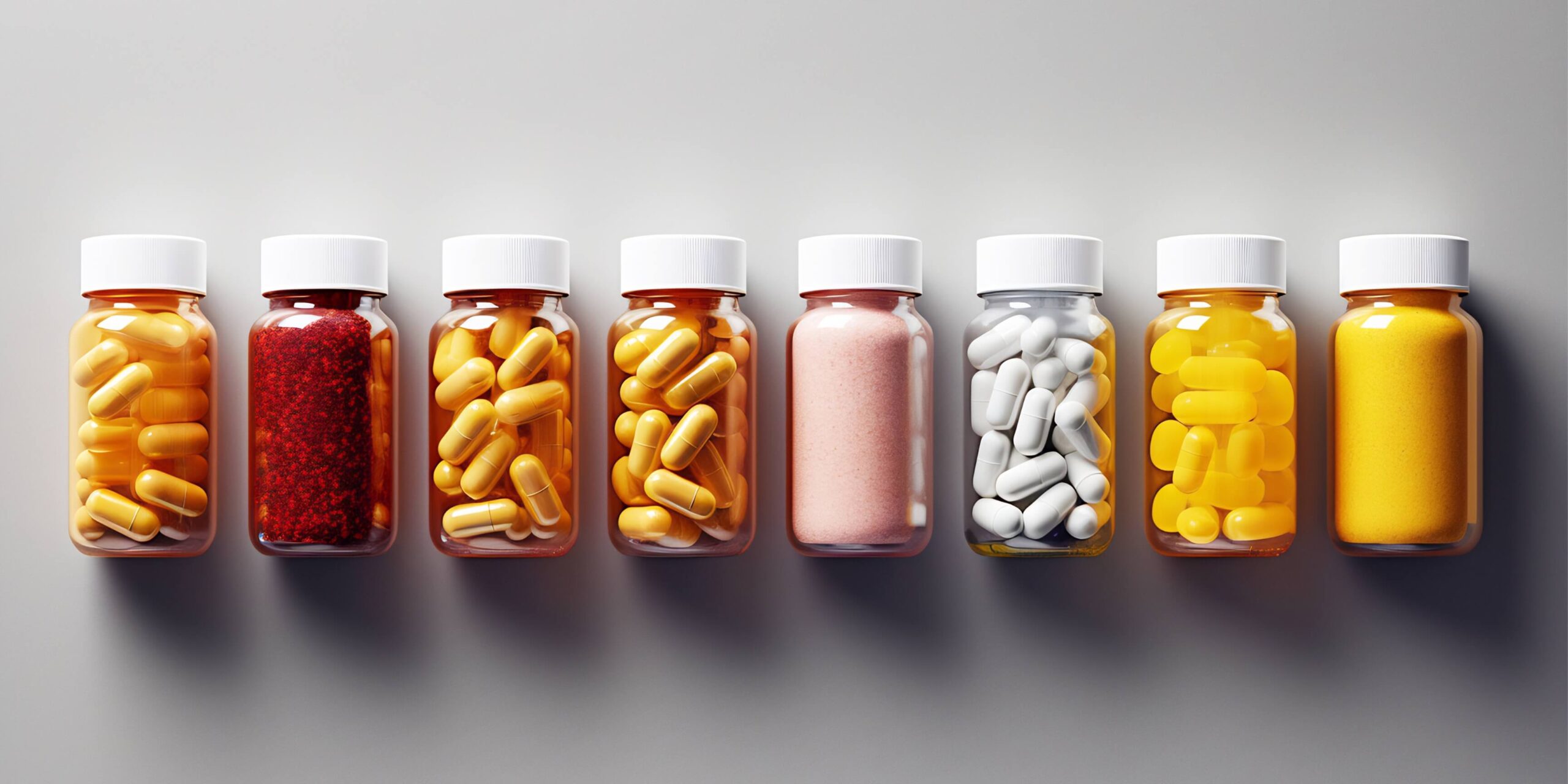
How often have you read this phrase from supposed experts, apparently described as ā€œbased on scienceā€? It usually comes from ā€œfoodiesā€ who believe that you can get all the nutrients you need from a well-balanced diet. I found an example of this in a recent book by Professor Tim Spector, who dismisses the need for vitamin C or vitamin D supplementation.

I will deal with what the science and relevant studies actually show, especially regarding supplements that are claimed to help prevent cognitive decline. But first, let’s look more deeply at the mindset behind such claims.

The idea that we can get all the nutrients we need from food makes intuitive sense. Underneath this lies the belief that we evolved to grow and survive using the nutrients available in food. Darwin reached a similar conclusion when he argued that ā€œthe conditions of existenceā€ were the main driving force in evolution.

Our Ancestors Ate Differently, Ate More, And Had Larger Brains

Extending this logic, consider the period of prehistory when hominid brain size grew steadily, culminating in Homo sapiens brain size (calculated from skull size) of almost 1,700 grams, circa 20,000 to 30,000 years ago. It has since shrunk by about 20% to today’s average brain size of less than 1,350 grams. So it is equally logical to ask: what has changed in our ā€œconditions of existenceā€ to result in our shrinking brains? If what we were eating over 20,000 years ago was closer to optimal, and what we eat now is often pathological, what are the main differences?

The first difference is the quantity of food. Today the average person expends roughly 200 to 400 calories a day on physical activity, compared to 600 to 1,200 calories per day for our ancestors; at least three times more than the average modern adult. They had to eat around three times as much as us, just to maintain weight. So even if we ate the same foods with the same nutrient density, we would still be more likely to fall short. But of course today’s food is often less nutrient-dense as well.

A simple, far less ā€œprehistoricā€ illustration is a comparison of the diet of mid-Victorian workers. A study in the Journal of the Royal Society of Medicine found that the nutrient intake of a mid-Victorian worker, while not necessarily constituting an ā€œoptimalā€ diet, had a far higher intake of vitamins, minerals and essential fatty acids than we do today. They concluded that this ā€œconstitutes a persuasive argument for a more widespread use of food fortification and/or food supplementsā€ to make up the difference. (1)

Marine Food And Brain Development

So which nutrients that were abundant in our ancestors’ diets are widely missing now? The starting point has to be marine food. Early humans had to migrate and live along the water’s edge for basic survival. Rivers, estuaries, swamplands and coasts would have provided a plentiful supply of marine foods, rich in both omega-3 and phospholipids such as choline, plus vitamin D, vitamin B12, selenium, zinc and iodine: all completely essential for brain development. Nutrient-dense foods such as molluscs, crustaceans and small fish caught in rock pools were also highly accessible. For gatherers, most likely women, these ā€œfruits de merā€ were rich pickings, and since brain development happens largely during pregnancy, maternal nutrition was especially crucial.

There is also the ā€œaquaticā€ or ā€œwaterside apeā€ hypothesis promoted by brain researcher Professor Michael Crawford, and discussed widely in popular science. Support for this hypothesis includes an analysis of the diet of a 40,000-year-old Homo sapiens discovered in a cave on the coast of South Wales. Based on bone analysis, it has been estimated that at least 20% of this individual’s diet was marine food. Considering their much higher level of physical activity, roughly half of a modern diet would need to consist of marine food in order to achieve an intake of nutrients equivalent to that consumed during the period when the brain of Homo sapiens reached its largest size.

In short, it is hard to explain human brain evolution without abundant omega-3, choline and vitamin B12, alongside a high intake of folate from plants (previously all organic).

Omega-3 & Choline

Omega-3 DHA, which is primarily found in marine foods, is a keystone nutrient for brain structure and function. Typical modern intake is often very low. The optimal intake for brain health and dementia prevention may be as much as 1,000 mg a day. The lowest risk of several diseases occurs with around 2,000 mg of omega-3 (both EPA and DHA). This kind of intake is entirely consistent with an ancestral diet rich in marine food, but it is not so easy in the average diet today without eating marine foods almost every day, which would also help provide enough choline.

The average intake of choline for women is just 278 mg, and it is even lower in vegans or those who don’t eat fish, which is expensive for those on lower incomes. To achieve an optimal intake from food alone, one would need to eat several eggs or frequent servings of fish or other marine foods most days of the week. This is unrealistic for many people.

Let’s test this from a different angle, using studies examining intakes of these nutrients and their effects on brain health, including risk of cognitive decline.

Take choline, which is richest in marine food, eggs and organ meats. A study of 125,000 people followed over 12 years, using UK Biobank data and published in the American Journal of Clinical Nutrition, found a relationship between higher dietary intake of choline and reduced dementia risk, with greatest benefits around 400 mg a day. Risk for Alzheimer’s was also lowest around this level of intake. (2)

Vitamin B12 And The ā€œBrain Shrinking Zoneā€

Why current B12 reference ranges miss dementia risk

Then there is vitamin B12, found only in foods of animal origin, and especially in marine foods and eggs. When you correctly define sufficiency (and its counterpart, deficiency) as optimal health and minimal disease risk, including dementia risk, it becomes clear that many older people need up to 500 mcg of B12 to normalise serum B12 above 500 pg/ml and to keep homocysteine below 10 µmol/L. Roughly half of those above 60 fail to meet these thresholds.

Accelerated brain shrinkage occurs below 500 pg/ml, as established by Professor David Smith’s research at Oxford University more than a decade ago. This is why several countries, such as Japan, set the ā€œnormalā€ range for serum B12 as above 500 pg/ml. Despite clear evidence over the past decade, both UK and US health authorities have failed to correct the reference range for vitamin B12, which is set at less than half this, namely around 180 pg/ml. (3)

Absorption, ageing, and how to know if you need more

A recent study of 3,000 EU children reported that the median B12 level was 347 pg/ml and one third were below 200 pg/ml. (4) This means that many children are already in the risk zone, and deficiency is more prevalent in vegan children. In older adults the problem is compounded by poor absorption, made worse by antacids, since stomach secretions are required to absorb vitamin B12. Hence, those taking PPI antacids such as omeprazole for more than 4.4 years have a 30% increased risk of dementia. (5) There is no realistic way for many older adults to achieve these required intakes of B12 from diet alone.

How do you know what you need? I recommend testing homocysteine, which tells you whether you are in the brain shrinkage risk zone above 10 µmol/L, or testing serum B12 and ensuring it is above 500 pg/ml, then supplementing accordingly with vitamin B12 or, better still, a homocysteine-lowering formula if levels fall outside the ideal range.

Vitamin D: Supplementation Is Essential In Winter Months

Vitamin D, also found in marine foods, is insufficient for a third of the year due to lack of synthesis from sunlight acting on the skin, if you rely solely on diet. A recent scientific report states: ā€œVitamin D3 plays a pivotal role not only in bone health but also in the functioning of the nervous system, particularly in the context of age-related neurodegenerative diseases such as Alzheimer’s disease, multiple sclerosis, and Parkinson’s disease.ā€ (6)

Vitamin D Levels, Brain Health and Dementia Risk

Cognitive decline is far more likely if vitamin D is low, and Alzheimer’s risk is lower when levels are higher. In one large study, those who supplement vitamin D had a lower incidence of dementia. (7) Anyone who implies you can still get enough from food in winter is less enlightened than the UK Government, who recommend everyone supplements vitamin D from October to March.

Why Testing and Target Levels Matter in Winter

Vitamin D’s protective effect depends on your blood level. I supplement 800 IU in the summer months and 3,000 IU daily in the winter months. However, the true indicator is whatever keeps my blood vitamin D level above 75 nmol/L (30 ng/ml). Bear in mind that I also eat oily fish and make a point of getting at least 20 minutes of sun exposure a day in summer months, plus a winter holiday in the sun. Factors such as darker skin, excess weight, low fish intake or low sun exposure increase your needs. That is why we recommend testing vitamin D, ideally as winter approaches and again towards the end of winter, so you know you are on track with supplementation.

A recent Chinese study published earlier this year on women over 100 found those in the highest quarter for vitamin D had an 87% reduced risk of dementia compared to those in the lowest quarter. (8) Risk was lowest in those with a blood level above 73.5 nmol/L (29.3 ng/ml). This is remarkably consistent with levels associated with benefits for bone health, immunity and many other outcomes. It is also the level our scientists set to achieve ā€œgreenā€ on the DRIfT test. The vast majority of people in the western world do not reach this level.

Vitamin C: An Essential Brain And Body Nutrient

This essential vitamin is produced by almost all animals but not humans. Guinea pigs also do not make it, which is why they became an experimental animal of choice: they share our vulnerability. We are dependent on vitamin C for many functions in the body, and thousands of studies support its roles, including as a key antioxidant, as a maker of collagen, and as a vital nutrient for immunity.

Why vitamin C is repeatedly underestimated

Yet I still read so-called experts who claim vitamin C ā€œdoes nothingā€ for colds, cancer or anything else. Are they simply not reading the science? In very high intravenous doses, it has been used in some hospital settings, including trials in critical illness. Additionally, there are examples of trials in cancer therapy, such as a randomised trial of pharmacological ascorbate alongside chemotherapy which reported improved outcomes in metastatic pancreatic cancer. (9)

If you look at recent reviews, you’ll see statements like these:

ā€œMounting evidence indicates that vitamin C has the potential to be a potent anti-cancer agent when administered intravenously and in high doses.ā€ (10)

ā€œSupplementation with vitamin C appears to be able to both prevent and treat respiratory and systemic infections… treatment of established infections requires significantly higher (gram) doses.ā€ (11)

Yet we still see claims that vitamin C does nothing for colds. One survey asked people if they took vitamin C and found no difference in incidence of COVID between those who did and did not supplement. But why would it? Vitamin C does not necessarily prevent infection. What it does, especially in higher doses upon infection, is support immune function and may reduce symptom severity and duration.

Even the critical comments in the media often refer to the meta-analysis of cold studies by Professor of Public Health Dr Harri HemilƤ in Finland. What he actually concludes is that vitamin C shortens cold duration, with dose-response effects reported in some controlled trials, and evidence of reduced pneumonia risk in certain contexts. (12)

Vitamin C, dose, and long-term brain health

I take 2 grams a day. This is consistent with what many primates achieve in the wild. We struggle to get 100 mg from food alone, a fraction of what our biology seems designed to handle.

Vitamin C also appears relevant to dementia risk. In observational research, vitamin C (especially alongside vitamin E) has been associated with lower risk of cognitive decline and Alzheimer’s, and evidence reviews have included vitamin C and E among ā€œgrade 1ā€ prevention factors in large-scale evidence mapping. (13,14)

Supplements Are Necessary For Good Health

Why deficiency-based nutrition targets are no longer fit for purpose

In conclusion, Professor David Smith, former Deputy Head of the Faculty of Medical Science at Oxford University, and I drafted this statement on supplements for Food for the Brain:

ā€˜The conventional view regarding nutritional supplements is that they are largely unnecessary if a person eats a ā€œwell-balanced dietā€. This is based on recommended intakes (RDAs, RNIs) designed to prevent classical symptoms of deficiency, such as scurvy in the case of vitamin C. Blood levels of nutrients that prevent classical deficiencies are then extended to imply that a person has sufficient nutrient status if they are above these levels.

But there is abundant evidence that levels above those used to define ā€œdeficiencyā€ may be associated with better outcomes, and these levels define a zone of ā€œnutritional insufficiencyā€. There is also a growing body of evidence from well-designed studies on specific diseases showing that supplements providing nutrients beyond basic RDAs can delay, reduce or ameliorate symptoms, and that risk often reduces steadily as nutrient status rises beyond arbitrary cut-offs.

Redefining sufficiency through disease risk and biological individuality

This illustrates that the definition of ā€œdeficiencyā€ is outdated. Deficiency means a lack of efficiency. If deficiency, and its counterpart sufficiency, were to be defined as the level of a nutrient that reduces symptoms or lowers disease risk, that definition is scientifically supportable and takes into account biochemical individuality, including genetics, environment, the microbiome and an individual’s ability to absorb nutrients.

At Food for the Brain, our overarching principle is scientific integrity: consistency with the prevailing science. We share that growing body of knowledge in a way that enables people to restore, maintain, and improve mental health.

What To Do Next?

1. Get guidance, not guesswork

If you want ongoing support, the simplest place to start is by becoming a FRIEND of Food for the Brain. For £50 a year, you get access to our full programme of free education webinars and monthly group coaching. You also get access to the COGNITION programme. This programme is designed to help you turn evidence into practical, lasting habits. It is guidance you can trust, rooted in science. It is delivered with the support of a community working towards the same goal: better brain health for all.

2. Test your brain health with a validated tool

One of the most powerful free resources we offer is the Cognitive Function Test. The test is a validated, research-backed way to check how your brain is functioning right now, across key cognitive domains.

It provides a meaningful baseline. It also helps track change over time, and can highlight where nutrition and lifestyle support may be most needed. If you want to understand your brain health before symptoms appear, this is the place to begin.

3. Take supplements, but test first

Many people take supplements with good intentions but no real clarity about whether they are helping. This is where DRIfT comes in.

DRIfT allows you to measure key brain-related biomarkers. You can see whether what you are taking is actually working, and where your priorities should lie. Instead of guessing, you can focus on what your brain genuinely needs, based on objective data.

References:

  1. P. Clayton, J Rowbotham, ā€˜An unsuitable and degraded diet? Part one: Public health lessons from the mid-Victorian working class diet’. Journal of the Royal Society of Medicine 2008: 101: 282–289. DOI 10.1258/jrsm.2008.080112; also see P. Clayton, J Rowbotham, ā€˜An unsuitable and degraded diet?. Part two: Realities of the mid-Victorian diet’ Journal of the Royal Society of Medicine 2008: 101: 350– 357. DOI 10.1258/jrsm.2008.080113
  2. Ying-ying Niu, Hao-yu Yan, Jian-feng Zhong, Zhi-quan Diao, Jing Li, Cheng-ping Li, Lian-hong Chen, Wen-qi Huang, Miao Xu, Zhi-tong Xu, Xiao-feng Liang, Zhi-hao Li, Dan Liu. Association of dietary choline intake with incidence of dementia, Alzheimer disease, and mild cognitive impairment: a large population-based prospective cohort study. The American Journal of Clinical Nutrition, Volume 121, Issue 1, 2025, Pages 5-13, ISSN 0002-9165, https://doi.org/10.1016/j.ajcnut.2024.11.001
  3. Smith AD, Refsum H. Do we need to reconsider the desirable blood level of vitamin B12? J Intern Med. 2012 Feb;271(2):179-82. doi: 10.1111/j.1365-2796.2011.02485.x. Epub 2011 Dec 11. PMID: 22092891.
  4. Kara İS, Peker NA, Dolğun İ, Mertoğlu C. Vitamin B12 Level in Children. J Curr Pediatr. 2023 Aug;21(2):127-134. doi:10.4274/jcp . 2023.75688.
  5. Cumulative Use of Proton Pump Inhibitors and Risk of Dementia: The Atherosclerosis Risk in Communities Study. Carin Northuis, Elizabeth Bell, Pamela Lutsey, Kristen M George, Rebecca F. Gottesman, Tom H. Mosley, Eric A Whitsel, Kamakshi Lakshminarayan, Neurology Aug 2023, 10.1212/WNL.0000000000207747; DOI: 10.1212/WNL.0000000000207747
  6. Pietruszkiewicz J, Mrozek K, Zwierz M, Wińska A, Suprunowicz M, Oracz AJ, Waszkiewicz N. The Neuroprotective Potential of Vitamin D3. Nutrients. 2025 Oct 12;17(20):3202. doi: 10.3390/nu17203202. PMID: 41156455; PMCID: PMC12566728.
  7. Ghahremani M, Smith EE, Chen HY, Creese B, Goodarzi Z, Ismail Z. Vitamin D supplementation and incident dementia: Effects of sex, APOE, and baseline cognitive status. Alzheimers Dement (Amst). 2023 Mar 1;15(1):e12404. doi: 10.1002/dad2.12404. PMID: 36874594; PMCID: PMC9976297.
  8. Li Y, Wang X, Yu M, Wang F, Song D, Liu M,Liang X, Liu H, Liu J, Fu S and Liu X (2025). The relationship between vitamin D levels and Alzheimer’s disease risk: insights from a centenarian study of Chinese women. Front. Nutr. 12:1628732.doi: 10.3389/fnut.2025.1628732
  9. Bodeker KL, Smith BJ, Berg DJ, Chandrasekharan C, Sharif S, Fei N, Vollstedt S, Brown H, Chandler M, Lorack A, McMichael S, Wulfekuhle J, Wagner BA, Buettner GR, Allen BG, Caster JM, Dion B, Kamgar M, Buatti JM, Cullen JJ. A randomized trial of pharmacological ascorbate, gemcitabine, and nab-paclitaxel for metastatic pancreatic cancer. Redox Biol. 2024 Nov;77:103375. doi: 10.1016/j.redox.2024.103375. Epub 2024 Oct 2. PMID: 39369582; PMCID: PMC11491967.

Further info

The Midlife Biomarker Proven to Drive Alzheimer’s – And How to Bring It Down

The Midlife Biomarker Proven to Drive Alzheimer’s – And How to Bring It Down

Homocysteine is one of the few Alzheimer’s risk factors that is causal and modifiable, and it often begins rising in midlife, making it a valuable Alzheimer’s biomarker to monitor.

It is the only measurable Alzheimer’s risk factor where lowering it has been shown to slow the disease process itself. When homocysteine rises, the brain shrinks faster. When it is lowered with the right nutritional support, shrinkage slows and thinking skills stabilise [1][3][4].

Yet despite decades of evidence, most people have never been told to test it. Most health systems never mention it at all.

This matters because homocysteine begins to rise years before symptoms develop. It gives us a glimpse into the future health of the brain long before memory changes appear. And midlife is the moment where this shift becomes easiest to detect and easiest to change. Far from being the start of inevitable decline, it is a powerful opportunity for prevention.

What Is Homocysteine and Why Does the Brain Care?

Homocysteine is a natural amino acid produced during methylation, the process the body uses to build and repair cells, process toxins, create neurotransmitters and maintain healthy brain tissue. When methylation runs smoothly, homocysteine stays low. When the system struggles, homocysteine rises.

Elevated homocysteine affects the brain in several ways:
• It accelerates shrinkage of the hippocampus, the brain’s memory centre [3].
• It increases oxidative stress and inflammation [1].
• It injures small blood vessels, increasing microvascular damage seventeen-fold [2].
• It disrupts the formation of neuronal membranes [1].

These are not abstract processes. They are part of the biology that leads to cognitive decline.

Homocysteine is therefore both a predictor and a causal contributor to these mechanisms. Scientists use the word causal when lowering a factor has been shown to change the underlying disease process. Homocysteine meets this definition because reducing it slows brain shrinkage and slows cognitive decline, which no amyloid-targeting drug has yet achieved [1][3][4].

Why Homocysteine Is a Causal Alzheimer’s Risk Factor

A causal relationship in medicine is established when different kinds of evidence all point in the same direction. Homocysteine fulfils these criteria in a way no other Alzheimer’s biomarker has been shown to do in human intervention trials

Large population studies show that higher homocysteine levels predict faster cognitive decline and a greater risk of dementia [6][10]. These relationships are consistent, and they follow a clear pattern: the higher the level, the faster the decline.

Researchers also understand why this happens. Homocysteine places strain on the brain in multiple ways. It injures the lining of small blood vessels, increases oxidative stress, disrupts methylation and accelerates the atrophy characteristic of Alzheimer’s disease [1][2].

But the strongest evidence comes from intervention. In the Oxford trials, people with raised homocysteine who were given vitamin B6, B12 and folate experienced a remarkable slowing of brain shrinkage. In those with sufficient omega 3, the reduction in atrophy reached up to 73 per cent [3]. Cognitive decline slowed or even stopped for many participants [4]. When changing a factor changes the outcome, that factor can be considered causal.

This makes homocysteine fundamentally different from more widely discussed markers such as amyloid or p-tau.

Why Homocysteine Rises in Midlife

Homocysteine does not increase because the brain is failing. It rises slowly and quietly in midlife for many reasons that are understandable and often reversible.

During these decades, the body begins to handle nutrients slightly differently, and small shifts in lifestyle or physiology can place more demand on the pathways that keep homocysteine under control.

One of the earliest changes is a gradual reduction in stomach acid that happens in many, which makes it harder for the body to absorb vitamin B12. Many people also take acid-suppressing medication long term, which compounds the issue. At the same time, daily stress tends to increase during these years. Stress uses up B vitamins more quickly, increasing the strain on methylation.

Blood sugar regulation also plays a role. Diets higher in sugar and refined carbohydrates push the body towards insulin resistance, and this metabolic pressure can lift homocysteine levels [8]. Women often face an additional shift: the natural decline in oestrogen during perimenopause. Oestrogen normally supports methylation and antioxidant capacity, so its fall makes the brain more sensitive to nutritional gaps.

There is also the modern reality that many midlife adults eat less oily fish or plant-based omega 3 sources. Without enough DHA, the brain cannot use B vitamins as effectively for repair [5][11]. And for some, medications such as metformin or certain anticonvulsants further deplete essential vitamins.

By themselves, these changes are small. But together (plus others not mentioned), they create a gentle upward drift in homocysteine that can continue for years without noticeable symptoms. The hopeful part is that every single one of these factors is modifiable. Midlife is not a point of no return. It is the moment where small corrections create the greatest long-term benefit.

How Rising Homocysteine Changes the Brain

As homocysteine increases, a series of changes begins to shape how the brain functions long before any formal diagnosis is made. 

MRI studies show that higher homocysteine is linked with faster atrophy in regions most affected in Alzheimer’s disease, particularly the hippocampus [3]. This shrinkage is not sudden. It reflects long-term strain on neurons and on the methylation pathways the brain relies on to repair itself.

Homocysteine also affects the brain’s vascular system. It damages the delicate lining of small blood vessels, increasing the likelihood of microvascular injury and transient ischaemic events [2]. These events are often too small to be noticed clinically, yet they can gradually reduce mental clarity, processing speed and resilience.

Another important effect is its influence on neurotransmitters. Methylation is essential for producing dopamine, serotonin and acetylcholine, which underpin mood, motivation and memory. When methylation slows, people often describe feeling foggy, flat or less emotionally steady. Although this article focuses on Alzheimer’s processes, the effects of raised homocysteine reach far beyond memory alone.

All of this is amplified by increased oxidative stress, which makes the brain more vulnerable to inflammation and everyday wear and tear. This combination of structural, vascular and chemical changes explains why midlife is often the first time people notice subtle shifts such as word-finding pauses, irritability, lower stress tolerance or difficulty multitasking. They are small clues that the brain’s repair systems are under pressure, long before disease takes hold.

Learn more about oxidative stress in the video below:

One of the most striking discoveries in homocysteine research is how closely it interacts with omega 3 fatty acids. The brain is structurally rich in DHA, the omega 3 found in oily fish, and it depends on DHA to build and maintain healthy neuronal membranes. B vitamins play a crucial role here because they enable DHA to be incorporated into the phospholipids that make up these membranes.

When DHA levels are low, the brain cannot carry out this repair process efficiently, which means B vitamins have far less impact on slowing cognitive decline. But when DHA is sufficient, the picture changes. In clinical studies, the combination of high DHA and adequate B vitamins produced the greatest reduction in brain shrinkage, particularly in areas vulnerable to Alzheimer’s pathology [5][11]. This synergy is one of the clearest examples of how nutrients work together, rather than in isolation, to support long-term brain health. This is why the Food for the Brain DRIfT test measures both homocysteine and the omega 3 index. These markers do more than signal different aspects of nutritional need. They interact in a way that shapes the brain’s ability to repair itself, making them essential parts of an effective prevention strategy.

What You Can Do: How to Lower Homocysteine Safely

The hopeful part of this story is that homocysteine is one of the simplest biomarkers to measure and improve.

1. Measure it

Optimal levels are generally between 6 and 8 micromoles per litre. Order your at home test here – available internationally.

2. Increase key nutrients

Homocysteine is lowered by vitamin B6, folate, vitamin B12 and choline [1][9]. These nutrients can be supplemented and are found in foods such as leafy greens, eggs, lentils, beef, salmon, chickpeas and nutritional yeast. Many people benefit from targeted supplementation: read more here.

3. Support omega-3 intake

DHA from oily fish or algae helps the brain use B vitamins effectively [11].

4. Reduce sugar and ultra-processed foods

This lowers metabolic stress and improves methylation [8].

5. Address underlying factors

Gut health, stomach acid, hormonal changes and medication use all play a role.

Together these simple changes create powerful momentum. Midlife becomes a decade of opportunity rather than ā€˜inevitable’ decline.

Homocysteine gives us one of the clearest signals of how the brain is ageing long before symptoms appear. It rises for understandable, reversible reasons and responds quickly to targeted support. More importantly, lowering it has been shown to slow the disease process itself.

This means midlife is not a waiting room for cognitive decline. 

It is the moment when we can influence our long-term brain health most powerfully.

Checking homocysteine is one of the simplest and most effective ways to do that.

References:

  1. Smith AD, Refsum H. Homocysteine, B vitamins and cognitive impairment. Annu Rev Nutr. 2016;36:211-239.
  2. Smith AD, Refsum H, Bottiglieri T, et al. Homocysteine and dementia: an international consensus statement. J Alzheimers Dis. 2018;62(2):561–570.
  3. Douaud G, Refsum H, de Jager CA, et al. Preventing Alzheimer’s disease-related gray matter atrophy by B-vitamin treatment. Proc Natl Acad Sci USA. 2013;110(23):9523–9528.
  4. de Jager CA, Oulhaj A, Jacoby R, et al. Cognitive and clinical outcomes of homocysteine-lowering B-vitamin treatment in mild cognitive impairment. Int J Geriatr Psychiatry. 2012;27(6):592–600.
  5. JernerĆ©n F, Elshorbagy AK, Oulhaj A, et al. Brain atrophy in cognitively impaired elders: the role of homocysteine and long-chain omega 3 fatty acids. Clin Chem Lab Med. 2015;53(3):435–443.
  6. Zhang X, Huang Y, Wang Y, et al. Elevated plasma homocysteine levels contribute to increased risk of dementia: a meta-analysis. J Alzheimers Dis. 2016;52(4):1227–1237.
  7. McCaddon A. Homocysteine and cognitive decline: a vitamin B story. Br J Nutr. 2014;111(2):279–280.
  8. Smith AD, Refsum H. Can nutrition prevent Alzheimer’s disease? Nutrients. 2021;13(1):1–33.
  9. Smith AD. B vitamins and the prevention of cognitive decline and dementia. Adv Nutr. 2021;12(5):1836–1844.
  10. Nurk E, Refsum H, Tell GS, et al. Plasma homocysteine and memory in the elderly. Am J Clin Nutr. 2005;82(3):493–498.
  11. Oulhaj A, JernerĆ©n F, Refsum H, et al. Omega 3 fatty acids interact with B vitamins in slowing cognitive decline in mild cognitive impairment. Am J Clin Nutr. 2016;103(6):1041–1048.
  12. Ford AH, Almeida OP. Effect of homocysteine lowering treatment on cognitive outcomes. J Alzheimers Dis. 2019;69(2):443–456.

Further info

Ā A National Step Forward for Brain Health

A National Step Forward for Brain Health

Copy-of-Innovate-UK-backs-Food-for-the-Brain-to-advance-early-dementia-detection

Food for the Brain awarded an Innovate UK grant to advance early dementia detection and prevention

We are delighted to announce that Food for the Brain Foundation has been awarded a prestigious grant from Innovate UK, part of UK Research and Innovation (UKRI) – national recognition of our pioneering work in dementia prevention and early detection.

Importantly, this funding marks a milestone for us as a UK-based research charity. It also represents a significant step forward for our global community of citizen scientists, clinicians, and individuals dedicated to preventing Alzheimer’s, dementia, and cognitive decline.

For us, this is not just a charity and research achievement – it’s a sign that the world is waking up to prevention.

Why this matters?

Right now, someone in the UK develops dementia every three minutes. Across the globe, it’s every three seconds. And despite this, dementia cost the world over US$1.3 trillion in 2019, yet countless cases remain undiagnosed.

For nearly two decades, we have led the charge in prevention. So far, over 400,000 people worldwide have taken our Cognitive Function Test (CFT) – a free, validated online tool that helps you understand your brain health, assess your risks, and take action to improve.

This grant from Innovate UK, part of the UK’s national innovation agency, provides crucial funding to further validate and expand our tools for early dementia detection and – ultimately – prevention.

It forms part of the Blood Biomarker Challenge, a UK-wide research initiative, which aims to integrate blood-based biomarker testing into NHS diagnostic pathways.

Our Cognitive Function Test (CFT) has been selected to assess cognitive performance in the READ-OUT trial – part of this Innovate UK-funded programme, supported by the Department of Health and Social Care, the NIHR, and Alzheimer’s Research UK.

It will allow us to:

  • Integrate our Cognitive Function Test into NHS-linked research, workflows, and clinical studies, thereby bridging science and healthcare delivery.
  • Further expand access to our evidence-based prevention tools – making them mobile-friendly, multilingual, and culturally inclusive for global use.

About Innovate UK

Innovate UK is the UK government’s innovation agency, supporting organisations that deliver real-world impact across science, technology, and health. Each year, it invests over Ā£1 billion in ideas that can transform industries, economies, and lives – from sustainable energy and biotech to healthcare innovation.

Receiving an Innovate UK grant means your project has been rigorously evaluated for its scientific quality, innovation, feasibility, and potential global impact.

Emma George CEO of Food for the Brain

ā€œThis project marks a step-change in how we approach dementia,ā€ said Emma George, CEO of the Food for the Brain Foundation. ā€œWith Innovate UK’s support, we can validate the Cognitive Function Test within the NHS and move closer to a future where true prevention, by protecting brain health, is routine and accessible to all.ā€
Emma George, CEO, Food for the Brain Foundation

What this means for global brain health and dementia detection?

Our Cognitive Function Test (CFT) is the only freely available online tool that measures cognitive performance. It also provides a personalised Dementia Risk Index, based on eight key lifestyle and biological factors.

With this grant, we can now take the next step – integrating this digital test with blood test data from our DRIfT (Dementia Risk Index Functional Test).

The DRIfT test measures five critical nutritional biomarkers proven to influence cognitive ageing:

  • Omega-3 Index – vital brain fats that support memory and neuronal health
  • Vitamin D – essential for mood, immunity, and brain protection
  • Homocysteine – a marker of B-vitamin status; high levels increase the risk of brain shrinkage
  • HbA1c – a measure of long-term blood sugar control linked to brain energy supply
  • Glutathione Index – the body’s master antioxidant defence

Combining these markers with our multilingual, free Cognitive Function Test means that more and more people can detect early warning signs of cognitive decline. This can happen decades before diagnosis. This empowers them to take action early – and prevent it. Together, these innovations represent the future of dementia detection and prevention.

Why prevention and early dementia detection must come first?

Despite billions spent on drug development, no Alzheimer’s medication to date has shown meaningful improvement in cognitive outcomes. In fact, many come with serious side effects, including brain swelling and bleeding. (Read more Alzheimer’s drugs here and here.)

That’s why our focus, and now Innovate UK’s, is on early dementia detection.

Identifying risk early, addressing nutritional and metabolic imbalances, and protecting the brain before damage occurs.

Patrick Holford founder of Food for the Brain

ā€œFor nearly two decades we’ve been proving that Alzheimer’s is preventable. This grant allows us to bring that proof into mainstream healthcare and make prevention available to all.ā€   
Patrick Holford, Founder, Food for the Brain Foundation

Take part – protect your brain, advance the science, stay sharp for life

Ultimately, this work only matters if people like you take part.

By joining our global citizen-science movement, you’ll help us refine and accelerate the world’s first large-scale dementia prevention database.

Step 1: Take the free Cognitive Function Test

A quick, 20-minute online test that shows you how well your brain is performing and what to do next.

Step 2: Complete the DRIFT biomarker test

A simple at-home finger-prick blood test that measures your omega-3, vitamin D, B-vitamin, blood sugar, and antioxidant status.

Step 3: Become a FRIEND of Food for the Brain

For just Ā£50 a year or Ā£5 a month, you can support our research and charitable work. You’ll also gain access to cognition logo– your personalised brain upgrade programme. Additionally, enjoy monthly group coaching sessions and live webinars.

Looking ahead: the future of dementia detection and prevention

With the support of Innovate UK, the NHS, and thousands of citizen scientists and Friends, we’re building a future where Alzheimer’s is preventable, not inevitable.

Ultimately, this grant strengthens our ability to deliver credible, evidence-based tools that empower everyone to take charge of their cognitive health – starting today.

Take the test. Join the study. Be part of prevention.
šŸ‘‰ foodforthebrain.org/tests | foodforthebrain.org/driftstudy

Reference:

Further info

8 Natural Ways to Lower Homocysteine Levels

8 Natural Ways to Lower Homocysteine

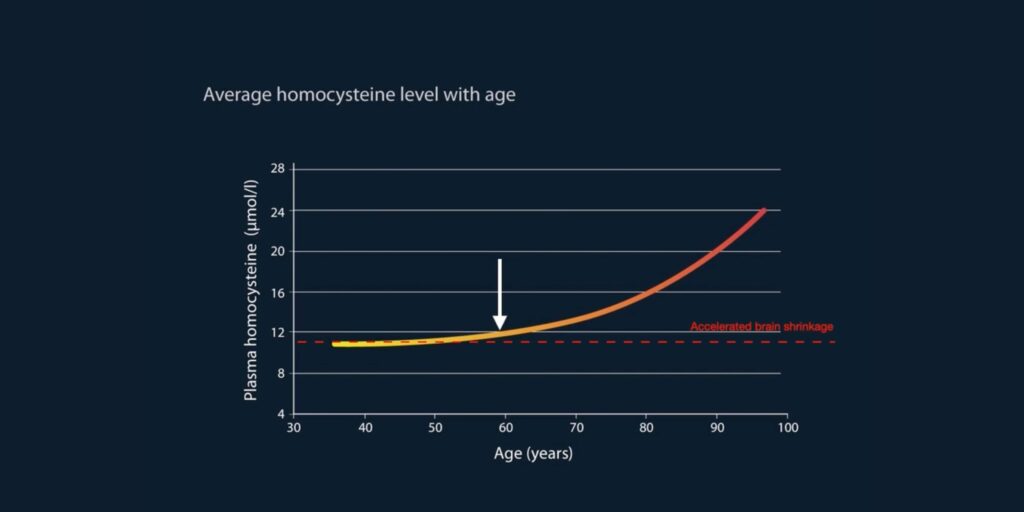
8 Natural Ways to Lower Homocysteine article image of a table - average homocysteine level with age

If you’ve discovered that your homocysteine level is higher than you’d like, the good news is that it’s often one of the most responsive biomarkers to diet and lifestyle changes. Small, consistent improvements in nutrition, physical activity and everyday habits can make a meaningful difference.

This guide focuses on eight practical, evidence-informed strategies that may help support healthy homocysteine levels, from eating more folate-rich foods and optimising key B vitamins to improving sleep, staying active and reducing alcohol intake.

If you’re looking for a complete explanation of what homocysteine is, why it matters, what causes elevated levels, how to interpret your test results and the science behind lowering homocysteine, read our complete guide to lowering homocysteine first. This article is designed to help you put that knowledge into practice.

Before trying to lower your homocysteine, it’s worth making sure you understand your test result. If you’ve already had a blood test, our guide to Homocysteine Levels Explained can help you interpret your homocysteine level and understand what it may mean for your health.

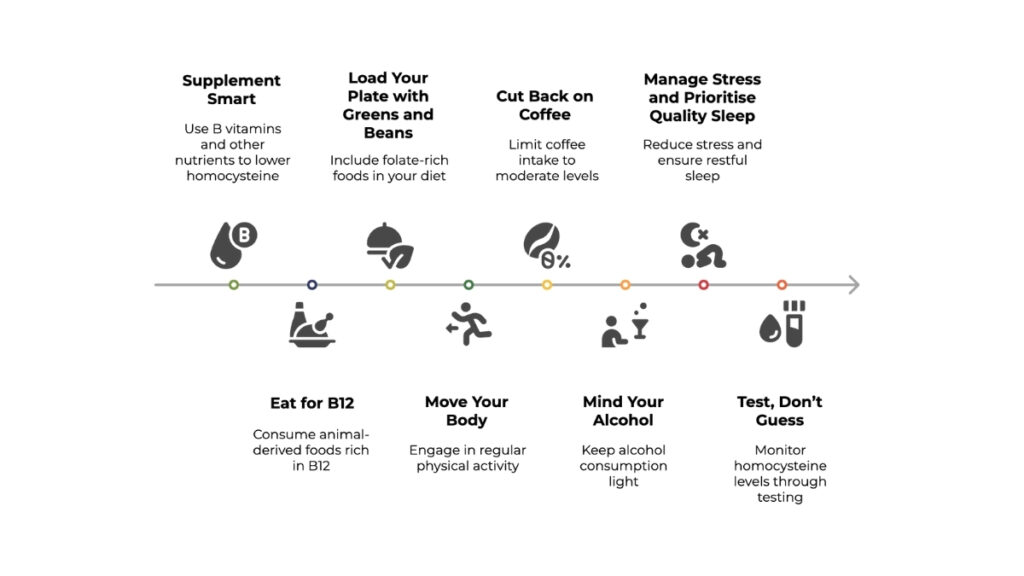
Here are eight proven ways to bring your homocysteine levels into the optimal range and keep your brain firing on all cylinders:

  • 1. Supplement Smart: The B Vitamin Trio (and Friends)

    The fastest way to reduce homocysteine is through targeted supplementation. The ā€˜magic trio’ is vitamin B6 (20mg), B12 (500µg as methylcobalamin), and methylfolate (400µg). A major paper has shown that supplementing these B vitamins not only lowers homocysteine, but also slows brain shrinkage and cognitive decline in people with mild cognitive impairment. Add trimethylglycine (TMG), zinc, and N-acetyl cysteine (NAC) for additional support, particularly in older adults with memory concerns. These nutrients work synergistically to support methylation and brain function. (1) Get our supplement guidelines here.

  • 2. Eat for B12: Fish, Eggs, Dairy and Meat

    One of the most effective strategies is eating more foods that lower homocysteine. Vitamin B12 is primarily found in animal-derived foods. Aim to eat oily fish three times a week, eggs most days, and small amounts of organic meat or dairy (if tolerated). Pescatarians thrive here. For vegans, the focus should be on fortified foods and sources such as shiitake mushrooms. However, supplementation and regular testing are strongly recommended to ensure optimal levels. Poor B12 absorption – particularly in older adults or those taking proton pump inhibitors – is a common risk factor for elevated homocysteine and brain shrinkage (1,2).

  • 3. Load Your Plate with Greens and Beans

    Folate is critical for methylation. Aim for seven servings of fruit and vegetables ​​a day. Prioritise leafy greens, broccoli, lentils, chickpeas, and asparagus. These naturally support homocysteine metabolism and keep your methylation processes running smoothly (1).

  • 4. Move Your Body

    Regular physical activity helps lower homocysteine. Studies show that consistent aerobic or resistance exercise can reduce levels, improve circulation, and support metabolic health. Aim for at least 30 minutes of brisk walking, cycling, or swimming five times a week to complement your nutritional strategy (3).

  • 5. Cut Back on Coffee – Especially Excessive Intake

    Drinking more than two cups of coffee a day can raise homocysteine levels. While low to moderate coffee intake mayĀ  offerĀ  some antioxidant benefits, high intake (six or more cups a day) has been linked to elevated homocysteine levels and an increased risk of dementia (4).

  • 6. Mind Your Alcohol

    Keep it light. Up to seven small glasses (125ml) of red wine or two pints of beer per week is the maximum. Excess alcohol increases homocysteine levels and impairs nutrient absorption – particularly of B vitamins (1).

  • 7. Manage Stress and Prioritise Quality Sleep

    Chronic stress may indirectly raise homocysteine by increasing inflammation and depleting vitamin B6 – both linked to higher mortality and accelerated cellular ageing (5).Make stress reduction a priority. Meditation, yoga, deep breathing, regular exercise, and talking therapies are all effective. Equally important is prioritising restorative sleep. The brain clears toxins and resets during deep sleep – both are vital for healthy methylation. Learn more about sleep and your brain.

  • 8. Test, Don’t Guess – Know Your Level

    You can’t manage what you don’t measure. Have your homocysteine levels tested. We now offer at-home pinprick tests, which also contribute to our ongoing research. Don’t be surprised if your levels are higher than expected. Forty per cent of people over 60 have homocysteine levels above 11 µmol/L. As we age, our ability to absorb vitamin B12 declines (3).

Infographic titled

Homocysteine is a key indicator for cognitive and overall health. As we can see, with a few dietary tweaks, lifestyle upgrades, and targeted nutrients, you can lower your homocysteine, support methylation, and quite literally upgrade your brain!

Start today:

  1. Join our research and test your homocysteine level today. Purchase a single homocysteine test here or get it as part of the DRIfT 5 in 1 test, which also measures your antioxidant status (another world first in accurate home testing), omega-3, vitamin D and HbA1c.
  2. Read more in the Upgrade Your Brain book – This fully referenced guide offers practical strategies to improve your brain health – including how to lower homocysteine through diet, lifestyle, and supplementation.
  3. Support our charitable work by becoming a FRIEND. From just £5 a month, you can help fund vital research and public education. Become a FRIEND today
References:

1 Smith AD, Refsum H. Homocysteine – from disease biomarker to disease prevention. J Intern Med. 2021 Oct;290(4):826-854.

2 Vogiatzoglou A, Refsum H, Johnston C, et al. Vitamin B12 status and rate of brain volume loss. Neurology. 2008 Sep 9;71(11):826-32.

3 Vincze G, et al. Physical activity and plasma homocysteine in the elderly: the Rotterdam Study. Am J Clin Nutr. 2011;93(5):1025–31.


Further info

Four Quick Wins to Reduce Your Risk of Alzheimer’s

Four Quick Wins to Reduce Your Risk of Alzheimer’s

What can you do, practically and quickly, to reduce your risk of developing Alzheimer’s?

The International Alzheimer’s Prevention Expert Group, including our founder Patrick Holford, has identified four key areas that could cut your future risk by over 80% – down to less than a quarter – if addressed early.

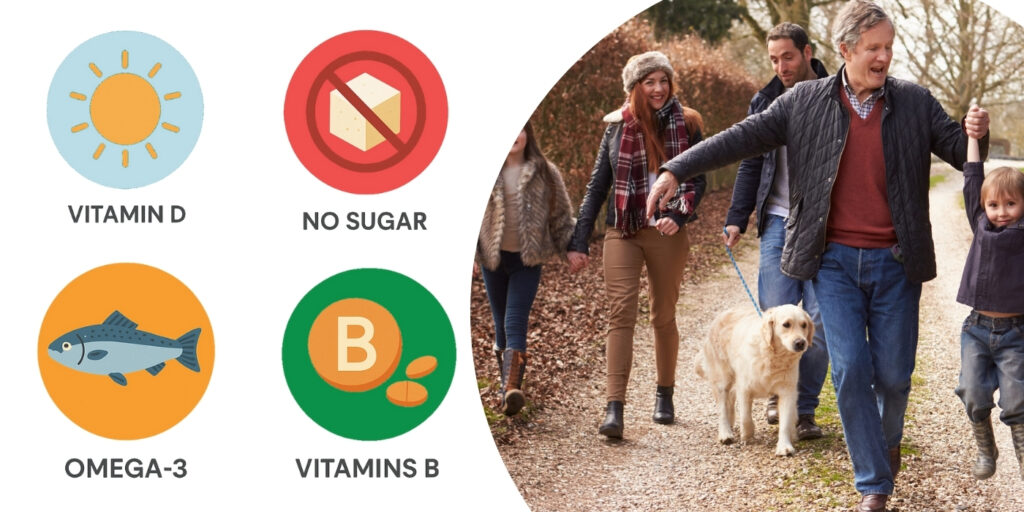
The four “quick wins”? Increase your vitamin D, omega-3, and B vitamins, and reduce your intake of sugar and refined carbs.

1. Vitamin D: The Sunshine Factor

Vitamin D is primarily made in your skin through sun exposure, particularly at midday in the summer. However, in the winter – especially in the UK and other northern countries – you cannot make enough, so supplementation is essential. A Dutch study found that people with low levels of vitamin D, omega-3s, and B vitamins were over four times more likely to develop dementia¹. Those who supplement with vitamin D have around a third less risk².

Even levels below 62.5 nmol/L (25 ng/mL) increase risk. A French study found that low vitamin D levels tripled Alzheimer’s risk³. The darker your skin, the more sun exposure you need – which makes supplementation all the more vital for many.

2. Omega-3: Feed Your Brain with Fish

Fish is a true brain food – rich in omega-3s, vitamin D, and B12. Eating fish at least once a week reduces Alzheimer’s risk by a third⁓. A recent review confirmed that a daily serving cuts the risk of cognitive decline by 30%⁵.

Omega-3 fats (especially DHA) quite literally build brain cells. The UK Biobank study of over 250,000 people found that those with higher omega-3 levels had a 20% lower risk of dementia⁶. A US study also found that a higher omega-3 index correlated with more white matter in the brain and better cognitive function⁷.

Professor William Harris of the Fatty Acid Research Institute calls it ā€œa safe, simple, cheap and effective tool to forestall Alzheimer’s.ā€

3. B Vitamins: The Brain Fixers

B6, B12, and folate don’t just support brain function – they’re essential for fixing omega-3s into your brain’s cell membranes. Without them, homocysteine – a toxic amino acid – builds up in your blood. High levels (above 11 μmol/L) are strongly linked to brain shrinkage and Alzheimer’s.

Half of people over 60 in the US have homocysteine levels above 11. The Dutch study found that risk rises even above 8 – a level many people exceed.

As Professor Joshua Miller from Rutgers University says, raised homocysteine is an early warning sign: ā€œa canary in the coal mine.ā€ The good news? It’s easily lowered with a B vitamin supplement – ideally one containing 500 mcg of B12, methylfolate, and B6.

More greens, beans, nuts, and lentils also help. A recent study showed that replacing just one serving of processed meat with nuts or beans (rich in folate) cut dementia risk by 19%⁸.

4. Sugar and Refined Carbs: Silent Brain Saboteurs

The more sugar a person eats – including refined white carbohydrate foods such as bread, pastries, pasta, and rice – the higher their risk of both diabetes and dementia. Fizzy drinks and ultra-processed foods, sweetened with high-fructose corn syrup, are particularly bad for the brain.
ā€œThe brain needs the most energy of any organ, so it has the most mitochondria to make it. Sugar damages mitochondria,ā€ says Dr Robert Lustig from the University of California, San Francisco.

A study just published this month in Neurology involving 2 million people shows that those with sugar problems (metabolic syndrome) are 24% more likely to develop dementia early¹⁰.
Keeping blood glucose levels in the low–normal range is reflected by a low glycosylated haemoglobin (HbA1c), which is the blood test doctors use to diagnose diabetes. Having a lower HbA1c is associated with reduced risk for dementia in several studies⁹. A recent study of 374,021 older men with diabetes found that keeping HbA1c stable over three years cut the risk of dementia by a third¹¹.


Want to know what’s driving your brain risk?


Take our free 3-minute Alzheimer’s Prevention Check at alzheimersprevention.info – or, for the full picture, order the four-in-one home blood test to measure your omega-3 index, vitamin D, homocysteine and HbA1c: foodforthebrain.org/tests


Test Your Cognitive Function Now green banner.

References:

2 Ghahremani M, et al. Vitamin D supplementation and incident dementia: Effects of sex, APOE, and baseline cognitive status. Alzheimers Dement (Amst). 2023 Mar;15(1):e12404. doi: https://doi.org/10.1002/dad2.12404

 3 Feart C, et al. Associations of lower vitamin D concentrations with cognitive decline and long-term risk of dementia and Alzheimer’s disease in older adults. Alzheimers Dement. 2017 Nov;13(11):1207-1216. doi: https://doi.org/10.1016/j.jalz.2017.03.003

4 Beydoun MA, et al. Epidemiologic studies of modifiable factors associated with cognition and dementia: systematic review and meta-analysis. BMC Public Health. 2014;14:643. doi: https://doi.org/10.1186/1471-2458-14-643

5 Godos J, et al. Fish consumption, cognitive impairment and dementia: an updated dose-response meta-analysis of observational studies. Aging Clin Exp Res. 2024;61:3731–3739. doi: https://doi.org/10.1007/s40520-024-02823-6

6 Sala-Vila A, et al. Plasma Omega-3 Fatty Acids and Risk for Incident Dementia in the UK Biobank Study: A Closer Look. Nutrients. 2023 Nov;15(23):4896.

7 Loong S, et al. Omega-3 Fatty Acids, Cognition, and Brain Volume in Older Adults. Brain Sci. 2023;13:1278. doi: https://doi.org/10.3390/brainsci13091278

8 Li Y, et al. Long-term intake of red meat in relation to dementia risk and cognitive function in US adults. Neurology.2025;104(3):e210286. doi: https://doi.org/10.1212/WNL.0000000000210286

9 Luchsinger JA, et al. Hyperinsulinemia and risk of Alzheimer disease. Neurology. 2004;63(7):1187–92. doi:https://doi.org/10.1212/01.WNL.0000140292.04932.04932.87;  see also Abbatecola AM, et al. Insulin resistance and executive dysfunction in older persons. J Am Geriatr Soc.2004;52(10):1713–

8. https://doi.org/10.1111/j.1532-5415.2004.52466.x ;see also Xu WL, et al. Uncontrolled diabetes increases the risk of Alzheimer’s disease: a population-based cohort study. Diabetologia. 2009;52(6):1031–

9. doi: 10.1007/s00125-009-1323-x ;see also Hassing LB, et al. Type 2 diabetes mellitus contributes to cognitive decline in old age: a longitudinal population-based study. J Int Neuropsychol Soc. 2004;10(4):599–607. https://doi.org/10.1017/S1355617704104165
; see also Yaffe K, et al. Glycosylated hemoglobin level and development of mild cognitive impairment or dementia in older women. J Nutr Health Aging. 2006;10(4):293–5. https://pubmed.ncbi.nlm.nih.gov/16886099/ ; see also Roberts RO, et al. Diabetes and elevated hemoglobin A1c levels are associated with brain hypometabolism but not amyloid accumulation. J Nucl Med. 2014;55(5):759–64. https://jnm.snmjournals.org/content/55/5/759 

10  Lee JY, Han K, Kim J, Lim JS, Cheon DY, Lee M. Association Between Metabolic Syndrome and Young-Onset Dementia: A Nationwide Population-Based Study. Neurology. 2025 May 27;104(10):e213599. doi: 10.1212/WNL.0000000000213599. Epub 2025 Apr 23. PMID: 40267374.11 Underwood PC, et al. HbA1c time in range and dementia. JAMA Netw Open. 2024;7(8):e2425354. doi: https://doi.org/10.1001/jamanetworkopen.2024.25354

Further info

How to Alzheimer’s-proof yourself

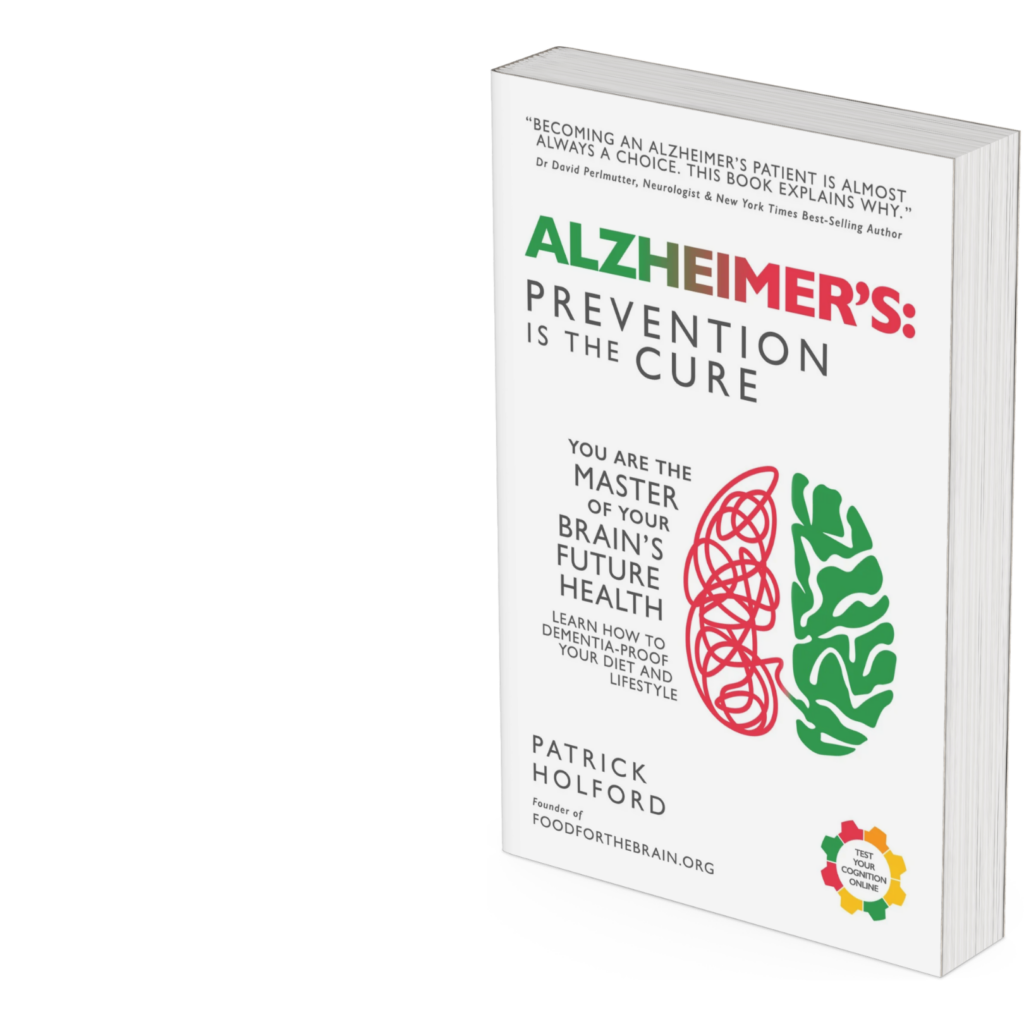
Patrick Holford’s new book claims that almost no one needs to develop Alzheimer’s.

Fewer than 1% of Alzheimer’s cases are genetic, and amyloid deposits – long targeted by new drugs – are neither the cause of the disease nor its cure.

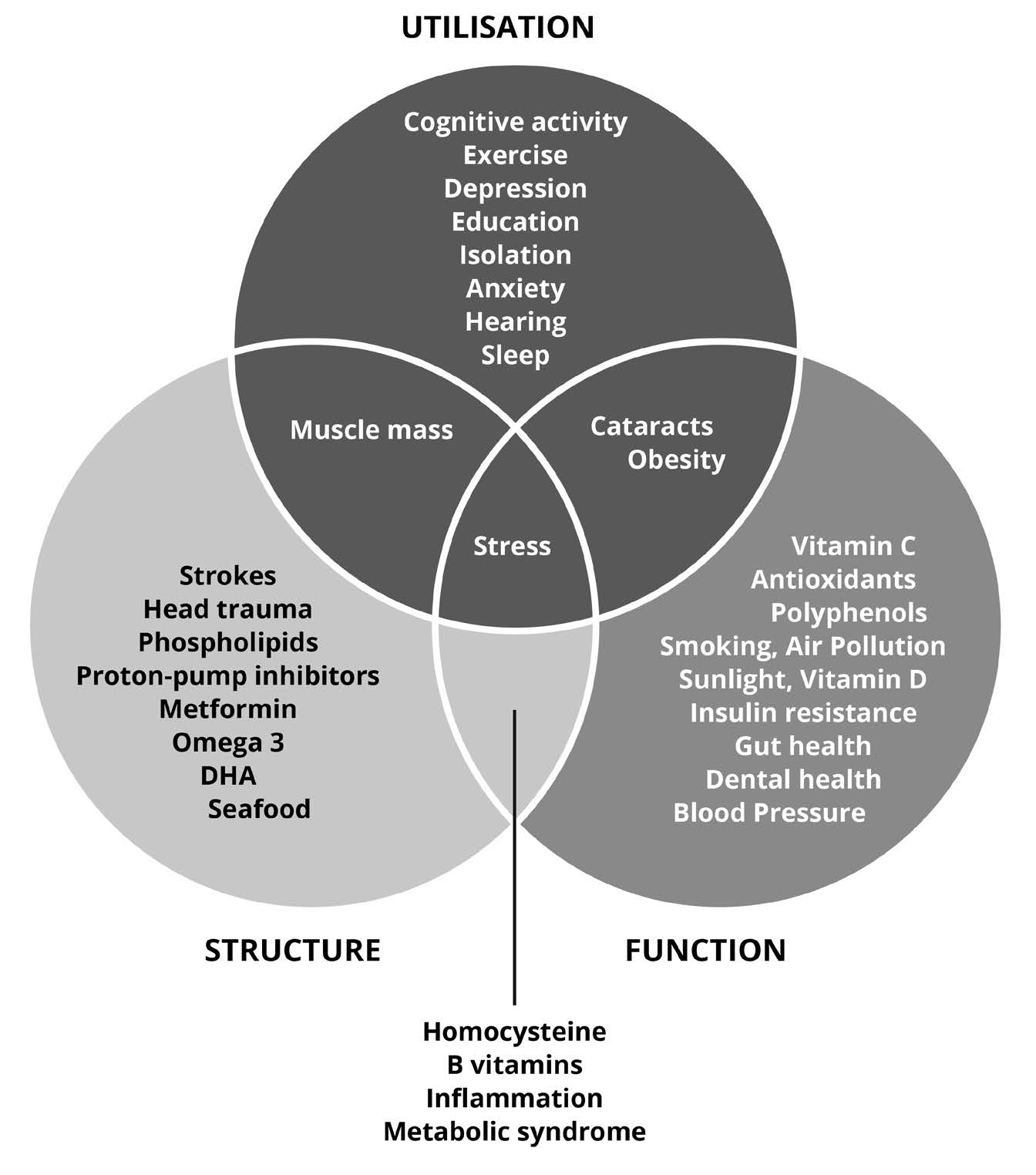
Alzheimer’s is the consequence of a ā€˜perfect storm’ – a combination of poor diet, unhealthy lifestyle and harmful environmental factors that affect the structure, function or utilisation of the brain, says Patrick Holford,  our founder and author of Alzheimer’s: Prevention is the Cure. He says: ā€œEvery single known risk factor affects one of these, and it is combinations of these risk factors – which are under our control – that lead to cognitive decline, first experienced as brain fog and forgetfulnessā€.


Figure 1 – Structure, Function and Utilisation model of risk factors for cognitive decline

The book stems from a major global Alzheimer’s prevention project by the charity Food for the Brain, which has assessed the cognitive function of hundreds of thousands of people through a free test, followed by a comprehensive diet and lifestyle questionnaire that calculates their future risk – and shows how to lower it.

ā€œWe can detect declining cognitive function from as young as 18. The youngest non-genetic Alzheimer’s diagnosis is just 19,ā€ says Holford, who founded the charity to help prevent Alzheimer’s. ā€œWe see a steady decline in cognitive function from the early twenties, with most people starting to show significant cognitive impairment in their seventies and eighties. But this decline cannot only be arrested – it can be reversed with the right diet, supplements and lifestyle choices.ā€

ā€œBecoming an Alzheimer’s patient is almost always a choice,ā€ says neurologist Dr David Perlmutter, a member of the charity’s Alzheimer’s Prevention Expert Group who also believes that diet and lifestyle, much more than genes, are driving the increase in Alzheimer’s.

ā€œBecoming an Alzheimer’s patient is almost always a choice

neurologist Dr David Perlmutter

The book  (out today!) explains all the known risk factors we can change – and the extent to which doing so reduces future risk. Particularly important are what Holford calls ā€˜the four horsemen of the brain health apocalypse’: lack of brain fats, lack of B vitamins, lack of antioxidants, and too much sugar and refined foods. Increasing omega-3 intake from oily fish and supplements cuts risk by about 20%, as does optimising vitamin D levels. Vitamin D is produced in the skin when exposed to sunlight, with some also obtained from oily fish, but supplementation is needed during the winter months. Those who supplement with vitamin D have about one third less risk of developing dementia.

The single biggest–and most easily eliminated–risk factor, is lack of B vitamins, leading to high levels of the toxic amino acid homocysteine. ā€œHomocysteine, if raised above 11 µmol/L, causes brain shrinkage and cognitive decline. If lowered with B vitamins, both shrinkage and decline are arrested. It is the only risk factor for which the evidence is strong enough to say it is causal.ā€ says Holford. ā€œMine is 7 µmol/L but my wife’s, despite eating the same food, was 15µmol/L – right in the brain-shrinking zone. She now supplements high-dose B12, B6 and folate and her level has dropped to the same as mine. You would never know without testing. We are both in our sixties.ā€ He estimates that half of those over-60 have a homocysteine level above 11, increasing their risk by about one-third.


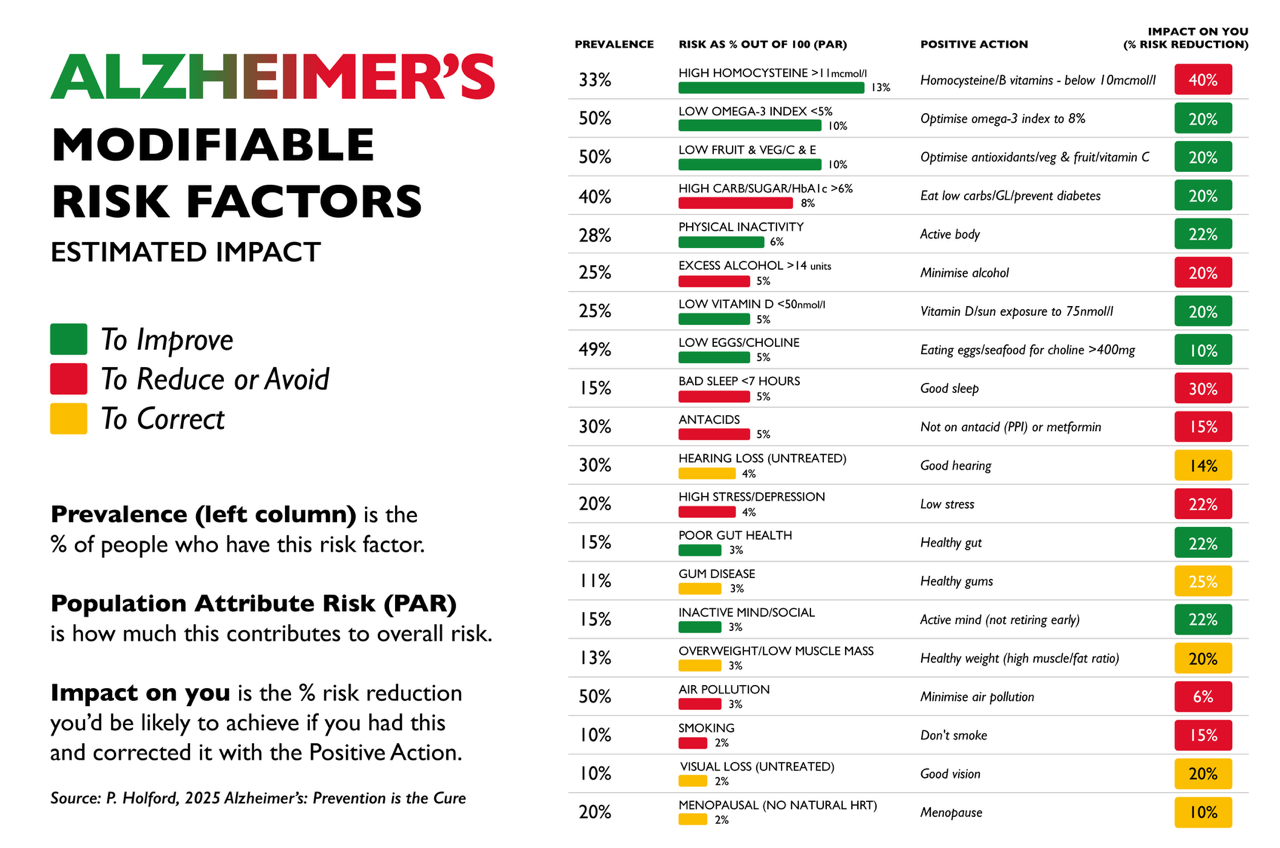
Figure 2 – Possible Population Attributable Dementia Risk Reductions
(estimates)

ā€œThis is why we are now testing people, with a home-test kit, for homocysteine, vitamin D and omega-3 index. If the omega-3 index is below 8% – as it is for many – that predicts cognitive decline and loss of brain density.ā€

The test kit also measures HbA1c, which GPs use to diagnose diabetes. However, the optimal level for Alzheimer’s prevention is lower than the threshold used to diagnose diabetes. Eating less sugar, fewer refined and ultra-processed foods, and reducing total carbohydrate intake also cuts dementia risk by about 20%.

Another big risk reducer is increasing intake of fruits and vegetables rich in antioxidants, and supplementing with vitamin C. Those in the top third of antioxidant intake have half the risk of cognitive decline, according to a study of 2,716 people over age 60 (1). The home-test kit also measures antioxidant status, specifically glutathione levels.  Greens and beans are rich sources of the B vitamin folate. A recent study found that swapping one serving of processed meat for a serving of nuts or beans – foods high in folate – was associated with a 19% lower risk of dementia (2).

Getting your diet right is only half the story, says Holford. ā€œMinimising alcohol, not smoking, staying physically active, and having a socially and intellectually stimulating lifestyle are all vital parts of dementia-proofing. So too are getting enough sleep, managing stress, and ensuring good hearing and vision. Cataracts, for example, increase risk, but having cataract surgery significantly lowers it. Women also need to support hormonal health after menopause. Often using ā€˜natural’ HRT makes a big difference.ā€

The book is out in the UK, EU today and you can pre-order for USA & Australia too (they will be shipped ot you in 3-5 weeks) .

When you buy a book from us, you’re not just gaining valuable knowledge – you’re supporting a cause. Every penny from your purchase goes directly back into Food for the Brain, helping us advance research and develop life-changing tools to support cognitive health.


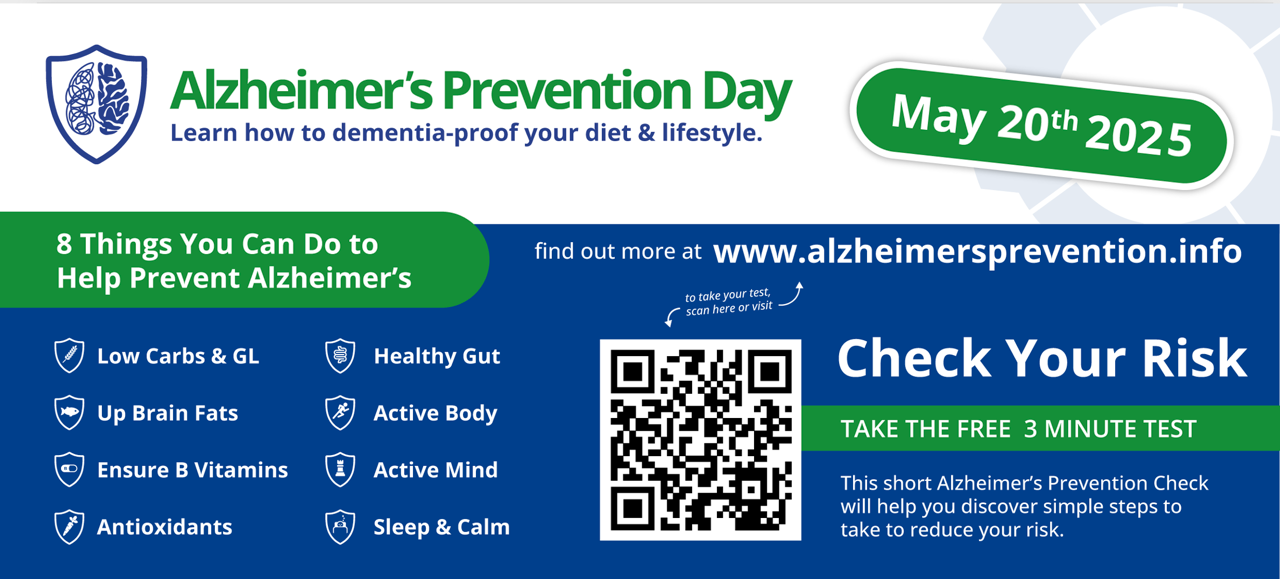
Also join us in May for the Alzheimer’s Prevention Day

Test Your Cognitive Function Now green banner.

Further info

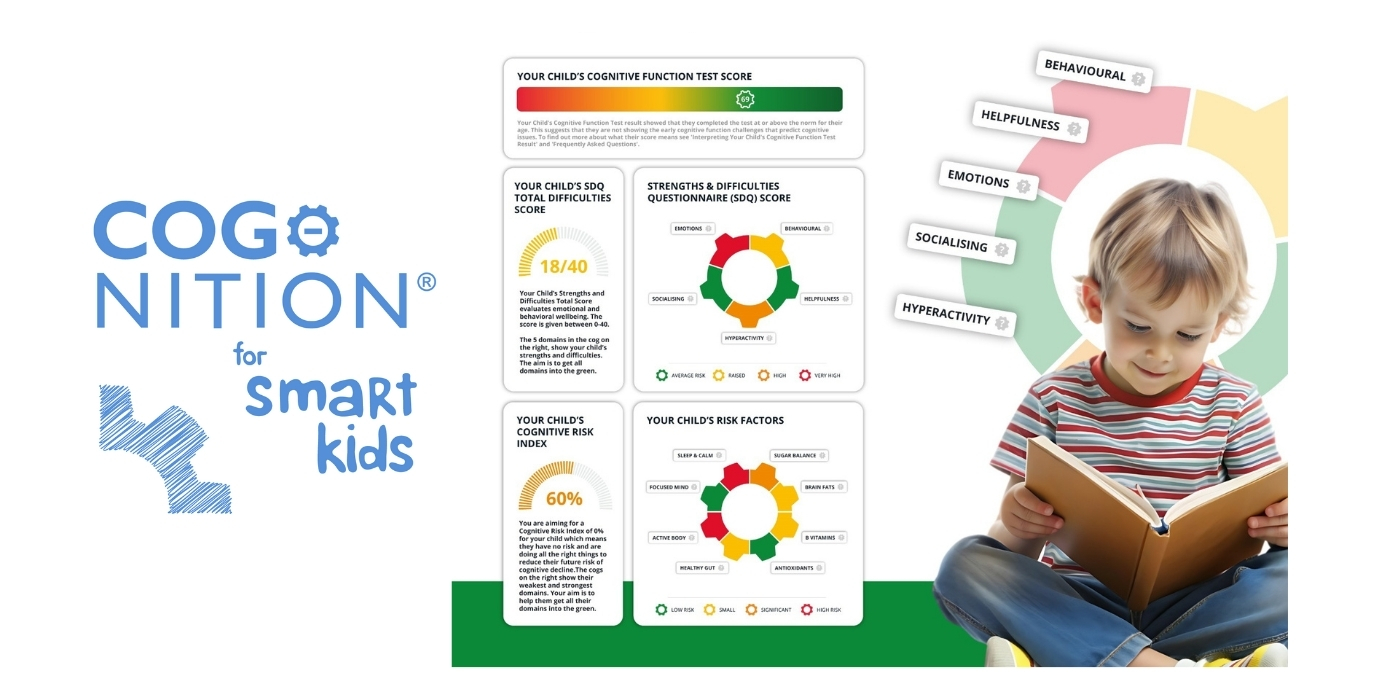
Unlock Your Child’s Brain Potential: Introducing the Smart Kids Cognitive Function Test

As parents or caregivers, nothing matters more than our children’s future. We want them to thrive – mentally, emotionally and physically – and to feel confident and capable in a complex, ever-changing world. Yet when it comes to their brain development, many of us are left wondering: are we doing enough? Are they getting what they need to build healthy, resilient minds?

This is why we’re proud to introduce our groundbreaking Smart Kids Cognitive Function Test. Developed by the team behind the widely respected Adult Cognitive Function Test, this tool is designed to empower parents with the knowledge, insight and practical strategies to support their child’s cognitive and emotional development, right from the start.

Why Early Brain Health Matters

From the moment they’re born, a child’s brain is growing at an extraordinary pace – forming up to a million new neural connections every second. These formative years are a critical window of opportunity, where the right nutrition, environment, and emotional support can set the foundation for a lifetime of strong cognitive function, balanced mood and behavioural wellbeing.

This test doesn’t just measure ā€˜smarts’ – it helps you understand how your child’s brain is functioning, what might be holding them back, and most importantly, what you can do about it.

What’s Involved?

Tailored for children aged 4 to 17, the test includes three essential elements:

  1. Cognitive Function Assessment. An engaging 15-minute digital test that challenges attention, memory and problem-solving in a fun, interactive way.
  2. Nutrition & Lifestyle Questionnaire. This helps highlight which of the eight key lifestyle areas may be influencing brain health, from sleep and gut health to sugar balance and essential fats.
  3. Strengths & Difficulties Questionnaire. A validated tool assessing emotional and behavioural wellbeing, giving you a fuller picture of how your child is feeling and functioning.

With this holistic insight, you’ll receive tailored guidance and practical steps to help your child move forward – cognitively, emotionally and behaviorally.

 What Parents Are Saying

ā€œCOGNITION helped me understand why my son was struggling with focus—and what I could do to help. The emails made it so easy to build new habits. We saw a real change.ā€
– Parent of a 9-year-old

ā€œIt was like someone had finally put the pieces together. We started with sugar balance and sleep—and within weeks, our daughter’s mood and energy improved.ā€
– Mum of a 13-year-old

A Mission for Change: Your Role as a Pioneer

By joining the first 1,000 families to complete the free Smart Kids Test, you’re helping us shape a healthier, smarter future for the next generation. Together, we can build a new model of prevention and wellbeing that begins not at midlife, but in childhood where it can make the biggest difference.

Have You Taken the Adult Test?

Many parents in our community have already taken the free Adult Cognitive Function Test – designed to help dementia-proof your diet and lifestyle. If you haven’t yet done so, we urge you to take this important step. Your brain matters too, and change is possible at any age.

Also, did you know that you can complete our at home pin prick DRIfT blood test on children over 2 years of age and they are available internationally. So that you can gather more data on what your child needs to thrive.

To Our Dementia Prevention Community

We know that many of you found us through our mission to prevent Alzheimer’s and cognitive decline. This children’s test is a natural extension of that work, because optimising brain health starts young. Helping your child now doesn’t just support their academic success, it lays the foundation for lifelong mental wellbeing.

Take the Smart Kids Cognitive Function Test today – and invest in your child’s brain, their wellbeing, and their future. 

Because every child deserves the chance to shine.

Actions:

Do the adult Cognitive Function Test here if you haven’t done so yet, so you can model what supporting your brain health looks like to your child and family.

Test Your Cognitive Function Now green banner.

Further info

25 Ways to Dementia-Proof Your Brain

25 Daily Habits To Reduce Dementia Risk

by Patrick Holford

In this article, we’ll explore daily habits to reduce dementia risk and what simple lifestyle changes can have a big impact on long-term brain health.

25 Daily Habits That Reduce Dementia Risk image

Dementia, including Alzheimer’s is not only the greatest cause of death entailing huge healthcare costs, it is the major fear for many about aging. The great news is that dementia and Alzheimer’s are preventable. Less than 1% of Alzheimer’s is caused by genes so for most of us, the risk for dementia and age-related cognitive decline relates to things we can easily change. 

At foodforthebrain.org we have tested (for free) almost half a million people with a validated Cognitive Function Test, followed by a questionnaire which calculates your future Dementia Risk Index and crucially, advises what to do about it. 

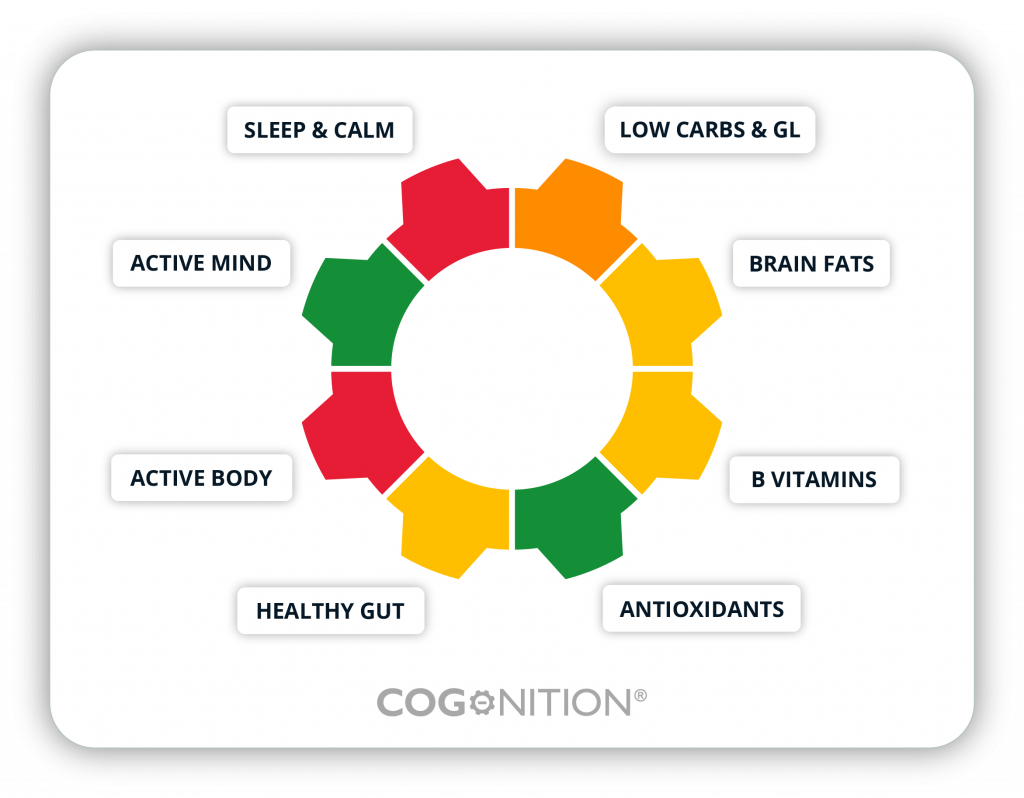
Your risk is divided into eight wellness domains (see image), highlighting areas to focus on to enable brain and cognitive powers to stay intact. 

Here are 25 simple steps you can take to dementia-proof your diet and lifestyle taken from our advice and my recent book, Upgrade Your Brain, which gives more detail for those who want to dig deeper.

food for the brain 8 domain of brain health cog

Brain Fats – Up your brain fats – omega-3, phospholipids and vitamin D

1. Get your omega-3 index above 8%

You can measure your omega-3 index with a home test kit. Psychologists at the Linda Loma University in California did this for a group of older people, publishing their results in the journal Brain Sciences (1). They found that the higher a person’s omega-3 index was, the more white matter there was in their brain and the better they performed in cognitive tests. 
You can test your levels with a simple Omega-3 Index test or as part of the DRIFT 5-in-1 test.

2. Eat oily fish three times a week or SMASH it

S for salmon, M for mackerel, A for anchovies, S for sardines, and H for herrings or kippers. Caviar has the highest known levels of omega-3 DHA, which  builds your brain. Even having one serving a week almost halves the risk of Alzheimer’s. (2, 3). See the Best Fish for Brain table for a comparison of omega-3 levels, mercury content, and sustainability.

3. Supplement omega-3 fish oils

Aim for any supplement that provides 500mg of omega-3 DHA. This may mean two capsules a day. See this recent study in the American Journal of Clinical Nutrition of over 100,000 people (4). If you’re vegan, supplement with algal omega-3 DHA. 
Read more about omega-3 supplementation here.

4. Eat an egg and/or nuts and seeds every day 

Eating  two eggs a week halves future risk of Alzheimer’s (5). The best seeds are chia, flax, hemp and pumpkin. The best nuts are walnuts, pecans, and macadamia, but all nuts are a good source of protein and minerals.

5. Exercise outdoors and supplement vitamin D

Low blood levels of vitamin D make cognitive decline 19 times more likely. If your vitamin D level is high, Alzheimer’s disease is 4 times less likely. People who take vitamin D, which is especially important in winter, have a one-third lower risk. You can test your levels with a simple vitamin D test or as part of the DRIft 5-in-1 test.

Low Carb and GL – Eat a low-carb, low sugar, low GL diet

6. Avoid sugar and don’t eat junk food

Avoid the white stuff – flour, sugar, rice and especially ultra-processed foods. Fructose and high fructose corn syrup are common sweeteners. They are especially harmful to the brain. Read more about how sugar affects brain health in Is Sugar Killing Your Brain?.

7. Eat your fruit, don’t drink it

Stay away from fruit juices as they contain no fibre but lots of sugar. A glass of orange juice is worth three oranges’ worth of juice, but no fibre. Fibre fills you up. Learn more about the effects of fructose on health and the brain in this article on fructose.

8. Limit your intake of bread, pasta, and potatoes

If you eat more than 100 to 150 g a day of grains or potatoes, which is one or two servings max, your risk of dementia goes up .

9. Limit alcohol to a glass of wine a day or equivalent

Drinking alcohol, particularly red wine, can lower risk if done in moderation. However, the benefits are limited. . Abstinence increases risk, as does having more than 14 units of alcohol a week, according to a study in the British Medical Journal (6). Read more in The Truth About Alcohol and Your Brain

10. Add C8 oil to your coffee

The brain can run on either glucose or ketones, made in the liver from a ā€˜medium chain triglyceride’ called C8 oil. Two tablespoons of a C8-rich oil improve cognitive abilities and help provide the brain with energy (7).  Read more about MCT oil here.

B vitamins – Keep your homocysteine low with B vitamins 

11. Test your blood homocysteine level with a home test kit and supplement B vitamins if needed

A homocysteine level above 10 mmol/l, which is extremely common in people over 60, is strongly associated with accelerated brain shrinkage and increases risk of Alzheimer’s ten-fold. You can test your levels with at-home homocysteine test or as part of the DRIFT 5-in-1 test. Homocysteine is easily lowered by supplementing vitamin B6, B12 and folate but the amounts needed are much higher if your homocysteine level is high. Read more about lowering your homocysteine here.

12. Eat a serving a day of both greens and either beans, lentils, nuts or seeds

These are all high in the B vitamin folate as well as vitamin B6. A study in Holland gave 818 people aged 50 to 70 a folic acid supplement of 800mcg for three years, versus a placebo. At the end of the study, compared to those taking the placebo, those taking folic acid were functioning at the equivalent of being 5.5 years younger (8).

Antioxidants – Eat and drink anti-ageing antioxidants and polyphenols [4]

13. Eat lots of fresh fruit and veg

The more you eat, the better, though the benefits start to plateau at 500g a day, which is about five to six servings. People who ate the most greens had much less Alzheimer’s-related issues than those who ate the least.(9) . Berries are particularly protective, especially blueberries and strawberries. Read more about foods that help protect brain health in How to Keep Your Brain Young.

14. Drink Teash fruit and veg

The more you drink, the better as confirmed by a recent study from Singapore (8). However, other studies are conflicting (9). My view is to drink tea, green over black, in preference to coffee, and limit your intake to one or two cups a day.

15. Eat dark (70%+) chocolate

The benefit peaks at 10g, or about 3 pieces. More recent studies on cocoa, a rich source of flavanols, have shown improved cognition, possibly by improving circulation (11).

16. Supplement vitamins C and E – and don’t smoke!

A study of 4,740 elderly people in Utah found that those taking both vitamin E and C reduced their risk of developing Alzheimer’s by 23%.

Taking either cut risk by a quarter (12). Overall, a meta-analysis of vitamin C studies concludes thta supplementation lowers risk by about 26% (12). Smokers need at least twice as much vitamin C as non-smokers, just to have basic vitamin C levels in their blood. Smoking also raises homocysteine levels, another risk factor.

Learn more about Vitamin C and other antioxidants here.

Healthy Gut – A healthy gut is a healthy brain [5]

17. Eat plenty of soluble fibre and prebiotic foods

Fibre from foods like oats, chia, and flax seeds benefits our gut microbiome. Prebiotic foods like garlic, artichoke, leeks, and onions nourish and support healthy gut bacteria.

When you eat potatoes or rice, cook them ahead of time. Then, store them in the fridge. Reheating food increases the amount of prebiotics, also known as resistant starch.

Supplementing vitamin C helps promote lactobacillus and bifidobacteria.

Read more about gut health here.

Active Body – Exercise and keep physically active [6]

18. Get active for 20 minutes … and build and maintain muscle 

Spend at least 20 minutes doing activities such as walking, gardening, housework or repairing things – anything that gets you moving. Don’t limit yourself to ā€˜exercise’– anything that gives you a faster heart rate and engages different sets of muscles is good. Muscle mass best predicts both your brain volume and risk of cognitive decline in later years (13).

19. Get balancing!

The brain works hard in exercise, especially if it involves complex movements and learning, such as learning to dance, or doing different movements in a yoga or t’ai chi class or running or walking on uneven surfaces. The brain is processing a lot of information, triggering patterns of muscle movement and keeping you in balance.

Active Mind – Keep yourself socially and intellectually active [7] 

20. Read, watch, or listen to stimulating content

A simple yardstick is to ask, ā€˜Am I learning anything? Am I using my mind?’ Reading books or listening to podcasts can be great ways to stimulate your mind, depending entirely on what you engage with.

21. Be social

Aim to spend at least two hours a week with other people in a social (not work) setting – groups, friends, family, etc.

22. Challenge your brain daily

Try challenging your brain with puzzles and word games such as Sudoku, crosswords or Wordle. You might also enjoy using a brain-training app. Two popular options with strong user ratings and research backing are BrainHQ and Lumosity, both designed to support memory, attention and processing speed.

23. Learn something new and challenging

Learning a new language, sport or musical instrument are all good – anything that you keep practising. This fascinating study looked at the brains of musicians and showed that amateur musicians benefited most (14).

Read more on hot to keep your mind active here.

Sleep and Calm – Sleep well, stay calm and live purposefully

24. Avoid alcohol before bed and limit any caffeine intake after midday 

Caffeine suppresses melatonin, which helps you sleep, for up to 10 hours. 

25. Aim to follow a soothing bedtime routine

Ensure your bedroom is quiet and dark and you are comfortable. Turn off mobile phones and Wi-Fi connections at night.  Prioritise relaxing activities in the few hours before you go to bed.

Read more about the powerful connection between sleep, stress and brain health in Sleep, Stress and the Brain, including why quality sleep is essential for memory, emotional resilience and long-term cognitive function.


So, while you do not need to implement all 25 things this week, think about what 2-3 things you could focus on this month.

For further support, monthly coaching and detailed personalised email guidance make sure you join us as a FRIEND so you get access to cognition logo – your 6 month programme to help you upgrade your brain and improve your cognitive function. All for just Ā£5 a month or Ā£50 a year!

References

Further info

The Antioxidant Edge: Measuring and Protecting Your Brain’s Resilience Against Ageing

(Originally posted in IHCAN magazine. Written by Patrick Holford, edited by Carol Ludlam)

What is really going on as we age? What contributes to the wrinkles, stiffer joints, slower cognitive function and other health problems?

It begins with the brain.

Your brain consumes more energy than any other organ, burning either glucose or ketones. This combustion creates oxidants that age your brain. The ability to rapidly extinguish these oxidants, which ultimately age your brain and body, is what helps you live longer with less wrinkles, more flexible joints, healthier blood vessels and organs, especially your brain, which has 400 miles of blood vessels. 

Top level prevention factors

Keeping oxidants down is perhaps the single most important thing you can do for vascular health. Vascular dementia, for example, is strongly associated with the amount of oxidation, determined by antioxidant intake from fruit and vegetables on the one side and smoking and pollution for example, on the other. Those in the top quarter of Total Antioxidant Capacity (TAC) in their diet halve their risk, in a study of 2,716 people over age 60 (1).

Additionally, critical antioxidants such as vitamin C and vitamin E, if supplemented together, reduced the risk of developing Alzheimer’s by as much as two-thirds, whilst taking either cut risk by a quarter in a study of 4,740 elderly residents of Cache County, Utah (2). Another study shows that ā€˜either a high vitamin E or C intake showed a trend of attenuating risk by about 26 per cent’, according to China’s leading prevention expert Professor Jin Tai Yu of Fudan University in Shanghai, making these nutrients ā€˜grade 1’ top level prevention factors (3). 

Vitamin C, which is water based and protects you against smoke and pollution, and vitamin E, which is fat based and protects you from burnt and fried fats, including sunburn, are in the bloodstream outside of cells. Inside cells, especially brain cells, is the most potent antioxidant of all, which is glutathione.

Glutathione is the Master Intracellular Antioxidant 

Nutritionists have been measuring red cell glutathione (GSH) for decades as an indicator of a person’s antioxidant capacity. GSH is the most important antioxidant and free radical scavenger that is found to be decreased in the brains of people with a wide range of mental and neurological illnesses from schizophrenia (4) to dementia (5, 6). 

However, the problem with just measuring glutathione is two-fold. Firstly, since it oxidises so rapidly, it has to be ā€˜fixed’ immediately to avoid any degradation to its oxidised form glutathione disulfide (GSSG). Testing of glutathione levels is therefore usually dependent on going to a lab for blood to be drawn and then immediately tested or fixed, to limit any oxidation. The reliability of glutathione measurements, unless done under strictly controlled conditions such as these, may be questionable due to the rapid oxidation once blood is taken.

The Glutathione Index (GSH/GSSG) is the best measure of antioxidant status

Additionally, it is the amount of ā€˜spent’ or oxidised glutathione (GSSG) that reflects the extent of oxidative stress a person is under. Think of glutathione as the water in the fire engine. It gets rapidly used up keeping your brain protected. The ā€˜spent’ or oxidised glutathione (GSSG), much like steam, then has to be cooled to reload the fire engine. This recycling is done by vitamin C and an enzyme called Glutathione Reductase (GR), returning Glutathione back to its fully loaded ā€˜reduced’ form. Another enzyme, Glutathione Peroxidase (GP), is involved. GR is riboflavin (vitamin B2) dependent and GP is selenium dependent.

Dr Konrad Kowalski, the Food for the Brain’s analytic chemist, explains: ā€œReductions in GR enzyme levels in patients with dementia are well established. GR levels alone are therefore a fairly good biomarker of dementia.ā€ However, the mere presence of the enzyme does not guarantee its high activity. GR needs to consume NADP molecules to function properly.  As shown by Irene Martinez de Toda et al 2019 data, patients with dementia have a reduction in both the enzymes (GR and GP) that recycle glutathione.  Thus, in general it can be said that the glutathione metabolism (recycling) loop in those with dementia ‘spins’ much slower than in healthy patients. 

ā€œThe advantage of our measurement of the Glutathione Index (GSH/GSSG) is therefore, that it shows changes in GR activity, not only due to higher/lower GR gene activity but also due to the absence of the reaction cofactor NADP.ā€

ā€œAs a result, dementia patients have a lower potential to dynamically fight free radicals and will have a worse GSH/GSSG, which we call the Glutathione Index (7). The worse the ratio the worse a person’s cognitive function is likely to be. It’s a bit like having a direct measure of how fast your brain is ageing. Patients with dementia have a reduction in glutathione and its ability to be recycled (8). This ratio, the Glutathione Index, is a biomarker for many diseases, including both type 1 and 2 diabetes, liver cirrhosis, multiple sclerosis and Alzheimer’s disease.ā€ says Dr Konrad Kowalski, who has developed this test for us.

One of the biggest challenges in developing the Glutathione Index, which is a home test kit involving a pin prick of blood dripped onto a dry blood spot card, is that the conventional DBS cards didn’t provide enough stability for the rapidly oxidising GSH, so we developed a method that instantly ā€˜fixes’ the sample for a guaranteed 12 week stability from taking the sample.

The red arrows indicate reduced or increased activity in dementia patients

So we want people to both measure their Glutathione Index and complete our validated Cognitive Function Test along with the follow-on Dementia Risk Index questionnaire, which calculates an ā€˜antioxidant’ domain score. 

As a result of our research where we have tracked these against the person’s blood level of Glutathione Index, enabling us to establish what an optimal level is. This means those boundaries, which we show in colours from green (good), yellow (OK), orange (not good), red (bad) will evolve and become more accurate thanks to you and people like you.

We now know that a desirable level is above 800. Below 500 is an indicator that you need to increase your intake of antioxidants from food and/or supplements, and/or reduce your intake of oxidants from smoking, pollution or fried food. Glutathione is related to the pace of aging and the activity of antioxidant enzymes which are depleted in those with cognition decline. It is also part of your DRIfT (Dementia Risk Index functional Test) score.

 This is unique and vital research funded by the people for the people – Citizen Scientists.

How Glutathione and vitamin C recycle each other 

Vitamin C helps ā€˜reload’ glutathione and glutathione helps reload vitamin C as you’ll see in the figures below. This glutathione – vitamin C cycle is one of the hottest discoveries in anti-ageing science. You’ll see that NADPH, derived from niacin (vitamin B3) and its cousin NAD are involved. Co-enzyme Q10 in its reduced form ubiquinol is also involved and although not shown in this diagram, low levels are also found in those with Alzheimer’s (9).

Raising glutathione – the role of NAC

Nutritional therapists have been measuring red cell glutathione and supplementing glutathione or its precursor N-Acetyl-Cysteine (NAC) for decades. However oral GSH supplementation has poor bioavailability largely because it is so rapidly oxidised to GSSG as it disarms free radicals. N-Acetyl Cysteine (NAC), a precursor of glutathione, is therefore often used instead and has been shown to successfully raise plasma glutathione levels, for example, in those with schizophrenia. Anthocyanins also recycle glutathione thus sparing it if supplemented together (12).

NAC has plenty of evidence to support its use as a promoter of glutathione and mental health, thus reducing the brain’s oxidative stress. The latest 2022 review states: ā€œN-acetyl-L-cysteine (NAC) is a compound of increasing interest in the treatment of psychiatric disorders. Primarily through its antioxidant, anti-inflammatory, and glutamate modulation activity, NAC has been investigated in the treatment of neurodevelopmental disorders, schizophrenia spectrum disorders, bipolar-related disorders, depressive disorders, anxiety disorders, obsessive compulsive-related disorders, substance-use disorders, neurocognitive disorders, and chronic pain. Currently NAC has the most evidence of having a beneficial effect as an adjuvant agent in the negative symptoms of schizophrenia, severe autism, depression, and obsessive compulsive and related disorders.ā€ (13) For example a large RCT of 140 participants observed significant improvements on global symptomatology, and general and negative symptoms of schizophrenia in the NAC supplementation (2 g/d; in addition to anti-psychotic medication) group in comparison to the placebo group over a 24 week period (14).

According to Dr Chris Palmer, assistant professor at Harvard Medical School, ā€œGlutathione (GSH), the brain’s primary antioxidant, plays a crucial role in maintaining redox balance (the process of maintaining the balance of reactive oxygen and nitrogen species in cells to maintain homeostasis) . Magnetic resonance studies have provided mixed results regarding GSH levels in schizophrenia patients, with some studies indicating decreased levels in chronic schizophrenia, while others found no significant differences. However, these inconsistencies may be due to variations in disease chronicity, age, and symptom severity among study participants. The findings from these studies suggest several potential therapeutic targets for schizophrenia. Addressing mitochondrial dysfunction, redox imbalance, and impaired energy metabolism could lead to more effective treatments. For instance, N-acetylcysteine (NAC), a precursor to GSH, has shown promise in increasing brain GSH levels and improving symptoms in first episode psychosis patients.ā€

NAC is so medically effective that it has been classified a medicine, hence not a food, and is no longer available over the counter in the US.

Our Glutathione Index test costs Ā£69 – order it and be a part of this new exciting research, whilst learning how you can protect and upgrade your brain.

It is also available as part of their 5-in-1 DRIfT test also measuring Homocysteine, HbA1c, vitamin D and Omega-3 Index.

Actions

References

1 Peng, M., et al. Dietary Total Antioxidant Capacity and Cognitive Function in Older Adults. J Nutr Health Aging (2023).

2 Basambombo LL, Carmichael PH, CƓtƩ S, Laurin D. Use of Vitamin E and C Supplements for the Prevention of Cognitive Decline. Ann Pharmacother. 2017 Feb;51(2):118-124. doi: 10.1177/1060028016673072. Epub 2016 Oct 5. PMID: 27708183.

3 Yu JT, Xu W, Tan CC, Andrieu S, Suckling J, Evangelou E, Pan A, Zhang C, Jia J, Feng L, Kua EH, Wang YJ, Wang HF, Tan MS, Li JQ, Hou XH, Wan Y, Tan L, Mok V, Tan L, Dong Q, Touchon J, Gauthier S, Aisen PS, Vellas B. Evidence-based prevention of Alzheimer’s disease: systematic review and meta-analysis of 243 observational prospective studies and 153 randomised controlled trials. J Neurol Neurosurg Psychiatry. 2020 Nov;91(11):1201-1209. doi: 10.1136/jnnp-2019-321913. Epub 2020 Jul 20. PMID: 32690803; PMCID: PMC7569385.

4 Yao JK, Leonard S, Reddy R: Altered glutathione redox state in schizophrenia. Dis Markers 2006, 22(1):83–93 ; see also Gawryluk JW, Wang J-F, Andreazza AC, Shao L, Young LT: Decreased levels of glutathione, the major brain antioxidant, in post-mortem prefrontal cortex from patients with psychiatric disorders. Int J Neuropsychopharmacol 2011, 14(01):123–130. 

5 Torres LL, Quaglio NB, de Souza GT, Garcia RT, Dati LM, Moreira WL, Loureiro AP, de Souza-Talarico JN, Smid J, Porto CS, Bottino CM, Nitrini R, Barros SB, Camarini R, Marcourakis T. Peripheral oxidative stress biomarkers in mild cognitive impairment and Alzheimer’s disease. J Alzheimers Dis. 2011;26(1):59-68. doi: 10.3233/JAD-2011-110284. PMID: 21593563 

6 Park SA, Byeon G, Jhoo JH, Kim HC, Lim MN, Jang JW, Bae JB, Han JW, Kim TH, Kwak KP, Kim BJ, Kim SG, Kim JL, Moon SW, Park JH, Ryu SH, Youn JC, Lee DW, Lee SB, Lee JJ, Lee DY, Kim KW. A Preliminary Study on the Potential Protective Role of the Antioxidative Stress Markers of Cognitive Impairment: Glutathione and Glutathione Reductase. Clin Psychopharmacol Neurosci. 2023 Nov 30;21(4):758-768. doi: 10.9758/cpn.23.1053. Epub 2023 Jul 14. PMID: 37859449; PMCID: PMC10591176.

7 Park SA, Byeon G, Jhoo JH, Kim HC, Lim MN, Jang JW, Bae JB, Han JW, Kim TH, Kwak KP, Kim BJ, Kim SG, Kim JL, Moon SW, Park JH, Ryu SH, Youn JC, Lee DW, Lee SB, Lee JJ, Lee DY, Kim KW. A Preliminary Study on the Potential Protective Role of the Antioxidative Stress Markers of Cognitive Impairment: Glutathione and Glutathione Reductase. Clin Psychopharmacol Neurosci. 2023 Nov 30;21(4):758-768. doi: 10.9758/cpn.23.1053. Epub 2023 Jul 14. PMID: 37859449; PMCID: PMC10591176.

8 MartĆ­nez de Toda I, MiguĆ©lez L, Vida C, Carro E, De la Fuente M. Altered Redox State in Whole Blood Cells from Patients with Mild Cognitive Impairment and Alzheimer’s Disease. J Alzheimers Dis. 2019;71(1):153-163. doi: 10.3233/JAD-190198. PMID: 31356205.

9 J. FrontiƱƔn-Rubio et al. Molecular and Cellular Neuroscience 92 (2018 

10  Witschi A, Reddy S, Stofer B, Lauterburg B: The systemic availability of oral glutathione. Eur J Clin Pharmacol 1992, 43(6):667–669.

11 Lavoie S, Murray MM, Deppen P, Knyazeva MG, Berk M, Boulat O, Bovet P, Bush AI, Conus P, Copolov D, Fornari E, Meuli R, Solida A, Vianin P, CuĆ©nod M, Buclin T, Do KQ: Glutathione precursor, N-acetyl-cysteine, improves mismatch negativity in schizophrenia patients. Neuropsychopharmacology 2008, 33(9):2187–2199.

12 Ohlenschlager G,Treusch G, patent number: 5925620 International Classification A61K 3800 for synergistic action of anthocyanidins and glutathione

13 Bradlow RCJ, Berk M, Kalivas PW, Back SE, Kanaan RA. The Potential of N-Acetyl-L-Cysteine (NAC) in the Treatment of Psychiatric Disorders. CNS Drugs. 2022 May;36(5):451-482. doi: 10.1007/s40263-022-00907-3. Epub 2022 Mar 22. Erratum in: CNS Drugs. 2022 Apr 28;: PMID: 35316513; PMCID: PMC9095537.

14 Berk M, Copolov D, Dean O, Lu K, Jeavons S, Schapkaitz I, Anderson-Hunt M, Judd F, Katz F, Katz P, Ording-Jespersen S, Little J, Conus P, Cuenod M, Do KQ, Busha AI: N- acetyl cysteine as a glutathione precursor for schizophrenia—a double-blind, randomized, placebo-controlled trial. Biol Psychiatry 2008, 64(5):361–368. 

Further info

Anti-Age & Re-Energise Your Brain – The Glutathione Breakthrough

Anti-Age & Re-Energise Your Brain – The Glutathione Breakthrough

By Patrick Holford

Glutathione Breakthrough

Your brain consumes more energy than any other organ, burning either glucose or ketones. 

This combustion creates oxidants that age your brain. 

The ability to rapidly extinguish these oxidants, which ultimately age your brain and body, is what helps you live longer with less wrinkles, more flexible joints, healthier blood vessels and organs, especially your brain. Your brain has 400 miles of blood vessels. Keeping oxidants down is perhaps the single most important thing you can do for vascular health. Vascular dementia, for example, is strongly associated with oxidation. It is oxidised cholesterol that predicts heart attacks (along with raised homocysteine).

For those who have been following our ā€˜four horsemen of the mental health apocalypse’, oxidation is the fourth horseman. Check out this film to understand how key antioxidants work together. Those with diets high in antioxidant foods literally halve their risk for dementia compared to those with low intakes, according to a study last year of 2,716 people aged over 60. (1) 

The key antioxidants are vitamins C, E, glutathione, anthocyanidins (in blue/red foods), lipoic acid and co-enzyme Q10. The most important of these are vitamin C and glutathione.

Also, critical antioxidants such as vitamin C and vitamin E, if supplemented together, reduced the risk of developing Alzheimer’s by as much as two-thirds. Taking either, cut risk by a quarter in a study of 4,740 elderly residents of Cache County, Utah. (2) 

A review of all studies to date show, that ā€˜either a high vitamin E or C intake showed a trend of attenuating risk by about 26 per cent’ according to China’s leading prevention expert Professor Jin Tai Yu of Fudan University in Shanghai, making these nutrients ā€˜grade 1’ top level prevention factor. (3)

Eating fruit and veg might not be enough…

Now, I’m sure you eat fruit and vegetables and supplement vitamin C but how do you know you’ve optimised your anti-oxidation potential? After all, the variation in antioxidants is 40-fold! Even in organic produce.

The way in which these harmful oxidants (think of them like mini fires or bursts of heat) are ā€˜extinguished’ is to effectively ā€˜cool’ them. Otherwise they bump into things, like arteries, cholesterol, fats and ā€˜burn’ them setting up a chain reaction of damage. 

That cooling is largely done by either glutathione (GSH) or vitamin C (Ascorbic Acid). They are the firemen. But, when they leave a fire zone they too become hot or oxidised. Oxidised vitamin C is called DiHydroAscorbicAcid, or DHAA. Oxidised glutathione is called GSSG.

Vitamin C helps ā€˜reload’ glutathione and glutathione helps reload vitamin C as you’ll see in the figures below. This glutathione-vitamin C cycle is one of the hottest discoveries in anti-ageing science. You’ll see that niacin (vitamin B3) and its cousin NAD are involved.

People with cognitive decline and dementia have less glutathione and more oxidised glutathione and an ever decreasing ability to recycle the spent/oxidised glutathione back to functional glutathione. Read the science here. That is why we recommend anyone with concerns about their cognitive health measure their glutathione index.

Your Glutathione Index – a world first!

By measuring a pin prick of your blood in our new test kit both how much glutathione you have in your cells AND how much is oxidised you will know if you’ve got the ability to extinguish those ageing fires in your brain and body optimally. (Technically, it is the ratio between active glutathione (GSH) and spent glutathione (GSSG) or GSH/GSSG.)

So, rather than guess, why not find out by testing your Glutathione Index? 

These at home test kits are now available internationally! (UK, EU, USA & AUS!)

Knowing your Glutathione Index lets us advise you on what you need to eat and supplement to anti-age your brain. This is all included in your ā€˜interpretation of results’. Your Glutathione Index will also become part of your DRIfT score (Dementia Risk Index functional Test score) – you are aiming for a DRIfT score for ā€˜0’ which means, biologically, you have a super-healthy brain (and body).

Why other Glutathione tests may not be so accurate and are twice the price

So you are fully in the loop, other labs test red cell Glutathione. This is good but not nearly as good as the ratio of GSH/GSSG. It also tends to cost around £150 and requires a blood draw at a lab.

You want your score to be above 800.

If your score was below 500 that’s really not good. If you smoke, live in a polluted environment or rarely eat fuit, vegetables, herbs and spices, that’s where you’d be.

But we’ve found out something rather disturbing. 

Since glutathione is such a powerful antioxidant the second it leaves your body it starts to oxidise simply from interacting with air. That is why many blood tests, and studies based on them, are not so accurate. We have solved this by adding a super strong ā€˜fixer’ to the dry blood spot target where you drip your drop of blood. Problem solved!

Thank you for being a Citizen Scientist

When you order your Glutathione test – which you can buy as a single test here OR as part of the DRIfT 5 in 1 test bundle here you can become a part of our team of Citizen Scientists!

You also need to complete your Cognitive Function Test which is FREE and together with any blood test results you get, give you personalised information on what you need to do to optimise your brain AND it will also contribute to our vital research – thank you.

References:

2 Basambombo LL, Carmichael PH, CƓtƩ S, Laurin D. Use of Vitamin E and C Supplements for the Prevention of Cognitive Decline. Ann Pharmacother. 2017 Feb;51(2):118-124. doi: 10.1177/1060028016673072. Epub 2016 Oct 5. PMID: 27708183.

3 Yu JT, Xu W, Tan CC, Andrieu S, Suckling J, Evangelou E, Pan A, Zhang C, Jia J, Feng L, Kua EH, Wang YJ, Wang HF, Tan MS, Li JQ, Hou XH, Wan Y, Tan L, Mok V, Tan L, Dong Q, Touchon J, Gauthier S, Aisen PS, Vellas B. Evidence-based prevention of Alzheimer’s disease: systematic review and meta-analysis of 243 observational prospective studies and 153 randomised controlled trials. J Neurol Neurosurg Psychiatry. 2020;91(11):1201-9. Epub 2020/07/22. doi: 10.1136/jnnp-2019-321913. PubMed PMID: 32690803; PMCID: PMC7569385.

Further info

ā€˜My Relative Has Memory Problems, Possibly Dementia. What Do You Recommend?’

This is the question we get asked all the time from our community.

Normally if they go to the doctor they may get referred to a memory clinic for a Cognitive Function Test. Some get invited to take part in drug trials and there are basically two kinds of drugs under investigation – anti-amyloid and anti-p-tau. Ā If you’re tempted to participate in any test, we would suggest finding out which type is being tested. So far the anti-amyloid treatments have not delivered any significant clinical benefit and lots of adverse effects including deaths. Anti p-tau drugs have not yet been proven to work. However, p-tau accumulation, making neurofibrillary tangles, is a function of high homocysteine which is lowered with B vitamins (see below).Ā  We know this already. So why not test and lower homocysteine with B vitamins?

Some people get prescribed cholinesterase inhibitor drugs, designed to stop the breakdown of acetylcholine. These include rivastigmine, donepezil (Aricept) and galantamine. They are marginally effective, but the effect runs out after 2 years (see why below and other approaches).

The first steps:

The first step, with help, is to do the Cognitive Function Test here (which they may struggle with), followed by a questionnaire.

Even if they can’t complete the Cognitive Function Test, do encourage them to continue and complete the questionnaire because this will show where the weak areas that need attention are. An example test result is below.

Ideally, they should then sign up as a FRIEND to get access to COGNITION and a focused brain upgrade but if they are too far progressed to receive and respond to emails, then here are some quick wins.

At home tests to run & what to do with the results

First, have them do the DRIfT home test to measure HBA1c, homocysteine, omega-3 index and vitamin D. If you know their HbA1c and vitamin D already then you can test these individually (see all test options here).

From a raised HbA1c we’d know if sugar balance is a problem, in which case 2 tablespoons (60g) of C8 oil is likely to help, as well as eating low carbs and avoiding sugar as much as possible (and limit alcohol). The C8 oil helps the brain make ketones which is an alternative fuel source for brain cells and fills the ā€˜energy gap’ created by poor glucose delivery, a function of insulin resistance.

If Homocysteine is above 10mcmol/l. we’d know they need homocysteine lowering B vitamins (including supplementing vitamin B12 500mcg – see here)

If Omega-3 is below 8%, they need to eat more oily fish and supplement omega-3 fish oils with 500mg of DHA – see here for more info on supplementation. 

If Vitamin D is below 75nmol/l they need to supplement – probably 1,000 to 3,000ius a day or 10,000-20,000ius a week. Click here to read more about what’s needed depending on their level.

How to support neuronal membranes

Neuronal membranes, which is what breaks down in dementia, are made from phospholipids binding to omega-3, which require B vitamins to drive a process called methylation.

If this process is not working efficiently, homocysteine goes up.

A critical phospholipid is Phosphatidyl Choline (PC), bound to omega-3 DHA (known as PC-DHA, which predicts dementia if low). The cholinesterase inhibitor drugs try to protect this but why not supplement phosphatidyl choline, which is very rich in lecithin capsules or granules? Two high PC lecithin capsules, plus at least 500 mg of omega-3 DHA, plus homocysteine-lowering B vitamin complexes cover all bases. See here for more information on supplements.

Other things that can help

We can guide you through all 8 lifestyle domains that can help improve cognitive function in our COGNITION program (read how Dorothy got her husband back after implementing these with her husband here). 

A diet low in sugar and carbs, with lots of oily fish, regular exercise and as much social and intellectual stimulation as possible along with good sleep, all make a big difference and we guide you through that in COGNITION for £5 a month or £50 a year. Access COGNITION by joining as a FRIEND here.

Once the Cognitive Function Test is complete, you will get a personalised result showing the areas that are ā€˜in the green’ and the areas you need to focus on (bear in mind that if dementia is already diagnosed, there will probably be a lot of red and amber colours).Ā 

Actions:

All tests ordered and completed contribute to our charitable work and independent research and are a part of our Citizen Science mission! 

Further info

Adult ADHD Nutrition: How Diet Can Support Your Brain

Adult ADHD nutrition concept featuring colorful wooden blocks spelling ā€œADHDā€ against a bright yellow background, with a hand holding the final letter.

Managing ADHD in Adults: A Nutritional Approach

ADHD isn’t only a childhood condition. A growing number of adults are being diagnosed with it, often for the first time, and medication alone doesn’t always address every symptom. That’s why adult ADHD nutrition is worth looking at alongside other approaches to managing symptoms

Struggling to focus, or the opposite problem, focusing so intensely on one thing that everything else in your life gets crowded out (hyperfocus), can cost you at work, in relationships and in day-to-day life.

We understand this well in children, and the impact it can have on learning and confidence. But what about adults who are only now realising their brain works differently to those around them? (If you’re here to support your child’s brain, our Smart Kids & Teens programme is the place to start.)

Diagnoses of neurodevelopmental conditions like ADHD and Autism Spectrum Disorder (ASD) have risen sharply in recent years. Both are classed as neurodivergent conditions, alongside others such as learning disabilities, anxiety disorders, obsessive-compulsive disorder and Tourette’s syndrome. 

That rise has been significant in both the UK and the US, and it raises a genuine question worth asking properly rather than assuming the answer: what’s changed? Genetics alone doesn’t explain a shift this fast, since our genes haven’t changed in a generation. So what has?

ADHD in adulthood

ADHD is not confined to childhood; many adults continue to experience its symptoms, which can significantly impact their personal and professional lives. Also, many parents discover this about themselves as they go through the process of getting their child diagnosed. 

Common symptoms of adult ADHD include:

  • Inattention: difficulty sustaining attention during tasks, making careless mistakes, not listening when spoken to directly, and being easily distracted (1,2).
  • Hyperfocus: paradoxically, some adults with ADHD can become intensely focused on tasks they find stimulating or rewarding, often to the exclusion of other activities (3).
  • Disorganisation: chronic issues with organising tasks and activities, often leading to missed deadlines and forgotten appointments (4).
  • Time management problems: struggling to manage time effectively, leading to procrastination and difficulty completing tasks (5).
  • Impulsivity: making hasty decisions without considering the long-term consequences, interrupting others, and difficulty waiting for their turn (6).
  • Emotional dysregulation: experiencing intense emotions, such as frustration or anger, and difficulty managing stress (7,8).

ADHD looks different in men and women

ADHD presents differently across men and women, which is a big part of why it’s underdiagnosed or misdiagnosed in women. Some key differences:

AreaWomen with ADHDMen with ADHDReferences
Inattention vs. hyperactivityMore likely to show inattentive symptoms, including disorganisation, forgetfulness, and difficulty focusing.More often display hyperactive and impulsive behaviours, such as restlessness and acting without thinking.(9,10)
Emotional symptomsMore often experience emotional dysregulation, including mood swings, anxiety, and depression.More likely to show externalising behaviours, such as aggression and conduct problems.(11,12)
Coping mechanismsMore likely to develop strategies that mask symptoms, such as perfectionism or overworking to compensate for inattentiveness. This may contribute to delayed diagnosis.Less commonly characterised by symptom-masking strategies in the cited comparison.(13)
Social consequencesMay experience relationship strain and social isolation.More often experience academic and behavioural difficulties in school settings.(14,15)

Brain development starts before birth

The brain you have as an adult began forming at conception, which is what makes maternal nutrition so important.

Alongside avoiding alcohol and smoking during pregnancy, a study of 11,875 pregnant women found a clear relationship between how much seafood a pregnant woman ate and her child’s development. The less seafood consumed, the worse the child’s social behaviour, fine motor skills, communication, social development and verbal IQ. (16)

A lack of vitamin A during pregnancy, another nutrient found in seafood, can affect brain development and lead to long-term or even permanent impairment in learning, memory formation and cognitive function. (17)

Then there’s folate, or vitamin B9, another nutrient with a fundamental role in brain development and methylation. Folic acid is the synthetic form of folate commonly used in supplements and food fortification. A mother’s folate intake predicts her child’s performance in cognitive tests at nine to ten years old (18), and the higher a baby’s B-vitamin status, the higher their cognitive function at 25. (19) Supplementing mothers-to-be with folic acid (400mcg/day) during the second and third trimesters is associated with better cognition in their children at three, and better word reasoning and IQ (verbal and performance) at seven. (20)

What about folinic acid? Folinic acid is a reduced form of folate that bypasses some of the metabolic steps needed to process folic acid. The evidence for folinic acid specifically comes mainly from autism spectrum disorder rather than ADHD. A randomised, double-blind, placebo-controlled trial in 48 children with autism and language impairment found that high-dose folinic acid (2mg/kg daily, up to 50mg) significantly improved verbal communication over 12 weeks, with the strongest effect in children who tested positive for folate receptor autoantibodies, a marker associated with impaired folate transport into the brain. (43)

This is quite different from the broader evidence around folate and brain development. It suggests that folinic acid may have particular relevance where folate transport into the brain is impaired, but these high doses are not something to self-supplement

Nothing builds properly in the brain without healthy methylation, and methylation requires folate, reflected in a low homocysteine level. Raised homocysteine is a well-known predictor of miscarriage and pregnancy problems, which is why it can be suggested that no woman attempts pregnancy until her homocysteine level is below 7 mcmol/l.

A homocysteine level above 11 means increased brain shrinkage. Even a level above 9 during pregnancy predicts more problems for the child at six: withdrawn behaviour, anxiety, depression, social problems and aggressive behaviour. (21)

So it’s worth looking back at your own childhood development to understand your adult brain. How well nourished was it? Did you get adequate folate, vitamin A and enough seafood as a child?

Providing all brain-dependent nutrients at an optimal level now, as an adult, may still help recover some of that deficit. That’s the premise worth testing for yourself.

Adult ADHD nutrition: essential nutrients for brain health

The brain needs nourishment at every age, but for adults with ADHD, what are the nutrients to focus on and ensure are abundantly available in your diet?

Most nutrition research in ADHD has been carried out in children rather than adults, although these nutrients remain important for brain function throughout life.

Vitamin A

Vitamin A is important for brain development, with deficiency potentially leading to long-term impairment in learning, memory formation and cognitive function. (17)

Vitamin D

Low vitamin D levels in childhood are linked to behavioural problems in adolescence, while low levels later in life have also been associated with a higher risk of cognitive decline and dementia. (25, 26, 27, 28).

If you are unsure about your vitamin D status, a vitamin D blood test can provide a clearer picture of your current level.

Chromium, copper, zinc and magnesium

Children with ADHD tend to have lower levels of zinc, chromium and magnesium, and sometimes copper (29). One study found a higher copper-to-zinc ratio in neurodivergent children than in neurotypical children, which was associated with the severity of ADHD symptoms (30). Zinc supplementation has been reported to improve aspects of attention in children with ADHD (31), while magnesium deficiency appears to be more common in ADHD and supplementation has been associated with reduced hyperactivity in some studies (32). However, the evidence is predominantly in children, and this does not mean that supplementing these minerals will necessarily improve ADHD symptoms in adults.

Read more about how magnesium plays an important role in brain function and may influence attention, mood, sleep and the body’s response to stress.

Omega-3

The omega-3 fats EPA and DHA are important components of brain cell membranes and support normal brain function. A 2023 meta-analysis of 22 randomised controlled trials involving 1,789 people with ADHD found that when omega-3 was supplemented for at least four months, there was a significant improvement in core ADHD symptoms compared with placebo. (33) Read more about omega-3 fats for brain health.

B vitamins

Folate works alongside other B vitamins in processes essential for brain function, including methylation and neurotransmitter production. In a study of 264 young adults, it was observed that lower levels of vitamins B2, B6 and folate (B9) were associated with ADHD, while lower B2 and B6 levels were also linked to greater symptom severity. (47) Together with the important role of B12 and folate in methylation and homocysteine metabolism, this makes maintaining a good supply of B vitamins an important part of supporting brain health.

How eating more fish and seafood supports your brain

Supplements can be useful for correcting deficiencies or achieving therapeutic amounts of particular nutrients, but food matters too. Fish and seafood are among the richest sources of brain-building nutrients, particularly the omega-3 fats EPA and DHA, as well as iodine, selenium, vitamin B12 and protein.

  • Lower DHA concentrations are associated with poorer reading ability, poorer memory, oppositional behaviour and emotional instability. (22)
  • Several studies have shown increased aggression in those with low omega-3 DHA and EPA, and giving more omega-3 fats reduces aggression.(23)
  • A study of 541 Chinese schoolchildren found fish consumption predicted sleep quality, and that those who ate the most fish had the highest IQ, 4.8 points higher than those who ate none., with the sleep-quality improvement itself linked to the IQ gain. (24)

Neurodivergent or nutrient deficient?

The table below lists the most common characteristics of autistic spectrum disorder, as set out by the US Centers for Disease Control and Prevention.

Alongside each, we’ve added the nutrient deficiencies that research has shown can produce the same symptom.

COMMON ASD CHARACTERISTICSASSOCIATED DEFICIENCY
Avoids eye contactVitamin A, Omega-3 DHA
Delayed language skillsOmega-3 DHA, Hcy*/B vitamins, vitamin A
Delayed movement skillsOmega-3 DHA, Hcy/B vitamins, vitamin A
Delayed cognitive or learning skillsOmega-3 DHA, Hcy/B vitamins, vitamin A
Hyperactive, impulsive, and/or inattentive behaviourOmega-3 DHA, Hcy/B vitamins, dysglycemia (sugar), additives eg MSG)
Epilepsy or seizure disorderOmega-3 DHA, Hcy/B vitamins, dysglycemia (sugar), magnesium
Unusual eating and sleeping habitsFood intolerance, sugar, magnesium, zinc, tryptophan, 
Gastrointestinal issues (for example, constipation)Food intolerance (eg coeliacs), gut dysbiosis, zinc
Unusual mood or emotional reactionsOmega-3 DHA, Hcy/B vitamins, dysglycemia (sugar), additives eg MSG), food intolerance, iron 
Anxiety, stress, or excessive worryOmega-3 DHA, Hcy/B vitamins, dysglycemia (sugar), vitamin C
Lack of fear or more fear than expectedOmega-3 DHA, Hcy/B vitamins, dysglycemia (sugar), vitamin C
*Hcy stands for homocysteine which is the best indicator of lack of methylating B vitamins

A note on MSG: most of the evidence linking MSG to ADHD-like behaviour comes from animal studies, and even there it’s a genuinely mixed picture: some rodent studies find MSG exposure during development produces ADHD-like behaviours when combined with poor nutrition, while others find MSG actually reduces aggression via effects on the vagus nerve. A comprehensive 2019 safety review of MSG in humans found the evidence for it causing neurobehavioural harm at normal dietary doses is not well established (45). That’s a different evidence picture from artificial colours and the preservative sodium benzoate, where a large, well-conducted human trial has shown a real effect on children’s hyperactive behaviour. Keep MSG in mind as one marker of a heavily processed diet generally, rather than a proven cause of hyperactivity in its own right.

Sugar, blood sugar and the brain

The amount of sugar you eat has as much impact on your brain as any single nutrient does.

Too many refined carbohydrates and ultra-processed foods, and too much sugar, are bad for anyone at any age. They’re linked to ADHD (33) and autism symptoms in children, to adult anxiety and depression, (34) and strongly linked to a higher risk of age-related cognitive decline, dementia and Alzheimer’s.

This starts earlier than you’d think: the glycemic load of a mother’s diet during pregnancy predicts a four-fold risk of anxiety in toddlers, five times more impulsivity in boys, four times as many sleeping problems, and, in girls in the top third for glycemic load, 15 times the likelihood of anxiety. (35)

Reduce your sugar intake is one of the highest-leverage changes available to you, at any age.

The four drivers of ADHD

When it comes to adult ADHD nutrition, there are several dietary factors worth paying attention to.

Multi-nutrient trials have shown improvements in irritability, hyperactivity and self-harm in children with ADHD.(39) Raised homocysteine and low B12 or folate are associated with a greater risk of developing ASD and with worse symptoms, through the methylation abnormalities they create. Supplementing homocysteine-lowering B vitamins improves symptoms. (40, 41, 42)

In summary, ADHD can be made worse, or contributed to, by:

  • A high-GL diet, with too much sugar
  • A lack of essential omega-3 fats
  • A lack of critical nutrients such as B vitamins, zinc and magnesium
  • Unidentified food intolerances (read more about how food intolerance can impact the brain)

What you can do?

A practical adult ADHD nutrition plan starts with improving the overall quality of your diet, then identifying any individual deficiencies or intolerances. Here’s where to start:

  • Feed your brain.

    The food you eat provides the raw materials your brain and body need to function. Build your diet around whole foods: 3-5 portions of oily fish a week, nuts, seeds, leafy greens, and vegetables, to ensure adequate intake of essential nutrients.

  • Add in key nutrients.

    Consider supplementing with B-vitamins, zinc, magnesium, copper, chromium, and other essential nutrients to address deficiencies and support brain function. Find out more about recommended supplements and dose requirements.

  • Test, don’t guess.

    Test your vitamin D, omega-3 and blood sugar levels, along with your homocysteine, to get accurate data on what to focus on or supplement. Find out more about the accurate, at-home tests here.

  • Eat mindfully.

    Pay attention to food intolerances and adopt a low-glycemic load (low sugar) diet to stabilise blood sugar and support cognitive function.

  • Complete the Cognitive Function Test.

    Get personalised insights into your potential areas of risk, along with practical steps you can take to protect and support your cognitive health.

  • Reclaim your brain.

    So that your neurodivergence can serve and support you, and no longer create additional struggle in your life.

References

1. Barkley RA. Attention-Deficit Hyperactivity Disorder: A Handbook for Diagnosis and Treatment. New York: Guilford Press; 2010.

2. Kooij JJS, Bejerot S, Blackwell A, et al. European consensus statement on diagnosis and treatment of adult ADHD: The European Network Adult ADHD. BMC Psychiatry. 2010;10(1):67.

3. Asherson P, et al. Attention deficit hyperactivity disorder in adults: A review of the literature. Nat Rev Neurol. 2012;8(2):93-104.

4. Brown TE. Attention Deficit Disorder: The Unfocused Mind in Children and Adults. New Haven: Yale University Press; 2005.

5. Faraone SV, Biederman J, Mick E. The age-dependent decline of ADHD: A meta-analysis of follow-up studies. Psychol Med. 2006;36(2):159-165.

6. Willcutt EG, et al. Validity of DSM-IV attention deficit/hyperactivity disorder symptom dimensions and subtypes. J Abnorm Psychol. 2012;121(4):991.

7. Shaw P, et al. Emotion dysregulation in attention deficit hyperactivity disorder. Am J Psychiatry. 2014;171(3):276-293.

8. Surman CB, et al. Emotional dysregulation in adult ADHD and response to atomoxetine. J Atten Disord. 2011;15(5):354-368.

9. Quinn PO, Madhoo M. A review of attention-deficit/hyperactivity disorder in women and girls: Uncovering this hidden diagnosis. Prim Care Companion CNS Disord. 2014;16(3):PCC.13r01596.

10. Williamson D, Johnston C. Gender differences in adults with attention-deficit/hyperactivity disorder: A narrative review. Clin Psychol Rev. 2015;40:15-27.

11. Loo SK, et al. Cognition in girls with attention-deficit/hyperactivity disorder: Executive functions, emotion regulation, and comorbidity. J Am Acad Child Adolesc Psychiatry. 2008;47(3):262-274.

12. Babinski DE, et al. A meta-analysis of neuropsychological functioning in posttraumatic stress disorder. Arch Clin Neuropsychol. 2015;30(8):724-743.

13. Skogli EW, et al. Emotional lability in children and adolescents with attention deficit/hyperactivity disorder (ADHD): Clinical correlates and familial prevalence. J Affect Disord. 2013;145(2):241-249.

14. Grevet EH, et al. Gender differences in prevalence of symptoms of attention deficit and hyperactivity disorder in adults. Rev Bras Psiquiatr. 2005;27(1):21-24.

15. Solanto MV, et al. The prevalence of sluggish cognitive tempo in psychiatric outpatients with ADHD, anxiety, and mood disorders. J Atten Disord. 2017;21(8):666-674.

16. Hibbeln JR, Davis JM, Steer C, Emmett P, Rogers I, Williams C, Golding J. Maternal seafood consumption in pregnancy and neurodevelopmental outcomes in childhood (ALSPAC study): an observational cohort study. Lancet. 2007 Feb 17;369(9561):578-85.

17. Z. Liu. Behav Neurol. 2021 Dec 7;2021:5417497.

18. Veena SR, Krishnaveni GV, Srinivasan K, Wills AK, Muthayya S, Kurpad AV, Yajnik CS, Fall CH. Higher maternal plasma folate but not vitamin B-12 concentrations during pregnancy are associated with better cognitive function scores in 9- to 10-year-old children in South India. J Nutr. 2010 May;140(5):1014-22.

19. Qin B, Xun P, Jacobs DR Jr, Zhu N, Daviglus ML, Reis JP, Steffen LM, Van Horn L, Sidney S, He K. Intake of niacin, folate, vitamin B-6, and vitamin B-12 through young adulthood and cognitive function in midlife: the Coronary Artery Risk Development in Young Adults (CARDIA) study. Am J Clin Nutr. 2017 Oct;106(4):1032-1040.

20. McNulty H, Rollins M, Cassidy T, Caffrey A, Marshall B, Dornan J, McLaughlin M, McNulty BA, Ward M, Strain JJ, Molloy AM, Lees-Murdock DJ, Walsh CP, Pentieva K. Effect of continued folic acid supplementation beyond the first trimester of pregnancy on cognitive performance in the child: a follow-up study from a randomized controlled trial (FASSTT Offspring Trial). BMC Med. 2019 Oct 31;17(1):196.

21. RoigƩ-Castellvƭ J, Murphy M, FernƔndez-Ballart J, Canals J. Moderately elevated preconception fasting plasma total homocysteine is a risk factor for psychological problems in childhood. Public Health Nutr. 2019 Jun;22(9):1615-1623.

23. Raine A, Ang RP, Choy O, Hibbeln JR, Ho RM, Lim CG, Lim-Ashworth NSJ, Ling S, Liu JCJ, Ooi YP, Tan YR, Fung DSS. Omega-3 (ω-3) and social skills interventions for reactive aggression and childhood externalizing behavior problems: a randomized, stratified, double-blind, placebo-controlled, factorial trial. Psychol Med. 2019 Jan;49(2):335-344.

25. Robinson SL, MarĆ­n C, Oliveros H, Mora-Plazas M, Lozoff B, Villamor E. Vitamin D Deficiency in Middle Childhood Is Related to Behavior Problems in Adolescence. J Nutr. 2020;150(1):140-148.

26. Jayedi A, Rashidy-Pour A, Shab-Bidar S. Vitamin D status and risk of dementia and Alzheimer’s disease: A dose-response meta-analysis. Nutr Neurosci. 2019 Nov;22(11):750-9.

27. Chai B, Gao F, Wu R, Dong T, Gu C, Lin Q, et al. Vitamin D deficiency as a risk factor for dementia and Alzheimer’s disease: an updated meta-analysis. BMC Neurol. 2019 Nov 13;19(1):284.

28. Melo van Lent D, Egert S, Wolfsgruber S, Kleineidam L, Weinhold L, Wagner-Thelen H, et al. Low Serum Vitamin D Status Is Associated with Incident Alzheimer’s Dementia in the Oldest Old. Nutrients. 2023;15(1):61.

29. Skalny AV, Mazaletskaya AL, Ajsuvakova OP, BjĆørklund G, Skalnaya MG, Chao JC, Chernova LN, Shakieva RA, Kopylov PY, Skalny AA, Tinkov AA. Serum zinc, copper, zinc-to-copper ratio, and other essential elements and minerals in children with attention deficit/hyperactivity disorder (ADHD). J Trace Elem Med Biol. 2020 Mar;58:126445.

31. Hemamy M, Pahlavani N, Amanollahi A, Islam SMS, McVicar J, Askari G, Malekahmadi M. The effect of vitamin D and magnesium supplementation on the mental health status of attention-deficit hyperactive children: a randomized controlled trial. BMC Pediatr. 2021 Apr 17;21(1):178.

32. Starobrat-Hermelin B, Kozielec T. The effects of magnesium physiological supplementation on hyperactivity in children with attention deficit hyperactivity disorder (ADHD): Positive response to magnesium oral loading test. Magnes Res. 1997;10(2):149-56.

33. Farsad-Naeimi A, Asjodi F, Omidian M, Askari M, Nouri M, Pizarro AB, Daneshzad E. Sugar consumption, sugar sweetened beverages and Attention Deficit Hyperactivity Disorder: A systematic review and meta-analysis. Complement Ther Med. 2020 Sep;53:102512.

34. Haghighatdoost F, Azadbakht L, Keshteli AH, Feinle-Bisset C, Daghaghzadeh H, Afshar H, Feizi A, Esmaillzadeh A, Adibi P. Glycemic index, glycemic load, and common psychological disorders. Am J Clin Nutr. 2016 Jan;103(1):201-9.

35. Alick CL, Maguire RL, Murphy SK, Fuemmeler BF, Hoyo C, House JS. Periconceptional Maternal Diet Characterized by High Glycemic Loading Is Associated with Offspring Behavior in NEST. Nutrients. 2021 Sep 13;13(9):3180.

36. Needham BD, Adame MD, Serena G, Rose DR, Preston GM, Conrad MC, Campbell AS, Donabedian DH, Fasano A, Ashwood P, Mazmanian SK. Plasma and Fecal Metabolite Profiles in Autism Spectrum Disorder. Biol Psychiatry. 2021 Mar 1;89(5):451-462.

37. Asbjornsdottir B, et al. Zonulin-dependent intestinal permeability in children diagnosed with mental disorders: a systematic review and meta-analysis. Nutrients. 2020;12(7):1982.

38. ESPA Research. The Sunderland Protocol.

39. Mehl-Madrona L. J Altern Complement Med. 2017;23(7):526–533.

40. Li B, Xu Y, Pang D, Zhao Q, Zhang L, Li M, Li W, Duan G, Zhu C. Interrelation between homocysteine metabolism and the development of autism spectrum disorder in children. Front Mol Neurosci. 2022 Aug 15;15:947513.

43. Frye RE, Slattery J, Delhey L, Furgerson B, Strickland T, Tippett M, et al. Folinic acid improves verbal communication in children with autism and language impairment: a randomized double-blind placebo-controlled trial. Molecular Psychiatry. 2018;23(2):247–256.

44. Haslam RH, Dalby JT, Rademaker AW. Effects of megavitamin therapy on children with attention deficit disorders. Pediatrics. 1984;74(1):103–111.

45. Zanfirescu A, Ungurianu A, Tsatsakis AM, Nițulescu GM, Kouretas D, Veskoukis A, et al. A Review of the Alleged Health Hazards of Monosodium Glutamate. Comprehensive Reviews in Food Science and Food Safety. 2019;18(4):1111–1134.

Further info

ā€˜I have a copy of the Chris Hemsworth dementia gene. This is what I’ve done to keep the disease at bay – and what you should do too…’ By Jerome Burne

Written by Jerome Burne, see the original article at the Daily Mail here. Find out about Jerome here.

It is over 20 years since I discovered in my fifties that I have a copy of the gene, ApoE4, that’s been linked to a raised risk of Alzheimer’s.

It is over 20 years since I discovered in my fifties that I have a copy of the gene, ApoE4,that’s been linked to a raised risk of Alzheimer’s.

It’s the same gene that the actor Chris Hemsworth carries, although he has two copies, one from each of his parents – he learned this in 2022 after having tests for a documentary series he was making about longevity.

Now comes news of a major study that’s found that almost everyone who has two copies of this gene goes on to develop early signs of Alzheimer’s – researchers at the Sant Pau Research Institute in Barcelona looked at data from 10,000 people and 3,000 brain donors and found that the majority of those with two copies showed signs of Alzheimer’s by the time they reached the age of 55. The researchers estimate that around 2 percent of people have this gene profile.

My ApoE4 gene was identified when I was writing about the gene tests then just becoming publicly available, and as a health journalist I took one. It was an alarming discovery, since not only do I have no family history of Alzheimer’s, but back then there was nothing to be done about it, and for a while,  common moments such as forgetting why I was peering into the fridge or a cupboard felt like a sinister warning. 

But I quickly persuaded myself that any brain malfunction wouldn’t begin for years.

Anyway, a cure might come along any time and as a health journalist I could keep up with the latest research. 

Yet for years there was little to be hopeful about – the few drugs that were available didn’t make a difference to the disease progression.

Small bits of cutting-edge research I came across here and there convinced me to try various lifestyle approaches (more on the specifics later), but the expectation has long been that once you’re heading into the medical territory that is Alzheimer’s, you need heavyweight
pharmaceuticals.

But the cheering, and very surprising news, is that nutritional and lifestyle advice, with some additions and tweaks, is the very latest thing in Alzheimer’s prevention, with several UK charities and academic centres – including Imperial College, London, Exeter University, and Alzheimer’s Research UK – now actively investigating lifestyle.

What’s driving this dramatic U-turn is the failure of the drug industry to come up with effective and safe products. Even the newer ā€˜wonder’ drugs such as donanemab and lecanemab, which can delay the worsening of the disease by around a third in patients, can have serious side-effects – around a quarter of those who take them suffer bleeding or swelling in the brain, and some patients have experienced brain shrinkage. 

These drugs work by clearing the brain of amyloid plaques – the sticky protein deposits thought to cause symptoms by disrupting communication between brain cells.

The problems with the latest drugs are detailed in a new book by leading neurologist Professor Karl Herrup, of Philadelphia University. In ā€˜How not to study a disease: The story of Alzheimer’s’ he writes: ā€˜In our rush to find a cure we have gone down a blind alley. For decades we have focused more on salesmanship than scholarship. The amyloid cascade hypothesis has become a steamroller, intent on crushing any alternative models.’

One problem is that having the plaque doesn’t necessarily mean you will have Alzheimer’s and not having it doesn’t mean you won’t.

As Professor Herrup points out, ā€˜we need to rebalance this amyloid hypothesis about the cause of Alzheimer’s to include other worthy ideas about its nature, such as those indicated by the links with diabetes and blood vessel damage and the insights gained from approaches involving diet, nutrition, and lifestyle’.

What’s so radical about the nutritional and lifestyle approach is that it doesn’t target a single
cause but aims to improve the health of many of the body’s systems – such as metabolism (how energy is used), the immune system and the vast colony of bacteria and other microbes (the microbiome) in your guts, that have a two-way connection with the brain.  Keeping them all healthy can do the same for the brain.  

And it means we can all take steps to protect themselves, which is what I’ve tried to do. 


I spoke to Tommy Woods, an Assistant Professor of neuroscience and paediatrics at the University of Washington, who is a principal investigator for the research charity, the Food for the Brain Foundation, which is looking at dementia amongst other brain disorders. The charity offers a free online test to both measure your cognitive function but also a questionnaire that works out your dementia risk. I did the test and it showed me exactly what, in my diet and lifestyle, was driving my risk.

He told me: ā€˜I first came across the idea of multiple approaches to health and fitness when I worked with athletes as a performance consultant. Many of the systems that affected their cognitive and physical abilities were the same as the ones we concentrate on at the charity with much older people.’

Robert Lustig, who is professor emeritus and an international expert on metabolism, based at the University of California San Francisco, explains why both blood sugar levels and insulin need to be kept at a low level to protect the brain.

Insulin’s job is to help the body use blood sugar (glucose) as fuel to clear it away into storage as fat. Professor Lustig, who is also advising the Food for Brain Foundation, says high levels of glucose – from a high carb diet – lead to higher levels of insulin. ā€˜Fairly soon, however, your system stops responding to insulin – known as insulin resistance – which is bad news because insulin delivers the glucose needed for energy in the brain and muscles.’

This is the kind of information that convinced me over the years to make changes to my diet.

The standard advice to have plenty of carbs and pick the low-fat option was reversed, and I started following a ketogenic diet that involves eating much more fat, mostly saturated and is very low in carbs.

The fat gets turned into small packets of energy, known as ketones, that can power brain cells.

I also started stepping up gym visits from a couple of times a week, to three or four. Exercise improves blood circulation which is needed to clear waste products from the brain.

I started paying attention to my microbiome – the colony of microbes that lives in the gut. This involved eating more fibrous vegetables, as well as making and drinking kefir – a fermented drink that delivers probiotics to the guts, every day.

And I started taking B vitamins.

A decade after my gene was spotted, a randomised trial at Oxford University, run by Professor Emeritus David Smith, showed that B vitamins were essential for clearing a toxic compound called homocysteine from blood.

Homocysteine comes from the breakdown of proteins, and can damage cells. High levels often found in the brains of Alzheimer’s patients.

In the Oxford study, which involved over 200 people with mild cognitive impairment (MCI) – where memory and clear thinking are impaired – half were given a daily high dose of a B vitamin, the rest a placebo. A proportion of each group had a brain scan at the beginning end of the two-year trial.

The results, published in the journal PLOS One in September 2010, were impressive: those in the vitamin group not only had reduced homocysteine levels but brain shrinkage – the sign brain cell death – was half that of those in the placebo group.

Rather than being welcomed, however, the trial set off a long running academic battle. Alzheimer’s charities, including one that contributed funding, ignored it. 

Another study which found no benefit from B vitamins was published four years later, but it didn’t convince me. While the participants in the Oxford trial had mild cognitive impairment, those in the later trials did not. So I kept taking the tablets.

One senior academic who has picked up on this research is Professor Peter Garrard, a specialist in neurodegenerative diseases such as Alzheimer’s, at St George’s Hospital in London. 

When his mother Sheila started losing words and describing things in roundabout ways at the age of 78, he put her on a daily dose of high strength B vitamins. 

ā€˜It was very encouraging that despite having had a brain scan that showed significant cell damage, she didn’t get any worse and then gradually started doing a lot better,’ says Professor Garrard. Sheila died at the age of 89. ā€˜We’ll never know how long she would have lived without the vitamins, but it must have made a difference that she stayed very fit and active.’

Professor Garrard told me that he’d been impressed by the B vitamin research done at Oxford and regarded claims that the vitamins had no benefit inaccurate. ā€˜I check all my patient’s homocysteine levels and give them B vitamins if they are over the healthy level,’ he says.

Evidence for the benefit of B vitamins continued to mount, including in 2020, a review published by Professor Jin-Tai Yu from Fudan University in Shanghai, China’s leading Alzheimer’s prevention expert. Published in Journal of Neurology, Neurosurgery and Psychiatry, this analysed the results of 153 randomised trials and concluded that:  ā€˜Homocysteine-lowering treatment seems the most promising intervention for Alzheimer’s disease prevention. ’ (The homocysteine-lowering treatment reviewed involved using folic acid (B9), vitamin B12 and vitamin B6).
 
As for me, I’m sanguine about the latest research about the ApoE4 gene: I’m currently feeling fit and well, thanks to a programme that seems a sensible way to stave off physical decline in general, and neurological decline in particular.

For more information and to reduce your risk you can:

Further info

Vitamin D: Your Brain’s Ally against Alzheimer’s and Dementia

Vitamin D: Your Brain’s Ally against Alzheimer’s and Dementia

Vitamin d capsule is held between fingers against the sun

Few people realise that vitamin D acts more like a brain fat than a vitamin – and your risk of cognitive decline can soar by up to 19 times if your levels are low. Often known as the sunshine vitamin, it is in fact a vital brain nutrient: helping neurons communicate, calming inflammation and defending against oxidative stress – all crucial for protecting memory, mood and long-term cognitive health. This highlights the important connection between vitamin D and dementia.

When vitamin D levels drop, the effects on the brain are striking.

Studies show that people with low vitamin D are far more likely to experience cognitive decline and dementia, while those with optimal levels have up to four times lower risk of developing Alzheimer’s disease. In older adults, falling vitamin D often mirrors worsening memory – yet the simple act of supplementing can reduce risk by a third. (That is why we offer our DRIfT at-home blood tests so you can know your levels are optimal and protect your brain.)

Read on to discover why optimising your vitamin D intake – and measuring it alongside other key brain biomarkers – could be one of the most powerful steps you can take to future-proof your brain.

Vitamin D and Dementia

Vitamin D and Dementia

Low vitamin D levels are significantly linked to a higher risk of dementia and cognitive decline. [1,2,3] One notable study carried out in France highlights an astonishing finding: older women with vitamin D deficiency were approximately 19 times more likely to develop dementia within seven years compared to those without vitamin D deficiency. [4] This research backs up several previous studies, including one that tracked 1,658 elderly adults for over five and a half years [5], concluding:

ā€œVitamin D deficiency is associated with a substantially increased risk of all-cause dementia and Alzheimer’s disease.ā€

Vitamin D Study: Our New Research

With more than 50 million people around the world affected by dementia, a figure forecast to triple by 2050, [6]) research into prevention is something that Food for the Brain takes seriously. Our Research Team is currently undertaking an independent study, commissioned by Dr William Grant, led by Tommy Wood, Assistant Professor at the University of Washington, Seattle, and supported by Simona Brucoli, data statistician. This research aims to contribute to the growing knowledge of the importance of Vitamin D in preserving brain health and staving off cognitive decline. More on this later in the year!

Understanding the Impact of Vitamin D on Overall Health

The impact of Vitamin D deficiency is a significant one, with links to not only dementia but also conditions such as osteoporosis, cardiovascular disease, cancer, stroke, diabetes, schizophrenia, psychosis, and autism [7], as well as behavioural problems in adolescents [8] and children with ADHD (9). Read more on how deficiency in Vitamin D impacts our overall health in our article here.  

How to Sustain Optimal Vitamin D Levels

Of course, we can get vitamin D from our diet: oily fish, including salmon, mackerel, sardines, egg yolks, red meat, and liver, are all excellent sources. However, our bodies struggle to produce and maintain optimal vitamin D levels as we age, even with a good diet. 

Our reliance on the sun, our natural provider of Vitamin D, is also compromised, especially in the Northern Hemisphere, as we begin to emerge from the long winter months and not, as yet, fully into the bright embrace of summer. It’s no wonder that our bodies are left vulnerable to notable decreases in vitamin D.  

What Exactly is Vitamin D Deficiency?

Deficiency is defined as serum 25(OH)D concentrations of less than 50 nmol/L. Our vitamin D expert, Dr William Grant, says:

ā€œAll the evidence regarding cardio-metabolic diseases, cancer, diabetes, infectious diseases, and pregnancy outcomes shows that you need a blood level of vitamin D above 75 nmol/L to be healthy, and the same is proving true for the brain.ā€ 

This optimal level is impossible to achieve without supplementation in the winter. I recommend every adult and teenager supplements themselves with at least 1000 to 3000iu per day from October to March in line with a recent review by 35 vitamin D researchers. [10] The degree of obesity [11], darker skin colour [12] and living further North [13] increases need.

Supplementation: a Shield Against Risk?

According to recent research, turning to vitamin D supplements could reduce the risk of dementia.   Researchers at the University of Calgary’s Hotchkiss Brain Institute in Canada and the University of Exeter in the UK explored the relationship between vitamin D supplementation and dementia in 12,388 participants with a mean age of 71.  They were dementia-free when they signed up. Of the group, 37 percent (4,637) took vitamin D supplements. In the study, the team found that taking vitamin D was associated with living dementia-free for longer, and they also found 40 percent fewer dementia diagnoses in the group who took supplements. [10] 

But How Do You Know if You’re Getting Enough Vitamin D?

The answer lies in taking a proactive step: testing your vitamin D levels. 

Here at Food for the Brain, we don’t believe in guesswork. We champion the idea that we are all the architects of our own brain health and well-being. In the spirit of Citizen Scientists, we offer our accurate at-home blood tests so you can feel confident that you are protecting your mood, memory and future. Order your blood test here – available globally.

Awareness is the first step toward meaningful change. Discovering your vitamin D level is more than just informative; it’s a critical step toward optimising your cognitive and physical health. 

Take Action: Protect and Future-Proof Your Brain

Share the knowledge.

Encourage your family and friends to check their brain health and vitamin D levels too – prevention starts with awareness.

Check your brain health for free.

Take our quick, scientifically validated Cognitive Function Test to see how your brain is performing right now. It’s free, is validated and gives you a personalised Dementia Risk Index and tailored advice.

Know your vitamin D and brain biomarker status.

Order our DRIfT 5-in-1 at-home blood test to measure the five key markers that matter most — Vitamin D, Homocysteine, HbA1c, Glutathione and Omega-3. Your results come with clear guidance on how to optimise each one.

Boost your vitamin D naturally.

  • Spend 15–20 minutes outdoors daily if you are in summer or live near the equator (without sunscreen on arms or legs, when the sun is high). Avoid peak sun times.
  • Eat oily fish twice a week – salmon, mackerel, sardines or trout.
  • Add egg yolks, mushrooms, and fortified dairy alternatives to your meals.
  • Supplement between 1,000–3,000 iu daily from October to March (and year-round if you have darker skin or live in northern latitudes). Find out more about supplements here

References

  1. Jayedi A, Rashidy-Pour A, Shab-Bidar S. Vitamin D status and risk of dementia and Alzheimer’s disease: A dose-response meta-analysis. Nutr Neurosci. 2019 Nov;22(11):750-9. doi: 10.1080/1028415X.2018.1436639.
  2. Chai B, Gao F, Wu R, Dong T, Gu C, Lin Q, et al. Vitamin D deficiency as a risk factor for dementia and Alzheimer’s disease: an updated meta-analysis. BMC Neurol. 2019 Nov 13;19(1):284. doi: 10.1186/s12883-019-1500-6.
  3. Melo van Lent D, Egert S, Wolfsgruber S, Kleineidam L, Weinhold L, Wagner-Thelen H, et al. Low Serum Vitamin D Status Is Associated with Incident Alzheimer’s Dementia in the Oldest Old. Nutrients. 2023;15(1):61. https://doi.org/10.3390/nu15010061
  4. Annweiler C, Rolland Y, Schott AM, Blain H, Vellas B, Beauchet O. Serum vitamin D deficiency as a predictor of incident non-Alzheimer dementias: a 7-year longitudinal study. Dement Geriatr Cogn Disord. 2011;32(4):273-8. doi: 10.1159/000334944.
  5. Littlejohns TJ, Henley WE, Lang IA, Annweiler C, Beauchet O, Chaves PH, et al. Vitamin D and the risk of dementia and Alzheimer’s disease. Neurology. 2014 Sep 2;83(10):920-8. doi: 10.1212/WNL.0000000000000755.
  6. Gauthier S, Rosa-Neto P, Morais JA, Webster C. World Alzheimer Report 2021: Journey Through the Diagnosis of Dementia. Alzheimer’s Disease International; 2021.
  7. Anjum I, Jaffery SS, Fayyaz M, Samoo Z, Anjum S. The Role of Vitamin D in Brain Health: A Mini Literature Review. Cureus. 2018 Jul 10;10(7):e2960. doi: 10.7759/cureus.2960.
  8. Robinson SL, MarĆ­n C, Oliveros H, Mora-Plazas M, Lozoff B, Villamor E. Vitamin D Deficiency in Middle Childhood Is Related to Behavior Problems in Adolescence. J Nutr. 2020;150(1):140-8. https://doi.org/10.1093/jn/nxz185.
  9. Hemamy M, Pahlavani N, Amanollahi A, Islam SMS, McVicar J, Askari G, et al. The effect of vitamin D and magnesium supplementation on the mental health status of attention-deficit hyperactive children: a randomized controlled trial. BMC Pediatr. 2021 Apr 17;21(1):178. doi: 10.1186/s12887-021-02631-1.
  10. Ghahremani M, Smith EE, Chen HY, Creese B, Goodarzi Z, Ismail Z. Vitamin D supplementation and incident dementia: Effects of sex, APOE, and baseline cognitive status. Alzheimers Dement (Amst). 2023 Mar 1;15(1):e12404. doi: 10.1002/dad2.12404. PMID: 36874594; PMCID: PMC9976297.
  11. Ekwaru JP et al The importance of body weight for the dose response relationship of oral vitamin D supplementation and serum 25-hydroxyvitamin D in healthy volunteers. PLoS One. 2014 Nov 5;9(11):e111265. doi: 10.1371/journal.pone.0111265. PMID: 25372709; PMCID: PMC4220998.
  12. Ames BN, Grant WB, Willett WC. Does the High Prevalence of Vitamin D Deficiency in African Americans Contribute to Health Disparities? Nutrients. 2021 Feb 3;13(2):499. doi: 10.3390/nu13020499. PMID: 33546262; PMCID: PMC7913332.
  13. Engelsen O. The relationship between ultraviolet radiation exposure and vitamin D status. Nutrients. 2010 May;2(5):482-95. doi: 10.3390/nu2050482. Epub 2010 May 4. PMID: 22254036; PMCID: PMC3257661.
Further info

Are Supplements a Waste of Money For Your Brain?

We often get asked if supplements are necessary, usually in relation to some expert or opinion leader saying they are a waste of money or have no evidence of effect.

Anyone actively discouraging supplementation of vitamin B, C, D or omega-3, or claiming there is no scientific evidence to support their use, are both scientifically inaccurate and, perhaps inadvertently, driving more people towards dementia and Alzheimer’s by increasing their risk of cognitive decline. 

Here is why

B vitamin supplements – Two in five people over 60 in the UK and more than half in the US have raised homocysteine levels and accelerated brain shrinkage as a result and need to supplement high dose B12 (500mcg) to reduce the rate of brain shrinkage. This may be due to poor absorption and is not achievable by diet alone. Find out more about this here.

Omega-3 fish oil supplements – Those with higher omega-3 intake, both from food and supplements, have substantially reduced risk from UK BioBank data. Those with higher omega-3 index levels, which we test at Food for the Brain, have more brain mass, and even healthy, young people supplementing omega-3 have cognitive improvements. You can see the published scientific evidence for this here.

Vitamin D supplements – Those who have higher vitamin D levels or supplement vitamin D also have substantially reduced risk of cognitive decline. Find out more here but also we’ll be publishing a full report on vitamin D and dementia in the next two weeks.

Vitamin C and E supplements – according to the most comprehensive review of studies relating to Alzheimer’s prevention ā€˜ā€˜either a high vitamin E or C intake showed a trend of attenuating risk by about 26 per cent’, making these nutrients ā€˜grade 1’ top level prevention’. Inadequate vitamin C status in otherwise healthy young adults is related to a low level of mental vitality. In a randomised controlled trial vitamin C supplementation effectively increased work motivation and attentional focus and contributed to better performance on cognitive tasks requiring sustained attention. These brain-friendly effects of vitamin C relate to the supplementation of 1 gram or more a day. See the scientific aevidence for antioxidants here.

In addition to exploring the links to the evidence above, these articles further explain the role of B vitamins, Omega-3, Vitamin D, Vitamin C, E and other antioxidants.

Other resources: 

So are supplements a waste of money?

At Food for the Brain, where prevention is better than cure, we report the science, based on the research, which tells us the opposite.

Further info

Your Homocysteine Level is Your Most Important Brain Test

By Patrick Holford

In 2000 I wrote a book, The H Factor, with a byline ā€˜the biggest health breakthrough of the century’. It was the year 2000 so there wasn’t so much competition! However, it is now 2024 and this statement is even more true now than then. 

Your blood homocysteine level predicts your risk for over 100 diseases.

No other blood biomarker does this.

Not glucose, not cholesterol, not even a gene test.

ā€œThe commonest associations are with cardiovascular diseases and diseases of the central nervous system (eg. your brain and nerves), but a large number of developmental and age-related conditions are also associated.ā€ Says Professor Helga Refsum who, more than any other, put homocysteine on the map.

Those conditions that affect the brain include age-related cognitive decline to Alzheimer’s; depression to anxiety; bipolar to schizophrenia; and migraines to macular degeneration. Macular degeneration affects the eyes, not the brain but the eyes are the outwards extension of the brain – literally the visual interface between the world and your brain. Hearing loss is another disease predicted by raised blood (plasma) homocysteine. Then there are strokes affecting the blood’s circulation in your brain. Children with autism have higher levels. It also predicts problems in pregnancy. (Read more about this here)

Ā ā€œFive diseases can at least in part be prevented by lowering total homocysteine: neural tube defects, impaired childhood cognition, macular degeneration, primary stroke, and cognitive impairment (which means dementia and Alzheimer’s) in the elderly,ā€ conservatively conclude Professors Refsum and David Smith, our ā€˜homocysteine and B vitamin’ expert on our Scientific Advisory Board.

The brain health imperative…

Two studies illustrate the predictive power of homocysteine; one showed that 2/3rd of heart attacks and strokes in older people could be predicted, not by cholesterol, but by homocysteine (1). The other is that you can predict a child’s school grades by knowing their homocysteine level, according to a study in a Swedish school, averaging a child’s school grades and comparing them to both homocysteine and B vitamin status (2).

But there are two other reasons why knowing your homocysteine level is a brain health imperative. 

The first is that you can’t ā€˜see’ it or predict it just by knowing a person’s diet or lifestyle.

The second is that it is easily lowered with B vitamins.

More important than your APOE4 status

A lot of people want to know if they have the ApoE4 gene. Statistically, it increases your risk of developing Alzheimer’s by about 5 per cent. While you can mitigate its effects by improving your diet and lifestyle you can’t change the fact that you’ve got it. 

The extent to which a raised homocysteine level (above 11mcmol/l) increases your risk of cognitive decline is illustrated by two studies. One shows that having a high level raises risk by 10 times (3). Another shows double the rate of brain shrinkage between those in the top quarter of homocysteine versus the bottom quarter (4). Different studies show different ā€˜predictive power’ but it is certainly more important than your ApoE4 status. 

The other reason it is important to know your level is illustrated by the story of a mother and daughter who attended one of my lectures. Hearing about the strong link to strokes, which the mother had had, the daughter said ā€œMum, I really think you should have the test.ā€ In fact they both did. The mother’s result was a healthy 6 mcmol/l while the daughter’s was extremely raised, above 20 mcmol/l. She had chronic fatigue. A month later, having taken a homocysteine-lowering supplement, her level was normal – and her chronic fatigue had gone.

Homocysteine is not just about what you eat

So, you can’t just assume your level is OK.

In fact, about half of those over 65 (my age) have a raised homocysteine level. Why? This is not an easy answer because there are many ā€˜lifestyle’ associations – from smoking to stress. Vegans who don’t supplement vitamin B12 would also be at risk. Since vitamin B6, folate and B12 are key to lowering homocysteine one’s intake of these nutrients, eg. from foods such as greens, beans and fish, is also very relevant but…it isn’t just a dietary marker.

The big unknown is that some people, especially as they age, absorb vitamin B12 poorly. This requires stomach secretions. Some people inherit this deficit and are diagnosed with pernicious anaemia, others acquire it with age. Either way, the net result is only ā€˜clinically’ shown by measuring homocysteine.

Homocysteine is called a ā€˜functional’ test because it indicates whether or not a person can do ā€˜methylation’. Methylation is a vital second-by-second chemical balancing act that the body and brain use to micro-adjust everything from making insulin, serotonin, and adrenalin or turning gene expression up or down, to repairing DNA and detoxifying all sorts of things in the liver, from histamine to mercury. Knowing your B12, folate or B6 status isn’t as good as knowing if you are or aren’t a healthy ā€˜methylator’. Homocysteine is the gold standard test for this.

An analogy here is a single-pin prick glucose test will only show you if, in that moment, your blood sugar level is too high. However, HbA1c (glycosylated haemoglobin) shows you both whether your blood sugar levels are damaging cells and gives you an ā€˜average’ of 3 month’s worth of glucose levels. Thus, we also call HbA1c a ā€˜functional’ test.

Knowing your levels of these is so important which is why we have created DRIfT  (Dementia Risk Index functional Test) so that you know exactly where you are at and how to reduce your risk of not just dementia but over 100 other diseases.

This is one of the most important brain health tests you can do (and thankfully due to new technology you can do it accurately and easily with a simple pinprick at-home test)

Homocysteine test options:
A green Citizen Scientist badge, with the quote "optimum nutrition is the future of medicine".

Remember every test kit you order will not only help you upgrade your brain it will also help us in our vital research – you will become a part of our ‘Citizen Science’ team and be donating to our wider charitable work and research.
Thank you!

REFERENCES

1 W. de Ruijter, et al., ā€˜Use of Framingham risk score and new biomarkers  to predict cardiovascular mortality in older people: Population based observational cohort study’, British Medical Journal, 2009 Jan;338:a3083 

2 https://pubmed.ncbi.nlm.nih.gov/21746721/

3 10.3389/fnagi.2022.868777 

4 Smith AD, Smith SM, de Jager CA, Whitbread P, Johnston C, Agacinski G, Oulhaj A, Bradley KM, Jacoby R, Refsum H. Homocysteine-lowering by B vitamins slows the rate of accelerated brain atrophy in mild cognitive impairment: a randomized controlled trial. PLoS One. 2010 Sep 8;5(9):e12244. doi: 10.1371/journal.pone.0012244. PMID: 20838622; PMCID: PMC2935890.

Further info

The Role of Personalised Nutrition in Parkinson’s Disease

Parkinson’s affects 120,000 people in the UK, both young and old.

Parkinson’s affects 120,000 people in the UK, both young and old.

A recent review from the NCBI in the US (1) on Parkinson’s disease begins with the following:

ā€˜Parkinson’s disease (PD) is a common neurodegenerative disease for which there is no treatment modifying the course of the disorder and no reliable biomarkers for early diagnosis. (2)  In just 26 years, the number of PD patients around the world has more than doubled. (3) A relatively conservative prediction model shows that it is expected that there will be 12 million PD patients in the world by 2050.’ 

Thus, early detection and timely intervention of PD appear to be particularly important.

Thanks to the pioneering work of Dr Geoffrey Leader and Lucille Leader, a doctor and nutritionist living in London, we now know that the right nutritional intervention can effectively support the symptoms of Parkinson’s disease.

Parkinson’s and Dopamine

Dopamine is a neurotransmitter (chemical messenger) found within the brain. It has a variety of influences on brain function including playing a role in regulation. (Fig 1) [4]Ā Ā 

Figure 1


There is little doubt that dopamine deficiency is the major cause of the symptoms of Parkinson’s, and most drug therapy aims to improve the body’s ability to make dopamine from L-dopa. But, why do some people develop this impaired ability to make this key neurotransmitter?

There are many answers to this question.

In some cases the neurons that produce dopamine don’t work properly, sometimes because they lack the raw materials, or the enzymes that turn on the building blocks, amino acids.  (Amino acids are commonly known as the building blocks of protein. There are 20 standard amino acids from which almost all proteins are made.) The neurons can die off or be damaged, for example by oxidants, or by environmental toxins such as pesticides and herbicides.

Interestingly, researchers at the University of Miami have found levels of these chemicals to be higher in the brains of Parkinson’s sufferers.[5] The incidence of Parkinson’s is notably higher in rural areas where a lot of crop spraying takes place, and some pesticide combinations have shown a clear geographical correlation with incidences of the disease.[6,7] 

Deficiency of nutrients such as folate which is critical during pregnancy for the development of a baby’s brain and nerves and also essential for brain and nerve function, play a part, making these dopamine-producing brain cells more susceptible to damage.[8]

The Homocysteine Connection

The balance of neurotransmitters, including dopamine, is controlled to a large extent by the process of methylation. (Methylation is what occurs when the body takes one substance and turns it into another, so that it can be detoxified and excreted from the liver.)

Most people with Parkinson’s have raised homocysteine levels. [9] Homocysteine is an amino acid found in the blood. Elevated levels of homocysteine have been associated with narrowing and hardening of the arteries and an increased level indicates disrupted methylation patterns. The latest review [10] states that ā€œHomocysteine is linked with the occurrence and progression of Parkinson’s. This review briefly discussed the structure of Hcy, the metabolism of Hcy, and the mechanism of HHcy in PD. There are many disputes about the relationship between HHcy and PD which remain to be investigated. It also remains to be examined whether homocysteine is a causative agent or marker of damage.ā€ Additionally,treatment with L-dopa medication tends to raise homocysteine levels.[11] 

Either way, testing for homocysteine and supplementing homocysteine-lowering nutrients accordingly would be a recommendation. Buy your test kit here.

Parkinsons & Nutrition

In addition to faulty methylation, sometimes there is a problem in how the body detoxifies, a job primarily done by the liver, leaving neurons unprotected.[12] Then there are other factors such as prolonged stress and the likelihood of genetic predispositions. Geoffrey and Lucille Leader figured that each of these pieces of the jigsaw puzzle could be made a lot better if sufferers followed a targeted optimum nutrition programme. They started to test patients with Parkinson’s disease and found that literally 100 percent of them had nutritional deficiencies based on tests that measure what is going on within cells. They also found that many were deficient in stomach acid and digestive enzymes. Digestive enzymes break down carbohydrates, fats and proteins into their smallest components, allowing them to be absorbed by the body. Examples of deficient digestive enzymes might look like poor digestion, and increased intestinal permeability, leading to faulty absorption of nutrients. 

Intestinal permeability is easily tested by drinking a solution that shouldn’t pass through the gut wall, and then measuring urinary levels. Using such a test, people with Parkinson’s disease may often show an increase in gut permeability or evidence of malabsorption. While there is no conclusive evidence yet that Parkinson’s disease is caused by nutrient deficiencies, the Leaders have found that correcting these deficiencies often helps. 

Brain Toxins, Oxidants and the Liver

All this faulty digestion and absorption places extra stress on the liver, the detoxification capital of the body. Since the brain’s neurons can’t protect themselves from toxins, they depend on the liver. A simple example of this is alcohol – once you drink more than your liver can detoxify, you get drunk, which is what happens when brain cells are exposed to this toxin. In excess, you lose muscular control and movements, including speech, slow down.

Problems with liver detoxification are often a hallmark of Parkinson’s patients.

One of the liver’s best detox allies are the sulphur-containing amino acids, which have the ability to mop up undesirable toxins in a process called sulphation. Researchers have reported faulty sulphation in patients with Parkinson’s, which can be helped by supplementing cysteine, methionine and molybdenum. These can help rid the body of protein breakdown products, strengthen teeth and may help reduce the risk of tooth decay [13]Ā .Ā 

Avoiding wine, coffee, certain cheeses and chocolate, all known inhibitors of sulphation [12] and eating foods rich in glucosinolates, such as broccoli, brussel sprouts, cabbage, cauliflower and kale, also help the liver to detoxify.Ā 

The greatest toxins of all are oxidants, or ā€˜free-radicals’. Giving antioxidants helps to prevent free radical damage to brain cells and slows the progression of the disease.

In a 7-year pilot study, 21 patients with early Parkinson’s were given 3,000mg of vitamin C and 3,200iu of vitamin E daily. The need for drug therapy was delayed up to two to three years compared to those who did not receive the antioxidants.[14] 

Along with its negative effect on neurons, Parkinson’s also damages function in the mitochondria, which are the energy factories in our cells where energy conversion takes place. One of the most critical antioxidants for protecting mitochondria is coenzyme Q10 (CoQ10). The older you are, the more likely you are to be deficient. 

These nutrients are some but by no means all of the allies that can support liver function, thereby preventing brain damage from toxins.. Dr Jeffrey Bland from Gig Harbor, Washington, an expert in liver detoxification, has also found tremendous improvement by supporting liver function with nutritional supplementation, increasing the effectiveness of drugs, reducing symptoms and boosting energy levels in those suffering from the early stages of Parkinson’s in studies.[15] 

As detoxification may be compromised in Parkinson’s Disease, as is demonstrated by tests and clinical experience, personal clinical experience demonstrates that it is best to clean up the diet very gradually and recommend nutrients which support detoxification pathways.

Personalised Nutrition Works Best

The Leaders have found the best approach involves a tailor-made nutritional programme of diet and supplements and have found that this may often reduce symptoms and make drugs more effective, thus optimising dosage. 

They recommend appropriate supplements based on patients’ biochemical individuality, including vitamins, minerals, essential fats, amino acids, antioxidants, phospholipids and brain-friendly herbs, providing that there are no contraindications for the administration of any herbs or nutrients for daily use, or in preparation or recovery from surgery. 

As with so many mental health problems, controlling blood sugar and checking and correcting food allergies or intolerances can make a big difference. The most common allergy-provoking foods are the gluten grains (especially wheat, but also rye, oats, barley and spelt) and dairy products. Managing stress is also important because we respond to stress by producing the stress hormones noradrenalin and adrenalin, which are made from dopamine. This is why the symptoms of Parkinson’s often get worse when the sufferer is stressed.

Working with Medication: What to Eat

The right diet is very important in tackling every piece of the jigsaw of Parkinson’s. Movement problems can get worse when dense proteins are eaten too close to the times of taking L-dopa medication.[16] This is because L-dopa competes with the amino acids for absorption at the receptor sites in the intestine and at the blood-brain barrier, so less gets through.

To make best use of the L-dopa, protein-rich foods containing the other amino acids should not be eaten at the same time as taking L-dopa medication, according to the following guidelines:

Ā L-dopa medication and diet – what to eat when*

L-dopa is affected by protein-containing foods which contain significant amounts of the amino acids: tyrosine, phenylalanine, valine, leucine, isoleucine, tryptophan, methionine and histidine. Foods which contain these amino acids include eggs, fish, meat, poultry, dairy produce (not butter), pulses, green peas, spinach, sago, soy, couscous, bulgar, coconut, avocado, asparagus and gluten-containing grains (oats, rye, wheat, barley, spelt).

  • Take L-dopa medication. Wait ONE HOUR or until the drug takes effect before eating any of the foods listed above.
  • After eating any of the foods listed above, wait TWO HOURS, if possible, before taking L-dopa medication again if it is needed.

*This dietary protocol has been developed and proven helpful by Dr Geoffrey and Lucille Leader and is reproduced with their kind permission.Ā  (Their book, Parkinson’s Disease Optimising ON-OFF Periods during L-dopa Therapy www.denorpress.com) provides all the monitoring forms for patients and medical professions in order to assess more precise timing and dosage of administration – diet and metabolic pathways also presented.

Some people are more susceptible to this dose-dependent side-effect than others, and few react at a dose of 10mg, which is commonly given for Parkinson’s.[15]

While being careful to avoid these foods around medication, it is important to get enough protein from foods at other times. Good whole proteins include fish and eggs. Many people choose to have their meal containing concentrated protein at night. This is because they do not need as much help with movement control at night as during the day when their L-dopa medication is necessary to see them through all their activities. Some people leave out L-dopa completely after the protein meal. Otherwise, it is best to follow the time protocol for taking L-dopa with a protein-rich meal, as above.

It is also important to have a well-balanced diet throughout the day including fruits and vegetables, gluten-free wholegrains and plenty of fluids. A common problem in Parkinson’s is constipation. Having a diet rich in fruits and vegetables and drinking plenty of water throughout the day makes a big difference, as can a few prunes, figs or dried apricots between meals with water. There are also special fibres, such as glucomannan, which help relieve constipation.

What to do:
  • Attend our ā€˜Optimising Parkinson’s’ Webinar – sign up here 
  • See a nutritional therapist or doctor who can assess you for nutritional deficiencies, digestive problems and liver function.
  • Pursue a tailor-made nutritional strategy, including a specific diet regime that maximises the effects of any medication.
  • Have your homocysteine levels checked and supplement homocysteine-lowering nutrients accordingly – buy your homocysteine at home blood test here.
  • Avoid environmental toxins and eat organic when possible.
REFERENCES:

1 [https://www.ncbi.nlm.nih.gov/pmc/articles/PMC10848096/pdf/CNS-30-e14420.pdf]

2 Surguchov A. In: Peplow PV, Martinez B, Gennarelli TA, eds. Neurodegenerative Diseases Biomarkers: Towards Translating Research to ClinicalPractice. Springer US; 2022:155-180.

3 GBD 2016 Neurology Collaborators. Global, regional, and national burden of neurological disorders, 1990–2016: a systematic anal- ysis for the global burden of disease study 2016. Lancet Neurol. 2019;18:459-480. doi:10.1016/S1474-4422(18)30499-X

4 V.L. Davidson and D.B. Sittman, Biochemistry: The National Medical Series for Independent Study, Harawl Publishing (1994), pp.477-8

5. L. Fleming et al., ā€˜Parkinsons’ disease and brain levels of organochlorine pesticides’, Ann Neurol, Vol 36(1), 1994, pp.100-3

6. M. Thiruchevlvam et al., ā€˜The Nigrostriatal Dopaminergic System as a preferential target of repeated exposures to combined paraquat and maneb: implications for Parkinson’s Disease’, Journal of Neuroscience, Vol 20(24), 2000, pp.9207-14 and J. Corell et al., ā€˜The risk of Parkinson’s disease with exposure to pesticides, farming, well water and rural living’, Neurology, Vol 67, 1998, pp.1210-18

7. L. Leader, Parkinson’s Disease – The Way Forward, Denor Press (2000), p.77

8. W. Duan et al., ā€˜Dietary folate deficiency and elevated homocysteine levels endanger dopaminergic neurons in models of Parkinson’s Disease’, J Neurochemistry, vol 80, 2002, pp.101-10

9. Zhou L. Homocysteine and Parkinson’s disease. CNS Neurosci Ther. 2024 Feb;30(2):e14420. doi: 10.1111/cns.14420. Epub 2023 Aug 29. PMID: 37641911; PMCID: PMC10848096; see also

10. Zhou L. Homocysteine and Parkinson’s disease. CNS Neurosci Ther. 2024 Feb;30(2):e14420. doi: 10.1111/cns.14420. Epub 2023 Aug 29. PMID: 37641911; PMCID: PMC10848096; see also

11.R.B. Postuma et al., ā€˜Vitamins and entacapone in levodopa-induced hyperhomocysteinemia: A randomized controlled study’, Neurology, Vol 66(12), 2006, pp. 1941-3

12. L. M. de Lau et al., ā€˜Dietary folate, vitamin B12, and vitamin B6 and the risk of Parkinson’s disease’, Neurology, Vol 67(2), 2006, pp. 315-8

13. G.B. Steventon et al., ā€˜Plasma cysteine and sulphate levels in patients with motor neurone, Parkinson’s and Alzheimer’s Disease’, Neurosci Letts, Vol 110, 1990, pp.216-20

14. S. Fahn, ā€˜A pilot trial of high dose alpha-tocopherol and ascorbate in early Parkinson’s Disease’, Ann Neurol, Vol 32(S), 1992, pp.128-32

15. J.S. Bland and J.A. Bralley, ā€˜Nutritional upregulation of hepatic detoxification enzymes’, J Applied Nutrition, Vol 4, 1992, pp.3-15

16. R.B. D’Agostino et al., ā€˜Plasma homocysteine as a risk factor for dementia and Alzheimer’s disease’, N Engl J Med, Vol 346(7), 2002, pp. 476-83

Further info

Are You Wasting Money On Your Omega-3 Supplements?

Are You Wasting Money On Your Omega-3 Supplements?

A handful of omega-3 capsules

Are You Wasting Money On Your Omega-3 Supplements?

Omega-3 supplements are becoming increasingly popular – and rightly so – as another recent UK BioBank study (1) reported a 30% lower risk of dementia in those with higher omega-3 status in their blood.

Another study (2) found a 49% reduced risk for dementia in those with the highest omega-3 DHA level (top fifth) in their red blood cells compared with those having the lowest (bottom fifth). 

Oily fish and fish oil supplements contain two types of omega-3 fat, called DHA and EPA. DHA is the main fat found in the brain cells of all animals. What’s more, your omega-3 index predicts both your brain size and cognitive abilities, according to this study (3) from Loma Linda University (featured in the Blue Zones film),  so you might want to check that you’re above 8%.

The Benefits Go Beyond Preventing Dementia.

A person’s omega-3 index, which is a composite score of both EPA and DHA bound into red blood cell membranes, predicts both the risk of depression (4) and poorer reading ability, lower IQ, worse memory, sleep difficulties as well as aggression and emotional instability in children – hallmarks of ADHD (5).

It also predicts the risk of heart disease (6) and developmental problems in babies, based on measures taken in women both before and during pregnancy. Pregnant women with a higher omega-3 index have a much lower likelihood of having a baby with developmental problems, according to research from Imperial College London Institute of Brain Chemistry at the Chelsea & Westminster Hospital campus.

The Missing Piece…

However, omega-3s do not act alone. To become biologically active, DHA must be attached to phospholipids – a process entirely dependent on methylation. This, in turn, requires adequate levels of B vitamins: B6, folate, and B12.

A landmark study (7) concluded that the combination of B vitamins and fatty acids improves cognitive function. This is because, during methylation, DHA attaches to a phospholipid, enabling it to be incorporated  into the neuronal membrane of the brain. The process of methylation is entirely dependent on vitamins B6, B12, and folate. When omega-3 and B vitamin status are both sufficient, the brain can build new, functional neuronal membranes – literally the structural basis of thought.

So, you need both a high omega-3 status (over 8%) and adequate B vitamins to incorporate DHA into the brain. You can be confident that methylation is working properly if your homocysteine level is below 11 µmol/L. In a large omega-3 study, people with early-stage dementia were given 2.3 grams a day (equivalent to two large fish oil capsules), but only those with lower homocysteine levels benefited (7).

Having a raised homocysteine level, above 11mcmol/L, is extremely common. In the US around 40% of people over the age of 60 have elevated levels. This is often due to poor absorption of vitamin B12 and may require high-dose supplementation to normalise homocysteine. (Read more about homocysteine here.) 

Why Testing is Essential

This means two things are critical for protecting your brain:

  • A high omega-3 index – ideally over 8%.
  • A low homocysteine level – ideally below 11µmol/L, with the optimal level being around 7 µmol/L

If either is lacking, the protective effect is lost. Taking fish oils without ensuring good B vitamin status will not deliver full benefit – and vice versa.

That is why testing both is essential for protecting your brain.

To make this simple, Food for the Brain has launched the DRIFt 5-in-1 home test – a quick pinprick blood test you can do yourself. It measures:

  • Omega-3 Index – how much brain-building DHA and EPA are in your cells
  • Homocysteine – the key methylation marker, linked to brain shrinkage
  • Vitamin D – vital for brain health, mood, and immunity
  • HbA1c – the gold-standard measure of blood sugar balance
  • Omega-6:3 Ratio – shows whether you’re getting the right fats for your brain

Together, these five markers account for more than half of the modifiable risk for Alzheimer’s disease and dementia.

By testing these markers, you will know exactly what to supplement and what to change in order to protect your brain. And by joining the DRIFt study, you will also become a Citizen Scientist, helping to advance dementia prevention research worldwide.

Drift 5-in-1 blood test box

Order your DRIFt 5-in-1 test today and take the first step towards protecting and upgrading your brain.

References

1  Sala-Vila, A.; Tintle, N.; Westra, J.; Harris, W.S. Plasma Omega-3 Fatty Acids and Risk for Incident Dementia in the UK Biobank Study: A Closer Look. Nutrients 2023, 15,4896. https://doi.org/10.3390/ nu15234896

2  Sala-Vila, A.; Satizabal, C.L.; Tintle, N.; Melo van Lent, D.; Vasan, R.S.; Beiser, A.S.; Seshadri, S.; Harris, W.S. Red Blood Cell DHA Is Inversely Associated with Risk of Incident Alzheimer’s Disease and All-Cause Dementia: Framingham Offspring Study. Nutrients 2022, 14, 2408. https://doi.org/10.3390/ nu14122408

3 Loong S, Barnes S, Gatto NM, Chowdhury S, Lee GJ. Omega-3 Fatty Acids, Cognition, and Brain Volume in Older Adults. Brain Sci. 2023 Sep 2;13(9):1278. doi: 10.3390/brainsci13091278. PMID: 37759879; PMCID: PMC10526215.

4 Yonezawa K, Kusumoto Y, Kanchi N, Kinoshita H, Kanegae S, Yamaguchi N, Ozawa H. Recent trends in mental illness and omega-3 fatty acids. J Neural Transm (Vienna). 2020 Nov;127(11):1491-1499. doi: 10.1007/s00702-020-02212-z. Epub 2020 May 25. PMID: 32451632.

5 Montgomery P, Burton JR, Sewell RP, Spreckelsen TF, Richardson AJ. Low blood long chain omega-3 fatty acids in UK children are associated with poor cognitive performance and behavior: a cross-sectional analysis from the DOLAB study. PLoS One. 2013 Jun 24;8(6):e66697. doi: 10.1371/journal.pone.0066697. Erratum in: PLoS One. 2013;8(9).doi:10.1371/annotation/26c6b13f-b83a-4a3f-978a-c09d8ccf1ae2. PMID: 23826114; PMCID: PMC3691187; see also Raine A, Ang RP, Choy O, Hibbeln JR, Ho RM, Lim CG, Lim-Ashworth NSJ, Ling S, Liu JCJ, Ooi YP, Tan YR, Fung DSS. Omega-3 (ω-3) and social skills interventions for reactive aggression and childhood externalizing behavior problems: a randomized, stratified, double-blind, placebo-controlled, factorial trial. Psychol Med. 2019 Jan;49(2):335-344. Doi 10.1007/s11920-018-0894-y. PMID: 29623453. ; see also Liu, J., Cui, Y., Li, L. et al. The mediating role of sleep in the fish consumption – cognitive functioning relationship: a cohort study. Sci Rep 7, 17961 (2017). https://doi.org/10.1038/s41598-017-17520-w

6 Gutierrez L, Folch A, Rojas M, Cantero JL, Atienza M, Folch J, Camins A, Ruiz A, Papandreou C, Bulló M. Effects of Nutrition on Cognitive Function in Adults with or without Cognitive Impairment: A Systematic Review of Randomized Controlled Clinical Trials. Nutrients. 2021 Oct 22;13(11):3728. doi: 10.3390/nu13113728. PMID: 34835984; PMCID: PMC8621754.

7 JernerĆ©n F, Cederholm T, Refsum H, Smith AD, Turner C, Palmblad J, Eriksdotter M, Hjorth E, Faxen-Irving G, Wahlund LO, Schultzberg M, Basun H, Freund-Levi Y. Homocysteine Status Modifies the Treatment Effect of Omega-3 Fatty Acids on Cognition in a Randomized Clinical Trial in Mild to Moderate Alzheimer’s Disease: The OmegAD Study. J Alzheimers Dis. 2019;69(1):189-197. doi: 10.3233/JAD-181148. PMID: 30958356.

Further info

The Four Simple Blood Tests That Drive Down Your RiskĀ Ā 

 By Patrick Holford

Alzheimer’s is a preventable, but not reversible disease.

Less than one in a hundred cases are directly caused by genes. Prevention is entirely possible if you can identify who is at risk early enough and encourage the right diet and lifestyle changes. 

This is why we have designed our new pinprick blood test which not only aims to predict your future risk for dementia but tells you how to reduce it. We now have a limited number available on pre-order as part of a global prevention research study aiming to involve a million people worldwide.Ā 

This much-awaited home-test kit measures your blood sugar, vitamin D, omega-3 and B vitamin status which account for more than half the modifiable risk for dementia. The results show how a person can reduce their risk with specific diet changes.

ā€œBy tracking a person’s blood sugar, vitamin B, D and omega-3 status against changes in cognitive function over time, in addition to lifestyle factors such as sleep and physical activity, we can learn what really helps prevent cognitive decline.ā€ says Dr Wood, Assistant Professor at the University of Washington and the principal investigator for the prevention project.

We have already tested over 410,000 people with our free Cognitive Function Test, and hope to enrol a million people, to make this the largest Citizen Science global prevention initiative. 

Subtle changes in cognition occur at least 30 years before a diagnosis, which is why we screen people online with a free Cognitive Function Test. And four simple blood tests are not only predictive but can help a person to understand how to drive down that risk. We call them the four horsemen of the mental health apocalypse because they also drive depression and ADHD. The incidence of both of these are on the increase. 

(Read more about the four horsemen of the mental health apocalypse here and here).

The four tests, called DRIfT (the Dementia Risk Index functional Test) is carried out using a simple home-test kit and a single pinprick of blood, adding further predictive capability, and helping guide the individual to make diet changes to reduce future risk.

Why these four markers?

Blood sugar (HbA1c) – Even raised blood sugar levels from age 35, but within ā€˜reference’ ranges, predict a 15 per cent increased risk of Alzheimer’s disease 35 years later, according to research by Boston University School of Medicine (1). This confirms other research from the University of Washington showing an 18% increased risk with raised sugar levels in older people seven years later and a 40% increased risk in those with diabetes (2). Even better than your blood sugar level, which varies across the day, is a long-term measure of blood sugar, called HbA1c, used to predict diabetes, which is what this test measures.

B vitamins (Homocysteine) – Low levels of B12, found in animal products, and folate, found in greens, raise blood levels of homocysteine. Raised homocysteine is considered a top marker for dementia risk, and is a causative driver of the disease process (3). Studies lowering homocysteine with B vitamins have more than halved the rate of age-related brain shrinkage. A Swedish study, started in 1968, found that those in the top third of homocysteine scores in their 40’s had double the risk for Alzheimer’s almost 35 years later (4). When homocysteine goes up memory gets worse and when it goes down memory gets better, according to a six-year study in Norway  (5). 

About half of all people over 60 have homocysteine levels above 11mcmol/l  (6), which is the level associated with increased brain shrinkage. A study in Italy found that those with a homocysteine above 15mcmol/l have five times the risk of developing Alzheimer’s, compared to those with a level below 10 (7). 

Last year, a study in China showed that raised homocysteine increases risk of cognitive decline by ten times (8). Homocysteine is easily lowered by supplementing vitamin B6, B12 and folate but at levels higher than achievable from diet because many older people do not absorb B12 well. 

Oxford University’s health economist Dr Apostolos Tsiachristas estimates ā€œScreening for homocysteine in people over 60 in the UK and treating those with raised levels with B vitamins could save the UK economy approximately Ā£60 million per year.ā€

Omega-3 – Increased intake of omega-3, either from diet or supplements and having a higher omega-3 blood level, is associated with cutting risk for dementia by a fifth (20%), according to a study of 48 studies involving over 100,000 people (9). 

Supplementing fish oils (10) cuts risk of dementia by 9%, according to research from the UK Bio Bank. Being in the top third for omega-3 blood levels, compared to the lowest third, reduced the rate of brain shrinkage in a year by more than two-thirds in those given B vitamins with mild cognitive impairment (11). 

The omega-3 index, which is what the DRIfT test measures, predicts both brain size and cognitive function (12). This Oxford University research establishes that the brain needs both sufficient B vitamins and omega-3 to stay healthy.

Vitamin D – Having a higher vitamin D above 75nmol/l (25 ng/ml) cuts risk for Alzheimer’s and dementia by a third (13).  In turn, those with a vitamin D level below 50nmol/l, increase their risk for Alzheimer’s and dementia by a third (14). 

Six out of 10 adults in the UK (15) and three out of 10 in the US (16) have a vitamin D level below this. Taking vitamin D supplements may help ward off dementia, according to a 2023 study involving over twelve thousand dementia-free 70+ year olds in the US. Those taking vitamin D supplements had 40% lower incidence of dementia during a ten-year period. Vitamin D is essential to supplement during winter months.

These four risk factors, measured in the DRIfT test, are thought to account for over half the modifiable risk for Alzheimer’s disease and dementia. Having an active lifestyle, both physically, socially and intellectually further reduces risk substantially. 

To join our  join the global prevention study:

  1. Be the first to order the DRIfT Test here.

References

1 Zhang X, Tong T, Chang A, Ang TFA, Tao Q, Auerbach S, Devine S, Qiu WQ, Mez J, Massaro J, Lunetta KL, Au R, Farrer LA. Midlife lipid and glucose levels are associated with Alzheimer’s disease. Alzheimers Dement. 2023 Jan;19(1):181-193. doi: 10.1002/alz.12641. Epub 2022 Mar 23. PMID: 35319157; PMCID: PMC10078665.

2 P.K. Crane et al., ā€˜Glucose levels and risk of dementia’, New England Journal of Medicine (2013), vol 369(6):540–548.

3 Smith AD, Refsum H, Bottiglieri T, Fenech M, Hooshmand B, McCaddon A, Miller JW, Rosenberg IH, Obeid R. Homocysteine and Dementia: An International Consensus Statement. J Alzheimers Dis. 2018;62(2):561-570. doi: 10.3233/JAD-171042. PMID: 29480200; PMCID: PMC5836397.

4 Zylberstein DE, Lissner L, Bjorkelund C, Mehlig K, Thelle DS, Gustafson D, Ostling S, Waern M, Guo X, Skoog I (2011) Midlife homocysteine and late-life dementia in women. A prospective population study. Neurobiol Aging 32, 380-386

5 Nurk E, Refsum H, Tell GS, Engedal K, Vollset SE, Ueland PM, Nygaard HA, Smith AD (2005) Plasma total homocysteine and memory in the elderly: The Hordaland Homocysteine study. Ann Neurol 58, 847-857. 

6 Pfeiffer CM, Osterloh JD, Kennedy-Stephenson J, Picciano MF, Yetley EA, Rader JI, Johnson CL. Trends in circulating concentrations of total homocysteine among US adolescents and adults: findings from the 1991-1994 and 1999-2004 National Health and Nutrition Examination Surveys. Clin Chem. 2008 May;54(5):801-13. doi: 10.1373/clinchem.2007.100214. Epub 2008 Mar 28. PMID: 18375482.

7 Ravaglia G, Forti P, Maioli F, Martelli M, Servadei L, Brunetti N, Porcellini E, Licastro F (2005) Homocysteine and folate as risk factors for dementia and Alzheimer disease. Am J Clin Nutr 82, 636-643.

8 Teng Z, Feng J, Liu R, Ji Y, Xu J, Jiang X, Chen H, Dong Y, Meng N, Xiao Y, Xie X and Lv P (2022) Cerebral small vessel disease mediates the association between homocysteine and cognitive function. Front. Aging Neurosci. 14:868777. doi: 10.3389/fnagi.2022.868777 

9 Wei BZ, Li L, Dong CW, Tan CC; Alzheimer’s Disease Neuroimaging Initiative; Xu W. The Relationship of Omega-3 Fatty Acids with Dementia and Cognitive Decline: Evidence from Perspective Cohort Studies of Supplementation, Dietary Intake, and Blood Markers. Am J Clin Nutr. 2023 Apr 5:S0002-9165(23)46320-4. doi: 10.1016/j.ajcnut.2023.04.001. Epub ahead of print. PMID: 37028557.

10 Huang Y, Deng Y, Zhang P, Lin J, Guo D, Yang L, Liu D, Xu B, Huang C and Zhang H (2022) Associations of fish oil supplementation with incident dementia: Evidence from the UK Biobank cohort study.Front. Neurosci. 16:910977.doi: 10.3389/fnins.2022.910977 

11 JernerĆ©n F, Elshorbagy AK, Oulhaj A, Smith SM, Refsum H, Smith AD. Brain atrophy in cognitively impaired elderly: the importance of long-chain ω-3 fatty acids and B vitamin status in a randomized controlled trial. Am J Clin Nutr. 2015 Jul;102(1):215-21. doi: 10.3945/ajcn.114.103283. Epub 2015 Apr 15. PMID: 25877495.

12 Loong, S.; Barnes, S.; Gatto, N.M.; Chowdhury, S.; Lee, G.J. Omega-3 Fatty Acids, Cognition, and Brain Volume in Older Adults. Brain Sci.2023,13,1278. https://doi.org/ 10.3390/brainsci13091278

13 https://brainhealthcheck.foodforthebrain.org/the-role-of-vitamin-d-in-reducing-risk-of-alzheimers-diseasewilliam-b-grant-ph-d/

14 Chai et al. BMC Neurology (2019) 19:284 https://doi.org/10.1186/s12883-019-1500-6 

15 Calame W, Street L, Hulshof T. Vitamin D Serum Levels in the UK Population, including a Mathematical Approach to Evaluate the Impact of Vitamin D Fortified Ready-to-Eat Breakfast Cereals: Application of the NDNS Database. Nutrients. 2020 Jun 23;12(6):1868. doi: 10.3390/nu12061868. PMID: 32585847; PMCID: PMC7353432.

16 Liu X, Baylin A, Levy PD. Vitamin D deficiency and insufficiency among US adults: prevalence, predictors and clinical implications. Br J Nutr. 2018 Apr;119(8):928-936. doi: 10.1017/S0007114518000491. PMID: 29644951.

17 https://brainhealthcheck.foodforthebrain.org/what-is-the-scientific-basis-of-the-cft-dri-cog-nition/

Further info

Homocysteine Test for Mental Health: Why Early Testing Matters

Homocysteine Test for Mental Health: Why Early Testing Matters

What is the forgotten factor of mental health – despite the research being positive?

This is why we launched our highly accurate and groundbreaking at-home homocysteine test just before Christmas (and quickly sold out) because knowing this marker – your H factor – can help predict over 100 diseases. Specifically, homocysteine is an indicator of a person’s B vitamin status, and knowing this, can help reduce the risk of mental illness.

Yet it hasn’t been easily available or affordable to test this at home and is often not a marker checked by Dr’s.

But not any more!

Homocysteine & the Central Nervous System

ā€œHomocysteine is a biomarker for over 100 diseases, but especially those of the central nervous system.ā€ says pharmacology professor David Smith FMedSci, formerly Deputy Head of the Faculty of Medical Sciences at the University of Oxford. ā€œIt is a biomarker of impaired cognitive abilities in children, and in adults is a risk marker for stroke, dementia and Alzheimer’s, but also possibly for depression, anxiety, bipolar, schizophrenia, obsessive-compulsive disorder, Parkinson’s and multiple sclerosis. It is very much the forgotten factor, despite the research evidence being strongly positive (1). And the good news is, it is so easily corrected.ā€ 

Patrick Holford, psychologist and our CEO and founder says ā€œA raised homocysteine level means something is going wrong with a vital process that controls how we think, feel and perceive. It’s called methylation and is dependent on B vitamins. Some people absorb B12 less well. Some just need more of the B vitamin than others and that biochemical individuality, especially if their diet is already deficient, can tip them into a mental or neurological illness.ā€

Depression & Homocysteine

Those suffering from depression are also more likely to have higher homocysteine levels (2, 3).  Amanda-Jane is a case in point. She was suffering with chronic fatigue and low mood, so she decided to check her homocysteine level. She was shocked when she found her score was 26 mcmol/l (7 or less is considered optimal). After changing her diet and supplementing the B vitamins her sleep improved almost immediately and within four weeks, she had much more energy. Two months later she re-tested her homocysteine level and found it had dropped to 9. ā€œI feel much better. My mood is very positive– no panic or depression. I feel buoyant, energetic and enthusiastic. I’m sleeping much better and my PMS has disappeared.ā€ she said.

Also, every 5-point increase in homocysteine increases risk of being diagnosed with schizophrenia by a staggering 70%! (4) Yet very few sufferers are ever checked for raised homocysteine.

Homocysteine & B Vitamins

Professor Joseph Levine from the Stanley Research Centre and Beersheva Mental Health Centre in the Ben Gurion University in Israel devised a study to see what effect lowering homocysteine with B vitamins would have (5). He gave half of a group of 42 schizophrenic patients B vitamins (B6, B12 and folic acid) and the other half a placebo. Those taking the B vitamin supplements had both a dramatic reduction in their homocysteine levels and a significant improvement in their symptoms, except for one patient, who didn’t comply with the B vitamin treatment, didn’t improve and didn’t have a reduction in their homocysteine level. They were the exception that proves the rule.

Professor David Smith, writing in the Journal of Internal Medicine, together with world leading expert on homocysteine, Professor Helga Refsum from the University of Oslo, Norway, say ā€œThere are five diseases that can, at least in part, be prevented by lowering total homocysteine: neural tube defects, impaired childhood cognition, macular degeneration, primary stroke, and cognitive impairment in the elderly. We conclude from our review that total homocysteine values in adults of 10 mcmol/L or below are probably safe, but that values of 11 above may justify intervention. Homocysteine is more than a disease biomarker: it is a guide for the prevention of disease.ā€ Not only does it predict an increased risk for a stroke, but having a lower homocysteine level, achieved by eating B12 rich foods such as fish and eggs, and folate and B6 rich foods such as whole foods, vegetables, nuts, seeds and beans, and supplementing B vitamins, helps those who’ve had a stroke recover faster (6).

We recommend anyone with a homocysteine level over 10 mcmol/L to supplement extra B vitamins, especially B6 (20mg), folate (400mcg) and B12 (500mcg). Homocysteine is a toxic amino acid that accumulates when there is a lack of B vitamins and damages your brain as well as your arteries.

Professor Smith’s research group at Oxford University has shown that giving people with pre-dementia these vitamins reduced the rate of brain shrinkage to less than half of that in those given placebos.

 ā€œFurther cognitive decline virtually stopped in those taking the B vitamins.ā€ says Smith. 

Homocysteine, Pregnancy & Children’s School Grades

As many as two in five people over 60 have a raised homocysteine level. The reason why the B vitamin folic acid is recommended in pregnancy is because it lowers homocysteine. In ā€˜normal’ pregnancies with no complications in either mother or child, homocysteine remains below 7mcmol/L. In five out of seven studies women who have spontaneous abortions or miscarriages have a level above 15. The risk for having a pre-term baby is four times higher in women with a homocysteine level above 12 (7).  A study of 81 healthy women who then became pregnant found that the children of the women whose homocysteine before conceiving was above 9 were significantly more withdrawn, anxious and depressed and had more social problems including increased aggressive behaviour (8).  

ā€œIt is vital that a woman intending to become pregnant first checks her homocysteine level. Raised homocysteine, plus a lack of omega-3 fats found in fish is a major promoter of developmental problems and mental illness in children later in life.ā€ says Holford. 

A child’s homocysteine level even predicts their school grades. A study compared the sum of school grades for ten core subjects, with homocysteine levels in a group of 692 Swedish school children aged 9 to 15. Increasing homocysteine levels were strongly associated with reducing grades as was inadequate folate intake (9).

Join us in our Citizen Science Project by testing your homocysteine! The home pin prick blood test is now back in stock.

References

1 Smith AD, Refsum H. Homocysteine – from disease biomarker to disease prevention. J Intern Med. 2021 Oct;290(4):826-854. doi: 10.1111/joim.13279. Epub 2021 Apr 6. PMID: 33660358.

2 Moradi F, Lotfi K, Armin M, Clark CCT, Askari G, Rouhani MH. The association between serum homocysteine and depression: a systematic review and meta- analysis of observational studies. Eur J Clin Invest 2021: e13486. 

3 Nabi H, Bochud M, Glaus J, Lasserre AM, Waeber G, Vollenweider P, Preisig M. Association of serum homocysteine with major depressive disorder: results from a large population-based study. Psychoneuroendocrinology 2013; 38: 2309-18. 

4 JW Muntjewerff,Molecular Psychiatry (2006) 11, 143–149. doi:10.1038/sj.mp.4001746 

5 Levine J, Stahl Z, Sela BA, Ruderman V, Shumaico O, Babushkin I, Osher Y, Bersudsky Y, Belmaker RH. Homocysteine-reducing strategies improve symptoms in chronic schizophrenic patients with hyperhomocysteinemia. Biol Psychiatry. 2006 Aug 1;60(3):265-9. doi: 10.1016/j.biopsych.2005.10.009. Epub 2006 Jan 17. PMID: 16412989.

6 Yahn GB, Leoncio J, Jadavji NM. The role of dietary supplements that modulate one-carbon metabolism on stroke outcome. Curr Opin Clin Nutr Metab Care. 2021 Jul 1;24(4):303-307. doi: 10.1097/MCO.0000000000000743. PMID: 33631772; see also 

7 Dai C, Fei Y, Li J, Shi Y, Yang X. A Novel Review of Homocysteine and Pregnancy Complications. Biomed Res Int. 2021 May 6;2021:6652231. doi: 10.1155/2021/6652231. PMID: 34036101; PMCID: PMC8121575.

8 RoigƩ-Castellvƭ J, Murphy M, FernƔndez-Ballart J, Canals J. Moderately elevated preconception fasting plasma total homocysteine is a risk factor for psychological problems in childhood. Public Health Nutr. 2019 Jun;22(9):1615-1623. doi: 10.1017/S1368980018003610. Epub 2019 Jan 14. PMID: 30636652; PMCID: PMC10261079.

9 Torbjƶrn K. Nilsson, Agneta Yngve, Anna K. Bƶttiger, Anita Hurtig-Wennlƶf, Michael Sjƶstrƶm; High Folate Intake Is Related to Better Academic Achievement in Swedish Adolescents. Pediatrics August 2011; 128 (2): e358–e365. 10.1542/peds.2010-1481

Further info

Boosting GABA: Natural Support for Anxiety and Low Mood This Winter

Boosting GABA: Natural Support for Anxiety and Low Mood This Winter

By Patrick Holford

boost gaba

Boost gaba naturally this winter. For many people, the darker months are when anxiety creeps up and mood dips. Shorter days, colder weather and more indoor time often leave the nervous system running on empty. Yet winter does not have to feel this way. Once you understand what is happening in your brain, you can support it with simple, effective tools that help you stay calm, steady and more resilient.

Why alcohol and cannabis feel calming: the GABA effect

How these substances create short term calm

When anxiety builds, many people instinctively reach for something to take the edge off. In one ordinary week in the UK, around 10 million tranquilliser pills are taken, 10 million cannabis joints are smoked and 120 million alcoholic drinks are consumed.

These substances all act on the same calming messenger in the brain: GABA, short for gamma aminobutyric acid. GABA is your neurological dimmer switch. It helps turn down adrenaline, settles the nervous system and makes you feel relaxed and more sociable. A drink or a joint can temporarily boost GABA and give you that familiar sense of relief.

Why the calming effect backfires

The problem comes shortly afterwards. GABA rises, then dips. Once levels fall, irritability, low mood and cravings follow, pushing people towards another drink or smoke. Alcohol also disrupts dreaming sleep which is essential for mental rejuvenation. The result is that you wake tired, flat and anxious with GABA still suppressed and the body working hard to detoxify last night’s alcohol.

Over time, alcohol raises anxiety rather than reducing it. Cannabis, used habitually, tends to lower drive and motivation while offering the same short-lived GABA response.

The good news is that you can support your GABA system in ways that build resilience rather than deplete it.

Natural ways to boost GABA and restore calm

GABA and taurine supplements

GABA is both a neurotransmitter and an amino acid. Supplementing it can help support healthy GABA activity in the brain, offering a gentle, natural way to unwind. In the UK it is regulated as a medicine so you cannot purchase it, though it remains easily available online in other countries. Several natural calming formulas include taurine and glutamine which help the body boost GABA production.

If using GABA directly, most people benefit from 250 to 500 mg once or twice a day. It is not addictive. Higher doses can cause nausea, vomiting or a rise in blood pressure, especially above 3 g a day. Taken in the evening it can also support sleep.

Taurine is structurally and functionally similar to GABA and helps settle the stress response. Despite its inclusion in energy drinks, taurine is not a stimulant. Research shows taurine supplementation slows key markers of ageing (2). It is richest in animal foods, so vegetarians may be more prone to low levels. A typical supportive dose is 500 to 1,000 mg twice daily.

B vitamins and vitamin C for steadier mood

Several B vitamins, especially vitamin B6, are tightly linked to how efficiently your body produces GABA. A recent trial found that 100 mg of B6 reduced self-reported anxiety (3). A large-scale study found women with higher vitamin B6 intake had lower depression and anxiety risk (4). Combined B vitamins also correlate with lower levels of both stress and mood disorders (5). 

B6 is part of the same biochemical pathway that keeps homocysteine in check. When homocysteine rises, methylation slows and the brain becomes more vulnerable to low mood and anxiety. Keeping this pathway supported can make a meaningful difference. If you are curious about your levels, homocysteine is included in the DRIfT test.

Another review concluded that B6, magnesium and essential fatty acids can reduce anxiety and blood pressure responses to stress, particularly in women (6).

Vitamin C also plays an important role in stress resilience. It sits alongside cortisol in the adrenal cortex and rises in the bloodstream during stress. Since humans, unlike most animals, do not produce vitamin C internally, low intake can heighten vulnerability to stress. Several trials show vitamin C supplementation reduces anxiety and boosts mental vitality (7, 8). Earlier work from the 1970s showed that intakes above 400 mg reduced fatigue (9).

Calming herbs: valerian, hops and passionflower

Valerian (Valeriana officinalis) is a well-established natural relaxant used for restlessness, nervousness and insomnia. It enhances GABA receptor activity and can help boost GABA in a gentle way that supports deeper relaxation. Typical amounts are 50 to 100 mg twice daily, with double that amount before bed if sleeplessness is an issue. Valerian should not be combined with sedative medication or alcohol and not taken without medical guidance.

Hops (Humulus lupulus) has been used historically for sleep and nervous tension. It acts directly on the central nervous system and is most effective when combined with valerian or passionflower.

Passionflower (Passiflora incarnata) offers gentle calming support, promotes sleep and has no known side effects at normal doses. Around 100 to 200 mg a day is typical. It is also thought to be useful for children who struggle to settle. For those who want to avoid excessive drowsiness, hops and passionflower used without valerian may be preferable.

Magnesium to relax body and mind and to help boost GABA pathways

Magnesium supports muscle relaxation, nerve function and mood. Diets high in sugar, refined foods, calcium rich dairy, caffeine and alcohol may lead to depleted magnesium status. Too much calcium relative to magnesium can contribute to muscle tension, nervousness, insomnia and irregular heartbeat.

Magnesium also helps stabilise blood sugar and works alongside B6 and zinc in stress regulation. Several trials show that magnesium, especially combined with B6, reduces anxiety and depression within weeks (10, 11).

Most people would benefit from around 300 mg from supplements, alongside a diet rich in vegetables, nuts, seeds and whole foods. Seeds, nuts, beans and leafy greens provide very good levels.

Theanine: why tea feels calming

Tea delivers caffeine but never feels as jittery as coffee. That is because tea naturally contains L-theanine, an amino acid that increases alpha wave activity associated with relaxed alertness (13). Around 50 mg can noticeably shift the nervous system into a calmer state. Supplements that combine theanine with GABA can can boost gaba effects even further (14).

Balance blood sugar to reduce anxiety physiology

Alongside supporting neurotransmitters like GABA, keeping blood sugar steady is one of the simplest ways to reduce anxiety. When glucose drops, the body releases adrenaline and cortisol to raise it again, which can create sudden waves of anxiety, shakiness and irritability. Research shows that unstable glucose control increases stress reactivity and mood volatility, while balanced meals with protein, fibre and lower GL carbohydrates help stabilise both blood sugar and mood (15). This is particularly relevant in winter, when comfort eating, irregular routines and higher sugar intake are more common.

Support omega 3 levels for calmer mood and boost GABA function

Another key factor underpinning calmness is omega-3 status. EPA and DHA play an essential role in how flexible and responsive brain cell membranes are, which directly affects how well GABA and serotonin receptors function. Keeping omega three levels optimal helps the brain boost GABA signalling more effectively.

Several clinical studies show omega-3 supplementation can lower symptoms of anxiety and improve overall mood stability, especially in those with low baseline levels (16). Since omega-3 cannot be produced in meaningful amounts by the body, keeping levels optimal makes a measurable difference to stress resilience.

If you are unsure of your status,Ā  then order your DRIfT blood test to find outĀ  – available globally.

Top up vitamin D for winter mood resilience

Winter is also the time when vitamin D levels typically fall, and low vitamin D has repeatedly been linked with lower mood, poorer stress tolerance and greater anxiety. A large meta analysis found that adults with low vitamin D were significantly more likely to experience depression, and supplementation helped improve mood in those who were deficient (17). Vitamin D also influences serotonin production and inflammation, two pathways that strongly affect how the brain responds to stress. Checking levels during winter and supplementing if needed is a simple step with meaningful impact.

A notes on panic attacks, lactic acid and the breath

Panic attacks can be terrifying, with palpitations, rapid breathing and a sense of impending doom. While psychological factors play a role, there can be a biochemical layer too. High levels of lactic acid can drive symptoms. When breathing becomes fast and shallow, carbon dioxide drops and lactic acid rises, which can quickly trigger an anxiety surge.

Breathing slowly into a paper bag or through cupped hands can help restore balance by raising carbon dioxide and reducing lactic acid. Keeping blood sugar stable by eating regularly also helps prevent abrupt dips that can trigger hyperventilation.

A systems based approach to boost GABA and reduce anxiety

Anxiety rarely comes from one place. Biology, psychology, sleep, nutrients, hormones, blood sugar and daily habits all interact, which is why a systems based approach often works best. Supporting several of these pathways at once helps the nervous system become steadier and more resilient, especially in winter when stress loads tend to rise. When you strengthen blood sugar balance, reduce stimulants, restore nutrient status, improve sleep and use targeted herbs, you naturally boost GABA and shift the whole stress response.

Next steps:

  • Read more about sugar and brain health here.
  • Take the free Cognitive Function Test to understand your personal profile.
  • Explore the DRIfT test to join our research and check key nutritional and metabolic markers linked to mood and cognitive health.
References

3 Field DT, Cracknell RO, Eastwood JR, Scarfe P, Williams CM, Zheng Y, Tavassoli T. High-dose Vitamin B6 supplementation reduces anxiety and strengthens visual surround suppression. Hum Psychopharmacol. 2022 Nov;37(6):e2852. doi: 10.1002/hup.2852. Epub 2022 Jul 19. PMID: 35851507; PMCID: PMC9787829.

4 Kafeshani M, Feizi A, Esmaillzadeh A, Keshteli AH, Afshar H, Roohafza H, Adibi P. Higher vitamin B6 intake is associated with lower depression and anxiety risk in women but not in men: A large cross-sectional study. Int J Vitam Nutr Res. 2020 Oct;90(5-6):484-492. doi: 10.1024/0300-9831/a000589. Epub 2019 Jun 11. PMID: 31188081.

5 Mahdavifar B, Hosseinzadeh M, Salehi-Abargouei A, Mirzaei M, Vafa M. Dietary intake of B vitamins and their association with depression, anxiety, and stress symptoms: A cross-sectional, population-based survey. J Affect Disord. 2021 Jun 1;288:92-98. doi: 10.1016/j.jad.2021.03.055. Epub 2021 Mar 26. PMID: 33848753.

6 McCabe D, Lisy K, Lockwood C, Colbeck M. The impact of essential fatty acid, B vitamins, vitamin C, magnesium and zinc supplementation on stress levels in women: a systematic review. JBI Database System Rev Implement Rep. 2017 Feb;15(2):402-453. doi: 10.11124/JBISRIR-2016-002965. PMID: 28178022.

7 de Oliveira IJ, de Souza VV, Motta V, Da-Silva SL. Effects of Oral Vitamin C Supplementation on Anxiety in Students: A Double-Blind, Randomized, Placebo-Controlled Trial. Pak J Biol Sci. 2015 Jan;18(1):11-8. doi: 10.3923/pjbs.2015.11.18. PMID: 26353411.

8 Sim M, Hong S, Jung S, Kim JS, Goo YT, Chun WY, Shin DM. Vitamin C supplementation promotes mental vitality in healthy young adults: results from a cross-sectional analysis and a randomized, double-blind, placebo-controlled trial. Eur J Nutr. 2022 Feb;61(1):447-459. doi: 10.1007/s00394-021-02656-3. Epub 2021 Sep 2. PMID: 34476568; PMCID: PMC8783887.

9 E. Cheraskin et al., ā€˜Daily vitamin consumption and fatigability’, Journal of the American Geriatrics Society (1976), vol 24(3), pp. 136–137. 

10 Noah L, Dye L, Bois De Fer B, Mazur A, Pickering G, Pouteau E. Effect of magnesium and vitamin B6 supplementation on mental health and quality of life in stressed healthy adults: Post-hoc analysis of a randomised controlled trial. Stress Health. 2021 Dec;37(5):1000-1009. doi: 10.1002/smi.3051. Epub 2021 May 6. PMID: 33864354; PMCID: PMC9292249.

11 Tarleton EK, Littenberg B, MacLean CD, Kennedy AG, Daley C. Role of magnesium supplementation in the treatment of depression: A randomized clinical trial. PLoS One. 2017 Jun 27;12(6):e0180067. doi: 10.1371/journal.pone.0180067. PMID: 28654669; PMCID: PMC5487054.

12 Hindmarch I et al, Psychopharmacology, 1998; see also Hindmarch I et al, Psychopharmacology, 2000

13 Nobre AC et al., a report to Unilever by the Department of Experimental Psychology, University of Oxford, 2003; see also Unno K et al, Pharmacol Biochem Behav, 2013

14 Lyon et al, Altern Med Rev, 2011

15 Benton D, Donohoe RT. The effects of nutrients on mood. Public Health Nutr. 1999 Dec;2(3A):403–9.

16 Su KP, Matsuoka Y, Pae CU. Omega 3 fatty acids in mood disorders. J Clin Psychiatry. 2003;64 Suppl 2:32–7.

17 Anglin RE, Samaan Z, Walter SD, McDonald SD. Vitamin D deficiency and depression in adults: systematic review and meta analysis. Br J Psychiatry. 2013 Feb;202:100–7.

Further info

Raised Homocysteine Predicts over 100 DiseasesĀ 

Is the H Factor still the biggest health breakthrough of the century?
By Patrick Holford

You may have never heard of it, let alone know your ā€˜H’ score, but in your bloodstream there exists a toxic amino acid, largely a consequence of sub-optimal B vitamin status, which if raised (above 11µmol/L), is associated with an increased risk of over one hundred diseases and accelerates brain shrinkage.

It’s called homocysteine and I consider it more important to know than your weight, your glucose, cholesterol, iron or any other marker, especially if you intend to become pregnant, are over 40, or have any memory, mental health, neurological or cardiovascular concerns.

Visit this guide for a deeper look at the evidence behind homocysteine and its role in cognitive health.

I first wrote about it in 2003 in my book ā€˜The H Factor’ describing it as ā€˜the biggest health breakthrough of the century’. Reviewing the book ITV’s This Morning Doctor, Chris Steele, said ā€˜Homocysteine is the new cholesterol. It’s potentially your most important health statistic.’ In Ireland’s Late Late Show, I tested the host, Pat Kenny, and revealed his level to be way too high (above 15µmol/L). It was his wake up call as he was, according to his wife, heading for a heart attack with a poor diet and lots of stress, coffee and alcohol, all of which raise homocysteine.

Now, twenty years on, we know that homocysteine is associated with an increased risk of over 100 diseases or adverse outcomes which are listed at the end of this article, including almost all brain and mental health disorders, from childhood to old age, including dementia and Alzheimer’s. 

Technically we can call homocysteine a ā€˜biomarker’ which is the title of a very important paper ā€˜Homocysteine – from disease biomarker to disease prevention’ by Professors David Smith and Helga Refsum (1). If you are a health professional or nutritional therapist, I strongly recommend you read this seminal paper. 

David Smith is the Emeritus Professor of pharmacology at the University of Oxford, where he was the Deputy Head of the Faculty of Medical Science. Helga Refsum is a Professor of Nutrition at the University of Oslo in Norway and formerly a professor of pharmacology. Helga could rightly be called the Queen of Homocysteine because her research (Hordland study that started back in 1992, measuring homocysteine in 18,000 men and women in Norway and tracking their health and the diseases), more than any other, has put this vital biomarker on the map. 

Homocysteine first came to my attention when Dr Kilmer McCully in the US discovered that children who were dying young from heart attacks had high levels. This was due to a genetic disorder that leads to homocysteine accumulation in the blood, which then damages the arteries. I wrote about this in my first book, The Whole Health Manual, in 1981. 

So, here we are 40 years later and still, few people know about it, far less know their H score and, worse than that, there has been a concerted effort, largely orchestrated by misleading and wrongful science, to keep the lid on it.

Why?

I believe because there is no patentable drug that lowers homocysteine – only inexpensive vitamins. 

What is more, having a level above 11µmol/L is not at all uncommon. If you are over 60 the odds are high: 40% in the US over 60 have an H score of over 11 (2). It’s probably not much different in the UK but all we know is that two in five adults over 61 in the UK have insufficient B12 to prevent accelerated brain shrinkage (3). In China it’s much worse – those under 30 or over 60 average a score above 15 (4). It is realistic to assume that over a third of older people have an H score over 11.

What is homocysteine and why is it so important? 

Many nutrients in the body do not work in the form you ingest them – that is until they get ā€˜methylated’. This is true, for example, for folate or folic acid. It has to turn into methylfolate to become biologically active. Many vital biochemicals, from adrenalin to insulin, need to be made and broken down – by methylation. Histamine and hormones such as oestrogen are examples. Also toxins, from mercury to arsenic need to be detoxified – by methylation. The genes you’re born with can be ā€˜activated or expressed’ or ā€˜downregulated’ or turned off. Methylation does that too. Two-thirds of all cancers are associated with faulty methylation which messes up gene messaging. 

Homocysteine rises if you’re not doing methylation properly. This is because there’s a log jam on the way to making the body’s most important ā€˜methylator’ called s-adenosyl methionine or SAMe for short. Think of it as the conductor of the methylation orchestra. It’s made from an amino acid you eat – methionine. It’s another example of a food nutrient that doesn’t work until it is methylated. This happens thanks to enzymes dependent on vitamins B6, B12 and folate turning it into SAMe. This film shows you how: Methylation & Homocysteine explained

How does your body and brain juggle and keep all these thousands of biochemicals you need every second in the right balance? 

It is a veritable biochemical symphony going on 24/7. That’s what SAMe does, adding on and taking away methyl groups with literally billions of methylation reactions every minute. If your homocysteine level is above 11 you are not doing it right.

At a very simplistic level, you could say that a raised homocysteine indicates that you don’t have enough vitamin B6, B12 or folate. These, together with zinc, trimethylglycine (TMG) and N-acetylcysteine (NAC) are given to lower a high homocysteine level (which is abbreviated to Hcy here on in).

Get homocysteine down before getting pregnant

We call Hcy a biomarker, as opposed to a risk factor, as we don’t always know if it is actually causing the problem or just associated with it. That’s also where the chicken and egg story starts. Given that these B vitamins lower Hcy it’s not so surprising to find that many of the diseases that are associated with high Hcy are also associated with low folate or B12. Pregnancy problems are a classic example. Above 9 µmol/L risk of miscarriage and pregnancy complications are higher. Even a Hcy level of above 9 in the mother during pregnancy predicts more problems, specifically withdrawn behaviour, anxiety/depression, social problems and aggressive behaviour in their child at age 6 (5). 

Raised Hcy is a well-known predictor of miscarriage (6)  and pregnancy problems (7). But is it homocysteine or a lack of folate or B12? Similarly, neural tube defects, for example, spina bifida, is strongly associated with both lack of folate and raised Hcy. Giving folic acid supplements reduces risk and lowers Hcy. Is Hcy a marker for folate deficiency (yes)? Or is folate deficiency a cause for raised Hcy (yes) and is it actually the Hcy that does the damage (probably)? That’s harder to answer but there are a number of ā€˜toxic’ consequences of raised Hcy such as damaging the arteries and the brain. Also, many things are generally bad for your health – drinking too much alcohol or coffee, smoking, not exercising, being stressed, having diabetes, not sleeping, all of which are associated with higher Hcy. Suffice it to say that there are plenty of advantages in having an H score below 9, and possibly even lower, and no disadvantages – including less risk of dying. 

In those with cardiovascular disease having a H score above 20 increases risk of death by almost five times. Every 5 point increase increases risk by a third (8). A recent report of almost three thousand cardiovascular patients found that risk of death was almost three times higher for those in the top quartile of Hcy (>15.6) compared with those in the lowest quartile below <9.8 (9). 

Protect your brain by lowering homocysteine

Hcy damages the arteries including blood vessels in the brain. That’s what Dr Kilmer McCully discovered back in 1969 in children with a genetic disorder. A recent study showed that being in the top quarter for Hcy meant 17 times more risk of cerebrovascular damage (10). But it also cranks up things like p’tau which is a toxic substance known to cause ā€˜neurofibrillary tangles’ which are one of the hallmarks of Alzheimer’s that big pharma is trying to develop a drug for. They needn’t bother because lowering Hcy with inexpensive B vitamins lowers p’tau (11).  It’s just not profitable.

Not surprisingly, if high, Hcy increases the risk of stroke, and giving folate or B12 lowers risk. In this case we can say Hcy is ā€˜causal’ –  as in high levels cause things to happen that lead to stroke or dementia and lowering homocysteine stops or very much slows down those things happening, slowing down brain shrinkage and virtually stopping further memory loss. But, as with many diseases, if you’ve already had a stroke or got Alzheimer’s there is little room for improvement.

Homocysteine for heart disease and stroke

While no one disagrees that high homocysteine predicts risk for heart disease or stroke, some dodgy science more than a decade ago, when the full dynamics of homocysteine and B vitamins weren’t known, cast doubt. One such study in Sweden, called NORVIT, apparently showed no effect from giving B vitamins to people who had had a stroke. ā€˜The homocysteine hypothesis is dead. Homocysteine is not a causal risk factor. It is an innocent bystander’ declared the author, Dr Bonaa. 

We now know he was wrong, and why he was wrong. Smith and Refsum’s paper goes into all the detail but what has since been learned is this: 

>> B vitamins don’t lower risk if you don’t already have a high homocysteine level. 

  • Anti-platelet drugs (think aspirin) and statins interfere with the beneficial action of B vitamins. 
  • B12 is poorly absorbed and certain older patients with poor absorption or kidney disease are less likely to respond to oral B12 (but might get benefit from B12 injections). 
  • Also, lowering homocysteine with B vitamins BEFORE a person has had a stroke or a heart attack, does much more effectively reduce the likelihood of them having one. 

This has led to serious cardiology scientists, such as Professor David Spence, who realised the problems with a major study he had conducted, called VISP, and reanalysed the results to find a clear benefit. ā€˜Call off the funeral’, he declared.

But, for some, sadly, including the so-called National Institute of Clinical Excellence (NICE), now called the National Institute of Health and Care Excellence there will be no exhumation for homocysteine. 

That’s unfortunate because two-thirds of cardiovascular deaths in the elderly happen to people with high Hcy. Not paying any attention to the actual scientific evidence due to a former misguided bias is not health, care or excellence.

Is there a mental or neurological illness that isn’t cranked up by high homocysteine?

Have a look at the list of diseases below, all strongly associated with homocysteine. Take Parkinson’s for example. A recent meta-analysis shows that both homocysteine, vitamin B12, and folate status predict the onset and development of Parkinson’s (12).

The point is that if you’re over 60 or have any concerns about any of these conditions, and especially if you already have a serious degenerative disease such as Parkinson’s, multiple sclerosis, dementia or cardio or cerebrovascular disease it is vital to check your homocysteine level and then act accordingly. If your specialist hasn’t done this they are not doing their job properly. The science is in plain sight.

Plasma total homocysteine as a disease biomarker
Disease/Syndrome
Insufficient B vitamin status
Folate, B12, B6, B2
Inborn errors of homocysteine and vitamin metabolism and transport
Cardiovascular diseases

Myocardial infarction
Severity of coronary artery disease
Hypertension
Restenosis of coronary arteries and adverse outcomes after angioplasty
Stroke
Stroke mortality
Silent brain infarct
Carotid plaque area, stenosis, intima-media thickness
Intracerebral arterial stenosis
Peripheral vascular disease
Venous thrombosis
Arterial aneurysm
Arterial stiffness
Atrial fibrillation
Cerebral small vessel disease
Cerebral microbleeds
Disruption of blood-brain-barrier
Endothelial mediated dilatation – impairedVascular complications of diabetes
Raynaud’s syndrome
Takayasu arteritis
Thromboangiitis obliterans (Buerger’s disease)
Moyamoya disease
BehƧet disease
Erectile dysfunction
Other syndromes
Mortality
Frailty
Cancer
Metabolic syndrome
Obesity
Bone disease, osteoporosis
Inflammatory bowel disease, Crohns
Non-alcoholic fatty liver disease
Renal insufficiency, chronic kidney disease
Chronic obstructive pulmonary disease
Alcohol abuse
Psoriasis
Vitiligo
Sclerosis
Sickle-cell disease
Burning mouth syndrome
Atrophic glossitis
Quality of life in centenarians
Obstructive sleep apnea
Hypothyroidism
Telomere shortening
Systemic lupus erythematosus (SLE)
Dermatomyositis
Inflammatory response
Periodontal disease
Hearing loss
Gout
Blood lead concentration
Maternal tHcy 
Pregnancy complications
Outcomes in child
– small for gestational age, fetal growth
– neural tube defects
– congenital heart disease
– orofacial clefts
– renal function
– child cognition
– child behaviour
– schizophrenia
– autism spectrum disorder
Central nervous system diseases
Incident Alzheimer’s disease/dementia
Vascular dementia, vascular cognitive impairment
Post-stroke cognitive impairment
Cognitive decline after concussion
Cognition in children
Cognition in elderlyInitiation of cognitive decline in ageing
Conversion from cognitive impairment to dementia
Cognitive decline in dementia 
Atrophy of brain tissue/gray matter
Atrophy of brain white matter
White matter damage
Alzheimer brain pathology (P-tau)
Multiple sclerosis
Cognitive decline in Parkinson’s disease
Depression
Bipolar disorder
Schizophrenia
Amyotrophic lateral sclerosis/ Motor Neuron Disease
Multiple System Atrophy
Impaired motor development in infant
Early neurological deterioration after stroke
Glasgow coma scale
Migraine
Autism spectrum disorder

The table lists diseases and syndromes for which there are reports of association with raised total homocysteine. Reproduced with the permission of the authors Professors David Smith and Helga Refsum from the paper Smith AD, Refsum H. Homocysteine – from disease biomarker to disease prevention. J Intern Med. 2021 Oct;290(4):826-854. doi: 10.1111/joim.13279. Epub 2021 Apr 6. PMID: 33660358.  Ā© 2021 The Association for the Publication of the Journal of Internal Medicine 3 Journal of Internal Medicine

Testing and Lowering Homocysteine (it’s now easier than ever!)

Despite almost 29,000 studies on homocysteine, getting your doctor to test your homocysteine is close to impossible. It shouldn’t be because every hospital laboratory can do this simple laboratory test. It need not be expensive.

All these studies refer to total plasma homocysteine, that is the level found not in red blood cells but in the clear serum part of blood. The issue there regarding testing has been the need to separate or spin the blood shortly after taking the sample or pass the blood through a plasma separator as some home test kits have attempted. I’ve tested home test kits and have not been impressed with the correlation with serum/plasma homocysteine, which is the gold standard.

However, a breakthrough with both the fixing of blood taken using a dry blood spot, and the testing process, has occurred which now means that we have an accurate and inexpensive way to test homocysteine from a dry blood spot supplied from a home test kit. This is now.

The validation of this test is extremely good (with a R2 of 0.93 for those who know statistics). This also means that there will be no false positives or negatives.

Homocysteine, however, is only truly accurate if measured after fasting for 12 hours with water only being drunk. Both coffee and alcohol affect homocysteine levels, as does eating a protein-rich meal. I also advise not taking B vitamin supplements during this time or possibly for 24 hours before you test.

Fortunately, Hcy is easily lowered. 

The simplest and most effective way to do this is with B vitamin supplements at the right dosage. Click here to see not only how much to supplement but which supplements there are that provide these doses. 

Most critical is the amount of vitamin B12 they provide.

The basic Dietary Reference Value that you see on supplements is 2.5mcg. Few provide more than 10mcg, which is sufficient if you don’t have raised Hcy. This will do nothing to lower a high H score. Professor’s Smith and Refsum recommend 500mcg a day – that’s two hundred times higher. This is both safe and effective especially if taken alongside B6 (20mg) and methylfolate (400mcg). Also, it doesn’t take so long you bring your level down. I’ve had clients with H levels from 30 up to over 100 µmol/L bring theirs down to below 9 in under three months.

Other wise choices are to eat greens, beans, nuts and seeds which are high in folate; eat seafood and eggs, high in B12 and phospholipids, as well as omega-3, which methylation helps bind together to make healthy cell membranes; don’t smoke or drink in excess (one 125ml of red wine doesn’t affect homocysteine levels); don’t drink more than one coffee a day; reduce stress and insomnia and keep fit.

Click the link above to preorder your test today, then please also do the charity’s free online Cognitive Function Test, followed by the diet and lifestyle questionnaire. In that way, you become a Citizen Scientist. 

References

1 Smith AD, Refsum H. Homocysteine – from disease biomarker to disease prevention. J Intern Med. 2021 Oct;290(4):826-854. doi: 10.1111/joim.13279. Epub 2021 Apr 6. PMID: 33660358.

2 Pfeiffer CM, Osterloh JD, Kennedy-Stephenson J, Picciano MF, Yetley EA, Rader JI, Johnson CL. Trends in circulating concentrations of total homocysteine among US adolescents and adults: findings from the 1991-1994 and 1999-2004 National Health and Nutrition Examination Surveys. Clin Chem. 2008 May;54(5):801-13. doi: 10.1373/clinchem.2007.100214. Epub 2008 Mar 28. PMID: 18375482.

3 Vogiatzoglou A, Refsum H, Johnston C, Smith SM, Bradley KM, de Jager C, Budge MM, Smith AD. Vitamin B12 status and rate of brain volume loss in community-dwelling elderly. Neurology. 2008 Sep 9;71(11):826-32. doi: 10.1212/01.wnl.0000325581.26991.f2. PMID: 18779510.

4 Xu R, Huang F, Wang Y, Liu Q, Lv Y, Zhang Q. Gender- and age-related differences in homocysteine concentration: a cross-sectional study of the general population of China. Sci Rep. 2020 Oct 15;10(1):17401. doi: 10.1038/s41598-020-74596-7. PMID: 33060744; PMCID: PMC7566483.

5 RoigƩ-Castellvƭ J, Murphy M, FernƔndez-Ballart J, Canals J. Moderately elevated preconception fasting plasma total homocysteine is a risk factor for psychological problems in childhood. Public Health Nutr. 2019 Jun;22(9):1615-1623. doi: 10.1017/S1368980018003610. Epub 2019 Jan 14. PMID: 30636652; PMCID: PMC10261079.

6 Li J, Feng D, He S, Wu Q, Su Z, Ye H. Meta-analysis: association of homocysteine with recurrent spontaneous abortion. Women Health. 2021 Aug;61(7):713-720. doi: 10.1080/03630242.2021.1957747. Epub 2021 Aug 1. PMID: 34334120.

7 Dai C, Fei Y, Li J, Shi Y, Yang X. A Novel Review of Homocysteine and Pregnancy Complications. Biomed Res Int. 2021 May 6;2021:6652231. doi: 10.1155/2021/6652231. PMID: 34036101; PMCID: PMC8121575.

8 Fan R, Zhang A, Zhong F. Association between homocysteine levels and all-cause mortality: A dose-response meta-anal- ysis of prospective Studies. Sci Rep. 2017;7:4769. 

9 Pusceddu I, Herrmann W, Kleber ME, Scharnagl H, Hoff- mann MM, Winklhofer-Roob BM, et al. Subclinical inflam- mation, telomere shortening, homocysteine, vitamin B6, and mortality: the Ludwigshafen Risk and Cardiovascular Health Study. Eur J Nutr. 2020;59:1399–411. 

10 Teng Z, Feng J, Liu R, Ji Y, Xu J, Jiang X, Chen H, Dong Y, Meng N, Xiao Y, Xie X and Lv P (2022) Cerebral small vessel disease mediates the association between homocysteine and cognitive function. Front. Aging Neurosci. 14:868777. doi: 10.3389/fnagi.2022.868777 

11 Read both Xia, Y., Prokop, S. & Giasson, B.I. ā€œDon’t Phos Over Tauā€: recent developments in clinical biomarkers and therapies targeting tau phosphorylation in Alzheimer’s disease and other tauopathies. Mol Neurodegeneration 16, 37 (2021). https://doi.org/10.1186/s13024-021-00460-5; also LiJ-G,ChuJ,BarreroC,MeraliS,Pratico`D.2014.Homocysteine exacerbatesβ-amyloid, tau pathology, and cognitive deficit in a mouse model of Alzheimer’s disease with plaques and tangles. Ann. Neurol. 75:851–63; also  Shirafuji N et al Homocysteine Increases Tau Phosphorylation, Truncation and Oligomerization. Int J Mol Sci. 2018 Mar 17;19(3):891. doi: 10.3390/ijms19030891. PMID: 29562600; PMCID: PMC5877752; also Bossenmeyer-PouriĆ© C et al. N-homocysteinylation of tau and MAP1 is increased in autopsy specimens of Alzheimer’s disease and vascular dementia. J Pathol. 2019 Jul;248(3):291-303. doi: 10.1002/path.5254. Epub 2019 Mar 19. PMID: 307349

12 Quan Y, Xu J, Xu Q, Guo Z, Ou R, Shang H and Wei Q (2023) Association between the risk and severity of Parkinson’s disease and plasma homocysteine, vitamin B12 and folate levels: a systematic review and meta-analysis. Front. Aging Neurosci. 15:1254824. doi: 10.3389/fnagi.2023.1254824 

Further info

Recovering Your Memory & Rebuilding the Brain

Whether your goal is to protect your memory from getting worse, or enhance and optimise your mental acuity, you need three things.

The first is having the best ā€˜structure’ – that is building brain cells and their connections; then it’s about the best ā€˜function’ as in fuel supply; and ā€˜utilisation’ and the importance of having an active physical, social and intellectual lifestyle.

The thing about memory is that it is very subjective.

One person’s perception of how good their memory is will be very different from someone else. Many people, later in life, think their memory is getting worse, while for others, they choose the path of denial that anything is wrong, even when it’s becoming obvious to those around them. Yet the specific aspects of cognition that decline on the road to dementia can, in fact, be objectively mapped and measured decades before any diagnosis might occur and, most importantly, can enable us to ā€˜course correct’ if we are ready to take the right actions soon enough. 

That is why we created a roadmap – our objective and validated Cognitive Function Test. 

Many people who worry their memory is worse find that they score well into the healthy green zone. Only by having enough people of different ages completing the Cognitive Function Test, can we explore what is optimum and possible, to further improve, and what people with higher scores are doing differently to those with lower scores to stay in the green zone.

For example, if a person is aged 50 to 70, a score of 54 is the average expected score and we expect most respondents to score between 43 and 65. Scores below 43 and above 38 we classify as ā€˜amber’ or ā€˜at risk’ – that is not ideal. Below 38 is in the red zone and is consistent with mild cognitive impairment (MCI) sometimes called pre-dementia. 

So, the first step to improving your memory is to take the Cognitive Function Test, and complete the questionnaire that follows, to find out which bits of your brain could benefit from an MOT and some proverbial ā€˜bodywork’. It will give you the very best road map to improve those areas that are not serving you well, while keeping up the bits that do work. This is what the COGNITION programme is all about.

We spend time and care looking after our cars – why not our minds and brains too?

The good news is, that there are some great shortcuts to improving your memory that you can start taking now.Ā 

Diana first took the Cognitive Function Test when she was 60.

ā€œIā€˜ve been doing the Cognitive Function Test for about 10 years. I’m no longer worried that I’m losing my mental abilities.ā€ Now, age 70, her cognitive function has improved. ā€œIn fact, my memory is better, my vocabulary has improved and I’m no longer searching for that ā€œrightā€ word – it’s springing to mind much more readily. People are even complimenting me on my great memory whereas in the past, I used to joke that I had the memory retention of a goldfish. Doing the test annually has given me confidence that ageing and Alzheimer’s are not to be feared and has played a significant role in reinforcing the lifestyle changes I’ve made.ā€

Test Your Cognitive Function Now green banner.
The B vitamin – Omega-3 Dynamic Duo

The first, relating to how we build neurons and their connections, is the dynamic duo of homocysteine-lowering B vitamins and omega-3 fats, especially DHA. 

Homocysteine is an amino acid and B vitamins play a crucial role in breaking down homocysteine into other chemicals your body needs. 

In trials, participants with memory problems were given homocysteine-lowering B vitamins and had a massive 73% reduction in the annual rate of brain shrinkage compared to those on a dummy placebo pill. Another trial, giving just 2.3 grams of omega-3 fish oils to participants (who already had adequate B vitamin status) produced a halving of the participant’s clinical dementia rating (CDRsob), and an improvement in their memory on the mini-mental state exam (MMSE). Omega 3 is vital to keep our brain membranes fluid and supports the action of neurotransmitters (our brain’s chemical couriers) so the combination is a clear freeway to better brain health.

So what levels are optimal? Getting your omega-3 index above 8%, whether by eating fish or supplementing with capsules, is a good starting point. Psychiatrist Joe Hibbeln gives 4 grams a day – that’s four large fish oil capsules. Also, higher homocysteine levels (above 7 to 7%) indicate that your body needs more B vitamins to break down the amino acids. A broad spectrum supplement that includes B12, folate, B6, TMG, zinc and NAC is a great option. 

The Food for the Brain DRIfT 4 in 1 home blood test kit allows you to measure homocysteine, omega-3, vitamin D and Hba1c and your need for B vitamins, as well as your Omega-3 Index based on the amount of EPA and DHA in red blood cells (RBC).

Buy Blood test here button.
Up Antioxidants

The next stop on the brain upgrade road trip is to fill up on those antioxidants. Two of the key antioxidants in your body are glutathione and melatonin. They help detox the brain and play an important role in protecting the brain from ā€˜free radicals’, a byproduct of energy production. Think of antioxidants as the ā€˜fuel filter’ for your brain.

Glutathione is made from NAC (N-acetylcysteine), an amino acid that should be included in your homocysteine-lowering formula. It is also ā€˜recycled’ by anthocyanins – that’s all those blue/red foods, such as blueberries, green leafy vegetables like spinach, and dark chocolate, while onions, asparagus and eggs are rich in glutathione. You could aim to have a serving of berries every day, but also supplement glutathione or NAC. 

Having sufficient melatonin is a product of both your serotonin status, made from tryptophan or 5-HTP, and getting good quality sleep. If you have a neurodegenerative disease, cognitive impairment, high stress or poor sleep, and especially if you have more than one of these, supplementing 1 to 5mg of melatonin every night, the higher level being for those with sleeping problems, may have anti-ageing benefits for the brain (1).

Don’t Forget Niacin

One B vitamin that has a benefit for your memory is Vitamin B3, in the form of niacin. In animal studies, the combination of melatonin and NMN (nicotinamide mononucleotide, also in the family of vitamin B3) has been shown to protect the central hippocampus area of the brain, slowing down ageing, improving mitochondrial energy production and cognition (2). They are the hot new nutrients in brain research, with the potential to protect against amyloid and p-tau formation, two key markers of brain degeneration.

In a long-term study looking at nutrient levels in people aged 18 to 30, then measuring their memory 25 years later, niacin intake most predicted better memory, followed by folate, B6 and B12 (3). Another study found niacin intake protects against Alzheimer’s. Those with higher niacin intakes had a third of the risk (4) than those with lower intakes.

A small study giving supplements of niacin at a dose of 141 mg (which is almost ten times the basic ā€˜nutrient reference value’ of 16mg), produced measurable improvement in memory in eight weeks in healthy people without cognitive decline (5).

I hedge my bets and supplement 50mg daily in my multivitamin.

Fill the Energy Gap with C8 oil

In previous articles, we have explained how the brain loves ketones as fuel, primarily derived from a specific type of medium-chain triglyceride (MCT) called C8 oil. The main sources of C8 oil are coconut, palm oil, butter and milk, though coconut is the most common, containing about 7% C8 oil.

People with blood sugar problems such as diabetes, as well as many older people, become less able to get sufficient glucose (the other critical brain fuel), into the brain’s mitochondrial energy factories within neurons and end up with a brain energy deficit. Filling this energy gap with one or two tablespoons (15-30 g) of C8 oil is a quick win for increased brain energy. 

This has proven to work in those with cognitive decline, thanks to the excellent research of Professor Stephen Cunnane. Four out of six studies have shown improvements in memory from MCT oil supplementation in those without dementia (6). And the benefits are there if you’re younger and healthier too. One study at Liverpool Hope University giving healthy young adults between 12-18 g of C8/C10 in combination found cognitive improvements in just three weeks.

To support memory, start with a tablespoon of C8 oil a day for younger, healthier people, or twice this if you’re older, are already experiencing some cognitive decline, or have blood sugar problems, such as a raised HBA1c level above 6% or 53 nmol/mol.

The other way to boost your brain with ketones is to eat a low-carb high-fat diet or do intermittent fasting. I recommend two or three days a week doing ā€˜18:6’ (18 hours fasting, six hours eating). After your last evening meal, fast until lunch the next day, but start your day with a Hybrid LattĆ© containing a tablespoon of C8 oil. Your brain is more likely to convert the C8 to ketones if you are ā€˜starved’ of carbohydrates in this way.

Test Your Cognitive Function Now green banner.
Vitamin D protects your brain and memory

Vitamin D is considered a true all rounder as far as your brain and mental health is concerned and it’s worth ensuring your level is optimal for both brain and body. It helps neurotransmission and exerts anti-inflammatory and neuroprotective activities within the brain by reducing inflammation and oxidative stress (8), both of which are drivers of cognitive decline.

Vitamin D deficiency increases the risk of Alzheimer’s (9). In a study in France involving 912 elderly patients followed for twelve years, a total of 177 dementia cases occurred. Those with low vitamin D levels had a nearly three-fold increased risk of Alzheimer’s (10). 

Supplements may also help ward off dementia, according to a recent, large-scale study involving over twelve thousand dementia-free 70+ year olds in the US (12). More than a third (37%) took supplements of vitamin D. Those who did had a 40% lower incidence of dementia. Professor Zahinoor Ismail, of the University of Calgary and University of Exeter, who led the research, said: ā€œWe know that vitamin D has some effects in the brain that could have implications for reducing dementia, however so far, research has yielded conflicting results. Overall, we found evidence to suggest that earlier supplementation might be particularly beneficial, before the onset of cognitive decline.ā€

So what is considered a ā€˜good’ level? Ideally, a blood level above 75 nmol/l (30 ng/ml) is recommended, which usually means supplementing 3,000 iu during the winter months (October to March for those in the Northern hemisphere) and up to 1,000iu in the summer months depending on your sun exposure. But even supplementing just 800 iu (20 mcg) a day for 12 months has been shown to improve cognitive function (11). And we also have an at-home Vitamin D research project you can join here by simply testing your vitamin D with us.

Mushrooms and Your Mind

Various plants and fungi have positive effects on memory that are worth knowing about.

Those that stand out are the oldest living tree Ginkgo biloba and the fungus Lion’s Mane. A trial in healthy adults given Gingko for 30 days showed memory improvements. Ginkgo is a potent antioxidant, anti-inflammatory and neuroprotective compound (13). The usual doses given are 120–300 mg of standardized Ginkgo biloba. It slightly thins the blood so should be used with caution for those on blood thinners. It’s an optional extra.

Lion’s Mane has been shown to improve aspects of memory and cognitive function in three trials, on healthy volunteers (14), those with mild cognitive impairment (15) and dementia (16). 

The best-researched mushroom, used for thousands of years in Japan as an anti-ageing compound, is Reishi. It is a potent antioxidant, thus protecting the brain from damage (17). Many people in Japan take it on a daily basis.

There are other brain-friendly plant remedies that fall more into the ā€˜stimulant’ category. 

Maca root from Peru (18), Ginseng, Siberian Ginseng (Eleutherococcus)and Rhodiola are other potentially brain-friendly plants, perhaps best used by those with low brain energy, mental fatigue or high stress as they have effects on stress hormones and may support stress resilience. Some stimulating supplements (see Resources) use combinations of these.

There are others, such as guarana, whose main active ingredient is caffeine. I’m not so keen on these as caffeine ultimately causes downregulation, making you less responsive to your own adrenal hormones. In this way, the more you have the more you need.


Keeping our brains healthy is a lifelong journey that changes with the different stages of life. And just like a road trip, we can sometimes get lost. The good news is, we can get back on track. Knowing where we are is key, and Food for the Brain is there to support you on your way. Here are some simple things you can do today to begin to rebuild your brain and protect your precious memories along the ride. 

Test Your Cognitive Function Now green banner.

References

1 Martƭn GimƩnez VM, de Las Heras N, Lahera V, Tresguerres JAF, Reiter RJ, Manucha W. Melatonin as an Anti-Aging Therapy for Age-Related Cardiovascular and Neurodegenerative Diseases. Front Aging Neurosci. 2022 Jun 3;14:888292. doi: 10.3389/fnagi.2022.888292. PMID: 35721030; PMCID: PMC9204094.

2 Read https://www.lifespan.io/topic/melatonin-benefits-side-effects/; also seeHosseini L, Farokhi-Sisakht F, Badalzadeh R, Khabbaz A, Mahmoudi J, Sadigh-Eteghad S. Nicotinamide Mononucleotide and Melatonin Alleviate Aging-induced Cognitive Impairment via Modulation of Mitochondrial Function and Apoptosis in the Prefrontal Cortex and Hippocampus. Neuroscience. 2019 Dec 15;423:29-37. Doi: 10.1016/j.neuroscience.2019.09.037. Epub 2019 Oct 31. PMID: 31678348.

3 Qin B, Xun P, Jacobs DR Jr, Zhu N, Daviglus ML, Reis JP, Steffen LM, Van Horn L, Sidney S, He K. Intake of niacin, folate, vitamin B-6, and vitamin B-12 through young adulthood and cognitive function in midlife: the Coronary Artery Risk Development in Young Adults (CARDIA) study. Am J Clin Nutr. 2017 Oct;106(4):1032-1040. doi: 10.3945/ajcn.117.157834. Epub 2017 Aug 2. PMID: 28768650; PMCID: PMC5611785.

4 Morris MC, Evans DA, Bienias JL, Scherr PA, Tangney CC, Hebert LE, Bennett DA, Wilson RS, Aggarwal N. Dietary niacin and the risk of incident Alzheimer’s disease and of cognitive decline. J Neurol Neurosurg Psychiatry. 2004 Aug;75(8):1093-9. doi: 10.1136/jnnp.2003.025858. PMID: 15258207; PMCID: PMC1739176.

5 Loriaux SM, Deijen JB, Orlebeke JF, De Swart JH. The effects of nicotinic acid and xanthinol nicotinate on human memory in different categories of age. A double blind study. Psychopharmacology (Berl). 1985;87(4):390-5. doi: 10.1007/BF00432500. PMID: 3936095.

6 Giannos, P., Prokopidis, K., Lidoriki, I. et al. Medium-chain triglycerides may improve memory in non-demented older adults: a systematic review of randomized controlled trials. BMC Geriatr 22, 817 (2022). https://doi.org/10.1186/s12877-022-03521-6

7 Jake S. Ashton, James W. Roberts, Caroline J. Wakefield, Richard M. Page, Don P.M. MacLaren, Simon Marwood, James J. Malone, The effects of medium chain triglyceride (MCT) supplementation using a C8:C10 ratio of 30:70 on cognitive performance in healthy young adults, Physiology & Behavior, Volume 229, 2021, 113252, ISSN 0031-9384, https://doi.org/10.1016/j.physbeh.2020.113252.

8 Jayedi A, Rashidy-Pour A, Shab-Bidar S. Vitamin D status and risk of dementia and Alzheimer’s disease: A meta-analysis of dose-response †. Nutr Neurosci. 2019 Nov;22(11):750-759. doi: 10.1080/1028415X.2018.1436639. Epub 2018 Feb 15. PMID: 29447107

9 Chai B, Gao F, Wu R, Dong T, Gu C, Lin Q, Zhang Y. Vitamin D deficiency as a risk factor for dementia and Alzheimer’s disease: an updated meta-analysis. BMC Neurol. 2019 Nov 13;19(1):284. doi: 10.1186/s12883-019-1500-6. PMID: 31722673; PMCID: PMC6854782.

100 Jia J, Hu J, Huo X, Miao R, Zhang Y, Ma F. Effects of vitamin D supplementation on cognitive function and blood Aβ-related biomarkers in older adults with Alzheimer’s disease: a randomised, double-blind, placebo-controlled trial. J Neurol Neurosurg Psychiatry. 2019 Dec;90(12):1347-1352. doi: 10.1136/jnnp-2018-320199. Epub 2019 Jul 11. PMID: 31296588.

111 Feart C, Helmer C, Merle B, Herrmann FR, Annweiler C, Dartigues JF, Delcourt C, Samieri C. Associations of lower vitamin D concentrations with cognitive decline and long-term risk of dementia and Alzheimer’s disease in older adults. Alzheimers Dement. 2017 Nov;13(11):1207-1216. doi: 10.1016/j.jalz.2017.03.003. Epub 2017 May 16. PMID: 28522216.

12Ghahremani M, Smith EE, Chen HY, Creese B, Goodarzi Z, Ismail Z. Vitamin D supplementation and incident dementia: Effects of sex, APOE, and baseline cognitive status. Alzheimers Dement (Amst). 2023 Mar 1;15(1):e12404. doi: 10.1002/dad2.12404. PMID: 36874594; PMCID: PMC9976297.

13 Stough C, Clarke J, Lloyd J, Nathan PJ. Neuropsychological changes after 30-day Ginkgo biloba administration in healthy participants. Int J Neuropsychopharmacol. 2001 Jun;4(2):131-4. doi: 10.1017/S1461145701002292. PMID: 11466162. ; see also Mix JA, Crews WD Jr. A double-blind, placebo-controlled, randomized trial of Ginkgo biloba extract EGb 761 in a sample of cognitively intact older adults: neuropsychological findings. Hum Psychopharmacol. 2002 Aug;17(6):267-77. doi: 10.1002/hup.412. PMID: 12404671.

14 New proper study ref, study details ot confirm Neurofood – https://hifasdaterra.com/en/blog/new-product-memory-neurofood/

15 Mori K, Inatomi S, Ouchi K, Azumi Y, Tuchida T (2009) Improving effects of the mushroom 

Yamabushitake (Hericium erinaceus) on mild cognitive impairment: a double-blind placebo- 

controlled clinical trial. Phytotherapy Research 23, 367-372. 

16 Li IC, Chang HH, Lin CH, et al. Prevention of Early Alzheimer’s Disease by Erinacine A-Enriched Hericium erinaceus Mycelia Pilot Double-Blind Placebo-Controlled Study. Front Aging Neurosci. 2020;12:155. Published 2020 Jun 3. doi:10.3389/fnagi.2020.00155. 

17 Huang, S., Mao, J., Ding, K., Zhou, Y., Zeng, X., Yang, W., Wang, P., Zhao, C., Yao, J., Xia, P., & Pei, G. (2017). Polysaccharides from Ganoderma lucidum Promote Cognitive Function and Neural Progenitor Proliferation in Mouse Model of Alzheimer’s Disease. Stem cell reports, 8(1), 84–94. https://doi.org/10.1016/j.stemcr.2016.12.007

19 Yahn GB, Leoncio J, Jadavji NM. The role of dietary supplements that modulate one-carbon metabolism on stroke outcome. Curr Opin Clin Nutr Metab Care. 2021 Jul 1;24(4):303-307. doi: 10.1097/MCO.0000000000000743. PMID: 33631772; see also  

20 Marek K, Cichoń N, Saluk-Bijak J, Bijak M, Miller E. The Role of Vitamin D in Stroke Prevention and the Effects of Its Supplementation for Post-Stroke Rehabilitation: A Narrative Review. Nutrients. 2022 Jul 4;14(13):2761. doi: 10.3390/nu14132761. PMID: 35807941; PMCID: PMC9268813.

21 Jadavji NM, Emmerson JT, MacFarlane AJ, Willmore WG, Smith PD. B-vitamin and choline supplementation increases neuroplasticity and recovery after stroke. Neurobiol Dis. 2017 Jul;103:89-100. doi: 10.1016/j.nbd.2017.04.001. Epub 2017 Apr 7. PMID: 28396257.

22 Dimpfel W., Wedekind W., Keplinger I. Efficacy of dimethylaminoethanol (DMAE) containing vitamin-mineral drug combination on EEG patterns in the presence of different emotional states. Eur. J. Med. Res. 2003;8:183–191. [PubMed] [Google Scholar]

23 Sergio W. Use of DMAE (2-dimethylaminoethanol) in the induction of lucid dreams. Med. Hypotheses. 1988;26:255–257. doi: 10.1016/0306-9877(88)90129-6. [PubMed] [CrossRef] [Google Scholar]

24 Baumgaertel A. Alternative and Controversial Treatments for Attention-Deficit/Hyperactivity Disorder. Pediatr. Clin. N. Am. 1999;46:977–992. doi: 10.1016/S0031-3955(05)70167-X. [PubMed] [Google Scholar]

25 Lewis J.A., Young R. Deanol and methylphenidate in minimal brain dysfunction. Clin. Pharm. Therap. 1975;17:534–540. doi: 10.1002/cpt1975175534. [PubMed] [Google Scholar]

26 Moldavan M, Grygansky AP, Kolotushkina OV, Kirchhoff B, Skibo GG, Pedarzani P (2007) Neurotropic and trophic action of Lion’s Mane mushroom Hericium erinaceus (Bull.: Fr.) Pers. (Aphyllophoromycetideae) extracts on nerve cells in vitro. International Journal of Medicinal Mushrooms 9, 15-28; see also Yadav SK, Ir R, Jeewon R, Doble M, Hyde KD, Kaliappan I, Jeyaraman R, Reddi RN, Krishnan J, Li M, Durairajan SSK. A Mechanistic Review on Medicinal Mushrooms-Derived Bioactive Compounds: Potential Mycotherapy Candidates for Alleviating Neurological Disorders. Planta Med. 2020 Nov;86(16):1161-1175. doi: 10.1055/a-1177-4834. Epub 2020 Jul 14. PMID: 32663897.

Further info

The Omega Test that Protects Your Brain

—-

How does our ā€˜do it at home’ pinprick blood test for omega-3 predict your cognitive ability, dementia risk, brain size and intelligence?Ā 

We are a charity dedicated to researching cognitive function and helping people look after their brain and reduce their risk of dementia and other brain-related health challenges, and TODAY we have launched a new ā€˜do it at home’ pinprick blood test for omega-3.

Multiple studies, including a new study, by psychologists at the Linda Loma University in California and published in the journal Brain Sciences (1), have found that the higher a person’s omega-3 index was in their blood, the more white matter there was in their brain, and the better they performed on cognitive tests that predict less risk for dementia.

With omega-3 such an important brain-health indicator, we have launched an easy, do it yourself, home pin prick test, so your omega-3 levels can be accurately determined. 

Research also shows that the test can predict brain size and cognitive function. 

The study in California not only found omega-3 was a clear predictor of cognitive function and dementia risk (the higher the omega-3, the lower the risk), it also found that in older people in good health, levels of omega-3 predicted both their brain volume and their cognitive abilities on tests of memory and speed of thinking (the higher the level the bigger their brain volume and the faster their thinking).

ā€œThis confirms previous growing evidence that a person’s omega-3 index, which is a composite score of the two main brain-friendly omega-3 fats found in seafood, called EPA and DHA, predicts both the risk for depression (2) and dementia (3), and poorer reading ability, lower IQ, worse memory, difficulty sleeping, aggression and emotional instability in children – hallmarks of ADHD (4) .ā€ says Patrick Holford, our founder and CEO.

The Omega-3 index, which should be above 8%, also predicts risk for heart disease (5) and developmental problems in babies from measures taken in women both before and during pregnancy. ā€œPregnant women with a higher omega-3 index have a much lower risk of having a baby with developmental problems, according to research at Imperial College London from the Institute of Brain Chemistry at the Chelsea & Westminster Hospital campus.ā€ adds Holford. ā€œIt is wise for a woman considering pregnancy to check their omega-3 index and ensure it is above 8%.ā€

The home test kit, now available HERE also includes our free Cognitive Function Test and a questionnaire to complete about your diet and lifestyle that then identifies the key changes that lower risk of dementia. 

We have tested over 400,000 people and our goal is now to track people’s blood levels of omega-3 with cognitive function to work out exactly what the optimal intake of omega-3 for brain health actually is – so we need your help!

What about Omega-3 from plants?

While there is a type of omega-3 fat (called linolenic acid) in green leafy vegetables, as well as walnuts, chia and flax seeds, its conversion into EPA and DHA is poor. The ability to convert plant-based omega-3 into EPA, which is associated with better mood, and DHA which is the main brain-building omega-3 fat linked to lower risk of age-related memory decline and dementia, varies from person to person. So we hope to find out whether other factors such as age, sex, alcohol consumption and dietary habits, other than seafood intake, make a difference to the ability to make the brain-friendly types of omega-3 measured in this test.

The intake of marine foods has continued to decline over the past hundred years and countries with the lowest intake have the most risk for depression (6), dementia (7) and suicide (8). Even the rate of homicide is linked to a country’s omega-3 intake according to World Health Organisation data (9). 

Less than 5 per cent of children achieve the basic government guidelines for eating fish and omega-3 (10) however we really don’t know if even these guidelines are optimal for mental health. So the more people who are willing to take this inexpensive test and complete a short questionnaire about their dietary habits, plus take a 10-minute online Cognitive Function Test, the more effectively we can discover what an optimal intake of omega-3 for brain health and the prevention of dementia later in life is.

So will you join us and become citizen scientists in this way and help us advance this much-needed area of research – while also helping improve your own brain health?

The test, which costs £49.95, helps to support this research, so to check your omega-3 status click here.

Thank you for reading!
Food for the Brain is a non-for-profit educational and research charity that offers a free Cognitive Function Test and assesses your Dementia Risk Index to be able to advise you on how to dementia-proof your diet and lifestyle.

By completing the Cognitive Function Test you are joining our grassroots research initiative to find out what really works for preventing cognitive decline. We share our ongoing research results with you to help you make brain-friendly choices.

Please support our research by becoming a Friend of Food for the Brain.

References

1 Loong, S.; Barnes, S.; Gatto, N.M.; Chowdhury, S.; Lee, G.J. Omega-3 Fatty Acids, Cognition, and Brain Volume in Older Adults. Brain Sci.2023,13,1278. https://doi.org/ 10.3390/brainsci13091278 

2 Yonezawa K, Kusumoto Y, Kanchi N, Kinoshita H, Kanegae S, Yamaguchi N, Ozawa H. Recent trends in mental illness and omega-3 fatty acids. J Neural Transm (Vienna). 2020 Nov;127(11):1491-1499. doi: 10.1007/s00702-020-02212-z. Epub 2020 May 25. PMID: 32451632.

3 Wei BZ, Li L, Dong CW, Tan CC; Alzheimer’s Disease Neuroimaging Initiative; Xu W. The Relationship of Omega-3 Fatty Acids with Dementia and Cognitive Decline: Evidence from Prospective Cohort Studies of Supplementation, Dietary Intake, and Blood Markers. Am J Clin Nutr. 2023 Jun;117(6):1096-1109. doi: 10.1016/j.ajcnut.2023.04.001. Epub 2023 Apr 5. PMID: 37028557; PMCID: PMC10447496.

4 Montgomery P, Burton JR, Sewell RP, Spreckelsen TF, Richardson AJ. Low blood long chain omega-3 fatty acids in UK children are associated with poor cognitive performance and behavior: a cross-sectional analysis from the DOLAB study. PLoS One. 2013 Jun 24;8(6):e66697. doi: 10.1371/journal.pone.0066697. Erratum in: PLoS One. 2013;8(9).doi:10.1371/annotation/26c6b13f-b83a-4a3f-978a-c09d8ccf1ae2. PMID: 23826114; PMCID: PMC3691187; see also Raine A, Ang RP, Choy O, Hibbeln JR, Ho RM, Lim CG, Lim-Ashworth NSJ, Ling S, Liu JCJ, Ooi YP, Tan YR, Fung DSS. Omega-3 (ω-3) and social skills interventions for reactive aggression and childhood externalizing behavior problems: a randomized, stratified, double-blind, placebo-controlled, factorial trial. Psychol Med. 2019 Jan;49(2):335-344. Doi 10.1007/s11920-018-0894-y. PMID: 29623453. ; see also Liu, J., Cui, Y., Li, L. et al. The mediating role of sleep in the fish consumption – cognitive functioning relationship: a cohort study. Sci Rep 7, 17961 (2017). https://doi.org/10.1038/s41598-017-17520-w

5 1 Elagizi A, Lavie CJ, O’Keefe E, Marshall K, O’Keefe JH, Milani RV. An Update on Omega-3 Polyunsaturated Fatty Acids and Cardiovascular Health. Nutrients. 2021 Jan 12;13(1):204. doi: 10.3390/nu13010204. PMID: 33445534; PMCID: PMC7827286.

7 Yonezawa K, Kusumoto Y, Kanchi N, Kinoshita H, Kanegae S, Yamaguchi N, Ozawa H. Recent trends in mental illness and omega-3 fatty acids. J Neural Transm (Vienna). 2020 Nov;127(11):1491-1499. doi: 10.1007/s00702-020-02212-z. Epub 2020 May 25. PMID: 32451632.

8 Hibbeln JR. Depression, suicide and deficiencies of omega-3 essential fatty acids in modern diets. World Rev Nutr Diet. 2009;99:17-30. doi: 10.1159/000192992. Epub 2009 Jan 9. PMID: 19136836.

9 Hibbeln JR. From homicide to happiness–a commentary on omega-3 fatty acids in human society. Cleave Award Lecture. Nutr Health. 2007;19(1-2):9-19. doi: 10.1177/026010600701900204. PMID: 18309762.

10 Kranz, S.; Jones, N.R.V.; Monsivais, P. Intake Levels of Fish in the UK Paediatric Population. Nutrients 2017, 9, 392. https://doi.org/10.3390/nu9040392

Further info

How to stop your brain cells dying

—-

Last week a discovery, published in the journal Science, showed that a high level of an abnormal ā€˜phosphorylated-tau’ protein triggers brain cells to self-destruct. It also gives a vital clue as to how to stop your brain cells dying with specific vitamins.

When cells become largely dysfunctional, they self-destruct. This process in neurons (brain cells) is called ā€˜necroptosis’. The recent discovery, made by researchers at the UK’s Dementia Research Institute at University College London (1), showed that an abnormal accumulation of a protein called tau that then becomes phosphorylated, making it tangled and dysfunctional, triggers a specific molecule called MEG3 that triggers brain cell death.

ā€œFor the first time we get a clue to how and why neurons die in Alzheimer’s disease. There’s been a lot of speculation for 30-40 years, but nobody has been able to pinpoint the mechanisms. It really provides strong evidence it’s this specific suicide pathway.ā€ researcher Prof Bart De Strooper, from the UK’s Dementia Research Institute. told the BBC.

Even before this, too much phosphorylated-tau (abbreviated to p-tau) interferes with the cell’s energy factories (called mitochondria), potentially leading to brain fatigue. The more p-tau accumulates, the greater a person’s risk for cognitive problems and Alzheimer’s dementia. Also, those with memory decline have been shown to have relatively more p-tau to tau protein.

The critical prevention question is, then, what stops too much of the tau protein from turning into the potentially harmful p-tau and what helps restore p-tau to normal tau protein. 

—-

—-

The answer is remarkably simple – a lack of B vitamins and raised blood levels of homocysteine which is an established risk factor for memory decline, measurable in the blood. When levels of B vitamins (B6, B12 and folate) are low, blood levels of homocysteine go up. This activates one enzyme (Cdk5 kinase) that adds the bad ā€˜p’ to tau and blocks another enzyme (protein phosphatase A2) which removes the dangerous ā€˜p’ restoring normal tau protein (2)(3).  High homocysteine also damages the tiny blood vessels in the brain, leading to ā€˜mini strokes’ or transient ischemic attacks (TIAs), which further raise levels of p-tau (4). Homocysteine both raises levels of the dangerous p-tau and can also bind to tau (5), further generating the neurofibrillary tangles that then trigger brain cell death.

So, the simplest way to stop the formation of p-tau, and neurofibrillary tangles, and keep your brain healthy, is to keep your plasma homocysteine level below 10 mcmol/L. Half of those above 65 have a level of homocysteine higher than this. The easiest way to lower your homocysteine below 10 mcmol/L is to supplement B6, B12 and folate. 

But it’s also good to eat greens and beans that are high in folate. While B12 is only in animal foods – meat, seafood, eggs and milk. While an optimal supplemental intake for a middle-aged person might be 20mg of B6, 10 mcg of B12, and 400 mcg of folate, many older people start to dramatically lose their ability to absorb B12, the absorption of which requires stomach secretions. Antacid ā€˜PPI’ medication such as omeprazole accelerates this decline, promoting B12 deficiency. And, over four years of use, increases dementia risk by a third (6). Then, as studies show, you might need a lot more B12, such as 500 mcg, to get a little more into your bloodstream, and possibly more supplemental folate, in the region of 500 to 800 mcg.

This is the cheapest, safest and most logical solution to lower p-tau and prevent brain cells from committing suicide. The problem is that these nutrients, invented by nature, cannot be patented. Therefore it is not in the interest of the pharmaceutical industry to research them.

Consequently, drugs are being developed and tested that block the kinase enzyme and activate the phosphatase enzyme (7), which is exactly what the homocysteine-lowering B vitamins do. But, so far, there are no human clinical trials reporting significant benefit. 

On the other hand, trials giving these kinds of doses of B6, B12 and folic acid have shown up to a two-thirds slower rate of brain shrinkage (8) and virtually no further memory loss in those with pre-dementia (9).

—-

Thank you for reading!
Food for the Brain is a non-for-profit educational and research charity that offers a free Cognitive Function Test and assesses your Dementia Risk Index to be able to advise you on how to dementia-proof your diet and lifestyle.

By completing the Cognitive Function Test you are joining our grassroots research initiative to find out what really works for preventing cognitive decline. We share our ongoing research results with you to help you make brain-friendly choices.

Please support our research by becoming a Friend of Food for the Brain.

———

Test Your Cognitive Function Now green banner.

References

1 https://www.science.org/doi/10.1126/science.abp9556 Balasu S et al. Science
14 Sep 2023 Vol 381, Issue 6663 pp. 1176-1182 DOI: 10.1126/science.abp9556

2 Smith AD, Refsum H. Homocysteine, B Vitamins, and Cognitive Impairment. Annu Rev Nutr. 2016 Jul 17;36:211-39. doi: 10.1146/annurev-nutr-071715-050947. PMID: 27431367.

3 LiJ-G,ChuJ,BarreroC,MeraliS,Pratico`D.2014.Homocysteine exacerbatesβ-amyloid, tau pathology, and cognitive deficit in a mouse model of Alzheimer’s disease with plaques and tangles. Ann. Neurol. 75:851–63 

4 Shirafuji N et al Homocysteine Increases Tau Phosphorylation, Truncation and Oligomerization. Int J Mol Sci. 2018 Mar 17;19(3):891. doi: 10.3390/ijms19030891. PMID: 29562600; PMCID: PMC5877752.

5 Bossenmeyer-PouriĆ© C et al. N-homocysteinylation of tau and MAP1 is increased in autopsy specimens of Alzheimer’s disease and vascular dementia. J Pathol. 2019 Jul;248(3):291-303. doi: 10.1002/path.5254. Epub 2019 Mar 19. PMID: 307349

6 Northuis C, Bell E, Lutsey P, George KM, Gottesman RF, Mosley TH, Whitsel EA, Lakshminarayan K. Cumulative Use of Proton Pump Inhibitors and Risk of Dementia: The Atherosclerosis Risk in Communities Study. Neurology. 2023 Aug 9:10.1212/WNL.0000000000207747. doi: 10.1212/WNL.0000000000207747. Epub ahead of print. PMID: 37558503.

7 Xia, Y., Prokop, S. & Giasson, B.I. ā€œDon’t Phos Over Tauā€: recent developments in clinical biomarkers and therapies targeting tau phosphorylation in Alzheimer’s disease and other tauopathies. Mol Neurodegeneration 16, 37 (2021). https://doi.org/10.1186/s13024-021-00460-5

8 Smith AD, Refsum H. Homocysteine, B Vitamins, and Cognitive Impairment. Annu Rev Nutr. 2016 Jul 17;36:211-39. doi: 10.1146/annurev-nutr-071715-050947. PMID: 27431367; see also JernerƩn F., et al. Am J Clin Nutr. 2015 Jul;102(1):215-21.

Further info

Is food triggering brain fog, low mood & lethargy? And our collaboration with YorkTest

Have you ever wondered if what you eat has anything to do with your mood, energy levels and ability to concentrate? Do you ever experience ā€˜brain fog’ and tiredness and wonder why you feel anxious and low when others seem to cope?

 New research is showing that what happens in your gut after eating food has a direct effect on your brain and how you feel. Simple diet changes can have profound effects. Stephanie, a 28-year-old lawyer, is a case in point. ā€œAfter a week the brain fog and tiredness were significantly better and then after a few weeks, all of my symptoms had gone!ā€ Wanita , age 41, who was signed off work, had complete relief from her anxiety and fatigue and she was then able to return back. Her doctor had recommended anti-depressants. Nicola, age 51, had constantly felt tired and lethargic, with brain fog and the inability to concentrate. ā€œIf I didn’t eat regularly, I felt worse, so I was constantly grazing on food. I know now I was eating the wrong foods which didn’t helpā€. Now she says ā€œI feel so much better in myself and have a lot more energy. The best thing is to not have brain fog.ā€

ā€œThe best thing is to not have brain fog.ā€

What they all had in common were specific food intolerances whereby their gut and immune system reacted, creating a kind of inflammation and reactivity that can both cause gut issues such as IBS, pain and bloating, but also psychological issues such as brain fog, anxiety and depression. The ability of foods to trigger mental health issues has been known for a remarkably long time. Back in 1980 Dr Joseph Egger, writing in the Lancet medical journal (1) reported: ā€œThe results showed that allergies alone, not placebos, were able to produce the following symptoms: severe depression, nervousness, feeling of anger without a particular object, loss of motivation and severe mental blankness.ā€ But why certain foods in certain people could produce mood changes and brain fog wasn’t known.

Researchers in the US (2) China (3), Poland (4) and the UK (5) have found out why and it’s all to do with ā€˜food intolerance’ that is unique to the individual. While classic allergies cause the body to product IgE antibodies that attack the offending allergen, depression, brain fog and even schizophrenia, according to research at Johns Hopkins University School of Medicine in the US, can occur when a person’s immune system produces a different kind of ā€˜IgG’ antibody that attacks their offending foods. 

What Stephanie, Wanita and Nicola had in common is they are part of research that has involved thousands of people, all having an IgG food intolerance test administered via a home test kit provided by YorkTest, and then avoided their ā€˜reactive’ foods. 

Scientific Director at YorkTest, Dr Gill Hart, says ā€œYorkTest pioneered food IgG testing developing our first food intolerance test back in 1998 in collaboration with scientists from the University of York. Since then, YorkTest has provided over half a million tests. The tests are accurate, have been shown to be effective and have demonstrated >98% reproducibility. For those with high food IgG reactivity, the pattern of IgG trigger foods is unique to each individual. The tests provide valuable information, and with nutritional advice provided as part of the Food Intolerance Test, people feel fully supported in making the required dietary changes. The good news is that food intolerances aren’t necessarily for life, and those taking the test and changing their diet have reported improvements over a relatively short period of timeā€. 

Unlike conventional IgE allergies, which can last for life, IgG antibodies ā€œdie offā€ so, theoretically, if you avoid the offending food for at least three months, you may be able to reintroduce the food without reacting. However, it is worth doing this systematically because some people do continue to react.

Nine in ten people having the test, and avoiding their offending foods report improvement in mood, brain fog and lethargy (5). See the table below for reported results from YorkTest’s research.

YorkTest are a supporter of Food for the Brain and offer our Friends £10 off the price of a test in the UK. If you live in the UK go to yorktest.com and enter the discount code FFB10 in the basket.

If you live in the US go to yorktest.com/us and enter FFB10US in the basket for your $10 discount. YorkTest will match your discount with a donation to Food for the Brain to help us help more people regain mental health through optimum nutrition.


Symptoms (3026 Subjects)Moderate benefit %High benefit %Total %Low or no benefit %
PSYCHOLOGICAL


Anxiety (40)
25.052.577.522.5
Behavioural problems (3)
66.733.3100.00.0
Autism (1)
100.00.0100.00.0
Depression (79)
32.959.592.47.6
Fatigue (436)
29.657.386.913.1
Hyperactivity (3)
33.366.7100.00.0
Lethargy (212)
28.859.988.711.3
Mental fog (24)
41.745.887.512.5
Nausea (61)
32.857.490.29.8
Panic attacks (15)
20.080.0100.00.0
Tension (9)
22.244.566.733.3
Insomnia (12)
8.375.083.316.7
Bad moods (15)
20.073.393.36.7

Unpublished data reproduced with permission from the study published as Hardman G and Hart G, 2007: Dietary advice based on food-specific IgG results. Nutrition and Food Science 37, 16-23


REFERENCES

1. Egger J et al, The Lancet 865-869, October 15, 1980

2.. Severance E et al (2015) IgG dynamics of dietary antigens point to cerebrospinal fluid barrier or flow dysfunction in first-episode schizophrenia. Brain Behav Immun. 44:148–58Ā Ā 

3. Tao R et al (2019) Chronic Food Antigen-specific IgG-mediated Hypersensitivity Reaction as A Risk Factor for Adolescent Depressive Disorder. Genomics Proteomics Bioinformatics 17(2):183-189.

4. Karakuła-Juchnowicz H et al (2017) The role of IgG hypersensitivity in the pathogenesis and therapy of depressive disorders. Nutr Neurosci 20:110-8; see also Karakula-Juchnowicz H et al (2018) The Food-Specific Serum IgG Reactivity in Major Depressive Disorder Patients, Irritable Bowel Syndrome Patients and Healthy Controls. Nutrients 10:548;Ā 

5. Hart G (2017) Food-specific IgG guided elimination diet; a role in mental health? BAOJ Nutrition 3:3:033Ā Ā 

6.  Hardman G and Hart G, 2007: Dietary advice based on food-specific IgG results. Nutrition and Food Science 37, 16-23 https://www.emerald.com/insight/content/doi/10.1108/00346650710726913/full/html

Further info

Two nutrients proven to stop your brain shrinking

By Jerome Burne &  Patrick Holford

New research shows that the combination of B vitamins and omega-3 are a dynamic duo against dementia, stopping the brain shrinkage that is the hallmark of Alzheimer’s. 

The discovery, hailed as the ā€œa major step towards Alzheimer’s prevention” was first made at the University of Oxford, but has now been confirmed by research groups in Holland, Sweden and China.

Headed by Professor David Smith, former Chair of Pharmacology and Deputy Head of the Division of Medical Sciences at Oxford University and director of the Oxford Project to Investigate Memory and Ageing (OPTIMA), the research has found that giving older people with the first signs of cognitive impairment supplemental B vitamins (B6, B12 and folic acid) at higher levels than can be achieved through diet to those with sufficient omega-3 fats produced 73% less brain shrinkage in a year, compared to placebo. This reduction brought brain shrinkage down to the level found in those elderly with no cognitive decline. The trial was part-funded by Alzheimer’s Research UK (ARUK). ā€œThe effect is greater than that of any drug treatment to date – with no adverse effects.ā€ says Professor Smith. In contrast the recent trials of anti-amyloid drugs have reduced brain shrinkage by 2%.

ā€œBrain shrinkage is the hallmark of Alzheimer’s so this was a vital discovery for its preventionā€ says Patrick Holford, director of the Alzheimer’s Prevention Project at foodforthebrain.org, the UK’s leading dementia prevention charity ā€œHowever we needed confirmation from other research groups. Now we have it.ā€.

Three other research groups have confirmed the combined effect of omega-3 and B vitamins is greater than either nutrient on its own.

ā€œYou literally cannot build brain cells without both omega-3 fats and sufficient B vitaminsā€ says Holford. ā€œIf you give a builder a hammer or a bag of nails you don’t get a house. But if you give them both they can build a house. The B vitamins drive a process called methylation which assembles the critical brain-building fats that make up the membrane of neurons, through which all brain communication happens. Both are vital for building brain cells. Neither can work without the other.ā€

Watch this one minute film, on how to build new brain cells at any age.

Realising that the combination of B vitamins and omega-3 fats is key, researchers in Holland, who had previously run a major trial called B-proof that had tested the effects of B vitamins on memory but had only found very modest benefits decided to take reanalyse the results of their B vitamin trial according to the participants blood levels of omega-3 at the start of the trial. Sure enough, they found no benefit at all from the B vitamins in those with low omega-3 status, but a massive improvement in cognition in those in the top third of omega-3 levels.[i]

Could this need for both explain why some trials testing omega-3 were also not successful?

The Oxford University researchers, led by Dr Frederik Jerneren, were given access to the blood samples from another trial in Sweden called OmegAD. This trial  had given older people a hefty dose of 2.3grams (two large capsules) of omega-3 fish oils. The trial had apparently failed, showing no significant cognitive benefit. Could faulty methylation, a result of lack of B vitamins, be the reason for the omega-3 fish oils not working?

The Oxford researchers therefore measured homocysteine, a consequence of a lack of B vitamins, in the samples from the OmegAD trial. Dr Jerneren split the participants into thirds – from the lowest to highest level of homocysteine. Those given omega-3 who had  the lowest homocysteine, in other words sufficient in B vitamins, had a highly significant improvement in their clinical dementia rating while those with high homocysteine (poor B vitamin status) had no benefit at all.[ii] The group with sufficient vitamin B showed a reduction in their clinical dementia score that was more than three times that reported from the recent Lecanemab drug trial.[iii]

Meanwhile another trial, this time in China, gave those with pre-dementia either the B vitamin folic acid, or omega-3, or both, compared to placebo. Although B vitamin treatment and omega-3 treatment did slightly improve cognitive cores, the improvement was much greater in those given both thee nutrients.[iv]

With 170 million people over 65, Chinese authorities are taking prevention of dementia extremely seriously to avoid a cerebral tsunami. So, one of their top researchers, Professor Jin-Tai Yu at Shanghai’s Institute of Neurology at Fudan University did one of the most thorough reviews of all risk factors for Alzheimer’s to date.[v]

ā€œLowering blood homocysteine levels, an established indicator of Alzheimer’s risk, with B vitamins is a most promising treatment.ā€ he concluded. He was also given access to the UK’s Bio Bank data of almost half a million people ā€œOur current research, using data from the UK Bio Bank, shows that having higher blood levels of polyunsaturated fats, including omega-3, and supplementing fish oils, is associated with less risk of dementia. [vi] Moreover, recent studies suggest these two factors – homocysteine lowering B vitamins, and omega-3 – may, in combination, be potentially more beneficial. They are easy to implement. This is worthy of further researchā€

The UK’s Bio Bank data showed that something as simple as taking fish oils had reduced dementia risk by 9%. This is equivalent to the risk reduction found from quitting smoking.[vii]

US researchers at the National Institutes of Health research have confirmed this, attributing almost a quarter (22%) of Alzheimer’s cases to lack of B vitamins and raised homocysteine levels and the same (22%) to a lack of omega-3 and seafood intake.[viii] This means that about one in three cases of Alzheimer’s could be avoided simply by taking a daily high dose B vitamin supplement and an omega-3 fish oil capsule. This could save 95,000 people a year in the UK from developing dementia. Currently, 790 people – seven double decker buses worth – are diagnosed every single day. However, the benefit is not just in preventing people from dementia in the future. A study of healthy 65-year-olds given omega-3 fish oils showed both improvement in memory and healthier brain tissue within six months.[ix]

The Alzheimer’s prevention charity, foodforthebrain.org, targets eight prevention steps in their on-line Cognitive Function test and Dementia Risk Index questionnaire, including B vitamins and omega-3. ā€œThese are the two easiest to change and most evidence based prevention steps anyone can take.ā€ Say Patrick Holford who directs their ā€˜Alzheimer’s is Preventable’campaign.


[i] van Soest, A.P.M., van de Rest, O., Witkamp, R.F. et al. DHA status influences effects of B-vitamin supplementation on cognitive ageing: a post-hoc analysis of the B-proof trial. Eur J Nutr (2022). https://doi.org/10.1007/s00394-022-02924-w

[ii] JernerĆ©n F, Cederholm T, Refsum H, Smith AD, Turner C, Palmblad J, Eriksdotter M, Hjorth E, Faxen-Irving G, Wahlund LO, Schultzberg M, Basun H, Freund-Levi Y. Homocysteine Status Modifies the Treatment Effect of Omega-3 Fatty Acids on Cognition in a Randomized Clinical Trial in Mild to Moderate Alzheimer’s Disease: The OmegAD Study. J Alzheimers Dis. 2019;69(1):189-197. doi: 10.3233/JAD-181148. PMID: 30958356.

[iii] Walsh S, Merrick R, Richard E, Nurock S, Brayne C. Lecanemab for Alzheimer’s disease. BMJ. 2022 Dec 19;379:o3010. doi: 10.1136/bmj.o3010. PMID: 36535691.

[iv] Li M, Li W, Gao Y, Chen Y, Bai D, Weng J, Du Y, Ma F, Wang X, Liu H, Huang G. Effect of folic acid combined with docosahexaenoic acid intervention on mild cognitive impairment in elderly: a randomized double-blind, placebo-controlled trial. Eur J Nutr. 2021 Jun;60(4):1795-1808. doi: 10.1007/s00394-020-02373-3. Epub 2020 Aug 28. PMID: 32856190.

[v] Yu JT, Xu W, Tan CC, Andrieu S, Suckling J, Evangelou E, Pan A, Zhang C, Jia J, Feng L, Kua EH, Wang YJ, Wang HF, Tan MS, Li JQ, Hou XH, Wan Y, Tan L, Mok V, Tan L, Dong Q, Touchon J, Gauthier S, Aisen PS, Vellas B. Evidence-based prevention of Alzheimer’s disease: systematic review and meta-analysis of 243 observational prospective studies and 153 randomised controlled trials. J Neurol Neurosurg Psychiatry. 2020 Nov;91(11):1201-1209. doi: 10.1136/jnnp-2019-321913. Epub 2020 Jul 20. PMID: 32690803; PMCID: PMC7569385.

[vi] Huang Y, Deng Y, Zhang P, Lin J, Guo D, Yang L, Liu D, Xu B, Huang C, Zhang H. Associations of fish oil supplementation with incident dementia: Evidence from the UK Biobank cohort study. Front Neurosci. 2022 Sep 7;16:910977. doi: 10.3389/fnins.2022.910977. PMID: 36161159; PMCID: PMC9489907.

[vii] Jeong SM, Park J, Han K, Yoo J, Yoo JE, Lee CM, Jung W, Lee J, Kim SY, Shin DW. Association of Changes in Smoking Intensity With Risk of Dementia in Korea. JAMA Netw Open. 2023 Jan 3;6(1):e2251506. doi: 10.1001/jamanetworkopen.2022.51506. PMID: 36656579; PMCID: PMC9857334.

[viii] Beydoun MA, Beydoun HA, Gamaldo AA, Teel A, Zonderman AB, Wang Y. Epidemiologic studies of modifiable factors associated with cognition and dementia: systematic review and meta-analysis. BMC Public Health. 2014 Jun 24;14:643. doi: 10.1186/1471-2458-14-643. PMID: 24962204; PMCID: PMC4099157.

[ix] Witte AV, Kerti L, HermannstƤdter HM, Fiebach JB, Schreiber SJ, Schuchardt JP, Hahn A, Flƶel A. Long-chain omega-3 fatty acids improve brain function and structure in older adults. Cereb Cortex. 2014 Nov;24(11):3059-68. doi: 10.1093/cercor/bht163. Epub 2013 Jun 24. PMID: 23796946.

Further info