For the last couple of weeks I have been wearing a modified bicycle helmet for half an hour at a time. It glows with what’s known as Near Infrared Light (NIR) bathing my skull in rays aimed at reversing any unhealthy patterns in my brain that are likely to be affecting thinking and memory in ways that make Alzheimer’s more likely.
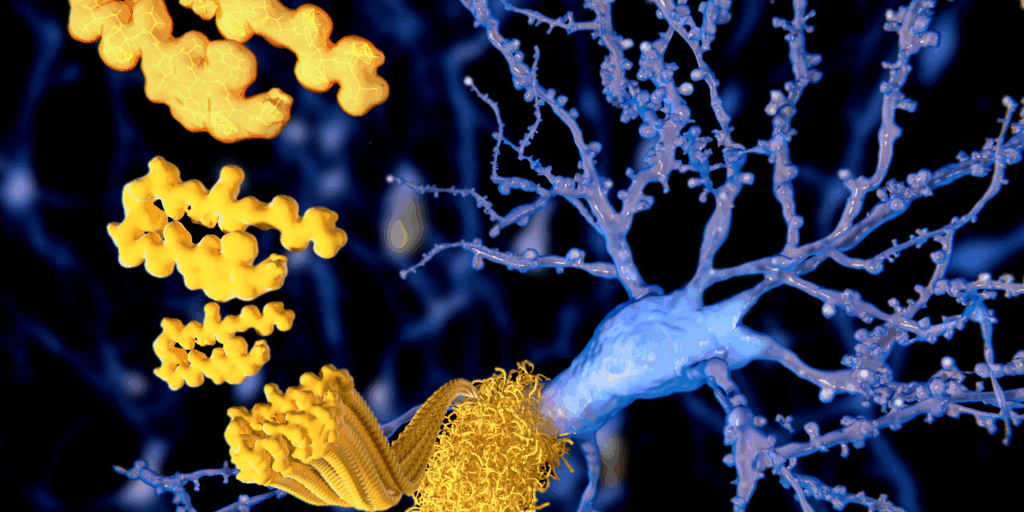
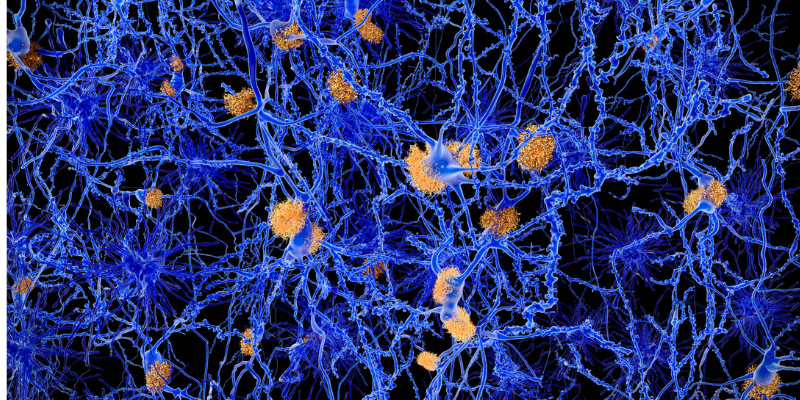
Although this may seem deep in mad inventor territory, it is cutting-edge science. For years the accepted driver of Alzheimer’s has been the clumps of sticky protein, known as amyloid plaques and p’tau tangles, that build up in the brain as you age, killing off cells and pushing you deeper into a mental darkness.
Hundreds of billions of dollars have been spent by pharmaceutical companies developing drugs that clear them out. But while they do the job, the clean-up does remarkably little to smarten up your mental processes and come with undesirable side-effects, such as bleeding in the brain.
So, research attention has been turning to ways of manipulating the clean-up squads already present in the brain. One way of doing this is with NIR, another is to target the patterns of brain activity, known as gamma oscillations, linked with such vital mental activities as attention, memory, consciousness and dreaming. The brains of cognitively intact individuals sing in harmony with these gamma brain waves while cognitively impaired brains do not.
Research has shown that exposing the brain to oscillations of 40Hz light, delivered by looking at or being in the field of a light screen, can reduce the build-up of amyloid plaques and tau, as well as improve thinking and memory.
This is because it affects the immune cells of the brain known as microglia, which have a number of remarkable properties.
One type, sometimes described as “the butler to the brain” or M2, can clear plaques and tangles and the left-over fats and proteins involved in making energy and running the body’s multiple processes.
But recently research at the Massachusetts Institute of Technology has discovered that sometimes those butlers can go rogue if they are not getting enough resources or dirty fuel from the powerhouses of the cells, the mitochondria. These make the energy that powers the brain but when they become clogged up and inefficient, a scenario created by an unhealthy diet with too much sugar, smoking, burnt fats, and not enough B vitamins and antioxidants, they trigger a transformation trick worthy of a horror movie changing the function of the normally friendly microglial cells into the brain’s enemy. They begin destroying vital protective features of the brain such as the blood brain barrier or the system for controlling sugar and insulin in the blood, transforming from the supportive M2 ‘butler’ mode into M1, known as the “evil twin”.
One of the valuable effects of 40Hz oscillation is that it can reverse the evil twin effect. Recent research, however, suggests that those less desirable M1 microglial cells may also have benefits. The M2 “butler” is very valuable when all well in the brain, but of little use when it comes under attack from the viruses or bacteria which it is designed to destroy.
These attacks, which cause damaging inflammation, often originate from what is called “barrier tissue” which is in contact with the outside world, such as the lungs, gut bacteria, the mouth – periodontal disease -, liver and kidneys.
The implication of the new view is that targeting the build-up of the sticky proteins plaque and tau in the brain as we age, may be the wrong target. Instead focusing on keeping body’s systems and organs healthy, as Food for the Brain does, emerges as a much better protective strategy.
Another is that when microglia are in M2 mode they can swell to a size large enough to munch up the damaging plaque and tau. But if this ability is overworked, it can stop, causing brain cells to become inflamed and making plaque even more toxic. Exposure to 40Hz oscillations is likely to be able to reverse this too.
Another of the natural clean up systems that can benefit from a boost is called the ‘glymphatic flush’, a deep clean that uses cerebrospinal fluid to clear out cluttering proteins left by energy creation.
This is a new and sophisticated form of preventative medicine that is delivered by wearing a type of ear and eye headset, called Cognito, worn often before bed, with eyes closed, for 30 minutes to an hour a day, asleep or awake. The first human clinical trial conducted by scientists at Yale University’s Department of Comparative Medicine, has shown remarkable effects in arresting both cognitive decline and brain shrinkage in a group of 76 of patients with mild to moderate Alzheimer’s given either the 40Hz therapy for an hour a day or a sham treatment over a six month period. While those given the sham treatment had the usual steady decline in cognitive function, determined by a Mini-Mental State Exam (MMSE) and a measure of functional abilities called ADAS-ADL, those given the real 40Hz therapy barely declined at all. Also, their brain shrinkage was substantially less, with the usual reduction in whole brain volume, which is the hallmark of Alzheimer’s, being 69 per cent less.
Another 40Hz device, called EVY, made by optoceutics.com, is in the trial phase in a race to achieve a licensed medical device. I also found a device available on Amazon called Digipace that delivers 40Hz therapy but without substantiated trial results.
But targeted gamma oscillation is only part of a new and radical idea about how best to cut Alzheimer’s risk. It is one approach that I first became aware of in a new book Brain Defenders (Hodder and Stoughton) by Neurologist Dr David Perlmutter, a New York Times best-selling author and part of Food for the Brain’s think tank.
Besides the NIR helmet or 40Hz devices I have also been following a protocol devised by the Alzheimer’s prevention charity, foodforthebrain.org that aims to ensure you have a heathy brain in a healthy body. This fits much better with the latest research about the threat from “barrier tissue” problems and how the brain defencers itself from threats. Think of it as a sort of biochemical gamma stimulation.
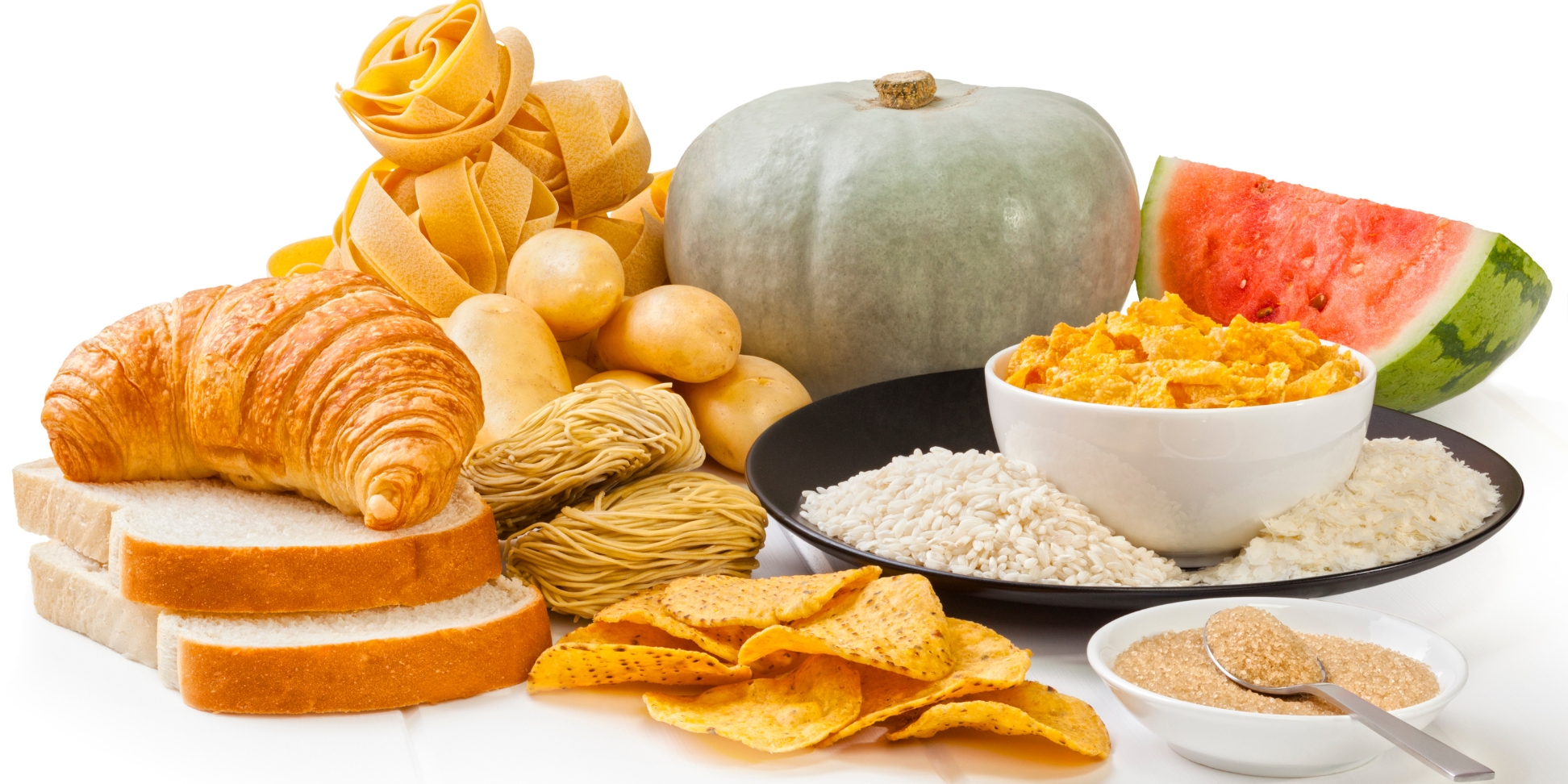
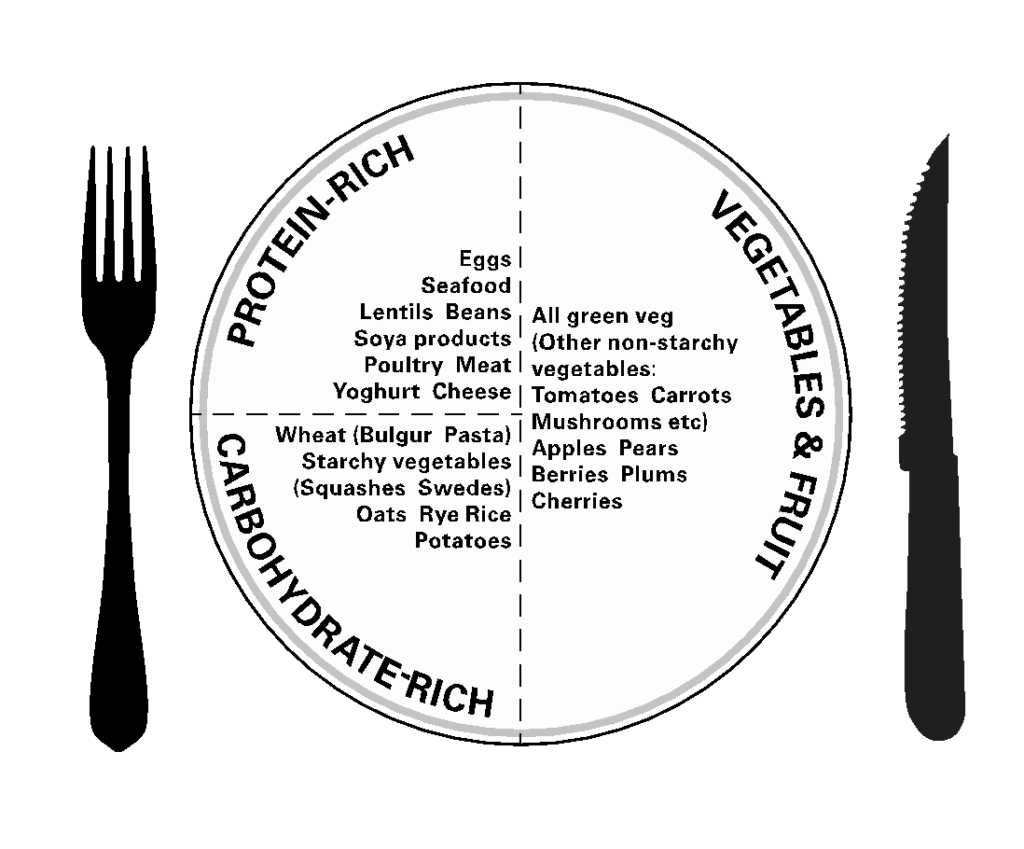
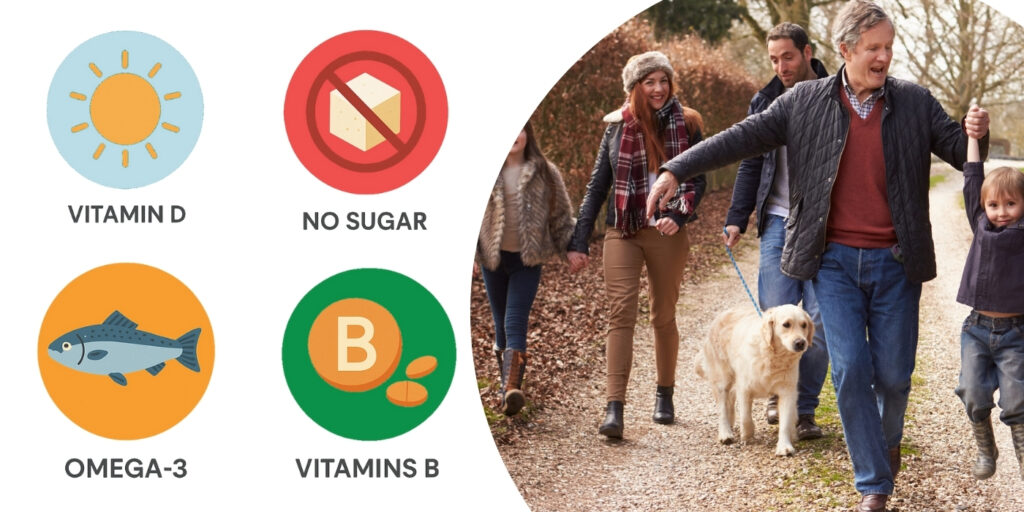
This involves strategies such as regular exercise, getting enough sleep, upping your intake of omega-3 from fish and fish oil, supplementing B vitamins, dramatically reducing sugary foods and drinks, plus two tablespoons of Ketofast, a ketogenic fuel called C8, all designed to switch your brain towards running on ketones. Ketones are an alternative fuel for defective brain cells, gunked up from too much glucose. and following a ‘ketogenic’ diet which means you cut back on carbohydrates – especially sugar, cereals, and sugar-sweetened beverages – now dominating much of the modern diet.
The result is that you start producing energy packets known as ketones, which the brain can use for energy rather than glucose. It’s been used since the 1920’s to treat brain disorders such as epilepsy and more recently Alzheimer’s anorexia and Parkinsons. Ketones, which are created in the liver from a type of fat known as C8, derived from coconut oil, also help give defective mitochondria a full service, which has the knock on effect of bringing M2 microglial cells, the brain’s butlers, back to life and turning off the more aggressive evil twin – the M1 microglia.
Ketones are also fuel for your energy- making mitochondria which often are dysfunctional in people with Alzheimer’s.
So, the dream team to ensure Alzheimer’s has a hard time getting a grip on your brain would be a combination of 40hz gamma oscillations and the nutrition and the healthy lifestyle protocol advocated by and developed by foodforthebrain.org.
About the author
Jerome Burne has been a health journalist for twenty years and has written for most of the UK’s national newspapers, as well as a variety of magazines. Before becoming a health journalist, he edited the extensive reference work Chronicle of the World. Prior to that, he was co-editor of Time Out in the mid-1980s.
In recent years, he has written mainly for the Daily Mail. He has also contributed regularly to Reader’s Digest and occasionally to the Times Literary Supplement.
In 2012, Jerome won the Medical Journalist’s Association award in the category of Medical Science Explained. He was also runner-up in the Best National Newspaper Feature category.
Research behind 40 Hz stimulation and light therapy for Alzheimer’s
Editor’s note: Research into light-based approaches to Alzheimer’s disease is developing rapidly.
The studies discussed in this article include both laboratory research and early human trials. Importantly, findings
from animal studies should not be interpreted as evidence that these approaches have been proven to prevent or treat
Alzheimer’s disease in people.
Research into 40 Hz gamma stimulation has shown intriguing results in animal models of Alzheimer’s disease.
In a landmark study, Iaccarino and colleagues found that inducing 40 Hz gamma oscillations reduced amyloid-beta levels
and altered microglial activity in Alzheimer’s mouse models. Subsequent research found effects in additional brain regions
and reported that combined 40 Hz visual and auditory stimulation could influence Alzheimer’s-associated pathology and
cognitive performance in mice.
Early studies in people are encouraging but much less conclusive. Small pilot studies have shown that 40 Hz light and sound
stimulation can induce gamma activity in the human brain and have reported exploratory findings involving brain atrophy,
functional connectivity, sleep, memory and activities of daily living. Larger, independent clinical trials are needed to
establish whether these effects translate into meaningful prevention or slowing of Alzheimer’s disease.
Near-infrared photobiomodulation (PBM) is a related but distinct field of research. Unlike 40 Hz sensory
stimulation, which aims to entrain neural oscillations, photobiomodulation uses red or near-infrared wavelengths and is
thought to act through cellular and mitochondrial mechanisms. Early clinical research has reported potentially beneficial
cognitive effects, but this approach also remains investigational.
What does this mean?
The research provides an intriguing new direction for understanding how brain rhythms, light and other forms of sensory
stimulation might influence processes associated with Alzheimer’s disease. However, much of the strongest mechanistic
evidence still comes from animal models, while human trials remain relatively small. These approaches should therefore
be regarded as promising areas of research rather than established treatments for Alzheimer’s disease.
When people think about nutrients that support the brain, omega-3 fats, B vitamins, and vitamin D usually get most of the attention. However, magnesium for brain function, including focus and memory, is just as important and often overlooked.
Yet there is another nutrient that may deserve a place on that list.
Magnesium is involved in more than 300 biochemical reactions throughout the body. It helps regulate nerve signalling, supports energy production, influences sleep quality, helps control blood sugar, and plays a critical role in the brain’s ability to learn, adapt, and form memories.
Despite this, many people consume less magnesium than they need.
As rates of cognitive decline, anxiety, sleep problems, and metabolic disease continue to rise, researchers are increasingly investigating whether magnesium status could play a role in protecting brain health throughout life.
Why does magnesium matter for the brain?
Your brain is an energy-hungry organ.
Although it accounts for only around 2% of body weight, it uses approximately 20% of the body’s energy supply. To function well, brain cells require a constant supply of nutrients that support energy production, communication between neurons, and protection from oxidative stress.
Magnesium contributes to all three.
It helps regulate neurotransmitters, supports healthy nerve-cell communication, and is required for the production of ATP, the molecule that powers every cell in the body. Magnesium also influences NMDA receptors, which are involved in learning, memory formation, and neuroplasticity, the brain’s ability to adapt and create new connections.¹
Low magnesium levels have been linked to increased inflammation, greater oxidative stress, and impaired glucose regulation, all of which are recognised contributors to cognitive decline and dementia risk.²
Magnesium and cognitive decline
One of the most interesting areas of research concerns magnesium and long-term cognitive health.
Several large population studies have found that people with higher magnesium intake or higher blood magnesium levels tend to have a lower risk of cognitive impairment and dementia.³⁻⁵ In a study published in Neurology, individuals with optimal blood magnesium levels had a significantly lower risk of developing dementia compared with those with lower levels.⁴
A recent systematic review concluded that magnesium appears to play an important role in maintaining cognitive health throughout ageing, although researchers emphasise that more intervention studies are needed to establish cause and effect.²
This does not mean magnesium is a magic bullet for preventing dementia, but it does suggest that ensuring adequate magnesium intake may be one of several important factors that help support a healthy brain as we age.
Could magnesium help with brain fog?
Many people first become interested in magnesium because they feel mentally tired, forgetful, or unable to concentrate.
While brain fog is not a medical diagnosis, it is often associated with poor sleep, chronic stress, blood sugar instability, and low energy production, all areas in which magnesium plays an important role. It also helps regulate the body’s response to stress. Chronic stress can deplete magnesium stores, while low magnesium levels may make us more vulnerable to the effects of stress, creating a vicious cycle.⁶
For some people, improving magnesium status may help support mental clarity simply by improving sleep quality, reducing stress reactivity, and supporting stable energy production.
Magnesium, mood and sleep
The relationship between magnesium and mental wellbeing has been studied for decades.
Research suggests that magnesium may help support healthy mood regulation and stress resilience, particularly in individuals with inadequate magnesium intake.⁶
Magnesium is also commonly used to support sleep. It helps regulate the nervous system and appears to influence melatonin production and GABA activity, both of which are involved in sleep regulation.
While magnesium is not a sleeping tablet, some people report improvements in sleep quality, reduced nighttime waking, and a calmer mind when magnesium intake is optimised.
Since poor sleep is increasingly recognised as a risk factor for cognitive decline and Alzheimer’s disease, supporting healthy sleep may be one of the ways magnesium contributes to long-term brain health.
Food First: Magnesium-Rich Foods to Try Before Supplements
Before reaching for a supplement, it’s worth looking at your diet. The richest sources of magnesium include:
Pumpkin seeds
Chia seeds
Almonds and cashews
Beans and lentils
Spinach and leafy greens
Whole grains
Dark chocolate
Many people can substantially improve their magnesium intake simply by eating more magnesium-rich foods, including leafy greens, beans, nuts and seeds. Although modern farming and soil quality may have reduced the magnesium content of some foods compared with the past, food should still be your first source wherever possible. Supplements are best considered a complement to diet, not a replacement for it.
Which type of magnesium is best?
One of the most confusing aspects of supplementation is the number of different forms available.
The truth is that there is no single “best” magnesium. Different forms may be more suitable, depending on your goals.
Magnesium glycinate: a gentle option often used for sleep and relaxation
Magnesium glycinate combines magnesium with the amino acid glycine. It is well absorbed and gentle on the stomach. Although it is widely recommended to support sleep and relaxation, there is currently little direct evidence that it is more effective than other well absorbed forms of magnesium. Its popularity is based largely on its favourable absorption, the calming properties of glycine, and positive clinical experience.
Magnesium l-threonate: the leading choice for magnesium for brain function
Magnesium L-threonate has attracted attention because it appears to increase magnesium levels within the brain more effectively than some other forms.
Animal studies have shown improvements in learning and memory, while early human studies suggest potential benefits for cognitive function.¹ ⁷
The evidence remains preliminary, but this is currently the form generating the most interest for memory and cognitive health.
Magnesium citrate: widely available and well absorbed
Magnesium citrate is widely available and generally well absorbed. It is often used when constipation is also an issue because it can have a mild laxative effect.
Magnesium malate: sometimes chosen for energy support
Magnesium malate combines magnesium with malic acid, a compound involved in cellular energy production.
Some practitioners favour this form for people experiencing fatigue, although the evidence supporting its superiority for energy is limited.
Magnesium oxide: common, but less efficiently absorbed
Magnesium oxide contains a high amount of elemental magnesium but is relatively poorly absorbed.
For brain health purposes, there are usually better options available.
Magnesium for Brain Function: Quick Comparison by Form
Form
Often chosen for
Absorption
Evidence strength
Glycinate
Sleep, relaxation
Well absorbed, gentle on the stomach
Limited evidence of superiority over other well-absorbed forms
L-Threonate
Cognitive/brain health
Not primarily valued for general absorption
Preliminary – animal studies plus early human research9,10
Citrate
General use, occasional constipation
Well absorbed
Well established for absorption and mild laxative effect
Malate
Energy, fatigue
Well absorbed
Limited direct evidence for energy specifically
Oxide
General, budget-friendly
Poorly absorbed
Not typically recommended where absorption matters most
The bottom line: what this means for you
Magnesium is not a miracle nutrient, nor is there one form that’s right for everyone. The best choice depends on your individual needs, goals, and overall health. For some people, simply eating more magnesium-rich foods may be enough, while others may benefit from supplementation.
What the evidence does tell us is that magnesium is fundamental to healthy brain function. It supports energy production in every cell, helps nerve cells communicate, contributes to healthy sleep and stress regulation, and plays an important role in learning and memory. Maintaining healthy magnesium levels may therefore be one of the many ways we can support our brains as we age. (2-8)
Brain health is rarely transformed by a single nutrient, supplement, or food. It’s the result of consistently supporting the systems your brain depends on through good nutrition, regular movement, restorative sleep, stable blood sugar, social connection, and other healthy lifestyle habits.
Magnesium isn’t the whole picture, but it is an important piece of it. Making sure you’re getting enough, whether through your diet or, where appropriate, a well-chosen supplement, is one simple step towards supporting your brain for years to come.
Disclaimer: This article is for general information only and is not medical advice. It is not a substitute for consultation with a qualified healthcare professional, and should not be used to diagnose or treat any condition. Always speak with a GP, pharmacist, or registered nutritionist before starting a new supplement, particularly if you are pregnant, breastfeeding, taking medication, or managing a health condition.
The Best Foods to Help Lower Homocysteine Naturally
Of all the blood markers linked to dementia risk, homocysteine may be one of the most important and one of the easiest to improve. There are certain foods that lower homocysteine, making it possible to have a positive impact through your diet.
If you have searched online for foods that lower homocysteine, you have probably found plenty of articles recommending spinach, broccoli, eggs and salmon. They are all excellent foods, but they are only part of the story.
The truth is that no food lowers homocysteine directly. Your body is the one that does that. Every second of every day, it is recycling homocysteine through a series of biochemical reactions that depend on a steady supply of essential nutrients. The foods you eat simply provide the vitamins and nutrients those reactions need to work efficiently.
Understanding that difference changes the conversation completely. Instead of searching for a miracle food, the goal becomes giving your body the nutrients it needs to keep homocysteine in a healthy range.
For a full explanation of what homocysteine is and why elevated levels matter, read our guide to homocysteine.
Combined with appropriate testing and, where needed, targeted supplementation, improving your diet is one of the most practical ways to support long-term brain health.
Can food lower homocysteine?
No food lowers homocysteine directly. Instead, foods provide the folate, vitamin B12, vitamin B6, riboflavin, choline and betaine your body needs to recycle homocysteine efficiently.
Improving your intake of these nutrients may help support healthier homocysteine levels, particularly if your diet has previously been low in leafy green vegetables, legumes, fish, eggs or other nutrient-rich whole foods.
However, the effect of diet depends on why homocysteine is elevated. Poor vitamin B12 absorption, medications, kidney disease, thyroid problems and genetic factors may mean that dietary changes alone are not enough.
The key nutrients involved in homocysteine metabolism
Nutrient
Role in homocysteine metabolism
Food sources
Folate
Supports conversion of homocysteine back into methionine
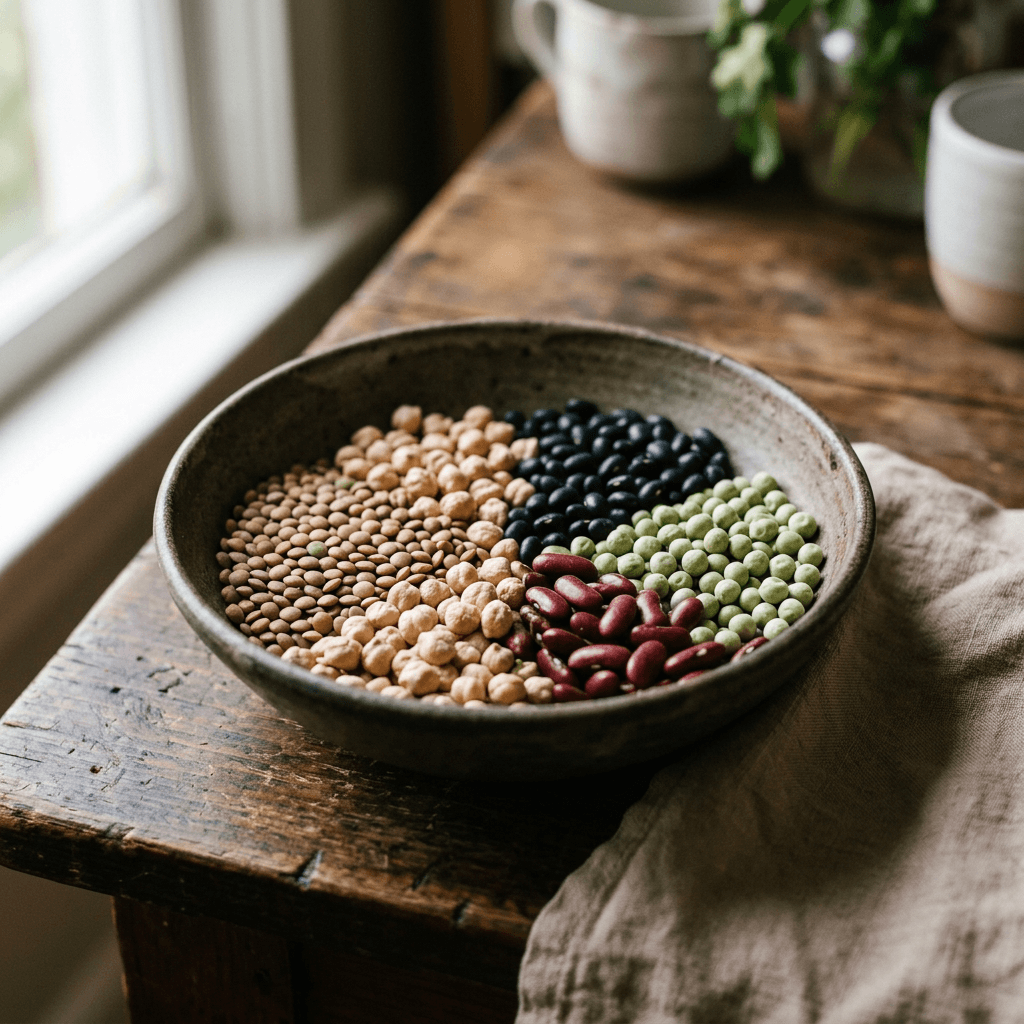
Spinach, kale, broccoli, asparagus, lentils and chickpeas
Vitamin B12
Works with folate in homocysteine recycling
Salmon, sardines, shellfish, eggs, dairy products and liver
Vitamin B6
Helps convert homocysteine into cysteine
Poultry, salmon, chickpeas, potatoes and bananas
Riboflavin
Supports folate metabolism and MTHFR activity
Eggs, milk, yoghurt, mushrooms and almonds
Choline
Supports an alternative methylation pathway
Eggs, liver, fish and soybeans
Betaine
Acts as a methyl donor in homocysteine recycling
Beetroot, spinach, quinoa and wholegrains
Why homocysteine matters?
Homocysteine is a naturally occurring amino acid produced whenever your body breaks down methionine, an amino acid found in protein-rich foods.
Under healthy conditions, homocysteine does not remain in the bloodstream for long. It is quickly recycled into other useful compounds that support normal cellular function.
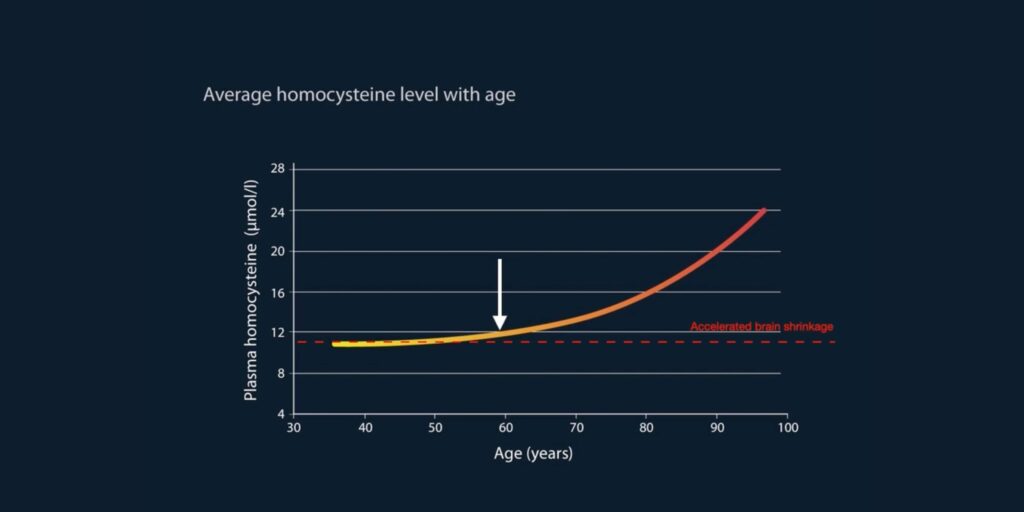
Problems arise when that recycling process slows down. Homocysteine begins to accumulate, increasing oxidative stress, inflammation and damage to blood vessels.
Over the last three decades, elevated homocysteine has consistently been associated with a higher risk of cognitive decline, dementia, stroke and cardiovascular disease.¹
Unlike high blood pressure or raised cholesterol, however, homocysteine rarely causes obvious symptoms. People often discover it is elevated only after having a blood test, by which time it may have been quietly increasing for years.
That is why homocysteine can be such a valuable biomarker. It gives you an opportunity to identify a potential problem early and take appropriate action.
Your body has evolved an elegant system for dealing with homocysteine. Rather than allowing it to build up, it continually recycles it through two interconnected pathways.
One pathway converts homocysteine back into methionine so it can be reused. The other converts it into cysteine, an amino acid used to produce glutathione, often described as the body’s master antioxidant because of its role in protecting cells from oxidative damage.
Neither pathway works without the right nutrients. Folate, vitamin B12, vitamin B6, riboflavin, choline and betaine each have specific jobs within this recycling process.
If one or more of these nutrients becomes limiting, the whole system becomes less efficient and homocysteine starts to rise.
This explains why two people eating apparently similar diets can have very different homocysteine levels. One may absorb vitamin B12 less efficiently as they get older. Another may carry a common genetic variant that increases their riboflavin requirement. Someone else may consume large amounts of caffeine or alcohol, increasing their need for certain B vitamins.
It is rarely one factor in isolation. More often, several small influences combine over many years.
The good news is that these pathways can be responsive. Give your body the nutrients it needs, remove some of the obstacles that interfere with the process, and homocysteine may begin to fall.
Foods that lower homocysteine: folate-rich foods
When researchers study nutrition and homocysteine, one nutrient consistently stands out: folate.
Folate plays a central role in recycling homocysteine back into methionine. Without enough folate, this pathway slows, making it much harder for your body to keep homocysteine within a healthy range.
Numerous intervention studies have demonstrated that improving folate status lowers homocysteine, particularly in people whose intake has previously been low.¹
Fortunately, folate is abundant in many whole plant foods.
Leafy green vegetables
The richest dietary sources include:
Spinach
Kale
Broccoli
Brussels sprouts
Asparagus
These foods offer far more than folate alone. They also provide fibre, antioxidants and hundreds of naturally occurring plant compounds that support healthy blood vessels, reduce inflammation and contribute to overall brain health.
Beans and lentils
Legumes are another valuable source of folate. Good choices include:
Lentils
Chickpeas
Black beans
Kidney beans
Peas
Beans and lentils also provide fibre, plant protein and vitamin B6.
Rather than relying on one particular vegetable or legume, aim to include a wide variety throughout the week. Consistency is far more important than perfection.
Foods that lower homocysteine with vitamin B12
Folate rarely works alone. Vitamin B12 is equally important because it enables homocysteine to be converted back into methionine.
When vitamin B12 is lacking, this recycling process slows, regardless of how much folate is available.
One reason this matters is that vitamin B12 deficiency becomes increasingly common with age. Stomach acid, which helps release vitamin B12 from food, naturally declines over time. Some medications can further reduce absorption, while vegetarians and vegans may consume too little through their diet.
As a result, homocysteine may begin to rise years before the more familiar symptoms of vitamin B12 deficiency appear.
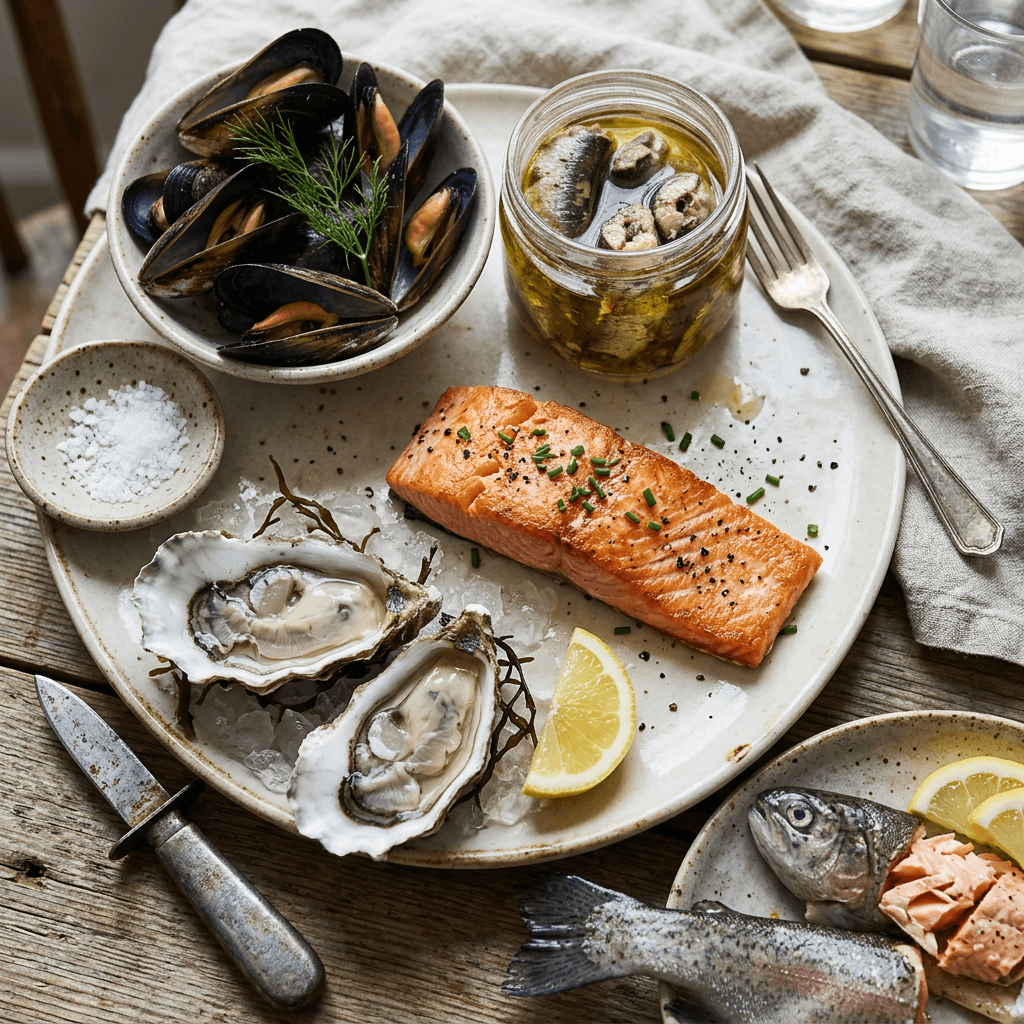
Fish and seafood
Among the richest natural sources of vitamin B12 are fish and seafood, particularly:
Salmon
Sardines
Trout
Mussels
Oysters
Fish also provides omega-3 fatty acids, which may work alongside B vitamins in supporting brain health.
Useful amounts of vitamin B12 are provided by eggs, milk, yoghurt, and cheese.
Eggs are particularly valuable because they also provide choline, another nutrient involved in homocysteine metabolism and healthy methylation.
Meat and liver
Beef, poultry and liver also provide vitamin B12.
For many people, improving dietary intake is an excellent place to start. For others, particularly if absorption has declined, supplementation may become necessary to restore adequate levels.
Foods that lower homocysteine with vitamin B6
Although folate and vitamin B12 receive most of the attention, they are only part of the story.
Vitamin B6 helps direct homocysteine down a different pathway, converting it into cysteine, which is then used to produce glutathione.
Good dietary sources include:
Poultry
Salmon
Tuna
Potatoes
Bananas
Chickpeas
Fortified cereals
Vitamin B6 is found in a wide range of foods, so a varied whole-food diet will usually provide more than relying heavily on one source.
Vitamin B2 foods that lower homocysteine
Riboflavin, better known as vitamin B2, is another nutrient that deserves greater recognition.
It is particularly important for people carrying the common MTHFR C677T genetic variant, where an adequate riboflavin intake may help the recycling process work more efficiently.
Foods containing riboflavin include:
Eggs
Yoghurt
Milk
Mushrooms
Almonds
Beef
Fortified cereals
Looking at nutrients individually is helpful for understanding the biology, but this is not how we eat. Meals contain dozens of vitamins, minerals and plant compounds working together, which is one reason whole-food dietary patterns consistently outperform approaches focused on isolated foods alone.
Choline and betaine foods that lower homocysteine naturally
Your body has a second way of recycling homocysteine that receives far less attention.
This alternative pathway depends on choline and betaine.
Choline supports normal methylation, helps build healthy brain cell membranes and is used to produce acetylcholine, a neurotransmitter involved in learning and memory.
Betaine acts as a methyl donor, allowing homocysteine to be converted back into methionine through a different biochemical route.
Eggs are one of the richest dietary sources of choline, while liver, fish and soybeans also provide significant amounts.
Beetroot, spinach, quinoa and wholegrains contribute valuable sources of betaine.
Thinking about these nutrients together helps explain why no single food can claim to lower homocysteine. Instead, the most effective dietary approach is built around a wide variety of nutrient-dense whole foods, each contributing different pieces of the puzzle.
Foods and habits that may make high homocysteine harder to manage
Supporting healthy homocysteine is not only about what you add to your plate. Certain everyday habits can also make it harder for your body to keep levels under control.
A diet low in vegetables naturally reduces your intake of folate and other B vitamins.
Diets dominated by ultra-processed foods often provide fewer of the vitamins needed for efficient methylation.
Excess alcohol can interfere with the absorption and metabolism of several nutrients involved in homocysteine recycling.
Smoking increases oxidative stress and is associated with higher homocysteine levels.
Coffee deserves a brief mention because the evidence is more nuanced. Moderate coffee consumption has been associated with several health benefits, yet some studies have also shown that high coffee consumption can increase homocysteine.
This does not mean everyone needs to give up coffee, but it strengthens the case for maintaining a good nutritional status if you drink several cups each day.
The aim is not dietary perfection. It is creating the best possible environment for your body’s own recycling system to work efficiently.
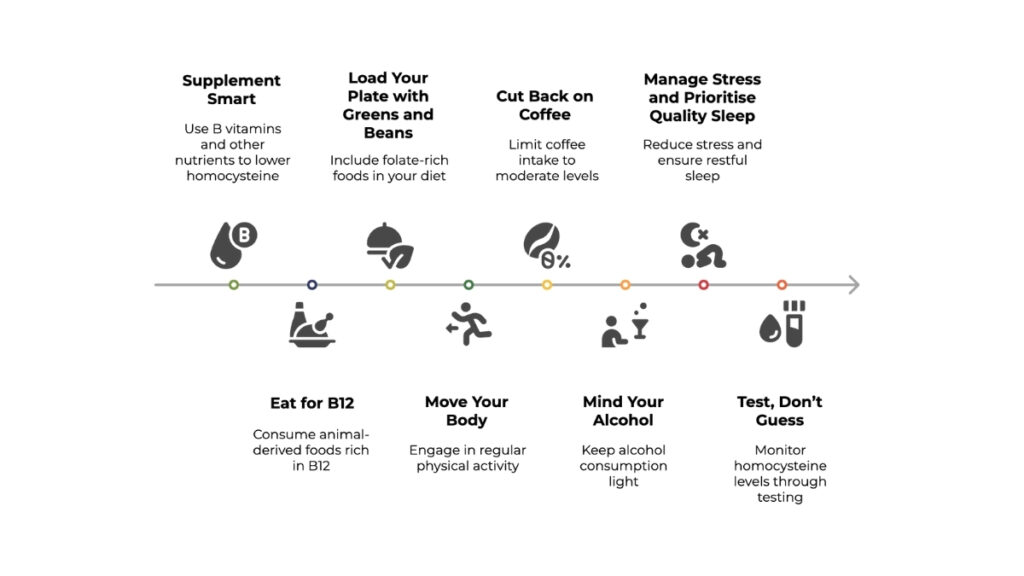
Diet is only one part of the picture. Regular exercise, stopping smoking, managing alcohol intake and correcting nutritional deficiencies can all help support healthy homocysteine levels. Learn about these and other evidence-based strategies in our guide to Eight Ways to Lower Your Homocysteine.
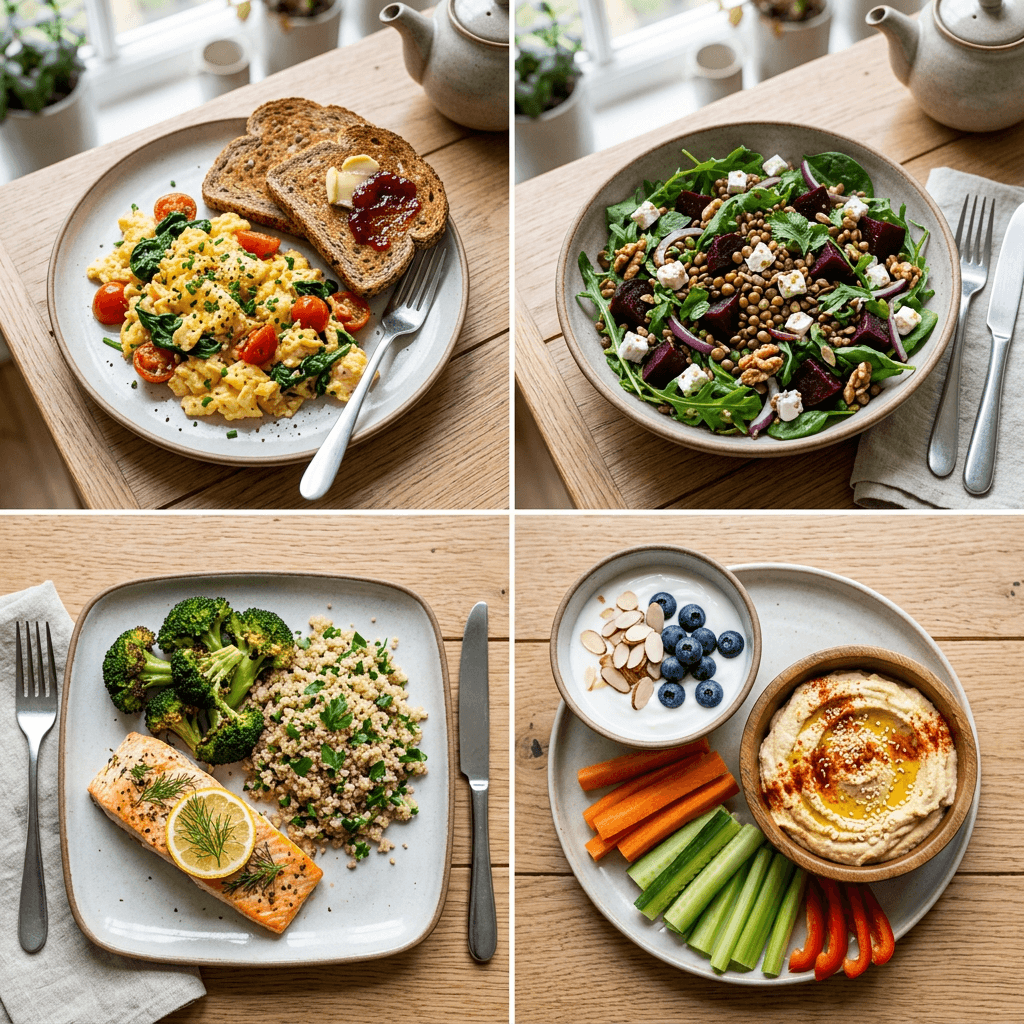
A Sample Day of Eating with Foods That Lower Homocysteine
A meal pattern that supports homocysteine metabolism might include:
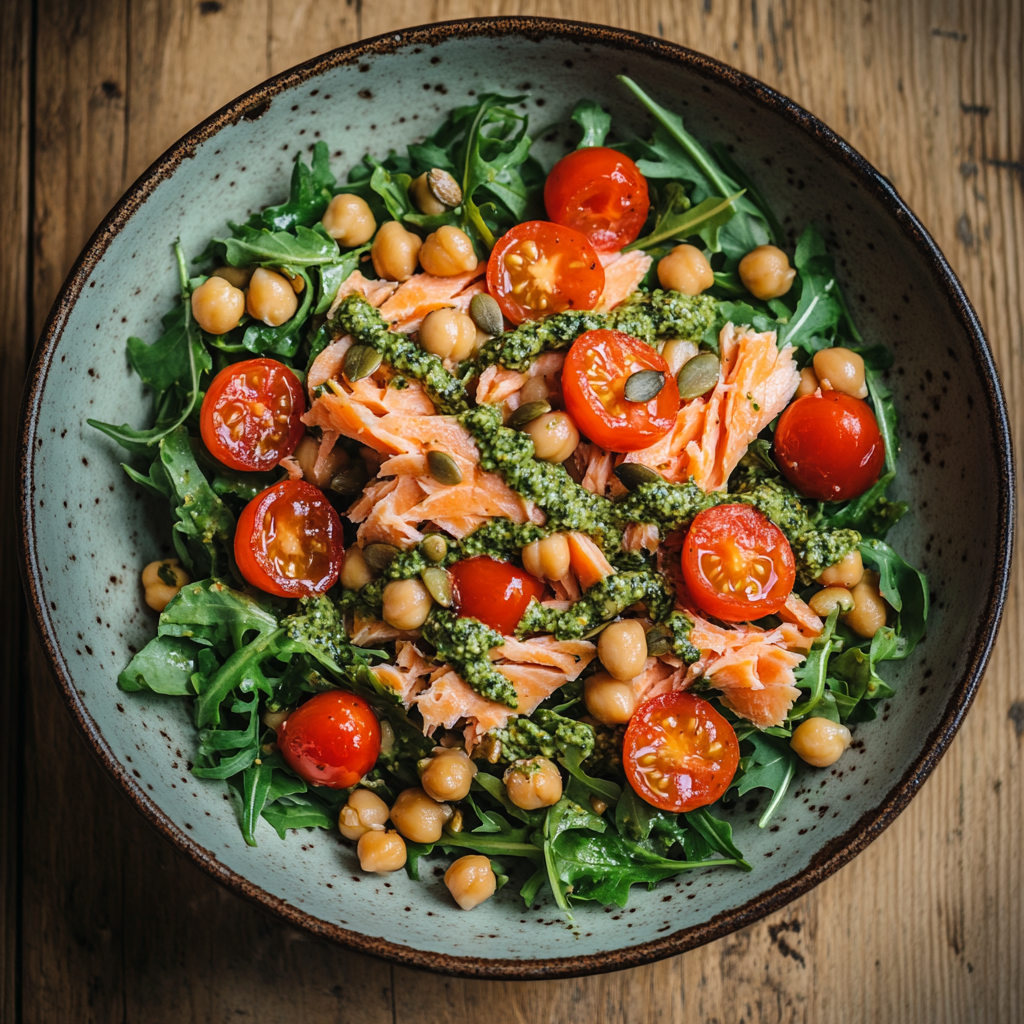
Breakfast:Eggs with spinach and wholegrain toast.
Lunch:A lentil, beetroot and leafy green salad.
Dinner:Salmon with broccoli and quinoa.
Snack:Yoghurt with almonds or hummus with vegetables.
This is only an example. The goal is not to follow a rigid meal plan, but to combine foods that provide folate, vitamin B12, vitamin B6, riboflavin, choline and betaine throughout the day.
The best foods to support healthy homocysteine
There is not a single food that lowers homocysteine. Eating a variety of whole foods provides the nutrients your body needs to recycle it efficiently.
Leafy green vegetables such as spinach, kale and broccoli are among the richest sources of folate, while fish, seafood and eggs provide vitamin B12.
Eggs also supply choline, an important nutrient for healthy methylation, and beans and lentils contribute folate and vitamin B6.
Beetroot, spinach and wholegrains provide betaine, which supports an alternative pathway for recycling homocysteine.
Rather than searching for a superfood, build meals around these foods consistently. Together they provide the nutrients your brain and body need to maintain healthy homocysteine metabolism.
Is diet enough to lower high homocysteine?
Improving your diet should always be the foundation. Every meal and snack is an opportunity to provide your body with the nutrients it needs to recycle homocysteine efficiently.
Many people may see meaningful improvements simply by eating more leafy greens, legumes, seafood, eggs and other nutrient-dense whole foods.
However, diet has its limits.
If a blood test shows your homocysteine is above the optimal range, food alone may not be enough to bring it back down.
Poor vitamin B12 absorption becomes increasingly common with age, certain medications interfere with B-vitamin metabolism, and some people have genetic variations that increase their need for specific nutrients.
Even someone eating what appears to be an excellent diet may still require additional nutritional support.
Rather than viewing food and supplements as competing approaches, think of them as working together. A nutrient-rich diet provides the foundation for lifelong health, while targeted supplementation may help correct a nutritional imbalance when diet alone does not achieve the desired result.
One of the encouraging things about homocysteine is that it can respond relatively quickly to the right intervention.
Improvements may begin within a few weeks of increasing key nutrients, although this depends on the underlying cause and how elevated homocysteine was to begin with.
Dietary changes may begin affecting homocysteine within weeks, but retesting after an appropriate interval can show whether the changes have been sufficient.
Food for the Brain recommends a simple approach.
First, test your homocysteine to establish your starting point. If you’re unsure which test to choose or how testing works, read our guide to homocysteine testing.
Next, improve your diet by increasing foods naturally rich in folate and other B vitamins while introducing targeted supplementation where appropriate.
Finally, repeat the test after around three to six months to confirm whether your homocysteine has moved towards a healthier range.
Without measuring it, you do not know whether your strategy is working.
No individual food lowers homocysteine directly or works instantly. Foods rich in folate, vitamin B12, vitamin B6, riboflavin, choline and betaine provide the nutrients your body uses to recycle homocysteine. How quickly your level changes depends on your starting level, nutrient status, absorption, genetics, medications and any underlying medical conditions.
Which vitamin is most important for homocysteine?
Folate, vitamin B12 and vitamin B6 all play important but different roles in homocysteine metabolism. Folate and vitamin B12 help recycle homocysteine back into methionine, while vitamin B6 helps convert it into cysteine. Riboflavin, choline and betaine also support related pathways. For this reason, there is no single vitamin that is universally most important for everyone.
Are eggs good for homocysteine?
Eggs provide vitamin B12, vitamin B6, riboflavin and choline, all of which are involved in homocysteine metabolism. They can form part of a balanced diet that supports healthy homocysteine levels, but eggs alone should not be expected to correct elevated homocysteine.
Is coffee bad for homocysteine?
The evidence is mixed. Moderate coffee consumption has been associated with several health benefits, but some studies suggest that high consumption may increase homocysteine. You may not need to stop drinking coffee, but maintaining a nutrient-rich diet is particularly important if you regularly consume several cups each day.
Can a vegetarian or vegan diet raise homocysteine?
A well-planned vegetarian or vegan diet can provide abundant folate and vitamin B6. However, vitamin B12 is found mainly in animal-derived foods, so people following a vegan diet need a reliable source through fortified foods or supplements. Low vitamin B12 status can contribute to raised homocysteine, even when folate intake is high.
The bigger picture
Homocysteine is more than another blood test. It can indicate whether your body has the nutrients needed to support healthy methylation and long-term brain health.
Unlike many risk factors for cognitive decline, it is measurable, modifiable and measurable again after you have taken action.¹
A nutrient-rich diet should always be the starting point, but if testing shows your homocysteine is above the optimal range, targeted supplementation may be needed alongside dietary changes.
The goal is not simply to eat more spinach, although eating more vegetables is rarely a bad idea.
The goal is to understand what your body needs, measure your progress and know whether the steps you are taking are actually working.
Next steps
If you have not measured your homocysteine, that is the best place to start.
Knowing your level takes the guesswork out of deciding whether dietary changes alone are enough or whether targeted supplementation may be needed.
You can order our accurate at-home Homocysteine Test or choose the DRIfT 5-in-1 Test, which measures homocysteine alongside vitamin D, omega-3 index, HbA1c and glutathione, giving you a broader picture of your brain health.
‘Our Children No Longer Need to Worry About Our Cognitive Decline‘
What one family learned from living through dementia and why they decided to take action.
When dementia affects a family, the impact often extends far beyond the person who receives the diagnosis. Many people begin to worry about cognitive decline, wondering whether it is an inevitable part of ageing or whether there is anything they can do to reduce their risk.In this story, Peter shares how watching his mother develop dementia changed the way he and his wife thought about ageing, why they decided to take a more proactive approach to their brain health, and how that decision ultimately gave their children something they hadn’t expected: peace of mind.
Most people do not start thinking seriously about dementia until it touches someone they love. Yet every day in the UK, around 790 people receive a dementia diagnosis, the equivalent of seven double-decker buses full of families beginning a journey they never expected to take.
Why One Family Decided Not to Worry About Cognitive Decline
For Peter and his family, dementia was not something they read about in the news or encountered through awareness campaigns. It arrived at their front door.
As his mother’s dementia progressed, the family witnessed first-hand how profoundly the condition could affect daily life. For a period, she lived with Peter and his wife, giving them a close-up view of the challenges, heartbreak, and uncertainty that often accompany cognitive decline.
Their children were young when their grandmother first became unwell and were old enough to witness much of what followed. They saw the gradual changes in her memory, independence, and ability to live the life she had once enjoyed. Like many families affected by dementia, they adapted as best they could, but experiences like these leave their mark.
Should You Worry About Cognitive Decline if Dementia Runs in Your Family?
At first, the family’s focus was entirely on supporting a much-loved mother and grandmother. Then, as they watched dementia unfold over many years, the children naturally started asking questions about the future. What would happen to their parents? Was this simply what ageing looked like? Could anything be done to reduce the risk of dementia?
For Peter, this became one of the most difficult parts of the journey.
“It wasn’t fair that they should have this burden so young.”
When his mother died in 2016, he and his wife found themselves reflecting on everything the family had been through. They knew there were no guarantees when it came to health and ageing, but they also felt increasingly uncomfortable with the idea of simply hoping for the best.
Instead, they made a decision. Rather than focusing on what they could not control, they would focus on what they could.
“We decided to do something about it. We wanted to keep our physical and cognitive health together for as long as possible.”
That decision marked the beginning of a journey that continues today.
What to Do Instead of Worrying About Cognitive Decline
Peter’s interest in health had not appeared overnight.
Years earlier, they had discovered Patrick Holford’s work and become increasingly interested in nutrition and healthy ageing. Like many people, they had spent years trying to understand how food, lifestyle, and everyday habits influence long-term wellbeing.
Dementia, however, gave that interest a new urgency, as brain health was no longer an abstract topic. It had become deeply personal.
Instead of feeling powerless, they wanted to understand more about the factors associated with cognitive decline and, more importantly, what practical steps they could take to support healthy brain ageing. This led them to Food for the Brain’s educational resources, the Cognitive Function Test, and DRIfT biomarker testing.
They were not looking for guarantees or predictions about the future. They wanted a clearer understanding of where they stood and, perhaps more importantly, what they could actually do about it.
Measuring What Matters
The first steps? Understanding where they actually stood.
After years of watching dementia affect someone they loved, they wanted more than good intentions. They wanted a clearer picture of their current health and a better understanding of where they should focus their efforts.
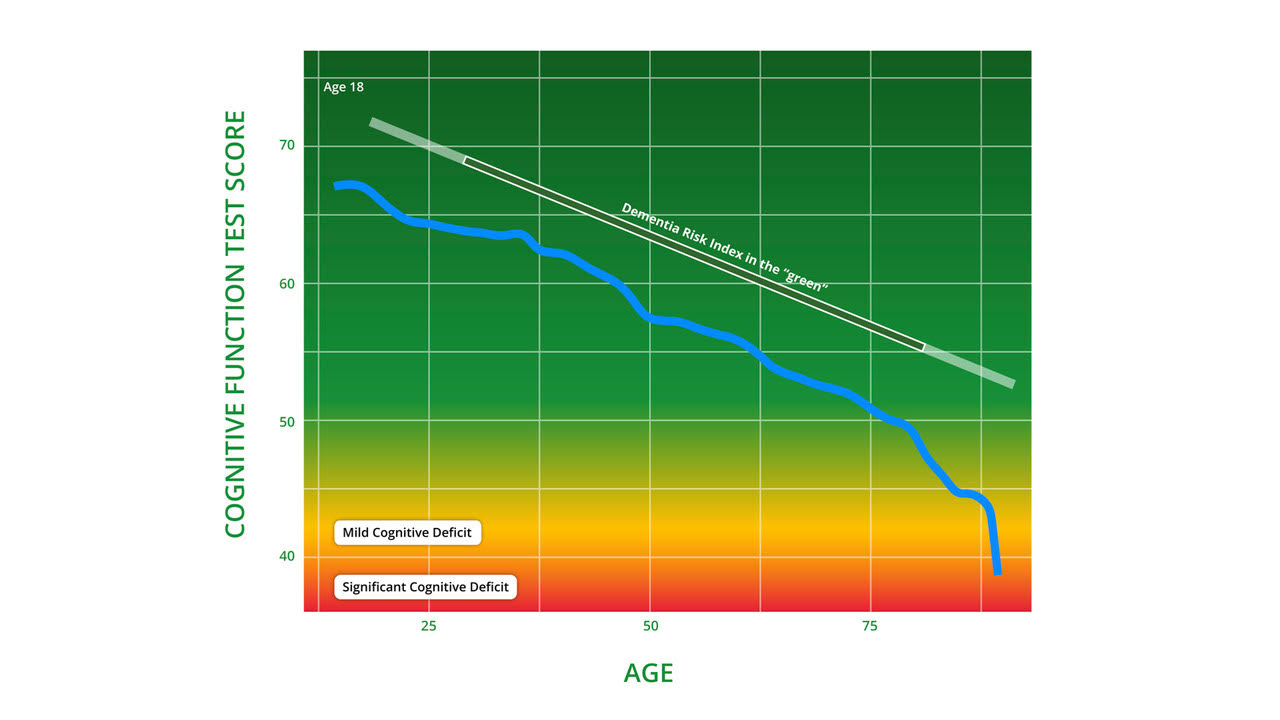
The Cognitive Function Test provided one piece of that picture. Having first completed the assessment many years ago, Peter returned to it years later with a renewed interest in dementia prevention and healthy ageing. His score improved from 51 to 73.
The score itself was only part of the story. What mattered more was having a way to check in on how things were going. After everything the family had been through, it felt reassuring to have something tangible to measure rather than simply wondering whether their efforts were making a difference.
Alongside cognitive testing, they also began monitoring several biomarkers associated with brain health through DRIfT testing and implementing the guidance they were given along the way. The results showed encouraging changes across a number of areas:
Key Changes Over Time
From
To
Cognitive Function Test
51
73
Homocysteine
11.9 µmol/L
7.16 µmol/L
HbA1c
5.5%
5.1%
Omega-3 Index
7.69%
10.3%
His homocysteine level proved particularly useful information. Although he had already made a number of dietary and lifestyle changes, his levels remained higher than he would have liked, hovering at around 12 µmol/L across several tests. Regular testing allowed him to identify the issue, make further adjustments, and see how his body responded over time. After introducing vitamin B12, his homocysteine eventually reduced from 11.9 µmol/L to 7.16 µmol/L.
Without testing, he would never have known that this important marker remained elevated, as it is not something you can feel. Equally, without repeating the test, he would never have known whether the changes he made were having the desired effect. never have known whether the changes he made were having the desired effect.
Lifestyle Changes That Reduced Their Worry About Cognitive Decline
There was no single intervention that transformed their health overnight. Instead, they gradually reshaped the way they lived. Ultra-processed foods disappeared from the shopping trolley, wheat was removed from the diet, fermented foods became a regular feature at mealtimes, and targeted supplements were added where testing suggested they might be beneficial. Alongside this, they stayed physically active, walked regularly, and continued to challenge themselves mentally through activities such as completing The Times crossword.
Like many people who successfully improve their health over the long term, they did not follow a perfect plan or look for a magic solution. They focused on making changes they could sustain and enjoy, building habits that fitted naturally into the life they wanted to lead in retirement.
In many ways, their experience reflects what the research increasingly tells us about brain health: it is rarely one single intervention that matters most, but the cumulative effect of multiple factors working together over time, from nutrition and exercise to sleep, metabolic health, social connection, and lifelong learning.
The Difference It Made
Over time, they began to notice subtle shifts. Their thinking felt clearer, they felt more optimistic about ageing, and they gained confidence from seeing improvements in some of the markers they were tracking. Yet perhaps the biggest change was not physical at all. For years, dementia had been something that happened to their family. Now, instead of feeling defined by that experience, they felt they were actively shaping what came next.
The conversations within the family began to change, too. Their children and their children’s partners became more interested in brain health, nutrition, and prevention, turning what began as one family’s experience of dementia into a wider conversation about healthy ageing. Rather than seeing cognitive decline as an inevitable part of getting older, the family started to see it through a different lens, one that recognised the role informed choices can play in supporting long-term brain health.
When asked what has mattered most, Peter does not talk about biomarkers, supplements, or cognitive test scores. He returns instead to the concern that first motivated him and his wife to take action. Watching their grandmother’s decline had left a deep impression on the children, who naturally worried about what the future might hold for their parents. Those concerns did not disappear overnight, but they gradually eased as they saw their parents taking positive action, learning more about brain health, and making it a priority.
Reflecting on everything that had changed, Peter felt one thing stood out above all the others. He said “our children no longer need to worry about our cognitive decline.”
For Peter, that is the result that matters most.
Want to understand your own brain health?
Peter’s experience is not really about a test score, a supplement, or a blood result. Those were simply tools that helped him and his wife better understand their health, make informed decisions, and feel more confident that they were moving in the right direction.
At its heart, this is a story about a family who experienced dementia first-hand and decided not to leave the future entirely to chance. It is about protecting independence, preserving memories, staying connected to the people we love, and approaching later life with greater confidence and optimism.
At Food for the Brain, we believe more people deserve the opportunity to do the same. As a research and education charity, our mission is to make dementia prevention and optimal brain health possible by translating the latest science into practical, accessible actions that people can take today. Through research, education, testing, and behaviour-change programmes, we help people understand their brain health and take positive action while there is still time.
Whether you are simply curious about your brain health or looking for ways to reduce your risk, you can get started by:
Algae Oil vs Fish Oil for Brain Health: What’s the Difference?
If you’ve spent any time reading about brain health, you’ve probably come across omega-3s. When it comes to choosing a source of these essential nutrients, many people weigh up Algae Oil vs Fish Oil. They are one of the most researched nutrients in dementia prevention, cognitive function and healthy ageing, yet one surprisingly common question remains:
Does it matter where your omega-3s come from?
For years, fish oil was considered the gold standard. More recently, algae oil has emerged as an alternative that is popular with vegetarians, vegans and those who simply prefer a tasteless supplement. But does algae oil offer the same brain health benefits as fish oil, or is one genuinely better than the other?
The answer is more interesting than you might think.
Why Omega-3s Matter for Brain Function and Healthy Ageing
When we talk about omega-3s and brain health, we are mainly referring to two fatty acids: EPA (eicosapentaenoic acid) and DHA (docosahexaenoic acid).
DHA is particularly important because it forms part of the structure of brain cells themselves. In fact, DHA is one of the most abundant fats found within the brain, helping maintain healthy cell membranes and supporting communication between neurons.
EPA appears to play a slightly different role. It is involved in regulating inflammation, blood flow and a number of processes linked to mood and cognitive function.
Research has consistently linked higher omega-3 status with better cognitive performance, healthier brain ageing and a lower risk of cognitive decline. Some of the most fascinating findings come from the Oxford VITACOG studies, which examined the relationship between omega-3s, B vitamins and brain ageing.
Researchers found that participants with higher blood levels of omega-3s gained significantly greater benefits from homocysteine-lowering B vitamins than those with lower omega-3 levels. Those with both adequate omega-3 status and B vitamin support experienced slower rates of brain atrophy and reduced cognitive decline compared with those who had lower omega-3 levels [3,4].
Interestingly, emerging research suggests that maintaining adequate omega-3 levels may be particularly important for women. Hormonal changes associated with ageing can influence brain health, inflammation and cognitive resilience, making omega-3 status an important consideration throughout later life. You can learn more in our article on why women’s brains need omega-3 now.
The simple takeaway is that omega-3s appear to be an important part of protecting the brain as we age. They also do not work in isolation. Like most nutrients, they seem to be most effective when part of a wider network of nutrients and healthy lifestyle factors.
Want a quick overview before we compare algae oil and fish oil? This short video explains why omega-3s are so important for brain health and healthy ageing.
Algae Oil vs Fish Oil: What’s the Difference?
Fish oil is extracted from oily fish such as sardines, anchovies and mackerel and has been the most widely used source of EPA and DHA for decades.
Algae oil, on the other hand, is derived directly from marine microalgae.
This distinction is important because fish do not actually produce omega-3 fats themselves. Instead, they accumulate EPA and DHA by consuming algae and other organisms within the marine food chain [5].
In other words, algae are the original source of the omega-3 fats found in fish.
From a nutritional perspective, both fish oil and algae oil can provide the same biologically active forms of omega-3. The main differences relate to dietary preference, manufacturing methods and the specific balance of EPA and DHA provided by individual products.
If you’re considering an omega-3 supplement, it’s worth understanding the differences between EPA and DHA, how much you may need, and what to look for when choosing a quality product. Our comprehensive guide to omega-3 supplements covers the evidence, recommended intake levels and key considerations before you buy.
Algae Oil vs Fish Oil: Key Differences
Fish Oil
Algae Oil
Source
Fish
Marine algae
Vegan-Friendly
No
Yes
EPA & DHA
High
DHA-focused (some EPA)
Taste
May cause fishy aftertaste
Neutral
Sustainability
Varies
More sustainable
Best For
Traditional omega-3 support
Plant-based omega-3 support
Is Algae Oil as Effective as Fish Oil?
Fish oil still has one clear advantage: it has been studied for much longer.
As a result, there is currently a larger body of research investigating fish oil supplementation and health outcomes. That does not necessarily mean fish oil is superior, only that it has a longer research history.
More recently, scientists have started directly comparing fish oil and algae oil. A 2025 human trial found that algae-derived EPA and DHA were absorbed just as effectively as omega-3s from fish oil when equivalent doses were provided [6].
This is an important finding because it suggests the body is able to utilise EPA and DHA from algae in much the same way as EPA and DHA from fish oil. For people who do not eat fish, follow a plant-based diet or simply prefer a tasteless source of marine omega-3s, algae oil appears to be a credible alternative rather than a compromise.
Omega-3s, B Vitamins and Dementia Prevention
There are two topics we love talking about at Food for the Brain: omega-3s and homocysteine. While they might seem unrelated, some of the most exciting dementia prevention research suggests they may be more connected than we once thought.
One reason omega-3s have become such an important focus in dementia prevention research is their relationship with homocysteine. Homocysteine is a naturally occurring amino acid that, when elevated, is associated with a greater risk of cognitive decline and dementia. B vitamins, particularly folate, vitamin B12 and vitamin B6, help keep homocysteine levels under control.
In the landmark VITACOG trial, homocysteine-lowering B vitamins significantly slowed the rate of brain shrinkage in older adults with mild cognitive impairment [1]. Further analysis showed that these benefits were strongest among participants with higher omega-3 levels [3,4].
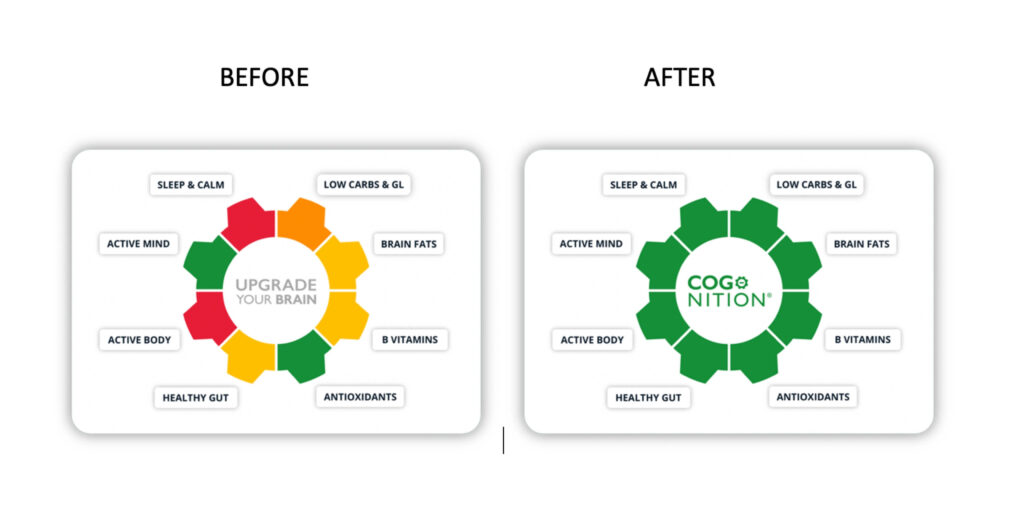
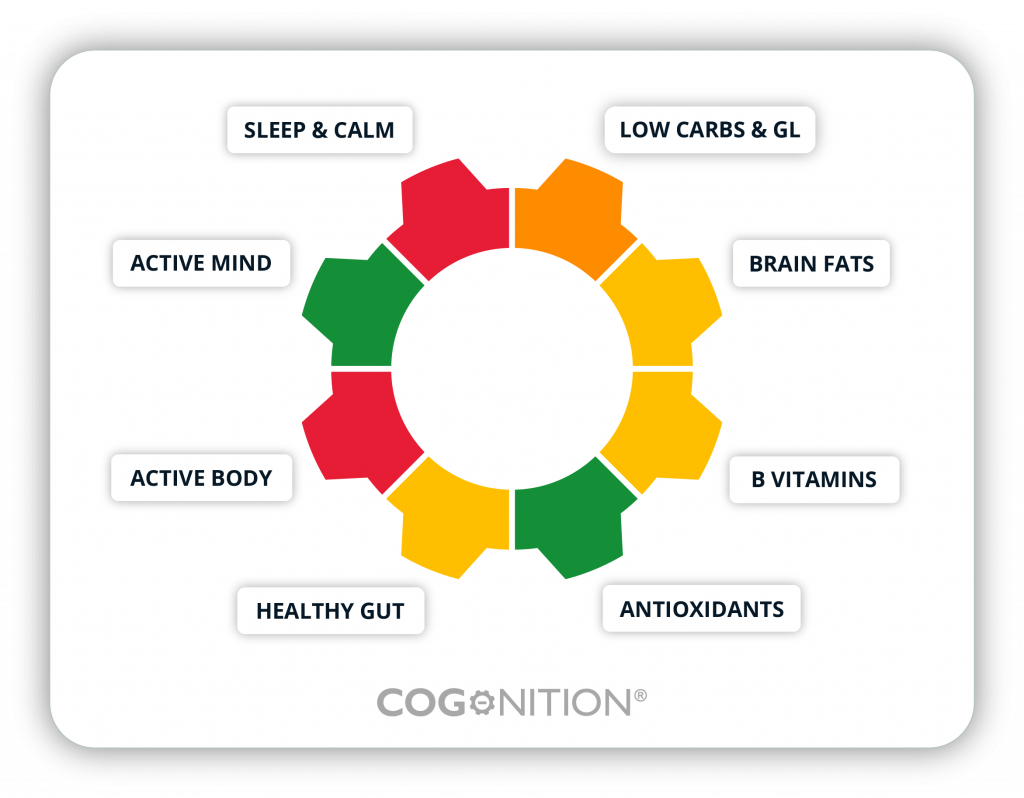
This helps explain why many practitioners now assess both homocysteine and omega-3 status when considering an individual’s long-term brain health. This highlights an important lesson in nutrition: it is rarely one nutrient acting alone. The greatest benefits usually come from the interaction between multiple nutrients and healthy lifestyle factors working together. (Which is why we have our 8 nutrition and lifestyle domains in the COGNITION online community and programme.)
Don’t Guess Your Omega-3 Status
One of the biggest misconceptions about omega-3 supplementation is that taking a supplement automatically means your levels are optimal.
In reality, omega-3 status varies considerably from person to person. Genetics, absorption, diet, dosage and supplement quality can all influence the amount that ultimately reaches your bloodstream. Two people taking the same supplement may achieve very different results.
That is why, at Food for the Brain, we believe testing is often more useful than guessing.
The DRIfT test measures several important biomarkers linked to brain health, including omega-3 status, homocysteine, vitamin D, HbA1c and glutathione. Rather than assuming your current diet or supplement routine is working, testing can help identify where support is needed and allow you to take a more personalised approach to protecting your brain health.
Algae Oil and Fish Oil: Key Takeaways for Cognitive Health
Both fish oil and algae oil provide the EPA and DHA associated with healthy brain ageing and cognitive function.
Fish oil remains the most extensively studied source and continues to have the largest body of evidence behind it. However, current research suggests that algae oil can raise blood levels of EPA and DHA just as effectively, making it a viable option for those who prefer not to use fish-derived products [6].
Perhaps the most important lesson from the research is that taking an omega-3 supplement is only part of the story. What ultimately matters is whether those omega-3s are reaching meaningful levels in your bloodstream and, ultimately, your brain.
The real question might not be whether your omega-3 comes from fish or algae.
The real question is whether your brain is getting enough.
Food for the Brain is a not for profit educational and research charity that offers a free Cognitive Function Test and assesses your Dementia Risk Index. This allows them to advise you on how to dementia proof your diet and lifestyle.
Chromium, Blood Sugar and Brain Health: The Overlooked Connection
How Blood Sugar Regulation Affects Brain Function?
When people think about protecting their brain, they often focus on keeping mentally active, reducing alcohol, or hoping they avoid dementia as they get older, somehow? But nutrients and minerals like chromium may also play a role in brain health.
Few think about blood sugar.
Yet every thought, memory, conversation, and decision relies on a constant supply of energy. Increasingly, researchers are discovering that how effectively we regulate blood sugar and respond to insulin may play an important role in how our brains function and age. (1)
This is where chromium enters the story.
Although only required in tiny amounts, chromium plays an important role in normal carbohydrate, fat, and protein metabolism. Its best understood role is helping insulin do its job more effectively. Insulin is the hormone that helps move glucose from the bloodstream into cells, where it can be used for energy, and chromium appears to support this process. (2)
The Brain’s Energy Demand and Glucose Supply
The brain represents only around 2% of body weight, yet uses roughly 20% of the body’s energy. (3) To function properly, brain cells require a continuous supply of fuel. Most of the time, that fuel comes from glucose, although the brain can also use ketones under certain circumstances.
When insulin is working well, glucose can be transported efficiently to the cells that need it. When cells become less responsive to insulin, a state known as insulin resistance develops. Blood sugar levels may rise, inflammation can increase, and energy production becomes less efficient.
Importantly, insulin resistance does not just affect muscles, fat tissue, and the liver. It also affects the brain.
Researchers have linked impaired insulin signalling with changes in brain structure and function, while people with type 2 diabetes consistently show a higher risk of cognitive decline and dementia than those with healthy glucose regulation. (4)
This growing body of evidence is changing how scientists think about brain health. Protecting the brain is not only about keeping it stimulated and active. It also depends on how effectively the body produces, regulates, and delivers energy to brain cells throughout life.
Chromium and Blood Sugar Regulation
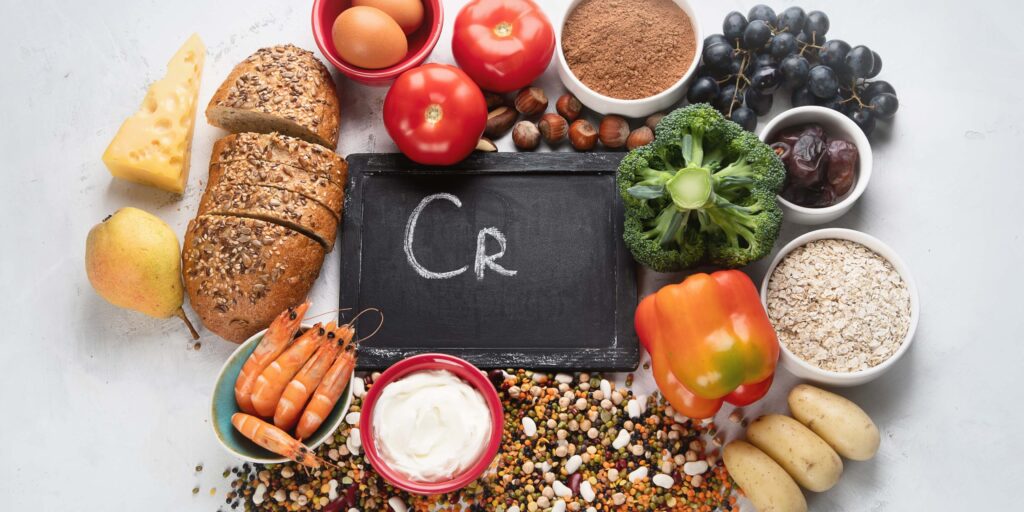
Chromium is found naturally in foods including shellfish, meat, eggs, broccoli, and whole grains.
In terms of how it works, you can think of insulin as a key trying to unlock the door to a cell, and chromium appears to help that key work more efficiently, allowing glucose to move where it is needed and be used for energy. (2)
This has led researchers to investigate whether chromium supplementation might support healthy blood sugar regulation. Results have been mixed, but overall, the evidence suggests chromium may help improve fasting glucose in some individuals, particularly those with impaired glucose control or type 2 diabetes. (5)
That does not make chromium a miracle nutrient, nor does it mean everyone should supplement with it. What it does suggest is that even relatively small nutrient deficiencies may influence how effectively the body’s blood sugar regulation systems operate.
Insulin Resistance, Dementia and Brain Health
Unlike omega-3 DHA and B vitamins, which work together to support the formation, maintenance, and communication of brain cells, chromium’s role appears to be less about building brain tissue directly and more about helping to regulate the energy supply those cells depend upon.
Its potential relevance lies in the fact that the brain is one of the most energy-demanding organs in the body. If insulin resistance increases the risk of cognitive decline, it is reasonable to ask whether nutrients involved in healthy insulin function might also matter for long-term brain health.
We do not yet have evidence that chromium supplementation directly reduces dementia risk. However, the connection between insulin resistance and brain health is now difficult to ignore, making nutrients that support healthy glucose regulation increasingly worthy of attention.
In other words, chromium is interesting not because it is a brain nutrient, but because it sits within a system that appears to be highly relevant to how the brain functions and ages.
Chromium, Mood and Sugar Cravings
Interestingly, chromium’s effects may extend beyond glucose regulation.
Several small studies have explored chromium supplementation in people with atypical depression, particularly where symptoms include fatigue, increased appetite and carbohydrate cravings. Some reported improvements in mood and reductions in cravings, while researchers have also proposed possible effects on neurotransmitter systems involved in mood regulation. (6)
These studies are small and far from definitive, but they point towards something that is becoming increasingly clear: metabolism and mental health may be far more connected than we once believed. So much so that entire fields such as metabolic psychiatry and nutritional psychiatry have emerged in recent years. Researchers including Christopher Palmer and Georgia Ede are helping to challenge the idea that mental health exists solely in the brain, highlighting the important role that blood sugar regulation, nutrient status, inflammation and cellular energy production may play in our mental health and resliency.
Why Metabolic Health and Chromium Matters for the Brain
The story of chromium is not really about chromium.
It is about systems.
For decades we have tended to separate brain health from metabolic health. We talk about memory, dementia and cognition on one side, and blood sugar, insulin and diabetes on the other.
Increasingly, the science suggests these systems are deeply interconnected.
Reducing excess sugar intake remains one of the most important things we can do for long-term health. But this also raises an interesting question. What if someone is already eating relatively well, yet their blood sugar regulation remains less than optimal? Could nutrient status be part of the picture?
Chromium is unlikely to be the missing piece for everyone. In fact, many multivitamins already contain small amounts. But it serves as a useful reminder that healthy insulin regulation depends on more than simply avoiding sugar. It relies on a network of nutrients, hormones and metabolic processes working together.
This is one reason we include HbA1c in the DRIfT blood test. HbA1c provides insight into how effectively blood sugar has been regulated over the previous two to three months and can help identify an often-overlooked aspect of brain health long before symptoms appear.
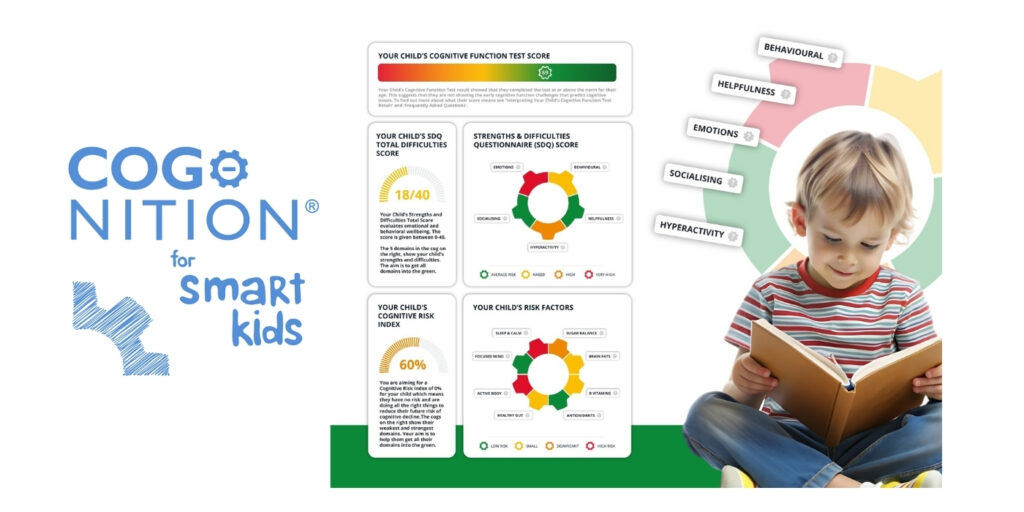
It is a free validated online assessment that gives you personalised results on your current brain health and the simple things you could do to improve it.
Food for the Brain is a not for profit educational and research charity that offers a free Cognitive Function Test and assesses your Dementia Risk Index. This allows them to advise you on how to dementia proof your diet and lifestyle.
Is China’s Alzheimer’s Nightmare Becoming Our Reality?
Patrick Holford examines how China is advancing Alzheimer’s prevention through nutrition, lifestyle and digital health initiatives, while questioning the pace of policy action in the UK.
The Race to Prevent Alzheimer’s in China
If there is one country that has to move fast to prevent Alzheimer’s, it is China. And it is.
With almost a quarter of its population over 60, some 320 million people, and an estimated 20 million expected to have Alzheimer’s by 2030, costing close to a trillion dollars a year, government health officials are taking prevention very seriously indeed.
Those over 60 are not called old, elderly, or senior, but “silver-haired“, a growing community that is at the heart of China’s health prevention strategies.
The doctor in charge of the Silver-Haired Healthy Lifestyle campaign is Dr Zhang Lei. He is a famous TV doctor and former surgeon.
I asked him if he believed there would ever be a cure for Alzheimer’s.
“Prevention is the cure,” he said. “And I want to make a special announcement. Next year, when your excellent book Alzheimer’s: Prevention is the Cure is published in Chinese, we will use this book as the cornerstone of our national prevention campaign. We already have direct access to 20 million people through our networks, but our ambition is to reach as many as 100 million. We will encourage everyone to take the online Cognitive Function Test from Food for the Brain. This book and this tool together will be our roadmap for a prevention revolution in China.”
Prevention-First Approach
I attended and spoke at the 2nd Silver-Haired Healthy Lifestyle Conference, where I met hundreds of silver-haired people like myself. The event was attended by 2,500 people and broadcast to 10 million people across twenty TV channels.
Other speakers included leading professors of public health, nutrition, gerontology and geriatrics, all delivering positive and progressive messages about prevention, including eating more seafood and vegetables, stopping smoking, cutting right back on sugar, sleeping better and taking 10,000 steps a day.
I spoke about the essential need for, and codependence of, omega-3, phospholipids and B vitamins. If omega-3 were the man and phospholipids, rich in eggs and seafood, were the woman, then B vitamins are the priest, I said. When they are married in your brain, magic happens. Together, they are the three building blocks of every brain cell.
You could have heard a pin drop. Everyone was listening and, in China, action is taken quickly.
The former Health Minister said that “diet, supplements and lifestyle” are the cornerstones of prevention. “We need education, not medication.“
No one was talking about anti-amyloid treatments.
Prevent Alzheimer’s at Scale
Next year, when the 3rd Healthy Lifestyle Conference coincides with the Chinese publication of my book Alzheimer’s: Prevention is the Cure, I have been invited to speak at universities and health departments across China.
Many silver-haired people in China do not have computers, but they all have smartphones. There are virtually no physical wallets. Communication and payment are conducted through the WeChat app.
The professors and public health officials were therefore very excited about our online digital test. They want to get everyone using Food for the Brain’s Cognitive Function Test. The COGNITION questionnaire then helps people understand which specific prevention steps are most relevant to them.
The experts, health authorities and policymakers understand that changing behaviour is the hardest part, and that this kind of personalised digital technology is key to motivating individuals and measuring change to find out what really works. It is big-data science helping to sharpen prevention strategies.
Why China Is Embracing Nutrition Over Medication for Brain Health
Traditionally, Chinese culture sees food as medicine, which may be one reason people are more open to optimum nutrition. There is also a long tradition of using natural compounds to support health, so supplements are a natural extension of this way of thinking.
Not one person repeated the old myth that “you can get all the nutrients you need from a well-balanced diet“.
The stark ignoring of established scientific facts about, for example, B vitamins and omega-3, which have outperformed anti-amyloid treatments, by our politicians and health ministers is verging on outrageous when the lives and brains of so many are at stake.
China’s High-Speed Lesson for Alzheimer’s Prevention
As I sat on a high-speed train travelling 1,200 kilometres from Shanghai to Beijing in just 3.5 hours, faster than taking a plane, and capable of speeds of 650 kilometres an hour, I found myself contemplating how the UK has yet to deliver the promised high-speed rail line from London to Birmingham, a little over 100 miles, despite more than a decade of work, a projected cost of over £100 billion, and a journey time saving of less than half an hour.
If this same failure to translate prevention science into policy continues, as it has over the past two decades, offering platitudes about the importance of prevention but little action, while continuing to avoid the scientific evidence of what actually works, then China’s nightmare of a large proportion of its silver-haired population slipping into dementia will become our reality.
Alzheimer’s is preventable. That is a fact, not a belief.
Those who say it cannot be done should not stand in the way of those who are doing it.
Founder of the Food for the Brain Foundation and the Institute for Optimum Nutrition, Chair of the Scientific Advisory Board
Food for the Brain is a not for profit educational and research charity that offers a free Cognitive Function Test and assesses your Dementia Risk Index. This allows them to advise you on how to dementia proof your diet and lifestyle.
Amyloid isn’t Alzheimer’s – How NOT to Study a Disease
by Patrick Holford
Alzheimer’s disease has, for decades, been framed primarily as a problem of amyloid plaques building up in the brain.
It is a compelling idea. It is measurable, visible on brain scans, and has shaped billions in research funding and drug development. There’s just one problem.
It doesn’t adequately explain what we see in people.
Many individuals with significant amyloid in their brains remain cognitively normal. Others develop clear dementia with little or no amyloid present (1). Treatments that successfully reduce amyloid have, at best, produced only modest effects on slowing decline, with no meaningful reversal of symptoms (2).
Amyloid is associated with Alzheimer’s disease, but association is not the same as causation.
And that distinction changes everything.
This growing tension between theory and evidence is explored in depth by neurobiologist Karl Herrup in How Not to Study a Disease, where he challenges how the field has come to define and pursue Alzheimer’s.
Some people develop increasingly severe cognitive decline as they age. This affects roughly one in ten older adults. We call this dementia. In some cases, brain scans show clear shrinkage in key regions, particularly the medial temporal lobe, which is then used to diagnose Alzheimer’s disease. So we have two observable features: a decline in cognitive function and measurable loss of brain tissue.
The question that follows is simple, but critical.
What is actually causing this process?
What causes Alzheimer’s?
Amyloid has long been positioned as the answer. Yet the evidence tells a more complicated story.
A significant proportion of older adults have amyloid plaques in their brains and remain cognitively normal. At the same time, some individuals with clear dementia show little or no amyloid pathology. Amyloid is associated with Alzheimer’s, but that is not the same as being the cause.
If amyloid were the primary driver, then reducing it should meaningfully change the course of the disease. However, interventions designed to reduce amyloid have consistently lowered amyloid burden in the brain, yet produced, at best, modest effects on slowing decline, often measured as very small changes on cognitive scales. There has been no meaningful reversal of symptoms. In some cases, safety concerns have emerged, including brain bleeding and swelling.
Recent large-scale evidence (6) now reinforces this point. A 2026 Cochrane review concluded that although anti-amyloid monoclonal antibodies can remove amyloid from the brain, this does not appear to translate into clinically meaningful effects for people with mild cognitive impairment or mild dementia due to Alzheimer’s disease, while increasing the risk of amyloid-related imaging abnormalities.
From a scientific perspective, this adds to an already substantial body of evidence suggesting that amyloid accumulation, on its own, does not explain the disease process. It may be part of the picture, but it is not the engine driving it.
And yet, the field has remained heavily focused on this single pathway.
When a hypothesis becomes a lens
Research tends to follow what is measurable, fundable, and already established. Over time, this can narrow the lens rather than expand it.
Amyloid has become that lens. As Karl Herrup argues in his book, once a hypothesis becomes dominant, it can begin to shape not just what is studied, but how results are interpreted and what gets funded next.
The result is that vast resources have been invested in understanding and modifying amyloid biology, while other avenues have received comparatively less attention. We have learned a great deal about amyloid itself, but we are not significantly closer to preventing or reversing the condition that matters most to patients, which is cognitive decline.
This is not unusual in science. Once a model becomes dominant, it shapes the direction of funding, research questions, and even how people interpret results.
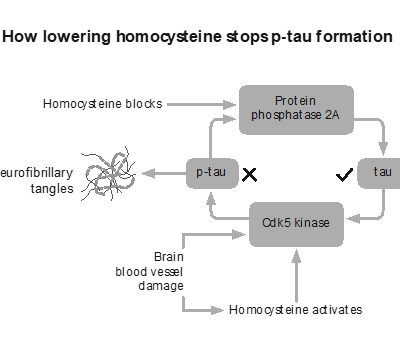
Fig. 1. How lowering homocysteine stops p-tau formation.
A similar pattern is now emerging with another biomarker, p-tau.
Tau is a normal protein that, under certain conditions, becomes altered and associated with the tangles seen in Alzheimer’s pathology. Higher levels of p-tau are linked with increased risk, but again, association does not establish causation. Many individuals have elevated levels without clinical symptoms.
As with amyloid, the risk is that a marker becomes mistaken for the mechanism.
What does influence the disease process?
This is where the picture becomes more interesting.
There are factors that sit upstream of both amyloid and tau, influencing the environment in which brain cells function or fail. One of the most studied is homocysteine, a marker of methylation and B vitamin status.
Unlike amyloid, intervention trials have shown that homocysteine influences outcomes. In the VITACOG study, lowering elevated homocysteine with targeted B vitamins significantly slowed the rate of brain atrophy in individuals with mild cognitive impairment, with corresponding effects on cognitive decline. This is much closer to what we would describe as a disease-modifying effect (3,4). It also raises questions explored in Apparently healthy but diagnosed with Alzheimer’s about whether current diagnostic models are identifying true disease drivers or simply biomarkers.
That does not mean homocysteine is the only cause. It is one piece of a larger system. But it illustrates an important point. When you influence the underlying biology of the brain, rather than a downstream marker, you begin to see meaningful change.
Alzheimer’s does not behave like a single-cause disease.
It is better understood as the result of multiple interacting processes. These include inflammation, oxidative stress, insulin resistance, mitochondrial dysfunction, and impaired methylation, among many others (5). Each of these affects how brain cells are built, maintained, and powered.
Individually, they may not be sufficient to cause disease. Together, they can create the conditions in which the brain becomes vulnerable.
This is closer to how we understand most chronic conditions. Not as a single fault, but as a convergence of pressures that eventually exceed the system’s ability to compensate. A more useful way to think about it is not as one switch flipping, but as several dials turning in the wrong direction at the same time.
Why this matters
If we continue to focus primarily on downstream markers such as amyloid or p-tau, we risk missing the broader picture.
If instead we look at the upstream drivers, the factors that influence brain structure, function, and energy supply, we open up a different set of possibilities. Not just for treatment, but for prevention.
These are not fringe ideas. They are part of a growing shift in how Alzheimer’s is being understood, questioned, and re-examined. Researchers like Karl Herrup are helping to bring that conversation into the open, challenging long-held assumptions and asking more useful questions about what truly drives the disease.
It’s a conversation that is only just beginning to reach wider audiences.
This is exactly what we’ll be exploring at Alzheimer’s Prevention: New Frontiers conference, where leading researchers and clinicians will come together to look beyond single-cause models and towards a more complete understanding of brain health and cognitive decline.
Is prevention the real solution?
The prevailing model in medicine has been to identify a single cause and target it with a treatment. That works well for some conditions. It is less suited to complex, multifactorial diseases like Alzheimer’s.
A systems-based approach asks a different question. What combination of factors leads to decline, and how do we shift that combination in the opposite direction?
This is the approach we take at Food for the Brain. By combining cognitive testing with blood testing and lifestyle information, it becomes possible to see patterns, not just isolated variables. Over time, this allows us to understand what drives resilience as well as risk.
It is likely that we will not find a single primary cause of Alzheimer’s. What we may find is something more useful: a set of modifiable factors that, together, determine whether the brain maintains function or begins to decline.
In that sense, prevention may not just be part of the solution.
Food for the Brain is a non-for-profit educational and research charity that offers a free Cognitive Function Test and assesses your Dementia Risk Index to be able to advise you on how to dementia-proof your diet and lifestyle.
By completing the Cognitive Function Test you are joining our grassroots research initiative to find out what really works for preventing cognitive decline. We share our ongoing research results with you to help you make brain-friendly choices.
Being alive is a balancing act between making energy by combusting glucose with oxygen and generating ‘oxidant’ exhaust fumes that must then be neutralised. This process, known as oxidative stress, is a key contributor to ageing. Over time, if oxidants outpace your body’s ability to disarm them, damage accumulates in cells and tissues, including the brain.[8]
The brain is particularly vulnerable. It consumes a high proportion of the body’s oxygen, is rich in fats that are susceptible to oxidation, and has relatively limited antioxidant defences compared with other tissues. This makes maintaining an effective antioxidant defence system essential for long-term cognitive health.
However, this process is not fixed. You can influence it. Improving your intake of antioxidants and polyphenols, and supporting your body’s internal defence systems, can help shift the balance and support brain resilience over time.
To explore this idea further, watch the film ‘Keeping Your Brain Young with Antioxidants’ below.
The Science Behind Eating the Rainbow
You’ve heard it before, but the science behind it matters.
Different colours in plant foods reflect different polyphenols and antioxidant compounds, each with distinct biological effects. These compounds do more than just neutralise oxidants. Many also act as signalling molecules, influencing inflammation, blood flow, and cellular pathways linked to brain function and ageing.[9]
Mustard and turmeric, for example, are strong yellows. Dijon mustard is great, with no added sugar, and traditional English mustard is also beneficial. Turmeric, rich in curcumin, can be added to steam-fries, curries, or soups, grated into a tea, and even used in a turmeric latté.
Bright oranges such as butternut squash, sweet potato, and carrots provide carotenoids that support cellular protection. Tomatoes are particularly rich in lycopene, associated with reduced oxidative damage. Strawberries are a lower glycaemic fruit option, and peppers of all colours are rich in vitamin C, which plays a central role in antioxidant recycling.
Anything purple, magenta, or blue is especially valuable. From beetroot to blueberries, blackberries, and raspberries, these foods are rich in anthocyanidins, a class of polyphenols associated with improved vascular and cognitive function.
Strong greens remain foundational. Spinach, kale, Brussels sprouts, broccoli, watercress, rocket, asparagus, and green beans all contribute a wide spectrum of antioxidants, minerals, and phytonutrients that support detoxification and cellular defence.
Eating the rainbow is not a nice idea. It’s an essential part of upgrading and protecting your brain at any age.
The Best Fruits and Vegetables for Brain Health
But are there any particular vegetables or fruits that pack the biggest punch as far as polyphenols and antioxidants are concerned? Or, if you know you can’t or don’t like to eat a huge variety of fruit and veg, are there particular ones to focus on eating to get the most benefit?
Foods that are high in ‘polyphenols’, which refers to the structure of plant-based compounds, seem especially beneficial for protecting your brain. You might have heard of flavonoids in berries, quercetin in red onions, anthocyanidins in blue and red foods, and isoflavones in beans. These are all examples of polyphenols. Herbs and spices such as peppermint, basil, oregano, cumin, and curcumin in turmeric contain high levels of polyphenols and potent antioxidants.
But there are other criteria by which to judge a plant, including its ability to influence pathways linked to cellular ageing. Certain polyphenols, such as resveratrol, interact with sirtuin pathways involved in cellular repair and longevity.[10] For example, olives, blueberries, and kale support these processes.
Then there’s a group of compounds called ‘salvestrols’, generally only found in organic fruit, vegetables, herbs, and spices, which turn out to be anti-cancer.[1] They’re produced in plants as part of their self-defence system against invaders such as fungi. If the plant is sprayed with fungicides, it won’t produce them.
Taking all these factors into account, including the GL, antioxidants, polyphenols, salvestrols, and sirtuin-related activity, these are the dozen best-rated fruits and vegetables. (This list is not definitive. More and more research continues to reveal the healing power of nature’s fruits and vegetables.)
So, if eating the ‘rainbow’ feels like too much pressure or is difficult to achieve, think about incorporating some of the above into your meals each day.
Our Top 13 to Help Keep Your Brain Young
Lowest GL
Antioxidant
Polyphenol
Salvestrol
Sirtuin Act.
Olives
***
***
***
***
***
Blueberries
***
***
**
***
***
Kale
***
**
***
***
***
Blackcurrants
**
***
**
***
***
Broccoli
***
**
***
***
Artichokes
***
**
***
***
Cabbage (red)
***
***
**
***
Asparagus
***
**
**
***
Onions (red)
**
*
***
***
Avocado
***
**
**
***
Apples
**
**
**
**
**
Beetroot
*
*
***
Cherries
**
**
**
Top Up Brain-Friendly Antioxidant Nutrients: Consider Supplementation
Antioxidants Work as a Network
Much like dementia prevention is a combination of the 8 domains, which all influence each other, antioxidants are part of a network keeping you healthy.
A number of key vitamins, as measured in food and in the blood, do correlate with decreased dementia risk. This is hardly surprising, since the brain is made of complex fats that can easily be damaged by oxidants. It makes sense that having a high intake of antioxidants would protect the brain from damage. Antioxidants disarm oxidants by teamwork. You need a combination of nutrients, not just vitamin C or vitamin E.
Evidence for Antioxidant Protection
A recent meta-analysis of all studies on factors that could prevent Alzheimer’s, by one of our Scientific Advisory Board members, Professor Jin Tai Yu of Fudan University in Shanghai, China, shows that ‘either a high vitamin E or C intake showed a trend of attenuating risk by about 26%’, making these nutrients ‘grade 1’ top level prevention risk factors.[2]
A study of 4,740 Cache County, Utah, older residents found that those supplementing both vitamin E and C cut their risk of developing Alzheimer’s by two thirds. A trend toward lower Alzheimer’s risk was also evident in those who took vitamin E supplements together with multivitamins containing vitamin C, but there was no evidence of a protective effect in those taking only vitamin E or vitamin C supplements alone, with multivitamins alone, or with vitamin B-complex supplements. Lowest risk was reported in those supplementing at least 1000 mg a day of vitamin C together with at least 1000 IU a day of vitamin E.[3]
However, vitamin E on its own doesn’t seem to work. In a double-blind study, people with mild cognitive impairment were randomly assigned to receive 2000 IU a day of vitamin E or placebo for three years. There were no significant differences in the rate of progression to AD between the vitamin E and placebo groups at any point.[4]
Building Your Antioxidant Defences
Your best bet is probably to both eat a broad spectrum of antioxidants and also supplement them. The older you are, the more you are likely to need. Key antioxidants are:
Vitamin A, C and E – associated with reducing Alzheimer’s risk
Lipoic acid – protects the memory-friendly neurotransmitter acetylcholine and dampens brain oxidation and inflammation.[5]
Glutathione[6] or N-acetyl cysteine[7] (NAC) – protects the brain and improves methylation, thus having potential in dementia prevention.
It doesn’t really make a lot of sense to give one without the others. All those listed above, vitamin C, E, glutathione, N-acetyl cysteine, Coenzyme Q10 and resveratrol, work together. There are many other team player ‘cousins’, from B vitamins to minerals such as magnesium, zinc and selenium.
The first step is to eat ‘whole’ foods, especially fresh plant foods that are more likely to contain these kinds of nutrients. However, there are some nutrients, such as vitamin C, for which just eating whole foods doesn’t guarantee you are achieving optimum nutrition.
Most nutritional therapists supplement extra vitamin C, and some supplement an all-round antioxidant supplement providing the nutrients listed above. There is very good logic, and supporting evidence, to do this, especially if you’re over 50 years old, even if there isn’t yet that definitive ‘randomised placebo controlled trial’.
Other key antioxidant nutrients include:
Vitamin A, C and E – associated with reduced Alzheimer’s risk
Lipoic acid – supports mitochondrial function and reduces oxidative stress and inflammation.[5]
Glutathione or N-acetyl cysteine (NAC) – supports detoxification, antioxidant recycling and methylation, with potential relevance for cognitive ageing.[6][7]
Coenzyme Q10 and resveratrol – support cellular energy and protection
There are also important supporting nutrients, including B vitamins, which contribute to methylation and help regulate homocysteine, a compound associated with oxidative stress and cognitive decline when elevated.[12]
Why Food Comes First but Supplements May Still Be Needed
We are Food for the Brain, so the first step is always to eat whole foods, focusing especially on fresh plant foods that are naturally rich in antioxidants and polyphenols.
However, achieving optimal levels of certain nutrients through diet alone is not always guaranteed. Factors such as soil depletion, food storage, genetics, individual absorption, age, and increased physiological demand all play a role.
For this reason, targeted supplementation, particularly for nutrients such as vitamin C and those involved in the antioxidant network, may be beneficial. There is strong rationale, and supporting evidence, for this approach, especially in individuals over 50 or those with increased oxidative load. Read more about supplementation here.
From General Brain Health Advice to Personalised Insight
Why Antioxidant Needs Differ and Why Testing Matters
Eating a diet rich in colourful plant foods is a powerful place to start. But the real question is whether your unique body has the antioxidant capacity to meet your current level of demand.
Or, said another way, how do you know if you are eating enough to protect your brain and your future?
Oxidative stress is influenced by far more than diet alone. Age, stress, environmental toxins, blood sugar balance, genetic variations, nutrient status, and individual biochemistry all play a role. Two people can eat similarly and have very different levels of oxidative damage and antioxidant protection.
This is where testing becomes valuable.
One of the most informative markers is glutathione, often referred to as the body’s master antioxidant. It sits at the centre of your antioxidant defence system, helping to neutralise oxidative damage and recycle other antioxidants. If levels are low, it can indicate that your overall antioxidant capacity is under strain.
Rather than guessing whether you are getting enough antioxidant support, testing allows you to see what is actually happening inside your body. (Historically, glutathione has been hard to test, but we developed new technology with our lab partners to now be able to do this accurately with an at home finger prick blood test.)
Understanding Your Brain Health More Clearly
The DRIfT 5-in-1 test shows you what is actually happening inside your body, across the key drivers of cognitive decline, including oxidative stress, inflammation, blood sugar balance, nutrient status, and essential fats. It moves you beyond general advice and highlights exactly where your biggest risks and opportunities lie.
If your focus is antioxidant capacity, testing glutathione offers direct insight into whether your body is under oxidative strain and how well your defence system is functioning. Find out more here.
Alongside this, our free Cognitive Function Test provides a practical way to track how your brain is performing today, while contributing to ongoing research into what truly works in preventing cognitive decline.
Understanding your results allows you to move from general advice to a more targeted, personalised approach, so you can support your brain with greater precision and confidence.
When you join COGNITION and become a FRIEND, you get access to our new Digital education platform and our new COGNITION programme. You can also register FREE for both our monthly guest speaker webinars and our monthly live COGNITION Coaching – this is an hour live with our Food for the Brain health coaches and there is a Q&A at the end (you also get access to the past coaching workshop recordings).
On April 22nd April, our COGNITION Coaching Workshop is all about antioxidants and attendees will get a mini-ebook on antioxidants and 2 delicious, anti-oxidant rich recipes. You can become a FRIEND by clicking the link below:
Food for the Brain is a not-for-profit educational and research charity that offers a free Cognitive Function Test and assesses your Dementia Risk Index to be able to advise you on how to dementia-proof your diet and lifestyle.
By completing the Cognitive Function Test you are joining our grassroots research initiative to find out what really works for preventing cognitive decline. We share our ongoing research results with you to help you make brain-friendly choices. Please support our research by becoming a Friend of Food for the Brain.
Dr Tommy Wood: Why Brain Health Needs a Systems-Based Approach
Dr Tommy Wood brain health research shows that we now know more than ever about protecting the brain, yet many people still feel overwhelmed by disconnected advice.
A headline about blood sugar here. A podcast on omega-3 there. A post about sleep, a study on exercise, a warning about stress.
Useful, yes. But also fragmented.
What Dr Tommy Wood brain health research offers is something more valuable than another isolated tip. He brings a framework.
As Head of Research at Food for the Brain, Associate Professor of Pediatrics and Neuroscience at the University of Washington, and author of the forthcoming book The Stimulated Mind, Tommy brings something rare to this field. He helps connect the dots. His work focuses on how brain health is shaped across the lifespan and why protecting cognitive function means thinking in systems, not silos.
Dr Tommy Wood Brain Health Framework
One of the reasons brain health can feel confusing is that it is often presented as a list: A long list of risk factors. Nutrients to take, habits to adopt, or a long list of things to avoid.
But the brain does not work like a checklist: it works as a living, dynamic system. It responds to what it is supplied with, how it is used, and whether it has the conditions it needs to recover and adapt.
That is the core idea behind a systems-based approach to brain health.
Instead of asking “What is the one thing that protects the brain?”, it asks three bigger questions:
Does the brain receive enough oxygen, nutrients and stable energy to function well?
How well is it being stimulated to stay active, adaptable and resilient?
Are the foundations for repair and recovery in place, such as good sleep, stress regulation and metabolic health?
When you look at brain health this way, something important changes.
Many people understandably hope for a “magic bullet”. One supplement. One diet. One breakthrough drug that protects the brain.
But science tells a different (more hopeful) story. Cognitive resilience is shaped by the interaction between many systems in the body. Blood flow, nutrient status, sleep, movement, learning, stress and social connection all influence how the brain functions and adapts.
The encouraging part is that this gives us many entry points for change. You do not have to get everything perfect, and small improvements across several areas can work together to create meaningful protection for the brain over time.
That is why a systems-based approach is not more complicated. In practice, it is far more empowering.
Why this matters for prevention?
One of the most important insights in Tommy’s work is that cognitive decline does not happen in isolation.
The brain changes in response to how we live. Blood flow, nutrient status, movement, learning, sleep, stress and social connection all shape how the brain ages and how resilient it remains.
This is also why Tommy’s forthcoming book, The Stimulated Mind, focuses on the interaction between stimulation, sleep and nutrient supply as key drivers of lifelong brain health.
This perspective is closely aligned with the mission of Food for the Brain. For years we have been communicating that dementia risk is not fixed. By understanding and addressing modifiable factors across the lifespan, it is possible to protect your mind and keep the brain healthier for longer.
Tommy’s leadership as Head of Research helps bring greater scientific clarity to this systems-based approach to prevention.
Watch: A systems-based approach to cognitive function
If you want to hear Tommy explain this approach in more depth, his lecture from the Upgrade Your Brain Conference is one of the clearest introductions we have shared.
Watch the lecture below.
What Tommy offers is not another list of things to do. It is a framework. A way to understand why so many different factors matter and how they fit together.
Learn More About Dr Tommy Wood Brain Health Research
If this approach resonates with you, Tommy will be going deeper in our upcoming webinar, How to Keep Your Brain Young.
In this session he will explore the science of cognitive resilience and share practical ways to stimulate the brain, support long-term brain health and reduce lifetime dementia risk.
Food for the Brain will host the webinar on 19th March 2026 at 6 pm GMT.
Tommy’s new book, The Stimulated Mind, is also available to pre-order now. In it, he explores how the brain develops, adapts, and stays resilient across the lifespan, and why everyday factors such as movement, learning, sleep, nutrition, and social connection play such an important role in shaping long-term brain health.
Pre-order your copy today before the book releases on 26th March 2026.
Final thought
For many people, the challenge with brain health is not a lack of information. It is knowing where to start.
When advice comes as scattered tips, nutrients, tests, and lifestyle changes, it can feel difficult to turn good science into clear action.
What Tommy’s work offers is a framework: a way of understanding how the different pieces of brain health fit together and why small changes across several areas can have a powerful cumulative effect.
At Food for the Brain, this systems-based approach sits at the heart of COGNITION, our brain upgrade programme.
COGNITION helps you understand your personal risk factors, learn the most important steps to protect your brain, and put them into practice with guidance and support.
The programme has recently been upgraded and is now available globally for just £5 per month or £50 a year, making it accessible to anyone who wants to take their brain health seriously.
If Tommy’s lecture resonates with you, COGNITION is the natural next step.
Because protecting your brain is not about doing everything perfectly.
It is about understanding the system and taking the next right step.
Food for the Brain is a not-for-profit educational and research charity that offers a free Cognitive Function Test and assesses your Dementia Risk Index to be able to advise you on how to dementia-proof your diet and lifestyle.
By completing the Cognitive Function Test you are joining our grassroots research initiative to find out what really works for preventing cognitive decline. We share our ongoing research results with you to help you make brain-friendly choices. Please support our research by becoming a Friend of Food for the Brain.
The Biggest Myths About Alzheimer’s – And What the Science Actually Shows
Alzheimer’s disease is one of the most feared diagnosis of modern life. And where there is fear, myths flourish. Many of the biggest myths about Alzheimer’s have become widely accepted beliefs. We are told it is purely genetic, that it is an inevitable part of ageing, and that the main hope lies in new drugs targeting amyloid in the brain.
The science tells a far more complex and, importantly, far more hopeful story.
Myth #1 in the biggest myths about Alzheimer’s: ‘It’s all in your genes’
When Alzheimer’s runs in families, it is natural to assume destiny is fixed. Both your grandmothers had it, so you assume you will too.
Yet fewer than 1% of cases are caused by rare deterministic mutations in APP, PSEN1 or PSEN2 genes that lead to early-onset familial Alzheimer’s disease [1].
The vast majority of Alzheimer’s cases are late-onset and multifactorial. That means risk is shaped by multiple influences across a lifetime.
What about APOE4?
Celebrities like Chris Hemsworth have put the APOE4 gene on the map and into the public sphere and it is the strongest common genetic risk factor for late-onset Alzheimer’s. Having one copy increases risk; two copies increase it further [2]. But it does not determine outcome, as many APOE4 carriers never develop dementia. Many people with Alzheimer’s do not carry APOE4.
Genes influence vulnerability but they do not dictate your future.
APOE4 affects lipid transport, inflammatory signalling and neuronal repair. These processes are influenced by metabolic health, vascular function, nutrient status, sleep, stress physiology and lifestyle.
One of the most important things to remember is that gene expression is not static, as genes respond to the environment they are in.
The most important question is not necessarily ‘How do I check my genes?’ The question is ‘What environment are your genes operating in?’ Because you cannot change your genes but you can influence how they function and are expressed.
Myth #2 in the biggest myths about Alzheimer’s: ‘Nothing can be done’
This is the most damaging myth of all.
The 2020 Lancet Commission concluded that around 40% of dementia cases worldwide are attributable to modifiable risk factors [3]. The 2024 update increased that estimate to approximately 45% [4].
Nearly half of all cases.
And this is mainstream consensus. (Read more about the Alzheimer’s Prevention Expert Group’s APEG response to this recent Lancet report here).
The identified risk factors include hypertension, diabetes, obesity, physical inactivity, smoking, depression, hearing loss and social isolation. Importantly, Alzheimer’s risk is not fixed, it develops gradually over decades.
However, many researchers (ourselves included) believe even 45% may underestimate the true preventable proportion.
A large UK Biobank analysis published in the journal Nature Human Behaviour modelled a broader range of modifiable factors and estimated that up to around 73% of dementia cases could be attributable to modifiable influences [8]. Professor David Smith of Oxford University, co-author of that study, member of our Scientific Advisory Board, and lead investigator of the VITACOG trial, has suggested this may still be conservative, as certain blood biomarkers were not included in the modelling.
Whether the true figure is closer to 45% or 73%, the direction of evidence is consistent.
A large proportion of dementia and Alzheimer’s is preventable and you can modify your risk with simple changes.
Why biology supports prevention
Alzheimer’s develops through interacting processes such as impaired glucose metabolism, vascular dysfunction, inflammation and elevated homocysteine.
In the VITACOG trial, homocysteine-lowering B vitamins significantly slowed whole-brain atrophy in people with mild cognitive impairment [6]. The benefit was strongest in those with adequate omega-3 status [7].
That is structural brain change.
(When compared to anti-amyloid drug trials, which show modest slowing of decline in already symptomatic patients, VITACOG demonstrated slowing of brain shrinkage itself in an at-risk group.)
Once significant neuronal loss has occurred, reversal is unlikely, but years before diagnosis, measurable risk is accumulating and that is where prevention has its power.
Myth #3 in the biggest myths about Alzheimer’s: ‘It has a single cause‘
The reductionist model searches for one target and one solution.
Alzheimer’s reflects the interaction of multiple biological systems:
Glucose regulation
Vascular health
Lipid transport
Inflammation
Oxidative stress
Methylation
Sleep and stress regulation
Hormonal balance
People arrive at cognitive decline through different combinations of biological drivers. For some, insulin resistance may be central. For others, vascular stiffness and hypertension. In others, chronic inflammation and elevated homocysteine may play a key role. The destination may look similar, but the route is not.
This systems view explains why targeting one downstream marker, such as amyloid, yields modest slowing. Correcting multiple upstream drivers is biologically more plausible for meaningful long-term risk reduction.
Watch the video below to learn how Food for the Brain uses a systems-based approach.
Myth #4 in the biggest myths about Alzheimer’s: ‘It’s inevitable with ageing’
Age increases risk. However, that is only part of the story.
There are many individuals in their 80s and 90s with preserved cognition. The difference often lies in lifelong vascular, metabolic and lifestyle patterns, also known as patterns for prevention.
It is clear from what you have read so far that this is not an inevitable part of getting older. With the right knowledge and habits, it is something most people can avoid.
And that is why Food for the Brain exists, because not enough people know this and not enough people know what action they need to take to protect their brain.
A More Accurate Framework
Ageing is not the enemy. It is a privilege denied to many.
The goal is not to avoid growing older. It is to protect the brain as we do.
Alzheimer’s is not a single event. It reflects decades of interacting biological stress: metabolic strain, vascular change, inflammation and nutrient imbalance. These processes build slowly and often silently.
By the time symptoms appear, significant damage has already occurred.
The science is clear that a substantial proportion of dementia risk is modifiable [6,10]. That does not mean guarantees. It means opportunity.
You cannot change your genes and you cannot stop the passage of time.
Yet, you can influence how your brain responds to both.
Our six-month brain upgrade programme provides structured guidance, accountability and expert support to help you translate knowledge into meaningful and lasting change.
Prevention is possible. It begins with measurement, and it progresses with action.
Food for the Brain is a not-for-profit educational and research charity that offers a free Cognitive Function Test and assesses your Dementia Risk Index to be able to advise you on how to dementia-proof your diet and lifestyle.
By completing the Cognitive Function Test you are joining our grassroots research initiative to find out what really works for preventing cognitive decline. We share our ongoing research results with you to help you make brain-friendly choices. Please support our research by becoming a Friend of Food for the Brain.
Why “Normal” Vitamin D Levels May Not Be Protective for Women’s Brains
Science now recognises Vitamin D as far more than a bone-health nutrient. Over the past decade, it has become increasingly clear that vitamin D acts as a hormone regulator, playing an important role in brain health, immune regulation and inflammation, especially when considering optimal vitamin D levels for women’s brains.
What is discussed far less, is a more nuanced question…
If vitamin D matters for the brain, how much is actually enough and do vitamin D levels differ for women?
A growing body of research links lower vitamin D status with a higher risk of cognitive decline and Alzheimer’s disease. Yet most guidance still relies on population-based “normal” ranges that were never designed to protect the brain. This raises an important prevention question for women, who already carry a higher lifetime risk of Alzheimer’s disease.
What the research shows
A systematic review and meta-analysis in 2025 by Li et al. examined the relationship between circulating vitamin D levels and Alzheimer’s disease risk across multiple observational studies (1).
The findings were consistent:
• Lower vitamin D levels link to a higher risk of Alzheimer’s disease. • Risk increased progressively as vitamin D levels declined • Researchers observed this association across different populations and study designs.
Crucially, the authors did not claim that vitamin D deficiency causes Alzheimer’s disease. Instead, vitamin D status appears to track biological vulnerability in the brain and reflects processes such as neuroinflammation, immune dysregulation and vascular dysfunction, all recognised contributors to cognitive decline.
This distinction matters for prevention.
Why these findings matter particularly for women
Women account for around two thirds of Alzheimer’s diagnoses worldwide. Longevity alone cannot explain this difference.
Across midlife and later life, women experience biological changes that alter how the brain responds to metabolic, inflammatory and hormonal stress. The menopausal transition is a key inflection point. Declining oestrogen and progesterone influence immune signalling, cerebral blood flow and brain energy metabolism, all of which intersect with established dementia risk pathways (3). This helps explain why midlife can be a turning point for brain health in women, even when blood test results appear “normal”.
Vitamin D functions as a hormone-like regulator, with receptors widely distributed throughout the brain and immune system. Its actions include modulation of inflammatory responses, immune balance and neuronal protection. Hormonal changes appear to influence how effectively vitamin D signalling is utilised at a tissue level. This is supported by experimental and clinical research showing interactions between oestrogen, vitamin D receptors and immune signalling, although this is not always directly measured in large population studies. In practical terms, this means that a vitamin D level considered “normal” for the general population may not confer the same degree of neuroprotection in the ageing female brain.
This does not mean vitamin D requirements are definitively higher for every single woman, or that everyone should take high-dose supplementation. Excessive intakes via supplementation over time can be harmful, which is why context, testing and appropriate dosing matter.
Prevention works best when it’s personal, based on what’s happening in your own brain and body, not just what’s considered “normal.”
The problem with “normal” ranges for vitamin D for women’s brains
Researchers established vitamin D reference ranges primarily to prevent overt deficiency-related disease, particularly rickets and osteomalacia. They did not design these ranges to define optimal levels for long-term brain resilience.
Population reference ranges do not account for factors that strongly influence dementia risk, including:
Genetic variation in vitamin D metabolism and receptor activity
As a result, vitamin D levels that fall within the laboratory “normal” range may still exist within a biological environment that favours cumulative brain damage over time. This limitation is not unique to vitamin D. It reflects a broader problem with single-nutrient or single-cause thinking in Alzheimer’s prevention.
Vitamin D does not act alone in protecting women’s brains
Vitamin D is not an isolated lever in brain health. Low vitamin D status frequently clusters with other modifiable biological risk factors, including:
• Low omega-3 fatty acid status • Raised homocysteine, reflecting impaired B vitamin-dependent methylation, a process essential for maintaining brain cells • Poor blood sugar control • Reduced antioxidant capacity, including glutathione availability
Each of these factors independently links to cognitive decline. More importantly, they interact within the brain.
Alzheimer’s disease does not arise from a single deficiency, a single gene or one pathological protein. It reflects the cumulative impact of multiple biological systems drifting out of balance over years or decades. This is why interventions that target a single marker so often produce disappointing results.
Prevention requires a broader, systems-based view.
Once you see vitamin D in this broader context, it becomes clear why testing a single marker in isolation can only ever give partial answers.
From nutrients to prevention systems
Testing vitamin D alone can identify a deficiency, but it cannot tell you whether the brain’s key protective systems are functioning together.
A prevention-led approach asks different questions:
How well is inflammation being regulated?
Are brain cell membranes supported by sufficient essential fats?
Is methylation, the nutrient-dependent process that supports DNA repair, neurotransmitter balance and brain structure, functioning effectively?
To what extent is blood sugar quietly damaging brain neurons over time?
These are not abstract concepts.
They are measurable, modifiable drivers of dementia risk that we assess through our at-home DRIfT blood test.
A smarter way to assess brain health
Many people reading this will have been told their vitamin D is “fine”. They may spend time outdoors, eat well, and still feel tired, foggy or not quite themselves. The problem is not that vitamin D doesn’t matter. It’s that a single number rarely tells the full story.
This systems-based understanding underpins our work at Food for the Brain. It is the heart of prevention.
Prevention is not about chasing one “perfect” nutrient level or one lifestyle change.
It is about understanding how your body works as one connected system and acting early enough to change the trajectory.
If you want to begin supporting and upgrading your brain today:
Complete the Cognitive Function Test today if you haven’t done so yet. It is free to everyone, validated and provides personalised insights into your current brain health.
Order your at-home DRIfT blood test to assess the key biological drivers of cognitive decline, including vitamin D, omega-3, homocysteine, blood sugar control and antioxidant status. Together, these results give you the information you need to move from awareness to meaningful prevention.
Food for the Brain is a not-for-profit educational and research charity that offers a free Cognitive Function Test and assesses your Dementia Risk Index to be able to advise you on how to dementia-proof your diet and lifestyle.
By completing the Cognitive Function Test you are joining our grassroots research initiative to find out what really works for preventing cognitive decline. We share our ongoing research results with you to help you make brain-friendly choices. Please support our research by becoming a Friend of Food for the Brain.
Why Gut Health Matters for Brain Health More Than You Think
Why Some Brains Improve and Others Don’t
Many people are doing more than ever to protect their brain. They eat well. Take supplements. Exercise. Stay mentally active.
Yet outcomes vary dramatically.
Some improve. Others stall. A few decline despite doing everything “right”.
The missing question is not what else to add, but what environment those interventions are landing in.
Cognitive decline rarely stems from one isolated failure. It emerges when the body’s internal environment no longer supports protection, repair, and resilience. This systems-based understanding underpins the work of Food for the Brain, and explains why gut health plays a central role in our COGNITION brain upgrade programme.
The terrain model of brain health
In medicine, there is a long-established principle that disease does not arise from a trigger alone, but from the biological environment in which that trigger operates. This is often described as the terrain.
From a brain health perspective, terrain includes inflammatory load, metabolic health, immune balance, nutrient availability, and cellular repair capacity. These systems interact constantly. When they stay in balance, the brain shows remarkable resilience. When they become disrupted, vulnerability increases.
Neurodegenerative conditions, including Alzheimer’s disease, are now understood to arise from multiple interacting biological pressures rather than a single pathological process. Many of these systems are shaped upstream by gut related processes.
The gut as a regulator, not a root cause
The gut is often discussed as if it were a standalone digestive organ. In reality, it plays a regulatory role in shaping systemic inflammation, metabolic function, and immune signalling.
When gut barrier integrity is compromised, bacterial components such as lipopolysaccharides can enter circulation. This process increases immune activation and drives chronic low-grade inflammation, a state strongly associated with insulin resistance and cognitive decline [1,2].
In this context, gut dysfunction is not “causing” brain disease. It is influencing the conditions in which brain protection and repair either succeed or struggle.
Why prevention struggles in an inflamed system
Brain health interventions that we talk about here at Food for the Brain do not operate in isolation. Their effectiveness depends on the biological environment in which they are applied.
This is particularly clear in nutritional research.
B vitamin supplementation has been shown to slow brain atrophy, but only in individuals with raised homocysteine levels and a metabolic environment that allows normal methylation processes to function [3]. Similarly, omega 3 fatty acids support neuronal membrane structure and signalling, yet their cognitive benefits are reduced in the presence of inflammation and insulin resistance [4].
Inflammation interferes with digestion, absorption, transport, and cellular uptake of nutrients. Pro inflammatory cytokines also impair intracellular metabolic pathways, shifting the body toward defence rather than repair. In this terrain, even well evidenced interventions may have limited effect.
The same principle applies to lifestyle strategies. Physical activity, cognitive stimulation, and stress reduction are all protective, but their impact is blunted when inflammatory and metabolic pressures remain unaddressed. That is why in COGNITION we target all 8 modifiable nutrition and lifestyle factors, so that you are not just targeting a specific nutrient but you are changing the environment.
Microbes, inflammation, and brain vulnerability
Human studies consistently show that individuals with cognitive impairment or Alzheimer’s disease have altered gut microbiome profiles alongside higher levels of systemic inflammatory markers [5].
This does not demonstrate that microbes cause dementia. What it does show is that microbial imbalance contributes to inflammatory load, which in turn increases brain vulnerability.
Over time, this vulnerability can translate into accelerated cognitive decline.
For this reason, the COGNITION brain upgrade programme actively addresses gut health as one of eight modifiable factors that influence dementia risk. Gut microbes actively shape the internal environment in ways that can either accelerate neurodegeneration or help slow it.
The metabolic bridge between gut and brain
The gut also plays a critical role in metabolic regulation.
Chronic gut driven inflammation worsens insulin resistance, reducing glucose uptake by brain cells. Impaired brain glucose metabolism is a recognised feature of cognitive decline and has led some researchers to describe Alzheimer’s disease as a form of brain specific metabolic failure [6,7].
In this model, the gut is not peripheral. It contributes upstream to the metabolic conditions that determine whether the brain can access adequate fuel to function and repair.
Again, the implication is not that gut health alone determines brain fate. It is that brain health strategies are less effective when the metabolic and inflammatory terrain is unfavourable.
Why Brain Health Advice Works for Some People and Not Others
A terrain based perspective offers something often missing from prevention conversations.
Understanding.
When people follow advice carefully and still do not improve, clinicians too often frame the explanation as lack of compliance or genetics. Systems thinking offers a different interpretation.
The tools may be appropriate but the environment may not yet support repair.
This reframes prevention as a personalised process rather than a universal checklist. Understanding an individual’s internal terrain helps identify where effort should go.
This is why Food for the Brain offers two complementary forms of assessment: the free, validated Cognitive Function Test and optional at home blood testing to assess key modifiable risk markers such as homocysteine, omega 3 status and glutathione.
The answer is not found in one nutrient
Viewing brain health through a terrain lens shifts prevention away from adding isolated solutions and toward restoring balance across systems.
The future of brain health does not lie in targeting one nutrient, one habit, or one molecule.
It lies in creating an internal environment where protection, repair, and resilience are possible.
Brains do not fail because one thing goes wrong. They decline when the terrain no longer supports them.
And that terrain forms quietly and cumulatively long before symptoms appear.
Next Steps
Learn more about how gut health impacts brain health in our upcoming webinar here
Order your at home blood test here to get more personalised data on your body and contribute to our on going research
Food for the Brain is a not-for-profit educational and research charity that offers a free Cognitive Function Test and assesses your Dementia Risk Index to be able to advise you on how to dementia-proof your diet and lifestyle.
By completing the Cognitive Function Test you are joining our grassroots research initiative to find out what really works for preventing cognitive decline. We share our ongoing research results with you to help you make brain-friendly choices. Please support our research by becoming a Friend of Food for the Brain.
The GL of Your Diet Determines Your Future Dementia Risk
by Patrick Holford
Why Blood Sugar Exposure Matters More Than Sugar Itself
Your brain uses more glucose for energy than any other organ in the body.
From that simple fact comes a widespread assumption: that sugar fuels the brain and therefore more sugar must mean more mental energy.
In reality, the opposite appears to be true.
A large new study shows that the glycaemic load (GL) of your diet, which reflects how much glucose you expose your bloodstream to over time, is strongly linked to your future risk of dementia. The higher the glycaemic load, the higher the risk.
In this study, people consuming more than 110 GL units a day had a 13% higher risk of developing dementia. Those consuming less than 49.3 GL units a day had a 17% lower risk. In other words, the difference between a high GL diet and a low GL diet translated into a 30% swing in dementia risk.The study, published in the International Journal of Epidemiology, analysed dietary data from over 200,000 UK Biobank participants in 2011–12 and followed them for more than a decade to see who did, and did not, develop dementia (1).¹
Most people’s diets exceed 100 GL units a day. I have been advocating a daily intake of around 45 to 60 GL units since the 1990s. To understand why this matters, and what it means for what you eat, it helps to understand what GL actually is.
How Much Sugar Your Body Really Needs
As petrol is for your car, glucose is the primary fuel for your body. Glucose is the main fuel used by all cells.
There is also another fuel, ketones, much like cars can also run on electricity. We too are metabolic hybrids.
Now here is an astonishing fact. Your body contains around 100,000 kilometres of blood vessels. Your brain alone has around 1,000 kilometres of them. These vessels supply energy to around 30 trillion cells, each containing roughly 1,000 mitochondria, the tiny energy factories that power life.
And yet, across this entire system, there only needs to be around 4 grams of glucose in your bloodstream at any one time. That is one teaspoonful. That is all that is required for every cell in your brain and body to have energy at that moment.²
GL is a measure of how much glucose enters your bloodstream after eating or drinking a food. If there is not much glucose in the food, and you use it quickly, perhaps by moving or exercising, blood sugar levels stabilise rapidly.
The glycaemic load of a food depends on two things: • the quality of the carbohydrate • the quantity eaten
Quality refers to how fast glucose is released, known as the glycaemic index (GI). Fibre and protein slow this release. This is why white rice has a higher GI than brown rice, which contains fibre. Eat rice with fish, beans or meat, and the protein slows the release further.
GL also depends on portion size. A small serving of brown rice with fish is low GL. A large serving of white rice, even with fish, is high GL.
When Glucose Becomes Toxic to the Brain
What happens if you consume far more glucose than the body needs?
A can of sugary fizzy drink contains around 35 grams of sugar. That is roughly nine times more glucose than the total amount normally circulating in your bloodstream.
This excess is toxic. It damages blood vessels and the tissues they supply. Diabetes is diagnosed precisely because excess sugar damages the kidneys, eyes and nerves. The brain is no exception.
“The brain needs more energy than any other organ, so it contains the most mitochondria. Sugar damages mitochondria,” says Professor Robert Lustig, Professor of Neuroendocrinology at the University of California, San Francisco. If you have read Upgrade Your Brain or Alzheimer’s: Prevention is the Cure, you will already know that high sugar intake, sugary drinks and ultra processed foods increase dementia risk, worsen memory even in young people, and are associated with measurable shrinkage of brain regions involved in memory in teenagers.
Are You Eating Too Much Hidden Sugar?
The simplest way to assess your long term blood sugar exposure is to measure HbA1c.
HbA1c literally means sugar damaged red blood cells. If more than 6.5% of your red blood cells are sugar damaged, you are diagnosed with diabetes. Above 6% indicates pre diabetes. Even levels above 5.4% in teenagers predict brain shrinkage.
For optimal health you want to be below 5.4%, and ideally below 5%.
HbA1c is such a strong indicator of blood sugar resilience that it is included in Food for the Brain’s 5-in-1 DRIfT home blood test kit.
Balancing Blood Sugar with a Low Glycaemic Load Diet
Let us start with something simple.
An orange contains sugar, but also fibre and micronutrients. The fibre slows sugar release, mainly fructose, which takes time to convert to glucose, while feeding beneficial gut bacteria.
A glass of orange juice, however, contains the sugar of around three oranges, without the fibre. Three times the sugar, with no brakes. Eat your fruit. Do not drink it.
When you eat sugar or starches such as rice, digestive enzymes rapidly break them down into glucose. Protein, by contrast, takes several hours to digest into amino acids. This slows carbohydrate digestion further down the digestive tract.
This leads to a simple rule: eat carbohydrates with protein.
Brown rice releases glucose more slowly than white rice. Add beans, fish or meat, and the release slows further.
From this we can extract three practical rules: • Eat fruit. Do not drink it • Always eat carbohydrate with protein • Make fibre the primary ingredient of every meal
What a Low GL Meal Actually Looks Like
Compare these two breakfasts:
Cornflakes with a banana or Oats with chia seeds and berries
Cornflakes are fast releasing sugar. Oats are slow releasing. A banana raises blood sugar more than two bowls of berries.
Chia seeds, rich in soluble fibre, dramatically slow sugar release. A portion of oats with chia and berries is around 10 GL. Cornflakes and a banana can reach 30 GL.
You want meals around 10 GL and snacks around 5 GL. Three meals and two snacks equals around 40 GL per day.
Eat 40 GL per day to lose weight. Around 60 GL to maintain it.
Eat little and often, and start the day with a low GL breakfast.
A friend of mine, Dr David Unwin, who is a leading diabetes doctor, converted our low GL calculations into ‘teaspoons of sugar equivalent’ to give a visual idea to his diabetic and overweight patients of how sugar is hidden in common foods. See the table below.
Food
GI
Serving size
GL
Teaspoons of sugar
Cereals
Coco Pops
77
30g
20
7.3
Cornflakes
93
30g
22
8.4
Mini Wheats
59
30g
13
4.4
Shredded Wheat
67
30g
14
4.8
Special K
54
30g
12
4.0
Bran Flakes
74
30g
13
4.8
Porridge
63
150ml
6
2.2
Bread
White
71
30g
10
3.7
Brown
74
30g
9
3.3
Rye (69% wholegrain rye flour)
78
30g
11
4.0
Wholegrain barley (50% barley)
85
30g
15
5.5
Wholemeal (stoneground flour)
59
30g
7
2.6
Pitta (wholemeal)
56
30g
8
2.9
Rough oatcake
35
10.4g
2
0.7
Fruit
Banana
62
120g
16
5.9
Grapes (black)
59
120g
11
4.0
Apple (Golden Delicious)
39
120g
6
2.2
Watermelon
80
120g
5
1.8
Nectarines
43
120g
4
1.5
Apricots
34
120g
3
1.1
Strawberries
40
120g
1
0.4
Adapted, with permission, from David Unwin’s charts in the Journal of Insulin Resistance (2016)
The Balance of Your Plate
Half your plate should be vegetables and fruit. A quarter should be protein. A quarter carbohydrate.
Vegetables supply antioxidants that neutralise the exhaust fumes produced when mitochondria burn fuel. This becomes more important as we age and mitochondrial efficiency declines.
Protein slows sugar release and provides essential building blocks. Carbohydrate portions must be modest.
Whole grains and starchy vegetables vary widely in GL. Wholemeal pasta and brown basmati rice are far better than white pasta or white rice. Swedes, carrots and squash are better than potatoes. Boiled potatoes are better than baked. French fries are the worst of all. all.
Starchy vegetables and cereals Pumpkin/squash Carrot Swede Quinoa (cooked) Beetroot Cornmeal Pearl barley (cooked) Wholemeal pasta (cooked) White pasta (cooked) Brown basmati rice (cooked) White rice (cooked) Couscous (soaked) Broad beans Sweetcorn Boiled potato Baked potato French fries Sweet potato
7 GL points 1 large serving (185g) 1 large (158g) 1 large serving (150g) 1 large serving (120g) 1 large serving (112g) 1 serving (116g) 1 small serving (95g) half a serving (85g) a third of a serving (66g) 1 small serving (70g) a third of a serving (46g) a third of a serving (46g) 1 serving (31g) half a cob (60g) 3 small potatoes (74g) half (59g) a tiny portion (47g) half
Beans and Lentils: Nature’s Blood Sugar Regulators
Beans and lentils are uniquely effective because they contain both protein and carbohydrate in one food. This keeps their GL low while allowing generous portions.
When combining beans with other starches, reduce the starch portion by half. A cup of lentils with half a cup of rice, not equal amounts.
By applying these principles you can restore blood sugar control, regain energy, reduce dementia risk, reverse type 2 diabetes and improve cognitive clarity.
The Proof Is in Your HbA1c
Red blood cells live for around three months. Follow a low GL diet for three months, then retest HbA1c.
This approach is detailed in The Low GL Diet Cookbook. Specific supplements can accelerate recovery, including fibre such as glucomannan, chromium and cinnamon compounds to improve insulin sensitivity, and HCA from tamarind to promote glucose burning rather than storage.
What to Do Next
If glycaemic load affects dementia risk, the next step is simple: measure, act, and check again.
Test your blood sugar resilience.
HbA1c shows how much sugar damage has occurred over the last three months. It is included in Food for the Brain’s DRIfT 5-in-1 home test, alongside other key brain health markers. If HbA1c is high, a low GL diet gives you a clear way to bring it down.
Check how your brain is functioning now.
The free Cognitive Function Test takes around 20 minutes and provides an objective snapshot of memory, attention and processing speed. Many people spot early changes years before any diagnosis.
Make changes, then retest.
Follow a low GL diet for three months, then re-test HbA1c and cognitive function to see whether the changes are working.
Prevention works best when it is measured.
Food for the Brain is a not-for-profit educational and research charity that offers a free Cognitive Function Test and assesses your Dementia Risk Index to be able to advise you on how to dementia-proof your diet and lifestyle.
By completing the Cognitive Function Test you are joining our grassroots research initiative to find out what really works for preventing cognitive decline. We share our ongoing research results with you to help you make brain-friendly choices. Please support our research by becoming a Friend of Food for the Brain.
How often have you read this phrase from supposed experts, apparently described as “based on science”? It usually comes from “foodies” who believe that you can get all the nutrients you need from a well-balanced diet. I found an example of this in a recent book by Professor Tim Spector, who dismisses the need for vitamin C or vitamin D supplementation.
I will deal with what the science and relevant studies actually show, especially regarding supplements that are claimed to help prevent cognitive decline. But first, let’s look more deeply at the mindset behind such claims.
The idea that we can get all the nutrients we need from food makes intuitive sense. Underneath this lies the belief that we evolved to grow and survive using the nutrients available in food. Darwin reached a similar conclusion when he argued that “the conditions of existence” were the main driving force in evolution.
Our Ancestors Ate Differently, Ate More, And Had Larger Brains
Extending this logic, consider the period of prehistory when hominid brain size grew steadily, culminating in Homo sapiens brain size (calculated from skull size) of almost 1,700 grams, circa 20,000 to 30,000 years ago. It has since shrunk by about 20% to today’s average brain size of less than 1,350 grams. So it is equally logical to ask: what has changed in our “conditions of existence” to result in our shrinking brains? If what we were eating over 20,000 years ago was closer to optimal, and what we eat now is often pathological, what are the main differences?
The first difference is the quantity of food. Today the average person expends roughly 200 to 400 calories a day on physical activity, compared to 600 to 1,200 calories per day for our ancestors; at least three times more than the average modern adult. They had to eat around three times as much as us, just to maintain weight. So even if we ate the same foods with the same nutrient density, we would still be more likely to fall short. But of course today’s food is often less nutrient-dense as well.
A simple, far less “prehistoric” illustration is a comparison of the diet of mid-Victorian workers. A study in the Journal of the Royal Society of Medicine found that the nutrient intake of a mid-Victorian worker, while not necessarily constituting an “optimal” diet, had a far higher intake of vitamins, minerals and essential fatty acids than we do today. They concluded that this “constitutes a persuasive argument for a more widespread use of food fortification and/or food supplements” to make up the difference. (1)
Marine Food And Brain Development
So which nutrients that were abundant in our ancestors’ diets are widely missing now? The starting point has to be marine food. Early humans had to migrate and live along the water’s edge for basic survival. Rivers, estuaries, swamplands and coasts would have provided a plentiful supply of marine foods, rich in both omega-3 and phospholipids such as choline, plus vitamin D, vitamin B12, selenium, zinc and iodine: all completely essential for brain development. Nutrient-dense foods such as molluscs, crustaceans and small fish caught in rock pools were also highly accessible. For gatherers, most likely women, these “fruits de mer” were rich pickings, and since brain development happens largely during pregnancy, maternal nutrition was especially crucial.
There is also the “aquatic” or “waterside ape” hypothesis promoted by brain researcher Professor Michael Crawford, and discussed widely in popular science. Support for this hypothesis includes an analysis of the diet of a 40,000-year-old Homo sapiens discovered in a cave on the coast of South Wales. Based on bone analysis, it has been estimated that at least 20% of this individual’s diet was marine food. Considering their much higher level of physical activity, roughly half of a modern diet would need to consist of marine food in order to achieve an intake of nutrients equivalent to that consumed during the period when the brain of Homo sapiens reached its largest size.
In short, it is hard to explain human brain evolution without abundant omega-3, choline and vitamin B12, alongside a high intake of folate from plants (previously all organic).
Omega-3 & Choline
Omega-3 DHA, which is primarily found in marine foods, is a keystone nutrient for brain structure and function. Typical modern intake is often very low. The optimal intake for brain health and dementia prevention may be as much as 1,000 mg a day. The lowest risk of several diseases occurs with around 2,000 mg of omega-3 (both EPA and DHA). This kind of intake is entirely consistent with an ancestral diet rich in marine food, but it is not so easy in the average diet today without eating marine foods almost every day, which would also help provide enough choline.
The average intake of choline for women is just 278 mg, and it is even lower in vegans or those who don’t eat fish, which is expensive for those on lower incomes. To achieve an optimal intake from food alone, one would need to eat several eggs or frequent servings of fish or other marine foods most days of the week. This is unrealistic for many people.
Let’s test this from a different angle, using studies examining intakes of these nutrients and their effects on brain health, including risk of cognitive decline.
Take choline, which is richest in marine food, eggs and organ meats. A study of 125,000 people followed over 12 years, using UK Biobank data and published in the American Journal of Clinical Nutrition, found a relationship between higher dietary intake of choline and reduced dementia risk, with greatest benefits around 400 mg a day. Risk for Alzheimer’s was also lowest around this level of intake. (2)
Vitamin B12 And The “Brain Shrinking Zone”
Why current B12 reference ranges miss dementia risk
Then there is vitamin B12, found only in foods of animal origin, and especially in marine foods and eggs. When you correctly define sufficiency (and its counterpart, deficiency) as optimal health and minimal disease risk, including dementia risk, it becomes clear that many older people need up to 500 mcg of B12 to normalise serum B12 above 500 pg/ml and to keep homocysteine below 10 µmol/L. Roughly half of those above 60 fail to meet these thresholds.
Accelerated brain shrinkage occurs below 500 pg/ml, as established by Professor David Smith’s research at Oxford University more than a decade ago. This is why several countries, such as Japan, set the “normal” range for serum B12 as above 500 pg/ml. Despite clear evidence over the past decade, both UK and US health authorities have failed to correct the reference range for vitamin B12, which is set at less than half this, namely around 180 pg/ml. (3)
Absorption, ageing, and how to know if you need more
A recent study of 3,000 EU children reported that the median B12 level was 347 pg/ml and one third were below 200 pg/ml. (4) This means that many children are already in the risk zone, and deficiency is more prevalent in vegan children. In older adults the problem is compounded by poor absorption, made worse by antacids, since stomach secretions are required to absorb vitamin B12. Hence, those taking PPI antacids such as omeprazole for more than 4.4 years have a 30% increased risk of dementia. (5) There is no realistic way for many older adults to achieve these required intakes of B12 from diet alone.
How do you know what you need? I recommend testing homocysteine, which tells you whether you are in the brain shrinkage risk zone above 10 µmol/L, or testing serum B12 and ensuring it is above 500 pg/ml, then supplementing accordingly with vitamin B12 or, better still, a homocysteine-lowering formula if levels fall outside the ideal range.
Vitamin D: Supplementation Is Essential In Winter Months
Vitamin D, also found in marine foods, is insufficient for a third of the year due to lack of synthesis from sunlight acting on the skin, if you rely solely on diet. A recent scientific report states: “Vitamin D3 plays a pivotal role not only in bone health but also in the functioning of the nervous system, particularly in the context of age-related neurodegenerative diseases such as Alzheimer’s disease, multiple sclerosis, and Parkinson’s disease.” (6)
Vitamin D Levels, Brain Health and Dementia Risk
Cognitive decline is far more likely if vitamin D is low, and Alzheimer’s risk is lower when levels are higher. In one large study, those who supplement vitamin D had a lower incidence of dementia. (7) Anyone who implies you can still get enough from food in winter is less enlightened than the UK Government, who recommend everyone supplements vitamin D from October to March.
Why Testing and Target Levels Matter in Winter
Vitamin D’s protective effect depends on your blood level. I supplement 800 IU in the summer months and 3,000 IU daily in the winter months. However, the true indicator is whatever keeps my blood vitamin D level above 75 nmol/L (30 ng/ml). Bear in mind that I also eat oily fish and make a point of getting at least 20 minutes of sun exposure a day in summer months, plus a winter holiday in the sun. Factors such as darker skin, excess weight, low fish intake or low sun exposure increase your needs. That is why we recommend testing vitamin D, ideally as winter approaches and again towards the end of winter, so you know you are on track with supplementation.
A recent Chinese study published earlier this year on women over 100 found those in the highest quarter for vitamin D had an 87% reduced risk of dementia compared to those in the lowest quarter. (8) Risk was lowest in those with a blood level above 73.5 nmol/L (29.3 ng/ml). This is remarkably consistent with levels associated with benefits for bone health, immunity and many other outcomes. It is also the level our scientists set to achieve “green” on the DRIfT test. The vast majority of people in the western world do not reach this level.
Vitamin C: An Essential Brain And Body Nutrient
This essential vitamin is produced by almost all animals but not humans. Guinea pigs also do not make it, which is why they became an experimental animal of choice: they share our vulnerability. We are dependent on vitamin C for many functions in the body, and thousands of studies support its roles, including as a key antioxidant, as a maker of collagen, and as a vital nutrient for immunity.
Why vitamin C is repeatedly underestimated
Yet I still read so-called experts who claim vitamin C “does nothing” for colds, cancer or anything else. Are they simply not reading the science? In very high intravenous doses, it has been used in some hospital settings, including trials in critical illness. Additionally, there are examples of trials in cancer therapy, such as a randomised trial of pharmacological ascorbate alongside chemotherapy which reported improved outcomes in metastatic pancreatic cancer. (9)
If you look at recent reviews, you’ll see statements like these:
“Mounting evidence indicates that vitamin C has the potential to be a potent anti-cancer agent when administered intravenously and in high doses.” (10)
“Supplementation with vitamin C appears to be able to both prevent and treat respiratory and systemic infections… treatment of established infections requires significantly higher (gram) doses.” (11)
Yet we still see claims that vitamin C does nothing for colds. One survey asked people if they took vitamin C and found no difference in incidence of COVID between those who did and did not supplement. But why would it? Vitamin C does not necessarily prevent infection. What it does, especially in higher doses upon infection, is support immune function and may reduce symptom severity and duration.
Even the critical comments in the media often refer to the meta-analysis of cold studies by Professor of Public Health Dr Harri Hemilä in Finland. What he actually concludes is that vitamin C shortens cold duration, with dose-response effects reported in some controlled trials, and evidence of reduced pneumonia risk in certain contexts. (12)
Vitamin C, dose, and long-term brain health
I take 2 grams a day. This is consistent with what many primates achieve in the wild. We struggle to get 100 mg from food alone, a fraction of what our biology seems designed to handle.
Vitamin C also appears relevant to dementia risk. In observational research, vitamin C (especially alongside vitamin E) has been associated with lower risk of cognitive decline and Alzheimer’s, and evidence reviews have included vitamin C and E among “grade 1” prevention factors in large-scale evidence mapping. (13,14)
Supplements Are Necessary For Good Health
Why deficiency-based nutrition targets are no longer fit for purpose
In conclusion, Professor David Smith, former Deputy Head of the Faculty of Medical Science at Oxford University, and I drafted this statement on supplements for Food for the Brain:
‘The conventional view regarding nutritional supplements is that they are largely unnecessary if a person eats a “well-balanced diet”. This is based on recommended intakes (RDAs, RNIs) designed to prevent classical symptoms of deficiency, such as scurvy in the case of vitamin C. Blood levels of nutrients that prevent classical deficiencies are then extended to imply that a person has sufficient nutrient status if they are above these levels.
But there is abundant evidence that levels above those used to define “deficiency” may be associated with better outcomes, and these levels define a zone of “nutritional insufficiency”. There is also a growing body of evidence from well-designed studies on specific diseases showing that supplements providing nutrients beyond basic RDAs can delay, reduce or ameliorate symptoms, and that risk often reduces steadily as nutrient status rises beyond arbitrary cut-offs.
Redefining sufficiency through disease risk and biological individuality
This illustrates that the definition of “deficiency” is outdated. Deficiency means a lack of efficiency. If deficiency, and its counterpart sufficiency, were to be defined as the level of a nutrient that reduces symptoms or lowers disease risk, that definition is scientifically supportable and takes into account biochemical individuality, including genetics, environment, the microbiome and an individual’s ability to absorb nutrients.
At Food for the Brain, our overarching principle is scientific integrity: consistency with the prevailing science. We share that growing body of knowledge in a way that enables people to restore, maintain, and improve mental health.
What To Do Next?
1. Get guidance, not guesswork
If you want ongoing support, the simplest place to start is by becoming a FRIEND of Food for the Brain. For £50 a year, you get access to our full programme of free education webinars and monthly group coaching. You also get access to the COGNITION programme. This programme is designed to help you turn evidence into practical, lasting habits. It is guidance you can trust, rooted in science. It is delivered with the support of a community working towards the same goal: better brain health for all.
2. Test your brain health with a validated tool
One of the most powerful free resources we offer is the Cognitive Function Test. The test is a validated, research-backed way to check how your brain is functioning right now, across key cognitive domains.
It provides a meaningful baseline. It also helps track change over time, and can highlight where nutrition and lifestyle support may be most needed. If you want to understand your brain health before symptoms appear, this is the place to begin.
3. Take supplements, but test first
Many people take supplements with good intentions but no real clarity about whether they are helping. This is where DRIfT comes in.
DRIfT allows you to measure key brain-related biomarkers. You can see whether what you are taking is actually working, and where your priorities should lie. Instead of guessing, you can focus on what your brain genuinely needs, based on objective data.
Food for the Brain is a not for profit educational and research charity. It offers a free Cognitive Function Test and assesses your Dementia Risk Index. This allows them to advise you on how to dementia proof your diet and lifestyle.
By completing the Cognitive Function Test you are joining our grassroots research initiative to find out what really works for preventing cognitive decline. We share our ongoing research results with you to help you make brain-friendly choices. Please support our research by becoming a Friend of Food for the Brain.
References:
P. Clayton, J Rowbotham, ‘An unsuitable and degraded diet? Part one: Public health lessons from the mid-Victorian working class diet’. Journal of the Royal Society of Medicine 2008: 101: 282–289. DOI 10.1258/jrsm.2008.080112; also see P. Clayton, J Rowbotham, ‘An unsuitable and degraded diet?. Part two: Realities of the mid-Victorian diet’ Journal of the Royal Society of Medicine 2008: 101: 350– 357. DOI 10.1258/jrsm.2008.080113
Ying-ying Niu, Hao-yu Yan, Jian-feng Zhong, Zhi-quan Diao, Jing Li, Cheng-ping Li, Lian-hong Chen, Wen-qi Huang, Miao Xu, Zhi-tong Xu, Xiao-feng Liang, Zhi-hao Li, Dan Liu. Association of dietary choline intake with incidence of dementia, Alzheimer disease, and mild cognitive impairment: a large population-based prospective cohort study. The American Journal of Clinical Nutrition, Volume 121, Issue 1, 2025, Pages 5-13, ISSN 0002-9165, https://doi.org/10.1016/j.ajcnut.2024.11.001
Kara İS, Peker NA, Dolğun İ, Mertoğlu C. Vitamin B12 Level in Children. J Curr Pediatr. 2023 Aug;21(2):127-134. doi:10.4274/jcp . 2023.75688.
Cumulative Use of Proton Pump Inhibitors and Risk of Dementia: The Atherosclerosis Risk in Communities Study. Carin Northuis, Elizabeth Bell, Pamela Lutsey, Kristen M George, Rebecca F. Gottesman, Tom H. Mosley, Eric A Whitsel, Kamakshi Lakshminarayan, Neurology Aug 2023, 10.1212/WNL.0000000000207747; DOI: 10.1212/WNL.0000000000207747
Pietruszkiewicz J, Mrozek K, Zwierz M, Wińska A, Suprunowicz M, Oracz AJ, Waszkiewicz N. The Neuroprotective Potential of Vitamin D3. Nutrients. 2025 Oct 12;17(20):3202. doi: 10.3390/nu17203202. PMID: 41156455; PMCID: PMC12566728.
Ghahremani M, Smith EE, Chen HY, Creese B, Goodarzi Z, Ismail Z. Vitamin D supplementation and incident dementia: Effects of sex, APOE, and baseline cognitive status. Alzheimers Dement (Amst). 2023 Mar 1;15(1):e12404. doi: 10.1002/dad2.12404. PMID: 36874594; PMCID: PMC9976297.
Dry January for Your Brain: A Lighter, Clearer Start to the Year
Dry January arrives with its usual mix of good intentions and side-eye, but beneath the trend is a surprising truth: your brain loves this month more than you think.
That’s because January quietly offers something modern brains rarely get the rest of the year: a drop in oxidative stress and a chance for your natural repair systems to catch up. It’s a pause that lowers the background “noise” created by alcohol and allows your natural calming chemistry to rise back to the surface.
Many people start Dry January thinking about their liver or their waistline. But the strongest benefits often happen behind the scenes, in the place that governs mood, memory, sleep, and stress resilience.
That’s where the real benefits begin to show.
Dry January for Your Brain: Why the Benefits Show Up So Fast
Alcohol works on the same calming pathway your brain uses to wind down naturally. It boosts GABA, the neurotransmitter that quietens the nervous system. That lovely “first sip exhale” comes from this temporary GABA boost. You can learn more about GABA here.
But your brain is clever. To compensate, it gradually nudges up adrenaline and turns the GABA dial down. This is why the glass that once relaxed you, can start to make you feel restless or wakeful later in the night.
And there’s more happening beneath the surface:
Alcohol increases oxidative stress inside neurons, largely because its metabolism produces acetaldehyde. This compound generates reactive oxygen species and increases neuronal damage (1).
It also places extra pressure on glutathione, the molecule the brain relies on for detoxification and repair. Chronic alcohol exposure is associated with reduced glutathione levels and impaired antioxidant capacity in the brain (2).
The hippocampus is particularly affected. This memory and mood hub is vulnerable to long term strain, and higher alcohol intake is linked to reduced hippocampal volume even at moderate levels (3).
Alcohol also disrupts sleep quality, especially REM cycles, which are crucial for cognitive repair. While alcohol initially sedates, it later fragments sleep architecture through a rebound in adrenaline and cortisol.
These are some of the core drivers of long term cognitive ageing. When they ease up, even for a short period, the brain begins to function more cleanly and calmly.
For this reason, so many people report that a couple of no or low alcohol weeks in January give them clearer thinking, steadier mood, and deeper sleep.
Two Brain Friendly Drinks for Your January Wind Down
With that in mind, here are two great recipe options to help you reduce your alcohol intake while still enjoying a wind down ritual. If you want more brain friendly recipes this year, make sure you subscribe to the Upgrade Your Brain Cook App.
The Classic Gin Rickey
Zero alcohol, zero sugar, 100 percent January friendly
Pomegranate–Basil Spritz
Bright, Uplifting and Polyphenol-Rich
Serves: 1 Prep time: 2 minutes GL per portion: 0 to 1 (negligible, no added sugar)
Ingredients • 1 measure of alcohol free gin • Soda water • Ice • 6 frozen cranberries • Mint and or a sprig of rosemary • Juice of half a lime, plus a slice for garnish • Optional: a few drops of orange bitters
Instructions 1. Fill a tall glass with ice and scatter in the frozen cranberries. 2. Add the alcohol free gin. 3. Top with soda water. 4. Add the lime juice, a lime slice, and fresh herbs. 5. Swirl gently and enjoy.
It takes 60 seconds to make and tastes like a fresh start.
Serves: 2 Prep time: 5 minutes GL per portion: 6
Ingredients • 125 ml pomegranate juice (100 percent, unsweetened) • 250 ml sparkling water • Juice of half a lime • 4 fresh basil leaves • 2 cucumber ribbons • Ice
Instructions 1. Add the basil and lime juice to a jug and gently muddle to release the oils. 2. Pour in the pomegranate juice and sparkling water. 3. Stir, add the cucumber ribbons, and serve over ice.
Nutritional highlights • A natural source of vitamin C, polyphenols, and plant nitrates to support circulation. • Offers a gentle lift through dopamine supporting compounds found in pomegranate and fresh herbs.
Cook’s notes Diluting the juice keeps sugars moderate without losing impact. Mint works beautifully in place of basil if you prefer a cooler, sharper flavour.
Want to go deeper?
If you want deeper support for your brain this year, there are three simple steps you can take.
First, measure the things that matter. The DRIfT 5 in 1 at home blood test gives you a clear picture of the nutritional and metabolic factors that influence long term brain health. It is one of the most effective ways to understand your personal risk and what to do next.
Second, stay connected to what keeps your brain healthy. Becoming a FRIEND of Food for the Brain gives you ongoing support, events, and guidance grounded in evidence and prevention.
Third, take the free Cognitive Function Test. It provides an objective snapshot of how your brain is performing right now and helps you track your progress over time.
Food for the Brain is a not for profit educational and research charity that offers a free Cognitive Function Test and assesses your Dementia Risk Index. This allows them to advise you on how to dementia proof your diet and lifestyle.
By completing the Cognitive Function Test you are joining our grassroots research initiative to find out what really works for preventing cognitive decline. We share our ongoing research results with you to help you make brain-friendly choices. Please support our research by becoming a Friend of Food for the Brain.
The Global Brain Health Crisis and Why 2026 Matters
Down here at Fforest Barn Mountain Retreat we are awaiting the arrival of Buddy, our new alpaca, joining Tommy Gun, Food for the Brain’s lucky mascot, along with Vincent, Oran and Winston “the Wolf” Moondance, born on a full moon. This year we are expanding and consolidating our beyond organic food growing, applying all the principles I have learned about health to plants. If you would like to understand these principles, watch the lecture I gave for the BioNutrient Food Association, entitled “As Below So Above”, which explains the five fundamental principles of health of and the basis of my new book The Five Health Essentials.
It was great having the whole Food for the Brain team here on the farm to brainstorm how to make the world a better place. Check out this film for a glimpse.
The apocalypse allusion is deliberate. The cost of dementia, most of which is Alzheimer’s, is untenable. China expects soon to face a trillion dollar annual bill if nothing radical changes to prevent this cerebral tsunami. Brain disorders already cost more than cancer and heart disease combined. Brain health and nutrition must be top of the healthcare agenda if we are to avoid costs that will destabilise economies and families worldwide.
The Design Problem in Modern Healthcare
As I see it, two fundamental problems need solving: corruption and design.
By design I mean having a workable model for healthcare, economics and ecology that functions effectively at scale. In other words, a way of living that supports human health, not undermines it.
I am excited about what we are doing at Food for the Brain because it provides a realistic model for prevention at scale. It is a new paradigm based on systems-based science, not reductionism, and it goes straight to people, to Citizen Scientists, without relying on the corrupted middle layer of healthcare bureaucracy. Watch my six-minute systems-based film for a deeper explanation.
Alpacalypse and the Coming Crisis in Preventive Healthcare
What we are doing for Alzheimer’s prevention can be applied to all major 21st-century disease epidemics, from cancer to diabetes. This spring I will be in Algeria, where the Health Minister is considering integrating this approach into national healthcare. I then head to China to present at a major Alzheimer’s prevention conference. Next week I am speaking to influential CEOs in the US who have the power to scale this globally.
Knowing what works is one thing. Doing it is another. Corruption for profit, in other words greed, is the major drag factor blocking this inevitable paradigm shift. It sickens me that prevention of such a devastating condition, one that robs people of their memories until they die not knowing their own children, is actively blocked to preserve profit from hypothetical, clinically ineffective medication.
The layers of corruption within medical science, academic journals, PR systems and the networks that keep authority figures aligned run deep. The only solution is to keep telling the truth and exposing the lies. Shortly before Linus Pauling died, I filmed him discussing his brilliant lipoprotein(a) hypothesis in heart disease. He advised me to “follow the logic” to find the truth and not to worry about randomised controlled trials; they come later.
The selective use of meta-analyses, which combine chosen RCTs, has become a mechanism to generate pharma gold, not clearer science. A classic example is The Lancet Commission on Dementia Prevention report in 2023, which purposely ignored homocysteine-lowering B vitamins and omega-3 (Read more about that here). In combination, these are the single most evidenced, substantial and easily implemented means to cut Alzheimer’s risk by at least a third. That omission is corruption: following the money, not the logic.
Citizen Science as a Scalable Solution to Dementia Prevention
This is why supporting Food for the Brain matters. Becoming a Friend and encouraging those you know to take the Cognitive Function Test strengthens the COGNITION Biobank, which enables true prevention research at scale. I predict that by the end of 2026, this will be the largest dementia prevention research database in the world. My colleagues in China want to test 18 million people over the age of 60.
If you are looking for a New Year’s resolution, I suggest becoming a Citizen Scientist in heart, mind and action. How?
Take the Cognitive Function Test here and tell everyone you know to do it!
Become a Friend – Join over 2,000 members to access monthly coaching and webinars and support this important movement.
Despite everything mentioned, there is so much possibility and hope. And it doesn’t need to be overwhelming, avoid sugar as much as possible. Invest in high-quality food, because it becomes you. Take your supplements every day. Walk at least 5,000 steps a day, ideally 7,000. The most important aspect is to take regular positive actions in your own health journey.
A New Year Call to Action for Citizen Scientists
2026 offers a turning point. Prevention is entirely achievable if people are given truthful education, accessible tools, and a model of change rooted in systems thinking rather than narrow, profit-driven science.
You can make powerful choices that protect your future and the generations to come.
Wishing you a Happy Christmas and a Healthy New Year.
Founder of the Food for the Brain Foundation and the Institute for Optimum Nutrition, Chair of the Scientific Advisory Board
Food for the Brain is a not for profit educational and research charity that offers a free Cognitive Function Test and assesses your Dementia Risk Index. This allows them to advise you on how to dementia proof your diet and lifestyle.
By completing the Cognitive Function Test you are joining our grassroots research initiative to find out what really works for preventing cognitive decline. We share our ongoing research results with you to help you make brain-friendly choices. Please support our research by becoming a Friend of Food for the Brain.
From Awareness to Action: A Year of Progress in Dementia Prevention
A Letter from Emma – Our CEO
This has been a landmark year for Food for the Brain, a year in which our work moved from ambition to acceleration. I am reminded of this shift every time I hear from individuals and families whose lives are quietly changed by prevention. Earlier this year, Nisha told us she had been struggling with her memory and felt genuinely worried about what it might mean for her future. She took the DRIfT blood test and discovered her omega-3 levels were extremely low, even though her vitamin D and HbA1c were in good shape.
She began targeted nutritional changes and, within a few months, noticed her memory improving. The results gave her confidence and direction. Instead of fearing where things were heading, she felt she had a practical route to protect her brain health. For Nisha and her children, that shift was life-changing. As she put it: “What you’ve done with Food for the Brain is on another level.”
Stories like Nisha’s remind us that prevention is powerful. With the right knowledge at the right time, people can change their cognitive trajectory long before disease ever takes hold.
Impact You Can See and Measure
This has been our most expansive year yet. We reached new ground and new communities at a scale we have never seen before.
470,000 people have now taken the Cognitive Function Test, turning a simple twenty-minute assessment into a global source of agency and early action.
134 new countries took part this year, extending our reach into communities we could never have reached on our own.
We translated the Cognitive Function Test into 7 more languages, ensuring prevention becomes accessible, not just aspirational.
Most importantly, 200,000 individuals have now taken direct action to protect their brain health.
Education powers this progress. Over the last twelve months, we delivered more than 5.7 million moments of evidence-based brain health education, helping people understand how to protect and improve their cognitive future. These small moments accumulate into meaningful change.
Strengthening the Organisation for Scale
When I stepped into the CEO role a year ago, my priority was to build the operational backbone needed for the scale we knew was coming. This work is less visible from the outside, but it is the reason we were able to secure Innovate UKsupport, progress major scientific partnerships and prepare for international expansion. Step by step, we are becoming the sustainable, resilient and science-driven organisation this field needs.
Advancing Our Scientific Position
The appointment of Dr Tommy Wood, Associate Professor of Neuroscience at the University of Washington, as our Head of Research has been pivotal. Under his leadership, our scientific direction has sharpened into a clear and ambitious programme. Over the past year, we have advanced from holding one of the richest prevention datasets in the world to building a strategic roadmap that strengthens and validates it. Our research team is now refining the Dementia Risk Index with greater precision and clarifying the role of nutritional biomarkers in tracking and modifying future dementia risk.
This work reinforces what sets us apart. We are the organisation connecting cognition, lifestyle patterns, biomarkers and long-term outcomes at population scale, with prevention at the centre. That distinction is now recognised across academic and clinical communities.
Growing Recognition and Influence
This year brought a marked shift in how others see Food for the Brain. Universities, healthcare providers, digital health innovators and international research groups actively sought partnerships. We were invited to contribute, teach and shape the public conversation on dementia prevention in ways that would have been unthinkable only a few years ago. The Innovate UK award marked an important milestone, reflecting the relevance of our work to UK innovation and health system priorities
Looking Ahead – My Vision
We are moving out of the era of small charity innovation and into the era of national leadership. And we are only just getting started.
The year ahead will see us drive toward one million Cognitive Function Tests, expandDRIfTtesting, host a global Alzheimer’s Prevention Conference with top researchers, reach more families and children through Smart Kids, increase accessibility for vulnerable communities and progress the work needed for healthcare integration. This is how we bring prevention from the margins of the healthcare system into the mainstream.
My vision is clear.
Food for the Brain will lead a global movement that proves dementia is not inevitable and will empower millions to protect their brains for life.
Philanthropic support plays a vital role in accelerating our impact. If you are in a position to support this next phase of growth through partnership, advocacy or donation, I would be delighted to connect.
With Heartfelt Thanks
To our trustees, scientific advisors, academic partners, FRIENDS, generous donors, volunteers, phenomenally brilliant team members, and the growing community of Citizen Scientists who trust us with their cognitive future – thank you! Your belief fuels our progress, and your partnership directly shapes what we can achieve.
And finally, a personal thank you to Patrick Holford, our founder, whose vision created the foundation on which we now stand and who is now involved in taking our message globally. It is a privilege to lead Food for the Brain into this next chapter, building on the legacy Patrick has created and expanding it into this new era of scientific and global impact.
Together, we are proving what is possible. And it is together that we are protecting brain health and transforming the future for families and society.
Best wishes,
Emma George CEO, Food for the Brain Foundation
—
Want to join us?
We couldn’t do without our FRIENDS or without those who contribute to our Citizen Science. Here are three ways you can be part of the movement:
Turn insight into action: The DRIfT 5-in-1 test shows which nutritional and metabolic factors matter most for your brain. No guesswork. No wasted effort.
Help scale prevention:Become a FRIENDand support independent research, education and global action on dementia prevention.
Food for the Brain is a not for profit educational and research charity that offers a free Cognitive Function Test and assesses your Dementia Risk Index. This allows them to advise you on how to dementia proof your diet and lifestyle.
By completing the Cognitive Function Test you are joining our grassroots research initiative to find out what really works for preventing cognitive decline. We share our ongoing research results with you to help you make brain-friendly choices. Please support our research by becoming a Friend of Food for the Brain.
The Midlife Biomarker Proven to Drive Alzheimer’s – And How to Bring It Down
Homocysteine is one of the few Alzheimer’s risk factors that is causal and modifiable, and it often begins rising in midlife, making it a valuable Alzheimer’s biomarker to monitor.
It is the only measurable Alzheimer’s risk factor where lowering it has been shown to slow the disease process itself. When homocysteine rises, the brain shrinks faster. When it is lowered with the right nutritional support, shrinkage slows and thinking skills stabilise [1][3][4].
Yet despite decades of evidence, most people have never been told to test it. Most health systems never mention it at all.
This matters because homocysteine begins to rise years before symptoms develop. It gives us a glimpse into the future health of the brain long before memory changes appear. And midlife is the moment where this shift becomes easiest to detect and easiest to change. Far from being the start of inevitable decline, it is a powerful opportunity for prevention.
What Is Homocysteine and Why Does the Brain Care?
Homocysteine is a natural amino acid produced during methylation, the process the body uses to build and repair cells, process toxins, create neurotransmitters and maintain healthy brain tissue. When methylation runs smoothly, homocysteine stays low. When the system struggles, homocysteine rises.
Elevated homocysteine affects the brain in several ways: • It accelerates shrinkage of the hippocampus, the brain’s memory centre [3]. • It increases oxidative stress and inflammation [1]. • It injures small blood vessels, increasing microvascular damage seventeen-fold [2]. • It disrupts the formation of neuronal membranes [1].
These are not abstract processes. They are part of the biology that leads to cognitive decline.
Homocysteine is therefore both a predictor and a causal contributor to these mechanisms. Scientists use the word causal when lowering a factor has been shown to change the underlying disease process. Homocysteine meets this definition because reducing it slows brain shrinkage and slows cognitive decline, which no amyloid-targeting drug has yet achieved [1][3][4].
Why Homocysteine Is a Causal Alzheimer’s Risk Factor
A causal relationship in medicine is established when different kinds of evidence all point in the same direction. Homocysteine fulfils these criteria in a way no other Alzheimer’s biomarker has been shown to do in human intervention trials
Large population studies show that higher homocysteine levels predict faster cognitive decline and a greater risk of dementia [6][10]. These relationships are consistent, and they follow a clear pattern: the higher the level, the faster the decline.
Researchers also understand why this happens. Homocysteine places strain on the brain in multiple ways. It injures the lining of small blood vessels, increases oxidative stress, disrupts methylation and accelerates the atrophy characteristic of Alzheimer’s disease [1][2].
But the strongest evidence comes from intervention. In the Oxford trials, people with raised homocysteine who were given vitamin B6, B12 and folate experienced a remarkable slowing of brain shrinkage. In those with sufficient omega 3, the reduction in atrophy reached up to 73 per cent [3]. Cognitive decline slowed or even stopped for many participants [4]. When changing a factor changes the outcome, that factor can be considered causal.
This makes homocysteine fundamentally different from more widely discussed markers such as amyloid or p-tau.
Why Homocysteine Rises in Midlife
Homocysteine does not increase because the brain is failing. It rises slowly and quietly in midlife for many reasons that are understandable and often reversible.
During these decades, the body begins to handle nutrients slightly differently, and small shifts in lifestyle or physiology can place more demand on the pathways that keep homocysteine under control.
One of the earliest changes is a gradual reduction in stomach acid that happens in many, which makes it harder for the body to absorb vitamin B12. Many people also take acid-suppressing medication long term, which compounds the issue. At the same time, daily stress tends to increase during these years. Stress uses up B vitamins more quickly, increasing the strain on methylation.
Blood sugar regulation also plays a role. Diets higher in sugar and refined carbohydrates push the body towards insulin resistance, and this metabolic pressure can lift homocysteine levels [8]. Women often face an additional shift: the natural decline in oestrogen during perimenopause. Oestrogen normally supports methylation and antioxidant capacity, so its fall makes the brain more sensitive to nutritional gaps.
There is also the modern reality that many midlife adults eat less oily fish or plant-based omega 3 sources. Without enough DHA, the brain cannot use B vitamins as effectively for repair [5][11]. And for some, medications such as metformin or certain anticonvulsants further deplete essential vitamins.
By themselves, these changes are small. But together (plus others not mentioned), they create a gentle upward drift in homocysteine that can continue for years without noticeable symptoms. The hopeful part is that every single one of these factors is modifiable. Midlife is not a point of no return. It is the moment where small corrections create the greatest long-term benefit.
How Rising Homocysteine Changes the Brain
As homocysteine increases, a series of changes begins to shape how the brain functions long before any formal diagnosis is made.
MRI studies show that higher homocysteine is linked with faster atrophy in regions most affected in Alzheimer’s disease, particularly the hippocampus [3]. This shrinkage is not sudden. It reflects long-term strain on neurons and on the methylation pathways the brain relies on to repair itself.
Homocysteine also affects the brain’s vascular system. It damages the delicate lining of small blood vessels, increasing the likelihood of microvascular injury and transient ischaemic events [2]. These events are often too small to be noticed clinically, yet they can gradually reduce mental clarity, processing speed and resilience.
Another important effect is its influence on neurotransmitters. Methylation is essential for producing dopamine, serotonin and acetylcholine, which underpin mood, motivation and memory. When methylation slows, people often describe feeling foggy, flat or less emotionally steady. Although this article focuses on Alzheimer’s processes, the effects of raised homocysteine reach far beyond memory alone.
All of this is amplified by increased oxidative stress, which makes the brain more vulnerable to inflammation and everyday wear and tear. This combination of structural, vascular and chemical changes explains why midlife is often the first time people notice subtle shifts such as word-finding pauses, irritability, lower stress tolerance or difficulty multitasking. They are small clues that the brain’s repair systems are under pressure, long before disease takes hold.
Learn more about oxidative stress in the video below:
The Omega 3 Link: Why B Vitamins Work Better Together
One of the most striking discoveries in homocysteine research is how closely it interacts with omega 3 fatty acids. The brain is structurally rich in DHA, the omega 3 found in oily fish, and it depends on DHA to build and maintain healthy neuronal membranes. B vitamins play a crucial role here because they enable DHA to be incorporated into the phospholipids that make up these membranes.
When DHA levels are low, the brain cannot carry out this repair process efficiently, which means B vitamins have far less impact on slowing cognitive decline. But when DHA is sufficient, the picture changes. In clinical studies, the combination of high DHA and adequate B vitamins produced the greatest reduction in brain shrinkage, particularly in areas vulnerable to Alzheimer’s pathology [5][11]. This synergy is one of the clearest examples of how nutrients work together, rather than in isolation, to support long-term brain health. This is why the Food for the Brain DRIfT test measures both homocysteine and the omega 3 index. These markers do more than signal different aspects of nutritional need. They interact in a way that shapes the brain’s ability to repair itself, making them essential parts of an effective prevention strategy.
What You Can Do: How to Lower Homocysteine Safely
The hopeful part of this story is that homocysteine is one of the simplest biomarkers to measure and improve.
1. Measure it
Optimal levels are generally between 6 and 8 micromoles per litre. Order your at home test here – available internationally.
2. Increase key nutrients
Homocysteine is lowered by vitamin B6, folate, vitamin B12 and choline [1][9]. These nutrients can be supplemented and are found in foods such as leafy greens, eggs, lentils, beef, salmon, chickpeas and nutritional yeast. Many people benefit from targeted supplementation: read more here.
3. Support omega-3 intake
DHA from oily fish or algae helps the brain use B vitamins effectively [11].
4. Reduce sugar and ultra-processed foods
This lowers metabolic stress and improves methylation [8].
5. Address underlying factors
Gut health, stomach acid, hormonal changes and medication use all play a role.
Together these simple changes create powerful momentum. Midlife becomes a decade of opportunity rather than ‘inevitable’ decline.
Homocysteine gives us one of the clearest signals of how the brain is ageing long before symptoms appear. It rises for understandable, reversible reasons and responds quickly to targeted support. More importantly, lowering it has been shown to slow the disease process itself.
This means midlife is not a waiting room for cognitive decline.
It is the moment when we can influence our long-term brain health most powerfully.
Checking homocysteine is one of the simplest and most effective ways to do that.
Food for the Brain is a not-for-profit educational and research charity that offers a free Cognitive Function Test and assesses your Dementia Risk Index to be able to advise you on how to dementia-proof your diet and lifestyle.
By completing the Cognitive Function Test you are joining our grassroots research initiative to find out what really works for preventing cognitive decline. We share our ongoing research results with you to help you make brain-friendly choices. Please support our research by becoming a Friend of Food for the Brain.
Zhang X, Huang Y, Wang Y, et al. Elevated plasma homocysteine levels contribute to increased risk of dementia: a meta-analysis. J Alzheimers Dis. 2016;52(4):1227–1237.
A Better Festive Treat: Black Bean Brownies That Support Blood Sugar and Brain Health
If you find yourself craving more sugar at this time of year, there’s nothing wrong with you – your biology is responding to a month where blood sugar swings are almost guaranteed.
But cravings aren’t a sign of weakness. They’re a sign your blood sugar, gut, and brain chemistry are under strain – which is why fibre-rich festive recipes can make such a powerful difference.
This week’s recipe does exactly that. These black bean brownies feel indulgent, but underneath they’re designed to support stable blood sugar, calm cravings, and keep your brain sharper through the most sugar-heavy month of the year.
And yes: they taste genuinely delicious.
Why Sugar Affects Your Brain and Memory
Sugar doesn’t just influence your waistline and energy – it directly affects the structure and functioning of your brain. Glucose is the brain’s primary fuel, but when levels rise too high or fluctuate too quickly, the brain experiences this as stress. Over time, those swings change how the brain ages.
Large population studies show that even slightly elevated glucose levels – levels many people would consider “normal” – significantly increase dementia risk (1). And when HbA1c rises, it shows that your body has been exposed to higher glucose levels over the past 8–12 weeks. This matters because long-term elevated glucose drives inflammation, damages blood vessels in the brain, and accelerates the processes linked to cognitive decline (2).
Even in younger or otherwise healthy adults, small rises in glucose are associated with reduced volume in the hippocampus – the brain’s centre for memory, learning, and emotional regulation (3). This means that sugar isn’t only an issue for diabetes prevention; it’s directly tied to how well your brain can store information, retrieve memories, and stay resilient across your lifetime.
During the festive period, these glucose swings become more common – thanks to grazing, disrupted routines, and richer foods. It’s not the single dessert that matters, but the repeating pattern. And your brain feels every one of those peaks and dips before your waistline every does.
How to Tell If You’re Eating Too Much Sugar (Using HbA1c)
This is where measuring your HbA1c becomes incredibly useful.
HbA1c reflects how much of your red blood cells have been exposed to glucose over the past 8–12 weeks, giving you a true picture of your overall sugar load – not just what you ate yesterday, but whether your body is regularly receiving more carbohydrate than it can comfortably handle. We all have slightly different carbohydrate tolerance, and HbA1c shows you where your line is.
It’s also one of the most powerful early indicators of long-term brain health. Higher HbA1c is linked with faster cognitive decline and a greater risk of dementia, even in people who don’t meet the criteria for diabetes (2). Keeping your sugar intake – and therefore your HbA1c – in a healthy range is a core part of protecting your brain.
But glucose is only one part of the story.
When you look at HbA1c alongside other biomarkers such as homocysteine and the omega-3 index, you get a much richer picture of how well your brain is being supported. These markers reflect inflammation, nutrient status, membrane structure and repair – all of which influence how resilient your brain is to the effects of oxidative stress and high blood sugar. When any of them drift out of range, the brain becomes more vulnerable.
This is exactly why our DRIfT testbrings these three measures together.
Between HbA1c, homocysteine, and omega-3 status, you gain a personalised, science-based understanding of how your current diet and lifestyle are shaping your cognitive future.
And if your HbA1c is starting to rise, it’s an early signal that your brain has been exposed to more glucose than it can comfortably manage – a gentle nudge to make adjustments now, rather than years down the line. Order your DRIfT test here –and for the first time ever – we’ve reduced the DRIfT 5-in-1 test by 20% this weekend to widen access to early detection and support our prevention research.
Why Fibre Helps Reduce Sugar Cravings (Especially in December)
This is the part most people underestimate.
A high-fibre diet:
slows glucose entering the bloodstream,
reduces cravings,
stabilises energy, and
supports better long-term glycaemic control.
A large systematic review published in The Lancet found that diets higher in fibre significantly improved blood sugar control, lowered HbA1c, and reduced diabetes risk (4). During a month where treats are everywhere, fibre becomes one of the simplest tools to protect your metabolic and cognitive health. (Gut health is one of our nutrition and lifestyle domains on our COGNITION™ programme – free to all our FRIENDS)
Which is why these brownies work so well…
Most festive treats are low-fibre and high-sugar – a combination that sends cravings soaring.
These brownies flip that on its head.
With black beans, oats, and chicory root syrup, each brownie contains:
~5.4g fibre
~3g protein
~6g fat
~9g carbs
low GL (≈ 3.9)
This gives you the sweetness without the spike – and the fibre slows digestion so you don’t end up reaching for “just one more”.
Serve them with thick Greek yoghurt and fresh raspberries for extra balance and natural sweetness.
High-Fibre Black Bean Brownie Recipe (Low GL, Gluten Free)
Ingredients
1 tin black beans, drained & rinsed very well
6 tbsp cocoa powder (30g)
40g oats
1 egg
1/4 tsp salt
4–6 tbsp sweetener of choice (chicory syrup or brown-sugar substitute work well)
4 tbsp coconut oil
2 tsp vanilla extract
1/2 tsp baking powder
Method:
Preheat oven to 170°C. Blend all ingredients in a food processor until completely smooth. Pour into a lined 8×8 tin. Bake for 15–18 minutes. Cool for at least 10 minutes before slicing. If still soft, chill in the fridge overnight – they firm up beautifully.
Check Your HbA1c, Omega-3 and Homocysteine With Our DRIfT Test
Fibre-rich recipes can help – but the real insight comes from knowing your HbA1c.
Our DRIfT 5-in-1 at home blood test measures your:
Food for the Brain is a not-for-profit educational and research charity that offers a free Cognitive Function Test and assesses your Dementia Risk Index to be able to advise you on how to dementia-proof your diet and lifestyle.
By completing the Cognitive Function Test you are joining our grassroots research initiative to find out what really works for preventing cognitive decline. We share our ongoing research results with you to help you make brain-friendly choices. Please support our research by becoming a Friend of Food for the Brain.
References:
Crane PK et al. Glucose levels and risk of dementia. N Engl J Med. 2013;369(6):540–548.
Rawlings AM et al. Diabetes, prediabetes and cognitive decline. Diabetes Care. 2019;42(7):1217–1224.
Kerti L et al. Higher glucose levels relate to lower hippocampal connectivity and cognition. Neurology. 2013;81(20):1746–1752.
Reynolds A et al. Carbohydrate quality and human health: systematic review. Lancet. 2019;393(10170):434–445.
Why do women make up nearly two thirds of those diagnosed with Alzheimer’s?
The answer may start long before symptoms appear, in the decade when hormones begin to change. The years before and after menopause mark one of the most significant neurological transitions of a woman’s life – a pivotal period for female brain health.
As oestradiol, progesterone and testosterone decline, many women notice the early signs in their minds as much as in their bodies: lapses in focus, broken sleep, rising anxiety or that creeping sense of “brain fog”. Research now shows this is not coincidence. The same hormones that shape reproduction also shape the brain.
The Brain’s Own Hormones
Oestradiol, the most biologically active form of oestrogen, is produced mainly in the ovaries but is also synthesised within the brain itself (1). Progesterone and testosterone are made in smaller amounts in the adrenal glands and neural tissue. Together they act as neurosteroids, influencing how neurons use energy, communicate and defend themselves against stress (2).
Oestradiol enhances mitochondrial energy production and antioxidant defence (1). Progesterone promotes the formation of new synapses and supports calm, restorative sleep through its interaction with GABA receptors (3). Testosterone, though present at lower levels in women, contributes to motivation, memory and cognitive flexibility (4).
When ovarian production falls at menopause, the brain’s own capacity to make these neurosteroids form a foundational part of female brain health, shaping how the brain ages long before symptoms appear.
When Hormones Fall: The Brain’s Energy Shift
Brain imaging studies show menopause triggers a measurable shift in how the brain uses fuel. Mosconi and colleagues found that women in the menopause transition had lower glucose metabolism and reduced grey matter volume in key memory regions, changes similar to those seen in early Alzheimer’s disease (5).
Ovarian hormones regulate how the brain processes glucose, generates mitochondrial energy and clears amyloid beta, all of which are vital for long-term cognitive resilience (1, 2, 6).
Early Hormone Loss and Its Impact on Female Brain Health
Women who experience early menopause before 45 or oophorectomy (surgical removal of ovaries) have a significantly higher lifetime risk of dementia. In a large cohort study, women who had both ovaries removed before menopause had nearly double the risk of later cognitive impairment or dementia (7).
This appears linked to the duration of hormone deprivation. The longer the brain is without oestradiol and progesterone, the greater the risk of reduced metabolic activity, inflammation and synaptic loss (1, 7). Early initiation of body identical hormone therapy after surgery can potentially mitigate much of this risk (8).
Hormone Therapy and the Critical Window
Evidence now supports a critical window. Hormone therapy offers the greatest benefit when started near menopause onset. In the KEEPS-Cog randomised trial, women who began transdermal oestradiol with micronised progesterone within three years of menopause showed improved verbal memory and mood compared with placebo (9).
Starting therapy a decade or more after menopause appears to offer little benefit and may even increase risk in some cases (10).
Neuroimaging data from the UK Biobank support this pattern. Women using hormone therapy showed fewer white matter hyperintensities, a marker of small vessel brain injury, compared with non-users. The effect was strongest among early starters and long-term users. Late initiation offered minimal or no protection (11).
Nutrition and Biomarkers That Interact With Hormones
Even with optimal hormone therapy, brain health depends on metabolic balance and nutrients. Several nutrient-linked biomarkers have independent and synergistic effects on cognition and are essential pillars of female brain health:
Homocysteine. Elevated levels double dementia risk. Supplementing B vitamins lowers homocysteine and slows brain atrophy (12, 13).
Omega-3 Index. Higher omega-3 levels are associated with slower cognitive decline and better memory (14).
Vitamin D. Low vitamin D is associated with tripled dementia risk and poorer sleep quality (15).
HbA1c. Elevated long-term glucose increases the risk of both vascular and Alzheimer’s dementia (16).
Want to know what your levels are? Join our citizen science movement and order your DRIfT at home blood test kit here.
These markers not only predict cognitive ageing but also shape the environment in which hormones protect the brain, influencing how well oestradiol and progesterone can do their job.
Sleep and Its Role in Female Brain Health
Sleep is the brain’s repair cycle. During deep sleep the glymphatic system clears metabolic waste, including amyloid beta. Adults sleeping fewer than six hours a night have a 30 to 40 percent higher risk of cognitive decline or Alzheimer’s disease (17).
Adequate sleep supports progesterone balance, lowers cortisol and strengthens emotional regulation. It is a natural complement to both hormonal and nutritional support. (Read our recent sleep series here and here for more info.)
Key Takeaways
Oestradiol, progesterone and testosterone act as neurosteroids produced in both the ovaries and the brain, directly influencing mood, metabolism and memory.
Early menopause or oophorectomy raises dementia risk due to prolonged hormone deprivation. Early, body-identical hormone replacement may mitigate this.
Hormone therapy timing matters. Benefits are strongest when started soon after menopause.
Stress, sleep loss and nutrient deficiencies accelerate brain ageing by disrupting methylation, fuelling inflammation and weakening the metabolic pathways that allow hormones to protect the brain.
Supporting metabolic and nutritional health enhances the brain’s capacity to thrive through hormonal change.
Food for the Brain is a not-for-profit educational and research charity that offers a free Cognitive Function Test and assesses your Dementia Risk Index to be able to advise you on how to dementia-proof your diet and lifestyle.
By completing the Cognitive Function Test you are joining our grassroots research initiative to find out what really works for preventing cognitive decline. We share our ongoing research results with you to help you make brain-friendly choices. Please support our research by becoming a Friend of Food for the Brain.
References:
Brinton RD. Estrogen regulation of glucose metabolism and mitochondrial function. Prog Brain Res. 2010;182:121-43.
by Cath Verner & Research and Communications, Food for the Brain Foundation
Food for the Brain joins Europe’s mission to understand how everyday habits protect cognitive health.
At Food for the Brain, research and education go hand in hand.
Every Cognitive Function Test or at home blood test completed, every dataset analysed, brings us closer to one clear goal. That goal is preventing cognitive decline and dementia through a better understanding of nutrition and lifestyle.
After announcing our game changing Innovate UK grant and research project, we have also been working hard as part of a European effort to understand and improve brain health.
A shared European vision for brain health
Earlier this year, Food for the Brain joined NutriBrain, a pan-European research initiative uniting 15 projects across 22 countries. From Norway to Spain, Austria to Italy, scientists are examining how diet, movement, sleep and social connection influence the ageing brain.
The initiative was officially launched in Oslo at a meeting hosted by the Research Council of Norway. Researchers from across Europe gathered to share data and plan the next phase of collaboration. The goal: scientists from nutrition, medicine and technology all working towards a common vision – longer, healthier brain health and function.
Projects include BOOMERANG, exploring the impact of B-vitamins and omega-3 fatty acids. PrecisePrevent is studying how physical activity and social engagement influence cognition. ALPHA-FIT is examining exercise in conditions such as Parkinson’s disease. Together they form a network dedicated to translating science into practical, evidence-based prevention – that we can share with you!
OptimaMind: aligning eating patterns with brain biology
Among these projects is OptimaMind, led by Professor Jędrzej Antosiewicz at the Medical University of Gdańsk, with partners in Italy, Austria, Estonia, and Food for the Brain. The OptimaMind consortium includes the Medical University of Gdańsk, the Università Politecnica delle Marche in Italy, the Medical University of Graz in Austria, and the Tallinn University of Technology in Estonia. It also includes the Polish biomedical company Masdiag and Food for the Brain.
At Food for the Brain, we talk a lot about what to eat to support your brain. But what is interesting about this research with OptimaMind, is that we get to investigate time-restricted eating. It explores how the timing of your foods impacts your brain health. Time restricted eating isn’t fasting; it’s an approach that limits food intake to specific hours of the day. This research is investigating whether aligning meals with the body’s natural circadian rhythms can reduce inflammation, enhance metabolic efficiency, and support cognitive performance.
For the brain, this matters enormously. When blood sugar (glucose) is well regulated, the brain receives a steady, reliable fuel supply. When it isn’t, energy dips can lead to fatigue, forgetfulness and eventually, damage to brain cells. Oxidative stress, the build-up of “wear and tear” from energy production, is another key driver of brain ageing. Time-restricted eating may help reduce this stress, supporting stronger, more resilient neurons over time. In short, the project asks whether when we eat could be as important as what we eat for long-term brain health.
Our contribution: measuring cognition across Europe
Food for the Brain’s validated Cognitive Function Test(which you can complete for yourself right now – if you haven’t already) is being used within OptimaMind to measure changes in cognition before and after intervention. These results will be combined with blood biomarker data to explore how nutrition and lifestyle translate into measurable effects on brain and metabolic function.
The same digital tools used daily by thousands of our supporters are now being applied in university and clinical settings across Europe – a clear example of how citizen science is powering international research and change.
Through this collaboration, our long-term goal is to strengthen the link between lifestyle patterns, metabolic biomarkers and measurable changes in cognition. The findings will help define early, modifiable risk factors for dementia. They will also guide prevention strategies that can be adopted on a larger public level.
Building the evidence for prevention
This collaboration represents another important step forward for Food for the Brain. It moves us from an education charity to a recognised research partner working alongside leading universities and clinicians across the world.
Over the next three years, findings from OptimaMind and other NutriBrain projects will contribute to a shared European evidence base. This evidence base will show how nutrition and lifestyle influence cognitive ageing.
The data will not only inform clinical practice but also help shape European public health recommendations. Ensuring that dementia prevention strategies are grounded in real-world evidence rather than drug-led theory.
For Food for the Brain, this partnership shows the power of citizen science, how thousands of people taking part in our tests can generate data that drives real research and public health change. It proves that preventing cognitive decline isn’t a theory or a “nice idea” – it’s science in action.
Be part of the research and movement
Major organisations and educational bodies recognise the Cognitive Function Test as one of the best tools out there for measuring brain health. And you can get access to it for FREE right now. If you haven’t done the online test yet make the time today to do it here.
Every person who completes thistest adds a valuable data point to this growing international picture of brain health. Each anonymous result helps researchers design more effective prevention strategies and informs the public guidance of tomorrow.
We are about getting the best tools and research into the hands of the public. That is why we partner with influential organisations and make the Cognitive Function Test freely available to all.
Will you be part of this movement?
You can use the same tools now being used by researchers across Europe:
Food for the Brain is a not-for-profit educational and research charity that offers a free Cognitive Function Test and assesses your Dementia Risk Index to be able to advise you on how to dementia-proof your diet and lifestyle.
By completing the Cognitive Function Test you are joining our grassroots research initiative to find out what really works for preventing cognitive decline. We share our ongoing research results with you to help you make brain-friendly choices. Please support our research by becoming a Friend of Food for the Brain.
We tend to think of sleep as rest – the way we replenish energy. In truth, your sleeping hours are a highly productive repair shift, especially for your metabolism.
Each night, your body resets blood sugar, clears metabolic waste, restores energy and even rewires memory. Consistently missing out on quality or quantity of sleep means less of that vital repair work gets done.
Most people notice tiredness after a bad night, but few realise the impact it has on their blood sugar, metabolism and even body composition.
So in our last article we explored melatonin’s role in brain repair, in this part 2 we look at how poor sleep throws off your body’s entire metabolic rhythm – from blood sugar to fat storage.
(When we talk about poor sleep, we mean getting less than seven hours a night, sleeping at irregular times, or waking often through the night – all of which disturb the deep, restorative phases your brain depends on.)
Sleep and insulin: two sides of the same coin
Deep, unbroken sleep keeps your cells sensitive to insulin, the hormone that allows glucose into cells to make energy. Cut the night short and this system falters. Just one poor night can reduce insulin sensitivity by about 25 per cent (1).
That means glucose lingers in the bloodstream (creating inflammation over time) while your brain cells are left hungry for fuel.
The result? Brain fog, irritability, and a body craving quick fixes – sugar, caffeine and refined carbohydrates. You’ll have felt this yourself: after a poor night’s sleep, you wake up wanting pastries or toast, not eggs and greens.
The “tired brain” that acts diabetic
When the brain can’t get enough glucose, it flips into survival mode.
Stress hormones like cortisol and adrenaline surge to keep you going, but they also spike blood sugar and wreck the next night’s sleep (hello, 4 a.m. wake-ups).
Brain scans show that after even a single sleepless night, glucose metabolism in the prefrontal cortex, the region responsible for focus and decision-making, drops sharply (2).
It’s a vicious cycle: sleep loss drives insulin resistance, which drives stress and sugar intake, which drives more sleep loss.
Poor Sleep Changes Your Metabolism
It’s easy to see how poor sleep doesn’t just fog your mind – it rewires your metabolism. Short sleep duration is now recognised as one of the strongest lifestyle predictors of weight gain, insulin resistance and type-2 diabetes – even when calorie intake stays the same,
Even a few nights of shortened sleep raise ghrelin, the hunger hormone, and suppress leptin, which signals fullness (7). The result is stronger cravings for quick-release carbs and sugary snacks, precisely the foods that destabilise blood sugar and accelerate insulin resistance. At the same time, sleep loss changes how your body stores fat: studies show it increases visceral fat, the deep belly fat that drives inflammation (8).
Over time, this mix – more hunger, higher insulin, greater inflammation – pushes many people toward weight gain, pre-diabetes and, eventually, cognitive decline.
So if you’re trying to lose weight or steady your energy, don’t forget about sleep.
High blood sugar, low cognition
Poor sleep raises blood sugar, and when glucose stays high, the brain pays the price.
Overtime poor sleep raises blood sugar, and when glucose stays high, the brain eventually pays the price. Chronically elevated HbA1c, measured in our DRIfTtest, predicts faster cognitive decline and higher dementia risk. The same metabolic stress that drives weight gain and diabetes also drives neurodegeneration. That’s why people with insomnia or sleep apnoea are far more likely to develop both type-2 diabetes and Alzheimer’s (3, 4).That is why we cover both sleep and insulin management as a key part of our COGNITION 6-month brain upgrade programme (available to all FRIEND’s of Food for the Brain) – because protecting your brain is possible when you know what to focus on.
The night-shift hormones that matter
Melatonin isn’t just for sleep – it fine-tunes your body’s glucose rhythm and acts as a powereful antioxidant. When evening light suppresses it, next-morning blood sugar shoots higher (5).
Cortisol should fall overnight so insulin can do its work; if stress, late eating or light keeps it high, blood sugar stays stuck.
Growth hormone, released in deep sleep, repairs tissue and builds lean muscle, your natural blood-sugar buffer.
Together these hormones keep the night restorative and the brain calm. Disrupt them and the same chemistry that fuels diabetes starts fuelling Alzheimer’s (6).
Small Habits That Dramatically Improve Sleep Quality
Avoid caffeine after midday if you’re sensitive.
Keep a consistent bedtime.
Reduce bright light before bed.
Create a cool, dark bedroom.
Relaxation techniques before sleep.
Magnesium-rich foods and discussing supplements with a healthcare professional if appropriate.
Simple Ways to Turn Sleep into a Metabolic Superpower
Guard your 7–8 hours. Deep sleep is where metabolic reset happens.
Skip caffeine or alcohol late. Both fragment sleep and blunt insulin response.
Finish eating at least three hours before bed. Giving your body time to fast allows insulin to fall and encourages fat use for fuel overnight.
Start your day with light, not sugar. Early daylight synchronises your circadian rhythm, boosting morning cortisol naturally so you rely less on coffee and quick carbs.
Pair protein-rich, low-GL meals with consistent sleep. Balanced blood sugar by day supports stable melatonin and growth hormone at night, a feedback loop that keeps your metabolism working for you, not against you. Find 100+ delicious recipes here.https://brainhealthcheck.foodforthebrain.org/uybcookapp/
Sleep as metabolic medicine
Sleep isn’t a luxury or a waste of time – it’s your brain’s way of resetting and restoring the entire body. It shapes body composition, curbs cravings, steadies energy and supports the metabolism that powers your mind.
Takeaway: good sleep, like good nutrition, is prevention in action. Want to dive deeper? Join us for the Sleep Solution Webinar with sleep scientist Greg Potter. Find out more here
Food for the Brain is a not-for-profit educational and research charity that offers a free Cognitive Function Test and assesses your Dementia Risk Index to be able to advise you on how to dementia-proof your diet and lifestyle.
By completing the Cognitive Function Test you are joining our grassroots research initiative to find out what really works for preventing cognitive decline. We share our ongoing research results with you to help you make brain-friendly choices. Please support our research by becoming a Friend of Food for the Brain.
Reference:
Spiegel K et al. Impact of sleep debt on metabolic and endocrine function. Lancet. 1999;354(9188):1435–9.
Benedict C et al. Acute sleep deprivation reduces energy expenditure and brain glucose metabolism. Sleep. 2012;35(7):981–8.
Yaffe K et al. Sleep duration and risk of type 2 diabetes: a meta-analysis. Diabetes Care. 2015;38(9):1633–40.
Sabia S et al. Association of sleep duration in middle and old age with dementia incidence. Nat Commun. 2021;12:2289.
Gooley JJ et al. Exposure to room light before bedtime suppresses melatonin onset and shortens its duration. J Clin Endocrinol Metab. 2011;96(3):E463–72.
Spiegel K et al. Brief sleep curtailment decreases leptin, increases ghrelin, and causes increased hunger and appetite. Ann Intern Med. 2004;141(11):846–50.
Nedeltcheva AV et al. Insufficient sleep undermines dietary efforts to reduce adiposity. Ann Intern Med. 2010;153(7):435–41.
Food for the Brain awarded an Innovate UK grant to advance early dementia detection and prevention
We are delighted to announce that Food for the Brain Foundation has been awarded a prestigious grant from Innovate UK, part of UK Research and Innovation (UKRI) – national recognition of our pioneering work in dementia prevention and early detection.
Importantly, this funding marks a milestone for us as a UK-based research charity. It also represents a significant step forward for our global community of citizen scientists, clinicians, and individuals dedicated to preventing Alzheimer’s, dementia, and cognitive decline.
For us, this is not just a charity and research achievement – it’s a sign that the world is waking up to prevention.
Why this matters?
Right now, someone in the UK develops dementia every three minutes.Across the globe, it’s every three seconds.And despite this, dementia cost the world over US$1.3 trillion in 2019,yet countless cases remain undiagnosed.
For nearly two decades, we have led the charge in prevention. So far, over 400,000 people worldwide have taken our Cognitive Function Test (CFT) – a free, validated online tool that helps you understand your brain health, assess your risks, and take action to improve.
This grant from Innovate UK, part of the UK’s national innovation agency, provides crucial funding to further validate and expand our tools for early dementia detection and – ultimately – prevention.
It forms part of the Blood Biomarker Challenge, a UK-wide research initiative, which aims to integrate blood-based biomarker testing into NHS diagnostic pathways.
Our Cognitive Function Test (CFT) has been selected to assess cognitive performance in the READ-OUT trial – part of this Innovate UK-funded programme, supported by the Department of Health and Social Care, the NIHR, and Alzheimer’s Research UK.
It will allow us to:
Integrate our Cognitive Function Test into NHS-linked research, workflows, and clinical studies, thereby bridging science and healthcare delivery.
Further expand access to our evidence-based prevention tools – making them mobile-friendly, multilingual, and culturally inclusive for global use.
About Innovate UK
Innovate UK is the UK government’s innovation agency, supporting organisations that deliver real-world impact across science, technology, and health. Each year, it invests over £1 billion in ideas that can transform industries, economies, and lives – from sustainable energy and biotech to healthcare innovation.
Receiving an Innovate UK grant means your project has been rigorously evaluated for its scientific quality, innovation, feasibility, and potential global impact.
“This project marks a step-change in how we approach dementia,” said Emma George, CEO of the Food for the Brain Foundation. “With Innovate UK’s support, we can validate the Cognitive Function Test within the NHS and move closer to a future where true prevention, by protecting brain health, is routine and accessible to all.” Emma George, CEO, Food for the Brain Foundation
What this means for global brain health and dementia detection?
Our Cognitive Function Test (CFT) is the only freely available online tool that measures cognitive performance. It also provides a personalised Dementia Risk Index, based on eight key lifestyle and biological factors.
With this grant, we can now take the next step – integrating this digital test with blood test data from our DRIfT (Dementia Risk Index Functional Test).
The DRIfT test measures five critical nutritional biomarkers proven to influence cognitive ageing:
Omega-3 Index – vital brain fats that support memory and neuronal health
Vitamin D – essential for mood, immunity, and brain protection
Homocysteine – a marker of B-vitamin status; high levels increase the risk of brain shrinkage
HbA1c – a measure of long-term blood sugar control linked to brain energy supply
Glutathione Index – the body’s master antioxidant defence
Combining these markers with our multilingual, free Cognitive Function Test means that more and more people can detect early warning signs of cognitive decline. This can happen decades before diagnosis. This empowers them to take action early – and prevent it. Together, these innovations represent the future of dementia detection and prevention.
Why prevention and early dementia detection must come first?
Despite billions spent on drug development, no Alzheimer’s medication to date has shown meaningful improvement in cognitive outcomes. In fact, many come with serious side effects, including brain swelling and bleeding. (Read more Alzheimer’s drugs here and here.)
That’s why our focus, and now Innovate UK’s, is on early dementia detection.
Identifying risk early, addressing nutritional and metabolic imbalances, and protecting the brain before damage occurs.
“For nearly two decades we’ve been proving that Alzheimer’s is preventable. This grant allows us to bring that proof into mainstream healthcare and make prevention available to all.” Patrick Holford, Founder, Food for the Brain Foundation
Take part – protect your brain, advance the science, stay sharp for life
Ultimately, this work only matters if people like you take part.
By joining our global citizen-science movement, you’ll help us refine and accelerate the world’s first large-scale dementia prevention database.
Step 1: Take the free Cognitive Function Test
A quick, 20-minute online test that shows you how well your brain is performing and what to do next.
For just £50 a year or £5 a month, you can support our research and charitable work. You’ll also gain access to– your personalised brain upgrade programme. Additionally,enjoy monthly group coaching sessions and live webinars.
Looking ahead: the future of dementia detection and prevention
With the support of Innovate UK, the NHS, and thousands of citizen scientists and Friends, we’re building a future where Alzheimer’s is preventable, not inevitable.
Ultimately, this grant strengthens our ability to deliver credible, evidence-based tools that empower everyone to take charge of their cognitive health – starting today.
Food for the Brain is a not-for-profit educational and research charity that offers a free Cognitive Function Test and assesses your Dementia Risk Index to be able to advise you on how to dementia-proof your diet and lifestyle.
By completing the Cognitive Function Test you are joining our grassroots research initiative to find out what really works for preventing cognitive decline. We share our ongoing research results with you to help you make brain-friendly choices. Please support our research by becoming a Friend of Food for the Brain.
This night-time molecule is also one of the brain’s most powerful protectors – your night-time antioxidant – working while you rest, to defend neurons, restore energy and preserve clear thinking. Melatonin helps your brain clean up daily oxidative damage, regulate mood, and protect memory networks from ageing.
When levels drop – through stress, light exposure, age or caffeine – you don’t just lose sleep; you lose part of your brain’s natural repair system.
The Brain’s Nightly Repair Shift
Every night, while you rest, your brain goes to work. Waste is cleared away, cells are repaired, and antioxidants are replenished.
At the heart of this clean-up crew is melatonin, made in the pineal gland and the master conductor of your brain’s nocturnal activity.
It doesn’t just promote sleep; it powers the production of glutathione, the body and brain’s chief antioxidant and cellular shield. When melatonin levels fall, oxidative stress rises – accelerating neuronal ageing and the build-up of damaging amyloid and tau proteins (1, 2). Why? Melatonin normally switches on the brain’s own antioxidant defences, recycling glutathione and neutralising free radicals inside mitochondria. Without enough melatonin, these reactive molecules (like amyloid and tau proteins) accumulate, inflaming brain tissue and allowing toxic proteins to clump together.
In studies (2), restoring melatonin reduced oxidative damage and slowed amyloid formation – a reminder that good sleep truly is brain repair in action.
Here’s the catch: melatonin only comes out when it’s dark.
Even modest evening light – the glow of your phone, TV, bedside lamp or standby light – can switch off its release (7).
That’s because the light-sensitive cells in your eyes, send a “daytime” signal to the brain’s master clock in the suprachiasmatic nucleus (a tiny region in the hypothalamus that controls your body’s sleep-wake rhythm) instantly halting melatonin production.
In clinical studies, exposure to ordinary indoor light before bedtime suppressed melatonin by up to 85 per cent and shortened its duration by several hours (7).
That’s why your late-night scroll or TV binge can leave you foggy and flat the next morning.
To support melatonin, you want to create a dark place to sleep. No lights on, heavy curtains, no street lamps. Using eye masks and utilising blue-light blocking glasses, software or filters can also be helpful if you know you are going to be on screens in the evening. You can even get special bulbs for bedside lamps or special lighting solutions for the bathroom for nighttime toilet trips.
Light is a powerful data input into the brain – so be mindful and protect yourself where practical and possible.
Age, Stress And Hormones Flatten The Rhythm
As time goes by, your natural melatonin rhythm starts to fade – by mid-life, your night-time levels can fall by half (3).
It’s one of many reasons why people can start waking up at night, struggle to drift off, or feel less refreshed after sleep.
For women, the hormonal rollercoaster of perimenopause makes things even trickier: falling oestrogen and progesterone throw the body clock off balance, making deep sleep harder just when the brain needs it most (5). (Learn more about how to support women’s hormones and brain health here.)
Melatonin levels don’t just impact sleep; studies show that lower melatonin is linked with poorer memory, mood dips and faster cognitive ageing (4). While melatonin is impacted by ageing, the good news is that it can be supported and restored.
Coffee vs. Melatonin – When Caffeine Steals Your Sleep Hormone
Caffeine doesn’t just keep you awake – it directly interferes with melatonin’s nightly rise. Even a single espresso six hours before bed can delay melatonin release by up to 40 minutes and reduce total melatonin production by as much as 20% (9). (And don’t forget black and green tea and most energy drinks contain caffeine too.)
That’s because caffeine blocks adenosine receptors – the same system that tells the pineal gland it’s time for darkness and rest. When that signal is muted, the body’s internal clock (the suprachiasmatic nucleus) misreads the time and keeps you in ‘day-mode’ far longer than intended.
Avoid coffee (and other caffeine sources) after 12 p.m., especially if you have sleep or mood issues.
Choose herbal or decaf alternatives after lunch. If you’re sensitive, even morning caffeine can blunt night-time melatonin, so experiment with caffeine-free days and observe your sleep quality.
Melatonin and Mitochondria: Your Inner Night-Time Antioxidant Factory
Here’s where melatonin gets even more fascinating. It isn’t just released from the pineal gland at night, your brain cells actually produce it inside their mitochondria, the tiny engines that create energy (ATP) and power every thought and memory (8).
This is clever biology: the very place where energy is made – and where most oxidative stress occurs – also makes its own night-time antioxidant. Melatonin acts locally in the cell, mopping up the free radicals created as mitochondria burn fuel through the day, keeping these fragile energy factories running smoothly (1).
It doesn’t function only as a sleep hormone, made only in the pineal gland – it’s also made throughout your brain (and body’s) energy-producing mitochondria, where it acts as a built-in night-time antioxidant to protect them from damage.
This local production is what keeps your neurons energised and resilient – and why good, deep sleep is essential for restoring brain power and mental clarity. (And why disrupted or shallow sleep can leave you foggy the next morning!)Want more insight into how to support your brain through quality sleep? Join our next live webinar with our expert Sleep Scientist here.
How To Restore Your Natural Rhythm
While short-term melatonin supplements (0.5–3 mg) can improve sleep onset and quality in older adults (6) and can be bought in North America or prescribed in the UK, the goal is to rebuild the body’s own rhythm:
Dark evenings, bright mornings – dim lights, avoid screens, use blue-light blocking technology, glasses and filters an hour before bed; get natural light soon after waking.
Avoid caffeine after 12 pm or if sleep is a real struggle – remove altogether, and see how it impacts your sleep.
Tryptophan-rich foods – turkey, oats, eggs and sunflower seeds support serotonin-to-melatonin conversion (with B6 and magnesium).
Keep bedrooms cool and quiet – a small temperature drop signals melatonin release.
Food for the Brain is a not-for-profit educational and research charity that offers a free Cognitive Function Test and assesses your Dementia Risk Index to be able to advise you on how to dementia-proof your diet and lifestyle.
By completing the Cognitive Function Test you are joining our grassroots research initiative to find out what really works for preventing cognitive decline. We share our ongoing research results with you to help you make brain-friendly choices. Please support our research by becoming a Friend of Food for the Brain.
Reference:
Reiter RJ et al. Melatonin as an antioxidant: under promises but over delivers. J Pineal Res. 2016;61(3):253–78.
Cardinali DP et al. Melatonin reduces oxidative damage and amyloid pathology in Alzheimer transgenic mice. J Pineal Res. 2013;55(4):427–37.
Waldhauser F et al. Age-related changes in melatonin levels. J Clin Endocrinol Metab. 1988;66(3):648–52.
Wu YH et al. Sleep, melatonin and the aging brain. J Pineal Res. 2005;38(3):145–52.
Baker FC, Driver HS. Circadian rhythms, sleep and the menstrual cycle in women. Sleep Med. 2007;8(6):613–22.
Ferracioli-Oda E et al. Meta-analysis: efficacy of melatonin for primary sleep disorders. PLoS One. 2013;8(5):e63773.
Gooley JJ et al. Exposure to room light before bedtime suppresses melatonin onset and shortens its duration. J Clin Endocrinol Metab. 2011;96(3):E463–72.
Suofu Y et al. Mitochondrial synthesis of melatonin enhances neuroprotection. Proc Natl Acad Sci USA. 2017;114(32):E7997–8006.
Burke TM et al. Caffeine effects on the circadian melatonin rhythm: a controlled trial. J Clin Sleep Med. 2015;11(8):893–900.
Lithium and Brain Health: The Overlooked Mineral That Could Protect Your Mind
by Greg Potter
Lithium and brain health are more connected than many realise. One of the universe’s oldest elements could also be one of the brain’s most powerful protectors.
Long associated with bipolar treatment, lithium is often dismissed as a heavy-duty psychiatric drug – yet new research tells a different story. Trace amounts of lithium appear to influence mood, longevity and even cognitive decline. With dementia rates rising fast, scientists are revisiting this humble mineral to understand whether it could slow or prevent neurodegeneration altogether.
In this article, Dr Greg Potter, member of our Scientific Advisory Board and Sleep Scientist, explores the remarkable – and misunderstood – role of lithium in supporting brain health, from dementia protection to lifespan extension and neural resilience.
Lithium is one of three elements created during the Big Bang event that gave rise to the universe 13.8 billion years ago, and nowadays it’s mostly found in igneous rocks.
Because lithium predates all life on Earth, it’s perhaps no surprise it plays a role in human biology. While lithium doesn’t seem to be a truly “essential” nutrient (1) as it isn’t indispensable for any one biological process, lithium’s mood-stabilising actions have long been recognised. Specifically, lithium has primarily been used to help patients with bipolar disorder avert swings into sleepless mania. Despite its clinical utility, lithium has arguably been stigmatised due to its association with mental illness, its side effects at high doses, and perceptions that it’s an outdated drug with superior, more modern alternatives – a perspective that frankly defies reality. Some astute individuals have understood lithium’s greater promise for years; however, lithium was recently thrust back into the spotlight.
Research into lithium effect on brain health goes back longer than many realise. Several studies have associated lithium use with reduced risk of dementia (3), and scientists have also considered lithium as an adjunct treatment for patients who already have dementia. An experiment (4) on Alzheimer’s disease patients found that supplementing just 300 mcg lithium (as carbonate) per day for 15 months prevented deterioration in cognitive function, which continued to decline in people taking a placebo. While not all research has reported such positive effects, the early evidence is encouraging, and discrepancies between studies might be explained by variables such as discrepant lithium forms and doses.
Returning to the 2025 publication that caused such a stir, the researchers undertook a range of experiments to try to decipher lithium’s effects. First, when they looked at levels of metals in the brains of cognitively healthy adults, people with mild cognitive impairment, or individuals with Alzheimer’s, they found higher levels of lithium in a part of the brain key to processes such as planning and decision making in the cognitively healthy. They also explored the effects of adding lithium orotate, a salt of lithium, to the drinking water of mice genetically engineered to develop a condition similar to familial Alzheimer’s, the aggressive, early-onset form of the disease that runs in families. Compared with the lithium-free condition, even very low doses of lithium orotate dramatically reduced the characteristic misfolded brain proteins that occur in Alzheimer’s, also potentially allaying cognitive decline. Promisingly, lithium also exerted similar protective effects in “wild type” mice. These mice lack the genetic changes that cause early-onset Alzheimer’s, making them a better model for most people.
Does Lithium Extend Lifespan? What the Evidence Suggests
My interest in lithium is tentative evidence from the last couple of decades positively associating intakes with lifespan. This link has been shown in the general population, but there’s also the intriguing finding that people medicated with lithium for psychiatric conditions live longer than their peers taking alternative medications (5). Some of lithium’s effects on mood might mediate the relationship between higher lithium intake and longer life. Tragically, suicide is a common driver of deaths in young adults, and studies of large groups of people have linked higher lithium intakes with lower suicidality (6), which by itself would extend lifespan a little. However, the effects of lithium on mood might not be the whole story, and scientists who study the biology of ageing (geroscientists) have started to test whether lithium extends lifespan in non-human animals.
So far, the jury is out, for while lithium has been found to extend life in yeast, roundworms, and flies (7, 8 ,9), it didn’t do so in mice, although male mice consuming lithium did seem to have better body composition and blood sugar control (10). Again, perhaps lithium form, dose, and age of use matter though. Overall, lithium certainly doesn’t seem to hurt lifespan, and it might prove modestly beneficial for healthspan (let’s define this as days of life free from disease or disability) and lifespan in a subset of people – but more research needs to be done.
How Lithium Supports Brain Cells and Mood Stability
Lithium can enter cells through sodium channels, and by competing with sodium and magnesium it can reduce activity of enzymes activated by these other minerals. Perhaps the best-accepted instance of this is lithium’s inhibition of glycogen synthase kinase-3β, an enzyme so named because, among other actions, it reduces activity of an enzyme that synthesises the storage form of carbohydrate, glycogen. This, plus inhibition of other key enzymes, such as inositol monophosphate, set in motion changes in the expression of myriad gene networks involved in brain health, including enhancing clearance of dysfunctional cells and hence improving regulation of proteins in the brain, reducing brain inflammatory responses and hence collateral damage, and promoting the neuroplastic processes needed to remodel the brain to thrive in the dynamic environments in which we live.
Interestingly, the kinds of high lithium doses used to treat bipolar also support body clock function and sleep, which often go awry before mental illness sets in. Lithium has been shown to influence the body clock at several levels of organisation, from individual cells to people’s rest-activity timing (12), shifting the sleep-wake cycle earlier, making the cycle more regular, and increasing its amplitude. High doses also tend to deepen sleep (13), and deep sleep is a key player in mood regulation and brain maintenance processes, such as waste clearance. (Incidentally, a big part of why appropriate exercise is so good for the brain is that it tends to deepen sleep.) Again, we’re talking about large doses here though.
How Much Lithium Do You Need – and Is Supplementation Safe?
Several factors make it difficult to give clear recommendations regarding lithium intakes.
Firstly, none of us really have any idea how much lithium we regularly consume. Lithium intakes vary enormously between populations, based partly on the physical geography of where people live (over half the world’s lithium is concentrated in Argentina and Chile). This affects how much lithium gets into local drinking water and food. Even then, in much of the world people drink water and eat food that doesn’t come from nearby. Next, your lithium intake would ideally map to your bodily lithium status and needs, and we don’t have good proxies for these at present. There’s also the fact that lithium comes in different salts. Lithium carbonate is most widely used in psychiatry, followed by lithium citrate. However, there’s experimental evidence that lithium orotate is more bioavailable than both, and this superiority of orotate was born out by the recent Nature publication, albeit for different reasons (related to reduced lithium uptake by amyloid). Finally, lithium is used as a medication and is quite tightly regulated in some parts of the world. The salt we know most about (carbonate) is therefore off limits for most of us, although given the early promise of lithium orotate, that might be no issue.
I’m not a medical doctor and recommend running the supplements you take by a qualified medical professional – just bear in mind that most medical doctors know very little about nutrition and supplementation. I would consider a dose of up to 1 mg elemental lithium per day to be reasonable, provided it’s from a reputable manufacturer. People not very familiar with lithium doses might think of some of the adverse effects of high dose lithium intakes, which can include kidney toxicity. To be clear, my suggestion is well below the amount of lithium consumed from diet alone in much of the world, which most people have never thought twice about.
I have no affiliation with either, but both Swanson and Life Extension sell low- or trace-dose lithium orotate, and the data I’ve seen suggest their products are high quality and contain what they claim they do. (In fact, there’s been research (14) showing the Swanson low-dose lithium orotate product raises brain lithium in adults.) Part of the difficulty here is that, in my opinion, the lithium doses in many supplements might be higher than is ideal. Based on the work on trace dose lithium use in dementia, plus the apparent higher bioavailability of lithium orotate (15), I think 300 to 400 mcg lithium orotate is an excellent starting point. That dose is more than conservative yet should be sufficient to be beneficial, and my approach to supplementation is generally to choose the lowest dose shown to have the effects you’re after.
Parting words
In summary, while lithium is not an essential micronutrient, the human brain seems to thrive when it has enough lithium. To ensure you’re providing your brain with what it needs, a lithium supplement providing a trace dose (less than 5 mg elemental lithium) each day seems to be a reasonable, safe way to ensure this. If you’re interested in learning more about lithium, in 2024 I interviewed Dr Becci Strawbridge, an expert in low-dose lithium. The conversation is available on all major podcasting platforms. It’s also on YouTube here.
Note: These words are solely the opinions of the author. (He used no large language models to help write this article.)
About Greg Potter
Greg helps individuals and organisations sustainably improve their health and performance. He does this through developing and popularising innovative businesses and products, coaching, public speaking, consulting, and empowering people through educational resources such as e-books, articles, and courses. Among other roles, Greg is a Sleep Coach at the London Psychiatry Clinic and is Chief Science Officer at Coastline Longevity, where he leads the formulation of supplements to extend healthspan. He also hosts the Reason & Wellbeing podcast and YouTube channel.
Greg’s PhD research spanned sleep, circadian rhythms, nutrition, and metabolism. Highlights of Greg’s career include having this research featured in dozens of international news outlets, including the BBC, Reuters, and The Washington Post; having his writing featured in many newspapers and magazines, including The Metro, Stylist, and Newsweek; coaching a sprinter to four gold medals at the European Championships; and helping athletes break multiple World Records in ocean rowing.
Food for the Brain is a not-for-profit educational and research charity that offers a free Cognitive Function Test and assesses your Dementia Risk Index to be able to advise you on how to dementia-proof your diet and lifestyle.
By completing the Cognitive Function Test you are joining our grassroots research initiative to find out what really works for preventing cognitive decline. We share our ongoing research results with you to help you make brain-friendly choices. Please support our research by becoming a Friend of Food for the Brain.
What if the key to protecting women’s brains from Alzheimer’s isn’t a drug, but a nutrient most of us are not getting enough of?
That’s the conclusion of new research linking low omega-3 status with a higher risk of dementia, particularly in women. It adds to a growing body of evidence that what you eat today directly shapes your brain health tomorrow.
You may have seen headlines this year reporting that women with Alzheimer’s disease tend to have unusually low levels of omega-3 fatty acids in their blood. This new evidence adds weight to what our research has been highlighting for years: your brain needs these essential fats to stay healthy, sharp, and resilient.
What The New Study Shows?
A study led by Wretland and colleagues, published in Alzheimer’s & Dementia, analysed blood lipid profiles and found that those at greater risk of Alzheimer’s disease had lower levels of lipids containing the long-chain omega-3 fats EPA and DHA. Importantly, this association was stronger in women than in men [1].
Professor William Harris, a member of Food for the Brain’s Scientific Advisory Board and one of the world’s leading omega-3 researchers, commented on the study, saying:
“Measurement of blood omega-3 levels may be especially useful in identifying women at increased risk for Alzheimer’s. Why women? Possibly because of the widespread abandonment of hormone replacement therapy after the Women’s Health Initiative study, which may have inadvertently left many women more vulnerable. Oestrogen supports cognitive health and also helps maintain omega-3 status. Without it, low omega-3 levels may pose an even greater risk.”
(Want to learn more about how to support women’s brains and hormones? Find out more here.
Learn more about maintaining healthy omega-3 levels from OmegaQuant, founded by Professor William Harris.)
Why Omega-3 Is So Vital For The Brain?
The brain is about 60% fat by dry weight, with DHA the dominant structural fat in brain cells [2].
Higher omega-3 status is consistently linked to slower brain shrinkage and lower dementia risk [3,4].
Just one serving of oily fish a week has been associated with a 60% lower risk of Alzheimer’s disease [5].
But omega-3 rarely works in isolation. Research from the University of Oxford shows that the combination of good omega-3 levels and homocysteine-lowering B vitamins can reduce brain shrinkage by 73% in those at risk of dementia [6,7].
Why Women’s Brains Need Special Attention After Menopause?
After menopause, falling oestrogen increases the risk of memory decline. Following the 2002 Women’s Health Initiative report, HRT prescribing plummeted worldwide due to perceived risks. Although use is now rising again, this shift has raised important questions about how hormones interact with brain health.
While decisions about HRT are individual and should be made with the guidance of a medical professional, supporting brain health through nutrition is relevant for all women. Because oestrogen helps maintain levels of the omega-3 fats EPA and DHA, women with a low intake of these nutrients may be at particular risk of deficiency. Ensuring adequate omega-3 – through oily fish or supplements – remains a practical, evidence-based step for long-term brain protection.
How Do You Know If You’re Protected?
The easy answer is to test, not guess. That is why we offer our at-home pinprick blood tests as part of our research and prevention support.
Our DRIfT 5-in-1 test includes the omega-3 index, homocysteine, vitamin D, blood sugar control (HbA1c), and glutathione – together providing a powerful snapshot of your brain’s future resilience. This allows you to see whether you are eating enough oily fish, supplementing properly, or at greater risk of future disease.
The Bigger Picture Of Brain Health
This new study is another reminder that Alzheimer’s is not an inevitable part of ageing. It is largely preventable when we address the eight modifiable risk domains – from brain fats and B vitamins to diet, lifestyle, and gut health – which we cover in our COGNITION brain upgrade programme.
Women’s brain health has been historically under-researched, particularly in relation to hormones and cognitive ageing. Studies like this are a vital step towards closing that gap and ensuring prevention strategies work for everyone.
Learn more
Join Menopause and the Mind with Dr Ghazala Aziz – find out more here.
Are you supplementing correctly? Eating enough fish? The only way to know is to test – order your DRIfT 5-in-1 test today to discover what you need to do to protect your brain.
Complete the free, validated Cognitive Function Test today to receive personalised information on how you can protect your brain and your future.
Food for the Brain is a not-for-profit educational and research charity that offers a free Cognitive Function Test and assesses your Dementia Risk Index to be able to advise you on how to dementia-proof your diet and lifestyle.
By completing the Cognitive Function Test you are joining our grassroots research initiative to find out what really works for preventing cognitive decline. We share our ongoing research results with you to help you make brain-friendly choices. Please support our research by becoming a Friend of Food for the Brain.
References
Wretland A, et al. Lipid profiling shows reduced long-chain omega-3 lipids in individuals at risk for Alzheimer’s, especially women. Alzheimer’s Dement. 2024. PMID: 40832908.
Crawford MA, et al. The role of essential fatty acids and phospholipids in brain development and health. Prostaglandins Leukot Essent Fatty Acids. 2001;64(2):95-111.
Tan ZS, et al. Red blood cell omega-3 fatty acid levels and markers of accelerated brain aging. Neurology. 2012;78(9):658-664.
Yassine HN, et al. Long-chain omega-3 fatty acids and brain health. Alzheimers Dement. 2016;12(7):759-768.
Morris MC, et al. Fish consumption and the risk of Alzheimer disease. Arch Neurol. 2003;60(7):940-946.
Smith AD, et al. Homocysteine-lowering by B vitamins slows the rate of accelerated brain atrophy in mild cognitive impairment. Proc Natl Acad Sci U S A.
Jernerén F, et al. Homocysteine-lowering B-vitamin treatment modifies the effect of omega-3 fatty acids on brain atrophy in mild cognitive impairment. Am J Clin Nutr. 2015;102(1):215-221.
Everywhere you turn, coffee shops tempt us with seasonal lattes, pumpkin-spiced treats and sugary hot chocolates. They may taste comforting, but many of these drinks deliver more sugar (up to 40 g in a single serving) and stimulants than your brain can’t handle, fuelling blood sugar spikes, jitters and, over time, even memory decline. In fact, higher blood glucose levels, even within the normal range, is linked to an increased risk of dementia (1*), while poor glucose control shrinks the hippocampus, the brain’s memory centre (2*).
Here’s a different kind of comfort drink: a rich, velvety hot cacao that actually supports your brain. Taken from theUpgrade Your Brain Cook App, and packed with flavonoids, adaptogens and blood-sugar-balancing spices, it’s a recipe you can enjoy at any time of year – whether you’re heading out on autumn walks in the northern hemisphere, or entering spring in the south.
Why is hot cacao brain-friendly?
Raw cacao – flavanols for circulation, memory and mood
Cacao is one of the richest natural sources of flavanols, powerful antioxidants that improve circulation, including blood flow to the brain. Better blood flow means better oxygen and nutrient delivery, supporting attention, memory and overall cognitive function.
In a landmark study at Columbia University, cocoa flavanol supplementation improved memory in older adults by enhancing dentate gyrus function in the hippocampus (3). Large-scale trials confirm this: in the COSMOS study of more than 21,000 people, cocoa extract improved cognition in those with lower diet quality (4).
Cacao also contains theobromine and serotonin-enhancing compounds, which may explain why a simple square of dark chocolate – or a steaming mug of raw cacao – can lift mood and reduce stress.
Maca – an adaptogen for stress resilience and mood
Maca, a root vegetable from the Andes, is classed as an adaptogen – plants that help the body adapt to stress. Adaptogens support the adrenal system, helping to buffer the effects of chronic stress and supporting hormone balance.
In human trials, maca supplementation improved mood and reduced anxiety and depression scores in postmenopausal women (5). While more research is needed on cognition in humans, maca is widely valued for its mood-enhancing and potential stress-buffering properties.
Cinnamon – balancing blood sugar to protect the brain
Cinnamon isn’t just for apple pies, it’s a powerful spice for blood sugar control, which is essential for maintaining brain health and longevity. Stable blood sugar means steadier energy and less “brain fog.” Excess sugar is one of the strongest dietary risk factors for dementia: raised HbA1c (a measure of long-term blood sugar that we test in our at-home blood test, DRIfT) increases the risk of both vascular dementia and Alzheimer’s (1,2).
Human trials show that cinnamon supplementation can improve HbA1c, blood pressure and lipid profiles in people with type 2 diabetes (6). Other studies report improved insulin sensitivity and glucose tolerance, even in healthy adults (7). By helping to stabilise the delivery of glucose to the brain, cinnamon protects against the highs and lows that drive fatigue, irritability and cognitive decline.
Hot Cacao with Maca & Cinnamon
Ingredients:
500 ml (2 cups) milk or unsweetened milk alternative of your choice
2 tbsp raw cacao powder
1 tsp maca powder
½ tsp ground cinnamon
1 tsp xylitol, raw honey or chicory root syrup (use code FFB10 to save 10% on the syrup)
Method:
Gently heat the milk in a saucepan until steaming but not boiling. You can also use a milk frother for this if you prefer.
Whisk in the cacao, maca, cinnamon, and sweetener (if using).
Pour into mugs and serve immediately.
Servings: Serves 2
Cook’s Tips: Always use raw cacao rather than processed cocoa to maximise flavonoids.
Add a pinch of cayenne for extra warmth and circulation.
At Food for the Brain, we’ve long championed the role of antioxidants, blood-sugar balance, and stress resilience in protecting against cognitive decline. A simple daily ritual like this hot cacao brings together three powerful, evidence-based strategies for your brain:
Flavanols from cacao improve circulation and memory.
Adaptogens from maca (optional) to enhance mood.
Spices like cinnamon to steady blood sugar and protect the hippocampus.
Take the next step for your brain
Test your own brain health today – take our free online Cognitive Function Test. It’s a validated way to see how your lifestyle is shaping your future brain health.
Feeling good now, and ageing well, is within your power.
Food for the Brain is a not-for-profit educational and research charity that offers a free Cognitive Function Test and assesses your Dementia Risk Index to be able to advise you on how to dementia-proof your diet and lifestyle.
By completing the Cognitive Function Test you are joining our grassroots research initiative to find out what really works for preventing cognitive decline. We share our ongoing research results with you to help you make brain-friendly choices. Please support our research by becoming a Friend of Food for the Brain.
References
Crane PK, Walker R, Hubbard RA, et al. Glucose levels and risk of dementia. N Engl J Med. 2013;369:540–548. doi:10.1056/NEJMoa1215740
Kerti L, Witte AV, Winkler A, Grittner U, Rujescu D, Flöel A. Higher glucose levels associated with lower memory and reduced hippocampal microstructure. Diabetes Care. 2013;36(10):3289–3296. doi:10.2337/dc13-0306
Brickman AM, Khan UA, Provenzano FA, et al. Enhancing dentate gyrus function with dietary flavanols improves cognition in older adults. Nat Neurosci. 2014;17(12):1798–1803. doi:10.1038/nn.3850
Sesso HD, Wang L, Reynoso J, et al. Effect of cocoa extract supplementation on cognitive function: COSMOS trial. Am J Clin Nutr. 2022;116(3):682–693. doi:10.1093/ajcn/nqac152
Gonzales GF, Córdova A, Vega K, Chung A, Villena A, Góñez C. Effect of Lepidium meyenii (Maca) on mood in postmenopausal women. CNS Neurosci Ther. 2009;15(6):639–650. doi:10.1111/j.1755-5949.2009.00104.x
Akilen R, Tsiami A, Devendra D, Robinson N. Glycated haemoglobin and blood pressure-lowering effect of cinnamon in type 2 diabetes. Diabet Med. 2010;27(10):1159–1167. doi:10.1111/j.1464-5491.2010.03079.x
Solomon TPJ, Blannin AK. Effects of short-term cinnamon ingestion on insulin sensitivity. Eur J Appl Physiol. 2007;99(5):483–488. doi:10.1007/s00421-006-0362-z
★ = references already discussed in Patrick Holford’s books (Upgrade Your Brain 2024; Alzheimer’s: Prevention is the Cure 2025).
Sugar, Metabolic Syndrome and Early-Onset Dementia: Is This Type 3 Diabetes?
Why are more people in their 40s and 50s developing dementia? Most assume the answer lies in the genes. But here’s the reality: fewer than 1% of Alzheimer’s cases are caused by rare genetic mutations. The other 99%? They are driven largely by preventable, lifestyle-related factors – and at the centre of the storm is how we process sugar, , leading many scientists to describe Alzheimer’s as “Type 3 diabetes.”
A major new study of nearly two million people confirms that metabolic syndrome – the cluster of blood sugar imbalance, abdominal obesity, high blood pressure, and poor lipid levels – significantly increases the risk of early-onset dementia.
This should be front-page news. Dementia is now affecting people in their 40s and 50s, not just the elderly. And at the heart of this early decline? Poor blood sugar control, excess abdominal fat, and the metabolic mayhem caused by high-sugar diets.
The Evidence: 24% Higher Risk of Dementia Before Age 65
The landmark 2024 study published in JAMA Neurology followed more than 1.9 million adults and found that those with metabolic syndrome had a 24% higher risk of developing dementia before the age of 65 compared with those without (1).
The strongest associations were observed with:
Hyperglycaemia (high blood sugar)
Abdominal obesity (visceral fat around the waist)
These two factors, when present together, were particularly predictive of vascular dementia, although risks were also elevated for Alzheimer’s disease and other forms of dementia.
The authors adjusted for other lifestyle and demographic factors, confirming that metabolic health itself was an independent driver. Men and those in their 40s showed the highest vulnerability.This aligns with decades of research linking insulin resistance and poor glucose control with brain shrinkage, memory loss, and neurodegeneration – all of which are discussed in detail in [here] and [here].
The Type 3 Diabetes Hypothesis
Scientists have increasingly referred to Alzheimer’s disease as “Type 3 diabetes” – a term that reflects how brain cells become resistant to insulin and fail to metabolise glucose properly.
Chronically high blood sugar damages blood vessels in the brain, increases inflammation, and accelerates the formation of amyloid plaques, all hallmark features of Alzheimer’s pathology. This new study provides the strongest population-level evidence to date that the same dysfunction is also driving younger-onset dementia.
The Role of Fructose and Processed Sugar
Endocrinologist and paediatric neuroendocrinologist Dr Robert Lustig has long warned of the unique effects of fructose (a sugar found in high-fructose corn syrup and added sugars) on the brain. Unlike glucose, fructose is processed in the liver, promoting visceral fat, insulin resistance, and inflammation – all central to metabolic syndrome (2).
When the brain is chronically exposed to excess sugar and insulin, its ability to generate energy and form new synapses becomes impaired. Over time, it is as if the brain is being starved, even in the midst of plenty.
This isn’t just a long-term risk – we’re now seeing it play out in middle-aged adults.
Thankfully we know that there is much you can do to prevent this from happening – your future is in your hands – here is what to focus on.
What Can You Do? Five Simple Shifts
Check your blood sugar regulation. The HbA1c test is a key marker of long-term blood glucose control. (Available via our home test kits and in our DRIfT 5 in 1 test kit.)
Prioritise low-GL, whole foods. Swap out refined carbohydrates and processed sugars for whole grains, legumes, nuts, and non-starchy vegetables.
Limit fructose. Reduce or remove sweetened drinks (including fruit juice), syrups, and processed snacks high in high-fructose corn syrup. Read more on high/low fructose foods here.
Assess your waist size. Abdominal fat is a strong dementia risk factor. A healthy waistline helps protect your brain.
Exercise regularly. Just 30 minutes a day improves insulin sensitivity and helps the brain use glucose more efficiently.
Need help taking action on the above? Struggle to know how to ditch your sweet tooth?
This study shows a sobering trend – but Food for the Brain exists to empower you in your prevention path. Early-onset dementia is not inevitable. It is largely preventable if you act now. Sugar, insulin resistance, and metabolic syndrome are right at the centre of the problem.
We need public health messaging that reflects this. Dementia is not just an age-related disease. It’s a lifestyle-driven brain disorder that begins years, even decades, before diagnosis.
Your brain doesn’t have to retire early – start your brain upgrade programme and journey today.Want to assess your brain health? Complete this free validated online Cognitive Function test to receive personalised insights into your brain health, along with guidance on what you can do to reduce your risk and protect your future!
Food for the Brain is a not-for-profit educational and research charity that offers a free Cognitive Function Test and assesses your Dementia Risk Index to be able to advise you on how to dementia-proof your diet and lifestyle.
By completing the Cognitive Function Test you are joining our grassroots research initiative to find out what really works for preventing cognitive decline. We share our ongoing research results with you to help you make brain-friendly choices. Please support our research by becoming a Friend of Food for the Brain.
References
Jang H et al. Association Between Metabolic Syndrome and Early-Onset Dementia in a Nationwide Cohort. JAMA Neurol. 2024. doi:10.1001/jamaneurol.2024.xxxxxx
For many, the day doesn’t truly begin until that first cup of coffee hits the system. It sharpens the mind, lifts the fog, and gives an instant boost of focus – which explains why, in the UK alone, we drink an astonishing 100 million cups every single day, about two per person. But is this daily ritual really fuelling your brain, or quietly robbing it of long-term vitality?
Coffee is more than just a stimulant. Yes, it contains polyphenols – those antioxidant compounds that can protect the brain. But it also delivers caffeine, which fires up your adrenal hormones to give that short-term buzz. The problem is that this instant lift comes with a hidden cost: over time, it can deplete energy reserves and, more worryingly, raise homocysteine – one of the strongest predictors of dementia and Alzheimer’s.
The Hidden Brain Risk – Homocysteine
The homocysteine-raising effect is quite considerable. A group of doctors from University Hospital Nijmegen tested the effects of coffee by assigning volunteers to drink a litre of unfiltered coffee a day – that’s about four cups – for two weeks. At the start of the two weeks, their average homocysteine score was 12.8 µM, slightly above the national average of 10 to 11. At the end of the two weeks, their homocysteine score was 14. (1)
This homocysteine-raising effect was confirmed in another study by Dr Verhoef and colleagues at the Wageningen Centre for Food Sciences in the Netherlands, which showed that two cups of coffee increased homocysteine by 11% after four hours. Interestingly, caffeine tablets without coffee increased it by only 5%, suggesting that other compounds in coffee, such as theophylline and theobromine (also found in chocolate), may play a role. (2)
This means that if your homocysteine is already slightly raised, perhaps above 9 or 10, drinking coffee may be doing more harm than good, since the brain starts shrinking with homocysteine levels above 11. Also, if you do drink a lot of coffee, it’s a good reason to check your homocysteine level. (Order yourhomocysteine test here. An accurate and simple way to check your level via a quick pinprick test.)
How Much Coffee is Too Much?
So, does coffee protect against dementia – or put you at greater risk? The answer depends on quantity. A UK Biobank study involving 400,000 participants compared those drinking 1-2 cups a day with those drinking six or more cups a day and found both a 53% increased risk of dementia and smaller brain volumes in those drinking 6 or more cups.(3) The UK Biobank didn’t measure the homocysteine of the participants, but this is the most plausible mechanism.
A new 2025 analysis from the US NHANES database reached a similar conclusion: higher coffee consumption was associated with a greater risk of dementia (4).
Yet the story isn’t entirely one-sided. A review of all studies up to 2020 concluded: “Caffeine effects were more often positive when consumed in moderate quantities (100–400 mg/day), consumed in the form of coffee or green tea, and in women.” (5) The most recent UK Biobank findings confirmed that moderate coffee or tea drinkers had a lower risk of cognitive decline than abstainers. (6)
A double espresso delivers 200–300 mg of caffeine, so moderation seems to mean no more than two to two and a half cups a day — and only if unsweetened.
Sweetened or Unsweetened – Does it Matter?
It matters a lot. The UK Biobank found a modest reduction in risk in those drinking up to 2.5 cups a day, compared with non-coffee consumers, but only in those drinking unsweetened coffee. Those drinking sweetened coffee had a higher risk. (7)
This is consistent with research at Canada’s University of Guelph. Participants were given a carbohydrate snack – such as a croissant, muffin, or toast – together with either a decaf or regular coffee. Those having the coffee-carb combo had triple the increase in blood sugar levels. In addition, insulin sensitivity, the hormone that controls blood sugar levels, was almost halved. (8) The lesson? Enjoy your coffee on its own, without sugar or a carb-laden pastry.
Don’t Drink Coffee on Waking
Timing also matters. In the first hour after waking, your body naturally peaks in cortisol, the long-acting adrenal hormone that gets you going. (9)That is why it is probably better not to have coffee, which further promotes adrenal hormones, for at least an hour after waking. Otherwise, you may stop producing enough of your own cortisol and become dependent on the caffeine hit.
In the evening, it’s the opposite story. Cortisol should be reducing and melatonin rising, but caffeine can affect this for up to 10 hours. The results? Over time, poorer sleep, which can contribute to a whole host of health problems, and greater difficulty waking in the morning, leading to a cycle of dependency on coffee.
One cup of coffee a day, in the morning, ideally not on waking but at least 30 to 60 minutes later, seems optimal. (10) However, the more tea you drink, the better, according to two studies, with green tea being the most beneficial.(11, 12) This benefit, however, was not found in a UK Biobank study, which reported tea and coffee drinking to be associated with worsening cognition compared with abstainers.(13)
The Japanese have a tradition of making a pot of green tea and, if they want a second, simply add hot water to the teapot. I do the same with coffee – if I have a second cup Irun the coffee through the filter paper again. In this way it is progressively weaker.
But let’s be honest: coffee is an addictive stimulant and, while it may not be as harmful as alcohol, it is ultimately an energy robber. Having used coffee to help me through an intense month of early mornings and book writing, I quit and experienced a severe withdrawal headache that lasted 36 hours!
My Advice for the ‘Wired and Tired”
or those stuck in the vicious cycle – wired by coffee to stay awake, then relying on alcohol to switch off at night – my advice is simple: reset. Quit both for a time. Focus on consuming a low-sugar, low GL diet, along with supplements including B vitamins, plus extra vitamin C and omega-3 fish oil. All this advice and more is provided when you become a FRIEND of Food for the Brain and gain access to your six-month COGNITION™ brain upgrade programme. Click here to find out more.
Andrew was a case in point. Managing a chain of supermarkets had left him very stressed.
During the day, he drank coffee and in the evening, he relaxed with a beer or some wine as otherwise he would struggle to sleep. He was also gaining weight.
Andrew went on a low-GL diet, quit drinking coffee and alcohol, and took the recommended supplements. Three weeks later, he said: “My energy is through the roof, I don’t feel stressed, have no problem sleeping and I’m waking refreshed.”
In Short …
One to two cups of unsweetened coffee a day, taken 30–60 minutes after waking, is probably optimal.
Avoid combining coffee with sugar or high-carbohydrate foods.
Test your homocysteine levels, especially if you drink more than two cups a day. Buy a single homocysteine test here or get it along with other important brain biomarkers in the DRIfT 5-in-1 test kit here(for best value).
Consider switching to green tea or more weakly brewed coffee where possible for a gentler stimulant effect.
Avoid caffeinated drinks after noon, especially if you have difficulty getting to sleep or staying asleep.
If you rely on caffeine to function or alcohol to unwind, it may be time for a reset.
Food for the Brain is a not-for-profit educational and research charity that offers a free Cognitive Function Test and assesses your Dementia Risk Index to be able to advise you on how to dementia-proof your diet and lifestyle.
By completing the Cognitive Function Test you are joining our grassroots research initiative to find out what really works for preventing cognitive decline. We share our ongoing research results with you to help you make brain-friendly choices. Please support our research by becoming a Friend of Food for the Brain.
References:
(1) Grubben MJ, Boers GH, Blom HJ, Broekhuizen R, de Jong R, van Rijt L, de Ruijter E, Swinkels DW, Nagengast FM, Katan MB. Unfiltered coffee increases plasma homocysteine concentrations in healthy volunteers: a randomized trial. Am J Clin Nutr. 2000 Feb;71(2):480-4. doi: 10.1093/ajcn/71.2.480. PMID: 10648261. https://pubmed.ncbi.nlm.nih.gov/10648261/
(2) Verhoef P, Pasman WJ, Van Vliet T, Urgert R, Katan MB. Contribution of caffeine to the homocysteine-raising effect of coffee: a randomized controlled trial in humans. Am J Clin Nutr. 2002 Dec;76(6):1244-8. doi: 10.1093/ajcn/76.6.1244. PMID: 12450889. https://pubmed.ncbi.nlm.nih.gov/12450889/
(3) Pham K, Mulugeta A, Zhou A, O’Brien JT, Llewellyn DJ, Hyppönen E. High coffee consumption, brain volume and risk of dementia and stroke. Nutr Neurosci. 2022 Oct;25(10):2111-2122. doi: 10.1080/1028415X.2021.1945858. Epub 2021 Jun 24. PMID: 34165394. https://pubmed.ncbi.nlm.nih.gov/34165394/
(4) Li, J., Yu, K., Bu, F. et al. Exploring the impact of coffee consumption and caffeine intake on cognitive performance in older adults: a comprehensive analysis using NHANES data and gene correlation analysis. Nutr J24, 102 (2025). https://doi.org/10.1186/s12937-025-01173-x
(5) Alida Chen J et al, Associations Between Caffeine Consumption, Cognitive Decline, and Dementia: A Systematic Review Journal of Alzheimer’s Disease 78 (2020) 1519–1546 DOI 10.3233/JAD-201069 https://pubmed.ncbi.nlm.nih.gov/33185612/
(6)Rainey-Smith SR, Sewell KR, Brown BM, Sohrabi HR, Martins RN, Gardener SL. Moderate coffee and tea consumption is associated with slower cognitive decline. J Alzheimers Dis. 2025 Jul 21:13872877251361058. doi: 10.1177/13872877251361058. Epub ahead of print. PMID: 40686251.
Associations between different coffee types, neurodegenerative diseases, and related mortality: findings from a large prospective cohort study, The American Journal of Clinical Nutrition, Volume 120, Issue 4, 2024, Pages 918-926, ISSN 0002-9165, https://doi.org/10.1016/j.ajcnut.2024.08.012. https://ajcn.nutrition.org/article/S0002-9165(24)00671-3/abstract
(8) Moisey LL, Kacker S, Bickerton AC, Robinson LE, Graham TE. Caffeinated coffee consumption impairs blood glucose homeostasis in response to high and low glycemic index meals in healthy men. Am J Clin Nutr. 2008 May;87(5):1254-61. doi: 10.1093/ajcn/87.5.1254. PMID: 18469247. https://pubmed.ncbi.nlm.nih.gov/18469247/
(9) Debono M, Ghobadi C, Rostami-Hodjegan A, Huatan H, Campbell MJ, Newell-Price J, Darzy K, Merke DP, Arlt W, Ross RJ. Modified-release hydrocortisone to provide circadian cortisol profiles. J Clin Endocrinol Metab. 2009 May;94(5):1548-54. doi: 10.1210/jc.2008-2380. Epub 2009 Feb 17. PMID: 19223520; PMCID: PMC2684472. https://pubmed.ncbi.nlm.nih.gov/19223520/
(10) Xuan Wang, Hao Ma, Qi Sun, Jun Li, Yoriko Heianza, Rob M Van Dam, Frank B Hu, Eric Rimm, JoAnn E Manson, Lu Qi, Coffee drinking timing and mortality in US adults, European Heart Journal, 2025;, ehae871, https://doi.org/10.1093/eurheartj/ehae871
(11) Nurk E, Refsum H, Drevon CA, Tell GS, Nygaard HA, Engedal K, Smith AD. Intake of flavonoid-rich wine, tea, and chocolate by elderly men and women is associated with better cognitive test performance. J Nutr. 2009 Jan;139(1):120-7. doi: 10.3945/jn.108.095182. Epub 2008 Dec 3. PMID: 19056649 https://pubmed.ncbi.nlm.nih.gov/19056649/
(12) Feng L, Chong MS, Lim WS, Lee TS, Kua EH, Ng TP. Tea for Alzheimer Prevention. J Prev Alzheimers Dis. 2015;2(2):136-141. doi: 10.14283/jpad.2015.57. PMID: 29231231. https://pubmed.ncbi.nlm.nih.gov/29231231/
(13) Cornelis MC, Weintraub S, Morris MC. Caffeinated Coffee and Tea Consumption, Genetic Variation and Cognitive Function in the UK Biobank. J Nutr. 2020 Aug 1;150(8):2164-2174. doi: 10.1093/jn/nxaa147. PMID: 32495843; PMCID: PMC7398783. https://pmc.ncbi.nlm.nih.gov/articles/PMC7398783/
Do you ever promise yourself you’ll stop eating sugar or junk food – only to find yourself back at the biscuit tin a few hours later? You’re not alone. Food addiction is real. In fact, it can be as powerful and pervasive as alcohol addiction.
The first step is awareness. According to clinical psychologist Dr Jen Unwin, there are six warning signs. If you recognise yourself in two or more, it may be time to take this seriously.
Read on to see if any apply to you.
Six Signs You May Be Addicted to Food
1. Certain foods feel impossible to resist
“You’re craving a certain food so badly that you feel compelled to eat it, even when you know you shouldn’t,” Dr Unwin explains. At the height of her own addiction, she would secretly make a bowl of cake mixture – just butter, sugar and flour -and eat the entire thing raw. “It sounds ridiculous now, but I had such intense cravings for sweet, soft, sugary foods,” she explains.
2. You always need more
Like alcohol tolerance, food addiction builds over time. “One slice of cake may have been enough in the beginning, but soon you need two, three – or half the cake – to get the same dopamine hit,” says Dr Unwin. She recalls eating slice after slice at her daughter’s wedding, unable to stop until she felt sick.
3. Food takes priority over everything else
A common factor in addiction is that you begin to ignore what you once valued and prioritise food above socialising, hobbies, family time and even work. Often, Dr Unwin would leave the house and her family in secret to drive for 20 minutes to a cinema complex where she would order a large tub of Ben & Jerry’s Cookie Dough ice cream with chocolate sauce. She would then return to her car and eat the entire portion, feeling ashamed and elated at the same time, before returning home an hour later as if nothing had happened.
4. You lose control once you start
You might buy biscuits for your grandchildren, planning to have just one with your tea. Before you know it, the whole packet has disappeared.
5. Withdrawal symptoms kick in
If you try to cut down on sugary snacks and carbohydrates, do you experience withdrawal symptoms? “These include headaches, migraines, gastrointestinal symptoms, low mood, anxiety, fatigue and brain fog,” Dr Unwin says. “As people experience sugar withdrawal, they feel so bad that they just go back to eating it.” When Dr Unwin completely abstained from sugar, she experienced many of these symptoms for eight days. But after pushing through that difficult period, she began feeling better than ever.
6. You know it’s harming you – and carry on anyway
According to Dr Unwin, this is the defining sign: eating damaging foods despite knowing the consequences.She references a patient with Type 2 diabetes who kept bingeing on cake and sugar knowing how bad it is for their blood sugar. People in this situation often know the food is harmful, but they feel trapped in a cycle.
Why Processed Foods Hijack Your Brain
Breaking free from any addiction is not purely a matter of willpower. Addictive foods and drinks hijack your brain’s chemistry, making you crave them. This effect is purposely done so that you keep buying more.
Understanding how certain food ingredients and combinations work in the brain unlocks the secret to undoing food addiction. The most powerful trigger is the combination of fat and sugar – the two key components of most junk foods. Think cakes, biscuits, ice cream, chocolate bars and pastries. This pairing presses the brain’s dopamine “reward” switch, creating intense pleasure in the moment but diminishing feelings of satisfaction over time. Just like drugs, it fuels cravings and loss of control. This hijacking of the dopamine-based reward system doesn’t just drive overeating – it also increases the risk of cognitive decline and brain shrinkage. Additionally, it disrupts glucose control and drives insulin resistance, a well-known promoter of cognitive decline. (Read more – ‘Is Sugar Killing Your Brain?’)
Nutritional Tools That Reset Your Brain
In Patrick Holford’s book How to Quit without Feeling S**t he recommends strategies that help restore balance to your brain chemistry:
Omega-3 fats – vital for healthy cell membranes and for receiving neurotransmitter messages.
B vitamins and methylation – check homocysteinelevels; if they are high, it may indicate poor methylation and raised risk of cognitive decline.
Tyrosine – dopamine is made from this amino acid. A supplement of 500mg twice daily can help support dopamine production.
Protein + slow carbs – pairing protein (such as nuts or Greek yogurt) with fruit like berries slows sugar release and provides fibre and nutrients.
A clinical Psychologist’s Practical Tips on How to break free;
Visualise how life will improve once you manage to quit your “drug foods”. These are typically ultra-processed and sugary foods with which you’re unlikely to have a healthy relationship.
Have an honest conversation with friends and family about the foods you struggle with, and ask for their support in resisting them..
Removing the “drug foods” from your home and diet is key. Replace them with natural, whole foods.
Give it time. Every day you resist, it gets easier. “Those foods are no longer in my thoughts at all,” says Dr Unwin.
If you take medication for diabetes or high blood pressure, consult your GPbefore reducing sugar and carbohydrates in your diet, as your dosage may need adjusting.
If you’re concerned about food addiction or would like to learn more, Dr Unwin recommends joining a Public Health Collaboration(PHC) support group in the UK, or Sweet Sobriety in the US. The PHC also runs a virtual lifestyle support group every Monday at 6pm, where you can learn more about overcoming food addiction and maintaining good metabolic health.
The Bigger Picture
Food addiction is more than a personal struggle and it impacts more people than you realise. It’s part of a wider public health crisis, fuelling obesity, diabetes and dementia – but no matter where you are at right now, change is possible!
Ways to get support:
Watch instant access webinar on food addiction with clinical psychologist Dr Jen Unwin –find out more here.
Get ongoing support with the COGNITION™ programme. Receive monthly coaching when you become a. FRIEND of Food for the Brain.
Read Dr Jen Unwin’s book,Fork in the Road – a hopeful guide for identifying if you have a food addiction and learning what to do about it.
Read this journal article in Frontiers in Psychiatry to support and join the movement to have food addiction classified as a real disease, thus enabling more research and support, and helping to make the dangers of ultra-processed foods more visible.
In a culture where the average plate still leans heavily towards meat – often processed, often excessive – it’s time to reassess the impact of our protein choices not just on our waistlines, but on our brains. A recent study in Neurology (2025) has added fresh weight to decades of evidence linking red and processed meat consumption to an increased risk of dementia and cognitive decline (1). Meanwhile, fish – particularly oily fish – continues to top the charts as the most protective food for your brain (2,3).
So, what does this mean practically for those of us trying to upgrade our brains and reduce our risk of cognitive decline? The answer may be as simple as this: eat more fish and fewer sausages.
Red Meat, Processed Meat and the Rising Risk to Brain Health
A new US cohort study, which followed over 77,000 adults across 30 years, found that:
Processed red meats (bacon, hot dogs, sausages, salami, bologna and other processed meat products) were clearly problematic. Consuming just 0.25 servings per day or more was associated with a 13% higher risk of developing dementia compared with those eating less than 0.1 serving (1).
Unprocessed red meat (e.g. beef or lamb) was linked to a 16% increased risk of subjective cognitive decline – that is people reporting that their memory or mental sharpness was worsening – when consuming more than one serving daily compared to less than half a serving per day. However, the researchers noted that this link did not reach statistical significance for diagnosed dementia overall (1).
More encouragingly, replacing one daily serving of processed red meat with a serving of nuts, lentils, or beans was associated with a 19% lower risk of dementia (1).
These findings are consistent with a large UK Biobank analysis of almost half a million adults, which found that each additional 25 g/day of processed meat (bacon, ham, sausages, meat pies, kebabs, burgers, chicken nuggets) was associated with a 44% higher risk of all-cause dementia and a 52% higher risk of Alzheimer’s disease. In contrast, each 50 g/day of unprocessed red meat was linked to a 19% lower risk of all-cause dementia and a 30% lower risk of Alzheimer’s disease (4). This reinforces the idea that it is the processing – not necessarily the meat itself – that may be most harmful.
These associations were observed regardless of whether participants carried the APOE ε4 gene variant – further evidence that dietary choices have a significant impact and that Alzheimer’s is ‘not in the genes’. (4).
The Global Pattern
The irrelevance of genetics in these findings is further supported by global evidence. An ecological analysis across 204 countries found that higher national per-capita total meat supply – including both red and white meats – was significantly associated with higher dementia incidence, even after adjusting for ageing, economic development and genetic risk, including APOE ε4 prevalence where available (5). In other words, the meat-dementia link is not confined to particular genetic subgroups but is observable across populations worldwide, suggesting that the way we produce and consume meat may be influencing brain health trends on a global scale.
What we put on our plate is powerful when it comes to reducing dementia risk – more so than any genetic variations that attract attention in the media.
Why Fish is Brain Food
The answer is not to go hungry, but to swap for something else – and when it comes to brain health, marine foods are your answer.
Unlike red meat, fish – especially oily varieties like salmon, sardines or mackerel – continue to show a strong protective effect.
A comprehensive 2024 meta-analysis found that:
Eating one to two servings of fish per day (roughly 150 g) is associated with a 20% reduced risk of Alzheimer’s disease and up to 30% slower cognitive decline (2).
Another study found that people who ate fish at least once a week had a one-third lower risk of Alzheimer’s compared with those eating fish less than weekly (3).
Why? Omega-3 fats, especially DHA, are critical for brain function and structure. They reduce inflammation, support synaptic plasticity and help clear beta-amyloid – a protein associated with Alzheimer’s disease.
As explained in the COGNITION™ 6-month programme, omega-3 fats from fish oil play a pivotal role in building and repairing the brain, particularly in mid-life, when early signs of cognitive decline can start to emerge.
That’s why we offer omega-3 at-home blood tests – so you can check whether you’re getting enough through your diet or if it’s time to add a supplement. You can test omega-3 on its own here, or as part of our5-in-1 DRIfT testwhere you can also check your homocysteine and glutathione status at the same time.
A Simple Swap with Profound Impact
From a cognitive health perspective, the data is now hard to ignore: if you’re regularly eating red or processed meat – especially more than once a day – your brain may be paying the price. But shifting even one of those servings towards fish, eggs or plant-based proteins could make a meaningful difference.
Interestingly, the main culprit in the latest studies was processed meat. This supports a key principle in brain-friendly eating: most natural whole foods – whether meat, fish, fruit, nuts, legumes, wholegrains or dairy – are not the problem. It’s when we distort them into ultra-processed, factory-made food that health is undermined.
This isn’t about becoming vegan or pescatarian. It’s simply more evidence to reduce processed foods and ensure optimalomega-3 intake.
So next time you’re at the supermarket make a cow happy and buy a fish.
Resources:
Need help knowing what to eat? Get inspired with over 125 brain-friendly recipes in the Upgrade Your Brain Cook App.
Order your omega-3 test today to find out if you are eating enough of these essential fatty acids. You can test omega-3 on its own here, or as part of our5-in-1 DRIfT test. Available globally.
Food for the Brain is a not-for-profit educational and research charity that offers a free Cognitive Function Test and assesses your Dementia Risk Index to be able to advise you on how to dementia-proof your diet and lifestyle.
By completing the Cognitive Function Test you are joining our grassroots research initiative to find out what really works for preventing cognitive decline. We share our ongoing research results with you to help you make brain-friendly choices. Please support our research by becoming a Friend of Food for the Brain.
References:
You J, Zhang L, Zhou Y, et al. Total meat supply and incidence of dementia: an ecological study of 204 countries. Front Public Health. 2025;13:1589936. doi:10.3389/fpubh.2025.1589936.
Li Y, Li Y, Gu X, Liu Y, Dong D, Kang JH, Wang M, Eliassen H, Willett WC, Stampfer MJ, Wang D. Long-Term Intake of Red Meat in Relation to Dementia Risk and Cognitive Function in US Adults. Neurology. 2025;104(3):e210286. doi:10.1212/WNL.0000000000210286.
Godos J, Micek A, Currenti W, Franchi C, Poli A, Battino M, Dolci A, Ricci C, Ungvari Z, Grosso G. Fish consumption, cognitive impairment and dementia: an updated dose-response meta-analysis of observational studies. Aging Clin Exp Res. 2024;36(1):171-182. doi:10.1007/s40520-024-02823-6.
Beydoun MA, Beydoun HA, Gamaldo AA, Teel A, Zonderman AB, Wang Y. Epidemiologic studies of modifiable factors associated with cognition and dementia: systematic review and meta-analysis. BMC Public Health. 2014;14:643. doi:10.1186/1471-2458-14-643.
Zhang Z, He P, Liu M, et al. Meat consumption and risk of incident dementia: cohort study of UK Biobank participants. Am J Clin Nutr. 2021;113(5):1228-1236. doi:10.1093/ajcn/nqaa343.
If coffee is the worker’s fuel for the fast and frenetic pace of modern life in the digital age, alcohol is the opiate of the masses.
Most people use coffee or tea to wake up the brain and alcohol to switch off daily feelings of stress and anxiety. But what are these habits doing to brain health? How much is too much, or too little? Are there other ways to unwind after a hectic day that can benefit the brain?
Alcohol – The Friendly Neurotoxin?
Alcohol is a neurotoxin that impairs cognition. That is the simple fact we often forget. Once the liver’s capacity to detoxify is exceeded, it is precisely this neurotoxic effect that creates the ‘drunk’ feeling – starting with reduced inhibitions, the onset of memory loss, (which some may consider useful after a stressful day), and slurred speech. These effects are due to cognitive impairment, rather than relaxation – hence the warning: ‘not safe to drive’.
Stress Relief – at a Cost
The short-term upside of alcohol is its ability to suppress adrenal stress hormones – key accelerators of brain ageing, particularly when the stress switch is stuck in the ‘on’ position. That background hum of stress and anxiety, pending doom or checking for problems, is a hallmark of life in the 2020s, with hourly news cycles cranking up reasons for gloom and fear. In this context, a drink may feel like a welcome antidote, offering temporary relief by dampening stress.
Alcohol also boosts GABA, a calming neurotransmitter which temporarily switches off adrenaline. This is why one drink can feel like relief – but the effect fades quickly and excessive drinking leads to GABA receptor downregulation, increasing anxiety the next day and impairing sleep quality – especially during the deep and REM phases. These two phases are vital for full brain recovery. As a result, one wakes up less cognitively alert, less energised and more likely to feel anxious or to react stressfully.
Alcohol – like all toxic drugs – is what Oscar Ichazo called a ‘door of compensation: temporary escape we reach for when psychic tension runs too high. While it offers short-term reprieve, it ultimately drains vital energy. (Do you need more guidance and support to help you make healthier choices and habits? Then become a FRIEND of Food for the Brain today to get access to monthly group coaching and COGNITION ™ for 6 months. Find out more here)
More on GABA
GABA is made from two amino acids – taurine and glutamine – and is promoted by theanine. These three amino acids are often included in supplemental ‘chill’ formulas. There are also herbs, which in combination, help to promote GABA. This effect is harnessed in some non-alcoholic drinks like SENTIA drinks called ‘GABA spirits’. These are non-alcoholic yet potentially calming and de-stressing, offering a viable alternative to alcohol.
However, alcohol is not just ‘alcohol’ and its appeal isn’t only due to GABA promotion. Red wine, for example, is rich in polyphenols, which have real benefits for the brain. However, unless it is organic, it often contains sulphites and other chemicals added. Additionally, some individuals – particularly those who drink often – can develop sensitivity to alcohol or to a component such as yeast, triggering further inflammation in both the gut and the brain.
How Much Alcohol is Too Much?
Alcohol is, of course, addictive – and it can become so very quickly, even in small amounts. There are two ends to this spectrum. At the extreme, more than 10,000 people under the age of 35 die each year from alcohol poisoning – literally from a single binge. It can be compared to a heroin addict who quits and then relapses, taking the same dose they had previously built tolerance to. Tragically, this was the case for Amy Winehouse, who died after one evening of excess following a period of sobriety.
But what about the other end of the spectrum – modest drinking? And does the type of drink make a difference? Let’s look at the evidence.
Since Alzheimer’s dementia, which accounts for two-thirds of dementia, is diagnosed through both brain shrinkage and cognitive decline, let’s look at the effects of alcohol at various doses on both brain shrinkage and cognitive decline, the most severe consequence being an increased risk of a dementia diagnosis later in life.
A study of 36,678 MRI scans from UK Biobank found that consuming more than one unit of alcohol per day is associated with steadily decreasing white and grey matter in the brain. (5) A unit is a small glass of wine, half a pint of beer or a single shot of spirits.
A comprehensive study in the British Medical Journal in 2018, which followed more than 9,000 people over 23 years, found that both abstinence and drinking more than 14 units of alcohol a week, which is equivalent to a medium glass of wine (2.3 units) every day, increased risk by 40%. (6) This is illustrated in the graph below.
You will notice that the brain shrinking effect is more pronounced in women than men, and those drinking 3 to 4 units, the equivalent of a large 250 ml of wine, show four times as much brain shrinkage as those drinking one small glass. Half a bottle a night, which is more than 4 units, is associated with nearly eight times the loss of brain volume (7). That’s a high price to pay.
Two other large studies last year showed something similar. A Chinese analysis of UK Biobank data involving 314,000 drinkers found that the more a person drank, the higher their risk. Once again, the effect was more pronounced in women than in men. or women, the lowest risk was observed at around 8 units a week (roughly the equivalent of a bottle of wine), with risk actually lower than in those who drank less. Overall, the lowest risk was in those consuming 11.9 units a week, or about 1.7 units a day. (8)
Red Wine – Poison or Polyphenol Powerhouse?
On the positive side, research shows that a 125 ml glass of red wine a day may actually reduce dementia risk more than abstinence.. Another study reported that the lowest risk for dementia was among those consuming about 2 units a day – the equivalent of a small to medium glass of wine. (9)
Red wine in particular may be beneficial because of its higher levels of polyphenols. Red wine, chocolate, and tea are all rich in a polyphenol called epicatechin.
Jeremy Spencer, a scientific advisor to Food for the Brain and Professor of Nutritional Biochemistry and Medicine at the University of Reading, has shown that polyphenol-rich plants improve blood flow in specific regions of the brain that are associated with attention, decision-making, impulse control, and emotion, improving overall ‘executive’ function. (10) What’s more, the level of flavanols in your bloodstream predicts your memory performance.
In the COSMOS study, the greatest benefit from increased flavanol intake was observed in those with the lowest dietary intake. Improvements were particularly noted in aspects of memory linked to the hippocampus – the brain’s central memory hub and the region most affected in Alzheimer’s disease (11). More recent research into cocoa, a rich natural source of flavanols – has also shown cognitive improvements, likely due to enhanced circulation (12). These findings were reinforced in a follow-up COSMOS trial involving more than 20,000 participants, who took a flavanol-rich cacao extract or placebo daily for five years (13).
Mitigating the Damage: Supplements for Protection
Quercetin (found in red onions), glutamine and vitamin C, support liver detoxification, helping to prevent hangover symptoms. (14)
Curcumin (especially water soluble Theracumin), reduces acetaldehyde by about a third, compared with drinking mineral water, thus easing hangover headaches.(15) It has also recently been shown to protect the liver and reduce the risk of fatty liver disease.(16)
Glutathione – Alcohol-induced liver damage, fatty liver disease and reduced cognitive function are associated with a lower level of glutathione. A desirable level is above 800. Below 500 is an indicator that you need to increase your intake of antioxidants from food and/or supplements.
Not sure what your glutathione levels are? Test your antioxidant levels accurately from home with a single Glutathione test or as part of our DRIfT 5-in-1 blood test
The Final Pour…
Alcohol may quiet stress in the moment, but in the long term it dulls cognition, shrinks the brain, and disrupts sleep.
The good news is that with the right habits and smarter choices, from regular exercise to alcohol-free days, you can unwind without trading clarity for comfort.
Our Advice: Smarter Drinking Hacks
Limit yourself to a maximum of one small glass of red wine daily (about 125 ml) – but ideally avoid drinking every day.
Stay under 14 units per week to reduce cognitive risk.
Hydrate: drink one glass of water for every alcoholic beverage.
Exercise at the end of the day is a great way to de‑stress and promote sleep if you usually turn to alcohol for this purpose.
Practise intermittent drinking: take longer alcohol-free breaks – weeks or months- to improve sleep, mood, and liver function
Avoid sugary drinks: they put extra strain on the liver. Choose dry wines, low-carb beers and skip sugary mixers like tonic and juice. Opt for ‘brut’ champagne.
Eat polyphenols: pair wine with olives, blueberries, and dark chocolate for added brain protection..
Join our research and test your glutathione, homocysteine and other essential brain health biomarkers with our accurate at home test kits – find out more and order yours today
Food for the Brain is a not-for-profit educational and research charity that offers a free Cognitive Function Test and assesses your Dementia Risk Index to be able to advise you on how to dementia-proof your diet and lifestyle.
By completing the Cognitive Function Test you are joining our grassroots research initiative to find out what really works for preventing cognitive decline. We share our ongoing research results with you to help you make brain-friendly choices. Please support our research by becoming a Friend of Food for the Brain.
References: 1 The Stress Cure, Patrick Holford & Susannah Lawson, Piatkus 2014
2 Shell W, Bullias D, Charuvastra E, May LA, Silver DS. A randomized, placebo-controlled trial of an amino acid preparation on timing and quality of sleep. Am J Ther. 2010 Mar-Apr;17(2):133-9. doi: 10.1097/MJT.0b013e31819e9eab. PMID: 19417589. https://pubmed.ncbi.nlm.nih.gov/19417589/
3 Dr Javier Sánchez-Betancourt et al., ‘Effect of 5-hydroxytryptophan and melatonin supplementation on mood, sleep and cognition in adult patients with depression’, Archivos Venezolanos de Farmacologia y Terapeutica, January 2022, DOI: https://doi.org/10.5281/zenodo.7512797
4 S. Saul, ‘Sleep drugs found only mildly effective but wildly popular’, New York Times, 23 October 2007
5 Daviet R, Aydogan G, Jagannathan K, Spilka N, Koellinger PD, Kranzler HR, Nave G, Wetherill RR. Associations between alcohol consumption and gray and white matter volumes in the UK Biobank. Nat Commun. 2022 Mar 4;13(1):1175. doi: 10.1038/s41467-022-28735-5. PMID: 35246521; PMCID: PMC8897479.
7 Nurk E, Refsum H, Drevon CA, Tell GS, Nygaard HA, Engedal K, Smith AD. Intake of flavonoid-rich wine, tea, and chocolate by elderly men and women is associated with better cognitive test performance. J Nutr. 2009 Jan;139(1):120-7. doi: 10.3945/jn.108.095182. Epub 2008 Dec 3. PMID: 19056649
8 Zheng L, Liao W, Luo S, Li B, Liu D, Yun Q, Zhao Z, Zhao J, Rong J, Gong Z, Sha F, Tang J. Association between alcohol consumption and incidence of dementia in current drinkers: linear and non-linear mendelian randomization analysis. EClinicalMedicine. 2024 Sep 5;76:102810. doi: 10.1016/j.eclinm.2024.102810. PMID: 39290634; PMCID: PMC11405827. https://pubmed.ncbi.nlm.nih.gov/39290634/
9 Zarezadeh M, Mahmoudinezhad M, Faghfouri AH, Mohammadzadeh Honarvar N, Regestein QR, Papatheodorou SI, Mekary RA, Willett WC. Alcohol consumption in relation to cognitive dysfunction and dementia: A systematic review and dose-response meta-analysis of comparative longitudinal studies. Ageing Res Rev. 2024 Sep;100:102419. doi: 10.1016/j.arr.2024.102419. Epub 2024 Jul 20. PMID: 39038743
10 Spencer JP. The impact of fruit flavonoids on memory and cognition. Br J Nutr. 2010 Oct;104 Suppl 3:S40-7. doi: 10.1017/S0007114510003934. PMID: 20955649. See also Professor Jeremy Spencer’s presentation at the Alzheimer’s is preventable masterclass (2022) – foodforthebrain.org/aipmasterclass;
11 Brickman AM, Yeung LK, Alschuler DM, Ottaviani JI, Kuhnle GGC, Sloan RP, Luttmann-Gibson H, Copeland T, Schroeter H, Sesso HD, Manson JE, Wall M, Small SA. Dietary flavanols restore hippocampal-dependent memory in older adults with lower diet quality and lower habitual flavanol consumption. Proc Natl Acad Sci U S A. 2023 Jun 6;120(23):e2216932120. doi: 10.1073/pnas.2216932120. Epub 2023 May 30. PMID: 37252983; PMCID: PMC10265949.
12127 Lamport DJ, Pal D, Moutsiana C, Field DT, Williams CM, Spencer JP, Butler LT. The effect of flavanol-rich cocoa on cerebral perfusion in healthy older adults during conscious resting state: a placebo controlled, crossover, acute trial. Psychopharmacology (Berl). 2015 Sep;232(17):3227-34. doi: 10.1007/s00213-015-3972-4. Epub 2015 Jun 7. PMID: 26047963; PMCID: PMC4534492.
13 Sesso HD, Manson JE, Aragaki AK, Rist PM, Johnson LG, Friedenberg G, Copeland T, Clar A, Mora S, Moorthy MV, Sarkissian A, Carrick WR, Anderson GL; COSMOS Research Group. Effect of cocoa flavanol supplementation for the prevention of cardiovascular disease events: the COcoa Supplement and Multivitamin Outcomes Study (COSMOS) randomized clinical trial. Am J Clin Nutr. 2022 Jun 7;115(6):1490-1500. doi: 10.1093/ajcn/nqac055. PMID: 35294962; PMCID: PMC9170467.
14 Markowska J, Kasprzak-Drozd K, Niziński P, Dragan M, Kondracka A, Gondek E, Oniszczuk T, Oniszczuk A. Quercetin: A Promising Candidate for the Management of Metabolic Dysfunction-Associated Steatotic Liver Disease (MASLD). Molecules. 2024 Nov 6;29(22):5245. doi: 10.3390/molecules29225245. PMID: 39598636; PMCID: PMC11596905.
15Sasaki H, Sunagawa Y, Takahashi K, Imaizumi A, Fukuda H, Hashimoto T, Wada H, Katanasaka Y, Kakeya H, Fujita M, Hasegawa K, Morimoto T. Innovative preparation of curcumin for improved oral bioavailability. Biol Pharm Bull. 2011;34(5):660-5. doi: 10.1248/bpb.34.660. PMID: 21532153.
16Panahi Y, Kianpour P, Mohtashami R, Jafari R, Simental-Mendía LE, Sahebkar A. Efficacy and Safety of Phytosomal Curcumin in Non-Alcoholic Fatty Liver Disease: A Randomized Controlled Trial. Drug Res (Stuttg). 2017 Apr;67(4):244-251. doi: 10.1055/s-0043-100019. Epub 2017 Feb 3. PMID: 28158893.
When that mid-morning dip or afternoon slump hits, it’s tempting to reach for a quick fix – something sweet, something carby, something to perk you up. But most conventional snacks don’t fuel your brain – they drain it.
In fact, snacking is one of the easiest ways to sabotage your long-term brain health and memory. Most people wouldn’t eat a plate of sugar at mealtimes (unless they start the day with shop-bought cereal or sweetened yoghurt), yet it’s common to reach for a bar, a biscuit, or something from a petrol station or coffee shop without a second thought.
These everyday choices are a silent driver of brain fog, low mood, memory problems – even dementia. It’s time to upgrade your brain by upgrading your snacks. Below, we share a free Brain Boost Bites recipe and some other smart snack ideas – perfect for long drives, picnics, or busy days on the go.
The Problem with Typical Snacks
The modern snack aisle is a minefield of ultra-processed foods: cereal bars, crisps, flavoured yoghurts, granola bites, and biscuits – many of them marketed as “healthy”. But beneath the surface, they’re often:
High in sugar or refined carbs – causing a rapid blood glucose spike followed by a crash. Many so-called healthy bars contain over 15g of sugar with little fibre, protein, or healthy fat to balance them.
Low in brain-essential nutrients – such as omega-3s, magnesium, or phospholipids.
Full of artificial additives – emulsifiers, preservatives, and even excitotoxins like MSG.
Designed for instant gratification – often with addictive properties rather than sustained energy.
As explained in our Four Horsemen of the Mental Health Apocalypse series (read Part 1 here and Part 2 here), poor glucose control is a key driver of accelerated brain ageing and cognitive decline. A high-sugar snack spikes blood sugar, then causes a crash that reduces brain energy and impairs mental performance. Over time, this rollercoaster leads to insulin resistance, which is strongly linked to cognitive decline and Alzheimer’s disease.
The Smart Snacking Solution
The answer isn’t to stop snacking altogether – it’s to snack smart.
Our in-house chef and lecturer in culinary nutrition and functional health, Kim Close, shares a free recipe below from the Upgrade Your Brain Cook App. It’s packed with brain-supportive nutrients and perfect for keeping your energy and focus steady.
And if you’re not sure what to eat for better brain health, the Cook App includes 120+ recipes (and growing) to guide you meal by meal.
Food for the Brain is a not-for-profit educational and research charity that offers a free Cognitive Function Test and assesses your Dementia Risk Index to be able to advise you on how to dementia-proof your diet and lifestyle.
By completing the Cognitive Function Test you are joining our grassroots research initiative to find out what really works for preventing cognitive decline. We share our ongoing research results with you to help you make brain-friendly choices. Please support our research by becoming a Friend of Food for the Brain.
Imagine if a simple, well-researched nutrient protocol could prevent cognitive decline in millions of people worldwide. Imagine further that this protocol has been known for years, supported by multiple clinical trials and global experts, yet systematically ignored by the very institutions meant to protect public health. That is precisely the case when it comes to homocysteine, B vitamins, and dementia.
Last year, the UK-based Lancet Commission on Dementia Prevention, Intervention and Care released its third major report, once again omitting any mention of homocysteine as a modifiable risk factor. This was despite direct submissions of evidence and letters from leading scientists demonstrating that lowering homocysteine with B vitamins can slow brain shrinkage and cognitive decline.
Now, in response to this silence, six of the leading dementia researchers, Professors Joshua Miller (Rutgers), David Smith (Oxford), Helga Refsum (Oslo), Jin-Tai Yu (Fudan), Babak Hooshmand (Karolinska), and Andrew McCaddon (Wrexham), have published a powerful rebuttal in the Journal of Alzheimer’s Disease. Many of these experts serve in the Alzheimer’s Prevention Expert Group (APEG) at Food for the Brain.
They wrote:
“In 2018, we published an ‘International Consensus Statement on Homocysteine and Dementia’ in this journal, in which we concluded that elevated plasma total homocysteine is a modifiable risk factor for the development of cognitive decline, dementia, and Alzheimer’s disease (AD) in older persons. (1)
We further stated that intervention trials in elderly people with cognitive impairment show that homocysteine-lowering treatment with B vitamins markedly slows the rate of both wholeand regional brain atrophy, and also slows cognitive decline. We were therefore puzzled as to why the Lancet Commission on Dementia Prevention, Intervention and Care, failed to discuss the possible role of homocysteine and B vitamins in any of their three reports, including the most recent one.” (2)
A Systematic Omission
The UK-based Lancet Commission on Dementia Prevention is meant to objectively consider the evidence on dementia prevention. Yet each edition, despite being sent the relevant papers, has ignored the evidence concerning homocysteine.
Furthermore, it’s expected to uphold the standards for critical debate which allows for experts to question Published findings. That is exactly what these experts did – yet it declined to publish their letter, instead printing a rebuttal from its own Commission while refusing to let readers see the original letter. (3, 4)
The experts wrote to The Lancet again to respond to the Commission’s letter, but their second letter was also rejected.
Thatetter has now been published in the leading Alzheimer’s journal where the authors finally have their rightful say. It includes the following:
“We wish to reply to the Commission and continue the debate with the aim of reaching a common view on homocysteine, B vitamins and dementia. This is an important matter of public health.”
In other words, The Lancet published the ‘case for the defence’ for the exclusion of homocysteine without allowing readers to even read the ‘case for the prosecution’. (5)
So, what was The Lancet’s case against B vitamins? It rested on three criticisms – each of which these leading dementia researchers refute with scientific precision in their recent journal paper.
Criticism 1: Misunderstanding Who Benefited in the VITACOG Trial
The Lancet Commission questioned the relevance of the VITACOG trial, arguing that the results “do not show benefits in populations already consuming B vitamins in their food or through supplements.” But this fundamentally misrepresents the study population.
In the VITACOG trial, participants with mild cognitive impairment were given high doses of B6, B12, and folic acid for two years. The result was a 31% reduction in whole brain shrinkage and significantly slower rate of cognitive decline in those with raised homocysteine (6). In participants with levels above 11.3 μmol/L – the median – both cognitive and clinical improvements were observed. Importantly, key Alzheimer’s-related brain regions shrank seven times more slowly in these individuals (7, 8).
The Lancet Commission implied that participants were already supplementing, but that is incorrect. The study excluded anyone taking more than 300 mcg of folic acid, 3 mg of vitamin B6, or 1.5 mcg of vitamin B12 – doses lower than those found in many common multivitamins. Only 16 to 20 percent were taking low-dose supplements, while the majority were not.. No one was excluded based on their dietary intake of B vitamins.
The experts respond:“The Commission authors’ comment is analogous to expecting additional drug treatment to provide benefits over and above the benefits being obtained in people already taking a high dose of the drug, which is why it puzzles us.”
Criticism 2: No Benefit in the Hong Kong Trial?
The Commission’s response also cited a Hong Kong trial that reported no benefit of B vitamins over two years in people with mild cognitive impairment (MCI) (9). However, this overlooks several important confounders.
Firstly, 22% of participants were taking aspirin, which the study authors themselves found to impair the effect of B vitamins. This interference has since been confirmed in further research (10).
Secondly, the authors of The Lancet response failed to consider another critical factor: omega-3 status. Numerous studies show that B vitamins only deliver cognitive benefits when omega-3 fatty acid levels are sufficient. The Hong Kong study did not measure or control for omega-3 status, which likely explains the lack of consistent benefit over the two-year period.
Thus, the absence of effect in this trial does not disprove the role of B vitamins. The experts go on to demonstrate in their article the overwhelming body of evidence – reported by us – that homocysteine-lowering B vitamins do not work optimally in individuals with low omega-3 status.
Criticism 3: No Benefit in the VITAL Trial in Alzheimer’s Patients?
The Lancet authors also referenced the VITAL trial, which reported no overall cognitive benefit from B vitamins in patients already diagnosed with Alzheimer’s disease (11). But again, this conclusion overlooks key details.
In a subgroup analysis, those in the early stages of Alzheimer’s disease did show significant benefit (12). The authors of the VITAL trial themselves highlighted this in their paper, suggesting that earlier intervention is more effective. This finding aligns with multiple other studies showing that B vitamin treatment is most effective in the pre-dementia stages (13).
Furthermore, participants in the VITAL trial began with an average homocysteine level of 9 μmol/L, which is below the threshold (>10–11 μmol/L) associated with brain atrophy. It is extremely rare to find a group of people with Alzheimer’s disease that start with such a low homocysteine level. While the B vitamins did reduce homocysteine further to 7μmol/L, there was no overall cognitive benefit observed. But this is akin to giving painkillers to people who are not in pain and then reporting no change in pain levels. At Food for the Brain, we consider a homocysteine level above 10μmol/L as in need of correction with B vitamins.
There are also concerns about conflicts of interest. The lead author, Paul Aisen, is described as “a consultant to the following pharmaceutical companies involved in the development of potential treatments for Alzheimer’s disease”. with more than a dozen firms listed. These companies would certainly favour a trial designed to fail – especially if it were widely publicised.
Additionally, when an anti-amyloid drug trial for lecanemab was published – now licensed in the US and UK – the names of Paul Aisen and Christopher Van Dyck appeared once again as lead authors. In other words, the paid pharmaceutical consultants, responsible for running the drug trial were also tasked with overseeing a trial – designed to fail – on a competing approach: lowering homocysteine with B vitamins. The conflict of interest here is both clear and concerning.
What Does the Evidence Really Say?
You can read the full expert response published in the Journal of Alzheimer’s Diseasehere.
Their conclusion is clear:
“We hope that the Lancet Commission will consider the substantial existing evidence of raised homocysteine as an important risk factor for dementia and the possibility of modifying its harm by supplementation with B vitamins.”
They emphasise that the evidence for B vitamin intervention is as strong – or stronger than – many of the risk factors the Commission did include in its 2024 report. To continue ignoring the proven impact of homocysteine, and the benefits of lowering it through B vitamins is not merely a scientific oversight – it is a missed opportunity with major implications for medicine and public health.
Remember, prevention is better than cure, and there is so much you can do to protect your brain health
The perfect time to start? Today.
What Can You Do?
Test your homocysteine (and omega-3 status) TODAY – especially if you’re over 50 or at risk of cognitive decline. At Food for the Brain, we offer an accurate at-home test kit that reliably measures plasma homocysteine reliably.
You can order your single Homocysteine test here or save money and test both omega-3 index and homocysteine (plus other markers) as part of ourDRIfT tests here. International shipping available.
Act on your results – if your level is above 10 μmol/L, supplementation with vitamin B6 (20 mg), methylfolate (400 µg), and vitamin B12 (500 µg) is recommended. Read more on supplements and homocysteine here.
Food for the Brain is a not-for-profit educational and research charity that offers a free Cognitive Function Test and assesses your Dementia Risk Index to be able to advise you on how to dementia-proof your diet and lifestyle.
By completing the Cognitive Function Test you are joining our grassroots research initiative to find out what really works for preventing cognitive decline. We share our ongoing research results with you to help you make brain-friendly choices. Please support our research by becoming a Friend of Food for the Brain.
References
1. Smith AD, Refsum H, Bottiglieri T, et al. Homocysteine and dementia: an international consensus statement. J Alzheimers Dis 2018; 62: 561–570.
2.Livingston G, Huntley J, Liu KY, et al. Dementia prevention, intervention, and care: 2024 report of the Lancet standing Commission. Lancet 2024; 404: 572–628.
3.Miller JW, McCaddon A, Hooshmand B, et al. The Lancet ‘Omission’: Why are homocysteine and B vitamins missing from the Lancet Commission’s Report on Dementia Prevention, Intervention and Care? https://foodforthebrainorg/lancet-commission-letters/ (2024).
4.Livingston G, Costafreda SG, Kivimaki M, et al. B vitamins and the 2024 Lancet Commission on dementia. Lancet 2025; 405: 623.
5. Miller JW, McCaddon A, Yu J-T, Hooshmand B, Refsum H, Smith AD. Concerning the debate about homocysteine, B vitamins, and dementia. Journal of Alzheimer’s Disease. 2025;0(0). doi:10.1177/13872877251350297
6. Smith AD, Smith SM, de Jager CA, et al. Homocysteine-lowering by B vitamins slows the rate of accelerated brainatrophy in mild cognitive impairment. A randomized controlled trial. PLoS One 2010; 5: e12244.
7. de Jager CA, Oulhaj A, Jacoby R, et al. Cognitive and clinical outcomes of homocysteine-lowering B-vitamin treatment in mild cognitive impairment: a randomized controlled trial. Int J Geriatr Psychiatry 2012; 27: 592–600.
8. Douaud G, Refsum H, de Jager CA, et al. Preventing Alzheimer’s disease-related gray matter atrophy by B-vitamin treatment. Proc Natl Acad Sci U S A 2013; 110: 9523–9528.
9. Kwok T, Wu Y, Lee J, et al. A randomized placebo- controlled trial of using B vitamins to prevent cognitive decline in older mild cognitive impairment patients. ClinNutr 2020; 39: 2399–2405.
10. Wu Y, Smith AD, Refsum H, et al. Effectiveness of B vitamins and their interactions with aspirin in improving cognitive functioning in older people with mild cognitive impairment: pooled post-hoc analyses of two randomized trials. J Nutr Health Aging 2021; 25: 1154–1160.
11. Aisen PS, Schneider LS, Sano M, et al. High-dose B vitamin supplementation and cognitive decline in Alzheimer disease: a randomized controlled trial. JAMA 2008; 300: 1774–1783.
12. Smith AD and Homocysteine RH. B vitamins, and cognitive impairment. Ann Rev Nutr 2016; 36: 211–239.
13. Chen H, Liu S, Ge B, et al. Effects of folic acid and vitamin B12 supplementation on cognitive impairment and inflammation in patients with Alzheimer’s disease: a randomized, single-blinded, placebo-controlled trial. J Prev Alzheimers Dis 2021; 8: 249–256.
When it comes to eating for brain health, flavour and fun are often the first casualties. But what if you could have it all – taste, ease of preparation, and science-backed nutrition – in one delicious dish? That’s exactly the idea behind our Wild Salmon and Chickpea Salad with Rocket and Pesto, a featured free recipe from the Upgrade Your Brain Cook App.
This isn’t just lunch or dinner. It’s brain fuel – loaded with the nutrients your brain craves, without the blood sugar spikes that leave you foggy and fatigued.
Why This Recipe is Brain-Optimised
Your brain is made mostly of fat and thrives on nutrient-rich, anti-inflammatory foods. This recipe is a nutritional powerhouse tailored to support cognitive function, memory, and mood – all key pillars of the COGNITION® brain upgrade programme.
Here’s how it delivers:
Omega-3 fats from wild salmon support the structural integrity of your neurons. DHA, in particular, is vital for sharp thinking and memory retention.
B Vitamins, especially B12 (from salmon), B6 and folate (from chickpeas and rocket), are key players in methylation – the process that powers your brain’s biochemistry and detoxification pathways.
Protein + Fibre Combo (salmon and chickpeas) keeps your blood sugar stable, sustaining energy and focus throughout the day.
Antioxidants in rocket, lemon, garlic, and optional red pepper help neutralise brain-ageing free radicals. Low Glycaemic Load supports stable mood and mental clarity by avoiding sugar crashes.
Eating for brain health doesn’t mean boring. This salad is fresh, zingy, and ready in minutes – ideal for picnics, packed lunches, or a light dinner.
Prep tip: Double the pesto and keep it in the fridge – you’ll have a brain-friendly dressing ready to jazz up any salad or veggie dish. No boring meals required.
Wild Salmon and Chickpea Salad with Rocket and Pesto Recipe
Ingredients
100g cooked wild salmon (3½ oz)
80g cooked chickpeas (2¾ oz)
1 handful rocket
1 tbsp olive oil
1 tbsp lemon juice
1 tbsp pumpkin seeds
½ garlic clove
1 tsp nutritional yeast optional
Instructions:
1. Blend rocket olive oil lemon juice garlic and pumpkin seeds to make pesto
2. Toss salmon and chickpeas with the pesto
3. Serve on a bed of leafy greens
Cooks notes:
Use frozen wild salmon for ease
Add red pepper slices for extra brain-friendly antioxidants
Double up the pesto recipe and keep in a sealed jar in the fridge to dress a different salad.
Add red pepper slices for extra brain-friendly antioxidants
Why Now’s the Perfect Time to Join the Cook App
Right now, subscribing to the Upgrade Your Brain Cook App doesn’t just give you access to over 100 delicious, nutritionist-designed recipes – it also unlocks our Summer Recipe Bonus Bundle: 12 new recipes, each one optimised for brain health and bursting with flavour.
Here’s a taste of what you’ll get:
Brain Boost Balls – a perfect mid-afternoon focus snack
Stuffed Portobello Mushrooms with Walnut Lentil Pâté – hearty and satisfying
Blueberry Chia Pudding – low GL and ideal for a nourishing wind-down
Turmeric and Cauliflower Soup – warming, silky, and anti-inflammatory
Mackerel and Broccoli Stir-Fry with Ginger Tamari Glaze – a 10-minute omega-3 hero
And that’s just the beginning.
Join the Brain Food Revolution
Every dish in the app is scored for omega-3s, B vitamins, GLs, and antioxidants – making it easier than ever to eat smart. With new features like the “Goes Well With” section, meal planning becomes seamless. Whether you’re following low GL, keto, or simply want to feel sharper, calmer, and more energised – this is your toolkit.
Let your fork do the upgrading. Try the salmon and chickpea salad now, and discover how good brain food can really be.
Want the Ultimate Recipe for Brain Health?
Here’s your 3-step action plan:
Take the FREE Cognitive Function Test. Get personalised insights into your brain health and identify any key risk areas.
Subscribe to theUpgrade Your Brain Cook App. Discover exactly what to eat to improve your scores and support long-term cognitive health – all in one delicious, easy-to-use tool.
Order the At-Home Pin-Prick Blood Test here Available internationally, this test gives you deeper insight into the critical biomarkers affecting your memory, mood, and mental energy – so you can take action with precision.
Food for the Brain is a not-for-profit educational and research charity that offers a free Cognitive Function Test and assesses your Dementia Risk Index to be able to advise you on how to dementia-proof your diet and lifestyle.
By completing the Cognitive Function Test you are joining our grassroots research initiative to find out what really works for preventing cognitive decline. We share our ongoing research results with you to help you make brain-friendly choices. Please support our research by becoming a Friend of Food for the Brain.
Your body is continually renewing itself by producing new cells. When it comes to protecting and enhancing your brain health, especially as you age, the quality of these new cells becomes increasingly important. A key factor in this cellular renewal process is the health of your telomeres – the protective caps at the ends of your chromosomes. A recent report has reinforced the strong link between telomere length and brain health, with shorter telomeres now recognised as early indicators of cognitive decline and increased dementia risk.
The process of making a new cell in your body starts by copying the map of how to build that cell, which is contained in a package of DNA strands, called a chromosome. The chromosome divides in two, giving a new set of instructions to the new cell. At the end of the chromosome is something called a telomere, which is a bit like the hard tip at the end of a shoelace. This becomes shorter with each cell division, until it is too short and the DNA is no longer protected. This triggers rapid ageing because cells stop dividing and, therefore, stop being replaced. Meanwhile, there is an enzyme, called telomerase, which can lengthen the telomere. The more telomerase activity, the slower the ageing process. For example, there is one bacterium called Tetrahymena thermophila, that has superactive telomerase so its telomeres never shorten – and it can live indefinitely.
Telomeres and Brain Ageing: The New Frontier
A recent report highlighted that shortened telomeres are not just markers of biological ageing, but also significant predictors of neurodegenerative diseases such as Alzheimer’s and other forms of dementia. According to the report, individuals with the shortest telomeres were at greater risk of developing age-related brain diseases, underscoring the urgency of protecting telomere integrity as part of a comprehensive dementia prevention strategy.
This aligns perfectly with our 6-month COGNITION brain upgrade programme, which targets eight nutrition and lifestyle domains known to support brain health, including sleep, stress, diet, and nutrient status – each of which has been shown to influence telomere length. In fact, many of the nutrients and behaviours proven to protect telomeres, such as vitamin D, omega-3 fatty acids, anti-inflammatory diets, and methylation support through B vitamins, are key focus areas within our COGNITION framework.
So, what does the research say about how we can lengthen our telomeres and protect our future?
Reduce your stress
Chronic stress, such as caring for someone with dementia, has been shown to reduce telomerase activity and shorten telomeres. Childhood trauma, depression, and even cynicism (1) also have a negative impact. On the other hand, practices like meditation have been shown to support longer telomeres (2).
Prioritise sleep
Quality sleep is linked to longer telomeres (3). For healthy ageing and longevity around seven hours per night appears optimal.
Get moving
Physical activity is another powerful protector of telomeres. Even individuals with PTSD who engaged in regular exercise were found to avoid the usual telomere shortening. (4)
Avoid smoking and maintain a healthy weight
Both smoking and obesity are linked to shortened telomeres.
Increase omega-3 and vitamin D
Studies show that higher intakes of omega-3 fish oils are associated with longer telomeres. A 2013 study found that DHA and EPA reduced telomere shortening (5). Other research links higher vitamin D levels with longer telomeres ( 6, 7). Both nutrients are abundant in oily fish.
Lower homocysteine levels
Homocysteine is a neurotoxic amino acid. Higher levels of B12 and folate, and lower homocysteine levels, are associated with longer telomeres (8, 9). A Singaporean study confirmed that elevated homocysteine levels predicts shorter telomeres (10).
This would seem to indicate that testing your homocysteine level is one of the smartest things you can do for your long-term brain health. That’s why we include it in our DRIFT 5-in-1 blood test here. This accurate at-home test measures five crucial biomarkers for assessing dementia risk and cognitive resilience.
Eat anti-inflammatory foods
A 2015 study found that individuals who consumed more anti-inflammatory foods had longer telomeres (11). Another study showed that greater vegetable intake is associated with longer telomeres (12). Even multivitamin use, which typically includes B12 and folate, has been linked to longer telomeres (13). (Find out advice on supplementation here).
If you want more personalised guidance on how to protect your brain – and your future health – Become a FRIEND today and get access to your personalised 6-month brain upgrade programme COGNITION®.
Join us in building a future where cognitive decline is not inevitable but preventable.
Food for the Brain is a not-for-profit educational and research charity that offers a free Cognitive Function Test and assesses your Dementia Risk Index to be able to advise you on how to dementia-proof your diet and lifestyle.
By completing the Cognitive Function Test you are joining our grassroots research initiative to find out what really works for preventing cognitive decline. We share our ongoing research results with you to help you make brain-friendly choices. Please support our research by becoming a Friend of Food for the Brain.
The are several natural ways to lower homocysteine that can help support your overall wellbeing.
If you’ve discovered that your homocysteine level is higher than you’d like, the good news is that it’s often one of the most responsive biomarkers to diet and lifestyle changes. Small, consistent improvements in nutrition, physical activity and everyday habits can make a meaningful difference.
This guide focuses on eight practical, evidence-informed strategies that may help support healthy homocysteine levels, from eating more folate-rich foods and optimising key B vitamins to improving sleep, staying active and reducing alcohol intake.
If you’re looking for a complete explanation of what homocysteine is, why it matters, what causes elevated levels, how to interpret your test results and the science behind lowering homocysteine, read our complete guide to lowering homocysteine first. This article is designed to help you put that knowledge into practice.
Before trying to lower your homocysteine, it’s worth making sure you understand your test result. If you’ve already had a blood test, our guide to Homocysteine Levels Explained can help you interpret your homocysteine level and understand what it may mean for your health.
Here are eight proven ways to bring your homocysteine levels into the optimal range and keep your brain firing on all cylinders:
1.Supplement Smart: The B Vitamin Trio (and Friends)
The fastest way to reduce homocysteine is through targeted supplementation. The ‘magic trio’ is vitamin B6 (20mg), B12 (500µg as methylcobalamin), and methylfolate (400µg). A major paper has shown that supplementing these B vitamins not only lowers homocysteine, but also slows brain shrinkage and cognitive decline in people with mild cognitive impairment. Add trimethylglycine (TMG), zinc, and N-acetyl cysteine (NAC) for additional support, particularly in older adults with memory concerns. These nutrients work synergistically to support methylation and brain function. (1) Get our supplement guidelines here.
2. Eat for B12: Fish, Eggs, Dairy and Meat
One of the most effective strategies is eating more foods that lower homocysteine. Vitamin B12 is primarily found in animal-derived foods. Aim to eat oily fish three times a week, eggs most days, and small amounts of organic meat or dairy (if tolerated). Pescatarians thrive here. For vegans, the focus should be on fortified foods and sources such as shiitake mushrooms. However, supplementation and regular testing are strongly recommended to ensure optimal levels. Poor B12 absorption – particularly in older adults or those taking proton pump inhibitors – is a common risk factor for elevated homocysteine and brain shrinkage (1,2).
3. Load Your Plate with Greens and Beans
Folate is critical for methylation. Aim for seven servings of fruit and vegetables a day. Prioritise leafy greens, broccoli, lentils, chickpeas, and asparagus. These naturally support homocysteine metabolism and keep your methylation processes running smoothly (1).
4. Move Your Body
Regular physical activity helps lower homocysteine. Studies show that consistent aerobic or resistance exercise can reduce levels, improve circulation, and support metabolic health. Aim for at least 30 minutes of brisk walking, cycling, or swimming five times a week to complement your nutritional strategy (3).
5. Cut Back on Coffee – Especially Excessive Intake
Drinking more than two cups of coffee a day can raise homocysteine levels. While low to moderate coffee intake may offer some antioxidant benefits, high intake (six or more cups a day) has been linked to elevated homocysteine levels and an increased risk of dementia (4).
6. Mind Your Alcohol
Keep it light. Up to seven small glasses (125ml) of red wine or two pints of beer per week is the maximum. Excess alcohol increases homocysteine levels and impairs nutrient absorption – particularly of B vitamins (1).
7. Manage Stress and Prioritise Quality Sleep
Chronic stress may indirectly raise homocysteine by increasing inflammation and depleting vitamin B6 – both linked to higher mortality and accelerated cellular ageing (5).Make stress reduction a priority. Meditation, yoga, deep breathing, regular exercise, and talking therapies are all effective. Equally important is prioritising restorative sleep. The brain clears toxins and resets during deep sleep – both are vital for healthy methylation. Learn more about sleep and your brain.
8. Test, Don’t Guess – Know Your Level
You can’t manage what you don’t measure. Have your homocysteine levels tested. We now offer at-home pinprick tests, which also contribute to our ongoing research. Don’t be surprised if your levels are higher than expected. Forty per cent of people over 60 have homocysteine levels above 11 µmol/L. As we age, our ability to absorb vitamin B12 declines (3).
Homocysteine is a key indicator for cognitive and overall health. As we can see, with a few dietary tweaks, lifestyle upgrades, and targeted nutrients, you can lower your homocysteine, support methylation, and quite literally upgrade your brain!
Start today:
Join our research and test your homocysteine level today. Purchase a single homocysteine test hereor get it as part of the DRIfT 5 in 1 test, which also measures your antioxidant status (another world first in accurate home testing), omega-3, vitamin D and HbA1c.
Read more in the Upgrade Your Brain book – This fully referenced guide offers practical strategies to improve your brain health – including how to lower homocysteine through diet, lifestyle, and supplementation.
Support our charitable work by becoming a FRIEND. From just £5 a month, you can help fund vital research and public education. Become a FRIEND today
Food for the Brain is a not-for-profit educational and research charity that offers a free Cognitive Function Test and assesses your Dementia Risk Index to be able to advise you on how to dementia-proof your diet and lifestyle.
By completing the Cognitive Function Test you are joining our grassroots research initiative to find out what really works for preventing cognitive decline. We share our ongoing research results with you to help you make brain-friendly choices. Please support our research by becoming a Friend of Food for the Brain.
Most people think forgetfulness and failing memory only begin in later life. But what if you found out that cognitive decline actually begins much earlier – around the age of 18 – and that what you do when you’re young can dementia-proof yourself for when you’re older?
This is the latest discovery from Food for the Brain’s research! Now that hundreds of thousands of participants have completed the Cognitive Function Test, we are starting to extract these world first findings. Although the test was designed to identify those at risk for dementia later in life, the extraordinary finding is that cognitive function declines, on average, year by year from the age of 18.
The results involving 172,098 people who took the free test between 2011 and 2024 show that there is a steady decline, on average, with a sharp drop-off after the age of 80.
In one alarming case that underscores the need to promote prevention as early as possible, researchers in South China recently diagnosed probable Alzheimer’s disease in a 19-year-old male – the youngest ever recorded – highlighting the fact that dementia, while rare in youth, is not exclusively a condition of old age (1). This makes early prevention not only relevant but essential.
This isn’t a message of fear. It’s one of hope and empowerment, emphasising that it’s never too early to start supporting your brain health. (This is why we created the Smart Kids & Teens COGNITION Programme.) Cognitive slippage doesn’t happen to everyone – it’s possible to maintain or even improve brain function with optimal nutrition and lifestyle habits. Food for the Brain’s research also found that those whose Dementia Risk Index is in the top quarter, in ‘the green’- are not expected to come close to the zone of cognitive decline before age 100. A person’s Dementia Risk Index is calculated from completing the COGNITION diet and lifestyle questionnaire that follows the free Cognitive Function Test.
The five most impactful prevention steps are:
Sufficient intake of B vitamins
Omega-3 from seafood and supplements
More vegetables and fruit, and less sugar and refined carbohydrates
More exercise
Less alcohol
See the Alzheimer’s Modifiable Risk Factor chart below:
Understanding that decline can start early in life means you can take steps now – whether you’re 18 or 80 – to protect your brain. This is also where our Citizen Scientist FRIEND community plays a vital role! Whether you’re a parent, grandparent, teacher, coach, youth worker, mentor, or simply someone who cares about young people, you can help the next generation build lifelong resilience – by becoming a FRIEND of Food for the Brain, accessing your personalised six-month Brain Upgrade Programme and encouraging as many as possible to take the free Cognitive Function Test to become ‘dementia-proof’.
How to ‘Dementia-Proof’ Yourself
We describe someone as ‘dementia-proof’ when the projection of their Cognitive Function Test results suggest they will remain in the healthy ‘green zone’ (optimal cognitive health) beyond the age of 100, as shown in the graph above.
Food for the Brain is helping thousands of people achieve this dementia-proof status through our COGNITION programme, which identifies a person’s ‘quick wins’ and supports behaviour change with personalised, interactive emails and live group health coaching. For some, this means going to bed earlier for more sleep. For others, it might mean avoiding foods with added sugar, cutting back on alcohol or getting outdoors to exercise. For many it means optimising intake of B vitamins, omega-3, vitamin D, and antioxidants. (Do you know what your levels of these important brain-protecting nutrients are? If not, make sure you order our accurate at-home pinprick DRIfT test, another way to support our research and upgrade your brain.)
Start Young to Prevent Cognitive Decline
Brain fog, poor concentration, low mood, or forgetfulness aren’t just part of “being busy” or “getting older.” These can be early signs that your brain isn’t getting what it needs. Better sleep, nutrition, regular activity, and lower stress levels all help preserve cognitive function as you age.
Investing in your brain health early means:
Sharper focus and concentration for study, work, and everyday life
Greater emotional resilience, reducing anxiety and improving your mood
Improved memory and creativity, helping you perform optimally in all areas of life
More energy and better sleep, to improve the way you feel and function every day
When you support your brain health, you support every other aspect of your health too!h. Be it that outer glow on the skin, more balanced hormones, or improved gut health, all of it starts with brain health. It’s never too late, and it’s never too early – it is only important to make a start!
Whether you’re a teenager, a student in your 20s, raising a family in your 40s, or retired in your 70s, your brain is changing every day – and the good news is that it can respond positively to lifestyle changes at any age.
Remember: there is so much you can do to help to prevent Alzheimer’s and optimise your brain health – whatever your age.
Complete the Cognitive Function Test today – it’s quick, free, and potentially life-changing. ( Encourage anyone you know over the age of 18 to do it too!)
Order your at-home DRIfT pinprick blood test to contribute to our research and discover your unique levels of essential brain-supporting nutrients.
—
We are one of the few charities focused on independent research and education around prevention – join our mission today and become a FRIEND.
As a FRIEND, you’ll receive:
Access to your 6-month personalised Brain Upgrade Journey
Food for the Brain is a not-for-profit educational and research charity that offers a free Cognitive Function Test and assesses your Dementia Risk Index to be able to advise you on how to dementia-proof your diet and lifestyle.
By completing the Cognitive Function Test you are joining our grassroots research initiative to find out what really works for preventing cognitive decline. We share our ongoing research results with you to help you make brain-friendly choices. Please support our research by becoming a Friend of Food for the Brain.
Reference: 1. Jia J, Zhang Y, Shi Y, Yin X, Wang S, Li Y, Zhao T, Liu W, Zhou A, Jia L. A 19-Year-Old Adolescent with Probable Alzheimer’s Disease. J Alzheimers Dis. 2023;91(3):915-922. doi: 10.3233/JAD-221065. Erratum in: J Alzheimers Dis. 2023;92(4):1501-1502. doi: 10.3233/JAD-239001. PMID: 36565128.
The reason we advocate natural, nutritional, and lifestyle-based approaches to mental health is simple – because they work, and they’re safe.
Unspoken Risks of Psychiatric & Dementia Drugs
The next big challenge is to discover which combination of changes has the most impact. This is what our research is focused on.
From depression to dementia, the typical approach is still, all too often, medication While it’s valid to compare a nutrient or diet to a pharmaceutical – take omega-3s, for example, which have been shown to be as effective as antidepressants – the real concern is how rarely we hear about the risks of psychiatric drugs. For many, by the time those dangers become clear, it’s already too late.
A classic example of this is the well-known increased risk of suicide particularly in young people prescribed antidepressants. Not only did this take more than ten years to ‘come out’, even now, despite on-the-box warnings, many remain unaware of this well-established risk.
A similar situation is emerging with the new anti-amyloid antibody treatments being proposed for dementia sufferers. Reported deaths are often downplayed or not fully disclosed.. In trials of the two drugs Lecanemab and Donanemab, eight deaths were reported. Eight deaths were reported during the trials, which involved 1,785 participants – a rate of one in every 219 – though not all were officially attributed to the drug. That’s quite a risk. But it is also the nature of these deaths, caused by brain bleeding and swelling, that is even more concerning.
Investigative journalist Charles Piller, in his book ‘Doctored’, interviewed the pathologist for the first Lecanemab death who said it was like “her brain exploded”. Another Lecanemab associated death was a 65 year-old woman, who had a blood clot induced stroke and was given a common, often lifesaving intervention (tPA) which went badly wrong. “As soon as they put it in her, it was like her body was on fire,” the woman’s husband told me, he said. “She was screaming, and it took, like, eight people to hold her down. It was horrific. Everybody’s running in and (asking) ‘What the hell is going on?’” His wife was sedated and recovered to intensive care, he said. Soon the woman suffered seizures and was placed on a ventilator. After a few days the family approved disconnecting the device and she died. In his book Piller also reports another case in which a participant ‘died after hideous brain swelling and bleeding, and violent seizures.’
The UK has licensed the use of Lecanemab. The EU has not. The UK has licensed Donanemab, but NICE hasn’t approved it for NHS use.
Safer, Evidence-Based Alternatives
Despite more effective and safer alternatives being available, Alzheimer’s charities continue to advocate for NHS access to these drugs. This raises an important question: why? The combination of homocysteine-lowering B vitamins and omega-3 already has stronger evidence of efficacy – with no adverse effects – and certainly no risk of death (Read Alzheimer’s: Prevention is the Cure for the evidence and the comparison).
We invited Dr Peter Gøtzsche – co-founder of the Cochrane Collaboration, originally established to evaluate health treatments without bias – to speak about the risks of psychiatric drugs and their link to mortality. When the Cochrane Collaboration became corrupted, which he later criticised for being influenced by commercial interests, he founded the Institute for Scientific Freedom.
“Overtreatment with drugs kills many people, and the death rate is increasing. It is therefore strange that we have allowed this long-lasting drug pandemic to continue, and even more so because most of the drug deaths are easily preventable.” he says.
“In 2013, I estimated that our prescription drugs are the third leading cause of death after heart disease and cancer,(1)and in 2015, that psychiatric drugs alone are also the third leading cause of death”.(2)”
Read on to understand how he arrived at the conclusion that psychiatric drugs may be the third leading cause of death.
How many people are killed by psychiatric drugs?
If we want to estimate the death toll of psychiatric drugs, the most reliable source of data comes from placebo-controlled randomised trials. However, we need to consider their limitations.
First, these trials typically last just a few weeks, despite the fact that most patients take psychiatric medications for many years.(3, 4)
Second, polypharmacy – the use of multiple medications – is common in psychiatry, and this significantly increases the risk of mortality.. As an example, the Danish Health Authority has warned that adding a benzodiazepine to a neuroleptic increases mortality by 50-65% (5).
Third, up to half of all deaths go unreported in published clinical trial data.(6) For dementia, published data shows that for every 100 people treated with a newer neuroleptic for ten weeks, one patient dies as a result. (7) This represents a high mortality rate for a pharmaceutical intervention, but FDA data on the same trials show it is double this number, equivalent to two deaths per 100 people over ten weeks. (8) And if we extend the observation period, the death toll becomes even higher. A Finnish study of 70,718 community-dwellers newly diagnosed with Alzheimer’s disease reported that neuroleptics kill 4-5 people per 100 annually, compared to patients who were not treated.(9)
Fourth, the design of psychiatric drug trials is biased. In almost all cases, patients were already in treatment with psychiatric medication before they entered the trial, (1, 2), and some of those randomised to placebo will therefore experience withdrawal effects that will increase their risk of dying, due to withdrawal symptoms such as akathisia. Placebo-controlled trials in schizophrenia cannot be reliably used to assess the effect of neuroleptics on mortality because of the drug withdrawal design. The suicide rate in these unethical trials was 2-5 times higher than the norm. (10,11) Among those enrolled in trials of risperidone, olanzapine, quetiapine, and sertindole, one in every 145 patients died. However, none of these deaths were mentioned in the published scientific literature, and the FDA did not require their inclusion in trial reporting.
Fifth, events occurring after the trial period are often ignored. In Pfizer’s trials of sertraline in adults, the risk ratio for suicides and suicide attempts was 0.52 when follow-up lasted only 24 hours, but increased to 1.47 when follow-up was extended to 30 days — indicating a rise in suicidal events. (12) Furthermore, when researchers reanalysed the FDA trial data on depression drugs and included harms occurring during follow-up, they found that antidepressants were associated with twice the number of suicides in adults compared to placebo (13, 14)
Estimating the True Death Toll of Mental-Health Medications
In 2013, I estimated that, in people aged 65 and above, neuroleptics, benzodiazepines or similar, and antidepressants kill 209,000 people annually in the United States.(2) I used relatively conservative estimates, however, and usage data from Denmark, which is far lower than those in USA. I have therefore updated the analysis based on US usage data, again focusing on older age groups.
For neuroleptics, I used the estimate of 2% mortality from the FDA data.(8)
For benzodiazepines and similar drugs, a matched cohort study showed that the drugs doubled the death rate, although the average age of the patients was only 55.(15) The excess death rate was about 1% per year. In another large, matched cohort study, the appendix to the study report shows that hypnotics quadrupled the death rate (hazard ratio 4.5). The study authors estimated that sleeping pills kill between 320,000 and 507,000 Americans every year. (16) A reasonable estimate of the annual death rate would therefore be 2%.
For SSRIs, a UK cohort study of 60,746 depressed patients older than 65 showed that they led to falls and a 3.6% annual mortality rate among those treated.(17) The study was well-designed, in that the patients were their own control in one of the analyses, which helps control for confounding variables. Nonetheless, the reported death rate is notably high.
Another cohort study, of 136,293 American postmenopausal women (age 50-79) participating in the Women’s Health Initiative study, found that depression drugs were associated with a 32% increase in all-cause mortality after adjustment for confounding factors, which corresponding to an estimated 0.5% annual mortality rate among women treated with SSRIs.(18). The authors noted that the mortality rate was likely underestimated. The authors warned that their results should be interpreted with great caution due to a high risk of exposure misclassification, which would make it more difficult to find an increase in mortality. Further, the patients were much younger than in the UK study, and the death rate increased markedly with age and was 1.4% for those aged 70-79. Finally, the exposed and unexposed women were different for many important risk factors for early death, whereas the people in the UK cohort were their own control.
For these reasons, I decided to use the average of the two estimates, a 2% annual death rate.
These are my results for USA for these three drug groups for people at least 65 years of age (58.2 million; usage is in outpatients only): (19, 20, 21, 22)
—
A limitation in these estimates is that you can only die once, and many people receive polypharmacy. It is not clear how we should adjust for this. In the UK cohort study of depressed patients, 9% also took neuroleptics, and 24% took hypnotics/anxiolytics. (17)
On the other hand, the data on death rates come from studies where many patients were also on several psychiatric drugs in the comparison group, so this is not likely to be a major limitation considering also that polypharmacy increases mortality beyond what the individual drugs cause.
Statistics from the Centers for Disease Control and Prevention list these four top causes of death: (23)
COVID-19 deaths are rapidly declining, and many of such deaths are not caused by the virus but merely occurred in people who tested positive for it because the WHO advised that all deaths in people who tested positive should be called COVID deaths.
Young people have a much smaller death risk than the elderly, as they rarely fall and break their hip, which is why I have focused on the elderly. I have tried to be conservative. My estimate misses many drug deaths in those younger than 65 years; it only included three classes of psychiatric drugs; and it did not include hospital deaths.
I therefore do not doubt that psychiatric drugs are the third leading cause of death after heart disease and cancer.
—
Learn more and begin your brain upgrade journey today:
Order Alzheimer’s: Prevention is the Cure book here
Contribute to our research and order your accurate, at home, blood tests here.
If you are looking for personalised one to one support, visit the Brain Bio Centre here.
—
Food for the Brain is a not-for-profit educational and research charity that offers a free Cognitive Function Test and assesses your Dementia Risk Index to be able to advise you on how to dementia-proof your diet and lifestyle.
By completing the Cognitive Function Test you are joining our grassroots research initiative to find out what really works for preventing cognitive decline. We share our ongoing research results with you to help you make brain-friendly choices. Please support our research by becoming a Friend of Food for the Brain.
References: 1 Gøtzsche PC. Deadly medicines and organised crime: How big pharma has corrupted health care. London: Radcliffe Publishing; 2013.
2 Gøtzsche PC. Deadly psychiatry and organised denial. Copenhagen: People’s Press; 2015.. US News 2016; Sept 27.
2. Gøtzsche PC. Mental health survival kit and withdrawal from psychiatric drugs. Ann Arbor: L H Press; 2022.
3 Gøtzsche PC. Long-term use of antipsychotics and antidepressants is not evidence-based. Int J Risk Saf Med 2020;31:37-42.
4 Gøtzsche PC. Long-term use of benzodiazepines, stimulants and lithium is not evidence-based. Clin Neuropsychiatry 2020;17:281-3.
5 Forbruget af antipsykotika blandt 18-64 årige patienter, med skizofreni, mani eller bipolar affektiv sindslidelse. København: Sundhedsstyrelsen; 2006.
6 Hughes S, Cohen D, Jaggi R. Differences in reporting serious adverse events in industry sponsored clinical trial registries and journal articles on antidepressant and antipsychotic drugs: a cross-sectional study. BMJ Open 2014;4:e005535.
7 Schneider LS, Dagerman KS, Insel P. Risk of death with atypical antipsychotic drug treatment for dementia: meta-analysis of randomized placebo-controlled trials. JAMA 2005;294:1934–43.
8 FDA package insert for Risperdal (risperidone). Accessed 30 May 2022.
9 Koponen M, Taipale H, Lavikainen P, et al. Risk of mortality associated with antipsychotic monotherapy and polypharmacy among community-dwelling persons with Alzheimer’s disease. J Alzheimers Dis 2017;56:107-18.
10 Whitaker R. Lure of riches fuels testing. Boston Globe 1998;Nov 17.
11 Whitaker R. Mad in America: bad science, bad medicine, and the enduring mistreatment of the mentally ill. Cambridge: Perseus Books Group; 2002:page 269.
12 Vanderburg DG, Batzar E, Fogel I, et al. A pooled analysis of suicidality in double-blind, placebo-controlled studies of sertraline in adults. J Clin Psychiatry 2009;70:674-83.
13 Hengartner MP, Plöderl M. Newer-generation antidepressants and suicide risk in randomized controlled trials: a re-analysis of the FDA database. Psychother Psychosom 2019;88:247-8.
14 Hengartner MP, Plöderl M. Reply to the Letter to the Editor: “Newer-Generation Antidepressants and Suicide Risk: Thoughts on Hengartner and Plöderl’s ReAnalysis.” Psychother Psychosom 2019;88:373-4.
15 Weich S, Pearce HL, Croft P, et al. Effect of anxiolytic and hypnotic drug prescriptions on mortality hazards: retrospective cohort study. BMJ 2014;348:g1996.
16 Kripke DF, Langer RD, Kline LE. Hypnotics’ association with mortality or cancer: a matched cohort study. BMJ Open 2012;2:e000850.
17 Coupland C, Dhiman P, Morriss R, et al. Antidepressant use and risk of adverse outcomes in older people: population based cohort study. BMJ 2011;343:d4551.
18 Smoller JW, Allison M, Cochrane BB, et al. Antidepressant use and risk of incident cardiovascular morbidity and mortality among postmenopausal women in the Women’s Health Initiative study. Arch Intern Med 2009;169:2128-39.
Every three seconds, someone in the world develops dementia and the rate is increasing.
Billions of dollars have been spent on the search for a drug that can block the damaging build-up of plaque in the brain that’s thought to be central to the disease. But the results are not impressive and the side effects include bleeding into the brain.
Now, that gloomy picture is being transformed in a remarkable and surprising way. Rather than pinning our hopes on another new, powerful and expensive drug, mounting evidence suggests that such seemingly old-fashioned approaches as changes in diet, lifestyle, and environment, could dramatically reduce the number of Alzheimer’s cases.
An international Alzheimer’s Prevention Expert Teamhas calculated that over 80 per cent of cases could be prevented in this way. A study in Holland last year found that good levels of vitamin D, omega-3 (found in oily fish), and B vitamins reduced the risk of dementia to less than a quarter of the average(1). Other beneficial changes include regular exercise, staying mentally active, and reducing sugar intake. Reducing sugar intake is especially effective, as people with diabetes have twice the risk of cognitive decline.
—
—
The next big challenge is to discover which combination of changes has the most impact. This is what our research is focused on.
That is why we are hosting the Global Alzheimer’s Prevention Day next week and continuing with our research project to discover the hardest hitting combinations of prevention steps. We have already tested over 200,000 participants in the UK.
We are now inviting people around the world to complete a free, online diet and lifestyle questionnaire and a cognitive function test.
The project, led by Oxford University–trained neuroscientist Dr. Tommy Wood, Associate Professor at the University of Washington, aims to test over 20 million people worldwide. This includes one million participants each from the UK, Germany, and Poland; a similar number from the US, Canada, Brazil, and Japan; and 10 million from China, which has the world’s highest prevalence of dementia.
—
Dr. Tommy Wood is an Assistant Professor of Pediatrics and Neuroscience at the University of Washington in Seattle.
—
In China, the project is supported by the China National Health Association and former Minister of Health, Gao Qiang. “We must popularise prevention,” he says. “With 300 million people over 60, this has to be our focus. Food for the Brain’s initiative is the way forward. It’s something everyone can do, right now, for themselves.” China’s leading prevention expert, Professor Jin-Tai Yu from Fudan University in Shanghai, adds: “It may be possible to prevent up to 80% of dementia cases if all known risk factors are targeted.” He highlights the particular importance of B vitamins, which reduce levels of a toxic amino acid found in the brain called homocysteine. High homocysteine levels can damage both brain cells and blood vessels. (Test your homocysteine levels at home here)
His research, along with findings from Oxford University’s leading prevention expert, Professor David Smith – who has been analysing data from the – has already shown that up to 73% of dementia cases may be preventable, even without factoring in the benefits of B vitamins and omega-3.
“Our research at Oxford found almost nine times less shrinkage in the Alzheimer’s associated areas of the brain in those taking B vitamin supplements, who had raised homocysteine (3), which is common among over 60+ year olds, and in early signs of dementia.” says Professor Smith.
Wu YingPing, President of the China National Health Association, believes it is the combination of diet, nutritional supplementation, and lifestyle that can significantly influence dementia prevention in the ‘silver-haired’ community. “It is education, rather than medication, that we need, and Food for the Brain’s global campaign is something we fully support to help achieve this.”
In the UK, Japan, and Brazil, a task force of over 10,000 doctors is being trained to enrol their patients in the ‘citizen science’ charitable project, which is funded by individuals rather than vested-interest companies.
In the UK, a group of GPs, part of the Public Health Collaboration, have joined the task force to help drive the project to hundreds of thousands of patients across the UK. Former GP and Chair of the Public Health Collaboration, Dr David Jehring, says: “personalised digital health education such as this is the way forward. No drug treatment has yet produced a clinically meaningful effect, without awful adverse effects. We have to face the reality that dementia can only be prevented by tackling that ‘perfect storm’ of 21st-century diet and lifestyle that creates cognitive decline in the first place. It is not likely to be solvable by medication.”
—
—
In the US, Dr Mark Hyman, who is part of our group of prevention experts, is supporting Robert F. Kennedy Jr., the newly appointed Secretary of Health, in the campaign to ‘Make America Healthy Again’, with prevention at its core.
“Our healthcare system is failing because it treats symptoms rather than addressing the root causes of disease. I fully support Robert F. Kennedy Jr.’s commitment to investigating the underlying drivers of chronic illness and ensuring that prevention – not just treatment – is at the core of our national health strategy. The science is clear: food is the most powerful medicine we have to prevent, reverse, and even treat conditions like dementia, autoimmune diseases, and metabolic disorders. If we truly want to make America healthy again, we must shift our focus from managing disease to creating health,” says Dr Hyman
As part of our ‘Going Global’ campaign, we’ve created a shorter, 3-minute version of our Cognitive Function Test – the Alzheimer’s Prevention Check!
Professor Peter Garrard, Director of the Dementia Research Group at St George’s, University of London, says: “It is vital that functional biomarkers such as homocysteine and omega-3 are measured in this research because these can be changed with nutritional interventions and are associated with reducing risk.”
“The purpose of this global campaign is to collect diet, lifestyle, biomarker, and cognitive function data on an unprecedented scale. With this data, we hope to discover which lifestyle changes have the maximum likelihood of preventing cognitive decline early enough to minimise an individual’s dementia risk in the future.” says Dr Tommy Wood, who is leading the research.
Anyone can take part and become a ‘citizen scientist’ by completing our free online Alzheimer’s Prevention Check, which then provides personalised advice on changes you can make to help reduce your future risk.
All data collected is anonymised for research purposes and will be made available to prevention researchers around the world.
Our aim at Food for the Brain is to discover the simplest changes that have the greatest impact on cognitive function in preventing this devastating disease, and then share that information with the public and the public health experts who advise governments around the world.
Fewer than one in a hundred cases of Alzheimer’s is caused by genetics. This means that, potentially, 99% of cases could be preventable.
Order the new book: Alzheimer’s: Prevention is the Cure – A 240-page guide by Patrick Holford, available internationally from 1st May at foodforthebrain.org/apic, and also on Amazon, Kindle, and Audible.
—
Food for the Brain is a not-for-profit educational and research charity that offers a free Cognitive Function Test and assesses your Dementia Risk Index to be able to advise you on how to dementia-proof your diet and lifestyle.
By completing the Cognitive Function Test you are joining our grassroots research initiative to find out what really works for preventing cognitive decline. We share our ongoing research results with you to help you make brain-friendly choices. Please support our research by becoming a Friend of Food for the Brain.
References:
1 Roigé-Castellví J, Murphy M, Fernández-Ballart J, Canals J. Moderately elevated preconception fasting plasma total homocysteine is a risk factor for psychological problems in childhood. Public Health Nutr. 2019 Jun;22(9):1615-1623. doi: 10.1017/S1368980018003610. Epub 2019 Jan 14. PMID: 30636652; PMCID: PMC10261079. 2 Kara İS, Peker NA, Dolğun İ, Mertoğlu C. Vitamin B12 Level in Children. J Curr Pediatr. 2023 Aug;21(2):127-134. doi:10.4274/jcp.2023.75688. 3 https://pmc.ncbi.nlm.nih.gov/articles/PMC4440679/
There is no doubt that autism diagnoses, both across the UK and US are escalating at a worrying rate.
A clear illustration of this is the recently published Scottish Schools Census, showing a year by year steady increase in the percentage of Scottish schoolchildren with a diagnosis. Last year, one in 21 schoolchildren had an autism diagnosis, of which one in 14 are boys. This represents a 43-fold increase in 20 years.
As discussed at Food for theBrain’s Smart Kids conference, research is consistently showing that serum homocysteine, which you cantest with us at home here, is a reliable indicator of both folate and B12 status and with each unit increase in homocysteine pre-conceptually, the core symptoms required for an autism diagnosis go up. (1)
The majority of studies show that lack of pre-natal folic acid supplementation or low folate, increase the risk of aspects of neurodivergence. Studies on B12 are less clear however. Further studies are under way which will help determine both the optimal level of folate and B12 and whether they are synergistic, as has been found in Alzheimer’s prevention. Our view is that homocysteine should be measured and high levels lowered with appropriate diet and supplementation.
A recent study of 3,000 EU children reported that one third had B12 levels below 200pg/ml, (2) with deficiency more prevalent in vegan children. Another EU survey reports than only one in ten overweight women supplement folic acid in pregnancy. This is really concerning.
—
It’s the total load – not just one thing
The over-arching theme of this excellent conference was that of ‘total load’ and the interaction between predisposing genes and a nutritional deficient diet and/or toxic overload. It stressed the need to think in terms of the ‘total load’ on a child at critical stages of development, starting in pregnancy. A study of 192 twin pairs, published in the Archives of General Psychiatry, concluded that environmental factors were a greater contributor than heritability, contributing 55% of risk (3).
Additionally, there are many gene variations which don’t cause, but do increase the risk of neurodivergence. An example is a methylation gene variant MTHFR677TT, which increases risk for both autism and Alzheimer’s. Healthy methylation requires B vitamins, especially vitamin B12 and folate, found in ‘foliage’ – vegetables and greens. A study in China in the journal ‘Frontiers in Paediatrics’(4), comparing several thousand with or without this gene variation found that having it “… was associated with the increased risk of autism. For those mothers and children who are generally susceptible to autism, prenatal folate and vitamin B12 may reduce the risk that children suffer from autism.” This is just one example of the gene-environment interplay.
The results of a survey by the Autism Research Institute of over 27,000 parents who rated different nutritional interventions they tried, rating whether their child got better or worse, reported some clear winners of diet changes and supplements. The following had 10:1 or better ratings.
Removed milk/dairy 32:1
Removed wheat 30:1
Essential fatty acids 30:1
Removed chocolate 28:1
Removed sugar 27:1
Food allergy treatment 27:1
Feingold diet (no wheat or milk) 26:1
Zinc 24:1
Rotation diet 23;1
Candida diet 20:1
Removed eggs 20:1
Vitamin C 20:1
Vitamin A 16:1
Cod liver oil 14:1
Vitamin B6/magnesium 11:1
Specific carbohydrate diet 10:1
—
‘Life-changing’ improvement through dietary changes…
Another parent-reporting survey conducted by the UK charity Thinking Autism in 2014 (5), involving similar dietary guidance, and written up into a report by academics at Queen Mary, University of London in 2016, found that, out of 237 families who reported using various dietary interventions with their children with autism, 170 families reported either ‘life-changing’ or ‘significant’ improvements, while only 12 children were reported as having no noticeable change.
If you are a practitioner and would like a deep dive into theSmart Kids conference, recordings are now available.
If you are a parent or are neurodivergent yourself and would like to hear from clinicians who have considerable experience in helping those with symptoms get better, the Optimising Neurodivergence webinar is now available.
But first, do complete the COGNITION for Smart Kidstest (or the COGNITION testif you are a parent or practitioner) to help both our research and help yourself at the same time.
Here’s an example report.
Food for the Brain is a not-for-profit educational and research charity that offers a free Cognitive Function Test and assesses your Dementia Risk Index to be able to advise you on how to dementia-proof your diet and lifestyle.
By completing the Cognitive Function Test you are joining our grassroots research initiative to find out what really works for preventing cognitive decline. We share our ongoing research results with you to help you make brain-friendly choices. Please support our research by becoming a Friend of Food for the Brain.
References:
1 Roigé-Castellví J, Murphy M, Fernández-Ballart J, Canals J. Moderately elevated preconception fasting plasma total homocysteine is a risk factor for psychological problems in childhood. Public Health Nutr. 2019 Jun;22(9):1615-1623. doi: 10.1017/S1368980018003610. Epub 2019 Jan 14. PMID: 30636652; PMCID: PMC10261079. 2 Kara İS, Peker NA, Dolğun İ, Mertoğlu C. Vitamin B12 Level in Children. J Curr Pediatr. 2023 Aug;21(2):127-134. doi:10.4274/jcp.2023.75688. 3 https://pmc.ncbi.nlm.nih.gov/articles/PMC4440679/ 4 https://pmc.ncbi.nlm.nih.gov/articles/PMC7987783/ 5 https://www.thinkingautism.org.uk/taking-action/resources-and-publications/health-and-service-provision-for-people-with-autism/
What can you do, practically and quickly, to reduce your risk of developing Alzheimer’s?
The International Alzheimer’s Prevention Expert Group, including our founder Patrick Holford, has identified four key areas that could cut your future risk by over 80% – down to less than a quarter – if addressed early.
The four “quick wins”? Increase your vitamin D, omega-3, and B vitamins, and reduce your intake of sugar and refined carbs.
1. Vitamin D: The Sunshine Factor
Vitamin D is primarily made in your skin through sun exposure, particularly at midday in the summer. However, in the winter – especially in the UK and other northern countries – you cannot make enough, so supplementation is essential. A Dutch study found that people with low levels of vitamin D, omega-3s, and B vitamins were over four times more likely to develop dementia¹. Those who supplement with vitamin D have around a third less risk².
Even levels below 62.5 nmol/L (25 ng/mL) increase risk. A French study found that low vitamin D levels tripled Alzheimer’s risk³. The darker your skin, the more sun exposure you need – which makes supplementation all the more vital for many.
2. Omega-3: Feed Your Brain with Fish
Fish is a true brain food – rich in omega-3s, vitamin D, and B12. Eating fish at least once a week reduces Alzheimer’s risk by a third⁴. A recent review confirmed that a daily serving cuts the risk of cognitive decline by 30%⁵.
Omega-3 fats (especially DHA) quite literally build brain cells. The UK Biobank study of over 250,000 people found that those with higher omega-3 levels had a 20% lower risk of dementia⁶. A US study also found that a higher omega-3 index correlated with more white matter in the brain and better cognitive function⁷.
Professor William Harris of the Fatty Acid Research Institute calls it “a safe, simple, cheap and effective tool to forestall Alzheimer’s.”
3. B Vitamins: The Brain Fixers
B6, B12, and folate don’t just support brain function – they’re essential for fixing omega-3s into your brain’s cell membranes. Without them, homocysteine – a toxic amino acid – builds up in your blood. High levels (above 11 μmol/L) are strongly linked to brain shrinkage and Alzheimer’s.
Half of people over 60 in the US have homocysteine levels above 11. The Dutch study found that risk rises even above 8 – a level many people exceed.
As Professor Joshua Miller from Rutgers University says, raised homocysteine is an early warning sign: “a canary in the coal mine.” The good news? It’s easily lowered with a B vitamin supplement – ideally one containing 500 mcg of B12, methylfolate, and B6.
More greens, beans, nuts, and lentils also help. A recent study showed that replacing just one serving of processed meat with nuts or beans (rich in folate) cut dementia risk by 19%⁸.
4. Sugar and Refined Carbs: Silent Brain Saboteurs
The more sugar a person eats – including refined white carbohydrate foods such as bread, pastries, pasta, and rice – the higher their risk of both diabetes and dementia. Fizzy drinks and ultra-processed foods, sweetened with high-fructose corn syrup, are particularly bad for the brain. “The brain needs the most energy of any organ, so it has the most mitochondria to make it. Sugar damages mitochondria,” says Dr Robert Lustig from the University of California, San Francisco.
A study just published this month in Neurology involving 2 million people shows that those with sugar problems (metabolic syndrome) are 24% more likely to develop dementia early¹⁰. Keeping blood glucose levels in the low–normal range is reflected by a low glycosylated haemoglobin (HbA1c), which is the blood test doctors use to diagnose diabetes. Having a lower HbA1c is associated with reduced risk for dementia in several studies⁹. A recent study of 374,021 older men with diabetes found that keeping HbA1c stable over three years cut the risk of dementia by a third¹¹.
Want to know what’s driving your brain risk?
Take our free 3-minute Alzheimer’s Prevention Check atalzheimersprevention.info– or, for the full picture, order the four-in-one home blood test to measure your omega-3 index, vitamin D, homocysteine and HbA1c:foodforthebrain.org/tests
Food for the Brain is a not-for-profit educational and research charity that offers a free Cognitive Function Test and assesses your Dementia Risk Index to be able to advise you on how to dementia-proof your diet and lifestyle.
By completing the Cognitive Function Test you are joining our grassroots research initiative to find out what really works for preventing cognitive decline. We share our ongoing research results with you to help you make brain-friendly choices. Please support our research by becoming a Friend of Food for the Brain.
2 Ghahremani M, et al. Vitamin D supplementation and incident dementia: Effects of sex, APOE, and baseline cognitive status. Alzheimers Dement (Amst). 2023 Mar;15(1):e12404. doi: https://doi.org/10.1002/dad2.12404
3 Feart C, et al. Associations of lower vitamin D concentrations with cognitive decline and long-term risk of dementia and Alzheimer’s disease in older adults. Alzheimers Dement. 2017 Nov;13(11):1207-1216. doi: https://doi.org/10.1016/j.jalz.2017.03.003
4 Beydoun MA, et al. Epidemiologic studies of modifiable factors associated with cognition and dementia: systematic review and meta-analysis. BMC Public Health. 2014;14:643. doi: https://doi.org/10.1186/1471-2458-14-643
5 Godos J, et al. Fish consumption, cognitive impairment and dementia: an updated dose-response meta-analysis of observational studies. Aging Clin Exp Res. 2024;61:3731–3739. doi: https://doi.org/10.1007/s40520-024-02823-6
6 Sala-Vila A, et al. Plasma Omega-3 Fatty Acids and Risk for Incident Dementia in the UK Biobank Study: A Closer Look. Nutrients. 2023 Nov;15(23):4896.
8 Li Y, et al. Long-term intake of red meat in relation to dementia risk and cognitive function in US adults. Neurology.2025;104(3):e210286. doi: https://doi.org/10.1212/WNL.0000000000210286
9 Luchsinger JA, et al. Hyperinsulinemia and risk of Alzheimer disease. Neurology. 2004;63(7):1187–92. doi:https://doi.org/10.1212/01.WNL.0000140292.04932.04932.87; see also Abbatecola AM, et al. Insulin resistance and executive dysfunction in older persons. J Am Geriatr Soc.2004;52(10):1713–
8. https://doi.org/10.1111/j.1532-5415.2004.52466.x ;see also Xu WL, et al. Uncontrolled diabetes increases the risk of Alzheimer’s disease: a population-based cohort study. Diabetologia. 2009;52(6):1031–
9. doi: 10.1007/s00125-009-1323-x ;see also Hassing LB, et al. Type 2 diabetes mellitus contributes to cognitive decline in old age: a longitudinal population-based study. J Int Neuropsychol Soc. 2004;10(4):599–607. https://doi.org/10.1017/S1355617704104165 ; see also Yaffe K, et al. Glycosylated hemoglobin level and development of mild cognitive impairment or dementia in older women. J Nutr Health Aging. 2006;10(4):293–5. https://pubmed.ncbi.nlm.nih.gov/16886099/ ; see also Roberts RO, et al. Diabetes and elevated hemoglobin A1c levels are associated with brain hypometabolism but not amyloid accumulation. J Nucl Med. 2014;55(5):759–64. https://jnm.snmjournals.org/content/55/5/759
10 Lee JY, Han K, Kim J, Lim JS, Cheon DY, Lee M. Association Between Metabolic Syndrome and Young-Onset Dementia: A Nationwide Population-Based Study. Neurology. 2025 May 27;104(10):e213599. doi: 10.1212/WNL.0000000000213599. Epub 2025 Apr 23. PMID: 40267374.11 Underwood PC, et al. HbA1c time in range and dementia. JAMA Netw Open. 2024;7(8):e2425354. doi: https://doi.org/10.1001/jamanetworkopen.2024.25354
Patrick Holford’s new book claims that almost no one needs to develop Alzheimer’s.
Fewer than 1% of Alzheimer’s cases are genetic, and amyloid deposits – long targeted by new drugs – are neither the cause of the disease nor its cure.
Alzheimer’s is the consequence of a ‘perfect storm’ – a combination of poor diet, unhealthy lifestyle and harmful environmental factors that affect the structure, function or utilisation of the brain, says Patrick Holford, our founder and author of Alzheimer’s: Prevention is the Cure. He says: “Every single known risk factor affects one of these, and it is combinations of these risk factors – which are under our control – that lead to cognitive decline, first experienced as brain fog and forgetfulness”.
—
Figure 1 – Structure, Function and Utilisation model of risk factors forcognitive decline
—
The book stems from a major global Alzheimer’s prevention project by the charity Food for the Brain, which has assessed the cognitive function of hundreds of thousands of people through a free test, followed by a comprehensive diet and lifestyle questionnaire that calculates their future risk – and shows how to lower it.
“We can detect declining cognitive function from as young as 18. The youngest non-genetic Alzheimer’s diagnosis is just 19,” says Holford, who founded the charity to help prevent Alzheimer’s. “We see a steady decline in cognitive function from the early twenties, with most people starting to show significant cognitive impairment in their seventies and eighties. But this decline cannot only be arrested – it can be reversed with the right diet, supplements and lifestyle choices.”
“Becoming an Alzheimer’s patient is almost always a choice,” says neurologist Dr David Perlmutter, a member of the charity’s Alzheimer’s Prevention Expert Group who also believes that diet and lifestyle, much more than genes, are driving the increase in Alzheimer’s.
“Becoming an Alzheimer’s patient is almost always a choice“
neurologist Dr David Perlmutter
—
The book (out today!) explains all the known risk factors we can change – and the extent to which doing so reduces future risk. Particularly important are what Holford calls ‘the four horsemen of the brain health apocalypse’: lack of brain fats, lack of B vitamins, lack of antioxidants, and too much sugar and refined foods. Increasing omega-3 intake from oily fish and supplements cuts risk by about 20%, as does optimising vitamin D levels. Vitamin D is produced in the skin when exposed to sunlight, with some also obtained from oily fish, but supplementation is needed during the winter months. Those who supplement with vitamin D have about one third less risk of developing dementia.
The single biggest–and most easily eliminated–risk factor, is lack of B vitamins, leading to high levels of the toxic amino acid homocysteine. “Homocysteine, if raised above 11 µmol/L, causes brain shrinkage and cognitive decline. If lowered with B vitamins, both shrinkage and decline are arrested. It is the only risk factor for which the evidence is strong enough to say it is causal.” says Holford. “Mine is 7 µmol/L but my wife’s, despite eating the same food, was 15µmol/L – right in the brain-shrinking zone. She now supplements high-dose B12, B6 and folate and her level has dropped to the same as mine. You would never know without testing. We are both in our sixties.” He estimates that half of those over-60 have a homocysteine level above 11, increasing their risk by about one-third.
—
Figure 2 – Possible Population Attributable Dementia Risk Reductions (estimates)
The test kit also measures HbA1c, which GPs use to diagnose diabetes. However, the optimal level for Alzheimer’s prevention is lower than the threshold used to diagnose diabetes. Eating less sugar, fewer refined and ultra-processed foods, and reducing total carbohydrate intake also cuts dementia risk by about 20%.
Another big risk reducer is increasing intake of fruits and vegetables rich in antioxidants, and supplementing with vitamin C. Those in the top third of antioxidant intake have half the risk of cognitive decline, according to a study of 2,716 people over age 60 (1). The home-test kit also measures antioxidant status, specifically glutathione levels. Greens and beans are rich sources of the B vitamin folate. A recent study found that swapping one serving of processed meat for a serving of nuts or beans – foods high in folate – was associated with a 19% lower risk of dementia (2).
Getting your diet right is only half the story, says Holford. “Minimising alcohol, not smoking, staying physically active, and having a socially and intellectually stimulating lifestyle are all vital parts of dementia-proofing. So too are getting enough sleep, managing stress, and ensuring good hearing and vision. Cataracts, for example, increase risk, but having cataract surgery significantly lowers it. Women also need to support hormonal health after menopause. Often using ‘natural’ HRT makes a big difference.”
The book is out in the UK, EU today and you can pre-order for USA & Australia too (they will be shipped ot you in 3-5 weeks) .
When you buy a book from us, you’re not just gaining valuable knowledge – you’re supporting a cause. Every penny from your purchase goes directly back into Food for the Brain, helping us advance research and develop life-changing tools to support cognitive health.
Also join us in May for the Alzheimer’s Prevention Day
Food for the Brain is a not-for-profit educational and research charity that offers a free Cognitive Function Test and assesses your Dementia Risk Index to be able to advise you on how to dementia-proof your diet and lifestyle.
By completing the Cognitive Function Test you are joining our grassroots research initiative to find out what really works for preventing cognitive decline. We share our ongoing research results with you to help you make brain-friendly choices. Please support our research by becoming a Friend of Food for the Brain.
As parents or caregivers, nothing matters more than our children’s future. We want them to thrive – mentally, emotionally and physically – and to feel confident and capable in a complex, ever-changing world. Yet when it comes to their brain development, many of us are left wondering: are we doing enough? Are they getting what they need to build healthy, resilient minds?
This is why we’re proud to introduce our groundbreaking Smart Kids Cognitive Function Test. Developed by the team behind the widely respected Adult Cognitive Function Test, this tool is designed to empower parents with the knowledge, insight and practical strategies to support their child’s cognitive and emotional development, right from the start.
Why Early Brain Health Matters
From the moment they’re born, a child’s brain is growing at an extraordinary pace – forming up to a million new neural connections every second. These formative years are a critical window of opportunity, where the right nutrition, environment, and emotional support can set the foundation for a lifetime of strong cognitive function, balanced mood and behavioural wellbeing.
This test doesn’t just measure ‘smarts’ – it helps you understand how your child’s brain is functioning, what might be holding them back, and most importantly, what you can do about it.
What’s Involved?
Tailored for children aged 4 to 17, the test includes three essential elements:
Cognitive Function Assessment. An engaging 15-minute digital test that challenges attention, memory and problem-solving in a fun, interactive way.
Nutrition & Lifestyle Questionnaire. This helps highlight which of the eight key lifestyle areas may be influencing brain health, from sleep and gut health to sugar balance and essential fats.
Strengths & Difficulties Questionnaire. A validated tool assessing emotional and behavioural wellbeing, giving you a fuller picture of how your child is feeling and functioning.
With this holistic insight, you’ll receive tailored guidance and practical steps to help your child move forward – cognitively, emotionally and behaviorally.
What Parents Are Saying
“COGNITION helped me understand why my son was struggling with focus—and what I could do to help. The emails made it so easy to build new habits. We saw a real change.” – Parent of a 9-year-old
“It was like someone had finally put the pieces together. We started with sugar balance and sleep—and within weeks, our daughter’s mood and energy improved.” – Mum of a 13-year-old
A Mission for Change: Your Role as a Pioneer
By joining the first 1,000 families to complete the free Smart Kids Test, you’re helping us shape a healthier, smarter future for the next generation. Together, we can build a new model of prevention and wellbeing that begins not at midlife, but in childhood where it can make the biggest difference.
Have You Taken the Adult Test?
Many parents in our community have already taken the free Adult Cognitive Function Test – designed to help dementia-proof your diet and lifestyle. If you haven’t yet done so, we urge you to take this important step. Your brain matters too, and change is possible at any age.
Also, did you know that you can complete our at home pin prick DRIfT blood test on children over 2 years of age and they are available internationally. So that you can gather more data on what your child needs to thrive.
To Our Dementia Prevention Community
We know that many of you found us through our mission to prevent Alzheimer’s and cognitive decline. This children’s test is a natural extension of that work, because optimising brain health starts young. Helping your child now doesn’t just support their academic success, it lays the foundation for lifelong mental wellbeing.
Take the Smart Kids Cognitive Function Test today – and invest in your child’s brain, their wellbeing, and their future.
Do the adult Cognitive Function Test here if you haven’t done so yet, so you can model what supporting your brain health looks like to your child and family.
Food for the Brain is a not-for-profit educational and research charity that offers a free Cognitive Function Test and assesses your Dementia Risk Index to be able to advise you on how to dementia-proof your diet and lifestyle.
By completing the Cognitive Function Test you are joining our grassroots research initiative to find out what really works for preventing cognitive decline. We share our ongoing research results with you to help you make brain-friendly choices. Please support our research by becoming a Friend of Food for the Brain.
Recently, the Telegraph reported: “Statins can reduce the risk of dementia among those who already have low cholesterol.” The article claimed that those on statins were less likely to develop dementia – even Alzheimer’s – and that low LDL cholesterol was somehow protective.
Frankly, this is dangerous misinformation.
Why? Because it contradicts robust scientific evidence that low cholesterol – particularly below 4 mmol/l – increases the risk for dementia. That’s hardly surprising when you consider that 25% of the cholesterol in your body is in your brain. Cholesterol is a vital component of neuronal membranes – it’s not just blood fat, it’s brain fuel.
And as for statins? There’s no credible evidence that they prevent dementia. Quite the opposite: the evidence points to statins lowering brain-essential cholesterol and raising dementia risk. So I asked cholesterol expert Dr Malcolm Kendrick for his take on the study in question.
His response was blunt but justified: “This study is horseshit. Here’s why…”
Dr Kendrick Key Critiques:
LDL measurement was vague. It’s unclear if they even measured LDL directly- most studies use the Friedewald formula, known to be wildly inaccurate, especially with high triglycerides or low HDL.
Only one measurement. LDL was recorded once at the study’s start – never again. That’s like measuring someone’s blood pressure once and claiming to predict their lifetime stroke risk.
Bizarre cohort overlap. Somehow, 170,174 participants were in both high and low LDL groups? That’s statistically and biologically nonsensical.
Alzheimer’s exclusion unexplained. Those with pre-existing Alzheimer’s were removed, but with no breakdown of their LDL levels – crucial missing data.
Propensity score manipulation. This “retrospective matching” excluded over 350,000 people, distorting the natural associations. Diabetes and hyperlipidaemia were artificially balanced between groups, masking real-world relationships.
Key confounder: statin timing. Participants were only included after being prescribed statins, meaning LDL levels were already artificially lowered. So “low LDL” here is post-drug, not natural. The entire premise collapses.
This study, like too many others published today, exemplifies what Drummond Rennie famously criticised:
“There is no study too fragmented, no hypothesis too trivial, no design too warped, no analysis too self-serving for it to be published.”
So what do we actually know? Here is an extract from Patrick’s new book – Alzheimers: Prevention is the Cure.
Cholesterol and the Brain – The Real Story
Your brain needs cholesterol. Low cholesterol (<4 mmol/l) is a clear risk factor for dementia. One biomarker study found that high homocysteine and low cholesterol were the best predictors of dementia risk【1】.
And what’s a common cause of low cholesterol in the elderly? Statins. These drugs have consistently failed to show benefits in preventing cognitive decline【2】.
This fits what we know genetically. The ApoE gene governs how cholesterol gets into neurons. Those with ApoE4 are less efficient at this – that’s why they’re more prone to cognitive decline.
It’s not high cholesterol itself that’s dangerous – it’s cholesterol mismanagement in the brain.
Yes, very high cholesterol (above 6.5 mmol/l) is statistically linked to increased dementia risk – but modest elevations, particularly with a healthy lifestyle, are not a problem【3】. And even that data is shaky. One meta-analysis of over a million people showed only a 14% increased dementia risk with “high” cholesterol. But the thresholds varied – some studies defined “high” as anything over 6.2 mmol/l【3】.
More importantly, people with higher cholesterol often eat more sugar, processed foods, and trans fats – all factors known to fuel inflammation and oxidative stress in the brain.
The Lancet Commission, which makes the anti-cholesterol case, even acknowledged this diet–dementia link: in a cohort of 94,184 Danes, poor diet predicted both high LDL and dementia risk【4】.
So maybe it’s not the cholesterol – it’s what comes with it.
Statins and the Hope for Vascular Dementia
Originally, statins were hyped for vascular dementia – about 20% of all dementia cases – because of their supposed blood vessel–protective effects. But that theory has fallen flat. A Cochrane review found no benefit from statins for dementia prevention【6】.
And the best independent trial – not funded by drug companies – also found no cardiovascular benefit for statins in older adults【5】.
There’s no data supporting the notion that statins protect the brain. Yet the Lancet Commission listed “high cholesterol” as contributing 7% to dementia risk, which will no doubt spur even more statin prescriptions【4】.
The Optimum Nutrition Perspective
From an optimum nutrition standpoint, we view cholesterol differently.
If your total cholesterol is up to 6.5 mmol/l – but you have high HDL, low triglycerides, low homocysteine, and a healthy diet low in sugar and refined carbs – you’re not at risk. In fact, you’re likely protected.
One recent study showed that higher HDL in midlife predicted significantly lower future dementia risk【7】. Low HDL, not high total cholesterol, is a hallmark of metabolic syndrome – the precursor to diabetes, heart disease, and yes, dementia.
The evidence is clear: cholesterol is essential for brain health. Statins do not prevent dementia – and may contribute to cognitive decline by pushing cholesterol levels too low.
Instead of dumbing down the brain with unnecessary statins, we need to smarten up with nutrients that build brain health: omega-3 fats, phospholipids, B vitamins, and a low-sugar diet.
Doctors prescribing statins as dementia prevention are not only missing the mark – they may be making things worse.
Let’s change the narrative. Let’s put nutrition – not cholesterol fear – at the top of the brain health agenda. Find out more in Patrick’s new book – Alzheimer’s: Prevention is the Cure.
Food for the Brain is a not-for-profit educational and research charity that offers a free Cognitive Function Test and assesses your Dementia Risk Index to be able to advise you on how to dementia-proof your diet and lifestyle.
By completing the Cognitive Function Test you are joining our grassroots research initiative to find out what really works for preventing cognitive decline. We share our ongoing research results with you to help you make brain-friendly choices. Please support our research by becoming a Friend of Food for the Brain.
References
1 Gong, Q., Xie, L., Bi, M., & Yu, L. (2021). A probability formula derived from serum indicators, age, and comorbidities as an early predictor of dementia in elderly Chinese people. Brain and Behavior 11, e2236. https://doi.org/10.1002/brb3.2236
2 Peters, R, Breitner, J, James, S, et al. Dementia risk reduction, why haven’t the pharmacological risk reduction trials worked? An in-depth exploration of seven established risk factors. Alzheimer’s Dement. 2021; 7:e12202. https://doi.org/10.1002/trc2.12202
3 Wee J, Sukudom S, Bhat S, Marklund M, Peiris NJ, Hoyos CM, Patel S, Naismith SL, Dwivedi G, Misra A. The relationship between midlife dyslipidemia and lifetime incidence of dementia: A systematic review and meta-analysis of cohort studies. Alzheimers Dement (Amst). 2023 Mar 8;15(1):e12395. doi: 10.1002/dad2.12395. PMID: 36911359; PMCID: PMC9993469.
4 Kjeldsen EW, Thomassen JQ, Rasmussen KL, Nordestgaard BG, Tybjærg-Hansen A, Frikke-Schmidt R. Adherence to dietary guidelines and risk of dementia: a prospective cohort study of 94 184 individuals. Epidemiol Psychiatr Sci 2022; 31: e71.
5 Han BH, Sutin D, Williamson JD, Davis BR, Piller LB, Pervin H, Pressel SL, Blaum CS; ALLHAT Collaborative Research Group. Effect of Statin Treatment vs Usual Care on Primary Cardiovascular Prevention Among Older Adults: The ALLHAT-LLT Randomized Clinical Trial. JAMA Intern Med. 2017 Jul 1;177(7):955-965. doi: 10.1001/jamainternmed.2017.1442. PMID: 28531241; PMCID: PMC5543335.
6 McGuinness B, Craig D, Bullock R, Passmore P. Statins for the prevention of dementia. Cochrane Database Syst Rev 2016;1: CD003160.
7 Zhang X, Tong T, Chang A, Ang TFA, Tao Q, Auerbach S, Devine S, Qiu WQ, Mez J, Massaro J, Lunetta KL, Au R, Farrer LA. Midlife lipid and glucose levels are associated with Alzheimer’s disease. Alzheimers Dement. 2023 Jan;19(1):181-193. doi: 10.1002/alz.12641. Epub 2022 Mar 23. PMID: 35319157; PMCID: PMC10078665.
With the arrival of spring come brighter days and flowers blooming all around. Sadly, it also marks what feels like yet another season full of sugar, with supermarket shelves overflowing with chocolate eggs, bunnies and other sugary temptations in every shape and size.
But knowing what we now do about how excess sugar impacts brain function (read more about how sugar impacts your brain here), whether you are 4 or 94 years old, the question is: what can you do instead?
We recommend heading into the kitchen to whip up some brain-friendly sweet treats – snacks that not only satisfy your sweet tooth, but also nourish your brain, support appetite control, and feed your gut microbiome.
With the launch of our Smart Kids Programme just weeks away, this recipe is perfect for creating fun and functional treats for the whole family – or even as a healthier option for your garden Easter egg hunt (just wrap them in foil if you’re hiding them for the kids!).
This recipe comes straight from theUpgrade Your Brain App, which includes over 100 delicious, brain-optimised recipes. If you haven’t already, subscribe today for just £30 for the whole year.
Brain-Boosting Highlights Per mini egg (based on 14 per batch, without protein powder or coconut oil)
Low Glycemic Load (GL) & brain-friendly. Naturally sweetened with a little honey or maple syrup, these eggs contain just 2.5g of sugar each – helping to keep blood sugar levels balanced, which is key for maintaining stable mood, focus, and energy. (To reduce the GL you swap in chicory root syrup instead of honey or maple syrup. Use code FFB10 to get 10% off)
Supports the gut–brain axis. As we highlight in the COGNITION Programme and the upcoming Smart Kids initiative, a healthy gut = a healthier brain. Each mini egg delivers around 1.4g of fibre, thanks to oats, almonds, and cacao – feeding your good gut bacteria and reducing inflammation linked to cognitive decline.
Packed with healthy brain fats. With approximately 7g of fat per egg, these treats supply nourishing fats from almond butter (rich in vitamin E and monounsaturated fats) and dark chocolate (a source of flavonoids and magnesium) – both essential for supporting neurotransmitters and building stress resilience.
Optional protein boost. Even without added powder, each egg delivers around 2.5g of protein to help steady energy and mood throughout the day. Protein provides key amino acids – like tryptophan and tyrosine – that your brain uses to make serotonin and dopamine. For a little extra, simply add your favourite clean protein powder to increase the total to around 4g per egg. At any age, regular protein intake is vital for brain performance and emotional stability.
2 tbsp honey or maple syrup (it is also worth buying some low GL chicory root syrup to further reduce sugar intake. Use code FFB10 to save 10% on your order)
2 tbsp good quality cacao powder
2 tbsp oat flour (or ground almonds)
Pinch of salt
Optional: 1 scoop vanilla or chocolate protein powder
Optional: 1 tbsp melted coconut oil (helps texture if mix is too thick)
50g dark chocolate (70%+), melted, for coating
Optional: Crushed nuts, shredded coconut, or freeze-dried raspberries for decoration
Method
In a bowl, mix almond butter, honey, cacao, oat flour, salt, and optional protein powder well until you get a thick but moldable dough.
If it’s too dry, add a teaspoon of water or 1 tbsp melted coconut oil.
Shape into small egg shapes using your hands (about 1 tablespoon – or slightly less per egg). try to work quickly so they don’t get too soft.
Place on a lined tray and chill in the freezer for 15 minutes.
Melt the dark chocolate gently in a bowl over hot water (or microwave in short bursts).
Dip each mini egg in the melted chocolate to coat and place back on the tray.
Optionally, sprinkle with nuts, coconut, or raspberry pieces before the chocolate sets.
Chill until set (about 15 minutes in the fridge).
Store in the fridge for up to a week.
—
Food for the Brain is a not-for-profit educational and research charity that offers a free Cognitive Function Test and assesses your Dementia Risk Index to be able to advise you on how to dementia-proof your diet and lifestyle.
By completing the Cognitive Function Test you are joining our grassroots research initiative to find out what really works for preventing cognitive decline. We share our ongoing research results with you to help you make brain-friendly choices. Please support our research by becoming a Friend of Food for the Brain.
In 1965, UK paediatrician Dr Richard Smithells discovered that children with low folate were at significantly higher risk of neural tube defects, then commonly referred to as spina bifida.
It took more than 25 yearsfor his research to be taken seriously.
It wasn’t until the late 1980s that the Medical Research Council agreed to fund a study, the results of which were published in 1990. In 1991 the UK government told all women who were pregnant or planning pregnancy, to supplement 400 mcg of folic acid.
Folic acid reduces risk by supporting the process of methylation, which can be assessed through homocysteine levels. The process of methylation is vital for neuronal development and it depends not only on folate, but also on vitamins B6 and B12. Nine in ten obese women in the EU fail to achieve basic guidelines for folic acid supplementation in early and pre-pregnancy which would help to prevent such tragic neurodevelopmental problems (1).
—
Accelerated Brain Shrinkage & Methylation
More than half of all children, and probably their parents, are deficient in B12. Accelerated brain shrinkage occurs below 500 pg/ml, as established by Professor David Smith’s research at Oxford University more than a decade ago. This is why several countries, such as Japan, set the ‘normal’ range for serum B12 as being above 500 pg/ml. Despite clear evidence to the contrary over the past decade, both UK and US health authorities have failed to correct the wrongful reference range for vitamin B12, set at less than half this, namely 180pg/ml (2).
A recent study of 3,000 EU children reported that the median level was 347 pg/ml and one third were below 200 pg/ml (3). This means that at least half of the children had levels associated with accelerated brain atrophy. This deficiency is especially prevalent in vegan children.
Poor methylation, identified by raised homocysteine, isn’t just an established risk factor or biomarker for neural tube defects. It is also a biomarker for autism, poor cognition in children, epilepsy, congenital heart defects, reduced birth weight and size, pregnancy complications, miscarriages, bipolar disorder, depression and schizophrenia (4). Methylation is required to ‘marry’ omega-3 DHA to phospholipids such as phosphatidylcholine, to form neuronal membranes essential for brain communication. Without healthy, fully functional neuronal membranes, cognition becomes ‘disconnected’.
The Bristol Avon study of 11,875 pregnant women showed a clear relationship between the amount of seafood consumed by a pregnant woman and their child’s development. The less seafood consumed, the worse the child’s social behaviour, fine motor skills, communication, social development, and verbal IQ (5).
At the Chelsea and Westminster campus of Imperial College London, Professor Michael Crawford’s team at the Institute of Brain Chemistry and Human Nutrition, has identified which mothers are likely to have neurodevelopmentally impaired infants based on their blood level of a type of oleic acid, which is produced as a substitute when insufficient omega-3 DHA is available to build the foetal brain (6). DHA is not only critical for brain development, but also essential for optimal visual function.
Insufficient choline, a primary constituent of phospholipids, during pregnancy is strongly linked to poor cognition. Women given choline in the last trimester have infants with faster speed of processing information and memory between four and thirteen months of age (7). The protective intake, 400mg per day, has also been shown to cut the risk of cognitive decline, dementia and Alzheimer’s by about 20% (8). So, lack of folate, B12, omega-3 fats and possibly choline are all extremely common and all strongly linked to many aspects of neurodivergence, including autism.
—
How Much is ‘in the Genes’?
The culturally ‘acceptable’ view is that neurodivergence can’t be ‘treated’ – that the challenging symptoms experienced by those classified as neurodivergent or autistic (for example, cognitive and communication problems, anxiety and depression) can never be improved, despite clear evidence to the contrary. It is believed by some that autism, since it sometimes occurs within families, might be largely ‘in the genes’, as it was for Alzheimer’s. But families share environments, including habits from diet, smoking and drinking. We now know that genes cause less than one in a hundred cases of Alzheimer’s (9). Also, the gene hypothesis cannot adequately explain the dramatic rise in autism diagnoses in recent decades nor does it accept the simple fact that genes can only exert their effects across our biology – which is directly affected by nutrition.
That is not to say that genes don’t play a part in neurodivergence. There are several known genetic polymorphisms that do increase risk of neurodivergence such as a key methylation gene polymorphism, MTHFR677TT, which means that a person is less good at methylation, and needs more B vitamins. If present in the mother or child it almost doubles the risk of autism. A recent meta-analysis concludes, “For those mothers and children who are generally susceptible to autism, prenatal folate and vitamin B12 may reduce the risk that children suffer from autism.” (10) This is the same gene polymorphism that increases risk of Alzheimer’s disease.
Associate Professor Murphy’s research in Spain found that those women who had a homocysteine level above 9 mcmol/l, which is not uncommon (ideal is below 7), strongly predicted neurodivergent problems in their children at 4 months and again at 6 years of age, including an increased risk of autism, with children more likely to suffer from anxiety, depression, social problems and aggressive behaviour (11).
—
Personalised Assessment Is Needed
Neurodivergence, including conditions such as autism, is a broad and evolving concept, which currently encompasses so many children. There are many potential contributors including gut-brain problems, neuro-inflammation, nutritional deficiencies, toxic excesses, microbe infections including mould, food and other allergies, smartphone overuse, psychological and social issues, as well as genes. Every child needs a full assessment of these potential contributory factors. Individual assessment is required, with nutrition being one of the key factors to address.
As Dr Rona Tutt, OBE, past President of the National Association of Head Teachers, an expert in special needs and on the board of Trustees says:
“People come in assorted shapes and sizes with brains that are unique. A significant minority who are neurodivergent, need to be recognised, valued and supported, so they can maximise their strengths and overcome their challenges. We need to understand what is driving this increase in neurodivergence and how to best support and optimise a child’s potential.”
—
We Cannot Repeat Our Past Mistakes
Our goal in launching COGNITION for Smart Kids & Teens is to empower children and their parents to be the best they can be. Children are our future, yet the current system is already struggling, with one in six children identified as having special educational needs. We can no longer ignore the clear and growing body of evidence linking neurodivergence to widespread deficiencies in B vitamins and omega-3 fats – key drivers of impaired methylation. Addressing these foundational nutritional gaps must be the starting point for effective intervention. Ignoring or opposing this imperative is no different from what happened to Dr Smithell’s research on folic acid and neural tube defects. Initially, they said it wasn’t true and wasn’t important. Twenty five years later, to the cost of many thousands of children, it was finally recognised as both true and very important.
I hope we do not have to wait as long for the role of nutrition in neurodivergence to be taken seriously.
What we are campaigning for is widespread social awareness, along with governmental acceptance. The purpose of COGNITION for Smart Kids & Teens is to give parents a direct way to assess their children and identify simple and doable ways to help them reach their full potential for health and happiness.
Visitfoodforthebrain.org/smartkids to find out more about the campaign, which launches on April 24th with both a conference for health professionals and a public webinar for parents. This coincides with the launch of the free on-line COGNITION for Smart Kids and Teens – an assessment with personalised advice on how to help children reach their full potential.
—
Food for the Brain is a not-for-profit educational and research charity that offers a free Cognitive Function Test and assesses your Dementia Risk Index to be able to advise you on how to dementia-proof your diet and lifestyle.
By completing the Cognitive Function Test you are joining our grassroots research initiative to find out what really works for preventing cognitive decline. We share our ongoing research results with you to help you make brain-friendly choices. Please support our research by becoming a Friend of Food for the Brain.
2 https://researchbriefings.files.parliament.uk/documents/POST-PN-0612/POST-PN-0612.pdf; see also Russell G, Stapley S, Newlove-Delgado T, Salmon A, White R, Warren F, Pearson A, Ford T. Time trends in autism diagnosis over 20 years: a UK population-based cohort study. J Child Psychol Psychiatry. 2022 Jun;63(6):674-682. doi: 10.1111/jcpp.13505
5 D’Adamo C et al., Reversal of Autism Symptoms among Dizygotic Twins through a Personalized Lifestyle and Environmental Modification Approach: A Case Report and Review of the Literature. J Pers Med. 2024 Jun 15;14(6):641. doi: 10.3390/jpm14060641
6 Survey conducted in collaboration with the charity Thinking Autism. The full survey results will be shown at the Smart Kids conference, April 24th 20025.
9 Roigé-Castellví J, Murphy M, Fernández-Ballart J, Canals J. Moderately elevated preconception fasting plasma total homocysteine is a risk factor for psychological problems in childhood. Public Health Nutr. 2019 Jun;22(9):1615-1623. doi: 10.1017/S1368980018003610; see also Murphy MM, Fernandez-Ballart JD, Molloy AM, Canals J. Moderately elevated maternal homocysteine at preconception is inversely associated with cognitive performance in children 4 months and 6 years after birth. Matern Child Nutr 2017;13,e12289 . doi: 10.1111/mcn.12289
10 Hasler M, Fideli ÜS, Susi A, Hisle-Gorman E. Examining the relationship between autism spectrum disorder and neural tube defects. Congenit Anom (Kyoto). 2023 Jul;63(4):100-108. doi: 10.1111/cga.12516. Epub 2023 Apr 18. PMID: 37073427.11 Smith AD, Refsum H. Homocysteine – from disease biomarker to disease prevention. J Intern Med. 2021 Oct;290(4):826-854. doi: 10.1111/joim.13279
Something concerning is happening to our children – an increasing number are experiencing psychological and behavioural challenges, often diagnosed as autism.
These challenges range from reduced eye contact and language delays to social difficulties, cognitive struggles, emotional meltdowns, aggression, and in some cases, depression. But what is driving this surge?
—
Is it down to genetics & better diagnosis?
While mainstream medicine largely attributes autism to genetics, explaining the rise as improved diagnostic recognition, a growing body of independent researchers and clinicians in the US and UK suggests otherwise. The rapid increase in cases across multiple countries cannot be solely explained by genetics, as genes do not change so quickly. In the US, autism rates have skyrocketed from 2 in 10,000 to 1 in 36 over 50 years. In the UK, official government data estimates 1 in 62 children are classified as autistic; an eightfold increase in 20 years. Meanwhile, school census data from Scotland and Northern Ireland report even higher rates, with 1 in 20 children diagnosed. These numbers strongly indicate that environmental factors, including diet, play a key role. This also suggests that proactive steps could help reduce risk.
That is why we are launching COGNITION for Smart Kids &Teens in April with the online ‘Smart Kids’ conference. We are bringing together leading experts to examine ways to prevent and potentially mitigate the impact of autism through environmental and nutritional interventions. In addition, we also have our ‘Optimising Neurodivergence public webinar for parents, caregivers or any non-practitioners who want to learn how to support our children to reach their full potential.
—
New Approaches Show Encouraging Results
Dr. Chris D’Adamo, Assistant Professor at the University of Maryland School of Medicine and Director of the Centre for Integrative Medicine, has been at the forefront of research into environmental influences on autism. His recent paper, published in Personalized Medicine, estimates a 300% rise in autism cases since 2000. The study also documents a case where early intervention reversed autism symptoms by addressing modifiable lifestyle and environmental factors.
The case involved twin toddler girls exhibiting classic autistic traits;limited communication, repetitive behaviours, resistance to change and severe gastrointestinal issues. Under a comprehensive programme, led by a team of physicians, they implemented tailored interventions focused on diet, environment and lifestyle. The results were striking; within months, both girls showed dramatic improvements. Their autism severity scores dropped significantly, with one twin’s score reducing from 76 to 32 and the other from 43 to just 4. (Read more on this case here)
In the UK, Dr. Lorene Amet, a functional nutritionist and founder of The Lauriston Centre, has been applying similar integrative approaches. She has worked with hundreds of families, with remarkable success. A survey conducted with the charity Thinking Autism, assessed 220 children who followed her recommendations. 169 families reported either ‘life-changing’ or ‘very beneficial’ improvements, while only 11 children saw no noticeable change.
Yet, despite such promising results, the NHS maintains that autism has no cure and advises against interventions such as vitamins, minerals, and dietary modifications. The NICE guidelines currently offer no targeted nutritional strategies for autism management, leaving many parents with limited options.
—
Can Autism Risk Be Reduced Before Birth?
Another key topic at theSmart Kids Conference is prevention; reducing the likelihood of autism before birth. Research led by Associate Professor Michelle Murphy of the Universitat Rovira I Virgili in Spain, has revealed a crucial link between B vitamin deficiencies in early pregnancy and a child’s likelihood of developing autism-related traits. Her studies show that children of mothers who were low in B vitamins before conception were significantly more likely to display withdrawn behaviour, anxiety, depression or aggression by age six.
The connection between maternal nutrition and neurological development is well established. For decades, pregnant women have been advised to take folic acid to prevent neural tube defects; a policy delayed by 25 years, resulting in hundreds of thousands of avoidable birth defects. Children with autism are six times more likely to have neural tube defects, further linking B vitamin deficiencies to neurodevelopmental issues.
This aligns with earlier research from Oxford University’s Professor David Smith, one of our scientific advisors. His work demonstrated that B vitamins lower homocysteine, a toxic amino acid linked to autism, depression, cognitive impairments in children and Alzheimer’s in adults. Professor Murphy’s research further suggests that even mildly elevated homocysteine levels before pregnancy strongly predict neurodivergent traits in children. This underscores the importance of nutritional screening and intervention before conception.
—
There Is So Much That Parents Can Do…
We are inviting parents to take part in a free online assessment of their child’s cognitive, emotional, and behavioural function, alongside a diet and lifestyle questionnaire to help optimise brain health. Parents can also access a home test kit for homocysteine levels, providing valuable insight into potential nutritional deficiencies that may affect brain function.
The Smart Kids conference will provide further guidance on evidence-based interventions, bringing together researchers, clinicians, and parents seeking practical solutions to support children’s cognitive development.
—
“People come in assorted shapes and sizes, with brains that are unique,” says Dr Rona Tutt, OBE, a trustee of Food for the Brain and past President of the National Association of Head Teachers. “A significant minority who are neurodivergent need to be recognised, valued, and supported to maximise their strengths and overcome challenges. Understanding the factors driving the rise in neurodivergence is key to ensuring the best outcomes for future generations.”
Food for the Brain is a not-for-profit educational and research charity that offers a free Cognitive Function Test and assesses your Dementia Risk Index to be able to advise you on how to dementia-proof your diet and lifestyle.
By completing the Cognitive Function Test you are joining our grassroots research initiative to find out what really works for preventing cognitive decline. We share our ongoing research results with you to help you make brain-friendly choices. Please support our research by becoming a Friend of Food for the Brain.
2 https://researchbriefings.files.parliament.uk/documents/POST-PN-0612/POST-PN-0612.pdf; see also Russell G, Stapley S, Newlove-Delgado T, Salmon A, White R, Warren F, Pearson A, Ford T. Time trends in autism diagnosis over 20 years: a UK population-based cohort study. J Child Psychol Psychiatry. 2022 Jun;63(6):674-682. doi: 10.1111/jcpp.13505
5 D’Adamo C et al., Reversal of Autism Symptoms among Dizygotic Twins through a Personalized Lifestyle and Environmental Modification Approach: A Case Report and Review of the Literature. J Pers Med. 2024 Jun 15;14(6):641. doi: 10.3390/jpm14060641
6 Survey conducted in collaboration with the charity Thinking Autism. The full survey results will be shown at the Smart Kids conference, April 24th 20025.
9 Roigé-Castellví J, Murphy M, Fernández-Ballart J, Canals J. Moderately elevated preconception fasting plasma total homocysteine is a risk factor for psychological problems in childhood. Public Health Nutr. 2019 Jun;22(9):1615-1623. doi: 10.1017/S1368980018003610; see also Murphy MM, Fernandez-Ballart JD, Molloy AM, Canals J. Moderately elevated maternal homocysteine at preconception is inversely associated with cognitive performance in children 4 months and 6 years after birth. Matern Child Nutr 2017;13,e12289 . doi: 10.1111/mcn.12289
10 Hasler M, Fideli ÜS, Susi A, Hisle-Gorman E. Examining the relationship between autism spectrum disorder and neural tube defects. Congenit Anom (Kyoto). 2023 Jul;63(4):100-108. doi: 10.1111/cga.12516. Epub 2023 Apr 18. PMID: 37073427.11 Smith AD, Refsum H. Homocysteine – from disease biomarker to disease prevention. J Intern Med. 2021 Oct;290(4):826-854. doi: 10.1111/joim.13279
Neurodivergence refers to differences in mental or neurological function from what is considered typical. This concept encompasses conditions such as autism spectrum disorder (ASD), ADHD, Tourette’s syndrome, dyspraxia, synaesthesia, dyscalculia, Down syndrome, epilepsy, and chronic mental health conditions like bipolar disorder, OCD, borderline personality disorder, anxiety, and depression. The overlap of traits in ASD and ADHD has led to the term AuDHD, recognising their frequent co-occurrence [1].
The term ‘neurodiversity’ refers to the natural variations in how human brains function, emphasising that every individual is unique [2]. While some neurodivergent individuals face challenges in communication, information processing, and social integration, others exhibit remarkable creativity and intelligence. The former president of the National Association of Head Teachers, Dr Rona Tutt, highlights that neurodevelopmental disorders often co-occur, challenging outdated beliefs that conditions exist in isolation [3].
—
The Environmental Influence on Neurodivergence
While genetics may contribute to neurodivergence, environmental factors play a significant role. The rise in neurodevelopmental diagnoses cannot be solely attributed to better awareness and diagnosis . Factors such as air pollution, processed food consumption, chemical exposure, and modern technology use are increasingly considered potential contributors [3]. Many characteristics of neurodivergence appear within families, often assumed to be genetic. However, shared environmental influences—nutritional deficiencies, exposure to toxins, and psychosocial stressors—may drive this heritability rather than genes alone [3].
The increase in neurodevelopmental diagnoses is particularly striking in children. In the US, one in six children is classified as neurodivergent, and autism diagnoses have risen fourfold in two decades [1]. A practical measure of this shift is the number of children classified as having special educational needs (SEN). These classifications are often made reluctantly by parents and educators, underscoring the genuine increase in neurodivergence rather than mere overdiagnosis.
—
The Role of Nutrition in Brain Development
Nutrition plays a crucial role in cognitive development and mental health. Dr Carl Pfeiffer, a pioneering physician, identified zinc deficiency and pyroluria as biological imbalances linked to sensory overload and neurodevelopmental difficulties [4].
Nutrient deficiencies can contribute to key symptoms of ASD and ADHD. The following table is adapted from data provided by the US Centers for Disease Control and Prevention (CDC) on common ASD characteristics and their potential nutritional correlations. Research has linked the following deficiencies to common neurodivergent traits:
Omega-3 DHA, Hcy/B vitamins, dysglycemia (sugar), vitamin C
Lack of fear or more fear than expected
Omega-3 DHA, Hcy/B vitamins, dysglycemia (sugar), vitamin C
—
The Critical Window of Pregnancy and Early Childhood
The foundation of brain health is laid during pregnancy. By birth, 70% of brain cells are already formed, making prenatal and early childhood nutrition crucial [5]. Deficiencies during this period can have long-term consequences.
For example, studies have shown:
Low seafood consumption during pregnancy is linked to poorer social behaviour, fine motor skills, and verbal IQ in children [6].
Vitamin A deficiency affects brain development, leading to cognitive impairment [7].
Low maternal folate intake is associated with poorer cognitive outcomes in children [8].
Higher B-vitamin levels in infancy predict better cognitive function in adulthood [5].
Supplementing with folic acid (400mcg/day) during pregnancy improves cognitive outcomes at ages three and seven [5].
Elevated homocysteine levels during pregnancy are linked to higher risks of anxiety, depression, and social difficulties in children [9].
Optimising Brain Health Through Diet
Given the strong link between nutrition and brain function, proactive dietary changes can support neurodevelopment and alleviate symptoms of neurodivergence. Key recommendations include:
Avoid alcohol and smoking, especially during pregnancy and breastfeeding.
Limit or avoid foods with added sugar and follow a low-GL diet.
Avoid artificial colourings and flavour additives, such as MSG.
Optimise omega-3 intake from seafood and eggs, and supplement with omega-3 DHA and EPA.
Ensure adequate vitamin A and D intake, with sufficient sun exposure to support vitamin D levels.
Support healthy methylation with B vitamins, especially vitamin B12 for vegans and those on a predominantly plant-based diet.
Check for food intolerances, including gluten, if digestive symptoms are present.
It is also important to note that the DRIfT test can be administered to any child over the age of two. Also note you can do the DRIfT test on any child over 2 years old. Find out more about the DRIfT test here
The Future of Neurodivergence: Prevention and Support
While some neurodevelopmental conditions may not be entirely preventable, improving prenatal and childhood nutrition can help reduce risks and alleviate symptoms. The rising prevalence of neurodivergence suggests an urgent need to address environmental and dietary factors [10]. Rather than normalising suboptimal brain development, prioritising nutrition and early intervention can improve outcomes for neurodivergent individuals.
By fostering a deeper understanding of how environmental and nutritional factors influence neurodivergence, we can better support individuals in reaching their full potential while reducing unnecessary suffering.
—
Join us in our Smart Kids Campaign!
How to get involved:
Attend the Optimising Neurodivergence Webinar – happening on 24th April at 6:30 PM – sign up here
Register for the Smart Kids Conference – an all-day event for health professionals and practitioners on 24th April, 2025. – sign up here
Donate to the Smart Kids Programme – help support neurodivergent children – find out more here
—
Food for the Brain is a not-for-profit educational and research charity that offers a free Cognitive Function Test and assesses your Dementia Risk Index to be able to advise you on how to dementia-proof your diet and lifestyle.
By completing the Cognitive Function Test you are joining our grassroots research initiative to find out what really works for preventing cognitive decline. We share our ongoing research results with you to help you make brain-friendly choices. Please support our research by becoming a Friend of Food for the Brain.
3. Tutt, R. Neurodiversity insights. Trustee and Scientific Advisor, Food for the Brain.
4. Pfeiffer, C. Nutritional insights. Pfeiffer Treatment Center.
5. McNulty, H., et al. (2019). Effect of continued folic acid supplementation beyond the first trimester of pregnancy on cognitive performance in the child: a follow-up study from a randomized controlled trial (FASSTT Offspring Trial). BMC Medicine, 17(1), 196. doi:10.1186/s12916-019-1432-4.
6. Hibbeln, J.R., et al. (2007). Maternal seafood consumption in pregnancy and neurodevelopmental outcomes in childhood (ALSPAC study). Lancet, 369(9561), 578–585. doi:10.1016/S0140-6736(07)60277-3.
7. Liu, Z. (2021). The Impact of Vitamin A on Cognitive Functions. Behavioral Neurology, 2021:5417497. doi:10.1155/2021/5417497.
8. Veena, S.R., et al. (2010). Higher maternal plasma folate but not vitamin B-12 concentrations during pregnancy are associated with better cognitive function scores in 9- to 10-year-old children in South India. Journal of Nutrition, 140(5), 1014–1022. doi:10.3945/jn.109.118075.
9. Roigé-Castellví, J., Murphy, M., Fernández-Ballart, J., & Canals, J. (2019). Moderately elevated preconception fasting plasma total homocysteine is a risk factor for psychological problems in childhood. Public Health Nutrition, 22(9), 1615–1623. doi:10.1017/S1368980018003610.
10. Kranz, S., Jones, N.R.V., & Monsivais, P. (2017). Intake Levels of Fish in the UK Paediatric Population. Nutrients, 9(4), 392. doi:10.3390/nu9040392.
A landmark study from the Centre for Healthy Brain Ageing (CHeBA) at the University of New South Wales (Sydney, Australia) has provided compelling evidence that targeted diet and lifestyle changes can improve cognitive function in older adults.
Or put simply, what we teach and promote at Food for the Brain works when it comes to promoting brain health.
Raising awareness and providing tools to support the critical role of diet and lifestyle in long-term cognitive health is both essential and part of the solution.
This recent study affirms our approach: sustained step-by-step adjustments to diet, exercise, sleep, and social engagement significantly reduces the risk of dementia as well as maintaining – and even enhancing – cognitive function.
—
Study shows a holistic approach to brain health works
The CHeBA study recruited over 6000 adults aged 55 to 77, dividing them into two groups, one participating in an online lifestyle intervention programme and the other serving as a control group.
Physical activity (strength and balance training),
Brain training (three weekly cognitive training sessions),
Mediterranean diet (rich in plant foods and healthy fats with limited meat and dairy),
Mental well-being (a digital anxiety and depression reduction program).
While both groups showed some cognitive improvements, those in the intervention group experienced significantly greater gains, demonstrating the added value of a structured, multi-domain approach.
Professor Brodaty, one of the study’s research team, stated:
“Participants aged 55-65 showed greater improvement than those aged 66-77, suggesting that prevention programmes should start earlier.”
—
Why a Multi-Domain Approach Works!
Unlike traditional approaches that focus on just one or two factors, the COGNITION® Programme, which you get access to when you become a FRIEND of Food for the Brain, is similarly built on eight interwoven pillars—including diet, physical exercise, sleep, social involvement, and even the gut microbiome—to provide a comprehensive brain health plan.
The study’s ‘Maintain Your Brain’ trial further supports this, showing that targeting multiple lifestyle domains simultaneously – including physical activity, nutrition, brain training, and mental well-being – leads to greater cognitive benefits, rather than focusing on a single risk factor.
And, as we always say, the earlier you start, the better!
—
Your Roadmap to the 8 Pillars of Cognitive Health
In line with this study, we focus on 8 key domains that influence brain health. These areas provide strategies to help individuals reduce their risk of cognitive decline and support long-term brain health:
Domain 1: Low Glycemic Load (GL) Diet – Managing blood sugar levels is crucial for brain function. High-sugar diets contribute to inflammation and insulin resistance, impairing cognitive performance. A low-GL diet helps stabilise energy levels and protects brain cells from damage
Domain 2: B Vitamins & Homocysteine Levels – High homocysteine levels, a by-product of metabolism, are linked to cognitive decline. Ensuring adequate B vitamins (B6, B12, and folate) supports brain function and lowers homocysteine levels.
Domain 3: Brain-Boosting Fats – Healthy fats like omega-3s (found in fish, flaxseeds, and walnuts) are essential for brain cell structure and function. They help reduce inflammation, enhance memory, and support cognition.
Domain 4: Antioxidants & Polyphenols – Free radicals damage brain cells, but antioxidants (from colourful fruits, vegetables, green tea, and dark chocolate) help combat oxidative stress and keep your brain young.
Domain 5: Healthy Gut & Microbiome – The gut-brain connection is vital for mental clarity and mood. A diverse microbiome (supported by fibre-rich foods, fermented foods, and probiotics) can reduce inflammation and improve neurotransmitter function, supporting memory and mental health.
Domain 6: Active Body (Exercise & Movement) – Regular physical activity boosts blood flow to the brain, supports neuroplasticity, and reduces the risk of dementia. Both aerobic exercise (like walking and cycling) and strength training play a role in maintaining cognitive health.
Domain 7: Active Mind – The brain thrives on challenge! Lifelong learning, problem-solving activities, and hobbies stimulate new neural connections and help build cognitive resilience.
Domain 8: Sleep & Stress Resilience Management – Poor sleep and chronic stress are major contributors to cognitive decline. Deep, restorative sleep allows the brain to clear toxins, while mindfulness, relaxation techniques, and breathing exercises help reduce stress hormones that damage brain cells.
__
We know that these 8 domains can help you protect your brain and prevent cognitive decline – but most of us need support, accountability, motivation and structure to be able to implement the necessary changes consistently.
That is why the COGNITION® Programme exists.
It’s designed to make implementing the above easier and simpler, one step at a time. By providing tailored advice and guidance on all eight areas, the programme offers tangible, practical steps that members can take to enhance brain function, reduce dementia risk, and improve overall cognitive well-being.
—
Real-Life Results…
As a research charity with a stellar scientific advisory board, we care about excellent research being carried out.
Yet the most important thing is that ‘the science’ helps to transform lives, families and communities. Citizen science in action!
Here is what can happen when you join COGNITION. One participant told us:
“I have taken the CFT for at least seven years now and find it very worthwhile. By monitoring sensibly what I eat, as you advise and exercising within my limitations, I have found that despite being 84, my results have improved.”
This experience is echoed by another participant who found benefit in making small, sustainable lifestyle changes every day:
“I’ve taken on board your recommendations and I’ve increased my vitamin B intake and started doing puzzle books every day to keep my brain active in different ways from before. I also do more exercise and yoga daily. I love the fact that I can make these small changes myself and hopefully reduce my chances of getting dementia.”
Another participant shared how working with Food for the Brain and starting with the COGNITION® Programme was a wake-up call that led to lasting changes:
“Since starting with Food for the Brain, I’ve completely reshaped my lifestyle. I now attend a weekly Pilates class, work on my allotment, swim regularly, and take longer evening walks. I’ve also cut down on alcohol and meat, increased my vitamin B intake, and started doing daily puzzles to challenge my brain in new ways. My sleep has improved and I feel more energetic with fewer foggy days.”
These testimonials show how small, targeted lifestyle changes can significantly enhance cognitive resilience and well-being. The COGNITION® Programme equips individuals with the necessary tools to take charge of their brain health, which leads to improved cognitive test scores, better mental clarity, and a greater sense of control over their future.
—
Join the COGNITION® Programme today!
As a non-profit charity we aim to make resources affordable and accessible to all, while covering essential staff and research costs. Membership of the 8-domain COGNITION® Programme is just £50 per year or £5 per month, ensuring that everyone can benefit from the programme.
You get access to the programme when you become a FRIEND of Food for the Brain.
Members receive:
Guidance on which domains to target based on their test results.
Ongoing cognitive assessments to track progress.
Access to expert-backed articles for long-term brain health.
Access to regular group coaching and Q&A sessions.
Food for the Brain is a not-for-profit educational and research charity that offers a free Cognitive Function Test and assesses your Dementia Risk Index to be able to advise you on how to dementia-proof your diet and lifestyle.
By completing the Cognitive Function Test you are joining our grassroots research initiative to find out what really works for preventing cognitive decline. We share our ongoing research results with you to help you make brain-friendly choices. Please support our research by becoming a Friend of Food for the Brain.
At the end of 2024, as part of Food for the brain international expansion, I was honoured to attend and speak at a conference creating a task force to ‘popularise prevention’ in the ‘silver-haired’ economy. I’d like to share excerpts from the speech given by China’s Former Minister of Health, Gao Qiang.
—
Speech by Gao Qiang -China’s Former Minister of Health
“Dear esteemed leaders, distinguished guests, and fellow advocates for the development of the silver economy. I am delighted to join you here in Nanjing to discuss the topic of high-quality development in the silver economy. In his earlier presentation, Mr Ai Bo, the General Manager of Xiangjia Group, categorised the living conditions of elderly individuals into four stages: early ageing, active ageing, semi-active ageing, and disabled ageing. I fully agree with Mr Ai’s perspective and commend his boldness, as a young entrepreneur, to invest in the silver industry. However, I have one small suggestion: the living conditions of elderly individuals should not be defined solely by age but rather by their actual health status. Take myself as an example—while my age has technically surpassed the “active” stage, I still feel full of energy”.
Earlier, Patrick Holford also mentioned five criteria for optimal health, which align closely with the “Five Forces” standard I previously proposed for active seniors: physical strength, energy, intelligence, financial resources, and charisma. Physical and mental strength pertain to health, financial resources reflect economic stability, and charisma is the comprehensive result of personal influence. The above represents my personal understanding of health standards for the elderly population.
The most important issue at this stage in Asia and even globally…
This year, the State Council issued a key directive on the development of the Silver Economy. This is not the first time relevant Chinese authorities have introduced the concept. In 2021, the 14th Five-Year Plan for the Development of the Ageing Industry officially highlighted the importance of developing the silver economy.
China’s neighbour, Japan, as the country with the most serious ageing population in the world, and one of the first countries to enter an ageing society, proposed the concept of the silver economy as early as the 1970s. In 2008, the European Union also introduced and actively promoted the development of the silver economy. It is not an exaggeration to say that the Silver Economy is the most important issue at this stage in Asia and even globally. It is closely related to the duration and extent of a country’s ageing population. The more severe the ageing process, the more prominent the role of developing the silver economy. And now, the time for the development of the Silver Economy is just right.
A person with health does not necessarily have everything, but when health is lost, everything else is inevitably lost. This is especially true for the elderly, whose demand for health is even stronger. The decline in physical strength and energy is a natural process, and we cannot resist ageing, nor can we stop it. What we can do is slow it down, as this is an inevitable part of human development. The goal is to minimise illness in old age, prevent serious diseases, and promote long-term health and longevity. This represents the highest pursuit of health. Professor Chen Xiaobing’s interpretation of health is correct in the first part—‘health benefits longevity.’ However, I don’t entirely agree with the second part: ‘longevity does not necessarily mean health.’ Longevity without health is meaningless
I was impressed by Mr Holford’s closing remarks, where he stated that Western health maintenance mainly relies on medicine, but he hopes that in China, the primary means of maintaining health would focus on prevention—avoiding illness or preventing serious disease. Having recognised this, we must work even harder to implement and integrate this into all aspects of our work, especially in meeting the basic needs of the elderly—such as clothing, food, housing, transportation, and daily necessities.
Which aspect—clothing, food, housing, transportation, or daily necessities—is more important? Which development direction has the most potential?
I have conducted a systematic analysis on this, and the core lies in food and daily necessities. We have long passed the stage of food insecurity, and severe malnutrition resulting in physical damage is no longer a common issue. The focus now is on balance, even controlling nutritional excess and reducing obesity. Ensuring that the elderly eat nutritionally and beneficially is our primary goal. Achieving this requires collaborative research from multiple experts. Solely relying on doctors is not enough, as their advice is often limited to six simple words: ‘less salt, less oil, less sugar.’ But does reducing salt, oil, and sugar guarantee health? The answer is ‘no’; a balanced and reasonable diet is essential. Traditional Chinese medicine emphasises the idea that food and medicine come from the same source. In my discussions with related experts, I often stress that the concept of medicinal food is not enough on its own; it needs specific plans to support it. What kind of diet is beneficial for enhancing specific aspects of health? What kind of diet can enhance preventive effects? Only by addressing these questions can families across the country incorporate these dietary combinations and structures into their daily cooking.
Medications are not the primary means of healthy living
Most people are familiar with healthy living, but its scientific basis is not always well understood.Among the five major tasks within the five key elements of building a Healthy China, the primary task is to promote healthy living. This is a prerequisite for preventing various functional diseases and maintaining long-term health. However, whether this goal has been initiated, implemented, and started to produce benefits remains uncertain. Practitioners in relevant fields, including enterprises involved in the silver economy, need to promptly correct misconceptions—medications are not the primary means of promoting the widespread adoption of healthy living. What plays a larger role are nutritional supplements, health products, and adjunctive treatments.
Mastering these techniques would support health, prevent disease, and promote long-term well-being. ‘Daily necessities’ is the most promising area for development. It includes not just daily living products but also health supplements, entertainment products, and age-friendly items, among others.
In conclusion, I hope that the Silver Economy will become a new focal point in China’s economic development, not only serving the elderly population in China but also contributing to the global silver population, showcasing China’s wisdom and spirit of dedication to the world, bringing blessings to all.”
Speech by China’s Former Minister of Health, Gao Qiang.
Patrick Holford with President of the China National Health Association, Wu YingPing (to the left) , former Vice Minister of Health, Zhang Fenglou, and former Minister of Health, Gao Qiang (to the right)
__
Wouldn’t it be refreshing if our health ministers were talking and thinking in this way?
We are on the brink of shifting from a drug-focused model to one centered on true prevention through optimal nutrition It is an exciting time.
Will you join us in our mission of making prevention the primary focus?
This paradigm shift first needs to start in your own body and home, so here is how you can begin
Order your DRIfT 5 in 1 test here so you can join our research and find out what your unique body needs.
Want the campaign to launch in your country, translated into your language? Can you invest or help us raise the money to make that happen? Contact nigel@foodforthebrain.org to find out more.
—
Food for the Brain is a not-for-profit educational and research charity that offers a free Cognitive Function Test and assesses your Dementia Risk Index to be able to advise you on how to dementia-proof your diet and lifestyle.
By completing the Cognitive Function Test you are joining our grassroots research initiative to find out what really works for preventing cognitive decline. We share our ongoing research results with you to help you make brain-friendly choices. Please support our research by becoming a Friend of Food for the Brain.
Attention-deficit hyperactivity disorder (ADHD), autism spectrum disorder (ASD) and other neurodevelopmental disorders, all classified as ‘neurodivergent’, have rocketed in both the UK and USA.
One in six children is classified as neurodivergent or in need of special education and and one in 36 is diagnosed as autistic – a fourfold increase in 20 years.
This cannot be explained away by genetics or better diagnosis.
On April 24th, we are hosting a multi-disciplinary team of global experts – coming together for a virtual conference in London to explore what optimum nutrition and lifestyle choices are needed for smart, happy and healthy children and teens and what is driving this escalation of cognitive and behavioural problems.
—
—
The conference starts at the beginning – with pregnancy. Professor Michelle Murphy from the University of Madrid has found that the B vitamin status in the first trimester of pregnancy, measured with a homocysteine blood test, predicts problems, specifically withdrawn behaviour, anxiety or depression, social problems and aggressive behaviour in the child at age 6. Folate is one of these vital B vitamins and nine out of ten obese women in the EU fail to meet basic guidelines for folic acid supplementation to prevent neurodevelopmental problems.
At the Chelsea and Westminster campus of Imperial College London, Professor Michael Crawford’s team at the Institute of Brain Chemistry and Human Nutrition, based at the Chelsea and Westminster campus of Imperial College London, is discussing the importance of marine food in the maternal diet., They have identified which mothers are likely to have neurodevelopmentally impaired infants based on their blood fat levels,, with omega-3 DHA, found in oily fish, being a critical brain-building nutrient.
Professor Julia Rucklidge, Director of New Zealand’s Mental Health and Nutrition Research Lab at the University of Canterbury, will present evidence for the essential role of multivitamins and minerals both during pregnancy and in improving children’s mental health.
This kind of research is also helping to identify what the optimal intake of nutrients is to optimise children’s potential. Dr Alex Richardson from Oxford University is presenting her evidence for helping children with ADHD-like symptoms and paediatric endocrinologist Professor Robert Lustig from the University of California San Francisco is pioneering research showing the dangers of high-fructose diets. “Teenagers with blood sugar problems are showing early signs of the same kind of cognitive decline and shrinkage of the hippocampus that are seen in Alzheimer’s.” The youngest non-genetic Alzheimer’s diagnosis is age 19.
Two clinicians, assistant professor Dr Chris D’Adamo from the University of Maryland in the US and Dr Lorene Amet from France, will be presenting cases of children diagnosed with autism who no longer are diagnosable as such and discussing nutritional and other interventions that are helping autistic children lessen troubling symptoms. “We have over 200 cases of autistic children who have benefitted. The majority have shown significant improvements but not all respond.” Says Dr Amet.
Dr Tommy Wood, Associate Professor of Pediatrics and Neuroscience at the University of Washington, will address the role of an active lifestyle, backed up by a presentation on the dangers of early smartphone use by Dr Jonathan Haidt, author of the New York Times best-seller ‘The Anxious Generation’. “The changes in diet, less active lifestyles and early smart phone use have created a perfect storm, negatively impacting a child’s healthy brain development. These are issues we have to address urgently for the sake of our children”, says Dr Tommy Wood, who heads research at the foodforthebrain.org, the charity hosting the conference.
The conference is opened by Dr Rona Tutt, OBE, past president of the National Association of Head Teachers and an expert in special needs. “People come in assorted shapes and sizes with brains that are unique. A significant minority who are neurodivergent, need to be recognised, valued and supported, so they can maximise their strengths and overcome their challenges. We need to understand what is driving this increase in neurodivergence and how to best support and optimise a child’s potential”, she says.
The conference, which is tailored for nutritionists, doctors, teachers, and health professionals, is also open to interested parents.
We also have a webinar for everyone (parents, carers etc), where we will dive deeper into the topic of optimising neurodivergence. Find out more about the webinar here.
The conference coincides with the launch of COGNITION for Smart Kids & Teens, which offers a free online assessment to all parents and teenagers as part of a global research project aimed at optimising children’s intellectual and emotional development.
Food for the Brain is a not-for-profit educational and research charity that offers a free Cognitive Function Test and assesses your Dementia Risk Index to be able to advise you on how to dementia-proof your diet and lifestyle.
By completing the Cognitive Function Test you are joining our grassroots research initiative to find out what really works for preventing cognitive decline. We share our ongoing research results with you to help you make brain-friendly choices. Please support our research by becoming a Friend of Food for the Brain.
References
1 Roigé-Castellví J, Murphy M, Fernández-Ballart J, Canals J. Moderately elevated preconception fasting plasma total homocysteine is a risk factor for psychological problems in childhood. Public Health Nutr. 2019 Jun;22(9):1615-1623. doi: 10.1017/S1368980018003610. Epub 2019 Jan 14. PMID: 30636652; PMCID: PMC10261079.
2 Loperfido, F., Sottotetti, F., Bianco, I. et al. Folic acid supplementation in European women of reproductive age and during pregnancy with excessive weight: a systematic review. Reprod Health 22, 13 (2025). https://doi.org/10.1186/s12978-025-01953-y
Last month we released the Upgrade Your Brain Cook App, to help you eat delicious food every day that supports your brain health.
Many of you have subscribed to the App and to celebrate we want to share a brain-friendly makeover of pancakes – so you can enjoy pancake day the right way.
These pancakes have low glycemic load (0.6 per portion) which means they will keep your insulin levels steady – a crucial part of supporting cognitive function as we outline in our COGNITION programme in more depth.
They are high in healthy brain fats due to being nut-based, which also means they are high in fibre (a whopping 4.6g per portion!) something your gut microbiome will love. Plus, if you drizzle with Chicory Root Syrup rather than honey or maple syrup you can boost the fibre content by another 3g! (Save 10% off your chicory root here when you use the code FFB10.UK only)
If you pair it with some berries you will also get the benefits of vitamin C and lots of antioxidants, too, and for added protein simply serve with some natural or Greek yogurt.
—
—
So, if you are struggling to turn all this brain health knowledge and research into practical meals, then subscribe to the Cook App today to get access to 100+ recipes for just £30 a year! We’re constantly adding new recipes and features.
4 tablespoons (60 g) Greek yoghurt plus extra to serve
1 large egg
1 teaspoon ground cinnamon
1 teaspoon bicarbonate of soda
20 g raspberries (approx. 10 berries)
20 g blueberries (approx. 10 berries)
1 tablespoon chicory root syrup to drizzle (optional – use code FFB10 to save 10% off syrup and low GL bread from Dillons)
Method
In a blender, blitz the ground almonds, Greek yoghurt, egg and cinnamon into a thick batter.
Heat a non-stick frying pan over medium heat. Scoop a small ladle (approx. 3 tablespoons) of batter into the pan for each pancake.
Cook for 2-3 minutes on one side until bubbles appear, then flip and cook for another 1-2 minutes until golden brown. Repeat with the remaining batter.
Serve the pancakes warm, topped with raspberries, blueberries and a dollop of Greek yoghurt.
Drizzle with a little chicory root syrup (optional)
—
Food for the Brain is a not-for-profit educational and research charity that offers a free Cognitive Function Test and assesses your Dementia Risk Index to be able to advise you on how to dementia-proof your diet and lifestyle.
By completing the Cognitive Function Test you are joining our grassroots research initiative to find out what really works for preventing cognitive decline. We share our ongoing research results with you to help you make brain-friendly choices. Please support our research by becoming a Friend of Food for the Brain.
Choline is an often-overlooked but vital nutrient for brain health.
A new study suggests the optimal intake is 400mg, yet there is no Recommended Daily Allowance or widespread promotion of this crucial nutrient. It is also notably low in vegetarian and especially vegan diets.
(We discuss this and more in our COGNITION 6-month brain upgrade programme – available when you become a FRIEND of Food for the Brain.)
A major study published this year found that higher choline intake lowers the risk of dementia, Alzheimer’s, and cognitive decline.
Researchers tracked 125,000 people from the UK Biobank for 12 years and the study was published in the American Journal of Clinical Nutrition. It showed that higher choline intake reduced risk, with the most benefit around 400mg per day.
__
—
Why does it matter?
Brain cells are made of a membrane containing choline (and other phospholipids) attached to the omega-3 fat DHA. Without choline the omega-3 doesn’t work. The attaching of the two depends on methylation, a process that is dependent on B vitamins, especially B12, folate and B6. Choline helps methylation and healthy methylation, indicated by low homocysteine, helps synthesise choline.
__
–
Also previous studies (2) have found remarkable effects supplementing 480-900mg of choline in pregnancy on promoting ‘smart’ babies with faster reflexes and cognitive processes. It’s important for all ages and a key topic in our Smart Kids & Teens Programme.
What should you do or eat?
Choline is essential for the body, especially the brain, yet it has no Recommended Daily Allowance.
Choline is abundant in eggs, fish, and meat. An egg provides about 120mg, while a 50g serving of beef or salmon contains around 50mg. Beef liver is the richest source, but eggs are the best overall because they contain phosphatidylcholine which is more easily absorbed by the body. Plant-based sources include soy, quinoa, nuts, seeds, beans, and broccoli. A 50g serving of almonds or broccoli provides about 25mg. Phosphatidylcholine, found in lecithin capsules and granules, is an easy supplement option for vegans and vegetarians.
We recommend eating two eggs most days, with a minimum of six per week. Include fish and some meat if you eat it, or soy, quinoa, broccoli, nuts, and seeds if you don’t. Supplementing is likely beneficial, especially for vegetarians. Taking two high-PC lecithin 1,200mg capsules daily provides 250mg of phosphatidylcholine (PC), the form used by the body. These supplements are available at your local health food store.
Remember, your brain is built from what you feed it – and how you use it (as covered in COGNITION). What choline-rich foods can you add to your diet this week?
If you’re unsure what to eat to support your brain or need inspiration, the Cook App is here to help! With over 100 recipes at your fingertips, eating delicious, brain-boosting foods has never been easier—all for just £30 a year.
Food for the Brain is a not-for-profit educational and research charity that offers a free Cognitive Function Test and assesses your Dementia Risk Index to be able to advise you on how to dementia-proof your diet and lifestyle.
By completing the Cognitive Function Test you are joining our grassroots research initiative to find out what really works for preventing cognitive decline. We share our ongoing research results with you to help you make brain-friendly choices. Please support our research by becoming a Friend of Food for the Brain.
—Reference list
Reference
Niu YY, Yan HY, Zhong JF, Diao ZQ, Li J, Li CP, Chen LH, Huang WQ, Xu M, Xu ZT, Liang XF, Li ZH, Liu D. Association of dietary choline intake with incidence of dementia, Alzheimer disease, and mild cognitive impairment: a large population-based prospective cohort study. Am J Clin Nutr. 2025 Jan;121(1):5-13. doi: 10.1016/j.ajcnut.2024.11.001. Epub 2024 Nov 7. PMID: 39521435.
Caudill, M. et al, ‘Maternal choline supplementation during the third trimester of pregnancy improves infant information processing speed: a randomized, double-blind, controlled feeding study’ FASEB Journal (Apr 2018); 32(4): 2172-80. doi: 10.1096/fj.201700692RR.
In this article, we’ll explore daily habits to reduce dementia risk and what simple lifestyle changes can have a big impact on long-term brain health.
Dementia, including Alzheimer’s is not only the greatest cause of death entailing huge healthcare costs, it is the major fear for many about aging. The great news is that dementia and Alzheimer’s are preventable. Less than 1% of Alzheimer’s is caused by genes so for most of us, the risk for dementia and age-related cognitive decline relates to things we can easily change.
At foodforthebrain.org we have tested (for free) almost half a million people with a validated Cognitive Function Test, followed by a questionnaire which calculates your future Dementia Risk Index and crucially, advises what to do about it.
Your risk is divided into eight wellness domains (see image), highlighting areas to focus on to enable brain and cognitive powers to stay intact.
Here are 25 simple steps you can take to dementia-proof your diet and lifestyle taken from our advice and my recent book, Upgrade Your Brain, which gives more detail for those who want to dig deeper.
Brain Fats – Up your brain fats – omega-3, phospholipids and vitamin D
1. Get your omega-3 index above 8%
You can measure your omega-3 index with a home test kit. Psychologists at the Linda Loma University in California did this for a group of older people, publishing their results in the journal Brain Sciences (1). They found that the higher a person’s omega-3 index was, the more white matter there was in their brain and the better they performed in cognitive tests. You can test your levels with a simple Omega-3 Index test or as part of the DRIFT 5-in-1 test.
2. Eat oily fish three times a week or SMASH it
S for salmon, M for mackerel, A for anchovies, S for sardines, and H for herrings or kippers. Caviar has the highest known levels of omega-3 DHA, which builds your brain. Even having one serving a week almost halves the risk of Alzheimer’s. (2, 3). See the Best Fish for Brain table for a comparison of omega-3 levels, mercury content, and sustainability.
3. Supplement omega-3 fish oils
Aim for any supplement that provides 500mg of omega-3 DHA. This may mean two capsules a day. See this recent study in the American Journal of Clinical Nutrition of over 100,000 people (4). If you’re vegan, supplement with algal omega-3 DHA. Read more about omega-3 supplementation here.
4. Eat an egg and/or nuts and seeds every day
Eating two eggs a week halves future risk of Alzheimer’s (5). The best seeds are chia, flax, hemp and pumpkin. The best nuts are walnuts, pecans, and macadamia, but all nuts are a good source of protein and minerals.
5. Exercise outdoors and supplement vitamin D
Low blood levels of vitamin D make cognitive decline 19 times more likely. If your vitamin D level is high, Alzheimer’s disease is 4 times less likely. People who take vitamin D, which is especially important in winter, have a one-third lower risk. You can test your levels with a simple vitamin D test or as part of the DRIft 5-in-1 test.
Low Carb and GL – Eat a low-carb, low sugar, low GL diet
6. Avoid sugar and don’t eat junk food
Avoid the white stuff – flour, sugar, rice and especially ultra-processed foods. Fructose and high fructose corn syrup are common sweeteners. They are especially harmful to the brain. Read more about how sugar affects brain health in Is Sugar Killing Your Brain?.
7. Eat your fruit, don’t drink it
Stay away from fruit juices as they contain no fibre but lots of sugar. A glass of orange juice is worth three oranges’ worth of juice, but no fibre. Fibre fills you up. Learn more about the effects of fructose on health and the brain in this article on fructose.
8. Limit your intake of bread, pasta, and potatoes
If you eat more than 100 to 150 g a day of grains or potatoes, which is one or two servings max, your risk of dementia goes up .
9. Limit alcohol to a glass of wine a day or equivalent
Drinking alcohol, particularly red wine, can lower risk if done in moderation. However, the benefits are limited. . Abstinence increases risk, as does having more than 14 units of alcohol a week, according to a study in the British Medical Journal (6). Read more in The Truth About Alcohol and Your Brain
10. Add C8 oil to your coffee
The brain can run on either glucose or ketones, made in the liver from a ‘medium chain triglyceride’ called C8 oil. Two tablespoons of a C8-rich oil improve cognitive abilities and help provide the brain with energy (7). Read more about MCT oil here.
B vitamins – Keep your homocysteine low with B vitamins
11. Test your blood homocysteine level with a home test kit and supplement B vitamins if needed
A homocysteine level above 10 mmol/l, which is extremely common in people over 60, is strongly associated with accelerated brain shrinkage and increases risk of Alzheimer’s ten-fold. You can test your levels with at-home homocysteine test or as part of the DRIFT 5-in-1 test. Homocysteine is easily lowered by supplementing vitamin B6, B12 and folate but the amounts needed are much higher if your homocysteine level is high. Read more about lowering your homocysteine here.
12. Eat a serving a day of both greens and either beans, lentils, nuts or seeds
These are all high in the B vitamin folate as well as vitamin B6. A study in Holland gave 818 people aged 50 to 70 a folic acid supplement of 800mcg for three years, versus a placebo. At the end of the study, compared to those taking the placebo, those taking folic acid were functioning at the equivalent of being 5.5 years younger (8).
Antioxidants – Eat and drink anti-ageing antioxidants and polyphenols [4]
13. Eat lots of fresh fruit and veg
The more you eat, the better, though the benefits start to plateau at 500g a day, which is about five to six servings. People who ate the most greens had much less Alzheimer’s-related issues than those who ate the least.(9). Berriesare particularly protective, especially blueberries and strawberries. Read more about foods that help protect brain health in How to Keep Your Brain Young.
14. Drink Teash fruit and veg
The more you drink, the better as confirmed by a recent study from Singapore (8). However, other studies are conflicting (9). My view is to drink tea, green over black, in preference to coffee, and limit your intake to one or two cups a day.
15. Eat dark (70%+) chocolate
The benefit peaks at10g, or about 3 pieces. More recent studies on cocoa, a rich source of flavanols, have shown improved cognition, possibly by improving circulation (11).
16. Supplement vitamins C and E – and don’t smoke!
A study of 4,740 elderly people in Utah found that those taking both vitamin E and C reduced their risk of developing Alzheimer’s by 23%.
Taking either cut risk by a quarter (12). Overall, a meta-analysis of vitamin C studies concludes thta supplementation lowers risk by about 26% (12). Smokers need at least twice as much vitamin C as non-smokers, just to have basic vitamin C levels in their blood. Smoking also raises homocysteine levels, another risk factor.
Healthy Gut – A healthy gut is a healthy brain [5]
17. Eat plenty of soluble fibre and prebiotic foods
Fibre from foods like oats, chia, and flax seeds benefits our gut microbiome. Prebiotic foods like garlic, artichoke, leeks, and onions nourish and support healthy gut bacteria.
When you eat potatoes or rice, cook them ahead of time. Then, store them in the fridge. Reheating food increases the amount of prebiotics, also known as resistant starch.
Supplementing vitamin C helps promote lactobacillus and bifidobacteria.
Active Body – Exercise and keep physically active [6]
18. Get active for 20 minutes … and build and maintain muscle
Spend at least 20 minutes doing activities such as walking, gardening, housework or repairing things – anything that gets you moving. Don’t limit yourself to ‘exercise’– anything that gives you a faster heart rate and engages different sets of musclesis good. Muscle massbest predicts both your brain volume and risk of cognitive decline in later years (13).
19. Get balancing!
The brain works hard in exercise, especially if it involves complex movements and learning, such as learning to dance, or doing different movements in a yoga or t’ai chi class or running or walking on uneven surfaces. The brain is processing a lot of information, triggering patterns of muscle movement and keeping you in balance.
Active Mind – Keep yourself socially and intellectually active [7]
20. Read, watch, or listen to stimulating content
A simple yardstick is to ask, ‘Am I learning anything? Am I using my mind?’ Reading books or listening to podcasts can be great ways to stimulate your mind, depending entirely on what you engage with.
21. Be social
Aim to spend at least two hours a week with other people in a social (not work) setting – groups, friends, family, etc.
22. Challenge your brain daily
Try challenging your brain with puzzles and word games such as Sudoku, crosswords or Wordle. You might also enjoy using a brain-training app. Two popular options with strong user ratings and research backing are BrainHQ and Lumosity, both designed to support memory, attention and processing speed.
23. Learn something new and challenging
Learning a new language, sport or musical instrument are all good – anything that you keep practising. This fascinating study looked at the brains of musicians and showed that amateur musicians benefited most (14).
Sleep and Calm – Sleep well, stay calm and live purposefully
24. Avoid alcohol before bed and limit any caffeine intake after midday
Caffeine suppresses melatonin, which helps you sleep, for up to 10 hours.
25. Aim to follow a soothing bedtime routine
Ensure your bedroom is quiet and dark and you are comfortable. Turn off mobile phones and Wi-Fi connections at night. Prioritise relaxing activities in the few hours before you go to bed.
Read more about the powerful connection between sleep, stress and brain health in Sleep, Stress and the Brain, including why quality sleep is essential for memory, emotional resilience and long-term cognitive function.
So, while you do not need to implement all 25 things this week, think about what 2-3 things you could focus on this month.
For further support, monthly coaching and detailed personalised email guidance make sure you join us as a FRIEND so you get access to – your 6 month programme to help you upgrade your brain and improve your cognitive function. All for just £5 a month or £50 a year!
Food for the Brain is a not-for-profit educational and research charity that offers a free Cognitive Function Test and assesses your Dementia Risk Index to be able to advise you on how to dementia-proof your diet and lifestyle.
By completing the Cognitive Function Test you are joining our grassroots research initiative to find out what really works for preventing cognitive decline. We share our ongoing research results with you to help you make brain-friendly choices. Please support our research by becoming a Friend of Food for the Brain.
9 Devore E et al, ‘Dietary intakes of berries and flavonoids in relation to cognitive decline’, Annals of neurology 2012; 72: 135-43; see also Agarwal P, Holland TM, Wang Y, Bennett DA, Morris MC. Association of Strawberries and Anthocyanidin Intake with Alzheimer’s Dementia Risk. Nutrients. 2019 Dec 14;11(12):3060. doi: 10.3390/nu11123060. PMID: 31847371; PMCID: PMC6950087.
12 Basambombo LL, Carmichael PH, Côté S, Laurin D. Use of Vitamin E and C Supplements for the Prevention of Cognitive Decline. Ann Pharmacother. 2017 Feb;51(2):118-124. doi: 10.1177/1060028016673072. Epub 2016 Oct 5. PMID: 2770818; see also Yu JT, Xu W, Tan CC, Andrieu S, Suckling J, Evangelou E, Pan A, Zhang C, Jia J, Feng L, Kua EH, Wang YJ, Wang HF, Tan MS, Li JQ, Hou XH, Wan Y, Tan L, Mok V, Tan L, Dong Q, Touchon J, Gauthier S, Aisen PS, Vellas B. Evidence-based prevention of Alzheimer’s disease: systematic review and meta-analysis of 243 observational prospective studies and 153 randomised controlled trials. J Neurol Neurosurg Psychiatry. 2020;91(11):1201-9. Epub 2020/07/22. doi: 10.1136/jnnp-
By Patrick Holford, in response to the New York Times essay here.
Recently, investigator Charles Piller exposed the fraudulent claims behind the amyloid theory of Alzheimer’s, that has caused heads to roll.
The article, based on his new book Doctored: Fraud, Arrogance, and Tragedy in the Quest to Cure Alzheimer’s, presents evidence of fraud. It reveals that Dr Masliah, the Head of the National Institute on Ageing (a division of the US National Institutes of Health) and responsible for billions in funding, had for decades included improperly manipulated images of brain tissue and other technical visuals in his research.
With roughly 800 papers to his name, many of them considered highly influential, Dr. Masliah seemed a natural choice to steer the funding for Alzheimer’s research. He hailed the moment as the dawning of “the golden era of Alzheimer’s disease research”. The National Institutes of Health announced that it had found that Dr. Masliah engaged in research misconduct and that he no longer held his leadership position.
Marc Tessier-Lavigne, the former president of Stanford University, was known as a global leader in research on the brain’s circuitry in Alzheimer’s and other neurological conditions. He resigned in 2023 after an intrepid student journalist revealed numerous altered images in the research of his lab, in papers he co-authored. A Stanford University investigation, however, didn’t find evidence to conclude that he personally engaged in research misconduct. They did note that at various times when concerns with his papers emerged— between 2001 and 2021—Dr. Tessier-Lavigne failed to decisively and forthrightly correct mistakes in the scientific record.
__
Amyloid exaggerations
What isn’t being fully exposed, is just how bad the results of the anti-amyloid drug treatments are and how the drug companies who run these trials manage to squeeze a result, just enough to get a medical licence for their treatment. Everyone is aware of this exaggeration by bigging up the results.
For example, the Alzheimer’s Society described the miniscule difference in effect of the anti-amyloid drug as follows: ‘Lecanemab slowed down the speed at which memory and thinking skills got worse by 27%’.
This is economical with the truth.
The British Medical Journal Editorial on the trial, in relation to a clinically meaningful effect, said it ‘fell well short, representing only around a third of what a minimum clinically important difference might look like’. Those on the drug just hit the same rock bottom about 3 months later than those on the placebo and the difference was so small that no-one is likely to notice.
No-one got better. They all got worse. Quite a few had adverse effects, with brain bleeding and swelling. More than a quarter had adverse reactions. A few died as a consequence.
Is three months of ‘slightly less worse’ symptoms worth the suffering of adverse events by one in four participants including death (about one in 500) – and all this at vast expense?
__
Expensive, ineffective and rejected by NICE
If such treatment was started before a person was put into care, at best it could mean putting them in a care home three months later, potentially saving £3,000. If treatment were given whilst in a care home it would mean three months more time in a care home, potentially costing £3,000 more. Either way, at a treatment cost likely to be in the region of £50,000 per year this is clearly not cost effective for the NHS, which is why the National Institute for Health and Care Excellence (NICE) quite rightly rejected it.
The greatest missed opportunity is that we already know how to reduce Alzheimer’s risk – through targeted diet, lifestyle and nutrient optimisation – yet far less funding and attention goes toward implementing these strategies at scale.
The power is in your hands and it’s never too late or too early to start.
Prevention is key and you can start today – so please encourage everyone you know to take the Cognitive Function test here.
Get personalised data on your body and join our research by ordering your DRIfT 5 in 1 test here so you can join our research and find out what your unique body needs.
Become a Friend & join the COGNITION Programme: Support our mission with a small monthly donation and receive tailored steps to improve your brain resilience and track your progress.
–
Food for the Brain is a not-for-profit educational and research charity that offers a free Cognitive Function Test and assesses your Dementia Risk Index to be able to advise you on how to dementia-proof your diet and lifestyle.
By completing the Cognitive Function Test you are joining our grassroots research initiative to find out what really works for preventing cognitive decline. We share our ongoing research results with you to help you make brain-friendly choices. Please support our research by becoming a Friend of Food for the Brain.
Brain Health And Vegan Eating: What It Means For Long Term Cognitive Health
Veganuary, a movement encouraging people to adopt a vegan diet for the month of January, has become a cultural ritual ethical environmental marketed as healthy, yet when it comes to brain health and vegan eating the story is more complex.
But nutrition does not respond to ideology.
For many people, Veganuary is a short-term experiment. For others, it becomes a long-term way of eating. The question most rarely asked is also the most uncomfortable:
What happens to the brain when all animal foods are removed from the diet?
And more importantly, is that compatible with long-term cognitive health?
To answer this question, we need to evaluate Veganuary in light of what we know about optimum nutrition for the brain – particularly the vital role of omega-3 fatty acids, B vitamins, choline and other essential nutrients.
Modern neuroscience is unequivocal. Nutrients such as omega-3 DHA, vitamin B12, choline, iron, zinc, and vitamin D are not optional for brain function. They are structural, metabolic, and protective. Remove their primary dietary sources without replacing them precisely, and the brain pays the price.
Omega-3 DHA: The Brain’s Cornerstone Fat
The brain is 60% fat, and omega-3 fatty acids, particularly DHA (docosahexaenoic acid), are critical for its structure and function. DHA makes up the bulk of neuronal membranes, enabling communication between brain cells, memory retention, and overall cognitive performance [1]. Research consistently shows that DHA deficiency correlates with reduced cognitive ability, mood disorders, and increased risk of neurodegeneration [2].
Animal foods, particularly oily fish, are the richest sources of preformed DHA. On a vegan diet, the main plant-based source of omega-3 comes in the form of ALA (alpha-linolenic acid), found in flaxseeds, walnuts, and chia seeds. However, the conversion of ALA to DHA in the human body is remarkably inefficient – typically less than 5% [3]. Without preformed DHA from marine sources or supplementation with algae-derived DHA, vegans are likely to fall short of their brain’s DHA needs.
Studies reveal that populations consuming more fish, such as the Japanese, have far lower incidences of dementia and mental decline compared to Western nations, where fish intake is minimal. A meta-analysis confirmed that higher omega-3 levels correlate with a lower risk of cognitive decline [4]. For individuals adopting a vegan diet without supplementing DHA, there’s a real risk of impairing brain function over time.
(Want to know if you’re getting enough omega-3 fatty acids in your diet? The only way to truly know is to test your serum omega-3 level – order your at home test kit today).
Vitamin B12: The Brain’s Energy Catalyst
Vitamin B12 is not a “nice to have” micronutrient. It is a neurological necessity. Found almost exclusively in animal products such as meat, fish, and dairy, it plays a crucial role in maintaining brain function, energy metabolism, and protecting against neurological damage. It is essential for methylation, a process that keeps homocysteine levels in check. Elevated homocysteine has been shown to shrink brain volume and accelerate cognitive decline [5].
A lack of B12 results in pernicious anemia, brain fog, memory loss, depression, and even irreversible nerve damage. Worryingly, B12 deficiency is common among vegans who do not supplement or consume fortified foods. Even those who attempt to rely on plant-based sources of B12, such as spirulina or fermented foods, often don’t realise that these contain inactive analogues of B12 that are not bioavailable to humans [6].
For long term vegans, the failure to address B12 through supplementation could lead to symptoms of mental fatigue, reduced concentration, and mood imbalances in the short term, while increasing the risk of dementia in the long run.
(This is why we offer our DRIfT 5-in-1 at-home blood test, so you can easily check your omega-3, homocysteine, vitamin D, HbA1C, and glutathione levels from the comfort of your own home while contributing to our research and charitable work).
Vitamin B12: The Brain’s Energy Catalyst
Choline rarely features in plant-based nutrition conversations. It should.
An often-overlooked nutrient, it is another brain-essential compound predominantly found in animal foods like eggs, liver, and fish. It is the precursor to acetylcholine – a neurotransmitter essential for memory, learning, and mental clarity. Without adequate choline, cognitive performance can take a significant hit, especially in the aging brain [7].
Eggs, for example, are one of the richest sources of dietary choline. However, for individuals participating in Veganuary, eggs are off the table. While small amounts of choline can be found in soybeans, quinoa, and cruciferous vegetables, meeting the brain’s daily requirements is nearly impossible without animal foods or supplementation. Emerging research suggests that a low choline intake may even contribute to neuroinflammation and a higher risk of Alzheimer’s [8].
Vitamin D: The Sunshine Hormone
Vitamin D, a hormone as much as a vitamin, is vital for mental health, cognition, and neuroprotection. Deficiency in vitamin D has been linked to depression, brain aging, and increased dementia risk. During winter, when Veganuary occurs, obtaining sufficient vitamin D is already challenging for most individuals living in northern latitudes.
While vitamin D can be found in small amounts in mushrooms exposed to UV light, it is primarily found in oily fish, egg yolks and fortified dairy – all of which are absent in a vegan diet. If Veganuary participants fail to supplement with vitamin D3, they risk worsening mood, memory, and overall mental resilience during the winter months [9].
Iron and Protein: The Overlooked Trio
Beyond omega-3, B12, and choline, a vegan diet also increases the risk of deficiencies in iron, zinc, and high-quality protein – all critical for brain health. Heme iron, found in meat, is far more bioavailable than non-heme iron from plants. Iron deficiency is associated with brain fatigue, poor concentration, and low mood [10].
Protein is equally important for maintaining neurotransmitter balance and brain structure. While it is possible to obtain sufficient protein on a vegan diet through lentil, legumes, tofu etc, doing so requires intention and planning. Without adequate protein, mood and energy levels can decline rapidly.
Is There a Brain-Friendly Vegan Path?
While the standard Veganuary approach – removing animal products without careful planning – could pose clear problems to brain health long term, a well-supplemented vegan diet can be brain-friendly. It encourages more fruit and vegetables, legumes, lentils, nuts and seeds, and (hopefully) a more whole-food approach.
(Our founder, Patrick Holford, personally eats a ‘Pegan’ diet – a hybrid of vegan and pescatarian – eating only fish and eggs in terms of animal products.) To summarise, a brain-friendly diet can be vegan, pescatarian, or omnivorous. The common denominator is not ideology. It is nutritional sufficiency.
The best way to know that your dietary choices are supporting your brain health is by testing and tracking. We offer our FREE Cognitive Function Test here and our at home pin prick blood test kits that you can purchase here
Become a Friend & join the COGNITION Program: Support our mission with a small monthly donation and receive tailored steps to improve your brain resilience and track your progress.
Food for the Brain is a not-for-profit educational and research charity that offers a free Cognitive Function Test and assesses your Dementia Risk Index to be able to advise you on how to dementia-proof your diet and lifestyle.
By completing the Cognitive Function Test you are joining our grassroots research initiative to find out what really works for preventing cognitive decline. We share our ongoing research results with you to help you make brain-friendly choices. Please support our research by becoming a Friend of Food for the Brain.
The Only Person Who Can Change the Mental Health Crisis is YOU
By Catherine Verner
That’s why we want to say a heartfelt THANK YOU for being a CITIZEN SCIENTISTspreading the word and encouraging more people to make the brain-saving changes we champion at Food for the Brain.
From Humble Beginnings to a Global Movement
Two decades ago, the idea that nutritional and lifestyle choices could alter the trajectory of cognitive health was seen as a far-fetched notion. Back then, cognitive decline was considered inevitable. The idea was drowned out by entrenched beliefs and outdated medical paradigms that focused more on reactive treatments than addressing root causes.
At Food for the Brain, we dared to challenge conventional thinking. We envisioned a future where prevention takes centre stage. Our mission became clear;: to empower you with the knowledge and tools to take charge of your brain health, shape your future, and unlock your cognitive potential.
Thus began a journey that has grown into a global movement for building cognitive resilience and brain health.
Citizen Scientist Badge
—
Prevention is the Only Viable Way Forward
The truth is, prevention has been sidelined in healthcare. Instead, healthcare systems are geared toward managing symptoms, dominated by pharmaceuticals, while underlying causes remain unaddressed.
The evidence is clear: proactive steps – like improving your nutrition, staying active, managing stress, and prioritising sleep – can prevent or significantly slow cognitive decline. At Food for the Brain, you are helping to prove that prevention is real, achievable, and essential.Through our COGNITION Programme, we identify and address the modifiable risk factors for conditions like Alzheimer’s and cognitive decline. If you haven’t started your journey yet, now is the time to act.
The Power of You: Citizen Scientist in Action
This progress has been possible because of you – our dedicated Citizen Scientists. By the end of 2024, more than 450,000 free Cognitive Function Tests have been completed worldwide. That’s extraordinary—and it’s thanks to you!
Your commitment drives our work forward. This isn’t the result of one team, but the collective effort of thousands across 70+ countries.
Every time you take a test, complete a questionnaire, or share your experience, you’re contributing to something bigger than yourself. You are part of a groundbreaking, people-powered movement that is changing how brain health is understood, measured, and protected. The data you provide doesn’t just sit in a database—it fuels new research, shapes prevention strategies, and strengthens our ability to fight cognitive decline globally. Because of you, we are shifting the narrative from hopelessness to empowerment. Together, we are proving that your brain health—and the health of millions—is not left to chance. You’re not just participating; you’re leading the way.
And today, we’re ready to go even further.
A New Frontier: The COGNITION Biobank
We are thrilled to announce the creation of theCOGNITION Biobank—a pioneering resource advancing cognitive health research.
Why does this matter? With the global cost of dementia projected to reach $2.8 trillion by 2030, it’s clear that prevention must be prioritised. For governments and healthcare systems to take action, they need hard facts.
Thanks to nearly half a million participants like you, the COGNITION Biobank integrates data from Cognitive Function Tests, health and lifestyle questionnaires, and biomarker results. This allows researchers to explore the links between nutrition, exercise, sleep, mental stimulation, and cognitive health.
Imagine researchers discovering that something as simple as adding omega-3s, improving sleep, or managing stress could cut dementia risk in half. Now picture thousands of people across the globe applying that knowledge to transform their futures. This is the power of the COGNITION Biobank. It’s not just data – it’s hope, answers, and a global step forward. Your contributions today are fuelling discoveries that could rewrite the future for your children, grandchildren, and people around the world. You’re not only helping yourself; you’re helping millions.
The Biobank is already one of the most comprehensive anonymised databases of its kind. This is where prevention meets action. Your participation drives real, global change. Your data is safe. At Food for the Brain, we take rigorous measures to ensure all contributions remain fully anonymised, adhering to GDPR and HIPAA standards.
Your Brain, Your Impact: Act Now
Your role in this movement has never been more important. Here’s how you can make a difference:
Join the COGNITION Program: Receive tailored steps to improve your brain resilience and track your progress.
Become a Friend: Support our mission with a small monthly donation and be part of the solution.
Share Your Story: Have you seen a positive change? Inspire others. Share your message by emailing Cath at research@foodforthebrain.org.
Spread the Word: Encourage your friends, family, and colleagues to take the test and join this global initiative. Order the Citizen Science Action pack here
Citizen Scientist Pack
—
Together, we’re proving that prevention works.
Your brain matters.
Your actions matter.
Let’s pioneer the future of brain health—together.
Food for the Brain is a not-for-profit educational and research charity that offers a free Cognitive Function Test and assesses your Dementia Risk Index to be able to advise you on how to dementia-proof your diet and lifestyle.
By completing the Cognitive Function Test you are joining our grassroots research initiative to find out what really works for preventing cognitive decline. We share our ongoing research results with you to help you make brain-friendly choices. Please support our research by becoming a Friend of Food for the Brain.
Depression, now the leading cause of disability globally, affects millions. According to the World Health Organization, it represents a significant disease burden, particularly in high-income countries (1). With a staggering 100 million antidepressant prescriptions issued annually—a 70% increase in five years—it’s clear that something is going wrong in our modern western world (1).
Thankfully, nutrition and lifestyle changes provide science-backed ways to boost our mood naturally.
Depression manifests through persistent feelings of hopelessness, low energy, disrupted sleep, and even physical changes such as weight loss or gain (2). The root causes can be multifactorial—psychological stress, biochemical imbalances, or nutritional deficiencies.
But here’s the good news: you can take simple, practical steps to nourish your brain, boost serotonin, and improve your mood naturally.
—
7 Ways to Boost Mood and Brain Function
—
1. Increase Your Omega-3 Fats
Your brain is 60% fat, and omega-3 DHA and EPA are critical for its structure and function. Countries with high fish consumption have lower depression rates. A study from Harvard Medical School found that EPA, specifically, has potent antidepressant effects.
A meta-analysis published in Psychopharmacology Bulletin found that higher omega-3 intake reduces depressive symptoms by 53%. Omega-3 helps build brain cell membranes and boosts serotonin receptor function, which improves mood and cognition.
What to do: Eat oily fish like salmon, sardines, and mackerel at least twice a week or supplement with high-dose omega-3 fish oil. Aim for 1,000–2,000 mg of EPA and DHA combined daily (4, 5, 6).
—
2. Optimise Your B Vitamins and Lower Homocysteine
The little-known amino acid, homocysteine, may double your risk for depression if levels are elevated. This toxic by-product accumulates when you’re deficient in B6, B12, and folic acid, impairing brain chemistry.
Studies by Professor David Smith from Oxford show that lowering homocysteine can dramatically slow brain shrinkage and improve mood. Which is why we now offer at home homocysteine test kits so you can monitor your own level and prevent disease (7,8,9).
What to do: Eat leafy greens, whole grains, and fortified foods. Test your homocysteine and aim for levels below 7 μmol/L. Supplement with a methylated B complex (20 mg B6, 500 μg B12, and 400 μg methylfolate).
—
“B vitamins are brain-makers; without them, key neurotransmitters like serotonin can’t be synthesised” – Patrick Holford, Upgrade Your Brain.
—
3. Fuel Your Brain with Serotonin Precursors
Serotonin, your “happy hormone”, is made from tryptophan, an amino acid found in protein-rich foods like fish, poultry, beans, and eggs. For some, tryptophan conversion to serotonin is impaired due to poor digestion or low stomach acid, common with age and stress.
Supplementing with 5-HTP can bypass these barriers. Clinical studies show 5-HTP compares favourably with SSRIs in treating depression (10, 11, 12, 13).
What to do: Include tryptophan-rich foods daily and consider a 5-HTP supplement (100–200 mg twice daily). Always consult your doctor if combining with antidepressants.
Maintaining stable blood sugar levels is essential for mood regulation, as uneven glucose supply to the brain can lead to irritability, fatigue, and depressive symptoms. Diets high in refined carbohydrates and sugar contribute to these fluctuations and are linked to poor mood and an increased risk of depression. A study of 3,456 adults found that individuals consuming diets rich in processed foods had a 58% greater risk of depression, whereas those eating whole foods experienced a 26% reduced risk (14, 14, 16).
Refined sugars also deplete mood-enhancing nutrients like B vitamins, essential for energy production, and divert chromium, which is vital for glucose regulation. Adopting a low glycaemic load (GL) diet, avoiding caffeine and alcohol, and focusing on whole foods, fruits, and vegetables can help stabilise blood sugar levels and improve mood.
What to do: Follow a Low-GL diet with whole foods, low-GL carbs, and protein at every meal. Avoid sugar, caffeine, and alcohol .
5. Boost Your Vitamin D Levels
The “sunshine vitamin,” vitamin D, is essential for mood regulation. Research shows a 40% lower incidence of depression in those with adequate vitamin D. Alarmingly, over 60% of the UK population is deficient during winter (17, 18, 19, 20).
What to do: Get tested and aim for levels above 75 nmol/L. Supplement with 2,000–3,000 IU daily in winter months.
—
6. Include Chromium to Combat Atypical Depression
If you suffer from atypical depression—characterised by weight gain, fatigue, and carbohydrate cravings—you might benefit from chromium. Studies show chromium supplementation can improve mood scores by up to 83% (21, 22, 23).
What to do: Include whole grains and vegetables or supplement with 600 mcg of chromium picolinate daily.
—
7. Bring on the Sunshine and Movement
Exercise and sunlight have a direct effect on serotonin levels and mood. Regular exercise boosts brain-derived neurotrophic factor (BDNF), which helps build new brain cells and connections】.
What to do: Aim for 30 minutes of exercise daily and sun exposure for 15 minutes, when safe.
—
Key Action Plan
Eat oily fish twice weekly or supplement omega-3s with at least 1,000 mg EPA and DHA.
Test and lower homocysteine with B6, B12, and folic acid supplements.
Try 5-HTP to boost serotonin naturally.
Follow a Low-GL diet to stabilise blood sugar.
Supplement vitamin D during winter. Find out more about dose here.
Add chromium for atypical depression.
Exercise regularly and get sensible sun exposure.
—
—
Food for the Brain is a not-for-profit educational and research charity that offers a free Cognitive Function Test and assesses your Dementia Risk Index to be able to advise you on how to dementia-proof your diet and lifestyle.
By completing the Cognitive Function Test you are joining our grassroots research initiative to find out what really works for preventing cognitive decline. We share our ongoing research results with you to help you make brain-friendly choices. Please support our research by becoming a Friend of Food for the Brain.
References
World Health Organization. Depression and Other Common Mental Disorders: Global Health Estimates. WHO; 2017.
Brown G, et al. Social support, self-esteem and depression. Psychol Med. 1986;16(4):813-31.
Hibbeln JR. ‘Fish consumption and major depression’. Lancet, vol 351(9110), pp. 1213 (1998)
M. Peet and R, Stokes, Omega 3 Fatty Acids in the Treatment of Psychiatric Disorders Drugs, vol 65(8), pp. 1051-9 (2005)
S Kraguljac NV, Montori VM, Pavuluri M, Chai HS, Wilson BS, Unal SS (2009) Efficacy of omega-3 Fatty acids in mood disorders – a systematic review and metaanalysis. Psychopharmacology Bulletin 42(3):39-54
Hibbeln JR. Fish consumption and major depression. Lancet. 1998;351(9110):1213.
Coppen A, Bailey J. Folic acid and affective disorders. J Affect Disord. 2000;60(2):121-30.
Taylor MJ, Carney SM, Goodwin GM, Geddes JR. Folate for depressive disorders. Cochrane Database Syst Rev. 2003;(2):CD003390.
Smith AD, Refsum H. Homocysteine, B vitamins, and cognitive impairment. Annu Rev Nutr. 2016;36:211-39.
Poldinger W et al. A comparison of 5-hydroxytryptophan and fluvoxamine. Psychopathology. 1991;24(2):53-81.
E. Turner, Serotoninalacarte: Supplementation with the serotonin precursor 5-hydroxytryptophan.’ Pharmacology&Therapeutics (2005) [article in press].
W. Poldinger et al. A functional-dimensional approach to depression: serotonin deficiency and target syndrome in a comparison of 5-hydroxytryptophan and fluvoxamine, Psychopathology vol 24(2), pp. 53-81 (1991)
Associate editor: K.A. Neve ‘Serotonin a la carte: Supplementation with the serotonin precursor 5-hydroxytryptophan’ ErickH. Turner a,c,d,*, Jennifer M. Loftis a,b,c, AaronD. Blackwell a,b,e Pharmacology & Therapeutics(2005) www.elsevier.com/locate/pharmthera
Akbaraly TN, Brunner EJ, Ferrie JE, et al. Dietary pattern and depressive symptoms in middle age. Br J Psychiatry. 2009;195:408–13.
Benton D, Owens DS, Parker PY. Blood glucose influences memory and mood in an everyday setting. Biol Psychol. 1982;14(1-2):129–35.
Christensen L. Psychological distress and diet – effects of sucrose and caffeine. J Appl Nutr. 1988;40(1):44–50.
Lansdowne AT, Provost SC (1998): Demonstrates that vitamin D3 supplementation enhances mood in healthy subjects during winter.
C. Wilkins et al. (2006): Links vitamin D deficiency to low mood and poorer cognitive performance in older adults.
A. Nanri et al. (2009): Discusses the association between vitamin D levels and depressive symptoms across seasonal changes.
R. Jorde et al. (2008): Shows that vitamin D supplementation alleviates depressive symptoms in overweight and obese individuals
Lifting Depression – The Chromium Connection by Dr Malcolm McLeod (Basic Health Publications):
J. R. Davidson et al, Effectiveness of chromium in atypical depression: a placebo-controlled trial, Biol Psychiatry, vol 53(3), pp. 261-4 (2003)
Docherty, J et al, ‘A Double-Blind, Placebo-Controlled, Exploratory Trial of Chromium Picolinate in Atypical Depression’. Journal of Psychiatric Practice. Vol 11(5), pp. 302-314, (2005)
Holford P. Upgrade Your Brain. HarperCollins; 2024.
After a lifetime dedicated to pioneering nutrition and mental health, Patrick Holford—founder of the Institute for Optimum Nutrition (ION) and the visionary behind Food for the Brain—will be stepping down as CEO in 2025 (but will remain very much involved). Over the past 40 years, Patrick’s radical and impactful work has included establishing ION, writing 47 books translated into 30 languages, and building Food for the Brain into a global force for mental health support and prevention.
To mark this milestone, we’re delighted to share this exclusive interview with Patrick Holford by Simon Martin Editor of IHCAN magazine. From humble beginnings—selling self-published books from the back of a battered Skoda—Patrick’s mission has transformed into a fast growing, global research and education charity, changing lives by promoting prevention and optimal nutrition to address the increasing prevalence of mental health challenges.
Discover Patrick’s journey, his insights, and what’s next for his enduring legacy.
—
SIMON MARTIN: Let’s start at the end, with your latest project – preventing Alzheimer’s. Did you get interested in Alzheimer’s because you’re worried about it yourself, or because you saw where things were going?
PATRICK HOLFORD: Some years ago, I realised we knew what to do to prevent all these chronic diseases, and it HAS to be prevention. And as much as I love the whole mission where I started from, creating the profession that could then theoretically work with doctors and lots of people, the issue is, “How do you do prevention on a big scale?”
I’ve pondered that for many years. And then I thought Alzheimer’s might be a very good place to start, although ten years ago, “Alzheimer’s is preventable” was a radical statement. But I figured it would become the number one fear and the number one killer and the number one health cost. Since it is, in essence, irreversible – once you’ve got holes in your brain – you’ve got to think about prevention.
I also rather loved the homocysteine research, which was pure functional medicine or optimum nutrition. In other words, we’re not all the same, sometimes you have to test. The use of nutrients to reverse a process is very clear in the world of homocysteine, and in fact arguing that case, which is also the case for B12, opens up the door for supplements, which, of course, is a bête noir for the medical establishment. They’re very happy to talk about a bit of diet and exercise, but the concept that one might actually have to take a supplement, and that it might in fact even work better than a drug, is a big paradigm shift. So I decided to focus on Alzheimer’s prevention. In truth, when you look at it, the eight drivers, as we organise the data, are just as applicable to diabetes or heart disease or anything else.
SM: I was reading the news this morning and the Daily Mail had two “health” stories. One was a “Probiotics will kill you” type headline on a complete mess of a case report where doctors had given a bacterial pill to someone who was seriously ill with a number of overlapping diagnostic labels, and he died. Then they decided to feature a new study that claims that everything from turmeric to ashwagandha can give you liver disease. I mean – it’s 2024, and they’re still at it.
So as we celebrate ION’s 40th, part of the history we should look at is how often we’ve been first with stuff, from supplements, to probiotics to junk food – or ultra-processed foods as they call them now – and orthodox medicine is still catching up. With Alzheimer’s, of course, we’re ahead again.
But let’s rewind to the start. I was upset to realise that I don’t have a picture of our first meeting, which was when I was editor of Here’s Health, so must have been around 1980. I think you were working for Green Farm at the time.
PH: My first awakening really was at Green Farm through Brian and Celia Wright, who had some very interesting ideas about nutrition.
I was studying psychology at York university, and even then I was very interested in consciousness and mental health. I didn’t really have nutrition on the map, and so I was really learning from them. When I left university, two things happened. One was I was introduced to the book by Dr Carl Pfeiffer called Mental and Elemental Nutrients…
SM: I still have a copy on my shelf. PH:…which is really brilliant. And then I was introduced to the research of Dr Abram Hoffer. I didn’t realise at the time, but his double-blind trials on high-dose niacin in the ‘50s were the first ever on a nutrient in the history of psychiatry. I’d already dabbled in various forms of psychotherapy and I was thinking of going in that direction and by whatever quirk of fate, York university was doing quite a lot of research into schizophrenia. I remember at the time saying, “Could we meet one please?” But that didn’t seem to be on the agenda.
—
Where the interest in mental health began…
SM: What do you mean – “meet one”?
PH: Could we meet someone suffering from schizophrenia. Because I had got into construct theory, which is to do with the fact that when we talk about depression, for example, what you mean by depression and what I mean are very different things. They’re constructs. So in my holidays, I was volunteering in alcohol addiction centres. I joined a group for heroin addicts who had a choice of going to prison or going into this sort of reform school. So I went to work there, and I met schizophrenics; I just wanted to know the nature of the beast, so to speak. And around that time, I bumped into Brian and Celia, who I invited to give a talk for us. We were very into neurochemistry at York. I wasn’t so interested, but it gave me a good background in neurotransmitters and all that sort of thing. So it was that perfect storm of Carl Pfeiffer, Abram Hoffer, studying schizophrenia, learning neurochemistry, that got me excited.
Somewhere around about 1980 or so, I’d set up a health food shop in High Wycombe called the Better Health Shop, and a little room in the back called the Better Health Clinic. I called myself a nutrition consultant and I had a three-month waiting list. I developed a questionnaire, which was sort of the beginning of the questionnaire that nutritionists or nutritional therapists use today. Then I had a few people approach me saying they’d like to study to do what I was doing.
Also around that time, I remember suddenly having this realisation – perhaps all these diseases, like diabetes and heart disease, mental illness and so on, maybe they’re all a function of sub- optimum nutrition!
Right then I decided to set up an institute, or a college or whatever.
—
It started with orthomolecular medicine…
SM: Where were you getting your inspiration from at that point?
PH: I was well into the whole concept of orthomolecular medicine – the right molecules – which was really the creation of Prof Linus Pauling and Abraham Hoffer. Pauling had published the seminal paper in 1968, originally on orthomolecular psychiatry.
SM: The paper that starts: “The functioning of the brain is affected by the molecular concentrations of many substances that are normally present in the brain. The optimum concentrations of these substances for a person may differ greatly from the concentrations provided by his normal diet and genetic machinery”.
PH: I didn’t really realise it at the time, but this concept is totally in parallel with Darwin. In every edition of The Origin of Species he said that there were two driving forces for evolution: one was “conditions of existence”, and the other was natural selection. Of the two, he said, conditions of existence is the more important. If you think about it logically, natural selection doesn’t kick in until the conditions of existence change.
Prof Michael Crawford made me aware of that, with the simple question of how did we become human? Given that our genome is only 1.4% different from a chimp and that brain size in chimps and gorillas hasn’t changed at all, and ours did… the logic is it had to be a change in the conditions of existence.
He pointed out that in 1900 to get into the Army you only needed to be five foot tall. The Industrial Age diet with its refined flour and sugar and all the rest of it happened to ignore protein as we moved away from “standard” eating to man-made eating. But with the discovery of the importance of protein and going to work on a good British breakfast etc, effectively we go from five foot to six foot in a matter of 50 years.
The point that he was making is that conditions of existence, when they change – epigenetics, in effect – this works very, very fast.
The power of changing the conditions of existence is extraordinary. So whether you call it orthomolecular, or optimum nutrition or functional medicine – Jeff Bland also was a student of Linus Pauling – we’re talking the same language, and what we’ve learned is that when you create that perfect “conditions of existence” – environment – and nutrition is a big part of that, it works fast, and you can see extraordinary recovery from disease processes.
In the early days, there I was with this questionnaire and I’m a Nutrition Consultant. I’ve trained in quite a few other things as well – massage, reflexology, Bach flower remedies, kinesiology and this and that, but I found the nutrition was really working, so I cut my hair, and I got a suit and a room somewhere off Harley Street.
This is pre-ION, about 1981, and I remember a woman coming in saying, “I have systemic lupus erythematosus and Sjögren disease”. I said, “How do you spell it? What is it?” I told her, “I don’t really know about your condition, but I know about optimum nutrition”. And she got better.
And then on the same day, somebody came in with post-epidemic myalgic encephalomyelitis. I said to myself, “You think you’ve got a problem? The last one had SLE and Sjögren’s!” And he got better as well! So I grew the confidence that if you create that, “conditions of existence”, things can get better.
SM: There’s a pattern here that I’ll explore later to do with both logical thinking and your ability to tap into expert advice that I think explains a lot of your success – and the success of ION.
But as an example, you had double Nobel Prize winner Prof Linus Pauling on board early on?
Patrick launching COGNITION in China
—
Back in the 80’s when nutritional therapy didn’t exist…
PH: Yes, and another influential person around that time was Prof Derek Bryce-Smith at the University of Reading. He was a genius organic chemist, who effectively got lead out of petrol. I worked with him on his campaign, and he had also got into trace elements, zinc, selenium, manganese and so on, in the context of women who were having miscarriages and deformed babies and so on.
At the time, you had to go through a formal process to be able to register an institute, and Derek Bryce-Smith was one of the key signatories for that and was the first patron of the Institute for Optimum Nutrition. Prof Pauling was the second.
SM: Staying with the “origin story” for now…I well remember the 1980s, because obviously nutritional therapy as a profession didn’t exist. In the Here’s Health office we were regularly visited by Pearl Coleman, who lived nearby and was pushing us all to learn about the new field of allergy. At that time, there wasn’t a single specialist clinic in the NHS for allergy. Pearl championed Dr Richard Mackarness, who was single-handedly pioneering “clinical ecology” at Basingstoke Hospital until he was closed down.
[Mackarness, it’s worth saying, wrote Eat Fat and Grow Slim – a low-carb, keto, “Stone Age” program in, wait for it, 1958!]
The late great Leon Chaitow had just started writing for Here’s Health and was trying to introduce his naturopath-osteopath colleagues to supplements. In the magazine we railed against junk foods, promoted a wholefood diet and campaigned for organic gardening and farming. Our classified ads were the main source for people looking for a nutritional practitioner – and we vetted their qualifications. And that was the extent of what was going on with what we would now call nutritional therapy. There were just these oddball characters, with all due respect to Pearl, who were fanatical about this nutrition thing. It was very much a specialist, minority interest. So along you come and start an institute. Did you have from the start a big vision for what this would become?
PH: There was a big vision. And we had 73 students sign up for the Nutrition Consultants Diploma Course in the first year, so it didn’t start small!
Around then I had a very important meeting with Dr Stephen Davies and the journalist Geoffrey Cannon.
SM: Stephen Davies was amazing. He had a photographic memory and as a result his presentations on nutrition were mind-blowing. We did feature him and his colleague Dr Alan Stewart. They were “conventional” medics who had woken up! They came out with their book Nutritional Medicine in 1987.
PH: The essence of the conversation was, how do we make change happen? How do we bring this nutrition into existence in a significant way?
Geoffrey’s view was that nothing would change until you change the establishment, the major organisations. Stephen Davies said, “This is evidence-based medicine, and therefore it should be done by doctors”.
My view was it wasn’t going to happen like that. I thought that if we could create a profession of nutrition consultants who could work with doctors, doctors could refer to them, and then we might have a chance. So that was the function of the new profession, and I am so delighted that it’s taken off!
SM: I don’t remember you doing much marketing, but the thing just grew and grew.
PH: One thing that was important with the Institute is that rather than me teaching everything, I decided to get the best people I knew on each topic. Within a couple of years we would have, on average, five or six professors lecturing in a year. Prof Crawford came, and Dr Neil Ward, professor of analytical chemistry at the University of Surrey. The students rated every lecturer on content and delivery, and that was the basis of improving the education.
SM: And then you started writing…
—
Selling books from the back of a Skoda.
PH: Before I started ION I’d been selling supplements. I bought myself a cheap Skoda and whizzed around the land and sold Brian and Celia’s herbal and nutritional products. But when I asked if I could either buy in some shares or have a pay rise, they fired me.
I lived in a cottage in Burwash that I rented, and I didn’t have a phone, but there was a phone box. And I didn’t have a typewriter, but the neighbour had one. And the owner of the farmhouse wouldn’t let me use the address for a business, but the village greengrocer would.
Even though I’d been fired from Green Farm, they gave me a good wholesale distributor rate. So I wrote an advert ,which was incredibly successful, with the headline: “Don’t waste your money on vitamins”. And there were three action points: 1, “Read this book” – which didn’t exist; 2, “Ring the nutrition telephone service; and 3, “Buy these products”. So I thought I’d better write a book!
A friend did a drawing, and I went to a printer and said, “I’ve got £1,000. How much would it cost to print 10,000?” And he said, £3,000. And I said, “Well, if I give you £1,000 in 30 days and £1,000 in 60 days, 90 days, do we have a deal?” He said yes, so I had 10,000 books printed, jumped in my Skoda, and just drove around the UK. I’d knock on radio shows, and sometimes I’d give a talk – to six people, or maybe even 20 or 30 if I was lucky – and sold 8,000 copies. And then Thorson’s turned up and said they’d like to publish my Whole Health Manual, and they went on to sell a quarter of a million. So that provoked a lot of interest about the training, as well.
SM: Did you rename it as The Optimum Nutrition Bible, because that title gets mentioned most often in our In Practice section when we ask what book first inspired practitioners?
PH: The first one came out in 1981 and when Thorson’s republished it in ‘82 or ‘83 it did catalyse a bit of a revolution. And then in ‘85 or so I published Optimum Nutrition, and a few other books – The Fat Burner Diet was one of the early ones, one of the first on a low GI diet, and then The Optimum Nutrition Bible – which everyone remembers the most – in 1997. I wrote that when I left ION, which is when I went into a mad writing frenzy when I was released from running the Institute.
SM: So the growth of ION was really fuelled by you and your Skoda and selling books. People read the book and decided they wanted to know more.
PH: Yes, I remember getting an article in Cosmopolitan or an article here and there, and gradually the whole thing evolved – not without you know, “troubles”. There were troubles along the way. I’m sure we remember a few of them…
SM: And here we are with “the” book just translated into Chinese and about to hit a market of umpteen millions…but what’s your current book count?
PH: It’s 48 books in more than 30 languages.
SM: You always amaze me that you not only have great ideas, whether it’s ION, Food for the Brain or the Alzheimer’s campaign, but you’re incredibly productive. What’s the secret?
PH: I think it’s because I see where things are going. I’m not really a good manager, and I get bored quite easily. But when I have a strong sense of where something is going, I get focused on that. I’m very bad at the past. I got 8% in my history exam, but I did well in maths and economics.
So yes, there’s a sort of perseverance. When an idea forms in my mind that I think has got arms and legs, I just keep going. What I’ve certainly learned in relation to books, and also in life, is to totally absorb myself in a subject. And work hard. So when I’m writing a book, I’m up at 5am and I’ll always do three hours before the day begins.
I wrote The Optimum Nutrition Bible in six weeks. Not many of my books have taken more than two months. The essence is – and we saw this recently with my latest book, Upgrade Your Brain,- also the campaign – it was a purposeful, two-month campaign, just do everything – conferences, lectures, interviews, just make as much noise as you possibly can in a very short period of time to get a quantum leap. You cannot get a shift in an organisation or in a concept just by working nine to five, hoping it will steadily change. There needs to be some sort of burst.
I remember the concept of “natural highs”: I was giving a lecture at a conference in LA and met Dr Hyla Cass, associate professor of psychiatry at UCLA. I was a bit bored, and so was she. And those words dropped out of the sky. I mean literally. What? Why do we humans like to be, sometimes stimulated, sometimes chilled, sometimes concentrating, sometimes connected?
What’s the nature of those different states and how do they relate to chemistry?
We worked on that book, and out of that came supplements – Brain Food, Chill Food, Mood Food, and so on. Conceptually this was very early on and a bit radical for the health food industry. No one wanted to run with it, so I did it myself and then later they caught on. And it just amazed me that we had to wait more than a decade until the idea that you could have supplements, nutrients, and actually support your brain function, caught on.
So yes, it’s having an idea that I think has merit, and doing it and sticking with it until eventually it starts to get traction.
SM: That sounds fine, and I can understand that for the odd book and the odd project: you get an idea, you intuit that something’s going to happen with it, and you devote this burst of time to it, and just keep repeating that. But ION, 48 books and who knows how many other projects later and you’re still applying that same model. So why aren’t you a shrivelled husk of a human being by now?
PH: Well I am a bit more shrivelled! But I also I love that – and this has been so true with Food for the Brain and the charity – it’s the people that have come forward to get involved…
SM: So you get help?
PH: No question. If an idea is good.
In a sense, it’s all about raising consciousness. I should say that what’s always floated my boat is expanding my awareness, my consciousness of something. The effect of my lectures – and I think this is also true with most of the books – it’s not about the content, it’s about somehow inducing a big “Aha!” in someone that wakes them up to the idea that they are definitely the architects of their own brain’s destiny.
We’ve seen that so often in nutrition. For example, once somebody gets a cold or flu and takes a gram an hour of vitamin C, and experiences a different flight path, they never look back.
The other point in answer to that question is that I met Linus Pauling a couple of times in
the US, and had lots of interactions with him before he died. And it was a very seminal moment when he said, “Patrick, follow the logic; it’s the logic that counts”. He said to not worry about the randomised control trials – they come later. That was really important. So I trusted the logic of things, and I trusted conditions of existence, and I trusted the power of nutrients.
—
Mentored by double Nobel Prize winner & involving the great minds of our time
SM: So people are attracted to what you’re doing and they step in. But explain this. you’ve got your psychology degree and you’ve invented yourself as a nutrition consultant, and then you decide to go and connect with a double Nobel Prize winner. How do you do that? Because you seem to have a capacity to not only reach out to people, but to get them interested in what you’re doing.
PH: Well we didn’t have emails, we had to write letters. I wrote to Linus Pauling, I wrote to Abram Hoffer. I said I’d like to visit, and I jumped on a plane, I went there, and we connected. That’s how I learned. I found someone whose ideas were excellent, like Prof Michael Crawford, for example, and I wrote to them, went to meet them, and so on. So many of these scientists are humanitarians – they want their work to be shared. And so many have been phenomenally patient with me, directing my ability to accurately turn their science into something that the public can understand.
But I think they often really enjoy the questions. And they’ve enjoyed the desire to put it in the public domain, because quite a few are not that good in the public domain, but they know it’s important. So it’s not a title that exists, but it’s a communicator role. You’re also very much there. And it’s perhaps easier to put the hat on you and say “journalist”, but it amazes me how these people, these scientists, spend decades of their life in minute details, struggling to get grants, often extremely badly paid, and hoping that it will make a difference. And the old belief was, if it’s published in a journal, it will make a difference, but we now know that that is not true. So yes, it’s not difficult to reach these people, if you’re on the same track and you ask decent questions.
SM: And you get them involved, how?
PH: Well now we have emails and it’s easier.
I just read a beautiful paper from a lovely professor at the University of Maryland on two cases of severe autism, reversed – loved your report in IHCAN on that. So I dropped him an email, and I explained the concept of everything we’re doing and said, “I’d love to talk”. He got back to me and said,“I adore what you’re doing. I’ve checked it out. It’s totally in alignment, let’s talk”. So he’s on board because we’re launching COGNITION for smart kids and teens next year.
SM: It’s telling that they don’t dismiss you because you’re some kind of popular nutrition guru – they take you seriously. Would you say that’s again down to the quality of the questions you ask? I’m plugging away at this because, as you mentioned, your career has not been without some pushback, to put it mildly, and this seems to indicate a new appreciation, not necessarily for you personally, but for nutritional therapy as a serious endeavour in general.
Experts in the Alzhiemers Prevention Group
PH: Well it’s just bringing people together – they tolerate me! I do ask interesting questions sometimes, but we have these Zoom meetings, and people love them – and they disagree with each other. Recently I did a brain fat think tank and then an anti-antioxidant, anti-ageing brain think tank, and I get three scientists together, and I pose questions, and the best ones are quite “Vulcan”; they’re happy to say “I don’t know of any evidence for that” – unlike GPs, who seem to be trained to never say “I don’t know” – and they love the exchange.
It’s just about the science. It’s about the logic. It’s the old Linus Pauling line of “follow the logic”. It doesn’t really seem to be so relevant what my qualifications are as such. And you know, I’m not writing a letter to the Lancet.
I always thought professors talk to professors more, and doctors talk to doctors more, and so on. But no, it’s very rare that somebody doesn’t respond. And that’s what I also thought was so lovely about optimum nutrition, is that it isn’t a fixed thing. It can mutate, it can change as we learn more. It doesn’t have to be quite so static.
Sometimes supplements are my focus, but I think the important point is what Pauling and Hoffer did, to suggest the use of nutrients at amounts bigger than you can eat in order to reverse a disease process – that was a paradigm shift. And that’s why I can agree with many people who are big into diet and sugar and organic and this, that and the other, but it’s amazing how often people just shut down on the concept that a nutrient might be necessary to supplement.
The wonderful thing with Alzheimer’s and homocysteine and so on is, if your homocysteine is raised, you need 500mcg of B12 and it will come down. Well, you won’t do that with 10mcg. David Smith wrote a beautiful thing, which is the charity’s statement on supplements, that basically says the requirement is whatever corrects the disease.
—
Genetics is like a weak light.
SM: With nutrigenomics and DNA tests and all the rest of it, we can now individualise our own diet and supplement regime. Or do you not buy into that?
PH: I’m not dismissing it, but polymorphism is like a weak light, which in the darkness of changing nothing, you can see as increased risk.
People are scared about ApoE4. The other obvious one is MTHFR C677T, so I thought I would just look at the big papers on changing diet, supplements, omegas or B vitamins, and of course they’ve all measured whether there was ApoE4, or not, and MTHFR or not, and then I looked up the results – and the results of the interventions were no different. I only found one study where the “positive” gene test was associated with a difference. We’re not denying that MTHFR C677T, if you have it, increases your risk of dementia, schizophrenia, depression. It increases your risk, but not that much. It’s 4-6%. Everyone gets a bit messed up with absolute and relative risk, and suddenly the headline says more like 30%.
So yes, knowing the genetics is useful. But don’t get too hung up on it. Change your diet, take some supplements etc – the significance fades away.
More interesting are situations like the DHFR polymorphism, which means you really can’t use folic acid. It doesn’t work. I’m only just learning that it’s very prevalent in Southeast Asians, but not prevalent in Europeans. And some of the folic acid studies have done better in Europeans and worse in Southeast Asians.
So I think there are, you know, there are some real merits, but I still think “conditions of existence”.
—
Patrick’s own ‘conditions of existence’
SM: What about your own conditions of existence? What’s your own diet and supplement regime if you have one? Mine varies all the time…
PH: Sometimes I call myself a “pegan”, which is a pescatarian pagan vegan! I’m dairy allergic. I think a lot of people coming into nutrition will have had a health problem, and mine was terrible sinus trouble and ear trouble – embarrassing. So I learned that dairy didn’t work for me. I don’t really react to gluten. I don’t have much, but I don’t totally avoid it. And I was fascinated by the work on Kamut Korasan, with every study showing a massive reduction in inflammatory markers. Now that is highly glutinous wheat, right? So it’s not just gluten.
I didn’t eat any meat for 45 years, and now I’m not averse to some, but if I never ate meat, it wouldn’t bother me. I don’t salivate when I see a steak. But I worked out a long time ago, when I was exploring macrobiotics and then vegan, the evidence on omegas was so compelling that I did eat fish.
So I do make a conscious effort in that direction, whether it’s mackerel, or taramasalata, or salmon, but I’m quite fussy about where it comes from. I drink very little alcohol and I never had coffee until I met my lovely wife and she got me “addicted”. We grow our own vegetables and yes they’re organic, biodynamic, zero dig or whatever, but we’re working with a guy called Dan Kittredge of the Bio-Nutrient Research Institute, who has analysed thousands and thousands of plants, and the nutrient variation, for example, antioxidants in carrots, is 40-fold, and you can’t predict the antioxidant level from organic or biodynamic or zero dig.
SM: What about your supplement regime? Does that change?
PH: I always take a high-strength multi-vitamin, I always take extra vitamin C. I have these strips, because life’s too short to be rattling loads of boxes. Fortunately, the guys that make these make my 100% Health Pack. So I’ve got a high-strength multi, a gram of vitamin C, plus zinc, omegas…and those three I take twice a day, every day, getting that better utilisation over six hours. And in that pack is something called Brain Food, which is phospholipids and a few extra B vitamins. And then I take an AGE Antioxidant, which is alpha-lipoic acid and resveratrol and CoQ10 and all that good stuff.
But where it gets interesting is, we’ve now learned that the amount of vitamin D that’s optimal is whatever gets you at least above 75 nanomoles per litre, or probably 100; and now we learn very clearly that you’ve got to be about 8% on your omega-3 index…so if you’ve got the time and the money, you can check in and see what’s actually working on your body. And then when you start to look at the evidence for DHA, it’s at least 500mg per day, possibly 1000mg milligrams a day.
The other aspect of this optimisation thing – and it comes out of some of those very early concepts of genes interacting with environment – is looking at evolutionary models, such as humans not making vitamin C and so on.
They found this 40,000-year-old complete Homo sapiens remains in the Gower and worked out that at least 20% of his diet was seafood. It’s fair to assume that they were expending two or three times the calories that we do – no Ocado, no home delivery, no cars. Everything was walking, foraging, maybe hunting, collecting wood…and there’s nothing flat in Wales. So if 20% of their diet was marine food, and we imagine that we were coastal, living in estuaries, migrated out of Africa. So let’s assume that was normal, and that’s how our brains grow. We’re expending half of the calories that they were on, then 40% of my diet would have to be marine food to get what they were getting. When you work out how much phospholipids you would be getting, how much choline, how many omegas, how much B12, iodine, selenium…you’re getting to what the nutrient researchers show. So you can approach the question of optimum nutrition from a number of different directions – biochemistry and logic, evolution studies and so on.
Patrick growing Lions Mane Mushroom.
SM: That is a great connection to make.
PH: I think that I’m just lucky, because I’m 66 and I’ve been studying since I was 18 or so, and a bit like you, there’s barely a day when you’re not reading some paper somewhere or learning something new. And also, because I’ve got my scientists on a network, they send me stuff.
Now you could have a 25-year-old, super bright, straight As and everything, and they have just not had the time to have absorbed all this material. That’s why I say I’m lucky. I’ve got “sensors” that ask “Does that really fit an evolutionary model? And this finding doesn’t really fit with this…”so when everything comes together, you feel very confident about it.
SM: One of the things that stops me writing more books is that I’m aware that as soon as I’ve written one, it’s out of date. You don’t seem to be bothered by that. You just do another book, I guess. Is that how you operate?
PH: The thought of going back and updating my books is a nightmare. Yes, I do it when I’m really embarrassed! I did it with my book on arthritis, and I did it with Improve your Digestion, but there’s not a lot that is “wrong”, it’s just that we discover new things. I’m looking at my book Say No to Cancer. Now, there are some seriously good books out there on cancer, but if someone’s been diagnosed with cancer, they’re in a state of fear and disempowerment. That book is actually empowering. Later on they can get into ketones and whatever, but some of the brilliant, detailed books – if you’ve got hold of that in your first two months of cancer, unless you happen to be that sort of person, you’d just be completely overwhelmed.
I guess if you’re writing books as encyclopaedias, it’s a problem, or is it something that opens up an area? So I’m not so worried about it, but you’re right. I mean, there’s so much stuff coming through, and you must feel quite overwhelmed at times. You do an incredible job making it accessible. I don’t know how you do it.
SM: Well thank you and back at you. As you know, you can be inundated with new material and some of it just “sticks” and you know it’s important and needs a follow-up. You can let the rest go. From your VERY aged perspective then, from the beginnings in the back room to ION and kick-starting a whole profession into existence, where do you think it’s going? What are we doing right? What are we doing wrong? Where would you steer us?
—
Not always the most popular opinions
PH: Funnily enough, in the time since I left ION, there are times when I’ve been flavour of the month, and times when I haven’t been…
SM: Well, that’s a very restrained frame for what the media and certain academics have put you through…
PH: I’ve taken the flack a few times, I think, for the profession. And at that time, most people flee, so you don’t generally get much support. So yes, there’s been a sort of nervousness around ION – for example, in relation to supplements, because of potential attacks or whatever. And I would just say to everyone to, as I do, always follow the logic, follow the science, and be bold and brave, because nutrition is always amazing. The power of nutrition is always amazing.
I love the way that ION has been run over the last several years. It’s really tough to run a charity, and it’s done very, very well.
My intention was simply that people would be really good at what they were doing, and if they were and got really good results, then they would get more clients. They would be successful. But there is still this disempowerment, where we look to the establishment. We want to be recognised by some authority, thus have our degree status or whatever. My personal view is that although that’s a very good thing, it’s secondary.
I believe ION was four times at the point of getting degree status without achieving it (it has now), usually because there are vested interests who do not want nutritional therapy to become mainstream. So there’s a debate as to what extent you change what you’re teaching and learning in order to get some accolade from the establishment, so to speak. And I would say, whatever happens we have to stick to our guns. We have to do what works. We have to do what the science shows. Be like those Vulcans: don’t be persuaded just by opinion.
—
Chromium, homocysteine and methylation
SM: Fads and fashions rather than fundamentals?
PH: I’ve been a little bit shocked, because I have interviewed various people qualified in nutrition for various jobs, and everyone has something to say about the microbiome right now. Yet it’s extraordinary how many know very little about homocysteine and methylation.
And then one of the questions I always ask when I’m interviewing various nutrition therapists in mental health is about the very good work on high-dose chromium being an effective antidepressant. That was shown by a brilliant psychoanalyst professor who had a patient who got better taking chromium, and not from psychoanalysis. So he set up a randomised, placebo-controlled trial. In other words, there are some learnings along the way and some things that have just been forgotten in nutritional therapy and functional medicine.
For example, you’ll find that the homocysteine-methylation thing is quite ignored in America, but not in Scandinavia, and it’s a bit more known in the UK. So you get these geographic differences. And things go into fashion, and then they go out of fashion.
An early influence: the ground-breaking book by Dr Carl Pfeiffer, famous for Pfeiffer’ Law: “For every drug that benefits a patient, there is a natural substance that can achieve the same effect”.
Founder of the Brain Bio Centre, he was one of the first physician-scientists to investigate the biochemical basis of mental disease.
“If there’s a drug that can alter the brain’s biochemistry, there’s usually a combination of nutrients that can achieve the same thing without side-effects”, he wrote.
So yes, I just say stick with the science. Stick with being highly confident in the effectiveness of optimum nutrition.
But then, I watch how it has evolved. It’s fantastic. I mean, it’s an established profession. I think BANT has done an incredible job.
You know, it’s a very active, vibrant and alive community. But one has to know that there are companies who make money because they have products, and they need new products, and they need new tests, and sometimes they have the money for the marketing and all the rest of it, which is fine, because it helps to support the whole industry in one way or another. But you must always have your BS detector turned fully on. Antennae on, not to just get sucked into the latest fad. For example, the blood sugar issue is vital, however you deal with it. The whole methylation-homocysteine thing is vital: I mean, David Smith’s paper showed homocysteine is a marker for more than 100 diseases.
SM: Yes, thanks to you we got that covered in IHCAN – it is a staggering piece of work.
PH: “It’s bigger than you think” sort of thing, right? And then fats are not just omega-3s. And vitamin D – which is a weird one, really, because we put it in the “fat-soluble vitamin” zone.
SM: Even although we should actually be treating it as a hormone…
PH: And even with vitamin D’s effect on COVID, we don’t really know why. It’s got so many potential genetic switches and all the rest of it. But no, I’ve tried to fit it in with the others. It doesn’t fit. And then there are the antioxidants and polyphenols – we finally got the glutathione index test up and running all over the place. That’s really a nice measure, because, you know, people like Dr Tom Levy say, it’s all about oxidation and antioxidants.
SM: So, back to fundamentals, and I know you see the future as “digital” – what does that mean for us?
PH: I worked out quite a few years ago that the only way to affect major change was that it had to be digital, it had to be international, and it had to change people’s behavior. It took a few years for others to buy into that, but then we did this crazy project with the cognitive function test. But almost every day we have 150 people take the test. We’re up to 450,000 people now. My goal is to have data on a million people, which makes us bigger than anything, bigger than UK Biobank, by the end of next year.
SM: So by “digital”, you mean you’ve got to use the internet, apps and tech, rather than flogging books from the back of your Skoda?
PH: Rather than just a book, yes. And I think, also, nutritional therapists have learned that only doing one-on-one consulting is not the way to go. The successful ones tend to have different routes to them – so coaching and sessions and a package that you buy into. And that comes from the whole concept of, how do I change a person’s behavior? If I see them once, and then a month later I see them again, and a month later I see them again – it’s very hard. So what’s the method that creates that behavioural shift?
For myself, I started doing three-day residential workshops called Total Health Transformation, where I saturated people completely in an environment where it wasn’t just nutrition, but if we learned something about food, we then cooked it together, and we’d eat it together.
So it’s how to wake someone up to actually do that. This is all part of ION, too, because it’s also when you realise that it’s not just what you know, but it’s knowing how you actually change behaviour.
So in the time when I was running it, we were learning a lot of psychological techniques, also marketing techniques, knowing that 80% of it was psychological and 20% was about the knowledge about nutrition.
The truth is that for 80% of people, it’s about some very simple things – the fundamentals that we mentioned: blood sugar, antioxidants, fats, methylation. Most problems can be solved with something that we could probably learn in a month or two, and it’s just those extra, difficult cases where you really have to go to a whole, other layer.
—
Future predictions
SM: You see things coming so what’s your prediction for the nutritional therapy profession? The NHS is permanently in crisis and yet many practitioners seem keen to get more involved with GPs and the whole system.
PH: My view is that the NHS-type, conventional medical system is beyond repair, and it will get worse and worse. It’s happening in every country. I also think that the pharmaceutical approach, although it still looks strong, is really, really weak. And we knew from ten years ago when Heather Stein of GSK said the only way they could sustain profits was not from blockbuster drugs, because they didn’t have any, but from vaccines.
Pharma holds up the whole broken system. And all our lovely doctors, like in the Public Health Collaboration, or all the fabulous GPs who are part of groups within the NHS trying to make change happen, say it’s like pulling teeth. It’s just so painful. So people are not getting better, so more and more people are going to look at “What’s my alternative?”, and our job is to provide that and make ourselves available in a way that is accessible, affordable and so on.
SM: What’s the best way to do that?
PH: The important thing is for us to be very good at what we’re doing. But again, I think practices need to go much more digital.
We are in a digital universe. 60% of access to everything is on a mobile device. And it’s no longer about what paper you read and what television program you watch. There’s much more influence these days through podcasts and YouTubes and social media. So it’s just simply understanding how to meet people’s needs – which they’re just not getting from their doctors.
Be available – whatever that means to you. With Zoom, for instance, we can reach people anywhere in the world, and with AI we can have instant translation, “speak” their language and understand them even if they don’t speak English.
We need to just stay on target: what is it we do that really works? What are people’s needs? How do we package what we are doing to be available to people? And people tell people.
The future is bright, because there’s no lack of supply of unhealthy people! It should be shrinking, but in most areas, it’s growing, and what treatment is available for them is less and less available. If we wind back 15 years, there were blockbuster drugs that were very sexy, and now there aren’t. So our area is getting very messy and no one wants to wait a month to see their GP and then get referred, and then have to wait again for something that’s probably not going to work anyway. Whatever they’re talking about doing with the NHS, it’s just so slow and it’s probably just not going to happen.
SM: So 1978, I’m at Here’s Health, you’re at Green Farm and what are we talking about? Get people to stop eating junk food. Fast forward 46 years and what’s the hot topic? Ultra-processed food. It’s bad for you, apparently. Who knew? It’s frustrating, isn’t it?
PH: I went to one of the Public Health Collaboration conferences, maybe three years ago, and they’d have patient cases up, and for everyone, the answer was a sort of low glycemic load and sort of keto diet. And that was the answer for everything they wanted. Very, very exciting. I was so glad to be hearing this, a bunch of fantastic doctors saying this. But the other side of this is that I was saying this in the 1980s.
SM: Exactly. And did you get credit for it? No.
PH: And the other thing is at this conference, there wasn’t a single mention of micronutrient supplements. Well, there was a talk about the need for “proper studies” where you get a drop in the HbA1C in randomised trials and meta- analyses. And I raised my hand and said, “You know, there have been 28 randomised control trials on chromium that have been meta-analysed, and lowered HbA1C by the amount you’re talking about. Is there any chance, maybe next year, we’ll chat about micronutrients?”
So more and more doctors waking up to low-carb, and in this first wave it’s also no pills or fewer drugs, which is fantastic but the medical profession is still paranoid about nutrient supplementation. And we know that what actually works is to both change the diet and supplement the right nutrients. And that is orthomolecular medicine, that is optimum nutrition, that is functional medicine.
SM: So we have doctors turning on to diet and nutrition, but they won’t do supplements, so we are still about ten years ahead and able to provide science-based recommendations that the public just won’t get anywhere else.
PH: Yes, and this paranoia towards supplements is illustrated by the Lancet Commission totally ignoring homocysteine despite all the evidence because the solution is a supplement.
It also tells you that if you have a Prof Tim Spector or Dr Chris van Tulleken, anyone who comes through has got to nutrition through a medical route. They’ve had implanted in their DNA an anti-supplement bias. And you know, they’re just not processing science. That’s the point. So we have to stick to the science, be confident in the evolution of nutrition and conditions of existence, and just get good at changing people, which means coaching to facilitate behaviour change. We have to empower people because the only person who can change you is you.
—
Actions:
Join COGNITION by becoming a FRIEND to get access to a personalised 6-month program to upgrade your brain
Food for the Brain is a not-for-profit educational and research charity that offers a free Cognitive Function Test and assesses your Dementia Risk Index to be able to advise you on how to dementia-proof your diet and lifestyle.
By completing the Cognitive Function Test you are joining our grassroots research initiative to find out what really works for preventing cognitive decline. We share our ongoing research results with you to help you make brain-friendly choices. Please support our research by becoming a Friend of Food for the Brain.
It’s been an incredible year for our small charity, which has experienced an amazing growth spurt—expanding tenfold in just two years!
Reaching and helping millions of people to dementia-proof their diet and lifestyle through over 80 seminars, webinars, TV and radio interviews and podcasts worldwide.
—
Going global with COGNITION!
Personally, I am exhausted and with my last burst of energy, I headed off to the Far East – China and Japan for the whole of November – to launch the translated Cognitive Function Test to up to 18 million people. Then I’ll collapse on a beach somewhere in Thailand before returning for Christmas!
—
New faces to the small but mighty team!
Meanwhile, we have appointed the wonderful Emma George, a naturopath and experienced project manager, as Managing Director. Emma will take over as CEO in January giving me more time to teach and reach influential groups of people to ‘Upgrade Your Brain’. Emma is supported by an amazing team of highly skilled and committed people. It’s the teamwork that makes the dream work – the shared dream of Food for the Brain, which is educating and empowering people to take control of their mental health.
—
Emma George is an accomplished leader with over 20 years of experience in organisational development, health, and wellbeing. As current Managing Director of the Food for the Brain Foundation, Emma brings her expertise in strategic planning, stakeholder engagement, and project delivery to drive Food for the Brain’s mission of promoting cognitive health through nutrition and lifestyle interventions.
Emma’s career highlights include leading national and European health projects, such as the Welsh Government’s Healthy Working Wales scheme, where she directed a team to assess and enhance workplace health initiatives across the nation. When not at work, Emma enjoys engaging with community projects, and teaching at the School of Naturopathic Nutrition, reflecting her dedication to creating a healthier future for all.
—
Most of the Team in Wales this Summer.
—
The largest independent COGNITION Biobank – research with no profit motive!
None of this could have happened without you, our Citizen Scientists and of course our Friends of Food for the Brain who are 2000+ strong.
It’s because of your willingness to take the test, and share your data (anonymously) that has helped create the largest independent COGNITION Biobank research database and enable real research to help people without a profit motive.
If you haven’t become a FRIEND yet then please do so here. We are completely independent so each FRIEND is helping us make a difference in the world!
—
“I became a FRIEND and joined COGNITION last September because my memory was terrible! My Dementia Risk Index has gone down from a start point of 52.35 to 37.45%! My weight was 12st 2lbs and is now 10st 11 lbs and I’ve really got a handle on keeping sugar intake very low. I have 4 green areas now and I’m very excited about getting my life back and could never have achieved it without the COGNITION Programme.” Janette, 68
—
Want to make a larger donation to help our Smart Kids Programme?
If you’d like to become involved in this radical research revolution, beyond being a FRIEND, email Fran, Head of Donations & Engagement at donations@foodforthebrain. Currently, we need funds to help finish building COGNITION for Smart Kids through the SPONSA Donna campaign.
Meanwhile, as the Festive Season approaches, we have quite a few exciting things coming your way:
What’s happening this Christmas at Food for the Brain?
The Christmas DRIfT 4 in 1 discount! Get your family or community to become Citizen Science researchers this festive season – order the test kit here and use code XMAS10 to save 10% internationally.
Looking for a stocking filler? Then the Upgrade Your Brain Book is the perfect gift – order here.
For test kits and the book, order before 16th December for Christmas delivery
Thank you for reading!
Food for the Brain is a not-for-profit educational and research charity that offers a free Cognitive Function Test and assesses your Dementia Risk Index to be able to advise you on how to dementia-proof your diet and lifestyle.
By completing the Cognitive Function Test you are joining our grassroots research initiative to find out what really works for preventing cognitive decline. We share our ongoing research results with you to help you make brain-friendly choices. Please support our research by becoming a Friend of Food for the Brain.
(Originally posted in IHCAN magazine. Written by Patrick Holford, edited by Carol Ludlam)
What is really going on as we age? What contributes to the wrinkles, stiffer joints, slower cognitive function and other health problems?
It begins with the brain.
Your brain consumes more energy than any other organ, burning either glucose or ketones. This combustion creates oxidants that age your brain. The ability to rapidly extinguish these oxidants, which ultimately age your brain and body, is what helps you live longer with less wrinkles, more flexible joints, healthier blood vessels and organs, especially your brain, which has 400 miles of blood vessels.
—
Top level prevention factors
Keeping oxidants down is perhaps the single most important thing you can do for vascular health. Vascular dementia, for example, is strongly associated with the amount of oxidation, determined by antioxidant intake from fruit and vegetables on the one side and smoking and pollution for example, on the other. Those in the top quarter of Total Antioxidant Capacity (TAC) in their diet halve their risk, in a study of 2,716 people over age 60 (1).
Additionally, critical antioxidants such as vitamin C and vitamin E, if supplemented together, reduced the risk of developing Alzheimer’s by as much as two-thirds, whilst taking either cut risk by a quarter in a study of 4,740 elderly residents of Cache County, Utah (2). Another study shows that ‘either a high vitamin E or C intake showed a trend of attenuating risk by about 26 per cent’, according to China’s leading prevention expert Professor Jin Tai Yu of Fudan University in Shanghai, making these nutrients ‘grade 1’ top level prevention factors (3).
Vitamin C, which is water based and protects you against smoke and pollution, and vitamin E, which is fat based and protects you from burnt and fried fats, including sunburn, are in the bloodstream outside of cells. Inside cells, especially brain cells, is the most potent antioxidant of all, which is glutathione.
—
Glutathione is the Master Intracellular Antioxidant
Nutritionists have been measuring red cell glutathione (GSH) for decades as an indicator of a person’s antioxidant capacity. GSH is the most important antioxidant and free radical scavenger that is found to be decreased in the brains of people with a wide range of mental and neurological illnesses from schizophrenia (4) to dementia (5, 6).
However, the problem with just measuring glutathione is two-fold. Firstly, since it oxidises so rapidly, it has to be ‘fixed’ immediately to avoid any degradation to its oxidised form glutathione disulfide (GSSG). Testing of glutathione levels is therefore usually dependent on going to a lab for blood to be drawn and then immediately tested or fixed, to limit any oxidation. The reliability of glutathione measurements, unless done under strictly controlled conditions such as these, may be questionable due to the rapid oxidation once blood is taken.
—
The Glutathione Index (GSH/GSSG) is the best measure of antioxidant status
Additionally, it is the amount of ‘spent’ or oxidised glutathione (GSSG) that reflects the extent of oxidative stress a person is under. Think of glutathione as the water in the fire engine. It gets rapidly used up keeping your brain protected. The ‘spent’ or oxidised glutathione (GSSG), much like steam, then has to be cooled to reload the fire engine. This recycling is done by vitamin C and an enzyme called Glutathione Reductase (GR), returning Glutathione back to its fully loaded ‘reduced’ form. Another enzyme, Glutathione Peroxidase (GP), is involved. GR is riboflavin (vitamin B2) dependent and GP is selenium dependent.
Dr Konrad Kowalski, the Food for the Brain’s analytic chemist, explains: “Reductions in GR enzyme levels in patients with dementia are well established. GR levels alone are therefore a fairly good biomarker of dementia.” However, the mere presence of the enzyme does not guarantee its high activity. GR needs to consume NADP molecules to function properly. As shown by Irene Martinez de Toda et al 2019 data, patients with dementia have a reduction in both the enzymes (GR and GP) that recycle glutathione. Thus, in general it can be said that the glutathione metabolism (recycling) loop in those with dementia ‘spins’ much slower than in healthy patients.
“The advantage of our measurement of the Glutathione Index (GSH/GSSG) is therefore, that it shows changes in GR activity, not only due to higher/lower GR gene activity but also due to the absence of the reaction cofactor NADP.”
“As a result, dementia patients have a lower potential to dynamically fight free radicals and will have a worse GSH/GSSG, which we call the Glutathione Index (7). The worse the ratio the worse a person’s cognitive function is likely to be. It’s a bit like having a direct measure of how fast your brain is ageing. Patients with dementia have a reduction in glutathione and its ability to be recycled (8). This ratio, the Glutathione Index, is a biomarker for many diseases, including both type 1 and 2 diabetes, liver cirrhosis, multiple sclerosis and Alzheimer’s disease.” says Dr Konrad Kowalski, who has developed this test for us.
One of the biggest challenges in developing the Glutathione Index, which is a home test kit involving a pin prick of blood dripped onto a dry blood spot card, is that the conventional DBS cards didn’t provide enough stability for the rapidly oxidising GSH, so we developed a method that instantly ‘fixes’ the sample for a guaranteed 12 week stability from taking the sample.
The red arrows indicate reduced or increased activity in dementia patients
So we want people to both measure their Glutathione Index and complete our validated Cognitive Function Test along with the follow-on Dementia Risk Index questionnaire, which calculates an ‘antioxidant’ domain score.
As a result of our research where we have tracked these against the person’s blood level of Glutathione Index, enabling us to establish what an optimal level is. This means those boundaries, which we show in colours from green (good), yellow (OK), orange (not good), red (bad) will evolve and become more accurate thanks to you and people like you.
We now know that a desirable level is above 800. Below 500 is an indicator that you need to increase your intake of antioxidants from food and/or supplements, and/or reduce your intake of oxidants from smoking, pollution or fried food. Glutathione is related to the pace of aging and the activity of antioxidant enzymes which are depleted in those with cognition decline. It is also part of your DRIfT (Dementia Risk Index functional Test) score.
This is unique and vital research funded by the people for the people – Citizen Scientists.
—
—
How Glutathione and vitamin C recycle each other
Vitamin C helps ‘reload’ glutathione and glutathione helps reload vitamin C as you’ll see in the figures below. This glutathione – vitamin C cycle is one of the hottest discoveries in anti-ageing science. You’ll see that NADPH, derived from niacin (vitamin B3) and its cousin NAD are involved. Co-enzyme Q10 in its reduced form ubiquinol is also involved and although not shown in this diagram, low levels are also found in those with Alzheimer’s (9).
—
Raising glutathione – the role of NAC
Nutritional therapists have been measuring red cell glutathione and supplementing glutathione or its precursor N-Acetyl-Cysteine (NAC) for decades. However oral GSH supplementation has poor bioavailability largely because it is so rapidly oxidised to GSSG as it disarms free radicals. N-Acetyl Cysteine (NAC), a precursor of glutathione, is therefore often used instead and has been shown to successfully raise plasma glutathione levels, for example, in those with schizophrenia. Anthocyanins also recycle glutathione thus sparing it if supplemented together (12).
NAC has plenty of evidence to support its use as a promoter of glutathione and mental health, thus reducing the brain’s oxidative stress. The latest 2022 review states: “N-acetyl-L-cysteine (NAC) is a compound of increasing interest in the treatment of psychiatric disorders. Primarily through its antioxidant, anti-inflammatory, and glutamate modulation activity, NAC has been investigated in the treatment of neurodevelopmental disorders, schizophrenia spectrum disorders, bipolar-related disorders, depressive disorders, anxiety disorders, obsessive compulsive-related disorders, substance-use disorders, neurocognitive disorders, and chronic pain. Currently NAC has the most evidence of having a beneficial effect as an adjuvant agent in the negative symptoms of schizophrenia, severe autism, depression, and obsessive compulsive and related disorders.” (13) For example a large RCT of 140 participants observed significant improvements on global symptomatology, and general and negative symptoms of schizophrenia in the NAC supplementation (2 g/d; in addition to anti-psychotic medication) group in comparison to the placebo group over a 24 week period (14).
According to Dr Chris Palmer, assistant professor at Harvard Medical School, “Glutathione (GSH), the brain’s primary antioxidant, plays a crucial role in maintaining redox balance (the process of maintaining the balance of reactive oxygen and nitrogen species in cells to maintain homeostasis) . Magnetic resonance studies have provided mixed results regarding GSH levels in schizophrenia patients, with some studies indicating decreased levels in chronic schizophrenia, while others found no significant differences. However, these inconsistencies may be due to variations in disease chronicity, age, and symptom severity among study participants. The findings from these studies suggest several potential therapeutic targets for schizophrenia. Addressing mitochondrial dysfunction, redox imbalance, and impaired energy metabolism could lead to more effective treatments. For instance, N-acetylcysteine (NAC), a precursor to GSH, has shown promise in increasing brain GSH levels and improving symptoms in first episode psychosis patients.”
NAC is so medically effective that it has been classified a medicine, hence not a food, and is no longer available over the counter in the US.
Our Glutathione Index test costs £69 – order it and be a part of this new exciting research, whilst learning how you can protect and upgrade your brain.
It is also available as part of their 5-in-1 DRIfT test also measuring Homocysteine, HbA1c, vitamin D and Omega-3 Index.
—
Actions
Join COGNITION by becoming a FRIEND to get access to a personalised 6-month program to upgrade your brain
Food for the Brain is a non-for-profit educational and research charity that offers a free Cognitive Function Test and assesses your Dementia Risk Index to be able to advise you on how to dementia-proof your diet and lifestyle.
By completing the Cognitive Function Test you are joining our grassroots research initiative to find out what really works for preventing cognitive decline. We share our ongoing research results with you to help you make brain-friendly choices. Please support our research by becoming a Friend of Food for the Brain.
References
1 Peng, M., et al. Dietary Total Antioxidant Capacity and Cognitive Function in Older Adults. J Nutr Health Aging (2023).
2 Basambombo LL, Carmichael PH, Côté S, Laurin D. Use of Vitamin E and C Supplements for the Prevention of Cognitive Decline. Ann Pharmacother. 2017 Feb;51(2):118-124. doi: 10.1177/1060028016673072. Epub 2016 Oct 5. PMID: 27708183.
3 Yu JT, Xu W, Tan CC, Andrieu S, Suckling J, Evangelou E, Pan A, Zhang C, Jia J, Feng L, Kua EH, Wang YJ, Wang HF, Tan MS, Li JQ, Hou XH, Wan Y, Tan L, Mok V, Tan L, Dong Q, Touchon J, Gauthier S, Aisen PS, Vellas B. Evidence-based prevention of Alzheimer’s disease: systematic review and meta-analysis of 243 observational prospective studies and 153 randomised controlled trials. J Neurol Neurosurg Psychiatry. 2020 Nov;91(11):1201-1209. doi: 10.1136/jnnp-2019-321913. Epub 2020 Jul 20. PMID: 32690803; PMCID: PMC7569385.
4 Yao JK, Leonard S, Reddy R: Altered glutathione redox state in schizophrenia. Dis Markers 2006, 22(1):83–93 ; see also Gawryluk JW, Wang J-F, Andreazza AC, Shao L, Young LT: Decreased levels of glutathione, the major brain antioxidant, in post-mortem prefrontal cortex from patients with psychiatric disorders. Int J Neuropsychopharmacol 2011, 14(01):123–130.
5 Torres LL, Quaglio NB, de Souza GT, Garcia RT, Dati LM, Moreira WL, Loureiro AP, de Souza-Talarico JN, Smid J, Porto CS, Bottino CM, Nitrini R, Barros SB, Camarini R, Marcourakis T. Peripheral oxidative stress biomarkers in mild cognitive impairment and Alzheimer’s disease. J Alzheimers Dis. 2011;26(1):59-68. doi: 10.3233/JAD-2011-110284. PMID: 21593563
6 Park SA, Byeon G, Jhoo JH, Kim HC, Lim MN, Jang JW, Bae JB, Han JW, Kim TH, Kwak KP, Kim BJ, Kim SG, Kim JL, Moon SW, Park JH, Ryu SH, Youn JC, Lee DW, Lee SB, Lee JJ, Lee DY, Kim KW. A Preliminary Study on the Potential Protective Role of the Antioxidative Stress Markers of Cognitive Impairment: Glutathione and Glutathione Reductase. Clin Psychopharmacol Neurosci. 2023 Nov 30;21(4):758-768. doi: 10.9758/cpn.23.1053. Epub 2023 Jul 14. PMID: 37859449; PMCID: PMC10591176.
7 Park SA, Byeon G, Jhoo JH, Kim HC, Lim MN, Jang JW, Bae JB, Han JW, Kim TH, Kwak KP, Kim BJ, Kim SG, Kim JL, Moon SW, Park JH, Ryu SH, Youn JC, Lee DW, Lee SB, Lee JJ, Lee DY, Kim KW. A Preliminary Study on the Potential Protective Role of the Antioxidative Stress Markers of Cognitive Impairment: Glutathione and Glutathione Reductase. Clin Psychopharmacol Neurosci. 2023 Nov 30;21(4):758-768. doi: 10.9758/cpn.23.1053. Epub 2023 Jul 14. PMID: 37859449; PMCID: PMC10591176.
8 Martínez de Toda I, Miguélez L, Vida C, Carro E, De la Fuente M. Altered Redox State in Whole Blood Cells from Patients with Mild Cognitive Impairment and Alzheimer’s Disease. J Alzheimers Dis. 2019;71(1):153-163. doi: 10.3233/JAD-190198. PMID: 31356205.
9 J. Frontiñán-Rubio et al. Molecular and Cellular Neuroscience 92 (2018
10 Witschi A, Reddy S, Stofer B, Lauterburg B: The systemic availability of oral glutathione. Eur J Clin Pharmacol 1992, 43(6):667–669.
11 Lavoie S, Murray MM, Deppen P, Knyazeva MG, Berk M, Boulat O, Bovet P, Bush AI, Conus P, Copolov D, Fornari E, Meuli R, Solida A, Vianin P, Cuénod M, Buclin T, Do KQ: Glutathione precursor, N-acetyl-cysteine, improves mismatch negativity in schizophrenia patients. Neuropsychopharmacology 2008, 33(9):2187–2199.
12 Ohlenschlager G,Treusch G, patent number: 5925620 International Classification A61K 3800 for synergistic action of anthocyanidins and glutathione
13 Bradlow RCJ, Berk M, Kalivas PW, Back SE, Kanaan RA. The Potential of N-Acetyl-L-Cysteine (NAC) in the Treatment of Psychiatric Disorders. CNS Drugs. 2022 May;36(5):451-482. doi: 10.1007/s40263-022-00907-3. Epub 2022 Mar 22. Erratum in: CNS Drugs. 2022 Apr 28;: PMID: 35316513; PMCID: PMC9095537.
14 Berk M, Copolov D, Dean O, Lu K, Jeavons S, Schapkaitz I, Anderson-Hunt M, Judd F, Katz F, Katz P, Ording-Jespersen S, Little J, Conus P, Cuenod M, Do KQ, Busha AI: N- acetyl cysteine as a glutathione precursor for schizophrenia—a double-blind, randomized, placebo-controlled trial. Biol Psychiatry 2008, 64(5):361–368.
Why too much fructose is driving dementia, diabetes and brain fog
—
The fruit sugar ‘fructose’ isn’t generally considered a food that’s best avoided. After all, it comes from fruit.
Yet a radical new theory, developed by Richard Johnson, Professor of Nephrology at the University of Colorado, explains how it can trigger various damaging changes in our metabolism that make us more likely to develop chronic conditions such as diabetes, obesity and Alzheimer’s. If doctors better understood this, it could transform the new emphasis on sickness prevention that the government is promising.
—
The science of being ‘fructed’
Professor Johnson has produced what is effectively a biochemical wiring diagram of the connections which fructose turns on and off, that are making an increasing number of people sick. Fructose makes up half of white sugar and most of fructose corn syrup which is the main sweetener in fizzy drinks and ultra-processed foods as well as being the main sugar in fruit, particularly fruit juice.
For instance, the amount of fat stored in the liver increases, driving fatty liver disease, while the cell’s mitochondria, which create the body and brain’s energy molecule ATP, become less productive and blood pressure goes up. The result is that you get fatter, with more brain fog and fatigue and feel less inclined to exercise. Fructose is also a major promoter of diabetes.
Meanwhile an anti-ageing process called autophagy, which would normally clear away used up and damaged mitochondria, the cell’s energy factories, to make room for new ones, is disabled. When fructose crosses the blood-brain barrier into the brain, it is one of the factors causing the brain to form the clumps of amyloid protein found in Alzheimer’s, which is the focus of new drug treatments.
Why on earth does fructose carry out such a blitz on our bodies? Why would the body run a programme that was potentially so lethal?
“It would be wrong to think of fructose as some sort of major toxin, although it becomes neurotoxic in excess,” says Professor Johnson. “Instead, its remarkable range of effects are part of an ancient set of biological programs, which we call the ‘Survival Switch’, that work to prepare animals for hibernation, storing supplies in preparation for times of famine.” This is why fat storage increases and energy drops off producing brain fog. The trouble is we never run out of food or fructose in our modern times.
—
Eat your fruit, don’t drink it.
None of this means that we should avoid fruits, which contain only a small amount of fructose that comes with beneficial fibre that feeds our vital gut bacteria, plus various nutrients. Not so for fruit juice, devoid of fibre. A glass of orange juice is the equivalent of three oranges in terms of fructose, but without the fibre. So, eat your fruit, don’t drink it.
But this does explain why too much blood glucose from regularly eating generous amounts of sugar-laden foods and carbohydrates, is so damaging? The liver turns the excess glucose into fructose with all its knock-on effects. Other substances that can accelerate fructose production are alcohol and salt.
This rise in fructose intake and its presence in processed food makes it all too easy to start piling on the pounds, regardless of how many calories you have cut or how much further you are running. It’s a connection that very few nutritionists or GPs are aware of.
A sign of the widespread damage the Survival Switch can cause is that there are low ATP levels in the brains of people with disorders such as obesity, diabetes, fatty liver disease and Alzheimer’s. Understanding this points to new ways to cut the risks of these chronic disorders. Adenosine triphosphate (ATP) is a molecule that stores and provides energy for cells. It’s a key biomolecule that’s involved in almost all cellular processes.
A simple, but very effective solution, is to run a blood test – HbA1c – the gold standard test GPs use to screen for diabetes. HbA1c is a test that measures your average blood sugar level (glucose) over the past two to three months. A recent study of 374,021 older men with diabetes found that keeping the level of HbA1c stable at an optimal level over a period of three years cut risk of dementia by a third. Similar benefits have been found with patients with pre-diabetes (Prediabetes means that your blood sugars are higher than usual, but not high enough for you to be diagnosed with type 2 diabetes. It also means that you are at high risk of developing type 2 diabetes.) But far lower levels of HbA1c than those used to diagnose diabetes are associated with the first signs of brain shrinkage, which is the hallmark of cognitive decline, even in teenagers.
That is why we offer, as part of our ‘citizen science’ research, an at home pin-prick test of HbA1c, to find out not only who is at risk, but also how to reverse that risk. It also works alongside the free Cognitive Function Test that calculates your future Dementia Risk Index and suggests various lifestyle and nutrition changes to help reduce it, including a low fructose diet (Find out more about low fructose foods here).
We also recommend increasing omega-3 intake from oily fish, increasing B vitamins, especially B12, as well as an active lifestyle, as part of COGNITION, our personalised 6-month programme. In this programme we also dive deeper into lowering your ‘glycaemic load’ (GL), which is low in fructose, alongside periods of time of eating in a ‘ketogenic’ way by keeping sugar and carbohydrates to a minimum. The body responds by creating ketones, energy packets that can replace glucose as an energy source for the brain, helping to undo the damage.
(You get access to COGNITION when you become a FRIEND of Food for the Brain here)
‘Burning ketones can also increase the number and output of the cell’s energy factories, known as mitochondria, which are damaged by fructose,’ says Professor Robert Lustig of the University of California, author of the best-selling book Metabolical and who sits on our Scientific Advisory Board. You can read more in his detailed article here.
Both Professor Johnson and Professor Lustig are also part of the Alzheimer’s Prevention Expert Group who have written to UK dementia prevention authorities to add sugar, and specifically a high fructose diet, to the list of known risk factors.
—
The connection to Ozempic…
This low fructose approach also naturally promotes the enzyme GLP-1, targeted by the weight loss drugs Ozempic and Wegovy, but without the side-effects or rebound weight gain.
Our founder Patrick Holford says: “Today’s typical diet of burgers, carbonated drinks, fruit juice, ice cream, bread, biscuits, cakes and confectionery, plus alcohol and salt, is a dementia time-bomb. Our brains are literally being ‘fructed’. We see the same shrinkage in the same regions of the brain in teenagers with a high sugar intake that are seen in older Alzheimer’s patients. We think of the resulting dementia as type-3 diabetes.”
Food for the Brain is a non-for-profit educational and research charity that offers a free Cognitive Function Test and assesses your Dementia Risk Index to be able to advise you on how to dementia-proof your diet and lifestyle.
By completing the Cognitive Function Test you are joining our grassroots research initiative to find out what really works for preventing cognitive decline. We share our ongoing research results with you to help you make brain-friendly choices. Please support our research by becoming a Friend of Food for the Brain.
References:
Johnson RJ et al. The fructose survival hypothesis for obesity. Philos Trans R Soc Lond B Biol Sci. 2023 Sep 11;378(1885):20220230. doi: 10.1098/rstb.2022.0230
Underwood PC et al HbA1cTime in Range and Dementia JAMA Netw Open. 2024 Aug 1;7(8):e2425354. doi: 10.1001/jamanetworkopen.2024.25354
Yau PL et al Obesity and metabolic syndrome and structural brain impairments in adolescence. Pediatrics. 2012 Oct;130(4):e856-64. doi: 10.1542/peds.2012-0324
For those who felt they missed out on the uplifting and enlightening Upgrade Your Brain seminars, Patrick is coming to Wrexham, Leeds, the Yorkshire Dales and Glasgow at the end of October, giving 2 hour Upgrade Your Brain blockbuster seminars and an exclusive one day Upgrade Your Brain retreat in the Burgoyne Hotel in the beautiful Yorkshire Dales. See details and book your place here.
Translations are in full swing and Patrick is going to China and Japan to launch the project at the end of November. We are immensely grateful to Mr Ai of Sharejoy in China where Patrick has been training the staff who will help spread the word, and Dr Atsuo Yanagisawa, President of the Japanese Orthomolecular Society, for their generous support.
—
—
Meanwhile, thanks to our growing army of Ambassadors, we have launched COGNITION in Australia and New Zealand – thank you Linda, Drs Ron Erlich and Ian Brighthope for your support.
Although the blood tests are not yet available there, Alice Coulson is spreading the word in Kenya as our East African Ambassador. Asante Sana!
—
Alice Coulson and Patrick in Kenya Ron Erlich and Linda Conder
—
Not only will we be able to reach and help millions of people to dementia-proof their diet and lifestyle, it also means that our research database will become the biggest and most comprehensive in the world. This means that researchers will want to access our data, created by you as Citizen Scientists, to do their research.
This expansion of knowledge is vital to change the whole health paradigm.
To achieve all this, which requires major technical advancements, server power and investment, we are launching COGNITION International Ltd, a company wholly owned by the charity, to maximise the potential. We do need investment and can offer what are called ‘redeemable preference shares’ for ‘impact’ investors who want both a return on their investment and their money actually being used to make a difference. If you might be interested contact Fran on donations@foodforthebrain.org.
But also know that this continued rapid growth of Foodforthebrain.org, the COGNITION project, and the ongoing development of COGNITION for Smart Kids and Teens, would never have happened if you, FRIENDS of the charity, giving £50 a year, hadn’t supported us.
In the past year we have grown to 2,000 FRIENDS. If you have yet to join please support us in this way and help us reach our next goal of 3000! You can also pay £5 a month if that is easier for you.
Food for the Brain is a non-for-profit educational and research charity that offers a free Cognitive Function Test and assesses your Dementia Risk Index to be able to advise you on how to dementia-proof your diet and lifestyle.
By completing the Cognitive Function Test you are joining our grassroots research initiative to find out what really works for preventing cognitive decline. We share our ongoing research results with you to help you make brain-friendly choices. Please support our research by becoming a Friend of Food for the Brain.
Homocysteine, a toxic amino acid commonly associated with disorders of the brain and circulation, is an indicator of a lack of B vitamins resulting in faulty methylation, a process critical for brain function.
So are there links between autism and homocysteine and could this help us to optimise neurodivergence in our children?
(At Food for the Brain we are on a mission to help upgrade and support ALL brains. That is why we are creating the Smart Kids & Teens COGNITION programme. Click here to find out more.)
—
Homocysteine Levels in Autistic Children: A Significant Risk Factor
Recent studies have drawn attention to the elevated presence of homocysteine in autistic children. In a well-controlled study involving 119 autistic children compared to age and sex-matched neurotypical children, 13.4% of the autistic group exhibited homocysteine levels above 15 mcmol/L. This contrasts sharply with only 3.4% of typically developing children who showed such elevations (1). This means that an autistic child is three and a half times more likely to have raised homocysteine. These findings also suggest that approximately one in six autistic children have a significant methylation problem, a process critical to DNA repair and neurotransmitter production.
Previous studies have reported similar findings. A study in 2022 (2) reported that ‘Overall, an increased homocysteine level was associated with autistic spectrum disorder (ASD) in a linear manner and is thus a novel diagnostic biomarker for ASD. Decreased concentrations of folate and vitamin B12 were associated with poor clinical profiles of children with ASD. These findings suggest that homocysteine-lowering interventions or folate and vitamin B12 supplementation might be a viable treatment strategy for ASD.’
—
The Role of B Vitamins in mother & child
Homocysteine-lowering interventions, particularly through the supplementation of the most important B vitamins – B12, B6, and methylfolate, that are required for healthy methylation – have demonstrated effectiveness in clinical settings (3). These vitamins play a vital role in the metabolism of homocysteine, converting it back into methionine, thereby reducing its toxic buildup in the bloodstream.
Research also indicates that maternal homocysteine levels during pregnancy can influence child development. A study found that women with homocysteine levels above 9 mcmol/L during pregnancy were more likely to have children exhibiting behavioural problems by age 6, including withdrawal, anxiety, depression and social or aggressive behaviours (4).
This suggests that early intervention targeting homocysteine levels in expectant mothers or women planning a pregnancy may have long-term benefits for child development.
Autistic children often experience a range of developmental delays and behavioural symptoms, many of which have been linked to elevated homocysteine. These include delayed language and movement skills, cognitive challenges, and abnormal emotional responses. Given the substantial overlap between symptoms of ASD and the effects of high homocysteine, it is logical to explore and implement further research into this biomarker as a target for therapeutic intervention. (As we plan to do in our Smart Kids & Teens COGNITION Programme.)
—
The Case for Homocysteine Testing in Autistic Children
Given the evidence linking elevated homocysteine with autism, it makes sense to test homocysteine in all children classified as ASD. A subset will likely have raised homocysteine and benefit from B vitamin supplementation.
We offer at home testing of homocysteine which can be done from age 2+ and is available globally here.
Given the growing interest in homocysteine as a marker of brain health, it is worth understanding its wider role in cognition and neurological function. You can read more in our guide to homocysteine and brain health: .
Actions
Further reading – ‘Is Autism Genetic?‘ – read here
Further reading – ‘Autism Reversed: A case study‘ –read here
Find out more about our Smart Kids & Teens COGNITION Program here
—
Thank you for reading!
Food for the Brain is a non-for-profit educational and research charity that offers a free Cognitive Function Test and assesses your Dementia Risk Index to be able to advise you on how to dementia-proof your diet and lifestyle.
By completing the Cognitive Function Test you are joining our grassroots research initiative to find out what really works for preventing cognitive decline. We share our ongoing research results with you to help you make brain-friendly choices. Please support our research by becoming a Friend of Food for the Brain.
References
1 Gulati S, Narayan CL, Mahesan A, Kamila G, Kapoor S, Chaturvedi PK, Scaria V, Velpandian, T, Jauhari P, Chakrabarty B, Datta SKR, Pandey RM. Transmethylation and Oxidative Biomarkers in Children with Autism Spectrum Disorder: A Cross Sectional Study. J Autism Dev Disord. 2024 Sep 4. doi: 10.1007/s10803-024-06542-9. Epub ahead of print. PMID: 39230783.
2 Li B, Xu Y, Pang D, Zhao Q, Zhang L, Li M, Li W, Duan G and Zhu C (2022) Interrelation between homocysteine metabolism and the development of autism spectrum disorder in children. Front. Mol. Neurosci. 15:947513. doi: 10.3389/fnmol.2022.947513
3 Adams JB, Audhya T, Geis E, Gehn E, Fimbres V, Pollard EL, Mitchell J, Ingram J, Hellmers R, Laake D, Matthews JS, Li K, Naviaux JC, Naviaux RK, Adams RL, Coleman DM, Quig DW. Comprehensive Nutritional and Dietary Intervention for Autism Spectrum Disorder-A Randomized, Controlled 12-Month Trial. Nutrients. 2018 Mar 17;10(3):369. doi: 10.3390/nu10030369. PMID: 29562612; PMCID: PMC5872787.
4 Roigé-Castellví J, Murphy M, Fernández-Ballart J, Canals J. Moderately elevated preconception fasting plasma total homocysteine is a risk factor for psychological problems in childhood. Public Health Nutr. 2019 Jun;22(9):1615-1623. doi: 10.1017/S1368980018003610. Epub 2019 Jan 14. PMID: 30636652; PMCID: PMC10261079.
Written by Dr Victoria Sampson BDS MFDS RCS Ed Pg Dip
Did you know that similar to your gut, the mouth has its own microbiome?
Not only that, it is in fact, the second most diverse microbiome after the gut and houses approximately 700 different species of bacteria that make up 2 billion bacteria!
Unlike its relatives the gut, skin and vaginal microbiomes, the oral microbiome unfortunately has remained in the shadows, with very few even knowing they have one. What people also may not know, is how important their oral microbiome is for not only their oral health, but also their general health. When the oral microbiome is imbalanced and there are more bad bacteria than good, problems occur. In the mouth, these problems can show as tooth decay, gum disease, ulcers and bad breath to name a few. For the rest of the body, an imbalanced oral microbiome can contribute to systemic diseases such as neurological diseases, metabolic diseases, cardiovascular diseases and the list goes on.
—
Why is Alzheimer’s a leading cause of mortality
In the last twenty years we have witnessed an unexplainable rise in the diagnosis of neurological conditions and a decline in brain function in our population. Alzheimer’s Disease is a disease that is currently a leading cause of mortality and morbidity globally (1). It presents as one of the greatest medical challenges that we face this century due to its increasing prevalence worldwide and as yet, no effective treatment developed for it.
Furthermore, the cause of Alzheimer’s is believed to be multifactorial and a combination of genetic, environmental and lifestyle factors. Whilst some of the risk factors for Alzheimer’s cannot be altered such as our genetic makeup, the link between Alzheimer’s and oral health has gained significant traction. Not only can it be altered (and easily), but it also can be tested in a painless and easy way through saliva collection.
—
Inflammation: Why The Mouth is a Gateway to the Brain
One of the primary ways in which oral health affects brain function is through low grade chronic inflammation.
The oral microbiome is a delicate and beautiful balance of good and bad bacteria. If more bad bacteria are able to proliferate in the mouth, this balance can shift into what we call dysbiosis (or an imbalanced oral microbiome). Things that may cause our microbiome to shift into imbalance are things like poor oral hygiene, smoking, diet, medications we take, dry mouth and mouth breathing to name a few. Once the oral microbiome shifts into dysbiosis, this can increase our risk of local diseases such as decay and gum disease, but more importantly causes the release of inflammatory markers from the mouth to the brain.
These inflammatory markers can enter the bloodstream and cross the blood-brain barrier; a protective shield that typically prevents harmful substances from reaching the brain. Once inflammation spreads to the brain, it can contribute to the development of neurological disorders. Chronic inflammation has been linked to cognitive decline and neurodegenerative diseases such as Alzheimer’s disease, as it can damage brain cells and interfere with brain function (2).
Oral Bacteria and Brain Health
Another significant link between the mouth and the brain involves the direct effects of oral bacteria. Researchers have found that bacteria from the mouth can travel to the brain, particularly in cases of poor oral health or severe gum disease. These bacteria can enter the bloodstream through infected gums or the roots of decayed teeth, and eventually reach the brain, where they can contribute to the formation of harmful plaques.
A notable example is the bacterium Porphyromonas gingivalis, commonly found in patients with chronic gum disease. Studies have detected this bacterium in the brains of patients with Alzheimer’s disease, and it has been suggested that the bacteria’s presence may contribute to the development of amyloid plaques—a hallmark of Alzheimer’s. A 2019 study published in Science Advances (3). showed that P. gingivalis not only reaches the brain but also releases toxins known as gingipains, which can damage brain cells and accelerate cognitive decline. Another study in Taiwan performed a retrospective cohort study on 18,672 citizens and found that having gum disease for over ten years was associated with a 70% increase in the risk of developing Alzheimer’s disease (4).
If you’re still not convinced, a study published in the journal of Alzheimer’s Disease (5) further illustrated that there is a direct correlation between periodontal disease and Alzheimer’s Disease. The research looked at 6000 participants spanned over multiple age groups and followed them for up to 26 years. They performed dental examinations for gum disease as well as testing for bacteria and antibodies. The bacteria that seemed to be elevated in patients who went on to suffer Alzheimer’s disease was again, Porphyromonas gingivalis.
This discovery has sparked interest in the potential role of oral bacteria in neurodegenerative diseases. Although more research is needed to establish a definitive cause-and-effect relationship, the evidence suggests that maintaining good oral hygiene could play an important role in preventing or slowing the progression of conditions like Alzheimer’s disease. It also opens the door to saliva testing to test for bacteria such as Porphyromonas gingivalis in the microbiome and eradicating this before it can cause problems.
—
Stroke and Oral Health
The connection between oral health and the brain is also evident in the relationship between gum disease and stroke. Stroke occurs when blood flow to the brain is interrupted, leading to brain cell death and potentially severe neurological impairment. Gum disease is associated with an increased risk of stroke due to the systemic inflammation it causes and the potential for oral bacteria to contribute to the formation of blood clots.
A 2018 study published in the journal Stroke, (6 Sen, 2018) found that individuals with severe gum disease were at a higher risk of ischemic stroke, which occurs when a blood clot blocks an artery supplying blood to the brain. The study suggested that the chronic inflammation caused by gum disease may contribute to the formation of clots, which can travel to the brain and cause a stroke.
Moreover, researchers have found that treating gum disease can reduce markers of inflammation in the body, potentially lowering the risk of stroke. This highlights the importance of oral health not only for preventing gum disease but also for reducing the risk of serious neurological events like stroke.
—
The Mouth and Brain are Deeply Connected
The connection between the mouth and the brain is a reminder that the body’s systems are deeply interconnected. Poor oral health, particularly in the form of gum disease and oral infections, can have far-reaching effects on brain function and overall neurological health. Inflammation and the spread of harmful oral bacteria are two key mechanisms by which oral health can influence conditions such as Alzheimer’s disease and stroke.
As research continues to shed light on this important connection, it becomes increasingly clear that maintaining good oral hygiene is essential not only for a healthy mouth but also for a healthy brain.
For individuals looking to protect their cognitive function and reduce the risk of neurological diseases here are a few tips:
Complete the Cognitive Function Test here today so you can get a personalised plan on how to improve your overall cognition.
All the above alongside a balanced diet and regular exercise.
—
If you want to learn more about the Oral Microbiome then make sure you join us for the Oral-Gut-Brain Connection Webinar with Victoria Sampson. Find out more here.
Thank you for reading!
Food for the Brain is a non-for-profit educational and research charity that offers a free Cognitive Function Test and assesses your Dementia Risk Index to be able to advise you on how to dementia-proof your diet and lifestyle.
By completing the Cognitive Function Test you are joining our grassroots research initiative to find out what really works for preventing cognitive decline. We share our ongoing research results with you to help you make brain-friendly choices. Please support our research by becoming a Friend of Food for the Brain.
REFERENCES
Vos T. Estimating the global mortality from Alzheimer’s disease and other dementias: A new method and results from the Global Burden of Disease study 2019. J Alzheimers Assoc. 2020.
Kamer, A. R. (2020). Inflammation and Alzheimer’s disease: Possible role of periodontal diseases. Alzheimer’s & Dementia.
Dominy S, et al. Porphyromonas gingivalis in Alzheimer’s disease brains: Evidence for disease causation and treatment with small-molecule inhibitors. Sci Adv. 2019.
Chang-Kai C, et al. Association between chronic periodontitis and the risk of Alzheimer’s disease: a retrospective, population-based, matched-cohort study. Alzheimers Res Ther. 2017.
Beydoun M, et al. Clinical and bacterial markers of periodontitis and their association with incident all-cause and Alzheimer’s disease dementia in a large national survey. J Alzheimers Dis. 2020;57–172.
Sen E. Periodontal Disease, Regular Dental Care Use, and Incident Ischemic Stroke. Stroke. 2018.
In this article, we will explore how to get rid of brain fog and discuss practical strategies to help you regain mental clarity.
by Patrick Holford and edited by NualaMcdermott
Have you ever experienced ‘brain fog’?
Difficulty concentrating, feeling mentally sluggish, forgetful, and unable to focus or think clearly?
Increasingly, the term “brain fog” is used to describe a range of cognitive symptoms that affect mental clarity and sharpness. Although brain fog isn’t a medical diagnosis, it is often a sign that your brain isn’t functioning at its best. The encouraging news is that many of the underlying causes are modifiable, meaning there are practical steps you can take to improve your mental clarity and support long-term brain health.
Is your brain running out of energy?
Our brains require a constant supply of energy to function optimally, just as our bodies do. Typically, this energy comes from glucose. However, as we age, or in those experiencing cognitive decline, the brain can become less efficient at using glucose. This reduced ability to access energy is often linked with insulin resistance, leaving brain cells effectively “hungry“. When brain cells don’t receive enough fuel, they struggle to perform efficiently, which may contribute to symptoms such as poor concentration, mental fatigue, forgetfulness, and what many people describe as brain fog. It can also leave you craving sugary foods as your brain searches for a quick source of energy.
One way to address this is by improving the brain’s ability to use alternative fuels. A lower glycaemic load diet, and for some people, a lower carbohydrate or Hybrid Diet approach, may help encourage the production of ketones, an alternative fuel that the brain can use efficiently. One practical way to increase ketone production, without following a strict ketogenic diet, is through C8 MCT oil.
Mind the gap with C8 oil
This energy deficit can be filled by an alternative fuel: ketones, which are made from C8 oil, a type of medium-chain triglyceride (MCT). Coconut, palm, and, to a lesser extent, olive oil all contain MCTs. However, recent research has shown that almost all ketones are made from a specific fraction of these fats called C8. Unlike other fats, C8 is rapidly converted by the liver into ketones, providing an alternative energy source that the brain can readily use.
Research by Dr Melanie Fortier and Professor Stephen Cunnane from Sherbrooke University (1,2) has shown that C8 oil can dramatically boost brain energy levels, particularly in those with cognitive decline. In studies involving people with Alzheimer’s disease or mild cognitive impairment, those who consumed C8 oil experienced an impressive 230% increase in brain energy derived from ketones, leading to significant improvements in memory, language skills, and overall cognitive function.
“People with cognitive decline have an energy gap,” says Professor Cunnane. “Probably due to insulin resistance, they are not able to make use of glucose. Providing a food source, C8 oil, from which the body can readily make ketones, fills that energy gap. Brain cells come back to life, and memory and brain function improve as a result. It reminds me of those announcements on the London Underground, ‘Mind the gap.’“
By filling this energy gap with ketones, C8 oil may not only help improve mental clarity and cognitive function but also reduce sugar cravings. When the brain has a steady, reliable source of energy, it no longer sends out urgent signals for quick fixes like sugar, helping to restore balance and mental clarity.
In Professor Cunnane’s study, participants were given 30 g, approximately two tablespoons, of predominantly C8 oil each day. It is virtually tasteless and is often best taken with food, although many people simply add it to their morning coffee. If you’re new to C8 oil, it’s sensible to start with a small amount and gradually build up over several days to allow your digestive system to adapt.
Omega-3 and B vitamins – the dynamic duo
Supporting your brain’s energy supply is only part of the picture. For brain cells to communicate efficiently, repair themselves, and continue producing energy, they also need the right nutrients. Two of these important nutrients are omega-3 DHA and B vitamins, which work together to support healthy brain function.
In recent years, researchers have discovered that omega-3 and B vitamins are co-dependent, meaning they work most effectively together. This led to a study (3) in which people with mild cognitive impairment were given either folic acid (800 mcg), omega-3 DHA (800 mg), or both nutrients together for one year and compared with those receiving placebos.
The individual nutrients each showed some cognitive benefits, but the greatest improvements were seen in those taking both omega-3 DHA and folic acid together. The combination produced significant improvements in all three measures of IQ, including full, verbal, and performance IQ, demonstrating a clear advantage for people experiencing cognitive decline.
Researchers from Tianjin Medical University and Hebei Medical University in China also investigated the effects of these nutrients on mitochondria, the tiny energy factories inside every cell. They found that participants taking the nutrients had less oxidative damage to mitochondrial DNA. (3)
“The cognitive benefits might act via DNA oxidative damage and mitochondrial function,” they reported.
Healthy mitochondria are essential for keeping brain cells functioning efficiently. When mitochondrial energy production declines and oxidative stress increases, brain cells can struggle to meet their energy demands, potentially contributing to brain fog, poor concentration, and mental fatigue.
The researchers concluded that: “Interventions of folic acid (800 mcg) combined with DHA (800 mg) daily orally for 12 months can improve cognitive function in older adults with Mild Cognitive Impairment, and the combined intervention is superior to either intervention alone.“
Folate is found naturally in green leafy vegetables, while DHA is found primarily in oily fish and other marine foods. However, the amounts used in this study would be difficult to obtain through diet alone, highlighting why targeted supplementation may sometimes be appropriate. Learn about supplements that support brain function
Could your diet be contributing to brain fog?
It’s not only a lack of energy or nutrients that may contribute to brain fog. Researchers worldwide (4,5,6,7) have identified that, in some individuals, food intolerances may also contribute to symptoms including brain fog, anxiety, and depression.
The reasons are complex, but researchers are increasingly linking digestive health with brain health through what is known as the gut-brain axis.
Our gut contains more immune cells than the rest of the body combined. Inside our 10-metre digestive tract live around 100 trillion bacteria, weighing approximately 2 kg and made up of around 130 different species, collectively known as the gut microbiome.
Excessive consumption of inflammatory foods, including refined sugars, ultra-processed foods, alcohol, trans fats, and, for some individuals, gluten, may disrupt this delicate ecosystem. This can reduce populations of beneficial bacteria such as Lactobacillus and Bifidobacterium, while encouraging the excessive growth of less beneficial bacteria that promote inflammation.
Inflammatory foods may also increase the production of zonulin, a protein that affects the tight junctions between cells lining the gut wall. This can increase intestinal permeability, often referred to as “leaky gut“, allowing undigested food particles, toxins, and microbes to pass into the bloodstream, where they may trigger ongoing immune activation and inflammation.
Because the brain and gut communicate continuously through the gut-brain axis, inflammation originating in the gut may influence neurotransmitter production, immune signalling, and brain function. For some people, this may contribute to symptoms such as brain fog, poor concentration, low mood, and anxiety.
Food intolerances are only one possible contributor to brain fog, and they are unlikely to be the cause for everyone. However, if symptoms consistently worsen after eating particular foods or digestive symptoms accompany brain fog, it may be worth exploring this further with a qualified healthcare practitioner or experimenting with eliminating certain foods for short periods of time to see if there is an improvement.
Other considerations if brain fog persists
Brain fog is rarely caused by a single factor. If improving your diet and supporting your brain’s energy don’t fully resolve your symptoms, there are several other areas worth investigating.
Vitamin D
Vitamin D is an all-rounder when it comes to brain and mental health. It supports neurotransmission, helps regulate inflammation, and has important neuroprotective effects by reducing both inflammation and oxidative stress within the brain. Low vitamin D levels have also been linked with poorer cognitive performance and mood in many studies. If brain fog is an ongoing issue, checking your vitamin D status is well worth considering. Find out more about vitamin D’s role in brain health.
Homocysteine, omega-3 and B vitamins
We also know that people with depression often have much higher homocysteine levels, indicating poorer methylation, together with significantly lower levels of vitamin B12 and vitamin D. The levels of these nutrients have been shown to predict the severity of their symptoms (9).
Homocysteine is one of the most important, yet overlooked, biomarkers for long-term brain health. Elevated levels may indicate that your body isn’t recycling homocysteine efficiently, often because of suboptimal levels of folate, vitamin B12, or vitamin B6.
If brain fog or other symptoms of cognitive decline persist, testing homocysteine, together with omega-3 and vitamin D, can provide valuable insight into your nutritional status. These are all included in our DRIfT blood test.
Sleep is another essential consideration because it is during sleep that many of the brain’s repair and maintenance processes take place.
During deep sleep, the circulation of blood and cerebrospinal fluid improves, helping to remove waste products generated through normal brain metabolism. These include damaging oxidants and amyloid proteins associated with Alzheimer’s disease, both of which can begin to accumulate after even one night of sleep deprivation.
If you regularly wake feeling unrefreshed or rely on caffeine simply to function, improving sleep quality may be one of the most effective ways to reduce brain fog and restore mental clarity.
If you decide to try C8 oil, begin with a small amount, such as one teaspoon once or twice daily, and gradually increase as tolerated. Many people eventually build up to around one tablespoon twice daily. One delicious way to enjoy C8 is Patrick’s Hybrid Latte, combining unsweetened almond milk, almond butter, two tablespoons of C8 oil, one teaspoon of unsweetened cacao, and half a teaspoon of cinnamon. You can also stir C8 into smoothies, add it to meals, or simply mix it into your morning coffee
Consider a lower glycaemic load
Supporting stable blood sugar levels throughout the day may help improve both energy and mental clarity. We recommend a lower glycaemic load approach for most people because it helps provide the brain with a steadier supply of energy. If you’d like practical guidance on putting this into practice, then make sure you get access to our brain upgrade programme – COGNITION. It takes you step by step through the principles and details of low glycaemic load eating, so you learn how to build brain-friendly meals. It takes the guesswork away, and you get access to this when you become a FRIEND of Food for the Brain.
Test, don’t guess
Rather than guessing which nutrients you might need, consider measuring them. Testing your vitamin D, omega-3, and homocysteine levels can help identify nutritional imbalances that may be contributing to brain fog, allowing you to take a more targeted approach. You can learn more about these assessments and find recommended testing options on the Food for the Brain Tests page.
Take the Cognitive Function Test
Use our FREE validated Cognitive Function Test to assess your current brain health and discover practical, personalised steps you can take to support your cognition and reduce your future dementia risk.
Learn more
If you’d like to understand the science behind brain health in greater depth, Patrick Holford’s book Upgrade Your Brainbrings together over four decades of research into nutrition, lifestyle, and cognitive function, with practical strategies to help optimise your brain throughout life.
Final thoughts
Brain fog shouldn’t simply be accepted as an inevitable part of getting older or living a busy life. It is often your brain’s way of telling you that something needs attention. Whether the underlying cause is poor brain energy, unstable blood sugar, nutrient deficiencies, chronic inflammation, or poor sleep, identifying and addressing those factors can make a meaningful difference to how you think, feel, and function every day.
As more research continues to emerge, these practical steps can help set you on the path towards a sharper mind, better focus, and long-term brain health.
Food for the Brain is a non-for-profit educational and research charity that offers a free Cognitive Function Test and assesses your Dementia Risk Index to be able to advise you on how to dementia-proof your diet and lifestyle.
By completing the Cognitive Function Test you are joining our grassroots research initiative to find out what really works for preventing cognitive decline. We share our ongoing research results with you to help you make brain-friendly choices. Please support our research by becoming a Friend of Food for the Brain.
There is a reason why we don’t just talk about the benefits of omega-3, or encourage people to only focus on vitamin D – many of these nutrients work synergistically and are all needed to work together to maximise the reduction in dementia risk.
—
A few months ago, a study looked at three blood tests – homocysteine, vitamin D and omega-3 index and assigned a score of 1 = bad or 0 = good to each result. A person scoring 3 (three ‘bad’ results) had 4.6 times the risk of having dementia compared to a score of 0 (three ‘good’ results). This confirms the synergistic effect of two of our four ‘biological horsemen of the mental health apocalypse’ – brain fats (omega-3 and vitamin D) together with homocysteine-lowering B vitamins.
The researchers, led by Dr Annike van Soest in Holland say:
“The effect size we observed was substantial; a four-fold increased risk of developing dementia in individuals with combined suboptimal status of omega-3, vitamin D, and homocysteine (three ‘bad’ results). This effect size is large in comparison with other risk factors of dementia. In our sample, being a current smoker or having diabetes doubled the risk, and being a carrier of at least one APOE ε4 allele (gene variant) tripled the risk of dementia (1).”
In this study, which is the third of its kind, if homocysteine was above 8mcmol/l, that was ‘high risk’ (scoring 1) and if below this, ‘low risk’ (scoring 0). Similarly, if vitamin D was below 15 ng/ml (37.5 nmol/l) that was classified as high risk and if the omega-3 index was below 5%, then that was classified as high risk.
Interestingly, this was based on the research of risk according to blood levels. So, while it is already known that if homocysteine is above 11mcmol/l the brain is shrinking at an accelerated rate, in this study, even levels above 8 are associated with increased risk of dementia!
At Food for the Brain, we set the optimal level for homocysteine at 7 or less.
According to Professor David Smith from Oxford University whose group carried out the original study of this kind, homocysteine-lowering B vitamins slowed the rate of brain shrinkage by 73%. They also slowed the rate of cognitive decline, arresting it in a third of trial participants.
He stated:
“For too long nutrition has been relatively discounted as a factor in the causation of dementia. This study corrects that misconception and lays the foundation for prevention based upon multiple nutrients.”
A study in France (2), which didn’t include homocysteine but did include a measure of carotenoids as an indicator of ‘oxidation’ reported a fourfold increased risk if all blood tests were in the ‘high-risk’ category.
We offer a similar range of tests in our Dementia Risk Index functional Test (DRIfT) but with more sensitivity, plus adding in HbA1c as a measure of blood sugar resilience. We have also recently added a Glutathione Index test as a measure of antioxidant status.
In other words, we are looking at ‘four horsemen of the mental health apocalypse’, not just two. Additionally, instead of only having a good/bad, 0/1 scale we have a four-point scale, from 0 to 3 for each test. So, our 4 in 1 test can score within a range of 0 to 12.
On a practical level, your goal is to have all blood test levels in ‘the green’ zone, which we have set as:
– homocysteine below 7 – omega-3 index above 8% – vitamin D above 40 ng/ml or 100 nmol/l – HBA1c below 5.5%; – Glutathione Index above 800.
Tracking changes in these markers against changes in cognitive function would provide further evidence for a systems-based approach to preventing age-related cognitive decline. Whilst it might sound technical, when you test with us (and support our charity and research in the process), we help by making it clear and easy to understand.
We hope to have substantial test results soon, and to plug into NHS patient data to import more test results for vitamin D and HbA1c, along with future dementia diagnoses. This will help further develop and research the perfect DRIfT score and enhance our guidance for your future protection against cognitive decline.
Blood Tests. Order one of your at-home pin-prick blood tests here. You can find out your homocysteine, vitamin D, HbA1c, Omega-3 and Glutathione index results from your own home worldwide and also contribute to our Citizen Science Research
Become a FRIEND and support our charity and get access to COGNITION – your personalised online program to help you reclaim your brain. Become a FRIEND here
Food for the Brain is a non-for-profit educational and research charity that offers a free Cognitive Function Test and assesses your Dementia Risk Index to be able to advise you on how to dementia-proof your diet and lifestyle.
By completing the Cognitive Function Test you are joining our grassroots research initiative to find out what really works for preventing cognitive decline. We share our ongoing research results with you to help you make brain-friendly choices. Please support our research by becoming a Friend of Food for the Brain.
References
1. van Soest APM, de Groot LCPGM, Witkamp RF, van Lent DM, Seshadri S, van de Rest O. Concurrent nutrient deficiencies are associated with dementia incidence. Alzheimers Dement. 2024 Jun 12. doi: 10.1002/alz.13884. Epub ahead of print. PMID: 38865433.
2. Neuffer J, Gourru M, Thomas A, Lefèvre-Arbogast S, Foubert-Samier A, Helmer C, Delcourt C, Féart C, Samieri C. A Biological Index to Screen Multi-Micronutrient Deficiencies Associated with the Risk to Develop Dementia in Older Persons from the Community. J Alzheimers Dis. 2022;85(1):331-342. doi: 10.3233/JAD-215011. PMID: 34806604.
Anti-Age & Re-Energise Your Brain – The Glutathione Breakthrough
By Patrick Holford
Your brain consumes more energy than any other organ, burning either glucose or ketones.
This combustion creates oxidants that age your brain.
The ability to rapidly extinguish these oxidants, which ultimately age your brain and body, is what helps you live longer with less wrinkles, more flexible joints, healthier blood vessels and organs, especially your brain. Your brain has 400 miles of blood vessels. Keeping oxidants down is perhaps the single most important thing you can do for vascular health. Vascular dementia, for example, is strongly associated with oxidation. It is oxidised cholesterol that predicts heart attacks (along with raised homocysteine).
For those who have been following our ‘four horsemen of the mental health apocalypse’, oxidation is the fourth horseman. Check out this film to understand how key antioxidants work together. Those with diets high in antioxidant foods literally halve their risk for dementia compared to those with low intakes, according to a study last year of 2,716 people aged over 60. (1)
The key antioxidants are vitamins C, E, glutathione, anthocyanidins (in blue/red foods), lipoic acid and co-enzyme Q10. The most important of these are vitamin C and glutathione.
—
—
Also, critical antioxidants such as vitamin C and vitamin E, if supplemented together, reduced the risk of developing Alzheimer’s by as much as two-thirds. Taking either, cut risk by a quarter in a study of 4,740 elderly residents of Cache County, Utah. (2)
A review of all studies to date show, that ‘either a high vitamin E or C intake showed a trend of attenuating risk by about 26 per cent’ according to China’s leading prevention expert Professor Jin Tai Yu of Fudan University in Shanghai, making these nutrients ‘grade 1’ top level prevention factor. (3)
Eating fruit and veg might not be enough…
Now, I’m sure you eat fruit and vegetables and supplement vitamin C but how do you know you’ve optimised your anti-oxidation potential? After all, the variation in antioxidants is 40-fold! Even in organic produce.
The way in which these harmful oxidants (think of them like mini fires or bursts of heat) are ‘extinguished’ is to effectively ‘cool’ them. Otherwise they bump into things, like arteries, cholesterol, fats and ‘burn’ them setting up a chain reaction of damage.
That cooling is largely done by either glutathione (GSH) or vitamin C (Ascorbic Acid). They are the firemen. But, when they leave a fire zone they too become hot or oxidised. Oxidised vitamin C is called DiHydroAscorbicAcid, or DHAA. Oxidised glutathione is called GSSG.
Vitamin C helps ‘reload’ glutathione and glutathione helps reload vitamin C as you’ll see in the figures below. This glutathione-vitamin C cycle is one of the hottest discoveries in anti-ageing science. You’ll see that niacin (vitamin B3) and its cousin NAD are involved.
People with cognitive decline and dementia have less glutathione and more oxidised glutathione and an ever decreasing ability to recycle the spent/oxidised glutathione back to functional glutathione. Read the science here. That is why we recommend anyone with concerns about their cognitive health measure their glutathione index.
Your Glutathione Index – a world first!
By measuring a pin prick of your blood in our new test kit both how much glutathione you have in your cells AND how much is oxidised you will know if you’ve got the ability to extinguish those ageing fires in your brain and body optimally. (Technically, it is the ratio between active glutathione (GSH) and spent glutathione (GSSG) or GSH/GSSG.)
So, rather than guess, why not find out by testing your Glutathione Index?
These at home test kits are now available internationally! (UK, EU, USA & AUS!)
Knowing your Glutathione Index lets us advise you on what you need to eat and supplement to anti-age your brain. This is all included in your ‘interpretation of results’. Your Glutathione Index will also become part of your DRIfT score (Dementia Risk Index functional Test score) – you are aiming for a DRIfT score for ‘0’ which means, biologically, you have a super-healthy brain (and body).
Why other Glutathione tests may not be so accurate and are twice the price
So you are fully in the loop, other labs test red cell Glutathione. This is good but not nearly as good as the ratio of GSH/GSSG. It also tends to cost around £150 and requires a blood draw at a lab.
You want your score to be above 800.
If your score was below 500 that’s really not good. If you smoke, live in a polluted environment or rarely eat fuit, vegetables, herbs and spices, that’s where you’d be.
But we’ve found out something rather disturbing.
Since glutathione is such a powerful antioxidant the second it leaves your body it starts to oxidise simply from interacting with air. That is why many blood tests, and studies based on them, are not so accurate. We have solved this by adding a super strong ‘fixer’ to the dry blood spot target where you drip your drop of blood. Problem solved!
Thank you for being a Citizen Scientist
When you order your Glutathione test – which you can buy as a single test here OR as part of the DRIfT 5 in 1 test bundle here you can become a part of our team of Citizen Scientists!
You also need to complete your Cognitive Function Test which is FREE and together with any blood test results you get, give you personalised information on what you need to do to optimise your brain AND it will also contribute to our vital research – thank you.
Thank you for reading!
Food for the Brain is a non-for-profit educational and research charity that offers a free Cognitive Function Test and assesses your Dementia Risk Index to be able to advise you on how to dementia-proof your diet and lifestyle.
By completing the Cognitive Function Test you are joining our grassroots research initiative to find out what really works for preventing cognitive decline. We share our ongoing research results with you to help you make brain-friendly choices. Please support our research by becoming a Friend of Food for the Brain.
3 Yu JT, Xu W, Tan CC, Andrieu S, Suckling J, Evangelou E, Pan A, Zhang C, Jia J, Feng L, Kua EH, Wang YJ, Wang HF, Tan MS, Li JQ, Hou XH, Wan Y, Tan L, Mok V, Tan L, Dong Q, Touchon J, Gauthier S, Aisen PS, Vellas B. Evidence-based prevention of Alzheimer’s disease: systematic review and meta-analysis of 243 observational prospective studies and 153 randomised controlled trials. J Neurol Neurosurg Psychiatry. 2020;91(11):1201-9. Epub 2020/07/22. doi: 10.1136/jnnp-2019-321913. PubMed PMID: 32690803; PMCID: PMC7569385.
The Lancet Report Omission! World Experts Criticise Latest Alzheimer Report
The recent Lancet dementia commission has ignored the best nutrition prevention evidence. (See the Lancet Commission Report here)
The Alzheimer’s Prevention Expert Group has accused the Lancet Commission of bad science for knowingly ignoring two highly effective and firmly evidence-based ways to reduce risk factors for dementia – high dose supplements of B vitamins and omega-3 fish oils as well as the impact of a low sugar diet.
—
—
We support this group of eleven leading scientists and have called on the Lancet to revise their report, which hit the headlines in the past weeks, minimising the effectiveness of nutrition and lifestyle interventions.
(Click here to read the three letters sent to The Lancet asking for a revision in this report.)
The major benefit of B vitamins is their ability to lower levels of the damaging amino acid homocysteine, found in the brain of Alzheimer’s patients. A comprehensive Chinese review of Alzheimer’s prevention research in 2020, described homocysteine lowering as ‘the most promising intervention for Alzheimer’s disease prevention’ (1).
Last month, a review in the Journal of Prevention of Alzheimer’s Disease, listed reducing homocysteine among the top five evidence-based actions (2). A US National Institutes of Health review attributes almost a quarter (22%) of the risk of Alzheimer’s to raised homocysteine and a further 22% to lack of seafood and omega-3 fish oils (3).
The combination of high homocysteine, low omega-3 and vitamin D is present in the majority of those over 50 and quadruples dementia risk, according to research in Holland earlier this year, led by Professor Annick van Soest at Wageningen University (4).
“Remarkably, a suboptimal status of all three nutrients was associated with a four-fold increased risk of dementia,” she says. These common combined deficiencies, so easily corrected, could have a bigger impact on dementia risk than any of the 14 risk factors listed in the Lancet Commission’s report.
Yet, for the third time since the first Lancet Commission report in 2017, and despite being sent all the evidence, the report’s scientists, headed by Professor Gill Livingston, have ignored it.
Instead, two far less significant risk factors have been added – cholesterol and cataracts. The report claims cataract surgery would eliminate a very modest 2% of overall risk. In stark contrast, reducing high homocysteine, which affects one in two of over 65 ‘s could potentially eliminate a quarter of all risk, “saving the UK economy approximately £60 million per year,” says Oxford University health economist, Professor Apostolos Tsiachristas.
Why has important science been missed out?
Asked why she continued to deny any benefit from homocysteine lowering, Professor Gill Livingston commented: “high homocysteine only affects a small number of people and there are no trials that show that lowering it has any benefit.”
This is simply not true.
Studies in Holland (5), Norway (6), the UK (7) and China (8), have additionally reported a synergistic effect between B vitamins and omega-3, with several times better clinical benefit than any dementia drug. A study at Oxford University showed two thirds less brain shrinkage in those with mild cognitive impairment given B vitamins with sufficient omega-3 compared to placebo and one third of trial participants were clinically dementia-free at the end of one year (9). These studies were sent to Professor Gill Livingston in 2023.
The commission has also ignored studies showing a benefit from improving omega-3 status by eating fish or taking supplements. The Lancet Report cited only one study linking higher blood levels of omega-3 fatty acids with risk for dementia which concluded that this study provided “compelling evidence for a relationship between long-chain omega-3 fatty acids levels and lower risks for dementia and related outcomes .”
Essentially, the same conclusions were reached by at least eight other similar studies. “Why were these studies ignored?” asked Professor William Harris of the Fatty Acid Research Institute, a leading omega-3 expert in the US. “The vast majority of adults in the western world have suboptimal blood omega-3 fatty acid levels. Increased consumption of marine omega-3 is safe, simple, cheap and effective.”
By ignoring these well established, easy to change risk factors the Lancet Commission was able to reduce the claimed preventable risk to 45%. Something that China’s leading prevention expert Professor Jin-Tai Yu of Fudan University in Shanghai strongly disputes. “It may be possible to prevent up to 80% of dementia cases if all known risk factors, including homocysteine lowering B vitamins and omega-3, found in oily fish, were targeted.” he says.
He was co-author of a study in the journal Nature, together with Oxford University’s leading prevention expert Professor David Smith, analysing data from the UK BioBank which concluded that ‘up to 73% of dementia cases can be prevented.” However, even this may be an under-estimate as this study excluded blood test measures, says Professor David Smith. “This figure could be higher if a person’s omega-3 and B vitamin status, measured by a blood test for homocysteine, were taken into account.”
Homocysteine, omega-3 and vitamin D blood levels attribute 45% of modifiable risk to a deficiency of B vitamins and brain fats.
The Lancet Omission – what can we do?
That is why we offer our free online Cognitive Function Test. In addition, our accurate, at home pin prick blood tests are available internationally, helping you understand your future dementia risk and what you can do to lower it.
We are ‘citizen science’ in action and gathering independent research on the effectiveness of diet, supplements and lifestyle change that anyone can join.
Simply put – the cultural bias against nutrition, demonstrated by the Lancet Commission’s omissions, isn’t science-based.
And it certainly isn’t helping those at risk take easy, positive actions to reduce it.
Action steps
The next steps you need to take to reduce your risk:
Become a FRIEND and support our charity and get access to COGNITION – your personalised online program to help you reclaim your brain. Become a FRIEND here
Food for the Brain is a non-for-profit educational and research charity that offers a free Cognitive Function Test and assesses your Dementia Risk Index to be able to advise you on how to dementia-proof your diet and lifestyle.
By completing the Cognitive Function Test you are joining our grassroots research initiative to find out what really works for preventing cognitive decline. We share our ongoing research results with you to help you make brain-friendly choices. Please support our research by becoming a Friend of Food for the Brain.
References:
1 Yu JT, et al. J Neurol Neurosurg Psychiatry. 2020 Nov;91(11):1201-1209 2 He S.-Y, et al. Prev Alzheimers Dis. 2024 Aug;11:917–927 3 Beydoun MA, et al. BMC Public Health. 2014 Jun 24;14:643 4 van Soest APM, et al. Am J Clin Nutr. 2021 Apr 6;113(4):801-809 5 van Soest APM, et al. Eur J Nutr. 2022 Jun;15:61 3731–3739 6 Jernerén F, et al. J Azheimers Dis. 2019;69(1):189-197 7 Oulhaj A, et al. J Alzheimers Dis. 2016;50(2):547-57 8 Li M, et al. Eur J Nutr. 2021 Jun;60(4):1795-1808 9 Jernerén F, et al. Am J Clin Nutr. 2015 Jul;102(1):215-21 10 Zhang Y, et al. Nature Human Behaviour. 2023;7:1185–1195
At Food for the Brain, we are committed to exploring the factors that influence brain development, cognitive function and mental wellbeing throughout life. While much of our work today focuses on protecting brain health as we age, we also support research and education on children’s brain development through initiatives such as Smart Kids & Teens.
The question of whether autism can be reversed remains one of the most debated topics in developmental medicine. In this guest article, Simon Martin examines a published case study describing two children with autism spectrum disorder who experienced substantial improvements following a comprehensive programme of nutritional, lifestyle and therapeutic interventions. As a single case study, its findings cannot be generalised to all children with autism, but they raise important questions about the potential role of nutrition, metabolism and environmental factors in influencing symptoms and development, and highlight areas where further research is warranted.
Autism: “reversed” in twins with personalised nutrition, supplements and therapeutic approaches
By Simon Martin – this article was originally shared by IHCAN – shared and edited with permission.
It’s “kind of a miracle”, says one of the paediatricians consulted in a newly-published case study, as twin girls recover – one, so completely it’s as if she never had autism.
Research charity Documenting Hope, has published a case study detailing the reversal of severe Autism Spectrum Disorder symptoms in fraternal female twin toddlers.
Diagnosed at 20 months with severe (Level 3) ASD and requiring substantial support, the twins exhibited limited communication, repetitive behaviours, and significant gastrointestinal issues. Realising that conventional approaches were unlikely to help, the parents assembled an intervention focusing on environmental and lifestyle factors.
In a paper published in the journal Personalised Medicine by a multi-disciplinary team, Dr Chris D’Adamo PhD, (who will be speaking at our Smart Kids & Teens Event in 2025) the charity’s Scientific Director and Principal Investigator and Director of the Centre for Integrative Medicine at the University of Maryland School of Medicine, and his colleagues reported the following stunning results:
“Both twins showed dramatic improvements on the Autism Treatment Evaluation Checklist (ATEC) . The ATEC measures the effectiveness of autism treatment by assessing communication, social skills, sensory awareness and more. Autism Treatment Evaluation Checklist (ATEC) scores dropped from 76 to 32 and 43 to 4 (scores below 43 indicate neurotypical), respectively, with stability over six months. The progress of Twin P, whose score dropped to 4 from March 2022 to October 2023, was described as “a kind of miracle” by one of the paediatricians. Dr D’Adamo told the Telegraph, “This twin’s functions are comparable to those who have never had an autism diagnosis”.
Twin L, who had more severe autism at 20 months, scoring 76 initially, reduced this to 32 a year and a half later. D’Adamo said she “improved dramatically, but not quite as much”.
They also highlighted “the clear environmental and lifestyle influences on ASD that these findings help establish, building upon previous studies revealing the comparatively greater impact of these types of factors than genetics”.
D’Adamo and colleagues do not use the word “cure” in their report, but say the symptoms are unlikely to come back; “Because autism is a developmental condition, one can safely say that once they have overcome the developmental aspects of autism and returned to a typical developmental trajectory, they are very unlikely to exhibit the common symptoms of autism again. Symptoms that could return might be more along the lines of things like anxiety, gastrointestinal issues and sensory issues, but not necessarily the behavioural aspects of autism”.
The team from the University of Maryland and Hope concluded:
“This case revealed a reversal of the Level 3 Autism Spectrum Disorder diagnoses among toddler twin girls that was achieved primarily through environmental and lifestyle modifications over a two-year period. The twins’ dramatic improvements and diagnosis reversal have persisted for over six months with no signs of regression”.
“What’s more”, says Documenting Hope, “we have learned from the parents that the twins’ ATEC scores have continued to drop below those that were originally published in this paper. This is very exciting news for this family and for the promise of symptom reversal in autism as a viable clinical outcome”.
This is not the first report of a reversal/cure of autism, but certainly the first case where researchers have documented treatment initiated and led by parents. The published paper includes a review of the literature, in which D’Adamo and colleagues detail the many “alternative” approaches that have succeeded, but have been ignored by orthodox medicine, even when published, possibly due to lack of blinding, which is challenging for such interventions. Additionally, they say, a degree of expectation bias is possible and more studies are needed for conclusive results regarding any such interventions, particularly in light of both the diversity of possible causes of ASD and the presentation of symptoms.
The nutritional, supplements & therapeutic approaches
Citing almost 50 previous studies, the Hope team write: “There are limited FDA-approved pharmacological options at present to treat ASD. Accordingly, there have been a number of non-pharmacological interventions tailored to address the underlying environmental and lifestyle risk factors that have demonstrated promising, though not conclusive, improvements in ASD symptoms“.
These include:
Dietary interventions such as gluten and casein-free, GAPS (Gut & Psychology / Physiology Syndrome), a specific carbohydrate diet, low glutamate and ketogenic.
Targeted or personalised dietary supplements such as vitamin D, methylfolate, carnitine, vitamin B12 and other micronutrient supplementation, mitochondrial support, or supplements thought to be relevant to a child’s functional genomic situation.
Addressing other modifiable lifestyle factors and environmental interventions, such as more time in nature, a reduction in exposure to artificial light, and improving indoor air quality, have demonstrated promise.
Therapeutic interventions addressing a child’s physical structure and function, such as cranial osteopathy, retained reflex integration, physical therapy, and occupational therapy, have also been associated with improved outcomes among ASD patients.
“While reversal of ASD diagnosis is relatively rare, there have been documented cases in the literature of complete recovery with a multi-modal intervention. One such case achieved reversal of ASD diagnosis through a combination of dietary modifications, probiotics and micronutrient supplementation, and antimicrobials that were personalised to the child’s risk factors, clinical presentation and a variety of laboratory tests”.
The approaches taken for this intervention
The parents gathered support and resources from many places. They worked with an autism parenting coach, utilising the Child Health Inventory for Resilience and Prevention (CHIRP) survey of the Documenting Hope Project, in addition to resources at Epidemic Answers. They also used Applied Behaviour Analysis (ABA, which is typically recommended for new ASD diagnoses – find out more here) and speech therapy with the twins. Additionally, the twins’ parents implemented a rigorous diet and nutrition intervention around the time of diagnosis.
First to go was glutamate – aka MSG – following the principles of the Reduced Excitatory Inflammatory Diet (REID – references can be found here ) developed by PhD biochemist Dr Katherine Reid. Dr Reid is a mother of a daughter “no longer considered on the autism spectrum, which is managed 100% through diet”.
Dr Reid is also the author of Fat, Stressed, and Sick: MSG, Processed Food, and America’s Health. She says: “The Reduced Excitatory Inflammatory Diet (REID) is a food lifestyle focused on reducing excitatory and inhibitory signalling imbalances (ie improving neurotransmitter balance) and reducing inflammation through a balanced whole food approach. Some of the most prevalent excitatory and inflammatory foods are gluten, casein (a class of proteins found in dairy), soy, corn (to a lesser extent) and ready-to-eat or commercially processed foods with various food additives, particularly those containing free glutamate and aspartate. These foods can be problematic because of their high concentration of unbound/free glutamate (glutamic acid). Unbound or free glutamate (aka MSG) is most commonly found in processed foods as a food additive or created as a by-product of commercial food manufacturing processes”. The book is available in our Food for the Brain bookstore: here.
The parents put the girls on a strictly gluten-free, casein-free diet that was low in sugar and had no exposure to artificial colours, dyes, or ultra-processed foods. They emphasised organic, unprocessed, freshly prepared, and home-cooked food from local sources when possible.
The twins took a number of dietary supplements, including omega-3 fatty acids, a multivitamin, vitamin D, carnitine and 5-methyltetrahydrofolate, plus individualised homoeopathic remedies. They also used lab tests and genomic information to select nutritional supplements based on the twins’ DNA.
There were some common findings, such as impaired serotonin metabolism and a recommendation that the girls be fed a diet rich in tryptophan to upregulate serotonin production, as well as consume foods rich in vitamins B12, B6 and folate. Both twins had several genetic variants associated with a higher risk of systemic inflammation.
The mother was advised to feed the children foods that are high in betaine and choline, as well as to supplement with Lion’s mane and resolvins (found in fatty fish). However, each girl also had unique needs. P had variants that suggested an increased need for vitamin D. L had several variants associated with neuroinflammation, oxidative stress and compromised detoxification. Advice was provided to support glutathione production.
Both girls had the most sessions of any intervention with an occupational therapist who focused on the specialised technique of neuro-sensory motor reflex integration developed byDr Svetlana Masgutova, PhD.
Eventually the parents’ research led them to check their home for air quality, mould and moisture.
In October of 2022, they brought in aBuilding Biology Environmental Consultant. The consultant tested the home’s indoor air quality, evaluated possible signs of moisture intrusion, and identified other potential sources of toxicants. Air tests for mould were reported to be “very clean”. However, thermal imaging and moisture metre readings suggested the family was encouraged to further evaluate several areas of the home, which suggested water damage. A window in the twins’ bedroom was one area needing more evaluation.
Both girls were seen by a cranial osteopath. The family decided to pursue osteopathic care for L and not for P. L visited an osteopath at regular intervals in 2023 and saw notable benefits.
Outcomes
Twin L’s ATEC (Autism Treatment Evaluation Checklist) scores improved dramatically, from 76 in March 2022 to 32 in October 2023, and then remained relatively stable at 34 in March 2024. Twin P’s ATEC scores also improved dramatically, from 43 in March 2022 to 4 in October 2023, remaining stable at 4 in March 2024.
“In addition to the twins’ improved ATEC scores, numerous other behavioural and social improvements were noted after the implementation of the interventions”, the paper reports. Both L and P’s eye contact, language, and attention had all improved noticeably by autumn 2022. “This was accompanied by participation in a toddler play group three days per week and ultimately attending pre-school three days per week in Fall 2023″.
Conclusions & future progress
The University of Maryland team give full credit to the parents’ commitment and drive in achieving these results for their twins. They also acknowledge that this level of complex and sustained treatment may be impossible for many families to take on.
“For instance, the cost of the healthy lifestyle modifications and out-of-pocket costs of care of the numerous practitioners and laboratory assessments in this case would be financially prohibitive to many families. Access to healthy foods and the types of practitioners contributing to this therapeutic approach may also be limited for many families”.
However, they conclude: “It has become increasingly clear that ASD treatment is not one-size-fits-all, and that personalised, multi-modality treatment approaches to help address the total load of stressors are likely required to achieve optimal outcomes”.
This case study does not suggest that all autism has the same underlying causes, nor that every autistic individual requires treatment or wishes to change who they are. Autism is a broad spectrum, and experiences vary considerably from person to person. As a single published case study, its findings cannot be generalised. However, it highlights the possibility that, for some children with complex medical and nutritional needs, identifying and addressing underlying biological factors may contribute to meaningful improvements in health, functioning, communication and quality of life. Further research is needed to determine which approaches may be beneficial, for whom, and under what circumstances.
Through initiatives such as Smart Kids & Teens, alongside our wider work in dementia prevention and lifelong brain health, Food for the Brain continues to explore the evidence on how nutrition and lifestyle may support optimal brain function at every stage of life.
Food for the Brain is a charity dedicated to helping people protect and optimise their brain health throughout life. By becoming a FRIEND for just £50 a year, you’ll support this mission while gaining access to our COGNITION Brain Upgrade Programme, live expert-led webinars, monthly coaching workshops, and practical tools designed to help you put the science of brain health into action.
In terms of a cost-benefit ratio, Lecanemab has to be one of the worst in history.
Reported in the media this week as a ‘breakthrough Alzheimer’s medication’ – is this really the case?
On the benefit side those in the drug company’s own trial got statistically slightly less worse after 18 months of treatment versus placebo. No-one got better. The scale of improvement was not enough to be clinically significant and “does not necessarily reflect a meaningful improvement for patients or their families” according to the British Medical Journal editorial [1]. Given that almost all drug company’s own trial perform better than independent research this is likely to be an over-estimate of benefit not an under-estimate. At best it means delaying the progress of the disease by a few months.
The worst cost is that a quarter of those on the drug got either brain swelling or bleeding. Three participants in the trial died as a consequence. Also there was accelerated brain shrinkage compared to placebo. Due to these horrendous risks patients getting the twice monthly IV infusions will need to have brain scans to check for brain bleeding and swelling.
The drug itself will cost about £25,000 a year but, with the medical costs, it may actually cost the patients or the NHS as much as double this. That is why the NHS’s watchdog NICE have rejected it “Lecanemab provides on average four to six months’ slowing in the rate of progression from mild to moderate Alzheimer’s disease, but this is just not enough benefit to justify the additional cost to the NHS,” said Helen Knight, director of medicines evaluation at NICE. The Telegraph have stated that an inside source says other anti-amyloid drug treatments would be similarly blocked for NHS use due to bad cost benefit ratio.
—
The biggest problem…
The biggest lie reported in the papers is that ‘this is the first treatment that has been found to curb the condition’, says the Mail and ‘the first drug to slow down Alzheimer’s”, says the Telegraph.
It isn’t.
Inexpensive and safe B vitamins given to those with raised homocysteine (about half of all over age 65) have produced far greater clinical improvements to those with pre-dementia. In fact, a third had no clinical dementia rating at the end of the year – in other words were no longer diagnosable with dementia.
Similarly encouraging benefits have been shown when omega-3 fish oil supplements have been given to those with already low homocysteine (due to insufficient levels of B vitamins) – up to three times that of Lecanemab.[2] In addition, the omega-3 and B vitamin combo reported up to 73% less brain shrinkage, not more shrinkage reported with this drug. This gold-standard evidence, from studies at the University of Oxford by Professor of Pharmacology David Smith, is simply being ignored.
—
The choice: safe supplementation or risk of brain bleed…
So, that’s the choice for dementia sufferers.
Safe supplements that might cost you £100 a year, reduce the rate of brain shrinkage and deliver clear clinical improvements. Or Lecanemab, that carries a small risk of death, a considerable risk of brain swelling or bleeding, has not shown improvement in a single patient, but is likely to deliver a small, clinically meaningless slowing down of worsening symptoms. NICE has not approved it for the NHS because it costs £50,000 a year and as it only slows down dementia progression by a couple of months (as reported by the BBC).
The caveat for the drug is that the risks for those with the ApoE4 gene variant – about a quarter of people are deemed too high. The caveat for the B vitamins is that those with normal homocysteine levels (below 10 mcmol/l), which is less than half those over 65, may not benefit from the B vitamin treatment. Homocysteine is a simple test any GP can do. Similarly, omega-3 fish oils may not benefit those with an omega-3 index above 8% (and highly likely to benefit those with an omega-3 index of 4% or less.)
That is why we recommend those wishing to prevent dementia test both omega-3 index and homocysteine and why we offer accurate,at-home test kits to help you reclaim your brain. When you support our charity by buying a test kit you become one of our Citizen Scientists and take part in our essential prevention-focused research and includes a free online Cognitive Function Test and the COGNITION questionnaire which calculates your future Dementia Risk Index, then advising you how to lower it.
Thank you for reading!
Food for the Brain is a non-for-profit educational and research charity that offers a free Cognitive Function Test and assesses your Dementia Risk Index to be able to advise you on how to dementia-proof your diet and lifestyle.
By completing the Cognitive Function Test you are joining our grassroots research initiative to find out what really works for preventing cognitive decline. We share our ongoing research results with you to help you make brain-friendly choices. Please support our research by becoming a Friend of Food for the Brain.
Last week’s Lancet Commission on dementia prevention is facing mounting criticism, for favouring targets for drugs including lowering cholesterol and amyloid and completely ignoring quick and easy wins such as supplementing omega-3, homocysteine lowering B vitamins and reducing sugar intake. A very recent report from Cambridge Universityscientists says that the benefits of new anti-amyloid treatments may be outweighed by the costs and risk of side-effects such as shrinking brain matter.
US National Institutes of Ageing researcher Dr Madhav Thambisetty warned that trial participants lost up to three teaspoons of brain volume. ‘It is far from clear these drugs can ever significantly reduce dementia morbidity at scale’ report the scientists in the journal Alzheimer’s and Dementia and reported in the Telegraph this week.
The Lancet Commission completely ignored, for the third time since 2017, the indisputable evidence that inexpensive B vitamins, given to those with raised homocysteine (half the older population) reduced brain shrinkage in a year by up to 73%, the highest effect being in those with sufficient omega-3 DHA, as well as the substantial evidence in favour of omega-3.
—
—
Our scientists in theAlzheimer’s Prevention Expert Group are actively preparing response letters to the Lancet – and once done, we will give a full report. Against this backdrop of minuscule effect that ‘is so small it would not be recognisable by doctor or patient’ and the need for specialist brain scans with each injection due to one in four getting brain bleeding or swelling we see press-mongering dressing up drugs as prevention; press reports ‘big up’ these unethical drug approaches, as yet unlicensed in the UK, in the guise of prevention – ‘UK needs Covid-style push on dementia drugs’ reports the guardian.
Prevention does not mean drugs, it means tackling the root causes of cognitive decline and brain shrinkage, which is what we are doing at Food for the Brain throughour FREE Cognitive Function Test.
“We sent them the indisputable evidence and they ignored it.” Here’s how the Lancet Commission halved the true impact of dementia prevention, says our Founder, Patrick Holford.
—
Thank you for reading!
Food for the Brain is a non-for-profit educational and research charity that offers a free Cognitive Function Test and assesses your Dementia Risk Index to be able to advise you on how to dementia-proof your diet and lifestyle.
By completing the Cognitive Function Test you are joining our grassroots research initiative to find out what really works for preventing cognitive decline. We share our ongoing research results with you to help you make brain-friendly choices. Please support our research by becoming a Friend of Food for the Brain.
Folic Acid and Methylation Myths: Facts, Fallacies and What the Evidence Suggests
If you have spent any time reading about folic acid, methylfolate, MTHFR or methylation, you have probably come away with more questions than answers. One article claims folic acid is essential. Another insists it is harmful. Some suggest everyone should switch to methylfolate, while others argue the difference barely matters. It is no surprise that so many people end up confused.
The reality is more interesting than either extreme. Much of the debate comes from taking a small piece of biology and stretching it into sweeping conclusions that the evidence does not support. Genes, nutrients and metabolism do interact in fascinating ways, but they rarely fit into simple “good versus bad” stories.
Much of the discussion around folic acid, methylfolate, MTHFR and homocysteine has become increasingly polarised. This article examines several common misconceptions and reviews what the current evidence actually shows.
If you are new to the topic, start with our guide to methylation and homocysteine first. This article is designed as a deeper companion that challenges common misconceptions and adds context to the finer details.
Why Homocysteine Matters in the Folic Acid Debate?
Homocysteine is an intermediary sulphur-containing amino acid generated during methionine metabolism. Under physiological conditions, it is either remethylated to methionine or irreversibly metabolised through the transsulphuration pathway. These reactions depend on an adequate supply of folate, vitamin B12, vitamin B6 and other methylation cofactors.
Because homocysteine reflects the functional efficiency of one-carbon metabolism, it is widely used as a functional biomarker of methylation capacity and folate status. Much of the debate surrounding folic acid, methylfolate and MTHFR variants centres on their effects on these metabolic pathways and, consequently, on homocysteine concentrations. Homocysteine should therefore be interpreted within the broader context of one-carbon metabolism, nutritional status and individual genetic variation, rather than as an isolated biomarker.
—
Methionine and methylation cycle
Fallacy 1: Folic Acid Doesn’t Work
One of the most persistent misconceptions in nutritional medicine is that folic acid is ineffective and that only methylfolate should be used. This is not supported by the evidence. Folic acid has consistently been shown to lower homocysteine, both on its own and in combination with vitamins B6 and B12. In studies I have reviewed, the beneficial effect on homocysteine is seen regardless of whether an individual carries the common MTHFR C677T polymorphism.
This does not mean that folic acid is always the optimal choice. Folic acid must first be converted into its biologically active form through a series of enzymatic steps. Variations in genes encoding these enzymes, particularly DHFR and, to a lesser extent, MTHFR, can reduce the efficiency of this process in some individuals. However, reduced enzyme activity should not be confused with an inability to utilise folic acid. For most people, particularly those of European ancestry, folic acid remains an effective way to support methylation and lower elevated homocysteine.
There is good evidence that methylfolate raises red blood cell folate more efficiently and lowers homocysteine more effectively than folic acid. In some studies, methylfolate has reduced homocysteine by around 40 to 50% more than an equivalent dose of folic acid. This makes methylfolate a sensible choice where available, particularly for individuals with reduced DHFR activity or those who respond poorly to folic acid.
The important distinction is that saying methylfolate may be superior is not the same as saying folic acid does not work. The scientific evidence does not support that conclusion. For the majority of people, folic acid effectively supports one-carbon metabolism and lowers homocysteine, while methylfolate may provide additional benefit in specific clinical or genetic circumstances.
Fallacy 2: Everyone Needs Methylfolate
Methylfolate is the biologically active form of folate and bypasses the enzymatic steps required to convert folic acid into its active form. As a result, it has been shown to raise red blood cell folate more effectively and lower homocysteine more than equivalent doses of folic acid. This has led some practitioners to recommend methylfolate in preference to folic acid for everyone.
However, the evidence does not support such a universal approach. For most people, folic acid is effectively converted into methylfolate and successfully supports methylation. Numerous intervention studies have shown that folic acid, particularly when combined with vitamins B6 and B12, lowers homocysteine regardless of MTHFR C677T genotype.
There are, however, circumstances in which methylfolate may offer advantages. Individuals with reduced activity of the DHFR enzyme, which is responsible for the first step in folic acid metabolism, may be less able to convert folic acid efficiently. This genetic variation is relatively uncommon in European populations but considerably more prevalent in some Asian populations. In these individuals, methylfolate or folinic acid may represent a more appropriate choice.
The decision should therefore be based on an individual’s nutritional status, genetic background and clinical response rather than the assumption that everyone requires methylfolate. While methylfolate is generally the preferred supplemental form because it bypasses the activation pathway, it is incorrect to conclude that folic acid has no place in clinical practice.
Fallacy 3: MTHFR Means You Can’t Process Folic Acid
One of the most widespread misconceptions is that carrying an MTHFR C677T or TT polymorphism means you cannot process folic acid. This is an oversimplification of how one-carbon metabolism works. The MTHFR enzyme is responsible for converting tetrahydrofolate into 5-methyltetrahydrofolate (5-MTHF), and reduced enzyme activity may influence methylation efficiency, particularly if riboflavin (vitamin B2) status is suboptimal.
The MTHFR C677T polymorphism is common, affecting around 24% of the population overall, although prevalence varies considerably between ethnic groups. Individuals with this variant may have higher homocysteine levels and an increased risk of certain conditions, particularly when B vitamin status is inadequate. However, this does not mean they are unable to utilise folic acid.
Intervention studies consistently show that supplementation with folic acid, particularly alongside vitamins B6 and B12, lowers homocysteine regardless of MTHFR genotype. In other words, people with the C677T or TT polymorphism still respond to folic acid. Ensuring adequate riboflavin status may further support MTHFR enzyme activity in those with these variants.
The presence of an MTHFR polymorphism should therefore be viewed as one factor influencing methylation efficiency rather than evidence that folic acid is ineffective. It may influence the choice of folate supplement in some individuals, but it does not justify the conclusion that everyone with an MTHFR variant is unable to process folic acid.
Fallacy 4: Unmetabolised Folic Acid Is Always Harmful
Another common claim is that the presence of unmetabolised folic acid (UMFA) in the bloodstream is inherently harmful. The reality is more nuanced. UMFA can accumulate when folic acid intake exceeds the body’s capacity to convert it into biologically active folate, particularly in individuals with reduced activity of the dihydrofolate reductase (DHFR) enzyme, which catalyses the first step in folic acid metabolism.
The concern is that unmetabolised folic acid may compete with naturally occurring folate for enzyme binding sites, potentially impairing normal folate-dependent metabolism. This has led to suggestions that excessive folic acid supplementation could, under certain circumstances, induce a functional folate deficiency. However, the likelihood of this depends on both the amount of folic acid consumed and an individual’s genetic capacity to metabolise it.
Reduced DHFR activity is relatively uncommon in European populations but considerably more prevalent in some Asian populations. Individuals with reduced DHFR activity are more likely to accumulate UMFA and may therefore benefit from using methylfolate or folinic acid instead of folic acid. By contrast, there is little evidence that modest intakes of folic acid, such as those typically found in multivitamin supplements, represent a significant concern for most people.
Another area of ongoing research is the relationship between folate and cancer. Folates are essential for DNA synthesis and cell division, meaning they support the growth of healthy cells but may also accelerate the growth of existing pre-cancerous or cancerous cells. While adequate folate intake appears protective before malignant change occurs, excessive folic acid exposure, particularly in susceptible individuals with reduced DHFR activity, may not always be desirable. This remains an area of active investigation rather than settled science.
The practical conclusion is not that folic acid is harmful, but that the form and dose of folate should be matched to the individual. Methylfolate provides the biologically active form without requiring DHFR conversion and may therefore be preferable where reduced enzyme activity is suspected. Nevertheless, the current evidence does not support the conclusion that the presence of unmetabolised folic acid is inherently harmful in everyone.
Fallacy 5: Homocysteine Should Always Be as Low as Possible
Raised homocysteine is associated with an increased risk of numerous chronic diseases and, in most circumstances, lowering an elevated level is beneficial. However, it does not necessarily follow that the lowest possible homocysteine concentration is always the optimal goal.
Homocysteine is not simply a waste product. It is an intermediate metabolite within one-carbon metabolism and also serves as the precursor for glutathione synthesis through the transsulphuration pathway. This pathway depends on the enzyme cystathionine β-synthase (CBS), together with adequate vitamin B6 status. Theoretically, if homocysteine concentrations become extremely low, substrate availability for glutathione synthesis could also be reduced.
In practice, homocysteine concentrations below 4 µmol/L are uncommon, and evidence that very low levels are harmful is limited. Where both homocysteine and glutathione are unusually low, it may indicate impaired folate metabolism or reduced activity of enzymes involved in one-carbon metabolism, such as DHFR or MTHFR, rather than representing an ideal metabolic state.
The key point is that homocysteine should not be interpreted in isolation. It is a functional biomarker that reflects the efficiency of interconnected metabolic pathways and should be considered alongside glutathione status, B vitamin sufficiency and the wider clinical picture. The objective is not to achieve the lowest possible homocysteine concentration, but to support efficient methylation and healthy one-carbon metabolism.
Fallacy 6: More Folate Is Always Better
While maintaining adequate folate status is essential for healthy one-carbon metabolism, more folate is not necessarily better. As with many nutrients, both the form and the dose matter, and the optimal approach depends on an individual’s nutritional status, genetic background and clinical circumstances.
Adequate folate intake supports DNA synthesis, methylation and normal cell division, and sufficient folate status before the development of pre-cancerous changes appears to reduce disease risk. However, once pre-cancerous lesions are established, high circulating folate concentrations, particularly from excessive folic acid supplementation, may accelerate the growth of rapidly dividing cells. This distinction is important and helps explain why the relationship between folate and cancer is more complex than simple claims of benefit or harm.
Individuals with reduced DHFR activity are also more likely to accumulate unmetabolised folic acid when consuming high supplemental doses. In these circumstances, using methylfolate or folinic acid may be a more appropriate strategy than simply increasing folic acid intake. Conversely, for most people, modest amounts of folic acid remain an effective and safe way to support methylation and maintain healthy homocysteine metabolism.
The evidence therefore supports an individualised approach rather than a universal recommendation. The aim should be to achieve adequate folate status using the most appropriate form and dose for the individual, guided wherever possible by biomarkers such as homocysteine and the wider clinical picture, rather than assuming that increasing folate intake indefinitely will produce greater health benefits.
What This Means in Practice
The evidence does not support absolute positions on folic acid or methylfolate. Folic acid remains an effective way to support one-carbon metabolism and lower homocysteine in most people, while methylfolate may offer advantages for some individuals, particularly those with reduced DHFR activity or a poor response to folic acid.
Similarly, the presence of an MTHFR polymorphism should not be interpreted as meaning that folic acid is ineffective or that methylfolate is essential for everyone. Nutritional status, enzyme activity and clinical context are all important considerations when selecting the most appropriate form of folate.
Rather than relying on assumptions or genetic results alone, a more evidence-based approach is to assess functional biomarkers such as homocysteine and interpret these alongside the wider clinical picture. This enables nutritional interventions to be tailored to the individual rather than based on generalisations.
If you’d like to understand the science behind one-carbon metabolism in more detail, explore our Methylation and Homocysteine guide, which explains how methylation works, why homocysteine is such an important biomarker, and how nutrients support these interconnected pathways.
If you don’t know your homocysteine level, consider taking a homocysteine blood test. Homocysteine is one of the most informative functional biomarkers of methylation and brain health, and measuring it provides a practical starting point for understanding your individual nutritional status.
If your homocysteine level is elevated, our evidence-based guide to Lowering Homocysteine explains the role of diet, B vitamins, methylfolate and lifestyle interventions, helping you translate these scientific principles into practical action. ou can also explore our Homocysteine Lowering B Vitamins supplement guide for practical support in putting these strategies into action.
Where appropriate, further investigation, such as testing glutathione status or DHFR genetic variants, may help explain why some individuals respond differently to folic acid and identify when alternative forms of folate may be beneficial.
For those who would like to dig even deeper, these papers are most relevant:
Food for the Brain is a non-for-profit educational and research charity that offers a free Cognitive Function Test and assesses your Dementia Risk Index to be able to advise you on how to dementia-proof your diet and lifestyle.
By completing the Cognitive Function Test you are joining our grassroots research initiative to find out what really works for preventing cognitive decline. We share our ongoing research results with you to help you make brain-friendly choices. Please support our research by becoming a Friend of Food for the Brain.
Thanks to you, Food for the Brain has grown ten-fold in the last year, reaching another half a million people, with over 20,000 taking the Cognitive Function Test bringing the total to 420,000. In the last three months alone we’ve reached 2 million people and tested the cognitive function of a further 20,000.
Yet, every 3 seconds someone in the world is diagnosed with dementia – in the UK that’s 7 double decker buses worth of people every day.
At the other end of the spectrum, special needs schools are bursting at the seams as autistic spectrum disorder diagnoses go through the roof.
Thanks to generous donations from the Fieldrose Trust, Viridian and Heights, we’ve finally built our research database and are beginning to find some interesting things.
Firstly, cognitive function declines, almost in a straight line, from age 18 to 90+. That’s a completely new discovery! Even 25 year olds have less cognitive function than 20 year olds. That’s why the earlier a person starts to make changes the greater are their chances of never developing dementia. You’ll be pleased to hear that the lower your Dementia Risk Index, calcuated from the COGNITION Questionnsaire you complete as part of the free online test, the better your cognitive function is and people making the changes recommended in the COGNITION programme can REVERSE cognitive decline.
—
Jan is a case in point. Like the ‘average’ person his cognitive function was declining year on year – until he joined COGNITION.
Here’s what he says: ‘Food for the Brain’s COGNITION programme has really helped to focus my mind on key changes, a step at a time. Since following their advice, I’m delighted to report that my cognitive function, which was close to the red after 17 months of decline, has returned into the green, better than the average for my age. I had lost my job and my ability to have a productive life, even my ability to speak without long pauses, and any hope of recovery. Food for the Brain’s educational support through COGNITION has demonstrated the potential for recovery such that I now have confidence and increasing hope for the future. Food for the Brain has been my lifeline’.
Smart Kids – the children are our future
Natalie Coghlan, now appointed as Head of COGNITION for Smart Kids & Teens, is applying everything we’ve learnt from adults to children and teens and is running a small pilot study on 5 to 17 year olds to find out what happens in early years, how we can measure it and – ultimately how we can help children and teens become more mentally and cognitively robust. Please watch this short film from Natalie.
We’ve raised about £5,000 to kick-start this project but need to raise a further £35,000 to see it through to completion. If we can do this, we hope to launch COGNITION for Smart Kids and teens early in 2025.
That is where SPONSA DONNA comes in.
Donna Von Tunk is sailing around the world and partnering with us so she can raise awareness and funds for this important project. If, collectively, we raise £1 a mile we’ve done it. That means 100 people giving 1p a mile (£400).
Now here’s a shocking fact – the Alzheimer’s Society have told us they don’t fund or focus on prevention.
Nor do Dementia UK. They focus on supporting carers.
Alzheimer’s Research UK allocates less than 4% to non-drug prevention research, despite 80% of Alzheimer’s and dementia being preventable – and none of their current projects are interventions – to find out if a prevention action works for example.
I’m afraid to say it’s drugs all the way, with £5 million going into a study involving testing blood levels of p-tau in 5000 people as a predictor of cognitive decline. That’s £1,000 per person.
Since testing cognitive function, which we do FOR FREE, is how you diagnose dementia, why not just do this? The most direct way to best predict who is heading for cognitive decline is to test cognitive function itself since it reduces many years before a diagnosis. £5 million would puts 100,000 people through our COGNITION programme helping them to actually dementia-proof their diet and lifestyle. The only logic for this p-tau test is to then say ‘you need the drug’ just as your cholesterol level became the proof that you need statins – which have not worked in any independent study that’s not funded and controlled by the drug makers.
Having failed to find a single UK charity who are taking prevention seriously it really is down to us to drive the prevention action forwards.
—
Announcing the COGNITION Biobank project
You’ve probably heard of the UK Biobank. People like me, aged 40 to 69 back in 2006, gave blood, filled in questionnaires and did tests. We are all being tracked to see if we’ll develop dementia or other diseases. No-one is being retested.
Here, at Food for the Brain, we have the COGNITION Biobank.
If you’ve taken the Cognitive Function Tests you’re part of it. To date we’ve tested 420,000 people AND we encourage you to retest cognitive function every six months or year. Also, we are now encouraging you to test blood levels of key biomarkers such as homocysteine. In this way you become a Citizen Scientist. The UK Biobank didn’t do this, so they never mention homocysteine-lowering B vitamins, which is ‘the most promising treatment’ according to the largest reviews of 396 trials on Alzheimer’s prevention. Also, we ask the right questions in our COGNITION questionnaire because, back in 2006, they didn’t really understand what was driving cognitive decline.
We hope to have the largest Biobank, specific to cognition, tracking hundreds of thousands of people over time AND encouraging them to make changes by sharing back what works from this research.
This is science for the people, by the people, funded by the people.
On that note, we need to raise £1 million, £50,000 at a time to take this project global and big-scale. We are looking for impact investors, with at least £10,000 to invest, with a guaranteed return, much like an ISA. Wouldn’t you rather your invested money was saving people’s brains? Also, unlike other charities where, for every £10 given, £3 goes into fund-raising costs, at Food for the Brain 100% of what you donate goes directly into prevention research and education. We are lean and focused, all working virtually.
Our Head of Research and Principal Investigator is neuroscientist Dr Tommy Wood, Assistant Professor at the University of Washington. He’s a systems-based thinker and gave an amazing talk at our recent Upgrade Your Brain conference.
You can watch him in action here giving a stunning presentation on a systems-based approach to cognitive function. The diagram below is from his talk. We’ll be publishing a paper on this soon.
—
—
Prevention is more effective & available right now
Not only are literally no other charities taking prevention seriously, or keeping up to date with the evidence that is streaming in almost weekly, none have any comprehensive model as to how cognitive decline occurs and how to keep your brain healthy.
Quoting Alzheimer’s Research UK, whose strapline is ‘we exist for a cure’ they say: “don’t smoke, keep cholesterol and blood pressure under control, be active daily and exercise regularly, maintain a healthy weight, eat a healthy balanced diet, drink fewer than 14 units of alcohol per week.” That’s it. Let’s face it – who didn’t know that? That’s not exactly going to reverse the dementia epidemic.
Despite part funding the original Oxford trial on B vitamins, which showed up to 73% reduced rate of brain shrinkage, compared to approx. 20% increased brain shrinkage from the latest anti-amyloid drug treatment, their Chief Medical Officer Dr Peter Schott says: “Dietary supplements are big business, and plenty of websites sell vitamins on the promise of boosting brain health. But supplements are only recommended for people with a diagnosed deficiency, and should be taken with a doctor’s support.”
What on earth does he mean by ‘diagnosed deficiency’?He ignores the fact that about half those over 65 are deficient, indicated by a homocysteine level above 11 mcmol/l. How many doctors even know that, let alone are testing for it? Some test serum B12 but, in the UK, the reference range for this is wrong. In the EU, Japan and Canada if your level is below 500pg/ml you’re deficient. This is correct. In the UK the cut-off level is 180pg/ml. This is wrong. Brain shrinkage is happening below 500 pg/ml. Homocysteine is the most important and predictive test which is why we test it as part of our research. It’s included in the DRIfT test and can be tested on its own – see foodforthebrain.org/tests. Lowering high homocysteine with a 10p a day B vitamin is the single most effective, and cost-effective, prevention action anyone can take. We had it costed by Oxford University’s health economist and found that just this would save £50 million a year in the UK. The next best evidence-based prevention action is to up your omega-3 level (test your omega-3 index here)] to find out how you are doing) and eat a lower carb and low GL diet (glycaemic load goes further than the glycaemic index as it takes into account the portion size of the food).
Now that would make a difference.
—
SEEKING A CEO/OPERATIONS DIRECTOR
Having helped shape Food for the Brain’s strategy, and helped it grow exponentially, I need to focus on getting the word out there – teaching as many people, public and practitioners, as possible, getting media coverage, helping spread the word. That’s what I’m good at. In September we launch in Canada, Australia and New Zealand. In November we launch in Japan and China, thanks to generous donations, and I’m going out there to launch the Cognitive Function Test, teach and spread the word. Next we seek donations to translate all this into Spanish and Portugese.
So now we really need a good leader and team player who knows how to get things done, working with our brilliant, highly functional small-but-mighty team. This is a part-time, paid position, with the potential to grow full-time as the charity expands. If you think you might have what it takes and have the combined skills of marketing and operations, digital development and are also able to lead and represent the charity with my full support, plus a background and passion for nutrition and mental health, get in touch by sending your CV to me at patrick@foodforthebrain.org.
Wishing you the best of health and happiness,
—
Thank you for reading!
Food for the Brain is a non-for-profit educational and research charity that offers a free Cognitive Function Test and assesses your Dementia Risk Index to be able to advise you on how to dementia-proof your diet and lifestyle.
By completing the Cognitive Function Test you are joining our grassroots research initiative to find out what really works for preventing cognitive decline. We share our ongoing research results with you to help you make brain-friendly choices. Please support our research by becoming a Friend of Food for the Brain.
Do supplements really help when it comes to cognitive decline or are they money wasted down the toilet?!
We believe that the science supports the use of correct supplementation in order to reduce risk of dementia and Alzheimer’s – so what is going on and what does the research really say?
—
The WHO report saying supplements are ‘not recommended’
A 2018 report by the WHO states: ‘Vitamins B and E, PUFA and multi-complex supplementation should not be recommended to reduce the risk of cognitive decline and/or dementia.’
This 2018 WHO review makes no reference at all to the effect of B vitamins in slowing brain atrophy (1) and in improving cognition (2) in the rather large sub-group, estimated to be up to half of those over 65, with raised homocysteine. After all, why would B vitamins be expected to have an effect in those not deficient?
On closer inspection, three of the four cited studies in the WHO document are actually one meta-analysis (which is a statistical process of analysing and combining results from several similar studies). It cites only one paper which considered B vitamins (the one part-funded by Alzheimer’s Research UK) which showed a clear effect of B vitamins improving cognition in those with raised homocysteine, and one study on omega-3 DHA, which also shows clear benefit as stated in the studies summaries. Thus, it misrepresented the study that ARUK part funded on B vitamins as negative, when they had a clearly positive effect.
The only cited B vitamin study (2) states, “The mean plasma total homocysteine was 30% lower in those treated with B vitamins relative to placebo. B vitamins stabilised executive function (CLOX) relative to placebo. There was significant benefit of B-vitamin treatment among participants with baseline homocysteine above the median in global cognition, episodic memory and semantic memory. Clinical benefit occurred in the B-vitamin group for those in the upper quartile of homocysteine at baseline in global clinical dementia rating score… In this small intervention trial, B vitamins appear to slow cognitive and clinical decline in people with mild cognitive impairment (MCI), in particular in those with elevated homocysteine.”
The only cited study on omega-3 fish oils (3) states, “The fish oil group showed significant improvement in short-term and working memory.” The 12-month change in memory was significantly better in the fish oil group. This study suggested the potential role of fish oil to improve memory function in MCI subjects.
So, even based on its own cited evidence, the benefit of both B vitamins and omega-3 fish oils is supported.
How the WHO statement then recommends the opposite, ‘Vitamins B and E, PUFA and multi-complex supplementation should not be recommended to reduce the risk of cognitive decline and/or dementia.’ beggars belief. But the real problem is not the shoddy research, from 2015, used to produce this report but that it is out of date. The WHO ‘rules’ for this report was to ignore any study that was more than 5 years old, yet the WHO authors republished this same report, with the same conclusions, in 2022, by then redundant according to its own rules!
—
What we’ve learned since 2018
Also, much has been learnt, and published, since 2018. There is now evidence that homocysteine lowering B vitamins are most effective in those with sufficient omega-3 status and omega-3 fish oils are most effective in those with low homocysteine. This is clinical confirmation of the known mechanism of co-dependence and illustrates why the WHO document is now out of date. We prefer published, peer-reviewed reviews such as the editorial in the American Journal of Clinical Nutrition in 2021 (4) and a meta-analysis in 2023 (5).
Additionally, since 2018, there have been at least 17 studies (6-22), including both randomised controlled trials and cohort studies which show benefit of either omega-3 fish oil supplementation, or higher intake from seafood with resultant higher omega-3 blood levels, in reducing risk for and incidence of dementia or cognitive decline.
This is another example showing why the WHO document is no longer current and relevant. Yet leading Alzheimer’s charities such as the Alzheimer’s Society and Alzheimer’s Research UK (ARUK – who part funded the highly effective B vitamin trial) still refer to this redundant report.
With regard to multivitamins, the latest meta-analysis states (7), “The meta-analysis of COSMOS substudies showed clear evidence of multivitamin-mineral benefits on global cognition and episodic memory; the magnitude of effect on global cognition was equivalent to reducing cognitive ageing by 2 years”. B vitamins, given to those with raised homocysteine, are much more effective than multivitamins given to all – and more effecctive in those with sufficient omega-3 status.
—
Summary
In conclusion, the 2018 WHO report is so sloppy, and out of date – by its own rules. It would be wise for WHO to withdraw this misleading report and certainly for both ARUK and the Alzheimer’s Society and any other Alzheimer’s or dementia organisations to stop referring to it in the context of omega-3, B vitamins or multivitamins, if they are to maintain credibility in being science-based.
Note: Many people are not aware that the WHO is no longer only funded by donations from the countries that it is supposed to serve but is now also privately funded, with the second largest funder being the Bill Gates Foundation, which accounts for 10% of its budget, leading to questions over influences on its agenda.
Thank you for reading!
Food for the Brain is a non-for-profit educational and research charity that offers a free Cognitive Function Test and assesses your Dementia Risk Index to be able to advise you on how to dementia-proof your diet and lifestyle.
By completing the Cognitive Function Test you are joining our grassroots research initiative to find out what really works for preventing cognitive decline. We share our ongoing research results with you to help you make brain-friendly choices. Please support our research by becoming a Friend of Food for the Brain.
References
1. Smith AD, Smith SM, de Jager CA, Whitbread P, Johnston C, Agacinski G, et al. Homocysteine-lowering by B vitamins slows the rate of accelerated brain atrophy in mild cognitive impairment: a randomized controlled trial. PloS one 2010;5(9):e12244.
2. de Jager CA, Oulhaj A, Jacoby R, Refsum H, Smith AD. Cognitive and clinical outcomes of homocysteine-lowering B-vitamin treatment in mild cognitive impairment: a randomized controlled trial. International journal of geriatric psychiatry 2012;27(6):592-600.
3. Lee et al 2013 – https://pubmed.ncbi.nlm.nih.gov/22932777/
4. Smith AD, Jernerén F, Refsum H. ω-3 fatty acids and their interactions. Am J Clin Nutr 2021;113(4):775-8.
5. Fairbairn P, Dyall SC, Tsofliou F. The effects of multi-nutrient formulas containing a combination of n-3 PUFA and B vitamins on cognition in the older adult: a systematic review and meta-analysis. The British journal of nutrition 2023;129(3):428-41.
6. Liu X, Zhuang P, Li Y, Wu F, Wan X, Zhang Y, et al. Association of fish oil supplementation with risk of incident dementia: A prospective study of 215,083 older adults. Clinical nutrition (Edinburgh, Scotland) 2022;41(3):589-98.
7. Vyas CM, Manson JE, Sesso HD, Cook NR, Rist PM, Weinberg A, et al. Effect of multivitamin-mineral supplementation versus placebo on cognitive function: results from the clinic subcohort of the Cocoa Supplement and Multivitamin Outcomes Study (COSMOS) randomized clinical trial and meta-analysis of 3 cognitive studies within COSMOS. Am J Clin Nutr 2024;119(3):692-701.
8. Jerneren F, Cederholm T, Refsum H, Smith AD, Turner C, Palmblad J, et al. Homocysteine Status Modifies the Treatment Effect of Omega-3 Fatty Acids on Cognition in a Randomized Clinical Trial in Mild to Moderate Alzheimer’s Disease: The OmegAD Study. Journal of Alzheimer’s disease : JAD 2019.
9. Rouch L, Virecoulon Giudici K, Cantet C, Guyonnet S, Delrieu J, Legrand P, et al. Associations of erythrocyte omega-3 fatty acids with cognition, brain imaging and biomarkers in the Alzheimer’s disease neuroimaging initiative: cross-sectional and longitudinal retrospective analyses. Am J Clin Nutr 2022;116(6):1492-506.
10. He X, Yu H, Fang J, Qi Z, Pei S, Yan B, et al. The effect of n-3 polyunsaturated fatty acid supplementation on cognitive function outcomes in the elderly depends on the baseline omega-3 index. Food & function 2023;14(21):9506-17.
11. Doughty KN, Blazek J, Leonard D, Barlow CE, DeFina LF, Omree S, et al. Omega-3 index, cardiorespiratory fitness, and cognitive function in mid-age and older adults. Prev Med Rep 2023;35:102364.
12. Loong S, Barnes S, Gatto NM, Chowdhury S, Lee GJ. Omega-3 Fatty Acids, Cognition, and Brain Volume in Older Adults. Brain Sci 2023;13(9).
13. Maltais M, Lorrain D, Léveillé P, Viens I, Vachon A, Houeto A, et al. Long-chain Omega-3 fatty acids supplementation and cognitive performance throughout adulthood: A 6-month randomized controlled trial. Prostaglandins, leukotrienes, and essential fatty acids 2022;178:102415.
14. Andriambelo B, Stiffel M, Roke K, Plourde M. New perspectives on randomized controlled trials with omega-3 fatty acid supplements and cognition: A scoping review. Ageing Res Rev 2023;85:101835.
15. Wei BZ, Li L, Dong CW, Tan CC, Xu W. The Relationship of Omega-3 Fatty Acids with Dementia and Cognitive Decline: Evidence from Prospective Cohort Studies of Supplementation, Dietary Intake, and Blood Markers. Am J Clin Nutr 2023;117(6):1096-109.
16. Grande de França NA, Díaz G, Lengelé L, Soriano G, Caspar-Bauguil S, Saint-Aubert L, et al. Associations Between Blood Nutritional Biomarkers and Cerebral Amyloid-β: Insights From the COGFRAIL Cohort Study. The journals of gerontology Series A, Biological sciences and medical sciences 2024;79(1).
17. Sasaki N, Jones LE, Carpenter DO. Fish consumption and omega-3 polyunsaturated fatty acids from diet are positively associated with cognitive function in older adults even in the presence of exposure to lead, cadmium, selenium, and methylmercury: a cross-sectional study using NHANES 2011-2014 data. Am J Clin Nutr 2024;119(2):283-93.
18. van Soest APM, van de Rest O, Witkamp RF, Cederholm T, de Groot L. DHA status influences effects of B-vitamin supplementation on cognitive ageing: a post-hoc analysis of the B-proof trial. European journal of nutrition 2022;61(7):3731-9.
19. Gao J, Fan H, Wang X, Cheng Y, Hao J, Han S, et al. Association between serum omega-3 PUFAs levels and cognitive impairment in never medically treated first-episode patients with geriatric depression: A cross-sectional study. J Affect Disord 2024;346:1-6.
20. He Y, Huang SY, Wang HF, Zhang W, Deng YT, Zhang YR, et al. Circulating polyunsaturated fatty acids, fish oil supplementation, and risk of incident dementia: a prospective cohort study of 440,750 participants. GeroScience 2023.
21. Chedid G, Malik A, Amangurbanova M, Khraishah H, Welty FK. Docosahexaenoic Acid Levels and Omega-3 Index, but Not Eicosapentaenoic Acid Levels, Are Associated With Improved Cognition in Cognitively Healthy Subjects With Coronary Artery Disease. Arteriosclerosis, thrombosis, and vascular biology 2022.
22. Duchaine CS, Fiocco AJ, Carmichael P-H, Cunnane SC, Plourde M, Lampuré A, et al. Serum ω-3 Fatty Acids and Cognitive Domains in Community-Dwelling Older Adults from the NuAge Study: Exploring the Associations with Other Fatty Acids and Sex. The Journal of nutrition 2022;152(9):2117-24.
This is the question we get asked all the time from our community.
Normally if they go to the doctor they may get referred to a memory clinic for a Cognitive Function Test. Some get invited to take part in drug trials and there are basically two kinds of drugs under investigation – anti-amyloid and anti-p-tau. If you’re tempted to participate in any test, we would suggest finding out which type is being tested. So far the anti-amyloid treatments have not delivered any significant clinical benefit and lots of adverse effects including deaths. Anti p-tau drugs have not yet been proven to work. However, p-tau accumulation, making neurofibrillary tangles, is a function of high homocysteine which is lowered with B vitamins (see below). We know this already. So why not test and lower homocysteine with B vitamins?
Some people get prescribed cholinesterase inhibitor drugs, designed to stop the breakdown of acetylcholine. These include rivastigmine, donepezil (Aricept) and galantamine. They are marginally effective, but the effect runs out after 2 years (see why below and other approaches).
—
The first steps:
The first step, with help, is to do the Cognitive Function Test here (which they may struggle with), followed by a questionnaire.
Even if they can’t complete the Cognitive Function Test, do encourage them to continue and complete the questionnaire because this will show where the weak areas that need attention are. An example test result is below.
Ideally, they should then sign up as a FRIEND to get access to COGNITION and a focused brain upgrade but if they are too far progressed to receive and respond to emails, then here are some quick wins.
—
At home tests to run & what to do with the results
First, have them do the DRIfT home test to measure HBA1c, homocysteine, omega-3 index and vitamin D. If you know their HbA1c and vitamin D already then you can test these individually (see all test options here).
From a raised HbA1c we’d know if sugar balance is a problem, in which case 2 tablespoons (60g) of C8 oil is likely to help, as well as eating low carbs and avoiding sugar as much as possible (and limit alcohol). The C8 oil helps the brain make ketones which is an alternative fuel source for brain cells and fills the ‘energy gap’ created by poor glucose delivery, a function of insulin resistance.
If Homocysteine is above 10mcmol/l. we’d know they need homocysteine lowering B vitamins (including supplementing vitamin B12 500mcg – see here)
If Vitamin D is below 75nmol/l they need to supplement – probably 1,000 to 3,000ius a day or 10,000-20,000ius a week. Click here to read more about what’s needed depending on their level.
—
How to support neuronal membranes
Neuronal membranes, which is what breaks down in dementia, are made from phospholipids binding to omega-3, which require B vitamins to drive a process called methylation.
If this process is not working efficiently, homocysteine goes up.
A critical phospholipid is Phosphatidyl Choline (PC), bound to omega-3 DHA (known as PC-DHA, which predicts dementia if low). The cholinesterase inhibitor drugs try to protect this but why not supplement phosphatidyl choline, which is very rich in lecithin capsules or granules? Two high PC lecithin capsules, plus at least 500 mg of omega-3 DHA, plus homocysteine-lowering B vitamin complexes cover all bases. See here for more information on supplements.
A diet low in sugar and carbs, with lots of oily fish, regular exercise and as much social and intellectual stimulation as possible along with good sleep, all make a big difference and we guide you through that in COGNITION for £5 a month or £50 a year. Access COGNITION by joining as a FRIEND here.
Once the Cognitive Function Test is complete, you will get a personalised result showing the areas that are ‘in the green’ and the areas you need to focus on (bear in mind that if dementia is already diagnosed, there will probably be a lot of red and amber colours).
All tests ordered and completed contribute to our charitable work and independent research and are a part of our Citizen Science mission!
—
Thank you for reading!
Food for the Brain is a non-for-profit educational and research charity that offers a free Cognitive Function Test and assesses your Dementia Risk Index to be able to advise you on how to dementia-proof your diet and lifestyle.
By completing the Cognitive Function Test you are joining our grassroots research initiative to find out what really works for preventing cognitive decline. We share our ongoing research results with you to help you make brain-friendly choices. Please support our research by becoming a Friend of Food for the Brain.
Your Glutathione Index Defines How Your Cells Are Ageing
Nutritional therapists have been measuring red cell glutathione and supplementing glutathione or its precursor N-Acetyl-Cysteine (NAC) for decades. But it’s really hard, and expensive, to measure accurately. Until now.
So how does the Glutathione Index work?
All of life is a balance between antioxidants and oxidants. That is why we, an oxygen based lifeform, have a finite life. Inside your cells glutathione (GSH) is working every second to stop harmful oxidants from ageing you. The result is spent or oxidised glutathione (GSSG). Our new test – a world first – measures the ratio between fully loaded glutathione (GSH) and oxidised glutathione (GSSG). The Glutathione index (GSH/GSSG) shows you how much antioxidant potential you have and how many metabolic fires you’ve extinguished. This ratio is the difference between mental health and mental illness.
Why does knowing this single marker help with Alzheimer’s, diabetes, schizophrenia, severe autism, depression & more?
Why Does Knowing This Single Marker Help With Alzheimer’s, Diabetes, Schizophrenia, Severe Autism, Depression and More?
The Science
NAC has plenty of evidence to support its use as a promoter of glutathione and mental health, thus reducing the brain’s oxidative stress. The latest 2022 review states:
“N-acetyl-L-cysteine (NAC) is a compound of increasing interest in the treatment of psychiatric disorders. Primarily through its antioxidant, anti-inflammatory, and glutamate modulation activity, NAC has been investigated in the treatment of neurodevelopmental disorders, schizophrenia spectrum disorders, bipolar-related disorders, depressive disorders, anxiety disorders, obsessive compulsive-related disorders, substance-use disorders, neurocognitive disorders, and chronic pain. Currently NAC has the most evidence of having a beneficial effect as an adjuvant agent in the negative symptoms of schizophrenia, severe autism, depression, and obsessive compulsive and related disorders.” (1)
Glutathione and Schizophrenia
Quoting Lorraine Wilder (whose MSc in schizophrenia we funded) “Glutathione (GSH) is an important antioxidant and free radical scavenger that has been found to be decreased in the brains of people with schizophrenia [2, 3]. Although oral GSH supplementation has poor bioavailability [4], N-Acetyl Cysteine (NAC) has been shown to successfully raise plasma glutathione levels in those with schizophrenia [5]”.
Clinical Evidence and Case Studies
In a case study of a 24 year old woman with chronic and worsening paranoid-type schizophrenia that was generally unresponsive to anti-psychotic treatment, the addition of NAC supplementation improved the patient’s symptomatology in seven days. In addition to the schizophrenia-specific symptoms, improvements were observed in spontaneity, social skills and family relations by both the patient and family members. A randomised placebo-controlled trial (RCT) including 42 participants with schizophrenia, who were experiencing an acute phase of symptomatology, were randomly assigned to receive up to 2 g/d of NAC plus up to 6 mg/d of risperidone for 8 weeks as an adjunct intervention. Significant negative symptoms were found in the active treatment group compared to controls but not in positive or general psychopathology [6].
Larger Trials and Longer-Term Findings
Furthermore, a larger RCT of 140 participants observed significant improvements on global symptomatology and general and negative symptoms of schizophrenia in the NAC supplementation (2 g/d; in addition to anti-psychotic medication) group in comparison to the placebo group over a 24-week period, but not positive symptoms [7]. Notably, after a 4-week washout period these beneficial effects diminished, with the exception of clinical severity scores.
Expert Perspective on Brain Oxidative Stress
According to Dr Chris Palmer, assistant professor at HarvaWhy the Glutathione Index Is the Best Indicator of Brain Oxidative Stress rd Medical School:
“Glutathione (GSH), the brain’s primary antioxidant, plays a crucial role in maintaining redox balance. Magnetic resonance studies have provided mixed results regarding GSH levels in schizophrenia patients, with some studies indicating decreased levels in chronic schizophrenia, while others found no significant differences. However, these inconsistencies may be due to variations in disease chronicity, age, and symptom severity among study participants. The findings from these studies suggest several potential therapeutic targets for schizophrenia. Addressing mitochondrial dysfunction, redox imbalance, and impaired energy metabolism could lead to more effective treatments. For instance, N-acetylcysteine (NAC), a precursor to GSH, has shown promise in increasing brain GSH levels and improving symptoms in first episode psychosis patients.”
Why the Glutathione Index Is the Best Indicator of Brain Oxidative Stress
The GSH/GSSG ratio reflects the activity of the enzyme glutathione reductase which is responsible for the transformation of GSSG (used, oxidised) to GSH (the reduced or fully loaded form that acts as a radical scavenger).
—
Glutathione Reductase and Dementia
Reductions in glutathione reductase (GR) enzyme levels in patients with dementia are well established. GR levels alone are therefore a fairly good biomarker of dementia. But the mere presence of the enzyme does not guarantee its high activity. GR needs to consume NADP molecules to function properly. The advantage of our test is, therefore, that it shows changes in GR activity not only due to higher/lower GR gene activity but also due to the absence of the reaction cofactor NADP.
Impaired Glutathione Recycling in Dementia
As shown by Irene Martinez de Toda et al 2019 (8) data, patients with dementia have a reduction in both the enzymes (GR and GP) that recycle glutathione. Thus, in general, it can be said that the glutathione metabolism (recycling) loop in those with dementia ‘spins’ much slower than in healthy patients. As a result, dementia patients have a lower potential to dynamically fight free radicals and will have a worse Glutathione Index.
What Happens When Recycling Slows Down
In patients, the enzyme GR, which is responsible for recycling spent/oxidised glutathione back to fully loaded, slows down, which leads to the accumulation of oxidised glutathione (GSSG) and the depletion and inability to produce GSH.
Thus, the concentration of GSH decreases while that of GSSG increases. Hence the Glutathione Index gets worse / is lower.
Improving your Glutathione Index
The older a person is the lower their Glutathione Index is likely to be (see figure below)
Improving your Glutathione index is important as higher levels predict better cognitive function according to our preliminary research. (see figure).
Our own laboratory’s study of 8 people given a supplement containing lipoid acid and N-acetyl-Cysteine (NAC) supplements, the precursor for glutathione, show improvement in both the Glutathione Index and Glutazthione. (see figure below)
Studies giving Ubiquinol, the active form of CoQ, also show an improvement in both the Glutathione Index
Developing the Glutathione Index Test
This is why we have created the Glutathione Index test alongside analytic chemist, Dr Konrad Kowalski. “This ratio, the Glutathione Index, is a biomarker for many diseases, including both type 1 and 2 diabetes, liver cirrhosis, multiple sclerosis and Alzheimer’s disease.” says Dr Kowalski, “As a result of having good data, our scientists are currently reviewing the reference ranges to be even more accurate. Having a way to measure brain ageing with a home test kit from a pin prick of blood, means we can realistically see what the impact of specific diet changes and antioxidant supplements might be.”
We now know that a desirable level is above 800. Below 500 is an indicator that you need to increase your intake of antioxidants from food and/or supplements, and/or reduce your intake of oxidants from smoking, pollution or fried food.
So will you join us and become a part of our Anti-Age Your Brain Campaign? We need Citizen Scientists to order and complete the test so you can start to protect your brain from ageing and so we can research what the ‘perfect number’ is.
Food for the Brain is a non-for-profit educational and research charity that offers a free Cognitive Function Test and assesses your Dementia Risk Index to be able to advise you on how to dementia-proof your diet and lifestyle.
By completing the Cognitive Function Test you are joining our grassroots research initiative to find out what really works for preventing cognitive decline. We share our ongoing research results with you to help you make brain-friendly choices. Please support our research by becoming a Friend of Food for the Brain.
References
1. Bradlow RCJ, Berk M, Kalivas PW, Back SE, Kanaan RA. The Potential of N-Acetyl-L-Cysteine (NAC) in the Treatment of Psychiatric Disorders. CNS Drugs. 2022 May;36(5):451-482. doi: 10.1007/s40263-022-00907-3. Epub 2022 Mar 22. Erratum in: CNS Drugs. 2022 Apr 28;: PMID: 35316513; PMCID: PMC9095537.
2 Yao JK, Leonard S, Reddy R: Altered glutathione redox state in schizophrenia. Dis Markers 2006, 22(1):83–93.
3 Gawryluk JW, Wang J-F, Andreazza AC, Shao L, Young LT: Decreased levels of glutathione, the major brain antioxidant, in post-mortem prefrontal cortex from patients with psychiatric disorders. Int J Neuropsychopharmacol 2011, 14(01):123–130.
4 Witschi A, Reddy S, Stofer B, Lauterburg B: The systemic availability of oral glutathione. Eur J Clin Pharmacol 1992, 43(6):667–669.
5. Lavoie S, Murray MM, Deppen P, Knyazeva MG, Berk M, Boulat O, Bovet P, Bush AI, Conus P, Copolov D, Fornari E, Meuli R, Solida A, Vianin P, Cuénod M, Buclin T, Do KQ:Glutathione precursor, N-acetyl-cysteine, improves mismatch negativity in schizophrenia patients. Neuropsychopharmacology 2008, 33(9):2187–2199.
6. Farokhnia M, Azarkolah A, Adinehfar F, Khodaie-Ardakani M-R, Hosseini S-M-R, Yekehtaz H, Tabrizi M, Rezaei F, Salehi B, Sadeghi S-M-H, Moghadam M, Gharibi F, Mirshafiee O:, Akhondzadeh S: N-acetylcysteine as an adjunct to risperidone for treatment of negative symptoms in patients with chronic schizophrenia: a randomized, double-blind, placebo-controlled study. Clin Neuropharmacol 2013, 36(6):185–192.
7. Berk M, Copolov D, Dean O, Lu K, Jeavons S, Schapkaitz I, Anderson-Hunt M, Judd F, Katz F, Katz P, Ording-Jespersen S, Little J, Conus P, Cuenod M, Do KQ, Busha AI: N-acetyl cysteine as a glutathione precursor for schizophrenia—a double-blind, randomized, placebo-controlled trial. Biol Psychiatry 2008, 64(5):361–368.
8. Martínez de Toda I, Vida C, Sanz San Miguel L, De la Fuente M. Function, Oxidative, and Inflammatory Stress Parameters in Immune Cells as Predictive Markers of Lifespan throughout Aging. Oxid Med Cell Longev. 2019 Jun 2;2019:4574276. doi: 10.1155/2019/4574276. PMID: 31281577; PMCID: PMC6589234.
9.Tian G, Sawashita J, Kubo H, Nishio SY, Hashimoto S, Suzuki N, Yoshimura H, Tsuruoka M, Wang Y, Liu Y, Luo H, Xu Z, Mori M, Kitano M, Hosoe K, Takeda T, Usami S, Higuchi K. Ubiquinol-10 supplementation activates mitochondria functions to decelerate senescence in senescence-accelerated mice. Antioxid Redox Signal. 2014 Jun 1;20(16):2606-20. doi: 10.1089/ars.2013.5406. Epub 2013 Dec 14. PMID: 24124769; PMCID: PMC4025630.] and glutathione in people with metabolic syndrome
10.Raygan F, Rezavandi Z, Dadkhah Tehrani S, Farrokhian A, Asemi Z. The effects of coenzyme Q10 administration on glucose homeostasis parameters, lipid profiles, biomarkers of inflammation and oxidative stress in patients with metabolic syndrome. Eur J Nutr. 2016 Dec;55(8):2357-2364. doi: 10.1007/s00394-015-1042-7. Epub 2015 Sep 18. PMID: 26385228.)
In a world often filled with daunting health challenges, Alzheimer’s Prevention Day stood out as a beacon of hope and action.
This year was the first launch of this global initiative and we were privileged to witness an incredible turnout: over 10,000 individuals visited our site, driven by a shared determination to tackle Alzheimer’s disease head-on. The day was not just about awareness but about tangible actions that each person can take to safeguard their cognitive health.
One of the highlights was our interactive 3-minute Alzheimer’s Prevention Check, which 8,000 participants eagerly completed. This simple yet impactful test empowers individuals to assess their cognitive health and take proactive steps towards prevention.
Moreover, the 30-second challenge captured hearts and imaginations alike. We asked people to share on video what they do to help prevent Alzheimer’s each day?
And the answers are astounding!
From paragliding adventures to quirky activities like standing on one’s head or foraging in local forests, participants demonstrated that preventing Alzheimer’s can be both effective and fun.
Ali’s daring paragliding escapade, Zoe’s upside-down yoga prowess, and Nodge’s foraging adventures exemplify the creativity and commitment shown by our community. These actions not only inspire but also remind us that preventing Alzheimer’s is within everyone’s reach, with room for creativity and enjoyment along the way.
Central to the success of Alzheimer’s Prevention Day were the dedicated individuals behind the scenes. We extend heartfelt thanks to Cath and the team for their meticulous editing of inspiring films, and to Alex for crafting a user-friendly website that hosted invaluable resources and engaging content.
—
A BIG thank you!
Behind every groundbreaking initiative are the scientists and professors whose expertise and dedication drive progress. Their research forms the backbone of our mission, guiding us towards effective prevention strategies and empowering individuals to make informed choices about their cognitive health.
As we reflect on the triumphs of Alzheimer’s Prevention Day, we invite you to join us in building a repository of inspiring actions. Visit our website to explore videos showcasing innovative ways people are preventing Alzheimer’s, and most importantly, create your own 30-second film. Share your daily practices that promote brain health, from physical activities to dietary choices, and inspire others to do the same.
Together, let’s continue to raise awareness, take meaningful action, and pave the way towards a future where Alzheimer’s is preventable. Visit Alzheimer’s Prevention Day website to learn more and get involved today.
Your actions today can make a difference tomorrow.
Thank you for reading!
Food for the Brain is a non-for-profit educational and research charity that offers a free Cognitive Function Test and assesses your Dementia Risk Index to be able to advise you on how to dementia-proof your diet and lifestyle.
By completing the Cognitive Function Test you are joining our grassroots research initiative to find out what really works for preventing cognitive decline. We share our ongoing research results with you to help you make brain-friendly choices. Please support our research by becoming a Friend of Food for the Brain.
Too much sugar shrinks the brain, but it’s so attractive. Why?
We are led by the science here at Food for the Brain, so we know that one of the best things you can do for your brain is to reduce your sugar and support your insulin control. That is why it is one of our key lifestyle domains in the COGNITION programme.
However, you probably already know too much sugar isn’t great for health but how can we make eating a lower carb and sugar life easier?
—
First, let’s recap the science…
Dr. Robert Lustig, a renowned expert on brain health and a member of our scientific advisory board, highlights the significant role of insulin control and dietary choices in preventing cognitive decline.
Research from Columbia University in 2004 revealed that individuals with high insulin levels, (a primary indicator of metabolic dysfunction), were twice as likely to develop dementia compared to those with healthy insulin levels (1). Furthermore, those with the highest insulin levels exhibited the worst memory retrieval abilities (1). Similarly, an Italian study linked elevated insulin levels to declining mental function (2).
Several studies have established a connection between high sugar consumption and poor cognitive outcomes. For instance, a study among Puerto Ricans found that high sugar intake doubled the risk of cognitive impairment (3), while another U.S. study correlated elevated blood sugar levels with memory loss (4). The detrimental impact of high dietary glycaemic load (GL) on cognitive function has been observed in studies from Ireland and the United States, indicating that high GL diets are strongly associated with Alzheimer’s-related pathological changes (5,6).
—
What is Glycaemic load?
Glycaemic load considers both the quality (GI – glycaemic index) and the quantity (carbohydrate content) of the carbohydrates in a food serving. It provides a more accurate picture of how a food will affect blood sugar levels. The formula for calculating glycaemic load is:
GL = GI x carbohydrate / 100
A high GL diet measured by the total glucose load on the bloodstream, is linked to increased amyloid plaque formation and cognitive decline, particularly in individuals with the ApoE4 gene, which regulates fat metabolism (7). Even individuals with high-normal blood glucose levels experience greater brain shrinkage and cognitive impairment compared to those with lower levels, as shown in long-term studies (8).
Plus, the damage of a high-GL diet can start early in life. Dr. Lustig points out that overweight children on high-GL diets show signs of cognitive decline, and adolescents with metabolic dysfunction from such diets exhibit hippocampal shrinkage and other brain structure changes (9,10).
So it is clear that eating excess sugar or the wrong types of carbohydrates with a high GL is a problem, so what do you eat?
(Wondering if you’re eating too much sugar? Then test, don’t guess with our home HbA1c test – find out more here.)
—
What to eat?
There are two options: following a low GL diet or going a step further and adhering to a ketogenic approach (or switching between the two as Patrick highlights in the Hybrid Diet book). For more info on the ketogenic diet click here to find out more
A low GL diet is focused on consuming foods that have a minimal impact on blood sugar. Basically a diet rich in:
Vegetables: Most non-starchy vegetables like spinach, broccoli, and bell peppers.
Fruits: Berries, cherries, grapefruit, and apples.
Legumes: Lentils, chickpeas, and black beans.
Whole Grains: Barley, quinoa, and whole oats.
Fish and meat or tofu/tempeh: unprocessed
Dairy: Plain yoghurt and milk (unsweetened).
Nuts and Seeds: Almonds, walnuts, chia seeds, and flaxseeds.
Whilst eating this way can support your brain health it can also help you sustain energy levels, help with weight loss and improve heart health.
—
So how can we make it easier?
At Food for the Brain we have a few ways to help you feed your brain on the right foods:
Complete the Cognitive Function Test and join COGNITION so we can walk you through how to reduce sugar and upgrade your brain over the next few months.
Upgrade Your Brain Cook App – full of low GL recipes and coming soon. Help us by pre ordering today to get brain-loving recipes at your fingertips.
Here is a recipe sample:
—
Almond and coconut porridge
Breakfast Serves 2, generously
TOTAL GLs: 4
Ingredients:
2 tbsp milled flaxseed 2 tbsp coconut flour 2 tbsp whole flaxseed 2 tbsp chia seeds 2 tbsp coconut flakes, toasted in a dry pan 2 tbsp raspberries 2 tbsp blueberries 2 strawberries 8 walnuts, broken up 1 tbsp soft brown sugar alternative (or sweetener of choice) 300ml unsweetened almond milk 1 tbsp chicory root syrup (or sweetener of choice)
Instructions:
Stir everything (except the desiccated coconut, nuts and berries) together in a saucepan and let sit for 10 mins.
Gently heat through until thickened – add a little more milk if needed to get the consistency you like.
Top with the berries, nuts and toasted coconut – add some natural yoghurt if you like.
Drizzle with the chicory syrup
Cooks Notes
It’s worth seeking out the chicory syrup – very low sugar and also high fibre.
Nutrition Highlights
Antioxidants: High in antioxidants, particularly vitamins A, C, and E, which help protect cells from damage and support immune function.
Protein: A moderate source of protein, supporting muscle maintenance and repair.
Fibre: Contains a high amount of fibre, aiding in digestion and promoting satiety.
—
Other resources
Here are a few other resources to make low sugar easier,
FATT bars– easy low GL and low carb snacks for on-the-go. Use the code FFTB10 to save 10% and FATT will donate to the charity with every purchase.
Dillon bread– low carb bread and their brand new high fibre, low GL, Chicory Fibre Syrup perfect for adding to porridge and also suitable for diabetics. Use code FFB10 to save 10% and Dillon will donate 10% with every purchase.
Keto Mojo– if you want to take it a step further and follow a ketogenic diet then grab one of their ketone readers to make life easier and to check you are in ketosis. Use code FFB10 to save 10%.
These companies are some of our supporting organisations – find out more here.
Thank you for reading!
Food for the Brain is a non-for-profit educational and research charity that offers a free Cognitive Function Test and assesses your Dementia Risk Index to be able to advise you on how to dementia-proof your diet and lifestyle.
By completing the Cognitive Function Test you are joining our grassroots research initiative to find out what really works for preventing cognitive decline. We share our ongoing research results with you to help you make brain-friendly choices. Please support our research by becoming a Friend of Food for the Brain.
References
Abbatecola AM, Paolisso G, Lamponi M, Bandinelli S, Lauretani F, Launer L, Ferrucci L. Insulin resistance and executive dysfunction in older persons. J Am Geriatr Soc. 2004 Oct;52(10):1713-8. doi: 10.1111/j.1532-5415.2004.52466.x. PMID: 15450050.
Abbatecola AM, Paolisso G, Lamponi M, Bandinelli S, Lauretani F, Launer L, Ferrucci L. Insulin resistance and executive dysfunction in older persons. J Am Geriatr Soc. 2004 Oct;52(10):1713-8. doi: 10.1111/j.1532-5415.2004.52466.x. PMID: 15450050.
Ye X, Gao X, Scott T, Tucker KL. Habitual sugar intake and cognitive function among middle-aged and older Puerto Ricans without diabetes. Br J Nutr. 2011 Nov;106(9):1423-32; doi: 10.1017/S0007114511001760. Epub 2011 Jun 1. PMID: 21736803; PMCID: PMC4876724.
Power SE, O’Connor EM, Ross RP, Stanton C, O’Toole PW, Fitzgerald GF, Jeffery IB. Dietary glycaemic load associated with cognitive performance in elderly subjects. Eur J Nutr. 2015 Jun;54(4):557-68. doi: 10.1007/s00394-014-0737-5. Epub 2014 Jul 18. PMID: 25034880.
Seetharaman S, Andel R, McEvoy C, Dahl Aslan AK, Finkel D, Pedersen NL. Blood glucose, diet-based glycemic load and cognitive aging among dementia-free older adults. J Gerontol A Biol Sci Med Sci. 2015 Apr;70(4):471-9. doi: 10.1093/gerona/glu135. Epub 2014 Aug 22. PMID: 25149688; PMCID: PMC4447796.
Taylor MK, Sullivan DK, Swerdlow RH, Vidoni ED, Morris JK, Mahnken JD, Burns JM. A high-glycemic diet is associated with cerebral amyloid burden in cognitively normal older adults. Am J Clin Nutr. 2017 Dec;106(6):1463-1470. doi: 10.3945/ajcn.117.162263. Epub 2017 Oct 25. PMID: 29070566; PMCID: PMC5698843.
Taylor MK, Sullivan DK, Swerdlow RH, Vidoni ED, Morris JK, Mahnken JD, Burns JM. A high-glycemic diet is associated with cerebral amyloid burden in cognitively normal older adults. Am J Clin Nutr. 2017 Dec;106(6):1463-1470. doi: 10.3945/ajcn.117.162263. Epub 2017 Oct 25. PMID: 29070566; PMCID: PMC5698843.
M.E. Mortby et al., ‘High “normal” blood glucose is associated with decreased brain volume and cognitive performance in the 60s: the PATH through Life Study’, PLoS One (2013), vol 8 .
Yau PL, Castro MG, Tagani A, Tsui WH, Convit A. Obesity and metabolic syndrome and functional and structural brain impairments in adolescence. Pediatrics. 2012 Oct;130(4) . doi: 10.1542/peds.2012-0324. Epub 2012 Sep 3. PMID: 22945407; PMCID: PMC3457620.
Lakhan, S.E., Kirchgessner, A. The emerging role of dietary fructose in obesity and cognitive decline. Nutr J 12, 114 (2013).
Loef M, Walach H. Fruit, vegetables and prevention of cognitive decline or dementia: a systematic review of cohort studies. J Nutr Health Aging. 2012 Jul;16(7):626-30. doi: 10.1007/s12603-012-0097-x. PMID: 22836704.
You may have heard of a search for new tests to find those most likely to get Alzheimer’s disease? But is this misdirected?
Perhaps so, according to the Alzheimer’s Prevention Expert Group (APEG) – a collaboration of top UK, American and Chinese academics (which we are a part of – find out more here) who consider this to be “..a misguided waste of money”.
Controversially, their stance challenges the major thrust of charities such as Alzheimer’s Research (ARUK), which strongly supports search for a reliable test for the disease.
APEG explains that there is already a widely used way to spot failing memory and thinking skills – hallmarks for dementia and Alzheimer’s. These include a neuropsychological test battery (NTB) and a validated Cognitive Function Test (CFT) similar to the one we provide free. Both are routinely used in memory clinics to diagnose mild cognitive impairment and support the diagnosis of dementia.
Over the last decade the charity Food for the Brain has used the Cognitive Function Test to find people at risk and advise them how to reduce their risk with simple dietary and lifestyle changes.
Nearly half a million people to date have been tested, with someone taking the test every 2 minutes!
When does Cognitive Decline begin?
Cognitive function declines steadily from the age of 18. This means that it is possible to spot individuals whose cognitive function is dropping off faster than the average, giving time to encourage preventative actions with personalised advice on their diet and lifestyle changes.
Alzheimer’s, which makes up two-thirds of dementia cases, involves the shrinking of certain areas of the brain as neurons die off. It can be detected with a specialised brain scan several years before a diagnosis. These ‘PET’ scans can be used to diagnose Alzheimer’s and/or vascular dementia. The trouble is that such scans are expensive and not likely performed early enough to discover those ‘at risk’.
—
What about p-tau?
As well as shrinkage, another marker for Alzheimer’s is a toxic protein called p-tau. This creates clumps of tangled nerves in the brain. These can be found in the fluid that bathes the brain but again there is a problem. Detecting it can be done with a lumbar puncture, but this is a risky and expensive process and certainly not suitable to test tens of thousands of people.
At first sight, if a blood test could identify those heading towards Alzheimer’s earlier this could be a cheaper and less invasive alternative to such scans. However, the search is likely driven by a quite different ulterior motive – to create and sell drugs – much like cholesterol and statins. What’s more it’s unlikely to be an improvement!
A recent New York Times article pointed out that such a test would result in people being diagnosed with ‘pre’ Alzheimer’s, even if they have no obvious symptoms. That’s because having the marker would be considered enough to justify a diagnosis of the disease or, at least, the prescription of a drug.
This is what happens with amyloid protein. Amyloid forms plaque in the brains of those with Alzheimer’s. The latest drugs, such as lecanemab and aducanumab, remove this. But not all those with Alzheimer’s have plaque, and people can develop dementia without plaque. What’s more none of these drugs have a clinically significant effect, and they come with the risk of severe adverse effects, including death from brain bleeding and swelling, especially in those with a history of stroke.
—
A very cheap and safe alternative…
Perhaps the most convincing reason why the new blood marker hunt is “misguided” is that there is something very cheap and very safe that can prevent the accumulation of p-tau tangles in the brain – B vitamins.
Suppose you are not taking in enough B6, folate or B12, which becomes harder to absorb as you get older, blood levels of a toxic amino acid called homocysteine rise. This increases the level of p-tau and inhibits the brain from clearing it. According to pharmacology professor David Smith, a member of APEG and our Scientific Advisory Board: “Homocysteine is not a diagnostic marker for dementia but it is a modifiable risk factor. Raised levels of homocysteine account for some 20% of dementia cases and homocysteine testing is relatively inexpensive and available.”
Smith, who was second in charge at Oxford University’s School of Medical Sciences, ran the VITACOG trial which found that high doses of B vitamins given to people with Mild Cognitive Impairment (MCI) and high homocysteine, not only slowed the rate of brain cell death by up to 73% but also arrested cognitive decline.
He, and his APEG colleagues, favour using a Cognitive Function Test, to identify those at risk. Then, testing risk factors and biomarkers such as homocysteine to be included in the research, with funds being made available for testing blood biomarkers because this is one thing you can actually do something about.
Other useful tests for risk factors include omega-3 and vitamin D levels, since low levels of these nutrients also increase risk; also HbA1c, the standard measure used to diagnose diabetes, since lower levels help protect the brain and high levels indicate those who need to reduce their intake of sugar and processed foods. These tests are corroborative rather than diagnostic but importantly identify prevention actions that people can take.
2. Then do further blood tests such as homocysteine, omega-3, vitamin D and HBA1c for glucose control that help guide diet and lifestyle prevention, which is available right now. Order your DRIfT test here
So keep things simple and start today!
Complete our validated Cognitive Function Test, then order your blood tests and be a part of our Citizen Science research and movement.
Thank you for reading!
Food for the Brain is a non-for-profit educational and research charity that offers a free Cognitive Function Test and assesses your Dementia Risk Index to be able to advise you on how to dementia-proof your diet and lifestyle.
By completing the Cognitive Function Test you are joining our grassroots research initiative to find out what really works for preventing cognitive decline. We share our ongoing research results with you to help you make brain-friendly choices. Please support our research by becoming a Friend of Food for the Brain.
References
The VITACOG trials, evidence for homocysteine as causal and lowering it with B vitamins as disease modifying and a consensus statement regarding this evidence, in the Journal of Alzheimer’s Disease, is here: https://www.ncbi.nlm.nih.gov/pmc/articles/PMC5836397/
Widespread omega-3 deficiency is cranking up aggression.
Children flying off the handle, fighting at school, increasing rates of ADHD, depression and violent offences, perhaps even more global conflicts – a new study suggests that something very simple could be cranking up aggression.
Less omega-3 from seafood.
A study of 4,000 participants over 28 years, has found a clear reduction in aggression when children and adults are given either omega-3 supplements or eat more fish. According to advisor to the US National Institutes of Health, Dr Joseph Hibbeln, a country’s incidence of homicide, depression and suicide ‘tracks’ their seafood consumption. In Australia, a prisoner’s omega-3 index, measured in a pin prick blood test predicts anger, aggression and AHDH. A study in UK prisons found that giving omega-3 supplements to prison inmates, compared to placebos, reduced violent offences by more than a third.
—
Omega-3 support in community, clinics and our criminal justice system
“Based on this evidence our considered opinion is that there is now sufficient evidence to begin to implement omega-3 supplementation to reduce aggression in children and adults, whether the setting is community, the clinic or criminal justice system” say the study authors Adrian Raine and Lia Brodrick from the University of Pennsylvania.
“There is now clear evidence that not only are low blood omega-3 levels associated with increased aggressive behaviour but supplementation with fish oil can reduce aggressive tendencies in adults and children.” says Professor William Harris from the Fatty Acid Research Institute in the US, one of our scientific advisors.
This is why we now offer an easy, pin prick home test for omega-3 to go alongside our free online Cognitive Function Test and diet and lifestyle questionnaire that assesses omega-3 status and other factors that are important to your brain function and development.
We need to treat it the same as vitamin D
“Less than 5% of children in the UK achieve the basic recommended levels of omega-3” says Dr Simon Dyall, clinical neuroscientist at the University of Roehampton who also advises the charity “Even these recommendations are too low, according to the evidence regarding brain function. Many children eat no fish at all and don’t supplement omega-3. The evidence is more than sufficient to recommend that we take action now to protect our children’s brains.”
In the same way that GPs test vitamin D we need to test both children and adults presenting with ADHD, depression, anxiety and aggression for their omega-3 index.
In Japan, where a lot of seafood is eaten, the level is 10% and rates of violence, depression, suicide and Alzheimer’s are a fraction of those in the UK. People in the UK and US average 4% on the pinprick omega-3 index. You need over 8% for a healthy brain. Many offenders test as low as 2%.
You can’t build a healthy brain without omega-3. Our children are suffering. There is more than enough evidence of this.
Yet there is no government recommendation in the UK of how much omega-3 we need. The advice to eat fish twice a week is neither enough, nor heeded.
That is why we are helping people help themselves by testing their omega-3 index and advising them accordingly. But we need this done on a national scale, especially in poorer communities.
If doctors can test and prescribe vitamin D, why can’t they test and prescribe omega-3?
Food for the Brain is a non-for-profit educational and research charity that offers a free Cognitive Function Test and assesses your Dementia Risk Index to be able to advise you on how to dementia-proof your diet and lifestyle.
By completing the Cognitive Function Test you are joining our grassroots research initiative to find out what really works for preventing cognitive decline. We share our ongoing research results with you to help you make brain-friendly choices. Please support our research by becoming a Friend of Food for the Brain.
References
A. Raine, L. Brodrick ‘Omega-3 supplementation reduces aggressive behavior: A meta-analytic review of randomized controlled trials’Aggression and Violent Behavior, 2024, 101956 doi.org/10.1016/j.avb.2024.101956.
Hibbeln JR. Depression, suicide and deficiencies of omega-3 essential fatty acids in modern diets. World Rev Nutr Diet. 2009;99:17-30. doi: 10.1159/000192992.
Meyer BJ, Byrne MK, Collier C, Parletta N, Crawford D, Winberg PC, et al. (2015) Baseline Omega-3 Index Correlates with Aggressive and Attention Deficit Disorder Behaviours in Adult Prisoners. PLoS ONE 10(3): e0120220. doi:10.1371/ journal.pone.0120220
Gesch CB, Hammond SM, Hampson SE, Eves A, Crowder MJ. Influence of supplementary vitamins, minerals and essential fatty acids on the antisocial behaviour of young adult prisoners. Randomised, placebo-controlled trial. Br J Psychiatry. 2002 Jul;181:22-8. doi: 10.1192/bjp.181.1.22.
Today marks the halfway point for 28 Upgrade Your Brain events in Ireland and the UK and it has been a delight to meet mothers, daughters, fathers and sons sharing their hopes, struggles and stories of transformation, joining the mission to save as many brains as possible from unnecessary mental illness.
Here are a few recent sharings. Please encourage all your friends and family to attend the remaining seminars (book your tickets here) and – if not near you – come to the webinar on June 5th – book your virtual ticket here.
We’ve received many requests for more seminars in the North (and in Wales) so I’m cooking up a tour in late October of Wrexham, Leeds, Edinburgh and Glasgow. Maybe Manchester if anyone on the ground invites me. Then we’re off to China and Japan!
—
The Music…
Some have asked to hear the songs, my HeartStuff playlist on Spotify that I’ve been playing before and after the seminars, and on the road, as we drive through the early hours, over mountains and rolling hills, by the water, crossing bridges in the early morning mist and driving rain. (What a magnificent green world this is!)
—
The Poems…
Also, some have asked for poems such as Ignosis, Demented, The Beach and The Cat Who got Corona from her Owner. Read the poem here.
Looking forward to meeting you down the road in June. Then we’re off to America and Canada in July. Get your tickets here.
—
A big thank you!
A big thanks to Viridian who are spreading the word to all health food stores, Ros at patrickholford.com, you and all the local health food stores (too many to mention) for helping spread the word.
For helping to spread the word to your people and practitioners.
As Dr David Perlmutter says “You are the architect of your brain’s destiny.”
Make it a good one! No need for this dementia devastation.
Thank you for reading!
Food for the Brain is a non-for-profit educational and research charity that offers a free Cognitive Function Test and assesses your Dementia Risk Index to be able to advise you on how to dementia-proof your diet and lifestyle.
By completing the Cognitive Function Test you are joining our grassroots research initiative to find out what really works for preventing cognitive decline. We share our ongoing research results with you to help you make brain-friendly choices. Please support our research by becoming a Friend of Food for the Brain.
ADHD isn’t only a childhood condition. A growing number of adults are being diagnosed with it, often for the first time, and medication alone doesn’t always address every symptom. That’s why adult ADHD nutrition is worth looking at alongside other approaches to managing symptoms
Struggling to focus, or the opposite problem, focusing so intensely on one thing that everything else in your life gets crowded out (hyperfocus), can cost you at work, in relationships and in day-to-day life.
We understand this well in children, and the impact it can have on learning and confidence. But what about adults who are only now realising their brain works differently to those around them? (If you’re here to support your child’s brain, our Smart Kids & Teens programme is the place to start.)
Diagnoses of neurodevelopmental conditions like ADHD and Autism Spectrum Disorder (ASD) have risen sharply in recent years. Both are classed as neurodivergent conditions, alongside others such as learning disabilities, anxiety disorders, obsessive-compulsive disorder and Tourette’s syndrome.
That rise has been significant in both the UK and the US, and it raises a genuine question worth asking properly rather than assuming the answer: what’s changed? Genetics alone doesn’t explain a shift this fast, since our genes haven’t changed in a generation. So what has?
ADHD in adulthood
ADHD is not confined to childhood; many adults continue to experience its symptoms, which can significantly impact their personal and professional lives. Also, many parents discover this about themselves as they go through the process of getting their child diagnosed.
Common symptoms of adult ADHD include:
Inattention: difficulty sustaining attention during tasks, making careless mistakes, not listening when spoken to directly, and being easily distracted (1,2).
Hyperfocus: paradoxically, some adults with ADHD can become intensely focused on tasks they find stimulating or rewarding, often to the exclusion of other activities (3).
Disorganisation: chronic issues with organising tasks and activities, often leading to missed deadlines and forgotten appointments (4).
Time management problems: struggling to manage time effectively, leading to procrastination and difficulty completing tasks (5).
Impulsivity: making hasty decisions without considering the long-term consequences, interrupting others, and difficulty waiting for their turn (6).
Emotional dysregulation: experiencing intense emotions, such as frustration or anger, and difficulty managing stress (7,8).
ADHD looks different in men and women
ADHD presents differently across men and women, which is a big part of why it’s underdiagnosed or misdiagnosed in women. Some key differences:
Area
Women with ADHD
Men with ADHD
References
Inattention vs. hyperactivity
More likely to show inattentive symptoms, including disorganisation, forgetfulness, and difficulty focusing.
More often display hyperactive and impulsive behaviours, such as restlessness and acting without thinking.
(9,10)
Emotional symptoms
More often experience emotional dysregulation, including mood swings, anxiety, and depression.
More likely to show externalising behaviours, such as aggression and conduct problems.
(11,12)
Coping mechanisms
More likely to develop strategies that mask symptoms, such as perfectionism or overworking to compensate for inattentiveness. This may contribute to delayed diagnosis.
Less commonly characterised by symptom-masking strategies in the cited comparison.
(13)
Social consequences
May experience relationship strain and social isolation.
More often experience academic and behavioural difficulties in school settings.
(14,15)
Brain development starts before birth
The brain you have as an adult began forming at conception, which is what makes maternal nutrition so important.
Alongside avoiding alcohol and smoking during pregnancy, a study of 11,875 pregnant women found a clear relationship between how much seafood a pregnant woman ate and her child’s development. The less seafood consumed, the worse the child’s social behaviour, fine motor skills, communication, social development and verbal IQ. (16)
A lack of vitamin A during pregnancy, another nutrient found in seafood, can affect brain development and lead to long-term or even permanent impairment in learning, memory formation and cognitive function. (17)
Then there’s folate, or vitamin B9, another nutrient with a fundamental role in brain development and methylation. Folic acid is the synthetic form of folate commonly used in supplements and food fortification. A mother’s folate intake predicts her child’s performance in cognitive tests at nine to ten years old (18), and the higher a baby’s B-vitamin status, the higher their cognitive function at 25. (19) Supplementing mothers-to-be with folic acid (400mcg/day) during the second and third trimesters is associated with better cognition in their children at three, and better word reasoning and IQ (verbal and performance) at seven. (20)
What about folinic acid? Folinic acid is a reduced form of folate that bypasses some of the metabolic steps needed to process folic acid. The evidence for folinic acid specifically comes mainly from autism spectrum disorder rather than ADHD. A randomised, double-blind, placebo-controlled trial in 48 children with autism and language impairment found that high-dose folinic acid (2mg/kg daily, up to 50mg) significantly improved verbal communication over 12 weeks, with the strongest effect in children who tested positive for folate receptor autoantibodies, a marker associated with impaired folate transport into the brain. (43)
This is quite different from the broader evidence around folate and brain development. It suggests that folinic acid may have particular relevance where folate transport into the brain is impaired, but these high doses are not something to self-supplement
Nothing builds properly in the brain without healthy methylation, and methylation requires folate, reflected in a low homocysteine level. Raised homocysteine is a well-known predictor of miscarriage and pregnancy problems, which is why it can be suggested that no woman attempts pregnancy until her homocysteine level is below 7 mcmol/l.
A homocysteine level above 11 means increased brain shrinkage. Even a level above 9 during pregnancy predicts more problems for the child at six: withdrawn behaviour, anxiety, depression, social problems and aggressive behaviour. (21)
So it’s worth looking back at your own childhood development to understand your adult brain. How well nourished was it? Did you get adequate folate, vitamin A and enough seafood as a child?
Providing all brain-dependent nutrients at an optimal level now, as an adult, may still help recover some of that deficit. That’s the premise worth testing for yourself.
Adult ADHD nutrition: essential nutrients for brain health
The brain needs nourishment at every age, but for adults with ADHD, what are the nutrients to focus on and ensure are abundantly available in your diet?
Most nutrition research in ADHD has been carried out in children rather than adults, although these nutrients remain important for brain function throughout life.
Vitamin A
Vitamin A is important for brain development, with deficiency potentially leading to long-term impairment in learning, memory formation and cognitive function. (17)
Vitamin D
Low vitamin D levels in childhood are linked to behavioural problems in adolescence, while low levels later in life have also been associated with a higher risk of cognitive decline and dementia. (25, 26, 27, 28).
If you are unsure about your vitamin D status, a vitamin D blood test can provide a clearer picture of your current level.
Chromium, copper, zinc and magnesium
Children with ADHD tend to have lower levels of zinc, chromium and magnesium, and sometimes copper (29). One study found a higher copper-to-zinc ratio in neurodivergent children than in neurotypical children, which was associated with the severity of ADHD symptoms (30). Zinc supplementation has been reported to improve aspects of attention in children with ADHD (31), while magnesium deficiency appears to be more common in ADHD and supplementation has been associated with reduced hyperactivity in some studies (32). However, the evidence is predominantly in children, and this does not mean that supplementing these minerals will necessarily improve ADHD symptoms in adults.
The omega-3 fats EPA and DHA are important components of brain cell membranes and support normal brain function. A 2023 meta-analysis of 22 randomised controlled trials involving 1,789 people with ADHD found that when omega-3 was supplemented for at least four months, there was a significant improvement in core ADHD symptoms compared with placebo. (33) Read more about omega-3 fats for brain health.
B vitamins
Folate works alongside other B vitamins in processes essential for brain function, including methylation and neurotransmitter production. In a study of 264 young adults, it was observed that lower levels of vitamins B2, B6 and folate (B9) were associated with ADHD, while lower B2 and B6 levels were also linked to greater symptom severity. (47) Together with the important role of B12 and folate in methylation and homocysteine metabolism, this makes maintaining a good supply of B vitamins an important part of supporting brain health.
How eating more fish and seafood supports your brain
Supplements can be useful for correcting deficiencies or achieving therapeutic amounts of particular nutrients, but food matters too. Fish and seafood are among the richest sources of brain-building nutrients, particularly the omega-3 fats EPA and DHA, as well as iodine, selenium, vitamin B12 and protein.
Lower DHA concentrations are associated with poorer reading ability, poorer memory, oppositional behaviour and emotional instability. (22)
Several studies have shown increased aggression in those with low omega-3 DHA and EPA, and giving more omega-3 fats reduces aggression.(23)
A study of 541 Chinese schoolchildren found fish consumption predicted sleep quality, and that those who ate the most fish had the highest IQ, 4.8 points higher than those who ate none., with the sleep-quality improvement itself linked to the IQ gain. (24)
Neurodivergent or nutrient deficient?
The table below lists the most common characteristics of autistic spectrum disorder, as set out by the US Centers for Disease Control and Prevention.
Alongside each, we’ve added the nutrient deficiencies that research has shown can produce the same symptom.
Omega-3 DHA, Hcy/B vitamins, dysglycemia (sugar), vitamin C
Lack of fear or more fear than expected
Omega-3 DHA, Hcy/B vitamins, dysglycemia (sugar), vitamin C
*Hcy stands for homocysteine which is the best indicator of lack of methylating B vitamins
A note on MSG: most of the evidence linking MSG to ADHD-like behaviour comes from animal studies, and even there it’s a genuinely mixed picture: some rodent studies find MSG exposure during development produces ADHD-like behaviours when combined with poor nutrition, while others find MSG actually reduces aggression via effects on the vagus nerve. A comprehensive 2019 safety review of MSG in humans found the evidence for it causing neurobehavioural harm at normal dietary doses is not well established (45). That’s a different evidence picture from artificial colours and the preservative sodium benzoate, where a large, well-conducted human trial has shown a real effect on children’s hyperactive behaviour. Keep MSG in mind as one marker of a heavily processed diet generally, rather than a proven cause of hyperactivity in its own right.
Sugar, blood sugar and the brain
The amount of sugar you eat has as much impact on your brain as any single nutrient does.
Too many refined carbohydrates and ultra-processed foods, and too much sugar, are bad for anyone at any age. They’re linked to ADHD (33) and autism symptoms in children, to adult anxiety and depression, (34) and strongly linked to a higher risk of age-related cognitive decline, dementia and Alzheimer’s.
This starts earlier than you’d think: the glycemic load of a mother’s diet during pregnancy predicts a four-fold risk of anxiety in toddlers, five times more impulsivity in boys, four times as many sleeping problems, and, in girls in the top third for glycemic load, 15 times the likelihood of anxiety. (35)
When it comes to adult ADHD nutrition, there are several dietary factors worth paying attention to.
Multi-nutrient trials have shown improvements in irritability, hyperactivity and self-harm in children with ADHD.(39) Raised homocysteine and low B12 or folate are associated with a greater risk of developing ASD andwith worse symptoms, through the methylation abnormalities they create. Supplementing homocysteine-lowering B vitamins improves symptoms. (40, 41, 42)
In summary, ADHD can be made worse, or contributed to, by:
A high-GL diet, with too much sugar
A lack of essential omega-3 fats
A lack of critical nutrients such as B vitamins, zinc and magnesium
A practical adult ADHD nutrition plan starts with improving the overall quality of your diet, then identifying any individual deficiencies or intolerances. Here’s where to start:
Feed your brain.
The food you eat provides the raw materials your brain and body need to function. Build your diet around whole foods: 3-5 portions of oily fish a week, nuts, seeds, leafy greens, and vegetables, to ensure adequate intake of essential nutrients.
Add in key nutrients.
Consider supplementing with B-vitamins, zinc, magnesium, copper, chromium, and other essential nutrients to address deficiencies and support brain function. Find out more about recommended supplements and dose requirements.
Test, don’t guess.
Test your vitamin D, omega-3and blood sugar levels, along with your homocysteine, to get accurate data on what to focus on or supplement. Find out more about the accurate, at-home tests here.
Eat mindfully.
Pay attention to food intolerances and adopt a low-glycemic load (low sugar) diet to stabilise blood sugar and support cognitive function.
Get personalised insights into your potential areas of risk, along with practical steps you can take to protect and support your cognitive health.
Reclaim your brain.
So that your neurodivergence can serve and support you, and no longer create additional struggle in your life.
References
1. Barkley RA. Attention-Deficit Hyperactivity Disorder: A Handbook for Diagnosis and Treatment. New York: Guilford Press; 2010.
2. Kooij JJS, Bejerot S, Blackwell A, et al. European consensus statement on diagnosis and treatment of adult ADHD: The European Network Adult ADHD. BMC Psychiatry. 2010;10(1):67.
3. Asherson P, et al. Attention deficit hyperactivity disorder in adults: A review of the literature. Nat Rev Neurol. 2012;8(2):93-104.
4. Brown TE. Attention Deficit Disorder: The Unfocused Mind in Children and Adults. New Haven: Yale University Press; 2005.
5. Faraone SV, Biederman J, Mick E. The age-dependent decline of ADHD: A meta-analysis of follow-up studies. Psychol Med. 2006;36(2):159-165.
6. Willcutt EG, et al. Validity of DSM-IV attention deficit/hyperactivity disorder symptom dimensions and subtypes. J Abnorm Psychol. 2012;121(4):991.
7. Shaw P, et al. Emotion dysregulation in attention deficit hyperactivity disorder. Am J Psychiatry. 2014;171(3):276-293.
8. Surman CB, et al. Emotional dysregulation in adult ADHD and response to atomoxetine. J Atten Disord. 2011;15(5):354-368.
9. Quinn PO, Madhoo M. A review of attention-deficit/hyperactivity disorder in women and girls: Uncovering this hidden diagnosis. Prim Care Companion CNS Disord. 2014;16(3):PCC.13r01596.
10. Williamson D, Johnston C. Gender differences in adults with attention-deficit/hyperactivity disorder: A narrative review. Clin Psychol Rev. 2015;40:15-27.
11. Loo SK, et al. Cognition in girls with attention-deficit/hyperactivity disorder: Executive functions, emotion regulation, and comorbidity. J Am Acad Child Adolesc Psychiatry. 2008;47(3):262-274.
12. Babinski DE, et al. A meta-analysis of neuropsychological functioning in posttraumatic stress disorder. Arch Clin Neuropsychol. 2015;30(8):724-743.
13. Skogli EW, et al. Emotional lability in children and adolescents with attention deficit/hyperactivity disorder (ADHD): Clinical correlates and familial prevalence. J Affect Disord. 2013;145(2):241-249.
14. Grevet EH, et al. Gender differences in prevalence of symptoms of attention deficit and hyperactivity disorder in adults. Rev Bras Psiquiatr. 2005;27(1):21-24.
15. Solanto MV, et al. The prevalence of sluggish cognitive tempo in psychiatric outpatients with ADHD, anxiety, and mood disorders. J Atten Disord. 2017;21(8):666-674.
32. Starobrat-Hermelin B, Kozielec T. The effects of magnesium physiological supplementation on hyperactivity in children with attention deficit hyperactivity disorder (ADHD): Positive response to magnesium oral loading test. Magnes Res. 1997;10(2):149-56.
37. Asbjornsdottir B, et al. Zonulin-dependent intestinal permeability in children diagnosed with mental disorders: a systematic review and meta-analysis. Nutrients. 2020;12(7):1982.
Food for the Brain is a non-for-profit educational and research charity that offers a free Cognitive Function Test and assesses your Dementia Risk Index to be able to advise you on how to dementia-proof your diet and lifestyle.
By completing the Cognitive Function Test you are joining our grassroots research initiative to find out what really works for preventing cognitive decline. We share our ongoing research results with you to help you make brain-friendly choices. Please support our research by becoming a Friend of Food for the Brain.
The brain of H. sapiens evolved from a chimpanzee cranial capacity of 340cc to the peak of 1,500 to 1,700cc about 28,000 – 32,000 years ago. That encephalization was powered by the epigenetic force of wild foods, in which marine foods would have been essential to provide omega 3 DHA, and trace elements including iodine, essential for brain growth, function and maintenance. (Encephalization is an evolutionary increase in the complexity or relative size of the brain, involving a shift of function from non-cortical parts of the brain to the cortex.) The brain evolved in the sea some 500 million years ago using such nutrients and science shows they are still required today.
In recent times, the brain has been shrinking, likely due to the increasing reliance on intensively produced land foods and the decline in fish and seafoods.
—
—
Since 1950 there has been a 40% per capita decrease in fish landings in the UK and a decline in the fishing communities and ports. At the same time, there has been a decline in average IQs and an escalation of mental ill-health. Just recently the Children’s Society declared that there had been a 3-fold increase in hospital referrals for mental ill-health in children in the last 3 years. In March 2023, the Federation of European Neuroscientists declared that brain health was now a global emergency.
The continued shrinking of the brain and escalation of mental ill health can only end in disaster.
The solution lies in the restoration of destroyed sea beds with marine pastures, planting of kelp forests, farming of shellfish and the planting of artificial reefs to provide surfaces for marine flora to flourish and as with the seagrass, enhance the natural productivity.
At the same time this solution of marine enhancement fixes CO2. This has been done in Japan, starting in 1991. It is also being started in many other places including Scotland, Korea, Oman, Saudi, Australia, and in the US. It now needs to be escalated with energy which could create a new industrial revolution and a sea change in nutrition and brain health. It is all in our book, The Shrinking Brain by Crawford and Marsh, just published.
Want to dive even deeper? Then you can get instant access to the Upgrade Your Brain Conference, with world-class speakers like Dr David Perlmutter, Dr Robert Lustig and many more!
—
Thank you for reading!
Food for the Brain is a non-for-profit educational and research charity that offers a free Cognitive Function Test and assesses your Dementia Risk Index to be able to advise you on how to dementia-proof your diet and lifestyle.
By completing the Cognitive Function Test you are joining our grassroots research initiative to find out what really works for preventing cognitive decline. We share our ongoing research results with you to help you make brain-friendly choices. Please support our research by becoming a Friend of Food for the Brain.
We aimed to bring world experts and healthcare professionals together to address the mental health crisis we are facing…and we did just that.
Hundreds of people from across the world joined together to learn, discuss and share research on what we CAN do to prevent and shift the (depressing) trajectory of decline. When we come together things can change, not just for adults but for children and future generations to come.
–
‘Thank you so much for organising this amazing day! So, SO interesting…’ Audrey – practitioner
This conference is great, really enjoying it! Anon.
–
The variety and depth of information was excellent, and to see so many people coming together and the variety of tools available to help create this change in mental health was inspiring and hopeful.
If you have ever felt confused by all the ‘pieces’ that play a role in brain health this event will bring more clarity and help you know what to focus on in your own life or with your clients.
–
This has been super interesting and everyone should listen to it!
The role of a ketogenic diet in depression, bipolar and cognitive decline with Dr Georgia Ede and why the Mediterranean diet is not the ‘perfect’ diet.
Debate on how healthy legumes are, should we promote fish more than meat and intermittent fasting
Victoria Sampson discusses the oral microbiomeand how gum disease can increase risk of Alzheimer’s by up to 70%…plus some debate around fluoride and what toothpaste we need to be using!
The link between fluoride mouthwashes and Alzheimer’s with Dr David Perlmutter
Tommy Wood brilliantly explained how so many of these things fit together in terms of structure, supply, utilisation.
Robert Lustig on fructose and its impact on the brain.
Why is it not just about omega 3 or B Vitamins – but rather how they all work together. (Omega 3 being the metaphorical plank of wood, the ‘nail’ being phospholipids and the hammer is the B-vitamins that do methylation.)
Polyphenols and fibre with Dr Christina Singer and the impact on brain health and learning.
Why we are underestimating the power of prevention and the power we have through the food we eat.
An indepth look at the four horsemen of the mental health apocalypse with Patrick Holford.
Why we should all be eating more caviar and oysters.
Dr Bill Harris on why cholesterol levels that are too low can be problematic for the brain, along with the importance of DHA fatty acids.
Plus SO much more
—
Change is happening and as healthcare professionals and active members of the public, we must be equipped with the tools and research we need to make an impact. Every brain matters!
We want as many practitioners and interested members of the public to see this conference as possible so we have made the replays available for purchase at a special discounted rate for the next month.
—
What an amazing day it has been! Louise – practitioner.
This is aimed at practitioners but ALL people are welcome to watch and learn from this conference.
—
Thank you for reading!
Food for the Brain is a non-for-profit educational and research charity that offers a free Cognitive Function Test and assesses your Dementia Risk Index to be able to advise you on how to dementia-proof your diet and lifestyle.
By completing the Cognitive Function Test you are joining our grassroots research initiative to find out what really works for preventing cognitive decline. We share our ongoing research results with you to help you make brain-friendly choices. Please support our research by becoming a Friend of Food for the Brain.
If you look up the Oxford Dictionary definition of the word neurodivergent it is this: ‘divergence in mental or neurological function from what is considered typical or normal (frequently used with reference to autistic spectrum disorders).’
Other types of neurodivergence include Tourette’s, dyspraxia, synaesthesia, dyscalculia, Down syndrome, epilepsy, and chronic mental health illnesses such as bipolar disorder, obsessive-compulsive disorder, borderline personality disorder, anxiety, depression and ADHD. More recently the overlapping of symptoms within diagnoses of ADHD and ASD has led to the term AuDHD.
So the word refers to the idea that a person’s brain is processing things differently.
Before getting into the nutrition and potential driving forces that lead to some neurodivergent traits, it is important to understand the difference between ‘neurodiversity’ and ‘neurodivergence’. Neurodiversity includes us all and works on the assumption that every human is unique. I’ve long argued how biologically and biochemically unique we are. “Neurodiversity as a biological fact applies to everyone” says Psychology Today.
However, differences do not have to be seen as a disorder, but as natural variations of the human brain. Although some neurodivergent people really struggle to fit in, as they think, process information and communicate in ways that are different from the norm, some of the brightest and most creative people have been diagnosed as neurodiverse.
Dr Rona Tutt, former president of the National Association of Head teachers and a scientific advisor and Trustee of the charity says “sometimes people are divided into a majority who are described as ‘neurotypical’ – although it’s debatable whether there’s such a thing as ‘typical’ – and a minority who are described as ‘neurodivergent’ or ‘neurodiverse’. (These 2 adjectives are used interchangeably, which sometimes causes confusion).” Rona was one of the first to highlight ‘overlapping dis-orders’. She says “At one time, it was thought that if you had one diagnosis, you couldn’t have another. Then it became obvious that neurodevelopmental disorders in particular, such as autism, ADHD, Developmental Language Disorder (DLD) – formerly known as Specific Language Impairment (SLI) and the Specific Leaning Difficulties of dyslexia, dysgraphia, dyscalculia and dyspraxia, have a tendency to co-occur with each other – hence AuDHD – and with other disorders such as OCD, Tourette’s etc.”
“It is the case that these neurodevelopmental disorders run in families – there’s plenty of evidence of this in some special school populations, including where I’ve worked.” She goes on to say, “But this is only part of the story and most agree that the environment is another part of the equation. At least part of the rise in these conditions might be attributed, as you’ve said, to the unnatural environment in which we live, with the polluted air we breathe, the chemically-laden food we eat, and perhaps the way technology dominates our lives, having an adverse effect both before and after we are born.”
I’d also like to point out a common error when issues or traits run in families these are often described in as inherited, implying that it is genetic, when it may be the shared environment – be it nutritional, environmental or psycho-social that drives the heritability, not ‘genes.’ The fact that so many of these conditions have escalated beyond what could reasonably be fobbed off as ‘more awareness hence more diagnoses’ suggests a large part of the problem is not ‘genetic’.
An example of this is that the number of children diagnosed with ADHD and autism and other developmental problems classifying them as ‘neurodivergent’ has rocketed in both the UK and US. “Now, one in six children in the US are classified as neurodivergent and one in 36 as autistic – a fourfold increase in 20 years.” says professor of paediatrics, Alessio Fasano from Harvard Medical School. (1)
A practical measure of neurodivergence is whether a child is classified as SEN – in need of Special Education. One in six children now are. While it is possible to argue that some of this might be to do with ‘better diagnosis’, classifying a child as in need of special education is one that both parents and schools are keen to avoid unless absolutely necessary.
Some children cannot cope with the noise, the number of children and the intensity of interactions hence prefer not to be in mainstream school. My first teacher, Dr Carl Pfeiffer, taught me back in the 1970’s that zinc deficiency and pyroluria are biological imbalances that lead to difficulties with such sensory overload.
—
Is autism, ADHD and other such conditions preventable?
In a wider sense, the question ‘is neurodivergence preventable?’ also means, are autism, ADHD, Tourette’s, dyspraxia, synesthesia, dyscalculia, Down syndrome, epilepsy, and chronic mental health illnesses such as bipolar disorder, obsessive-compulsive disorder, borderline personality disorder, anxiety, and depression all preventable?
Preventable in this context doesn’t have to mean ‘completely preventable’ but rather ‘can prevent to an extent’. Thus, anything that lessens the chance of someone becoming neurodivergent or alleviates any of the unpleasant or undesirable symptoms of neurodivergence is helping achieve a degree of prevention.
Since it is not reasonable to argue that the increase in neurodivergence over the past two decades is simply down to better diagnosis, it must follow that part of what is driving the increase is not ‘in the genes’ but in the environment. This could be the nutritional environment, the psychosocial environment and exposure to potential neurotoxins; possibly from industrial, building, agricultural, cosmetic or food chemicals and medicines. Vaccines and ingredients of vaccines would potentially fit in this category.
As a psychologist and nutritionist, my primary interest is in relieving suffering. Many, but certainly not all those either classified as ‘neurodivergent’ or autistic are ‘suffering’. The definition of suffering in this instance could include for example, emotional problems from anxiety and aggression to depression or cognitive problems including a hyperactive and inattentive mind, sleeping problems and feeling stressed, to name a few. Psychologically, Oscar Ichazo proposes that some of us use panic, anxiety, fears, phobias, obsessions, compulsions, hypochondria and even psychosis as a ‘door of compensation’ – a way to let off psychological steam when unable to cope with reality. Building resilience, both physically, biochemically and psychologically, is a key part of my integral medicine model.
Since there has been an escalation in the number of children classified as neurodivergent, autistic, or with attention-deficit-hyperactive disorder (ADHD), with special educational needs to the point where one in six children are so classified, we do need to ask why? Also, can a child so classified, be helped to feel, think or behave better in a way that helps them fulfil their potential enough to be happy and able to socialise with peers?
—
Neurodivergent or Neurodeficient?
In the chart below I’ve listed the most common characteristics in those with autistic spectrum disorder by the US Center for Disease Control and Prevention
I’ve added a column for the nutrients, when deficient, that have been shown to induce these symptoms.
Omega-3 DHA, Hcy/B vitamins, dysglycemia (sugar), vitamin C
Lack of fear or more fear than expected
Omega-3 DHA, Hcy/B vitamins, dysglycemia (sugar), vitamin C
Hcy stands for homocysteine which is the best indicator of lack of methylating B vitamins
—
The hard truth…
Most importantly, the hard truth is that many of the brain cells, neurons in the brain are formed by birth; literally 70% of all neurons are already there. What happens at every stage of pregnancy, and especially early on, has a major impact on the child’s development. Consequently, some neurodevelopmental issues that result in these symptoms are largely irreversible. Foetal alcohol syndrome is such an example. Knowing this makes it imperative to encourage as much as we can, women who are likely to become pregnant to first optimise their diet and nutrients intake and avoid anti-nutrients – alcohol and smoking are two such anti-nutrients.
As well as avoiding alcohol and smoking during pregnancy we know from a study of 11,875 pregnant women, there is a clear relationship between the amount of seafood consumed by a pregnant woman and their child’s development. The less seafood consumed, the worse the child’s social behaviour, fine motor skills, communication and social development, and verbal IQ.(2)
Also, a lack of vitamin A during pregnancy, which is another nutrient rich in seafood, can affect brain development and lead to long-term or even permanent impairment in the learning process, memory formation, and cognitive function. (3)
You can do the DRIfT test on children over 2 years old.
We also know that a mother’s folate intake predicts the child’s performance in cognitive tests at the age of nine to ten (4) and the higher a baby’s B-vitamin status, the higher their cognitive function at the age of 25. (5) Supplementing mothers-to-be with folic acid (400mcg/day) during the second and third trimesters of pregnancy is associated with better cognition in their children at the age of three and better word reasoning and IQ (verbal and performance) at seven. (6)
Folate is required for healthy methylation and nothing can be built properly in the brain without healthy methylation, which is reflected by a low homocysteine level. Raised homocysteine is a well-known predictor of miscarriage and pregnancy problems, which is why I recommend no woman attempts pregnancy until her homocysteine level is below 7mcmol/l. While we have learned that a homocysteine level above 11 means increased brain shrinkage, even a homocysteine level of above 9 during pregnancy predicts more problems, specifically withdrawn behaviour, anxiety, depression, social problems and aggressive behaviour in the child at the age of six. (7)
We hope that some of the deficit in brain function can be recovered. The starting point is to provide all brain-dependent nutrients at an optimal level and see what happens. In the UK, fewer than 5 per cent of children achieve the basic dietary recommendations for omega-3 and fish. (8) Lower DHA concentrations are associated with poorer reading ability, poorer memory, oppositional behaviour and emotional instability. (9) Several studies have shown increased aggression in those with low omega-3 DHA and EPA, and giving more omega-3 reduces aggression. (10)
Fish and omega-3 are associated with better cognition in children. A study of 541 Chinese schoolchildren found that fish consumption predicted sleep quality and that those who ate the most fish had the highest IQ; 4.8 points higher than those who ate none. Improved sleep quality, linked to fish intake, was correlated with IQ level. (11)
A study in Northern Ireland found that half of schoolchildren were deficient in vitamin D, with a level below 50nmol/l (I recommend above 75 nmol/l). Another found that low vitamin D levels in childhood were related to behaviour problems in adolescence. (12)
There is, for many children, plenty of room for improvement and relief from suffering. Additionally, for parents-to-be, it is of vital importance to optimise nutrition throughout pregnancy. It is critical that we don’t ‘normalise’ the consequences of sub-optimum nutrition either during pregnancy or childhood development.
—
Summary
In summary, to build healthy young brains and minimize the risk of developing undesirable symptoms associated with neurodivergence, including ADHD and autism, it is important for mothers-to-be, pregnant women and breastfeeding mothers and their children to:
Avoid alcohol and smoking, especially during pregnancy but also while breast-feeding.
Limit or avoid foods with added sugar and follow a low-GL diet
Avoid chemical colouring and flavour additives such as MSG
Optimise omega-3 intake, as phospholipids, from seafood and eggs, and supplement omega-3 DHA and EPA
Optimise vitamins A and D, with sufficient sun exposure to encourage good body stores of vitamin D
Ensure healthy methylation with B vitamins, especially vitamin B12 in vegans and those on a largely plant-based diet
Check for food intolerances, including gluten, if digestive symptoms are present.
Food for the Brain is a non-for-profit educational and research charity that offers a free Cognitive Function Test and assesses your Dementia Risk Index to be able to advise you on how to dementia-proof your diet and lifestyle.
By completing the Cognitive Function Test you are joining our grassroots research initiative to find out what really works for preventing cognitive decline. We share our ongoing research results with you to help you make brain-friendly choices. Please support our research by becoming a Friend of Food for the Brain.
2. Hibbeln JR, Davis JM,] Steer C, Emmett P, Rogers I, Williams C, Golding J. Maternal seafood consumption in pregnancy and neurodevelopmental outcomes in childhood (ALSPAC study): an observational cohort study. Lancet. 2007 Feb 17;369(9561):578-85. doi: 10.1016/S0140-6736(07)60277-3. PMID: 17307104.
3. Z.Liu Behav Neurol. 2021 Dec 7;2021:5417497
4. Veena SR, Krishnaveni GV, Srinivasan K, Wills AK, Muthayya S, Kurpad AV, Yajnik CS, Fall CH. Higher maternal plasma folate but not vitamin B-12 concentrations during pregnancy are associated with better cognitive function scores in 9- to 10- year-old children in South India. J Nutr. 2010 May;140(5):1014-22. doi: 10.3945/jn.109.118075. Epub 2010 Mar 24. PMID: 20335637; PMCID: PMC3672847.
5. Qin B, Xun P, Jacobs DR Jr, Zhu N, Daviglus ML, Reis JP, Steffen LM, Van Horn L, Sidney S, He K. Intake of niacin, folate, vitamin B-6, and vitamin B-12 through young adulthood and cognitive function in midlife: the Coronary Artery Risk Development in Young Adults (CARDIA) study. Am J Clin Nutr. 2017 Oct;106(4):1032-1040. doi: 10.3945/ajcn.117.157834. Epub 2017 Aug 2. PMID: 28768650; PMCID: PMC56117
6. McNulty H, Rollins M, Cassidy T, Caffrey A, Marshall B, Dornan J, McLaughlin M, McNulty BA, Ward M, Strain JJ, Molloy AM, Lees-Murdock DJ, Walsh CP, Pentieva K. Effect of continued folic acid supplementation beyond the first trimester of pregnancy on cognitive performance in the child: a follow-up study from a randomized controlled trial (FASSTT Offspring Trial). BMC Med. 2019 Oct 31;17(1):196. doi: 10.1186/s12916-019-1432-4. PMID: 31672132; PMCID: PMC6823954.
7. Roigé-Castellví J, Murphy M, Fernández-Ballart J, Canals J. Moderately elevated preconception fasting plasma total homocysteine is a risk factor for psychological problems in childhood. Public Health Nutr. 2019 Jun;22(9):1615-1623. doi: 10.1017/S1368980018003610. Epub 2019 Jan 14. PMID: 30636652; PMCID: PMC10261079.
8. Kranz, S., Jones, N.R.V., Monsivais, P., Intake Levels of Fish in the UK Paediatric Population. Nutrients 2017, 9, 392. https://doi.org/10.3390/nu9040392
9. Montgomery P, Burton JR, Sewell RP, Spreckelsen TF, Richardson AJ. Low blood long chain omega-3 fatty acids in UK children are associated with poor cognitive performance and behavior: a cross-sectional analysis from the DOLAB study. PLoS One. 2013 Jun 24;8(6):e66697. doi: 10.1371/journal.pone.0066697. Erratum in: PLoS One. 2013;8(9). doi:10.1371/annotation/26c6b13f-b83a-4a3f-978a-c09d8ccf1ae2. PMID: 23826114; PMCID: PMC3691187.
10. Raine A, Ang RP, Choy O, Hibbeln JR, Ho RM, Lim CG, Lim-Ashworth NSJ, Ling S, Liu JCJ, Ooi YP, Tan YR, Fung DSS. Omega-3 (ω-3) and social skills interventions for reactive aggression and childhood externalizing behavior problems: a randomized, stratified, double-blind, placebo-controlled, factorial trial. Psychol Med. 2019 Jan;49(2):335-344. doi: 10.1017/S0033291718000983. Epub 2018 May 10. PMID: 29743128; see also Choy O, Raine A. Omega-3 Supplementation as a Dietary Intervention to Reduce Aggressive and Antisocial Behavior. Curr Psychiatry Rep. 2018 Apr 5;20(5):32. doi: 10.1007/s11920-018-0894-y. PMID: 29623453; see also Gow RV, Hibbeln JR. Omega-3 fatty acid and nutrient deficits in adverse neurodevelopment and childhood behaviors. Child Adolesc Psychiatr Clin N Am. 2014 Jul;23(3):555-90. doi: 10.1016/j.chc.2014.02.002. Epub 2014 May 27. PMID: 24975625; PMCID: PMC4175558.
11. Liu, J., Cui, Y., Li, L. et al. The mediating role of sleep in the fish consumption – cognitive functioning relationship: a cohort study. Sci Rep7, 17961 (2017). https://doi.org/10.1038/s41598-017-17520-w12. Sonia L Robinson, Constanza Marín, Henry Oliveros, Mercedes Mora-Plazas, Betsy Lozoff, Eduardo Villamor, Vitamin D Deficiency in Middle Childhood Is Related to Behavior Problems in Adolescence, The Journal of Nutrition, Volume 150, Issue 1, 2020, pp.140–148, ISSN 0022-3166, https://doi.org/10.1093/jn/nxz185.
TODAY is the first, global Alzheimer’s Prevention Day!
An initiative created by a group of world-leading experts on Alzheimer’s prevention have designed a free, online 3-minute Alzheimer’s Prevention Check that helps you see, at a glance, what simple diet and lifestyle changes most help to dementia-proof your diet and lifestyle.
Over 7000 people have already taken part in this never-been-done global initiative – it’s time for you to join them and help us spread the word!
What to do:
Share the Alzheimer’s Prevention Check with EVERYONE. Put the link in your WhatsApp group, text or email it to a friend, post it on social media, and send it around your office. (Plus if you have not yet done the Cognitive Function Test then this is a great place to start) https://ffb-upgradedcft.org/apc
Do the challenge! Record your short video on your smartphone and tell us what you do every day to help prevent Alzheimer’s. Find out how to do that here & see other people’s videos here
—
—
What the experts want YOU to do to prevent Alzheimer’s
Your Daily Lifestyle Choices Matter | Dr David Perlmuter
The Ketogenic Diet for Alzheimer’s Disease| Georgia Ede MD
Address the Energy Gap with MCT oil or Intermittent Fasting | Profesor Stephen Cunnane
Build Your Muscles to Build Your Brain | Dr Tommy Wood
Alcohol Use & Dementia Risk | Chris Palmer MD
Fish Really IS Brain Food! | Professor William Harris
Resistance Training and Alzheimer’s | Louisa Nicola
You can also download and share this graphic to spread the word!
—
Thank you for reading!
Food for the Brain is a non-for-profit educational and research charity that offers a free Cognitive Function Test and assesses your Dementia Risk Index to be able to advise you on how to dementia-proof your diet and lifestyle.
By completing the Cognitive Function Test you are joining our grassroots research initiative to find out what really works for preventing cognitive decline. We share our ongoing research results with you to help you make brain-friendly choices. Please support our research by becoming a Friend of Food for the Brain.
Yesterday’s announcement by the Alzheimer’s Society that dementia will cost the UK almost £91bn a year by 2040 highlights why prevention has to be the way forward. (See the Guardian Article here)
“Dementia’s devastating impact is colossal – on the lives of those it affects, on the healthcare system and on the economy”, said Kate Lee, the Alzheimer’s Society’s chief executive who is calling for the ‘urgent need to prioritise early diagnosis.’ We know here at Food for the Brain, that these costs, could easily be halved by focussing on prevention. A recent study from the UK Biobank data and conducted by two of the charity’s scientific advisors, China’s leading dementia prevention Professor Jin-Tai Yu from Fudan University, and by former deputy head of Oxford University’s school of medical science, Professor David Smith, concluded that “up to 73% of dementia can be prevented” right now by focussing on prevention. (1) The Biobank research, however, didn’t measure homocysteine and thus excluded one of the most easily actioned prevention steps – lowering homocysteine with B vitamins – which the US National Institutes of Health says accounts for 22% of the risk for Alzheimer’s. (2)
Patrick Holford our CEO says “the reality is that over 80 percent of dementia could be prevented right now if we took prevention seriously. The quickest wins are testing people, for free, for cognitive function then identifying those at risk and why they are at risk. Dementia is diagnosed with a cognitive function test and changes occur at least thirty years before a diagnosis. This is doable right now with no cost at all.” We have tested 425,000 people to date with 200 taking the free, validated test every day. This is followed by a ‘cognition’ questionnaire that shows the person exactly what is driving their future risk.
The quick wins are increasing omega-3 fats from seafood and supplements, and lowering high homocysteine with B vitamins. The higher a person’s omega-3 level the better their cognition and the more brain density they have, according to research from Loma Linda University in California. (3) “Half of those over 65 have raised blood homocysteine which is easily lowered with a 10p a day B vitamin supplement.” says Holford “The health economist at Oxford University costed the saving just from this one prevention step as £50 million a year. (4) B vitamins with omega-3 have already been shown to reduce the annual rate of brain shrinkage by 73% in those at risk.” (5) The other big driver, he says, is sugar and ultra-processed foods. “Diabetes doubles dementia risk and accelerates brain shrinkage (6) but we can pick up those with the beginnings of blood sugar problems in mid-life with high but ‘normal’ levels of blood sugar which has been shown to increase Alzheimer’s risk by 14.5%. (7)” he says.
We also offer a ‘home-test kit that those at risk can use to measure homocysteine, omega-3, vitamin D and sugar balance (HbA1c – the test used by GPs to diagnose diabetes) then tells the individual what actions to take to protect their brain and improve their cognition. Research shows that having a low vitamin D level increases triples risk for Alzheimer’s (8) and those who supplement vitamin D cut Alzheimer’s risk by a third. (9)
“None of the major charities are taking prevention and the role of nutrition in brain health seriously.” says Holford, author of a new book Upgrade Your Brain which explains how to dementia-proof your diet and lifestyle. “Kate Lee of the Alzheimer’s Society told me they spend nothing on prevention. Alzheimer’s Research UK told us they spend 4.3% of all research money on non-drug prevention. When 80 percent is preventable surely at least half of research funds should be spent on non-drug prevention? We do not need to wait for more research. Dementia is diagnosed using a cognitive function test done in memory clinics. But by the time a GP refers a patient, it is often too late. We offer exactly this cognitive function test for free, online at foodforthebrain.org. There is no need to wait for a mythical blood test to ‘diagnose early’.
This is like having a blood test to diagnose how unfit you are.” says Holford. “Even if this existed, the critical question for those at risk is how to reduce it. All that is needed is to take prevention seriously. It is not difficult. The government have pledged £166 million for dementia a year but no-one can tell us if any of this is actually to be spent on prevention research or putting prevention into action.”
We are supporting World Alzheimer’s Prevention Day – see alzheimersprevention.info – on Wednesday (May 15th), with the support of thirty of the world’s leading dementia prevention experts.
Food for the Brain is a non-for-profit educational and research charity that offers a free Cognitive Function Test and assesses your Dementia Risk Index to be able to advise you on how to dementia-proof your diet and lifestyle.
By completing the Cognitive Function Test you are joining our grassroots research initiative to find out what really works for preventing cognitive decline. We share our ongoing research results with you to help you make brain-friendly choices. Please support our research by becoming a Friend of Food for the Brain.
References
1 Zhang, Y., Chen, SD., Deng, YT. et al. Identifying modifiable factors and their joint effect on dementia risk in the UK Biobank. Nat Hum Behav 7, 1185–1195 (2023). 2 Beydoun MA, Beydoun HA, Gamaldo AA, Teel A, Zonderman AB, Wang Y. Epidemiologic studies of modifiable factors associated with cognition and dementia: systematic review and meta-analysis. BMC Public Health. 2014 Jun 24;14:643. doi: 10.1186/1471-2458-14-643. PMID: 24962204; PMCID: PMC4099157. 3 Loong, S.; Barnes, S.; Gatto, N.M.; Chowdhury, S.; Lee, G.J. Omega-3 Fatty Acids, Cognition, and Brain Volume in Older Adults. Brain Sci.2023,13,1278. https://doi.org/ 10.3390/brainsci13091278. 4 https://doi.org/10.1016/j.trci.2016.07.0 5 Jernerén F, Elshorbagy AK, Oulhaj A, Smith SM, Refsum H, Smith AD (2015). Brain atrophy in cognitively impaired elderly: the importance of long-chain ω-3 fatty acids and B vitamin status in a randomized controlled trial. Am J Clin Nutr. 2015 Jul;102(1):215-21 6 Arvanitakis Z, Wilson RS, Bienias JL, Evans DA, Bennett DA. Diabetes mellitus and risk of Alzheimer disease and decline in cognitive function. Arch Neurol. 2004 May;61(5):661-6. doi: 10.1001/archneur.61.5.661. PMID: 15148141; see alsoYaffe K, Blackwell T, Kanaya AM, Davidowitz N, Barrett-Connor E, Krueger K. Diabetes, impaired fasting glucose, and development of cognitive impairment in older women. Neurology [Internet]. 2004 Aug 24 [cited 2022 Mar 16];63(4):658–63. Available from: https://n.neurology.org/content/63/4/658; see also Tiehuis AM, van der Graaf Y, Visseren FL, Vincken KL, Biessels GJ, Appelman APA, et al. Diabetes Increases Atrophy and Vascular Lesions on Brain MRI in Patients With Symptomatic Arterial Disease. Stroke. 2008 May;39(5):1600–3; see also Samaras K, Lutgers HL, Kochan NA, Crawford JD, Campbell LV, Wen W, et al. The impact of glucose disorders on cognition and brain volumes in the elderly: the Sydney Memory and Ageing Study. AGE [Internet]. 2014 Jan 9 [cited 2022 Aug 5];36(2):977–93. Available from: https://www.ncbi.nlm.nih.gov/pmc/articles/PMC4039246/ 7 Zhang X, Tong T, Chang A, Ang TFA, Tao Q, Auerbach S, Devine S, Qiu WQ, Mez J, Massaro J, Lunetta KL, Au R, Farrer LA. Midlife lipid and glucose levels are associated with Alzheimer’s disease. Alzheimers Dement. 2023 Jan;19(1):181-193. doi: 10.1002/alz.12641. Epub 2022 Mar 23. PMID: 35319157; PMCID: PMC10078665. 8 Vitamin D deficiency increases the risk of Alzheimer’s.112 In a study in France involving 912 elderly patients followed for 12 years, a total of 177 dementia cases occurred. Those with low vitamin D levels had a nearly three-fold increased risk of Alzheimer’s.113 9 Ghahremani M, Smith EE, Chen HY, Creese B, Goodarzi Z, Ismail Z. Vitamin D supplementation and incident dementia: Effects of sex, APOE, and baseline cognitive status. Alzheimers Dement (Amst). 2023 Mar 1;15(1):e12404. doi: 10.1002/dad2.12404. PMID: 36874594; PMCID: PMC9976297.
The food you eat feeds your brain but how can you consistently eat healthy even on the go, or when life is busy?
We know here at Food for the Brain that a low Glycemic Load diet is one of the 8 ways you can reduce your risk of dementia and Alzheimer’s (and improve your Cognitive Function score – take the free validated online test here) – which is why we are creating our Recipe App so that you have access to lots of brain loving recipes.
But what can you eat when travelling, on the go or for an easy snack?
That is why we want to introduce you to FATT bars. As one of our supporting organisations, FATT provides a variety of good quality, sugar free, convenient and tasty snacks.
So if you are preparing for summer holidays, work trips or have a busy schedule then these might be the perfect way to nourish your brain!
Feeding the brain is a no-brainer but picking the right foods can be hard.
At FATT we really love the brain and because we love the brain, we also love the gut.
Everything we pick must be right for both brain and gut which is why we really do love nuts and in particular almonds and macadamias. Nuts are smart as they are rich in protein, B vitamins and vitamin E but are also a good source of potassium, selenium, magnesium, zinc and copper.
Macadamias are also rich in omega 3 to help balance any omega 6 in your diet.
We then add in the inulin and chicory fibre for a prebiotic kick to feed your healthy gut bio.
Whether you are eating a cookie or a brownie, a bar or a bite, you can be sure that you are getting food for the brain and gut without compromise. At FATT we do not use any sweeteners (artificial or otherwise) that might interfere with your gut and your brain or even fool your body into thinking it is digesting sugar.
We allow the natural sweetness of nuts or butter or chicory to give you a gentle sweet taste knowing that your body will not have any blood sugar spike or any insulin release.
Try our unique range of healthy low carb but indulgent snacks at a special discount and we will also make a further charitable contribution to Food for the Brain and its amazing work.
You can pick from Almond + Vanilla Keto Cookie, Double Chocolate Keto Brownie, Caramel + Sea Salt Keto Bar, Chocolate + Mint Bites and MORE!
Go and order your first box or single bars at www.livefatt.com and use the unique code FFTB10 to get a special Food for the Brain charity discount.
—
Thank you for reading!
Food for the Brain is a non-for-profit educational and research charity that offers a free Cognitive Function Test and assesses your Dementia Risk Index to be able to advise you on how to dementia-proof your diet and lifestyle.
By completing the Cognitive Function Test you are joining our grassroots research initiative to find out what really works for preventing cognitive decline. We share our ongoing research results with you to help you make brain-friendly choices. Please support our research by becoming a Friend of Food for the Brain.
Author of the article is Patrick Holford and the Alzheimer’s Prevention Expert Group.
The single greatest genetic predictor of Alzheimer’s disease is the presence of the ApoE4 variant of the ApoE gene, carried by about one in five people. Having this contributes 4% to 6% of the absolute risk for Alzheimer’s disease. (1)
This is often exaggerated as a risk factor because, if a person is an Apoe4 carrier, and changes nothing, they have about a 20% greater chance of developing Alzheimer’s later in life than someone who doesn’t. This is called ‘relative risk’. It doesn’t mean, however, that someone with the ApoE4 gene has a 20% chance of developing Alzheimer’s. This is because, as an example, a person without the ApoE4 gene at a certain age might have a 4% chance of developing Alzheimer’s, while someone with the ApoE4 gene might have a 5% chance, so their risk has gone up by, in this example, 20%. In absolute terms, the risk would be only 1% higher.
This new study 2 shows two things: the first is that most ApoE4 carriers show some of the biomarkers for developing Alzheimer’s later on, namely higher levels of toxic amyloid and – p-tau proteins. This is not surprising. However, and this is key, quoting the paper “In the dementia stage, there were no differences in amyloid or tau despite earlier clinical and biomarker changes.” In other words, even these indicators of risk had vanished, or were no longer more prevalent in those with vs without this gene variant. This means that, even if you could lower levels of amyloid earlier in the disease process, this is highly unlikely to have any effect.
This so-called ‘Alzheimer’s gene’ can only exert effects via non-genetic mechanisms, and these mechanisms are often susceptible to modification with a person’s nutrition having the most direct influence. In other words, genes only tell us about susceptibilities, tendencies – they are not (at least in this case) determinative of whether one does or does not develop Alzheimer’s in their lifetime because other factors can modify the effects of carrying the ApoE4 gene variant. In other words, a gene variant such as ApoE4 it is more like a dimmer switch and can be ‘over-expressed’ or ‘down-regulated’, turned up or dimmed down by a variety of lifestyle factors.
The ApoE4 gene is downregulated by eating a low-glycemic load (GL) or low sugar diet or more ketogenic diet with specific Mediterranean-style food choices including fatty fish, cruciferous vegetables, olive oil, low alcohol consumption. Four supplemental nutrients have reasonably good evidence of blunting the effects of the ApoE4 variant. These are omega-3 DHA, B vitamins (B2, B6, B12 and folate) and vitamin D. (3)
But what happens to risk if a person is well-nourished with these dietary factors already? A good example of this is a recent study in China, involving 29,072 people of which 20% had the ApoE4 gene. 4 Each participant had their diet and lifestyle assessed over the 10 year period of the study to see who would or wouldn’t develop cognitive decline or dementia.
What the study showed was that whether or not a person had the ApoE4 ‘Alzheimer’s gene’ made no difference to the positive reduction in risk achievable by simple diet and lifestyle changes. “These results provide an optimistic outlook, as they suggest that although genetic risk is not modifiable, a combination of more healthy lifestyle factors is associated with a slower rate of memory decline, regardless of the genetic risk,” wrote the study authors. Eating a healthy diet was also the most important prevention step, followed by an active lifestyle, with one’s intellectual life, then physical activity, then social interactions being the next most important steps. Eating a healthy diet was about twice as important as exercise in predicting cognitive decline. Those with a healthy diet were about seven times less likely to have age-related cognitive decline or dementia than those with an ‘average’ diet and about nine times less likely to develop dementia than those with an unfavourable diet.
All major studies on people at risk of, or already with, dementia or Alzheimer’s have measured whether the study participants do or don’t have the ApoE4 variant. We’ve looked at the major studies that have measured the impact of a change in diet or nutrition or lifestyle and they almost all show no difference in outcome if you do or don’t have the gene.
A good analogy is that having the ApoE4 gene variant is like a weak beam of light which, in the darkness, increases one’s risk a bit, but once you shine the strong light of actually doing something such as changing your diet or supplementing omega-3 fish oils, B vitamins or vitamin D, the effect of being an ApoE4 carrier seems to be invisible in that there is no significant difference in outcome between those who had or didn’t have this gene variant.
Please note: the pharmaceutical industry is keen to promote a drug that lowers amyloid or p-tau. 14 trials have shown that anti-amyloid drugs do lower amyloid but none has had clinically significant effect on actual dementia or cognitive decline. 5 In other words the amyloid theory is bust. Amyloid is not a cause of Alzheimer’s – it’s a result. Raised toxic P-tau is a direct consequence of raised homocysteine, driven by a lack of B vitamins. See the p-tau delusion article here. Lowering homocysteine with B vitamins, which is an established cause, lowers p-tau.
Food for the Brain is a non-for-profit educational and research charity that offers a free Cognitive Function Test and assesses your Dementia Risk Index to be able to advise you on how to dementia-proof your diet and lifestyle.
By completing the Cognitive Function Test you are joining our grassroots research initiative to find out what really works for preventing cognitive decline. We share our ongoing research results with you to help you make brain-friendly choices. Please support our research by becoming a Friend of Food for the Brain.
References
1 Heininger, K. (2000), A unifying hypothesis of Alzheimer’s disease. III. Risk factors. Hum. Psychopharmacol. Clin. Exp., 15: 1-70. https://doi.org/10.1002/(SICI)1099- 1077(200001)15:1<1::AID-HUP153>3.0.CO;2-1; see also Ridge PG, Mukherjee S, Crane PK,Kauwe JSK, (2013) Alzheimer’s Disease: Analyzing the Missing Heritability. PLoS ONE 8(11): e79771. doi: 10.1371/journal.pone.0079771
3 Norwitz,N.G.;Saif,N.; Ariza, I.E.; Isaacson, R.S. Precision Nutrition for Alzheimer’s Prevention in ApoE4 Carriers. Nutrients 2021, 13, 1362. https://doi.org/10.3390/ nu13041362
4 Jia J, Zhao T, Liu Z et al., Association between healthy lifestyle and memory decline in olderadults: 10 year, population based, prospective cohort study BMJ 2023;380:e072691 http://dx.doi.org/10.1136/ bmj-2022-072691
Written by Jerome Burne, see the original article at the Daily Mail here. Find out about Jerome here.
It is over 20 years since I discovered in my fifties that I have a copy of the gene, ApoE4, that’s been linked to a raised risk of Alzheimer’s.
—
It is over 20 years since I discovered in my fifties that I have a copy of the gene, ApoE4,that’s been linked to a raised risk of Alzheimer’s.
It’s the same gene that the actor Chris Hemsworth carries, although he has two copies, one from each of his parents – he learned this in 2022 after having tests for a documentary series he was making about longevity.
Now comes news of a major study that’s found that almost everyone who has two copies of this gene goes on to develop early signs of Alzheimer’s – researchers at the Sant Pau Research Institute in Barcelona looked at data from 10,000 people and 3,000 brain donors and found that the majority of those with two copies showed signs of Alzheimer’s by the time they reached the age of 55. The researchers estimate that around 2 percent of people have this gene profile.
My ApoE4 gene was identified when I was writing about the gene tests then just becoming publicly available, and as a health journalist I took one. It was an alarming discovery, since not only do I have no family history of Alzheimer’s, but back then there was nothing to be done about it, and for a while, common moments such as forgetting why I was peering into the fridge or a cupboard felt like a sinister warning.
But I quickly persuaded myself that any brain malfunction wouldn’t begin for years.
Anyway, a cure might come along any time and as a health journalist I could keep up with the latest research.
Yet for years there was little to be hopeful about – the few drugs that were available didn’t make a difference to the disease progression.
Small bits of cutting-edge research I came across here and there convinced me to try various lifestyle approaches (more on the specifics later), but the expectation has long been that once you’re heading into the medical territory that is Alzheimer’s, you need heavyweight pharmaceuticals.
But the cheering, and very surprising news, is that nutritional and lifestyle advice, with some additions and tweaks, is the very latest thing in Alzheimer’s prevention, with several UK charities and academic centres – including Imperial College, London, Exeter University, and Alzheimer’s Research UK – now actively investigating lifestyle.
What’s driving this dramatic U-turn is the failure of the drug industry to come up with effective and safe products. Even the newer ‘wonder’ drugs such as donanemab and lecanemab, which can delay the worsening of the disease by around a third in patients, can have serious side-effects – around a quarter of those who take them suffer bleeding or swelling in the brain, and some patients have experienced brain shrinkage.
These drugs work by clearing the brain of amyloid plaques – the sticky protein deposits thought to cause symptoms by disrupting communication between brain cells.
The problems with the latest drugs are detailed in a new book by leading neurologist Professor Karl Herrup, of Philadelphia University. In ‘How not to study a disease: The story of Alzheimer’s’ he writes: ‘In our rush to find a cure we have gone down a blind alley. For decades we have focused more on salesmanship than scholarship. The amyloid cascade hypothesis has become a steamroller, intent on crushing any alternative models.’
One problem is that having the plaque doesn’t necessarily mean you will have Alzheimer’s and not having it doesn’t mean you won’t.
As Professor Herrup points out, ‘we need to rebalance this amyloid hypothesis about the cause of Alzheimer’s to include other worthy ideas about its nature, such as those indicated by the links with diabetes and blood vessel damage and the insights gained from approaches involving diet, nutrition, and lifestyle’.
What’s so radical about the nutritional and lifestyle approach is that it doesn’t target a single cause but aims to improve the health of many of the body’s systems – such as metabolism (how energy is used), the immune system and the vast colony of bacteria and other microbes (the microbiome) in your guts, that have a two-way connection with the brain. Keeping them all healthy can do the same for the brain.
And it means we can all take steps to protect themselves, which is what I’ve tried to do.
I spoke to Tommy Woods, an Assistant Professor of neuroscience and paediatrics at the University of Washington, who is a principal investigator for the research charity, the Food for the Brain Foundation, which is looking at dementia amongst other brain disorders. The charity offers a free online test to both measure your cognitive function but also a questionnaire that works out your dementia risk. I did the test and it showed me exactly what, in my diet and lifestyle, was driving my risk.
He told me: ‘I first came across the idea of multiple approaches to health and fitness when I worked with athletes as a performance consultant. Many of the systems that affected their cognitive and physical abilities were the same as the ones we concentrate on at the charity with much older people.’
Robert Lustig, who is professor emeritus and an international expert on metabolism, based at the University of California San Francisco, explains why both blood sugar levels and insulin need to be kept at a low level to protect the brain.
Insulin’s job is to help the body use blood sugar (glucose) as fuel to clear it away into storage as fat. Professor Lustig, who is also advising the Food for Brain Foundation, says high levels of glucose – from a high carb diet – lead to higher levels of insulin. ‘Fairly soon, however, your system stops responding to insulin – known as insulin resistance – which is bad news because insulin delivers the glucose needed for energy in the brain and muscles.’
This is the kind of information that convinced me over the years to make changes to my diet.
The standard advice to have plenty of carbs and pick the low-fat option was reversed, and I started following a ketogenic diet that involves eating much more fat, mostly saturated and is very low in carbs.
The fat gets turned into small packets of energy, known as ketones, that can power brain cells.
I also started stepping up gym visits from a couple of times a week, to three or four. Exercise improves blood circulation which is needed to clear waste products from the brain.
I started paying attention to my microbiome – the colony of microbes that lives in the gut. This involved eating more fibrous vegetables, as well as making and drinking kefir – a fermented drink that delivers probiotics to the guts, every day.
And I started taking B vitamins.
A decade after my gene was spotted, a randomised trial at Oxford University, run by Professor Emeritus David Smith, showed that B vitamins were essential for clearing a toxic compound called homocysteine from blood.
Homocysteine comes from the breakdown of proteins, and can damage cells. High levels often found in the brains of Alzheimer’s patients.
In the Oxford study, which involved over 200 people with mild cognitive impairment (MCI) – where memory and clear thinking are impaired – half were given a daily high dose of a B vitamin, the rest a placebo. A proportion of each group had a brain scan at the beginning end of the two-year trial.
The results, published in the journal PLOS One in September 2010, were impressive: those in the vitamin group not only had reduced homocysteine levels but brain shrinkage – the sign brain cell death – was half that of those in the placebo group.
Rather than being welcomed, however, the trial set off a long running academic battle. Alzheimer’s charities, including one that contributed funding, ignored it.
Another study which found no benefit from B vitamins was published four years later, but it didn’t convince me. While the participants in the Oxford trial had mild cognitive impairment, those in the later trials did not. So I kept taking the tablets.
One senior academic who has picked up on this research is Professor Peter Garrard, a specialist in neurodegenerative diseases such as Alzheimer’s, at St George’s Hospital in London.
When his mother Sheila started losing words and describing things in roundabout ways at the age of 78, he put her on a daily dose of high strength B vitamins.
‘It was very encouraging that despite having had a brain scan that showed significant cell damage, she didn’t get any worse and then gradually started doing a lot better,’ says Professor Garrard. Sheila died at the age of 89. ‘We’ll never know how long she would have lived without the vitamins, but it must have made a difference that she stayed very fit and active.’
Professor Garrard told me that he’d been impressed by the B vitamin research done at Oxford and regarded claims that the vitamins had no benefit inaccurate. ‘I check all my patient’s homocysteine levels and give them B vitamins if they are over the healthy level,’ he says.
Evidence for the benefit of B vitamins continued to mount, including in 2020, a review published by Professor Jin-Tai Yu from Fudan University in Shanghai, China’s leading Alzheimer’s prevention expert. Published in Journal of Neurology, Neurosurgery and Psychiatry, this analysed the results of 153 randomised trials and concluded that: ‘Homocysteine-lowering treatment seems the most promising intervention for Alzheimer’s disease prevention. ’ (The homocysteine-lowering treatment reviewed involved using folic acid (B9), vitamin B12 and vitamin B6).
As for me, I’m sanguine about the latest research about the ApoE4 gene: I’m currently feeling fit and well, thanks to a programme that seems a sensible way to stave off physical decline in general, and neurological decline in particular.
For more information and to reduce your risk you can:
Food for the Brain is a non-for-profit educational and research charity that offers a free Cognitive Function Test and assesses your Dementia Risk Index to be able to advise you on how to dementia-proof your diet and lifestyle.
By completing the Cognitive Function Test you are joining our grassroots research initiative to find out what really works for preventing cognitive decline. We share our ongoing research results with you to help you make brain-friendly choices. Please support our research by becoming a Friend of Food for the Brain.
The medical industry has spent around $100 billion searching for one and so far, come up relatively empty-handed with over thirty failed drug trials. The focus has been on drugs that lower two of the chemical compounds associated with Alzheimer’s and dementia in general – amyloid and p-tau, a pair of messed up proteins that can lead to plaques in the brain and tangled nerves. There is a third compound – an amino acid called homocysteine – that becomes toxic if you have too much, that the drug industry and the Alzheimer charities don’t talk about, for reasons that will become clear.
The actual clinical measures that are used to diagnose Alzheimer’s are a decline in cognitive function and shrinkage of the central area of the brain called the medial temporal lobe. Both changes in cognitive function and brain shrinkage can be picked up thirty years before a diagnosis of Alzheimer’s is made.
So now a £10 million study is underway to see if a blood test for p-tau, or amyloid, will ‘predict’ if you are more likely to develop the disease and there are plans for a major programme to identify those at risk so they can be treated as early as possible. This sounds sensible but there are serious drawbacks. To begin with not everyone with raised p-tau or amyloid go on to develop Alzheimer’s.
This means, as a recent article in the New York Times entitled, ‘Apparently healthy but diagnosed with Alzheimer’s,’ pointed out, people without a diagnosis or no brain scan showing shrinkage, could well be offered new drug treatments that are so far, only marginally better than placebos but can have awful adverse effects.
These include brain bleeding or swelling which has occurred in more than one in four in the last two drug trials and resulted in seven deaths. Medical agencies in the US, EU and UK are reluctant to licence their use but are under a lot of pressure to do so.
So thousands of desperate people with early stage Alzheimer’s or cognitive decline, hoping for a cure, are queuing up to join these drug trials because they perceive these drugs, that so far come with little or no benefit plus highly unpalatable side effects, are a better alternative than doing nothing.
—
There are alternatives – you just haven’t been told about them!
But are there really no alternatives? Well, none that patients are routinely told about. They involve changes in diet and lifestyle that are very likely to improve your overall health, including that of your brain, and very unlikely to cause damaging side effects.
Almost all money for research, pledged by governments and raised by Alzheimer’s charities, is going in the direction of drug treatments. Alzheimer’s Research UK’s (ARUK) website says “we exist for a cure”. Most of the money is going toward amyloid and p-tau related research, neither of which have been established as causal. In other words, high levels may just be a consequence of the disease process.
The same is not true for raised blood levels of homocysteine. If levels rise in the brain, it shrinks faster and cognitive abilities decline. If it goes down, they improve, and brain shrinkage slows. This means that it is causing the damage and so would logically be a target for treatment. The only way to do it, however, is with high dose B vitamins (B6, B12 and folate). Several gold standard, placebo-controlled trials have found this to be very safe and effective. But this approach is not patentable and so yields nothing like a drug profit.
—
This is a much better biomarker than p-tau
But the benefits of treating homocysteine don’t stop there. It is a much better biomarker of risk for Alzheimer’s than plaque and p-tau both because it is more easily measured and more safely lowered. And when it is lowered, unlike those two, it actually improves cognitive function and slows brain shrinkage by as much as two thirds. It also helps to stop p-tau formation.
Routinely checking homocysteine levels could prevent thousands of cases. Just doing this “could save costs to the UK economy of approximately £60 million per year,” says Dr Apostolos Tsiachristas, Associate Professor in Health Economics at the University of Oxford. His research also estimated it would promote healthy longevity, adding 14 years to life expectancy.
About half of people over 65 have a homocysteine level above 11 mcmol/l, which is where it starts to become damaging. In one study a third of those treated ended the study with no clinical dementia rating, meaning they could no longer be diagnosed with cognitive impairment. Those with sufficient omega-3 DHA, which is the most important structural fat in the brain, had 73% less brain shrinkage compared to placebo when given the B vitamin treatment. In contrast, in the last anti-amyloid treatment trial, brain shrinkage accelerated by about a fifth in those getting the drug, compared to placebo and not one person achieved a clinical dementia rating of zero.
It should be clear by now, after decades of scientific research that amyloid plaque is not a cause of Alzheimer’s, but a consequence. The same is likely to be true for p-tau tangles.
As an analogy, consider your teeth. Is plaque the cause of tooth decay? Sure, flossing your teeth and getting the plaque scraped off by the dental hygienist helps, but what causes the plaque? The answer is a bad diet – in this case, one high in sugar and low in fibre. Despite fifty years of research, there is no ‘cure’ for tooth decay, but it can be prevented. The same concept applies to Alzheimer’s, which is as preventable as tooth decay with the right diet and nutrition and lifestyle – which also happens to include less sugar and more fibre.
—
Alzheimer’s Prevention
How preventable is Alzheimer’s? It accounts for two thirds of dementia cases. The most conservative figure is 40% . More optimistic estimates say around 80%. Since only one in a hundred cases is caused by genes Alzheimer’s may be entirely preventable in those 99% who do not have the rare causative genes and act early enough to optimise all diet and lifestyle factors. It is not an inevitable consequence of the ageing process as evidenced by the fact that the majority of people don’t get it.
Why the difference in figures? It’s all to do with what is or isn’t included in prevention studies. The most widely used review for dementia prevention in the UK is the 2020 report of the Lancet Commission, authored by Professor Gill Livingston. Both this and the first edition in 2017 failed to even mention homocysteine, despite being repeatedly sent all the evidence of the undeniable beneficial effects of homocysteine-lowering B vitamins by the Oxford Project to Investigate Memory and Ageing (OPTIMA) at the University, headed by former Deputy Head of Medical Science, Professor David Smith.
This is a major and damaging error and has led to the widespread belief that B vitamin supplements are not part of the usual list of preventive actions. But it should be corrected, especially considering that a US National Institutes of Health study attributes 22% of the risk of Alzheimer’s to raised homocysteine. Also, the best study of all, looking at 396 studies in total, published in 2020, concluded: ‘Homocysteine-lowering treatment seems the most promising intervention for Alzheimer’s disease prevention.’
Other prevention studies you may have read are possibly based on data from the UK Biobank. This major research data bank also ignores homocysteine, not for any malevolent reason but simply because it wasn’t measured when it was enrolling people. So, one of the single biggest risk factors and arguably the simplest to change, is repeatedly ignored.
Given that a conservative half of Alzheimer’s cases could be prevented, shouldn’t half the available research money be spent on prevention?
This certainly doesn’t happen at the moment. Of the three leading charities, two spend nothing on prevention. ARUK claims to spend 5% but none of this goes towards B vitamins or other brain-friendly nutrients such as omega-3 or vitamin D. They, too, ignore homocysteine, and the beneficial effects of lowering it with B vitamins, as first shown in a 2010 Oxford University study they actually helped fund!
—
1+1=3
Prevention studies are almost always going to underestimate (never overestimate) the power of prevention due to excluding risk factors, but also because they largely ignore the ‘1+1=3’ compounding impact of interactive risk factors. B vitamins, for example, don’t work without sufficient omega-3 and omega-3 fish oils don’t work in people with raised homocysteine, because of a lack of B vitamins. This has been shown in four trials – in the UK, Holland, Sweden and China. The combination of B vitamins given to people sufficient in omega-3 DHA improved the reduction in brain shrinkage from 53% to 73%.
Pollution exposure is a risk factor but, in those with lower homocysteine, this effect is much reduced. Poor sleep is a risk factor, but less so in those who exercise.
For the past five years leading UK researchers, led by neurologist Professor Peter Garrard, who is the Director of the dementia research group in the St George’s, University of London Neuroscience Research Section, have tried to get funding to test the most promising combination – B vitamins and omega-3 – to no avail. Such a trial is badly needed and would cost a fraction of that being spent on amyloid or p-tau.
So. What if a person does everything right – enough B vitamins to keep homocysteine low, sufficient omega-3, low sugar, high fibre diet, enough vitamin D (Alzheimer’s is four times less likely in those with sufficient vitamin D), and an active physical, intellectual and social lifestyle, plus good sleep and not too much stress?
The only ongoing study and database that assesses all these risk factors as well as including blood tests of four critical biomarkers, homocysteine, omega-3 index, vitamin D and HbA1c, which measures glucose control, is our COGNITION Biobank. We describe it as ‘citizen science’ because anyone can get involved doing a free online Cognitive Function Test, filling in a questionnaire about their diet, lifestyle and medical history, and sending in a blood sample from our home test kit available for purchase.
So far, over 400,000 people have done our test. But, unlike the £10 million trial, funded by the People’s Lottery, the Gates Foundation, ARUK and the Alzheimer’s Society, it gets no funding. It is literally funded by our citizen scientists who chip in £50 a year and pay for their own tests. Their message is simple: prevention is better than cure – don’t jump.
A world-class group of Alzheimer’s prevention experts are launching Alzheimer’s Prevention Day on May 15th. See alzheimersprevention.info.
(The 3-minute Alzheimer’s Prevention Check goes live on May 1st).
—
Thank you for reading!
Food for the Brain is a non-for-profit educational and research charity that offers a free Cognitive Function Test and assesses your Dementia Risk Index to be able to advise you on how to dementia-proof your diet and lifestyle.
By completing the Cognitive Function Test you are joining our grassroots research initiative to find out what really works for preventing cognitive decline. We share our ongoing research results with you to help you make brain-friendly choices. Please support our research by becoming a Friend of Food for the Brain.
References & Info
These are key papers regarding stated facts in this article.
Health economics of B vitamins: Tsiachristas A, Smith AD. B-vitamins are potentially a cost-effective population health strategy to tackle dementia: Too good to be true? Alzheimers Dement (N Y). 2016 Aug 11;2(3):156-161. doi: 10.1016/j.trci.2016.07.002. PMID: 29067302; PMCID: PMC5651357.
Omega-3 and B vitamin interactions and studies: Smith AD, Jernerén F, Refsum H. ω-3 fatty acids and their interactions. Am J Clin Nutr. 2021 Apr 6;113(4):775-778. doi: 10.1093/ajcn/nqab013. PMID: 33711096.
Less brain shrinkage and cognitive decline with B vitamins and sufficient omega-3: Jernerén F, Elshorbagy AK, Oulhaj A, Smith SM, Refsum H, Smith AD. Brain atrophy in cognitively impaired elderly: the importance of long-chain ω-3 fatty acids and B vitamin status in a randomized controlled trial. Am J Clin Nutr. 2015 Jul;102(1):215-21. doi: 10.3945/ajcn.114.103283. Epub 2015 Apr 15. PMID: 25877495; see also Oulhaj A, Jernerén F, Refsum H, Smith AD, de Jager CA. Omega-3 Fatty Acid Status Enhances the Prevention of Cognitive Decline by B Vitamins in Mild Cognitive Impairment. J Alzheimers Dis. 2016;50(2):547-57. doi: 10.3233/JAD-150777. PMID: 26757190; PMCID: PMC4927899.
NIH Alzheimer’s prevention review: Beydoun MA, Beydoun HA, Gamaldo AA, Teel A, Zonderman AB, Wang Y. Epidemiologic studies of modifiable factors associated with cognition and dementia: systematic review and meta-analysis. BMC Public Health. 2014 Jun 24;14:643. doi: 10.1186/1471-2458-14-643. PMID: 24962204; PMCID: PMC4099157.
Meta-analysis of 396 studies favouring homocysteine-lowering B vitamin treatment: Prof Yu study Yu JT, Xu W, Tan CC, Andrieu S, Suckling J, Evangelou E, Pan A, Zhang C, Jia J, Feng L, Kua EH, Wang YJ, Wang HF, Tan MS, Li JQ, Hou XH, Wan Y, Tan L, Mok V, Tan L, Dong Q, Touchon J, Gauthier S, Aisen PS, Vellas B. Evidence-based prevention of Alzheimer’s disease: systematic review and meta-analysis of 243 observational prospective studies and 153 randomised controlled trials. J Neurol Neurosurg Psychiatry. 2020 Nov;91(11):1201-1209. doi: 10.1136/jnnp-2019-321913. Epub 2020 Jul 20. PMID: 32690803; PMCID: PMC7569385.
World expert think tank declares a mental health meltdown as rates of mental illness soar.
—
We are facing a new pandemic.
Not the result of a return of Covid or bird flu but caused by something much closer to home that affects us every day. The food we eat. It is damaging our brain.
A report just published in the Lancet, found that neurological diseases, from autism to Alzheimer’s, are affecting 43% of the world’s population. The Federation of European Neuroscientists have declared a ‘brain health emergency’. The Times reports that two thirds of benefit claims are for mental health. Diagnoses of autism and ADHD are steadily increasing.
—
What are we doing about it?
The good news is that a fightback is beginning. Yesterday, a virtual “Upgrade Your Brain” conference,organised by the charitable foodforthebrain.org, brought together leading neuroscientists – psychiatrists, nutritionists and neurologists from around the world – to brainstorm the cause and a solution. They identified the four ‘horsemen of the mental health apocalypse’ lurking in our diet.
Standard healthy eating advice rarely warns about them at all. They are:
A lack of brain fats, notably omega-3 from seafood but also vitamin D;
Increased intake of sugar and ultra-processed foods;
A lack of the many antioxidants and polyphenols (micronutrients) found in spices, vegetables and fruits, especially berries;
Lack of B vitamins, notably B12, producing homocysteine, a brain toxic amino acid.
—
The toll exacted by the horsemen is vast. Mental illness is now costing considerably more than all cancer and heart disease combined. “The Children’s Society recently reported a tripling in NHS referrals for mental ill-health in the last three years.” says Professor Michael Crawford, at the Chelsea and Westminster Hospital Campus of Imperial College.
According to Professor Crawford, the damage begins in pregnancy. Lack of B12 and folate in the mother increases later behavioural problems in their children. Fewer than 5 percent of children get the basic recommendation of seafood rich in omega-3 and many eat none at all. “Special schools are bursting at the seams,” says Dr Rona Tutt, former president of the National Association of Head Teachers.
“High sugar and ultra-processed foods are having a devastating impact on mental health and play a major part in the increase in both ADHD, depression and dementia.” says Professor Robert Lustig from the University of California. Dr Georgia Ede, a psychiatrist from Harvard, reports low carb diets are reversing mental illness.
According to the NHS one in five adults in England are on anti-depressants and last year one million teenagers were prescribed them. This year prescriptions are expected to exceed 100 million. Independent researchers have been warning about their lack of effectiveness and damaging side-effects.
—
It’s not just about food and nutrients…
But it is not just nutritional deficiencies that are threatening our brains. The way we live can contribute to the damage. “The combination of poor diet, lack of exercise, less intellectual and social stimulation, stress and insomnia creates a ‘perfect storm’ for the brain,” says neuroscientist Dr Tommy Wood at the University of Washington.
Dr Wood is leading research for us as we keep developing a defensive strategy to protect the brain with nutritional and lifestyle changes. It starts by finding out just how well your brain is doing via a FREE online Cognitive Function Test followed up by personalised advice on how to reduce your dementia risk.
The fourth horseman, high homocysteine (a consequence of a lack of B vitamins) is linked to all of the mental problems that are on the rise because it damages nerves and brain cells as well as arteries, the supply chain for the brain. If your homocysteine is high, which it is in half of those over 65, your memory is declining. Lowering it reduces brain shrinkage in those with pre-dementia by two thirds according to Oxford University research. GPs rarely test it.
Testing and lowering homocysteine is a key part of our prevention plan.
You can join our research and order a home test kit to measure blood levels of omega-3, homocysteine, HBA1c for sugar balance and vitamin D, lack of which is another contributor to dementia and depression. The charity aims to reach a million people in the largest ever ‘citizen science’ project and have tested 420,000 so far.
The idea that Alzheimer’s can be prevented is gaining support. The US National Institutes of Health have attributed 22% of the risk of Alzheimer’s to raised blood homocysteine and 22% to a lack of seafood and omega-3 fats.
A recent study using UK Biobank data concluded that up to 72% of dementia cases could be prevented if all risk factors were targeted. “Even this is probably under-estimating the power of prevention.” says Professor David Smith from the University of Oxford, one of the study authors. “The number of preventable cases could be higher if a person’s omega-3 and B vitamin status, measured by a blood test for homocysteine (not measured by the UK Biobank) were taken into account.” China’s leading prevention expert, Professor Jin-Tai Yu from Shanghai’s Fudan University, a co-author of this study, agrees. “Homocysteine-lowering treatment with vitamins, especially B12, is one of the most promising interventions for dementia prevention.”
“The same diet changes that reduce the risk for dementia also help everything from ADHD to depression,” says our founder Patrick Holford, author of Upgrade Your Brain, out today. He is visiting 30 cities in the UK and Ireland over the next month to kick start a nationwide ‘Upgrade Your Brain’ campaign. “We need to engage with millions of people, get nutrition education happening in school, and most of all get health authorities and governments around the world to take the mental health meltdown seriously and put brain health at the top of the health agenda.”
Professor Crawford says “Today’s diet bears no resemblance to the wild foods we ate during our species’ evolution to which our genome is adapted. As a consequence our brain size is shrinking. If we don’t prioritise brain health and nutrition, the continued escalation of mental ill health, starting in the 1950s, can only end in disaster.”
The group is launching Alzheimer’s Prevention Day on May 15th with a free 3-minute online Alzheimer’s Prevention Check to motivate people to make the eight brain-friendly diet and lifestyle changes (see below). “You are the architect of your own brain’s future health.” says neurologist Dr David Perlmutter, another member of the group.
Food for the Brain is a non-for-profit educational and research charity that offers a free Cognitive Function Test and assesses your Dementia Risk Index to be able to advise you on how to dementia-proof your diet and lifestyle.
By completing the Cognitive Function Test you are joining our grassroots research initiative to find out what really works for preventing cognitive decline. We share our ongoing research results with you to help you make brain-friendly choices. Please support our research by becoming a Friend of Food for the Brain.
To celebrate the launch of the Upgrade Your Brain Cookery Recipe App we want to give you a taste of all the brain-friendly recipes that are to come.
—
At Food for the Brain, we know that the food you eat impacts your brain health so we want to help you eat the right things to reclaim and upgrade your brain. Also we want to make sure you are eating delicious things, too – our Nutritionist, head chef and recipe developer, Kim Close has been working hard to create delicious AND nutritious recipes!
The Upgrade Your Brain CookApp lets you choose your dietary preferences (e.g dairy-free, gluten-free, plant-based etc), then shows you the best recipes that are both delicious and nutritious. You can then choose recipes that are GL counted for weight loss or maintenance and score for brain fats, B vitamins and antioxidants.
Think of it as a recipe book in your pocket and as an added benefit, you will get NEW recipes each week so that you never get bored or feel uninspired.
Here is just a sample of what recipes you can expect:
Here are some main meal examples:
Grilled Salmon with Quinoa and Spinach Salad
Walnut-Crusted Chicken with Steamed Broccoli
Baked Cod with Tomato and Olive Tapenade
Lentil and Mushroom Stuffed Bell Peppers
Cauliflower Rice Stir-Fry with Shrimp and Mixed Vegetables
Baked Trout with Walnut and Herb Crust
Zucchini/Courgetti Noodles with Pesto and Cherry Tomatoes
Stuffed Aubergines with Ground Turkey and Pine Nuts
Spicy Salmon Burgers with Coleslaw and Sweet Potato Fries
Lemon and Herb Roasted Chicken with Asparagus
Plus many more
You can become one of our ‘angels’ but by pre ordering the app for just £30 a year so that you are the first to get access to it when it launches soon and you will get a FREE additional 3-months of membership as a thank you.
Turkey Chilli with Black Beans and Sweet Corn (serves 4)
Ingredients:
500g minced turkey
400g canned black beans, drained and rinsed
200g canned sweet corn, drained
1 large onion, diced
2 large handfuls of baby spinach, roughly chopped
2 cloves garlic, minced
400g canned diced tomatoes
2 TBSP milled flaxseeds
1 tbsp chilli powder
2 tsp ground cumin
2 tbsp olive oil
Salt and pepper to taste
Fresh coriander, chopped, for garnish
200ml stock – veggie or chicken
Instructions:
Heat the olive oil in a large pot over medium heat. Add the onion and garlic, and cook until softened.
Add the minced turkey to the pot and saute until browned, breaking it up with a wooden spoon as it cooks.
Stir in the chili powder and cumin and cook for another minute until fragrant.
Add the diced tomatoes, black beans, sweet corn, and water or chicken broth. Season with salt and pepper.
Bring to a simmer for 20-30 minutes, stirring occasionally.
Stir in the milled flaxseed
Serve the chili garnished with fresh cilantro
—–
Zingy Chickpea Chaat Masala Salad (serves 6–8, feel free to halve)
Ingredients:
2 tins chickpeas, drained and rinsed
2 medium ripe avocado, diced
1 medium cucumber, diced
2 medium-sized tomatoes, deseeded and diced
1 medium carrot, finely grated
1 red onion, finely chopped
A handful of fresh coriander/cilantro, chopped
Small handful of fresh mint, chopped
2 tablespoons flaxseed, ground
2 tablespoons chia seeds
60g walnuts, roughly chopped
Juice of 2 lemons
1 teaspoon ground cumin
1 teaspoon ground coriander
1/2 teaspoon red chili powder (adjust to taste)
1/2 teaspoon black salt (or regular salt, to taste)
1 teaspoon chaat masala (you can also use garum masala)
4 tbsp pomegranate seeds for garnish
Instructions:
In a large bowl, combine the chickpeas, diced avocados, cucumber, tomatoes, carrot, red onion, cilantro, and mint.
Add the ground flaxseed, chia seeds, and chopped walnuts to the bowl. These ingredients are rich in omega-3 fatty acids and will add a nice crunch to your salad.
In a small bowl, whisk together the lemon juice, ground cumin, ground coriander, red chili powder, black salt, and chaat masala. Adjust the seasonings to your taste.
Pour the dressing over the salad and toss gently until everything is well coated with the dressing. The lemon juice not only adds flavour but also helps in keeping the avocados green.
Let the salad sit for about 10-15 minutes before serving, allowing the flavours to meld together.
Serve the salad in bowls, garnished with pomegranate seeds for a burst of colour and additional antioxidants.
Food for the Brain is a non-for-profit educational and research charity that offers a free Cognitive Function Test and assesses your Dementia Risk Index to be able to advise you on how to dementia-proof your diet and lifestyle.
By completing the Cognitive Function Test you are joining our grassroots research initiative to find out what really works for preventing cognitive decline. We share our ongoing research results with you to help you make brain-friendly choices. Please support our research by becoming a Friend of Food for the Brain.
At Food for the Brain, we take food seriously – from the soil to your Sunday lunch.
Quality matters, that is why we have two new developments to ensure your brain gets the right food on its plate. First, start with the soil…
—
It begins with the soil…
This June we are delighted to invite Dan Kittredge, founder of the BioNutrient Institute, to teach you how to grow the most nutritious food for mind, body & spirit, in a hands-on two day workshop at Fforest Barn Retreat in the beautiful Black Mountains of Wales – 2.5 hours from London or Manchester.
Arrive on Tuesday 18th June for this two day workshop on 19th & 20th June. Whether you are an enthusiast, amateur or commercial gardener, grower or farmer, nobody knows more about what really makes plants optimise their nutrition than Dan Kittredge because he measures it.
This hands-on practical workshop provides an overview of six principles and practices of biological farming that increase the health of your soil and crops for greater yields, healthier produce and better marketability.
It all happens in that first six inches of soil, which we will learn how to turn into a hotbed of life. Thousands of growers have attended his courses since 2010.
The Upgrade Your Brain Cookery Recipe App is coming soon!
Nutritionist, chef and recipe developer, Kim Close and Fiona McDonald Joyce (nutritionist, cook and author) have been working away to create a delicious way to select the right recipes for your brain and body. Kim and Fiona firmly believe that food can, and should, always be delicious AND nutritious!
The Upgrade Your Brain CookApp lets you choose your dietary preferences (e.g dairy-free, gluten-free, plant-based etc), then shows you the best recipes that are both delicious and nutritious. You can then choose recipes that are GL counted for weight loss or maintenance and scored for brain fats, B vitamins and antioxidants.
There will be a wide selection of breakfasts, main meals, soups, salads, snacks and desserts.
New recipes will be added to the app weekly so you can continue to expand your repertoire. The recipes will include preparation and cooking tips, tricks and hacks.
Be the first to access this brand new app!
If you’d like to be one of the first to try our CookApp and the recipes, sign up now for just £30 a year.
Your year will run from the date it launches (June) – and we’ll give you 3 months free at the end of this date for helping us fund this vital CookApp to put Food for the Brain’s principles into action.
Please help us build this amazing, interactive, recipe library by signing up now. We need 200 ‘angels’ to do this, to fund and complete the development.
Thank you for reading!
Food for the Brain is a non-for-profit educational and research charity that offers a free Cognitive Function Test and assesses your Dementia Risk Index to be able to advise you on how to dementia-proof your diet and lifestyle.
By completing the Cognitive Function Test you are joining our grassroots research initiative to find out what really works for preventing cognitive decline. We share our ongoing research results with you to help you make brain-friendly choices. Please support our research by becoming a Friend of Food for the Brain.
Vitamin D: Your Brain’s Ally against Alzheimer’s and Dementia
Few people realise that vitamin D acts more like a brain fat than a vitamin – and your risk of cognitive decline can soar by up to 19 times if your levels are low. Often known as the sunshine vitamin, it is in fact a vital brain nutrient: helping neurons communicate, calming inflammation and defending against oxidative stress – all crucial for protecting memory, mood and long-term cognitive health. This highlights the important connection between vitamin D and dementia.
When vitamin D levels drop, the effects on the brain are striking.
Studies show that people with low vitamin D are far more likely to experience cognitive decline and dementia, while those with optimal levels have up to four times lower risk of developing Alzheimer’s disease. In older adults, falling vitamin D often mirrors worsening memory – yet the simple act of supplementing can reduce risk by a third. (That is why we offer our DRIfT at-home blood tests so you can know your levels are optimal and protect your brain.)
Read on to discover why optimising your vitamin D intake – and measuring it alongside other key brain biomarkers – could be one of the most powerful steps you can take to future-proof your brain.
Vitamin D and Dementia
Low vitamin D levels are significantly linked to a higher risk of dementia and cognitive decline. [1,2,3] One notable study carried out in France highlights an astonishing finding: older women with vitamin D deficiency were approximately 19 times more likely to develop dementia within seven years compared to those without vitamin D deficiency. [4] This research backs up several previous studies, including one that tracked 1,658 elderly adults for over five and a half years [5], concluding:
“Vitamin D deficiency is associated with a substantially increased risk of all-cause dementia and Alzheimer’s disease.”
Vitamin D Study: Our New Research
With more than 50 million people around the world affected by dementia, a figure forecast to triple by 2050, [6]) research into prevention is something that Food for the Brain takes seriously. Our Research Team is currently undertaking an independent study, commissioned by Dr William Grant, led by Tommy Wood, Assistant Professor at the University of Washington, Seattle, and supported by Simona Brucoli, data statistician. This research aims to contribute to the growing knowledge of the importance of Vitamin D in preserving brain health and staving off cognitive decline. More on this later in the year!
Understanding the Impact of Vitamin D on Overall Health
The impact of Vitamin D deficiency is a significant one, with links to not only dementia but also conditions such as osteoporosis, cardiovascular disease, cancer, stroke, diabetes, schizophrenia, psychosis, and autism [7], as well as behavioural problems in adolescents [8] and children with ADHD (9). Read more on how deficiency in Vitamin D impacts our overall health in our article here.
How to Sustain Optimal Vitamin D Levels
Of course, we can get vitamin D from our diet: oily fish, including salmon, mackerel, sardines, egg yolks, red meat, and liver, are all excellent sources. However, our bodies struggle to produce and maintain optimal vitamin D levels as we age, even with a good diet.
Our reliance on the sun, our natural provider of Vitamin D, is also compromised, especially in the Northern Hemisphere, as we begin to emerge from the long winter months and not, as yet, fully into the bright embrace of summer. It’s no wonder that our bodies are left vulnerable to notable decreases in vitamin D.
What Exactly is Vitamin D Deficiency?
Deficiency is defined as serum 25(OH)D concentrations of less than 50 nmol/L. Our vitamin D expert, Dr William Grant, says:
“All the evidence regarding cardio-metabolic diseases, cancer, diabetes, infectious diseases, and pregnancy outcomes shows that you need a blood level of vitamin D above 75 nmol/L to be healthy, and the same is proving true for the brain.”
This optimal level is impossible to achieve without supplementation in the winter. I recommend every adult and teenager supplements themselves with at least 1000 to 3000iu per day from October to March in line with a recent review by 35 vitamin D researchers. [10] The degree of obesity [11], darker skin colour [12] and living further North [13] increases need.
Supplementation: a Shield Against Risk?
According to recent research, turning to vitamin D supplements could reduce the risk of dementia. Researchers at the University of Calgary’s Hotchkiss Brain Institute in Canada and the University of Exeter in the UK explored the relationship between vitamin D supplementation and dementia in 12,388 participants with a mean age of 71. They were dementia-free when they signed up. Of the group, 37 percent (4,637) took vitamin D supplements. In the study, the team found that taking vitamin D was associated with living dementia-free for longer, and they also found 40 percent fewer dementia diagnoses in the group who took supplements. [10]
But How Do You Know if You’re Getting Enough Vitamin D?
The answer lies in taking a proactive step: testing your vitamin D levels.
Here at Food for the Brain, we don’t believe in guesswork. We champion the idea that we are all the architects of our own brain health and well-being. In the spirit of Citizen Scientists, we offer our accurate at-home blood tests so you can feel confident that you are protecting your mood, memory and future. Order your blood test here – available globally.
Awareness is the first step toward meaningful change. Discovering your vitamin D level is more than just informative; it’s a critical step toward optimising your cognitive and physical health.
Take Action: Protect and Future-Proof Your Brain
Share the knowledge.
Encourage your family and friends to check their brain health and vitamin D levels too – prevention starts with awareness.
Check your brain health for free.
Take our quick, scientifically validated Cognitive Function Test to see how your brain is performing right now. It’s free, is validated and gives you a personalised Dementia Risk Index and tailored advice.
Know your vitamin D and brain biomarker status.
Order our DRIfT 5-in-1 at-home blood test to measure the five key markers that matter most — Vitamin D, Homocysteine, HbA1c, Glutathione and Omega-3. Your results come with clear guidance on how to optimise each one.
Boost your vitamin D naturally.
Spend 15–20 minutes outdoors daily if you are in summer or live near the equator (without sunscreen on arms or legs, when the sun is high). Avoid peak sun times.
Eat oily fish twice a week – salmon, mackerel, sardines or trout.
Add egg yolks, mushrooms, and fortified dairy alternatives to your meals.
Supplement between 1,000–3,000 iu daily from October to March (and year-round if you have darker skin or live in northern latitudes). Find out more about supplementshere
Thank you for reading!
Food for the Brain is a non-for-profit educational and research charity that offers a free Cognitive Function Test and assesses your Dementia Risk Index to be able to advise you on how to dementia-proof your diet and lifestyle.
By completing the Cognitive Function Test you are joining our grassroots research initiative to find out what really works for preventing cognitive decline. We share our ongoing research results with you to help you make brain-friendly choices. Please support our research by becoming a Friend of Food for the Brain.
References
Jayedi A, Rashidy-Pour A, Shab-Bidar S. Vitamin D status and risk of dementia and Alzheimer’s disease: A dose-response meta-analysis. Nutr Neurosci. 2019 Nov;22(11):750-9. doi: 10.1080/1028415X.2018.1436639.
Chai B, Gao F, Wu R, Dong T, Gu C, Lin Q, et al. Vitamin D deficiency as a risk factor for dementia and Alzheimer’s disease: an updated meta-analysis. BMC Neurol. 2019 Nov 13;19(1):284. doi: 10.1186/s12883-019-1500-6.
Melo van Lent D, Egert S, Wolfsgruber S, Kleineidam L, Weinhold L, Wagner-Thelen H, et al. Low Serum Vitamin D Status Is Associated with Incident Alzheimer’s Dementia in the Oldest Old. Nutrients. 2023;15(1):61. https://doi.org/10.3390/nu15010061
Annweiler C, Rolland Y, Schott AM, Blain H, Vellas B, Beauchet O. Serum vitamin D deficiency as a predictor of incident non-Alzheimer dementias: a 7-year longitudinal study. Dement Geriatr Cogn Disord. 2011;32(4):273-8. doi: 10.1159/000334944.
Littlejohns TJ, Henley WE, Lang IA, Annweiler C, Beauchet O, Chaves PH, et al. Vitamin D and the risk of dementia and Alzheimer’s disease. Neurology. 2014 Sep 2;83(10):920-8. doi: 10.1212/WNL.0000000000000755.
Gauthier S, Rosa-Neto P, Morais JA, Webster C. World Alzheimer Report 2021: Journey Through the Diagnosis of Dementia. Alzheimer’s Disease International; 2021.
Anjum I, Jaffery SS, Fayyaz M, Samoo Z, Anjum S. The Role of Vitamin D in Brain Health: A Mini Literature Review. Cureus. 2018 Jul 10;10(7):e2960. doi: 10.7759/cureus.2960.
Robinson SL, Marín C, Oliveros H, Mora-Plazas M, Lozoff B, Villamor E. Vitamin D Deficiency in Middle Childhood Is Related to Behavior Problems in Adolescence. J Nutr. 2020;150(1):140-8. https://doi.org/10.1093/jn/nxz185.
Hemamy M, Pahlavani N, Amanollahi A, Islam SMS, McVicar J, Askari G, et al. The effect of vitamin D and magnesium supplementation on the mental health status of attention-deficit hyperactive children: a randomized controlled trial. BMC Pediatr. 2021 Apr 17;21(1):178. doi: 10.1186/s12887-021-02631-1.
Ghahremani M, Smith EE, Chen HY, Creese B, Goodarzi Z, Ismail Z. Vitamin D supplementation and incident dementia: Effects of sex, APOE, and baseline cognitive status. Alzheimers Dement (Amst). 2023 Mar 1;15(1):e12404. doi: 10.1002/dad2.12404. PMID: 36874594; PMCID: PMC9976297.
Ekwaru JP et al The importance of body weight for the dose response relationship of oral vitamin D supplementation and serum 25-hydroxyvitamin D in healthy volunteers. PLoS One. 2014 Nov 5;9(11):e111265. doi: 10.1371/journal.pone.0111265. PMID: 25372709; PMCID: PMC4220998.
Ames BN, Grant WB, Willett WC. Does the High Prevalence of Vitamin D Deficiency in African Americans Contribute to Health Disparities? Nutrients. 2021 Feb 3;13(2):499. doi: 10.3390/nu13020499. PMID: 33546262; PMCID: PMC7913332.
Engelsen O. The relationship between ultraviolet radiation exposure and vitamin D status. Nutrients. 2010 May;2(5):482-95. doi: 10.3390/nu2050482. Epub 2010 May 4. PMID: 22254036; PMCID: PMC3257661.
Tau is a structural protein that helps build the skeleton, much like pipes, through which nutrients and nerve signals are delivered to different parts of the brain. Our brains contain a balance of tau protein and phosphorylated-tau, abbreviated to p-tau. An abnormal accumulation of p-tau makes these tubular channels tangled and dysfunctional and triggers brain-cell death.1
Too much p-tau also messes up the mitochondria, the cells’ energy factories, potentially leading to brain fatigue. The more p-tau accumulates, the greater the risk of cognitive problems and Alzheimer’s dementia. Also, those with memory decline have been shown to have relatively more p-tau to tau protein.
The next target for dementia drugs is reducing p-tau. Consequently, drugs are being developed and tested that block the kinase enzyme and activate the phosphatase enzyme,2 which is exactly what the homocysteine-lowering B vitamins do. But so far, there are no human clinical trials reporting significant benefit.
The critical prevention question is what stops too much of the tau protein from turning into the potentially harmful p-tau in the first place and what helps restore p-tau to normal tau protein.
The answer is remarkably simple – a lack of B vitamins raises the blood levels of homocysteine, which activates an enzyme, Cdk5 kinase, which adds the bad ‘p’ to tau and blocks another enzyme, protein phosphatase A2, which removes the dangerous ‘p’.3,4 High homocysteine levels also damage the tiny blood vessels in the brain, leading to ‘mini strokes’ or transient ischemic attacks (TIAs), which further raise the levels of p-tau. Homocysteine not only raises the levels of the dangerous p-tau,5 but can also bind to tau,6 further generating the neurofibrillary tangles that then trigger brain-cell death.
So, the simplest way to stop the formation of p-tau, and neurofibrillary tangles, and keep your brain healthy, is to keep your plasma homocysteine level below 10mcmol/l. Half of those above 65 have a homocysteine level higher than this.
By now you’re surely wondering why, if these natural approaches are at least as good, if not better, than drug treatments, and without adverse effects, why this isn’t common knowledge and common practice, especially if the cost is a fraction of the drug treatments. For example, supplementing B vitamins and omega-3 fish oils might cost you £100 a year while anti-amyloid drugs are pitched at around £20,000 a year.
I’m convinced that it is exactly this last point that explains the anomaly. Naturally occurring nutrients cannot be patented; only a man-made invention, such as a drug, can be. Holding a patent means only the company making that product can sell it, and they can determine the price. The price of a drug will include a hefty margin for marketing the drug and creating all the hype to get you, the media and the medical profession to buy into it. Once the patent expires, the price plummets. The price of a leading branded statin dropped by 93 per cent, from close to £30 down to just over £2 a month,7 That’s a lot of margin for marketing. By then, the manufacturers are on to the next ‘new’ patented drug. Up to 2022 $45 billion8 has been spent so far developing the latest ineffective dementia drugs, but the real cost, including the most recent trials and marketing, could be double this. That’s a lot of money to recoup. The first stage is to develop a test that convinces you and your doctor that you ‘need’ the drug. That’s what these tests in the £10 million trial are all about. If you test high, instead of taking an ineffective drug why not do prevention? That’s what the free Cognitive Function Test at foodforthebrain.org is all about.
Extract, used with permission, from Patrick Holford’s Upgrade Your Brain (Thorsons 2024)
2. Xia, Y., Prokop, S. & Giasson, B.I. “Don’t Phos Over Tau”: recent developments in clinical biomarkers and therapies targeting tau phosphorylation in Alzheimer’s disease and other tauopathies. Mol Neurodegeneration16, 37 (2021). https://doi.org/10.1186/s13024-021-00460-5.
3. Smith AD, Refsum H. Homocysteine, B Vitamins, and Cognitive Impairment. Annu Rev Nutr. 2016 Jul 17;36:211-39. doi: 10.1146/annurev-nutr-071715-050947. PMID: 27431367.
4. LiJ-G,ChuJ,BarreroC,MeraliS,Pratico`D.2014.Homocysteine exacerbatesβ-amyloid, tau pathology, and cognitive deficit in a mouse model of Alzheimer’s disease with plaques and tangles. Ann. Neurol. 75:851–63.
5. Shirafuji N et al Homocysteine Increases Tau Phosphorylation, Truncation and Oligomerization. Int J Mol Sci. 2018 Mar 17;19(3):891. doi: 10.3390/ijms19030891. PMID: 29562600; PMCID: PMC5877752.
6. Bossenmeyer-Pourié C et al. N-homocysteinylation of tau and MAP1 is increased in autopsy specimens of Alzheimer’s disease and vascular dementia. J Pathol. 2019 Jul;248(3):291-303. doi: 10.1002/path.5254. Epub 2019 Mar 19. PMID: 307349
We often get asked if supplements are necessary, usually in relation to some expert or opinion leader saying they are a waste of money or have no evidence of effect.
Anyone actively discouraging supplementation of vitamin B, C, D or omega-3, or claiming there is no scientific evidence to support their use, are both scientifically inaccurate and, perhaps inadvertently, driving more people towards dementia and Alzheimer’s by increasing their risk of cognitive decline.
—
Here is why
B vitamin supplements – Two in five people over 60 in the UK and more than half in the US have raised homocysteine levels and accelerated brain shrinkage as a result and need to supplement high dose B12 (500mcg) to reduce the rate of brain shrinkage. This may be due to poor absorption and is not achievable by diet alone. Find out more about this here.
—
Omega-3 fish oil supplements – Those with higher omega-3 intake, both from food and supplements, have substantially reduced risk from UK BioBank data. Those with higher omega-3 index levels, which we test at Food for the Brain, have more brain mass, and even healthy, young people supplementing omega-3 have cognitive improvements. You can see the published scientific evidence for this here.
Vitamin D supplements– Those who have higher vitamin D levels or supplement vitamin D also have substantially reduced risk of cognitive decline. Find out more here but also we’ll be publishing a full report on vitamin D and dementia in the next two weeks.
—
Vitamin C and E supplements – according to the most comprehensive review of studies relating to Alzheimer’s prevention ‘‘either a high vitamin E or C intake showed a trend of attenuating risk by about 26 per cent’, making these nutrients ‘grade 1’ top level prevention’. Inadequate vitamin C status in otherwise healthy young adults is related to a low level of mental vitality. In a randomised controlled trial vitamin C supplementation effectively increased work motivation and attentional focus and contributed to better performance on cognitive tasks requiring sustained attention. These brain-friendly effects of vitamin C relate to the supplementation of 1 gram or more a day. See the scientific aevidence for antioxidants here.
In addition to exploring the links to the evidence above, these articles further explain the role of B vitamins, Omega-3, Vitamin D, Vitamin C, E and other antioxidants.
At Food for the Brain, where prevention is better than cure, we report the science, based on the research, which tells us the opposite.
—
Thank you for reading!
Food for the Brain is a non-for-profit educational and research charity that offers a free Cognitive Function Test and assesses your Dementia Risk Index to be able to advise you on how to dementia-proof your diet and lifestyle.
By completing the Cognitive Function Test you are joining our grassroots research initiative to find out what really works for preventing cognitive decline. We share our ongoing research results with you to help you make brain-friendly choices. Please support our research by becoming a Friend of Food for the Brain.